Oral Communication
Foundations and Models of Communication
You have been communicating since before you could talk, which is exactly why it feels like there is nothing left to learn. Then a shift handoff gets misheard, a two-word text starts a three-day argument, or a carefully researched presentation lands flat, and the assumption cracks. This chapter takes communication apart into pieces you can name, watch, and adjust: source and receiver, encoding and decoding, channel, noise, feedback, and the contexts that quietly rewrite the meaning of everything said inside them. You will meet three models of the process, each one a different diagnostic lens, and you will practice using them on real breakdowns — a student nurse and a charge nurse talking past each other, a group text that reads as hostile, a schedule change announced five different ways. By the end you will own a working vocabulary, a competence rubric, and one durable habit: when communication fails, look for the broken part, not the villain.
By the end of this chapter you can
- Define communication and label the eight elements — source, encoding, message, channel, receiver, decoding, feedback, and noise — inside a real exchange.
- Distinguish the linear, interactive, and transactional models and choose the one that best explains a given breakdown.
- Classify physical, physiological, psychological, and semantic noise, and propose one countermeasure for each.
- Compare intrapersonal, interpersonal, small group, public, and mediated communication by participants, feedback speed, and planning demand.
- Apply channel richness to select a channel for a message that is ambiguous or emotionally loaded.
- Revise a technically correct sentence that damages the relational dimension so that the content dimension survives intact.
- Explain why communication is irreversible, unrepeatable, and rule-governed, and write a three-move repair.
- Evaluate a communicator with a four-criterion communication competence rubric: appropriateness, effectiveness, adaptability, and ethics.
- Apply the standards of ethical communication, including spoken source attribution, to a passage of borrowed material.
Section 1What Communication Actually Is
A definition you can use on Tuesday
Textbooks do not agree on a single sentence, and pretending otherwise would be dishonest. Some scholars define communication narrowly as the intentional use of symbols; others count any behavior a receiver interprets as meaningful. The working definition in this book splits the difference and stays usable: communication is the process of using verbal and nonverbal messages to generate meaning between people in a particular context. Three words in that sentence carry the load — process, messages, and meaning.
Process means there is no clean start and no clean stop. The conversation you are having with your preceptor today began the morning you showed up eleven minutes late in week two, whether or not either of you mentions it. Messages means the only thing that actually travels between two people is a signal — sound waves, pixels, a raised eyebrow. The signal is not the meaning. Meaning is what the receiver builds out of that signal using everything they already carry: vocabulary, history, mood, culture, and how much sleep they got.
Watch this play out on one sentence. An instructor writes on a draft: “Your outline needs work.” Student A reads it as “I am failing and she has noticed.” Student B reads it as “There is a fixable problem and she bothered to say so.” One message, two meanings, and the difference lives entirely on the receiving end. That is not a flaw in the students. It is how communication works, and it is the single most useful thing in this chapter.
The eight parts of any exchange
Here is a case we will keep coming back to. At 7:12 a.m., Rosa, a second-semester nursing student, catches the charge nurse in the hallway and says: “Room 12 doesn’t look right to me.” The charge nurse says “Okay, I’ll get there,” and does not get there for forty minutes. Nobody in this story is careless. Something broke anyway, and the parts list tells you where.
| Part | What it is | In Rosa’s handoff | Where it usually breaks |
|---|---|---|---|
| Source | The person originating the message | Rosa, six weeks into her clinical rotation | Low perceived credibility — the listener discounts the source before hearing the content |
| Encoding | Turning an idea into words, tone, and gesture | Turning “his numbers scare me” into “doesn’t look right” | Vague, hedged, or jargon-heavy wording that loses the actual idea |
| Message | The signal itself — words plus everything wrapped around them | Seven words, delivered mid-stride, no numbers | The nonverbal part contradicts or dilutes the verbal part |
| Channel | The route the signal travels | Face to face, in a loud hallway, in passing | A channel too thin for the message, or too noisy for the moment |
| Receiver | The person decoding the message | A charge nurse holding six other open loops | Attention already spent before the message arrives |
| Decoding | Building meaning from the signal | “Student is uneasy” instead of “patient is deteriorating” | The receiver’s frame differs from the sender’s and nobody checks |
| Feedback | The response that tells the source how the message landed | “Okay, I’ll get there” — ambiguous, and Rosa accepts it | Feedback is collected but not actually read for meaning |
| Noise | Anything that distorts the signal or the decoding | Hallway volume, shift-change adrenaline, a vague verb | It is treated as background instead of as a fixable variable |
The parts list is not trivia. It is a diagnostic. Rosa’s handoff did not fail because she lacked confidence; it failed at encoding. Watch the repair, and notice that the fix is structural rather than emotional: observation, interpretation, request.
Weak: “Room 12 doesn’t look right to me.” Stronger: “Room 12’s heart rate went from 88 to 122 in an hour, and his skin is cool and clammy. I’m worried about sepsis. Can you look with me now?” The second version gives the receiver a number to react to, names the fear so it can be confirmed or dismissed, and ends with a request that has a deadline built into the word now. Same student, same authority, same forty seconds of hallway. Different encoding, different morning.
Noise is not just sound
Most students picture noise as a jackhammer outside the window. That is one of four kinds, and usually the least dangerous, because it is the only one everybody notices. Physical noise is external interference: hallway traffic, a bad microphone, a slide with fourteen lines of text. Physiological noise is bodily: hour eleven of a twelve-hour shift, untreated hearing loss, hunger, pain, a migraine building behind one eye. Psychological noise is internal preoccupation and bias: the grade you just got back, the assumption that this speaker always condescends, the argument you are still having in your head from the parking lot.
Semantic noise is the sneakiest, because it is invisible from the sender’s side. It occurs when sender and receiver hold different meanings for the same symbol. The sender feels perfectly clear. The receiver nods. Nothing has transferred.
Compare these pairs and notice that the fix is never “talk louder.” Semantic noise: “Your mother is NPO past midnight.” Repaired: “Nothing to eat or drink after midnight — not even water or coffee. If she takes morning pills, ask us first.” Semantic noise: “Let’s circle back on the deliverable when we have bandwidth.” Repaired: “Can you send me the draft by Thursday at five?” Semantic noise: “The assignment should demonstrate critical engagement with the sources.” Repaired: “For each source, tell me what it claims and one reason a careful reader might push back.”
Each type has a countermeasure you can run in ten seconds. Physical: move, close the door, or wait for the overhead page to finish before you start the sentence. Physiological: say it out loud — “I’m at the end of a long shift, so give me the number twice.” Psychological: name the preoccupation to yourself before the conversation, or postpone the conversation. Semantic: use teach-back, which is one question long — “So I know I explained it well, tell me what you’ll do when you get home tonight.” Teach-back is the single highest-yield habit in this chapter, and it costs one sentence.
Communication is a process of generating meaning, and it is measured at the receiver, not at the speaker’s mouth.
Section 2Three Models, Three Ways to Diagnose a Breakdown
The linear model: message as delivery
The oldest picture of communication is a straight arrow. A source encodes a message, pushes it down a channel, noise degrades it, and a receiver decodes whatever survives. Claude Shannon and Warren Weaver published this in 1949 to describe telephone and radio transmission; Harold Lasswell had described the same shape a year earlier as “who says what, in which channel, to whom, with what effect.” Notice what is missing: the receiver never answers. There is no feedback loop at all.
That omission is not a mistake — it is the model’s honest scope, and for certain messages it is exactly right. A smoke alarm does not want your opinion. An overhead code page, a stop sign, an allergy bracelet, a printed medication insert, and the fire-exit map on the back of a hotel door are all genuinely linear. For those, the only design questions are the linear ones: is the signal loud enough, is the wording unambiguous, is the channel reliable.
The trouble starts when people run the linear model on other humans and then defend themselves with it. “I sent the email.” “It was in the syllabus.” “I told her at report.” Each of those sentences is a linear model wearing a lab coat. Each is technically true and completely useless, because it describes an act of transmission and calls it a result.
The interactive model: turn-taking and shared ground
Wilbur Schramm added the two pieces the linear model left out. First, feedback: the receiver answers, and that answer becomes a message going the other way. Second, the field of experience — the whole store of knowledge, culture, vocabulary, and history each person brings. In Schramm’s picture, meaning is only reliably shared where the two fields overlap. Outside the overlap, you are broadcasting into a language the other person does not speak.
Put a preceptor with twenty years on the floor next to a student in week six. The overlap is small, and the preceptor cannot see its edges because everything inside her field feels like common sense. She says, “Just chart it under the usual assessment and flag it if it trends.” Four terms in that sentence sit outside the student’s field. The student nods, because nodding is what you do at week six.
The practical move is to build overlap on purpose rather than hope for it. Define one term before you use it. Give a concrete instance before the abstraction. Ask for a paraphrase, not a yes. “Flag it if it trends” becomes “If his heart rate climbs again in the next two hours, page me — do not wait for the next scheduled set of vitals.” The interactive model also explains the rhythm of email threads, texting, and question-and-answer after a presentation, all of which alternate: one person sends, the other responds, back and forth.
The transactional model: everyone is sending at once
Dean Barnlund’s transactional model, published in 1970, deletes the roles entirely. There is no sender and no receiver; there are two communicators, both encoding and decoding continuously and simultaneously. Textbook versions of the model also put three layers of context in the foreground that the earlier pictures treated as scenery: the physical and social setting, the relational history between the participants, and the cultural norms each person carries.
The model makes two claims worth sitting with. First, you cannot separate the message from the relationship, because each exchange changes the relationship, which then changes how the next message is read. Second, communication does not merely carry information about the world — it builds the participants. How you were spoken to in your first week of clinical is part of how you now speak in your fourth semester.
This is also the model that explains public speaking correctly. While you speak, your audience is communicating at you without pause: posture, phone angles, the one person nodding in row three, the collective shift when you say “in conclusion.” You are reading them in real time while they read you. A speech is not a broadcast. It is a conversation with a very slow partner.
| Model | Core picture | Best at explaining | Blind spot | Question it makes you ask |
|---|---|---|---|---|
| Linear (Shannon and Weaver, Lasswell) | One arrow: source to receiver, degraded by noise | Alarms, signage, mass notices, one-way broadcasts | No feedback, no relationship, no shared meaning | Did the signal arrive intact and unambiguous? |
| Interactive (Schramm) | Two arrows taking turns, overlapping fields of experience | Email threads, texting, question-and-answer, teach-back | Treats people as alternating rather than simultaneous | What is inside the overlap, and how do I widen it? |
| Transactional (Barnlund) | Both parties sending and receiving at once inside layered contexts | Face-to-face talk, presentations, conflict, long relationships | So complete it can be hard to isolate one cause | What is the relationship saying while the words are talking? |
Diagnosing a real breakdown
Here is the case. At 9:41 p.m. Maya texts her project group: “Are we still doing the intro slides?” Devon replies with one word: “Fine.” Maya reads that as contempt, goes quiet for two days, and shows up to the next meeting with her arms folded. Devon meant “yes, that plan is fine with me,” typed one-handed on a bus.
Run all three lenses. The linear model says the transmission succeeded: message sent, message received, no interference. Correct, and useless — which is exactly the point of knowing a model’s scope. The interactive model finds real signal: the fields of experience did not overlap. Devon’s field contained a bus and one free thumb. Maya’s field contained a week of unanswered messages. The transactional model finds more: the relational history was already part of the message before Devon typed it, the channel stripped every cue that could have softened one syllable, and Maya’s two-day silence was itself a message that Devon then had to decode.
The repair is boring and reliable. Weak: “Fine.” Stronger: “Yes — intro slides are mine. I’ll post a draft by 10 tomorrow morning.” The rule generalizes: on a lean channel, over-specify. Lean channels delete tone, timing, and face, so you must put back in words what the channel took out. Length is not the goal; explicitness is. Thirteen words did the job here.
Each model is a diagnostic lens: linear asks whether the signal arrived, interactive asks whether meaning overlapped, and transactional asks what the relationship was saying underneath the words.
Section 3Contexts: From Self-Talk to the Public Stage

Five rooms, five sets of rules
The same skills do not transfer automatically across settings, which is why a person can be magnetic at a dinner table and inert at a lectern. Communication scholars usually sort settings into five contexts. Intrapersonal communication is communication with yourself — rehearsal, self-talk, working out what you actually think. Interpersonal communication is the exchange between two people, usually with an ongoing relationship attached. Small group communication covers roughly three to fifteen people working toward a shared outcome, and it introduces roles, norms, and the specific hazard that the loudest voice sets the agenda.
Public communication is one person addressing many, where normal turn-taking is suspended and the speaker carries almost all the structural burden. Mediated communication is any exchange carried by technology, and it is not a fifth room so much as a lens that can be dropped over the other four — a text is mediated interpersonal, a group chat is mediated small group, a recorded lecture is mediated public.
What changes across contexts is not your personality. It is the amount of planning required, the speed of feedback, and how much of the structure you have to supply yourself. In conversation, your partner supplies half the structure by asking questions. From a lectern, nobody supplies any of it.
| Context | Who is in it | How fast feedback arrives | How much you plan | A week-in-the-life example | Skill that carries the most weight |
|---|---|---|---|---|---|
| Intrapersonal | You | Instant, but unchecked by anyone else | Almost none, which is the problem | Rehearsing what to say to your manager while driving in | Noticing and correcting distorted self-talk |
| Interpersonal | Two people, usually with a history | Immediate and continuous | A little — a first sentence and a goal | Telling a classmate their section of the paper is off-topic | Listening and repairing in real time |
| Small group | Three to fifteen with a shared task | Fast but uneven — some voices never arrive | Moderate: agenda, roles, timekeeping | A pre-shift huddle or a four-person project meeting | Managing airtime and converting talk into decisions |
| Public | One speaker, many listeners | Delayed and mostly nonverbal | Heavy: research, outline, rehearsal | A ten-minute in-service on fall prevention | Structure, signposting, and delivery |
| Mediated | Any of the above, through technology | Anywhere from seconds to never | Varies, but always more than people think | An email to forty staff about a policy change | Explicit wording that survives without tone |
The same message in five rooms
Take one fact — the unit is switching to twelve-hour shifts in September — and watch the sentence change shape as the room changes. The information is constant. The packaging is not, and the packaging is the skill.
| Context | What it sounds like | Why it changes |
|---|---|---|
| Intrapersonal | “Twelve-hour shifts. Can I still make Tuesday clinical? Okay — get the facts before you panic.” | Self-talk sets the emotional tone you will carry into every other room, so it is worth editing. |
| Interpersonal | “Did you hear about September? I’m worried about childcare on the Wednesdays I’d be on until eight. What are you thinking?” | Two people can afford feeling and an open question, because feedback is instant and repairable. |
| Small group | “Two things for the huddle: the September switch and how we cover Wednesdays. I’ll take notes — can someone own the childcare question?” | Agenda and assigned roles keep eight people from talking at once and leaving with nothing decided. |
| Public | “In September this unit moves to twelve-hour shifts. I’ll cover what changes, what does not, and the three questions I could not get answered yet.” | Nobody can interrupt to ask where this is going, so the speaker announces the map up front. |
| Mediated | Subject line: “September schedule change — one action needed by Aug 15.” Then four bullets, one named contact. | No tone, no timing, no face — so structure and specificity have to do all the work. |
Read the public version again and notice what it does that the others do not: it promises a structure and admits a limit in the same breath. Admitting the three unanswered questions costs the speaker nothing and buys credibility, because the audience already knows those questions exist. Pretending otherwise would be the actual risk.
Choosing a channel on purpose
Channel richness describes how much a channel carries beyond the words: tone, face, gesture, timing, and the chance to correct yourself mid-sentence. Face-to-face is richest, then video, then phone, then voice message, then email, then text, then a posted notice. The rule of thumb is short: the more ambiguous or emotionally loaded the message, the richer the channel it deserves. Layoffs by email, a grade dispute by group text, and a relationship conversation at 11 p.m. over messages all violate it, and all fail in the same predictable way.
Run the rule on one common mistake. Weak: a text that reads only “We need to talk.” That message is maximally ambiguous on a maximally thin channel, so the receiver’s imagination fills the gap and it is never with good news. Stronger: “Nothing bad — can we grab ten minutes tomorrow to sort out the schedule?” The upgrade is not politeness. It is putting back the reassurance that a face would have supplied for free.
None of this makes mediated communication second-rate, and it is worth resisting that snobbery. Asynchronous channels create a record, give people time to think before answering, let non-native speakers compose carefully, and make participation possible for people whom a live meeting excludes. Written channels are frequently the more accessible and the more accurate choice. The error is not using them — it is using them for messages whose meaning depends on cues they cannot carry.
Context sets the rules — the number of people, the speed of feedback, and the channel decide how much structure and explicitness a message needs before it will survive.
Section 4Principles That Predict What Will Go Wrong

Irreversible and unrepeatable
Communication is irreversible: once a message has been decoded, it cannot be un-decoded. Deleting a text removes the pixels, not the reading. “I didn’t mean it that way” is an argument about the sender’s intent, and intent is not the thing that landed. Communication is also unrepeatable: the same words at a different moment are a different message. The joke that worked in the break room at 2 p.m. is a different joke at the family meeting at 4 p.m., even word for word.
Because you cannot erase, you need a repair. A working repair has three moves and takes about fifteen seconds: name what landed, own it without arguing about intent, restate what you actually meant.
Weak repair: “I didn’t mean it that way — you’re being too sensitive.” That version defends the sender and disputes the receiver’s experience, which reliably adds a second injury on top of the first. Stronger repair: “What I said about your section came out as a dig. That’s on me. What I meant was that I lost the thread at the transition, and I should have just said that.” It works because it accepts the receiver’s reading as information rather than as an accusation, then supplies the missing content. You still get to deliver the critique. You just stop defending the delivery.
Every message says two things at once
Paul Watzlawick and his colleagues argued in 1967 that every message carries a content dimension — the information — and a relational dimension — what the message implies about status, closeness, and respect between the parties. The two can point in opposite directions. When they conflict, listeners overwhelmingly believe the relational one. This is why factually flawless feedback can end a working relationship.
| Situation | What was said (content is fine) | What it said about the relationship | Revision that keeps the content |
|---|---|---|---|
| Charge nurse to a student | “That’s not how we do it here.” | You are an outsider, and I am the gate | “That works on a lot of units. Here we chart it under the assessment tab — let me show you once.” |
| Group project, day four | “I already did my part.” | Your problem is not my problem | “Slides are done. What’s still open, and which piece can I take tonight?” |
| Follow-up email | “Per my last email…” | You are careless and I am building a record | “Following up on Tuesday’s note — want me to resend it, or is Friday still workable?” |
| Peer review of an outline | “This outline is confusing.” | The defect is in you | “I lost the thread at point two. What’s the main claim there?” |
| Anxious patient or family member | “You need to calm down.” | Your reaction is the problem | “I can see this is a lot at once. Tell me what worries you most and I’ll start there.” |
One pattern runs through every revision, and it is worth memorizing because it converts into a habit. Replace the verdict with an observation, replace a judgment about the person with a report of your own experience, and end with a request or a question. “This outline is confusing” is a verdict about a person’s thinking; “I lost the thread at point two” is a report about your own reading, and it hands the writer a coordinate on a page instead of a label to carry around.
Learned, rule-governed, and shaped by culture
Communication is a skill set, not a personality trait, which is the whole premise of taking a course in it. Every setting also runs on rules that are rarely stated: who speaks first, how long a pause can last before someone rescues it, whether you use first names, whether disagreement goes to the group or to the person afterward, whether interrupting signals engagement or disrespect. Newcomers break these rules constantly and are usually judged as rude rather than as uninformed.
You will often see cultures sorted into high-context and low-context, a distinction popularized by Edward T. Hall, in which meaning lives mostly in the surrounding situation versus mostly in the explicit words. It is a useful starting hypothesis, and honesty requires the caveat: the framework rests on limited and largely qualitative evidence, later research has produced mixed support, and variation among individuals within any country routinely exceeds the average difference between countries. Treat it as a question to ask, never as a prediction about the person in front of you.
The practical alternative is structural. Suppose a group falls silent after you ask for input. Rather than guessing whether the silence means disagreement, deference, or thought, change the structure: “Take sixty seconds and write one line, then we’ll go around.” That single move fixes the problem for the quiet thinker, the person composing in a second language, and the one who genuinely disagrees but will not be first to say so. Adjusting the process is nearly always better than diagnosing the culture.
What the principles let you predict
Together these principles work as a forecast rather than a philosophy. Irreversibility predicts that the cost of a sloppy sentence is paid later, in a conversation you did not schedule. The content-relationship split predicts that your most technically accurate feedback is the likeliest to blow up. Rule-governance predicts that your first month in any new unit, classroom, or team will produce mistakes that have nothing to do with your competence.
None of that argues for speaking less. It argues for a specific kind of front-loading: decide what you want the receiver to do, then check whether the relational layer of your wording will let them do it. That check takes about four seconds and prevents most of the damage in this chapter.
Because communication is irreversible and every message carries a relational claim alongside its content, the wording that protects the relationship is what makes the content usable.
Section 5Competence and Ethics: Turning This Into a Habit

What “good at communicating” actually means
Brian Spitzberg and William Cupach define communication competence along two axes that must both be satisfied: effectiveness, meaning you achieved your goal, and appropriateness, meaning you did it within the rules of the setting and the relationship. Either one alone fails. A person who gets what they want by steamrolling a meeting is effective and inappropriate. A person who is unfailingly pleasant and never states a position is appropriate and ineffective. Competence lives where both are true.
Two consequences follow, and both are uncomfortable. First, competence is situation-specific — there is no fixed score you carry between a hallway, a huddle, and a lectern. Second, competence is judged by others. You do not get to declare yourself clear. Clarity is a verdict rendered at the receiving end, which is the same conclusion Section 1 reached from a different direction.
Underneath both axes sit three requirements: knowledge (you know what the situation calls for), skill (you can actually perform it), and motivation (you are willing to, including when you are tired or outranked). Most students who plateau in this course have the knowledge and are short on rehearsal, not insight. The rubric below splits the two axes into four criteria a grader can actually observe, adding adaptability — staying appropriate in a room whose rules shift mid-conversation — and ethics, which sits underneath both.
| Criterion | Developing | Competent | Advanced |
|---|---|---|---|
| Appropriateness | Ignores or misreads setting rules; tone mismatched to the room | Follows the stated norms; register fits the audience and occasion | Reads unstated norms and adapts register mid-exchange without losing the point |
| Effectiveness | Point is buried; listeners cannot say what was asked of them | States the point and the request clearly; listeners can act on it | Achieves the goal and leaves the relationship better positioned for the next one |
| Adaptability | Delivers the prepared version regardless of response | Notices confusion and re-explains when asked | Detects a nonverbal signal early and changes approach before being asked |
| Ethics | Vague sourcing, overstated claims, pressure tactics | Names sources, represents them fairly, argues with reasons | Volunteers the strongest counterevidence and still makes the case honestly |
Turning “be more confident” into something you can practice
The most common self-improvement goal in this course is also the least useful one, because it names a feeling rather than a behavior. You cannot rehearse a feeling, count it, or get feedback on it. You can rehearse a sentence. Watch three goals get rewritten into things that can actually be done on a Thursday.
Vague: “Be more confident in meetings.” Practicable: “In the next three huddles, I will state my recommendation in one sentence before I give any background.” Vague: “Stop rambling.” Practicable: “I will end answers on a period instead of trailing off, and stop after two sentences unless someone asks for more.” Vague: “Be a better listener.” Practicable: “Before I respond in Thursday’s group meeting, I will paraphrase the previous speaker in one sentence.” Each rewrite is observable, countable, and finishable this week. Chapter 2 goes much deeper on the listening half, and Chapter 11 handles speech anxiety directly — for now the point is simply the form of a workable goal.
Then pick exactly one and get feedback that is worth having. “How did I do?” reliably produces “good job,” because it asks for a verdict from someone with no criteria. Ask a narrow question instead: “Did my first sentence tell you what I wanted?” or “Where did you lose me?” or “What did you think I was asking you to do?” That last one is teach-back pointed at yourself, and it is the fastest diagnostic tool you own.
Ethics: the part that outlasts the grade
The National Communication Association’s Credo for Ethical Communication, adopted in 1999 and most recently revised in 2024, is short enough to read in three minutes and worth doing. Its commitments include truthfulness, accuracy, honesty, and reason as essential to integrity; respect for dissent and for informed decision-making; condemnation of distortion, intolerance, and hatred; and, most demanding of all, accepting responsibility for the short- and long-term consequences of your own communication. That last one rules out the defense that you only repeated what someone else said.
In a speaking course the credo cashes out as concrete habits: do not fabricate or inflate evidence, cite sources out loud, represent a source’s actual claim rather than a convenient version of it, disclose relevant conflicts of interest, obtain permission before recording anyone, and follow your instructor’s stated policy on collaboration and generative artificial intelligence rather than a policy you would prefer. Attribution is not bureaucratic. It is how an audience decides how much of your credibility to lend to a claim.
Compare a weak and a strong spoken citation. Weak: “Studies show that most of communication is nonverbal.” No source, no date, no method, and a claim far broader than any study supports. Stronger: “In his 1971 book Silent Messages, psychologist Albert Mehrabian reported that when a speaker’s words and tone conflict, listeners judging that speaker’s feelings rely mostly on tone and facial expression. Mehrabian himself has cautioned that the finding applies to that narrow situation, not to communication in general.” The stronger version takes about fifteen extra seconds, names the source and date, states what was actually measured, and volunteers the limitation — which, per the rubric above, is the advanced move.
When a case is genuinely close, five questions settle most of it. Would I be comfortable if the author of my source heard my summary? Can I name the source, the date, and how the evidence was gathered? Am I hiding anything that would weaken my case? Am I using fear or shame to move people I could move with reasons? Would I accept this method if it were aimed at me? If any answer makes you flinch, the flinch is the finding.
Competence is effectiveness plus appropriateness, judged by others and improved only through observable, countable practice — and it is not competence at all if the content is not honestly sourced.
The chapter in one breath
Communication is a process of generating meaning, not a delivery service for information, and every claim in this chapter follows from that one shift. Because meaning is built at the receiving end, the proof of communication is feedback you actually inspect, and the four kinds of noise — physical, physiological, psychological, and semantic — are variables you can work on rather than weather you must endure. Three models give you three questions to ask when something breaks: did the signal arrive, did meaning overlap, and what was the relationship saying underneath the words. Context decides how much structure a message needs, and channel richness decides which messages a channel can safely carry, which is why hard news belongs on rich channels and lean channels demand over-specification. Communication is irreversible and unrepeatable, so repair beats erasure. Every message carries a relational claim next to its content, and when the two conflict, people believe the relationship. Competence is effectiveness plus appropriateness, judged by others, built by countable practice. Ethics is the floor underneath all of it: name your sources, represent them fairly, and own what your words do.
Words worth knowing
| Term | What it means |
|---|---|
| Communication | The process of using verbal and nonverbal messages to generate meaning between people in a particular context. |
| Source | The person who originates a message; also called the sender. Credibility attaches here before content is even heard. |
| Encoding | Converting an idea into words, tone, and gesture. Most avoidable failures happen here, in vague or jargon-heavy wording. |
| Channel | The route a message travels — air, paper, screen, phone. Each channel adds and subtracts specific cues. |
| Receiver | The person decoding the message. Communication is scored here, not at the sender. |
| Decoding | Building meaning from a received signal using one’s own vocabulary, history, and expectations. |
| Feedback | The receiver’s response, which tells the source how the message actually landed. Useless unless inspected for meaning. |
| Noise | Anything that distorts a message or its decoding: physical, physiological, psychological, or semantic. |
| Semantic noise | Interference caused by sender and receiver holding different meanings for the same word or symbol. |
| Linear model | A one-way picture of communication — source to channel to receiver, degraded by noise, with no feedback. Fits alarms and signage. |
| Interactive model | A turn-taking picture adding feedback and fields of experience; meaning is shared where the fields overlap. |
| Transactional model | A simultaneous picture in which both parties send and receive at once inside social, relational, and cultural contexts. |
| Field of experience | Everything a person brings to an exchange — knowledge, culture, vocabulary, history — that shapes how they decode it. |
| Content dimension | The informational layer of a message: what is literally being said. |
| Relational dimension | What a message implies about status, closeness, and respect. When it conflicts with content, listeners believe this layer. |
| Channel richness | How much a channel carries beyond words — tone, face, timing, immediate correction. Ambiguous messages need rich channels. |
| Communication competence | Effectiveness (goals achieved) combined with appropriateness (rules honored); situation-specific and judged by others. |
| Ethical communication | Communication grounded in truthfulness, accuracy, fair representation of sources, respect for dissent, and responsibility for consequences. |
Check yourself
LISTENING
You will spend more of this course listening than speaking, and more of your working life listening than doing almost anything else — yet listening is the one communication skill almost nobody was ever taught. We get years of instruction in reading and writing, a little in speaking, and none at all in the thing we do most. The result is predictable: nearly everyone rates themselves an above-average listener, and the people around them quietly disagree. This chapter treats listening as a trainable performance skill with named moves, visible failure modes, and a rubric you can score yourself against. You will see what your brain is actually doing in the two seconds after someone stops talking, why good intentions collapse in a noisy room, and how to paraphrase, probe, and confirm in ways that change what happens next. Every technique arrives with a weak version and a stronger version side by side, because the difference between them is usually one sentence wide.
By the end of this chapter you can
- Distinguish hearing from listening and trace a single message through the six stages of the listening process, including Brownell’s HURIER model.
- Identify your default listening style and name one recurring situation in which it costs you accuracy or goodwill.
- Select the appropriate listening purpose — informational, critical, empathic, or appreciative — for a given situation and defend the choice.
- Diagnose at least six forms of pseudolistening in a transcript and prescribe a specific one-move repair for each.
- Explain the speech–thought differential and use the spare capacity deliberately instead of drifting.
- Produce a paraphrase, a reflection of feeling, and an open probe on demand, then score them against a rubric.
- Deliver criterion-referenced feedback on a classmate’s speech that names evidence, effect, and one change.
- Apply teach-back and closed-loop confirmation to verify understanding in a workplace or clinical exchange.
Section 1Hearing Is Not Listening
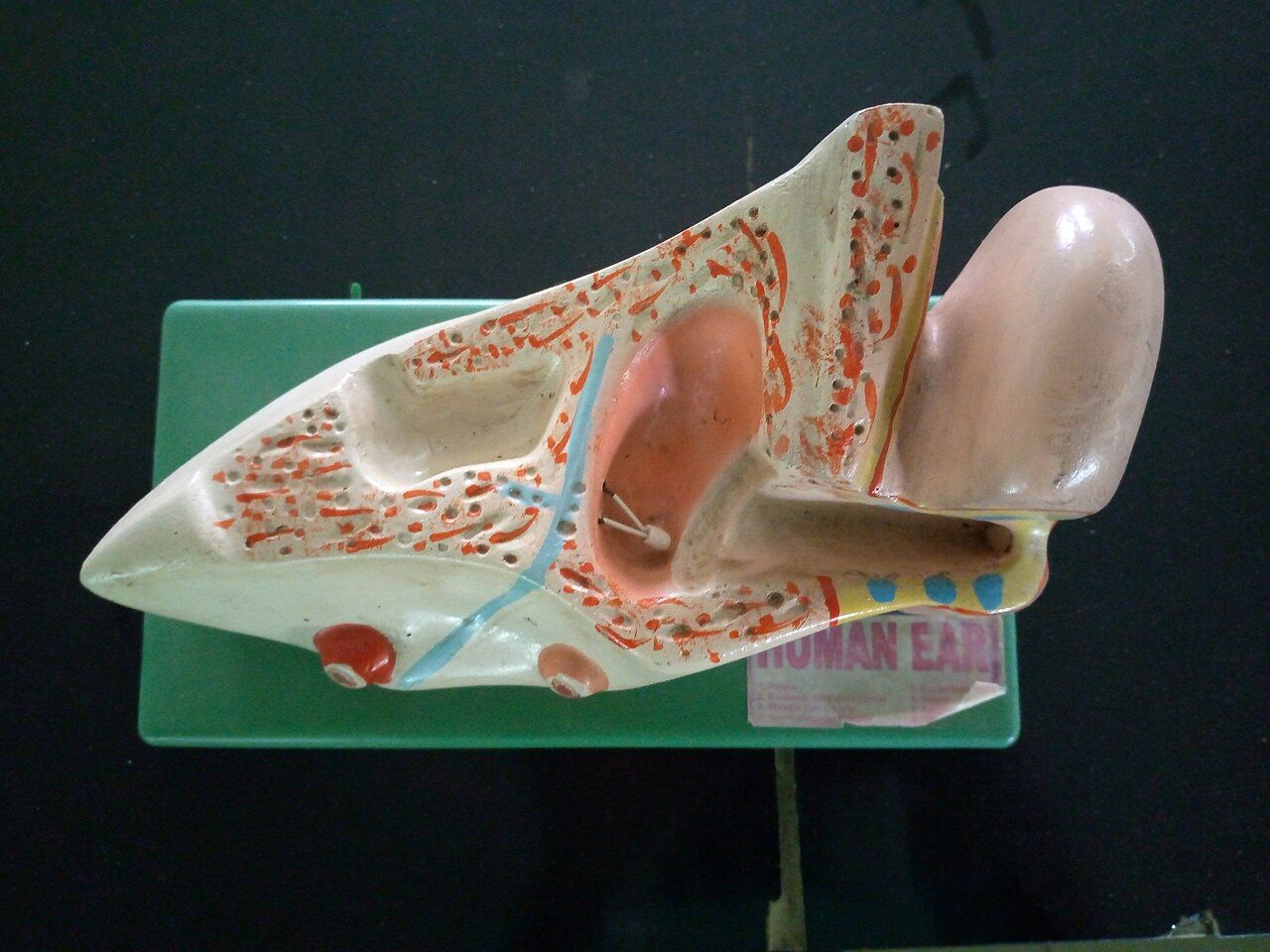
Hearing is automatic. Listening is a decision you make and then keep making.
Hearing is a physiological event. Air pressure waves move the eardrum, three small bones amplify the motion, and hair cells in the cochlea fire. You cannot switch it off. Sit in a quiet room and you will hear the refrigerator compressor, a car outside, your own swallowing. None of that required your consent.
Listening is what happens next, and it is voluntary, effortful, and easy to fake. It is the active process of receiving, attending to, understanding, remembering, evaluating, and responding to spoken and nonverbal messages. Every one of those verbs takes work, and every one of them can fail independently. You can hear perfectly and understand nothing. You can understand perfectly and remember nothing. You can remember everything and respond in a way that convinces the speaker you were not there at all.
Notice how much this changes the diagnosis when something goes wrong. “I told you about the schedule change” and “You never told me” are usually both true statements about different stages. The message was sent, it was heard, and it died somewhere between attention and memory. Naming the stage is the first practical skill in this chapter, because the repair for a failure of attention is nothing like the repair for a failure of understanding.
The six stages: what your brain does in two seconds
Communication researcher Judi Brownell organized listening into six stages under the acronym HURIER: hearing, understanding, remembering, interpreting, evaluating, and responding. Other scholars slice the process differently — some models begin with selective attention as its own stage, others fold interpreting into understanding — and there is no settled consensus on the exact number. The value of any of these models is not the count. It is that they force you to ask where a breakdown occurred instead of concluding that someone “wasn’t listening.”
Work through one real sentence. Maya, a second-semester nursing student, is receiving a shift handoff. The outgoing nurse says: “Bed 4, Mr. Ellison, seventy-two, came in with chest pressure, troponin negative times two, he’s on telemetry, pain-free since about four, and he gets really anxious when the alarm goes off, so warn him before you silence it.”
That is about fifteen seconds of speech carrying seven discrete facts, one causal relationship, and one behavioral instruction. Maya hears all of it. Whether she listens to it depends on six separate things going right. The table below uses the staging this chapter will work with: attending gets a row of its own, because that is where most breakdowns start, and interpreting and evaluating share one.
| Stage | What it does | How it fails in the handoff | Repair move |
|---|---|---|---|
| Hearing / receiving | Physically registers the sound | Two alarms and a vacuum in the hallway mask “troponin negative times two” | Change the environment: “Can we step to the other side of the desk?” |
| Attending / selecting | Chooses this signal over competing ones | Maya is mentally rehearsing her own question about the IV pump | Park your question in writing, in two words, and return to the speaker |
| Understanding | Assigns meaning to the words | She hears “telemetry” but is not sure whether that means continuous monitoring or a pending order | Ask at the seam, not at the end: “Telemetry — he’s on it now, or ordered?” |
| Remembering | Holds the message long enough to use it | Seven facts exceed working-memory capacity; the alarm instruction evaporates | Write in the speaker’s order, not in your own; chunk into three groups |
| Interpreting / evaluating | Judges relevance, credibility, and implication | She files “anxious about alarms” as personality trivia rather than a care instruction | Ask what each item is for: “So the warning is to keep his heart rate down?” |
| Responding | Signals back what was received | She nods and says “Got it” — which confirms nothing | Read back the two items that matter most, out loud |
How much do we actually retain? Be careful with the famous number.
You will encounter a widely repeated claim that listeners recall only about twenty-five percent of what they hear. The figure traces largely to mid-twentieth-century work by Ralph Nichols, and it has been reprinted in textbooks and corporate training decks for seventy years. It deserves an asterisk. The original testing conditions were narrow, the material was lecture content rather than conversation, and the quarter figure described delayed recall — immediate recall in the same work ran closer to half. The finding has never been cleanly replicated under modern methods. Communication scholars disagree about whether any single retention percentage is meaningful at all, since recall depends enormously on the material, the listener’s prior knowledge, and what the listener is trying to do with the information.
Here is the defensible version, and it is still sobering. Unaided recall of continuous speech drops fast, it drops fastest for detail rather than gist, and listeners consistently overestimate how much they retained. That last point is the useful one. The gap is not primarily between what you hear and what you keep — it is between what you keep and what you believe you kept. Confidence outlives accuracy.
Test it on yourself this week. After the next lecture or meeting, before you look at any notes, write down everything you can recall for ninety seconds. Then compare against the notes or the recording. Most people are startled twice: once by how little is on the page, and once by how certain they had felt.
Hearing happens to you and listening is something you do, which is why every listening failure has a specific stage — attention, understanding, memory, or response — and a specific repair.
Section 2Listening on Purpose
Four purposes, four different jobs
Skilled listeners do not listen harder. They listen differently depending on what the moment requires. Before you deploy a single technique, answer one question: what am I listening for? Four purposes cover most of what you will do in this course and at work.
Informational listening aims at accurate acquisition. You are building a mental model you can act on later — a procedure, a set of dates, a diagnosis, a drug schedule. Critical listening aims at evaluation. You are testing a claim: is the evidence real, is the reasoning sound, is something being left out? Empathic listening aims at understanding another person’s experience from inside their frame, without correcting or solving it. Appreciative listening aims at enjoyment — music, a well-told story, a speech you admire — and it is the only one of the four where drifting is allowed.
Most listening disasters are not failures of effort. They are purpose mismatches: you brought critical listening to a moment that needed empathic listening, or informational listening to a sales pitch that needed critical listening. The mismatch feels to the speaker like a personality flaw in you, which is why it damages relationships out of proportion to the actual error.
| Purpose | The question you are answering | What good looks like | Signature failure |
|---|---|---|---|
| Informational | What exactly is being claimed, and in what order? | You can restate the structure without the speaker’s words | Copying words you cannot explain |
| Critical | Should I believe this, and what would change my mind? | You can name the evidence type and the strongest counter-case | Rejecting the speaker instead of testing the claim |
| Empathic | What is this like from where they are standing? | The speaker says “yes — exactly” to your paraphrase | Jumping to advice; making it about your similar story |
| Appreciative | What is working here, and why does it land? | You can name one craft choice you want to steal | Passive consumption with nothing retained |
Your default style, and what it costs you
Beyond purpose, people carry habitual preferences. A well-known instrument developed by Watson, Barker, and Weaver in the 1990s sorted listeners into four listening styles: people-oriented (attends to feelings and relationships), action-oriented (wants the point, the task, the next step), content-oriented (wants detail, evidence, and precision), and time-oriented (manages the clock and signals urgency). A later revision by Bodie, Worthington, and Gearhart relabeled and restructured the categories as relational, analytical, task-oriented, and critical, partly because the original scale’s measurement properties did not hold up well. Take the labels as useful vocabulary rather than as a validated personality type — the evidence supports the idea that people have stable preferences more strongly than it supports any particular four-box scheme.
What matters practically is the friction between styles. Watch what happens when an action-oriented manager listens to a content-oriented analyst.
Analyst: “So we pulled eighteen months of scheduling data, and if you look at the swing shifts specifically — and I should say the January numbers are incomplete because of the system migration —” Manager (interrupting): “Bottom line it for me.” The manager thinks she is being efficient. The analyst hears that the caveat she was about to raise, which is the reason the whole analysis might be wrong, is unwelcome. She stops raising caveats. Six weeks later a decision gets made on incomplete January data.
The repair is not for the manager to become content-oriented. It is one sentence of style-bridging: “Give me the headline first, then the caveats — I want both, in that order.” That sentence names the manager’s preference without punishing the analyst’s.
Choosing the purpose out loud
Here is a move almost nobody uses and everybody should. When you are not sure which kind of listening a person needs, ask. It takes four seconds and it prevents the most common relational injury in this chapter.
Your roommate comes home from a twelve-hour shift and says, “They floated me to med-surg again and I had eight patients.” There are three plausible responses and only one of them requires no guessing.
Weak (unrequested problem-solving): “You should really talk to your charge nurse about the float rotation.” This answers a question that was not asked. Weak (competitive story): “That’s nothing — last week I had nine and two of them were total care.” This converts her experience into a preamble for yours. Strong (purpose check): “Ugh. Do you want to vent, or do you want to figure out what to do about it?” Now she picks the listening you provide. If she says vent, your job is paraphrase and reflection, and advice is off the table until she asks.
Decide what you are listening for before you decide how to listen, because most listening failures are purpose mismatches rather than effort failures.
Section 3Where Listening Breaks
Fake listening and its species
Pseudolistening is the performance of attention without the substance of it: the nod, the “mm-hm,” the eye contact held while the mind is elsewhere. It is so common that most people do it without noticing, and it has recognizable subtypes worth naming, because you cannot fix a habit you cannot name.
Stage-hogging (or monopolizing) treats the other person’s turn as loading time for your own. Selective listening tunes in only for topics that concern you and tunes out the rest — a chronic problem in meetings and handoffs, where the item you skipped is the item that mattered. Defensive listening hears attack in neutral statements, so “the report came in Thursday” becomes “you were late.” Ambush listening attends carefully but only to collect ammunition. Insulated listening is the opposite of selective: it systematically avoids the one topic the listener does not want to deal with. And glazing over is the honest drift — no strategy, just a mind that wandered off and did not report back.
The diagnostic table below gives you a symptom, a name, an underlying cause, and one concrete move. Use it on a transcript of your own conversations before you use it on anyone else.
| What it sounds like | Name | What is really happening | One-move repair |
|---|---|---|---|
| “Right. Right. Totally.” delivered at even intervals | Pseudolistening | Attention has left; the social script is running on autopilot | Replace the next “right” with a content paraphrase; you cannot fake one |
| “That reminds me of when I …” | Stage-hogging | Rehearsing your turn instead of processing theirs | Ask one follow-up question before you say anything about yourself |
| “Wait, go back — what did you say about my unit?” | Selective listening | Attention keyed only to self-relevant cues | Write one line per agenda item, including the ones that are not yours |
| “So you’re saying I did it wrong.” | Defensive listening | Threat appraisal fires before comprehension finishes | Paraphrase the literal content first, then ask if criticism was intended |
| “Hold on — two minutes ago you said the opposite.” | Ambush listening | Listening for contradictions, not for meaning | Steelman it: state their strongest version before you rebut anything |
| “Anyway, about the schedule …” after a hard disclosure | Insulated listening | Avoidance of an emotionally costly topic | Name the avoidance out loud: “I skipped past that. Can we go back?” |
| Silence, then “Sorry, what?” | Glazing over | Spare cognitive capacity wandered off task | Predict the speaker’s next point in your head — it uses the same capacity productively |
| “I can hear you, keep going” while typing | Divided attention | Task-switching costs, not true parallel processing | Close the laptop or say honestly “give me ten seconds to finish this” |
The speech–thought differential, and the multitasking myth
Conversational English runs somewhere around 125 to 175 words per minute; formal presentation is often slower. Estimates of how fast we can process language internally run several times higher, and the specific numbers you will see quoted vary widely depending on how the measurement was done. Rather than defend a precise figure, hold the shape of the finding: listening leaves spare capacity. That gap between speaking rate and thinking rate is the speech–thought differential, and it is the single most exploitable fact in this chapter.
Untrained listeners spend the surplus on drift — grocery lists, replies, the sentence they wish they had said yesterday. Trained listeners spend it on four things: predicting where the speaker is going, silently summarizing what has been said so far, noticing what has not been said, and monitoring the nonverbal channel. All four are effortful, which is exactly why they crowd out drift.
What the surplus cannot cover is a second demanding task. The popular belief that some people can genuinely listen and work at the same time does not survive contact with the research on divided attention: what looks like parallel processing is rapid switching, and switching costs accuracy and time on both tasks. There is legitimate scientific debate about the boundaries — highly automated tasks like walking interfere very little, and individual differences exist — but no serious reading of the evidence supports composing an email while listening to a briefing. The person typing during your handoff is not a superior multitasker. They are sampling.
Four kinds of noise, and which one you can actually fix
Communication models label anything that distorts a message as noise, and it is worth separating the types because they call for different responses. Physical noise is external: alarms, hallway conversation, a bad connection. Physiological noise is internal and bodily: hearing loss, exhaustion, pain, hunger, a headache. Psychological noise is internal and mental: anxiety, prejudgment, defensiveness, preoccupation. Semantic noise is linguistic: jargon, ambiguity, or a word the two of you are using with different meanings.
Semantic noise is the sneakiest because it produces confident mutual misunderstanding. Consider a real exchange. A patient is told, “Your labs came back negative.” He goes quiet. The clinician reads the silence as absorption; it is actually alarm, because in ordinary English “negative” means bad. Nothing about the delivery was careless. The word simply carried two meanings and nobody checked which one landed.
Of the four, physical noise is the easiest to fix and the most often tolerated. Moving three feet, closing a door, or saying “I’m going to step somewhere quieter, hold that thought” solves more listening problems than any technique in Section 4 — and yet people routinely strain through a critical conversation next to an ice machine rather than risk seeming difficult.
Listening fails in named, recognizable ways — pseudolistening, divided attention, and four distinct kinds of noise — and naming the specific failure is what makes the repair a one-move fix rather than a resolution to try harder.
Section 4The Moves: Active Listening You Can Perform

Attending: the body does half the work
Before a single word leaves your mouth, your body has already told the speaker how much of you is in the room. A common teaching device is Gerard Egan’s SOLER acronym: sit squarely, open posture, lean slightly forward, eye contact, relax. It is a useful scaffold for beginners and it has been fairly criticized. Applied rigidly it produces a stiff, performed attentiveness that reads as fake, and its eye-contact prescription assumes a cultural norm that is not universal — in many communities sustained direct gaze at an elder, a supervisor, or a person of another gender signals challenge rather than respect. Later frameworks such as Stickley’s SURETY explicitly add awareness of the listener’s own internal state and treat the guidance as adjustable.
Use the principle, not the posture: reduce every physical signal that says you are leaving. That means the phone face-down and out of your hand rather than face-down on the table. It means squaring your torso, because body orientation is read as a signal of engagement alongside gaze and posture rather than instead of them. It means matching the speaker’s energy roughly rather than sitting granite-still. And it means letting silence sit for two or three seconds after they stop, because the most common cause of a truncated disclosure is a listener who filled the pause.
One concrete calibration: in most North American professional settings, eye contact roughly seventy percent of the time while listening reads as engaged; near one hundred percent reads as interrogation. If you are working across cultures or with a neurodivergent speaker, drop the rule entirely and take your cue from the other person — some people listen far better when not required to hold gaze, and forcing it costs them comprehension.
Paraphrase, reflect, probe: the three sentences that do the work
A paraphrase restates the content of what you heard in your own words and invites correction. A reflection of feeling names the emotion you think you detected and invites correction. An open probe is a question that cannot be answered with yes or no. Together these three cover nearly everything active listening asks of you, and all three are trainable in an afternoon.
The critical distinction is between paraphrasing and parroting. Parroting repeats the speaker’s words back and proves only that your ears work. A paraphrase re-encodes the meaning in different words, which is why it is diagnostic: if you cannot paraphrase, you did not understand, and you have just discovered that before it cost anyone anything.
Study the table below as a script bank. The left column is what people actually say; the right column is what the same person could have said with the same information and about the same number of words.
| Weak response | Why it fails | Stronger response |
|---|---|---|
| “So you’re saying the schedule change is bad.” | Echoes the gist and bolts on a judgment word the speaker never used; tests nothing | “Let me check — the change itself is fine, but the two-day notice is what makes childcare impossible?” |
| “I know exactly how you feel.” | Claims access to another person’s interior; often followed by your story | “That sounds exhausting in a specific way. Is it the workload, or that nobody asked you first?” |
| “Did that make you angry?” | Closed question; supplies the emotion instead of eliciting it | “What was going through your head when she said it?” |
| “Any questions?” | Invites a yes or no and puts the burden of ignorance on the listener | “What part of this would be hardest to explain to your partner tonight?” |
| “Uh-huh … uh-huh …” | Backchanneling without content; indistinguishable from drifting | “Okay — so far: negative labs, still short of breath, and it’s worse lying flat.” |
| “Why did you do it that way?” | “Why” questions about behavior trigger justification, not information | “Walk me through how you decided on that order.” |
| “Calm down and start from the beginning.” | Instructs the emotion away before acknowledging it | “You’re clearly rattled. Start wherever it makes sense — I’ll follow.” |
| “Got it, thanks.” | Confirms receipt, verifies nothing | “Got it — hold the metoprolol, page you if the systolic drops under 100.” |
Notice the pattern in the right-hand column. Almost every improvement does one of three things: it adds specific content the speaker can correct, it converts a closed question into an open one, or it names something rather than evaluating it. That is the whole craft in one sentence.
Retaining: notes as a listening tool, not a transcript
Working memory is small. Estimates of how many independent items an adult can hold at once cluster around four for most people, though the number depends heavily on how the material chunks — and the classic “seven plus or minus two” figure is now generally regarded as too generous. Either way, the handoff in Section 1 exceeded capacity, which is why note-taking is not an optional courtesy. It is capacity extension.
Good listening notes look nothing like transcripts. They are short, hierarchical, and written in the speaker’s order so that structure is preserved. Leave a wide margin for your own questions so that a question does not steal attention from the next sentence — two words in the margin, then back to the speaker. Star anything you did not understand rather than stopping to decode it, and clear the stars at the end.
You may have heard that handwriting notes beats typing them. The best-known study, by Mueller and Oppenheimer, reported that longhand note-takers performed better on conceptual questions, apparently because slower writing forces summarizing rather than verbatim capture. Subsequent replication attempts have found smaller effects, and in some cases none, so treat the medium as less important than the behavior. What consistently helps is generative note-taking: paraphrasing, condensing, and organizing while you listen. What consistently hurts is transcription, on any device.
Score yourself: an active-listening rubric
You cannot improve what you do not measure. Record a five-minute practice conversation (with permission), then score yourself honestly against the criteria below. A common first profile is a 1 on “checking” and a 3 on “attending” — exactly the shape of someone who looks like a good listener and is not yet one.
| Criterion | Not yet (1) | Competent (2) | Skilled (3) |
|---|---|---|---|
| Attending | Devices in hand; body angled away; frequent glances elsewhere | Devices away; generally oriented toward speaker | Body, gaze, and pacing adapt to the speaker’s comfort, not a formula |
| Paraphrasing | Repeats the speaker’s words or says nothing | Restates content accurately in own words at least once | Restates at natural seams, compresses, and invites correction (“is that right?”) |
| Reflecting feeling | Ignores or corrects emotion (“don’t worry about it”) | Names an emotion, sometimes the wrong one | Names emotion tentatively and adjusts when the speaker refines it |
| Probing | Closed questions; leading questions; multiple questions at once | Mostly open questions on the speaker’s topic | Open questions that open the door the speaker was already standing near |
| Checking / confirming | “Got it” with no content | Summarizes at the end of the conversation | Summarizes mid-stream and again at close; reads back action items verbatim |
| Restraint | Interrupts; advises unasked; redirects to own experience | Waits for pauses; advice offered but flagged as optional | Asks whether advice is wanted; tolerates silence without filling it |
Active listening is a small set of performable moves — attend, paraphrase, reflect, probe, confirm, restrain — and each one has a weak version and a stronger version separated by about ten words.
Section 5Listening When It Counts
The audience member’s job: critical listening and feedback that helps
For most of this course you will be an audience member, and audience listening is a graded skill in its own right. Critical listening means evaluating a claim on its merits: what type of evidence supports it, whether the source is in a position to know, whether the conclusion follows, and what is conspicuously absent. It is not skepticism as a personality. A critical listener is equally willing to be persuaded — they simply require reasons.
Practice on a real claim. Devon opens his persuasive speech: “Hospital parking fees are a hidden tax on nurses. At my facility, staff pay eighty-five dollars a month, and a survey of my unit found that ninety percent of us think it’s unfair.” A critical listener notes three separable things. The eighty-five-dollar figure is a verifiable fact and probably true. The “ninety percent” is a self-selected sample of a single unit — it establishes strength of feeling, not prevalence. And “hidden tax” is a framing device, not evidence: it is doing persuasive work before any argument has been made. None of that means Devon is wrong. It means you know exactly which part of his case to ask about.
Feedback is where critical listening becomes useful to someone else. Useless feedback is global and evaluative (“great job,” “kind of boring”). Useful feedback is criterion-referenced and follows a simple three-part shape: name the evidence you observed, name its effect on you as a listener, name one change. Compare.
| Vague feedback | What is missing | Criterion-referenced version |
|---|---|---|
| “Good energy!” | No behavior, no effect, nothing repeatable | “You raised your volume on each of the three main points, and I could tell where the sections divided.” |
| “It was a little confusing.” | No location, no cause, no fix | “I lost the thread at the parking-fee statistic — I couldn’t tell if ninety percent was your unit or the whole hospital. One clarifying phrase would fix it.” |
| “You said ‘um’ a lot.” | Counts a symptom, ignores the cause | “The fillers clustered right after each slide change. A two-second pause there instead would read as deliberate.” |
| “Try to be more confident.” | Prescribes an internal state, not an action | “You looked at your notes for most of the conclusion. Memorize just the last two sentences and deliver them to the back row.” |
| “I disagree with your whole premise.” | Rejects globally; gives the speaker nothing to work with | “Your strongest point was the eighty-five-dollar monthly figure. The premise I’d push on is that one unit’s survey speaks for the hospital — what wider data exists?” |
Listening across difference: culture, accent, and access
Listening norms are not universal. The amount of silence that feels comfortable, whether overlapping speech signals enthusiasm or rudeness, how much meaning is carried explicitly in words versus implicitly in context and relationship — all of this varies across cultures and communities. Edward Hall’s high-context and low-context distinction is the most commonly taught framework here, and it is worth knowing while also worth holding loosely: many scholars consider it too coarse and too prone to national stereotyping to describe individuals well. Use it as a reminder that your own norms are norms, not defaults.
Accent deserves specific attention because the failure is so often on the listener’s side. In a well-known study, Donald Rubin had undergraduates listen to a recorded lecture spoken by the same native English speaker while viewing a photograph of either a white instructor or an Asian instructor. Students shown the Asian photograph rated the speech as more accented and scored lower on a comprehension test — from identical audio. The implication is uncomfortable and useful: some of what we experience as “I can’t understand them” is expectation, and expectation is adjustable. Comprehension of unfamiliar accents also improves measurably with exposure and with the listener’s willingness to keep trying.
Access is the other half. If a listener is deaf or hard of hearing, uses a hearing aid or cochlear implant, is processing in a second language, or is neurodivergent, the burden belongs to the room, not to them. Practical moves that cost nothing: face the person and keep your mouth visible, one voice at a time, reduce background noise before increasing volume, turn on captions by default, repeat questions from the audience before answering them, and provide key terms in writing. Speaking louder at someone who is lip-reading and watching your mouth distort is the single most common well-intentioned mistake.
Confirming: teach-back, read-back, and the first thirty seconds
In high-stakes settings, the profession does not trust anyone’s feeling of understanding — including its own. It builds verification into the exchange. Three practices are worth carrying into any workplace.
Teach-back asks the listener to explain the information in their own words, framed so that the burden falls on the speaker. Weak: “Do you understand how to take the metformin?” That question has one socially acceptable answer. Strong: “I want to make sure I explained this clearly — when you get home, how are you going to take it?” The strong version tests the explanation, not the person, and it routinely surfaces errors that “do you understand?” never does. Closed-loop communication (read-back) is teach-back’s fast cousin for orders and handoffs: the receiver repeats the instruction verbatim and the sender confirms. “Two milligrams morphine IV push.” “Two milligrams morphine IV push.” “That’s correct.” It takes three seconds and closes the loop that “got it” leaves open. Structured handoff formats such as SBAR — situation, background, assessment, recommendation — help the listener as much as the speaker, because a known structure tells you what is coming and frees capacity for the content.
Finally, the opening. Research on clinical encounters has repeatedly found that patients are redirected very early in their opening statement; one 2019 study of primary and specialty care visits reported a median of about eleven seconds before interruption among the encounters where an interruption occurred, and found that most patients were never invited to set the agenda at all. Earlier studies using different methods reported somewhat longer intervals, so the exact number is contested — the direction is not. The practical version applies far beyond medicine: let the other person finish their opening statement. It is usually under a minute, it usually contains the actual problem, and interrupting it means spending the next ten minutes on the wrong one.
When the cost of misunderstanding is real, do not rely on the feeling of understanding — build verification into the exchange with teach-back, read-back, criterion-referenced feedback, and an uninterrupted opening statement.
The chapter in one breath
Hearing is physiology and listening is a choice you have to keep making, which is why every breakdown lands at a nameable stage: you did not receive it, did not attend to it, did not understand it, did not retain it, or did not signal any of that back. Before technique comes purpose — informational, critical, empathic, or appreciative — because most listening injuries are mismatches rather than laziness, and offering solutions to someone who wanted a witness is the classic case. Failures come in recognizable species with one-move repairs: pseudolistening, stage-hogging, defensive and ambush listening, divided attention, and four kinds of noise, of which the semantic kind does the quietest damage. The surplus capacity created by the speech–thought differential is the raw material of good listening; spend it on predicting, summarizing, and noticing gaps instead of drifting. The performable moves are few — attend, paraphrase, reflect, probe, confirm, restrain — and each has a weak and a stronger version about ten words apart. When stakes are high, distrust the feeling of understanding and verify: teach-back, read-back, criterion-referenced feedback, and an opening statement nobody interrupts.
Words worth knowing
| Term | What it means |
|---|---|
| Hearing | The involuntary physiological reception of sound waves by the ear; it requires no effort and no consent. |
| Listening | The active, voluntary process of receiving, attending to, understanding, remembering, evaluating, and responding to messages. |
| HURIER model | Brownell’s six-stage framework — hearing, understanding, remembering, interpreting, evaluating, responding — used to locate where a listening failure occurred. |
| Selective attention | The mental filtering that lets one signal through while suppressing competing ones; the stage most vulnerable to distraction. |
| Informational listening | Listening to acquire and retain accurate content, such as instructions, procedures, or data. |
| Critical listening | Listening to evaluate a claim — its evidence, reasoning, source credibility, and omissions — without prejudging the speaker. |
| Empathic listening | Listening to understand another person’s experience from inside their frame, withholding advice and evaluation. |
| Appreciative listening | Listening for enjoyment or craft, as with music, storytelling, or an admired speech. |
| Listening style | A habitual preference in how one listens — commonly labeled people-, action-, content-, and time-oriented, with later research proposing revised categories. |
| Pseudolistening | Performing the outward signals of attention — nodding, backchanneling, eye contact — while not processing the message. |
| Stage-hogging | Treating the other person’s turn as preparation time for your own; also called monopolizing. |
| Defensive listening | Perceiving attack in neutral or ambiguous statements, so that threat appraisal outruns comprehension. |
| Ambush listening | Attending carefully but only to gather material for a counterattack. |
| Speech–thought differential | The gap between how fast people speak and how fast listeners can process language, creating spare capacity that is either used or wasted. |
| Noise | Anything that distorts a message; commonly divided into physical, physiological, psychological, and semantic types. |
| Semantic noise | Interference caused by language itself — jargon, ambiguity, or a shared word carrying different meanings for speaker and listener. |
| Paraphrase | A restatement of the speaker’s content in your own words that invites correction; distinct from parroting the original wording. |
| Reflection of feeling | Tentatively naming the emotion you believe the speaker is expressing, so they can confirm or refine it. |
| Open probe | A question that cannot be answered yes or no, used to invite elaboration on the speaker’s own topic rather than supply an answer. |
| Teach-back | A verification method in which the listener explains the information back in their own words, framed as a check on the speaker’s clarity. |
| Closed-loop communication | Verbatim read-back of an instruction followed by the sender’s explicit confirmation; standard practice for high-risk orders and handoffs. |
| Criterion-referenced feedback | Feedback that names observed evidence, its effect on the listener, and one specific change, rather than a global evaluation. |
Check yourself
VERBAL AND NONVERBAL COMMUNICATION
Two codes run at once every time you open your mouth. One is made of words, which are arbitrary symbols that carry no meaning until a listener supplies it. The other is made of everything else — face, hands, posture, distance, timing, the shape of your voice — and it leaks whether you intend it to or not. Communication breaks down most visibly at the seam between the two: the words say one thing, the body says another, and the listener believes the body. This chapter is a workshop. You will build sentences that are specific enough to act on, learn the named traps that make ordinary language treacherous, take apart the nonverbal channels one at a time, and practice putting the codes back together so they say the same thing. Along the way you will meet a famous statistic about body language and learn exactly why it is wrong, which will make you a more careful consumer of everything else you are told about communication.
By the end of this chapter you can
- Explain why meaning lives in people rather than in words, using the triangle of meaning and a case of bypassing.
- Distinguish denotation from connotation and predict which word choice will cost you an audience.
- Place a statement on the abstraction ladder and rewrite it at the rung the situation actually requires.
- Diagnose allness, static evaluation, polarization, and euphemism in your own drafts, and repair the first two with indexing and dating.
- Convert accusatory you-language into I-language and judge when hedges help rather than hurt.
- Identify the major nonverbal channels — kinesics, oculesics, vocalics, haptics, proxemics, chronemics, artifacts, and environment — and name what each one does in a speech.
- Apply the six functions of nonverbal behavior — repeating, substituting, complementing, accenting, regulating, and contradicting — to a live example.
- Explain why the “7–38–55” claim is a misreading of the original research, and state what the evidence does support.
- Adapt verbal and nonverbal choices for culture, camera, and clinical or workplace settings, and score a delivery against a rubric.
Section 1Words Do Not Contain Meaning
A word is a symbol, and symbols are arbitrary
There is nothing dog-like about the word dog. The sound is a convention, agreed on by speakers of English and by nobody else on earth. That is what makes language a symbolic system: the connection between a word and the thing it names is arbitrary, learned, and revocable. Change the community and the sound changes. Change the era and the meaning drifts. Nothing anchors the two together except habit.
Ogden and Richards drew this as a triangle in 1923, and their diagram is still the fastest way to see the problem. At one corner sits the symbol — the word you say. At the top sits the reference — the thought in the head of whoever is processing that word. At the third corner sits the referent — the actual thing out in the world. The line between symbol and referent is drawn as a dotted line, because there is no direct connection. Words touch things only by passing through somebody’s mind.
That dotted line is where communication goes wrong. When you say soon, you are not transmitting a duration. You are triggering whatever soon means in your listener’s experience — and in a hospital, soon to a charge nurse and soon to a family member sitting in a waiting room differ by about four hours. Neither of them is misusing the word.
The practical rule follows directly. Meanings are in people, not in words. You cannot make a word mean something by insisting on it. You can only choose words whose likely interpretation, in this audience, is close enough to yours to be safe — and then check.
Denotation is the dictionary. Connotation is the temperature.
Denotation is a word’s agreed-upon, referential meaning — roughly what a dictionary would give you. Connotation is the cloud of feeling, association, and social judgment that rides along with it. Thrifty, frugal, economical, tight-fisted, and cheap denote a similar behavior. They do not land anywhere near each other.
Connotation is where speeches quietly succeed or fail, because listeners rarely object to connotation out loud. They just cool off. Say welfare recipients and half a room stiffens; say families receiving assistance and the same room stays with you, even among listeners who hold identical policy views. Say a patient is noncompliant and you have described a moral failing; say the patient has not been able to take the medication as prescribed and you have described a problem that has causes you can go find. Same referent. Different room.
This is not a call to soften everything. Sometimes the hot word is the honest one, and reaching for the cool synonym is cowardice dressed as tact. The skill is knowing which one you picked and why. Before you use a loaded term, ask: is the heat carrying information my audience needs, or is it just heat?
The abstraction ladder: choose your rung on purpose
S. I. Hayakawa popularized a device called the abstraction ladder. At the bottom rung sits a specific thing at a specific moment — observable, countable, arguable only about the facts. Each rung upward drops detail and adds category, until at the top you have a word so large it can mean almost anything: quality, professionalism, wellness, communication.
Neither end of the ladder is better. High rungs are how you state a thesis, name a value, or cover a lot of ground fast. Low rungs are how you prove something, give an instruction someone can follow, or make an audience actually see it. The error is not living at one end — it is living at one end without noticing. Speeches that stay high sound impressive and change nothing. Speeches that stay low become an unsorted pile of detail.
| Rung | Clinical example | Workplace example | What you can do with it |
|---|---|---|---|
| 5 — highest | Quality of life | Team culture | Name a value; almost nothing else |
| 4 | Functional status | Communication problems | Group a topic; label a section of a speech |
| 3 | Mobility | Meeting behavior | State a thesis or a claim to be supported |
| 2 | Walking with assistance | Interrupting in stand-ups | Make a claim testable; set up evidence |
| 1 — lowest | “At 9:15 Mr. Alvarez walked forty feet down the east hall with a rolling walker and one-person assist, then sat and said his right knee hurt.” | “In Tuesday’s stand-up, Devon cut in on Priya three times before she finished a sentence.” | Prove it; act on it; hand it to someone else |
Run the ladder both directions when you prepare. Start with your abstract claim and climb down until you hit something a stranger could have witnessed — that is your evidence. Then start with a pile of details and climb up until you find the one sentence that says what they add up to — that is your point. A speech that only climbs down is a report. A speech that only climbs up is a slogan. You need the round trip.
Words are arbitrary symbols that carry no meaning of their own, so your job is not to say the right word but to choose the word most likely to land the way you intend — and then verify that it did.
Section 2Language That Does the Work
Revise for the ear: specific, plain, and the right size
Writing that is merely acceptable on paper is often unusable out loud. A reader can back up; a listener cannot. So the standards tighten: shorter units, concrete nouns, live verbs, and no term the audience has to decode while you keep talking. Below is a revision table. Cover the right column, try your own fix, then compare.
| Weak version | What goes wrong | Stronger version |
|---|---|---|
| “The patient exhibited a suboptimal response to the intervention.” | Abstract at every word; nobody can act on it | “His pain went from an eight to a seven after the second dose.” |
| “We need to enhance our communication going forward.” | Top-rung nouns; no behavior named, no time named | “Starting Monday, whoever takes the call posts a two-line summary in the group chat before they leave.” |
| “Utilize the appropriate methodology in order to facilitate compliance.” | Inflated language; three long words doing one short word’s job | “Use the checklist so people actually follow the steps.” |
| “The resident passed during the night shift.” | Euphemism so soft the family may not understand what happened | “Mrs. Herrera died at about 2 a.m. I am so sorry.” |
| “There was an unfortunate downsizing of headcount.” | Doublespeak; the sentence names no actor, so nobody appears to have decided anything | “We laid off eleven people. I made that call.” |
| “Just check his O sat and titrate PRN per protocol.” | Jargon aimed at the wrong audience — fine for a nurse, opaque to a family | “We will keep a clip on his finger that reads his oxygen, and turn the oxygen up or down as that number moves.” |
| “Everybody knows this policy is a disaster.” | Allness plus polarization; one sentence, two overreaches | “Four of the six charge nurses I asked said the policy adds twenty minutes to their shift.” |
| “You never listen to me in these meetings.” | You-language plus never; the listener defends instead of hearing | “When I got cut off twice on Tuesday, I stopped bringing things up. I would like to finish a thought.” |
| “Sorry, this is probably a dumb question, but I sort of wondered whether maybe we should double-check the dose?” | Stacked disclaimer, hedge, and tag — the safety concern disappears inside the padding | “Before we give this, I want to double-check the dose.” |
| “He’s a slow learner.” | Static evaluation: freezes a person into a permanent trait | “On the first two shifts in September he needed the steps written down. He has not needed that since.” |
Four traps with names, and the two repairs that fix most of them
Allness is the habit of speaking as if you have said everything there is to say about a subject. It shows up as always, never, everybody, nothing but. Allness is rarely a lie; it is a shortcut that invites a listener to spend the next ninety seconds hunting for the counterexample instead of following your argument. One exception and your credibility takes the hit.
Static evaluation treats a person or situation as if it were frozen. “Marcus is terrible with patients” describes a state, permanently, on the basis of episodes that had dates. People change, units change, policies change; the sentence does not.
Polarization collapses a range into two poles — safe or dangerous, competent or incompetent, ally or enemy. Most of professional life happens in the space polarization erases. And bypassing, from Section 1, is the same-word-different-meaning failure.
Two repairs, borrowed from the general semantics tradition, handle most of these. Indexing means attaching a number or an identifier so you are talking about this case rather than the category: not “night-shift nurses,” but “night-shift nurse #1 and night-shift nurse #2,” who may differ completely. Dating means attaching a time: not “Marcus is terrible with patients,” but “Marcus in his first month was terrible with patients.” Both repairs cost you four words and buy back an enormous amount of accuracy.
I-language, and the honest version of “powerless speech”
I-language reports your own observation and reaction instead of diagnosing the other person. The structure that works has three parts: the behavior you observed, the effect it had, and what you want. “When the schedule came out Friday afternoon” (behavior, dated) “I could not arrange childcare in time” (effect, concrete) “so I am asking for it by Wednesday” (request, actionable). Compare with “You are so inconsiderate about the schedule.” The second version feels better to say and works worse.
The one caution: I-language is not a magic wand, and a hostile sentence with I feel stapled to the front is still hostile. “I feel that you are lazy” is you-language in a costume. If the word after feel is that, you are probably about to accuse someone.
You have likely heard that hedges (“sort of,” “maybe”), disclaimers (“this is probably dumb, but”), tag questions (“...right?”), and fillers make a speaker sound weak. Researchers in the 1970s studying courtroom testimony described a cluster like this as powerless speech and found it reduced perceived credibility. That work has held up in broad outline — stacked hedging does cost you authority, especially in evaluative settings such as a job interview, a testimony, or a graded speech.
But the picture is more mixed than the textbook version suggests. Later research found that tentative language can increase perceived warmth and openness to persuasion in collaborative settings, that the penalty is applied unevenly across speakers of different genders and social positions, and that some of what gets labeled “weak” is really just a dialect or generational feature being judged by an outdated standard. The defensible advice is narrower than “never hedge”: strip hedges out of your core claims and your safety-critical statements, and keep them where you are genuinely uncertain or deliberately inviting disagreement. “I think the dose is wrong” is fine in a brainstorm and dangerous at a bedside.
Precision is a set of repeatable moves — drop a rung on the ladder, index it, date it, cut the padding — and each move can be applied to a sentence you have already written.
Section 3The Channels You Are Always Broadcasting On
Eight channels, one body
Nonverbal communication is not one thing. It is a bundle of separate channels that can agree, disagree, or run at different speeds, and treating them separately is what makes them trainable. You cannot fix “my delivery is stiff.” You can fix “my hands stay locked at my waist and my rate climbs to 190 words a minute.”
| Channel | What it covers | Worked example | What to do with it in a speech |
|---|---|---|---|
| Kinesics | Gesture, posture, movement of the body | Holding up three fingers while saying “three reasons” | Gesture at the height of your ribcage, not your waist; let hands return to a neutral rest, not a lock |
| Oculesics | Eye behavior: gaze, aversion, blink, pupil | Finishing a full sentence to one person before moving on | Sweep in sentences, not syllables; three to five seconds per person, then move |
| Vocalics (paralanguage) | Everything about the voice except the words | Dropping pitch and pausing before the thesis | Pause where you want the audience to think; slow the sentence that matters most |
| Haptics | Touch: handshake, pat, guiding hand, clinical touch | A hand on a forearm before delivering hard news | Rare in speaking, central in clinical and interpersonal work; ask before you touch |
| Proxemics | Use of space and distance | Stepping out from behind the lectern for a story | Move on transitions, plant on points; never pace on your evidence |
| Chronemics | Use of time: punctuality, wait time, pacing, turn length | Arriving eight minutes early to set up | Time signals status and respect before you say a word; finish early rather than late |
| Artifacts and appearance | Clothing, badge, grooming, objects you carry | A stethoscope draped over the shoulders in a hallway conversation | Dress one notch above your audience; remove anything that will hold your hands hostage |
| Environment | Room, seating, lighting, arrangement | Moving two chairs out of a row into an angle | Arrive early enough to change one thing about the room |
Notice how many of these are decisions you make before you speak. Chronemics, artifacts, and environment are all settled by the time you say “good morning.” A student who rehearses gestures for two hours and then arrives four minutes late, in a jacket with a broken zipper, to a room they have never seen, has optimized the smallest of the eight channels.
Face and eyes: powerful, and more contested than you were taught
The face is the highest-bandwidth channel you have. Ekman and Friesen’s widely used scheme sorts body and face behavior into five kinds. Emblems are gestures with a direct verbal translation and can substitute for speech outright — a thumbs-up, a shrug, a finger to the lips. Illustrators accompany and depict speech: the hands that draw the size of the tumor while you describe it. Affect displays show emotion, primarily in the face. Regulators manage turn-taking — the inhale, the raised finger, the eyebrow flash that says your turn. Adaptors are self-soothing behaviors with no communicative intent: ring-twisting, hair-touching, clicking a pen. Adaptors are the ones that spike under stress and the ones an audience reads as nervousness.
Emblems are worth a warning, because they are the least universal of the five. The thumbs-up, the ring-shaped “OK,” the beckoning palm-up finger, and the raised index finger all carry meanings ranging from neutral to obscene depending on where you are standing. Emblems are vocabulary, and vocabulary is local.
Now the honest part. You have probably been told that a small set of facial expressions for basic emotions is universal across all human cultures — a claim associated with Ekman’s cross-cultural studies from the late 1960s onward. That claim was mainstream for decades and is now seriously disputed. A substantial body of work, including a large 2019 review led by Lisa Feldman Barrett, argues that the evidence for reliable, universal, one-to-one mapping between facial configurations and emotional states is much weaker than the popular version implies: people express a given emotion in many ways, and the same configuration means different things in different contexts and cultures. Other researchers defend a more limited universality. This is a live scientific argument, not a settled fact, and you should be suspicious of anyone selling you certainty about “reading” faces.
The voice: your most trainable channel
Vocalics covers pitch, rate, volume, quality, articulation, and pause. It is the channel with the shortest distance between practice and improvement, because unlike gesture it can be fixed with a recording and a stopwatch. Conversational English runs somewhere around 150 words per minute; anxious speakers routinely hit 190 or more and cannot hear themselves doing it. The fix is not “slow down,” which nobody can execute. The fix is a specific place to put a pause.
| Element | Weak version | Stronger version | Why it works |
|---|---|---|---|
| Rate | One unbroken 40-second sentence at 190 wpm | Mark a slash in the script at every idea boundary; breathe at each slash | Gives the audience processing time and gives you air |
| Pause | “So the point is um that we should um act now” | “So the point is this. [pause] We should act now.” | A pause replaces the filler and adds emphasis for free |
| Pitch | Every sentence rises at the end, turning claims into questions | Rise on genuine questions; land flat or falling on claims | Terminal rise on a claim reads as uncertainty to many listeners |
| Volume | Constant, medium, indoor voice throughout | Set your baseline for the back row, then drop — do not raise — for intensity | Contrast carries emphasis; a whisper after a full voice is louder than a shout |
| Articulation | “jeetyet,” “gonna,” dropped word endings under speed | Slow only the technical terms and proper names; let the rest run | Audiences forgive casual speech but not a garbled key term |
| Quality | Shallow chest breathing, tight throat, thin sound | Two slow abdominal breaths before you stand; unlock the jaw | Vocal tension is a downstream symptom of held breath |
Space, touch, and time carry status
Hall proposed four zones of conversational distance: intimate (touching to about 18 inches), personal (about 18 inches to 4 feet), social (about 4 to 12 feet), and public (12 feet and beyond). Treat the numbers as a rough map of one cultural setting rather than a law of nature — Hall was describing middle-class adults in the mid-century United States, and comfortable distance varies substantially by culture, relationship, age, gender, and how crowded the room is.
Health care is the great exception to all of it. Clinical work routinely requires operating inside the intimate zone with strangers, which is precisely why announcing and asking matter so much there. “I am going to listen to your lungs now — is it all right if I lift the back of your gown?” costs three seconds and converts an intrusion into a procedure. The same principle scales down to ordinary life: touch, distance, and time are the channels where consent is most often assumed and least often asked.
Chronemics is the quietest status signal in any organization. Who waits, and for how long, and who is allowed to run long, tells you the hierarchy faster than the org chart does. For a speaker the lesson is simple and unglamorous: start on time, end at or before your limit, and treat a five-minute assignment as a five-minute assignment. Running over is not passion. It is a statement that your time is worth more than everyone else’s.
Nonverbal communication is not a mood you project but eight separate, trainable channels — and the ones settled before you open your mouth are often the ones that decide how you are received.
Section 4Fit: How the Two Codes Combine

Six things nonverbal behavior does to words
The two codes are not parallel systems that happen to run at once. Nonverbal behavior acts on your words in six identifiable ways. Learn the six and you can diagnose a delivery problem instead of just feeling that something was off.
| Function | What it does | Worked example | Failure mode |
|---|---|---|---|
| Repeating | Restates the verbal message in another channel | “It is the second door on the left” while pointing left | Pointing the wrong way; now you have created a contradiction |
| Substituting | Replaces words entirely | A shrug instead of “I have no idea” | Substituting an emblem your audience reads differently than you do |
| Complementing | Adds nuance the words alone cannot carry | “I am fine” said warmly, with a small laugh, after a minor stumble | Flat delivery drains a good sentence of everything but its denotation |
| Accenting | Marks one part of the message as most important | Pausing, then slowing on “forty percent of patients” | Accenting everything, which accents nothing |
| Regulating | Manages turn-taking and flow | An audible inhale plus a small forward lean to claim the next turn | Missing another person’s turn-yielding cue and talking over them |
| Contradicting | Says the opposite of the words | “Great, no problem at all” delivered through a tight jaw | The listener believes the body and stops trusting the words |
Work the table in reverse the next time a rehearsal feels wrong. Was the gesture supposed to repeat and pointed the wrong way? Did you accent nothing, or everything? Did the emphasis land on the wrong word? Stress the first word of “I did not say she stole the money” and you are saying someone else said it; stress she and you are saying someone else stole it. Identical words, different accusations.
Mixed messages and the credibility rule
When the codes disagree, you have produced a mixed message, and listeners handle it in a predictable way: they discount the words and believe the nonverbal channel. The reasoning is intuitive, and mostly sound. Words are the code you control deliberately, so words are the code you would fake. The face, the voice, and the hands are believed precisely because they are harder to manage.
This has one enormous consequence for a beginning speaker. If your content is excellent and your delivery says “I do not believe this and I want to sit down,” your audience will not conclude that you are nervous. They will conclude that your content is weak. Anxiety and dishonesty produce overlapping nonverbal profiles, and audiences are bad at telling them apart — which is unfair, and which you have to manage anyway.
The management strategy is not to fake confidence. It is congruence on the parts you can control. Slow the rate. Plant the feet. Land the last word of the sentence instead of trailing off. Look at one friendly face and finish a full thought there. None of that requires feeling calm, and all of it changes what the room concludes.
Immediacy: the behaviors that shrink the distance
Immediacy is the set of behaviors that signal approachability and psychological closeness. It is one of the better-supported ideas in this chapter: across a large body of instructional-communication research, teachers who display more immediacy behaviors are consistently rated as more effective and more liked, and the association with student motivation and perceived learning is reasonably robust. (The evidence that immediacy raises objectively measured learning is thinner — another place to keep your claims modest.)
Immediacy is not charisma and it does not require an outgoing personality. It is a short list of behaviors: reducing physical distance, orienting your torso toward the person, leaning slightly in, making and holding eye contact, smiling, using open gestures instead of crossed arms, calling people by name, using inclusive pronouns (we, us, our), varying your vocal pitch, and being available before and after. Every one of those is a decision, not a trait.
Consider the two versions of the same opening. Version A: the speaker stands behind the lectern, reads from a page, arms braced on the edges, and says “Today I will be discussing hand hygiene compliance.” Version B: the speaker steps to the side of the lectern, looks at the third row, and says “Raise your hand if you have ever walked out of a patient room and realized halfway down the hall that you forgot. [pause] Yeah. Me too. Let us talk about why that happens.” Same topic, same evidence to follow. The second one has already made the audience part of the problem.
Nonverbal behavior repeats, substitutes, complements, accents, regulates, or contradicts your words — and when it contradicts them, the audience believes the body, which is why congruence beats polish.
Section 5Using Both Codes on Purpose
Adapting across cultures without turning people into categories
Every rule in this chapter is a rule about a community, not about humans. Edward T. Hall proposed a distinction between high-context communication, where much of the meaning lives in the situation, the relationship, and what is implied, and low-context communication, where meaning is expected to be stated explicitly in words. It is a genuinely useful lens: the same sentence — “That will be difficult” — can be a soft refusal in one setting and an invitation to problem-solve in another. It is also a lens you should hold loosely. Reviews of the empirical literature have found the high-context and low-context framework much less well tested than its popularity suggests, and treating whole nations as fixed points on a scale produces exactly the stereotyping it was meant to prevent.
Display rules — learned norms about which emotions may be shown, by whom, how strongly, and in what setting — are on firmer ground and are more immediately useful. Some workplaces expect visible enthusiasm; others read it as unserious. Some families grieve loudly and some quietly. Neither is a defect. A nurse who reads a stoic patient as “not in much pain” has confused a display rule with a symptom, and that error has clinical consequences.
The same caution applies to claims about gender differences in nonverbal behavior. There are measurable average differences in some behaviors — several meta-analyses find, for instance, that women on average decode nonverbal cues somewhat more accurately — but effect sizes are generally modest, overlap between groups is large, and researchers disagree about how much of the difference reflects socialization, status differences, or the situation being measured. Averages tell you almost nothing about the specific person in front of you.
The workable rule is behavioral, not categorical: observe, do not assume; ask when it matters; adjust when you get feedback. That is a skill you can practice in any room, and it does not require memorizing a country list.
On camera, both codes get cropped
Video strips away most of proxemics, all of the room, most peripheral gesture, and — because of latency — the fine timing that regulates turn-taking. Turn transitions in face-to-face talk are timed to within about two-tenths of a second, so even a few hundred milliseconds of transmission delay blurs the cue by which people know whose turn it is — which is why online meetings produce so much simultaneous talking and so many collisions. You have to rebuild deliberately what a room gives you free.
The camera should sit at or slightly above eye level, which means stacking the laptop on books. Frame yourself from mid-chest up so your hands are visible when you gesture — a head-only frame amputates your kinesics. Put your light in front of you, not behind; a window at your back turns you into a silhouette. Look at the lens for your most important sentence, not at the faces, even though that feels wrong. Verbally, over-signal the structure: “Three things. First...” is more necessary online than in person because listeners have fewer cues to track where you are. And name the person you are handing the turn to, out loud, because the nonverbal handoff is not going to work.
A rehearsal protocol you can actually run
Rehearsing by reading the outline in your head does nothing for either code. Here is a four-pass protocol that takes about forty minutes and targets a different layer each time.
Pass 1 — Words only, out loud, seated. Read it aloud at conversational volume. You are hunting for sentences your mouth stumbles over, terms your audience will not know, and any spot where you cannot say the sentence without looking at the page. Fix by shortening, not by memorizing.
Pass 2 — Voice. Record audio only. Play it back with the script in hand and mark three things: every filler, every place your pitch rose on a claim, and your words-per-minute over one timed minute. Choose exactly three fixes. Do not chase all of them.
Pass 3 — Body, standing, muted. Record video with the sound off and watch it. Sound-off viewing is the trick; it makes adaptors, weight-shifting, and locked hands impossible to miss because your brain is not busy with the content.
Pass 4 — Full run to one human. Ask them for exactly two things: the sentence they remember, and the moment they got lost. Anything more general than that is not usable feedback.
| Dimension | Needs work | Competent | Strong |
|---|---|---|---|
| Specificity | Stays on the top rungs; no observable detail | Claims are supported by at least one concrete example each | Every major claim descends to something a stranger could have witnessed |
| Word choice | Jargon or euphemism the audience cannot decode | Technical terms are defined on first use | Terms are defined and then used, so the audience leaves with new vocabulary |
| Hedging | Disclaimers and tags on core claims | Main claims stated without padding | Hedges appear only where uncertainty is real, and are labeled as such |
| Eye contact | Reads from page or scans without landing | Regular contact across the room | Full thoughts delivered to individual people, distributed across all sections |
| Gesture | Hands locked, pocketed, or in constant adaptors | Occasional purposeful gestures, hands return to rest | Gestures illustrate content and arrive with or just before the word |
| Vocal variety | Monotone or uniformly fast; fillers frequent | Some variation in rate and pitch; few fillers | Pauses used for emphasis; rate slows on key material; fillers replaced by silence |
| Movement and space | Pacing, rocking, or frozen behind the lectern | Stable stance, occasional purposeful movement | Moves on transitions and plants on points; uses space to mark structure |
| Congruence | Delivery contradicts the content’s stated importance | Delivery does not undercut the message | Face, voice, and body all say what the words say |
Adaptation is a behavioral skill — observe, ask, adjust — and it is learned by rehearsing one channel at a time rather than by memorizing rules about groups of people.
The chapter in one breath
Words are arbitrary symbols, so meaning does not travel inside them — it is rebuilt by every listener out of their own experience, which is why bypassing is so common and why a word’s connotation often matters more than its denotation. Because that is true, precision is a craft rather than a talent: climb down the abstraction ladder until you reach something observable, index and date your claims so you are talking about this case at this time, convert accusation into I-language, and strip hedges out of anything that has to be believed. Running alongside all of that is a second code with eight channels — body, eyes, voice, touch, space, time, objects, and the room itself — several of which are decided before you speak. Nonverbal behavior does six specific jobs to your words, and when it contradicts them the audience believes the body. That is the real content behind the discredited 7–38–55 statistic. None of this is universal; display rules and comfortable distances differ, the science on facial universality is genuinely unsettled, and nobody can detect a liar. So adapt by observing rather than by categorizing, rehearse one channel at a time, and aim for congruence rather than polish.
Words worth knowing
| Term | What it means |
|---|---|
| Denotation | A word’s conventional, referential meaning — approximately what a dictionary records. |
| Connotation | The emotional and social associations a word carries beyond its denotation; often the thing an audience actually reacts to. |
| Triangle of meaning | Ogden and Richards’s model showing that a symbol connects to its referent only through a person’s thought — never directly. |
| Abstraction ladder | A scale from a specific observable instance up to broad categories; effective speakers move deliberately between rungs. |
| Bypassing | A misunderstanding in which two people use the same word for different things, or different words for the same thing, without noticing. |
| Jargon | Specialized vocabulary that speeds communication inside a group and blocks it outside one. |
| Euphemism | A softened substitute for a blunt term; useful for kindness, dangerous when it obscures what happened. |
| Allness | Speaking as though a statement covers every case — always, never, everyone — which one counterexample can defeat. |
| Polarization | Collapsing a range of possibilities into two opposed extremes, erasing everything in between. |
| Indexing | Attaching an identifier so a claim refers to a particular case rather than a whole category. |
| Static evaluation | Describing a person or situation as permanently fixed, ignoring that both change over time; repaired by dating the statement. |
| I-language | A three-part statement naming the observed behavior, its effect on you, and your request, instead of diagnosing the other person. |
| Hedge | A qualifier such as sort of or maybe that softens a claim; helpful where uncertainty is real, costly on core or safety-critical statements. |
| Kinesics | The study of body movement: gesture, posture, and facial behavior. |
| Emblem | A gesture with a direct verbal translation that can replace speech, such as a thumbs-up; meanings are culture-specific. |
| Adaptor | A self-touching or object-manipulating behavior with no communicative intent, which audiences nonetheless read as anxiety. |
| Vocalics | Also called paralanguage: pitch, rate, volume, quality, articulation, and pause — everything about the voice except the words. |
| Proxemics | The communicative use of space and distance, described by Hall as intimate, personal, social, and public zones. |
| Chronemics | The communicative use of time: punctuality, wait time, pacing, and how long one is permitted to speak. |
| Mixed message | A message whose verbal and nonverbal channels disagree; listeners typically discount the words and believe the nonverbal channel. |
| Display rules | Learned cultural and situational norms governing which emotions may be shown, by whom, and how intensely. |
| Immediacy | Verbal and nonverbal behaviors that reduce psychological distance and signal approachability, such as leaning in, using names, and inclusive pronouns. |
Check yourself
Self, Perception and Communication Confidence
Every message you send passes through two filters before anyone else touches it: the story you tell yourself about who you are, and the way you read the people in front of you. Both filters are learned, both are editable, and both are wrong more often than they feel wrong. A student who believes “I am the quiet one” will hear a preceptor’s silence as disapproval, stay quiet, and collect one more piece of evidence for a self-concept that was never accurate to begin with. This chapter takes that loop apart. You will learn where a self-concept comes from and how it hardens, how perception builds a person out of fragments, how to check an interpretation before you act on it, how much of yourself to reveal in a classroom or a clinical unit, and what actually reduces communication apprehension. The tools here are sentence patterns, ladders and rubrics you can use this week.
By the end of this chapter you can
- Distinguish self-concept, self-esteem and self-efficacy, and explain why only one of the three responds quickly to practice.
- Trace how reflected appraisal, social comparison and the self-fulfilling prophecy shape what you believe you are capable of saying.
- Rewrite an unusable self-statement into a specific, testable one using the five tests in Section 1.
- Describe the three stages of perception—selection, organization, interpretation—and name the stage where a given misunderstanding started.
- Identify the fundamental attribution error, self-serving bias and halo effect in a real exchange and apply the matching correction move.
- Write and deliver a three-part perception check that names behavior, offers two interpretations and asks a genuine question.
- Calibrate self-disclosure for a classroom, a team meeting and a patient encounter using the relevance, reciprocity, risk and role tests.
- Classify your own communication apprehension by type and select a tool matched to that type rather than a generic one.
- Build a graded practice ladder and convert vague praise into feedback that names a behavior, a criterion and a next action.
Section 1Where a Self-Concept Comes From
Three words that get confused every semester
Students use confidence as if it names one thing. It names three, and they behave very differently. Your self-concept is the descriptive inventory—the list of roles, traits, abilities and group memberships you would give if someone asked you to finish the sentence “I am…” twenty times. It is not an evaluation. It is a catalog. Your self-esteem is the evaluation: how you feel about the items in that catalog, taken as a whole. It is global, slow-moving, and famously resistant to argument. Your self-efficacy is something else again—a judgment, task by task, about whether you can execute a specific behavior at a specific level. Albert Bandura, who introduced the term, was careful about that specificity. You do not have self-efficacy. You have self-efficacy for giving a two-minute handoff report, which may be high while your self-efficacy for presenting to forty strangers sits near the floor.
That distinction is the single most practical idea in this chapter. Global self-esteem does not move much in a fifteen-week course, and nobody should promise you it will. Task-specific self-efficacy moves in a week, because it feeds on evidence: you did the thing, it went acceptably, the belief updates. When an instructor tells you to “believe in yourself,” the advice is aimed at the slow variable. When an instructor tells you to give a sixty-second update at Thursday’s huddle and report back, the advice is aimed at the fast one.
Bandura identified four sources that feed self-efficacy, and they are worth memorizing because they double as a menu of interventions. Mastery experiences—actually doing it—are the strongest. Vicarious experience—watching someone similar to you succeed—is second, and the similarity matters more than the excellence; watching a polished professional speaker helps less than watching a classmate with your exact accent and your exact nerves get through it. Verbal persuasion from a credible source is third, and it works only when it is specific enough to be falsifiable. Interpretation of physiological states is fourth: whether you read a pounding heart as “I am failing” or “I am mobilized” changes the estimate.
| Term | The question it answers | A student saying it out loud | What actually moves it |
|---|---|---|---|
| Self-concept | Who am I? | “I’m a second-career student, a mom, and the quiet one in every group.” | New roles and new evidence; feedback from people whose opinion you weight heavily |
| Self-esteem | How do I feel about who I am? | “I’m honestly not good at anything social.” | Slowly, and rarely through direct praise; often through accumulated competence in domains you care about |
| Self-efficacy | Can I do this particular task, at this level, on Tuesday? | “I can give a three-minute report at huddle. A forty-person room is different.” | Mastery experiences first; then watching similar people succeed; then credible specific encouragement; then reinterpreting arousal |
The mirrors: reflected appraisal and social comparison
Cooley’s image of the looking-glass self is over a century old and still the cleanest description of where a self-concept originates. We imagine how we appear to another person, we imagine their judgment of that appearance, and we feel something about it. George Herbert Mead sharpened the idea by pointing out that not all mirrors count equally. Some appraisals come from particular people who matter—a parent, a favorite instructor, a charge nurse you respect. These are the significant others of the self-concept literature, a label that comes from Harry Stack Sullivan rather than Mead, and their appraisals get installed early and removed late. Mead’s own contribution was the generalized other, your internalized sense of what “people” expect, which fills in the rest.
This process is called reflected appraisal, and it explains an oddity you have probably noticed: a person can be objectively competent and still describe themselves as bad at something, because one appraisal from a heavily weighted mirror outranks fifty ordinary ones. A student who was told in eighth grade that she “rushes and nobody can follow her” may still be organizing her adult professional identity around that sentence.
The second mirror is social comparison, described by Leon Festinger in 1954: in the absence of an objective standard, we evaluate ourselves against other people. Upward comparison, against someone better, can motivate or demoralize depending on whether the gap looks closable. Downward comparison, against someone worse off, protects mood but teaches nothing. The trap in a communication classroom is a sampling error. You compare yourself to the three most fluent people in the room because they are the most memorable, and you conclude you are below average—when in fact you are comparing a beginner’s first attempt to the finished performance of a classmate who spent eight years as a paramedic giving radio reports under pressure. That is not a talent gap. It is a repetitions gap, and repetitions are purchasable.
The two mirrors interact through the self-fulfilling prophecy, a term Robert Merton coined in 1948 for a prediction that causes its own fulfillment. Believe you will freeze, and you prepare less because preparing feels pointless, speak less in the discussion that would have warmed you up, and stand up cold—then read the resulting stiffness as proof. Expectations held by other people can work the same way; the classic classroom demonstration of that, Rosenthal and Jacobson’s Pygmalion in the Classroom, has drawn substantial methodological criticism over the decades, and current opinion is that teacher-expectancy effects are real but considerably more modest than the original headline suggested. Your own prophecies about yourself are the ones you can do something about anyway.
Rewriting the script so it can be tested
A usable self-statement is not an affirmation. Affirmations fail the moment your own evidence contradicts them. A usable self-statement passes five tests: it is specific (names a task, not a trait), behavioral (names something a camera could record), honest (concedes the real problem), forward-looking (states the next action) and testable (you will know Thursday whether it happened). Read the rewrites below and notice that none of them are cheerful. They are accurate, which is more durable.
| What you actually say to yourself | Why it cannot help you | The rewrite |
|---|---|---|
| “I’m a terrible speaker.” | A global trait claim. Nothing to practice, nothing to disprove. | “My last two talks ran long and I read straight from my notes. Tuesday’s goal: finish under four minutes and look up at the end of every idea.” |
| “Everyone can tell I’m panicking.” | Mind reading, stated as fact, with no check against evidence. | “My heart rate is up. Three classmates told me last time that I looked calm. I’ll assume I look about a third as nervous as I feel.” |
| “I have nothing worth saying in this group.” | Erases real experience and guarantees silence. | “I have six months on med-surg. I’ll bring one concrete example and say it inside the first ten minutes, before the topic moves.” |
| “If I mess up one word the whole thing is ruined.” | All-or-nothing thinking. Sets a standard no human speaker meets. | “Fluent speakers misspeak constantly and nobody logs it. If I stumble, I’ll restate the phrase and keep going.” |
| “I’m just not a confident person.” | Treats confidence as a fixed personal property. | “Confidence is task-specific. I’m confident at bedside handoff and not yet confident in front of a room. Handoff already proves I can talk under pressure.” |
| “I should be over this by now.” | A should-statement. Adds shame to a workload problem. | “This is my fourth time presenting, not my fortieth. The reasonable expectation is that rehearsal three feels better than rehearsal one.” |
A self-concept is a working draft assembled from other people’s reactions and your own comparisons, so the fastest way to change it is to change the evidence rather than the adjectives.
Section 2Perception and Its Predictable Errors
Selection, organization, interpretation
Perception is not a recording. It is a three-stage construction, and each stage discards or adds something. Selection comes first: your attention takes a small sample of everything available. What gets sampled is predictable—things that are intense, repetitive, unusual, moving, or relevant to a goal you currently hold. A student worried about being called on selects the instructor’s eye movements and misses the content of the question. That is not carelessness. That is what attention does under threat.
Next comes organization: the sample gets sorted into a pattern. The main tool here is the schema—a mental template for a category of person, place or event. You have a schema for “preceptor,” another for “group project slacker,” another for “the kind of student who sits in the front row.” Schemas are efficient and unavoidable; the cost is that they fill in details you never actually observed. A related organizing move is punctuation, the decision about where a sequence of events begins. Two people in the same conflict almost always punctuate it differently: “I check in constantly because you never respond” versus “I stopped responding because you check in constantly.” Neither person is lying. They started the tape at different points.
Last comes interpretation, where meaning gets assigned. Interpretation draws on relational history, expectations, how much you know about the situation, and your assumptions about the other person’s character. Consider a small clinical example. Your preceptor walks past you at 0700 without saying good morning. Selection: you noticed the non-greeting and not the two-way radio in her hand. Organization: you filed it under “she is displeased with me,” a schema built from one comment she made on Tuesday. Interpretation: “I did something wrong yesterday.” Three stages, three opportunities to go astray, and you have not yet exchanged a single word.
Attribution and the errors that follow
Attribution is the explanation you attach to behavior: internal (something about the person) or external (something about the situation). We are systematically uneven about this. The fundamental attribution error, named by Lee Ross in 1977 and closely related to what later researchers called correspondence bias, is the tendency to over-explain other people’s behavior by their character while under-weighting their circumstances. Its mirror image is the self-serving bias: our successes are our doing, our failures were the traffic, the wifi, the unfair prompt.
One honest caveat before you file this away as a law of nature. The fundamental attribution error was established largely in North American samples, and cross-cultural work—Joan Miller’s 1984 comparisons of American and Indian respondents, and later research on East Asian samples—has repeatedly found weaker dispositional bias and more situational explanation in some cultural contexts. Researchers still disagree about how deep the difference runs and whether it reflects a difference in perception or in what people consider worth reporting. Treat the error as a strong tendency that varies, not a universal constant.
| Error | What it does | A concrete example | Correction move |
|---|---|---|---|
| Fundamental attribution error | Explains others by character, ignoring situation | “He didn’t do his slide because he’s lazy.” (He worked a double and a night shift.) | Before you judge, list two situational explanations you would accept for yourself |
| Self-serving bias | Credits self for wins, blames outside for losses | “I aced it because I’m good at this; I bombed because the rubric was vague.” | Ask what you would say about a classmate with your exact result |
| Halo and horn effect | One salient trait colors every other judgment | A polished speaker is assumed to have researched well; a nervous one is assumed to be unprepared | Score criteria one at a time, in writing, before forming an overall impression |
| Primacy and recency | First and last information outweighs the middle | The first thirty seconds of a speech sets a grade the middle four minutes rarely overturn | Engineer your opening and closing deliberately; as a listener, re-read your mid-speech notes before scoring |
| Stereotyping | Applies a group generalization to an individual | “The older students always take over the group.” | Ask what this specific person has actually done, in this specific week |
| Confirmation bias | Notices evidence that fits the existing read | Once you decide a teammate is disengaged, you stop registering the messages he does send | Deliberately look for the three most disconfirming facts |
| Punctuation mismatch | Each party starts the story at a different point | “You interrupt me” / “I interrupt because you never stop” | Describe the loop rather than the origin: “we’ve got a pattern where…” |
Perception checking: the sentence pattern worth memorizing
A perception check is a three-part utterance that separates what you saw from what you concluded. Part one: describe the behavior you actually observed, in camera-recordable terms. Part two: offer two plausible interpretations—two, not one, because one interpretation is an accusation wearing a question mark. Part three: ask a genuine question and then stop talking. The structure works because it makes your reasoning visible and gives the other person a face-saving path to correct you.
Weak: “Why are you so annoyed with me?” That is an interpretation stated as fact, and it invites a denial rather than information.
Better: “You’ve answered my last two questions with one word and you’ve been looking at the chart while I talk. I can’t tell if I caught you in the middle of something or if I did something yesterday that bothered you. What’s going on?”
Weak (text thread): “Fine. Whatever.” That punishes without informing.
Better: “Your last two texts were one word, which isn’t like you. Either you’re slammed at work or you’re still upset about Saturday. Which one is it?”
Weak (to an instructor): “You didn’t even read my second half.” Correct suspicion, unusable delivery.
Better: “My draft came back with comments on the first three pages and nothing after that. I can’t tell whether the rest didn’t need changes or whether you wanted me to fix the opening before you went further. Which should I assume?”
Notice the shape. Behavior first, always in the past tense and always observable. Then the pair of interpretations, offered in a flat tone with the less flattering one usually placed second so it does not dominate. Then a short, open question. A perception check is longer than an accusation and shorter than a speech, and it fails in exactly one way: if your tone converts it into a trap.
Perception is a three-stage construction rather than a recording, so name the behavior, hold two interpretations at once, and ask before you act on either.
Section 3Self-Presentation, Face and Disclosure
Front stage, back stage, and the thing called face
Erving Goffman described social life dramaturgically: we perform a version of ourselves suited to the setting, supported by props, costume and a cast. He called the ongoing work of shaping how others see us impression management. The front stage is where the role is maintained—the patient’s room, the classroom, the interview. The back stage is where the performance is dropped and prepared: the break room, the car, the group chat. This is not a theory of phoniness. Adjusting your register for a patient’s family is not deceit; it is competence. The failure mode is not performing, it is performing the wrong role for the setting, or letting back-stage material leak into a front-stage space.
Face is the public self-image a person is claiming in a given interaction—competent, caring, senior, in control, still learning. Facework is everything we do to protect that image, ours and theirs. Penelope Brown and Stephen Levinson catalogued the ordinary politeness strategies people use to soften a face-threatening act: hedging, apologizing in advance, offering an out, going indirect. Stella Ting-Toomey’s face-negotiation theory adds that cultures differ in how much weight they place on protecting one’s own face versus the other person’s, which is part of why the same correction lands as helpful in one unit and humiliating in another.
Here is a worked example, because facework is invisible until you see it fail. A classmate misstates a drug class while presenting to your clinical group with the instructor present.
Face-destroying: “That’s wrong. Metoprolol isn’t a calcium channel blocker.” Accurate. Public. Corrects the fact and damages the person, in front of the one audience whose opinion she is managing.
Face-preserving, same correction: “Can I check one thing with you—I had metoprolol filed as a beta blocker. Am I remembering the classification wrong?” The fact still gets corrected, in five seconds, and she gets to be the person who catches it. You lose nothing. If you are her preceptor and the error is patient-facing, you correct it immediately and directly, then debrief privately—safety outranks face, but only when safety is genuinely at stake, and it usually is not.
The Johari Window and the disclosure dial
The Johari Window, built by Joseph Luft and Harrington Ingham in 1955 and named by splicing together Joe and Harry, is a four-pane map of what is known about you. The open pane holds what you know and others know. The blind pane holds what others see and you do not—the pen-clicking, the habit of finishing people’s sentences. The hidden pane holds what you know and conceal. The unknown pane holds what nobody has discovered yet, including capacities you have not tested.
The model earns its keep because it names the two levers precisely. Accepting feedback shrinks the blind pane and enlarges the open one. Disclosing shrinks the hidden pane and enlarges the open one. Those are different acts requiring different courage, and most people are lopsided: comfortable telling stories about themselves, deeply uncomfortable hearing what they look like from the outside, or the reverse.
Irwin Altman and Dalmas Taylor’s 1973 social penetration model describes how disclosure normally progresses—outward in breadth (more topics) and downward in depth (more central, more risky)—and it usually proceeds by reciprocity, in small alternating steps. Skipping the steps is what people mean when they say someone overshared. The content was not necessarily wrong; the depth outran the relationship.
Disclosure at work: calibrated, not confessional
Four questions calibrate almost any disclosure decision. Relevance: does this information serve the listener’s purpose right now, or only my need to be understood? Reciprocity: has this person disclosed at a comparable depth, or am I getting ahead of them? Risk: what happens if this is repeated to someone I did not choose? Role: does my position—student, employee, clinician—make this a burden on the listener? A fifth question matters in health care in particular: does the disclosure serve the patient, or does it recruit the patient to comfort me?
| Situation | Under-disclosing | Over-disclosing | Calibrated |
|---|---|---|---|
| First-day introduction in class | “Hi. Nursing. That’s it.” | A four-minute account of the divorce that pushed you back to school | “I’m Dana, second-career, six years as a pharmacy tech. I’m here mostly because I’m the person who freezes in front of a room, and I’d like to stop.” |
| You will miss a group deadline | Silence, then a Sunday-night apology | “Everything in my life is falling apart right now and I can’t deal with any of this” | “I’ve got a scheduling problem Thursday and Friday. I can have the outline done by Wednesday noon and the slides by Saturday. Does that work, or should I trade sections with someone?” |
| Patient asks “have you ever had this surgery?” | “We’re not here to talk about me.” | A detailed account of your own complications and how frightened you were | “I haven’t, but I’ve sat with a lot of people the night before. What’s the part that’s on your mind most?” Brief, redirects to the patient, no false equivalence. |
| Interviewer asks about a weakness | “I work too hard, honestly.” | “I have terrible anxiety and I’ve had three panic attacks this year.” | “Speaking up in large meetings. I’ve been fixing it deliberately—I now bring one prepared point and say it in the first ten minutes. It’s no longer the thing I dread.” |
| You disagree with the team’s plan | Nod, then complain in the parking lot | “This is exactly what went wrong at my last job and nobody listened then either.” | “I want to name one risk before we commit. If discharge teaching happens at 1600, families are usually gone. Can we test a 1300 slot for a week?” |
Managing impressions is not dishonesty but role competence, and the skill is calibration—matching depth of disclosure and degree of facework to the setting, the relationship and the listener’s need.
Section 4Communication Apprehension: What It Is and What It Is Not
Four kinds, requiring four different tools
Communication apprehension is the term James McCroskey introduced in 1970 for fear or anxiety associated with real or anticipated communication with another person or persons. His most useful contribution was insisting that it is not one thing. Traitlike apprehension is a relatively stable disposition across most contexts. Context-based apprehension attaches to a type of setting—public speaking, meetings, dyads, groups—and a person can be terrified of one and fine in the others. Audience-based apprehension attaches to particular people: the attending, the mother-in-law, the panel. Situational apprehension is the one-off spike, this presentation, this day.
Sorting yourself matters because the tools differ. Situational spikes respond well to preparation and to arousal reinterpretation. Context-based apprehension responds best to graded exposure plus skills training in that specific context. Audience-based apprehension often shrinks after a single ordinary interaction with the feared person outside the feared setting. Traitlike apprehension is a longer project, frequently helped by structured programs and, where it is genuinely disabling, by referral—an instructor is not a clinician, and severe social anxiety is a treatable condition that deserves treatment rather than a louder pep talk.
Two neighbors are worth distinguishing. Shyness describes reticent behavior; you can be apprehensive and still behave assertively, and you can be quiet without being anxious at all. Willingness to communicate describes the tendency to initiate when given a free choice, which correlates with apprehension but is not identical to it. On prevalence: McCroskey’s survey work with United States college samples has often put high trait apprehension somewhere in the range of one in five, with public speaking as the most-feared context by a wide margin. Estimates vary with instrument and population, so hold the number loosely and the pattern firmly.
What your body is doing, and why it feels worse than it looks
The physical experience is sympathetic nervous system activation: catecholamine release, elevated heart rate, faster and shallower breathing, peripheral vasoconstriction that makes hands cold and shaky, reduced salivation, and a narrowing of attention onto perceived threat. None of that is malfunction. It is the same mobilization that makes you effective in a rapid response. The problem is interpretation, not physiology.
Two facts about the time course are worth having. First, anxiety in public speaking is typically highest during anticipation and in the first thirty to sixty seconds, then declines—so the sensation you are trying to escape at second twenty is already receding at second ninety. Second, and more useful, is the illusion of transparency: people systematically overestimate how visible their internal states are to observers. Thomas Gilovich and Kenneth Savitsky documented this in speakers, and in a 2003 study found that simply informing speakers about the illusion reduced their anxiety and improved observers’ ratings of their performance. Knowing the bias exists is part of the intervention. Your pounding heart is inaudible. Your dry mouth is invisible. The tremor you feel in your hands is, to a listener eight feet away, nothing.
A related tool is arousal reappraisal: instead of trying to calm down, relabel the activation as readiness. Jeremy Jamieson and colleagues have shown improved cardiovascular profiles and performance under reappraisal instructions, and Alison Wood Brooks’s 2014 work on saying “I am excited” rather than “I am calm” became widely cited. Be honest about the state of that evidence: subsequent replication attempts of the “get excited” effect have produced smaller and less consistent results, and researchers continue to disagree about how robust it is. Reappraisal costs nothing and may help. Treat it as a promising tool rather than a settled finding. The mechanics of breathing, movement, vocal warm-up and rehearsal-under-pressure belong to delivery and are handled in Chapter 11; this chapter is about the beliefs upstream of them.
Cognitive restructuring, worked line by line
Cognitive restructuring is the systematic replacement of distorted anxious thoughts with accurate ones. It has been adapted for communication apprehension for decades and is one of the better-supported approaches, particularly when combined with skills training. It is not positive thinking. It is evidence work, and it is boring on purpose. Five steps: catch the hot thought in its actual wording; name the distortion; list evidence for and against; write a balanced replacement you would defend to a skeptic; and—this is the step people skip—design a behavioral test that could disconfirm the original thought.
| Hot thought (exact words) | Distortion | Evidence against | Balanced replacement | Behavioral test |
|---|---|---|---|---|
| “I’m going to blank completely.” | Catastrophizing plus fortune-telling | Has never happened in 11 prior presentations; twice lost the thread for 3–4 seconds and recovered | “I may lose my place briefly. I have a key-word card, and a pause reads as thinking.” | Present with key words only, not full sentences. Log every blank longer than five seconds. |
| “They can all see my hands shaking.” | Mind reading; illusion of transparency | Peer feedback forms from the last talk: zero of nine mentioned hands; two wrote “seemed relaxed” | “I feel the tremor far more than anyone sees it. If I hold the clicker instead of paper, it is invisible.” | Ask three peers afterward to rate visible nervousness 1–10. Compare to your own rating. |
| “If I don’t get an A, I’m not cut out for this.” | All-or-nothing; overgeneralization | Clinical evaluations are strong; one speech grade has never predicted a career | “A speech grade measures one performance of one skill on one day. I want the skill; the grade is a proxy.” | Set a process goal instead: finish under time and make eye contact in the opening. |
| “Everyone here is more articulate than me.” | Selective comparison; discounting the positive | You are comparing against the three most fluent classmates out of twenty-four | “Two people in this room are unusually fluent. Most of us are mid-range, which is where I am.” | Write down the actual number who ran over time or read from slides last round. |
| “My voice will shake and they’ll know I’m weak.” | Mind reading plus labeling | Vocal tremor typically resolves within the first minute; listeners rate content over vocal steadiness | “The first thirty seconds may sound unsteady, then it settles. Listeners are tracking whether I make sense.” | Record the first minute. Play it back at one week’s distance and rate it yourself. |
Communication apprehension comes in four types that call for different remedies, and most of what makes it unbearable is a set of testable beliefs—especially the belief that everyone can see it.
Section 5Building Confidence You Can Repeat
Confidence is built from evidence
Return to Bandura’s four sources and notice that mastery experience outranks the rest. This is why one enormous rehearsal the night before a graded speech is a poor investment, and why a ladder of small, real, slightly uncomfortable performances is a good one. The technique borrows from Joseph Wolpe’s systematic desensitization and from ordinary graded exposure: arrange tasks from mildly to severely uncomfortable, stay at each rung until the discomfort drops noticeably, then climb. Communication apprehension research generally finds that combining exposure-style methods with actual skills training outperforms either alone, though reported effect sizes vary considerably across studies and programs.
Here is a ladder written for a working adult in a health-professions program. Adjust the rungs, keep the shape.
- Ask one question in class from your seat. Any question. Twice this week.
- Answer one question you already know the answer to, unprompted.
- Give a sixty-second update at clinical huddle, reading from a note card.
- Give the same update with the card in your pocket, unused.
- Present a three-minute patient case to your clinical group.
- Deliver a five-minute graded speech.
- Take two unrehearsed questions afterward and answer both.
The rule that makes a ladder work: repeat a rung until your anticipatory anxiety on that rung has fallen by roughly half from where it started, then move up. Skipping rungs produces a bad experience that teaches the wrong lesson. Staying on a rung forever produces comfort with a task that is no longer difficult. Keep a one-line log—date, rung, anxiety before from 0 to 10, anxiety after, one thing that went fine. The log is the evidence base your self-efficacy will draw on in week twelve.
Feedback that actually changes behavior
Most feedback in a communication classroom is useless, and it is useless in a predictable way: it names a feeling instead of a behavior, or a behavior without a criterion, or a criterion without a next action. Usable feedback has all three. It says what you did, measured against what, and what to do next time. You can request it in that shape even when nobody offers it: “Watch one thing for me—my transitions. Tell me how many were signposted and which one was weakest.” A specific request produces a specific answer, and it is far easier for a peer to deliver.
| What people say | Why it fails | Usable rewrite |
|---|---|---|
| “Great job!” | Feels good, names nothing, cannot be repeated on purpose | “Your three-part preview at about forty-five seconds made the whole middle easy to follow. Put the same three parts in your conclusion next time.” |
| “You said ‘um’ a lot.” | A count with no target and no method | “I counted fourteen fillers in four minutes, and eleven of them came right before a transition. Try a silent two-count at each transition. Aim under eight next time.” |
| “You seemed nervous.” | Labels an internal state the speaker already knows about | “You looked at your notes for most of the first thirty seconds. Pick three people before you start and give each one a full sentence of eye contact in the opening.” |
| “Your slides were bad.” | Global judgment, no criterion, threatens face for no gain | “Slides four and seven had more than sixty words each. Cut both to a six-word headline plus the chart, and let your voice carry the detail.” |
| “It ran long.” | True, unactionable—the speaker knows, and does not know what to cut | “You ran six forty against a five-minute limit. The second example was making the same point as the first; dropping it saves about ninety seconds.” |
| “I loved your energy!” | Halo effect in written form | “Your pace picked up in the last minute and it read as conviction. Watch that it doesn’t outrun your articulation—I lost two words in the final sentence.” |
Receiving feedback has its own skill. Do not explain, do not justify, do not narrate the circumstances. Write it down verbatim, thank the person, and sort it later into three piles: things I will change next time, things I disagree with, things I need a second opinion on. The blind pane of your Johari Window only shrinks if you let the information in before you argue with it.
A rubric you can score yourself against
Use this at week two and again at week twelve. Score honestly—an inflated four teaches you nothing, and a self-punishing one is just the distortion from Section 4 wearing a rubric.
| Criterion | Not yet (1) | Developing (2) | Proficient (3) | Strong (4) |
|---|---|---|---|---|
| Perception checking | States interpretations as facts; reacts before asking | Asks, but with one loaded interpretation | Describes behavior and offers two interpretations before concluding | Does it in the moment, in a neutral tone, and genuinely updates on the answer |
| Calibrated disclosure | Says almost nothing, or overshares and regrets it | Reads the room after the fact | Matches depth to relationship and setting most of the time | Adjusts mid-conversation; disclosure serves the listener’s purpose |
| Managing apprehension | Avoids speaking opportunities; anxiety dictates choices | Speaks when required; relies on a single coping habit | Names the type of apprehension and applies a matched tool | Uses arousal deliberately; anxiety no longer determines what is attempted |
| Self-efficacy evidence | Beliefs rest on feelings only; keeps no record | Remembers wins vaguely, losses clearly | Keeps a log; can cite three specific successes | Sets the next rung from the log rather than from mood |
| Using feedback | Defends, explains or dismisses | Accepts feedback but changes nothing observable | Requests one specific behavior and acts on the answer | Solicits disconfirming feedback and can point to a habit it changed |
A four-week starting plan, if you want one handed to you. Week one: write your twenty “I am…” statements, circle the three that are trait claims rather than task claims, and rewrite them using the five tests from Section 1. Take rung one of the ladder twice. Week two: deliver three perception checks in real life and log what the other person actually said—most students are surprised how often the less flattering interpretation was wrong. Take rung two. Week three: run one hot thought fully through the restructuring table, including the behavioral test. Take rung three, then four. Week four: request one specific piece of feedback, act on it visibly, and score yourself against the rubric. Compare your anxiety log from week one to week four before you decide whether anything changed. Memory will lie to you about this; the log will not.
Confidence is a record, not a mood—build it from a ladder of small real performances, specific feedback and honest self-scoring, and it will be there when the mood is not.
The chapter in one breath
You arrive at every conversation carrying two constructions. The first is a self—a descriptive catalog assembled from reflected appraisals and social comparisons, overlaid with a global evaluation that moves slowly and a set of task-specific expectations that move quickly. The second is a perception of the other person, built in three stages from a small sample of what was available, sorted by schemas you did not choose and interpreted through attributions that lean predictably toward character over circumstance. Neither construction is a recording, and the practical consequence is the same for both: name the behavior, hold more than one interpretation, and test rather than assume. Self-presentation follows from this. Adjusting your role and your depth of disclosure to a classroom, a team meeting or a patient’s bedside is competence, not performance anxiety, and face is a thing you can protect in others cheaply while still correcting the fact. Apprehension, finally, is common, typed, and largely made of beliefs you can write down and check—chief among them the false belief that everyone can see it. Confidence is what accumulates when you climb a ladder of small real performances and keep the receipts.
Words worth knowing
| Term | What it means |
|---|---|
| Self-concept | The descriptive inventory of roles, traits, abilities and group memberships you use to answer “who am I?” |
| Self-esteem | The global evaluative judgment of your own worth; slow to change and largely unmoved by direct praise |
| Self-efficacy | Bandura’s term for a task-specific belief that you can execute a particular behavior at a particular level |
| Reflected appraisal | Forming a view of yourself from how you believe others see you; the mechanism behind Cooley’s looking-glass self |
| Social comparison | Festinger’s principle that we evaluate ourselves against others when no objective standard exists |
| Self-fulfilling prophecy | An expectation that causes the behavior that makes it come true |
| Selection | The first stage of perception, in which attention samples a fraction of available stimuli |
| Schema | A mental template for a category of person, event or setting; efficient, and it fills in details you never observed |
| Punctuation | The decision about where a sequence of interaction begins; mismatched punctuation drives many conflicts |
| Attribution | The causal explanation assigned to behavior, either internal to the person or external to the situation |
| Fundamental attribution error | Over-explaining others’ behavior by character while discounting circumstance; weaker in some cultural contexts |
| Self-serving bias | Attributing your successes internally and your failures externally |
| Halo effect | Letting one salient positive trait color unrelated judgments; the horn effect is its negative twin |
| Perception check | A three-part statement that describes observed behavior, offers two interpretations and asks a genuine question |
| Impression management | The ongoing effort to shape how others perceive you; Goffman analyzed it as front-stage performance |
| Face | The public self-image a person claims in an interaction; facework is what protects it |
| Self-disclosure | Revealing information about yourself that another person is unlikely to discover otherwise |
| Johari Window | Luft and Ingham’s four-pane map—open, blind, hidden, unknown—of what is known about you and by whom |
| Self-monitoring | Snyder’s construct for how closely a person tracks a situation and adjusts self-presentation to fit it |
| Communication apprehension | McCroskey’s term for fear or anxiety about real or anticipated communication; traitlike, context-based, audience-based or situational |
| Illusion of transparency | The tendency to overestimate how visible your internal states are to observers |
| Cognitive restructuring | Systematically catching, testing and replacing distorted anxious thoughts with accurate ones |
Check yourself
Audience Analysis
Every speech has two authors. You supply the words; the people in the chairs supply the meaning, and they build it out of knowledge, worries and loyalties you did not put there. Audience analysis is the disciplined habit of finding out who those people are — what they already know, what they value, why they showed up, and what would have to be true before they would act — and then letting the answers drive real choices: which example, which word, which claim, which order. It is not flattery, and it is not guesswork dressed up as insight. This chapter treats it as a craft with steps you can practice: three lenses for describing a group, four honest ways to collect information, a method for converting findings into sentence-level decisions, and a short list of live cues you can read while you are still talking. Weak versions and improved versions sit side by side throughout, because the difference is usually a matter of a few concrete words.
By the end of this chapter you can
- Contrast speaker-centered and audience-centered versions of the same passage and name exactly what changed.
- Apply the three lenses of demographic analysis, psychographic analysis and situational analysis to one specific speaking occasion.
- Distinguish a defensible inference about an audience from a stereotype, and repair a stereotyped assumption in writing.
- Write fixed-alternative, scale and open-ended survey items, and revise a leading question into a neutral one.
- Classify an audience’s disposition and calibrate a claim to its latitude of acceptance rather than overshooting into a boomerang effect.
- Translate jargon-heavy technical material for a lay audience without losing accuracy, defeating the curse of knowledge.
- Build common ground with an audience and explain why that is not pandering.
- Interpret audience feedback mid-speech, execute one of four rehearsed adjustments, and run a post-speech analysis afterward.
Section 1The Audience Is the Assignment
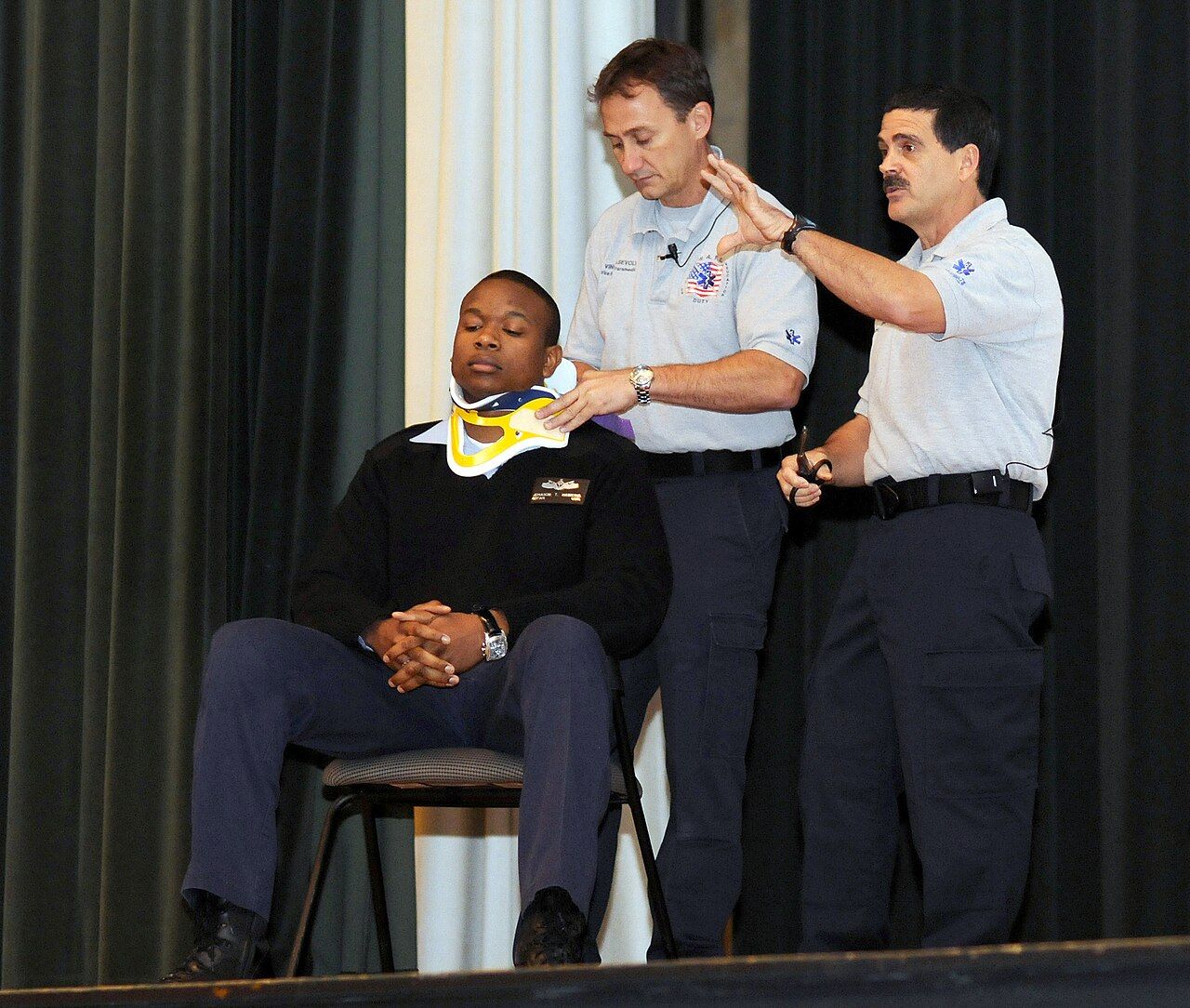
Speaker-centered versus audience-centered
A speaker-centered talk is organized around what the speaker knows, found interesting, or worked hard to gather. It sounds like a report of the preparation process. An audience-centered talk is organized around what a specific group needs to do, decide or understand when they leave the room. The two can contain identical facts and land completely differently, because the audience-centered version answers a question the speaker-centered version never asks: so what, for you, by Monday?
This is not a matter of charm. It is a matter of sequencing and selection. Audience-centered speakers cut good material that does not serve the room, put the useful thing early instead of saving it, and choose the example that matches the listener’s job rather than the one that impressed the speaker. Communication scholars sometimes describe the underlying failure as egocentrism: the ordinary human difficulty of modeling a mind that does not contain what your mind contains. It is not arrogance. Most speakers who bury the useful part are simply following the order in which they learned it.
Look at how small the edits are. In the table below, nothing was researched again. The same speaker with the same notes made five decisions differently.
| Decision | Speaker-centered version | Audience-centered version |
|---|---|---|
| Opening line | “Today I am going to talk about sepsis screening. It is a topic I find fascinating.” | “Sometime this rotation you will have about ninety seconds to decide whether the patient in bed four is septic. Here is how to spend them.” |
| Order of material | History of the protocol, then definitions, then the screening tool. | The screening tool first, then the two definitions you need to use it, then thirty seconds of history. |
| Amount of evidence | “I found seventeen studies, so let me walk through them.” | “Two studies changed what we do at the bedside. Here they are, and here is what changed.” |
| Word choice | “Hyperkalemia-induced dysrhythmia is the primary concern.” | “A potassium level high enough to throw the heart’s rhythm off — hyperkalemia — is the thing that kills people first.” |
| Closing line | “That is all I have. Any questions?” | “Before your next shift, do two things: bookmark the tool, and ask your preceptor who calls the rapid response on your unit.” |
What listeners are doing while you talk
Listeners are not passively receiving. They are running a continuous, mostly unconscious triage on three questions: Do I already know this? Does it apply to me? Is it worth the effort of following? A yes on all three buys you attention. A no on any of them and the listener begins doing something else with the same ears — rehearsing a reply, checking a schedule, drifting. Chapter 2 treats listening as a skill the audience owes you. Audience analysis is the other half of the bargain: the work you owe them so that listening is worth doing.
This is why audience analysis matters just as much for informative speaking as for persuasion. A common misconception is that you only need to study an audience when you are trying to change minds. In practice, unwanted information is ignored just as reliably as unwanted arguments. A perfectly accurate explanation delivered at the wrong altitude — too basic for experts, too dense for beginners — fails as completely as a bad argument, and it fails more quietly, because nobody objects to a talk they stopped following.
Adaptation is not pandering
Students often hear “adapt to your audience” and reasonably ask whether that means telling people what they want to hear. It does not, and the line between the two is clear enough to state as a test. Adaptation changes the route to the truth: your examples, vocabulary, order, emphasis, and the size of the request you make. Pandering changes the destination: you soften or abandon a claim you believe is true in order to be liked. A useful working standard is the two-room test — if both audiences were in the room at once, would you be embarrassed by what you told the other one? Different words are fine. Different facts are not.
An audience-centered speech contains the same facts as a speaker-centered one but selects, orders and words them around what a specific room needs to do next.
Section 2Three Lenses: Demographic, Psychographic, Situational
Lens one: the demographic facts
Demographic analysis catalogs the observable, reportable characteristics of a group: age range, education level, occupation and training, cultural and linguistic background, group membership, and the shared roles that brought them together. These are the easiest facts to obtain and the easiest to misuse. Their proper job is to generate questions, not conclusions. “Two-thirds of this room has been in practice more than fifteen years” does not tell you what they believe. It tells you to ask whether they were trained before the guideline changed, and whether an explanation aimed at new graduates will feel insulting.
Occupation is usually the highest-yield demographic fact for a working-adult audience, because it predicts vocabulary, time pressure and what counts as proof. Education level predicts comfort with abstraction more than intelligence. Age predicts shared reference points — not values. A speaker who assumes that everyone over sixty distrusts technology and everyone under twenty-five lives on a phone will be wrong often enough to lose the room in the first minute.
Lens two: what they believe and value
Psychographic analysis reaches past the visible facts to the internal ones: values, beliefs and attitudes. The three are frequently blurred in ordinary speech, and separating them is one of the most practical moves in this chapter. Values are enduring judgments about what is worth pursuing — fairness, safety, independence, family, thrift. Beliefs are what a person holds to be factually true. Attitudes are settled favorable or unfavorable orientations toward something specific. Values are the most stable and the hardest to change in one speech; attitudes are the most specific and the most movable.
Stack them for a single topic and the strategy writes itself. Suppose you are speaking about mandatory continuing-education hours. Value: “Patients deserve a competent nurse.” Belief: “Most refresher courses are box-checking that teaches nothing.” Attitude: “I resent the annual requirement.” Notice that the attitude you are fighting rests on a belief, and that belief sits on a value you share. Arguing against the value is hopeless and unnecessary. Arguing against the belief — with evidence about which formats actually change practice — is a speech you can give in ten minutes.
Lens three: the situation around the speech
Situational analysis covers everything true about the occasion rather than the people: size of the group, time of day, length of your slot, what happens immediately before and after you, the physical room, whether attendance is voluntary or required, and the reason the event exists at all. A captive audience — required to attend for credit, compliance or employment — behaves differently from a voluntary one. Captive listeners begin at neutral or mildly resentful, and they are exquisitely sensitive to any sign that you are wasting their required time. The single best adaptation is to say, early and specifically, what they will get out of being there.
Situational facts have blunt consequences. A twenty-minute slot at 4:30 p.m. after three other speakers is not the place for your longest example. A room of two hundred kills the discussion questions you planned. Speaking right after a layoff announcement changes what any sentence containing the word “efficiency” will sound like. None of this is deep theory; it is the difference between a plan that survives contact with the room and one that does not.
| Lens | What you are looking for | A question it forces you to answer | What it usually changes in the speech |
|---|---|---|---|
| Demographic | Age spread, training, occupation, language, group membership, role | “What vocabulary can I assume, and what will feel condescending?” | Word choice, level of detail, choice of examples |
| Psychographic | Values, beliefs, attitudes toward your specific topic; prior exposure | “What do they already believe that helps me, and what belief is in my way?” | The size of your claim, which objection you answer first |
| Situational | Size, time, length, order, room, voluntary or captive, occasion | “Why are these people here at this hour, and what did they give up to come?” | Length, interactivity, opening, use of aids |
Inference or stereotype?
The distinction is testable. An inference is a tentative, falsifiable statement about a group with a stated basis, and it points to something you will verify. A stereotype is a fixed attribution of traits to individuals because of a category, and it is treated as settled. Compare: “Because most of this audience trained before 2015, some may have learned the older screening criteria, so I will state both and mark which changed” (inference — based on a fact, hedged, produces a specific adaptation) versus “Older nurses resist new protocols, so I will keep it simple” (stereotype — unfalsifiable, insulting, produces a worse speech).
Three habits keep you on the right side of that line. State the evidence for any audience claim you make. Write it with a hedge you actually mean — some, many, roughly half — not as a universal. And build the adaptation so it helps the listener who does not fit the pattern. Marking which criteria changed helps the veteran and the new graduate equally; “keeping it simple” helps nobody.
Describe an audience through all three lenses — who they are, what they believe, and why they are in this room today — and treat every demographic fact as a question to verify rather than an answer.
Section 3Gathering the Data Without Guessing
Ask the person who invited you
The fastest source of audience information is the human being who arranged the event — the instructor, unit educator, program chair or committee secretary. Call this person your contact, and treat the conversation as a structured interview rather than logistics. Ten minutes here routinely beats an hour of speculation. The questions that pay are specific and slightly awkward: “Who exactly is required to be there?” “What did the last speaker on this topic do that did not work?” “What does this group already believe about it?” “What is the one thing you personally want them to walk out with?” “Is there anything I should not step on?”
The last question is the one that saves speeches. Contacts know the political weather — a recent staffing dispute, a failed rollout of the very software you were going to praise, the fact that the department director will be sitting in the second row. None of it appears in the event description, and all of it changes your speech. Take notes during the call and read the notable answers back for confirmation, because contacts sometimes describe the audience they wish they had.
Surveys that actually tell you something
When you have access to the group in advance — a classmate audience, a staff meeting, a course roster — a short questionnaire beats intuition. Three item types cover almost everything. Fixed-alternative questions force a choice among stated options and are fast to tally. Scale questions measure intensity, usually on a five- or seven-point range, which matters because a mildly negative room and a furious room require different speeches. Open-ended questions return language you can quote and objections you did not anticipate; they take the longest to analyze and are usually the most useful.
The most common survey error is not length — it is a leading question that encodes the answer you are hoping for. A leading item does not merely produce bad data; it produces confident bad data, which is worse than no data at all. The second most common error is asking what people want to hear rather than what they already believe, do or fear. Preferences are cheap and unreliable. Behavior and belief are what you have to plan around.
| Item type | Weak version | Improved version | Why it is better |
|---|---|---|---|
| Fixed-alternative | “Do you agree that hand-hygiene audits are important?” (Yes / No) | “In the past month, how were you told about your unit’s hand-hygiene score? (Email / Huddle / Posted chart / I was not told)” | Asks about an event that happened, not an opinion nobody will admit to holding |
| Scale | “How much do you like this topic?” (1–5) | “Before today, how confident were you that you could explain this to a patient? 1 = not at all, 5 = completely.” | Measures a specific, useful capability instead of vague enthusiasm |
| Open-ended | “Any thoughts on the topic?” | “What is the one thing about this that still does not make sense to you?” | Names the gap you should build the speech around, in the audience’s own words |
| Leading item | “Do you support the obviously overdue update to our outdated policy?” | “What is your view of the proposed policy change? (Support / Oppose / Not enough information)” | Removes the loaded adjectives that guarantee agreement and destroy the data |
| Double-barreled item | “Do you find the training useful and well scheduled?” | Split into two items: usefulness, then scheduling. | A single answer to two questions cannot be interpreted |
Observation, context and the limits of small samples
Direct observation is free and underused. Arrive early. Watch who sits with whom, whether people are in scrubs or business clothes, whether the room is set in rows or circles, how many are eating lunch at their seats, and how many arrive late enough that they will miss your first two minutes. Read whatever the group already reads — the unit newsletter, the last three meeting agendas, the syllabus, the organization’s public mission statement. Documents reveal priorities and vocabulary, and quoting one accurately in your opening signals that you did the work.
Be honest about what small data can support. Eleven responses from a class of thirty tell you what those eleven think, and the people who answer voluntary surveys are systematically more interested than the people who do not. Say so in your own head, and where relevant, say so aloud: “About a third of you answered my survey, and of those, most had never seen the form — so I am going to start there, and stop me if that is old news.” That sentence costs six seconds, is honest about uncertainty, and gives the room a way to correct you.
Gather audience information the way you would gather evidence for any claim — from the contact who booked you, from short unbiased survey items, and from your own eyes — and stay honest about how thin the sample is.
Section 4Turning Analysis Into Choices
Calibrate the size of your claim
Analysis is worthless until it changes a sentence. The first sentence it should change is your central claim. Sort the room by disposition toward your topic — favorable, neutral or apathetic, uninformed, opposed but open, or committed against — and then set a goal that group could plausibly reach in the time you have. A useful frame here comes from social judgment theory, associated with Muzafer Sherif and colleagues: around any position a person holds, there is a latitude of acceptance (positions they can live with), a latitude of noncommitment, and a latitude of rejection. A claim that lands inside the latitude of rejection can trigger a boomerang effect, in which the listener ends up further from you than when you started. The theory has its critics — the latitudes are hard to measure precisely and the research base is older than most of the textbooks citing it — but the practical instruction it yields is sound and widely echoed: with a resistant audience, ask for one notch of movement, not conversion.
| Disposition | What they are thinking | Realistic goal for one speech | Sample calibrated claim (topic: registering as an organ donor) |
|---|---|---|---|
| Favorable | “I agree. What do you want from me?” | Convert agreement into a specific act | “You already believe in this. Today I want your name on the registry before you leave — the form is on the back table and it takes ninety seconds.” |
| Neutral or apathetic | “Fine, but not my problem today.” | Make it personally relevant and lower the cost | “This is one checkbox at the license counter. Here is the four-minute version of why that box matters to a family you have never met.” |
| Uninformed | “I do not know enough to have a view.” | Correct the specific misinformation, then invite a first step | “Most of what circulates about how donors are treated in the emergency department is wrong. Here are the three rules that actually govern it.” |
| Opposed but open | “I have a reason, and you have not heard it.” | Name their objection accurately, then move them one notch | “I am not asking you to register today. I am asking you to read the one paragraph on the form that answers the objection most people in this room have.” |
| Committed against | “This speaker is the opposition.” | Establish shared values and correct one factual point | “You and I want the same thing: no family pressured at the worst hour of their lives. Let us look at what the law actually requires, and where I think it fails.” |
Translate the vocabulary — but do not delete it
Once you know a field well, you lose the ability to remember not knowing it. Researchers call this the curse of knowledge, and it is the single most reliable cause of a technically excellent presentation that nobody follows. Jargon is not the enemy; unexplained jargon is. The professional move is to define a term the first time you use it, in words the listener already owns, and then keep using the term — because your audience of students or patients will meet that vocabulary again and needs it. Stripping a working term out entirely is its own kind of condescension. The exception is language that carries no information: buzzwords the listener will never encounter on a chart or an order do not need defining, they need cutting.
| Before (as written by the expert) | After (for this room) | The move |
|---|---|---|
| “The patient is NPO after midnight.” | “Nothing to eat or drink after midnight — on the chart that is written NPO.” | Define, then keep the term |
| “We are titrating the drip to MAP.” | “We adjust the medicine minute by minute to keep the average pressure high enough to feed the kidneys and brain. That average is the MAP.” | Define, then keep the term |
| “Ambulate the patient TID and reassess.” | “Walk her three times a day — that is what ambulate TID means — and look again after each walk.” | Define, then keep the term |
| “The reduction was statistically significant at p below .05.” | “If nothing but chance were at work, a drop this large would turn up less than five times in a hundred — that is what statistically significant claims. It does not tell you the odds that the program worked, and it does not tell you whether the drop is big enough to matter.” | Define, keep the term, and name what it does not mean |
| “This is an evidence-based, patient-centered, multidisciplinary quality initiative.” | “Three departments built this together, and we tested it on our own unit for six weeks.” | Cut — these words carry no information the sentence needs |
One message, three audiences
Here is the same content — a hospital is replacing its fall-prevention program — written for three different rooms. The facts do not move. Everything else does.
Version A · Night-shift nursing assistants (captive, tired, 15 minutes at shift change). “Starting the fourteenth, the yellow socks are gone and the door magnets change color. Three things change for you: you screen at handoff instead of at admission, you document in one place instead of two, and if the magnet is red you do not leave that room without eyes on the patient. That is the whole change. I will show you the magnet, then you can go.”
Version B · The finance committee (voluntary, skeptical, 10 minutes with slides). “We had forty-one patient falls last year, six with injury. The average injurious fall adds several days of stay that we are not reimbursed for. The program we are proposing costs about eleven thousand dollars in supplies and training in year one. If it prevents two injurious falls, it pays for itself. Here is the evidence that it prevents more than two, and here is what I am not sure about.”
Version C · A community group of adult children of older patients (voluntary, anxious, 20 minutes plus questions). “If your mother is admitted next month, you will see a red magnet on her door and you may wonder whether something is wrong. It means the staff have flagged her as high risk — at eighty-two she is more likely to fall, and on a blood thinner a fall is more likely to do serious damage. Tonight I want you to leave with two questions you can ask any nurse on that unit, and the reason a fall matters more at eighty-two than it did at fifty.”
Notice what did not change: what the program is, how it works, and the refusal to promise more than the evidence supports. Notice what moved: the opening, the unit of value (time, money, a mother), the length, the ending. That is adaptation. If Version B had claimed the program was proven to eliminate falls, that would have been pandering — a different destination, not a different route.
Build common ground
The rhetorician Kenneth Burke argued that persuasion depends on identification — the audience recognizing that your interests, experiences or values overlap with theirs. In practice, common ground is built with specifics, not declarations. “I know how hard your job is” is an assertion about yourself that the room has no reason to credit. “I have stood at that med cart at 3 a.m. with two call lights going” is evidence. Weak common ground flatters; strong common ground demonstrates.
Common ground also has a failure mode worth naming: ethnocentrism, the assumption that your own group’s norms are the neutral default. It shows up in small ways — a holiday reference that assumes one tradition, a family example that assumes one structure, an idiom that only makes sense to native speakers of one dialect. The repair is not to sand every example down to nothing. It is to check whether the example requires membership in your group to work, and if it does, either explain it in one clause or choose a different one.
Adaptation means changing the route — claim size, vocabulary, examples, common ground — while the destination, the truth of what you are saying, stays fixed.
Section 5Reading the Room and Adapting Live

Cues are data, not verdicts
Audience feedback during a speech — posture, eye contact, note-taking, phones, murmurs, laughter, the sound of a room going still — is genuinely informative and genuinely ambiguous. Research on nonverbal decoding, discussed further in Chapter 3, consistently finds that people are far less accurate at reading others than they believe, and that confidence and accuracy are only loosely related. So read cues in patterns, across the room, over time. One folded pair of arms is a cold room. Fifteen pairs of arms folding during the same ninety seconds is a message.
| What you see or hear | It might mean | It might just as easily mean | A move you can make out loud |
|---|---|---|---|
| Phones come up in several rows at once | You lost the thread two minutes ago | They are looking up the statistic you cited, or the break is at 3:00 | “Let me get to the part you can actually use on Monday.” |
| Heavy note-taking stops abruptly | The material stopped being useful | They already know this part | “Quick check — is this review for most of you?” |
| Neighbors turn and talk to each other | Confusion is spreading | Recognition — “that happened on our unit” | “I heard that. What did I skip?” |
| One person frowns hard and leans forward | Disagreement | Concentration, or they cannot hear you | Say the point again a second way; do not confront the face. |
| The room goes completely still | You lost them | You have them — stillness is often full attention | Slow down and let the silence work instead of filling it. |
| Dead silence when you invite questions | Nothing landed | Nobody wants to ask first, or they need ten seconds | “The question I usually get first is …” then answer it and wait. |
Four adjustments worth rehearsing
Reading the room is useless without a rehearsed response, because mid-speech is a terrible time to invent one. Four moves cover nearly every situation, and each should be practiced until it comes out in a full sentence rather than a stammer. Compress: skip to the payoff. “I am going to leave the background in the handout and go straight to the three steps.” Concretize: replace an abstraction with a case. “Here is what that looked like with an actual patient last March.” Check: buy information with one question. “Show of hands — how many of you have already used the new form?” Reframe: restate the relevance you assumed was obvious. “The reason this matters to you specifically is that you are the one who signs it.”
Build the raw material for these moves into your preparation. Mark one section of your outline as cuttable, keep one vivid example in reserve, and write your check-in question in advance. A speaker who has pre-decided what to drop can lose four minutes gracefully; a speaker who has not will either race through everything at double speed or run over. Both read as panic.
Captive, hostile and mixed rooms
For a captive audience, acknowledge the situation once, briefly and without complaint, and then buy their attention with utility: “I know this is required and I know it is the end of your shift. I have twelve minutes of material and one thing that will save you a phone call. Here it is first.” Never apologize twice, never joke about how boring the topic is, and never announce that you will “try to make this quick” and then not.
For a hostile question, the sequence that works is restate, concede, answer, and stop. “You are asking why we are spending money on this when we are short-staffed — and you are right that the staffing problem is bigger. Here is why this particular spend does not come out of that budget line. Does that answer it?” Restating slows you down and confirms you heard the question. Conceding the true part costs you nothing and buys credibility. Stopping is the part most speakers skip, and it is where arguments start.
Mixed rooms — experts and beginners together — are the most common real-world case and the least discussed. Two techniques help. Signpost the level so people can self-select: “The next two minutes are for anyone who has not used the form; if you have, this is a good moment to look at question three on the handout.” And layer the example: give the plain version first and the technical qualifier second, so beginners get a complete thought before the specialists get their footnote.
Analyze after, not just before
The post-speech analysis is the pass most speakers skip, and it is the cheapest improvement available. Do it within a day, in writing, and keep it to four questions. What did people ask? Questions map the gap between what you said and what they needed, and they are far more reliable than compliments. What did people repeat back to you afterward in their own words — and was it your main point? Where did the room go quiet or restless, and what was I saying at that moment? What would I cut if I had to give this in half the time?
Treat applause and hallway praise as weak evidence. People are kind, and “that was great” tells you about their manners, not your speech. Behavioral traces are stronger: how many people took the handout, how many actually signed up, whether the questions were about your topic or about something you never mentioned. Over a semester, this file becomes the most accurate audience analysis you own, because it is built from the audiences you have actually faced.
Live cues are ambiguous evidence, so read them in patterns and respond with one of four rehearsed moves — then analyze the audience again afterward, when the data is best.
The chapter in one breath
Audience analysis converts a speech about a topic into a speech for people. It begins with a shift in posture — from reporting what you found to serving what a specific room needs — and it becomes concrete through three lenses: the demographic facts you can observe, the psychographic values, beliefs and attitudes underneath them, and the situational reality of why these people are in this room at this hour. Those lenses generate questions, not conclusions, and the discipline that separates analysis from stereotyping is insisting on evidence, hedges, and adaptations that help the listener who does not fit the pattern. You gather the evidence by interviewing whoever invited you, by writing short survey items free of leading and double-barreled wording, and by arriving early enough to look around. Then the analysis has to change sentences: the size of your claim calibrated to the room’s disposition, jargon defined and kept rather than dumped or deleted, examples chosen for this audience’s work, common ground built from specifics. During the speech you read patterns of feedback and deploy one of four rehearsed moves. Afterward you ask what they asked. Adaptation changes the route; it never changes the destination.
Words worth knowing
| Term | What it means |
|---|---|
| Audience analysis | The systematic study of a specific audience’s characteristics, beliefs and circumstances in order to make better choices about a message. |
| Audience-centered | Organized around what listeners need to understand, decide or do, rather than around what the speaker prepared. |
| Speaker-centered | Organized around the speaker’s own interests and preparation process; the default failure mode of a well-researched talk. |
| Egocentrism | The ordinary difficulty of modeling a mind that lacks what your mind contains; the root of most audience misjudgments. |
| Demographic analysis | Study of observable audience characteristics: age, education, occupation, cultural background, group membership, role. |
| Psychographic analysis | Study of an audience’s internal orientations — values, beliefs and attitudes — especially toward your topic. |
| Situational analysis | Study of the occasion itself: size, time, length, order of speakers, physical room, and whether attendance is voluntary. |
| Values | Enduring judgments about what is worth pursuing; the most stable and hardest to change in a single speech. |
| Beliefs | What a listener holds to be factually true, whether or not it is. |
| Attitudes | Settled favorable or unfavorable orientations toward a specific object, person or proposal; the most movable of the three. |
| Inference | A tentative, evidence-based, falsifiable statement about an audience that leads to a specific adaptation. |
| Stereotype | A fixed set of traits attributed to individuals because of category membership and treated as settled fact. |
| Captive audience | Listeners required to attend; they start near neutral or mildly resentful and are highly sensitive to wasted time. |
| Fixed-alternative question | A survey item offering a set list of answers; fast to tally, limited to options you thought of. |
| Scale question | A survey item measuring intensity along a numbered range, useful for telling mild opposition from strong opposition. |
| Open-ended question | A survey item inviting the respondent’s own words; slowest to analyze, richest in unanticipated objections. |
| Leading question | An item whose wording encodes the desired answer, producing confident but worthless data. |
| Disposition | An audience’s standing orientation toward your topic: favorable, neutral, uninformed, opposed but open, or committed against. |
| Latitude of acceptance | In social judgment theory, the range of positions a listener can tolerate; a claim that lands instead in the latitude of rejection can push them further away. |
| Boomerang effect | The outcome in which a persuasive attempt moves listeners toward the opposite of the advocated position. |
| Curse of knowledge | The inability of an expert to recall what it was like not to know; the leading cause of unfollowable technical talks. |
| Identification (common ground) | Kenneth Burke’s term for the audience’s recognition of shared interests, experiences or values with the speaker. |
| Ethnocentrism | Treating your own group’s norms as the neutral default, so examples and idioms quietly require membership to work. |
| Adaptation | Changing the route to a claim — examples, vocabulary, order, emphasis, size of the request — while the claim itself holds. |
| Pandering | Changing what you claim is true in order to be liked, as opposed to changing how you explain it. |
| Audience feedback | The posture, attention, questions and restlessness a room produces while you speak; ambiguous singly, informative in patterns. |
| Post-speech analysis | A short written review after speaking — questions asked, points repeated back, restless moments, what to cut. |
Check yourself
TOPIC, PURPOSE AND THESIS
Most speeches are lost long before anyone stands up. They are lost at a kitchen table at eleven at night, when a speaker picks something that sounds interesting, promises to “figure out the point later,” and starts collecting sources with no idea what the sources are for. The result is a tour, not a talk — twelve facts about a subject, arranged in the order they were found. This chapter is about the three decisions that prevent that: what you are talking about, what you want the room to do about it, and the one sentence that holds the whole thing together. These are craft decisions, not inspiration. There are formulas, filters and revision moves that work, and you can run them on a topic in twenty minutes. Every idea here comes with a weak version and a repaired version, because the difference between them is the difference between a speech that lands and a speech that merely finishes.
By the end of this chapter you can
- Generate at least a dozen viable speech topics from a personal and professional topic inventory instead of a search engine.
- Apply a three-part filter — investment, audience need and supportability — to score and rank candidate topics.
- Distinguish the four general purposes and name the observable test that tells you whether each one succeeded.
- Write a specific purpose statement using the standard formula, with a single infinitive, a named audience and one checkable outcome verb.
- Narrow a broad subject down a scope ladder until it fits the assigned time, and defend the cut you made.
- Compose a thesis statement (central idea) that asserts something, and pair it with a preview statement that forecasts the main points.
- Classify a persuasive thesis as a claim of fact, claim of value or claim of policy, and identify the burden each one carries.
- Run a five-check alignment audit on topic, purpose and thesis, and diagnose the standard failure patterns by their symptoms.
- Revise a drifting thesis after research so the finished speech delivers one clear residual message.
Section 1Choosing a Topic You Can Actually Deliver
Start with an inventory, not a search engine
“Speech topic ideas” typed into a search bar returns a thousand topics that belong to nobody. You will scroll, feel vaguely dissatisfied, and eventually settle on the least offensive item on a list a stranger wrote. That is how people end up giving five minutes on the history of coffee to a room that does not care and to a speaker who cares even less.
The faster route is an inventory of what you already carry. Take a blank page and make three columns. Column one: roles and routines — every job you have held, every shift you work, every place you spend hours (clinical rotation, warehouse floor, church nursery, second-shift call center, a household with a toddler). Column two: arguments you have had — things you have genuinely defended out loud, whether to a coworker, a relative or a comment section. Column three: things you have had to explain — anything a friend, patient, new hire or family member did not understand until you walked them through it.
That third column is gold, and students almost always skip it. Explaining is already a rehearsal for informative speaking. A nursing student’s third column might read: why we ask the same three questions every shift change; what an A1C number actually measures; why a family member cannot just bring in outside medication; how to read a hospital bill. Every one of those is closer to a speech than anything a topic list will hand you, because you have already found the words once and watched them work on a real person.
Here is a worked inventory from a second-year respiratory therapy student, written in about six minutes. Roles: RT student, overnight stocker, youth soccer coach, caregiver for a grandmother with COPD. Arguments: vaping regulation, whether coaches should cut kids, hospital visitor policies. Explanations: how a rescue inhaler differs from a maintenance inhaler, why my grandmother’s oxygen tubing has to be a certain length, how to spot heat illness in an eleven-year-old at practice. That is ten starting points, none of them generic, all of them supportable by someone who has lived near the material.
Brainstorming that produces options, not one idea
The most common brainstorming failure is stopping at the first decent idea. Generation and judgment are different mental activities, and running them at the same time kills both. Set a timer for eight minutes and write candidates without evaluating a single one. Bad ideas are useful; they are the stepping stones to the adjacent good idea. Aim for twelve candidates minimum before you allow yourself an opinion about any of them.
Two techniques do most of the work. Clustering (also called mind mapping) puts a broad word in the center of a page and branches outward: from sleep you might branch to shift work, teenagers, sleep apnea, caffeine, insomnia apps, drowsy driving, hospital noise at night; from shift work you branch again to rotating schedules, nap policy, error rates at 4 a.m., the drive home. The second or third ring is where speech-sized ideas live. Laddering works differently: take a candidate and ask “so what?” three times. Drowsy driving → so what? → crashes peak in early morning hours → so what? → students who work overnights and drive to an 8 a.m. class are running a risk they have not named → that is a speech, and the audience is sitting in the room.
One caution about generation: do not let novelty become the only criterion. Instructors are not scoring originality of subject, they are scoring whether the room learned or moved. A common topic handled with real specificity and fresh evidence beats an exotic topic handled thinly. “Hand hygiene” sounds tired until you build it around the twelve-second observation you made on your own unit.
The three-question filter
Once you have candidates, evaluate them against three questions, in this order. First, investment: will I still be interested at hour four? You are going to spend real time with this material, and boredom shows up in the voice. Second, audience need: does this specific audience have a reason to listen, and can I state that reason in one sentence? Chapter 5 gave you the tools for that judgment; here you simply apply them. Third, supportability: can I find credible evidence in the time I actually have? A brilliant topic with no accessible sources is not a topic, it is a wish.
Then run the constraint check, which is unglamorous and saves people. Does the topic match the assignment type — an informative assignment is not the place for your best persuasive material? Does it fit the time limit? Is it appropriate for this room, this institution, this hour? And can you handle it ethically: a topic drawn from your workplace must never carry identifiable patient or client details, and a topic drawn from your own trauma should be one you can deliver without being ambushed by it mid-speech.
| Candidate topic | Investment (1–5) | Audience need (1–5) | Supportability (1–5) | Verdict |
|---|---|---|---|---|
| The history of coffee | 2 | 2 | 5 | Drop — easy to research, no reason for this room to care |
| Why hospitals are loud at night | 5 | 3 | 4 | Keep, but sharpen the audience hook |
| Drowsy driving after a night shift | 5 | 5 | 4 | Strong — lived knowledge plus a room full of shift workers |
| Artificial intelligence in medicine | 4 | 4 | 2 | Drop or narrow hard — far too broad to support in five minutes |
| My grandmother’s COPD diagnosis | 5 | 2 | 3 | Rework — good story, needs a general claim the audience can use |
Notice that the total is not what decides. A 1 or a 2 in any single column is disqualifying no matter how the other two score — which is why two topics here tie at ten points and both still get cut. A topic you cannot support becomes a speech of unsupported assertions; a topic the audience has no stake in becomes a well-researched lecture delivered to people checking their phones.
Good topics come from an inventory of what you already do, argue about and explain, then survive a three-part filter of personal investment, audience need and supportability.
Section 2General Purpose and Specific Purpose
The four general purposes
The general purpose is the broad category of what you are trying to do to an audience. Textbooks disagree on the count. The most common list is three — to inform, to persuade, to entertain — and many add a fourth, to commemorate, for tributes, toasts and eulogies. Some collapse the last two into a single “special occasion” category, and a few argue that all speaking is ultimately persuasive because even a choice of which facts to present is an argument about what matters. Those disagreements are real and worth knowing, but for building a speech the four-way split is the most useful tool, because each purpose carries a different test for success.
That test matters more than the label. If you cannot say what would have to be observably true afterward for your speech to have worked, you do not have a purpose — you have a subject.
| General purpose | What you are asking of the audience | Success test | Typical failure |
|---|---|---|---|
| To inform | Understand something they did not understand before | They could explain your main idea accurately to someone else | Coverage without a point; a list of facts |
| To persuade | Change or strengthen a belief, attitude or behavior | They can state your position and one reason to hold it | Informing on a controversial topic and calling it persuasion |
| To entertain | Enjoy the time and take a light idea with them | They laughed and can still name the through-line | Jokes with no spine connecting them |
| To commemorate | Feel and share a value attached to a person, group or moment | They leave with one image or phrase about the honoree | A biography read aloud instead of a tribute |
The line between informing and persuading is a continuum, not a wall, and that is where most students get marked down. A speech on vaping that closes with “so think carefully about what you put in your lungs” has slid into persuasion. A persuasive speech that spends four of five minutes explaining what a topic is has slid into informing. The fix is not to police every sentence; it is to fix the general purpose first and then let it govern verb choice, evidence type and the shape of the conclusion.
Writing a specific purpose statement
The specific purpose statement is a single sentence, written for you rather than spoken to the audience, that states exactly what you want this audience to know, believe or do by the end. The standard formula is reliable enough that you should just use it: To + general-purpose verb + my audience + the precise outcome.
Six rules make it work. One infinitive only — “to inform and persuade” is two speeches. Name the actual audience, not “people.” State one idea; if you need “and,” check whether you smuggled in a second speech. Write a statement, never a question. Use plain language, not the poetic phrasing you might want in the speech itself. And make it achievable inside the time limit — if the outcome requires twenty minutes, the statement is wrong, not the clock.
| Weak version | What is wrong | Repaired version |
|---|---|---|
| My speech is about diabetes. | A topic, not a purpose; no verb, no audience, no outcome | To inform my classmates how three everyday habits change a person’s A1C reading over ninety days. |
| To inform my audience about the importance of sleep. | “Importance of” is a persuasive move wearing an informative costume; still far too broad | To inform my classmates how a rotating night-shift schedule disrupts the body clock and what a fixed anchor-sleep block does about it. |
| To persuade my audience to understand organ donation. | “Understand” is not persuasion, and it cannot be observed | To persuade my classmates to register as organ donors at the state registry before the end of the term. |
| Should college athletes be paid? | A question, not a statement; commits to no position | To persuade my classmates that revenue-sport athletes at public universities should receive a direct share of media revenue. |
| To inform and persuade my audience about vaccines. | Two general purposes, one subject the size of a library | To inform my classmates how mRNA vaccines instruct cells to build one viral protein the immune system then learns to recognize. |
| To inform my audience about my clinical rotation. | Audience-blind; the outcome exists only for the speaker | To inform my classmates what three questions to ask before their first clinical shift so they are not blindsided the way I was. |
Choosing verbs you can check
Most limp purpose statements fail on one word. Verbs like understand, know, appreciate, be aware of and learn about describe invisible states. Nobody, including you, can tell whether they happened. Swap them for verbs that name something an audience member could actually do afterward: describe, compare, identify, sequence, explain, demonstrate for informative speeches; adopt, switch, register, vote, donate, schedule, refuse, reconsider for persuasive ones.
The rewrite is small and the effect is large. “To inform my audience about stroke” gives you nothing to build with. “To inform my classmates how to identify the five warning signs in the BE FAST stroke check and what to do in the first ten minutes” has already told you your main points, your evidence type and your conclusion. A specific purpose statement is not paperwork; it is the outline in compressed form. When students say they are stuck on organization, the problem is usually upstream in a purpose statement that never committed to anything.
Keep the statement on the page in front of you while you draft, and treat it as a gate: any fact, story or slide that does not serve that sentence comes out. This is the cheapest editing rule in public speaking, and it is the one that turns a seven-minute draft into a clean five.
Fix the general purpose first, then write a one-sentence specific purpose that names your audience and uses a verb whose result you could actually observe.
Section 3Narrowing: Making the Topic Fit the Clock
The scope ladder
Scope is how much territory a topic claims. Narrowing is the deliberate reduction of that territory until what remains can be developed, not merely mentioned. The most reliable method is a ladder: write your subject at the top and take one concrete step down at a time, until a rung appears that you could genuinely finish inside the time limit. Do not jump from the top to the bottom in one move; the middle rungs are where you discover the interesting angle.
| Rung | Subject A | Subject B | Subject C |
|---|---|---|---|
| 1. Subject (a library) | Nutrition | Antibiotic resistance | Financial aid |
| 2. Area (a course) | Nutrition in older adults | Resistance in hospitals | Paying for a nursing program |
| 3. Topic (a chapter) | Protein intake in older adults | How resistant organisms spread between patients | Loan repayment options after graduation |
| 4. Angle (an article) | Why older adults need more protein than the standard adult target | Why gowning and gloving fails at the doorway, not the bedside | How income-driven repayment changes a first-year salary |
| 5. Speech-sized claim (five minutes) | Three cheap protein sources that get around a common barrier — chewing | Three doorway habits that break contact-precaution technique on a busy unit | Three numbers to check before choosing an income-driven repayment plan |
Rungs one and two are not speeches; they are course catalogs. Rung three still feels like a speech to most students and is still too big — “how resistant organisms spread” is a whole chapter, and you have five minutes. Rung five is where an audience gets something they can hold, because you have room to explain each of the three items, show evidence for each, and still have a beginning and an end.
Time math, done honestly
Speaking rates vary a great deal by person and by material, but most public speakers land somewhere between roughly 120 and 160 words per minute, and planning at about 130 is safe. A five-minute speech is therefore something like 650 words — roughly two and a half double-spaced pages. That number tends to shock people, and it should, because it is the whole argument for narrowing.
Now subtract. An introduction and conclusion together typically eat twenty to twenty-five percent of the clock, so a five-minute speech leaves under four minutes of body — call it 225 seconds. Split that across main points. Two main points get about 110 seconds each; three get about 75. In seventy-five seconds you can state one claim, give one piece of evidence with its source, explain what the evidence means, and transition. That is it. That is the actual unit of a speech, and it is why a four-point speech in five minutes is almost always a list of headlines.
Run the arithmetic before you draft, not after. A student who plans “the causes, effects, treatment and prevention of type 2 diabetes” in five minutes has budgeted about fifty-five seconds per point, which is not enough time to say anything a listener could not have guessed. The same student, narrowed to “three habits that change an A1C reading in ninety days,” has the same clock and suddenly has room for a real example inside each point.
Depth beats coverage: a worked comparison
Take hand hygiene, five minutes, informative. Version one, the coverage draft: history of Semmelweis, the germ theory, types of pathogens, soap versus alcohol-based rub, the five moments for hand hygiene, glove use, compliance rates, hospital-acquired infection statistics, and a closing plea. Eight ideas in the body, under thirty seconds apiece. The audience will retain approximately one of them, chosen at random.
Version two, the depth draft: one claim — alcohol-based rub outperforms soap and water for most routine moments, but only if it stays wet on the hands for the full contact time. Point one: what the contact time is and why the manufacturer sets it. Point two: the two moments in a shift when people cut it short, drawn from your own observation on a unit. Point three: a twenty-second demonstration the audience can imitate at the next dispenser they pass. Same clock, one idea, three developed points, a physical demonstration, and a listener who can now do something differently tonight.
The coverage draft feels safer because it looks thorough. It is not thorough; it is thin in eight places instead of deep in one. The test to apply to your own draft is blunt: if a listener could only carry one sentence out of the room, which sentence is it, and did you spend your time earning that sentence?
Narrow by climbing down a ladder of increasing specificity until the remaining claim can be developed, not just mentioned, inside your actual word budget.
Section 4The Thesis: One Sentence That Runs the Speech

What a thesis is, and the three things it gets confused with
The thesis statement — many speech textbooks call it the central idea — is one declarative sentence that states the single main idea of the speech in the words the audience will actually hear. It is not the topic, not the title, and not the specific purpose. Those four things describe the same speech from four angles, and keeping them straight ends a lot of confusion.
Look at all four for one speech. Topic: sleep and night-shift work. Title: “The Drive Home.” Specific purpose (for the speaker): to inform my classmates how rotating night shifts disrupt the body clock and what an anchor-sleep block does about it. Thesis (spoken to the audience): “Rotating shifts break your body clock in three predictable ways — and a fixed four-hour anchor of sleep repairs most of the damage.” The purpose statement is the plan; the thesis is the promise.
Three quick tests. A thesis is a statement, never a question — “Why is nurse burnout rising?” is a title, not a thesis. It is one sentence; if yours needs a semicolon plus an “and also,” you have two speeches. And it must assert, meaning a reasonable listener could summarize what you claimed rather than merely what you discussed.
Informative central ideas still make a claim
Students often think an informative thesis should be neutral to the point of blandness. It should be neutral about advocacy — you are not asking anyone to act — but it should still commit to an assertion about how something works, what it consists of, or why it happens. “Today I will talk about the immune system” commits to nothing. “Your immune system fights an infection in three overlapping waves, and each wave explains a symptom you have felt” commits to a structure, a claim and a payoff.
A useful pattern for informative theses is quantified structure plus significance: name how many parts, name the parts’ nature, and say why it matters to this room. “Three forces set the price on a hospital bill, and none of them is what the treatment cost.” The number does two jobs at once — it makes the claim concrete and it hands the listener a mental filing system before you start filling it.
Persuasive theses and the three claim types
A persuasive thesis must be a sentence a reasonable person could deny. If nobody in the room could disagree, you have written a topic. Persuasive theses come in three families, and knowing which one you have tells you what you owe the audience.
A claim of fact argues that something is or is not true, did or did not happen, will or will not occur: “Twelve-hour shifts increase medication errors in the final two hours.” Your burden is evidence — data, studies, expert testimony. A claim of value argues that something is good, bad, just, unjust, better or worse: “Mandatory overtime in nursing is unethical.” Your burden is a stated standard; you cannot call something unethical without telling the audience by which criterion, and most value speeches fail because the speaker assumed the standard was obvious. A claim of policy argues that something should be done: “This campus should extend shuttle service until 2 a.m. for students leaving night clinicals.” Your burden is the full package — there is a problem, this plan addresses it, the plan is workable, and its benefits outweigh its costs.
| Weak thesis | Diagnosis | Revised thesis | Type |
|---|---|---|---|
| Today I am going to talk about student loan debt. | An announcement, not an idea; asserts nothing | Student loan debt does its real damage not at graduation but in year three, when interest capitalizes and the payment jumps. | Informative |
| Nurse burnout is a big problem. | True, obvious, undeniable — therefore not arguable | Nurse burnout is driven less by patient load than by loss of control over the schedule. | Persuasive, fact |
| Is social media bad for teenagers? | A question; commits to no position | Platforms that use an infinite scroll should be barred from serving it to accounts registered to minors. | Persuasive, policy |
| Vaccines are important and everyone should get one. | Two claims fused, and no standard given for “important” | Adults fifty and older should get the shingles vaccine, because the cost of the two-dose series is far lower than the cost of the nerve pain it prevents. | Persuasive, policy |
| I will explain the water cycle. | Names a subject, promises no structure or payoff | The water in your glass has moved through four stages of the same closed cycle, and one of those stages is why droughts now break records. | Informative |
| Assisted living facilities are bad. | Value claim with no criterion attached | Judged by resident autonomy rather than by safety statistics, most assisted living facilities are failing the people they house. | Persuasive, value |
Thesis plus preview, and where they land
In delivery, the thesis usually appears at the end of the introduction, immediately followed by a preview statement that forecasts the main points in the order the audience will hear them. Chapter 9 handles introductions in full; what matters here is that the thesis and preview are written together, because the preview is a test of whether the thesis is really one idea.
A model pairing, spoken aloud: “Rotating shifts break your body clock in three predictable ways — and a fixed four-hour anchor of sleep repairs most of the damage. We will look at what happens to your core temperature rhythm, what happens to your reaction time on the drive home, and what an anchor block actually looks like on a real schedule.” Two sentences, about thirty-five words, and the audience now has a map.
Say both sentences out loud before you accept them. Written theses tend to grow subordinate clauses that no listener can follow. If you run out of breath, or if you have to re-read to keep the grammar straight, cut it down. A thesis is written for the ear, and the ear forgives almost nothing.
A thesis is one declarative, arguable-or-assertive sentence written for the ear, and its paired preview proves whether it really contains a single idea.
Section 5Alignment: Testing Topic, Purpose and Thesis Together
The five-check alignment audit
Alignment means that the topic, the general purpose, the specific purpose and the thesis all describe the same speech. Misalignment is the single most common structural problem in student speaking, and it is almost always invisible to the speaker, because each piece looks fine on its own. Run these five checks in order, with all four elements written on one page in front of you.
| Check | Question to ask | Symptom when it fails | Fix |
|---|---|---|---|
| 1. Purpose match | Does the thesis do what the general purpose says? | An “informative” thesis that says “we must act” | Change the thesis, or change the assignment category if allowed |
| 2. Scale match | Could the thesis be proven or explained in the time allowed? | Draft runs long; every point feels rushed | Drop a main point and climb one rung down the scope ladder |
| 3. Audience match | Would this audience have a reason to care in the first minute? | You have to say “this is important because” more than once | Re-aim the thesis at the audience’s stake, not the subject’s importance |
| 4. Evidence match | Do the sources you found actually support this exact claim? | Sources are about the neighborhood of your claim, not the claim | Move the thesis toward what your evidence proves |
| 5. Preview match | Do the main points, in order, deliver the thesis and nothing else? | A main point that is interesting but orphaned | Cut the orphan or widen the thesis to adopt it — not both |
Check four deserves special attention because it is the one that fails after you have already done the work. You wrote a thesis, then spent three hours in the library, and the evidence turned out to say something adjacent to your claim but not the same thing. The honest move is to revise the thesis. The dishonest move — and it is dishonest, not merely sloppy — is to keep the thesis and stretch the sources to fit it.
Failure patterns you can spot by their symptoms
Topic creep shows up as a speech that keeps adding related material. You started with anchor sleep and now you have a section on melatonin supplements, because it was interesting and it was right there. The symptom is that you cannot state your thesis without the word “also.” The fix is a decision, not a compromise: melatonin is either inside the thesis or it is out of the speech.
Thesis drift is topic creep’s quieter cousin. The speech slowly becomes about the most interesting thing you found rather than the thing you set out to say. Drift is not a sin — research is supposed to change your mind — but it must be resolved. Rewrite the thesis to match what you now believe, then re-check the purpose statement and the outline against the new sentence, in that order.
Purpose-audience mismatch sounds like a good speech aimed at the wrong room: a policy speech urging classmates to lobby a state agency none of them can influence, or an informative speech explaining basics the audience already lives with. Two speeches in one announces itself in the preview: “I will explain what sepsis is, and then argue that our screening protocol should change.” That is a fine ten minutes and an impossible five. And the buried thesis is the speech where the real claim appears at minute four, after the audience has already decided the talk was a list.
A worked case, start to finish
A student writes down one line from her inventory: “I work night shift at a rehab facility.” That is a role, not a topic. Laddering: so what? → the drive home after a twelve is the scariest part of the job → so what? → half our class works overnights and drives to campus. Now there is a topic with an audience attached.
First attempt: Topic — drowsy driving. Specific purpose — to inform my audience about the dangers of drowsy driving. Thesis — “Drowsy driving is dangerous.” Run the audit. Check one passes. Check three fails hard: nobody disputes that drowsy driving is dangerous, so the room has no reason to lean in. Check five fails too, since a thesis this thin can preview anything.
Second attempt, after two hours of reading: Specific purpose — to inform my classmates who work overnight shifts how sleep debt impairs driving and what three countermeasures actually work. Thesis — “After a night shift, your driving is impaired in ways you cannot feel, and only three of the countermeasures drivers commonly use do anything at all.” Preview — what impairment looks like on the drive home, why the usual fixes fail, and the three that hold up. That thesis asserts something surprising, is scaled to three main points in five minutes, aims squarely at the people in the room, and previews cleanly.
Then the research shifts again: the strongest evidence she finds is about a short pre-drive nap, and the material on the other two countermeasures is thin. Rather than padding, she narrows once more. Final thesis — “The only countermeasure that reliably gets a night-shift worker home safely is the one that feels like a waste of twenty minutes: sleeping before you drive.” Same topic, tighter claim, evidence and thesis now saying the same thing. That is what alignment work looks like — not a form to fill out once, but three or four small corrections that keep the speech honest.
Topic, purpose and thesis must describe one speech, and when research moves one of them, the honest response is to re-cut the other two rather than stretch the evidence.
The chapter in one breath
A speech begins with three decisions that nobody sees and everybody hears. First the topic: generated from an inventory of what you already do, argue about and explain, expanded into a dozen candidates before judgment starts, then filtered for personal investment, audience need and supportability, with a constraint check for time, assignment type and ethics. Then the purpose: a general purpose — to inform, persuade, entertain or commemorate — chosen for its success test rather than its label, and a specific purpose statement written in one sentence, aimed at a named audience, built on a verb whose outcome you could actually observe. Then the narrowing, which is arithmetic before it is art, because five minutes is roughly 650 words and three developed points, and coverage is thinness spread wide. Then the thesis: one declarative sentence, written for the ear, that asserts a structure in an informative speech or a deniable position in a persuasive one, paired with a preview that proves it holds a single idea. And finally the audit, because research moves things. Align, re-cut, and let one residual message survive.
Words worth knowing
| Term | What it means |
|---|---|
| Topic inventory | A three-column list of your roles and routines, arguments you have had, and things you have had to explain — the fastest source of workable speech topics. |
| Clustering (mind mapping) | A generation technique that places a broad word at the center of a page and branches outward; usable topics tend to appear on the second or third ring. |
| Laddering | Asking “so what?” repeatedly of a candidate topic until it reaches an idea that touches the actual audience. |
| Supportability | Whether credible evidence for a claim can realistically be found and understood in the time available; a filter equal in weight to interest. |
| General purpose | The broad aim of a speech: to inform, to persuade, to entertain or to commemorate. Some texts merge the last two into “special occasion.” |
| Specific purpose statement | A single sentence written for the speaker stating exactly what this audience should know, believe or do afterward, in the form “To [verb] my audience [outcome].” |
| Outcome verb | A verb naming something observable (describe, compare, register, switch) rather than an invisible state (understand, appreciate, be aware of). |
| Scope | The amount of territory a topic claims; the quantity that narrowing reduces. |
| Scope ladder | A stepwise reduction from subject to area to topic to angle to a speech-sized claim, taken one rung at a time. |
| Thesis statement (central idea) | One declarative sentence stating the speech’s single main idea in the words the audience will hear. |
| Preview statement | The sentence following the thesis that forecasts the main points in the order they will be delivered. |
| Claim of fact | A persuasive thesis asserting that something is, was or will be true; its burden is evidence. |
| Claim of value | A persuasive thesis judging something good, bad, just or unjust; its burden is a stated standard of judgment. |
| Claim of policy | A persuasive thesis asserting that an action should be taken; its burden is problem, plan, workability and net benefit. |
| Denial test | Writing the sentence an intelligent opponent would say back to your thesis; if none exists, the thesis is not yet a position. |
| Alignment | The condition in which topic, general purpose, specific purpose and thesis all describe the same speech. |
| Thesis drift | The gradual replacement of the intended claim by the most interesting thing found during research; normal, but it must be resolved by rewriting the thesis. |
| Topic creep | The accumulation of related-but-extra material, detectable when you cannot state your thesis without the word “also.” |
| Residual message | The single sentence a listener still carries a week later; the practical target a thesis should be built to become. |
Check yourself
RESEARCH AND SUPPORTING MATERIAL
Every speech makes a quiet promise: that the person standing up knows something the room does not, and knows it well enough to be trusted with their time. Research is how you keep that promise. It is also, for most students, the part of speech preparation that feels the least like a skill and the most like luck — hours of scrolling, forty open tabs, and one usable sentence. It does not have to go that way. Research is a craft with repeatable moves: turning a thesis into questions a database can answer, searching with operators instead of hope, checking a source in ninety seconds by leaving it, and compressing a dense paragraph of findings into something an audience can absorb at speaking speed. This chapter also covers the step capable students most often skip — saying the source out loud so the credibility travels with the claim, and taking notes in a way that makes accidental plagiarism nearly impossible.
By the end of this chapter you can
- Convert a working thesis into an evidence budget and three to five answerable research questions that name a population, a comparison and a measurable outcome.
- Build a keyword ladder of synonyms, narrower terms and broader terms before opening a search box.
- Search a library database using Boolean operators, phrase searching, truncation, field limiters and controlled vocabulary, and repair a search that returns four results or forty thousand.
- Distinguish primary, secondary and tertiary sources and match each to the kind of claim it can actually support.
- Evaluate an unfamiliar source in about ninety seconds by lateral reading using the SIFT moves, and state what peer review does and does not guarantee.
- Judge whether a study’s design and sample support the sentence you want to say, including the difference between absolute risk and relative risk reduction.
- Select and shape the standard forms of supporting material — example, statistic, testimony, definition, analogy, narrative — to fit a specific audience.
- Deliver a complete oral citation that names the source, its authority and its date before the claim arrives.
- Maintain a working bibliography and a note system that prevents patchwriting and other unintentional plagiarism.
Section 1From Thesis to Search Plan
Take inventory before you search
The instinct is to open a search engine and start typing the topic. That is why research nights run long. A search engine will happily hand you two million results for a topic and zero results for the specific thing you needed, and you will not know which one you got until you have read for an hour. The cheaper move takes ten minutes and no internet: three columns on a page, headed what I already know, what I am assuming, and what an audience will make me prove.
Work it with a real thesis. Say you finished Chapter 6 with this: Our medical-surgical unit should adopt a structured bedside handoff. Under what I know you might write: I have watched the seven o’clock report happen in a hallway; I can describe the noise, the interruptions, the two nurses talking over a computer screen. Under what I am assuming: that unstructured handoffs cause most of the errors on the unit; that a structured tool would fix it; that the staff would tolerate the change. Under what I must prove: that communication failures during transitions actually contribute to patient harm; that a structured handoff format has been tested somewhere other than my imagination; that the added time at the bedside is small enough to be feasible; that “structured handoff” has an agreed definition rather than meaning whatever each unit decides it means.
That third column is your search plan, and notice how much more useful it is than the phrase “nursing communication.” Each line names a claim, and each claim implies a different kind of source. An incidence claim needs data from an agency or a study. A feasibility claim might be best answered by a fifteen-minute interview with a charge nurse. A definition claim needs a professional body, not a blog. You are no longer looking for material about a topic; you are looking for answers to four specific questions, which is a job with an end.
One more filter belongs here, and it comes straight from Chapter 5. Not every claim needs proof. Audiences grant some statements for free — that hospitals are busy, that sleep matters, that tuition has gone up. Spending a source on a claim nobody disputes is wasted airtime. Spending no source on a claim your audience actively doubts is a failed speech. Go down your list and mark each item free, cheap or expensive. That ranking is your evidence budget, and it tells you where the research hours should go.
Write questions a database can answer
A topic is a noun phrase. A research question is a sentence with a question mark and, crucially, boundaries. Databases are literal. They cannot infer that by “telehealth” you meant follow-up visits for rural adults with diabetes over the last five years. If you do not supply the boundaries, the database supplies sixty thousand results and lets you find out the hard way.
Health students will recognize the structure from PICO — population, intervention, comparison, outcome. You do not need the acronym, and the pattern works for any topic. Ask yourself four things: Who exactly are we talking about? Compared with what? Measured how? Over what period? A question missing the comparison is the single most common failure, because “does X work?” is unanswerable until you say “better than what?”
| Weak question | Why it stalls | Stronger version |
|---|---|---|
| Is telehealth good? | “Good” is undefined, no population, no comparison, no outcome. | For rural adults managing chronic conditions, how does telehealth follow-up compare with in-person visits on missed-appointment rates? |
| Nurse burnout | Not a question at all — a subject heading. Returns everything. | Which staffing interventions have been tested since 2015 to reduce burnout among medical-surgical nurses, and what did they change? |
| Are twelve-hour shifts bad? | Missing comparison and outcome; “bad” hides three different questions. | How do twelve-hour and eight-hour nursing shifts compare on self-reported errors and on one-year turnover? |
| Why is the library never open when I need it? | Assumes its own answer and invites complaint rather than evidence. | What do comparable campuses spend to extend library hours during finals week, and what usage data do they report afterward? |
| Does social media cause anxiety in teens? | “Cause” is a heavy word most available evidence cannot carry. | Among U.S. adolescents, what associations between daily social media use and reported anxiety symptoms have longitudinal studies found, and how strong are they? |
Look at what changed. Every stronger version could be typed into a database and produce a page of results you could reasonably skim. Every one of them also tells you when to stop researching, which is the part nobody mentions: you are done with a question when three credible sources converge on the same answer, or when you can honestly say they disagree and describe how.
Build a keyword ladder before you touch a search box
Your research question is written in your vocabulary. The literature is written in somebody else’s. British authors write “handover” where Americans write “handoff.” A researcher writes “care transition” where a nurse says “report.” If you search only your own words, you will find only the studies written by people who talk like you, and you will conclude that the research is thin when it is merely filed elsewhere.
So spend five minutes building a keyword ladder — a written list of the words the field might use for each concept in your question. Here is one for the bedside handoff question:
- Core concepts: handoff · structure · patient safety
- Synonyms and variants: handover, hand-off, shift report, sign-out, bedside report, change-of-shift report
- Narrower terms: SBAR, I-PASS, ISBAR, bedside shift report, nurse-to-nurse handoff
- Broader terms: care transitions, continuity of care, clinical communication, teamwork
- Outcome words: adverse event, sentinel event, medication error, near miss, patient satisfaction, length of stay
- Words to watch: “handoff” also appears in football, manufacturing and software — add a discipline word if the results wander
Two practical notes. First, harvest terms as you go: when a good article uses a phrase you did not have, add it to the ladder and rerun the search. Second, the abstract of any relevant article usually lists its own keywords or subject terms — those are free, professionally assigned vocabulary, and they are frequently better than anything you would have guessed.
Research becomes manageable the moment a thesis is broken into specific claims, each rewritten as a question with a population, a comparison and a measurable outcome, and each paired with the field’s own vocabulary.
Section 2Where the Good Material Lives
The source menu
Sources are not interchangeable. Each type answers a different question well and a different question badly, and a great deal of weak research is really just a mismatch — a trade magazine used for a statistical claim, or a thirty-page systematic review used for a human detail it was never going to contain. Before the table, one distinction worth having in your head. A primary source is the original record: the study itself, the interview transcript, the census data, the eyewitness account. A secondary source analyzes or reports on primary material: a review article, a news story about a study, a scholarly commentary. A tertiary source compiles and summarizes what secondary sources have already established: encyclopedias, most textbooks, subject guides, the summary paragraph at the top of a search result. Tertiary sources are excellent for orientation and poor as authority.
| Source type | Best used for | Watch for |
|---|---|---|
| Peer-reviewed journal article | Specific findings, methods, numbers you intend to quote precisely. | Narrow populations; findings often smaller than the headline suggests. |
| Systematic review or meta-analysis | “What does the research as a whole say?” — the strongest single citation for a general claim. | Date matters; a 2014 review misses a decade. Check what it excluded. |
| Government or agency report (CDC, WHO, BLS, GAO) | Population-level statistics, definitions, trends, official counts. | Lag time in data; know the collection year, not the publication year. |
| Professional organization guideline (ANA, AHA, ACS) | Standards of practice, recommended procedures, authoritative definitions. | Guidelines are consensus documents; note when they were last revised. |
| Reputable news reporting | Current events, human context, what happened last month. | Reporters compress. Trace the claim back to the study before you cite the number. |
| Trade publication | Practice realities, workflow detail, what practitioners are arguing about. | Advertiser influence; opinion and reporting sit side by side. |
| Book or textbook | Background, frameworks, history, the shape of a whole field. | Publication lag of one to three years; check the edition. |
| Encyclopedia and Wikipedia | Orientation, vocabulary, and — genuinely valuable — the reference list at the bottom. | Rarely acceptable as a cited authority; follow its sources to the originals. |
| Preprint (medRxiv, bioRxiv, SSRN) | Very recent work in fast-moving areas. | Not yet peer reviewed. Say so aloud if you use one. |
| Personal interview | Local expertise, feasibility, the vivid concrete detail no article contains. | One person’s view; get permission, quote accurately, name their credentials. |
| Advocacy group or company website | Understanding a position, and finding data the group has gathered. | Selection bias by design. Identify who funds it before you use a number. |
Search like a librarian
Your tuition already bought access to databases that a public search engine cannot reach. Use them. Google Scholar is a reasonable starting map — it is broad and it shows citation counts — but it mixes peer-reviewed articles with preprints, conference abstracts, class handouts and the occasional predatory journal, and it gives you no way to filter by study design or subject heading. A library database does. If your library carries CINAHL, Academic Search or PsycINFO, start there; PubMed is free to everyone through the National Library of Medicine and indexes the biomedical literature far more precisely than Scholar can. Use Scholar to chase what you find.
The operators below work in nearly every database and in most search engines. They are the difference between reading results and reading a haystack.
| Move | What it does | Worked example |
|---|---|---|
| AND | Narrows — requires both terms present. | handoff AND “patient safety” |
| OR inside parentheses | Widens — catches every word the field might use for one concept. | (handoff OR handover OR “shift report”) |
| NOT | Excludes a term. Use sparingly; it discards relevant work that merely mentions the word. | handoff NOT football |
| Quotation marks | Locks an exact phrase instead of two loose words. | “bedside shift report” |
| Asterisk (truncation) | Catches every ending of a word stem. | nurs* finds nurse, nurses, nursing |
| Field limiter | Tells the database where to look — title, abstract, subject — instead of full text. | TI(handoff) AND AB(standardiz*) |
| Filters and facets | Restricts by date, language, peer review, age group, study design. | 2016–present · peer reviewed · English |
| Subject heading (controlled vocabulary) | Uses the term a human indexer assigned, so you catch articles that never use your word. | MeSH: “Patient Handoff” |
Put them together and a weak search becomes a working one. Weak: nursing handoff errors. Stronger: (handoff OR handover OR “shift report” OR “bedside report”) AND (standardiz* OR structured OR SBAR OR “I-PASS”) AND (error* OR “adverse event” OR “adverse events” OR “patient safety”), filtered to peer-reviewed articles from 2016 onward. Note the last group: most databases will not apply truncation inside a phrase in quotation marks, so plural forms of a phrase have to be listed separately. Then read the result count like a gauge. Four results means you over-constrained — drop the narrowest concept or widen a date range. Forty thousand means you under-constrained — add a third concept or move your terms into the title field. Somewhere between about twenty and two hundred is a page you can actually work.
Two techniques double the yield of any search. The first is citation chaining. When you find one genuinely good recent article, mine its reference list for everything it was built on — that is backward chaining — then use the “cited by” link in Google Scholar to find newer work that built on it, which is forward chaining. One strong review article plus twenty minutes of chaining routinely beats two hours of fresh searching. The second technique is asking a librarian. Every academic library staffs people whose entire job is this, most offer chat or fifteen-minute appointments, and students consistently underuse them. A librarian will hand you the right database and two subject headings in five minutes.
Primary research you can do yourself
Some of the best material in a student speech never appears in a database, because you generated it. An expert interview is the most underused tool in the course. Email a nurse manager, a physical therapist, a city planner, a shop steward — whoever actually does the thing you are speaking about — and ask for fifteen minutes. Say who you are, what the assignment is, how long it will take and what you want to ask. Most professionals say yes; being asked about their expertise is flattering.
Prepare six to eight open questions and put the most important one third, not first. Ask for stories and numbers, not opinions: “Walk me through what a handoff looks like on your unit at seven a.m.” produces better speech material than “Do you think handoffs are a problem?” Ask permission before recording. Read any sentence back to your source if you intend to quote it directly — misquoting a real person in front of a room is a serious error, and the fix costs one email.
You can also survey your own audience, which connects directly to the audience analysis work in Chapter 5. A five-question poll of your class gives you an opening hook that is undeniably about the people in the room. Be honest about what it is: twenty-two classmates are not a representative sample of anything, and saying so out loud actually raises your credibility rather than lowering it. “This is not a scientific sample — but of the twenty-two of you who answered on Tuesday, fourteen said you had worked a shift longer than twelve hours in the past month” is a strong, honest sentence.
Match the source type to the claim, search the library’s databases with operators and subject headings rather than guessing in a browser, and remember that one good article’s reference list — or one fifteen-minute interview — often outperforms another hour of searching.
Section 3Deciding What to Trust
Read laterally, not vertically
Most students were taught to evaluate a source by studying it: does the site look professional, is there an author, does it list references, does the address end in .org? Researchers at Stanford put that method to the test by watching how different groups evaluated unfamiliar websites. Professional fact-checkers reached accurate judgments far faster than either undergraduates or, notably, PhD historians — and they did it by doing almost the opposite of close reading. Within seconds they left the page and opened new tabs to find out what the rest of the internet said about the organization. That habit is called lateral reading, and the ordinary method — staying on the page and reading harder — is vertical reading. Vertical reading fails because every surface feature it examines is something a motivated publisher can fake in an afternoon.
The most portable version of lateral reading is Mike Caulfield’s SIFT framework: Stop, Investigate the source, Find better coverage, Trace claims to the original. It takes about ninety seconds and it is the single highest-return skill in this chapter.
| Move | What you actually do | Worked example |
|---|---|---|
| Stop | Notice your reaction. Strong feeling — outrage, vindication — is the signal to slow down, not to share. | The headline confirms exactly what you already believed. Pause there. |
| Investigate the source | Leave the page. Search the organization’s name plus a neutral word like “funding” or “about.” Read what others say about it. | A site called the “National Sleep Performance Institute” (invented here as an example) turns out to be a marketing arm of a mattress manufacturer. |
| Find better coverage | Ignore the source and search the claim itself. Has anyone more established reported it? Do they agree? | Search the claim and find that two established outlets report a much smaller effect. |
| Trace to the original | Follow the chain back — article to press release to the study itself — and read at least the abstract. | “New study proves” turns out to be a conference poster on twelve participants. |
You may also meet the CRAAP test — currency, relevance, authority, accuracy, purpose — developed at California State University, Chico, and still widely taught. It is a useful vocabulary for naming what you are checking. Its limitation is real and worth stating plainly: checklists focused on features visible on the page reward sites that are well designed, and researchers who have compared the approaches generally find lateral reading more accurate and faster. Opinion in the field genuinely differs about whether checklists still help beginners build the habit of asking the questions at all. The practical resolution is simple — use CRAAP’s questions, but answer them from other tabs.
What peer review does and does not guarantee
Peer review is the process in which a journal sends a submitted manuscript to two or three researchers in the same field, who recommend acceptance, revision or rejection. It is a meaningful filter. It catches methodological errors, unsupported conclusions, missing controls and overclaiming, and an article that has survived it has been read critically by people qualified to object.
It does not guarantee that a finding is true. Reviewers work from the manuscript, not the raw data; they rarely detect fabrication; and they cannot tell you whether a result will replicate. Papers are retracted every year — the Retraction Watch database exists precisely to track them — and some retracted work continues to be cited for a decade. There is also active scholarly disagreement about how well peer review performs as quality control at all: some researchers argue it is slow, inconsistent and conservative, and favor open or post-publication review; others hold that the alternatives have not proven better. Treat “peer reviewed” as a floor, not a ceiling.
Two related hazards deserve names. A predatory journal charges authors a fee and publishes nearly anything with only cosmetic review; such journals mimic legitimate titles closely enough to fool a search result. A useful screen: is the journal indexed in the databases your library carries, or listed in the Directory of Open Access Journals? Does the editorial board consist of findable people at real institutions? Does the website promise publication within days? The best-known blacklist of such publishers, maintained by the librarian Jeffrey Beall, was taken down in 2017, and no single free, authoritative list has replaced it, so the checking falls to you. A preprint, by contrast, is not deceptive at all — it is a legitimate manuscript posted before review. Preprints are fine to use. Just say what they are: “in a preprint posted in March, which has not yet been peer reviewed …”
Does the study actually support your sentence?
Suppose you have a real, peer-reviewed article in front of you. The last question is whether it supports the specific sentence you plan to say. Start with design. For questions about whether a treatment works, evidence is conventionally ranked with systematic reviews and meta-analyses at the top, then randomized controlled trials, then cohort studies, then case-control studies, then cross-sectional surveys, then case reports and expert opinion. That hierarchy is genuinely useful, and it is also frequently over-applied: it was built for questions about treatment effects, and it ranks poorly for questions about how people experience something, why a policy failed, or what a population believes — where well-conducted qualitative and survey research is the appropriate design, not a weaker one. Match the design to the question rather than reaching reflexively for the top of the ladder.
Then check the sample. Who was studied, how many, where, and when? A finding from 108 ICU nurses in one Midwestern hospital system in 2013 may still be worth citing — but you have to say those words, because the gap between that sample and “nurses” is where careless speakers overclaim. Check for conflicts of interest too; funding sources are disclosed at the end of most articles for exactly this reason, and a study of a product funded by its manufacturer is not disqualified but is worth mentioning.
Finally, watch the two words that swallow most research errors: cause and percent. Observational studies show association, not causation, and the phrase you want is usually “was associated with.” A worked example makes this concrete and honest. When Haynes and colleagues reported in the New England Journal of Medicine in 2009 on the World Health Organization’s nineteen-item surgical safety checklist, inpatient death rates at eight participating hospitals fell from 1.5 percent to 0.8 percent and complications from about 11 percent to about 7 percent. Those numbers are striking. They also came from a before-and-after study across eight hospitals rather than a randomized trial, so the responsible sentence is “death rates fell by roughly half after the checklist was introduced,” not “the checklist cut deaths in half.”
The percent problem is relative risk reduction versus absolute risk. “Cuts your risk in half” sounds enormous and tells you nothing, because a fifty percent relative reduction could mean falling from two cases in a hundred to one, or from forty in a hundred to twenty. Those are wildly different facts. Whenever a source gives you a percentage change, hunt for the underlying counts and give your audience both: “risk dropped by about half — from roughly two people in a hundred to one.” That single habit will make you more accurate than most of the sources you read.
Judge a source by leaving it — investigate the publisher, find better coverage and trace claims to the original — then check that the study’s design, sample and numbers actually support the exact sentence you intend to say.
Section 4Turning Sources into Supporting Material
The support toolbox
Supporting material is anything you offer to make a claim believable, understandable or memorable. Notice that those are three different jobs. A statistic proves; an example clarifies; a story makes the audience care. A speech that leans entirely on one form — usually statistics, because they feel most like research — will be simultaneously well documented and forgettable. The strongest main points typically stack two or three forms: a number for scale, an example for shape, and testimony for authority. The model sentences below are illustrative templates written for this table — copy the pattern, not the people or the numbers.
| Form | What it does | Model sentence |
|---|---|---|
| Brief example | Makes an abstraction concrete in one breath. Use two or three in a row for weight. | “A wrong dose. A missed allergy. A patient sent home without discharge instructions.” |
| Extended example / narrative | Builds emotional investment; carries an audience through a process. | “At 6:58 on a Tuesday, Marcus took report in a hallway from a nurse who was already walking away…” |
| Hypothetical example | Lets the audience run the scenario themselves. Must be labeled as hypothetical. | “Imagine you are the one taking that report. What are the three things you have to know?” |
| Statistic | Establishes scale and prevalence — answers “how common is this?” | “Roughly one in three of those transitions happened with the receiving nurse already assigned to five patients.” |
| Expert testimony | Borrows credibility from someone the audience already trusts. | “Dr. Elena Ruiz, who directs patient safety for the hospital system, told me last week that…” |
| Peer or lay testimony | Supplies authenticity and lived experience; often more persuasive than an expert on questions of feeling. | “A second-year nurse on that unit put it this way…” |
| Definition | Prevents the audience from quietly using a different meaning than yours. | “When I say handoff, I mean the transfer of both information and responsibility — and the second half is the part that gets dropped.” |
| Comparison and contrast | Anchors the unfamiliar to something already known. | “Our unit runs about twice the caseload per nurse that the same-size unit across town does.” |
| Analogy | Explains a mechanism. Literal analogies compare like things; figurative ones cross categories and clarify fast but prove nothing. | “A handoff is an air-traffic control transfer — nobody lets go until the other person confirms they have the plane.” |
One caution about analogies, because they are the most abused tool on this list. A figurative analogy is an explanatory device, not evidence. It can make a complicated mechanism click in five seconds, and it can also smuggle in an argument the audience never agreed to. If your only support for a claim is a comparison, you have illustrated the claim rather than supported it — a distinction Chapter 13 returns to in detail.
Making numbers land
Numbers on a page and numbers in the ear are different animals. A reader can go back; a listener cannot. Every decimal you keep, every unnecessary digit, every unexplained percentage is a moment where part of the room quietly checks out. Six habits fix nearly all of it: round hard, use one number per sentence, always supply the denominator, translate into a human scale, anchor with a familiar comparison, and put the source before the number so the audience knows how much weight to give it.
Here is the same finding said three ways. The study and its numbers are invented for this example, so watch the moves rather than the content.
Weak: “A 2019 study demonstrated a 47.3 percent relative reduction in the incidence of unit-acquired infection, with a p-value of less than 0.05 and a confidence interval of 0.41 to 0.68.” Nobody heard the end of that sentence. The audience is still parsing “47.3.”
Better: “A 2019 study found that infections dropped by almost half.” Clear, but hollow — half of what?
Strongest: “In a 2019 study published in the Journal of Hospital Infection, infections on the units that adopted the protocol dropped by almost half — from about eight patients a month down to four. On a thirty-bed unit, that is one family a week who goes home on schedule instead of staying another six days.” Same finding. Now it has a source, a scale, a denominator and a picture.
Two more rules for spoken numbers. Never read a statistic off a slide word for word; say it in plain speech and let the slide hold the precision, which is Chapter 12’s territory. And be honest about uncertainty rather than hiding it — “estimates range from about four to about nine percent, depending on how the studies counted” is a stronger sentence than a fake-precise single figure, and audiences trust speakers who show them the edges of what is known.
The support sandwich
Evidence dropped into a speech without framing does nothing. Students often assume a good quotation speaks for itself; it does not, because the audience does not yet know what they are supposed to notice about it. The reliable pattern has five beats: claim (what you want them to accept), citation (who says so and when), evidence (the actual finding, quote or example), translation (what it means in plain language), and link (how it connects back to the claim or forward to the next point). Some instructors call this the support sandwich; the name matters less than never letting evidence sit naked in the middle of a paragraph.
Watch a real difference. Weak version: “Handoffs are a problem. The Joint Commission has said communication is a factor in sentinel events. Also a study found checklists helped. So we should use a structured handoff.” Every piece of that is roughly true and none of it is doing any work. The citations are vague, the evidence is asserted rather than delivered, and there is no translation at all.
Stronger version: “The riskiest ninety seconds of a hospital shift is the moment one nurse hands a patient to another. [Claim.] The Joint Commission, the body that accredits U.S. hospitals, has for years identified communication failures as one of the leading contributing factors in sentinel events — the safety events serious enough that a hospital has to investigate what happened. [Citation and evidence.] In other words, the thing most likely to hurt a patient is not a missing drug or a broken machine. It is a sentence that never got said. [Translation.] Which is exactly why the structure of that ninety seconds is worth arguing about. [Link.]”
The stronger version is longer, and that is the point. Support takes time, and time spent making one piece of evidence fully land is almost always a better investment than a fourth statistic delivered at speed. When your speech runs over, cut a main point rather than the material that makes the surviving points believable.
Choose supporting material by the job it has to do — prove, clarify or make the audience care — then frame every piece with a claim, a citation, the evidence, a plain-language translation and a link back.
Section 5Citing Out Loud and Staying Honest
The anatomy of an oral citation
An oral citation is the spoken credit you give a source inside the speech itself. It is not the reference page, and it is not optional — a written bibliography your audience never sees does nothing for your credibility while you are talking. A complete oral citation names three things: the source, its authority (why this source is worth hearing) and the date. All three land before the claim rather than after it, because the audience needs to know how much weight to give a sentence while they are hearing it, not afterward. The repaired sentences below are patterns to imitate; the studies, authors and dates inside them are invented for the example, and yours must be real.
| Weak | What is missing | Stronger |
|---|---|---|
| “Studies show that handoff errors are common.” | No source, no authority, no date. This is the most common failure in the course. | “A 2021 systematic review in BMJ Quality and Safety, which pooled results from more than thirty handoff studies, found…” |
| “According to Smith…” | The audience has never heard of Smith, and there is no date. A name without a reason to care is noise. | “According to Dr. Amy Smith, who directs the patient safety program at a university medical center, in a 2023 analysis of her hospital’s incident reports…” |
| “According to my source, w-w-w dot c-d-c dot gov slash…” | Reading a URL aloud. It conveys nothing and costs eight seconds. | “The Centers for Disease Control and Prevention reported in its 2023 surveillance summary that…” |
| “The internet says…” | Names a delivery mechanism, not a source. So does “an article I read.” | “Reporting from the Wall Street Journal last October found…” |
| “This was a really old study but…” | Apologizing for evidence instead of framing it. | “The finding goes back to 1999, and it has held up in every replication since…” |
| “Johnson, comma, 2019, comma, page 44, states…” | Reading an APA string aloud. Written format does not belong in speech. | “Karen Johnson, an occupational health researcher, wrote in 2019 that…” |
A few practical extensions. Cite an interview by name and role: “When I spoke with Maria Delgado, the charge nurse on 4 West, last Thursday, she told me…” Cite your own survey honestly: “in an informal poll of this class on Tuesday…” Cite a book by author and year, not by chapter and page. And vary the verb — found, reported, argues, estimates, concluded, warns, documented — because six consecutive sentences beginning “according to” will put a room to sleep faster than a dull topic.
Notes that make plagiarism nearly impossible
Almost no student sets out to plagiarize. What actually happens is a note-taking failure at eleven at night: a phrase gets copied into a document without quotation marks, three days pass, and by the time it reaches the outline it looks like something you wrote. The fix is mechanical. Record the citation at the moment of capture, every time, before you write anything else in the note. And label every note with one of three tags: Q for a direct quotation, written inside quotation marks in your notes; P for a paraphrase you built after closing the source; M for your own idea. Three letters, and the ambiguity that causes most accidental plagiarism disappears.
The subtle failure has a name. Patchwriting, a term from writing researcher Rebecca Moore Howard, is what happens when you keep a source’s sentence structure and swap in synonyms. It usually reflects an unfamiliar vocabulary rather than dishonest intent — and it is still plagiarism, because the thinking and the shape of the sentence remain someone else’s. Compare four versions of the same material:
Original source: “Structured handoff protocols reduce the omission of critical clinical information during transitions of care.”
Patchwriting (not acceptable): “Organized handoff procedures decrease the leaving out of important clinical facts during care transitions.” Nearly every content word was swapped and the last phrase was flipped around; the sentence is still the source’s sentence.
Genuine paraphrase (acceptable, still cited): “Researchers found that when nurses follow a set format, fewer critical details get dropped — the structure itself does the remembering.” Different shape, different emphasis, and the idea is credited.
Quotation (acceptable, cited): “The authors put it precisely: structured protocols ‘reduce the omission of critical clinical information during transitions of care.’”
The reliable technique for real paraphrase is to close the source, wait a beat, and say the idea out loud as you would explain it to a coworker. If you cannot explain it without the article open, you do not understand it yet — which is useful information, and a signal to read again rather than to reword. As for what needs a citation at all: common knowledge does not, but common knowledge is narrower than students assume and depends on the audience. That the heart has four chambers is common knowledge. That a specific percentage of hospital readmissions are preventable is not. When in doubt, cite — a citation has never once damaged a speech.
The working bibliography and the speaking outline
Start a working bibliography the moment you open the first source, not the night before the speech. One entry per source, and record six fields: author, title, where it was published, date, where you found it (database or URL and the DOI if there is one), and — the field students skip and later regret — one sentence on why this source matters and which claim it supports. That last line turns a list of citations into a map of your argument. Some instructors will ask you to formalize this as an annotated bibliography, which is the same thing with a fuller paragraph of summary and evaluation for each entry.
Then carry the citations into the speaking outline itself. Do not write “(source here)” and plan to improvise. Write the oral citation out in full, in the exact words you intend to say, in the exact spot where it belongs — Chapter 8 shows where those lines sit inside the outline structure. Oral citations are the most fumbled sentences in student speeches precisely because they are the only sentences nobody rehearses. Say them out loud in practice until the journal name comes off your tongue smoothly.
Finally, keep the written reference page in whatever format your course requires — APA in most health and social science programs, MLA in most humanities courses. The formatting rules are lookup work, not memory work; use your library’s citation guide and check the details. What is not lookup work is the underlying obligation, and it is worth stating plainly: you are telling a room full of people that something is true. Where that came from is part of the message, not an accessory to it.
Say the source, its authority and its date before the claim; tag every note as quotation, paraphrase or your own idea at the moment you write it; and rehearse the citations aloud, because credibility that is never spoken is credibility the audience never receives.
The chapter in one breath
Research stops being a scavenger hunt when it starts as a plan. Break the thesis into specific claims, sort them into an evidence budget, and rewrite the expensive ones as questions with a population, a comparison and a measurable outcome — then build a keyword ladder in the field’s vocabulary rather than your own. Search where the good material actually lives: library databases first, with Boolean operators, phrase marks, truncation and subject headings, and with the reference list of one strong review mined for everything it was built on. Evaluate what you find by leaving the page, using the SIFT moves to investigate the publisher, find better coverage and trace claims back to the original, and remember that peer review is a floor rather than a guarantee. Check that the design, the sample and the numbers support the exact sentence you plan to say, and separate absolute risk from relative risk reduction before you say a percentage aloud. Then translate: pick the form of support that fits the job, frame every piece with a claim, citation, evidence, translation and link, and name your sources out loud so the credibility you earned in the library reaches the room.
Words worth knowing
| Term | What it means |
|---|---|
| Absolute risk | The actual rate at which something occurs in a group, stated with its denominator — two cases in a hundred rather than “two percent lower.” |
| Boolean operators | The connecting words AND, OR and NOT that tell a database how to combine search terms. |
| Citation chaining | Following a good article’s reference list backward to its sources, and its “cited by” links forward to newer work. |
| Common knowledge | Information a given audience can be assumed to know and that therefore needs no citation; the boundary shifts with the audience. |
| Controlled vocabulary | Standardized subject terms assigned by human indexers, such as MeSH headings, that retrieve articles regardless of the author’s wording. |
| Evidence budget | A ranking of a speech’s claims by how much proof the audience will require, used to direct research effort. |
| Keyword ladder | A prepared list of synonyms, narrower terms and broader terms for each concept in a research question. |
| Lateral reading | Evaluating a source by leaving it and consulting other sources about it, rather than by studying the page itself. |
| Meta-analysis | A study that statistically combines results from multiple prior studies to estimate an overall effect. |
| Oral citation | The spoken credit given to a source inside a speech, naming the source, its authority and its date before the claim. |
| Patchwriting | Reproducing a source’s sentence structure while substituting synonyms; a form of plagiarism, usually unintentional. |
| Peer review | Evaluation of a submitted manuscript by other researchers in the field before a journal publishes it. |
| Predatory journal | A publication that charges author fees and performs little or no genuine review while imitating legitimate journals. |
| Preprint | A manuscript posted publicly before peer review; legitimate to cite if identified as such. |
| Primary source | The original record of an event or study — the article itself, the data, the interview, the eyewitness account. |
| Relative risk | The event rate in one group divided by the rate in another; a relative risk of 0.5 means half the risk of the comparison group. |
| Relative risk reduction | That difference expressed as a proportion of the original risk — “cuts risk in half” — which can look dramatic while representing a small absolute change. |
| Secondary source | A source that analyzes or reports on primary material, such as a review article or a news story about a study. |
| SIFT | Caulfield’s four evaluation moves: Stop, Investigate the source, Find better coverage, Trace claims to the original. |
| Supporting material | Any evidence or illustration offered to make a claim believable, understandable or memorable. |
| Tertiary source | A source that compiles and summarizes established work — encyclopedias, most textbooks, subject guides; useful for orientation, weak as authority. |
| Truncation | Using a symbol such as an asterisk to retrieve every ending of a word stem, as in nurs* for nurse, nurses and nursing. |
| Working bibliography | A running record of every consulted source, kept from the first day of research with a note on what each one supports. |
Check yourself
Organizing and Outlining
You have a topic, a purpose, a thesis, and a folder of good sources. None of that is a speech yet. A speech is a sequence — one idea after another, arriving in an order your listeners can follow the first time, in real time, with no way to back up. Organizing is the work of turning a pile into a path. Outlining is the work of proving to yourself that the path holds together before you stand up and walk it. This chapter is unapologetically procedural. You will learn how to pull two to four main points out of a thesis, how to pick a pattern that does some of your arguing for you, how to build the verbal handrail of transitions and signposts that keeps an audience oriented, how to write a full-sentence outline that survives its own logic tests, and how to boil that outline down to a speaking outline you can actually glance at while your heart is pounding.
By the end of this chapter you can
- Derive two to four main points directly from a thesis statement and defend why those points, in that order.
- Apply four tests — weight, overlap, sufficiency, and count — to diagnose a weak set of main points and repair it.
- Select and justify an organizational pattern (chronological, spatial, topical, causal, comparison, problem-solution) for a specific audience and purpose.
- Build a persuasive body using Monroe’s motivated sequence and identify which step speakers most often skip.
- Write transitions, signposts, internal previews, and internal summaries that name the seams of your speech out loud.
- Construct a full-sentence outline that obeys coordination, subordination, the rule of division, and parallelism.
- Convert a full-sentence outline into a speaking outline with keyword phrasing and embedded delivery cues.
- Time a draft and cut it by a third without gutting the argument, using modular subpoints.
Section 1From Pile to Path: Finding Your Main Points

The listener has no scroll bar
A reader who loses the thread can stop, back up half a page, and re-enter. A listener cannot. Your audience gets one pass, at your speed, in a room with a humming vent and someone’s phone buzzing. Every navigational job that a reader does with their eyes — skimming headings, checking paragraph breaks, flipping back to the definition — a listener has to be handed by you, out loud, in the structure of the talk itself. That is the entire argument for organizing. It is not tidiness. It is accessibility.
Psychologists have argued for seventy years about how much a person can hold in mind at once. George Miller’s famous 1956 paper proposed a limit of about seven items, plus or minus two. Later researchers, notably Nelson Cowan, argued that when you strip away rehearsal and grouping tricks, the real working-memory limit is closer to four. The exact number is still genuinely contested, and honest instructors should say so. But every version of the finding points the same practical direction: fewer, bigger, clearly labeled chunks beat many small ones. For a five- to eight-minute speech, that means two to four main points. Not six. Not “I have seven things and they are all important.”
There is also older experimental work — studies from the 1960s and 1970s by researchers such as Thompson and by Sharp and McClung — suggesting that scrambling a speech’s structure reduced both comprehension and listeners’ ratings of the speaker’s competence. Those studies are decades old, the effects were not enormous, and later work has complicated them. Treat the claim modestly: disorganization probably costs you some comprehension and some credibility. That is reason enough to fix it, and you do not need a dramatic effect size to justify twenty extra minutes of planning.
Harvesting main points from the thesis
Chapter 6 asked you to write a thesis. Now make it work for a living. A well-built thesis already contains the shape of the body; your job is to read it back and notice what it promised. Take this one, written by a working nurse for a five-minute informative speech:
“Sepsis kills faster than almost anything else that walks onto a medical-surgical floor, and any bedside nurse can catch it early by knowing three cues, escalating without waiting for permission, and documenting exactly what was seen.”
Read that sentence with a pen. It promises cues, it promises escalation, and it promises documentation. That is three main points, already coordinate, already in a defensible order — you have to notice something before you can escalate it, and you escalate before you chart it. The thesis did the outlining. This is the payoff for writing a specific thesis instead of a vague one: a thesis like “sepsis is a serious problem” promises nothing and therefore organizes nothing.
When a thesis does not hand you the points that cleanly, generate options rather than settling for the first idea. Write the same topic three ways and choose deliberately. The table below shows one thesis and three legitimate skeletons; none is wrong, but each asks the audience to do something different.
| Skeleton | Main points | What it asks the audience to do |
|---|---|---|
| Topical (by cue) | I. Temperature and heart rate together. II. Mental-status change. III. Urine output falling off. | Memorize a short checklist they can run at the bedside. |
| Chronological (by hour) | I. Hour zero: the subtle presentation. II. Hour two: the missed window. III. Hour six: what the numbers look like when it is late. | Feel the cost of delay as a story unfolding in time. |
| Problem-solution | I. Early sepsis is routinely missed on busy floors. II. The reason is that the cues look like ten harmless things. III. A thirty-second screen at every vitals check closes the gap. | Adopt a specific behavior change on their next shift. |
Four tests for a set of main points
Once you have candidate points, audit them before you write a word of body text. Four quick tests catch most structural problems.
The weight test (coordination). Are your points roughly equal in scope and importance? Points at the same level of an outline should be siblings, not a parent and a child. “Causes of nurse burnout” and “One hospital’s twelve-week mindfulness pilot” are not siblings; the second belongs under a solutions point, not beside it. The overlap test. Can you say each point without wandering into the next? If your second point keeps forcing you to explain your third, they are one point wearing two hats. The sufficiency test. If a listener believed all your points and nothing else, would the thesis be delivered? If something essential is missing, you have a hole; if a point is not needed to deliver the thesis, you have a passenger. The count test. Two to four for a short speech, three for most of them; go past four only when the speech is long and the points are genuinely parallel and short.
Here is the audit in action. A student arrived with seven “main points” for a six-minute speech on hospital alarm fatigue. Watch what happens when the tests are applied: nothing is thrown away, but five of the seven get demoted into support, where they finally have room to breathe.
| Before — seven flat points | Diagnosis | After — three points with support |
|---|---|---|
| 1. Nurses hear 700 alarms per shift. 2. Most alarms are false. 3. Nurses stop responding. 4. A real alarm gets missed. 5. Patients die. 6. Better default settings help. 7. Tiered alarm systems help. | Fails the weight test (items 4 and 5 are consequences of item 3, not siblings) and the count test. Items 6 and 7 are two versions of one solution. | I. The volume is the problem (support: 700 alarms, roughly 85 to 99 percent non-actionable in published audits). II. Volume produces desensitization (support: the delayed-response pattern, one sentinel-event example). III. Two fixes are already available (support: patient-specific defaults; tiered escalation). |
A specific thesis hands you your main points; your job is to test them for equal weight, no overlap, full coverage, and a count a listener can actually hold.
Section 2Patterns That Do Some of the Arguing for You
The six workhorses
You do not have to invent a structure from scratch. Six patterns cover the overwhelming majority of classroom and workplace speeches, and each one carries a built-in logic that the audience already recognizes. When you choose a pattern, you are choosing what kind of thinking you want your listeners to do.
| Pattern | Organizing principle | Best for | Sample main points |
|---|---|---|---|
| Chronological | Time, or the steps of a process in order | How-to speeches, histories, timelines, protocols | How a trauma bay uses the first ten minutes: I. Minutes 0–2, primary survey. II. Minutes 2–5, adjuncts and imaging. III. Minutes 5–10, the disposition call. |
| Spatial | Physical arrangement, location, or depth | Anatomy, floor plans, geography, layered structures | Staging a pressure injury: I. Stage 1, intact skin. II. Stage 2, partial thickness. III. Stage 3, into fat. IV. Stage 4, to bone or tendon. |
| Topical | Natural categories of the subject | The default when nothing else fits; lists of types, barriers, benefits | Three barriers to hand-hygiene compliance: I. Time pressure. II. Skin breakdown. III. Dispenser placement. |
| Causal | Cause to effect, or effect back to cause | Explaining why something happens; setting up a solution later | Why rural hospitals close: I. The reimbursement squeeze (cause). II. Service-line collapse and longer transport times (effect). |
| Comparison-contrast | Two or more options held side by side | Recommendations, product or method choices, myth-versus-fact talks | Teaching insulin injection: I. The demonstration-only method. II. The teach-back method. III. Where they diverge on retention. |
| Problem-solution | Harm, then remedy (often with a cause step between) | Persuasive speeches asking for a policy or behavior change | Alarm fatigue: I. The problem on telemetry units. II. Why the defaults create it. III. What a tiered system would change. |
Matching the pattern to the audience, not to the topic
Students usually ask “which pattern goes with my topic?” That is the wrong question. Most topics accept several patterns. The right question is: what does this particular audience already believe, and what do I need them to do? Chapter 5 asked you to analyze the audience; this is where that analysis pays.
Take one topic — hospital nurse-to-patient staffing ratios — and three audiences. For a class of first-semester nursing students who have never worked a floor, chronological works: walk them through one nurse’s twelve-hour shift at a 1:4 ratio and then at 1:7, and the argument makes itself. For a room of experienced nurses who live the problem daily, problem-solution is a waste of their first ninety seconds; they know the problem. Jump to comparison-contrast: California’s mandated ratios versus committee-based staffing plans, held side by side. For hospital administrators who dispute the premise, causal is the honest choice: establish, with evidence, that the ratio causes the outcome, because unless they accept the causal link, no solution you propose will land.
Monroe’s motivated sequence, worked all the way through
Developed by Alan Monroe at Purdue in the 1930s, Monroe’s motivated sequence is a five-step persuasive pattern that follows the natural arc of a listener deciding to act. It is not problem-solution with two extra steps bolted on; the visualization and action steps are the whole reason it exists. Note that steps one and five overlap with what Chapter 9 calls the introduction and conclusion, so in a real outline the sequence spans the entire speech, not just the body.
| Step | Its job | Sample line — asking colleagues to attend post-code debriefs |
|---|---|---|
| 1. Attention | Earn the right to the next sixty seconds | “Last March, our unit ran a code at 3 a.m. By 3:40 the room was clean, the family had gone home, and six of us went straight back to our assignments. Nobody said a word about it. Ever.” |
| 2. Need | Establish the problem and make it theirs | “Unprocessed critical incidents are one of the documented drivers of turnover in acute care, and turnover on this unit ran twenty-two percent last year.” |
| 3. Satisfaction | Present the solution concretely enough to picture | “A structured debrief takes fifteen minutes, follows a five-question script, and is led by whoever was charge that night.” |
| 4. Visualization | Show the future with the solution, or without it | “Picture next March. Same code, same 3 a.m. But at 4:15 the six of you are in the break room, and one of you finally says the thing you have all been carrying.” |
| 5. Action | One specific, doable, immediate ask | “The sign-up sheet is on the break-room door. Put your name on one date this month. One.” |
The step students skip is visualization. It feels redundant — you just explained the solution, so why describe it again? Because explaining is not the same as picturing, and people act on pictures. The step students botch is action. “So think about it” is not an action step. “Learn more about this issue” is not an action step. An action step names a behavior, a time, and a place, and it is small enough that a tired person can say yes to it.
Pick your pattern from what the audience already believes and what you need them to do, not from the shape of the topic itself.
Section 3Connective Tissue: Saying the Seams Out Loud
Four connectives and what each one does
On the page, your structure is visible — indentation, numerals, white space. In the air, all of that vanishes. Connectives are the words that make an invisible outline audible. There are four, and they are not interchangeable.
A transition is a bridge sentence that closes one point and opens the next, usually by naming both. A signpost is a short verbal marker of position or emphasis — “second,” “the most important of these,” “here is the part that surprised me.” An internal preview tells the audience what is coming inside a section before you deliver it. An internal summary restates what a section just established before you move on. Previews reduce the load of listening; summaries convert listening into memory. Long or complex points deserve both.
| Weak version | Why it fails | Stronger version |
|---|---|---|
| “Okay. So. Anyway, moving on.” | Marks that something changed but not what or why. The audience files nothing. | “So the cues are subtle and easy to explain away. That is exactly why the next part matters: what you do in the ninety seconds after you notice them.” |
| “My next point is about documentation.” | Announces the speaker’s agenda instead of connecting ideas. Nothing links back. | “You have escalated. Now the only record that you saw it in time is the one you write — which brings us to charting.” |
| “There are a lot of things to say about burnout.” | A false preview: it previews quantity, not content. | “Burnout shows up in three places on this unit: in the schedule, in the charting, and in the way we talk to each other at shift change.” (internal preview) |
| “And that’s pretty much it for causes.” | Signals an ending without consolidating anything. | “So: mandatory overtime, a documentation burden that grew forty percent, and no debrief structure. Three causes, all of them local, all of them fixable.” (internal summary) |
| “First… second… also… and another thing…” | Numbered signposts that stop being numbers. The audience loses count and stops trying. | “First… second… and third, the one I want you to leave with…” Keep the numbering honest and finish it. |
Where connectives go
Place a transition at every seam: after the introduction into the first main point, between each pair of main points, and out of the last main point into the conclusion. In a three-point speech, that is four transitions, and they should be written down word for word in your outline. Transitions are the single most common thing speakers improvise badly under pressure, precisely because they are the moments when you are also thinking about what comes next. Write them out. Nothing else in the outline earns as much stability per sentence.
Add an internal preview at the top of any main point that has three or more subpoints, and an internal summary at the bottom of any point that carried numbers, a mechanism, or a definition the rest of the speech depends on. A useful rhythm for a dense point: preview, subpoint, subpoint, subpoint, summary, transition. It sounds repetitive when you read it silently. It sounds clear when it is spoken once at conversational speed to people who have never heard it before.
Repetition that helps and repetition that grates
New speakers fear repeating themselves. Experienced speakers repeat constantly — and the skill is knowing what to hold fixed. Hold the structural terms fixed: the point labels you promised in the preview come back word for word in the body and again in the summary, because that repetition is the thread an audience follows (Ch. 9 and Ch. 13). Vary the language around them. Restating a claim in the identical padded sentence feels like a stall; the same label attached to a new concrete detail feels like reinforcement. Compare: “So again, hand hygiene is important. Hand hygiene is really important.” against “So: twenty seconds, every time, even when the room looks clean. That is the whole ask.” The second keeps the ask fixed while advancing the language around it, and it converts an abstraction into a behavior.
One more distinction worth keeping straight. A signpost is not a filler. “Um, so, like, the next thing” is filler; “here is the part that changed how I chart” is a signpost. Fillers arise when your mouth outruns your plan. The best cure for filler is not willpower — it is a written transition, because you cannot stall in a place where you already know exactly what sentence comes next.
Write your transitions word for word and preview or summarize any point dense enough to lose someone, because structure the audience cannot hear does not exist.
Section 4The Full-Sentence Outline: Proving the Speech Before You Give It
Format and the four rules
The full-sentence outline — sometimes called the working or preparation outline — is the document where you do your thinking. Every main point, subpoint, and sub-subpoint is written as a complete sentence, sources are cited in place, and connectives are written out. It is long. It is supposed to be. It is not what you take to the lectern.
The standard alphanumeric format ranks ideas by symbol and indentation: Roman numerals (I, II, III) for main points, capital letters (A, B, C) for subpoints, Arabic numerals (1, 2, 3) for supporting material, lowercase letters (a, b, c) below that. Four rules govern the whole document.
Coordination: items at the same level have roughly the same importance. Subordination: each indented item supports the item above it — if you can put “because” or “for example” between a parent and its child and it makes sense, subordination is sound. Division (the rule of division): if you divide something, you get at least two parts, so an A requires a B and a 1 requires a 2. A lone subpoint means you have either restated the parent or hidden a second subpoint you have not written yet. Parallelism and singularity: siblings share grammatical shape, and each entry contains exactly one idea — if a line has an “and” in the middle joining two claims, it is two lines.
Diagnosing a broken outline
Below is a real-shaped excerpt from a first draft, with the repair beside it. Read the left column and try to name the violation before you read the middle.
| Faulty draft | Violation | Repaired |
|---|---|---|
| I. Nurse burnout is bad. II. Twelve-hour shifts. III. What our hospital could do about it and why the last attempt failed. | No parallelism (a claim, a noun phrase, a compound question), and III holds two ideas. I is too vague to support. | I. Burnout on this unit is measurable, not anecdotal. II. Three scheduling practices drive most of it. III. Two of those three can be changed at the unit level. |
| II. Three scheduling practices drive most of it. A. Mandatory overtime is the largest driver. | Faulty division — a lone A. You promised three practices and named one. | II. Three scheduling practices drive most of it. A. Mandatory overtime is the largest driver. B. Back-to-back rotating shifts prevent sleep recovery. C. Self-scheduling closes before part-timers can bid. |
| I. Burnout is measurable on this unit. A. Turnover ran twenty-two percent last year. B. Our hospital opened in 1974. | Faulty subordination — B does not support the main point above it. It is true and irrelevant. | I. Burnout is measurable on this unit. A. Turnover ran twenty-two percent last year. B. Exit interviews named workload in eleven of nineteen departures. |
| A. Overtime is bad and it also causes errors and people quit. | Not singular — three claims in one line, so none can be supported properly. | A. Mandatory overtime raises error rates. B. Mandatory overtime predicts intent to leave. |
What a finished excerpt looks like
A full-sentence outline holds more than main points. Put the oral citation right where you will say it, so you never have to remember mid-sentence where a number came from. Write connectives in brackets. Some instructors ask for a running time estimate in the margin; it is a habit worth keeping even when it is not required.
- II. Three scheduling practices drive most of the burnout on this unit. (about 90 seconds)
- [Internal preview] “Overtime, rotation, and who gets to pick first.”
- A. Mandatory overtime is the largest single driver.
- 1. In a 2016 review in the International Journal of Nursing Studies, Dall’Ora and colleagues reported evidence linking shifts of twelve hours or longer to burnout. [oral citation — say the source out loud, as a sentence]
- 2. On our unit, fourteen of twenty-two nurses worked at least one mandated shift last quarter.
- B. Rotating between days and nights within the same week prevents sleep recovery.
- 1. Sleep researchers describe circadian re-entrainment as taking roughly one day per hour of shift.
- 2. Our current template rotates within four days.
- C. Self-scheduling closes before part-time staff can bid, pushing them into leftover shifts.
- [Internal summary] “Overtime, rotation, and bidding order.”
- [Transition] “Those are the three. Here is the good news: two of them are ours to change without a single new hire.”
Notice what this excerpt makes impossible. You cannot hide a missing citation. You cannot drift out of parallel. You cannot discover, thirty seconds before you speak, that point B has no evidence under it. That is the entire value proposition of the full-sentence outline: it fails on paper, cheaply, in private, instead of failing out loud.
A full-sentence outline exists to expose weak logic and missing evidence while they are still cheap to fix, which is why every line is a complete sentence and every lone subpoint is a warning.
Section 5The Speaking Outline and the Rehearsal Loop
Boiling sentences down to cues
The speaking outline (also called a keyword or delivery outline) is what you actually hold. It exists to answer one question fast: what comes next? Full sentences defeat that purpose, because a page of sentences invites you to read, and reading kills eye contact, vocal variety, and the sense that you are talking to human beings. Keywords force you to look up and speak.
Two things stay in full form no matter what: direct quotations and your first and last sentences. Statistics are the middle case — they compress to the number plus enough of the source to say it accurately, never to the number alone. Everything else compresses freely.
| Full-sentence outline line | Speaking-outline line | Delivery cue in the margin |
|---|---|---|
| Mandatory overtime is the largest single driver of exhaustion on this unit. | OT = biggest driver | slow down |
| In a 2016 review in the International Journal of Nursing Studies, Dall’Ora and colleagues linked shifts of twelve hours or longer to burnout. | Dall’Ora 2016 review, Intl Jrnl Nursing Studies — 12-hr shifts → burnout | say the source aloud |
| Fourteen of our twenty-two nurses worked at least one mandated shift last quarter. | 14 of 22 — last quarter | pause after |
| “Those are the three. Here is the good news: two of them are ours to change without a single new hire.” | [TRANSITION — verbatim] Those are the three… two are ours to change. | step left, then speak |
| Put your name on one date this month. One. | SIGN-UP SHEET. One date. ONE. | stop moving; eye contact; end |
The physical page
Design the page for a person whose hands are shaking slightly and whose eyes have three-quarters of a second to spare. Print in a size larger than feels reasonable — eighteen to twenty-four point. Use one side of the paper or card only; flipping is visible and it costs you a beat. Number every card in the top corner, because dropped cards are not a hypothetical. Leave generous white space; a dense page has no landmarks. Put delivery cues in a different color or in italics so you never mistake a stage direction for something to say out loud — and yes, people do read “pause here” aloud when they are nervous.
Cards or paper is partly personal preference and instructors genuinely disagree. Cards are discreet and easy to hold; a single sheet on a lectern cannot be shuffled out of order. What both camps agree on: never bring the full-sentence outline. It contains the temptation to read, and under pressure you will take it.
Time it, then cut it
Almost every first draft runs long. Time your rehearsal with a real clock, not an estimate. If you are over, resist the temptation to speak faster; you will only sound rushed and lose the pauses that make structure audible. Cut instead, and cut structurally.
Modular outlining makes cutting nearly painless. Because your support sits in discrete subpoints, you can remove the second example under point I, the third statistic under point II, and one of two anecdotes under point III, and the architecture never moves. What you must not do is delete a main point at the last minute — that breaks your preview, one transition, and your conclusion in one stroke, and those are the pieces you know least well. Trim the leaves, not the branches.
Use this checklist for the final pass before you walk in.
| Check | What passing looks like |
|---|---|
| Point count | Two to four main points; you can say all of them from memory in ten seconds. |
| Pattern | You can name your pattern and say in one sentence why it fits this audience. |
| Division | No lone A, no lone 1, anywhere in the outline. |
| Connectives | Every seam has a written transition; every dense point has a preview or summary. |
| Citations | Each source is written where it will be spoken, naming the source, its authority and the date before the claim (Ch. 7). |
| Timing | Rehearsed aloud, standing, at or under the limit with roughly ten percent of margin. |
| The page | Keywords only, one side, numbered, cues visually distinct from spoken text. |
Convert the working outline into a keyword page you rehearse from out loud, and when you run long, cut support rather than structure.
The chapter in one breath
Organizing is the courtesy you extend to people who get exactly one pass at your ideas. It begins with a thesis specific enough to hand you its own main points, and it survives only if those points pass four tests: equal weight, no overlap, full coverage of the thesis, and a count small enough — two to four — for a human being to hold. Choosing a pattern comes next, and the choice is governed by the audience rather than the topic: chronological when the sequence is the argument, spatial when the structure is physical, causal when the link itself is disputed, problem-solution when the harm is already agreed upon, and Monroe’s motivated sequence when you need someone to actually do something. Structure that stays on the page does not exist, so transitions, signposts, internal previews, and internal summaries make it audible. The full-sentence outline is where the thinking gets tested, using coordination, subordination, the rule of division, and parallelism to expose weak logic while it is still cheap to fix. Then you compress that document into a keyword page with delivery cues, rehearse aloud from that exact page, and cut support rather than structure when the clock demands it.
Words worth knowing
| Term | What it means |
|---|---|
| Main point | One of the two to four top-level claims that together deliver the thesis; appears as a Roman numeral in the outline. |
| Organizational pattern | A reusable arrangement of main points (chronological, spatial, topical, causal, comparison, problem-solution) that carries its own built-in logic. |
| Chronological pattern | Points arranged by time or by the ordered steps of a process. |
| Spatial pattern | Points arranged by physical location, direction, or depth. |
| Topical pattern | Points arranged by the natural categories of the subject; the default when no other pattern fits. |
| Causal pattern | Points arranged as cause to effect, or effect back to cause; used when the link itself needs proving. |
| Problem-solution pattern | A structure that establishes a harm, often explains its cause, and then proposes a remedy. |
| Monroe’s motivated sequence | A five-step persuasive structure — attention, need, satisfaction, visualization, action — developed by Alan Monroe in the 1930s. |
| Connective | Any spoken device that makes structure audible: transitions, signposts, internal previews, internal summaries. |
| Transition | A bridge sentence that closes one point and opens the next by naming both. |
| Signpost | A brief verbal marker of position or emphasis, such as “second” or “the most important of these.” |
| Internal preview | A statement inside the body announcing the parts of the point you are about to develop. |
| Internal summary | A restatement, at the end of a point, of what that point established. |
| Full-sentence outline | The working or preparation outline in which every entry is a complete sentence, with citations and connectives written out. |
| Speaking outline | The keyword or delivery outline actually used while speaking; cues only, plus verbatim quotes and any statistic written with enough of its source to say it accurately. |
| Coordination | The principle that items at the same outline level carry roughly equal weight and scope. |
| Subordination | The principle that each indented item supports the item directly above it. |
| Rule of division | If an item is divided, it yields at least two parts: an A requires a B, a 1 requires a 2. |
| Parallelism | Sibling outline entries sharing grammatical form, each containing exactly one idea. |
| Chunking | Grouping small items into a few larger, labeled units so limited working memory can hold them. |
Check yourself
Introductions and Conclusions
A speech has two moments listeners remember with unfair accuracy: the moment you started and the moment you stopped. Everything in between gets filtered through both. An introduction is not a warm-up lap — it is a working part of the speech with five specific jobs to finish, usually in well under a minute. A conclusion is not a place to trail off with “so, yeah, that’s my speech.” It is the last thing anyone carries out of the room, and sometimes the only sentence anyone repeats afterward. This chapter treats both as craft you can practice rather than personality you either have or lack. You will build attention-getters from a menu, write the relevance link that answers a listener’s silent “why am I hearing this,” establish credibility without bragging, hand off cleanly to your first main point, and close with a clincher that echoes your opening instead of apologizing for it. Weak drafts and repaired drafts sit side by side throughout, because seeing the difference teaches this faster than any rule.
By the end of this chapter you can
- Name and execute the five jobs of an introduction: attention-getter, relevance link, credibility statement, thesis, and preview.
- Budget an introduction and conclusion to a defensible share of total speaking time and cut one that has outgrown it.
- Draft six different attention-getters for the same topic and justify which one fits a specific audience.
- Diagnose and repair the five openers that reliably cost a speaker credibility, including the apology opener and the empty rhetorical question.
- Write a relevance link and a credibility statement aimed at one named audience, using Aristotle’s three sources of ethos.
- Build a conclusion that signals closure, restates the thesis, summarizes the main points, and ends on a clincher.
- Apply the bookend technique so a closing line completes the story or image the opening started.
- Score a draft introduction and conclusion against a rubric and revise the two lowest-scoring rows.
- Adapt the frame for workplace briefings, virtual meetings, question periods, and impromptu remarks.
Section 1What the First Ninety Seconds Have to Do
Your audience is deciding something before you reach your point
Walk into any classroom five seconds before a speech starts and watch the room. People are finishing texts, unwrapping food, resettling in chairs. They are not hostile. They are simply not yet spending anything on you. The introduction is the transaction in which they decide how much attention this is worth, and unlike a reader, they cannot go back and re-decide later at their leisure.
Psychology gives us some support here, though less than most public-speaking textbooks claim, and it is worth being precise about the difference. Nalini Ambady and Robert Rosenthal showed in the early 1990s that observers watching thirty seconds of silent video of a teacher produced ratings that correlated respectably with that teacher’s end-of-semester evaluations from actual students. That is a striking finding about how quickly impressions form. It is not a finding about speeches, and the broader “thin slices” literature has taken its share of replication scrutiny along with the rest of social psychology. Janine Willis and Alexander Todorov later found that people generate trait judgments from a face after roughly a tenth of a second of exposure — again, faces, not arguments.
So resist the confident classroom claim that “your audience judges you in the first seven seconds and never changes its mind.” The honest version is more useful anyway: impressions form fast, they are somewhat sticky, and they are revisable but only at a cost. A rocky opening does not doom you. It just means you spend the next two minutes buying back attention you could have had for free.
The five jobs
An introduction that does its work accomplishes five things, usually in this order. Order can be bent — a credibility statement sometimes hides inside the attention-getter — but nothing on this list can simply be skipped without a cost that shows up later in the speech.
| Job | What it does | What it sounds like | Cost of skipping it |
|---|---|---|---|
| 1. Attention-getter | Buys the first ten seconds of real listening | “Last February, a man collapsed in aisle six of the grocery store where my sister works.” | You spend your first main point competing with phones instead of teaching. |
| 2. Relevance link | Answers the silent question “why am I hearing this” | “Most of you will be alone with a stranger in a public place today.” | The audience files your topic under “interesting for someone else.” |
| 3. Credibility statement | Tells them why to believe you specifically | “I have taught this class eleven times, and I read the 2025 resuscitation guidelines to prepare.” | Every claim you make afterward has to carry its own proof from scratch. |
| 4. Thesis | States the one sentence the speech exists to deliver | “Anyone in this room can double a stranger’s odds of survival with two skills that take ten minutes to learn.” | Listeners build their own thesis, and it is rarely yours. |
| 5. Preview | Hands out the map of the body | “We will look at what happens in the first four minutes, what your hands should do, and where the nearest device is.” | The audience cannot tell when you have changed points, so transitions land as digressions. |
Read the right-hand column again, because that is the real argument of this chapter. Every skipped job does not vanish; it becomes a tax paid somewhere later. Skip relevance and you will find yourself arguing for the importance of your topic in the middle of point two, where it interrupts the content. Skip the preview and your carefully written transitions will sound like the speaker wandering. The introduction is cheap real estate for work that is expensive everywhere else.
How long is an introduction, actually
The common guideline is ten to fifteen percent of total speaking time for the introduction and five to ten percent for the conclusion. Treat those numbers as a sanity check, not a law — they are a teaching convention rather than a research finding. What they usefully prevent is the two failure modes instructors actually see: the ninety-second speech with a three-minute introduction, and the eight-minute speech that begins with “okay, so, my topic is diabetes” and is into point one before anyone has looked up.
Run the arithmetic once and keep the numbers. A two-minute speech gets an introduction of twelve to eighteen seconds and a conclusion of six to twelve — one vivid sentence, a thesis, a three-word preview, and no credibility statement unless it is four words long. A five-minute speech gets thirty to forty-five seconds up front and fifteen to thirty at the close, which at Chapter 6’s planning rate of about 130 words a minute is roughly 65 to 100 spoken words for all five jobs with none of them padded. An eight- to ten-minute speech can afford forty-eight to ninety seconds of introduction, enough for a real story, and twenty-four to sixty seconds for a two-part ending. Past twenty minutes you are into two or three minutes of opening, and you should add an agenda, a housekeeping line about when questions are welcome, and a fuller summary at the end.
Time your draft introduction out loud with a stopwatch, not by counting words in your head. Almost everyone reads faster silently than they speak, and almost every first draft of an introduction runs long. If a five-minute speech opens with seventy seconds of throat-clearing, you have spent nearly a quarter of your speech before making a single point.
An introduction has five jobs — attention, relevance, credibility, thesis, preview — and every one you skip becomes a more expensive problem later in the speech.
Section 2Openings That Earn Attention
The menu
You do not have to be witty on demand. You have to choose a device and execute it. Here is the working menu, with the failure mode of each attached, because every one of these can be done badly.
The story or anecdote. The strongest general-purpose opener, because human attention follows narrative almost involuntarily. Keep it inside the budget from Section 1 — about twenty seconds in a five-minute speech, up to forty-five in a long one — put one specific human being in it, and use present-tense detail. It fails when it is a summary of a story rather than the story itself. The startling statistic. Powerful when the number is genuinely surprising and correctly sourced; inert when the number is one everybody already knows. It fails when you deliver four statistics in a row and the room stops hearing any of them. The question. Effective when it is either answerable by a show of hands or genuinely uncomfortable to answer privately. It fails when it is the empty rhetorical form — “Have you ever thought about how important communication is?” — which asks nothing and receives nothing.
The quotation. Works when it is short, unfamiliar, and from someone the audience has reason to respect. It fails when it is a famous line everyone has heard, when it is longer than two sentences, or when it is unverified. The demonstration or object. Holding up the actual thing you are talking about beats describing it. It fails when the object is too small to see or when handling it eats twenty seconds of silence. The reference to the occasion, audience, or moment. The most underrated opener and the hardest to fake, because it requires you to have noticed something real about this room on this day. The contrast. Sets two facts beside each other and lets the gap between them do the arguing. It fails when the two halves are not genuinely comparable, because then the audience spends its attention resisting the pairing instead of feeling the gap. Humor. High reward, high variance, and the only item on this list that fails catastrophically rather than merely flatly. Self-directed humor is safer than humor about anyone else. If a line has not gotten a laugh from three separate people in rehearsal, it will not get one from thirty strangers.
Six openers for one topic
Take one topic — bystander CPR and public access defibrillators — and write six openers before you commit to one. Then choose on audience, not on which one you enjoyed writing.
| Device | Written out | Best audience for it |
|---|---|---|
| Story | “Aisle six, a Tuesday morning, and a man in a green jacket goes down between the cereal and the coffee. My sister is nineteen, she is stocking shelves, and she is the only person within thirty feet who knows what to do with her hands.” | Almost anyone. The safest default for a mixed classroom. |
| Statistic | “About 350,000 people have a cardiac arrest outside a hospital in this country every year. Roughly one in ten walks out of the hospital afterward. The single biggest difference between the ten and the ninety is whether a bystander started compressions.” | Analytical audiences; health professionals who want the scale first. |
| Question (answerable) | “Raise your hand if you have been trained in CPR. Keep it up if you were trained in the last two years. Look around — that is roughly what a grocery store looks like at ten in the morning.” | Small rooms where a show of hands is visible and safe. |
| Object | “This is the pad that comes inside every one of those white boxes on the wall. It has a picture on it. That picture is the entire instruction manual.” | Audiences who believe the device is complicated or dangerous. |
| Occasion | “There is a defibrillator forty feet from where you are sitting, on the wall outside this room, and I would guess fewer than five of us noticed it walking in.” | Any live room where the claim is true. Verify before you say it. |
| Contrast | “We teach sixteen-year-olds to parallel park before we let them drive. We hand adults a building with a defibrillator in it and teach them nothing.” | Persuasive framing; audiences you want slightly stirred up. |
Notice what all six share. Each is one idea, not three. Each is under twenty-five seconds spoken. None of them contains the word “today” or the phrase “I am going to talk about.” And each one points at the same thesis, which is the real test: an attention-getter that grabs the room but has nothing to do with your speech is a bait-and-switch, and audiences feel the switch even when they cannot name it.
Five openers that cost you, and their repairs
These are not stylistic preferences. Each of the five below takes something concrete away from you — credibility, time, or goodwill — and each has a mechanical fix.
| Weak opening | What it costs | Repaired |
|---|---|---|
| “Sorry, I’m really nervous, and I didn’t have much time to prepare this.” | The apology opener tells the audience your work is not worth their attention, and it makes them monitor you for signs of the failure you just predicted. It also does not calm you down. | Say nothing about your nerves. Open with the story. Nervousness that is not announced is mostly invisible — Chapter 11 covers why. |
| “Hi, my name is Dana and today I’m going to be talking about CPR.” | Spends your best ten seconds on information the syllabus, the program, or the host already provided. It is a label, not an opening. | Move the name and topic to the credibility or thesis slot, or drop them entirely if the room already has them. Start with aisle six. |
| “Webster’s dictionary defines resuscitation as ‘the act of reviving.’” | The dictionary opener signals that you could not find anything more interesting about your subject. It also usually defines a word nobody was confused about. | Define a term only when the definition is contested or surprising: “When most people say CPR, they picture mouth-to-mouth. For an adult who collapses in front of you, the guidelines say hands only — push, and do not stop to breathe.” |
| “Have you ever wondered how important first aid really is?” | The empty rhetorical question asks for nothing and receives silence, which reads to a nervous speaker as a cold room. It also answers itself. | Make it real and answerable: “How many of you could tell me, right now, where the nearest defibrillator is?” Then wait for the hands. |
| “Before I start, I just want to say I know a lot of you know more about this than I do.” | The pre-emptive deference opener invites the room to discount you, and it is usually false modesty, which audiences read accurately. | Convert humility into specificity: “Many of you have run codes. I want to talk about the four minutes before anyone in scrubs arrives.” |
One more that deserves its own note: the throat-clearing sequence. “Okay. Um. Is this on? Can everyone hear me? Great. So.” That is nine seconds and it happens to nearly every first-time speaker. The fix is not willpower, it is choreography — decide in advance that your first spoken syllable is the first word of your written opener, and rehearse the walk-up in silence so your mouth has nothing to do until you arrive.
Choose an attention-getter from a menu, write it out word for word, and test it by asking whether your next sentence follows from it without an “anyway.”
Section 3Relevance, Credibility, and the Handoff
The relevance link is written for one audience only
A grabbing opener earns you attention. The relevance link is what converts that attention into investment. It is one or two sentences that connect your topic to something this audience already cares about: their money, their time, their safety, their family, their license, their grade, their patients.
The mistake nearly everyone makes is writing a relevance link for humanity in general. “This is an important issue that affects all of us” is not a relevance link. It is the shape of one with the content removed. The repair is always the same — name the audience and name the specific stake. Chapter 5 asked you to analyze the audience; this is the sentence where that analysis becomes visible.
| Audience | Generic (weak) | Specific (strong) |
|---|---|---|
| First-semester nursing students | “Cardiac arrest is a serious problem that affects everyone.” | “You will do your first clinical rotation in eleven weeks. Statistically, one of you will be in the room when somebody codes, and you will be the person standing closest to the bed.” |
| Parents at a school board meeting | “Defibrillators save lives and are important for communities.” | “Your child spends about 1,200 hours a year in that building. Right now there are two devices in it, both in the main office, both behind a door that locks at four o’clock.” |
| Office coworkers at a lunch training | “Everyone should know CPR.” | “The average ambulance response time in this county is just under eight minutes. This building is four floors with one elevator. Do that math with me.” |
| Gym staff | “Health and safety matter in fitness settings.” | “Your treadmill row is at the far end of the building, your defibrillator is behind the front desk, and you are the only person on the floor at five in the morning.” |
Read the strong column aloud and notice how little of it is emotional language. The force comes from specificity: eleven weeks, 1,200 hours, one elevator, five in the morning. Vague urgency is weak. Concrete facts about this audience’s actual life are strong. If a sentence in your relevance link would work equally well for any other room in the country, it is not doing its job.
Credibility without bragging
Aristotle divided ethos — the persuasive force of the speaker’s character — into three components in the Rhetoric: practical good sense (phronesis), good character (arete), and goodwill toward the audience (eunoia). Twenty-four centuries later the division still works, and it is a better checklist than “say why you are qualified,” because most students have no formal qualifications, freeze at that instruction, and then drop the credibility statement altogether — which is why it is the job most often missing from a student introduction.
You almost always have one of three honest sources. Experience — you have lived it, worked it, or watched it up close. Research — you did not live it, but you spent real hours with real sources, and saying so is legitimate. Goodwill — you can demonstrate that you understand this audience’s situation and are not here to lecture them. The last one is the one students forget, though Aristotle treated all three as necessary: a room that does not believe you are on its side will not believe you on anything else either.
| Source | Overclaiming (avoid) | Honest and effective |
|---|---|---|
| Experience | “As an expert in emergency response…” | “I have worked overnight retail for three years. I have called 911 twice from a store floor.” |
| Research | “I did a lot of research on this topic.” | “I spent last week with the 2025 American Heart Association guidelines and two interviews with our county EMS training officer.” |
| Goodwill | “I’m going to teach you something you clearly don’t know.” | “Most of you have already sat through a CPR video and forgotten it, which is not your fault — the videos are built to be forgotten. I want to give you three things that stick.” |
| Borrowed | “Experts agree that this is critical.” | “Dr. Renna, who runs the code team at Mercy, told me the number she watches is not survival — it is how many seconds pass before someone touches the chest.” |
Keep it to one or two sentences. A credibility statement that runs four sentences stops sounding like credentials and starts sounding like insecurity. And never claim expertise you do not have; an audience that catches one inflated claim will re-examine everything else you said, which is a terrible trade for a phrase you did not need.
Thesis, preview, and the clean handoff
Your thesis was built in Chapter 6 and your main points in Chapter 8. In the introduction, both get spoken versions. The thesis is one sentence, ideally under twenty-five words, in the plainest language you own. The preview is the audible table of contents: name your two to four main points in the order you will deliver them, using the same key words you will use later. Same words matters. If you preview “recognize, respond, and retrieve” and then title your points “identification, action, and equipment,” the audience cannot tell that you kept your promise.
The last sentence of the introduction is a handoff — a transition into main point one. It is the smallest piece of the frame, and because it is not one of the five jobs it is the piece speakers most often leave out. Without it, they finish the preview and simply start talking about point one, and the seam is invisible.
Here is a complete introduction for a ten-minute informative speech, annotated line by line. Read it aloud once before you read the annotations; it is 155 words, which runs about seventy seconds at the planning rate — inside the sixty-to-ninety-second budget Section 1 gives a speech that long. For a five-minute version you would cut the story to two sentences and the credibility line to one.
| The line as spoken | Job it is doing |
|---|---|
| “It is 9:40 on a Tuesday night. A nurse named Priya is drawing up an antibiotic when the call light goes off in 412, a physician asks her a question over her shoulder, and the pump in the next bed starts to beep. She looks back down at the syringe.” | Attention-getter. Story, present tense, one named person, about twenty-five seconds. |
| “Every single one of you will be Priya inside of two years.” | Relevance link. Short, direct, and specific to this room of nursing students. No hedging. |
| “I spent this month with an Australian observational study that followed nurses through 4,271 medication administrations, and with our own hospital’s interruption policy, which I had never read before.” | Credibility. Research-based, specific, and admits a limitation, which makes it more believable rather than less. |
| “Interruptions during medication administration are associated with more errors, and unlike most patient-safety problems, this one has fixes a nurse can use next shift.” | Thesis. Twenty-four words, states the claim and the payoff, and uses “associated with” because the study was observational. |
| “I want to show you what the research found, why the interruptions happen anyway, and three things you can do with your hands and your voice tomorrow.” | Preview. Three points, in order, in the same words the body will use. |
| “So start with the number, because it is worse than most people guess.” | Handoff. One clause that closes the introduction and opens main point one. |
A note on the accuracy of that example, because it doubles as a lesson. The study alluded to is Westbrook and colleagues’ 2010 work in the Archives of Internal Medicine, which reported that each interruption was associated with roughly a twelve percent increase in procedural failures and clinical errors. It was observational, so the speech says “associated with” and not “causes.” That single word choice is the difference between a credible introduction and one a knowledgeable listener stops trusting at second thirty.
Relevance and credibility both live or die on specificity, and the introduction is not finished until a handoff sentence delivers the audience into main point one.
Section 4Conclusions That Land
Three jobs, in order
Classical rhetoric called the conclusion the peroratio. The Roman handbooks split it into a summing-up and one or more closing appeals to feeling — recapitulate the argument, then move the audience one last time. Modern practice adds a job at the front, because modern audiences are not sure when you are done.
Job one: signal closure. Give an unmistakable verbal cue that the end has arrived — “So here is what I want you to take out of this room,” or “Let me bring this back to aisle six.” Something audible. The reason is practical: an audience that senses an ending pays attention differently, and an audience that cannot tell whether you are finished will sit in awkward silence when you stop. Avoid “in conclusion” if you can — not because it is wrong but because it is exhausted, and because too many speakers say it and then talk for another two minutes, which trains audiences to distrust the phrase.
Job two: restate and summarize. Restate the thesis in different words than the introduction used — same idea, fresh phrasing, so it registers as arrival rather than repetition. Then compress the main points into a single sentence. Not a re-lecture. One sentence.
Job three: the clincher. The final line. This is the sentence some people will repeat in the hallway, and it is the one place in a speech where you are allowed to be a little bit literary. Write it out. Memorize it. Say it and then stop.
A word about why the ending matters. Memory researchers since Ebbinghaus have documented the serial position curve — in list-learning experiments, items at the beginning and end are recalled better than items in the middle, an effect Bennet Murdock mapped carefully in 1962. That is real. Extending it from word lists to eight-minute speeches is an extrapolation, and honest instructors should label it as one. Separately, persuasion researchers have argued for decades about whether the first or last message in a sequence wins; work in the Hovland tradition, notably Miller and Campbell in 1959, found that it depends on the intervals between messages and between the last message and the decision. So the confident claim “people remember the last thing you say” is a reasonable working assumption, not a settled law. Write a strong ending anyway. The cost of doing so is one sentence.
Clinchers that work
Five reliable forms, each written out.
| Form | How it works | Example clincher |
|---|---|---|
| Bookend (callback) | Returns to the opening story or image and completes it | “The man in the green jacket went home eleven days later. My sister is not a hero. She is nineteen, and she knew where to put her hands.” |
| Call to action | Names one specific, small, doable next step | “On your way out, look left. There is a white box on that wall. Open the case — just look inside — so that the first time you open it is not the worst day of somebody’s life.” |
| Vivid image | Leaves a single picture instead of an argument | “Four minutes. That is a song on the radio. That is the entire window.” |
| Quotation | Borrows authority or eloquence for the last beat | “A paramedic told me something I have not been able to shake: ‘We can restart a heart. We cannot restart a brain.’” |
| Challenge or question | Hands the unresolved problem to the audience | “There are forty of us in this room. If it happened right now, in here, how many hands would move?” |
Two craft notes. First, short is strong. Look at the last words of every clincher above — hands, life, window, brain, move. Ending on a short, concrete noun or verb gives the sentence a floor to land on. Compare “and so that is why this is such an important consideration for all of us moving forward,” which ends on an abstraction wrapped in a cliche and dissolves in the air. Second, a call to action must be small enough to actually happen. “Go get certified” is a wish. “Look at the box on the wall on your way out” is an instruction someone will follow within ninety seconds.
Endings that leak
Five ways a conclusion loses the room, with repairs.
| Leak | Why it hurts | Fix |
|---|---|---|
| New information. “Oh, and one thing I forgot to mention is that Medicare actually covers…” | Reopens the speech after you have signaled closure, and the audience has already begun packing up mentally. | If it matters, it belongs in the body. If it does not fit in the body, it does not belong in the speech. Cut it. |
| The trail-off. “So… yeah. That’s pretty much it, I guess.” | Undoes several minutes of competent work in four seconds by announcing that even you found it unremarkable. | Write the last sentence verbatim on your speaking outline in capital letters. Rehearse ending on it and standing still for two full seconds. |
| The false ending. Saying “in conclusion,” then continuing for ninety seconds. | Spends the audience’s last reserve of attention and then asks for more. They stop listening at the phrase, not at the finish. | Say the closure cue once, and let everything after it be under sixty seconds. |
| The over-thank. “Thanks so much, thank you, thanks for listening, I really appreciate it, thanks.” | Reads as relief rather than closure, and it steps on the clincher that came before it. | One “thank you” after the clincher, or none. It is a courtesy, not the ending. |
| Ending on the question period. “Any questions?” as the final line. | Cedes your strongest sentence to whoever asks first, and if nobody asks, the speech ends in silence. | Invite questions before the clincher, take them, then deliver the clincher last: “Before I sit down — look left on your way out.” |
Here is one complete conclusion, weak and repaired, so you can hear the difference at full length. Weak: “So in conclusion, like I said, interruptions are a big problem and they cause errors, and there are some things you can do about it like the ones I mentioned. Um, I think it’s really important for everyone. Any questions? No? Okay. Thanks.” Repaired: “So come back to Priya, at 9:40, with the syringe in her hand and three people talking to her. She does not need a new policy. She needs one sentence — ‘give me thirty seconds’ — and the nerve to say it out loud. Interruptions are not going to stop. What can change is who is allowed to pause them. Say the sentence on your next shift. It works better than you think.”
A conclusion signals closure, restates the thesis in fresh words, compresses the points into one sentence, and ends on a written, memorized clincher — never on new information or “any questions?”
Section 5Assembling, Testing, and Rehearsing the Frame
Write them last, memorize them first
Build the body first. Always. You cannot preview points you have not chosen, and a thesis usually shifts once you see what your evidence will actually support. Students who write the introduction first tend to fall in love with an opening line and then bend the speech to keep it, which is backwards.
Then invert the priority for memorization. Do not memorize a speech — memorized speeches sound memorized, and a forgotten line in the middle can be improvised around. Do memorize two things exactly: the first sentence and the last sentence. The first because that is when your body is at peak arousal and your working memory is at its worst; a sentence you can say in your sleep gets you moving. The last because that is the one you will otherwise fumble in relief. Twenty-five words memorized cold is a better investment than an hour of rereading your outline.
Then write both on your speaking outline in a form you cannot miss: the first sentence in full at the very top of the page, the last sentence in full at the very bottom, both in capitals or boxed. Chapter 8’s speaking outline is keywords everywhere else. These two are the exceptions.
The bookend, worked end to end
The strongest and simplest structural trick in this chapter is the bookend: open with a story or image, leave it deliberately unfinished, and finish it in the clincher. It gives you a built-in ending, it produces a satisfying sense of arrival, and it costs nothing but planning. Some instructors invoke the Zeigarnik effect — the claim that unfinished tasks stay more available in memory — to explain why; the original 1927 finding has had a mixed replication record, so treat the mechanism as plausible rather than proven. The technique works regardless of which explanation is right.
| Position | Text | What makes it work |
|---|---|---|
| Opening (0:00) | “Aisle six, a Tuesday morning, and a man in a green jacket goes down between the cereal and the coffee. My sister is nineteen. She is the only person within thirty feet who knows what to do with her hands.” | Stops before the outcome. The audience now has an open question they did not choose to care about. |
| Mid-speech (2:40) | “This is the part my sister got right without thinking — she did not check for a pulse. She started pushing.” | One brief return keeps the thread alive without resolving it. Use once. Twice is a tic. |
| Closure cue (4:12) | “Let me take you back to aisle six.” | Eight words that tell the room the speech is landing. Nobody has to guess. |
| Clincher (4:35) | “The man in the green jacket went home eleven days later. My sister is not a hero. She is nineteen, and she knew where to put her hands. So do you, now.” | Resolves the opening, delivers the thesis emotionally rather than restating it, and ends on a four-word beat aimed at the audience. |
Notice that the clincher does not summarize. The summary sentence happened about twenty seconds earlier, in the restatement. The clincher is free to do the one job a summary cannot do, which is make somebody feel that the last five minutes were about them.
Score it before you deliver it
Run this rubric on your draft. Score each row 0, 1, or 2. Anything below 15 out of 20 means the frame is not ready. Then revise the two lowest rows first, because that is where the fastest gain is.
| Criterion | 0 — absent | 1 — present but weak | 2 — strong |
|---|---|---|---|
| Attention-getter | Starts with name, topic, or an apology | Has a device but it is generic or too long | Specific, under 25 seconds, leads directly into the topic |
| Relevance link | Missing | “This affects all of us” | Names this audience and a concrete stake |
| Credibility | Missing or overclaimed | “I did research on this” | Names a specific source, experience, or interview |
| Thesis | No single controlling sentence | Present but vague or over 25 words | One clear sentence a listener could repeat back |
| Preview | Missing | Points listed in different words than the body uses | Two to four points, in order, in matching key words |
| Handoff | Introduction stops and body starts | A pause or an “okay” | A written transition sentence into point one |
| Closure signal | Audience cannot tell you are ending | “In conclusion” followed by two more minutes | A clear cue followed by under 60 seconds |
| Restatement | Missing | Word-for-word repeat of the introduction | Same idea, fresh phrasing |
| Summary of points | Missing or a full re-lecture | Listed mechanically | Compressed into one sentence |
| Clincher | Trails off, over-thanks, or asks for questions | A generic closing statement | Written, memorized, ends on a concrete word |
Then run three physical tests that a rubric cannot catch. The stopwatch test: deliver the introduction aloud, standing, and check that it fits the budget from Section 1. The cold-start test: without looking at anything, say your first sentence and your last sentence. If you cannot, you have not memorized them, you have merely recognized them. The stranger test: read your introduction to someone who knows nothing about your topic and ask them two questions — what is this speech going to argue, and what are the parts? If they cannot answer both, your thesis or preview is not doing its job, no matter how good it looks on paper.
When the frame changes
The five-job introduction is a classroom default and a good one, but the real world varies the recipe. What never changes is that both ends of a talk are load-bearing.
In a workplace briefing or huddle, lead with the conclusion. Busy audiences want the ask first and the reasoning second, and your role usually supplies the credibility for you: “I am asking for one change to the med-pass workflow, and it costs nothing. Here is why.” In a virtual meeting, attention is thinner and faces are small, so open faster and make the room participatory inside the first thirty seconds — “Before I share anything, put a number in the chat: how many times were you interrupted in the last hour?” With a hostile or skeptical audience, goodwill moves ahead of the thesis, because a thesis stated before you have shown you understand their position arrives as an attack: “I know what this policy costs the people who have to staff it, because I asked four of you before I wrote this.”
For impromptu remarks you have no draft, so use the three-part reflex — one opening line, one point with one example, one closing line — and decide the closing line before you start talking. “I want to say one thing about Marcus, and then I will sit down” buys you the fifteen seconds you need to find it. When a question period follows, reserve the clincher so questions cannot hijack your ending: “I will take questions for five minutes, and then I have one last thing to say before we close.” In toasts, eulogies, and ceremonial remarks, drop the preview entirely; a naked table of contents sounds bureaucratic in an emotional room, and the story and the clincher carry nearly all the weight.
Rehearse the opening more than any other passage — five to ten times aloud, standing, in the voice you will actually use — because that is the one minute you will deliver with the most adrenaline in your system and the least support from your notes. Rehearse the closing second-most, because you will deliver it while flooded with relief, which is its own kind of impairment. The middle of a speech is forgiving. The ends are not.
Write the frame last, memorize only the first and last sentences, bookend when you can, and score the draft against a rubric before you rehearse it standing up.
The chapter in one breath
Introductions and conclusions are the two passages an audience attends to most and speakers prepare for least. An introduction has five jobs: seize attention with a device you chose deliberately, link the topic to something this specific audience has at stake, establish credibility through experience, research, or goodwill without inflating any of them, state a thesis a listener could repeat back, and preview the main points in the words the body will use — then hand off with a written transition into point one. Every skipped job reappears later as a more expensive problem. The openers that reliably cost you are the apology, the name-and-topic label, the dictionary definition, the empty rhetorical question, and pre-emptive deference; each has a mechanical repair. A conclusion signals closure audibly, restates the thesis in fresh phrasing, compresses the points into a single sentence, and ends on a clincher that was written and memorized rather than improvised. The bookend — open a story, resolve it at the close — is the most reliable structure available. Build the body first, memorize only the first and last sentences, score the draft against a rubric, and rehearse the two ends aloud far more than the forgiving middle.
Words worth knowing
| Term | What it means |
|---|---|
| Introduction | The opening segment of a speech, roughly ten to fifteen percent of total time, responsible for five distinct jobs. |
| Attention-getter | The opening device — story, statistic, question, quotation, object, occasion reference, contrast, or humor — that buys the first seconds of real listening. |
| Relevance link | One or two sentences connecting the topic to a concrete stake held by this particular audience. |
| Credibility statement | A brief, honest account of why this speaker is worth believing on this subject. |
| Ethos | Persuasive force arising from the speaker’s character; Aristotle divided it into practical good sense, good character, and goodwill. |
| Goodwill (eunoia) | Demonstrated understanding of and care for the audience’s situation; the component of ethos speakers most often omit. |
| Thesis | The single controlling sentence the whole speech exists to deliver, restated for the ear in the introduction. |
| Preview | The audible table of contents naming the main points in order, using the same key words the body will use. |
| Handoff | The transition sentence that closes the introduction and opens main point one. |
| Conclusion | The closing segment, roughly five to ten percent of total time, responsible for closure, restatement, summary, and a clincher. |
| Closure signal | An explicit verbal cue that the speech is ending, so the audience does not have to guess. |
| Clincher | The final written and memorized sentence of a speech; the line most likely to be repeated afterward. |
| Bookend | A structure in which the clincher completes the story or image begun in the attention-getter. |
| Call to action | A closing request naming one specific, small, immediately doable step. |
| Apology opener | An opening that announces nervousness or lack of preparation, lowering credibility without reducing anxiety. |
| False ending | Signaling closure and then continuing to speak, which trains the audience to stop listening early. |
| Peroratio | The classical term for the conclusion of a speech, traditionally combining recapitulation with a final appeal. |
| Serial position effect | The finding from list-learning research that items at the beginning and end of a sequence are recalled better than those in the middle. |
| Primacy and recency | The relative advantages of speaking first versus last; which one wins in persuasion depends on timing and remains genuinely contested. |
| Thin slices | Research showing that brief exposures to behavior produce judgments that predict longer-term evaluations; suggestive for speakers but not specifically about speeches. |
Check yourself
Language and Style for the Ear
A speech is heard once. Your listener cannot scroll back, cannot re-read the sentence that lost her, cannot check the spelling of the drug you just named. Everything she keeps, she keeps at your pace, in the order you gave it, through her ears. That one fact changes how a sentence should be built. Written prose can be dense, subordinate and long, because the eye is allowed to loop back. Spoken prose has to run forward, stay concrete and carry a rhythm, because the ear gets a single pass. What follows is a workshop rather than a tour of style. You will take flabby sentences apart and rebuild them, trade abstractions for objects a listener can picture, push a metaphor until it breaks so you know where its edge is, and choose words that include the whole room instead of most of it. The goal is not decoration. The goal is a sentence that arrives whole.
By the end of this chapter you can
- Distinguish oral style from written style and convert a written passage into language built for the ear.
- Use the ladder of abstraction to replace vague nouns with concrete ones a listener can picture.
- Introduce technical terms with a plain-language gloss and a concrete instance, so jargon teaches instead of excludes.
- Repair nominalizations, buried subjects and the agentless passive in your own draft sentences.
- Build spoken sentences with parallelism, antithesis, anaphora and the rule of three, and explain why each helps memory.
- Guide listeners with signposts, transitions and internal summaries instead of relying on visual layout.
- Construct and stress-test a metaphor, simile or analogy, naming the point at which it breaks down.
- Apply current guidance on person-first and identity-first language, gender-neutral wording and bias-free description, including where reputable sources disagree.
- Run a three-pass read-aloud revision that audits a manuscript for rhythm, clarity and comprehensibility, followed by a separate appropriateness pass, before you ever practice delivery.
Section 1Writing for the Ear, Not the Eye
The one-pass problem
Reading is a negotiated activity. The eye moves at whatever speed the reader chooses, backtracks roughly ten to fifteen percent of the time without the reader noticing, and can park on a hard clause until it yields. Listening has none of those affordances. Your audience gets your words at your tempo, in your order, and if a sentence collapses in the middle, the listener does not get to rewind — she has to guess, and while she is guessing she misses the next two sentences. Comprehension losses in speech compound.
This is why the most common failure in student speeches is not nervousness or bad slides. It is a manuscript that was written to be graded rather than heard: a paper read aloud. Papers are built for the eye. They pack information into long noun phrases, bury the subject behind qualifying clauses, and use punctuation and paragraph breaks — visual signals — to do the work that a speaker must do with pauses, repetition and explicit signposting.
Linguists who study register, most systematically Douglas Biber and colleagues, have documented that speech and writing differ along measurable dimensions: conversation is more interactive and pronoun-heavy, while academic prose is far more informationally dense per clause. That is not a value judgment. It means a sentence tuned for one channel is genuinely mistuned for the other, and converting between them is a skill you can practice.
What oral style actually looks like
Oral style is the set of features that make language easy to process by ear: shorter sentences, familiar words, an early subject and verb, repeated key terms instead of elegant synonyms, contractions, direct address, and deliberate redundancy. Writers are trained to fear repetition. Speakers must learn to use it. If a term matters, say it again — and say it a second way. That is planned redundancy, and it is not padding; it is the spoken equivalent of a heading a reader can look back at.
Notice how much of the table below is about the position of information rather than its content. The ear holds the front of a sentence and the end of a sentence better than the middle, so what matters should sit in those two places.
| Feature | Built for the eye (paper) | Built for the ear (speech) |
|---|---|---|
| Sentence length | 25–40 words, multiple clauses | Mostly 8–20 words, with deliberate short ones for emphasis |
| Subject placement | Delayed behind qualifiers | Subject and verb in the first six words |
| Repetition | Avoided; synonyms preferred | Welcomed; the key term repeats verbatim |
| Citations | Parenthetical, precise, silent | Spoken frame: who, where, when, why they count |
| Numbers | Exact to the decimal | Rounded, then anchored to something familiar |
| Structure cues | Headings, bullets, white space | Signposts, transitions, internal summaries, pauses |
| Person | Third person, impersonal | You and I, we, direct questions |
| Contractions | Often avoided | Normal and warming |
A worked conversion
Here is a sentence of the kind that shows up in a nursing quality-improvement report. It is competent writing. It is unspeakable prose.
Written for the eye: “Prior to the implementation of the standardized handoff protocol, communication failures were identified as a contributing factor in a substantial proportion of adverse events occurring during interunit patient transfers.”
Rebuilt for the ear: “Before we standardized handoffs, patients were getting hurt. Not because anyone was careless. Because information fell through the cracks — between the floor and the ICU, between the night nurse and the day nurse. Every transfer was a chance to lose something that mattered.”
Count what changed. One 29-word sentence became four sentences averaging eleven words. The abstract actors — “implementation,” “communication failures,” “adverse events” — became people and places. The passive construction “were identified” disappeared, because nobody in the room cares who identified it. And a fragment landed on purpose: “Not because anyone was careless.” Fragments are errors on paper and instruments in speech.
Listeners get one pass at your words, so build sentences that move forward in short, concrete, front-loaded units rather than sentences that reward re-reading.
Section 2Clarity: Words That Land the First Time

Concrete beats abstract
The semanticist S. I. Hayakawa popularized the ladder of abstraction: a way of showing that any subject can be named at many levels of generality, from a specific object you could point to up to a category no camera could photograph. Speakers drift upward without noticing, because abstract words feel safer — they are harder to be wrong about. They are also harder to remember, harder to picture and easier to nod along with while understanding nothing.
Climb the ladder deliberately, then come back down. A useful discipline: for every rung of abstraction you use, give one rung you could photograph. “Resource constraints” is rung five. “There were four blood-pressure cuffs for thirty-one beds” is rung one, and it is the one your audience will repeat in the parking lot.
Concreteness also does argumentative work. A listener who can picture the scene can test your claim against her own experience, and a claim that survives that test earns more belief than one that was never specific enough to check.
| Abstract (rung 4–5) | Concrete (rung 1–2) | Why the swap works |
|---|---|---|
| “Staffing challenges affected patient outcomes.” | “One nurse covered nine patients on the night of the twelfth. Two of them fell.” | Names people, a number and an event the listener can hold |
| “The device improves user compliance.” | “The cap beeps at 8 a.m. until you open it. My father hasn’t missed a dose since March.” | Turns a claim into a scene with a sound in it |
| “Climate impacts local infrastructure.” | “The culvert under Route 9 has flooded three times since 2021. It was built for one flood a decade.” | Gives a place, a count and a comparison |
| “We need better communication.” | “We need the surgeon’s cell number written on the board before the first cut.” | Converts a wish into an action someone can take tomorrow |
Familiar beats fancy — and jargon needs a gloss
Jargon is the specialized vocabulary of a field. It is not a sin; inside the field it is precision and speed. It becomes a problem the moment your audience is mixed — which, in classroom, community and cross-department speeches, it almost always is. The amateur move is to strip jargon out entirely, which leaves your content vague and your credibility thin. The professional move is to keep the real term and hand the listener a key.
Use a three-part formula: term, gloss, instance. Say the technical word, follow it immediately with a plain-language gloss set off by dashes or a comma, then give one concrete instance. “Hypoglycemia — blood sugar that has dropped too low — is why a perfectly alert patient can be shaky, sweating and confused ten minutes later.” The listener now owns the word, and you have taught something instead of merely displaying it.
The same restraint applies to ordinary vocabulary. “Utilize” is never better than “use.” “At this point in time” is “now” wearing a costume. Fancy diction does not read as intelligence to a listening audience; it reads as distance, and it costs processing time you cannot afford. Save the long words for the places where they are genuinely more precise: ischemia means something that bad circulation does not.
Precision: say the amount you actually mean
Vagueness hides in intensifiers. “Very,” “really,” “a lot,” “quite a few” and “significantly” all sound like measurement and deliver none. Replace them with a number, a comparison or a boundary. And when you do use a number, help the ear: round it, then anchor it. “About one in seven” beats “13.8 percent” out loud, and “that is four people in this room” beats both.
Be careful with borrowed technical words that have drifted in everyday speech. Statistically significant means the result would be unlikely under a specific null hypothesis; it does not mean large, important or clinically meaningful. Correlation is not causation, and saying so out loud when your evidence is correlational protects you from the one audience member who knows.
| Weak, vague or inflated | Precise revision |
|---|---|
| “A very large number of students struggle with this.” | “Nineteen of the thirty students in our section failed the first attempt.” |
| “The results were significant.” | “The group that got the reminder call showed up twice as often — and that difference held up statistically.” |
| “Studies show that sleep matters.” | “A 2019 review in a sleep-medicine journal pooled forty trials and found the same pattern in nearly all of them.” |
| “It happened fairly recently.” | “It happened in March — four months ago.” |
| “Utilize the aforementioned methodology.” | “Use the checklist I just described.” |
| “Patient outcomes were suboptimal.” | “Three patients came back to the emergency department within a week.” |
Choose the most concrete, most familiar word that is still accurate, and whenever you must use a technical term or an abstraction, immediately hand the listener a plain gloss and a picture.
Section 3Rhythm: Sentences the Mouth Can Say and the Ear Can Hold
Front-load the subject, then vary the length
English listeners resolve a sentence by finding out who is doing what. Every word you place before the subject is a word the listener has to hold in suspense. Left-branching openings — “Although, given the constraints imposed by the new scheduling system and the shortage of float staff, the committee…” — force the audience to carry sixteen words of scaffolding before the building appears. Right-branching is kinder: put the subject and verb first, then hang the qualifications off the back.
Two structural habits do most of the damage. The first is the nominalization, a verb turned into a noun: “made a decision” for “decided,” “provided an explanation” for “explained,” “the implementation of” for “we started.” Nominalizations lengthen sentences, drain their energy and usually drag a weak verb like is or occurred along with them. The second is the agentless passive: “mistakes were made,” “the policy was changed.” Passive voice is legitimate when the actor is unknown, irrelevant or deliberately protected. It is a problem when it hides someone your audience needs to see.
Then vary. A speech of uniformly short sentences sounds like a slogan; a speech of uniformly long ones sounds like a lease. Mix eighteen-word sentences with five-word sentences. A short sentence after a long one lands like a snare hit. Use that on your most important claim.
| Problem | Before (as drafted) | After (as spoken) |
|---|---|---|
| Buried subject | “Although, due to budget reductions enacted last spring, the after-school tutoring program was reduced…” | “The district cut after-school tutoring last spring. They blamed the budget.” |
| Nominalization | “The committee reached a determination regarding the modification of the visiting policy.” | “The committee decided to change the visiting policy.” |
| Agentless passive | “It was decided that the shift differential would be eliminated.” | “Administration eliminated the shift differential.” |
| Stacked prepositions | “The review of the results of the survey of the members of the unit…” | “We surveyed the unit. Here is what the staff said.” |
| Broken parallelism | “She was smart, dependable, and had a lot of compassion.” | “She was smart. She was dependable. She was kind.” |
| No rhythmic variety | Six consecutive 28-word sentences | Long, long, short. Then a question. |
Parallelism, triads and antithesis
Parallelism means matching grammatical form across matched ideas. The ear detects the pattern after the second item and begins predicting the third, which is why parallel lists feel satisfying and are markedly easier to recall. Break the pattern and the listener stumbles even if she cannot say why. “Assess, intervene, and then you should document” is a pothole; “Assess. Intervene. Document.” is a road.
The rule of three is parallelism’s most useful special case. Two items read as a pair, four begin to feel like a list to be endured, and three feels complete — the third item closes the pattern the first two opened. Lincoln’s “of the people, by the people, for the people” survives partly because it is three, and partly because it changes only one word each time. Anaphora, the repetition of an opening phrase across successive clauses, works the same way: it builds a frame and lets the new information sit in the one slot that changes. “We missed it at intake. We missed it at handoff. We missed it at discharge.” The repeated opening is the frame; the last word carries the news.
Antithesis pairs opposed ideas in balanced form: “We are not short on data. We are short on time.” The balance makes the contrast audible. These devices are ancient because they are mnemonic, not because they are ornamental — before writing was widespread, structure like this was how long passages survived. Use them on the two or three sentences you most want repeated. Use them everywhere and you sound like a campaign ad.
Signposts, transitions and the read-aloud test
Your reader can see that a new section began. Your listener cannot, so you must say it. A signpost announces position: “That is the first of three problems. Here is the second.” A transition carries meaning across the seam: “So if the staffing fix is that simple, why has nobody done it?” An internal summary gathers what was just covered before moving on: “So — wrong drug, wrong dose, wrong patient. Three failure modes, one root cause.” In a ten-minute speech, expect four to six of these. They feel repetitive on the page and feel like handrails in the room.
Now test it out loud, in three passes, because problems in spoken language are inaudible on paper. Pass one, the breath test: read the manuscript aloud at full volume and mark every place you run out of air, stumble over a consonant cluster, or have to re-read a line to make sense of it. Each mark is a sentence to shorten or reorder — the failure is in the writing, not your lungs. Pass two, the picture test from Section 2: hunt unphotographable nouns and pair each with something concrete. Pass three, the stranger test: read it to someone outside your field and ask them to say back the main claim in their own words. What they cannot repeat, they did not receive.
Put the subject early, vary sentence length, use parallel structure for the lines you want remembered, and audit rhythm by reading the manuscript aloud rather than by looking at it.
Section 4Imagery: Making the Invisible Visible

Metaphor, simile, analogy — and where each one breaks
A simile compares openly with like or as. A metaphor asserts the comparison outright. An analogy extends a comparison across several matched parts in order to explain a system. All three do the same underlying job: they borrow a structure the audience already owns and lend it to a structure they do not.
Consider explaining the kidney to a room with no biology background. “Think of a coffee filter that can change its mind. Everything small gets pushed through — water, salt, sugar, waste. Then, on the way out, the body walks back down the line and takes back what it still wants: most of the water, all of the sugar. What is left is urine.” That is an analogy with four matched parts, and it will hold for about ninety seconds of a talk.
Then say where it breaks. “The filter image fails in one way: a coffee filter is passive, and the kidney is spending energy the whole time, which is why kidneys are so vulnerable when blood pressure drops.” Naming the breaking point is what separates teaching from hand-waving, and it buys enormous credibility with the experts in the room, who were already composing the objection you just made for them.
| Device | Worked example | What it buys | Failure mode |
|---|---|---|---|
| Simile | “A handoff report should feel like a relay baton, not like a note left on the counter.” | Fast, low-risk, keeps the comparison visible | Piles up if used three times a minute |
| Metaphor | “Sepsis is a fire alarm that sets the building on fire.” | Compresses a whole mechanism into one image | Overclaims if the mapping is loose |
| Extended analogy | The kidney-as-filter passage above | Explains a multi-part system to novices | Every analogy breaks — say where |
| Personification | “The tumor recruits its own blood supply.” | Gives an abstract process intent and momentum | Can imply agency where there is none |
| Alliteration | “Prep the room, prime the line, push the drug.” | Makes a sequence stick | Turns comic when overdone |
| Mixed metaphor | “We must grab the bull by the horns and nip it in the bud before it snowballs.” | Nothing | Three images fighting; pick one and finish it |
Sensory detail and human scale
Numbers are abstractions in disguise. “Forty thousand” means nothing to the ear until it is anchored: “forty thousand is this campus, filled and emptied, eleven times.” The technique is always the same — convert the quantity into something the audience has physically stood next to. Time works the same way: “a four-minute response window” is thin, while “you have about as long as one song on the radio” is felt.
Sensory detail should be specific and, when you are reporting real events, true. “The room smelled like burnt coffee and floor wax” earns its place; a fabricated detail added for color is an ethics problem, not a style choice. If you are constructing a hypothetical, mark it as one: “Imagine a patient — call her Ms. Reyes — who…” Listeners forgive invention they were told about, and they punish invention they discover.
Retire dead metaphors, and let sound do quiet work
A dead metaphor is an image so worn that it no longer produces a picture: at the end of the day, think outside the box, a perfect storm, low-hanging fruit. These phrases are not wrong. They are simply invisible — the audience hears them as filler, and you have spent syllables and bought nothing. The fix is a replacement that is specific to your material: instead of “low-hanging fruit,” say “the three fixes that cost nothing and take a week.”
Sound devices — alliteration, assonance, a repeated stress pattern — work best when the audience does not consciously notice them. Aim for one or two per speech, placed on the thesis or the final line. If a listener can identify the device, you probably used one too many.
Borrow a structure the audience already owns to explain one they do not, keep the image fresh and specific, and name the point where your comparison stops being true.
Section 5Appropriate Language: Inclusive, Honest, Fitted to the Room

Inclusive and person-centered description
Two working rules cover most cases. First, mention an attribute — race, age, disability, religion, sexual orientation, immigration status — only when it is relevant to the point you are making. “A female surgeon corrected the order” carries an implication you probably did not intend. Second, describe people the way they describe themselves.
That second rule is where reputable sources genuinely disagree, and you should know the shape of the disagreement rather than memorizing one answer. Person-first language puts the human before the condition: a person with diabetes, a person with a substance use disorder. It grew out of disability advocacy in the 1970s and 1980s and remains the default in most health-professions style guides. Identity-first language puts the descriptor first — an autistic person, a Deaf man, a disabled student — on the grounds that the trait is not a defect to be linguistically quarantined but part of who someone is. Large portions of the autistic and Deaf communities actively prefer identity-first, and the American Psychological Association’s current guidance acknowledges both and advises following the stated preference of the group you are discussing. When you cannot ask, name your choice briefly and move on; when you can ask, ask.
Gendered defaults deserve a separate pass. Chairman becomes chair, manpower becomes staffing, you guys becomes everyone or you all. Singular they for a person of unknown or nonbinary gender is now accepted, with varying limits, by APA, Chicago and the Associated Press — APA endorses it outright, while Chicago and AP allow it more narrowly. A minority of listeners still hear it as an error — which is an argument for using it confidently rather than apologetically.
| Instead of | Consider | Reason |
|---|---|---|
| “wheelchair-bound” | “uses a wheelchair” | A wheelchair enables movement; it does not restrain |
| “the diabetic in room 4” | “the patient in room 4, who has diabetes” | Avoids reducing a person to a diagnosis |
| “a noncompliant patient” | “a patient who hasn’t been able to take the medication” | Describes the situation instead of assigning blame, and invites the real question: why not |
| “committed suicide” | “died by suicide” | Most current media and clinical guidance avoids the language of crime; some writers dispute the change |
| “normal people” | “people without the condition” | Marks the comparison without marking anyone abnormal |
| “chairman, manpower, you guys” | “chair, staffing, everyone” | Removes an unnecessary gender default |
| “he or she should sign the form” | “they should sign the form” | Simpler out loud, and includes nonbinary listeners |
| “illegal immigrant” | “undocumented immigrant” or “person without legal status” | Describes a status, not a person; guides agree on dropping “illegal” for people but differ on the replacement, and AP prefers naming the specific situation |
Register, slang and idiom in a mixed room
Register is the level of formality your language signals. It is set by the occasion, not by your comfort: a hallway huddle, a class presentation, a board meeting and a eulogy have four different registers, and using the wrong one is heard as a misjudgment of the audience. Slang, profanity and in-group humor narrow the room. If a phrase works for two-thirds of your listeners and alienates the rest, it is a bad trade even when the two-thirds laugh.
Idioms carry a specific hazard. Many adult learners and colleagues are fluent in English and still did not grow up inside American idiom, and expressions like ballpark figure, touch base, a slam dunk, throw someone under the bus or par for the course do not decode from their parts. Sports and military metaphors are the worst offenders because they feel neutral to the people who grew up with them. Replace or gloss: “a ballpark figure — a rough estimate.” Regional and cultural humor deserves the same audit.
Pronunciation is part of appropriateness too. Say every name in your speech — a researcher, a patient, a colleague — the way its owner says it, and check before you present rather than guessing in front of them. Getting a name right is a small courtesy that listeners read as a large one.
Honest framing: euphemism, doublespeak and hedging
A euphemism softens something painful, and in the right place it is kindness: passed away at a memorial is not evasion. Doublespeak is the abuse of that same mechanism — language designed to make the bad look neutral and to disperse responsibility. The English professor William Lutz catalogued the genre in his 1989 book Doublespeak: downsizing for firing people, revenue enhancement for taxes, collateral damage for civilian deaths. As a speaker your obligation is simple to state and hard to keep: name the thing at its true weight. If patients died, say patients died.
The mirror-image error is hedging yourself into invisibility. Sociolinguist Robin Lakoff argued in 1975 that hedges, tag questions and disclaimers characterized “women’s language”; William O’Barr and Bowman Atkins, studying courtroom testimony, reframed the same features in 1980 as powerless language tied to social status rather than gender. Subsequent research complicates both accounts — effects vary by context, and some hedging reads as appropriate epistemic caution rather than weakness. The practical guidance survives the dispute: delete the reflexive apologies (“I’m not really an expert, but…”, “this is probably a dumb point…”) that undercut a claim before you make it, and keep the honest qualifiers (“in this one sample,” “the evidence is mixed”) that make it accurate. Confidence is not the absence of qualification; it is the absence of apology.
Appropriate language mentions attributes only when they matter, follows how people name themselves, adjusts register and idiom to the actual room, and refuses both euphemism that hides harm and hedging that hides you.
The chapter in one breath
Everything in this chapter follows from a single constraint: your audience hears the speech once, at your speed, in your order. That constraint rules out the habits of written prose — long left-branching sentences, dense noun stacks, elegant variation, silent visual structure — and rewards the habits of oral style: an early subject, short and varied sentences, planned repetition, and spoken signposts where a reader would have seen a heading. Clarity comes first, and it is mostly a word-choice problem. Climb down the ladder of abstraction until the listener can picture something; keep the technical term but hand over a plain gloss and a concrete instance; trade intensifiers for numbers, and anchor the numbers to something the audience has stood next to. Rhythm is the second layer: parallel structure, triads and antithesis make your key lines portable, and reading the draft aloud is the only reliable way to find the sentences that fight the mouth. Imagery is the third: borrow a structure the audience owns, then say where the borrowing stops being true. Appropriateness is the frame around all of it — language that names attributes only when they matter, follows how people name themselves, fits the register of the room, and tells the truth at its real weight.
Words worth knowing
| Term | What it means |
|---|---|
| Oral style | Language features that make speech easy to process by ear: short front-loaded sentences, familiar words, repetition, direct address, contractions. |
| Planned redundancy | Deliberately restating a key idea in different words, because a listener cannot re-read; a virtue in speech, a flaw on paper. |
| Ladder of abstraction | Hayakawa’s image for the levels at which any subject can be named, from a specific photographable object up to a broad category. |
| Jargon | The specialized vocabulary of a field — efficient inside it, exclusionary outside it unless glossed. |
| Gloss | A short plain-language definition placed immediately after a technical term, usually set off by dashes or commas. |
| Nominalization | A verb converted into a noun (“made a decision” for “decided”), which lengthens sentences and weakens verbs. |
| Agentless passive | A passive construction that omits the actor (“mistakes were made”), sometimes appropriate, often evasive. |
| Signpost | An explicit spoken cue about where you are in the structure (“that was the first of three”). |
| Internal summary | A brief recap of the points just covered, delivered before moving to the next section. |
| Parallelism | Matching grammatical form across matched ideas, which makes lists predictable and memorable. |
| Rule of three | The tendency of three parallel items to feel complete and stick in memory better than two or four. |
| Anaphora | Repetition of the same opening words across successive clauses or sentences. |
| Antithesis | Balanced phrasing that sets two opposed ideas against each other for contrast. |
| Simile and metaphor | A simile compares openly with like or as; a metaphor asserts the comparison outright, without the signal word. |
| Analogy | An extended comparison mapping several parts of a familiar system onto an unfamiliar one. |
| Mixed metaphor | Two or more incompatible images combined in one sentence, producing confusion or comedy. |
| Dead metaphor | An image worn so smooth by use that it no longer produces a picture, such as “at the end of the day.” |
| Powerless language | A cluster of hedges, tag questions and disclaimers that O’Barr and Atkins tied to low social status rather than to gender. |
| Register | The level of formality signaled by word choice and syntax, set by occasion and audience. |
| Doublespeak | Language engineered to make harm sound neutral and to obscure who is responsible. |
| Person-first and identity-first language | Two conventions for naming people with a condition or trait; preference varies by community, and current guidance is to follow the group’s stated choice. |
Check yourself
Delivery and Managing Speech Anxiety
Everything you have built so far — the thesis, the research, the outline, the language written for the ear — reaches the audience through one narrow channel: a human body standing in a room, breathing, gesturing, and making sound. Delivery is that channel, and it is learnable in the same way a clinical skill is learnable: by rehearsing specific, observable behaviors until they stop costing you attention. Speech anxiety is part of the same skill set, not a separate personal failing. Your racing heart is ordinary sympathetic arousal, it peaks earlier than you expect, and it responds to preparation, graded exposure, and a few sentences you can practice saying to yourself. This chapter gives you the drills, the scripts, the markup, the rubric, and the recovery moves — the version you can practice tonight in a kitchen, not just the version you can define on an exam.
By the end of this chapter you can
- Distinguish impromptu, manuscript, memorized, and extemporaneous delivery, and choose the right mode for a given occasion.
- Convert a full-sentence outline into a usable key-word outline with bracketed delivery cues.
- Mark a passage for rate, rhetorical pause, and stress, then deliver it with measurable vocal variety.
- Diagnose and correct five common vocal problems: rushing, monotone, weak projection, dense vocalized pauses, and mushy articulation.
- Replace adaptors with purposeful illustrators, hold a stable home position, and sustain one-thought eye contact.
- Adapt delivery for a microphone and for a camera without losing presence.
- Explain communication apprehension, the anticipation–confrontation–adaptation pattern, and the illusion of transparency, and apply at least three evidence-supported anxiety techniques.
- Rewrite catastrophic self-talk using cognitive restructuring and anxiety reappraisal.
- Execute a six-pass rehearsal protocol and recover on your feet from a lost place, a tech failure, or a hostile question.
Section 1Modes of Delivery and the Notes That Hold Them Up
Four modes, and what each one costs you
Delivery mode is a decision, not a personality trait. Impromptu delivery is speaking with little or no preparation: the charge nurse turns to you in huddle, the manager asks what you think, the family asks a question you did not anticipate. Manuscript delivery is reading a text word for word, which is the right choice when exact wording carries legal, regulatory, or clinical consequence. Memorized delivery is reciting a text from memory without notes, useful for a sixty-second toast and dangerous for anything longer. Extemporaneous delivery is fully prepared and rehearsed but not scripted: you know your structure cold and you build the sentences live, from brief notes. It is the default mode in this course, and the default in almost every professional setting, because it is the only mode that keeps your eyes on the audience and your language responsive to the room.
The costs are predictable. Impromptu costs you structure — without a frame you will circle. Manuscript costs you eye contact and vocal life; a page pulls the chin down, flattens pitch, and turns a person into a reader. Memorization costs you resilience: when one phrase drops out, the retrieval chain drops with it, and the recovery is far uglier than a glance at a card. Extemporaneous costs you preparation time, and it costs you the illusion that a speech can be finished the night before.
Impromptu is worth drilling because you will use it weekly. Use a four-move frame: Point, Reason, Example, Point restated. Compare a real answer to the question “What do you think about moving shift report to the bedside?” A weak answer wanders: “Um, I mean, I guess it depends, because some people like it and some people don’t, and there are pros and cons, and honestly I have only done it a few times, so…” A framed answer takes about twenty seconds and lands: “I’m for it, with one condition. Bedside report catches errors the hallway hides — last month I caught a wrong pump rate only because the patient spoke up. My condition is that we script the privacy language first. So: yes, after we agree on what we say in front of the patient.”
| Mode | Choose it when | What it costs you | A concrete occasion |
|---|---|---|---|
| Impromptu | You are asked to respond now and stakes are moderate | Structure; you circle back and trail off | Staff huddle, a question after someone else’s talk, a wedding toast you were volunteered for |
| Manuscript | Exact wording matters legally, clinically, or diplomatically | Eye contact and vocal variety, unless you format and rehearse the page | Reading a policy change, a press statement, an apology, an award citation |
| Memorized | The piece is short and ceremonial, or heavily drilled through many repetitions | Resilience — one dropped phrase can strand you | A sixty-second toast, an elevator pitch, a competitive oratory round |
| Extemporaneous | Nearly always, including class, clinicals, and work presentations | Rehearsal time, spread across days | An eight-minute in-service on falls prevention, a capstone presentation, a community talk |
Building notes you can actually use
Most delivery failures in a beginning course are note failures. Students bring the full-sentence preparation outline to the lectern, cannot find anything on it under pressure, and start reading — and now they are giving a manuscript speech they never rehearsed as a manuscript. The fix is mechanical. Build a separate key-word outline: one card or one page section per main idea, key words only, plus bracketed delivery cues telling you what to do, not what to say.
Rules that survive contact with a real lectern: number every card in the top corner and use one side only; write large enough to read from arm’s length, standing; put transitions in a different color, because transitions are where people get lost; write out in full only three things — your opening line, your closing line, and any statistic or quotation you must get exactly right; and leave white space, because a dense card is unreadable at a glance. Never write a card you have not rehearsed from, and never rehearse from a different set of notes than the ones you will hold.
| Before — a card you will end up reading | After — a card you can glance at |
|---|---|
| “Sepsis is a life-threatening organ dysfunction caused by a dysregulated host response to infection, and early recognition is the single most important modifiable determinant of survival, which is why our unit adopted a triage screening tool in March of last year.” | 2 · WHY SCREENING sepsis = dysregulated response, not just infection early recognition → survival [pause after this] our unit, March → triage tool [hold up the card — look at Row 3] |
| “In conclusion, I would like to summarize the three main points that I have discussed with you today, which were recognition, escalation, and documentation.” | 7 · CLOSE 3 fingers: recognize / escalate / document [slow down] callback: Mr. R. in Bed 4 LAST LINE (say it exactly): “The hour you save is not yours. It is his.” |
Rehearse the moves, not the wording
Extemporaneous speaking works because you rehearse the sequence until it is automatic and let the sentences stay fresh. A useful drill: take one main point and say it aloud three times in three different ways, without looking at anything. If all three versions are coherent, you own the idea. If you can only produce it one way, you have memorized a sentence, and that sentence will desert you.
Manuscript work deserves its own rehearsal, because reading well is a skill. Format the page for the eye: sixteen-point type or larger, one phrase per line, double spacing, wide margins, no sentence split across a page break, and a slash mark where you intend to breathe. Then use the read-ahead technique — your eyes take in a whole phrase while your mouth is still finishing the previous one, so you can lift your head and deliver that phrase to a person rather than to the paper. Aim to be looking up for roughly half the time. Practice the page turns; a rustle at the wrong moment is louder than you think.
Choose the delivery mode on purpose, then build notes for that mode — brief, numbered, cue-marked key words for extemporaneous speaking, and a rehearsed, eye-formatted page for manuscript.
Section 2The Voice: Rate, Pause, Pitch, and Precision

Rate and the pause you are not taking
Rate is how fast you speak. Under arousal almost everyone speeds up, and the speaker is the last person in the room to notice. Commonly cited comfortable rates for public speaking fall somewhere around 120 to 160 words per minute, with broadcast reading a bit faster; sources differ, and the number matters far less than the variation. A speech delivered at a metronomic 140 is still exhausting. What listeners actually need is contrast: faster through familiar material and narrative, slower through numbers, definitions, and anything you want them to carry out of the room.
Test yourself honestly. Take any 150-word paragraph of your own script, stand up, and read it at performance volume while timing yourself. Sixty seconds means you are near 150 words per minute. Forty seconds means 225, and your audience is drowning. Then do the harder version: deliver the same content from key words and time it again. Most speakers add material live — an aside, a restatement, an extra example — and run ten to twenty percent long, so build a marked “cut block” — one clearly bracketed example you can drop without damage — rather than trying to talk faster to fit.
The rhetorical pause is the most under-used tool available to you, and it is free. Pause before a key sentence to create anticipation. Pause after a number so it can land. Pause at every transition, because silence is how an audience hears a paragraph break. Pause after a question so people actually think. A two-second silence feels like an eternity from inside your own head and reads as confidence from row four. Mark your pauses on the page: a single slash for a short breath, a double slash for a full stop-and-hold.
Volume, pitch, and vocal variety
Projection is not shouting. It is supported sound: breath from the diaphragm, an open throat, and the intention to reach the back row. If you shout from the throat you will be hoarse in four minutes and strident throughout. The reliable drill is to place a person or an object at the far wall, speak one sentence at them, and notice that your volume rose because your target moved — not because you pushed. Ask “can everyone hear me?” once, at the start, and then trust the answer; repeating it mid-speech signals doubt.
Pitch variation carries meaning. A falling terminal pitch marks a statement as settled and confident; a rising terminal pitch marks a question or an unfinished thought. Vocal variety is the combined movement of pitch, rate, and volume, and it is among the strongest predictors of whether an audience rates a delivery as engaging. Two honest caveats. First, listeners do react to features like rising terminals on statements (“uptalk”) and creaky voice (“vocal fry”), but the research on how much these hurt is inconsistent, and the judgments are demonstrably gendered — the same feature is penalized more harshly in women’s voices. Second, the practical advice does not require you to change your voice: end declarative sentences with a falling pitch when you want them to read as conclusions. That is a choice about meaning, not an instruction to sound like someone else.
Articulation, pronunciation, and fillers
Articulation is the crispness with which you form sounds; pronunciation is whether you produce the accepted sounds and stress pattern of a word. They fail differently. Sloppy articulation gives you “gonna,” “prolly,” “wanna,” and dropped final consonants. Faulty pronunciation gives you a word the audience has to decode. In health fields the cost is not merely cosmetic: hypertension and hypotension, dysphagia and dysphasia, prostate and prostrate, oral and aural differ by a single sound or syllable and change the meaning completely. If a term is central to your speech, look up the pronunciation in a medical or standard dictionary and say it aloud ten times before you say it once in public.
Vocalized pauses — um, uh, like, you know, so — deserve a more honest treatment than they usually get. They are a normal feature of spontaneous speech in every language studied, and some researchers argue they help listeners by signaling that something complex is coming. Audiences penalize them mainly when they are dense, when they cluster at the start of every sentence, or when they replace silence entirely. So the goal is not zero. The goal is to stop using them as mortar. And the fix is counterintuitive: do not try to stop saying “um.” Instead, start each sentence a beat later. Fillers appear when the mouth outruns the plan; a deliberate half-second of silence before you begin a sentence gives the plan time to arrive.
| Problem | What the audience experiences | Before | After (marked for delivery) | Drill |
|---|---|---|---|---|
| Rushing | Words blur; numbers do not register | “So basically sepsis kills about one in five people who get it and that’s why we screen everybody in triage now which is a change from last year.” | “One in five. // One in five patients with sepsis will die. / That is why — starting last March — we screen every patient in triage. //” | Read 150 words at performance volume against a stopwatch; repeat until you land near 60 seconds |
| Monotone | Attention drifts; the content sounds unimportant to you | Every sentence at the same pitch, volume, and speed | Underline one stressed word per sentence; drop pitch on the final word of each main point | Say one sentence three ways: excited, confidential, resolved. Keep the best. |
| Weak projection | Rows four and back tune out and stop trying | Volume set for the front row and the lectern | Pick a target on the back wall; deliver every fourth sentence to it | Sustained “hah” from the belly, hand on the abdomen to feel the push |
| Dense fillers | Nervousness reads louder than content | “Um, so, like, the second thing is, um, documentation, you know?” | “[half-beat of silence] Second: documentation. //” | Record three minutes; count fillers; re-record aiming to convert half of them into silence |
| Mushy articulation | Technical terms arrive unrecognizable | “We’re gonna talk about hy-pah-tension an’ how it’s diff’rent.” | “We will talk about hyper·ten·sion — and how it differs from hypo·tension.” | Over-articulate final consonants through one full read; exaggerate, then dial back twenty percent |
Vocal delivery improves through contrast — varying rate, pitch, and volume, and using deliberate silence — far more than through eliminating any single habit.
Section 3The Body: Eyes, Hands, Space, and the Camera
Eye contact that actually lands
The workable rule is one thought, one person. Choose a listener, deliver a complete idea to that person — roughly three to five seconds — then move to someone else in a different part of the room. What you are avoiding is the windshield-wiper scan, which sweeps continuously and connects with nobody, and the ceiling check, which is what happens when you are retrieving a memorized sentence. If you catch yourself scanning, the repair is simple: stop on one face and finish one sentence there.
In a large room, divide the audience into five zones — front left, front right, center, back left, back right — and rotate through them out of order so the pattern is not predictable. Give the back rows a disproportionate share; they are the ones most likely to disengage, and they can tell whether you are looking at them. The advice to “look at the back wall instead of at people” is a stopgap for a very large hall. In a classroom of thirty it fails, because everyone can see your eyes.
One honest complication: norms for gaze are culturally variable. Sustained direct eye contact reads as attentive and respectful in most mainstream United States academic and clinical settings, and that is the standard your course rubric will use. In other cultural contexts, sustained gaze at an elder, a superior, or a person of another gender can read as intrusive or confrontational. As a speaker, calibrate to the audience in front of you. As a listener or evaluator, do not read reduced gaze as low competence or dishonesty — that inference is not supported and it is a common source of bias in clinical and classroom judgment alike.
Hands, posture, and purposeful movement
Gestures divide usefully into two kinds. Illustrators carry meaning: three fingers for three stages, hands moving apart to show a widening gap, a flat palm laid down to mark a baseline. Adaptors are self-soothing movements that carry no meaning for the audience: turning a ring, clicking a pen, tugging a sleeve, rubbing the back of the neck, hair-touching, rocking. Listeners rarely notice a single adaptor consciously, but the aggregate reads unmistakably as nervousness. The cure is not to freeze your hands; frozen hands generate more adaptors. Give them a job.
Start from a home position: feet about hip-width apart with weight evenly distributed, knees soft, shoulders down, hands resting easily at your sides or lightly at waist height. From home, gesture out into the space between your shoulders and your waist and slightly away from your torso, hold the gesture for the length of the phrase it supports, and return home. Avoid the four defaults — the fig leaf (hands clasped low in front), parade rest (hands locked behind), pockets, and the death-grip on the lectern edge, which transmits your tremor to the whole podium.
Movement should be motivated. Move on transitions, not in the middle of ideas, and plant when you deliver something important. A workable pattern for a three-point speech is a shallow triangle: one position for the introduction and first point, a step to a second position for the second point, a third for the third, and a return to center for the conclusion. Movement then does structural work — the audience feels the outline. Random pacing does the opposite: it burns your nerves in front of people and asks them to track a moving target.
| Element | Before (what evaluators actually write down) | After (specific, rehearsable behavior) |
|---|---|---|
| Eye contact | Eyes on cards; brief sweeps across the room; eye contact with the instructor only | One complete sentence to one person, then move; back rows get one visit per main point; cards are consulted at pauses, not while speaking |
| Hands at rest | Fig leaf; ring turning; pen clicking; hands gripping the lectern | Home position at the sides; pen and phone left on the table; lectern touched, not held |
| Gesture | “There are three stages” delivered with hands clasped | “There are three stages” with three fingers raised at chest height and held until the sentence ends |
| Movement | Continuous side-to-side sway; weight shifting every few seconds | Plant for each point; one deliberate step on each transition; return to center for the close |
| Face | Flat expression throughout, including during a story about a patient | Expression matches content — a real smile on the welcome, gravity on the case, warmth on the thank-you |
| Approach | Talking begins while walking to the front; opens with “Sorry, I’m so nervous” | Walk, plant, breathe, two-beat pause, find one pair of eyes, then the memorized first line |
Microphones and cameras
A microphone changes the physics of your delivery. Hold a handheld about a fist’s width below your chin and keep it there when you turn your head — the mic follows the mouth, not the room. A lavalier belongs roughly a hand-span below the chin, clipped to a firm layer that will not rustle; avoid necklaces and open collars that flap. With a fixed lectern mic, set your distance once and stay there rather than leaning in and out. Amplification means you can stop pushing volume and start using range, including a genuine quiet register. And assume any mic is live from the moment it is on you.
Camera delivery follows different rules than room delivery, and working adults now do more of it than they do the other kind. Your audience’s eyes are the lens, so drag the participant grid to sit directly beneath the camera and look at the lens for your important lines. Raise the camera to eye level; a laptop on a desk shoots up your chin. Light your face from the front, not from a window behind you. Frame yourself from mid-chest up with a little headroom, which means gestures must move closer to your chest to stay in frame. Increase energy slightly, because compression and a small rectangle flatten everything. Slow down for latency, and pause a full beat longer than feels natural before expecting a response.
Physical delivery is a set of specific, rehearsable behaviors — one thought per person, home position, gestures that match meaning, movement on transitions — and it adapts deliberately to a microphone or a camera.
Section 4Speech Anxiety: What It Is and What Actually Helps
What the fear is made of
Communication apprehension is the term researchers use for fear or anxiety associated with real or anticipated communication with others. It is usefully split in two. Trait anxiety is dispositional — a general tendency to feel apprehensive across many communication situations. State anxiety is situational — the surge you feel about this speech, in this room, in front of these people. Public speaking anxiety is the most common situational form, and the two are only loosely coupled: plenty of confident conversationalists get shaky at a lectern, and plenty of quiet people present well.
Physiologically, what you feel is ordinary sympathetic arousal. Catecholamine release raises heart rate and cardiac output, respiration becomes fast and shallow, peripheral vasoconstriction makes hands cold and sometimes trembly, salivary flow drops so the mouth goes dry, and gut motility changes in ways nobody enjoys. If you are in a health program, name it accurately: this is the same response that lets you move fast in a code. It is not a signal that something is wrong with you. It is a signal that your body has classified this as important.
The time course matters more than most students realize. Research on anxiety patterns in public speaking describes a fairly consistent sequence: anticipation (arousal climbing through the minutes before you begin), confrontation (the peak, in roughly the first thirty to sixty seconds of speaking), adaptation (a steady decline as the speech proceeds), and release afterward. So the worst moment is not somewhere in the middle waiting to ambush you — it is at the front, and it is brief. You do not have to eliminate it. You have to outlast about a minute of it, which is precisely why a memorized opening is worth the effort.
What the evidence supports — and what it does not
Four families of intervention have been studied for decades, and reviews and meta-analyses generally find that all four help, with combinations tending to outperform any single approach. Systematic desensitization pairs relaxation training with graded exposure to increasingly speech-like situations. Cognitive restructuring targets the beliefs and predictions that generate the fear. Skills training — the outlining, rehearsal, and delivery work in this book — reduces anxiety by reducing genuine uncertainty about what you are going to do. And plain exposure, meaning repeated performance experience, produces habituation over a term. Two honest caveats: effect sizes vary substantially across studies, and much of this literature uses undergraduate volunteers in course settings, so how well it generalizes to a high-stakes job talk is less certain than textbooks usually imply.
Anxiety reappraisal is the most useful recent idea. Instead of trying to calm down — which asks your body to make a large physiological change — you relabel the same arousal as excitement, which asks only for a change in interpretation. Saying “I am excited” out loud before performing improved performance in a well-known set of experiments. Be appropriately careful here: replication attempts have produced mixed results and the effects are probably modest. It costs nothing and it aligns with a physiological truth, so use it, but do not expect a switch.
Breathing works best when you make the exhale longer than the inhale — in through the nose for four counts, out through pursed lips for six, for sixty to ninety seconds. The physiological rationale (vagal influence on heart rate) is sound and the direct evidence for performance is modest, but the intervention is free and can be done in a hallway. Add a short physical warm-up: a brisk two-minute walk, which discharges motor tension and gives the arousal somewhere to go, shoulder rolls, a slack jaw, a few tongue twisters, and a hum sliding up and down your range to wake the voice.
Some popular advice deserves retirement. Picturing the audience in their underwear has no evidence behind it and adds a distracting task at the exact moment you need attention. Alcohol degrades exactly the working memory and articulation you need. Memorizing the whole speech raises, not lowers, the risk of a catastrophic blank. Avoiding eye contact reliably increases the sense of isolation. And if you are the person whose anxiety is causing you to drop courses, decline shifts, or avoid clinical presentations, that is worth a conversation with a campus counselor; structured therapy is effective, and for a narrow class of performance situations some people are prescribed medication — a decision that belongs to you and a licensed clinician, never to a textbook.
Rewriting the sentences in your head
Cognitive restructuring is a concrete procedure, not a pep talk. You catch the automatic thought, name the thinking error, test it against actual evidence, and write a replacement sentence you can say to yourself in the hallway. Write the replacements down and rehearse them the way you rehearse your opening line; a reframe you have never said aloud will not show up when your pulse is at 110.
Do the evidence-testing seriously. Watch your own recording from two weeks ago and count how visible your nervousness actually was. Ask a classmate what they noticed. Look at the rubric your instructor will actually use and notice that the word “flawless” does not appear anywhere on it. Anxiety is maintained by predictions that never get checked; checking them is the intervention.
| The automatic thought | What kind of error it is | The evidence check | A replacement line you can actually say |
|---|---|---|---|
| “Everyone can see my hands shaking.” | Mind reading; illusion of transparency | Watch your last recording with the sound off; ask one classmate what they noticed | “This is loud inside me and quiet outside me. They see a person holding notes.” |
| “If I lose my place, I’m finished.” | Catastrophizing | You have lost your place before — in rehearsal, in class — and you found it again | “If I get lost, I pause, look at card three, and restate the last idea. That is the whole plan.” |
| “It has to be perfect.” | All-or-nothing thinking | Read the actual rubric; competence is defined observably, not as perfection | “My job is to be clear and useful for eight minutes, not flawless.” |
| “They all know more than I do.” | Discounting your own preparation | You read six sources on this narrow question; most of the room read none | “For the next eight minutes, I am the person in this room who did the reading.” |
| “My heart is pounding — I’m failing already.” | Misreading arousal as evidence of failure | The same arousal shows up before things you do well, including at work | “I am excited. My body is getting ready. This is fuel, and it drops after the first minute.” |
| “That one long pause ruined it.” | Mental filtering; one detail stands in for the whole | Time the pause on the recording — it is usually two seconds, not ten | “One pause is not the speech. Name it, log it, and move to the next rehearsal.” |
Speech anxiety is common, physiologically ordinary, front-loaded in time, and responsive to a stackable set of tools — preparation, graded exposure, slow exhalation, reappraisal, and rehearsed cognitive reframes.
Section 5Rehearsal, Game Day, and Recovery
A rehearsal protocol that fits a working life
Silent reading is not rehearsal. Neither is muttering through the outline in a car. Rehearsal means standing up and producing sound at performance volume, because that is the only version that trains your breath, your rate, and your recall under something like real conditions. The good news for anyone working full time: spacing beats cramming. Six twenty-minute rehearsals spread across four days will outperform three hours the night before, and it is a schedule you can actually keep between shifts.
Run six distinct passes, each with a different job. Pass one, sense: read the whole thing aloud, seated, and fix every sentence your mouth trips over — that is your ear catching what your eye missed in Chapter 10. Pass two, no-stop: stand, use your real notes, full voice, and forbid yourself to restart; if you fumble, recover live, because recovering is the skill. Pass three, timed: visible clock, and write on your notes where you should be at the halfway mark. Pass four, recorded: phone at eye level on a shelf, then watch it twice — once with the sound off to judge the body, once with the screen off to judge the voice. Pass five, hostile room: rehearse where you will present, test the clicker, the cable, the microphone, and the slide advance, and speak one line at full volume from your actual spot. Pass six, dress: one live human, no stopping, followed by a ninety-second question drill.
Time honestly and cut early. Most speakers run ten to twenty percent longer live than in rehearsal because they add asides; a minority speed up and finish short. Either way, the fix is structural, not vocal. Mark one bracketed cut block — a full example you can drop cleanly — and one bracketed expand block you can add if you are short. Then you adjust content rather than sprinting, and the ending stays intact. Going over time is not a small sin; it is the thing panels and instructors penalize most consistently, because it takes minutes from someone else.
The last hour and the first minute
Arrive early enough to walk the room. Stand where you will stand, look at the seats, and say one sentence out loud at performance volume — this single act does more to reduce first-minute arousal than any amount of visualization from home. Set out your materials in order. Confirm that the file opens on the room’s machine. Put your phone away entirely. Drink room-temperature water; skip the extra coffee, which adds tachycardia and tremor you did not need. Two minutes of brisk walking followed by sixty seconds of long-exhale breathing is a better warm-up than reading your notes one more time.
Script your first thirty seconds down to the physical actions, because that is the window in which arousal peaks. Walk to your spot. Plant your feet. Set your notes down or hold them at waist level. Breathe out. Pause two full beats and let the room settle. Find one pair of eyes. Then deliver the opening you memorized. Do not talk while walking, do not fuss with the lectern, and above all do not open by apologizing — an apology tells the audience to start looking for the flaw.
| Opening — before | Opening — after | Why it works |
|---|---|---|
| “Um, hi, sorry, I’m really nervous, so bear with me — I’m gonna talk about, like, sepsis screening, I guess?” | [Plant. Two-beat pause. One person.] “At 2:40 in the morning, Mr. Reyes told his nurse he just felt strange. His temperature was normal. He was septic.” | Removes the apology, opens on a concrete image, and gives the shaky first fifteen seconds a memorized script to run on |
| “So yeah, that’s pretty much everything I had. Any questions? No? Okay, thanks.” | “Recognize. Escalate. Document. // Mr. Reyes went home on a Thursday. The hour you save is not yours — it is his. Thank you.” [Hold still two beats before moving.] | Signals the ending with a callback and a rehearsed final line, so the speech lands rather than evaporating |
When something goes wrong
Assume something will, and pre-decide the response. If you lose your place: stop, close your mouth, look at your notes, restate the last complete idea in different words, and continue. A five-second silence feels like thirty from inside and reads as a considered pause from row four. If a word will not come, describe it — “the test where they thread a scope down to look at the stomach” is a perfectly good save. If you misspeak a number, correct it once, plainly, and move on. If you cough, pause, drink, say “excuse me” once, and resume; a second apology is worse than the cough.
Technology fails often enough that you should be able to give roughly eighty percent of your talk with no slides at all. If the projector dies, say “let me just describe this one” and keep going. If the wrong slide appears, name it in four words and advance. If the mic cuts out, step forward and project. What audiences remember is not the failure — it is whether the speaker stayed composed. Composure is a rehearsable behavior: practice one deliberate fumble in pass two so that recovering has been done before.
Question periods reward a small routine. Listen to the entire question without composing your answer over it. Repeat or paraphrase it so the room hears it and so you confirm you understood. Answer the question asked, briefly, then bridge to one of your main points. If you do not know, say so in the strongest available form: “I don’t know — here is how I would find out, and I will send it to you.” That answer builds more credibility than a guess and costs nothing. For a hostile or off-topic question, acknowledge the concern in one sentence, answer the answerable part, and offer to continue afterward.
| Criterion | Developing | Competent | Strong |
|---|---|---|---|
| Eye contact | Reads from notes; brief sweeps; connects mainly with the instructor | Looks up most of the time; reaches most areas of the room | One complete thought per listener; reaches back rows; consults notes only during pauses |
| Voice | Rushed or monotone; back rows strain; frequent dense fillers | Audible and generally varied; fillers present but not distracting | Deliberate contrast in rate, pitch, and volume; pauses used for emphasis and transition |
| Language precision | Key terms mispronounced or mumbled | Terms pronounced correctly; endings mostly crisp | Technical vocabulary clean and confident; final consonants land |
| Body | Sway, adaptors, hands locked or gripping the lectern | Stable stance; some meaningful gesture | Home position with illustrators that match content; movement motivated by transitions |
| Use of notes | Full-sentence pages read nearly verbatim | Key-word notes used, with occasional reading | Notes glanced at only; speech is spoken, not read |
| Time | More than one minute over or under | Within about thirty seconds of target | On target with a visibly intact conclusion |
| Poise and recovery | Visible distress after an error; apologizes repeatedly | Recovers within a few seconds | Recovers almost invisibly; handles questions calmly, including “I don’t know” |
Distributed, standing, recorded rehearsal — plus a scripted first thirty seconds and pre-decided recovery moves — converts the parts of speaking you cannot control into parts you have already practiced.
The chapter in one breath
Delivery is the last mile between a good idea and an audience, and it is trainable. Start by choosing a mode: extemporaneous for nearly everything, manuscript when exact wording carries consequence, memorized only for short ceremonial pieces, impromptu with a four-move frame so you do not circle. Build key-word notes with bracketed delivery cues and rehearse from the exact cards you will hold. Work the voice through contrast — vary rate, pitch, and volume, and use silence as punctuation rather than filling every gap with “um.” Work the body through specifics: one complete thought per listener, a stable home position, gestures that carry meaning and stop when the phrase does, movement that marks transitions, and deliberate adjustments for a microphone or a camera. Treat anxiety as ordinary sympathetic arousal that climbs before you start, peaks in the first minute of speaking, then declines. Prepare hard, expose yourself gradually, breathe out longer than you breathe in, reappraise the arousal as readiness, and rehearse the reframes the way you rehearse the opening line. Then rehearse standing, recorded, on a clock, in the room — including one deliberate mistake, so the recovery is not the only thing you have never practiced.
Words worth knowing
| Term | What it means |
|---|---|
| Extemporaneous delivery | Fully prepared and rehearsed speaking delivered from brief notes, with the wording composed live; the default professional mode. |
| Impromptu delivery | Speaking with little or no advance preparation, best handled with a quick frame such as point, reason, example, point. |
| Manuscript delivery | Reading a text word for word; appropriate when exact wording matters legally, clinically, or diplomatically. |
| Memorized delivery | Reciting a text from memory without notes; suitable for short ceremonial pieces, risky for anything longer. |
| Key-word outline | Speaking notes reduced to trigger words and phrases rather than full sentences, so the eyes stay up. |
| Rate | Speaking speed, commonly cited around 120 to 160 words per minute for public speaking; variation matters more than the number. |
| Projection | Producing supported, breath-driven sound that carries to the back of the room without shouting from the throat. |
| Vocal variety | Purposeful movement in pitch, rate, and volume across a speech; among the strongest contributors to being heard as engaging. |
| Rhetorical pause | Deliberate silence used to create anticipation, let a number land, mark a transition, or invite thought. |
| Vocalized pause | A filled hesitation such as um, uh, or like; normal in small amounts, costly when dense or used in place of silence. |
| Articulation | The crispness with which sounds are formed, especially consonants at the ends of words. |
| Pronunciation | Producing the accepted sounds and stress pattern of a word — critical for technical vocabulary that differs by a single sound or syllable. |
| Illustrator | A gesture that carries meaning, such as showing three fingers for three stages or hands widening to show a growing gap. |
| Adaptor | A self-soothing movement with no communicative meaning — ring turning, pen clicking, sleeve tugging — that reads in aggregate as nervousness. |
| Home position | A neutral, stable stance with feet about hip-width apart and hands resting easily, from which gestures depart and return. |
| Communication apprehension | Fear or anxiety associated with real or anticipated communication with another person or audience. |
| State and trait anxiety | Trait anxiety is a general disposition across situations; state anxiety is the surge tied to one specific situation, such as this speech. |
| Illusion of transparency | The tendency to overestimate how visible your internal nervousness is to observers; learning about it tends to reduce anxiety. |
| Anxiety reappraisal | Relabeling physiological arousal as excitement or readiness rather than fear; low-cost, with promising but mixed replication evidence. |
| Systematic desensitization | A structured technique pairing relaxation training with graded exposure to increasingly speech-like situations. |
Check yourself
Presentation Aids
Most bad slides are not ugly. They are unnecessary. Somebody opened PowerPoint before deciding what the speech was about, and forty minutes later there were fourteen slides and no argument. An aid is not a companion to your talk and it is certainly not a script — it is a tool you reach for at one specific moment because a sentence cannot do that particular job. A number that only lands when it is next to another number. A wound that has to be seen. A sequence with five steps the ear will not hold. Everything else belongs in your mouth. This chapter treats aids as a craft with rules you can check: what an aid must earn, which type carries which claim, how to build a slide that a person in the back row reads in three seconds, how to handle the object in your hands without losing the room, and what to do when the projector dies four minutes before you speak.
By the end of this chapter you can
- State the four legitimate functions of a presentation aid and apply the earn-its-place test to cut aids that fail it.
- Match a claim to the right aid type — object, model, image, chart, graph, video or handout — and justify the choice.
- Choose the correct graph form for a comparison, a trend, a composition or a distribution, and name the honesty problems in a misleading one.
- Redesign a text-heavy slide using the assertion–evidence pattern, the six-by-six myth, contrast, type size and the signal-to-noise ratio.
- Apply Mayer’s multimedia principles — especially redundancy, coherence, signaling and contiguity — to explain why bullet-reading fails.
- Integrate aids into delivery using reveal and conceal, the touch–turn–talk sequence and verbal transitions in and out of each aid.
- Build an accessible aid: contrast ratios, alt text, spoken description, captions and readable type.
- Use images and data ethically under fair use and Creative Commons licenses, and write a correct on-slide attribution.
- Write a contingency plan that lets you give the same speech with no technology at all.
Section 1What an Aid Is For — and When to Cut It
Four jobs an aid can legitimately do
A presentation aid is anything outside your voice and body that carries part of the message: a slide, a photograph, a stethoscope, a whiteboard sketch, a ten-second video clip, a sheet of paper you hand out at the end. Aids are not decoration and they are not proof of effort. Each one should be doing one of four jobs, and if you cannot name which, the aid is not ready.
The first job is clarifying: making a spatial, structural or sequential relationship visible when words would take too long. Describing the four chambers of the heart out loud takes ninety seconds and half your audience gets it backwards; one diagram takes four. The second is evidencing: putting the actual data in front of people so they can check your claim rather than take your word for it. The third is retaining: giving the memory a second channel, because a picture paired with a spoken explanation is remembered better than either alone. The fourth is persuading or moving — the photograph that makes an abstraction land in the body.
Notice what is not on the list. “Because everyone uses slides.” “Because I need something to look at so I do not forget.” “Because the assignment says visual aid.” The last one is real and you still have to satisfy it — but satisfy it with an aid that would have earned its place anyway.
The earn-its-place test
Here is the discipline. Before an aid survives, it has to pass three questions in order. One: what claim does this support? If the answer is “it is my topic,” it is a title, not an aid. Two: could a well-built sentence do this job faster? If yes, say the sentence. Three: while the audience is looking at this, what am I saying — and can they do both at once? If they must read to understand it, they are not listening, and you have just muted yourself.
That third question is the one students skip, and it is the one that does the most damage. Attention is not additive. Cognitive-load research going back to John Sweller in the 1980s, and refined for multimedia by Richard Mayer, treats working memory as a narrow channel that can be swamped. When words appear on screen and the same words come out of your mouth, listeners try to reconcile the two streams and lose both — the finding Mayer calls the redundancy principle. The instinct to put your script on the wall is exactly backwards.
| The aid | Verdict | Why |
|---|---|---|
| Slide reading “Introduction — Sarah Chen — COM 101 — Section 4” | Cut | Supports no claim; the audience already knows who is speaking because you are standing there |
| Photo of a flooded culvert under Route 9 | Keep | Evidences the claim, and one look does what forty words of description could not |
| Bulleted list of your three main points, shown at the start | Usually cut | A spoken preview does this better; the list on screen invites reading ahead and kills your sequence |
| Bar chart comparing fall rates on two units | Keep | A comparison of two quantities is exactly what the eye does well and the ear does badly |
| Clip-art stethoscope in the corner of every slide | Cut | Decorative load with no informational return — Mayer’s coherence principle says extraneous material hurts learning |
| The actual N95 respirator you are teaching people to seal-check | Keep | An object beats any image of it when the point is a physical action |
| Slide of the definition you are about to read aloud | Cut | Redundant with your speech; show the term alone if you must anchor the spelling |
Aids do not rescue a weak speech
There is a persistent classroom belief that visuals compensate for thin content. They do the opposite. A slide deck exposes structure: if your points do not divide cleanly, the deck will show it, and an audience that can see three slides labeled “Other Considerations” knows you ran out of argument. Build the speech first — thesis, main points, evidence — and only then ask where a picture is genuinely faster than a sentence.
Evidence on whether slides help at all is genuinely mixed, and it is worth being honest about that. Reviews of classroom research generally find that PowerPoint use per se produces little or no learning gain over a well-organized talk without it, while specific, well-designed graphics that support a specific explanation do help. In other words the medium is not the variable; the design and the fit are. You are not obligated to fill a deck. You are obligated to make each aid do work.
An aid earns its place only when it supports a specific claim faster than a sentence could and lets the audience look and listen at the same time; everything else is load.
Section 2Choosing the Right Aid for the Claim

Objects, models and live demonstration
The strongest aid is often the real thing. An object — the insulin pen, the fabric sample, the recalled part — carries authority no photograph has, because the audience knows it was in the room. Use one when the claim is about size, texture, weight, mechanism or how something is handled. The constraints are practical: it must be visible from the back row, safe, legal and yours to bring. A speech about opioid diversion does not get to include a controlled substance. A speech about knife skills does not get to include the knife on most campuses. Check policy before you plan around it.
When the real object is too big, too small, too dangerous or too alive, use a model — a scaled or simplified physical stand-in. Models are strongest for internal structure and for anything with parts that come apart. Their honest limitation is that they misrepresent scale and texture, so say so: “this joint model is about twice life size, and the cartilage here is much thinner and much slicker than the plastic suggests.”
A demonstration shows a process rather than a thing. It is the most engaging aid and the most likely to go wrong, because it introduces real time into a rehearsed speech. Three rules keep it survivable. Pre-stage everything within arm’s reach in the order you need it. Narrate while your hands work — silence during a demonstration feels twice as long as it is. And carry the finished version, cooking-show style, so a failure at step four does not cost you the point.
Images, and what a picture actually proves
Photographs and drawings do different jobs and the difference matters. A photograph asserts “this happened, this exists, this is what it looks like.” A diagram or line drawing asserts “here is how the parts relate,” and it does that better than a photograph precisely because it has deleted everything irrelevant. A photo of an open surgical field is a mess of red; a labeled drawing of the same anatomy teaches. Choose the photograph for reality and emotional weight; choose the diagram for structure.
Maps are a third category, and their whole value is spatial: use one when the claim is about where, how far or what is next to what. If the claim would survive with a place name spoken aloud, you do not need the map.
Two cautions on images. First, resolution: a picture that looks crisp on a laptop can project as a blur, so preview at full size and reject anything soft. Second, graphic content. Wound photos, crash images and autopsy specimens are legitimate evidence in health-professions speaking and they are also a hazard — some listeners have a vasovagal response, some have a personal history you cannot see. Warn the room in plain words before it appears, keep it up only as long as the point requires, and never use shock where explanation would do.
| If your claim is about… | Use | Not | Because |
|---|---|---|---|
| How two quantities compare right now | Bar chart | Pie chart | The eye compares lengths accurately and angles poorly |
| Change over time | Line graph | Bar chart | A line makes direction and rate visible in one stroke |
| Parts of one whole, few categories | Pie or stacked bar | Line graph | Composition is the one job a pie does honestly, and only with 2–5 slices |
| A physical procedure | Live demonstration or short video | Bulleted steps | Motion and hand position do not survive translation into text |
| Internal structure of a body or device | Labeled diagram or cutaway model | Photograph | The diagram deletes the visual noise the photo cannot |
| The human cost of a statistic | One photograph of one person, with consent | A grid of stock images | Specificity moves people; volume numbs them |
| A decision pathway with branches | Flowchart | Paragraph or list | Branching is spatial; prose forces the listener to hold every fork in memory |
| The spread of many individual values | Histogram or dot plot | A single average | An average hides the shape; when the distribution is the point, show the distribution |
| Exact values someone must copy down | Handout distributed after | Slide | Nobody transcribes accurately from a screen at eight seconds a slide |
Charts, graphs and honest numbers
A chart organizes information — a flowchart, an organizational chart, a table. A graph plots quantities. Both fail the same way: too much at once. A graph built for a journal article has axis labels at eight points, six series and a legend; projected, it is wallpaper. Rebuild it. One claim per graph, the claim written as the title, the series you are actually discussing emphasized and the rest greyed or deleted. Label the lines or bars directly rather than sending the eye to a legend in the corner — that is Mayer’s contiguity principle, which holds that related words and images should sit together in space and time instead of at opposite ends of the slide.
Compare two versions of the same slide title. Weak: “Fall Rates, 2019–2024.” That is a label; it tells the audience what the axes already say. Strong: “Falls dropped by half after hourly rounding began.” That is an assertion title — a full sentence stating the takeaway — and the graph underneath becomes the evidence for it. This is the core of the assertion–evidence pattern developed by Michael Alley: a sentence headline, one supporting visual, few or no bullets. Studies of the format report better comprehension and retention than traditional bulleted slides, though the research base is modest and mostly from engineering and science classrooms.
Honesty in graphs is a technical skill, not just an intention. The most common distortion is a truncated vertical axis: starting the y-axis at 94 instead of 0 turns a two-point difference into a cliff. There is a real disagreement here — many statisticians argue that line graphs of trends legitimately zoom in on the relevant range, while bar charts must start at zero because the bar’s length is the encoding. The safe practice for a speaker is to start bars at zero, and whenever you truncate a line axis, say out loud what the range is. Other traps: unequal time intervals on the x-axis, 3-D effects that inflate the front slice of a pie, and dual y-axes chosen to make two unrelated lines appear to move together.
Pick the aid from the claim, not the other way around: objects for physical reality, diagrams for structure, photographs for evidence and weight, and the graph form that matches whether you are comparing, tracking, dividing or branching.
Section 3Designing a Slide Somebody Can Actually Read
The three-second rule and the signal-to-noise ratio
A slide has about three seconds. That is roughly how long an audience will look before deciding whether to read it or return to you, and if reading wins, you have lost the room to a document. So design for a glance, not for study. One idea per slide. The idea stated in words at the top. The evidence for it below. Nothing else.
Signal-to-noise ratio is the useful frame, borrowed from engineering and made a design principle by Garr Reynolds in Presentation Zen and by the authors of Universal Principles of Design. Signal is anything carrying meaning; noise is everything else — the gradient background, the logo repeated forty times, the drop shadows, the clip art, the border, the transition that spins. Every unit of noise you delete makes the signal easier to find. When you cannot decide whether an element is signal, delete it and see whether the slide still makes its point. It almost always does.
This is not minimalism as taste. It is Mayer’s coherence principle: adding interesting but extraneous material to a multimedia explanation reliably reduces learning, even when the extras are attractive and even when learners say they liked them. Preference and performance come apart here, which is why “my friends thought it looked cool” is not evidence that a slide works.
Text: the six-by-six myth and what to do instead
You have probably been taught the six-by-six rule: no more than six bullets per slide, six words per bullet. Treat it as a ceiling, never a target. It was invented to stop people from pasting paragraphs, and it succeeded at that while accidentally teaching a generation that a good slide is a list. A slide with six six-word bullets is still thirty-six words the audience must read while you talk, and it still triggers the redundancy problem. The better instruction is blunter: if the audience is reading, you are not being heard.
Replace lists with assertion–evidence. Watch what happens to one slide from a nursing in-service.
| Element | Before | After |
|---|---|---|
| Title | “Hand Hygiene” | “The moment we miss most is before we touch the patient” |
| Body | Six bullets: “Hand hygiene is important” · “WHO five moments” · “Compliance is often low” · “Barriers include time” · “Education helps” · “Audits are ongoing” | One bar chart: compliance by moment, the “before patient contact” bar in the accent color, the other four in grey |
| Words on screen | 21, spread across six competing lines | 17 — 11 of them one headline, 6 in the axis labels |
| What the speaker says | Reads the bullets, adding a little | Tells the story of one shift, names the number, explains the barrier, asks for one change |
| What the audience does | Reads ahead, finishes early, disengages | Reads the headline in two seconds, then watches and listens |
When you genuinely need text on screen — a quotation you want people to sit with, a definition, a phone number, a name with unusual spelling — put it up and then stop talking for a beat. Let them read it. Two seconds of silence is not dead air; it is the only way both channels get used. Then speak.
Type, color and contrast
Size first, because it is the failure that ends discussion. Anything under 24 points is unreadable from the back of an ordinary classroom, and the practical floor for body text is closer to 28 or 30, with titles at 36 to 44. If your content will not fit at that size, the content is too much for one slide — that is the purpose of the constraint, not a flaw in it. Sans-serif faces such as Arial, Calibri, Helvetica and Verdana hold up better under projection than fine-stroked serifs. The familiar claim that serif type is easier to read in general is about print, and the research behind it is far weaker than the folklore suggests.
Contrast is the second lever. Dark text on a light background works in a lit room; light text on a dark background works in a dark room and is easier on the eyes in a webinar. What never works is mid-tone on mid-tone, or the classic disaster of saturated red text on a blue field, which appears to vibrate. A practical check: photograph the slide with your phone and view it in greyscale. If the text disappears, so does your audience’s comfort.
Color carries meaning, so use it sparingly and consistently: one accent color that always means “this is the point,” and neutral grey for everything else. That is Mayer’s signaling principle in practice: a cue that marks the essential material improves learning, which only works while the cue stays rare. Never let color be the only carrier of information. Roughly one in twelve men and about one in two hundred women has some form of color vision deficiency, and red-green is the common form — which is exactly the pair people reach for to mean bad and good. Add a label, a pattern, a direct annotation or a different shape so the message survives without color.
| Design decision | Weak version | Better version | Reason |
|---|---|---|---|
| Slide title | “Results” | “The new triage script cut wait times by nineteen minutes” | An assertion title tells the audience what to look for in the data |
| Body text size | 18 pt so everything fits | 30 pt, and split across two slides | If it does not fit at 30 pt, it is too much for one glance |
| Emphasis | Bold, italic, underline and red at once | One accent color on one element | Emphasis that is everywhere is emphasis nowhere |
| Chart legend | Key in the corner with five colors | Labels placed directly on the lines | Contiguity: the eye should not travel across the slide to decode |
| Data table | Twelve rows by six columns at 12 pt | The three rows the point depends on; full table in the handout | Tables are for readers, not for viewers |
| Background | Photograph behind the text | Solid field, or a full-bleed photo with no text on it | Text over texture loses contrast unpredictably under projection |
| Animation | Every bullet flies in with a sound effect | One build that reveals a second data series | Motion should carry meaning, not entertain |
| Color coding | Red bar bad, green bar good, no labels | Labeled bars plus different fill patterns | Color-blind viewers and greyscale handouts both survive |
Design each slide for a three-second glance — one assertion in a sentence headline, one piece of evidence, large type, high contrast, a single accent color and nothing decorative.
Section 4Handling Aids Without Losing the Room
Reveal, use, conceal
An aid that is visible when it is not being used is competing with you. That is the whole logic of reveal and conceal: bring the aid into view at the moment you need it, use it, then take it away. With physical objects this is literal — keep the item covered or behind you until its moment, and set it down and out of sight when you are done, because a passed-around object guarantees that a third of the room is looking at their hands instead of at you. Never circulate anything mid-speech. Show it, describe it, and offer it afterward.
With slides the concealment tool is the black screen. Pressing B blanks the display to black in PowerPoint, Keynote and Google Slides alike, and W gives white in all three. Use it every time you move to a stretch of talk that has no visual. The effect on a room is immediate: eyes come back to you. Building a deck with a deliberate blank slide between visual moments accomplishes the same thing and cannot be forgotten under pressure.
The corollary is that your first slide should not be up while you deliver your introduction. Your attention-getter, your credibility statement and your thesis are the most human sixty seconds of the speech. Give them a blank screen and a face.
Touch, turn, talk
The single most common delivery failure with aids is talking to the screen. Your voice projects where your face points, so a speaker addressing a slide is quieter, harder to lip-read and visibly disconnected. The fix is a three-beat sequence: touch, turn, talk. Touch means direct attention to the aid — a gesture toward it, a laser point held briefly, a hand on the model. Turn means bring your body and eyes back to the audience. Talk means say the sentence. Never reverse the order, and never do the third beat while facing away.
Point with the arm nearest the screen and keep your shoulders open to the room; crossing your body to point closes you off and looks awkward. If you use a laser pointer, hold it against the screen for two full seconds on one spot, then switch it off. Nervous hands produce a wandering red dot that broadcasts your tremor to a hundred people, which is exactly what you did not want.
Verbal transitions matter as much as physical ones. An aid needs a sentence to bring the audience in and a sentence to take them out, or it appears and vanishes without meaning. Weak: silence, then a new slide. Better: “Look at what happens to the third bar — that is the night shift.” Pause. Explain. Then: “So the gap is not staffing overall. It is one shift. Which brings me to why.” The aid has been framed, read and closed.
| Moment | What weak handling looks like | What to do instead |
|---|---|---|
| Aid appears | New slide with no comment; speaker keeps talking about the last point | “Here is the same unit, one year later.” Then two seconds of silence while they look. |
| Explaining a graph | Facing the screen, tracing the line with the pointer, voice dropping | Touch the axis, turn to the room, then say what the line means and the number out loud |
| Demonstrating a device | Head down, working in silence for twenty seconds | Narrate every step; hold each finished stage up at chest height and pause |
| Handing out paper | Passing sheets around during the speech | Distribute at the door before, or at the very end — and say when you will |
| Moving on | Slide stays up for the next three minutes | Press B, or advance to a deliberate blank, and step back to center |
| Video clip | Two-minute clip plays; speaker stands aside doing nothing | Clip of 20–40 seconds, cued to the exact second, with a setup line before and a takeaway line after |
| Something breaks | Apologizing, clicking repeatedly, narrating the malfunction | One calm sentence, then deliver the content without it: “The chart is not cooperating — here is the number that mattered.” |
Rehearse with the aid, not around it
Aids fail at the seams — the moment of advancing, the moment of picking something up, the moment of finding the clip. Those seams only exist in real time, which means silent rehearsal in your head does not test them. Practice at least three full run-throughs with the actual remote, the actual object, the actual file on the actual laptop, standing up, out loud.
Two habits pay for themselves. First, rehearse the transitions by themselves — just the sentence before each aid and the sentence after — five times through. Those are the lines that vanish under adrenaline. Second, know your deck by number. If you can say “slide nine” and picture it, you can recover from any accidental double-click by typing the number and pressing Enter, which jumps straight there in every major program.
Finally, rehearse once without the aids at all. Not as a stunt — as insurance. If the speech collapses when the screen is dark, the aids were not supporting the speech; they were the speech, and you are one dead HDMI cable away from having nothing to say.
Show an aid only while you are using it, keep your face to the audience with touch–turn–talk, frame every aid with a sentence in and a sentence out, and rehearse the seams where aids actually fail.
Section 5Accessibility, Ethics and the Plan for When It Breaks
Design so nobody is left out
Accessibility is not an accommodation you add when someone requests it. It is a design property of the aid, and most of it costs nothing if you build it in from the start. Assume every room contains someone who cannot see the screen well, someone who cannot hear a soundtrack clearly, and someone processing your material in a second language.
The habits that matter most are small. Say aloud what is on the screen — not by reading bullets, but by describing the visual: “This is a line graph, five years across the bottom, infection rate up the side. The line falls sharply after 2022.” That sentence costs you six seconds and serves the person with low vision, the person on a bad video connection and the person taking notes. Add alt text to every meaningful image in the file itself, so screen readers reach it when you share the deck. Caption any video — automatic captions on YouTube and Zoom are imperfect but far better than nothing, and you should check them for your key terms, because speech recognition mangles clinical vocabulary. Keep contrast high; the widely used WCAG guidelines call for a contrast ratio of at least 4.5 to 1 for normal text and 3 to 1 for large text, and free online contrast checkers will tell you in seconds.
Handouts deserve the same care. Twelve-point type minimum, real headings rather than bolded lines, and a plain-text or tagged PDF version if you are distributing electronically. If you use a QR code, also say and show the plain URL, because not everyone in the room has a phone that scans.
| Barrier | What it looks like | The fix, which takes under a minute |
|---|---|---|
| Visual-only information | “As you can see here…” followed by silence | Describe the visual in one sentence and say every number aloud |
| Uncaptioned audio or video | A clip with narration and no text | Turn on captions; check them for jargon; summarize the clip afterward |
| Color-only coding | Red and green bars, no labels | Direct labels plus a pattern or shape difference |
| Low contrast | Grey text on a pale blue background | Near-black on near-white, or the reverse; verify 4.5 to 1 |
| Images with no alt text | A shared deck a screen reader announces as “image” | Write one descriptive sentence in the alt-text field of each image |
| Motion and flashing | Fast animation, strobing transition | Remove it; rapid flashing can trigger seizures and nothing is gained |
| Dense handout | Ten-point type, no headings | Twelve point, real heading styles, generous white space |
Where the picture came from — and whether you may use it
Two obligations run in parallel here and students often collapse them. Attribution is an academic and ethical duty: say whose work this is. Copyright is a legal one: establish that you are permitted to use it. Satisfying one does not satisfy the other. Crediting a photographer does not make an unlicensed use legal, and a paid license does not excuse you from citing a source in an academic speech.
For classroom speaking in the United States, most reasonable use of a modest number of images falls within fair use, the four-factor doctrine in Section 107 of the Copyright Act that weighs purpose, nature of the work, amount used and market effect. Educational and transformative use in a closed classroom leans favorable; the same deck posted publicly or used in a paid workshop is a different analysis. Fair use is a defense assessed case by case, not a checkbox, so the safest habit is to build from openly licensed material.
That is where Creative Commons earns its keep. Wikimedia Commons and Openverse aggregate Creative Commons work; Unsplash and Pexels are free but run their own house licenses rather than CC ones; and images produced by federal agencies such as NIH and CDC are generally public domain as United States government works. Read the specific license every time, because CC BY, CC BY-SA, CC BY-NC and CC0 impose different conditions, and a non-commercial clause matters the moment your talk is anything but free. Then write the credit in the standard order: title, author, source, license — often abbreviated TASL. Put it in small type at the bottom of the slide where it lives, not on a wall of credits at the end.
| Weak credit | Correct credit | What was missing |
|---|---|---|
| “Google Images” | “Chest radiograph by J. Heilman, MD, via Wikimedia Commons, CC BY-SA 4.0” | Google is a search engine, not a source; no author and no license |
| “Source: internet” | “Hand hygiene compliance data, CDC, 2023, public domain” | No identifiable origin, so the audience cannot verify anything |
| “Photo: Pexels” | “Photo by Anna Shvets on Pexels, Pexels License” | Photographer unnamed; license unstated |
| Chart with no note | “Data: National Center for Health Statistics, 2024. Chart by author.” | Made an original chart look like an original finding |
| Full quotation, no name | “‘The great enemy of communication, we find, is the illusion of it.’ — William H. Whyte, Fortune, 1950” | An uncredited quotation on a slide is plagiarism even if you say the name aloud — and this one is routinely mis-credited to George Bernard Shaw, which is what happens when nobody records the source |
Ethics also covers what you do to the content. Do not crop a photograph so it implies something the whole frame contradicts. Do not use a stock image of strangers in a way that suggests they are your patients, your data or your community. Do not run a graph through a filter that flatters your claim. And if you generate an image with an AI tool, label it as such — an AI-rendered “photograph” of a clinical finding is not evidence of anything, and presenting it as one is a fabrication regardless of intent.
The contingency plan
Technology fails on a schedule that correlates suspiciously with how much you are counting on it. Build a contingency plan so the failure is an inconvenience rather than an ending. The plan has four layers, and it takes about ten minutes to assemble.
Layer one: format. Export the deck to PDF as well as its native format, since PDF preserves fonts and layout on any machine and opens everywhere. Layer two: location. Keep the file in the cloud, on a flash drive and emailed to yourself. Layer three: independence. Embed video files in the deck rather than relying on streaming, and download anything you planned to show live, because conference wireless and hospital guest networks fail constantly. Layer four: the human backup. Know which two or three sentences replace each visual, and print one page with the key numbers on it that you can read from if the screen is dark.
Then arrive early enough to test. Connect to the actual projector, confirm the adapter fits, check that your fonts survived, play the first ten seconds of every clip with the sound up, and stand at the back of the room to look at your own slide. A working adapter in your bag — USB-C, HDMI, and whatever your laptop needs — has rescued more presentations than any design principle in this chapter.
If something fails anyway, the recovery is behavioral rather than technical. Name it once in a calm sentence, move on, and deliver the content without it. Audiences forgive equipment. What they remember badly is a speaker who spends ninety seconds fighting a cable while the room watches.
Build aids that work for everyone in the room, credit and license every borrowed image properly, and carry a plan that lets you give the whole speech with a dark screen.
The chapter in one breath
An aid is a tool with a job, and the job has to be nameable before the tool is allowed in. Four jobs qualify — clarifying a relationship, evidencing a claim, helping memory, moving an audience — and the earn-its-place test cuts the rest, because attention is a single narrow channel and anything the audience must read is time they are not spending on you. Once an aid survives, the type follows from the claim: an object for physical reality, a model for hidden structure, a diagram for how parts relate, a photograph for evidence and weight, a bar for comparison, a line for change, a histogram for spread, a flowchart for branching, a handout for anything anyone needs to copy. Design then serves a three-second glance: an assertion title that states the takeaway, one piece of evidence under it, type large enough for the back row, ruthless deletion of decoration, one accent color and never color alone. Delivery is where most of it is lost or kept — reveal, use, conceal; touch, turn, talk; a sentence in and a sentence out; rehearsal at the seams. And around all of it sits the professional layer: accessible by design, honestly sourced and licensed, and backed by a plan that still works when the screen goes dark.
Words worth knowing
| Term | What it means |
|---|---|
| Presentation aid | Anything outside the speaker’s voice and body that carries part of the message — slide, object, model, image, video, handout. |
| Earn-its-place test | Three questions an aid must pass: what claim does it support, could a sentence do it faster, and can the audience look and listen at once. |
| Object | The real item itself, used when size, texture, mechanism or handling is the point. |
| Model | A scaled or simplified physical stand-in for something too large, small, dangerous or hidden to show directly. |
| Demonstration | An aid that shows a process in real time; strongest for procedures, most vulnerable to going wrong. |
| Chart | A visual that organizes information — flowchart, organizational chart, table — rather than plotting quantities. |
| Graph | A visual that plots quantities; the form should match comparison, trend, composition or distribution. |
| Assertion–evidence | Michael Alley’s slide pattern: a full-sentence headline stating the takeaway, supported by one visual, with few or no bullets. |
| Assertion title | A slide headline written as a complete claim (“Falls dropped by half”) rather than a label (“Results”). |
| Truncated axis | A value axis that does not begin at zero, exaggerating small differences; disallowed for bars, debated but sometimes defensible for line trends. |
| Signal-to-noise ratio | The proportion of a slide carrying meaning versus decoration; raise it by deleting, not by adding. |
| Six-by-six rule | The convention of at most six bullets of six words; useful as a ceiling, harmful when treated as a design goal. |
| Redundancy principle | Mayer’s finding that identical on-screen text plus spoken narration reduces learning compared with narration and graphics alone. |
| Coherence principle | Mayer’s finding that adding interesting but extraneous words, images or sounds reduces learning. |
| Signaling principle | Mayer’s finding that cues highlighting the essential material — a headline, an arrow, an accent color — improve learning. |
| Contiguity | Placing related words and images close together in space and time, so the eye and ear do not have to travel to connect them. |
| Reveal and conceal | Bringing an aid into view only for the moment it is used, then removing it — with a cover, a black screen or a blank slide. |
| Touch, turn, talk | The delivery sequence for any aid: direct attention to it, return your body and eyes to the audience, then speak. |
| Alt text | A written description attached to an image in the file so screen readers can convey it to viewers who cannot see it. |
| WCAG | The Web Content Accessibility Guidelines, source of the common contrast targets of 4.5 to 1 for normal text and 3 to 1 for large text. |
| Fair use | The four-factor United States doctrine that can permit limited unlicensed use of copyrighted work; assessed case by case, not guaranteed. |
| Creative Commons | A family of public licenses (CC0, CC BY, CC BY-SA, CC BY-NC and others) whose specific terms govern how a work may be reused. |
| TASL | The standard attribution order for an open-licensed work: title, author, source, license. |
| Contingency plan | The layered backup — PDF export, multiple copies, embedded media, printed key numbers — that lets the speech proceed without technology. |
Check yourself
Informative and Persuasive Speaking
Two speeches can cover the same material and be doing completely different work. One leaves the room knowing something it did not know an hour ago. The other leaves the room having decided something. Confusing those jobs is the single most common way a good topic turns into a mediocre speech — the informative talk that quietly editorializes, the persuasive talk that reports facts and then hopes. This chapter separates them and then teaches each as a craft. You will write a learning objective before you write a word of content, build explanations out of analogy and contrast rather than definition-dumping, name the exact proposition you want an audience to accept, diagram your own argument to find the assumption you never said out loud, choose evidence that survives a skeptic, and use emotion without manipulating anyone. Everything here is checkable. Every claim comes with a sentence you can actually say.
By the end of this chapter you can
- Distinguish an informative purpose from a persuasive purpose and detect persuasion drift in your own draft.
- Write a learning objective for an informative speech and test whether each main point serves it.
- Use analogy, contrast, example and signposting to explain an unfamiliar idea, and revise a definition-heavy passage into a teachable one.
- Classify a claim as a proposition of fact, value or policy and word it as a single arguable sentence.
- Analyze a target audience as hostile, neutral or agreeable, and set a realistic goal using the latitude of acceptance.
- Structure a persuasive speech with problem–cause–solution, comparative advantage or Monroe’s Motivated Sequence.
- Diagram an argument with the Toulmin model — claim, grounds, warrant, backing, qualifier, rebuttal — and repair a missing warrant.
- Identify and fix common fallacies, and evaluate evidence for recency, sufficiency and source independence.
- Build ethos deliberately, use a fear appeal ethically with an efficacy statement, and write a specific call to action.
Section 1Informing Is a Job, Not a Topic
Reporting versus teaching
Most weak informative speeches are reports. The speaker gathers true statements about a subject, arranges them in a defensible order, and delivers them. Nothing is wrong and nothing is learned. A report transfers content. Teaching changes what a listener can do. The difference shows up in the first sentence you write, because a report starts from “what do I know about this?” and teaching starts from “what will they be able to do at the end?”
Try it on a real topic. Weak specific purpose: “To inform my audience about sepsis.” That is a subject with a verb attached. It gives you no way to decide what to cut, so you will include the etymology, the history, the epidemiology, three definitions and a case, and you will run long and land nowhere. Strong: “To inform my audience how to recognize the three earliest warning signs of sepsis in a family member at home.” Now the speech has edges. The history of the consensus definitions is out. The mortality statistic stays, but only as motivation. Every minute is auditioning against that sentence.
This is why writing a learning objective first is worth the ten minutes. Borrow the format instructors use: after this speech, listeners will be able to plus an observable verb. Name, list, distinguish, describe, demonstrate, choose. Avoid “understand” and “appreciate” — not because they are wrong but because you cannot see them happen, so they cannot help you cut.
| Vague purpose | Rebuilt as a learning objective | What it lets you cut |
|---|---|---|
| To inform my audience about diabetes | Listeners will be able to distinguish type 1 from type 2 diabetes using three features: age of onset, insulin status and typical management | Complications, history of insulin, diet advice, statistics beyond one framing number |
| To inform my audience about student loan forgiveness | Listeners will be able to name the two forgiveness programs a public-sector employee qualifies for and the single form each requires | Legislative history, political argument, private-loan refinancing |
| To inform my audience about hurricanes | Listeners will be able to describe what storm surge is and why it kills more people than wind | Formation over warm water, naming conventions, the Saffir–Simpson scale in full |
| To inform my audience about my grandmother | Listeners will be able to explain how one refugee resettlement decision in 1979 shaped three generations of one family | Chronological life story, everything before and after the decision |
The four things informative speeches are usually about
Textbooks divide informative topics into objects, processes, events and concepts, and the division is useful mainly because each type has a default structure that works and a default failure mode. A speech about an object — a thing, a place, a person, a device — organizes spatially or by component, and fails by becoming a catalogue. A speech about a process organizes chronologically and fails by having eleven steps when the audience can hold five.
A speech about an event organizes chronologically or causally, and fails by narrating instead of explaining — the listener gets the sequence and never learns why it mattered. A speech about a concept — herd immunity, moral hazard, informed consent, compound interest — is the hardest of the four and the most valuable. Concepts have no natural order, so you must build one, and the reliable pattern is: one plain definition, one analogy, one clear case, one near-miss case that shows the boundary.
That last move is underused. If you are explaining informed consent, do not stop at the definition and a good example. Add the near miss: a patient signs a form in a hallway, forty seconds before a procedure, with no chance to ask a question. Signature obtained, consent not informed. The boundary case teaches more than the clean one because it is where listeners will actually have to make the call.
Persuasion drift, and how to catch it in your own draft
An informative speech is not neutral — you chose the topic, the sources and the emphasis. But there is a real line, and it is crossed when you ask the audience to adopt a position rather than to understand one. Persuasion drift is what happens when an informative draft slides across that line without the speaker noticing, usually in the conclusion, usually with the word “should.”
Catch it mechanically. Read your draft and mark every sentence containing should, need to, the best, obviously, everyone must, or a comparative adjective doing evaluative work (safer, better, smarter). Then ask of each one: am I reporting that someone else holds this position, or asserting it myself? “The American Heart Association recommends…” is reporting. “You should get screened…” is advocating. Both can be fine — but only one belongs in a speech assigned as informative, and only one changes what you owe the audience in the way of evidence.
| Drifted sentence | Why it drifted | Informative rewrite |
|---|---|---|
| Vaping is clearly more dangerous than people think. | “Clearly” plus an evaluative comparison asserts your judgment | Three compounds found in vape aerosol are known irritants: diacetyl, acrolein and formaldehyde. |
| Everyone should have an advance directive. | A policy claim aimed at listener behavior | An advance directive does two things: it names a decision maker and it records treatment preferences. |
| The best way to study is spaced repetition. | Superlative selects a winner rather than describing options | Spaced repetition distributes review across days; massed practice concentrates it into one session. |
| Hospitals need to fix their staffing ratios. | Prescribes action — a proposition of policy | California has mandated nurse-to-patient ratios since 2004; most states have not. |
| This app is a game changer for caregivers. | Marketing language substituting for description | The app logs medication times and sends a missed-dose alert to a second phone. |
Decide first whether you are changing what an audience knows or what it does, write the objective as an observable verb, and then hunt your own draft for the “should” sentences that quietly switched jobs on you.
Section 2Explaining Well — The Craft of Being Understood
Start from what they already have
Every explanation is a bridge, and a bridge needs a bank on both sides. The far bank is your new idea. The near bank is something the audience already understands well enough to stand on. Beginners build from the far bank only — they open with the technical definition, which is the most compressed and least usable form of the idea, and then wonder why the room went blank.
An analogy is the most powerful tool you have here, and it is worth constructing deliberately rather than hoping one arrives. Name the target idea, name the structural feature you need the listener to grasp, then search your audience’s ordinary life for something with that same structure. Not something that feels similar — something that works the same way.
Watch a real one get built. Target: herd immunity. The feature that matters is not that many people are immune; it is that transmission stops when a chain runs out of links. Weak analogy: “herd immunity is like a shield around the community.” A shield is a barrier, and that is the wrong structure — it suggests protection arrives from outside. Better: “picture a fire in a row of houses. If the houses on either side will not burn, the fire on this roof still burns, but it has nowhere to go. Herd immunity does not protect the person who catches it. It protects the next person, by removing the path.” That version does work the definition cannot, because it explains why a vaccinated person still matters when they are not the one at risk.
Then close the analogy honestly. Every analogy breaks somewhere, and if you do not say where, a listener will find the break and distrust the whole thing. “The comparison stops here: a house does not become flammable again, and immunity can wane.” Naming the limit buys you more credibility than the analogy itself.
| Idea to explain | Definition-only version (weak) | Bridge version (strong) |
|---|---|---|
| Compound interest | Interest calculated on principal plus accumulated interest. | Your interest starts earning its own interest. Ten dollars a week starting at twenty-two is not twice ten dollars a week starting at forty-two — at seven percent it is four to five times the money by sixty-five. The gap is not the deposits. It is the years. |
| Antibiotic resistance | The evolved capacity of bacteria to survive antimicrobial agents. | The drug does not teach bacteria anything. It kills the ones that were already vulnerable and leaves whatever happened to survive with the field to itself. You are not creating resistance; you are selecting for it. Which is why every unnecessary prescription is a round of selection run for nothing. |
| Opportunity cost | The value of the next-best alternative forgone. | The real price of picking up a Saturday shift is not zero — it is the study session you did not have, and the exam grade attached to it. Whatever you say yes to, you are saying no to something with it. |
| Systolic and diastolic pressure | Systolic is peak arterial pressure during ventricular contraction; diastolic is pressure between beats. | Squeeze a garden hose rhythmically. The top number is the pressure at each squeeze. The bottom number is the pressure that never goes away between squeezes — which is why a high bottom number worries clinicians: the vessel never gets a rest. |
Definitions, examples and the boundary case
You still need definitions; you just cannot lead with the dense one. Give the plain version first and the precise version second, in that order, and mark the seam out loud: “roughly, it means … more precisely, the clinical definition adds …”. That ordering is simply good manners — the listener gets a place to stand before you add the load.
Examples do a different job than definitions and should be chosen for a different reason. One vivid, specific example beats three generic ones. “A patient with a bad reaction” is a category. “A sixty-one-year-old man who took his first dose of lisinopril on Tuesday and woke Thursday with his tongue swelling” is an example, and it is the one still in the room on Friday. Use a hypothetical example when a real case would identify someone, and say the word “imagine” when you do, so nobody thinks you cited a case that never happened.
Then add the boundary. For any concept worth teaching there is a neighboring thing it gets confused with, and the fastest way to install a clear idea is to set it against that neighbor. Sepsis is not an infection — it is the body’s response to one. Grief is not depression. Equity is not equality. A stroke is not a heart attack. Two-column contrast is the most efficient explanatory move in informative speaking, and it works out loud as well as on a slide: “here is what people think it is; here is what it actually is.”
Chunking, signposting and the limits of a listener
A reader can go back. A listener cannot. Almost everything about informative structure follows from that one asymmetry. Cap your main points at three for a short speech and five for a long one — not because three is magic, but because material that cannot be re-read has to fit in working memory as it arrives. If your process genuinely has eleven steps, group them: “eleven steps, but they fall into three phases — prepare, perform, verify.” The listener now has three hooks with things hanging off them instead of eleven loose items.
Then narrate the structure as you go. Signposting is the verbal handrail. Compare a raw transition, “Also, another thing is fever,” with a signposted one, “That is the first of three warning signs. The second is fever — but not the fever you expect.” The second version tells the listener where they are, what is coming and why to stay awake, in eighteen words.
Finish by closing the loop you opened. Repetition inside a speech is not padding; it is how the ear compensates for having no rewind. Preview the three points, deliver the three points, summarize the three points — and use the same words each time. Elegant variation is a virtue in essays and a liability in speeches, because a listener who hears “early indicators,” then “warning signs,” then “red flags” cannot tell whether they heard one list or three.
Build the bridge from the audience’s side — plain definition, structural analogy with its limit named, one specific example, one boundary case — then chunk into three, signpost every turn and repeat the key words verbatim.
Section 3Persuasion Starts With a Proposition and an Audience Position

Fact, value, policy — and why the label changes your whole outline
A persuasive speech has a proposition: one arguable sentence that names what you want the audience to accept. If you cannot write it, you do not have a persuasive speech yet, you have a topic. And propositions come in three kinds, each of which demands a different kind of proof.
A proposition of fact asserts that something is, was or will be true: “Rural hospital closures have increased maternal mortality in the affected counties.” It is arguable, so it is not merely informative, and it is settled by evidence — data, studies, expert testimony, documented cases. A proposition of value asserts that something is good, bad, just, unfair, ethical: “Charging students for campus mental-health visits is unjust.” Value claims cannot be settled by data alone, because their real work happens at the criterion. You must state what standard you are applying and defend it, then show the case meets it. Skipping the criterion is the classic failure: two people argue for ten minutes about whether something is “fair” while meaning different things by the word.
A proposition of policy asserts that some actor should do something: “This college should extend the withdrawal deadline to week ten.” Policy claims carry the heaviest burden, because they contain hidden fact and value claims and add four stock issues of their own: is there a real harm (ill), does the present system cause it (blame), will the proposal fix it (cure), and does it avoid creating worse problems (cost). Any of the four, unanswered, is where an opponent goes first.
| Type | Weak wording | Sharpened proposition | What you must prove |
|---|---|---|---|
| Fact | Social media and teen mental health | Heavy social-media use is a contributing cause of the rise in adolescent anxiety, not merely a correlate. | Evidence of association, temporal order and a plausible mechanism; you must address alternative explanations |
| Value | Unpaid internships are bad | Unpaid internships in health administration are unfair because they ration access to experience by family wealth. | A stated criterion for fairness, defense of that criterion, then evidence the practice violates it |
| Policy | Something should be done about parking | This campus should convert the north lot to permit-free evening parking after 4 p.m. | Harm, cause, workable solution, funding, and why the obvious objection (day-student overflow) fails |
| Value word hiding a fact claim | Vaccines are safe | Serious adverse events after routine childhood vaccination occur at rates far below the risks of the diseases prevented. | Comparative risk data with sources; the word “safe” alone invites a definitional fight you do not need |
Where does this audience actually stand?
Persuasion is measured from a starting point. Before you choose a structure, sort the room into three groups and decide which one you are speaking to — your target audience. The agreeable group already accepts your claim; the useful goal with them is not agreement but action, so you spend your time removing the friction between belief and behavior. The neutral group is either uninformed or genuinely undecided, and the two need opposite treatments: the uninformed need clear information plus relevance, while the undecided need the strongest evidence you have and honest handling of the other side. The hostile group already disagrees, and the only realistic goal there is movement, not conversion.
That last point is the one students resist and the research supports. Social judgment theory (Sherif and Hovland, 1961) describes each listener as holding a latitude of acceptance — a band of positions they could live with — a latitude of rejection, and a latitude of noncommitment. A message landing inside the latitude of acceptance is assimilated and looks reasonable. A message far outside it is contrasted — the listener perceives it as even more extreme than it is and rejects the whole thing, speaker included. So the aggressive ask can move an audience backwards. Ask for the edge of their latitude, not the center of yours.
In practice this means writing two versions of your ask and choosing by audience. To a room of committed people: “Sign the petition on your way out.” To a hostile room, the same speech ends: “I am not asking you to agree with me tonight. I am asking you to read the two-page county report before the vote in April.” The second is not weakness. It is the only ask with a chance of being granted, and a granted small ask does more than a refused large one.
| Audience position | Realistic goal | Structure that fits | Sample closing ask |
|---|---|---|---|
| Hostile / strongly disagrees | Reduce resistance; earn a hearing | Common ground first, two-sided with refutation, narrow claim, evidence-heavy | “Before you decide, look at the one study everyone on both sides cites.” |
| Neutral — uninformed | Create awareness and relevance | Problem–solution; heavy on clear explanation before argument | “Ask one question at your next appointment: am I due for this?” |
| Neutral — undecided | Tip the balance | Comparative advantage; strongest evidence first and last | “Compare the two options on the handout and pick one by Friday.” |
| Agreeable but inactive | Convert belief into behavior | Monroe’s sequence, weighted toward visualization and action | “Open your phone now and set the reminder for the fifteenth.” |
| Committed and active | Deepen commitment; inoculate | Inoculation — preview the counterargument and refute it in advance | “Here is what you will be told next month, and here is your answer.” |
Three structures that actually work
Problem–cause–solution is the workhorse for policy claims. Establish that a harm exists and is significant, identify what produces it, propose a solution that attacks that cause, and show the solution is workable. Its strength is logical tightness; its failure mode is spending eighty percent of the speech on the problem and thirty seconds on the fix, which leaves an audience alarmed and helpless — the emotional state least likely to produce action.
Comparative advantage fits an audience that already agrees a problem exists and is choosing among remedies. You concede that the alternatives are serious, then show your option is better on criteria the audience already holds. This structure is respectful and it disarms, because you have shown you know the field: “Hiring more staff would help. It also costs 1.4 million dollars a year we do not have. Rescheduling the existing staff costs nothing and captures most of the benefit.”
Monroe’s Motivated Sequence — developed by Alan Monroe in the 1930s and still the standard for action-oriented persuasion — runs five steps: attention, need, satisfaction, visualization, action. Its distinctive contribution is step four. Visualization makes the audience live in the consequence: paint the future with your solution adopted, or without it, or both side by side. And its step five is unforgiving in a useful way — the action step must be specific enough to do this week. “Get involved” is not an action step. “Text the word RIDE to this number and you are on the volunteer driver list” is.
Write one arguable sentence, label it fact, value or policy so you know what proof you owe, then set your goal by where the audience already stands — asking for the edge of their latitude rather than the center of yours.
Section 4Building an Argument That Survives a Skeptic
The Toulmin model, used as a repair tool
The British philosopher Stephen Toulmin, in The Uses of Argument (1958), gave us the most practical map of an everyday argument. Three parts are always present. The claim is what you want accepted. The grounds (sometimes called data) are the evidence you offer. The warrant is the assumption that licenses the move from grounds to claim — and it is almost always unstated, which is why almost every argument that fails, fails there.
Run one through. Claim: our unit should adopt bedside shift report. Grounds: three hospitals that adopted it reported fewer handoff errors. Warrant, unstated: our unit resembles those hospitals closely enough that their result should transfer. Say that warrant out loud and you immediately see the counterattack — those were 400-bed academic centers and this is a 60-bed rural hospital. Now you know what your speech actually has to do, and it is not more statistics about the three hospitals.
Three optional parts finish the model and each earns its keep. Backing supports a warrant a skeptical audience will not grant for free. A qualifier states the strength you are actually claiming — likely, in most cases, among patients over sixty-five — and it is the most underused word class in student persuasion, because a hedged claim you can defend beats an absolute one you cannot. The rebuttal names the conditions under which your claim would not hold. Stating one makes you sound more credible, not less; it signals that you have looked.
| Part | Question it answers | Worked example |
|---|---|---|
| Claim | What do you want me to accept? | The county should fund a second ambulance for the west district. |
| Grounds | What have you got? | County EMS logs show a median response time of 17 minutes west of the river versus 6 minutes east, over 14 months. |
| Warrant | How does that get you there? | Response time is a primary driver of survival in cardiac arrest and trauma, so a large gap represents preventable deaths. |
| Backing | Why should I grant the warrant? | Cardiac-arrest survival falls sharply with each additional minute before defibrillation — the basis of every published EMS response standard. |
| Qualifier | How strongly are you claiming it? | A second unit would very likely cut west-district median response below ten minutes. |
| Rebuttal | When would this fail? | Unless the delay is caused by dispatch routing rather than vehicle availability — which the logs let us check, and it is not. |
Five ways to reason, and the test each one has to pass
Reasoning by example moves from cases to a generalization. Its test is sufficiency and representativeness: are there enough cases, and were they cherry-picked? Three friends who quit smoking with an app is an anecdote, not a trend. Reasoning by analogy moves from one case to a similar one, and its test is whether the similarities are relevant to the point at issue — “Portugal decriminalized and overdose deaths fell” is only as strong as the match between Portugal’s treatment infrastructure and yours.
Reasoning by sign infers a condition from an indicator that reliably accompanies it: a bull’s-eye rash suggests Lyme disease. Signs are correlations, not mechanisms, and the test is reliability — how often does the sign appear without the thing? Causal reasoning asserts that one thing produced another, and it carries the heaviest burden of all: correlation, correct temporal order, a plausible mechanism, and elimination of the obvious third variable. The most common student error is treating a correlation study as proof of cause, and the second most common is reversing direction — do social withdrawal and depression run that way, or the other way?
Reasoning from authority borrows credibility from a source. Its tests are the ones you learned in the research chapter and they matter more here: is the source expert in this specific area, is it current, is it free of a stake in the answer, and — the one people skip — is it independent? Five articles citing the same original study are one piece of evidence wearing five coats.
| Fallacy | Weak line from a real draft | What broke | Repaired version |
|---|---|---|---|
| Post hoc | “Crime dropped after the cameras went in, so the cameras worked.” | Sequence treated as cause; the trend may predate the cameras | “Crime dropped 12 percent after installation, while comparable districts without cameras dropped 3 percent — a gap that points to the cameras, though the study cannot rule out extra patrols.” |
| Hasty generalization | “Everyone I know has student debt, so this is a universal crisis.” | Sample of convenience generalized to a population | “About 42 million Americans hold federal student debt — roughly one adult in six.” |
| False dilemma | “Either we hire six more nurses or patients will die.” | Two options presented as exhaustive when others exist | “Of the three options on the table, only one addresses night-shift coverage, which is when the falls happen.” |
| Slippery slope | “If we allow late withdrawals, no one will ever finish a class.” | Chain of consequences asserted with no evidence for any link | “Two peer campuses extended the deadline; withdrawal rates rose about 2 percent and completion did not change.” |
| Ad hominem | “That study is funded by the industry, so it is worthless.” | Attacks the source instead of the finding — funding is a reason to scrutinize, not a refutation | “The industry-funded study used a 6-week window; the two independent trials ran a year and found the opposite.” |
| Bandwagon | “Most students support this, so it is right.” | Popularity substituted for justification | “Most students support it, which tells you it is politically feasible — here is the separate reason it is a good idea.” |
| Appeal to ignorance | “No study has shown it is harmful, so it is safe.” | Absence of evidence treated as evidence of absence | “It has not been studied at this dose, which means we are choosing under uncertainty — here is how to hedge.” |
| Straw man | “They just want open borders.” | Misstates the opposing position so the weak version can be knocked over | “Their strongest version is a visa cap tied to labor demand. Here is why the cap number is the problem.” |
Choosing evidence a skeptic will accept
Not all true evidence persuades equally, and the differences are learnable. Specific beats vague: “response times west of the river run 17 minutes” travels further than “response times are too slow.” Recent beats old for anything moving, and old is fine for anything settled — a 1994 study of grief stages is dated in a way a 1994 description of the bones of the wrist is not. Independent beats affiliated. And a source your audience already trusts beats a better source they have never heard of, which is why matching evidence to audience is a real skill and not a compromise.
Pair your evidence types deliberately. Statistics establish scope and answer “how common,” while a single narrative establishes meaning and answers “what it is like.” Used alone, each has a known weakness: numbers slide off, and one story invites the reply that it is one story. Used together — the number for the scale, the story for the weight — they cover for each other. Say the number, then say the person.
Finally, deliver evidence so it can be checked. Oral citation is persuasion, not bureaucracy: “a 2023 analysis in Health Affairs of 4,600 rural discharges found…” does three jobs in one breath — it dates the claim, names a source the audience can weigh, and shows you read something with a sample size in it. Compare the same claim delivered as “studies show…”, which asks the audience to trust you and gives them no way to.
Say your warrant out loud, name which kind of reasoning you are using and apply its test, then choose evidence that is specific, current, independent and cited aloud — pairing the number that gives scope with the story that gives weight.
Section 5Credibility, Emotion and the Ethics of Influence
Ethos is constructed, sentence by sentence
Aristotle named three appeals — ethos (the speaker’s character), pathos (the audience’s emotion) and logos (the argument itself) — and modern source-credibility research (McCroskey and Teven) has borne out the first as one of the strongest predictors of persuasive effect, usually measured on three dimensions: competence, trustworthiness and goodwill. What the textbooks often leave out is that ethos is not a personality trait you either have or lack. It is produced by specific sentences you choose to say.
Competence is shown, not announced. “I have worked in long-term care for six years” is thin next to a sentence that could only be written by someone who has: “The falls almost never happen during transfers. They happen at 3 a.m., between the bed and the bathroom, when the person did not want to bother anyone.” Specific operational detail signals expertise faster than a credential does.
Trustworthiness comes mostly from what you concede. Naming a limitation in your own evidence, disclosing an interest, or admitting a fact that cuts against you buys credibility that no amount of confidence can. “I want to be straight with you: I work for the company that makes this device, and the trial I am citing was funded by us. Here is the independent one.” Goodwill — what Aristotle called eunoia — is the sense that you have the audience’s interests in mind, and it is built by demonstrating that you understand their situation before you ask anything of them.
| Dimension | Weak attempt | Constructed version |
|---|---|---|
| Competence | “I did a lot of research on this.” | “I read the county’s own audit, and the number that stopped me was on page 40: 61 percent of calls in this district are transfers, not emergencies.” |
| Trustworthiness | “Trust me, I would not steer you wrong.” | “The strongest study here has a real flaw — it followed people for eight weeks. I will tell you what it can and cannot show.” |
| Goodwill | “I care about this issue deeply.” | “I know most of you are working a shift before this class and another after it. So I am asking for one click, not one Saturday.” |
| Common ground | “We all want what is best.” | “Whatever we think about the funding fight, nobody in this room wants a 17-minute wait for their own mother.” |
Emotion, used honestly — and the fear-appeal rule
Emotional appeal is not the opposite of reason and it is not automatically manipulation. Emotion is what converts an accepted claim into a motivated one; people who agree with you and feel nothing do nothing. The ethical line is not whether you evoke feeling but whether the feeling is warranted by the facts you have shown. Use a story that is true, representative and told with the subject’s consent, and the emotion it produces is earned. Use an unrepresentative horror story to imply a common risk, and you have lied with a true anecdote.
Fear appeals deserve special handling because they are the most common and the most often botched. The usual framework is Kim Witte’s extended parallel process model, which predicts that a message has to convince the listener of two things about the threat (it is severe, it could happen to me) and two things about the response (this action works, and I can do it). Give threat without efficacy, the model says, and people manage the fear instead of the danger: they deny, avoid, or decide the whole thing is overblown. Be careful how you state this, because the evidence is genuinely mixed. Witte and Allen’s 2000 meta-analysis found the strongest effects when high threat was paired with high efficacy; Tannenbaum and colleagues, in a much larger 2015 meta-analysis in Psychological Bulletin, found fear appeals effective overall on attitudes, intentions and behavior, found no conditions under which they reliably backfired, and did not find an efficacy statement to be a necessary ingredient. The practical advice survives the disagreement — pairing a threat with a doable action costs you nothing and is the version everyone agrees works — but do not tell an audience the research has settled this.
So build fear appeals as four explicit sentences, and check that all four are in your draft. Severity: “An untreated pressure injury can reach bone in under two weeks.” Susceptibility: “Anyone immobile for more than four hours is at risk — including a healthy person after surgery.” Response efficacy: “Scheduled repositioning that takes the pressure off the bony points is the most effective prevention we have.” Self-efficacy: “It takes ninety seconds, and I will show you the two positions right now.” Drop the last two and you have produced anxiety, not action.
| Ethical move | Manipulative twin | The difference |
|---|---|---|
| A true story chosen because it is typical | A true story chosen because it is extreme | Both are true; only one supports the inference the audience will draw |
| Fear plus a specific, doable action | Fear alone, or fear plus a vague plea | Efficacy is what makes fear protective rather than avoidant |
| Naming the strongest counterargument | Naming the weakest counterargument | Refuting a straw version wins the moment and loses anyone who knows the field |
| A qualified claim you can defend | An absolute claim that sounds stronger | One documented exception destroys the absolute claim and leaves the qualified one intact |
| Disclosing your stake | Omitting it and hoping | Disclosed conflicts are discounted; discovered ones are fatal |
| Citing the source aloud | “Studies show” | One is checkable; the other asks for trust while denying the means to grant it |
Refutation, inoculation and the ask
Refutation has a four-step shape that works reliably out loud. State the opposing point fairly — fairly enough that someone who holds it would nod. State your response in one sentence. Support it with evidence. Then state the impact: why your response matters to the decision at hand. The whole move takes forty seconds and it is the most persuasive stretch of most speeches, because an audience that watches you handle the hard objection stops looking for the trick.
Inoculation is the same tool aimed forward. Derived from William McGuire’s work in the 1960s and revived recently in research on misinformation, it works by giving the audience a weakened dose of the counterargument along with the refutation, before they meet the full-strength version in the wild. “Within a week someone will tell you this costs taxpayers 30 million. That figure is the gross program cost before the federal match — the net county share is 4 million. Now you know, and you will not be caught flat.” Inoculation protects belief better than simply asserting the belief harder.
Then land the ask. A persuasive speech that ends without a specific request has performed advocacy as a genre exercise. Make the action concrete, immediate, small enough to be granted and possible from where the listener is sitting. Weak: “I hope you will consider supporting this cause.” Strong: “There is a QR code on the back of the handout. It opens one form with three fields. Do it before you leave the room and the board hears from twenty-six of us on Thursday instead of two.” The strong version names the medium, the effort, the deadline and the consequence — and it is the difference between a speech people liked and a speech that did something.
Build credibility with concrete detail and honest concession, pair every fear with an action the listener can actually take, refute the strongest objection rather than the weakest, and end with an ask specific enough to be done today.
The chapter in one breath
Informing and persuading are different jobs, and the first decision is which one you are doing. An informative speech is built backwards from a learning objective with an observable verb, then explained rather than reported — plain definition before precise one, a structural analogy with its limit named, one specific example, one boundary case that shows where the idea stops. Because a listener cannot re-read, you chunk into three, signpost every turn and repeat key terms in the same words. Persuasion starts somewhere else: with a single arguable proposition, labeled fact, value or policy so you know what proof you owe, and with an honest read of where the audience already stands, because asking beyond their latitude of acceptance pushes them away. Then the argument has to hold. Say the warrant out loud, apply the test that belongs to your reasoning type, cite sources aloud so claims are checkable, and pair the statistic that gives scope with the story that gives weight. Credibility is built by concrete detail and honest concession; fear paired with a doable action is the version of a fear appeal everyone agrees works; and a persuasive speech without a specific, doable ask has not finished.
Words worth knowing
| Term | What it means |
|---|---|
| Learning objective | A sentence stating what listeners will be able to do after the speech, written with an observable verb such as name, distinguish or demonstrate. |
| Persuasion drift | The unintended slide of an informative draft into advocacy, usually signaled by words such as “should,” “best” or “obviously.” |
| Boundary case | A near-miss example that shows where a concept stops applying; it teaches the edge of an idea faster than a clean example teaches the center. |
| Signposting | Verbal markers that tell listeners where they are in the structure — the handrail that compensates for the inability to re-read. |
| Proposition | The single arguable sentence a persuasive speech asks the audience to accept. |
| Proposition of fact / value / policy | Claims about what is true, about what is good or just, and about what someone should do; each demands a different kind of proof. |
| Stock issues | The four questions any policy claim must answer: harm, cause, cure and cost. |
| Target audience | The segment of listeners — hostile, neutral or agreeable — whose movement the speech is actually designed to produce. |
| Latitude of acceptance | From social judgment theory: the range of positions a listener can tolerate; messages beyond it are perceived as more extreme than they are and rejected. |
| Monroe’s Motivated Sequence | A five-step action structure — attention, need, satisfaction, visualization, action — distinguished by making the audience imagine the consequence. |
| Comparative advantage | A structure that concedes the alternatives are serious and argues your option is better on criteria the audience already holds. |
| Toulmin model | A map of practical argument: claim, grounds, warrant, plus optional backing, qualifier and rebuttal. |
| Warrant | The usually unstated assumption that licenses the move from evidence to claim; the most common point of failure in an argument. |
| Qualifier | Language stating the strength of a claim — likely, in most cases, among adults over sixty-five — which makes a claim defensible. |
| Causal reasoning | Arguing that one thing produced another; requires correlation, correct time order, a plausible mechanism and ruling out third variables. |
| Ethos, pathos, logos | Aristotle’s three appeals: the speaker’s character, the audience’s emotion and the argument itself. |
| Fear appeal | A message using threat to motivate; the extended parallel process model predicts that without response efficacy and self-efficacy listeners manage the fear rather than the danger, and the strongest measured effects come from pairing high threat with high efficacy. |
| Refutation | The four-step answer to an opposing point: state it fairly, respond, support, state the impact. |
| Inoculation | Pre-emptively giving the audience a weakened counterargument plus its answer so the full-strength version does not land later. |
| Elaboration likelihood model | Petty and Cacioppo’s account of two persuasion routes — central (argument scrutiny, durable) and peripheral (cues, fast-decaying). |
Check yourself
Interpersonal, Group and Workplace Communication
Almost none of the talking that decides your career happens behind a lectern. It happens at a counter at 6:58 in the morning, in a group chat at 11 at night, in a four-person project team where one person has stopped answering, in the ninety seconds when you hand a patient or a project or a shift to somebody else. These conversations have no podium, no slides and no applause — and they are graded anyway, by people who decide whether you are easy to work with, whether you are safe, whether you get the schedule you asked for. The good news is that the moves are learnable and small. A rewritten sentence. A named behavior instead of a named flaw. A meeting agenda written as questions. A four-line handoff. This chapter gives you the scripts, then shows you the weak version and the better version side by side so you can hear the difference.
By the end of this chapter you can
- Distinguish the content dimension from the relational dimension of a message and identify confirming and disconfirming responses in real dialogue.
- Rewrite a defensive statement into a supportive one using Gibb’s pairs and I-language in the XYZ format.
- Deliver an assertive request and specific behavioral feedback using a DESC script, and distinguish assertion from passivity and aggression.
- Name escalating conflict patterns, use a repair attempt, and construct a complete apology with a named behavior, a named impact, responsibility taken without an excuse, and a repair.
- Identify task, maintenance and self-centered roles in a group, set explicit norms, and explain why social loafing and groupthink occur and what reduces them.
- Write a question-based agenda with an explicit decision rule and facilitate a meeting to a documented decision with owners and dates.
- Plan, rehearse and deliver a group presentation with scripted verbal handoffs and assigned question-and-answer traffic control.
- Perform a structured handoff using SBAR and closed-loop communication, and escalate a concern using graded assertiveness and the two-challenge rule.
- Answer a behavioral interview question in STAR form and write workplace messages that carry tone and ask accurately.
Section 1The Interpersonal Layer: Climate, Confirmation and Owning Your Message

Every message says two things at once
Take one plain sentence: “Did you finish the intake notes?” The content dimension — the literal information being requested — is identical no matter who says it or how. The relational dimension is the message about the relationship carried in the tone, timing, volume, face and word choice, and it changes completely. Said by a peer at the coffee machine, it means we are equals and I am curious. Said by a supervisor who is standing over your shoulder at 4:55 on a Friday, it means I do not trust you to manage your own work. Said flatly, with no eye contact, while scrolling, it means you are an interruption.
Arguments in workplaces and families are almost never about the content. Nobody has a screaming fight about intake notes. They have a fight about being treated as incompetent, or invisible, or interchangeable, using intake notes as the vehicle. This is why “but I just asked a simple question” is such a poor defense: you may have sent a simple question and a complicated relational message in the same breath, and the second one is what got answered.
The tool for this is metacommunication — communication about the communication. It sounds like stepping outside the argument and describing it. “Can I flag something about how this is going? I think we’re arguing about the schedule, but I’m mostly reacting to the fact that it changed without anyone telling me.” Or, more simply: “I want to check my read — are you annoyed with me, or annoyed with the situation? Because I’m hearing the first one.” Used sparingly, metacommunication defuses. Used constantly, it becomes its own irritation, so spend it on conversations that matter.
Confirming and disconfirming responses
The single most powerful thing you do in interpersonal communication is signal whether the other person exists to you. Communication scholars describe confirming responses as messages that acknowledge the other person’s presence and worth, and disconfirming responses as those that deny them — not by attacking (that at least grants the person importance) but by treating them as irrelevant. Confirmation is usually described in three ascending levels: recognition (I notice you exist), acknowledgment (I am engaging with what you actually said), and endorsement (I am treating your view or feeling as legitimate). You do not have to agree to endorse; you have to grant that the feeling makes sense.
Watch all six happen to the same opening line — three that disconfirm, then the three ascending levels of confirmation. A classmate says: “I’m really nervous about presenting tomorrow.”
Impervious (no acknowledgment at all): you keep typing and say nothing. Tangential (hijacks the topic): “Speaking of tomorrow, did you see they moved the deadline?” Impersonal (a cliche instead of a person): “Everybody gets nervous, you’ll be fine.” Recognition: you turn your chair, look up, and say, “Yeah? Tell me.” Acknowledgment: “You’re nervous about tomorrow. Which part is worst — the opening or the questions at the end?” Endorsement: “That makes sense. It’s the first time this group has seen you present, and that’s a real thing to be nervous about. Want to run the opening on me?”
Notice that the good versions are not longer or softer. They are more specific. “You’ll be fine” takes two seconds and communicates I would like this conversation to end. “Which part is worst?” takes the same two seconds and communicates I am staying.
Owning the message: describe the behavior, not the person
Communication climate is the emotional weather of a relationship or team — the accumulated sense of whether it is safe to speak. Jack Gibb’s classic observational work on groups paired six defensive-producing behaviors with six supportive alternatives, and it remains the most practical rewriting tool in this chapter because each pair converts directly into a sentence.
| Defensive move | What it sounds like | Supportive rewrite |
|---|---|---|
| Evaluation (judging the person) | “You’re careless with the charting.” | Description: “Three of the last five notes were missing the pain reassessment.” |
| Control (I decide, you comply) | “From now on you’ll do intake and I’ll do discharge.” | Problem orientation: “We’re both getting buried at 3. How do you want to split it?” |
| Strategy (a hidden agenda, a setup) | “Hey, how busy are you Thursday?” (already planning to hand over a shift) | Spontaneity: “I need someone to cover Thursday. Are you open, and is it okay to ask?” |
| Neutrality (clinical indifference) | “That’s policy. Nothing I can do.” | Empathy: “This policy is landing hardest on you, and I get why that’s frustrating. Here’s what I can actually move.” |
| Superiority (rank as argument) | “When you’ve been here twelve years you’ll understand.” | Equality: “I’ve seen this go wrong before — can I tell you what happened, and you tell me if this case is different?” |
| Certainty (the closed verdict) | “That will never work here.” | Provisionalism: “I don’t think it would survive night shift, but I’ve been wrong. What would it take?” |
The workhorse form for description is the XYZ statement: when you do X, in situation Y, I feel Z — then add the request. “When you send the draft after midnight, on the night before it’s due, I get anxious because I can’t proofread it. Could you send yours by nine?” Compare that to “you always leave everything to the last second,” which contains no behavior (“everything”), no situation, no feeling and no request — only a character verdict, which is the one thing nobody can act on.
Conflicts are usually fought over the relational message, so the fastest de-escalation available is to swap a judgment about the person for a description of a specific behavior plus a request.
Section 2Saying the Hard Thing: Assertiveness, Feedback and Repair
Assertiveness is a middle setting, not a volume knob
Assertiveness is stating your position, need or boundary clearly while leaving the other person’s dignity intact. It is not the loud end of a dial with passivity at the quiet end — both passivity and aggression avoid the actual conversation, one by hiding the message and one by burying it in threat. The assertive version is usually the most specific of the four rather than the loudest, because it spends its words on behavior and a request instead of on hedging, apology or history.
| Style | What you say when a group partner misses two deadlines | What the other person hears | Typical result |
|---|---|---|---|
| Passive | “No worries at all, honestly, I had time, it’s fine.” | The deadlines were optional. | It happens a third time; you resent them silently. |
| Passive-aggressive | “Must be nice to have that kind of free time.” Plus a message to the other two members. | You are being punished for something unnamed. | The group splits; the behavior does not change. |
| Aggressive | “You’ve blown this group off twice. Nobody wants to work with you.” | I am on trial as a person. | Defense, counterattack or withdrawal; content never gets discussed. |
| Assertive | “The last two drafts came in after the deadline and I rewrote them the night before. I need your section by Thursday at six — or tell me now and we’ll move the date.” | Here is the behavior, here is the effect, here is the choice. | A commitment or an honest renegotiation — both usable. |
Two structural details make the assertive line work. First, it reports facts rather than motives: came in after the deadline instead of you don’t care. Second, it ends with a concrete, dated, checkable request. A complaint without a request is just weather; the other person cannot tell what would count as fixing it.
Feedback people can actually act on
Most feedback fails because it is a category rather than an event. “Be more professional,” “work on your communication,” “you need more confidence” — none of these tells anyone what to do differently at 8:15 tomorrow. The DESC script (Describe, Express, Specify, Consequences) forces the abstraction back down into behavior. Describe what happened in observable terms. Express the impact in one sentence. Specify the change you want. State the consequence — ideally the positive one.
| Situation | Weak version | DESC rewrite |
|---|---|---|
| Teammate interrupts others in huddles | “You’re kind of a steamroller in meetings.” | D: “In the last two huddles you finished Priya’s sentences three or four times.” E: “It made the room go quiet, and I lost the point she was making.” S: “Can you let people land the sentence before you respond?” C: “You get the best ideas in the room, and they’ll come out faster.” |
| Student employee is late | “Punctuality is an issue with you.” | D: “You clocked in after 7:15 on Monday, Tuesday and Friday.” E: “The 7:00 count doesn’t start without two people, so the whole shift starts behind.” S: “I need you clocked in by 7:00, or a text by 6:30 if you’re stuck.” C: “Do that for two weeks and I’ll put you on the schedule you asked for.” |
| Peer’s slides are unreadable | “Your slides are a mess.” | D: “Slides 4 through 9 have about 90 words each in 12-point type.” E: “From the back row I couldn’t read them, so I stopped listening and tried to read.” S: “Cut each to a headline and one image.” C: “Your data is the strongest part — this is the only thing hiding it.” |
Two habits raise the odds further. Ask permission first — “Do you have five minutes? I want to give you something on the huddles” — because ambushed people defend. And give it close to the event; feedback about something from six weeks ago is a grievance, not a coaching.
When it gets hot: de-escalation, repair and a real apology
John Gottman’s work on married couples labeled four escalating patterns — criticism (attacking character rather than behavior), contempt (eye-rolling, mockery, sarcasm, name-calling), defensiveness (counter-complaint and blame-shifting), and stonewalling (shutting down and going silent). Those labels travel well as a description of how any conversation deteriorates, though it is worth saying plainly that the strong predictive claims from that research have been criticized, and it was studied in romantic partners, not project teams. Use the four as a mirror for your own behavior rather than a diagnostic you apply to a coworker.
A repair attempt is any move that interrupts the spiral: a question instead of a rebuttal, an admission of a partial point, a break. Physiological arousal is real — heart rate climbs, working memory narrows, and people say things they will spend a month walking back. The script for a break should be prepared in advance, because you will not compose it while flooded: “I want to get this right and I’m too heated to be useful right now. Can we pick this up at three?” Note what makes it a repair rather than stonewalling — it names a return time.
Apologies fail in predictable ways. “I’m sorry if you were offended” makes the other person’s reaction the problem. “I’m sorry, but I was slammed” deletes everything before the comma. A complete apology has four parts: name the behavior, name the impact, take responsibility without an excuse, and state the repair.
Weak: “Sorry if I came off short in the huddle, it was a rough morning.” Complete: “I cut you off twice in the huddle. It made it look like your assessment didn’t matter, in front of the whole team. That’s on me. Going forward I’ll wait until you finish, and I’ll raise your point myself at the next one so people hear it came from you.”
An effective hard conversation trades judgments for observable behavior and ends with a dated, checkable request — and when you are the one who caused harm, an apology only counts if it names the behavior, names the impact, takes responsibility without an excuse, and offers a repair.
Section 3Working in Groups: Roles, Norms and Real Decisions
What changes when a third person walks in
Two people have one relationship to manage. Three people have three. Five people have ten, and eight people have twenty-eight. The communication load grows far faster than the head count, which is the arithmetic behind every group project you have ever hated. It is also why small teams outperform large ones on tasks that require coordination: past roughly five to seven members, the cost of keeping everyone informed starts eating the benefit of the extra hands.
Bigger groups also invite social loafing — the well-replicated finding that individual effort drops as group size rises, especially when individual contributions are invisible. People are not usually being cynical; when your output disappears into a pooled product, it becomes genuinely unclear how much of you is required. The countermeasures are structural, not motivational: keep the group small, make each person’s contribution identifiable and named, break the work into owned pieces with dates, and have the group — not just the instructor or manager — see who delivered what.
Norms are the unwritten rules a group settles into: how late is late, whether the group chat gets answered at night, whether disagreement is allowed, who is expected to do the formatting. Left implicit, norms form anyway, usually around whoever is loudest in the first meeting. A short team charter written in the first fifteen minutes prevents most of the misery. Sample lines that are worth stealing verbatim: “Drafts go in the shared folder, not in chat.” “Messages after 9 p.m. get answered in the morning; nobody has to reply at night.” “If you’re going to miss a deadline, say so 24 hours out — that’s fine, silence isn’t.” “We decide by majority after everyone has spoken once.”
You will also see the Tuckman stages — forming, storming, norming, performing, and the adjourning stage added later — in almost every textbook. Treat them as a useful map of a common pattern rather than a law: later research on real project teams found that groups often coast, then lurch into productive work at roughly the midpoint of the time they have, rather than climbing tidy steps, and some groups never storm at all. The practical value of the model is permission: the awkward, contentious middle of a group project is normal, not a sign your team is broken.
The roles people take, including the ones nobody wants
Group communication research sorts behaviors into task roles (moving the work forward), maintenance roles (keeping the relationships intact) and self-centered roles (serving the individual at the group’s expense). Roles are behaviors, not personalities — the same person can initiate in one meeting and block in the next. That distinction matters, because you address a behavior far more easily than you address a person’s character.
| Role | Type | What it sounds like | If it is missing or overdone |
|---|---|---|---|
| Initiator | Task | “Let’s start with the three options and cut one.” | Missing: forty minutes of circling. Overdone: nothing gets finished before the next idea. |
| Information seeker | Task | “Do we actually know the deadline, or are we guessing?” | Missing: the group builds on an assumption nobody checked. |
| Recorder | Task | “So the decision is Tuesdays, Marcus owns it, due the 14th.” | Missing: the meeting has to be repeated next week. |
| Gatekeeper | Maintenance | “Priya hasn’t weighed in yet — Priya?” | Missing: two people hold the whole meeting. |
| Harmonizer | Maintenance | “You two are actually agreeing, just using different words.” | Overdone: real disagreements get smoothed over before they are examined. |
| Blocker | Self-centered | “That won’t work.” (repeatedly, with no alternative) | Repair line: “What would have to be true for it to work?” |
| Dominator | Self-centered | Talks over 60 percent of the meeting. | Repair line: “Hold that — I want to hear the other three first, then come back to you.” |
| Distractor | Self-centered | Jokes, side stories, unrelated tangents at decision points. | Repair line: “Parking lot — I’ll write it down. Back to the vote.” |
A quick diagnostic for any group you are in: over one meeting, tally who spoke and for roughly how long. If two people account for most of the airtime, the group is not using its own information — and the quiet members frequently hold the objection that would have saved you.
Deciding, not just discussing
The most common group failure is not conflict; it is a long, pleasant discussion that ends with everyone assuming a different outcome. Fix that by naming the decision rule before the discussion, not after. Consensus (everyone can live with it) builds commitment but costs time and can stall on one holdout. Majority vote is fast and fair but leaves a losing minority who may not implement the decision. Expert decides works when one person genuinely knows more and everyone accepts that. Authority after discussion — the leader gathers input, then decides, and says so up front — is often the honest choice, and it is far better received than a fake consensus process with a predetermined result.
Groupthink, Irving Janis’s term for the drive toward agreement overriding realistic appraisal, is usually taught with symptoms like the illusion of invulnerability, self-censorship, pressure on dissenters and an illusion of unanimity. Two honest caveats: the complete causal model has held up unevenly in later empirical work, and the historical case studies were reconstructed after the outcomes were known. What has stood up better is the narrower, testable piece — groups converge prematurely, and structural countermeasures reduce it. Assign someone the explicit job of arguing the other side. Have the leader state a preference last, not first. Collect independent judgments before discussion. Schedule a second meeting to revisit a decision after people have slept.
Groups fail on structure more often than on goodwill — so make contributions identifiable, write the norms down, name roles as behaviors, and state the decision rule before the discussion instead of after it.
Section 4Meetings and Group Presentations
An agenda is a list of questions, not topics
“Scheduling” is not an agenda item. It is a subject heading, and a room full of people staring at a subject heading will produce forty minutes of anecdote. Write each item as a question the meeting must answer, with an owner, a time box and the decision rule. That single change is what lets the group tell when an item is finished, which is the only thing that reliably ends it.
| Topic-list agenda (weak) | Question agenda (strong) |
|---|---|
| 1. Scheduling | 1. Do clinical hours move to Tuesdays for the fall block? — Ana, 15 min — Decision: I decide after hearing objections. |
| 2. Orientation packet | 2. Which three items get cut from the orientation packet to fit 30 minutes? — Dev, 10 min — Decision: majority vote. |
| 3. Falls | 3. Do we have enough data to say falls cluster at shift change, or do we need two more weeks? — Priya, 10 min — Decision: consensus; if none by 3:40, defer. |
| 4. Other business | 4. Anything that must be decided before the 14th? — all, 5 min. Everything else to the parking lot. |
Send it in advance with any pre-reading attached, and say what people must have read. If a meeting exists only to transmit information that could be read, it should be an email — the test for whether a meeting is warranted is whether it requires people to react to each other in real time.
Facilitating: six moves that carry almost any meeting
First, open with the purpose sentence so nobody has to infer it: “By 3:45 we need one decision — whether clinical hours move to Tuesdays. I’ll decide after I’ve heard the objections, so the useful thing right now is objections.” Second, gatekeep deliberately. “Any questions?” reliably produces silence; a named, specific invitation does not: “Priya, you run Tuesdays — what breaks if we do this?” Third, park the tangents visibly so people can let go of them: “That’s a real issue and it’s not this decision. Parking lot, and I’ll bring it to the 14th.”
Fourth, time-check out loud: “Six minutes left on this item — do we decide or defer?” Fifth, summarize decisions as they land, in the room, in the exact words that will appear in the notes. Sixth, close with owners and dates. The last ninety seconds of a meeting are worth more than the middle twenty minutes: “Decision: Tuesdays, starting the fall block. Dev sends the revised packet by the 9th. Priya pulls two more weeks of falls data and reports on the 14th. Anything I got wrong?”
Online and hybrid meetings need the same moves with sharper edges. Call the name before the question, since remote participants cannot read the room’s eye contact. Decide out loud whether the chat is a real channel — if you are not going to read it, say so. Use round-robins rather than open floor, because unmuting has a cost that silence does not. And be explicit about cameras: a stated norm (“cameras optional, speak up when you have something”) beats a resentful unstated one.
Group presentations that do not sound like five solo speeches
The most common failure in a graded group presentation is five competent individual talks bolted together, with no shared thesis and four dead seams. Fix it upstream: build one outline before anyone builds slides. The group should be able to state a single sentence — “Falls on our unit cluster at shift change, and two low-cost changes cut them” — and every speaker’s section should visibly serve it.
Then script the handoffs, because that is where audiences (and rubrics) judge coherence. Weak: “Okay, um, so that’s my part. Devon?” Strong: “So the spike is at shift change, and it is not random. Devon is going to show you what two other units did about it — and one of them didn’t work.” The strong version summarizes, forecasts and hands the audience a reason to keep listening, in one breath and about four seconds.
Rehearse standing up, with the transitions and the timing, at least twice with the whole group. Assign question traffic before you present: “I take questions on the data, Devon takes implementation, Ana takes cost. If it’s outside all three, I’ll take it and we’ll follow up.” Agree on rescue lines for the two predictable emergencies. If a teammate blanks: “Let me add one thing to that while you pull the slide up.” If a teammate runs long: the timekeeper stands, and the next speaker opens with “We’re going to skip ahead to the part you asked about.” Nobody in the audience knows what you cut unless you announce it as a failure.
Write agendas as questions with owners and a decision rule, close every meeting with owners and dates, and in a group presentation rehearse the seams — the handoffs are where coherence is won or lost.
Section 5Workplace Communication: Interviews, Handoffs, Speaking Up and Messages
Interviews: stop describing yourself, start telling one story
Behavioral interview questions — “tell me about a time when” — are built on the premise that past behavior predicts future behavior. The trap is answering them in the present tense with adjectives. STAR (Situation, Task, Action, Result) keeps you in a single, dated, specific event, and the Result is the part most candidates leave off.
Question: “Tell me about a time you dealt with conflict on a team.”
Weak answer: “I’m really a people person, so honestly conflict doesn’t bother me. I always try to hear both sides and stay positive, and usually people appreciate that. I think communication is the key to everything.” (No event, no action, no result — the interviewer has nothing to write down.)
Stronger answer: “Last spring I was on a four-person capstone team, and two members stopped talking to each other after a disagreement over the data section. We were nine days out and I was the one who had to merge the sections, so getting them working again was my problem to solve. I asked each of them separately what outcome they actually wanted — turned out they agreed on the analysis and disagreed on who would present it. I proposed splitting the section by content instead of by person, and put it in writing that night so nobody had to reopen it. We submitted a day early and got the highest grade in the section. Since then I write the split down before the work starts, not after.”
Notice the ratio: one sentence of situation, one of task, two of action, one of result, and one line of what the person learned. The action sentences are the ones the interviewer is scoring, so they carry the detail. Also prepare the opener — “tell me about yourself” is not an invitation to autobiography. Use present, past, future in about sixty seconds: what you do now, the one or two experiences that qualify you, and why this specific role is the next step. And arrive with two questions of your own that could not be answered by the website; asking “what does someone need to do in the first ninety days for you to feel good about this hire?” does more for you than any answer you give.
Handoffs, read-backs and structured speech
When information moves between people, it degrades. SBAR (Situation, Background, Assessment, Recommendation) came out of the US nuclear submarine service, where urgent reports had to be compressed into a fixed order, and was adapted for health care at Kaiser Permanente to stop that degradation. It works just as well for an IT outage, a facilities problem or a student escalating an issue to an instructor. The format front-loads the point and ends with an explicit ask — the two things rambling reports lack.
| Part | Unstructured handoff (weak) | SBAR (strong) |
|---|---|---|
| S — Situation | “So, room 12 — he’s been kind of off all afternoon? He came in Tuesday, I think for the pneumonia thing, and the family was here earlier and they were asking a lot of questions. His numbers looked okay this morning. Anyway he seems more tired now. I don’t know, I just wanted to mention it.” | “This is Dana on 4 West calling about Mr. Alvarez in 12. He’s more short of breath in the last two hours.” |
| B — Background | “He was admitted Tuesday with community-acquired pneumonia, day three of antibiotics, history of heart failure.” | |
| A — Assessment | “Respiratory rate is up from 18 to 28, oxygen saturation dropped from 95 to 89 on room air, and he has new crackles at the bases. I think he’s worsening.” | |
| R — Recommendation | “I’d like you to come see him now, and I’d like an order for oxygen and a chest film. Can you be here in ten minutes?” |
The same skeleton, outside a hospital: “Situation: the shared drive has been down since 1:40 and eleven people can’t submit. Background: it went down after this morning’s update. Assessment: I think the update is the cause because the two machines that skipped it still connect. Recommendation: can we roll back the update on one machine to test, and can you tell people the deadline moves to Monday?”
Pair structured reports with closed-loop communication — name the person, state the instruction, have it repeated back, and confirm the read-back was right. Weak: “Somebody grab the second unit.” Strong: “Marcus, please hang the second unit of packed cells.” “Hanging the second unit of packed cells now.” “Thank you.” That last beat — the confirmation that the read-back was correct — is the part people skip, and it is the part that catches errors.
Speaking up when the stakes are high
The reason smart people stay quiet about obvious problems is rarely ignorance or cowardice. It is the authority gradient: the steeper the perceived rank difference, the more the junior person softens the message into a hint, and the more the senior person filters the hint out as noise. “Are you sure about that dose?” is a hint. Under time pressure, hints do not survive.
Graded assertiveness gives you a ladder of pre-written sentences that escalate in force, so you do not have to invent language while adrenaline is running. The widely taught CUS script supplies the top three rungs — concerned, uncomfortable, safety issue — and a curious question makes a natural rung below them. The two-challenge rule says that if you have raised a concern twice and received no meaningful response, you are obligated to go up the chain or stop the activity — and that doing so is expected, not insubordinate.
Step 1, curious question: “Help me understand the plan for the potassium — I may be missing something.” Step 2, state the concern (C): “I’m concerned. The last potassium was 5.8 and this order adds more.” Step 3, uncomfortable (U): “I’m uncomfortable giving this without a repeat level.” Step 4, safety (S): “This is a safety issue. I’m holding the dose until we recheck it, and I’m calling the charge nurse.” Rehearse these out loud once, in a calm room, and they will be available to you in a loud one.
Messages that carry tone: email, chat and voicemail
Writing that will be read at speed behaves like speech, and it fails the same way. In one widely cited experiment on email, senders predicted their intended tone — sarcasm, humor, seriousness — would be identified about eight times in ten; recipients actually identified it closer to half the time, while the same messages spoken aloud fared far better. Whatever the exact numbers, the direction is the useful part: you systematically overestimate how clearly your tone lands in text, because you can hear yourself saying it and the reader cannot.
Three habits follow. Put the ask first (bottom line up front) with a deadline. Keep one request per message. And when a thread turns emotional, escalate the channel — move from text to voice to in-person — rather than escalating the volume.
Weak email. Subject: “Quick question”. Body: “Hi — hope you’re well! I was looking at the schedule and I noticed some things that seemed off, and I also had a thought about the orientation packet, plus I wanted to circle back on the falls data when you get a chance. Let me know your thoughts!”
Stronger email. Subject: “Approve Tuesday clinical hours — need your yes by Thursday noon”. Body: “Ana — I need one approval: moving clinical hours to Tuesdays for the fall block. Two of three preceptors have confirmed availability; the third replies Wednesday. If you approve by Thursday noon, I’ll publish the schedule Friday. Two other items (orientation packet, falls data) are on the agenda for the 14th — nothing needed from you before then. Thanks, Dana.”
Voicemail has its own formula, because the listener is often writing your number down while your message plays: name and number first, one sentence of purpose, the specific ask, then the number again slowly. “Ana, it’s Dana Whitfield, 555-0148. I need your approval on Tuesday clinical hours before Thursday noon. A one-line reply by email is fine. Again, Dana Whitfield, 555-0148.”
One caution worth stating plainly: workplaces differ in how directly people are expected to disagree, how much context precedes a request, and how much silence means. Some of that varies by national and organizational culture, some by profession, some purely by individual. Broad frameworks such as high-context and low-context communication styles can sensitize you to the possibility that your directness reads as rudeness or your politeness reads as evasion. They are not a lookup table for predicting a specific colleague, and treating them that way is its own error. Watch the person in front of you, and when in doubt, ask how they prefer to receive things.
Professional communication runs on structure — STAR for interview stories, SBAR and read-backs for handoffs, graded assertiveness for safety concerns, and one clear ask with a deadline for anything written.
The chapter in one breath
Every message carries content and a relational signal, and it is almost always the relational signal that starts fights — which is why the fundamental repair move is swapping a judgment about a person for a description of a behavior, plus a request. Confirming responses cost nothing and buy enormous goodwill; specificity, not softness, is what makes them land. Assertiveness sits between the two failure modes of hiding the message and weaponizing it, and it ends in something dated and checkable. Feedback works when it names an event rather than a category, and apologies work only when they name the behavior, name the impact, take responsibility without an excuse, and state the repair. Groups multiply relationships faster than hands, so they need identifiable contributions, written norms, roles named as behaviors, and a decision rule announced before the discussion rather than discovered after it. Meetings run on questions, owners and dates; group presentations are won at the seams. And at work, structure carries you: STAR, SBAR, closed-loop read-backs, graded assertiveness, and one clear ask with a deadline in anything you type.
Words worth knowing
| Term | What it means |
|---|---|
| Content dimension | The literal information in a message — the words and their plain meaning. |
| Relational dimension | The simultaneous message about the relationship, carried in tone, timing, face and word choice. |
| Metacommunication | Talking about the communication itself, usually to interrupt a pattern that is going badly. |
| Communication climate | The emotional weather of a relationship or team — whether it feels safe to speak honestly. |
| Confirming response | A message that recognizes, acknowledges or endorses the other person’s presence and worth. |
| Disconfirming response | A message that treats the other person as irrelevant — ignoring, deflecting or answering with a cliche. |
| Gibb’s pairs | Six defensive behaviors (evaluation, control, strategy, neutrality, superiority, certainty) each matched to a supportive alternative. |
| XYZ statement | “When you do X, in situation Y, I feel Z” — description plus feeling plus request, instead of a character verdict. |
| Assertiveness | Stating a need or boundary clearly while leaving the other person’s dignity intact. |
| DESC script | Describe, Express, Specify, Consequences — a four-part frame for actionable feedback. |
| Repair attempt | Any move that interrupts an escalating conflict: a question, a partial concession, or a break with a stated return time. |
| Social loafing | The drop in individual effort as group size grows, especially when individual contributions are invisible. |
| Norms | The written or unwritten rules a group operates by; a team charter makes them explicit early. |
| Task, maintenance and self-centered roles | Behaviors that move the work forward, protect the relationships, or serve one member at the group’s expense. |
| Groupthink | Janis’s term for premature convergence on agreement over realistic appraisal; countered by structured dissent and independent judgments. |
| Decision rule | The stated method for reaching a decision — consensus, majority, expert, or authority after discussion — announced before the discussion. |
| Parking lot | A visible list where off-topic but real issues are recorded so the group can release them and continue. |
| STAR | Situation, Task, Action, Result — the structure for answering a behavioral interview question with one specific event. |
| SBAR | Situation, Background, Assessment, Recommendation — a structured handoff that front-loads the point and ends with an explicit ask. |
| Closed-loop communication | Naming the person, giving the instruction, receiving a read-back, and confirming it was correct. |
| Graded assertiveness | A pre-written escalation ladder (for example, concerned, uncomfortable, safety issue) used to raise a concern across an authority gradient. |
| Two-challenge rule | The expectation that a concern raised twice without a meaningful response must be escalated or the activity stopped. |