Pharmacology
Pharmacological Principles & Herbal Supplements
Every drug is a trade. You get the effect you want. In the same moment, you also get effects you do not want. Pharmacology is the study of that trade. It asks what the body does to a drug. It asks what the drug does to the body. It also asks how you can tip the odds toward help and away from harm. This chapter builds the words and the thinking you will use for every drug in this book. You will learn how drugs are named and grouped. You will see how they move through a person and how they act once they arrive. You will learn how to give them safely. And you will see why the bottle of ginkgo in a patient's purse belongs on the drug list too.
By the end of this chapter you can
- Tell a drug's chemical, generic, and trade names apart, and explain why safe care uses generic names.
- Define a drug class and a prototype drug, and use a prototype to predict what a whole class does.
- Describe the four pharmacokinetic steps (absorption, distribution, metabolism, excretion) and the first-pass effect.
- Use half-life to think through dose timing, steady state, and trough levels.
- Explain pharmacodynamics: receptors, agonists and antagonists, dose and response, and potency versus efficacy.
- Read the therapeutic index and name the common drugs with a narrow one.
- Use the rights of medication administration, match a drug to the right route, and name real ways to prevent errors.
- Name common herbal supplements and the drug interactions that matter most.
Section 1Drugs, names & classes
One drug, three names
A drug is any chemical that changes the way the body works. Every approved drug has three names. Mixing them up is a quiet cause of drug errors. The chemical name describes the molecule. For one common pain drug it is N-acetyl-para-aminophenol. You will almost never use it. The generic name is the drug's one true name. It is also called the nonproprietary name or the United States Adopted Name. For this drug it is acetaminophen. No company owns it, and it never changes. The order, the chart, and the drug guide all use it. The trade name is the brand name a company owns and sells under. It is also called the proprietary name. For acetaminophen it is Tylenol, plus a dozen others.
Here is why this matters in real care. One generic drug can have many trade names. A patient coming from home may know only the brand. Say a patient takes Tylenol, Percocet, and a nighttime cold medicine. That patient is taking acetaminophen three times. They may go past the top safe daily dose and never know it. Safe care uses generic names for this reason. The generic name is the only name that cannot hide a double dose.
Generic names also hold clues. Most classes share a stem. A stem is a piece of the name that tells you the drug type before you look it up. A name ending in -olol is a beta blocker. -pril means an ACE inhibitor. -statin means an HMG-CoA reductase inhibitor. -prazole means a proton pump inhibitor. -cillin means a penicillin. -sartan means an angiotensin II receptor blocker. Learning stems is one of the most useful hours you can spend on this book.
Classes: sorting drugs by what they do
A drug class is a group of drugs that work the same way. It is also called a pharmacologic class. The way a drug works is its mechanism of action. Drugs that share a mechanism also share effects, harmful effects, and care steps. This is why pharmacology can be learned at all. There are thousands of drugs. But only a few dozen mechanisms matter. You are not memorizing a long list. You are learning a small number of stories. Then you spot which story a new drug belongs to.
Drugs can be grouped in two ways, and you will see both. A therapeutic classification says what the drug is used for. Examples are antihypertensive (lowers blood pressure), anticoagulant (slows clotting), and analgesic (eases pain). A pharmacologic classification says how it works. Examples are calcium channel blocker, vitamin K antagonist, and opioid receptor agonist. One drug fits both systems at once. Metoprolol is used as an antihypertensive and an antianginal (eases chest pain). By how it works, it is a beta1-selective adrenergic blocker.
Prototype drugs
Drugs in a class work the same way. So each class has a prototype. The prototype is the well-studied member that stands for the whole class. You learn it very well. Then you use it as the model for every other drug in the family. Learn morphine, and you know most of hydromorphone, fentanyl, and oxycodone. Learn furosemide, and bumetanide and torsemide hold few surprises. When you meet a new drug, do not first ask "what does this do?" Ask "what class is this, and what is the prototype?"
| Class | Prototype | Key effect | Safety alert |
|---|---|---|---|
| Beta blockers (-olol) | metoprolol | Blocks beta1 receptors → lower heart rate and blood pressure, less cardiac workload | Hold the dose and tell the prescriber if HR is under 60 or SBP is under 90; never stop it suddenly (the heart can race back, with angina or MI); may hide the warning signs of low blood sugar |
| ACE inhibitors (-pril) | lisinopril | Blocks formation of angiotensin II → vasodilation, lower BP, renal protection | Dry hacking cough, hyperkalemia, first-dose hypotension; angioedema is an emergency; contraindicated in pregnancy |
| Loop diuretics | furosemide | Blocks Na-K-2Cl reabsorption in the loop of Henle → brisk diuresis | Watch hypokalemia, hypotension, dehydration; push IV slowly (ototoxicity); daily weight is the best measure of fluid loss |
| Opioid agonists | morphine | Mu-receptor agonist → analgesia, sedation, euphoria | Respiratory depression is the killer: monitor rate and sedation; constipation never resolves, treat it; antidote is naloxone |
| Benzodiazepines (-azepam, -azolam) | lorazepam | Enhances GABAA → sedation, anxiolysis, seizure control | Adds to the CNS and breathing slowdown from opioids and alcohol; raises fall risk in older adults; antidote is flumazenil (rarely used, since it can set off seizures) |
| Anticoagulants | warfarin | Inhibits vitamin K epoxide reductase → less synthesis of factors II, VII, IX, X → less clotting | Check the INR (usual goal 2 to 3); antidote is vitamin K (phytonadione); teach a steady intake of leafy greens, not zero; huge list of interactions. Compare heparin: works right away by boosting antithrombin, checked with the aPTT (1.5 to 2.5 times control), reversed by protamine sulfate; watch for HIT (heparin-induced thrombocytopenia, a drop in platelets) |
| Statins (-statin) | atorvastatin | Inhibits HMG-CoA reductase → lower LDL cholesterol | Report unexplained muscle pain or weakness (myopathy, rhabdomyolysis); avoid grapefruit juice with several agents; monitor liver enzymes |
| Proton pump inhibitors (-prazole) | omeprazole | Irreversibly blocks the gastric H+/K+-ATPase → much less acid | Give before the first meal of the day; long-term use is linked to low magnesium and B12, bone fractures, and C. difficile; stop it when the reason for it ends |
- Every drug has a chemical name, a generic name, and one or more trade names. Safe care uses generic names.
- Generic stems (-olol, -pril, -statin, -prazole, -sartan) show the class at a glance.
- A drug class shares a mechanism. So it shares effects, harmful effects, and care steps.
- Learn the prototype and you know the family. Sort a new drug into its class before you try to memorize it.
Section 2Pharmacokinetics: what the body does to the drug
The four-step journey
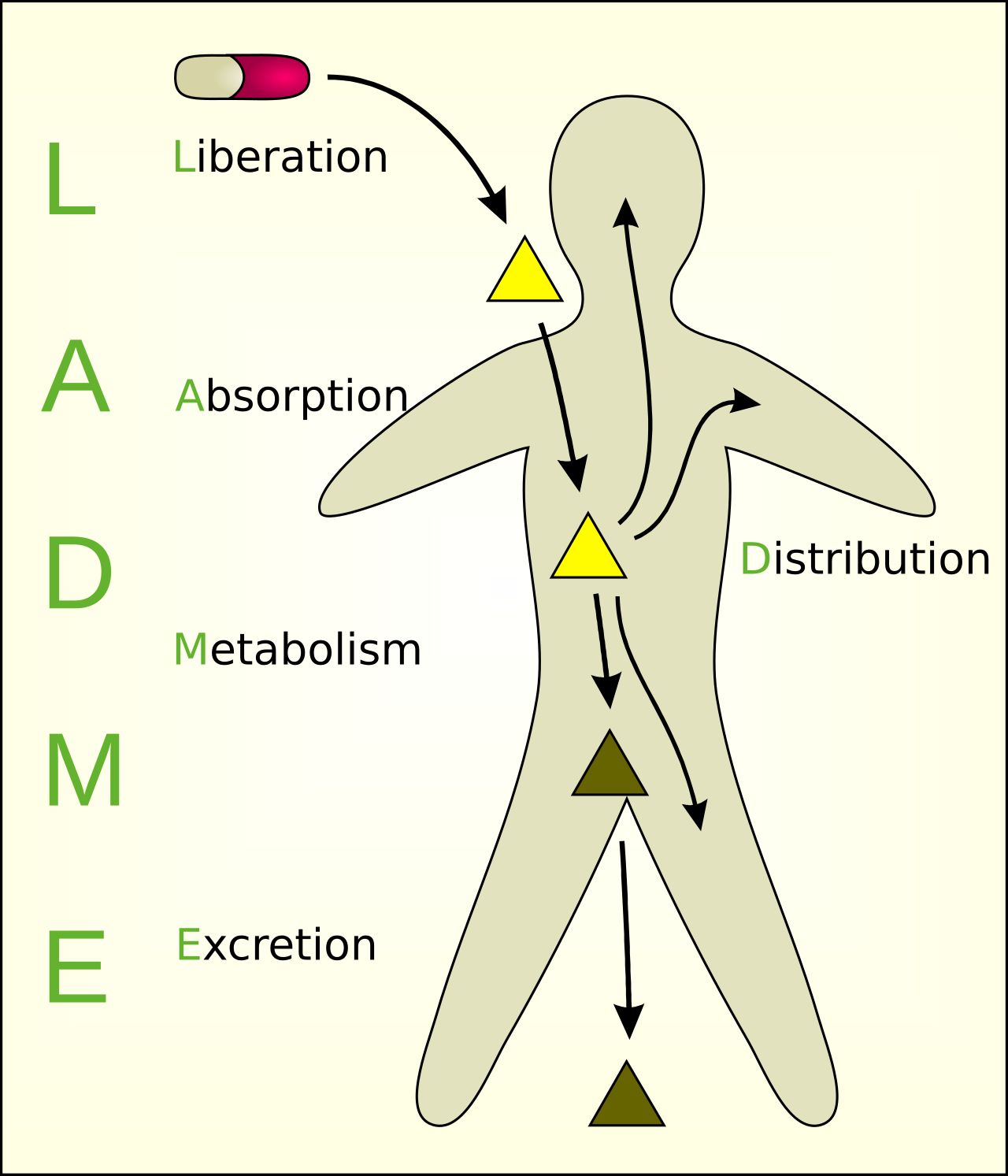
Pharmacokinetics is the study of how a drug moves. It covers how a drug gets in and where it goes. It covers how the drug is changed and how it leaves. Four steps run at once from the moment the drug is given. They are remembered as ADME: Absorption, Distribution, Metabolism, Excretion. These four steps decide how much drug reaches its target. They also decide how long it stays. That is why the same 5 mg tablet acts very differently in a young athlete and in an 88-year-old with heart failure and kidney disease.
Absorption is the drug's move from where it was given into the blood. It depends on the route. IV is instant and complete. Oral is slow and partial. It depends on blood flow to the site. A person in shock absorbs almost nothing from a shot into the muscle. It depends on whether the drug can cross cell membranes. Drugs that dissolve in fat and carry no charge cross easily. Food in the gut matters too. Bioavailability is the share of a dose that reaches the main bloodstream unchanged. An IV dose is 100% bioavailable by definition. An oral dose is usually less.
Distribution is the drug's trip from the blood into the tissues. Blood flow decides who gets it first. The heart, brain, liver, and kidneys get lots of blood. Fat and resting muscle get much less. Two barriers matter. The blood-brain barrier lets only fat-soluble drugs cross easily. This is one reason some antihistamines make you sleepy and others do not. The placenta stops almost nothing. Distribution also depends on protein binding. Many drugs ride on albumin, a blood protein. Only the unbound (free) part of the drug is active. Some people have low albumin. This happens with poor nutrition, cirrhosis, or old age. They have more free drug from the same dose. So a "normal" dose can poison them.
Metabolism and the first-pass effect
Metabolism is the chemical change of a drug. It is also called biotransformation. It mostly happens in the liver. It mostly uses a family of enzymes called cytochrome P450 (CYP450). Most of the time, metabolism turns the drug off. It also makes the drug dissolve in water so it can leave the body. Sometimes it does the opposite. A prodrug is given in an inactive form. The body must change it before it works. Codeine must be turned into morphine by the enzyme CYP2D6. A person who is a poor metabolizer gets little pain relief. A person who is an ultrarapid metabolizer can get a dangerous overdose.
Most drug-drug interactions happen in the CYP450 system. An enzyme inducer speeds up metabolism. Examples are rifampin, phenytoin, carbamazepine, and St. John's wort. Partner drugs then fall too low to work. The classic disaster is a birth control pill or warfarin that stops working. An enzyme inhibitor slows metabolism. Examples are many azole antifungals, clarithromycin, amiodarone, and grapefruit juice. Partner drug levels then climb toward toxic.
The first-pass effect is why changing the route is never a simple swap. Anything absorbed from the stomach or gut drains into the portal vein. That vein carries it through the liver before it reaches the rest of the body. The liver may destroy most of the dose on that first trip. Oral morphine is the classic case. You need about three times the IV dose by mouth for the same effect. Some routes skip the portal vein. These are IV, under the tongue (sublingual), through the skin (transdermal), inhaled, and partly rectal. They escape the first pass. That is why nitroglycerin goes under the tongue and is not swallowed.
Excretion, half-life, and steady state
Excretion removes the drug. Most drugs leave through the kidneys. Weak kidneys let drug build up. Age, dehydration, and kidney disease can all weaken them. So drugs cleared by the kidneys get their doses adjusted to creatinine clearance or eGFR. These are measures of kidney function. Smaller routes matter for some drugs. These include bile and stool (some antibiotics) and the lungs (inhaled anesthetics). They also include breast milk. The amount in milk is tiny, but it is never tiny for the breastfed baby.
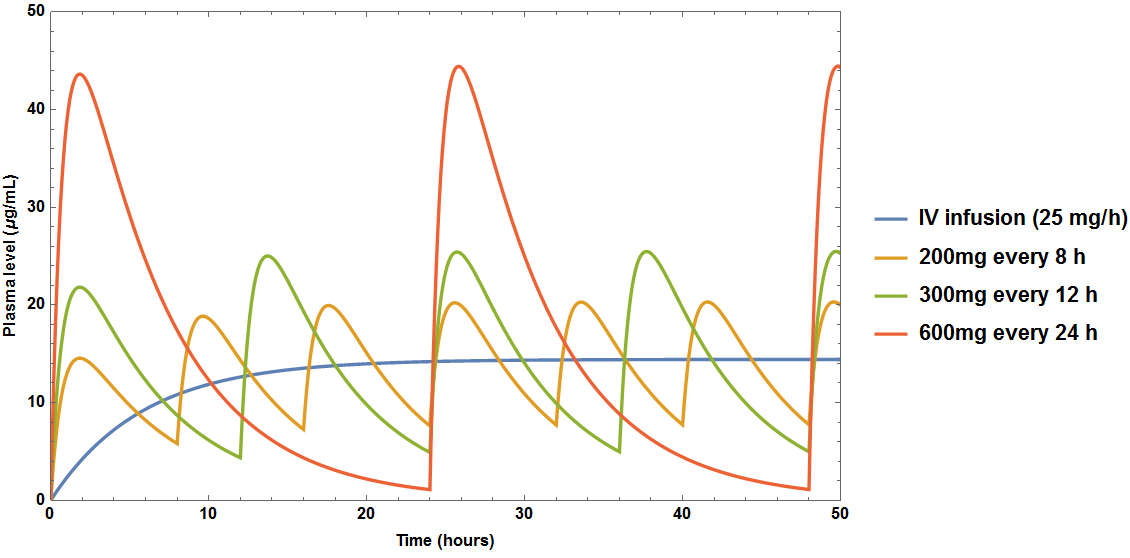
The most useful number in this topic is the half-life (t½). It is the time it takes for the drug level in the blood to drop by half. Half-life sets how often a dose is given. It also drives two rules worth memorizing. It takes about four to five half-lives to reach steady state. Steady state is the level point where the amount going in equals the amount going out. Only then is the drug doing its full job. It also takes about four to five half-lives to clear a drug after the last dose. That is why a loading dose exists. Some patients cannot wait days for steady state. A large first dose fills the tank right away. Smaller maintenance doses then keep it full.
| Step | What happens | What slows or changes it | What you do |
|---|---|---|---|
| Absorption | Drug enters the bloodstream from the administration site | Route, blood flow to the site, food, gastric pH, lipid solubility | Give on an empty stomach or with food as ordered; recognize that a hypotensive patient absorbs IM and SubQ drugs unreliably |
| Distribution | Drug travels from blood into tissue | Perfusion, protein binding, blood-brain barrier, placenta, body fat | Suspect toxicity at normal doses when albumin is low; assume the drug crosses the placenta and into breast milk |
| Metabolism | Liver enzymes (CYP450) alter the drug; prodrugs are activated | Liver disease, age (neonates and elders), inducers and inhibitors, genetics | Screen for CYP interactions; watch LFTs; know which drugs are prodrugs |
| Excretion | Drug leaves, mostly in urine | Renal function, urine pH, competition for tubular transport | Check creatinine and eGFR before renally cleared drugs; monitor intake and output |
- ADME (absorption, distribution, metabolism, excretion) is what the body does to the drug.
- Bioavailability is the share that reaches the blood unchanged. IV is 100%. Oral is usually less.
- Only the free (unbound) drug is active. Low albumin means more free drug and more risk of toxicity.
- The first-pass effect destroys much of an oral dose in the liver. Sublingual, transdermal, and IV routes skip it.
- It takes 4 to 5 half-lives to reach steady state and 4 to 5 to clear. A loading dose skips the wait.
Section 3Pharmacodynamics: what the drug does to the body
Receptors: the lock and the key
Pharmacodynamics is the other half of the story. Once the drug arrives, what does it actually do? Almost always, it binds to something. Most drugs act on a receptor. A receptor is a protein, often on a cell's surface. The body built it for its own signal molecule. Drugs do not create new jobs in the body. They borrow jobs that already exist. They turn the body's own switches up or down. Albuterol works because your lungs already have beta2 receptors waiting for epinephrine. Morphine works because your nerves already have mu receptors waiting for endorphins.
Two traits describe the fit. Affinity is how tightly a drug binds its receptor. Intrinsic activity is whether binding actually sets off a response. These two ideas build all the words below. They also explain selectivity. A drug is selective when it prefers one receptor type. But selectivity depends on dose and is never total. Metoprolol is beta1-selective at usual doses. So it is the safer pick if a person with asthma must take a beta blocker at all. At higher doses, though, it spills onto the beta2 receptors in the airway. Then it can still cause bronchospasm, a tightening of the airways. Nonselective drugs such as propranolol block beta2 from the first dose. They are avoided in people with reactive airway disease.
Agonists, antagonists, and everything between
An agonist binds and activates. It copies the body's own messenger and turns the response on. An antagonist binds and blocks. It has affinity but no intrinsic activity. It sits in the receptor and keeps the natural messenger (or another drug) out. Antagonists have no effect of their own. Their whole effect is stopping something else. A partial agonist binds and activates only weakly. It gives less than the full response, no matter how high the dose. That ceiling can be a safety feature.
| Type | What it does at the receptor | Example | What it means at the bedside |
|---|---|---|---|
| Agonist | Binds and activates; mimics the natural ligand | albuterol (beta2), morphine (mu) | Expect the natural signal, amplified: albuterol gives bronchodilation and the tremor and tachycardia that come with it |
| Antagonist | Binds and blocks; affinity, no intrinsic activity | naloxone (mu), metoprolol (beta1) | The classic antidote action; naloxone pushes the opioid off the receptor and reverses slowed breathing. But it wears off sooner than most opioids, so the patient can become sleepy again (re-sedation) and must be watched |
| Partial agonist | Binds, activates weakly; has a ceiling | buprenorphine (mu) | Less respiratory depression at high doses, but it will displace a full agonist and can precipitate withdrawal |
| Non-receptor action | Works by physical or chemical means, no receptor | antacids, osmotic laxatives, mannitol, chelators | Do not look for a receptor story: the mechanism is chemistry or osmosis |
Dose-response, potency, efficacy, and the therapeutic index
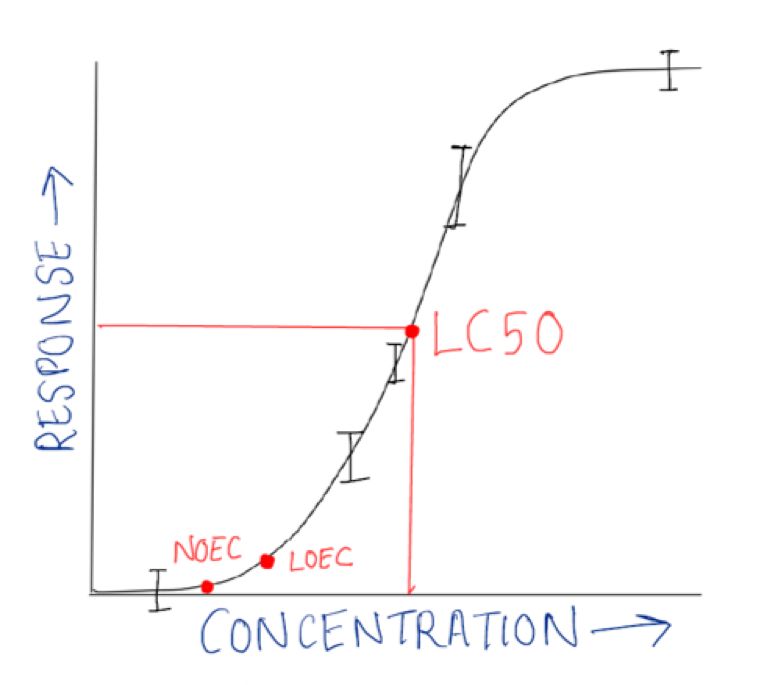
Plot dose against effect and you get the dose-response curve. At the bottom, little happens. This is below the threshold. Then the response rises fast through the useful middle. Then it flattens into a plateau. Here the receptors are full. More drug brings no more effect, only more toxicity. That plateau is why "the pain is still there, give more" at some point stops being treatment and starts being harm.
People often mix up two words. Potency is how much drug it takes to get a set effect. A more potent drug works at a smaller dose. Efficacy is the biggest effect the drug can produce, no matter the dose. Efficacy is what you want. Potency is only a milligram number. Hydromorphone is more potent than morphine, so fewer milligrams are needed. But it is not more efficacious. Ibuprofen, on the other hand, has a firm ceiling for pain relief that no dose can pass. For severe pain, an opioid's greater efficacy is the point.
The therapeutic index (TI) compares the dose that poisons to the dose that helps. It is written TD50/ED50. That is the dose toxic to half of people divided by the dose that works in half of people. A high TI means a wide, forgiving margin. A low (narrow) therapeutic index means the dose that works and the dose that harms are very close. These drugs get blood levels drawn. They get double-checked. They send people to the ED. Learn the list: warfarin, digoxin, lithium, phenytoin, levothyroxine, theophylline, carbamazepine, vancomycin, aminoglycosides (such as gentamicin), and insulin. The therapeutic range is the level window between "not working" and "poisoning." For these drugs, that window is a narrow ledge. You can fall off either side.
- Drugs act by binding receptors and turning the body's own signals up or down. Affinity is the fit. Intrinsic activity is whether it fires.
- An agonist turns on. An antagonist blocks (the antidote action). A partial agonist turns on weakly, with a ceiling.
- Potency = how many milligrams. Efficacy = the biggest effect possible. Efficacy is what the patient feels.
- A drug with a narrow therapeutic index (warfarin, digoxin, lithium, phenytoin, insulin) needs levels, close watching, and double-checks.
Section 4Safe medication administration
The rights of medication administration
All of the above is just theory until you stand by a patient with a med cup in your hand. The rights of medication administration are the checklist that turns knowledge into safety. The classic five are right patient, right drug, right dose, right route, right time. Most programs and employers add more. These are right documentation, right reason (why it is given), right response, right to refuse, and right education. Check them three times. Check when you pull the drug. Check when you prepare it. Check again at the bedside before you give it.
Two of these need extra weight, because they are skipped most often. Right patient means two identifiers. Match the name and date of birth to the armband. Never use the room number. Never trust a nod when you say the wrong name out loud. Right response means the job is not done when the drug goes in. You gave metoprolol, so you recheck the heart rate. You gave morphine, so you recheck pain and breathing rate and sleepiness. You gave insulin, so you know when the blood sugar will hit its low point. Chart a drug after you give it, never before. Charting a drug you have not given yet is how a dose gets given twice.
Routes
The route decides speed, how much gets in, and whether it can be undone. The most important safety rule in the table below is this: once it is in, you cannot take it back. The faster the route, the more true that is. An oral overdose can sometimes be stopped. An IV push cannot.
| Route | Onset | First pass? | Care notes |
|---|---|---|---|
| Oral (PO) | Slow (30 to 60 min) | Yes | Safest and cheapest; needs a working swallow and gut. Never crush extended-release or enteric-coated tablets; crushing an ER pill gives the whole day's dose at once |
| Sublingual / buccal | Fast (1 to 5 min) | No | Nothing to swallow or drink; nitroglycerin is the prototype, and a tingle suggests the tablet still works. Never give with a PDE-5 inhibitor (sildenafil, tadalafil, vardenafil): both widen blood vessels, and together they cause a dangerous drop in blood pressure; ask before you give |
| Subcutaneous | Slow, sustained | No | Small volumes (usually 1 mL or less); insulin and heparin; rotate sites; do not massage after heparin (bruising) |
| Intramuscular | Moderate | No | Larger volumes; ventrogluteal is the safest adult site; absorption fails in shock or poor perfusion |
| Intravenous | Immediate | No | 100% bioavailable and irreversible: know the push rate, the compatibility, and the antidote before you start; watch for infiltration and extravasation |
| Transdermal | Slow, steady | No | Remove the old patch before you put on a new one (stacked fentanyl patches have killed people); date and initial it; wear gloves; rotate sites |
| Inhaled | Fast, local | No | Works where it lands, with a small dose in the blood; if both are ordered, give the bronchodilator before the corticosteroid; rinse the mouth after inhaled steroids to prevent thrush |
| Rectal | Variable | Partial | Useful when the patient is vomiting or unconscious; absorption is unpredictable |
Orders and error prevention
A complete drug order names the patient, the date and time, the drug, the dose, the route, how often, and the prescriber's signature. Sometimes a part is missing or unclear. Sometimes it just does not make sense for this patient. Then the order is not valid, and you do not give it. You get it clarified. "The prescriber wrote it" has never been a defense. The person who gives the drug is responsible for it too.
High-alert medications are drugs that do great harm when something goes wrong. They are insulin, anticoagulants (heparin, warfarin), opioids, concentrated electrolytes (above all potassium chloride), chemotherapy, neuromuscular blockers, and sedatives. They need an independent double-check. A second clinician checks the drug, dose, pump settings, and patient on their own. You do not tell them what you already worked out. And one rule never changes: concentrated potassium chloride is never given IV push. It must be diluted and infused.
Then there is how numbers are written. Use a leading zero: 0.5 mg, not .5 mg. A missed decimal point becomes a tenfold overdose. Never use a trailing zero: 5 mg, not 5.0 mg, which can be read as 50. Write out "units" instead of "U," which can be misread as a zero. Avoid the shortcuts on your facility's do-not-use list. And know your look-alike/sound-alike (LASA) pairs. Examples are hydralazine and hydroxyzine, celecoxib and citalopram, metformin and metronidazole, and lamotrigine and lamivudine. The pair that sends people to the ICU is morphine and hydromorphone. Read the label three times. Read it when you pull it, when you prepare it, and when you put it back or throw it out.
- The rights (patient, drug, dose, route, time, plus documentation, reason, response, refusal, education) are checked three times. Right patient means two identifiers.
- The route sets how fast a drug acts and whether it can be undone. IV is instant and cannot be undone. Never crush ER or enteric-coated tablets.
- High-alert drugs (insulin, anticoagulants, opioids, concentrated KCl, chemo) need independent double-checks. KCl is never IV push.
- Use a leading zero and never a trailing zero. Write out "units." Know your LASA pairs.
- An unclear or incomplete order is clarified, not given. The person who gives the drug is responsible for it.
Section 5Herbal supplements & interactions
Supplements are drugs, whatever the label says
About one in five adults takes an herbal product. Most never tell a clinician. In their minds, a supplement is food, not medicine. That belief is the danger. In the United States, a dietary supplement is regulated as a food, not a drug. The law is the Dietary Supplement Health and Education Act (DSHEA) of 1994. It needs no proof of safety or efficacy before sale. The FDA can act only after harm shows up. Nobody checked the strength, the purity, or what is really inside the bottle in your patient's bag.
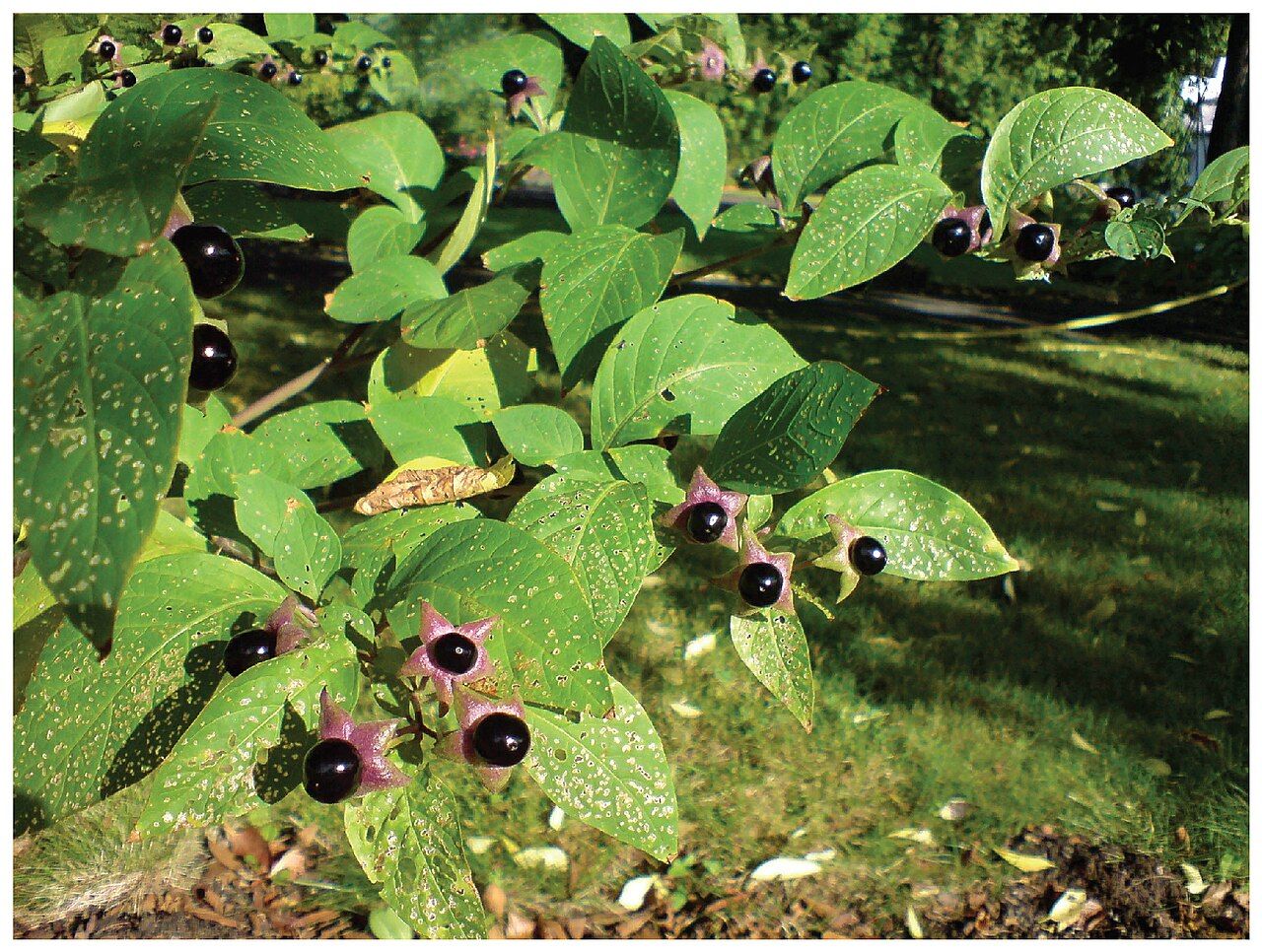
Yet the drug effects are completely real. Digoxin comes from foxglove. Aspirin comes from willow bark. Morphine comes from the poppy. Atropine comes from belladonna. Paclitaxel comes from the yew tree. Plants are chemists. "Natural" has never meant safe. Hemlock is natural. A compound strong enough to help is, by definition, strong enough to interact.
The interactions that actually matter
Herbal interactions fall into three predictable types. So you can reason instead of memorize. First are CYP450 and P-glycoprotein effects. St. John's wort is a strong inducer. It can wreck a drug plan by driving levels down. Second is bleeding risk. Products with antiplatelet action stack on top of anticoagulants, antiplatelets, and NSAIDs. The easy-to-remember group is the four G's plus feverfew: garlic, ginger, ginkgo, ginseng, and feverfew. Third is added drug effect. Kava and valerian add to CNS depressants. Ginseng pushes blood sugar down on top of diabetes drugs.
| Supplement | Common claimed use | Mechanism / concern | Safety alert |
|---|---|---|---|
| St. John's wort | Depression, mood | Potent CYP3A4 and P-glycoprotein inducer; serotonergic activity | The most dangerous common supplement. Lowers levels of warfarin, oral contraceptives, cyclosporine, HIV protease inhibitors, digoxin, and seizure drugs; transplant rejection and unplanned pregnancy have been reported. With an SSRI or a triptan, it raises the risk of serotonin syndrome |
| Ginkgo biloba | Memory, circulation | Inhibits platelet-activating factor → antiplatelet | Bleeding with warfarin, aspirin, clopidogrel, NSAIDs; lowers seizure threshold; typically stop 1 to 2 weeks before surgery |
| Garlic | Cholesterol, blood pressure | Antiplatelet; can reduce saquinavir levels | Additive bleeding risk; stop before surgery; may add to antihypertensives |
| Ginger | Nausea, motion sickness | Antiplatelet at higher doses | Reasonably safe in culinary amounts; bleeding risk with anticoagulants at supplement doses |
| Ginseng | Energy, "immune support" | Antiplatelet; lowers blood glucose; may reduce INR | Hypoglycemia with insulin or sulfonylureas; unpredictable warfarin effect; stimulant: insomnia, hypertension; interacts with MAOIs |
| Feverfew | Migraine prevention | Antiplatelet | Bleeding risk; abrupt discontinuation causes rebound headache |
| Kava | Anxiety, insomnia | Hepatotoxicity; CNS depression | Linked to severe liver injury and transplant; additive with benzodiazepines, alcohol, opioids; avoid with any hepatotoxic drug |
| Valerian | Insomnia | CNS depression (GABAergic) | Additive sedation with benzodiazepines, opioids, alcohol, antihistamines; fall risk in older adults |
| Echinacea | Colds, "immune support" | Immune stimulation; possible hepatotoxicity | Avoid in immunosuppression, transplant, autoimmune disease, and HIV; may oppose immunosuppressants |
| Black cohosh | Menopausal symptoms | Hepatotoxicity reports | Monitor liver enzymes; avoid with other hepatotoxic drugs; caution in hormone-sensitive cancer |
| Saw palmetto | Benign prostatic hyperplasia | Mild antiplatelet effect; hormonal activity | Bleeding risk; easing symptoms may hide untreated BPH or prostate cancer, so the prescriber must know the patient takes it. Controlled trials have not shown that it lowers PSA. The drugs that do are the 5-alpha-reductase inhibitors finasteride and dutasteride, which cut PSA about in half (double the value when reading a screen) |
| Milk thistle | Liver support | Generally well tolerated; modest CYP effects | Among the safer products; still verify against the patient's regimen, and it is not a treatment for liver disease |
| Grapefruit juice (not an herb, same problem) | Food | Intestinal CYP3A4 inhibitor | Raises levels of simvastatin, atorvastatin, amiodarone, many calcium channel blockers, and some immunosuppressants; a single glass can matter, and the effect lasts about 24 hours |
How to ask
How you ask changes the answer. "Are you taking any medications?" often gets a "no" from a person with three supplement bottles at home. They do not think of them as medicine. Ask this instead: "What do you take that you buy without a prescription? Think of vitamins, herbs, teas, powders, protein shakes, anything from the health-food aisle, or anything a family member suggested." Then ask them to bring in the actual bottles. Put each one on the drug list. Teach without judging. The goal is not to talk them out of a supplement. The goal is to keep them safe from a bleed, a rejected transplant, or a serotonin crisis they never saw coming. Two teaching points belong in almost every discharge. Tell every prescriber about every supplement. And stop most herbal products one to two weeks before surgery.
- Supplements are regulated as food, not drugs. There is no proof of safety, efficacy, strength, or purity before sale.
- St. John's wort is the riskiest common supplement. It is a CYP3A4/P-gp inducer that makes warfarin, birth control pills, cyclosporine, and HIV drugs fail. It also adds serotonin syndrome risk.
- The bleeding group (garlic, ginger, ginkgo, ginseng, feverfew) stacks with anticoagulants, antiplatelets, and NSAIDs. Stop them 1 to 2 weeks before surgery.
- Kava and black cohosh can harm the liver. Valerian and kava add to CNS depressants. Echinacea is a problem when the immune system is being held down on purpose.
- Ask directly about products bought without a prescription. Put every one on the drug list.
The chapter in one breath
- Every drug has a chemical, generic, and trade name. Safe care uses generic names. Stems like -olol and -pril show the class at a glance.
- A class shares a mechanism, so it shares effects and care steps. Learn the prototype and you know the family.
- Pharmacokinetics (ADME) is what the body does to the drug. Bioavailability, protein binding, and the first-pass effect explain why the same dose acts differently in different people.
- Half-life sets how often a dose is given. It takes about 4 to 5 half-lives to reach steady state and 4 to 5 to clear. A loading dose skips the wait.
- Pharmacodynamics is what the drug does to the body. Agonists turn on, antagonists block (the antidote action), and partial agonists have a ceiling.
- Potency is milligrams. Efficacy is the biggest effect. A narrow therapeutic index (warfarin, digoxin, lithium, phenytoin, insulin) calls for levels and double-checks.
- Safe giving means the rights, two identifiers, the right route, an independent double-check for high-alert drugs, and never IV push potassium.
- Herbal supplements are drugs with no safety check before sale. St. John's wort speeds up CYP3A4 and wrecks drug plans. The four G's plus feverfew raise bleeding. Kava and black cohosh harm the liver. So ask about the bottles no one prescribed.
ReferenceWords worth knowing
A quick list of the terms in this chapter. Skim it now, or come back when a word trips you up.
- Absorption
- The move of a drug from where it was given into the blood; the first step of pharmacokinetics.
- Adverse drug reaction (ADR)
- A harmful, unplanned response to a drug given at a normal dose; broader and more serious than an expected side effect.
- Agonist
- A drug that binds a receptor and turns it on, copying the body's own messenger.
- Antagonist
- A drug that binds a receptor and blocks it, with no effect of its own; the way antidotes such as naloxone work.
- Bioavailability
- The share of a given dose that reaches the main bloodstream unchanged; 100% for IV, usually less by mouth.
- Distribution
- The move of a drug from the blood into the tissues; shaped by blood flow, protein binding, and barriers such as the blood-brain barrier and the placenta.
- Efficacy
- The biggest effect a drug can produce, no matter the dose; what the drug is able to do.
- Excretion
- Removal of a drug and its breakdown products from the body, mostly by the kidneys.
- First-pass effect
- Breakdown of a swallowed drug by the liver before it reaches the main bloodstream; skipped by IV, sublingual, and transdermal routes.
- Half-life (t½)
- The time it takes for the drug level in the blood to fall by 50%; sets how often doses are given and predicts steady state and clearance.
- High-alert medication
- A drug that does great harm when used in error (insulin, anticoagulants, opioids, concentrated electrolytes, chemotherapy), so it needs an independent double-check.
- Loading dose
- A large first dose given to reach a working level fast, instead of waiting four to five half-lives.
- Metabolism (biotransformation)
- Chemical change of a drug, mostly by CYP450 enzymes in the liver; it usually turns the drug off but turns a prodrug on.
- Pharmacodynamics
- What the drug does to the body: receptor binding, how the drug works, and the link between dose and response.
- Pharmacokinetics
- What the body does to the drug: absorption, distribution, metabolism, and excretion.
- Potency
- How much drug it takes to get a set effect; a more potent drug works at a lower dose. Not the same as efficacy.
- Prodrug
- An inactive drug that the body must change into its active form; for example, codeine is turned into morphine.
- Prototype drug
- The well-studied member of a class that serves as the model for the rest of the family.
- Side effect
- An expected, dose-related effect other than the one you want; often bearable, sometimes the reason a person quits the drug.
- Steady state
- The level point where drug coming in equals drug going out; reached after about four to five half-lives of regular dosing.
- Therapeutic index
- The ratio of the toxic dose to the dose that works; a low (narrow) index means a dangerously small margin for error.
- Trough level
- The lowest drug level between doses, drawn within about 30 minutes before the next dose; the level that shows build-up.
Check yourself
Antimicrobial Drugs
Antimicrobials are the only drugs we give that aim at something other than the patient. Everything else on the drug cart changes the person in the bed. That includes the beta blocker, the insulin, and the opioid. An antibiotic is meant to kill an invader and leave the person alone. How well it does that is the difference between a cure and a kidney injury. This chapter shows how these drugs pick their target. It shows how they are grouped by the part of the microbe they break. It explains why microbes are learning to shrug them off. It also covers what you do at the bedside to make it all work safely. Learn the classes as families, and the details stop being memorization. They become predictions you can make.
By the end of this chapter you can
- Explain selective toxicity and use it to predict which drugs are safe and which are not.
- Tell narrow- from broad-spectrum drugs, and bactericidal from bacteriostatic drugs.
- Describe what culture and sensitivity testing does and why empiric therapy exists.
- Group antibacterials by how they work (cell wall, protein synthesis, nucleic acid, and metabolic blockers) and name a prototype for each.
- Explain how resistance starts, and name MRSA, VRE, and other resistant germs and their treatments.
- Describe the bedside role in antimicrobial stewardship.
- Compare the main antifungal and antiviral classes and the harm each one is known for.
- Describe the main antiprotozoal and anthelmintic drugs and the care that applies to every antimicrobial.
Section 1Principles of antimicrobial therapy
Selective toxicity: the whole game
Selective toxicity is the idea that makes these drugs possible. The drug attacks a part the microbe has and the patient does not. Bacteria build a cell wall out of a mesh called peptidoglycan. Your cells build no wall at all. So a drug that wrecks wall building barely touches you. Bacteria use 70S ribosomes, made of 30S and 50S pieces. Ribosomes are the cell's protein makers. Your cells use 80S ribosomes. So a drug shaped to jam the bacterial one mostly ignores yours. Bacteria must make their own folate, a B vitamin, from scratch. You get yours from food. So a drug that blocks folate making starves the bacterium and skips you.
Read that list backward and you can predict the side effects. Selective toxicity is never perfect. Your mitochondria (the cell's power plants) have ribosomes much like bacterial ones. That is why linezolid can shut down bone marrow. It is also why aminoglycosides damage the hair cells of the inner ear. The smaller the difference between microbe and person, the more toxic the drug. That one sentence explains a lot. It is why penicillin is safe enough for a toddler. It is also why amphotericin B has a nickname about shaking chills.
Spectrum, and cidal versus static
Narrow-spectrum drugs hit a small range of germs. Broad-spectrum drugs hit many. People often think broad is better. It is not. A broad drug wipes out the body's normal, helpful bacteria (normal flora) along with the germ. That opens the door to superinfection, a new infection that moves in. Examples are Clostridioides difficile colitis, Candida thrush, and vaginal yeast. A broad drug also pushes resistance across a much larger group of bacteria. Broad is a first guess, not a goal. The goal is always the narrowest drug that covers the actual germ.
Bactericidal drugs kill bacteria outright. Examples are beta-lactams, aminoglycosides, fluoroquinolones, vancomycin, and metronidazole. Bacteriostatic drugs stop bacteria from multiplying. Then the immune system finishes the job. Examples are tetracyclines, macrolides, clindamycin, sulfonamides, and linezolid. The difference matters most when the immune system cannot help. This is true in endocarditis (infection of a heart valve), meningitis, and neutropenia (very low white cells). There, a drug that kills is usually needed.
Culture and sensitivity, and the empiric window
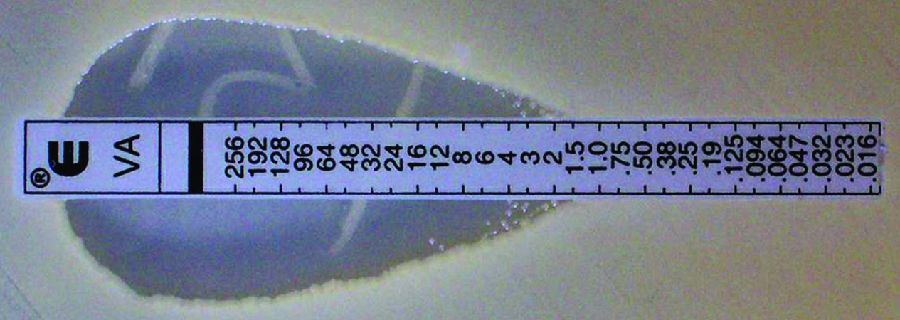
A culture and sensitivity (C&S) has two halves. The culture names the germ. The sensitivity panel tests the germ against a set of drugs. It reports the minimum inhibitory concentration (MIC). This is the lowest drug level that stops growth. Then each drug is labeled susceptible, intermediate, or resistant. A low MIC number by itself does not mean "best drug." The label next to it does. That label weighs how much drug actually reaches the site of infection.
Cultures take 24 to 72 hours. A patient with sepsis does not have 72 hours. So we start empiric therapy. This is a smart, broad guess. It is based on the site of infection and the germs that usually cause it there. It also uses the local antibiogram (a yearly chart of what local germs resist) and the patient's recent exposures. When the C&S comes back, the drug is de-escalated. That means you switch to a narrow drug the germ is actually susceptible to. Empiric therapy is a bridge, not a destination. A broad drug still running on day five, with a susceptibility report on the chart, is a stewardship failure.
| Term | What it means | Why it matters at the bedside |
|---|---|---|
| Selective toxicity | Attacks a microbial-only target | The narrower the microbe-host gap, the more toxic the drug and the more you monitor |
| Narrow-spectrum | Few organisms covered | Preferred once the organism is known: spares flora, less resistance |
| Broad-spectrum | Many organisms covered | Empiric starting point; watch for C. difficile and yeast |
| Bactericidal | Kills the organism | Required when host defenses can't help: endocarditis, meningitis, neutropenia |
| Bacteriostatic | Stops replication | Needs a working immune system to finish the job |
| MIC | Lowest concentration that inhibits growth | Read the susceptible/resistant label, not just the number |
| Empiric therapy | Best guess before results | Start fast in sepsis, but plan to de-escalate |
| Prophylaxis | Prevention, not treatment | Surgical dose timed within 60 min before incision |
- Selective toxicity (a target only the microbe has) makes the drug possible. Where microbe and person overlap, toxicity shows up.
- Narrow-spectrum is the goal. Broad-spectrum is a short-term guess that costs normal flora and breeds resistance.
- Bactericidal kills. Bacteriostatic stalls growth and needs a working immune system.
- C&S names the germ and reports the MIC. Empiric therapy covers the wait and is then de-escalated.
Section 2Antibiotics by mechanism
Cell wall inhibitors: break the box
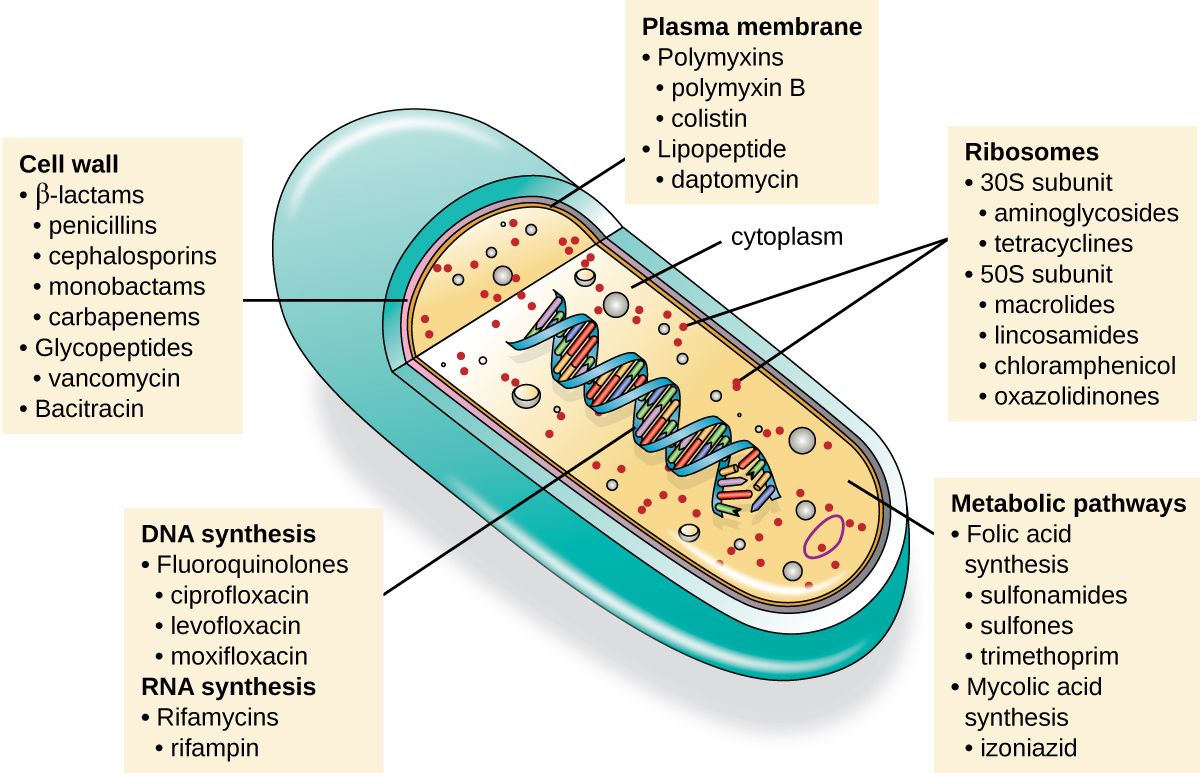
Bacteria live under huge pressure from the inside. A peptidoglycan mesh holds them together. Stop the mesh from linking up, and the cell swells and bursts. So all of these drugs are bactericidal. Human cells have no wall. That makes the beta-lactams some of the safest antimicrobials we have. But that safety belongs to the beta-lactams only, not the whole wall group. Vancomycin also attacks wall building. Yet it can harm the kidneys and ears. It needs trough or AUC levels and repeated creatinine checks. Daptomycin needs a weekly CPK, a muscle enzyme test.
The beta-lactams are named for the four-sided beta-lactam ring they share. They include penicillins, cephalosporins, carbapenems, and the monobactam aztreonam. They bind the penicillin-binding proteins that link the wall mesh. Penicillins range from narrow to broad. Penicillin G is narrow, for strep and syphilis. Amoxicillin and ampicillin are broader. Piperacillin-tazobactam even covers Pseudomonas. Cephalosporins climb through generations. Cefazolin is first generation, the classic drug to prevent surgical infection. Ceftriaxone is third, for meningitis and pneumonia. Cefepime is fourth, for Pseudomonas. Ceftaroline is fifth and works against MRSA. Carbapenems (meropenem, ertapenem, imipenem-cilastatin) are the heavy guns. They are saved for resistant gram-negative germs. Aztreonam covers gram-negatives only. It is the way out for a patient with true penicillin anaphylaxis.
The wall drugs that are not beta-lactams matter too. Vancomycin is a glycopeptide. It blocks wall building at a different step. It is a workhorse for MRSA. Daptomycin is a lipopeptide. It punches holes in the gram-positive membrane instead of the wall. Lung surfactant turns it off. So it is never the answer for pneumonia.
Protein synthesis inhibitors: jam the ribosome
The bacterial 70S ribosome has two halves. The drugs sort by which half they grab. Drugs that hit the 30S piece are aminoglycosides (gentamicin, tobramycin, amikacin) and tetracyclines (doxycycline, minocycline). Drugs that hit the 50S piece are macrolides (azithromycin, erythromycin, clarithromycin), clindamycin, linezolid, and chloramphenicol. A handy memory trick: "buy AT 30, CELL at 50." That is Aminoglycosides and Tetracyclines at 30S. Then Chloramphenicol, Erythromycin and other macrolides, Lincosamides (clindamycin), and Linezolid at 50S.
Here selective toxicity gets thin, and the harms show why. Aminoglycosides harm the kidneys and the ears. The hearing loss can be permanent. So they need peak and trough levels and a daily creatinine. Tetracyclines bind calcium. Long or repeated courses can stain growing teeth. So avoid them under age 8 and in pregnancy. There is one big exception. Doxycycline is first-line at any age for a suspected tick-borne rickettsial illness. These include Rocky Mountain spotted fever, ehrlichiosis, and anaplasmosis. A short course (under 21 days) does not cause meaningful staining. Holding the drug back can be fatal. Tetracyclines also stop working if swallowed with milk, antacids, or an iron pill. Macrolides lengthen the QT interval on the ECG. Clindamycin is the classic cause of C. difficile. Linezolid works on a ribosome that looks like the one in your mitochondria. So it causes low platelets (thrombocytopenia) and nerve damage in the eyes, hands, and feet. It is also a weak MAO inhibitor. Stacked on an SSRI, it can cause serotonin syndrome.
Nucleic acid and metabolic inhibitors: break the blueprint, starve the factory
Fluoroquinolones (ciprofloxacin, levofloxacin, moxifloxacin) poison DNA gyrase and topoisomerase IV. These enzymes untangle bacterial DNA. Fluoroquinolones are strong and work by mouth. They also carry more boxed warnings than almost any other drug. The warnings include tendinitis and tendon rupture. The Achilles tendon is the classic site. Risk is higher over age 60, on steroids, or after a transplant. Other warnings are aortic aneurysm and tear (dissection), nerve damage, brain effects, a long QT, and swings in blood sugar. Rifampin blocks bacterial RNA polymerase. It turns urine, sweat, and tears orange and stains contact lenses. It can harm the liver. It is also a very strong CYP450 inducer. It can quietly make birth control pills and warfarin fail. Metronidazole is switched on inside anaerobes and protozoa. There it shreds their DNA. It leaves a metal taste. With alcohol it causes a disulfiram-like reaction (flushing, vomiting, a racing heart).
The metabolic blockers starve the bacterium of folate. Sulfamethoxazole blocks the enzyme dihydropteroate synthase. Trimethoprim blocks dihydrofolate reductase. These are two steps in a row on one pathway. That is why the pair (TMP-SMX) works better together and kills bacteria. Watch for a rash that could turn into Stevens-Johnson syndrome. Also watch for high potassium, crystals in the urine (push fluids), sun sensitivity, and a sharp rise in the INR of anyone on warfarin. The same folate action matters in pregnancy. Trimethoprim works against folate. So TMP-SMX is avoided in the first trimester. It can cause neural tube defects and other birth defects. If it must be used, folic acid is advised. It is also avoided at term. There, the sulfa part pushes bilirubin loose, which risks kernicterus (brain damage from bilirubin) in the newborn. Isoniazid is a first-line TB drug. It blocks the making of mycolic acid. It can cause nerve damage, so it is given with pyridoxine (vitamin B6). It can also cause hepatitis.
| Class | Prototype | Mechanism / key effect | Safety alert |
|---|---|---|---|
| Penicillins | penicillin G, amoxicillin | Blocks cell wall cross-linking; bactericidal | True allergy vs. GI upset: ask what happened; observe 30 min after first dose; epinephrine available |
| Cephalosporins | cefazolin, ceftriaxone | Beta-lactam; generations broaden gram-negative reach | Cross-reactivity with penicillin is low (~1 to 2%) but ask; never mix ceftriaxone with calcium-containing IV in a neonate |
| Carbapenems | meropenem | Broadest beta-lactam; reserve drug | Seizure risk (highest with imipenem): more so in renal impairment |
| Monobactam | aztreonam | Gram-negative only | Safe option in true penicillin anaphylaxis |
| Glycopeptide | vancomycin | Blocks wall synthesis; MRSA workhorse | Infuse over at least 60 min; nephrotoxic + ototoxic; monitor trough/AUC and creatinine |
| Lipopeptide | daptomycin | Disrupts gram-positive membrane | Monitor CPK weekly (myopathy); inactivated by surfactant: not for pneumonia |
| Aminoglycosides | gentamicin | 30S; bactericidal; gram-negatives | Nephrotoxic + ototoxic (may be permanent); peak & trough levels; daily creatinine; report tinnitus or vertigo |
| Tetracyclines | doxycycline | 30S; bacteriostatic; atypicals, tick-borne | Sun sensitivity; teeth staining with long or repeated courses, so avoid under age 8 and in pregnancy, except doxycycline for suspected tick-borne rickettsial illness, which is first-line at any age; keep apart from dairy, antacids, and iron; take with a full glass of water and sit upright 30 min |
| Macrolides | azithromycin | 50S; bacteriostatic; atypical pneumonia | QT prolongation; GI cramping; erythromycin/clarithromycin are CYP3A4 inhibitors |
| Lincosamide | clindamycin | 50S; anaerobes, skin/soft tissue | Classic C. difficile trigger: report new diarrhea immediately |
| Oxazolidinone | linezolid | 50S; MRSA and VRE; oral = IV | Thrombocytopenia (weekly CBC); serotonin syndrome with SSRIs; optic neuropathy on long courses; tyramine caution |
| Fluoroquinolones | ciprofloxacin | DNA gyrase / topoisomerase IV; bactericidal | Tendon rupture, aortic aneurysm, neuropathy, CNS effects, QT, glucose swings; separate from calcium/iron/antacids by 2 to 6 h |
| Rifamycin | rifampin | Blocks bacterial RNA polymerase; TB | Orange urine/sweat/tears (stains lenses: harmless); hepatotoxic; potent CYP inducer: warn about contraceptive failure |
| Nitroimidazole | metronidazole | Damages DNA of anaerobes/protozoa | No alcohol during and 3 days after: disulfiram-like reaction; metallic taste; darkened urine |
| Sulfonamide combo | TMP-SMX | Sequential folate blockade; synergistic | Rash → watch for SJS; high potassium; push fluids to prevent urine crystals; raises INR on warfarin; avoid in the first trimester (blocks folate → neural tube defects) and at term (kernicterus) |
| Antitubercular | isoniazid | Blocks mycolic acid synthesis | Give pyridoxine (B6) to prevent neuropathy; hepatotoxic: teach dark urine, jaundice, RUQ pain; no alcohol |
- Cell wall drugs kill bacteria because humans have no cell wall. But only the beta-lactams are the safe ones. Vancomycin (levels, creatinine, hearing) and daptomycin (CPK) still need checks.
- Protein synthesis drugs split by ribosome piece. Aminoglycosides and tetracyclines act at 30S. Macrolides, clindamycin, and linezolid act at 50S.
- Nucleic acid drugs: fluoroquinolones (gyrase, tendon rupture), rifampin (RNA polymerase, orange fluids, CYP inducer), metronidazole (no alcohol).
- Metabolic drugs: TMP-SMX blocks two folate steps in a row. Watch rash, potassium, and INR.
Section 3Resistance and stewardship
How resistance arises
Antibiotics do not create resistance. They select for it. In any large group of bacteria, a few cells already carry a gene that weakens the drug. They got it by chance mutation or borrowed it from a neighbor. Give the antibiotic and you kill the susceptible majority. That is what you wanted. But you also hand the survivors an empty room with no competition. They multiply. This is plain natural selection, running at bacterial speed. Every unneeded dose speeds it up.
Bacteria also share DNA freely. Horizontal gene transfer lets a resistance gene jump between germs that are not even related. In conjugation, a plasmid (a small ring of DNA) passes through a direct bridge. In transformation, a cell picks up free DNA from a dead cell. In transduction, a virus that infects bacteria (a bacteriophage) carries the genes over. One gut germ can pass a resistance plasmid to a passing germ overnight.
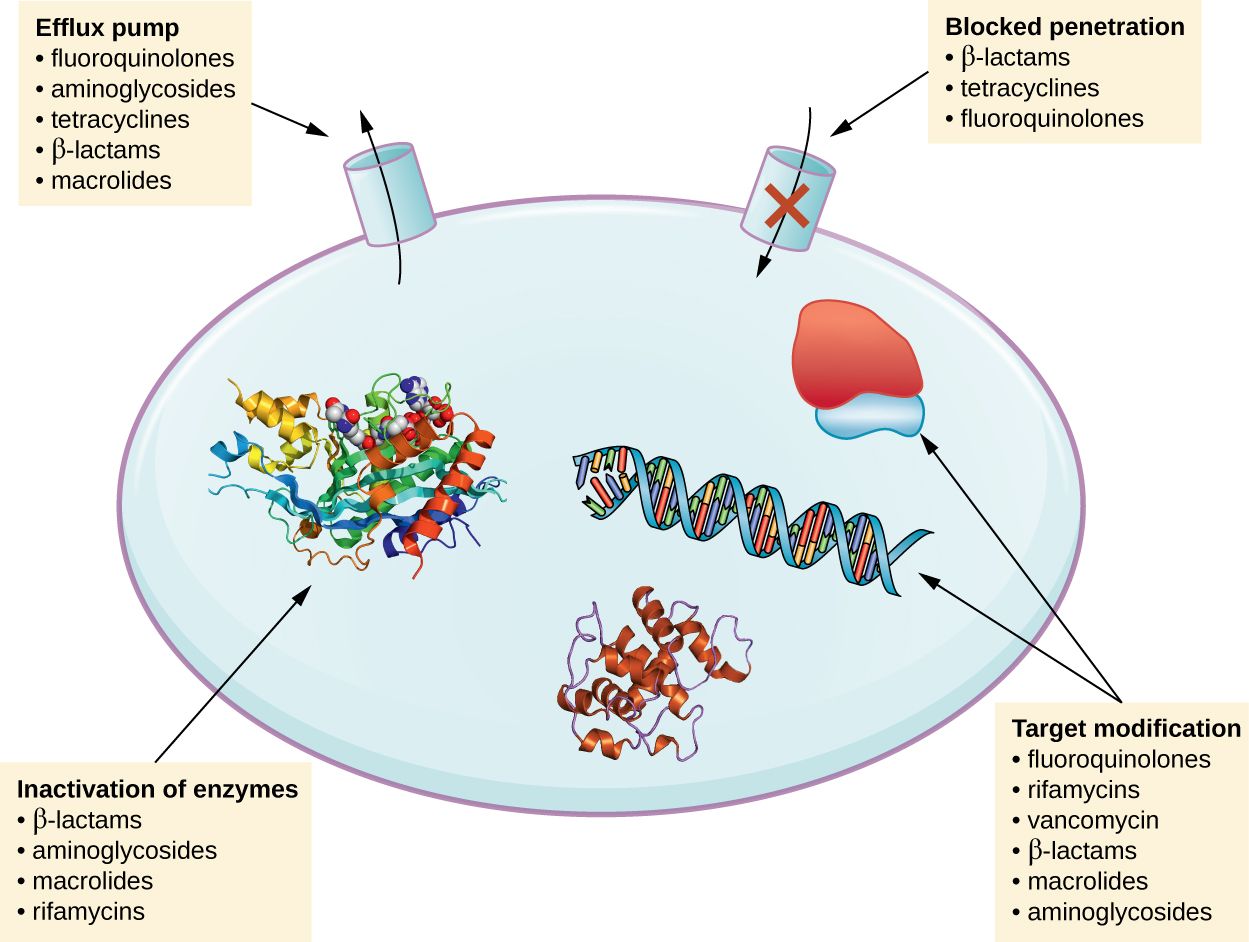
The resistance tricks come in four types. You can read them right off the figure. The first is enzymes that destroy the drug. Beta-lactamases cut open the beta-lactam ring. Extended-spectrum beta-lactamases (ESBLs) cut a wider range. Carbapenemases cut even carbapenems. The second is a changed target. MRSA's mecA gene builds a changed penicillin-binding protein called PBP2a. Ordinary beta-lactams cannot grip it. VRE's vanA gene rebuilds a wall building block. Its end changes from D-alanine-D-alanine to D-alanine-D-lactate, and vancomycin can no longer bind it. The third is efflux pumps, which bail the drug back out before it works. The fourth is less permeability. The germ shuts its porin doors, so the drug never gets in.
The organisms you will meet
MRSA is Staphylococcus aureus that resists the whole classic beta-lactam class at once, not just methicillin. That is because PBP2a ignores penicillins, cephalosporins, and carbapenems alike. One gene knocks out the safest, cheapest drugs you had. It forces a move to vancomycin, linezolid, daptomycin, or ceftaroline. Ceftaroline is the one beta-lactam built on purpose to bind PBP2a anyway. VRE goes further. It defeats the drug we reached for when MRSA showed up. ESBL-making gram-negatives push treatment toward carbapenems. CRE defeat the carbapenems and leave very few choices. C. difficile is not a resistance trick. It is the price of side damage. The antibiotic wipes out the gut's helpful bacteria, and C. diff grows in the empty space.
Stewardship at the bedside
Antimicrobial stewardship is a team effort to use these drugs only when needed. When they are needed, it means the right drug, dose, route, and length of time. It is often described as a pharmacy and physician program. That badly undersells the bedside role. The person at the bedside gets the culture, notices the report, gives the dose, and hears the patient's story.
Here is what that looks like. Get the cultures before the first dose. Take a real allergy history. "Penicillin upset my stomach when I was six" is not an allergy. About 9 in 10 people labeled allergic to penicillin are not. That label costs them broader, more toxic, more costly drugs for decades. Flag day 3. Is the culture back? Is the patient still on the broad empiric drug? Push the IV-to-PO switch once the patient is eating and stable. Linezolid, fluoroquinolones, metronidazole, doxycycline, and fluconazole are all almost fully absorbed by mouth. Question the length of the course. Evidence keeps making courses shorter. Teach that antibiotics do nothing for a cold. Teach that leftover pills are not saved or shared. Teach that the course should be taken as directed, not stopped the moment they feel better. And do the plain thing that prevents more resistant infections than any drug choice. Wash your hands.
| Organism | Resistance mechanism | Treatment options | Safety alert |
|---|---|---|---|
| MRSA | mecA → altered PBP2a; all traditional beta-lactams fail | vancomycin, linezolid, daptomycin, ceftaroline; TMP-SMX or doxycycline for skin | Contact precautions; nose decolonization plans; a standard cephalosporin such as cefazolin or ceftriaxone will not cover MRSA, and ceftaroline is the only exception |
| VRE | vanA/vanB → altered D-Ala-D-Ala binding site | linezolid, daptomycin | Contact precautions; survives on surfaces: dedicated equipment |
| ESBL gram-negatives | Extended-spectrum beta-lactamase inactivates penicillins/cephalosporins | Carbapenems (meropenem, ertapenem) | Escalation is appropriate here: a "susceptible" cephalosporin on the report may still fail |
| CRE | Carbapenemase (e.g., KPC) | ceftazidime-avibactam, meropenem-vaborbactam, sometimes colistin | Report to infection prevention; strict precautions; colistin is nephrotoxic |
| C. difficile | Not resistance: overgrowth after flora are destroyed | Oral vancomycin or fidaxomicin; fecal transplant for recurrence | Soap and water: alcohol gel does not kill spores; stop the offending antibiotic if possible; do not give antimotility agents |
- Antibiotics select for resistance instead of causing it. Horizontal gene transfer spreads it between unrelated germs.
- Four tricks: enzymes (beta-lactamase, ESBL, carbapenemase), changed targets (MRSA's PBP2a, VRE's vanA), efflux pumps, and less permeability.
- MRSA beats every classic beta-lactam at once, and ceftaroline is the built-on-purpose exception. VRE beats the drug we replaced it with. CRE leaves very few choices.
- Stewardship work at the bedside: cultures first, a true allergy history, day-3 review, IV-to-PO, the right length, teaching, and hand hygiene.
Section 4Antifungals and antivirals
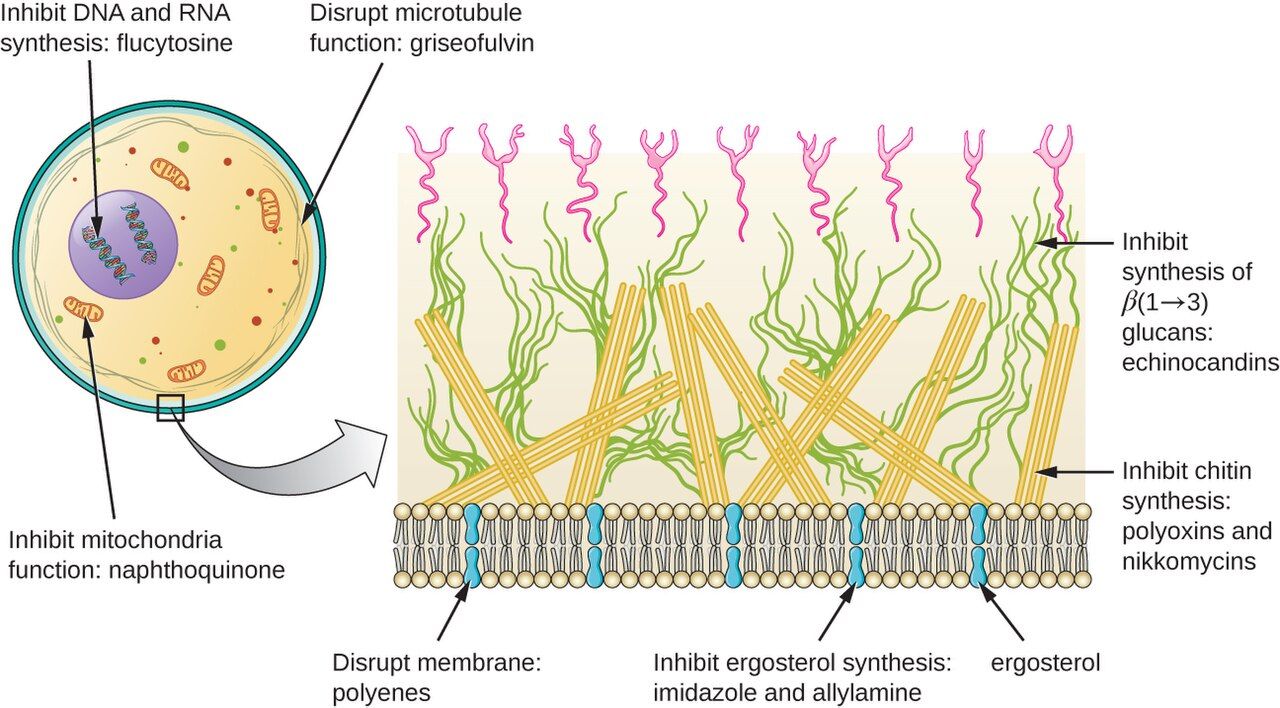
Antifungals: a much smaller gap
Fungi are eukaryotes. Their cells are built like yours, with a nucleus, 80S ribosomes, and similar membranes. So there are few targets that only the fungus has. That makes antifungals, as a group, much more toxic than antibacterials. Almost every antifungal uses one of two real differences. Fungal membranes use ergosterol where yours use cholesterol. Fungal cell walls contain beta-(1,3)-D-glucan, which you do not make at all.
Amphotericin B is a polyene. It binds ergosterol directly and rips holes in the membrane. It is strong, and it is rough. Fevers, rigors, and shaking chills during the drip earned it the nickname "shake and bake." It also harms the kidneys (nephrotoxicity), and this limits the dose. It drains potassium and magnesium too. Liposomal forms are much gentler. But here is a real safety trap. The standard and liposomal doses are very different and cannot be swapped. Check the form on the label against the order. The azoles are fluconazole, itraconazole, voriconazole, posaconazole, and isavuconazole. They block lanosterol 14-alpha-demethylase, the enzyme that makes ergosterol. They are the main oral antifungals. But they can harm the liver, lengthen the QT, and interact heavily through CYP450 with warfarin and statins. Voriconazole also causes a short-lived change in vision, blurred or with bright tints, plus sun sensitivity. The echinocandins are caspofungin, micafungin, and anidulafungin. They attack the beta-glucan wall, which humans do not have at all. So they are well tolerated. They are first-line for invasive candidemia (yeast in the blood) but are IV only. Terbinafine treats nail and skin fungus over long courses. Check liver tests and warn about taste changes. Nystatin works on contact. It is used as a swish and swallow for thrush. Teach the patient to hold it in the mouth before swallowing.
Antivirals: the narrowest gap of all
A virus copies itself using your cell's machinery. So there is almost nothing to attack that is not also yours. Antivirals target the few enzymes the virus brings with it. These include a viral polymerase, a protease, an integrase, and a neuraminidase. Most of the time, antivirals hold a virus down rather than cure it. They also depend on timing. The earlier you start, the more the drug can do. Still, in severe or high-risk illness, a late start is worth making.
Acyclovir and valacyclovir, its better-absorbed prodrug, treat herpes simplex and varicella-zoster (chickenpox and shingles). The clever part is how acyclovir gets switched on. It must first be changed by the virus's own enzyme, thymidine kinase. So it does almost nothing in a cell with no virus. IV acyclovir can form crystals in the kidney tubes. So hydrate the patient well and run it over at least an hour. Ganciclovir and valganciclovir treat CMV and can shut down bone marrow. Oseltamivir blocks the flu enzyme neuraminidase. It helps most when started within about 48 hours of the first symptoms in mild flu treated at home. Patients who are in the hospital, very sick, getting worse, or at high risk are treated no matter how long they have had symptoms. For HIV, antiretroviral therapy combines drug classes. These are NRTIs (tenofovir, emtricitabine, abacavir), NNRTIs (efavirenz), protease inhibitors (usually boosted with ritonavir), and integrase inhibitors (dolutegravir, bictegravir). Integrase inhibitors are now first-line. Two points stand out. Abacavir needs HLA-B*5701 screening before the first dose. A positive result predicts a reaction that can be fatal. And taking every dose is not optional. Missed doses let the virus mutate into resistance. Hepatitis C can now be cured in most people with 8 to 12 weeks of direct-acting antivirals. Examples are sofosbuvir-based or glecaprevir-pibrentasvir plans. Screen for hepatitis B first, since these drugs can wake it back up.
| Class | Prototype | Target | Safety alert |
|---|---|---|---|
| Polyene | amphotericin B | Binds ergosterol → membrane pores | "Shake and bake": premedicate per order; nephrotoxic; monitor K+ and Mg2+, creatinine; conventional vs. liposomal doses are not interchangeable |
| Azoles | fluconazole, voriconazole | Blocks ergosterol synthesis | Hepatotoxic (LFTs); QT prolongation; big CYP interactions: check warfarin and statins; voriconazole: visual changes, photosensitivity |
| Echinocandins | micafungin, caspofungin | Blocks beta-(1,3)-D-glucan wall synthesis | Best tolerated antifungal; IV only; first-line for invasive candidemia; infusion-site reactions |
| Allylamine | terbinafine | Blocks squalene epoxidase | Long courses for nails; baseline and periodic LFTs; taste and smell disturbance |
| Topical polyene | nystatin | Same as amphotericin, applied locally | Swish and swallow for thrush; hold in mouth, no food/drink 30 min after; treat the denture too |
| Anti-herpes | acyclovir, valacyclovir | Guanosine analog activated by viral thymidine kinase | Hydrate: the IV form crystallizes in the kidney; run it over ≥1 h; start within 72 h of a shingles rash, but still give it later if new spots are forming or the immune system is weak |
| Anti-CMV | ganciclovir, valganciclovir | Inhibits CMV DNA polymerase | Myelosuppression: monitor CBC; hazardous drug handling |
| Neuraminidase inhibitor | oseltamivir | Traps influenza virions on the host cell | Start within ~48 h of symptoms for the most benefit, but treat hospitalized, severe, or high-risk patients at any point; for nausea, take with food; does not replace the vaccine |
| NRTI | tenofovir, abacavir | Faulty nucleoside terminates viral DNA | HLA-B*5701 test before abacavir: hypersensitivity can be fatal; tenofovir: renal function and bone density |
| Integrase inhibitor | dolutegravir, bictegravir | Blocks integration into host DNA | First-line, well tolerated; weight gain; separate from antacids/calcium; adherence is everything |
| Protease inhibitor | ritonavir-boosted regimens | Blocks viral protein maturation | Ritonavir is a potent CYP3A4 inhibitor: screen every other medication; metabolic effects |
| HCV direct-acting | sofosbuvir-based, glecaprevir-pibrentasvir | Blocks the HCV NS3/4A protease, NS5A, or NS5B polymerase: regimens combine two targets | Cures >95% in 8 to 12 weeks; screen for hepatitis B: risk of HBV reactivation |
- Fungi are eukaryotes, so antifungals are more toxic. The real targets are ergosterol and beta-glucan.
- Amphotericin B = rigors and kidney harm. Azoles = liver, QT, and CYP interactions. Echinocandins = safest, IV only.
- Antivirals hit enzymes only the virus has. They mostly hold the virus down rather than cure it. They depend on timing: earliest is best, but severe or high-risk illness is treated at any point.
- Hydrate for IV acyclovir. Screen HLA-B*5701 before abacavir. Taking every ART dose prevents resistance.
Section 5Antiparasitics and care for every antimicrobial
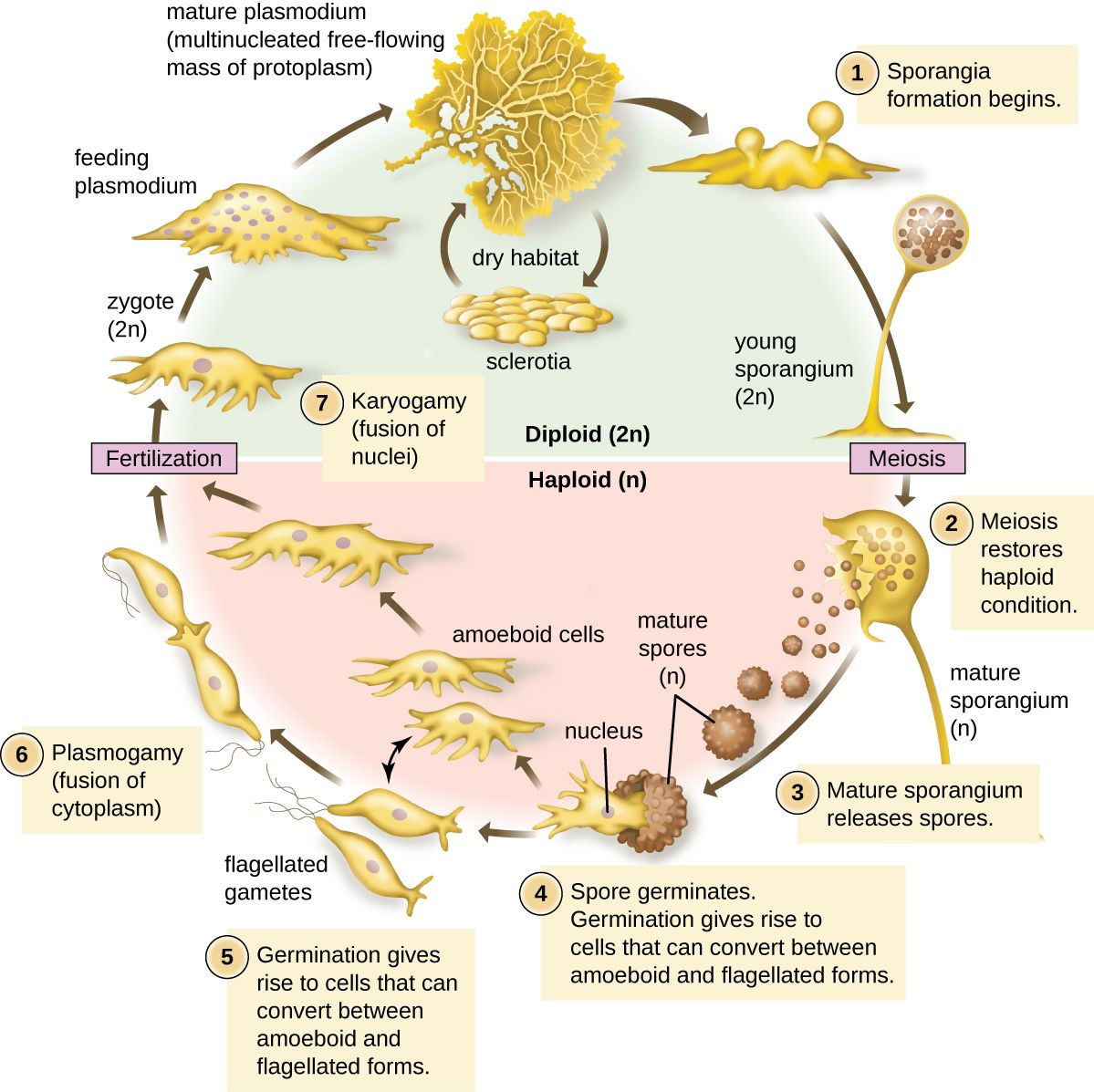
Antiprotozoals
Protozoa are eukaryotes too. So again the safety margin is narrow. The drugs are chosen by the parasite's life stage, not just its name. Malaria is the clearest example. Artemisinin-based combination therapy (artemether-lumefantrine) is first-line for mild P. falciparum malaria. It should be taken with fatty food, which greatly improves absorption. Atovaquone-proguanil and doxycycline are used to prevent malaria. Chloroquine still works where the parasite has not become resistant. Long-term use risks permanent damage to the retina. The key piece is the sleeping liver form of P. vivax and P. ovale, called the hypnozoite. Treating only the blood stage leaves it in place. The patient then relapses months later. Clearing it takes primaquine or tafenoquine. Both cause severe breakdown of red cells (hemolysis) in people with G6PD deficiency. So screen for G6PD before the dose, every time.
Beyond malaria, metronidazole or tinidazole covers giardiasis, amebiasis, and trichomoniasis. For trichomoniasis, treat the partner too, or the patient simply gets it back. Repeat the alcohol warning, since these are the drugs behind the disulfiram-like reaction. Nitazoxanide covers Giardia and Cryptosporidium. TMP-SMX is still the drug of choice for Pneumocystis pneumonia. That germ is now classed as a fungus, but it is still taught with this group. Pentamidine is the backup. It can cause severe low blood sugar, followed by high blood sugar.
Anthelmintics
Worms are animals. The drugs against them mostly target the nerve, muscle, or skeleton parts the worm depends on. Albendazole and mebendazole block the worm's microtubules (tiny inner tubes), which starves it. Albendazole is absorbed far better with a fatty meal. Ivermectin opens glutamate-gated chloride channels and paralyzes the parasite. Mammals have no such channels. The blood-brain barrier keeps the drug away from similar channels in the human brain. It treats strongyloidiasis, onchocerciasis, and scabies. Praziquantel makes the outer skin of flukes and tapeworms leak calcium, which paralyzes them. Take it with food and warn about dizziness. Pyrantel pamoate is the over-the-counter choice for pinworm.
The teaching matters as much as the drug. Pinworm is a whole-household problem. Treat everyone in the home. Repeat the dose in two weeks to catch newly hatched eggs. Wash sheets and underwear in hot water. Cut and scrub fingernails. Do the tape test first thing in the morning, before bathing. These steps prevent more reinfection than any second prescription.
Care that applies to every antimicrobial
Take away the class differences, and the same backbone of care holds it all up. Before: take a real allergy history and get the culture. Check kidney and liver function against the drug and dose. Review interactions. Confirm pregnancy status where it matters. During: give doses on time and evenly spaced around the clock. This keeps blood levels above the MIC. A "late" antibiotic is not a small thing. Stay with the patient for the first dose of anything new. Draw troughs right before the next dose. Draw peaks at the set time after it. Chart the exact times. A level drawn at the wrong moment is worse than no level, because someone will act on it. After: watch for the response you expect, such as the fever curve, the white count, and the wound. Watch for the harm you were warned about. Check creatinine, CBC, liver tests, hearing, tendons, and QT. And watch for the superinfection you invited. Signs are new diarrhea, white patches in the mouth, and vaginal itching.
| What to do | Why | Watch for |
|---|---|---|
| Real allergy history | "Rash" vs. "throat closed" are different drugs and different risks | Mislabeled penicillin allergy pushing the patient to broader, more toxic therapy |
| Cultures before first dose | One dose can sterilize the specimen and cost the organism's name | In sepsis: draw fast, but antibiotics still go in within the hour |
| Check creatinine and LFTs | Most antimicrobials are renally cleared or hepatically metabolized | Rising creatinine on vancomycin, gentamicin, amphotericin B, colistin |
| Even, around-the-clock dosing | Keeps concentration above the MIC between doses | Clustered or missed doses: a real cause of treatment failure |
| Correct level timing | Trough immediately before the next dose; peak at the specified time after | Mis-timed levels lead to wrong dose changes: chart exact draw times |
| Stay for the first dose | Anaphylaxis usually shows itself within 30 min | Flushing, itching, wheeze, throat tightness, drop in BP |
| Assess for superinfection | Antibiotics destroy the protective normal flora | New diarrhea (C. diff), oral white plaques, vaginal itching |
| Teach the course | Adherence prevents relapse and resistance | Stopping early when they feel better; saving or sharing leftovers |
| Teach the specific warning | Every class has one that changes daily life | Sun (doxycycline, TMP-SMX), alcohol (metronidazole), orange fluids (rifampin), tendon pain (fluoroquinolones) |
- Malaria drugs are chosen by life stage. Clearing the hypnozoite takes primaquine or tafenoquine, so screen G6PD first.
- Metronidazole covers giardiasis, amebiasis, and trichomoniasis. Treat the partner, and no alcohol.
- Albendazole/mebendazole (microtubules), ivermectin (chloride channels), praziquantel (calcium leak). Pinworm needs the whole household treated plus a repeat dose in two weeks.
- The backbone of care for all of them: allergy history, culture first, organ function, on-time evenly spaced doses, correct timing of levels, watching for harm and superinfection, and teaching the course.
The chapter in one breath
- Selective toxicity makes antimicrobials possible. Where microbe and person overlap, toxicity appears. That is why antifungals and antivirals are rougher than antibacterials.
- Narrow-spectrum is the goal. Broad-spectrum is a short-term guess. Bactericidal drugs are needed when the immune system cannot help.
- C&S names the germ and reports the MIC. Empiric therapy bridges the wait and must then be de-escalated.
- Antibacterials sort by how they work: cell wall (beta-lactams, vancomycin), protein synthesis (30S: aminoglycosides, tetracyclines; 50S: macrolides, clindamycin, linezolid), nucleic acid (fluoroquinolones, rifampin, metronidazole), and metabolic (TMP-SMX).
- Antibiotics select for resistance. Enzymes, changed targets, efflux, and less permeability produce MRSA, VRE, ESBL, and CRE.
- Stewardship is bedside work: cultures first, an honest allergy history, day-3 review, IV-to-PO, the right length, teaching, and hand hygiene.
- Antifungals target ergosterol and beta-glucan. Antivirals target enzymes only the virus has. They hold the virus down rather than cure it, and they work best started early. Even so, severe and high-risk patients are treated whenever they show up.
- For every antimicrobial, check organ function and levels, space doses evenly, watch for superinfection, and teach the one warning that class carries.
ReferenceWords worth knowing
The words of antimicrobial treatment. Skim them now. Come back whenever a term on a culture report or a drug label stops you.
- Aminoglycoside
- A class that kills bacteria (gentamicin, tobramycin, amikacin) by binding the 30S ribosome piece; harms the kidneys and ears, so it needs peak and trough levels.
- Anthelmintic
- A drug that kills or drives out parasitic worms, such as albendazole, ivermectin, or praziquantel.
- Antimicrobial stewardship
- A team effort to use antimicrobials only when needed, and then in the right drug, dose, route, and length of time.
- Bactericidal
- Kills bacteria outright; needed when the body's defenses cannot help (endocarditis, meningitis, neutropenia).
- Bacteriostatic
- Stops bacteria from multiplying and relies on the immune system to clear them.
- Beta-lactam
- Any drug built around the beta-lactam ring (penicillins, cephalosporins, carbapenems, and the monobactam aztreonam) that blocks the linking of the cell wall.
- Beta-lactamase
- A bacterial enzyme that breaks beta-lactam drugs by opening the ring; extended-spectrum forms (ESBLs) break a much wider range.
- Broad-spectrum
- Works against a wide range of germs; useful as a first guess but wipes out normal flora and drives resistance.
- Culture and sensitivity (C&S)
- A lab test that names the germ and reports which drugs stop it, labeled susceptible, intermediate, or resistant.
- De-escalation
- Narrowing treatment from a broad first-guess drug to a targeted one once the culture and sensitivity result is back.
- Empiric therapy
- Treatment started before results are ready, based on the germs most likely for that site and patient.
- Ergosterol
- The sterol in fungal cell membranes (humans use cholesterol); the target of polyenes and of the azoles' building pathway.
- Methicillin-resistant Staphylococcus aureus (MRSA)
- S. aureus carrying mecA, which builds a changed penicillin-binding protein (PBP2a), so every classic beta-lactam fails at once; the anti-MRSA cephalosporins ceftaroline (and ceftobiprole) are built to bind PBP2a and still work.
- Minimum inhibitory concentration (MIC)
- The lowest drug level that stops visible growth of a germ in the lab.
- Narrow-spectrum
- Works against a small range of germs; the goal once the germ is known.
- Nephrotoxicity
- Kidney injury caused by a drug; a key risk of vancomycin, aminoglycosides, amphotericin B, and colistin.
- Ototoxicity
- Drug damage to hearing or balance, classically from aminoglycosides; may be permanent, so report ringing in the ears or spinning dizziness at once.
- Peak and trough
- Blood drug levels drawn at the expected highest point (peak) and right before the next dose (trough) to keep treatment working and safe.
- Prophylaxis
- Giving an antimicrobial to prevent infection instead of treating it, such as cefazolin within 60 minutes before the surgical cut.
- Selective toxicity
- Harming the microbe while sparing the patient by attacking a part the microbe has and human cells lack.
- Superinfection
- A new infection that appears during antimicrobial treatment because the protective normal flora were destroyed, such as C. difficile colitis or thrush.
- Vancomycin-resistant Enterococcus (VRE)
- Enterococcus that has changed the D-alanine binding site vancomycin depends on; usually treated with linezolid or daptomycin.
Check yourself
Immunomodulators & Antineoplastic Agents
Most drugs help by turning a body system up or down a little. The drugs in this chapter do something much bigger. Some change the rules the immune system plays by. Others poison cell division itself. That power is exactly why they work. A new kidney survives. A lupus flare calms down. A lymphoma melts away. That same power is also why they hurt. A person on drugs that hold down the immune system cannot make a fever the way you expect. A person on chemotherapy loses the gut lining and the blood-making marrow along with the tumor. This chapter covers the drugs that quiet the immune system and the drugs that wake it up. It also covers the drugs that kill dividing cells. At every step, you will see what to watch, what to teach, and what never to let slide.
By the end of this chapter you can
- Name the main immunosuppressant classes, their prototypes, and the harm each one is known for.
- Explain why infection is the biggest risk of immunosuppression and how that changes your assessment.
- Tell immunostimulants, biologics, and the main vaccine types apart, and say who must not get a live vaccine.
- Describe the cell cycle, and compare cell-cycle-specific with cell-cycle-nonspecific cancer drugs.
- Explain why chemotherapy harms normal, fast-dividing tissues, and predict which ones.
- Name the five chemotherapy classes with their prototypes and the harm each class is known for.
- Manage myelosuppression, nausea and vomiting, mucositis, alopecia, and extravasation at the bedside.
- Use hazardous drug safety steps to protect yourself, the patient, and the family.
Section 1Immunosuppressants
Why we deliberately weaken a defense system
The immune system is great at one job. It tells self from not-self and destroys the not-self. That instinct causes trouble in two cases. In transplantation, the donated organ is not-self. An untreated immune system will reject it within days. In autoimmune disease, the system has wrongly marked the person's own tissue as foreign and attacks it. Examples are rheumatoid arthritis, lupus, Crohn disease, multiple sclerosis, and psoriasis. In both cases, we give drugs to turn the response down. But nothing comes free here. Every bit of immunity we take away was also guarding against bacteria, viruses, fungi, and cancer cells.
Transplant drug plans are usually built in two stages. Induction therapy is strong and short. It is given around the time of surgery. Examples are basiliximab (which blocks the interleukin-2 receptor) and antithymocyte globulin. Maintenance therapy lasts for life. It usually combines three drugs from different classes, each at a lower dose. These are a calcineurin inhibitor, an antiproliferative, and a corticosteroid. Three ways of working at modest doses beat one drug at a huge dose. That is because the harms do not pile up in the same organ.
The classes worth knowing cold
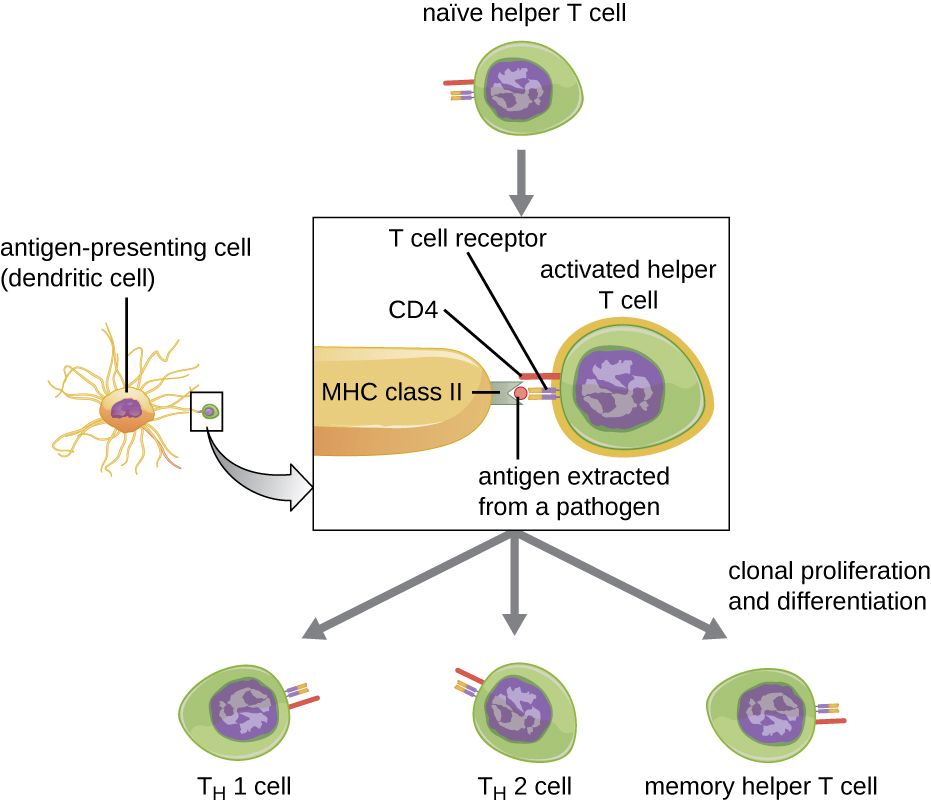
Calcineurin inhibitors (cyclosporine and tacrolimus) are the backbone of transplant care. They block the calcineurin signal a T cell needs to make interleukin-2. So the T cell never multiplies. Both have a narrow therapeutic index. Too little, and the new organ is rejected. Too much, and the kidneys fail. Trough levels are drawn right before the next dose. The whole plan depends on the patient taking doses at the same times every day. Both drugs are broken down by CYP3A4. That is why grapefruit juice, azole antifungals, and clarithromycin raise their levels to danger. Rifampin, phenytoin, and St. John's wort drop them toward rejection.
Antiproliferatives starve lymphocytes of the DNA building blocks they need to divide. Mycophenolate is the modern standard. Azathioprine is older. It carries one of the most famous interactions in pharmacology. Allopurinol blocks xanthine oxidase, the enzyme that clears azathioprine's active form. Give the two together, and drug levels climb. That can cause total marrow failure. mTOR inhibitors (sirolimus, everolimus) spare the kidney but slow wound healing. So they are usually held right after surgery. Corticosteroids blunt nearly every part of inflammation. They work well and cost little, but they harm the body in a dozen ways. They are tapered, never stopped suddenly. Long-term use shuts down the body's own adrenal hormone system.
For autoimmune disease, low-dose methotrexate is the anchor drug for rheumatoid arthritis. Here is the fact that saves lives. It is dosed once a week, not daily. Giving a weekly methotrexate order every day has killed people. Folic acid is given on the other days to lower mouth sores and marrow harm. Biologic DMARDs include the TNF inhibitors etanercept, adalimumab, and infliximab. They work extremely well. They need screening for hidden (latent) tuberculosis before the first dose. Knocking out TNF lets walled-off TB break loose.
| Class | Prototype | Key effect | Safety alert |
|---|---|---|---|
| Calcineurin inhibitor | Tacrolimus; cyclosporine | Blocks IL-2 production → T cells cannot proliferate | Narrow TI: trough levels before the dose; nephrotoxicity, hypertension, tremor, hyperkalemia; hyperglycemia (tacrolimus); gum overgrowth and hirsutism (cyclosporine); no grapefruit juice |
| Antiproliferative | Mycophenolate; azathioprine | Blocks purine synthesis → lymphocytes cannot divide | GI upset, leukopenia; mycophenolate is teratogenic (pregnancy prevention required); azathioprine + allopurinol = marrow failure |
| mTOR inhibitor | Sirolimus; everolimus | Blocks the growth signal downstream of IL-2 | Impaired wound healing, hyperlipidemia, mouth ulcers, pneumonitis; kidney-sparing |
| Corticosteroid | Prednisone; methylprednisolone | Broad anti-inflammatory and lymphocyte suppression | Hyperglycemia, osteoporosis, mood change, masks fever and infection; taper: never stop abruptly |
| Biologic (induction) | Basiliximab; antithymocyte globulin | Targets IL-2 receptor or depletes T cells at transplant | Infusion reactions; premedicate; monitor closely during and after the infusion |
| Antimetabolite DMARD | Methotrexate | Folate antagonist; anti-inflammatory at low dose | WEEKLY dosing: a daily order is a lethal error; give folic acid; monitor CBC, LFTs, creatinine; teratogenic |
| TNF inhibitor | Adalimumab; etanercept; infliximab | Neutralizes tumor necrosis factor | Screen for latent TB and hepatitis B before the first dose; serious infection and lymphoma risk; hold during active infection |
| JAK inhibitor | Tofacitinib; baricitinib | Blocks intracellular cytokine signaling (oral) | Boxed warning: serious infection, thrombosis, cardiovascular events, malignancy; monitor CBC and lipids |
Infection is the whole risk
A person whose immune system is held down does not look sick in the usual way. Steroids blunt fever. Neutropenia (very low neutrophils) removes the cells that make pus. So a wound infection may show no drainage. A pneumonia may show an almost clear chest x-ray. The classic signs of inflammation are partly the immune system at work. And you have turned it off. So your threshold for concern drops through the floor. A low fever, a new cough, a sore throat, a small red spot, or just "I don't feel right" all get taken seriously and reported.
Prevention drugs are standard, not optional, in this group. Usually that means trimethoprim-sulfamethoxazole against Pneumocystis jirovecii. It also means an antiviral against cytomegalovirus and, for high-risk patients, an antifungal. Live vaccines are not given when the immune system is strongly held down. Vaccines should be brought up to date before a transplant or before a biologic starts. Over the long term, these people also have a higher risk of cancer, above all skin cancer. So teaching sunscreen, covering clothes, and yearly skin checks is real care, not filler.
- Transplant plans stack three classes at lower doses (calcineurin inhibitor, antiproliferative, corticosteroid), so the harms do not pile up.
- Calcineurin inhibitors have a narrow therapeutic index. Think trough levels, kidney harm, CYP3A4 interactions, and no grapefruit.
- Methotrexate is weekly. Azathioprine plus allopurinol causes marrow failure. TNF inhibitors need TB screening first.
- People with held-down immunity hide infection (blunted fever, no pus) and must not get live vaccines.
Section 2Immunostimulants and vaccines
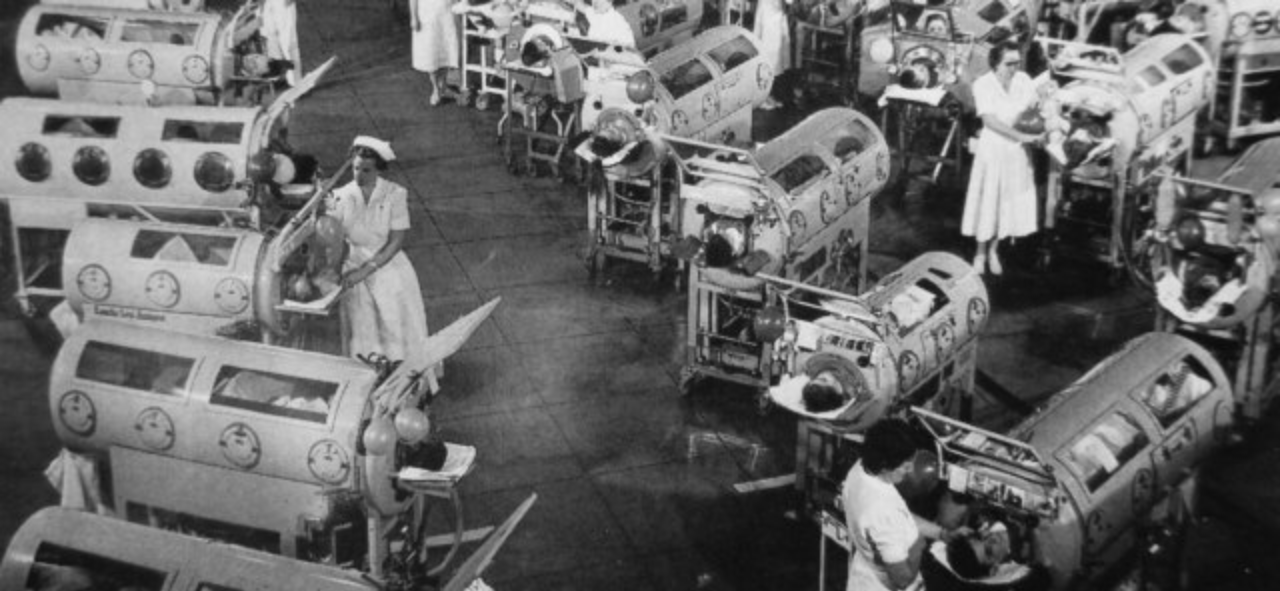
Drugs that wake the immune system up
Immunosuppressants turn the dial down. Immunostimulants turn it up. They do it by rebuilding immune cells the body has lost. Or they release a brake that a tumor has been using. The ones you will hang most often are the colony-stimulating factors. Filgrastim and its long-acting cousin pegfilgrastim are man-made forms of G-CSF. They tell the marrow to pump out neutrophils. They are given after chemotherapy to shorten the time of dangerous neutropenia. The classic side effect is deep, aching bone pain. The marrow is truly working overtime. It is usually treated with acetaminophen or an NSAID, not by stopping the drug. Timing matters. These drugs are given at least 24 hours after chemotherapy, never with it. You do not want to stir up dividing marrow cells right when a drug that kills dividing cells is present.
Erythropoiesis-stimulating agents (epoetin alfa, darbepoetin) raise hemoglobin. They carry a boxed warning. Pushed too high, they shorten survival in some cancers. They also cause clots and stroke. They are used at the lowest dose that avoids a blood transfusion, not to make the number look nice. Interferons include interferon alfa-2b and interferon beta for multiple sclerosis. They reliably cause flu-like symptoms: fever, chills, and muscle aches. They can also cause depression severe enough to need screening. Interleukin-2 (aldesleukin) is strong and dangerous. Its main harm is capillary leak syndrome, where fluid leaks out of the blood vessels.
The most important new class is the immune checkpoint inhibitors. These are pembrolizumab and nivolumab (anti-PD-1), atezolizumab (anti-PD-L1), and ipilimumab (anti-CTLA-4). Tumors survive partly by pressing the immune system's own "stand down" buttons. These drugs cut that wire. The immune system wakes up, but sometimes it attacks the patient too. These are called immune-related adverse events. They include colitis, pneumonitis, hepatitis, thyroiditis, dermatitis, and hypophysitis. Each is inflammation of a body part: the colon, lungs, liver, thyroid, skin, or pituitary gland. Report any new diarrhea, cough, or shortness of breath in a patient on a checkpoint inhibitor. These are treated with corticosteroids, and delay does real harm.
Here is a quick decoder for biologic names, because it truly helps. -mab means monoclonal antibody. -cept means a receptor fusion protein. -nib means a small-molecule kinase inhibitor. -kin or -grastim marks a cytokine or growth factor.
Vaccines: borrowing the memory without the disease
A vaccine is the most cost-effective drug there is. It shows the immune system a harmless preview of a germ. Then memory B and T cells are already waiting when the real germ arrives. This is active immunity. It is slow to build but lasts a long time. Compare passive immunity. Here we simply inject someone else's ready-made antibodies. Examples are immune globulin, Rho(D) immune globulin, and rabies or tetanus immune globulin. Passive protection works within minutes and fades within weeks. That is because the person made no memory of their own. Use active immunity to prevent. Use passive immunity for a threat that is already here.
| Vaccine type | Prototype | Key effect | Safety alert |
|---|---|---|---|
| Live attenuated | MMR; varicella; rotavirus; intranasal influenza; yellow fever | Weakened but replicating organism: strongest, longest immunity | Contraindicated in pregnancy and significant immunosuppression; give before transplant or biologics, not during |
| Inactivated (killed) | Hepatitis A; injectable polio (IPV); rabies | Whole organism, killed: cannot replicate | Safe in immunosuppression; often needs boosters |
| Subunit / recombinant | Hepatitis B; HPV; recombinant zoster (Shingrix) | Only the pieces that matter, made in the lab | Safe in immunosuppression; recombinant zoster is notably reactogenic: warn about arm soreness and a day of feeling rough |
| Toxoid | Tetanus; diphtheria (Td, Tdap) | Inactivated toxin: immunity to the poison, not the bug | Booster every 10 years; Tdap in every pregnancy (27 to 36 weeks) to protect the newborn |
| Conjugate | Hib; pneumococcal (PCV); meningococcal | Sugar coat linked to a protein so infant immune systems respond | Essential for the very young and the asplenic |
| mRNA / viral vector | COVID-19 vaccines | Delivers the instructions; the patient's cells make the antigen | Not a live vaccine and does not alter DNA: a common patient question worth answering plainly |
| Passive (not a vaccine) | Immune globulin; Rho(D) immune globulin | Borrowed antibodies: immediate, temporary | Works within minutes, no memory made; used after exposure or for Rh-negative mothers |
Giving vaccines is a skill with a few firm rules. Hand over the Vaccine Information Statement before the shot and chart that you did. Have epinephrine ready right away. Watch the person for at least 15 minutes after, longer if they have had a reaction before. Chart the lot number, expiration date, site, and route. This is one of the few places where charting is itself a public health job. Teach that soreness, a low fever, and tiredness for a day mean the vaccine is working. Treat them with acetaminophen. Do not give aspirin to a child. And know the real reasons not to vaccinate from the false ones. A serious allergy to a vaccine part, or a past anaphylactic reaction, is a real reason. A mild cold, a runny nose, breastfeeding, or a family history of reactions is not.
- Filgrastim/pegfilgrastim rebuild neutrophils after chemo. Expect bone pain. Never give within 24 hours of chemotherapy.
- Checkpoint inhibitors (pembrolizumab, nivolumab, ipilimumab) release the immune brake. New diarrhea or shortness of breath means an immune-related adverse event until proven otherwise.
- Live vaccines (MMR, varicella, rotavirus, LAIV, yellow fever) are not given in pregnancy or immunosuppression.
- Active immunity (vaccines) is slow and lasting. Passive immunity (immune globulin) is instant and short-lived.
Section 3Antineoplastic principles
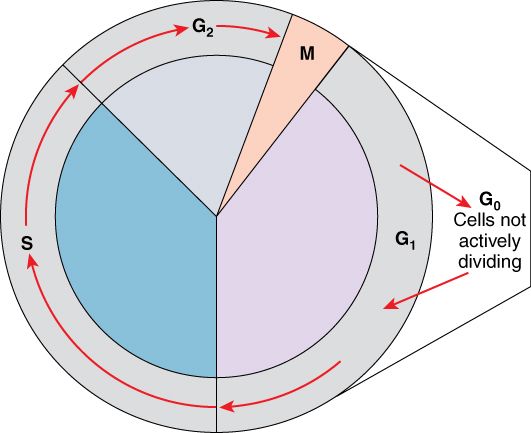
The cell cycle, and why it is the target
At its root, cancer is cell division that will not stop. So the oldest and still most common plan is to attack division itself. To see where each drug lands, you need the cycle. G1 is growth. The cell gets bigger and makes the enzymes it will need. S is synthesis. DNA is copied, and the cell is most open to chemical attack here. G2 is the second growth phase. The cell builds the spindle and proofreads the new DNA. M is mitosis. The chromosomes are pulled apart, and the cell splits in two. G0 is the resting state. The cell is alive and working but not dividing. G0 is the hiding place. Cell-cycle-specific drugs cannot touch a cell in G0 at all. Even the nonspecific ones work on it poorly. A resting cell is not copying DNA, and it has time to repair any damage. That safe spot is a big part of why cancers come back years later.
This map splits cancer drugs into two groups. Cell-cycle-specific (CCS) drugs work only on a cell in a certain phase. Antimetabolites act in S. Mitotic inhibitors act in M. Bleomycin acts in G2. They must catch the cell in the act. So they work best against fast-growing tumors. They are often given as a steady drip or in split doses to widen the window. Cell-cycle-nonspecific (CCNS) drugs damage DNA whenever they find it, even in G0. These are the alkylating agents, most antitumor antibiotics (the anthracyclines, dactinomycin, mitomycin), and the platinum drugs. Bleomycin is the exception among antitumor antibiotics. It is cell-cycle-specific and acts mainly in G2. The nonspecific drugs are usually given as one large dose. Their damage depends on the dose, not the timing.
Log kill, growth fraction, and why chemo comes in cycles
Here is the idea behind the whole shape of a chemotherapy plan. A dose of a drug kills a set percentage of tumor cells, not a set number. This is the log kill hypothesis, also called fractional kill. Say a dose kills 99.9 percent of a billion cancer cells. A million are still alive. The next cycle kills 99.9 percent of that million. That leaves a thousand. Now you can see why one round is never enough. You can see why the schedule is a schedule, not a suggestion. And you can see why a patient who feels great after two cycles still needs the other four.
The breaks between cycles are planned too. Normal marrow recovers from chemotherapy faster than tumor does. So a rest of two to three weeks lets blood counts climb back. Meanwhile the tumor gains less from the break. Combination chemotherapy uses the same thinking from another angle. Drugs are picked with different ways of working and different resistance patterns. Most important, they have harms that do not overlap. That way, no single organ takes the whole hit. Doses are worked out by body surface area, in mg/m2, not by weight. Carboplatin is dosed by a target AUC using the patient's kidney function. Small errors in this math are not small. That is why chemotherapy orders need an independent double-check by a second trained clinician.
Why chemotherapy hurts the patient too
Classic chemotherapy cannot tell a cancer cell from a healthy cell. It can only tell a dividing cell from a resting one. That one sentence holds the whole sad truth of this drug class. It also lets you predict every major side effect before you open the drug book. Ask which normal tissues in the body divide fast. That is your answer.
| Fast-dividing normal tissue | What chemo does to it | What the patient and you see |
|---|---|---|
| Bone marrow | Halts production of neutrophils, platelets, RBCs | Myelosuppression: infection risk, bleeding, fatigue; the dose-limiting toxicity of most regimens |
| GI mucosa (mouth to anus) | Lining is not replaced as it sloughs | Mucositis, stomatitis, esophagitis, diarrhea, nausea |
| Hair follicles | Matrix cells stop dividing; the shaft breaks | Alopecia: scalp, brows, lashes, body; temporary |
| Gonadal germ cells | Sperm and oocyte production impaired | Infertility, sometimes permanent: discuss banking before treatment starts |
| Skin and nails | Basal layer and nail matrix disrupted | Rash, photosensitivity, ridged or darkened nails, hand-foot syndrome |
| Fetal cells | Everything is dividing | Teratogenicity: pregnancy must be excluded; effective contraception is required |
Two more ideas finish the picture. Growth fraction is the share of a tumor's cells that are actively dividing. It predicts how well the tumor will respond. Leukemias and lymphomas have high growth fractions and melt away. Slow, bulky solid tumors respond much less. Also, drug resistance develops. The best-known cause is multidrug resistance proteins, such as P-glycoprotein. They sit in the cell membrane and pump the drug right back out. Resistance is another reason we combine drugs. It is also why we do not stretch out the schedule.
- The cycle is G1 → S → G2 → M. G0 is the resting phase. Cell-cycle-specific drugs cannot reach it at all, and nonspecific drugs reach it poorly. It is the source of relapse.
- CCS drugs hit one phase (antimetabolites in S, mitotic inhibitors in M). CCNS drugs damage DNA in any phase, even G0.
- The log kill hypothesis says each dose kills a percentage, not a number. That is why treatment comes in repeated cycles and why finishing the plan matters.
- Chemo cannot tell cancer from healthy tissue. It tells dividing from resting. That is why marrow, gut, hair, and gonads suffer.
Section 4Chemotherapy classes
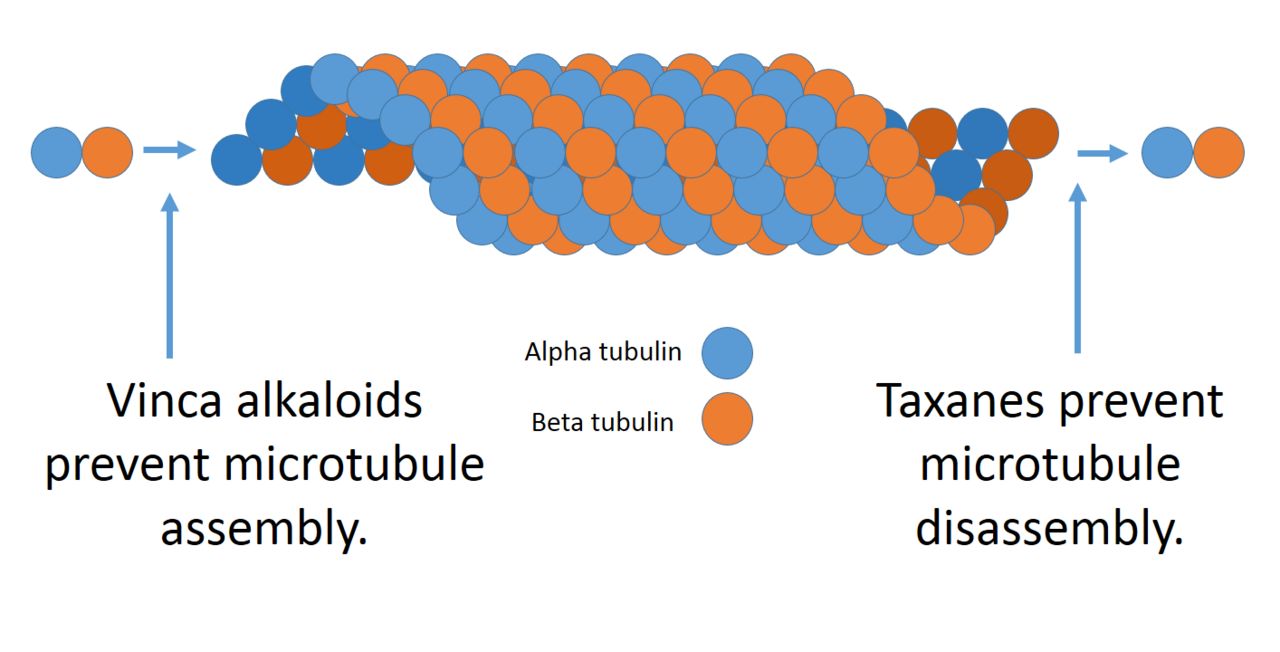
Damaging the DNA: alkylating agents and antitumor antibiotics
Alkylating agents are the oldest class. They come from the sulfur mustard gas of World War I. That gas destroyed the bone marrow of exposed soldiers. This clue led doctors to try the nitrogen mustards against lymphoma in the 1940s. These drugs attach an alkyl group to DNA. This cross-links the two strands, so the DNA can no longer unzip and copy itself. They are cell-cycle-nonspecific and work broadly. Each subgroup has its own known harm. Cyclophosphamide breaks down into acrolein. Acrolein sits in the bladder and burns it. This is hemorrhagic cystitis, a bleeding bladder. It is prevented with lots of fluids, frequent voiding, and the rescue drug mesna. Ifosfamide does the same and adds nerve harm. The nitrosoureas, such as carmustine, cross the blood-brain barrier. That makes them useful for brain tumors. They cause a well-known delayed drop in marrow output that bottoms out four to six weeks later. The platinum drugs are grouped here by how they act. Cisplatin harms the kidneys and ears and is one of the most vomit-causing drugs in medicine. Carboplatin trades that for marrow suppression. Oxaliplatin causes an odd nerve pain triggered by cold. Teach patients not to drink cold drinks or touch cold metal for days after a dose.
Antitumor antibiotics come from soil bacteria. They slip between DNA strands and make free radicals that shred the DNA. The anthracyclines are doxorubicin, daunorubicin, and epirubicin. They are among the most useful cancer drugs and among the most feared. Their harm to the heart adds up over time and mostly cannot be undone. A lifetime dose limit is tracked across the patient's whole history. For doxorubicin it is about 550 mg/m2. The heart's pumping strength (ejection fraction) is measured first by echocardiogram or MUGA scan. Dexrazoxane may be given to protect the heart. Doxorubicin is also a strong vesicant (it destroys tissue if it leaks). It turns urine red-orange for a day or two. That is harmless, but scary if no one warned the patient. Bleomycin is the exception twice. It is the only one in this class that is cell-cycle-specific, acting in G2. It also causes almost no marrow suppression. Instead it causes pulmonary fibrosis, a scarring of the lungs. It has its own lifetime limit and needs a lung function test first.
Starving and stalling: antimetabolites and mitotic inhibitors
Antimetabolites are fakes at the molecule level. They look enough like the natural building blocks of DNA that the cell takes them in. Then they jam the cell's own machinery. So they act in the S phase and are strongly cell-cycle-specific. Methotrexate blocks dihydrofolate reductase and starves the cell of folate. High-dose plans are followed by leucovorin rescue, which gives folate back to normal cells. Never give NSAIDs or salicylates with high-dose methotrexate. They slow its clearance and can cause fatal toxicity. 5-fluorouracil and its oral prodrug capecitabine cause mouth sores, diarrhea, and the red, sore palms and soles of hand-foot syndrome. Cytarabine can also harm the cerebellum, which controls balance. It causes a chemical pink eye, which is prevented with corticosteroid eye drops.
Mitotic inhibitors attack the spindle in the M phase, from opposite directions. The vinca alkaloids (vincristine, vinblastine) stop microtubules from building up. The taxanes (paclitaxel, docetaxel) do the reverse. They freeze microtubules so they cannot break down. Either way, mitosis stops. Vincristine's dose-limiting harm is peripheral neuropathy, or nerve damage. Signs are numb fingertips, foot drop, and a constipation from nerve damage that can turn into ileus (a stopped gut). That is why a bowel plan goes home with the drug. Vincristine also carries the firmest rule in cancer care. It is labeled "For intravenous use only: fatal if given by other routes." Given into the spinal fluid (intrathecal), it causes paralysis that climbs upward and death. Taxanes cause allergic reactions from the liquid they are mixed in. So patients get a corticosteroid, an antihistamine, and an H2 blocker first. Paclitaxel runs through non-PVC tubing with an in-line filter.
Aiming instead of carpet-bombing: targeted and hormonal therapy
Everything above kills dividing cells without choosing. Targeted therapy asks a better question. What is broken in this tumor? Imatinib shuts down the BCR-ABL kinase that drives chronic myeloid leukemia. It turned a fatal disease into one people can live with. Trastuzumab targets HER2-positive breast cancer. It can harm the heart. Unlike doxorubicin's harm, this is usually reversible. But the two together are a bad mix. Rituximab targets CD20 on B cells and can wake up hepatitis B. So screening comes first. Bevacizumab starves tumors of blood supply by blocking VEGF. The cost is high blood pressure, bleeding, slow wound healing, and, rarely, a hole in the gut. Targeted drugs are easier on the marrow but not gentle. They trade one set of harms for another. Hormonal agents use the same thinking on tumors fed by hormones. Tamoxifen blocks estrogen at the breast. It raises the risk of uterine (endometrial) cancer and clots. The aromatase inhibitors anastrozole and letrozole cut estrogen making in women after menopause. The cost is joint pain and bone loss. Leuprolide lowers testosterone in prostate cancer, after a first tumor flare.
| Class | Prototype | Key effect | Safety alert |
|---|---|---|---|
| Alkylating agent | Cyclophosphamide | Cross-links DNA (CCNS) | Hemorrhagic cystitis: hydrate aggressively, void often, give mesna; report pink or red urine |
| Platinum compound | Cisplatin; carboplatin; oxaliplatin | Cross-links DNA (CCNS) | Cisplatin: nephro- and ototoxic, highly emetogenic: pre-hydrate, monitor creatinine and hearing; oxaliplatin: avoid all cold: drinks, air, metal |
| Antimetabolite | Methotrexate; 5-fluorouracil; cytarabine | Fake nucleotides jam DNA synthesis (S phase) | Leucovorin rescue after high-dose methotrexate; no NSAIDs/salicylates with it; mucositis and hand-foot syndrome; assess the mouth daily |
| Antitumor antibiotic | Doxorubicin | Intercalates DNA, generates free radicals (CCNS) | Cumulative irreversible cardiotoxicity: track lifetime dose, baseline echo/MUGA; potent vesicant; red-orange urine is harmless: warn the patient |
| Antitumor antibiotic | Bleomycin | DNA strand breaks (G2) | Pulmonary fibrosis with a lifetime dose limit; baseline PFTs; report any new cough or dyspnea; minimal myelosuppression |
| Vinca alkaloid | Vincristine | Blocks microtubule assembly (M phase) | FATAL IF GIVEN INTRATHECALLY: IV use only; peripheral neuropathy and constipation/ileus: start a bowel regimen; vesicant |
| Taxane | Paclitaxel; docetaxel | Freezes microtubules so mitosis cannot finish (M phase) | Hypersensitivity: premedicate with steroid, antihistamine, H2 blocker; non-PVC tubing with in-line filter; neuropathy |
| Topoisomerase inhibitor | Etoposide; irinotecan | Prevents DNA from re-sealing after unwinding | Irinotecan: early cholinergic diarrhea (atropine) vs late diarrhea (high-dose loperamide): treat them differently |
| Targeted: kinase inhibitor | Imatinib; erlotinib | Blocks the specific driver signal in the tumor | Oral: adherence is the whole game; fluid retention, acneiform rash; many CYP3A4 interactions |
| Targeted: monoclonal antibody | Trastuzumab; rituximab; bevacizumab | Binds a surface marker or growth factor | Trastuzumab: cardiotoxicity (usually reversible), monitor LVEF; rituximab: screen hepatitis B, infusion reactions; bevacizumab: hypertension, bleeding, poor wound healing |
| Hormonal | Tamoxifen; anastrozole; leuprolide | Removes the hormone signal a tumor depends on | Tamoxifen: VTE and endometrial cancer, so report leg pain or vaginal bleeding; aromatase inhibitors: bone loss and joint pain; leuprolide: expect an early tumor flare |
- Alkylating agents and most antitumor antibiotics damage DNA in any phase (CCNS). Antimetabolites (S), mitotic inhibitors (M), and bleomycin (G2) are phase-specific (CCS).
- Key harms: cyclophosphamide → hemorrhagic cystitis (mesna); doxorubicin → heart damage; bleomycin → pulmonary fibrosis; vincristine → neuropathy, and death if given intrathecally; cisplatin → kidney and ear harm.
- Taxanes need premedicine for allergic reactions. Irinotecan causes two different kinds of diarrhea with two different treatments.
- Targeted and hormonal drugs spare the marrow but bring their own risks: heart harm, hepatitis B wake-up, bleeding, clots, and bone loss.
Section 5Chemotherapy toxicities and care
Myelosuppression: the toxicity that limits the dose
For most plans, the marrow decides how much drug a patient can take. Counts fall after each cycle. They hit bottom, called the nadir, usually 7 to 14 days later. Then they recover over the next two to three weeks. The three blood cell lines fail on their own schedules. Each one brings its own emergency.
Neutropenia is the deadliest. The absolute neutrophil count (ANC) is what matters, not the white count. An ANC below 1,000/mm3 is serious. Below 500/mm3 is severe. Fever with neutropenia is a cancer emergency. It means one oral temperature of 38.3°C (101°F), or 38.0°C (100.4°F) that lasts an hour, in a neutropenic patient. That calls for blood cultures now and broad-spectrum antibiotics within one hour. Not after rounds. Not after the culture results. Within the hour. There are no neutrophils to hold the line. A patient can go from a low fever to septic shock in a few hours. Teach that a fever at home means calling right away and going to the emergency department. Do not wait until morning.
Neutropenic precautions are mostly about removing sources of germs and breaks in the skin. Everyone cleans their hands with great care. No fresh flowers or standing water. No unpasteurized or raw foods. No crowds or sick visitors. And, a favorite of test writers because it truly matters, no rectal temperatures, suppositories, or enemas. A tear in the rectal lining of a neutropenic patient is a direct line into the blood. Thrombocytopenia (low platelets) calls for bleeding precautions below about 50,000/mm3. Below 20,000/mm3, bleeding can start on its own. Use an electric razor and a soft toothbrush. Give no aspirin or NSAIDs and no shots into the muscle. No flossing. Prevent falls. Anemia is the least dramatic and the most complained about. It brings deep tiredness, shortness of breath with activity, and a life shrunk down to the couch. Take it seriously. It is what patients remember.
Nausea, mouth, hair, and the things patients actually fear
Nausea and vomiting from chemotherapy come in three types, and each is handled differently. Acute vomiting starts within a few hours. Delayed vomiting starts more than 24 hours later. Cisplatin and cyclophosphamide are known for it. Patients get home, feel fine, and then get hit. Anticipatory nausea is learned. The patient vomits in the parking lot before the drug is even hung. The answer is a benzodiazepine such as lorazepam, plus better control in the first cycle. The most important rule is this. Antinausea drugs are given ahead of time and on a schedule, before the chemotherapy. Never as needed. Never playing catch-up. Modern plans combine a 5-HT3 antagonist (ondansetron; watch the QT), an NK-1 antagonist (aprepitant), dexamethasone, and often olanzapine.
Mucositis (sores in the mouth and gut lining) makes eating miserable. It also lets germs in. Check the mouth every day. Teach a soft toothbrush and rinses of salt water or baking soda water several times a day. Teach no mouthwash with alcohol. That is like pouring a stinging liquid on a burn. Sucking ice chips during a short 5-FU drip truly helps. Alopecia (hair loss) is not medically dangerous. Yet it is often what patients grieve most. It usually starts one to three weeks in. It takes brows, lashes, and body hair as well as the scalp. It grows back, sometimes in a new color or texture. Encourage choosing a wig or head cover before the hair falls out, since matching it later is harder. Scalp cooling lowers hair loss with some plans. Teach sun protection and gentle care for the scalp.
Extravasation and the drugs you never take your eyes off
A vesicant is a drug that kills tissue if it leaks out of the vein. The anthracyclines, the vinca alkaloids, mechlorethamine, and mitomycin are the classic ones. Damage from a leak can reach tendon and bone. It can end in skin grafts or amputation. Prevention is the whole plan. Use a central line for vesicants whenever you can. If not, use a fresh site with a confirmed blood return. Never use a site over a joint or in the bend of the elbow. And stay and watch. Do not start it and step out.
The patient may report burning or stinging. You may see swelling or redness, feel resistance, or lose the blood return. If so, stop the infusion right away. Do not pull the needle out. Disconnect the tubing. Try to draw back leftover drug through the catheter. Tell the provider. Mark and photograph the area, and raise the limb. Then the antidote depends on which drug leaked. Temperature is part of the antidote. For anthracyclines, apply cold and give dexrazoxane or topical DMSO. For vinca alkaloids, apply warm and give hyaluronidase. Cold keeps anthracyclines in one place. Warm spreads out the vincas. Swapping them makes the injury worse.
| Toxicity | Watch for | What to do |
|---|---|---|
| Febrile neutropenia | Temp 38.3°C once or 38.0°C for 1 hr; ANC <500 | Emergency: cultures then broad-spectrum antibiotics within 1 hour; no rectal temps, suppositories, or enemas |
| Thrombocytopenia | Platelets <50,000 (bleeding), <20,000 (spontaneous) | Electric razor, soft brush, no aspirin/NSAIDs, no IM injections, fall precautions |
| Nausea/vomiting | Acute, delayed (>24 hr), or anticipatory | Antiemetics scheduled before chemo; 5-HT3 + NK-1 + dexamethasone; lorazepam for anticipatory |
| Mucositis | Sore mouth, ulcers, dysphagia | Daily oral assessment, soft brush, saline/bicarb rinses; no alcohol-based mouthwash; ice chips with short 5-FU |
| Extravasation | Burning, swelling, no blood return, resistance | Stop, leave the needle in, aspirate, notify; anthracycline → cold + dexrazoxane; vinca → warm + hyaluronidase |
| Tumor lysis syndrome | Rising K+, phosphate, uric acid; falling calcium; AKI | Aggressive hydration, allopurinol or rasburicase, cardiac monitoring: highest risk in bulky, fast-growing tumors early in treatment |
| Infertility | Often permanent, especially alkylating agents | Raise sperm/oocyte banking before the first dose: afterward is too late |
Protecting yourself and the family
Chemotherapy drugs are hazardous drugs. They can cause cancer, gene damage, or birth defects in the people who handle them, not just the patient. Trained pharmacy staff prepare them in a biological safety cabinet, never on a unit counter. Giving them requires chemo-rated double gloves and a lint-free gown that closes in the back and blocks liquids. Wear eye protection if splashing could happen. Use closed-system transfer devices. Keep a spill kit where the drug is given. All chemo waste goes in the marked hazardous bin, not the regular sharps box. Staff who are pregnant, trying to conceive, or breastfeeding should not handle these drugs.
The safety steps follow the patient home, because the drug leaves in body fluids. For about 48 hours after a dose, teach the family to wear gloves when handling urine, stool, vomit, or soiled sheets. Close the toilet lid and flush twice. Wash soiled laundry apart from the rest of the household's. Wash hands well afterward. Say this out loud, not just in a pamphlet. And say why. Families who understand the reason follow it. Families who think they are being told their loved one is "toxic" often feel shame instead. Last, chemotherapy is a high-alert drug class. Two trained clinicians each check the order, the drug, the dose against the body surface area math, the route, and the patient's lifetime totals before anything is hung.
- The nadir comes 7 to 14 days after a cycle. Fever with neutropenia means cultures and antibiotics within one hour. No rectal temps, suppositories, or enemas.
- Antinausea drugs are scheduled before chemotherapy, not given as needed. Delayed vomiting (cisplatin) hits patients at home. Anticipatory vomiting responds to lorazepam.
- For extravasation: stop, leave the needle in, draw back, and notify. Then use cold for anthracyclines and warm for vinca alkaloids.
- Chemotherapy drugs are hazardous and high-alert. Use double gloves and a gown, get an independent double-check, and teach body-fluid safety at home for 48 hours.
The chapter in one breath
- Immunosuppressants keep a new organ alive and calm autoimmune disease by turning down the immune system. Every bit of immunity removed was also guarding against infection and cancer.
- Calcineurin inhibitors need trough levels and no grapefruit. Methotrexate is weekly. Azathioprine plus allopurinol means marrow failure. TNF inhibitors need TB screening first.
- People with held-down immunity hide infection (blunted fever, no pus). So any fever is an emergency, and live vaccines are not given.
- Immunostimulants rebuild counts (filgrastim, with bone pain) or release the brake (checkpoint inhibitors, with immune-related colitis, pneumonitis, and thyroiditis).
- Vaccines give slow, lasting active immunity. Immune globulin gives instant, short-lived passive immunity. Live vaccines are off-limits in pregnancy and immunosuppression.
- Chemotherapy targets the cell cycle. It cannot tell cancer from healthy tissue, only dividing from resting. That predicts myelosuppression, mucositis, alopecia, and infertility.
- The log kill hypothesis says each dose kills a percentage, not a number. It explains repeated cycles, rest periods, and combining drugs with harms that do not overlap.
- The class signatures: cyclophosphamide → hemorrhagic cystitis (mesna); doxorubicin → heart damage that adds up; bleomycin → pulmonary fibrosis; vincristine → fatal if intrathecal; cisplatin → kidney and ear harm.
- At the bedside: fever with neutropenia = antibiotics within one hour. Schedule antinausea drugs before the dose. For extravasation, stop and leave the needle in, then use cold for anthracyclines and warm for vincas. Handle every drug as hazardous and high-alert.
ReferenceWords worth knowing
A quick list of the terms in this chapter. Skim it now, or come back when a word trips you up.
- Absolute neutrophil count (ANC)
- The number of germ-fighting neutrophils per mm3; below 1,000 is serious and below 500 is severe neutropenia. The number that drives every precaution.
- Alkylating agent
- A cell-cycle-nonspecific drug that cross-links DNA so it cannot copy itself; prototype cyclophosphamide.
- Antimetabolite
- A drug that copies a normal DNA building block and jams DNA making in the S phase; prototypes methotrexate and 5-fluorouracil.
- Calcineurin inhibitor
- An immunosuppressant that blocks interleukin-2 making so T cells cannot multiply; tacrolimus, cyclosporine.
- Cell-cycle-nonspecific (CCNS)
- Acts on cells in any phase, even resting G0; alkylating agents, most antitumor antibiotics (bleomycin is the cell-cycle-specific exception), and platinum drugs.
- Cell-cycle-specific (CCS)
- Acts only on cells in a certain phase; antimetabolites (S), mitotic inhibitors (M), bleomycin (G2).
- Checkpoint inhibitor
- A monoclonal antibody that releases the immune system's brakes on a tumor (pembrolizumab, nivolumab, ipilimumab); causes immune-related adverse events.
- Extravasation
- Leaking of a drug out of the vein into nearby tissue; with a vesicant, this kills tissue.
- Febrile neutropenia
- Fever in a patient with neutropenia; a cancer emergency that needs cultures and broad-spectrum antibiotics within one hour.
- G0 phase
- The resting state, where a cell is alive but not dividing; cell-cycle-specific drugs cannot reach it and nonspecific drugs reach it poorly, which is why cancers come back.
- Hazardous drug
- A drug that can cause cancer, gene damage, or birth defects in handlers as well as patients; needs double gloves, a gown, closed systems, and special waste bins.
- Immune-related adverse event (irAE)
- Autoimmune injury (colitis, pneumonitis, hepatitis, thyroiditis) caused by a checkpoint inhibitor; treated with corticosteroids.
- Leucovorin rescue
- Giving a form of folate after high-dose methotrexate to restore normal cells while the tumor stays starved.
- Live attenuated vaccine
- A weakened germ that can still multiply (MMR, varicella, rotavirus, LAIV, yellow fever); not given in pregnancy or strong immunosuppression.
- Log kill hypothesis
- Each chemotherapy dose kills a set percentage of tumor cells, not a set number; the reason treatment comes in repeated cycles.
- Mesna
- A rescue drug that binds acrolein in the bladder, preventing the hemorrhagic cystitis caused by cyclophosphamide and ifosfamide.
- Mucositis
- Swelling and sores of the GI lining, mouth to anus, from loss of fast-dividing lining cells.
- Myelosuppression
- Chemo-caused shutdown of bone marrow output → neutropenia, thrombocytopenia, anemia; the harm that limits the dose in most plans.
- Nadir
- The lowest point blood counts reach after a chemotherapy cycle, usually 7 to 14 days later.
- Passive immunity
- Protection from borrowed, ready-made antibodies (immune globulin); instant but short-lived, with no memory formed.
- Tumor lysis syndrome
- Massive breakdown of cells that releases potassium, phosphate, and uric acid, drops calcium, and injures the kidney; prevented with fluids and allopurinol or rasburicase.
- Vesicant
- A drug that kills tissue if it leaks out of the vein: anthracyclines, vinca alkaloids, mechlorethamine, mitomycin.
Check yourself
Pain & Substance Use
Pain is the reason most people come to us. Easing it is one of the few things you do that a patient feels within minutes. It is also one of the most dangerous things we do. The drugs that treat pain best can stop breathing, poison the liver, and make the stomach bleed. For some people, they start a story that ends in a substance use disorder. This chapter covers the whole arc. It starts with how pain is made and how we measure something we cannot see. Then come the non-opioids, with their firm ceilings and quiet harms. Next are the opioids, which have no ceiling at all. Then the adjuvants, which treat pain the classic drugs cannot touch. Last come the substances people use and the withdrawal syndromes that bring them into your care. One theme repeats. The drug is only half of it. The other half is the person who assesses, watches, teaches, and refuses to look away.
By the end of this chapter you can
- Describe the four steps of nociception and explain where each class of pain drug stops them.
- Tell acute from chronic pain and nociceptive from neuropathic pain, and match each to the drug that works.
- Pick the right pain scale for an adult who can talk, a young child, a person who cannot speak, and a critically ill patient on a breathing tube.
- Explain the ceiling effect of non-opioid pain drugs and the harms of acetaminophen and NSAIDs, with their antidotes and checks.
- Compare opioid full agonists, partial agonists, agonist-antagonists, and antagonists, and describe what to do about opioid-caused respiratory depression.
- Tell tolerance, physical dependence, and substance use disorder apart, and use accurate words that do not shame.
- Explain how adjuvant analgesics and triptans work, and teach safe use.
- Spot alcohol, opioid, sedative, and stimulant withdrawal, and name the drugs that treat each.
Section 1Pain and how we assess it
Nociception: four steps, four places to intervene
Pain starts as a physical event and ends as a personal one. The physical part is called nociception. It happens in four steps. They are worth learning as four steps, because each class of pain drug in this chapter blocks a different one.
Transduction is the moment an injury turns into an electrical signal. Damaged cells spill potassium, hydrogen ions, bradykinin, histamine, and, most important, prostaglandins. Prostaglandins do not cause pain so much as make nerve endings touchier. These free nerve endings are called nociceptors. Once they are touchy, even a light touch on sunburned skin screams. This is exactly where NSAIDs work. Block prostaglandin making, and the nerve endings calm back toward normal.
Transmission carries the signal to the spinal cord along two very different fibers. Thin A-delta fibers have a fatty coat (myelin) and conduct fast. They deliver the sharp, bright "ouch" you feel the instant you touch a hot pan, and you know just where it is. C fibers have no myelin and conduct slowly. They deliver the dull, burning, aching misery that comes a second later and stays. It is hard to point to. In the dorsal horn of the spinal cord, these fibers release glutamate and substance P. These chemicals pass the signal to the next nerve cells. Those cells cross to the other side and climb the spinothalamic tract to the thalamus. Opioids act mostly here and higher up. They lower the release of substance P and quiet the receiving nerve cell.
Perception is when the thalamus passes the signal on. It goes to the sensory cortex (where is it, and how bad). It goes to the limbic system (how much do I hate it). It goes to the frontal lobe (what does this mean for me). That is why the same injury hurts more when a person is scared, worn out, or alone. And it is why a warm blanket, an explanation, and a hand on the shoulder are real treatments, not "soft" ones.
Modulation is the body pushing back. Fibers run down from the periaqueductal gray in the midbrain. They release serotonin and norepinephrine onto the dorsal horn and turn the volume down. Small nerve cells there release the body's own opioids. These are endorphins, enkephalins, and dynorphins. They act on the very receptors that morphine uses. Modulation explains an odd fact. Antidepressants that raise serotonin and norepinephrine ease pain. This is not because the person is depressed. It is because the drugs strengthen the body's own downward brake. Modulation also explains gate control theory. Rubbing a bumped elbow fires large touch fibers. These partly close a "gate" in the dorsal horn on the pain signal. That is the science behind massage, heat, cold, and TENS units.
Acute, chronic, nociceptive, neuropathic
Acute pain has a clear cause, a predictable course, and an end. It protects and warns. It goes away as tissue heals. It usually comes with a fight-or-flight surge: a fast heart rate, high blood pressure, sweating, and guarding. Chronic pain lasts past the expected healing time, usually about three months. It has often outlived its use. And here is the trap that costs patients dearly: the fight-or-flight signs are gone. The nervous system adapts. A person with chronic pain can sit quietly with a heart rate of 68. She can smile at her grandson on a video call. And she can still be in real 8-out-of-10 pain. Anyone who uses vital signs and facial expression as a lie detector will undertreat the very people who suffer most.
Pain also sorts another way. Nociceptive pain comes from real tissue damage, sensed by healthy nerves. It responds well to the classic pain drugs. It splits into two types. Somatic pain comes from skin, muscle, or bone. It is sharp or aching and easy to point to. Visceral pain comes from organs. It is cramping, squeezing, and deep. It is hard to pin down and is often referred to a distant patch of skin. An example is left arm pain during a heart attack. Neuropathic pain is a different kind. The nerve itself is damaged or misfiring. So the alarm rings with no fire. People call it burning, shooting, electric, pins and needles, or numb but painful. Here is the key part for care. It responds poorly to opioids and NSAIDs and well to adjuvants (Section 4). Diabetic nerve pain, postherpetic neuralgia (pain after shingles), phantom limb pain, sciatica, and nerve pain from chemotherapy all belong here.
| Pain type | How patients describe it | Classic examples | What actually works |
|---|---|---|---|
| Somatic (nociceptive) | Sharp, aching, throbbing; easy to point to | Surgical incision, fracture, bone metastases | NSAIDs, acetaminophen, opioids |
| Visceral (nociceptive) | Cramping, squeezing, deep, diffuse; often referred | Bowel obstruction, renal colic, MI, labor | Opioids; antispasmodics; treat the cause |
| Neuropathic | Burning, shooting, electric, tingling, numb yet painful | Diabetic neuropathy, postherpetic neuralgia, phantom limb | Adjuvants: gabapentinoids, TCAs, SNRIs, lidocaine patch |
| Breakthrough | Sudden flare over controlled baseline pain | Cancer pain during a dressing change | Short-acting opioid on top of the long-acting baseline |
| Chronic (any origin) | Persistent past healing; normal vital signs | Low back pain, fibromyalgia, osteoarthritis | Multimodal: non-opioid + adjuvant + non-drug; opioids last |
Measuring something you cannot see
Pain is personal. The patient's own report is the gold standard. Pain is whatever the person feeling it says it is, whenever they say it is there. Your job is not to check if it is true. Your job is to describe it. A structured assessment does that. Ask about onset, what makes it worse or better, its quality, where it is and where it spreads, how bad it is, its timing, and how it affects daily life. The memory tools OLDCARTS and PQRST both get you there. The last item, function, is the one people skip. Yet it matters most in chronic pain. "Can you sleep? Can you get to the bathroom? Can you play with your grandkids?" These measure progress better than any number.
Then pick a scale that fits the person in front of you. A number means nothing if the patient cannot give you one. Using the 0 to 10 scale for a toddler, a person with advanced dementia, or an ICU patient on a breathing tube is how pain gets missed.
| Scale | Who it is for | What you actually do |
|---|---|---|
| Numeric rating (NRS) 0 to 10 | Verbal adults, older children | Ask for a number; also ask their acceptable goal (e.g., "a 3 lets me sleep") |
| Wong-Baker FACES / FPS-R | Children roughly 3 years and up; adults with language barriers | Patient points to a face: their face, not your read of their expression |
| FLACC | Nonverbal patients; children ~2 months to 7 years | Score Face, Legs, Activity, Cry, Consolability (0 to 10) |
| CRIES | Neonates | Crying, oxygen Requirement, Increased vitals, Expression, Sleeplessness |
| PAINAD | Advanced dementia | Observe breathing, vocalization, expression, body language, consolability |
| CPOT / BPS | Critically ill, intubated, sedated | Behavioral observation: never vital signs alone |
Assessment does not end when the pill goes down. Reassess. Check about 15 to 30 minutes after an IV dose and about 60 minutes after an oral dose. For anything else, check at peak effect. Chart the recheck. A pain drug with no recheck is an unfinished job. In a court record, it looks exactly like one.
Last, the modern plan: multimodal analgesia. Instead of raising the opioid dose, stack drugs that work in different ways. Think scheduled acetaminophen plus an NSAID plus a nerve block plus gabapentin plus ice and repositioning. Each does part of the work at a lower, safer dose. The old WHO analgesic ladder still teaches the idea. It goes from a non-opioid, to adding a weak opioid, to a strong opioid, with adjuvants on every rung. The lesson: start low, add instead of replace, and never skip the non-drug rung.
- Nociception = transduction → transmission → perception → modulation. NSAIDs act at transduction. Opioids act at transmission and perception. Adjuvants and endorphins act at modulation.
- A-delta = fast, sharp, easy to point to. C fibers = slow, dull, spread out. Both connect in the dorsal horn and climb the spinothalamic tract.
- Neuropathic pain responds poorly to opioids and NSAIDs and well to adjuvants. Hearing "burning, shooting, electric" changes the prescription.
- Self-report is the gold standard. Match the scale to the patient (NRS, FACES, FLACC, CRIES, PAINAD, CPOT) and always recheck after the dose.
Section 2Non-opioid analgesics
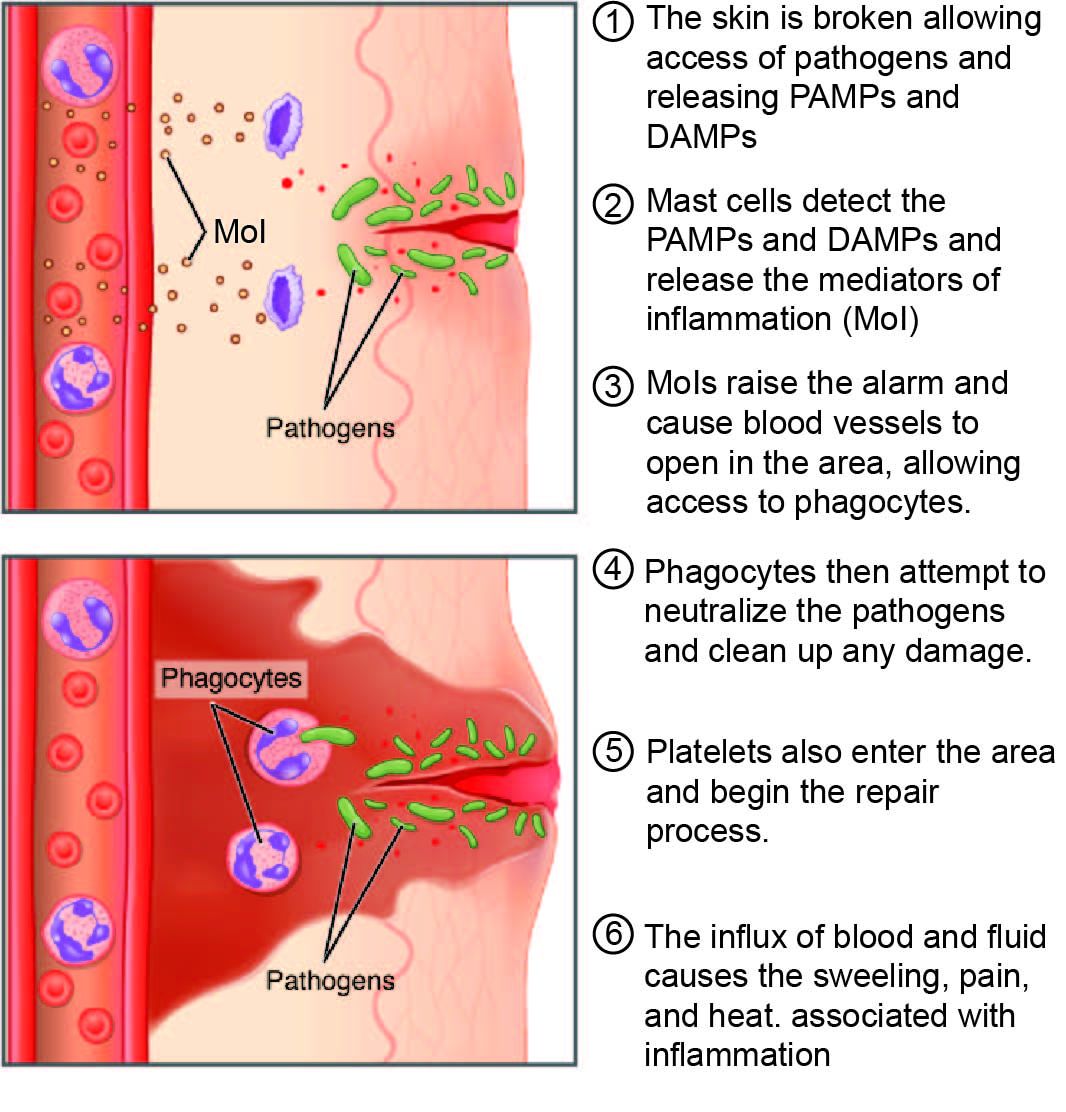
The ceiling effect, and why it matters
Non-opioid pain drugs share a trait opioids lack: a ceiling effect. Past a certain dose, pain relief stops getting better. The enzyme they block is already fully blocked. But the harm keeps climbing in a straight line. Six ibuprofen do not ease more pain than three. They only make more stomachs bleed. Six grams of acetaminophen do not ease more pain than three. They only kill more liver cells. This is the most important teaching point for the whole class. When relief is not enough, the natural human urge is to take more. The right move is to add a drug that works a different way, not more of the same one.
They share good traits too. They do not slow breathing. They do not cause dependence. They do not cause drowsiness. And they are the base the rest of the pain plan is built on. Acetaminophen given on a schedule around the clock after surgery truly lowers the amount of opioid a person needs. That is called opioid sparing, and it is the whole point.
Acetaminophen: the gentle one that destroys livers
Acetaminophen (Tylenol) eases pain and lowers fever. It seems to work by blocking cyclooxygenase inside the brain and spinal cord. What it does not do matters just as much. It has almost no anti-inflammatory effect and no effect on platelets. It does not cause stomach ulcers or harm the kidneys the way NSAIDs do. That makes it the pain drug of choice for people who cannot take NSAIDs. This includes people with peptic ulcers, chronic kidney disease, bleeding risk, blood thinners, heart failure, or pregnancy. It is also the first-line fever drug for children. For osteoarthritis, it is a fair first try and the safest choice when NSAIDs are ruled out. But be honest about the evidence. Current guidelines favor NSAIDs, on the skin or by mouth. The benefit of acetaminophen in osteoarthritis is small at best.
The danger is the dose. Most acetaminophen is turned into harmless products. But a small share goes through the enzyme CYP2E1. That makes a harsh middle product called NAPQI. Glutathione, a protective molecule in the liver, neutralizes it right away. Now give too much. Or start with low glutathione, as happens with long-term heavy drinking, poor nutrition, or fasting. Then NAPQI runs out of guards. It binds liver cells directly and kills them. This is called centrilobular hepatic necrosis. Acetaminophen is the leading cause of sudden liver failure in the United States. Much of it is accidental.
It is accidental because acetaminophen hides. It is inside oxycodone/acetaminophen and hydrocodone/acetaminophen tablets. It is inside nighttime cold and flu powders, sinus tablets, and menstrual pills. Picture a person who takes two Percocet every six hours, a NyQuil at bedtime, and two Tylenol for a headache. That person has not been careless. They have been sold a maze. Your job is to add up every source. The top limit for a healthy adult is 4 g in 24 hours. Many clinicians teach a safer 3 g a day. With chronic liver disease, long-term heavy drinking, or frailty, the limit is 2 g a day or less.
Overdose fools you on the first day. There may be nausea, vomiting, sweating, and feeling unwell. Or there may be nothing at all, while the liver is already being hurt. At 24 to 72 hours, the right upper belly hurts and the liver enzymes AST and ALT climb. At 72 to 96 hours, liver damage peaks. Signs are yellow skin, bleeding problems, confusion, and possibly death. The antidote is acetylcysteine, which refills glutathione. It works far best when started within 8 to 10 hours of the overdose. Do not wait for symptoms. Do not wait for the level to look "impressive." Get a level 4 hours after the overdose. Plot it on the Rumack-Matthew nomogram, a chart that shows liver risk. Start acetylcysteine if there is any doubt. Oral acetylcysteine smells and tastes like rotten eggs. The IV form can cause an allergy-like reaction (flushing, wheezing, low blood pressure). This is usually handled by slowing the drip, not stopping the drug.
NSAIDs: three drugs in one, and a toxicity for each organ
NSAIDs block cyclooxygenase (COX), so they shut down prostaglandin making. Prostaglandins make nerve endings touchy, drive inflammation, and reset the brain's thermostat. So one drug gives you three effects. It is analgesic, anti-inflammatory, and antipyretic: it eases pain, calms inflammation, and lowers fever. The anti-inflammatory action is exactly what acetaminophen lacks. That is why NSAIDs beat it for sprains, gout, period cramps, kidney stone pain, and inflammatory arthritis.
The problem is that COX comes in two types, and you hit both. COX-1 is the housekeeper. Its prostaglandins protect the stomach lining, keep blood flowing to the kidneys, and help platelets clump (through thromboxane A2). COX-2 is made mostly at sites of inflammation. A nonselective NSAID blocks both. You get relief from blocking COX-2. You get the harm from blocking COX-1. That one sentence explains every side effect on the list:
- GI: upset stomach, erosions, peptic ulcer, and painless GI bleeding (the drug eases pain, so it hides the warning). Take it with food or milk. Add a PPI for people at high risk. Teach patients to report black, tarry stools or vomit that looks like coffee grounds.
- Kidney: prostaglandins widen the small artery that feeds each kidney filter (the afferent arteriole). Take them away in someone who is dehydrated, older, or in heart failure, and filtering drops. The result is acute kidney injury. Watch for the "triple whammy." An ACE inhibitor or ARB, plus a diuretic, plus an NSAID together is a well-known recipe for kidney injury. Check creatinine, urine output, and weight.
- Heart and blood vessels: a boxed warning for higher risk of heart attack and stroke. The risk is worse at higher doses and with longer use. NSAIDs are not allowed for pain around the time of CABG (bypass) surgery. They also make the body hold on to salt and water. That raises blood pressure and can tip heart failure out of control.
- Bleeding: weakens platelet function. Hold before surgery per protocol. Adds to the effect of blood thinners.
- Lungs: can trigger tight airways in aspirin-exacerbated respiratory disease. This is the triad of asthma, nasal polyps, and aspirin sensitivity.
- Pregnancy: the same prostaglandin block that hurts the stomach and kidney also affects the fetus. Prostaglandins hold a fetal blood vessel open. Avoid NSAIDs from 20 weeks of pregnancy onward. Blocking fetal prostaglandins harms the fetal kidneys and causes oligohydramnios, too little fluid around the baby. This has been an FDA warning since 2020. Treat them as not allowed in the third trimester. Then they can cause early closing of the ductus arteriosus, a vessel the fetus needs. Near delivery, they also lengthen labor and raise bleeding in mother and baby. Acetaminophen is the pain drug of choice in pregnancy. The one planned exception is low-dose aspirin (81 mg), prescribed to help prevent preeclampsia.
Celecoxib is COX-2 selective. So it is much easier on the stomach. But it still carries kidney and heart risk. It is a sulfonamide, so ask about sulfa allergy. Ketorolac is the outlier worth memorizing. It is an NSAID shot with truly opioid-like strength for sudden pain. That is wonderful. But its stomach and kidney risks are just as harsh. That is why total use, all routes combined, is limited to 5 days.
Aspirin belongs here but acts differently. It blocks COX for good (irreversibly). So one dose disables a platelet for its whole 7 to 10 day life. That is no help when you want pain relief. It is very helpful at low dose when you want to protect the heart. Two warnings belong to aspirin alone. Reye syndrome is a sudden brain swelling with fatty liver. Because of it, aspirin is avoided in children and teens with a viral illness such as flu or chickenpox. Salicylism is the early warning of aspirin toxicity. Signs are ringing in the ears, hearing loss, dizziness, and fast breathing. Ringing in the ears is a drug level, not a coincidence.
| Drug (class) | Prototype effect | Key effect | Safety alert |
|---|---|---|---|
| Acetaminophen | Central COX inhibition | Analgesic + antipyretic only; no anti-inflammatory, no antiplatelet | Add up every source; max 4 g/day healthy adult, 2 g/day or less in liver disease. Antidote: acetylcysteine |
| Ibuprofen (nonselective NSAID) | COX-1 + COX-2 inhibition | Analgesic, anti-inflammatory, antipyretic | Take with food; watch for GI bleeding, creatinine, and BP; ceiling effect, so more is not better; avoid from 20 weeks of pregnancy (oligohydramnios) and in the third trimester (early ductus closing) |
| Naproxen (nonselective NSAID) | COX-1 + COX-2, long acting | Twice-daily dosing for arthritis | Same GI/renal/CV cautions; longer half-life means longer risk |
| Ketorolac (nonselective NSAID) | Potent injectable NSAID | Opioid-sparing for acute pain | 5-day maximum, all routes combined; high GI bleed and AKI risk |
| Celecoxib (COX-2 selective) | Spares COX-1 | Much less GI injury; no antiplatelet effect | Sulfonamide: ask about sulfa allergy; CV and renal risk remain |
| Aspirin (salicylate) | Irreversible COX inhibition | Antiplatelet for the platelet's 7 to 10 day life | Reye syndrome: avoid in febrile children/teens; tinnitus = early toxicity |
- Non-opioids have a ceiling effect. Past the top dose, harm rises but relief does not. Add a different drug, not more milligrams.
- Acetaminophen = eases pain and fever, with no anti-inflammatory or platelet action. The danger is the total dose and hidden combination products. The antidote is acetylcysteine, best within 8 to 10 hours.
- NSAIDs block COX → ease pain, calm inflammation, and lower fever. Blocking COX-1 explains the stomach, kidney, bleeding, and heart failure harms. In pregnancy, avoid from 20 weeks on (oligohydramnios). Treat as not allowed in the third trimester (early closing of the ductus arteriosus).
- Memory hooks: ketorolac 5 days, celecoxib = sulfa, aspirin = Reye + ringing ears, NSAID + ACE inhibitor + diuretic = kidney injury.
Section 3Opioids
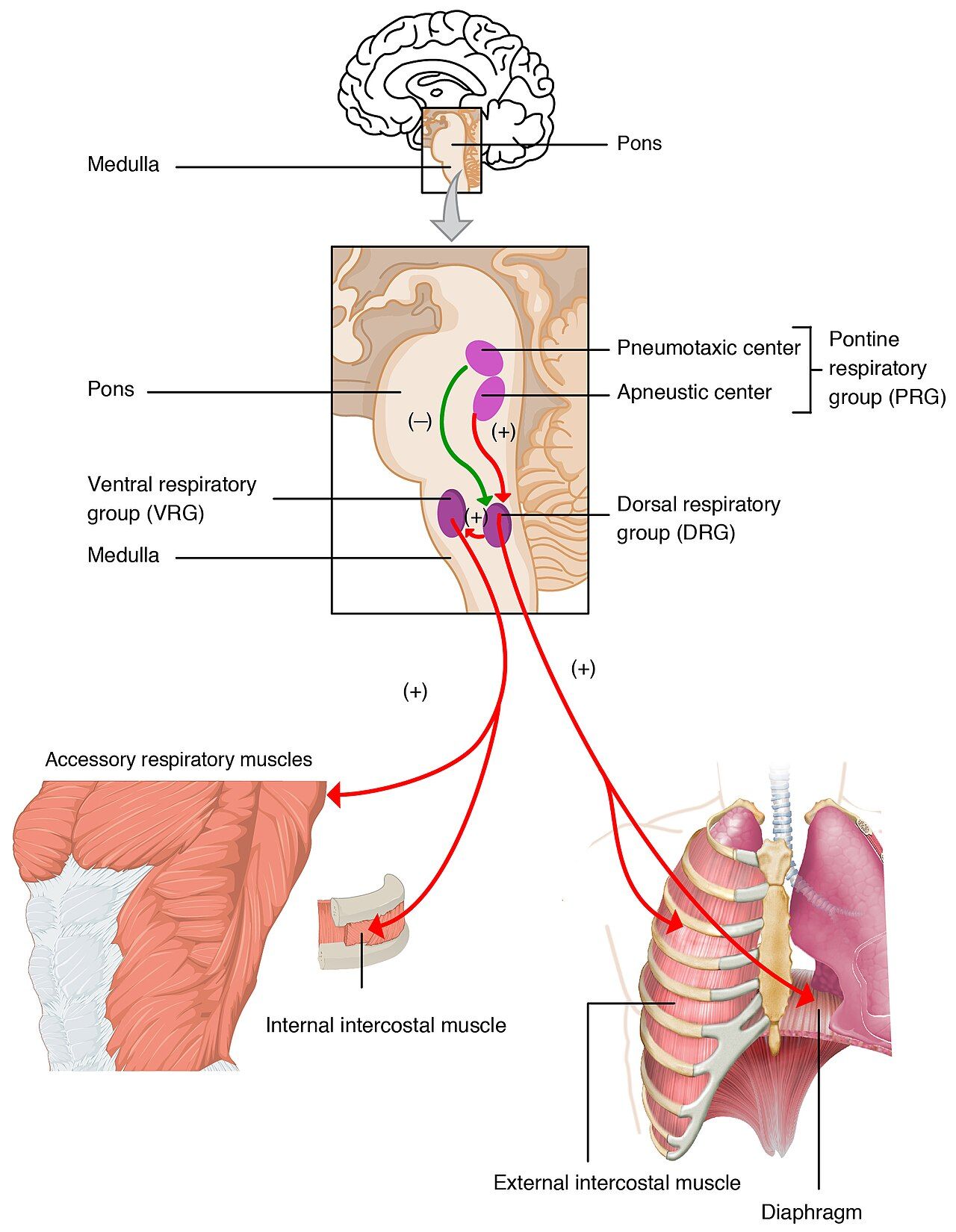
One receptor family, every effect on the list
Opioids work because the body already has an opioid system. Endorphins, enkephalins, and dynorphins act at receptors that the drugs borrow. The one that matters most is the mu receptor. Nearly everything you need to know about opioids follows from one fact: pain relief and slowed breathing come from the same receptor. You cannot have one without risking the other. Turning on mu gives pain relief, euphoria, sleepiness, slowed breathing, constipation, small pupils (miosis), and physical dependence. Turning on kappa gives pain relief and sleepiness, but tends toward a bad mood (dysphoria) instead of euphoria. Delta adds to pain relief and mood.
Opioids come in four types. Knowing which one is in your hand tells you what will happen:
- Full agonists: morphine (the prototype), hydromorphone, fentanyl, oxycodone, hydrocodone, methadone, codeine, and tramadol. These have no ceiling on pain relief. Raise the dose, and you get more relief, and more slowed breathing. Only the patient's tolerance and your watching stand between the two.
- Partial agonist: buprenorphine. It grabs mu tightly but turns it on only partway. So it has a ceiling on slowed breathing, which makes it fairly safe. It grabs so tightly that it can push a full agonist off the receptor. That can set off sudden withdrawal in someone who is dependent on opioids.
- Agonist-antagonists: butorphanol and nalbuphine (they turn on kappa and block mu). They have a ceiling on slowed breathing, lower misuse risk, and more bad mood. They, too, can set off sudden withdrawal in someone on a full agonist. Never give nalbuphine casually to a patient on long-term morphine.
- Antagonists: naloxone, naltrexone, and the gut-only drugs methylnaltrexone and naloxegol. They sit in the receptor and do nothing.
Respiratory depression: sedation comes first
Opioids dull the brainstem sensors that respond to rising carbon dioxide. So the patient simply stops feeling the urge to breathe. Here is the point that saves lives, and the one people most often get backward: sleepiness comes before slowed breathing. The breathing rate is a late sign. By the time you count 6 breaths a minute, you are already late. The early sign is a patient who is unusually drowsy. They drift off mid-sentence. They need a shake instead of a word. That is why the POSS (Pasero Opioid-induced Sedation Scale) exists. Check sleepiness at every opioid check. When the patient becomes hard to wake, hold the next dose and tell the prescriber, before the rate falls.
Risk stacks up. It is higher in people new to opioids and in the first 24 hours of use. It is higher with obesity or untreated obstructive sleep apnea, with older age, and with kidney or liver disease. Above all, it rises with other drugs that slow the brain. These include benzodiazepines, alcohol, sedating antihistamines, gabapentinoids, and muscle relaxants. The opioid plus benzodiazepine mix carries a boxed warning for a reason.
The classic overdose triad is low alertness, pinpoint pupils, and slowed breathing. The reversal drug is naloxone. Given IV, it works in 1 to 2 minutes. It can also be given into a muscle, under the skin, or into the nose by a bystander. Two things about naloxone must be automatic. First, adjust the dose to the breathing rate, not to full wakefulness. Dumping a full dose into someone in pain strips every receptor at once. That causes agony, vomiting, high blood pressure, and a racing heart. In someone dependent on opioids, it causes violent sudden withdrawal. Second, and more dangerous: naloxone lasts about 30 to 90 minutes, which is shorter than most opioids. The patient wakes up and everyone relaxes. Then the naloxone wears off. The opioid still in the body puts them back under. Every naloxone dose must be followed by more watching, and often more doses or a drip. This is also the whole teaching point of take-home naloxone kits. Give the dose, then call emergency services and stay.
The rest of the effect list, and the traps
Constipation needs its own paragraph. It is the effect to which little or no tolerance develops. Most other opioid effects fade with time. The bowel does not adapt. A person on long-term opioids with no bowel plan is headed for a blocked bowel. Start a stimulant laxative (senna), with or without a stool softener, on the same order as the opioid. Do not wait for the problem. For constipation that will not budge, try a gut-only antagonist such as methylnaltrexone or naloxegol. These block mu receptors in the gut but do not enter the brain. So the bowel moves and the pain relief stays.
Also expect nausea and vomiting (tolerance usually builds in days). Expect itching and flushing from histamine release. This is worst with morphine, and it is not an allergy. Watch for trouble passing urine, dizziness on standing, small pupils, and spasm of the bile ducts.
Each drug has its own traps. Morphine has an active breakdown product that builds up when the kidneys are weak. That causes long-lasting sleepiness. So hydromorphone or fentanyl is usually preferred as kidney function falls. Meperidine makes a nerve-toxic product, normeperidine, which causes tremors and seizures. It is avoided in older adults and in kidney disease. It has mostly been abandoned. Codeine and tramadol are prodrugs switched on by CYP2D6. That enzyme varies hugely between people. Ultrarapid metabolizers make a surge of active drug. That is why both are not allowed in children under 12. They are also not allowed after tonsil or adenoid removal in anyone under 18. Tramadol also blocks the reuptake of serotonin and norepinephrine. So it lowers the seizure threshold and can add to serotonin syndrome. Methadone has a long, unpredictable half-life. It keeps building up for days after the pain relief has faded. It also lengthens the QT interval. Fentanyl skin patches are for opioid-tolerant patients only. Never use them in someone new to opioids, and never for sudden pain. They take 12 to 24 hours to start working. Heat speeds up absorption into an overdose. That includes fever, a heating pad, a hot bath, or a sauna. Remove the old patch when you put on the new one. Teach patients to fold used patches sticky side together and throw them away safely. A used patch still holds enough drug to kill a child or a pet.
| Class | Prototype | Key effect | Safety alert |
|---|---|---|---|
| Full agonist | Morphine | Mu agonism; no analgesic ceiling | Sedation before respiratory depression; active metabolite accumulates in renal failure; start a bowel regimen day one |
| Full agonist, potent | Fentanyl / hydromorphone | Rapid onset (fentanyl); high potency per mg | High-alert: do not confuse mg with mcg; patch is for opioid-tolerant only; heat increases patch absorption |
| Full agonist, prodrug | Codeine / tramadol | Needs CYP2D6 activation; tramadol also blocks serotonin/NE reuptake | Contraindicated <12 years and post-tonsillectomy <18; tramadol lowers seizure threshold, serotonin syndrome risk |
| Full agonist, long/variable | Methadone | Long, unpredictable half-life; used for OUD and pain | Accumulates for days; QT prolongation: get an ECG; for OUD, dispensed by certified programs |
| Partial agonist | Buprenorphine | Tight binding, ceiling on respiratory depression | Can precipitate withdrawal if given too soon after a full agonist: wait for moderate withdrawal |
| Agonist-antagonist | Nalbuphine / butorphanol | Kappa agonist, mu antagonist; ceiling on respiratory depression | Precipitates withdrawal in opioid-dependent patients; dysphoria |
| Antagonist | Naloxone | Reverses all opioid effects within 1 to 2 minutes IV | Duration is shorter than the opioid: the patient can re-sedate. Titrate to respiratory rate; keep monitoring |
| Antagonist, peripheral | Methylnaltrexone / naloxegol | Blocks gut mu receptors only | Relieves opioid-induced constipation without reversing analgesia |
Tolerance, dependence, and the words we use
Three ideas get mixed up all the time, and the mix-up harms patients. Tolerance is a drug effect. The same dose works less over time, so the dose must rise. Physical dependence is also a drug effect. The body has adapted. Stopping suddenly, or giving an antagonist, causes a withdrawal syndrome. Both are expected, normal, and predictable with steady opioid use. Neither one means addiction. Opioid use disorder is a diagnosis. It is defined by compulsive use, loss of control, craving, and use that continues despite harm. Picture a person with spreading cancer on 200 mg of morphine a day. They are tolerant and physically dependent. In all likelihood, they are not addicted at all. There is also pseudoaddiction. This is a person whose pain is truly undertreated. They watch the clock, ask for certain drugs, and look "drug-seeking." Yet the behavior vanishes the moment the pain is treated well.
Opioids are high-alert medications. That means independent double-checks per policy and close attention to mg versus mcg. With patient-controlled analgesia (PCA) there is one firm rule: only the patient presses the button. "PCA by proxy" means a caring family member pushes the button for a sleeping patient. That defeats the built-in safety feature. A patient too sleepy to press cannot overdose themselves. PCA by proxy has killed people. Teach the patient and the family. Keep naloxone and a bag-valve mask close by. Check sleepiness, breathing rate, and pulse oximetry. Add capnography (a carbon dioxide monitor) for high-risk patients.
- Turning on the mu receptor gives pain relief and slowed breathing. The benefit and the risk cannot be separated. Full agonists have no ceiling on pain relief.
- Sleepiness comes before slowed breathing. Check sleepiness (POSS), not just breathing rate. Overdose triad: low alertness, pinpoint pupils, slow breathing.
- Naloxone reverses in 1 to 2 minutes but lasts only 30 to 90 minutes. Watch for re-sedation, and adjust the dose to the breathing rate, not to full wakefulness.
- Tolerance builds to nearly everything except constipation. Start a stimulant laxative with the first opioid order.
- Tolerance and physical dependence are expected and are not addiction. Opioid use disorder is compulsive use despite harm.
Section 4Adjuvants and migraine drugs
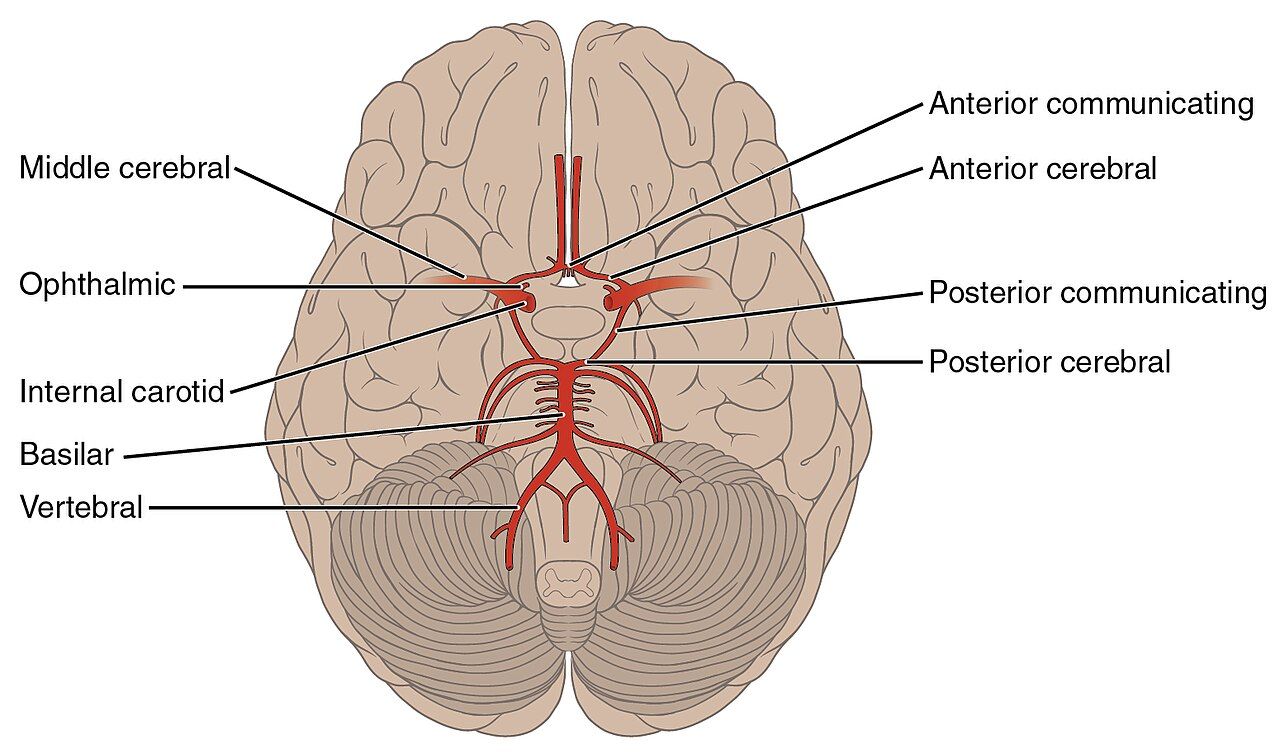
What an adjuvant is, and why it is not a consolation prize
An adjuvant analgesic, or co-analgesic, is a drug with another main job. That job may be treating seizures, depression, inflammation, or muscle spasm. But in certain cases it also eases pain. People sometimes think of these as "second string." It is the opposite. For neuropathic pain, adjuvants are first-line, and opioids are the letdown. When a nerve is the problem, adding morphine mostly adds sleepiness and constipation. Adding gabapentin or duloxetine adds relief.
The gabapentinoids are gabapentin and pregabalin. They bind part of the calcium channels on overexcited nerve cells, called the alpha-2-delta subunit. This lowers the release of chemicals that fire up nerves. In short, they turn down a nerve that is shouting. They are used for diabetic nerve pain, pain after shingles, and fibromyalgia (pregabalin). More and more, they are part of multimodal plans after surgery. Expect dizziness, sleepiness, unsteady walking, swollen ankles, weight gain, and blurred vision. Both leave through the kidneys. So the dose must be lowered when the kidneys are weak. Older adults are far more sensitive. Two safety points. Do not stop them suddenly. Taper them, since stopping fast can trigger seizures in people who take them for epilepsy. And heed the label warning about serious slowed breathing when combined with opioids or other brain-slowing drugs. This is most true in older adults or people with COPD. Pregabalin is a controlled substance (schedule V).
The antidepressants work by strengthening the downward brake from Section 1. More serotonin and norepinephrine in the dorsal horn means a stronger brake. Tricyclics (amitriptyline, nortriptyline) work at doses well below the doses used for depression. Their anticholinergic effects are what hold them back. These are dry mouth, constipation, trouble passing urine, blurred vision, dizziness on standing, sleepiness, and a long QT. Nortriptyline is easier on older adults. SNRIs, duloxetine above all, have fewer side effects. They are approved for diabetic nerve pain, fibromyalgia, and long-term muscle and joint pain. Teach that these are given for pain, not because you think the pain is "in their head." That one sentence prevents a lot of skipped doses. Also teach that relief takes days to weeks, unlike a regular pain pill.
The rest of the toolbox. Carbamazepine is first-line for trigeminal neuralgia, a severe face pain. Watch for low sodium, a dangerous drop in white cells (agranulocytosis), and severe skin reactions. Screen for HLA-B*1502 in people of at-risk ancestry. Corticosteroids such as dexamethasone shrink the swelling around a squeezed nerve, a cancer spot in bone, or a brain tumor. A lidocaine 5% patch numbs a small area, such as pain after shingles, with almost none reaching the blood. Capsaicin uses up substance P. Bisphosphonates ease pain from cancer in the bone. Low-dose ketamine blocks NMDA receptors for nerve pain and pain that opioids cannot reach. Muscle relaxants (cyclobenzaprine, tizanidine, baclofen) treat pain from muscle spasm. One standing warning: suddenly stopping intrathecal baclofen (given into the spinal fluid by a pump) is a life-threatening emergency.
Migraine: abort it or prevent it, two entirely different jobs
Migraine is not "a bad headache." It is a nerve and blood vessel event. The trigeminal nerve fires and releases calcitonin gene-related peptide (CGRP) and other signal proteins. Blood vessels in the head widen. Swelling (with no infection) follows around the vessels. The result is throbbing pain on one side, with nausea and sensitivity to light and sound. Sometimes an aura comes first. Migraine drugs split cleanly into two jobs. Mixing them up is the most common patient error you will correct.
Abortive (acute) treatment stops an attack in progress. Triptans are the main abortive drugs, and sumatriptan is the prototype. They are serotonin 5-HT1B/1D agonists. They narrow the widened vessels, block the release of swelling proteins, and quiet the trigeminal nerve. The teaching is simple and firm: take it at the first sign of the headache. A triptan given late into a full attack works poorly. They come as pills, nasal sprays, and shots. The shot matters when vomiting makes a pill useless. Expect flushing, tingling, and warmth. Expect the classic "triptan sensations" of tightness in the chest, neck, or jaw. That chest tightness is usually harmless. But because triptans narrow blood vessels, they are not allowed in coronary artery disease, past heart attack or stroke, uncontrolled high blood pressure, peripheral vascular disease, or hemiplegic or basilar migraine. They must not be taken within 24 hours of an ergot. Ergotamine and dihydroergotamine are older, less selective vessel-narrowing drugs. They cause more nausea and risk ergotism, a dangerous loss of blood flow. They are not allowed in pregnancy or with strong CYP3A4 inhibitors. Newer choices avoid narrowing vessels entirely. The gepants (ubrogepant, rimegepant) block the CGRP receptor and can be used by people with heart disease. The ditan lasmiditan targets 5-HT1F without narrowing vessels. But it causes enough dizziness that people must not drive for 8 hours.
Preventive (prophylactic) treatment is taken every day, headache or not. It is considered when attacks are frequent or disabling, or when abortive drugs are failing. The main choices are propranolol or metoprolol and topiramate. Topiramate can cause tingling, mental fog, weight loss, kidney stones, and birth defects. Others are valproate (not allowed in pregnancy) and amitriptyline. There are also the CGRP monoclonal antibodies (erenumab, fremanezumab, galcanezumab, eptinezumab), given as shots monthly or every three months. OnabotulinumtoxinA is used for chronic migraine. Set expectations. Prevention is judged over 8 to 12 weeks. Success means fewer, milder attacks, not zero.
Teach every person with migraine one more thing: medication overuse headache. Using acute drugs too often causes a headache nearly every day that is driven by the treatment itself. "Too often" is roughly more than 10 to 15 days a month, depending on the drug. A person reaching for a triptan or a combination pain pill most days needs prevention, not a bigger acute prescription.
| Class | Prototype | Key effect | Safety alert |
|---|---|---|---|
| Gabapentinoid | Gabapentin / pregabalin | Binds alpha-2-delta calcium channel subunit; calms neuropathic firing | Dizziness, somnolence, edema; renal dose adjustment; fall risk; taper: do not stop abruptly; respiratory depression with opioids |
| Tricyclic antidepressant | Amitriptyline / nortriptyline | Boosts descending serotonin/NE inhibition at low doses | Anticholinergic effects, orthostasis, QT; give at bedtime; caution in older adults |
| SNRI | Duloxetine | Diabetic neuropathy, fibromyalgia, chronic musculoskeletal pain | Takes days to weeks; teach "this is for pain"; do not stop abruptly |
| Anticonvulsant | Carbamazepine | First-line for trigeminal neuralgia | Hyponatremia, agranulocytosis, severe rash (HLA-B*1502); many interactions |
| Corticosteroid | Dexamethasone | Shrinks inflammation around nerve, bone, or tumor | Hyperglycemia, infection risk, insomnia; give in the morning |
| Topical / local | Lidocaine 5% patch | Localized block with minimal systemic drug | Postherpetic neuralgia; apply to intact skin; follow on/off schedule |
| Triptan (abortive) | Sumatriptan | 5-HT1B/1D agonist: constricts cranial vessels, blocks neuropeptide release | Take at first sign; contraindicated in CAD, prior MI/stroke, uncontrolled HTN; chest tightness is common; no ergot within 24 h |
| Gepant / ditan (abortive) | Ubrogepant / lasmiditan | CGRP receptor block / 5-HT1F agonism: no vasoconstriction | Options when triptans are contraindicated; lasmiditan: no driving for 8 hours |
| Prophylaxis | Propranolol / topiramate / CGRP mAbs | Taken daily (or monthly) to reduce attack frequency | Not for an acute attack; judge over 8 to 12 weeks; topiramate and valproate are teratogenic |
- Adjuvants are first-line for neuropathic pain, not a fallback. Opioids work poorly on damaged nerves.
- Gabapentin/pregabalin: kidney-based dosing, dizziness and falls, taper when stopping, and risk of slowed breathing with opioids.
- TCAs and duloxetine ease pain by strengthening the downward brake. They work at lower doses than for depression, and more slowly than pain pills.
- Triptans stop an attack; they do not prevent one. Take at the first sign. Not allowed in coronary artery disease or uncontrolled high blood pressure. Gepants and ditans do not narrow vessels.
- Acute migraine drugs used more than about 10 to 15 days a month cause medication overuse headache.
Section 5Substance use and withdrawal
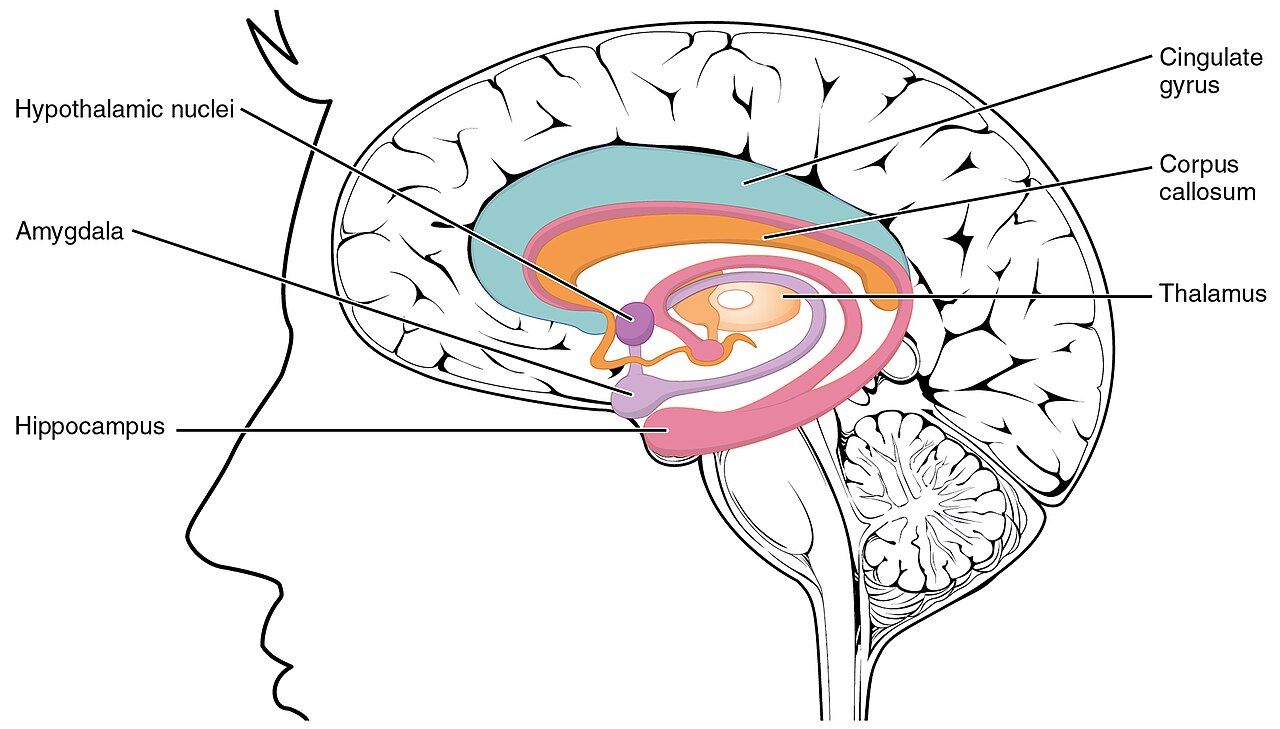
The words come first
Misused substances are not related to each other chemically. But they all meet at one circuit. It is the mesolimbic dopamine pathway. It evolved to make food, safety, and connection feel worth repeating. Drugs flood it far harder than any natural reward. With repeat use, the circuit rewires. The drug feels needed, and everything else feels flat. That describes a brain, not a character flaw.
That is why words matter for care, not just for manners. Say a person with a substance use disorder, not "an addict." Say a positive toxicology screen, not "dirty urine." Say a person in recovery, not "clean." Patients hear shame and stop telling you things. And a patient who will not tell you what they took is a patient you cannot keep alive. Keep Section 3's ideas in mind. Tolerance (needing more for the same effect) and physical dependence (withdrawal on stopping) are drug effects and can happen to anyone. Substance use disorder is compulsive use despite harm.
Alcohol: the withdrawal that kills
Alcohol slows the brain. It boosts GABA-A, the brain's main "calm down" signal. It also blocks NMDA receptors, which carry "fire up" signals. Over time, the brain fights back. It turns GABA down and turns NMDA up. Take the alcohol away, and that fight-back suddenly has no opponent. The brain is left raw and overexcited. That is the whole cause of alcohol withdrawal, and it is why withdrawal can kill.
The timeline is worth memorizing. About 6 to 24 hours after the last drink come tremor, anxiety, poor sleep, nausea, sweating, a fast heart rate, and high blood pressure. At 12 to 24 hours, alcoholic hallucinosis can appear. The hallucinations are often things seen, while the mind is otherwise clear. At 12 to 48 hours, withdrawal seizures can strike. These are generalized tonic-clonic seizures. At 48 to 96 hours comes delirium tremens (DTs). Signs are deep confusion, agitation, hallucinations, fever, and wild swings in heart rate and blood pressure. People can die from it even with treatment. Use a proven tool (CIWA-Ar) and give doses based on the score.
Treatment swaps in a safer drug for the same receptor. Benzodiazepines (lorazepam, diazepam, chlordiazepoxide) restore GABA tone and prevent seizures and DTs. Lorazepam is often chosen in liver disease, since the liver has less effect on how it breaks down. Add thiamine, vitamin B1. And here is a rule to make automatic: thiamine before glucose. A brain low in thiamine that gets a sugar load can be pushed into Wernicke encephalopathy. Signs are confusion, an unsteady walk, and weak eye movements (ophthalmoplegia). If missed, it becomes Korsakoff syndrome, which is permanent. Also replace folate and magnesium, and correct the electrolytes.
For long-term treatment there are three main drugs. Naltrexone is an opioid antagonist. It dulls craving and reward. It comes as a pill or a monthly shot. It needs a period with no opioids first, and care in liver disease. Acamprosate helps rebalance glutamate and GABA. It is dosed by kidney function, which makes it useful when the liver is damaged. Disulfiram blocks aldehyde dehydrogenase. Then drinking causes a miserable acetaldehyde reaction: flushing, a pounding headache, vomiting, a fast heart rate, and low blood pressure. Disulfiram teaching must be complete. No alcohol in anything. That includes mouthwash, cough syrup, sauces, vinegars, aftershave, and hand sanitizer. This lasts for at least 14 days after the last dose.
Opioids, sedatives, stimulants, nicotine
Opioid withdrawal is the mirror image of alcohol withdrawal. It is miserable but rarely deadly in an otherwise healthy adult. Signs are yawning, watery eyes, a runny nose, and large pupils (mydriasis). That is the opposite of the pinpoint pupils of overdose. There is also gooseflesh (piloerection), which gave us the phrase "cold turkey." Add muscle aches, belly cramps, vomiting, diarrhea, restlessness, and deep anxiety. Score it with COWS. But do not let "not deadly" become "not important." Untreated withdrawal is exactly what drives people back to use. After even a short break, their tolerance has dropped. So the old dose is now a deadly dose. Withdrawal treated badly kills people one step removed.
The treatments are medications for opioid use disorder. They are the proven standard, not a moral failure. Buprenorphine is usually combined with naloxone to discourage misuse. Remember the partial agonist trap from Section 3. Give it too early, and it pushes the full agonist off and sets off withdrawal. So wait until there are clear signs of moderate withdrawal. Methadone works well. For opioid use disorder, it is given out through certified programs. Naltrexone (a long-acting shot) is given after 7 to 10 days with no opioids. Clonidine or lofexidine are alpha-2 agonists. They calm the storm of fast heart rate, sweating, and high blood pressure. Watch for low blood pressure and sleepiness. They do not touch craving. And for every person at risk, and their family, send home take-home naloxone with real teaching, not a pamphlet.
Sedative-hypnotics (benzodiazepines, barbiturates) act like alcohol, because they share the GABA receptor. Their withdrawal can be life-threatening, with seizures and delirium. Never stop a long-term benzodiazepine suddenly. Taper it slowly. Flumazenil is the benzodiazepine antagonist. But it is used sparingly. It is rarely given to long-term users or in mixed overdoses. Stripping away GABA support can set off seizures that are very hard to stop.
Stimulants (cocaine, methamphetamine, prescription amphetamines) do the opposite. They cause a fight-or-flight overdrive. Signs are high blood pressure, a fast heart rate, high body temperature, large pupils, agitation, paranoia and psychosis, and chest pain. They can cause heart attack, stroke, and seizures. For chest pain from cocaine, the classic teaching is benzodiazepines and nitroglycerin. Avoid a beta blocker given alone. Blocking beta while alpha runs free can tighten the heart's arteries more and raise blood pressure. Stimulant withdrawal is the "crash." It is not physically dangerous. But it brings low mood, long sleep, big appetite, vivid dreams, agitation, fierce craving, and depression with real suicide risk. Screen for it. There is no approved drug treatment. Behavior therapy and contingency management (rewards for staying drug-free) are what work.
Nicotine drives the deadliest habit in this section. Nicotine itself causes the dependence. The deaths come from the smoke breathed in alongside it. That is why smoking kills more people than every other drug here combined. Withdrawal brings irritability, anxiety, poor focus, more appetite, and craving. It peaks in the first week. Treatment starts with nicotine replacement (NRT). The most effective plan is a long-acting patch for the base, plus a short-acting gum, lozenge, or inhaler for sudden cravings. Varenicline is a partial agonist at the nicotine receptor. It gives enough to dull withdrawal while blocking the reward of a cigarette. Expect nausea, vivid dreams, and poor sleep. Bupropion lowers the seizure threshold. It is not allowed in seizure disorders or eating disorders. Cannabis deserves a word too. Its withdrawal is real but mild (irritability, poor sleep, loss of appetite). Cannabinoid hyperemesis syndrome shows up in emergency rooms often. It is bouts of vomiting that hot showers relieve.
| Substance | Withdrawal picture | Danger level | Treatment agents |
|---|---|---|---|
| Alcohol | Tremor/anxiety 6 to 24 h → seizures 12 to 48 h → DTs 48 to 96 h | Can be fatal | Benzodiazepines (CIWA-Ar guided) + thiamine before glucose, folate, magnesium; then naltrexone, acamprosate, disulfiram |
| Opioids | Yawning, lacrimation, rhinorrhea, mydriasis, piloerection, cramps, diarrhea, myalgias (COWS) | Miserable, rarely fatal, but relapse after lost tolerance is | Buprenorphine (wait for moderate withdrawal), methadone, naltrexone, clonidine/lofexidine; take-home naloxone |
| Benzodiazepines / sedatives | Anxiety, tremor, insomnia, seizures, delirium | Can be fatal | Slow taper; long-acting benzodiazepine substitution; flumazenil rarely (seizure risk) |
| Stimulants (cocaine, meth) | "Crash": dysphoria, hypersomnia, hyperphagia, craving, depression/suicidality | Not physically fatal; suicide risk is | No approved drug; contingency management. Intoxication: benzodiazepines, cooling; avoid unopposed beta blockade |
| Nicotine | Irritability, anxiety, poor concentration, appetite, craving; peaks in week 1 | Withdrawal not dangerous, but smoking is the deadliest habit here | NRT (patch + short-acting), varenicline, bupropion (lowers seizure threshold) |
| Cannabis | Irritability, insomnia, appetite loss, vivid dreams | Mild | Supportive; watch for cannabinoid hyperemesis syndrome |
- All misused substances meet at the mesolimbic reward pathway. Use person-first words that do not shame. Getting the truth is a safety step.
- Alcohol withdrawal: tremor → seizures → delirium tremens (48 to 96 h), and it can be fatal. Treat with benzodiazepines guided by CIWA-Ar, and give thiamine before glucose.
- Opioid withdrawal is rarely fatal but drives relapse into overdose. Buprenorphine, methadone, and naltrexone are the proven treatments. Buprenorphine given too early sets off withdrawal.
- Benzodiazepine withdrawal can be fatal, so always taper. Stimulant withdrawal is not physically dangerous, but screen for suicide risk.
- Quitting smoking: NRT, varenicline, bupropion. Bupropion is not allowed with seizure or eating disorders.
The chapter in one breath
- Nociception runs transduction → transmission → perception → modulation. Each class of pain drug blocks a different step. That is exactly why multimodal analgesia works better than a bigger dose of one drug.
- Self-report is the gold standard. Match the scale to the patient, ask about function, and recheck after every dose. Vital signs are not a pain scale.
- Non-opioids have a ceiling effect: more milligrams buy harm, not relief. Acetaminophen hides in combination products and kills livers (antidote acetylcysteine). NSAIDs make stomachs bleed, hurt kidneys, raise heart risk, and are avoided from 20 weeks of pregnancy on.
- Opioid mu agonists give pain relief and slowed breathing from the same receptor, with no ceiling on either. Sleepiness always comes before the breathing rate falls.
- Naloxone reverses in minutes but wears off before the opioid does. Adjust the dose to breathing rate and keep watching for re-sedation. Little or no tolerance builds to constipation, so order the laxative on day one.
- Neuropathic pain needs adjuvants (gabapentinoids, TCAs, duloxetine, lidocaine patch), not more opioid. Triptans stop a migraine and are not allowed in coronary artery disease. Preventives are taken daily and judged over weeks.
- Tolerance and physical dependence are expected drug effects. Substance use disorder is compulsive use despite harm. The words you choose decide whether the patient tells you the truth.
- Alcohol and sedative withdrawal can be fatal (benzodiazepines, CIWA-Ar, thiamine before glucose). Opioid withdrawal rarely is, but it drives the relapse that kills. Treat it, and send naloxone home.
ReferenceWords worth knowing
A quick list of the terms in this chapter. Skim it now, or come back when a word trips you up.
- Adjuvant analgesic
- A drug whose main use is not pain but which eases it in certain conditions (gabapentinoids, TCAs, SNRIs, corticosteroids); first-line for neuropathic pain.
- Agonist-antagonist
- An opioid that turns on kappa receptors while blocking mu (nalbuphine, butorphanol); has a ceiling on slowed breathing and can set off withdrawal in someone dependent on opioids.
- Breakthrough pain
- A short flare of pain over an otherwise controlled baseline, treated with a short-acting opioid on top of the long-acting plan.
- Ceiling effect
- The dose past which more drug gives no more effect. With non-opioids, the ceiling is on pain relief while harm keeps climbing, so more milligrams buy only harm. With partial agonists such as buprenorphine, the ceiling is on slowed breathing, which is a safety plus.
- CIWA-Ar
- A proven scoring tool for how severe alcohol withdrawal is, used to decide benzodiazepine doses.
- COWS
- The Clinical Opiate Withdrawal Scale, used to grade opioid withdrawal, including the moderate level needed before starting buprenorphine.
- Cyclooxygenase (COX)
- The enzyme that makes prostaglandins; COX-1 protects the stomach, kidney, and platelets, COX-2 drives inflammation, and NSAIDs block one or both.
- Delirium tremens
- Severe alcohol withdrawal at about 48 to 96 hours: confusion, hallucinations, fever, and unstable heart rate and blood pressure; a medical emergency that can kill.
- Endorphin
- A natural opioid protein released as part of the body's own pain control; acts at the same receptors as morphine.
- Gate control theory
- The idea that firing large touch fibers partly closes a "gate" in the dorsal horn on pain signals; the reason massage, heat, cold, and TENS help.
- Mu receptor
- The opioid receptor behind pain relief, euphoria, sleepiness, slowed breathing, constipation, small pupils, and physical dependence; pain relief and slowed breathing come from the same receptor, which is why they cannot be separated.
- Multimodal analgesia
- Combining drugs that work in different ways, plus non-drug steps, so each helps at a lower, safer dose; the basis of opioid sparing.
- NAPQI
- The toxic acetaminophen breakdown product that glutathione normally neutralizes; in overdose it builds up and kills liver cells.
- Neuropathic pain
- Pain from damaged or misfiring nerves (burning, shooting, electric) that responds poorly to opioids and NSAIDs and well to adjuvants.
- Nociception
- The body's sensing and sending of a harmful stimulus: transduction, transmission, perception, and modulation.
- Nociceptive pain
- Pain from real tissue damage sensed by healthy nerves; split into somatic and visceral.
- Opioid-induced constipation
- A slowed gut from mu receptor activation; an opioid effect to which little or no tolerance develops, so it needs a scheduled stimulant laxative.
- Physical dependence
- The body's adaptation so that stopping suddenly, or giving an antagonist, causes withdrawal; expected with steady opioid use and not the same as addiction.
- Pseudoaddiction
- Drug-seeking behavior caused by undertreated pain that goes away once the pain is well controlled.
- Reye syndrome
- Sudden brain swelling with fatty liver linked to aspirin use in children and teens during a viral illness; the reason aspirin is avoided in that group.
- Substance use disorder
- A diagnosis of compulsive use, craving, loss of control, and use that continues despite harm; different from tolerance and physical dependence.
- Tolerance
- A drop in effect from the same dose over time, so the dose must rise; an expected drug effect, not addiction.
Check yourself
Mental Health, Antiepileptic & Anesthetic Drugs
Every drug in this chapter works in the same place. That place is the tiny gap between two nerve cells. Speed up a chemical signal, slow it down, or silence it, and you change mood, thought, movement, awareness, and pain. That is huge power, and it comes with huge responsibility. These are the drugs that cause serotonin syndrome, that stop a seizure, and that can stop breathing. This chapter works from the gap between nerve cells outward. It covers what the nerve chemicals do and what each drug class does to them. It also covers what you do about it, as the one holding the syringe and watching the monitor.
By the end of this chapter you can
- Describe how a chemical synapse works and name the four nerve chemicals most mind drugs target.
- Compare SSRIs, SNRIs, TCAs, and MAOIs by how they work, their harms, and what to teach.
- Spot serotonin syndrome early and describe what to do.
- Explain why lithium is a high-alert drug, and give its therapeutic range, signs of toxicity, and monitoring plan.
- Tell typical from atypical antipsychotics, and spot EPS, tardive dyskinesia, and neuroleptic malignant syndrome.
- Describe how benzodiazepines work, why they can be habit-forming, and what to do in an overdose.
- Explain the main ways antiepileptic drugs stop seizures, including the SV2A route used by levetiracetam, and check the main drugs safely.
- Compare general and local anesthesia and describe the care priorities in each stage of anesthesia.
Section 1Neurotransmitters & drug targets
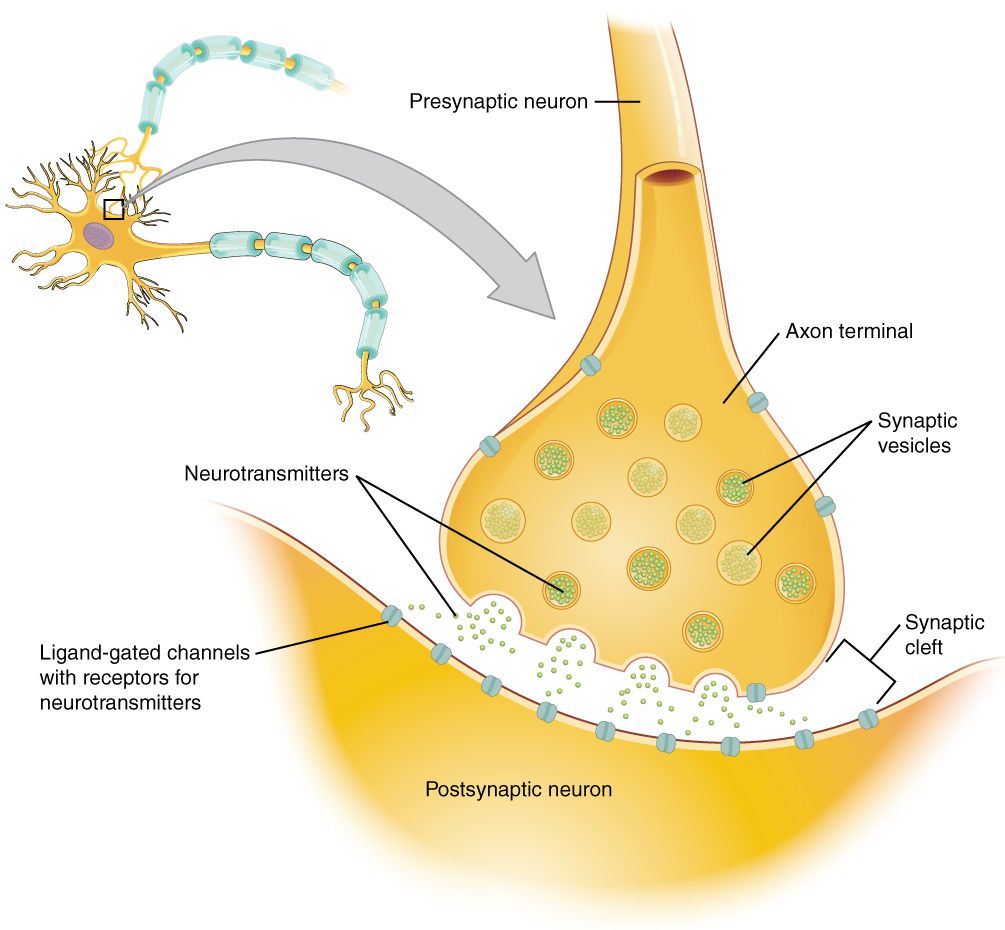
The synapse is the whole story
Nerve cells do not touch. Where one ends and the next begins, there is a tiny gap. It is called the synaptic cleft. The message crosses it as a puff of chemical called a neurotransmitter. The sending (presynaptic) nerve cell packs the chemical into small sacs called vesicles. When an electrical signal arrives, it dumps them into the gap. The chemical drifts across and binds receptors on the receiving (postsynaptic) nerve cell. Then it must be cleared, or the signal never turns off. Clearing happens two ways. A reuptake pump vacuums the chemical back into the sending cell. Or an enzyme chops it up.
Those few steps are your whole map of mental health drugs. No drug "fixes depression." Some drugs block a reuptake pump. Some block an enzyme that breaks down a chemical. Some sit in a receptor so the real chemical cannot. Some make a receptor respond more than it would on its own. Once you know which step a drug touches, its effects become something you can reason out. Wanted or unwanted, they stop being a list to memorize.
Two words earn their place here. An agonist binds a receptor and turns it on, copying the natural chemical. An antagonist binds the receptor and turns nothing on. It just sits there and blocks the real chemical from docking. Most antipsychotics are antagonists. Most antidepressants are neither. They leave more chemical in the gap by blocking its removal.
The four transmitters that matter most
Serotonin (5-HT) is the chemical for mood, sleep, appetite, and anxiety. It is not found only in the brain. Most of the body's serotonin lives in the gut. That is exactly why serotonin drugs cause nausea and diarrhea. It is also why too much serotonin causes the gut storm you will read about soon. Dopamine runs four different circuits. One handles reward and drive. One handles fine movement (the basal nuclei). One controls hormones, since dopamine holds down prolactin. And one is a trigger zone in the brainstem for vomiting. Block dopamine and you hit all four. That is why antipsychotics cause both the effect you want and the movement problems you do not.
Norepinephrine (NE) is alertness, drive, energy, and blood pressure. It is the body's gas pedal. Boost it, and depressed people gain energy. Boost it too much, and they get a fast heart rate, shakes, and high blood pressure. GABA (gamma-aminobutyric acid) is the brain's brake pedal. It is the main calming chemical. When GABA binds its receptor, chloride flows into the nerve cell and makes it harder to fire. Nearly every sedative, anxiety drug, many seizure drugs, and most general anesthetics work by pressing that brake. That is also why they all stack on top of one another. And it is why combining them can stop a person's breathing.
| Transmitter | What it does | Too little looks like | Too much looks like |
|---|---|---|---|
| Serotonin | Mood, sleep, appetite, anxiety, GI motility | Depression, anxiety, poor sleep | Serotonin syndrome: agitation, clonus, hyperthermia, diarrhea |
| Dopamine | Reward, movement, prolactin suppression, vomiting trigger | Parkinsonism, flat affect, high prolactin (blockade) | Psychosis, hallucinations, dyskinesia |
| Norepinephrine | Alertness, drive, blood pressure | Fatigue, low motivation | Tachycardia, tremor, hypertension, insomnia |
| GABA | Main inhibitory brake; raises seizure threshold | Anxiety, seizures, withdrawal states | Sedation, ataxia, respiratory depression |
| Acetylcholine | Memory, GI motility, secretions, bladder emptying | Dry mouth, constipation, urinary retention, blurred vision, confusion | SLUDGE: salivation, lacrimation, urination, defecation, GI upset, emesis |
Notice that last row. These drugs do not usually aim at acetylcholine. It is the innocent bystander. Older antidepressants and older antipsychotics block acetylcholine receptors by accident. That accident causes the anticholinergic effects patients actually complain about. These are a cotton-dry mouth, constipation, and trouble passing urine. In an older adult, it can also cause confusion that gets mistaken for dementia.
- Nerve chemicals cross the synaptic cleft, bind receptors, and are cleared by a reuptake pump or an enzyme. Every mind drug touches one of those steps.
- Agonists turn a receptor on. Antagonists block it. Antidepressants mostly do neither. They block clearing.
- Serotonin = mood and gut. Dopamine = reward, movement, prolactin, and vomiting. Norepinephrine = drive and blood pressure. GABA = the brake.
- Anticholinergic effects (dry mouth, constipation, trouble passing urine, blurred vision, confusion) are usually an accident of older drugs, not their purpose.
Section 2Antidepressants & mood stabilizers
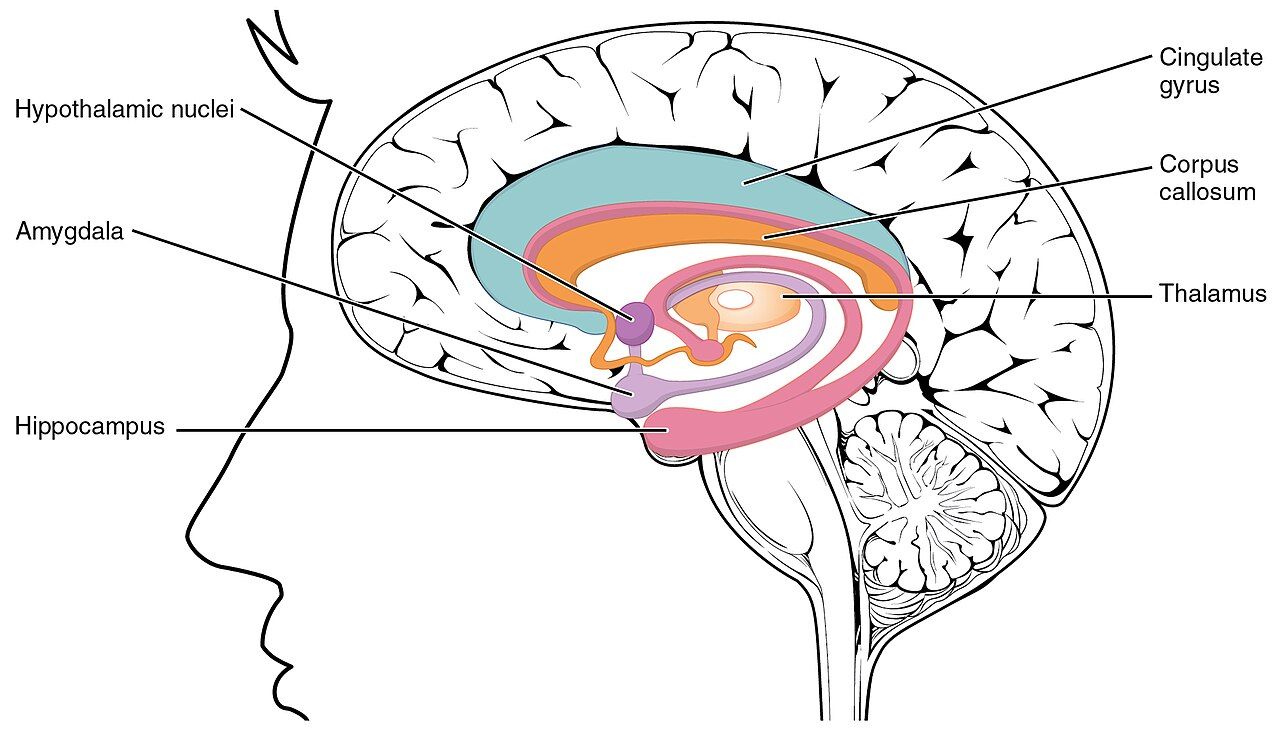
Four generations of the same idea
All four antidepressant classes raise the amount of serotonin, norepinephrine, or both in the synapse. They differ mostly in how selectively they do it. And selectivity means safety. The classes came in the order they did because each generation learned to hit the target and miss the bystanders.
SSRIs (selective serotonin reuptake inhibitors) include fluoxetine, sertraline, escitalopram, paroxetine, and citalopram. They block only the serotonin pump. They are first-line because they are hard to die from, not because they work better than the old drugs. Expect nausea and headache in the first week, since the gut is full of serotonin receptors. Expect trouble sleeping or drowsiness. Over the long run, expect sexual side effects. These are the most common reason people quietly stop taking them. Ask about it directly and without embarrassment. A person who feels free to say "this is ruining my sex life" can be switched to another drug instead of relapsing in silence.
SNRIs (venlafaxine, duloxetine) block the serotonin pump and the norepinephrine pump. That second target adds energy and dulls nerve pain. Duloxetine truly helps in diabetic nerve pain and fibromyalgia. But it also adds high blood pressure. Check blood pressure at every visit on venlafaxine.
TCAs (amitriptyline, nortriptyline, imipramine) block both pumps too. But they also bump into histamine, acetylcholine, and alpha-1 receptors. So they cause sleepiness, anticholinergic misery, and dizziness on standing. Their real danger is to the heart. In overdose, they block sodium channels in the heart. This widens the QRS on the ECG and causes deadly rhythm problems. A widening QRS is the signal to act. The treatment is IV sodium bicarbonate, which overcomes the sodium channel block. A one-week supply can kill. That makes them a poor choice for a person at risk of suicide. MAOIs (phenelzine, tranylcypromine, selegiline) take the enzyme route. They disable monoamine oxidase, the enzyme that destroys serotonin, norepinephrine, and dopamine. They work well, but a strict diet hems them in.
The MAOI diet, and why it is not optional
Monoamine oxidase in the gut wall exists to destroy tyramine. Tyramine is an amine found in aged and fermented food. Disable that enzyme, and tyramine walks into the blood. It floods nerve endings and dumps stored norepinephrine all at once. The result is a hypertensive crisis. Signs are a pounding headache at the back of the head, a stiff neck, and sweating. Blood pressure can go above 180/120, and a stroke is a real risk. Teach the food list: aged cheeses, cured and smoked meats, tap and craft beer, red wine, soy sauce, sauerkraut, fava beans, overripe fruit, and yeast extracts. Teach it as if it were an allergy list, because in practice it is.
| Class | Prototype | Key effect | Safety alert |
|---|---|---|---|
| SSRI | Fluoxetine, sertraline | Blocks serotonin reuptake only | Nausea & headache early; sexual dysfunction long-term; taper: do not stop abruptly |
| SNRI | Venlafaxine, duloxetine | Blocks serotonin and norepinephrine reuptake; helps neuropathic pain | Monitor blood pressure: venlafaxine raises it dose-dependently |
| TCA | Amitriptyline, nortriptyline | Blocks both pumps; also blocks histamine, ACh, alpha-1 | Lethal in overdose: widened QRS, dysrhythmias; treat with IV sodium bicarbonate. Sedation, anticholinergic effects, orthostasis |
| MAOI | Phenelzine | Inhibits the enzyme that destroys all three monoamines | Tyramine-free diet or hypertensive crisis; 2-week washout to/from serotonergic drugs, but 5 weeks after fluoxetine (long half-life) |
| Atypical | Bupropion | NE/dopamine reuptake; no sexual dysfunction; aids smoking cessation | Lowers seizure threshold: avoid in seizure disorder, bulimia, anorexia |
| Atypical | Mirtazapine | Sedating; increases appetite | Useful when depression comes with insomnia and weight loss; give at bedtime |
| Mood stabilizer | Lithium | Damps the highs and lows of bipolar disorder | High-alert: narrow therapeutic range 0.6 to 1.2 mEq/L; steady salt & fluid intake |
The two-week lie, and the black box
Every antidepressant raises nerve chemical levels within hours. Yet mood does not lift for two to six weeks. The benefit needs slow changes in the receptors further down the line. Patients do not know this. They take a pill for eight days, feel nothing but nausea, and quit. Tell them up front: "The side effects come first and fade. The benefit comes later and lasts." It is one of the most useful things you can say all shift.
The gap is also dangerous. Antidepressants carry a boxed warning for more suicidal thinking in people under 25. There is a clear reason the risk comes early: energy returns before mood does. A deeply depressed person may lack the drive to act on suicidal thoughts. Two weeks in, the drive is back but the hopelessness is not. Check for suicidal thinking at every contact during that window, not just at the start.
Two more habits. First, do not stop an SSRI or SNRI suddenly. Discontinuation syndrome brings dizziness, flu-like aches, electric-shock "brain zaps," and irritability. It is miserable and easy to avoid by tapering. Paroxetine and venlafaxine are the worst for this because of their short half-lives. Second, screen for bipolar disorder before starting. An antidepressant given alone to a person with hidden bipolar disorder can flip them into mania.
Serotonin syndrome
Serotonin syndrome is too much serotonin activity. It usually comes from combining drugs. Examples are an SSRI plus tramadol, triptans for migraine, linezolid, St. John's wort, or an MAOI. It comes on fast, usually within hours of the new drug or a dose increase. It is known by a triad. The first is a change in mental state (agitation, confusion). The second is an unsteady nervous system (fever, fast heart rate, sweating, diarrhea). The third is overactive nerves and muscles. That means tremor, brisk reflexes, and clonus. Clonus is a rhythmic jerking, often worst in the legs, and it is the most specific sign. Stop the serotonin drugs and call the provider. Support with cooling and IV fluids. Give benzodiazepines for agitation and stiffness. In severe cases, give cyproheptadine, the antidote that blocks serotonin.
Lithium has a narrow safe range. It is 0.6 to 1.2 mEq/L for long-term use. Anything over 1.5 mEq/L counts as toxic. Over 2.0 mEq/L is a medical emergency. Draw levels as troughs, 12 hours after the evening dose. At safe levels, expect a fine hand tremor, mild thirst, and passing more urine. Early toxicity hits the gut first, with nausea, vomiting, and diarrhea. It also brings a coarse tremor and slurred speech. Later come an unsteady walk, confusion, seizures, and collapse of the heart and circulation. There is no antidote. Treatment is fluids and, at high levels, dialysis. Lithium leaves through the kidneys and affects the thyroid. So every monitoring plan needs starting and repeat kidney function and TSH, plus pregnancy status. Valproate and lamotrigine also work as mood stabilizers. Both carry their own warnings, covered in the seizure section.
- All antidepressants raise serotonin, norepinephrine, or both in the synapse. Selectivity equals safety, which is why SSRIs are first-line.
- Mood lifts in 2 to 6 weeks, while side effects come first. The boxed warning for suicidal thinking in people under 25 exists because energy returns before mood.
- Serotonin syndrome = mental state change + unsteady nervous system + overactive nerves and muscles (clonus). Stop the drug, cool, give fluids, give benzodiazepines, and give cyproheptadine.
- Lithium is high-alert. Range 0.6 to 1.2 mEq/L, trough draws, steady salt and fluid. Watch NSAIDs, thiazides, and dehydration. Check kidney function and TSH.
Section 3Antipsychotics & anxiolytics
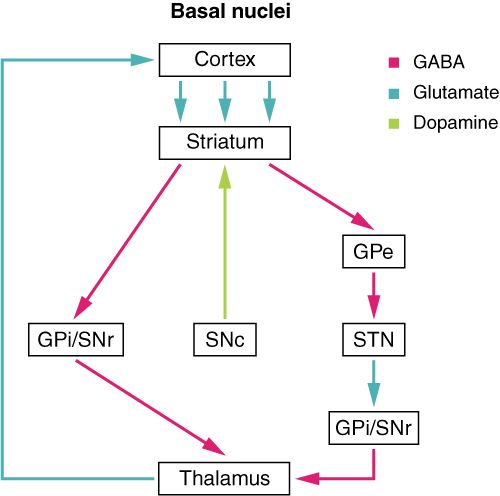
Typical antipsychotics: dopamine blockade, and the price of it
Typical (first-generation) antipsychotics include haloperidol, fluphenazine, and chlorpromazine. They block dopamine D2 receptors. They are good at exactly one thing: the positive symptoms of psychosis. Hallucinations, delusions, and jumbled thinking are the "added" symptoms. Blocking dopamine strips them away. These drugs barely touch the negative symptoms. Those are a flat face, few words, pulling away from people, and lost drive. This matters at the bedside. A person whose voices are gone but who still cannot get out of bed is not treatment-resistant. They are not yet fully treated.
The price is movement. Blocking dopamine in the basal nuclei, the circuit in the figure above, causes extrapyramidal symptoms (EPS). They arrive in a set order. That order is worth knowing, because the timing tells you what you are looking at.
| EPS type | When | What you see | What to do |
|---|---|---|---|
| Acute dystonia | Hours to days | Sudden muscle spasm: neck twisting, eyes rolled up (oculogyric crisis), laryngospasm | Emergency. Airway first; give IM/IV diphenhydramine or benztropine |
| Akathisia | Days to weeks | Unbearable inner restlessness; pacing, cannot sit still | Often mistaken for worsening psychosis: do not raise the dose. Beta blocker or benzodiazepine; consider switching |
| Parkinsonism | Weeks | Tremor, rigidity, bradykinesia, mask-like face, shuffling gait | Fall risk. Anticholinergic (benztropine) or amantadine; dose reduction |
| Tardive dyskinesia | Months to years | Involuntary lip-smacking, tongue-thrusting, facial grimacing, writhing | Often permanent. Screen with AIMS, since catching it early is what keeps the chance of reversal. A VMAT2 inhibitor (valbenazine, deutetrabenazine) can treat it; anticholinergics make it worse |
Two more effects follow straight from the dopamine map. Dopamine normally holds prolactin down. So blocking it raises prolactin. Expect galactorrhea (milk leaking from the breast), missed periods, breast growth in men, and sexual problems. People feel embarrassed by these, hide them, and then stop the drug. The second effect is neuroleptic malignant syndrome (NMS), a rare reaction that can kill. Signs are fever (often above 40 °C), lead-pipe rigidity (stiff muscles), changed alertness, and an unsteady heart rate and blood pressure. Creatine kinase climbs sky-high from muscle breakdown. Stop the antipsychotic, cool hard, and give fluids. Expect dantrolene or bromocriptine. NMS and serotonin syndrome look alike. The tell is this. NMS is stiff and slow: it builds over days, with lead-pipe rigidity and weak reflexes. Serotonin syndrome is fast and jumpy: it starts within hours, with clonus, brisk reflexes, and diarrhea.
Atypicals: fewer movements, more metabolism
Atypical (second-generation) antipsychotics include risperidone, olanzapine, quetiapine, aripiprazole, ziprasidone, and clozapine. They block dopamine D2 and serotonin 5-HT2A receptors. Aripiprazole is the exception. It is a D2 partial agonist, which is why it is less sedating and rarely raises prolactin. The serotonin action buys two advantages: less EPS and some real effect on negative symptoms. But they did not come free. They traded movement problems for metabolic syndrome. That means weight gain, new type 2 diabetes, and unhealthy blood fats. Olanzapine and clozapine are the worst. Ziprasidone and aripiprazole are gentler. So metabolic checks are part of the job. Check weight, waist size, blood pressure, fasting glucose or A1C, and a lipid panel, at the start and on a schedule.
Clozapine is the one to know cold. It is the most effective antipsychotic there is. It is saved for schizophrenia that has not responded to other drugs. It can cause severe neutropenia (agranulocytosis), a dangerous loss of white cells. That is why regular absolute neutrophil count (ANC) checks are required for as long as it is taken. A fever or sore throat on clozapine is not a cold until an ANC proves it. It also causes heart muscle inflammation (myocarditis), seizures at higher doses, and severe constipation that can turn into a stopped gut. Oddly, it also causes drooling. All antipsychotics carry a boxed warning against use in older adults with psychosis from dementia, because they raise the risk of death.
Benzodiazepines and the GABA brake
Benzodiazepines include lorazepam, diazepam, alprazolam, midazolam, and clonazepam. They do not open the chloride channel themselves. They are positive allosteric modulators. They sit beside the GABA receptor and make GABA's own effect stronger. They do this by making the chloride channel open more often when GABA binds. That way of working has a built-in ceiling. It is why a benzodiazepine alone is fairly hard to die from. With no GABA present, the drug does nothing. But add an opioid or alcohol, which press the same brake by other routes, and the ceiling disappears. Most benzodiazepine deaths are mixed-drug deaths.
They are excellent short-term drugs. They give fast anxiety relief, sleepiness, muscle relaxing, stopping of seizures, and help with alcohol withdrawal. They are poor long-term drugs. Tolerance builds, and dependence follows. Stopping suddenly after long-term use can cause seizures and death. A benzodiazepine taper is not a courtesy. It is a safety step. In older adults, they are on the Beers list (drugs to avoid in older adults) for a reason: falls, hip fractures, and confusion. Flumazenil reverses them, but use it with care. In a long-term user or a mixed overdose, it can set off seizures that are very hard to stop. A safer choice for long-term anxiety is buspirone. It causes no sleepiness and no dependence, and needs no reversal. But it takes weeks to work and is useless as a rescue.
- Typicals block dopamine. They are good for positive symptoms and heavy on EPS: dystonia (hours) → akathisia (days) → parkinsonism (weeks) → tardive dyskinesia (months, often permanent).
- Atypicals block dopamine and serotonin. Less EPS, more metabolic syndrome. Check weight, glucose, and lipids.
- Clozapine is the most effective and the most dangerous. ANC checks for agranulocytosis are required. Treat fever or sore throat as an emergency.
- NMS = fever + lead-pipe rigidity + changed mental state. It is slow and stiff. Serotonin syndrome is fast and jumpy, with clonus.
- Benzodiazepines boost GABA (how often the channel opens). They are dangerous with opioids or alcohol, are never stopped suddenly, and are reversed by flumazenil with caution.
Section 4Antiepileptic drugs
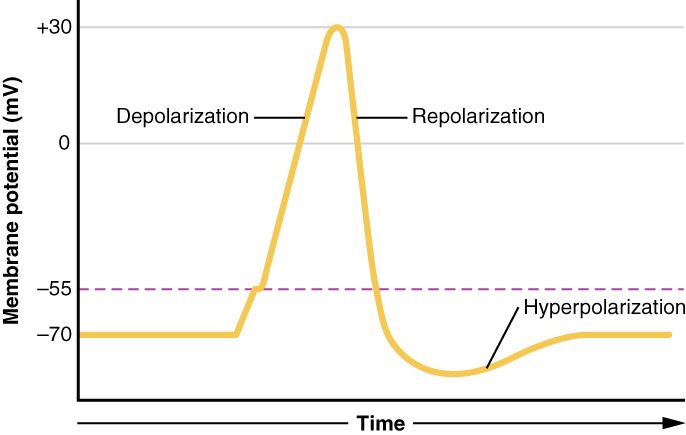
Three ways to stop a seizure, and one more
A seizure is a riot of nerve cells. A group of them fires too fast and all together, and the firing spreads to their neighbors. There are three basic ways a drug can calm it. Most antiepileptic drugs (AEDs) use at least one of them. They are also called anticonvulsants; the two words mean the same thing. A smaller group, led by the drug you will see ordered most often, works by a fourth route entirely.
Slow the sodium channels. A nerve cell cannot fire without opening its voltage-gated sodium channels. After each firing, those channels need a moment to reset. Phenytoin, carbamazepine, lamotrigine, and others lengthen that reset time. So a nerve cell can still fire at a normal rate but cannot fire at a runaway rate. That is clever: normal traffic passes, but the riot does not. Slow the calcium channels. The T-type calcium channels in the thalamus drive the rhythmic 3-per-second firing of absence seizures. Ethosuximide blocks them. That is why it works for absence seizures and nothing else. Boost GABA. More calming raises the seizure threshold for the whole brain. This is how benzodiazepines and phenobarbital work, and part of how valproate works.
Then there is the fourth route, which does not fit the channel and brake picture at all: quiet the release itself. Levetiracetam and its relative brivaracetam bind synaptic vesicle protein 2A (SV2A) on the vesicle in the sending cell. This lowers how much chemical is dumped into the gap to begin with. Do not file this away as an oddity. Levetiracetam is one of the most often ordered broad AEDs on the unit. So your mental map needs a place for it. Say it as "three channel and GABA ways, plus SV2A," and every drug in the table below has a home.
Two care points follow. First, most AEDs are broad brakes on how excitable the brain is. So sleepiness, dizziness, and an unsteady walk (ataxia) come with the whole class. Fall precautions and a talk about not driving until stable belong in the plan. Second, AEDs prevent seizures; they are not a rescue. Missed doses are the most common reason a controlled patient has a seizure. Never stop an AED suddenly. In a person with epilepsy, sudden stopping can set off status epilepticus, a seizure that will not stop. It can even cause withdrawal seizures in a person taking the drug for pain or mood who has never had a seizure.
| Drug | Mechanism | Key effect / use | Safety alert |
|---|---|---|---|
| Phenytoin | Na channel | Tonic-clonic & focal seizures | Level 10 to 20 mcg/mL; gum overgrowth (teach flossing), extra body hair; an unsteady walk and jerky eye movements (nystagmus) = toxicity; IV only in normal saline (it forms crystals in dextrose); push slowly to avoid low blood pressure and rhythm problems; many interactions |
| Fosphenytoin | Na channel | IV/IM prodrug of phenytoin | Safer IV option; dosed in PE (phenytoin equivalents): a classic dosing error |
| Carbamazepine | Na channel | Focal seizures; trigeminal neuralgia; bipolar | Stevens-Johnson syndrome (screen HLA-B*1502 in patients of Asian descent); agranulocytosis, aplastic anemia; hyponatremia (SIADH); autoinduces its own metabolism |
| Valproic acid | Na, Ca, & GABA | Broad spectrum; bipolar; migraine prophylaxis | Level 50 to 100 mcg/mL; hepatotoxicity and pancreatitis; highly teratogenic: neural tube defects; monitor LFTs and ammonia |
| Lamotrigine | Na channel | Broad spectrum; bipolar maintenance | Titrate slowly: rapid escalation causes SJS/TEN; any rash stops the drug and gets reported same day |
| Levetiracetam | SV2A vesicle protein: cuts transmitter release | Broad spectrum; few interactions; a workhorse | Behavioral effects: irritability, agitation, mood change; ask the family, not just the chart |
| Ethosuximide | T-type Ca channel | Absence seizures only | GI upset, drowsiness; ineffective for tonic-clonic |
| Phenobarbital | GABA (duration) | Refractory seizures; neonatal seizures | Heavy sedation; strong enzyme inducer; respiratory depression |
| Lorazepam / diazepam | GABA (frequency) | Acute seizure & status epilepticus: the rescue drugs | Watch respirations; have airway support ready; not for maintenance |
Monitoring, teaching, and the seizure itself
Phenytoin and valproic acid have narrow safe ranges and get blood levels. Lamotrigine and levetiracetam usually do not. Draw levels as troughs, just before the next dose. Remember that phenytoin binds heavily to protein. With low albumin, the total level can look normal while the free (active) drug is toxic. If the number says fine but the patient has jerky eye movements, an unsteady walk, and slurred speech, believe the patient.
Teaching carries real weight here. Take doses at the same times every day. Do not stop, even after years with no seizures, without a supervised taper. Carry medical ID. Know your state's driving rules. Alcohol lowers the seizure threshold and adds sleepiness. Many AEDs, such as carbamazepine, phenytoin, and phenobarbital, are enzyme inducers. They can make birth control pills fail. Valproate and carbamazepine cause birth defects. So birth control counseling is a must for anyone who could become pregnant. AEDs also carry a class warning for suicidal thoughts. Screen for mood changes at follow-up visits.
And when a seizure happens, your job is not to stop it with your hands. Stay with the person and protect the head. Turn them on their side. Loosen tight clothing and clear the area. Time it. Never force anything into the mouth. A full-body seizure that lasts more than five minutes is status epilepticus. So are repeated seizures with no return to normal in between. It is a true emergency. It is treated with IV benzodiazepines first, then a loading drug such as fosphenytoin, valproate, or levetiracetam.
- Most AEDs stop seizures three ways: they lengthen sodium channel reset, block T-type calcium channels (absence), or boost GABA. A fourth route: levetiracetam and brivaracetam bind SV2A to cut chemical release.
- Sleepiness, dizziness, and ataxia come with the class. Never stop an AED suddenly, since it can set off status epilepticus.
- Phenytoin 10 to 20 mcg/mL and valproate 50 to 100 mcg/mL, drawn as troughs. Check albumin before trusting a phenytoin level.
- Key harms: phenytoin → gum overgrowth; carbamazepine → SJS, blood cell problems, low sodium; valproate → liver harm, pancreatitis, birth defects; lamotrigine → SJS if increased too fast; levetiracetam → mood and behavior changes.
- Status epilepticus = >5 minutes or no return to normal. Give an IV benzodiazepine first.
Section 5Anesthetics
Two entirely different jobs
The words sound alike, but general and local anesthesia use opposite plans. General anesthesia takes away the brain. It causes unconsciousness, memory loss, pain relief, and stillness, all through the whole body. The patient's protective reflexes, breathing included, are turned off on purpose. Local anesthesia leaves the brain alone and cuts the wire instead. The drug blocks sodium channels in one nerve, so the pain signal never leaves the tissue. The patient is awake and knows exactly what is happening. One takes the receiver offline. The other cuts the phone line.
Modern general anesthesia is almost never one drug. It is balanced anesthesia, a planned mix. An IV induction drug puts the patient to sleep fast. An inhaled drug keeps them asleep. An opioid handles pain. A neuromuscular blocker keeps them still. Mixing lets each drug be given at a lower, safer dose. Inhaled drugs (sevoflurane, desflurane, isoflurane, nitrous oxide) are adjusted breath by breath and leave through the lungs. IV drugs come next. Propofol is fast and smooth and fights nausea, but it strongly slows breathing and widens blood vessels. Ketamine causes a dreamlike, detached state. It keeps airway reflexes and breathing drive, which makes it useful in trauma. Its known downside is confusion and agitation on waking. Etomidate is gentle on blood pressure, so it is chosen for unstable patients, but it holds down the adrenal glands. Midazolam is used to calm anxiety and block memory.
Neuromuscular blockers deserve special fear. Succinylcholine is depolarizing and very short-acting. It causes muscle twitching, a risk of high potassium, and a link to malignant hyperthermia. Rocuronium and vecuronium are non-depolarizing. They are reversed with neostigmine or sugammadex. All of them cause paralysis with no sedation or pain relief at all. A paralyzed patient who is not well sedated is fully awake, in pain, and unable to show it. These are high-alert drugs. They are stored apart from other drugs. They are given only where an airway can be secured right away.
The stages of anesthesia
Guedel's four stages were described in the days of ether, when going under was slow enough to watch. Modern drugs rush through the first three in under a minute. But the stages are still taught, because they name what you are watching for. Also, Stage II is where a patient can be hurt.
| Stage | Name | What you see | Care priority |
|---|---|---|---|
| I | Analgesia / induction | Awake but drowsy; pain sense dulled; can still follow commands | Quiet room, reassurance; the patient can still hear you |
| II | Excitement / delirium | Loss of consciousness with excitation: irregular breathing, struggling, dilated pupils; vomiting & laryngospasm risk | The dangerous stage. No noise, no stimulation. Suction ready, restrain gently for safety, get through it fast |
| III | Surgical anesthesia | Regular breathing, relaxed muscles, reflexes lost, pupils constricted | The target plane; positioning, warming, continuous monitoring |
| IV | Medullary depression / overdose | Respiratory arrest, circulatory collapse, fixed dilated pupils | Never intended. Stop the agent; ventilate and support circulation |
Waking up runs the stages in reverse. So the patient passes back through Stage II on the way out. That is why the recovery room (PACU) is kept quiet. It is why lying on the side with suction close by is standard. And it is why a waking patient who thrashes is not "being difficult." Two emergencies live here. Malignant hyperthermia is a genetic reaction to inhaled anesthetics and succinylcholine. Muscles release calcium out of control. This causes a clenched jaw (masseter rigidity) and a fast rise in breathed-out carbon dioxide (end-tidal CO₂), the earliest sign. Then come stiff muscles, a fast heart rate, and a body temperature that climbs fast. It is treated with dantrolene, stopping the trigger at once, cooling, and treating high potassium. Ask about any family history of anesthesia problems before surgery. That question saves lives. The second emergency is aspiration, breathing stomach contents into the lungs. It is why patients take nothing by mouth (NPO) before surgery. Anesthesia strips away the gag reflex.
Local anesthetics: the wire cut
Local anesthetics come in two chemical families, and the difference matters. Esters (procaine, benzocaine, tetracaine) are broken down in the blood. They cause more allergic reactions. Benzocaine sprays can also cause methemoglobinemia, where the blood cannot carry oxygen well. Suspect it when a patient looks blue with a normal PaO₂ and the blood is chocolate brown. Treat it with methylene blue. Amides (lidocaine, bupivacaine, ropivacaine) are broken down by the liver and rarely cause true allergy. Note the telltale second "i" in their names. Local anesthetics are given on the skin, injected into the area, as a nerve block, into the epidural space, or into the spinal fluid.
Epinephrine is often added to a local anesthetic. It narrows the vessels, which keeps the drug where you put it. That means a longer block, less bleeding, and less drug in the blood. The old rule was to avoid it in fingers, toes, nose, ears, and penis. Modern evidence has largely revised that rule for fingers and toes. But it is still a caution worth knowing and following wherever facility policy says so.
The danger of local anesthetics is drug getting into the blood. That can come from too much drug or from injecting into a vessel by accident. Local anesthetic systemic toxicity (LAST) shows up in the brain first. Signs are numbness around the mouth, a metal taste, ringing in the ears, dizziness, and agitation. Then come seizures, then cardiac arrest. Bupivacaine is the hardest on the heart and can go straight to arrest. Treatment is airway support, benzodiazepines for seizures, and IV lipid emulsion. Every unit that does nerve blocks keeps it close by. After a spinal or epidural, watch for low blood pressure from the blocked nerves that control vessel tone. Check how high the block reaches, and keep the patient lying flat per protocol. The block wears off from the top down, so the feet and the area around the bottom are the last to fully wake up. Movement usually comes back before full feeling and before steady blood pressure. So a patient who can wiggle the toes may still lack full sensation and may get dizzy on standing. That is exactly the patient who tries to stand and falls. The fall risk lasts until feeling, strength, and blood pressure are all fully back.
- General anesthesia turns off awareness and reflexes through the whole body. Local anesthesia blocks sodium channels in one nerve and leaves the patient awake.
- Balanced anesthesia mixes an induction drug, an inhaled drug, an opioid, and a neuromuscular blocker so each can be dosed lower and safer.
- Neuromuscular blockers paralyze without sedating. High-alert, used only where the airway is ready.
- Stage II (excitement) is the dangerous stage, with vomiting and a closing throat (laryngospasm). The patient passes back through it on waking.
- Malignant hyperthermia (inhaled drugs, succinylcholine) → dantrolene. LAST (numb lips, metal taste, ringing ears → seizures → arrest) → IV lipid emulsion.
The chapter in one breath
- Every drug here acts at the synapse. It blocks a reuptake pump, an enzyme, a receptor, or an ion channel. Name the step, and you can predict the effects.
- Serotonin drives mood and the gut. Dopamine drives reward, movement, prolactin, and vomiting. Norepinephrine is drive and blood pressure. GABA is the brake.
- Antidepressants take 2 to 6 weeks to lift mood, while side effects come first. Suicide risk rises early because energy returns before mood does.
- Serotonin syndrome is fast and jumpy, with clonus. NMS is slow, stiff, and feverish. Telling them apart is a bedside skill.
- Lithium is high-alert: 0.6 to 1.2 mEq/L, steady salt and fluid, and beware of NSAIDs, thiazides, and dehydration. Check kidney function and TSH.
- Typicals cause EPS on a set timeline that ends in permanent tardive dyskinesia. Atypicals trade that for metabolic syndrome. Clozapine needs ANC checks.
- AEDs slow sodium or calcium channels, boost GABA, or, like levetiracetam, bind SV2A to cut chemical release. They are never stopped suddenly, and each has its own harms. Report any rash on lamotrigine or carbamazepine today.
- General anesthesia takes away the brain. Local anesthesia cuts the wire. The emergencies to know are malignant hyperthermia (dantrolene) and LAST (lipid emulsion).
ReferenceWords worth knowing
These are the words you will use in reports and when you question an order. Skim them now, and come back whenever a term stops you.
- Agonist
- A drug that binds a receptor and turns it on, copying the body's own nerve chemical.
- Akathisia
- A movement side effect of unbearable inner restlessness and not being able to sit still; often mistaken for worsening psychosis.
- Antagonist
- A drug that binds a receptor without turning it on, which blocks the natural chemical from acting.
- Antiepileptic drug (AED)
- A drug that raises the seizure threshold. Most work by slowing sodium or calcium channels or boosting GABA. Some (levetiracetam, brivaracetam) bind synaptic vesicle protein 2A to lower chemical release. Also called an anticonvulsant.
- Balanced anesthesia
- Mixing an induction drug, an inhaled drug, an opioid, and a neuromuscular blocker so each can be given at a lower, safer dose.
- Discontinuation syndrome
- Dizziness, flu-like aches, irritability, and "brain zaps" after suddenly stopping an SSRI or SNRI; prevented by tapering.
- Dystonia
- A sudden, lasting muscle spasm, such as neck twisting, eyes rolling up (oculogyric crisis), or a closing throat, within hours to days of starting an antipsychotic; an emergency.
- Extrapyramidal symptoms (EPS)
- Movement problems caused by blocking dopamine in the basal nuclei: dystonia, akathisia, parkinsonism, and tardive dyskinesia.
- Flumazenil
- The benzodiazepine reversal drug; used with care, since it can set off seizures in long-term users or mixed overdoses.
- GABA
- Gamma-aminobutyric acid, the brain's main calming chemical; opening its chloride channel makes nerve cells harder to fire.
- Local anesthetic systemic toxicity (LAST)
- Toxicity from a local anesthetic getting into the blood: numbness around the mouth, a metal taste, and ringing ears that progress to seizures and cardiac arrest; treated with IV lipid emulsion.
- Malignant hyperthermia
- A genetic reaction to inhaled anesthetics or succinylcholine that can kill, causing stiff muscles, rising end-tidal CO₂, and a very high temperature; treated with dantrolene.
- Monoamine oxidase (MAO)
- The enzyme that breaks down serotonin, norepinephrine, and dopamine, plus tyramine from food in the gut wall.
- Negative symptoms
- The "taken away" symptoms of psychosis (flat face, few words, pulling away, lost drive); typical antipsychotics treat them poorly.
- Neuroleptic malignant syndrome (NMS)
- A rare antipsychotic reaction of high fever, lead-pipe rigidity, changed alertness, unsteady heart rate and blood pressure, and high creatine kinase.
- Neuromuscular blocker
- A high-alert drug that paralyzes skeletal muscle with no sedation or pain relief at all; needs a secured airway.
- Positive symptoms
- The "added" symptoms of psychosis (hallucinations, delusions, jumbled thinking) that respond best to dopamine blocking.
- Reuptake pump
- The carrier that vacuums a nerve chemical back into the sending nerve cell; the target of SSRIs, SNRIs, and TCAs.
- Serotonin syndrome
- Too much serotonin activity, causing a change in mental state, an unsteady nervous system, and overactive nerves and muscles with clonus; treated by stopping the drugs, support, and cyproheptadine.
- Status epilepticus
- A seizure that lasts more than five minutes, or repeated seizures with no return to normal in between; treated first with an IV benzodiazepine.
- Tardive dyskinesia
- Late, uncontrolled lip-smacking, tongue-thrusting, and face-making after months to years of dopamine blocking; often permanent.
- Tyramine
- An amine in aged, fermented, and cured foods that sets off a hypertensive crisis in a person taking an MAOI.
Check yourself
Bone & Skin Drugs
Bone and skin look like the quiet parts of the body, like a frame and wrapping paper. They are neither. Bone is a living mineral bank that is rebuilt all the time. The body raids it whenever blood calcium dips. Skin is a barrier that fails loudly and at great cost when it is burned, inflamed, or broken. The drugs in this chapter depend on you more than most. A bisphosphonate swallowed the wrong way can burn a hole in the food pipe. Methotrexate taken daily instead of weekly can kill. A burn cream chosen carelessly can push a patient into metabolic acidosis, a dangerous rise in blood acid. Almost nothing here is about the pill itself. It is about how it is given, what you watch, and what you teach.
By the end of this chapter you can
- Explain bone remodeling and describe how PTH, vitamin D, and calcitonin hold blood calcium steady.
- Compare calcium salts and vitamin D products, use the idea of elemental calcium, and give IV calcium safely.
- Teach the rules for taking oral bisphosphonates, and spot osteonecrosis of the jaw and atypical femoral fracture.
- Compare antiresorptive and anabolic osteoporosis drugs, including denosumab, raloxifene, teriparatide, and romosozumab.
- Tell the drugs that treat a sudden gout flare from the drugs that lower urate over time, and name the dangerous interactions of each.
- Describe the checks and safety teaching for methotrexate, hydroxychloroquine, and biologic DMARDs.
- Use the rules for topical corticosteroid potency, base, and amount, and explain the iPLEDGE rules for isotretinoin.
- Choose and watch topical burn antimicrobials and debriding agents, and state the main harm of each.
Section 1Bone, calcium & vitamin D
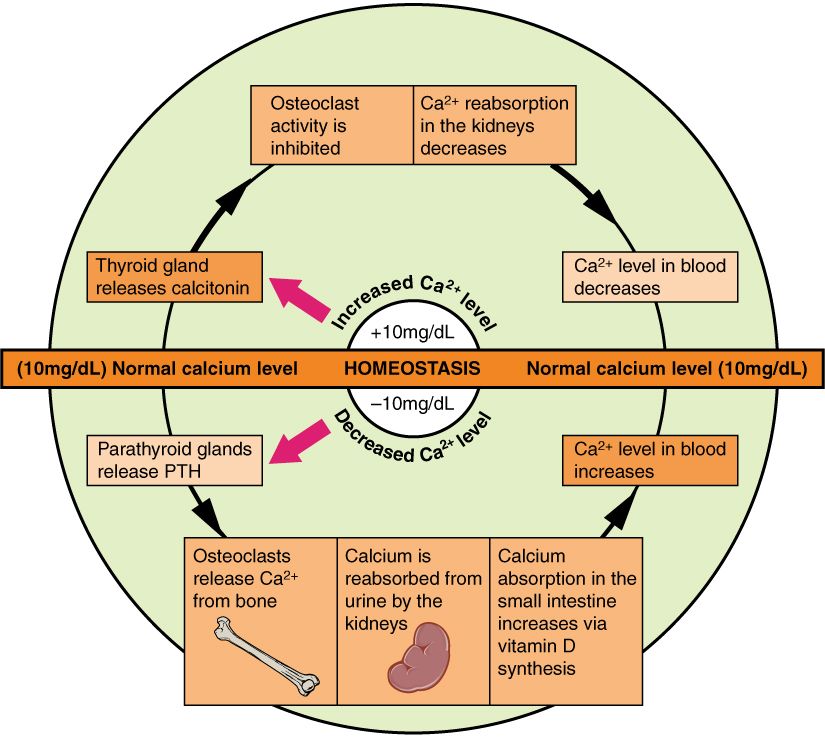
Bone is never finished
The skeleton you have today is not the one you had ten years ago. Bone is torn down and rebuilt all the time. This is called remodeling. Two crews of cells do it, working against each other. Osteoclasts are the demolition crew. They attach to a patch of bone, make it acidic, and dissolve the mineral. That releases calcium into the blood. Osteoblasts are the building crew. They lay down new collagen and fill it with mineral. In a healthy adult, the two stay in balance. Tip the balance toward the clasts, and bone thins. Tip it toward the blasts, and bone thickens.
The signal that sets the balance is worth memorizing, because half the drugs in the next section act on it. Osteoblasts release a protein called RANK ligand (RANKL). It binds RANK receptors on young osteoclasts and tells them to grow up and start breaking down bone. Osteoblasts also release a decoy called osteoprotegerin. It soaks up RANKL and shuts breakdown off. Estrogen holds RANKL back. That is exactly why bone loss speeds up after menopause. Estrogen falls, and the demolition crew works with no one watching.
The calcium thermostat
Blood calcium is kept in a narrow band, about 8.5 to 10.5 mg/dL total. So much depends on it: nerve signals, muscle squeezing, clotting, and heart rhythm. Three hormones guard it.
Parathyroid hormone (PTH) is the first responder. When calcium falls, the parathyroid glands release PTH. PTH pulls calcium out of bone. It tells the kidney to keep calcium (while dumping phosphate). It switches on the enzyme that activates vitamin D. Everything PTH does raises calcium. Vitamin D, once active, is the absorber. It makes the gut take in calcium from food. Calcitonin, from the thyroid, is the brake. It "tones down" calcium by blocking osteoclasts. An easy way to hold it: PTH pulls calcium up, calcitonin tones it down.
Vitamin D deserves a moment, because it is not really a vitamin. It is a hormone made in steps. Skin makes cholecalciferol from sunlight. Or the person swallows cholecalciferol (D3) or ergocalciferol (D2). The liver then changes it to 25-hydroxyvitamin D. This is the storage form. It is the one the lab measures when someone orders a "vitamin D level." Last, the kidney does the activating step. It makes calcitriol (1,25-dihydroxyvitamin D). That last step is the key point for care. A person with advanced kidney disease cannot activate regular vitamin D, no matter how much you give. So they are prescribed calcitriol or a similar active form instead.
Giving calcium and vitamin D without causing harm
Calcium pills are labeled by the weight of the whole salt. But only part of that weight is usable elemental calcium. Calcium carbonate is about 40% elemental calcium. It gives the most calcium per tablet and is cheap. But it needs stomach acid to dissolve. So it must be taken with food. It works poorly in people on proton pump inhibitors or H2 blockers, or after stomach surgery. Calcium citrate is only about 21% elemental, so it takes more tablets. But it dissolves without acid. It can be taken with or without food. It is the right choice for a person whose stomach acid is lowered by drugs. Either way, the gut can absorb only about 500 to 600 mg of elemental calcium at one time. So a 1,200 mg daily goal must be split into two or three doses. Constipation is the near-universal side effect. Fluids, fiber, and activity are part of the teaching, not an afterthought.
| Agent | Class / form | Key effect | Safety alert |
|---|---|---|---|
| Calcium carbonate | Oral calcium salt (~40% elemental) | Highest calcium per tablet; also an antacid | Give with food: needs acid. Ineffective with PPIs. Constipation. Separate from levothyroxine, tetracyclines, fluoroquinolones, and iron by 2 to 4 h. |
| Calcium citrate | Oral calcium salt (~21% elemental) | Absorbed without gastric acid | Choice for patients on acid suppression or post-gastrectomy; may be taken any time. More tablets per dose. |
| Calcium gluconate | IV calcium (~9% elemental) | Corrects symptomatic hypocalcemia | Preferred peripherally. Give slowly by pump; cardiac monitor. Extravasation causes necrosis. |
| Calcium chloride | IV calcium (~27% elemental) | Three times the calcium of gluconate; fast | Central line strongly preferred: severe vesicant. Emergency/code use. Never confuse the two salts. |
| Cholecalciferol (D3) / ergocalciferol (D2) | Vitamin D precursor | Needs liver and kidney activation | Fat-soluble: it accumulates. Excess causes hypercalcemia. Check 25-OH vitamin D, not calcitriol. |
| Calcitriol | Activated vitamin D | Already active: bypasses the kidney step | For chronic kidney disease. Monitor calcium, phosphate, PTH. Hypercalcemia comes on faster than with D3. |
| Calcitonin-salmon | Hormone (nasal, SC) | Inhibits osteoclasts; lowers calcium | Adjunct in hypercalcemia and Paget disease; tachyphylaxis in days. Alternate nares; rhinitis is common. |
Two pictures should be automatic. Low calcium (hypocalcemia) makes nerves twitchy. Signs are numbness and tingling around the mouth and fingers and muscle cramps. Tapping the face can make it twitch (a positive Chvostek sign). A blood pressure cuff can make the hand cramp (a positive Trousseau sign). There can also be tetany (muscle spasms), a closing throat, seizures, and a long QT. High calcium (hypercalcemia) makes everything sluggish. Remember "stones, bones, groans, thrones, and psychiatric overtones." That means kidney stones, bone pain, nausea and constipation, passing lots of urine, tiredness and confusion. It also causes a short QT.
- Osteoclasts break down bone, and osteoblasts build it. RANKL drives breakdown, and osteoprotegerin blocks it. This is the target of several drugs.
- PTH raises calcium (bone, kidney, vitamin D activation). Calcitonin lowers it.
- Vitamin D is activated in the liver, then the kidney. Kidney failure means giving calcitriol, not cholecalciferol.
- Only elemental calcium counts. Carbonate needs acid and food, and citrate does not. No more than 500 to 600 mg absorbs per dose.
Section 2Osteoporosis drugs
Bisphosphonates: the first-line drugs, and the fussiest
Bisphosphonates are alendronate, risedronate, ibandronate, and IV zoledronic acid. They are antiresorptive drugs, which means they slow bone breakdown. They bind tightly to the mineral of bone (hydroxyapatite) and sit there. When an osteoclast comes along and dissolves that patch, it swallows the drug. The drug poisons an enzyme the osteoclast needs to live (farnesyl pyrophosphate synthase). The osteoclast dies. Demolition slows, the blasts keep building, and bone density climbs.
The problem is that oral bisphosphonates are absorbed very poorly, well under 1% of the dose. They also burn the food pipe (esophagus). That mix creates the most heavily tested rules for taking any drug. They are not up for debate:
- Take first thing in the morning, on a fully empty stomach, before any other food, drink, or drug.
- Swallow with a full glass (6 to 8 oz) of plain water. Not coffee, juice, mineral water, or milk. Calcium, iron, magnesium, and antacids block absorption completely.
- Stay fully upright, sitting or standing, never lying down, for at least 30 minutes (a full 60 minutes for ibandronate).
- Wait that same time before eating, drinking anything else, or taking other drugs.
- Do not give it to someone who cannot sit or stand upright that long. Do not give it with a narrowed esophagus, achalasia (a food pipe that will not relax), or slow emptying.
- Fix low calcium and low vitamin D first. An antiresorptive given to someone low in calcium drives calcium lower.
Two rare side effects need their own teaching. Osteonecrosis of the jaw (ONJ) is exposed jaw bone that will not heal. It most often follows a tooth being pulled. The risk is highest with high-dose IV treatment, as used for cancer. So arrange a dental exam and any needed tooth removals before treatment starts. Then reinforce careful mouth care. Atypical femoral fracture is a break straight across the thigh bone after years of treatment. It gives a warning first. Teach every patient that new, dull, aching thigh or groin pain must be reported right away. That early pain is the window to catch it before the bone snaps.
IV zoledronic acid is given once a year, which solves the problem of skipped doses. But check kidney function first. Generally avoid it if creatinine clearance is under about 35 mL/min. Hydrate the patient well. Warn them about the acute phase reaction. This is a flu-like day or two of fever, muscle aches, and headache after the first infusion. Acetaminophen dulls it, and it is unlikely to come back.
When a bisphosphonate is not the answer
Denosumab is a monoclonal antibody against RANKL. It acts like a man-made osteoprotegerin. It is given as a shot under the skin every 6 months. The kidney does not clear it, so it can be used when kidney function rules out bisphosphonates. But that ease comes with warnings. It has a boxed warning for severe low calcium in advanced chronic kidney disease, including people on dialysis. In those patients, calcium and vitamin D must be topped up and blood calcium checked before each shot. Then watch calcium closely afterward. It also has a rule that patients do not take seriously enough. It must not be stopped or delayed without another antiresorptive to replace it. Stopping causes a rebound surge of bone breakdown and many spine fractures. ONJ happens with it too.
Raloxifene is a selective estrogen receptor modulator (SERM). It acts like estrogen at bone, so density goes up. It blocks estrogen at the breast, so the risk of invasive breast cancer goes down. It spares the uterus. Its price is estrogen's clot risk. It carries a boxed warning for blood clots in the veins and fatal stroke in women at risk. Teach that it should be stopped 72 hours before a long time of not moving, such as surgery or long travel. Restart it only when fully up and moving. Hot flashes and leg cramps are common.
Everything above slows demolition. Two drug groups actually build bone. Teriparatide and abaloparatide act like PTH. They are given as a daily shot under the skin. Here is the trick. PTH given on and off stirs up osteoblasts. Steady PTH, as in an overactive parathyroid, destroys bone. Watch for high calcium. Warn about dizziness on standing with the first several doses. The patient should inject where they can sit or lie down right away. Avoid these drugs in people already at higher risk of osteosarcoma, a bone cancer. That includes Paget disease, past radiation to the skeleton, or an unexplained high alkaline phosphatase. Romosozumab blocks sclerostin. It builds bone and also slows breakdown. It is given monthly for 12 months only. It has a boxed warning for heart attack, stroke, and heart-related death. It must not be used in anyone who had a heart attack or stroke in the past year.
| Class | Prototype | Key effect | Safety alert |
|---|---|---|---|
| Bisphosphonate | Alendronate (also risedronate, ibandronate, IV zoledronic acid) | Antiresorptive: osteoclast apoptosis | Empty stomach, plain water, upright 30 min (60 for ibandronate). Report thigh/groin pain (atypical fracture). Dental exam first (ONJ). |
| RANKL inhibitor | Denosumab | Antiresorptive monoclonal antibody; SC q6 months | Not cleared by the kidney, so it is an option when bisphosphonates are not. Boxed warning: severe low calcium in advanced CKD; fix calcium and vitamin D first and check calcium before each dose. Never stop suddenly, since spine fractures rebound. ONJ risk. |
| SERM | Raloxifene | Estrogen agonist at bone, antagonist at breast | Boxed warning: VTE and fatal stroke. Stop 72 h before immobilization. Hot flashes, leg cramps. |
| PTH analog (anabolic) | Teriparatide, abaloparatide | Builds bone: daily SC injection | Orthostatic hypotension with early doses: sit or lie down. Monitor calcium. Rotate sites; refrigerate. |
| Sclerostin inhibitor (anabolic) | Romosozumab | Builds bone; monthly SC ×12 months | Boxed warning: MI, stroke, CV death. Contraindicated if MI or stroke within 1 year. |
| Calcitonin-salmon | Calcitonin nasal spray | Weak antiresorptive; some analgesia in vertebral fracture | Last-line. Rhinitis, epistaxis: alternate nares daily. Effect fades (tachyphylaxis). |
- Bisphosphonates are first-line. Empty stomach, plain water, upright 30 min (60 for ibandronate), and nothing else by mouth for that time.
- Teach the two long-term warning signs: thigh or groin pain (atypical femoral fracture) and jaw pain or exposed bone (ONJ, so dental work goes first).
- Denosumab is not cleared by the kidney, but has a boxed warning for severe low calcium in advanced CKD. Fix calcium before each dose, and it cannot be stopped suddenly.
- Teriparatide, abaloparatide, and romosozumab build bone. Everything else mostly slows its loss.
Section 3Gout & antiarthritis drugs
Gout: put out the fire, then lower the fuel
Gout is uric acid forming crystals in a joint. Two totally separate jobs follow, and mixing them up is the classic error. Job one is stopping the sudden flare. That is an inflammation problem. Job two is lowering blood urate for the long run. That does nothing for today's pain. It can even set off a flare when it starts.
For the flare, there are three choices. They are an NSAID (naproxen, indomethacin), a corticosteroid (by mouth, or a shot into one hot joint), or colchicine. Colchicine is the interesting one. It binds tubulin and wrecks the microtubules that neutrophils need to crawl into the joint and set off inflammation. It does not ease pain and does not lower urate at all. It simply keeps the neutrophils away. Modern dosing is low: 1.2 mg at the first hint of a flare, then 0.6 mg one hour later. Its main harm is in the gut. Nausea, vomiting, and diarrhea are the first sign of toxicity, and the rule is to stop the drug, not push through. Colchicine is cleared by CYP3A4 and P-glycoprotein. So it can be deadly to combine it with clarithromycin, verapamil, diltiazem, cyclosporine, or a strong azole in someone with weak kidneys. That mix has caused fatal marrow shutdown and muscle damage. Note too that aspirin is avoided in gout. Low doses raise urate.
For the long run, allopurinol is the anchor. It blocks xanthine oxidase, the enzyme that makes uric acid. So less is made. Start low (100 mg, less in kidney disease). Raise it slowly until blood urate is under 6 mg/dL. Encourage 2 to 3 L of fluid a day. Starting it stirs up urate and can set off a flare. So patients also get low-dose colchicine or an NSAID for the first several months. Two allopurinol facts must be automatic. First, any rash means stop the drug and call right away. Allopurinol is a leading cause of Stevens-Johnson syndrome, toxic epidermal necrolysis, and DRESS, all severe drug reactions. Second, allopurinol blocks the breakdown of azathioprine and mercaptopurine. That causes life-threatening marrow shutdown unless those doses are cut sharply. Febuxostat is another xanthine oxidase blocker for people who cannot take allopurinol. But it has a boxed warning for heart-related death and is second-line. Probenecid takes the other route. It is a uricosuric. It stops the kidney from taking back urate, so more leaves in the urine. It needs fair kidney function and lots of fluids. It is avoided in people who have had kidney stones. Pegloticase is an IV enzyme that breaks down urate directly. It is saved for severe gout with tophi that has not responded to other drugs. It has a boxed warning for anaphylaxis. It must never be given in G6PD deficiency, since it causes hemolysis and methemoglobinemia. So screening comes first.
| Class | Prototype | Key effect | Safety alert |
|---|---|---|---|
| Anti-inflammatory (flare) | Colchicine | Blocks neutrophil migration into the joint | GI upset = toxicity: stop the drug. Fatal interactions with clarithromycin, verapamil, cyclosporine. Reduce in renal impairment. No analgesic effect. |
| NSAID (flare) | Naproxen, indomethacin | Blocks prostaglandin-driven inflammation | GI bleeding, renal injury, fluid retention. Take with food. Do not use aspirin as the NSAID: low doses raise urate. |
| Corticosteroid (flare) | Prednisone; intra-articular triamcinolone | Broad anti-inflammatory | Hyperglycemia, infection risk, insomnia. Useful when NSAIDs and colchicine are contraindicated. |
| Xanthine oxidase inhibitor | Allopurinol | Makes less uric acid; target urate <6 mg/dL | Any rash → stop and report (SJS/TEN/DRESS). Deadly with azathioprine/mercaptopurine. Fluids 2 to 3 L/day. Expect early flares: cover with prophylaxis. |
| Xanthine oxidase inhibitor | Febuxostat | Alternative when allopurinol fails or is not tolerated | Boxed warning: cardiovascular death. Monitor LFTs. Second-line. |
| Uricosuric | Probenecid | Excretes more uric acid | Needs adequate renal function; push fluids; avoid with stone history. Salicylates cancel it. Raises penicillin levels. |
| Recombinant uricase | Pegloticase IV | Enzymatically destroys urate; for refractory tophaceous gout | Boxed warning: anaphylaxis: premedicate, monitor. Screen for G6PD deficiency first: contraindicated. |
DMARDs: changing the disease, not just the symptoms
Rheumatoid arthritis (RA) is not gout. It is not wear-and-tear osteoarthritis either. It is an autoimmune attack on the joint lining (synovium) that wears joints away for good. NSAIDs and steroids make a person with RA feel better while the joints quietly dissolve. Disease-modifying antirheumatic drugs (DMARDs) slow the disease itself. The key rule is to start them early, within weeks of diagnosis, before the damage is done. They work slowly, over weeks to months. Teach this, because a person who expects ibuprofen-fast relief will stop taking them.
Methotrexate is the anchor DMARD. It is also the most dangerous prescribing error in this chapter. For RA it is given once a week. Taken daily by mistake, it causes terrible mouth sores and a crash in all blood cells (pancytopenia). This has happened, and people have died. Confirm the weekly schedule out loud with the patient and with anyone taking a verbal order. Check that the pill bottle and the drug record (MAR) both say weekly. Daily folic acid, usually 1 mg, softens the mouth sores, stomach upset, and marrow effects without blocking the benefit. In some plans it is skipped on the methotrexate day. Methotrexate has boxed warnings for bone marrow shutdown, liver harm, lung harm, and harm to an unborn baby. It is not allowed in pregnancy. Both partners must use birth control that works. Check CBC, liver tests, and creatinine. Teach no alcohol. Teach to report a dry cough that will not go away or shortness of breath (lung inflammation), and mouth sores (the earliest sign of toxicity). Avoid trimethoprim/sulfamethoxazole. It also blocks folate and can cause pancytopenia. Leucovorin is the rescue drug.
Of the other standard DMARDs, hydroxychloroquine is the gentlest. It comes with a rule to remember. It can build up in the retina, the back of the eye. So patients need a baseline eye exam, then regular eye screening. For most people, yearly screening starts after 5 years of use. People at higher risk start sooner. Patients must report changes in vision or color. Sulfasalazine is avoided in sulfa allergy and G6PD deficiency. It turns urine orange-yellow, which is harmless, but tell them. Leflunomide harms the liver and causes severe birth defects. It lasts a very long time in the body. If a pregnancy happens or is planned, it needs a cholestyramine washout to clear it.
The biologic DMARDs include the TNF inhibitors (etanercept, adalimumab, infliximab), plus drugs that target IL-6, T cells, and B cells. They work extremely well. They share one safety idea: they take the brakes off infection. Every patient is screened for latent tuberculosis and hepatitis B before the first dose. Boxed warnings cover serious infections and cancer, including lymphoma. Live vaccines are not given during treatment. The drug is held during any active infection and usually around surgery. The oral JAK inhibitors (tofacitinib, baricitinib, upadacitinib) add boxed warnings for major heart events, blood clots, cancer, and death.
- Gout has two separate jobs. Calm the flare (colchicine, NSAID, steroid). Lower urate over time (allopurinol, febuxostat, probenecid). Urate-lowering drugs do nothing for today's pain.
- Colchicine stomach upset = toxicity, so stop. Allopurinol rash = stop and report. Allopurinol plus azathioprine or mercaptopurine can be fatal.
- Methotrexate is weekly, with daily folic acid. Check CBC and liver tests, no alcohol, and not in pregnancy. Mouth sores are the first sign of trouble.
- Before any biologic DMARD, screen for latent TB and hepatitis B. No live vaccines. Hold for active infection.
Section 4Skin drugs
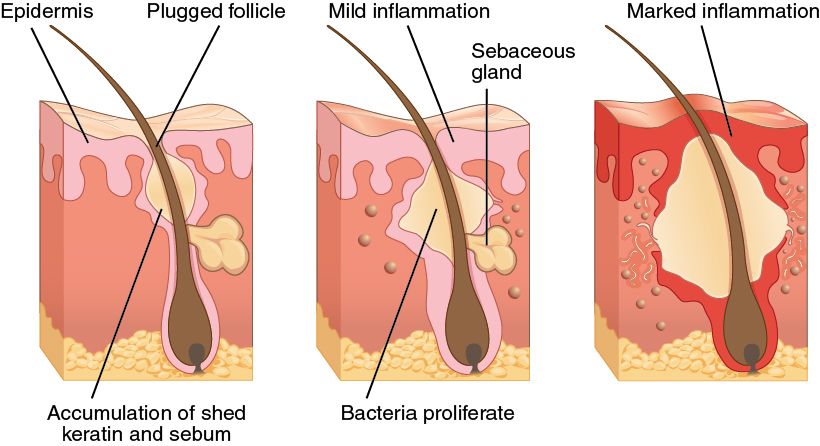
Acne: four problems, four drug jobs
Acne is not dirt. Four things go wrong in a hair follicle. Oil (sebum) making rises, driven by androgens. The follicle lining sheds the wrong way and plugs the pore. Cutibacterium acnes bacteria multiply behind the plug. Then inflammation follows. Every acne drug attacks one of those four. That is exactly why mixing drugs works better than any one alone.
Benzoyl peroxide kills the bacteria by releasing free radicals. Bacteria do not become resistant to it, which is key. Teach that it bleaches fabric. Use white towels and pillowcases, or plan on ruined ones. Topical retinoids (tretinoin, adapalene, tazarotene) fix the plugging by making the follicle shed normally. Apply a pea-sized amount at bedtime to dry skin. Expect it to look worse and peel for several weeks at first. Use a moisturizer that does not clog pores. Use sunscreen, because retinoids cause sun sensitivity. Topical antibiotics (clindamycin, erythromycin) should almost never be used alone. Always pair them with benzoyl peroxide to prevent resistance. For moderate inflamed acne, the oral antibiotics are usually doxycycline or minocycline. They also cause sun sensitivity. They can burn the food pipe, so take them with a full glass of water and stay upright. They are not given in pregnancy or to children under 8 (tooth staining). Hormone choices target the androgen driver. These are combined birth control pills and spironolactone (check potassium).
Isotretinoin is the only drug that hits all four causes. It is also among the most tightly controlled drugs you will ever handle. It causes severe birth defects. Getting it runs through the iPLEDGE safety program. People who can become pregnant must use two forms of birth control. They start one month before, continue all through treatment, and keep going one month after. They need monthly negative pregnancy tests and monthly program approval. There is no blood donation during treatment or for a month after. A donated unit could reach a pregnant person. Expected effects are cheilitis (dry, cracked lips) in nearly everyone, dry eyes and nose, nosebleeds, muscle aches, changes in night vision, high triglycerides, and liver harm. So check lipids and liver tests, and teach no alcohol. Mood changes should be reported. And one hard rule: never combine isotretinoin with a tetracycline. The pair raises pressure inside the skull (pseudotumor cerebri). Signs are headache, vision changes, and nausea.
Psoriasis: turning down an overdriven immune system
Psoriasis is skin cells growing too fast because of the immune system. Skin cells turn over in days instead of weeks. That makes thick, silvery patches (plaques). Mild disease is treated on the skin. Corticosteroids are the workhorse. Vitamin D-like drugs such as calcipotriene help too. Do not go over the weekly limit, since too much in the blood causes high calcium. Salicylic acid turns it off, so do not layer them. Other choices are tazarotene, coal tar, and calcineurin inhibitors (tacrolimus, pimecrolimus ointment). These are used on the face and in skin folds, where steroids thin the skin. Moderate to severe disease moves up to light therapy. That can be narrowband UVB, or PUVA. In PUVA, oral methoxsalen plus UVA light requires UV-blocking glasses for 24 hours after the dose. Next come drugs by mouth or shot. These include methotrexate, cyclosporine, and acitretin. Acitretin is a retinoid that causes birth defects for a very long time. Pregnancy must be avoided for 3 years after it. Alcohol is forbidden, because it turns the drug into a long-lasting form. Others are apremilast and the biologics. These are TNF inhibitors, IL-17 blockers (secukinumab, ixekizumab), and IL-23 blockers (guselkumab, risankizumab). All the biologics carry the same TB screening and infection cautions as in RA.
Topical corticosteroids: potency, vehicle, quantity, and time
Topical steroids are the most used and most misused drugs for the skin. The key facts come down to four things. Potency is ranked in classes from 1 (superpotent, such as clobetasol) to 7 (low, such as hydrocortisone 1%). The base (vehicle) changes the potency of the same drug. Ointments are the strongest, because they seal in and hydrate the skin. They are best for thick, dry, scaly skin. Creams are in the middle and look and feel nicer. Lotions, gels, solutions, and foams are for hairy areas and the scalp. Amount is measured in the fingertip unit. It is the line of cream squeezed from the tip of an adult's index finger to the first crease. That is about 0.5 g, which covers an area equal to two adult palms. Time matters, because effects add up.
| Class | Prototype | Key effect | Safety alert |
|---|---|---|---|
| Superpotent / high (I-II) | Clobetasol propionate 0.05% | Thick plaques on palms, soles, scalp, trunk | Never on the face, groin, or armpit. Limit to about 2 weeks. HPA-axis suppression (the body's own steroid system shuts down) with large areas or a covering. Do not go over the labeled weekly gram limit. |
| Medium (III-V) | Triamcinolone acetonide 0.1% | Everyday eczema/dermatitis on the trunk and limbs | Thin layer, limited duration. Watch for atrophy, striae, telangiectasia in flexures. |
| Low (VI-VII) | Hydrocortisone 1 to 2.5% | Face, eyelids, groin, infants | Safest for thin skin. Even here, prolonged facial use causes perioral dermatitis and rebound. |
| Steroid-sparing topical | Tacrolimus / pimecrolimus ointment | Calcineurin inhibitor: no skin atrophy | For face and folds. Transient burning/stinging is expected. Boxed warning: possible malignancy risk. Strict sun protection. |
| Topical vitamin D analog | Calcipotriene | Normalizes keratinocyte turnover in psoriasis | Respect the weekly maximum: hypercalcemia. Inactivated by salicylic acid. Irritating on the face. |
| Systemic retinoid | Isotretinoin (acne); acitretin (psoriasis) | Definitive but teratogenic | iPLEDGE, two forms of birth control, monthly pregnancy tests, no blood donation. Never with a tetracycline (pseudotumor cerebri). Acitretin: no pregnancy for 3 years, no alcohol. |
The side effects follow straight from what steroids do. On the skin, they cause skin thinning (atrophy), stretch marks, small visible blood vessels, light patches, and acne-like bumps. They also cause tachyphylaxis. The drug stops working, so people use more, which is the trap. Absorption into the body is greatest where skin is thin (face, eyelids, genitals). It is also greatest where skin is inflamed and broken, where the area is large, and wherever the spot is covered (occluded). Children absorb much more, because they have more skin surface for their weight. The rules are short. Use the lowest potency that works, in a thin layer, for the shortest time. Do not cover it unless ordered. Do not put a strong steroid on the face or in a skin fold.
- Acne drugs target four things: oil, plugging (retinoids), bacteria (benzoyl peroxide, with no resistance, and it bleaches fabric), and inflammation. Never use a topical antibiotic without benzoyl peroxide.
- Isotretinoin = iPLEDGE, two forms of birth control, monthly pregnancy tests, no blood donation, check lipids and liver tests, and never with a tetracycline.
- Topical steroid strength depends on potency class, base, amount (fingertip unit), and covering. For the same drug, ointment > cream > lotion.
- Keep strong steroids off the face, groin, and armpits. Watch for thinning, tachyphylaxis, and HPA suppression, above all in children.
Section 5Burns & wound agents
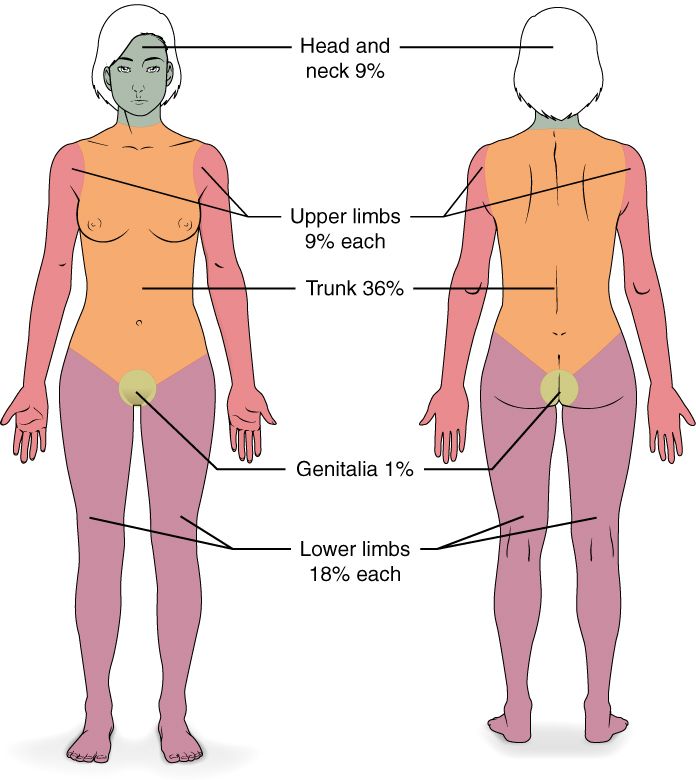
Why burns get topical drugs instead of IV antibiotics
A deep burn makes eschar. Eschar is dead, leathery tissue, and most important, it has no blood supply. No blood means no delivery. An IV antibiotic cannot reach the bacteria living on that surface. The drug travels in the blood, and the blood does not go there. So the antimicrobial is put on the wound. Antibiotics by mouth or IV in burn care are saved for a proven deep infection or sepsis. They are not used to prevent infection. Used that way, they just breed resistant germs while the wound surface stays untouched.
Three classic topical drugs split the work. Each has one harm that defines it.
Silver sulfadiazine is the classic workhorse. It covers many germs, soothes, and does not hurt to apply. Spread it about 1/16 inch thick with a sterile gloved hand. Its main problem is a short-term drop in white cells (leukopenia). This usually shows up two to three days in. So check the white count. A dip usually corrects itself. It is a sulfonamide, so it is not allowed with a sulfa allergy. It is also not allowed in babies under 2 months or late in pregnancy. It pushes bilirubin loose, which risks kernicterus. It does not soak through eschar well. It also forms a gray false scab (pseudo-eschar) that must be cleaned off before the next coat.
Mafenide acetate is the one that soaks through eschar and cartilage. That makes it the drug for burned ears and noses, where cartilage is at risk. Two things follow. First, it hurts. It causes real burning pain when applied, so give pain medicine first. Second, it is a carbonic anhydrase inhibitor. So it causes metabolic acidosis, too much acid in the blood. The patient makes up for it by breathing fast. A burn patient who starts breathing fast on mafenide is telling you their pH is falling. Check acid-base status and watch the breathing rate.
Silver nitrate 0.5% solution is put on wet dressings that must be kept moist at all times. If it dries, it becomes concentrated and caustic. It stains everything black or gray: skin, sheets, and walls. That looks alarming but is harmless. Its real danger is that it pulls electrolytes out through the wound. This causes low sodium and low chloride (hyponatremia and hypochloremia). There is also a risk of methemoglobinemia. Check electrolytes.
| Agent | Class | Key effect | Safety alert |
|---|---|---|---|
| Silver sulfadiazine | Topical sulfonamide + silver | Broad-spectrum; painless; poor eschar penetration | Transient leukopenia: check CBC. Contraindicated in sulfa allergy, infants <2 months, near-term pregnancy. Remove pseudo-eschar before reapplying. |
| Mafenide acetate | Topical sulfonamide | Penetrates eschar and cartilage: ears, nose | Painful: premedicate. Carbonic anhydrase inhibition → metabolic acidosis; watch for tachypnea, monitor ABGs. |
| Silver nitrate 0.5% | Topical antiseptic solution | Broad surface antisepsis on wet dressings | Keep dressings continuously moist. Hyponatremia/hypochloremia: monitor electrolytes. Stains black. Methemoglobinemia risk. |
| Nanocrystalline silver dressing | Sustained-release silver | Broad-spectrum; stays on for several days | Moisten with sterile water, not saline: chloride inactivates silver. Fewer dressing changes means less pain. |
| Mupirocin | Topical antibacterial | Excellent anti-staphylococcal, including MRSA | Impetigo, small superficial wounds, nasal MRSA decolonization. Limit duration: resistance develops. |
| Bacitracin / polymyxin B | Topical antibacterial ointment | Superficial and facial burns; keeps the wound moist | Contact dermatitis is common with bacitracin. Not for deep or large burns. |
| Collagenase | Enzymatic debriding agent | Digests denatured collagen anchoring slough | Inactivated by silver, iodine, and other heavy metals: do not layer. Apply nickel-thick, once daily, to moist wound bed. |
| Becaplermin | Topical PDGF growth factor | Promotes granulation in diabetic foot ulcers | Boxed warning: increased malignancy mortality with ≥3 tubes. Adjunct only: offloading and debridement still do the work. |
Getting the dead tissue off
Nothing heals under dead tissue (slough). Debridement means removing tissue that is no longer alive. It comes in several types. Autolytic debridement uses the body's own enzymes, trapped under a dressing that holds in moisture (hydrogel, hydrocolloid). It is painless and only removes dead tissue. But it is slow, and it is not for infected wounds. Enzymatic debridement uses collagenase, applied daily. Remember that silver and iodine products destroy it. So those two cannot share a wound bed with it. Mechanical debridement is the old wet-to-dry gauze. It removes healthy tissue too, and it hurts. It rips out new healing tissue along with the slough. That is why it has mostly been abandoned. Sharp or surgical debridement is the fastest. It is the standard for large burns. Biologic debridement uses medical maggots (larvae). It is a real option, used now and then for long-lasting wounds.
What actually heals a wound
The most important idea in modern wound care is this: a moist wound heals faster than a dry one. The old teaching let wounds "air out" and scab over. We now know skin cells move across a moist bed but stall at a dry crust. The dressing's job is to hold moisture at the wound while wicking away extra fluid. Hence the handy rule: if it's dry, moisten it; if it's wet, absorb it. Treat antiseptics with the same doubt you would apply to any drug. Full-strength povidone-iodine and hydrogen peroxide kill the cells that rebuild tissue (fibroblasts). They have no place being poured into a healing wound as a routine.
The care around these drugs matters as much as the drugs. Give pain medicine 30 minutes before a dressing change. Burn dressing changes are among the most painful procedures in the hospital. Early on, the body has huge fluid shifts. Then pain medicine must be given IV. Shots into muscle or under the skin are absorbed unpredictably. The doses pile up unabsorbed until blood flow returns. Keep strict clean technique. After the first 48 hours, infection is the burn patient's greatest threat. Check tetanus status for every wound. Support nutrition hard. Protein and calories are the raw material for new tissue, and healing fails without them.
- Eschar has no blood supply, so IV antibiotics cannot reach it. Burn antimicrobials are topical. Antibiotics by mouth or IV are for proven infection, not prevention.
- Silver sulfadiazine → leukopenia, no sulfa allergy, no babies <2 months. Mafenide → soaks through eschar and cartilage, painful, metabolic acidosis. Silver nitrate → keep moist, stains, low sodium.
- Collagenase is turned off by silver and iodine. Wet-to-dry debridement removes healthy tissue too and damages new healing tissue.
- Moist wounds heal faster. Give pain medicine 30 minutes before dressing changes, and give burn pain medicine IV early on.
The chapter in one breath
- Bone is a living bank. Osteoclasts withdraw, osteoblasts deposit, and RANKL sets the rate. PTH raises blood calcium, while calcitonin lowers it.
- Vitamin D needs the liver, then the kidney, to become active. Kidney failure means giving calcitriol. Only elemental calcium counts, and no more than 500 to 600 mg absorbs per dose.
- Bisphosphonates are first-line for osteoporosis and depend on how they are taken: empty stomach, plain water, upright 30 minutes. Teach about thigh pain (atypical fracture) and dental care before treatment (ONJ).
- Denosumab must never be stopped suddenly. Raloxifene risks clots. Teriparatide, abaloparatide, and romosozumab are the drugs that actually build bone.
- Gout is two jobs. Calm the flare (colchicine, where stomach upset means stop). Lower urate (allopurinol, where a rash means stop, and never casually with azathioprine).
- Methotrexate is weekly, not daily, with folic acid, CBC and liver checks, no alcohol, and no pregnancy. Every biologic DMARD gets TB and hepatitis B screening first.
- Topical steroid strength is potency × base × amount × covering. Keep the strong ones off the face and folds, and remember a diaper is a sealed dressing.
- Burn eschar has no blood supply, so antimicrobials go on the wound. Silver sulfadiazine drops the white count, mafenide drops the pH, and silver nitrate drops the sodium. Moist wounds heal fastest.
ReferenceWords worth knowing
A quick list of the terms in this chapter. Skim it now, or come back when a word trips you up.
- Antiresorptive
- A drug that slows bone breakdown by holding back osteoclasts; bisphosphonates, denosumab, raloxifene, and calcitonin. Compare with anabolic drugs, which build new bone.
- Atypical femoral fracture
- A break straight across the thigh bone linked to long-term antiresorptive treatment, usually preceded for weeks by dull thigh or groin pain; a symptom patients must be taught to report.
- Bisphosphonate
- A drug that binds bone mineral and makes osteoclasts die when they break down that bone; first-line for osteoporosis, and it must be taken upright, on an empty stomach, with plain water.
- Calcitriol
- 1,25-dihydroxyvitamin D: the fully active hormone form of vitamin D, made by the kidney. Given directly when the kidney can no longer do that step.
- Debridement
- Removal of dead tissue from a wound; it may be autolytic, enzymatic, mechanical, sharp or surgical, or biologic.
- Disease-modifying antirheumatic drug (DMARD)
- A drug that slows the autoimmune joint damage of rheumatoid arthritis instead of only easing symptoms; works over weeks to months and is started early.
- Elemental calcium
- The amount of usable calcium in a supplement, as opposed to the weight of the whole salt: about 40% for calcium carbonate and 21% for calcium citrate.
- Eschar
- Dead, leathery tissue with no blood supply over a deep burn; since no blood reaches it, drugs by mouth or IV cannot treat the bacteria on its surface.
- Fingertip unit
- The line of cream from an adult fingertip to the first crease (about 0.5 g), which covers an area equal to two adult palms; the standard way to teach amount.
- Hypercalcemia
- Blood calcium above normal, causing "stones, bones, groans, thrones, and psychiatric overtones," constipation, tiredness, and a short QT interval.
- Osteoblast
- The bone-building cell that lays down new bone and fills it with mineral; it also releases RANKL and osteoprotegerin to control osteoclasts.
- Osteoclast
- The bone-breaking cell that dissolves mineral and releases calcium into the blood; the target of every antiresorptive drug.
- Osteonecrosis of the jaw (ONJ)
- Exposed jaw bone that will not heal, linked to bisphosphonates and denosumab and most often set off by a tooth being pulled; hence dental clearance before treatment.
- Parathyroid hormone (PTH)
- The hormone that raises blood calcium by breaking down bone, making the kidney keep calcium, and activating vitamin D; drugs like it, given on and off, build bone.
- Photosensitivity
- An extra-strong sunburn reaction caused by a drug; expected with retinoids, tetracyclines, and several other drugs in this chapter, and handled with sunscreen and covering clothes.
- RANK ligand (RANKL)
- The signal from osteoblasts that makes osteoclasts mature and break down bone; blocked naturally by osteoprotegerin and by the drug denosumab.
- Retinoid
- A form of vitamin A that makes skin cells turn over normally; used on the skin (tretinoin, adapalene) or by mouth (isotretinoin, acitretin). All cause sun sensitivity, and the ones by mouth cause severe birth defects.
- Selective estrogen receptor modulator (SERM)
- A drug that acts like estrogen in some tissues and blocks it in others; raloxifene builds bone and blocks breast tissue but carries estrogen's clot risk.
- Teratogen
- A substance that causes birth defects. Isotretinoin, acitretin, methotrexate, and leflunomide are among the most dangerous ones you will handle.
- Tophus
- A visible lump of urate crystals in soft tissue, seen in long-term untreated gout; it means high urate for a long time that needs urate-lowering treatment.
- Uricosuric
- A drug that lowers blood urate by making the kidney put out more of it, not by making less; probenecid is the prototype, and it needs fair kidney function and lots of fluids.
- Xanthine oxidase inhibitor
- A drug that blocks the enzyme that makes uric acid, lowering urate at the source; allopurinol is the prototype and febuxostat the backup.
Check yourself
Autonomic Drugs
Your patient's heart rate, blood pressure, pupils, bladder, gut, and airways are all being run quietly, second by second. A nervous system no one chose to switch on is in charge. Autonomic drugs work by pushing on that system. They press the gas, step on the brake, or cut a wire. Once you know which receptor a drug lands on, and what that receptor does to the organ under it, the side effects stop being a list. You can predict them from the ground up. This chapter makes the rest of pharmacology click. So many drugs are really autonomic drugs wearing a different name tag. That includes drugs for high blood pressure, asthma, glaucoma, overactive bladder, shock, and anesthesia.
By the end of this chapter you can
- Compare the sympathetic and parasympathetic divisions, and predict what each one does to the main organs.
- Match alpha-1, alpha-2, beta-1, beta-2, beta-3, muscarinic, and nicotinic receptors to where they are and what they do.
- Explain how adrenergic agonists work, and describe how epinephrine acts differently at different doses.
- Describe the care points for alpha blockers and beta blockers, including low blood pressure with the first dose and the rebound from stopping suddenly.
- Compare cholinergic agonists, acetylcholinesterase inhibitors, and anticholinergics, and spot the crisis state of each.
- Tell depolarizing from non-depolarizing neuromuscular blockade and explain why only one can be reversed.
- Name the antidotes for cholinergic crisis, anticholinergic toxicity, and non-depolarizing blockade.
- Name the high-alert autonomic drugs and the checks you are responsible for with each.
Section 1The autonomic nervous system
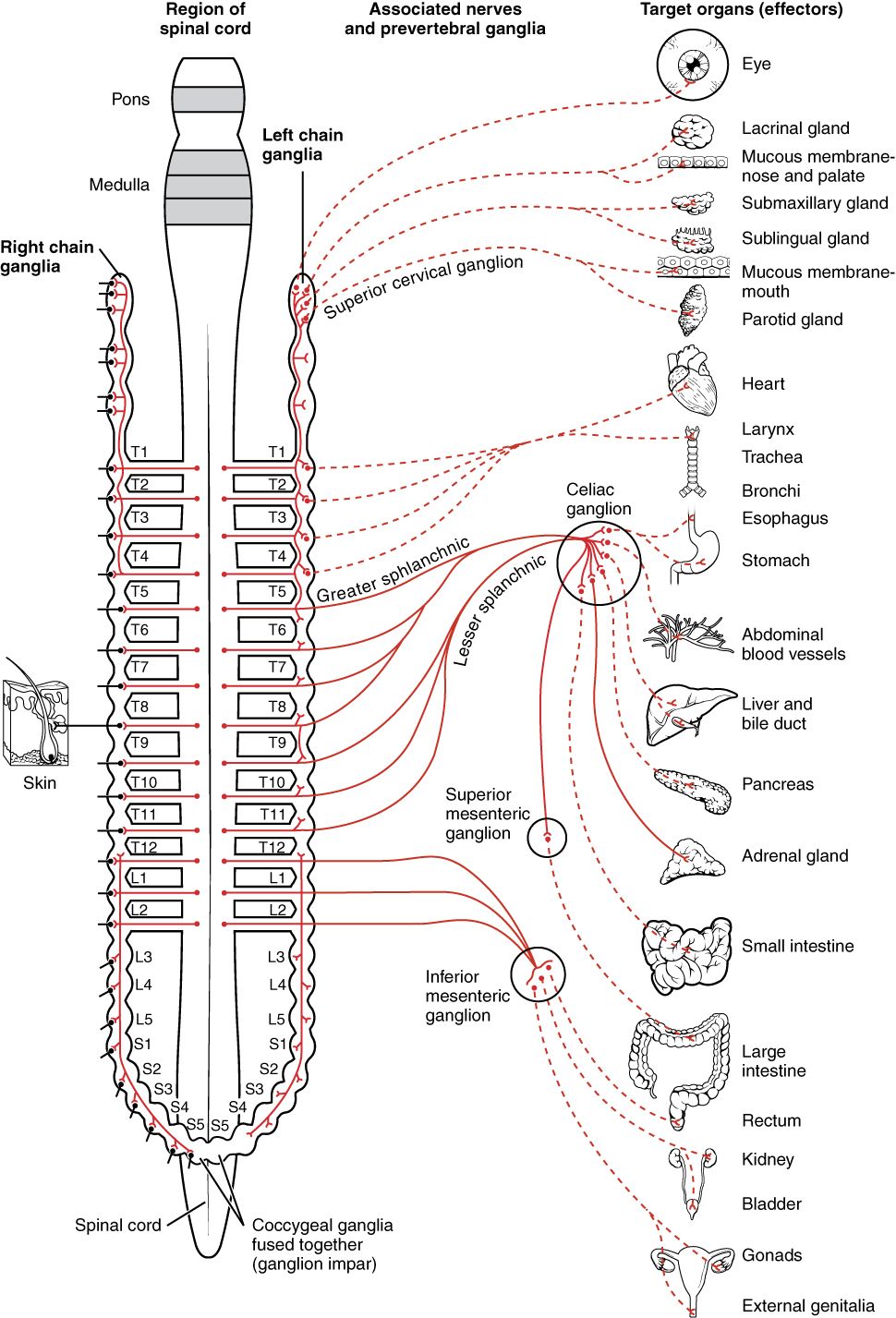
Two divisions, one body
The autonomic nervous system (ANS) runs everything you do not choose on purpose. That includes heart rate, blood vessel tone, airways, digestion, sweating, pupil size, and emptying the bladder. It has two divisions that mostly work against each other. The classic shorthand is worth keeping, because it truly predicts what happens. The sympathetic division is fight or flight. It gets the body ready to run from something. The parasympathetic division is rest and digest. It settles the body down to do housekeeping. Ask what a person sprinting from danger needs, and the sympathetic effects appear on their own. They need a faster heart, higher pressure, open airways, and wide pupils to see the threat. They need sugar released for fuel. They need blood sent to muscle and away from the gut and bladder. Ask what a person napping after a meal needs, and you get the parasympathetic list. That is a slower heart, small pupils, an active gut, and a bladder that empties.
The two divisions use different chemicals, and that is where drugs get their grip. Every autonomic pathway uses two nerve cells in a row. A ganglion (a junction) sits between them. At every ganglion, in both divisions, the chemical is acetylcholine (ACh) acting on nicotinic receptors. What changes is the last step, at the organ itself. Parasympathetic nerves release acetylcholine onto muscarinic receptors. These are the cholinergic junctions. Most sympathetic nerves release norepinephrine onto adrenergic receptors. Two sympathetic exceptions are worth memorizing now, because they explain odd drug effects later. First, the adrenal medulla is a changed ganglion. It dumps epinephrine straight into the blood as a hormone. Second, sweat glands are sympathetic, but they use acetylcholine on muscarinic receptors. That is exactly why anticholinergic drugs make people hot and dry.
The receptor map: the single most useful table in pharmacology
Nearly everything in this chapter comes from the table below. A drug does not have effects because of its name. It has effects because of which receptor it hits and where that receptor lives. Learn the receptor, and you have learned the drug, its use, and its side effects in one stroke.
| Receptor | Transmitter | Where it lives | What happens when stimulated |
|---|---|---|---|
| Alpha-1 | Norepinephrine | Vascular smooth muscle, pupil (radial muscle), bladder neck & prostate | Vasoconstriction → raised BP; pupil dilation (mydriasis); urinary retention |
| Alpha-2 | Norepinephrine | Presynaptic nerve terminals; CNS (brainstem) | Negative feedback: less norepinephrine released → lower BP, sedation |
| Beta-1 | Norepinephrine | Heart (“1 heart”); kidney juxtaglomerular cells | Faster rate, stronger contraction, faster conduction; renin release |
| Beta-2 | Epinephrine (circulating) | Lungs (“2 lungs”); skeletal-muscle vessels; uterus; liver | Bronchodilation; vasodilation; uterine relaxation; glycogenolysis |
| Beta-3 | Norepinephrine | Bladder detrusor muscle; fat cells | Detrusor relaxation (bladder holds more); lipolysis |
| Muscarinic | Acetylcholine | Heart, gut, bladder detrusor, airways, glands, eye, sweat glands | SLUDGE: slower heart, gut motility, bladder emptying, secretions, bronchoconstriction, miosis |
| Nicotinic (NN) | Acetylcholine | All autonomic ganglia; adrenal medulla | Transmission through the ganglion; catecholamine release |
| Nicotinic (NM) | Acetylcholine | Skeletal muscle end plate (somatic, not autonomic) | Muscle contraction: the target of neuromuscular blockers |
Two memory hooks pay off again and again. “One heart, two lungs” puts beta-1 in the heart and beta-2 in the lungs. You will never mix them up. It also shows at once why a nonselective beta blocker is dangerous in asthma. SLUDGE (Salivation, Lacrimation, Urination, Defecation, GI upset, Emesis) is the muscarinic picture. Lacrimation means tears, and emesis means vomiting. The anticholinergic picture is simply its mirror image. A common rhyme captures it: dry as a bone, red as a beet, blind as a bat, mad as a hatter, hot as a hare.
Four things a drug can do
Every drug in this chapter falls into one of four buckets. The words are worth pinning down now. A sympathomimetic (adrenergic agonist) copies the sympathetic system. A sympatholytic (adrenergic antagonist, or blocker) blocks it. A parasympathomimetic (cholinergic agonist) copies the parasympathetic system. A parasympatholytic (anticholinergic) blocks it. Notice the neat pattern hiding here. Blocking one division looks a lot like turning on the other. A beta blocker slows the heart, and so does a cholinergic drug. Different receptor, same slow heart on your monitor. Do not let the picture alone tell you which drug your patient took.
- The sympathetic division is fight-or-flight (mostly norepinephrine on adrenergic receptors). The parasympathetic is rest-and-digest (acetylcholine on muscarinic receptors).
- All ganglia in both divisions use acetylcholine on nicotinic receptors. The divisions differ at the organ, not the ganglion.
- One heart (beta-1), two lungs (beta-2). Alpha-1 narrows vessels. Alpha-2 is a feedback brake on the sending nerve that lowers BP.
- Sympathetic sweat glands are cholinergic. That is why anticholinergics cause dry, hot skin.
Section 2Adrenergic agonists

Turning up the sympathetic gas
An adrenergic agonist, or sympathomimetic, causes the effects the sympathetic system would cause. Some do it directly, by binding the receptor themselves. Examples are epinephrine, norepinephrine, phenylephrine, and albuterol. Others do it indirectly. They make the nerve ending dump its own stored norepinephrine, or they block its reuptake. Examples are ephedrine (which works both ways), amphetamines, and cocaine. Either way, the receptor sees more signal, and the organ responds.
What makes this class confusing at first is that one drug can hit several receptors at once. So its effect depends on which receptors it reaches and at what dose. Selectivity is the whole game. A drug that hits only beta-2 opens airways without racing the heart. One that hits everything opens airways and races the heart and squeezes the vessels. Selectivity also depends on dose. Push the dose high enough, and a “selective” drug starts spilling onto its neighbors. This is exactly why a person with asthma who overuses albuterol gets a fast heart rate and tremor. At high doses, its beta-2 selectivity leaks onto beta-1.
Epinephrine: the drug that changes personality with dose
Epinephrine is the prototype and the one to know cold. It is nonselective. It hits alpha-1, alpha-2, beta-1, and beta-2. But these receptors respond at different levels, so the drug acts differently at different doses. At low doses, beta effects win. The heart speeds up and squeezes harder, and airways open. Vessels in skeletal muscle actually widen, which can drop the lower (diastolic) blood pressure. At high doses, alpha-1 effects take over. Vessels narrow, and blood pressure climbs hard. This split by dose is why one molecule is used for anaphylaxis, cardiac arrest, and shock. It is also used in dental and local anesthetic mixes to keep lidocaine from washing away.
In anaphylaxis, epinephrine does three jobs at once, and you should be able to name all three. Alpha-1 narrows vessels. That reverses the dangerous drop in blood pressure and shrinks airway swelling. Beta-1 supports the heart's output. Beta-2 opens the airways and calms mast cells so they release fewer allergy chemicals. No other drug does all of that. Antihistamines and steroids are add-ons and are never the first move. The first-line route for anaphylaxis is into the muscle of the outer thigh (vastus lateralis). That muscle's rich blood supply absorbs the drug faster and more reliably than fat under the skin or the shoulder muscle. Know the numbers, because this is where deadly errors happen. The adult dose is 0.3 to 0.5 mg IM, drawn from the 1 mg/mL (1:1,000) strength. Repeat it every 5 to 15 minutes if the response is not enough. For a child, it is 0.01 mg/kg IM, up to a top dose of 0.3 to 0.5 mg. The 0.1 mg/mL (1:10,000) prefilled syringe is the IV cardiac arrest strength. It must never be swapped in for the IM anaphylaxis dose. That swap, in either direction, is the classic tenfold strength error this drug is known for.
The workhorses, drug by drug
| Drug | Receptors | Main use | Safety alert |
|---|---|---|---|
| Epinephrine | Alpha-1/2, beta-1/2 | Anaphylaxis, cardiac arrest, severe asthma, shock | High alert. Anaphylaxis: 0.3 to 0.5 mg IM (1 mg/mL) into the outer thigh, repeat every 5 to 15 min; children 0.01 mg/kg IM up to a 0.3 to 0.5 mg max. The 0.1 mg/mL (1:10,000) syringe is the IV arrest strength, never the IM dose. Strength errors are classic and deadly, so get an independent double-check. |
| Norepinephrine | Alpha-1 >> beta-1 | Septic shock: first-line vasopressor | High alert, central line preferred. Watch the site continuously; extravasation causes tissue necrosis: antidote is phentolamine infiltrated locally. |
| Dopamine | Dose-dependent: dopaminergic → beta-1 → alpha-1 | Shock, symptomatic bradycardia | Same extravasation risk; monitor urine output and rhythm continuously. |
| Dobutamine | Beta-1 selective | Acute decompensated heart failure: inotropic support | Raises contractility; can cause tachycardia and drop BP through mild beta-2 vasodilation. |
| Phenylephrine | Alpha-1 selective | Hypotension, nasal decongestant, mydriatic drops | Raises BP with reflex bradycardia; caution in BPH (retention) and glaucoma. |
| Albuterol | Beta-2 selective (short-acting) | Rescue bronchodilator in asthma/COPD | Tremor, tachycardia, hypokalemia (drives K+ into cells). Rescue, not maintenance: rising use signals poor control. |
| Salmeterol, formoterol | Beta-2 selective (long-acting) | Asthma/COPD maintenance | Never for an acute attack; in asthma must be paired with an inhaled corticosteroid, never used alone. |
| Clonidine | Alpha-2 agonist (central) | Hypertension, ADHD, opioid/nicotine withdrawal | Counterintuitive: stimulating alpha-2 lowers BP. Sedation, dry mouth; never stop abruptly: rebound hypertensive crisis. |
| Terbutaline | Beta-2 selective | Bronchospasm; off-label short-term tocolysis | Maternal tachycardia and hyperglycemia; not for prolonged tocolysis. |
Look again at clonidine, because it trips up nearly everyone. It is an agonist, yet it lowers blood pressure. The reason is where its receptor sits. Alpha-2 receptors are brakes on the sending nerve. Turning them on tells the nerve ending to release less norepinephrine. So an alpha-2 agonist acts like a sympathetic blocker. It is a good reminder that where a receptor sits matters as much as what type it is.
- Sympathomimetics copy the sympathetic system directly (binding the receptor) or indirectly (releasing the chemical or blocking its reuptake).
- Epinephrine acts by dose: beta effects at low doses, alpha vessel narrowing at high doses. The anaphylaxis dose is 0.3 to 0.5 mg IM (1 mg/mL) into the outer thigh, every 5 to 15 min as needed, and 0.01 mg/kg for children. The 0.1 mg/mL syringe is for IV arrest only.
- Beta-2 agonists (albuterol) rescue airways but cause tremor, a fast heart rate, and low potassium. Long-acting ones are never rescue drugs.
- Clonidine is an alpha-2 agonist that lowers BP through feedback on the sending nerve. It rebounds dangerously if stopped suddenly.
- A vasopressor that leaks out of the vein (extravasation) kills tissue. The antidote is phentolamine injected at the site.
Section 3Adrenergic antagonists
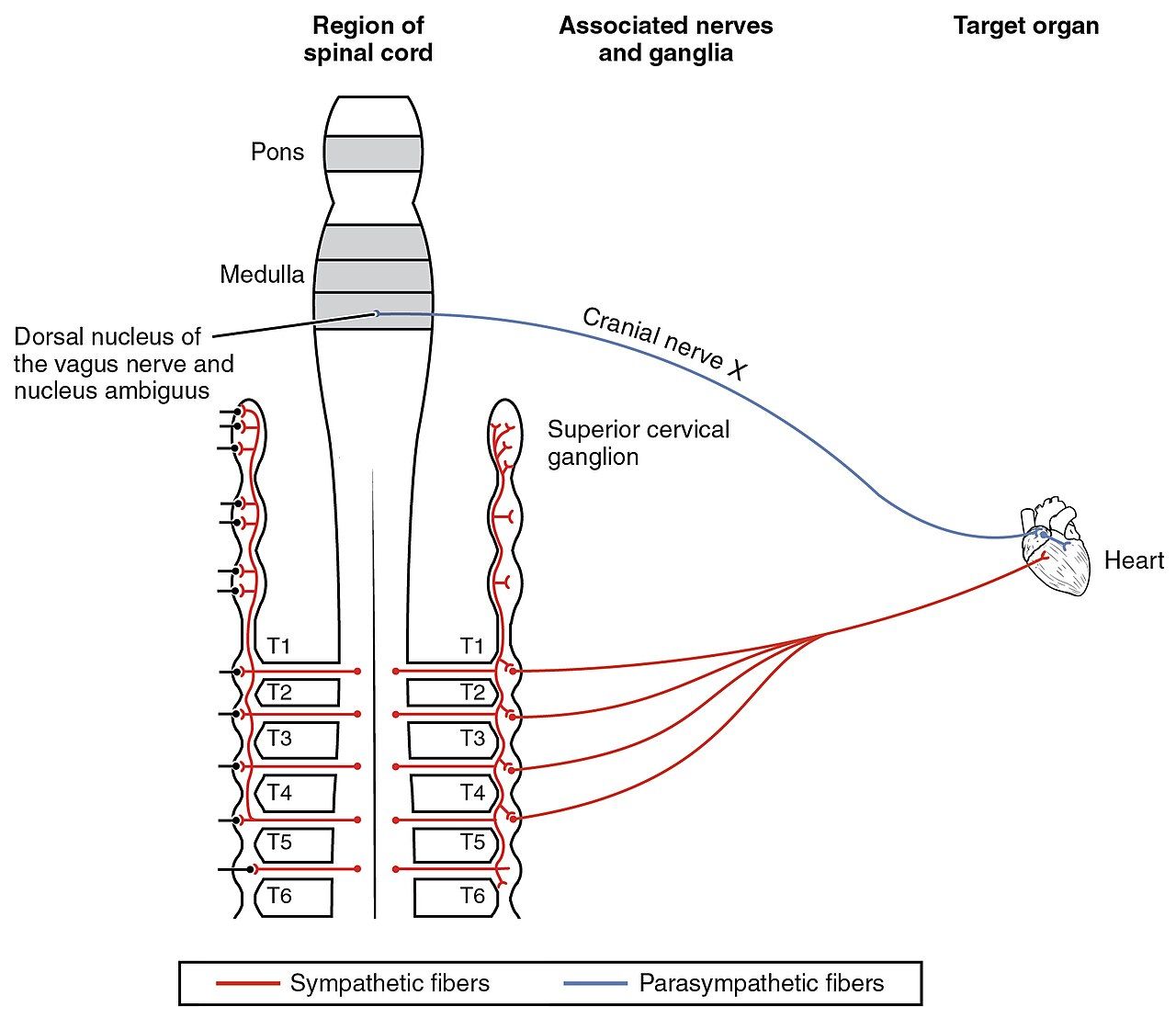
Alpha blockers: releasing the vessels
An alpha-1 blocker stops norepinephrine from squeezing the smooth muscle in vessel walls. The vessels relax, resistance falls, and blood pressure comes down. The same receptor sits in the bladder neck and the smooth muscle of the prostate. Blocking it also relaxes the outflow path. That is why the “-osin” drugs are workhorses in benign prostatic hyperplasia (BPH), a big but noncancerous prostate. They let men empty a bladder that a big prostate had squeezed shut. Tamsulosin acts mostly on the urinary tract and lowers pressure less. Doxazosin, terazosin, and prazosin lower blood pressure more and are sometimes used for that. Prazosin is also used off-label for nightmares from PTSD, though the trial evidence is mixed.
The main danger is low blood pressure on standing with the first dose. The first dose, or the first dose after any increase, can drop a person's pressure enough to make them faint. A fainting fall in an older adult is a broken hip waiting to happen. Here is what to do. Give the first dose at bedtime. Teach the patient to rise slowly and sit on the edge of the bed before standing. Warn them not to drive after the first dose. Check blood pressure lying and standing. Phentolamine is a nonselective alpha blocker used in other ways. It is the antidote for a leaked vasopressor. It is also used for too many stress hormones, as with pheochromocytoma (a tumor that makes them).
Beta blockers: the “-olol” family
A beta blocker sits in beta receptors so stress hormones (catecholamines) cannot. Blocking beta-1 slows the heart rate, weakens each squeeze, slows the signal through the AV node, and lowers renin release. Together, these lower blood pressure. They ease angina by cutting the heart's need for oxygen. They control rate in atrial fibrillation. Most important, they help people live longer after a heart attack and, for three certain drugs, in chronic heart failure. That last point surprises people. A drug that weakens each squeeze helps the failing heart. It does this by shielding the heart from years of stress hormone whipping. The point also matters because the benefit does not belong to the whole class. Only metoprolol succinate (the extended-release salt), bisoprolol, and carvedilol have proven that they lower deaths in heart failure with reduced ejection fraction. Atenolol has no heart failure use. Plain metoprolol tartrate is not the heart failure drug either. Do not give the survival claim to a beta blocker that has not earned it. In heart failure, the beta blocker starts at a low dose and goes up slowly. It is never started during a sudden worsening.
The key difference in this class is cardioselectivity. Cardioselective drugs block mainly beta-1 and mostly spare the lungs. These are metoprolol, atenolol, bisoprolol, and esmolol, the ones that start with A through M. Nonselective drugs block beta-2 as well, so they can tighten the airways. These are propranolol, nadolol, timolol, and sotalol, N through Z. That is why they call for caution in asthma and COPD. The A to M letter trick is a study aid, not a rule. Carvedilol and labetalol are the classic exceptions. Both start in the first half of the alphabet, yet they block beta-1, beta-2, and alpha-1. Cardioselectivity is also relative, not total, and it is lost at higher doses. So even a “cardioselective” blocker is used carefully in reactive airway disease.
| Class / drug | Blocks | Main use | Safety alert |
|---|---|---|---|
| Tamsulosin | Alpha-1 (uroselective) | BPH | Orthostasis, dizziness, retrograde ejaculation; flag before cataract surgery (floppy iris syndrome). |
| Prazosin, doxazosin, terazosin | Alpha-1 | Hypertension, BPH; prazosin off-label for PTSD nightmares | First-dose syncope: give at bedtime, rise slowly, check orthostatics. |
| Phentolamine | Alpha-1 & alpha-2 | Vasopressor extravasation; pheochromocytoma | Reflex tachycardia; infiltrate the extravasation site promptly. |
| Metoprolol, atenolol, bisoprolol | Beta-1 (cardioselective) | Hypertension, angina, post-MI, rate control. Heart failure only with metoprolol succinate (ER) or bisoprolol: not atenolol, not metoprolol tartrate | Hold and recheck if HR is under 60 or SBP is low per the order; never stop suddenly. Check that the metoprolol salt and form match the reason it is given. |
| Esmolol | Beta-1 (ultra-short IV) | Acute rate control, perioperative | Continuous cardiac and BP monitoring; effect ends within minutes of stopping. |
| Propranolol, nadolol | Beta-1 & beta-2 (nonselective) | Hypertension, migraine prophylaxis, tremor, performance anxiety, thyroid storm | Caution in asthma/COPD (bronchospasm); masks hypoglycemia signs. |
| Timolol (ophthalmic) | Beta-1 & beta-2 | Glaucoma: reduces aqueous production | Eye drops are systemic drugs. Apply punctal occlusion for 1 to 2 minutes; bradycardia and bronchospasm are real. |
| Carvedilol, labetalol | Beta plus alpha-1 | Heart failure (carvedilol); hypertensive urgency and pregnancy (labetalol) | Added alpha blockade means more orthostasis; take carvedilol with food. |
The three cautions you must own
First, never stop a beta blocker suddenly. Long-term blocking makes the heart grow extra beta receptors. Pull the drug away, and that oversensitive heart meets the stress hormones in the blood. Rebound fast heart rate, severe high blood pressure, angina, and heart attack have all been reported. Taper over one to two weeks. Teach this clearly. A patient who feels fine and stops on their own is the one who ends up in the emergency room.
Second, beta blockers hide low blood sugar. Shaking, a racing heart, and anxiety warn a person with diabetes that their sugar is falling. These warnings are sympathetic signals that run through beta receptors. Block beta, and the warning goes quiet. Sweating is the one sign that remains, because sweat glands are cholinergic. Teach people with diabetes on beta blockers to check their sugar instead of trusting how they feel. Never assume a person with no tremor is safe.
Third, you enforce the hold rules. Take an apical pulse for a full minute before every dose. If the heart rate is under 60, or blood pressure is below the ordered limit, hold the dose and tell the prescriber. Do not just give it and chart the vital signs. Beta blockers also blunt the fast heart rate the body uses to make up for blood loss. So a bleeding patient on metoprolol may not show the fast heart rate you would expect. In a beta blocker overdose, there is a very slow heart rate and low blood pressure that atropine does not fix. The specific antidote is glucagon. It raises a heart signal molecule (cAMP) by a route that skips the blocked receptor entirely.
- Alpha-1 blockers (“-osin”) relax vessels and the bladder outlet for high blood pressure and BPH. They cause fainting on standing with the first dose, so give it at bedtime.
- Cardioselective beta blockers (A to M: metoprolol, atenolol) spare beta-2. Nonselective ones (N to Z: propranolol) risk tight airways in asthma or COPD.
- Beta blockers help people live longer after a heart attack. In chronic HFrEF, only metoprolol succinate, bisoprolol, and carvedilol do, not atenolol. They start low and go up slowly, never during a sudden worsening.
- Never stop them suddenly (rebound crisis). They hide low blood sugar, except sweating. Check the apical pulse and follow the hold rules.
- Beta blocker overdose antidote: glucagon. Leaked vasopressor antidote: phentolamine.
Section 4Cholinergic and anticholinergic drugs
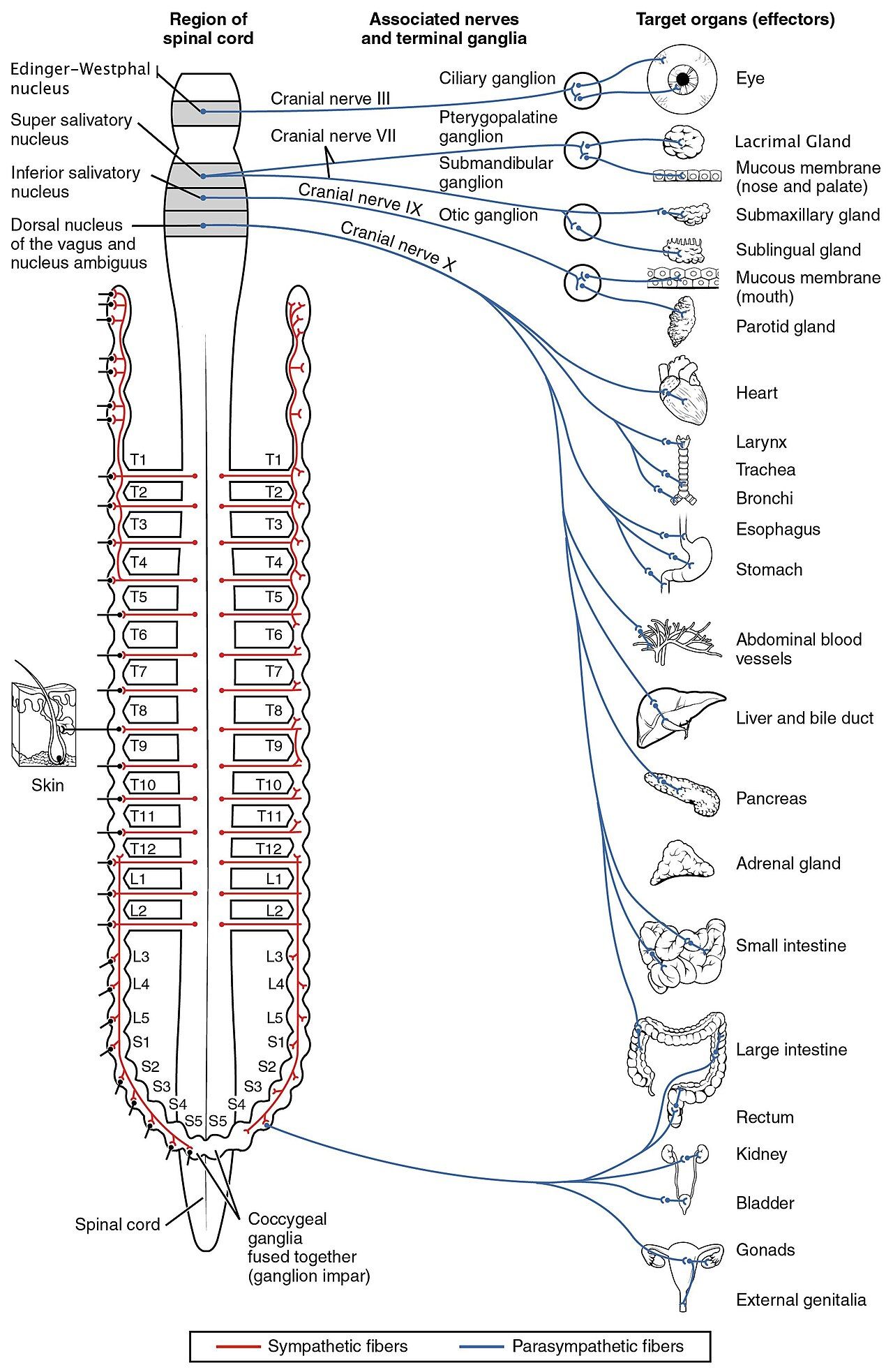
Cholinergic agonists: turning up rest-and-digest
A cholinergic agonist (parasympathomimetic) copies what acetylcholine does at muscarinic receptors. The result is SLUDGE: drooling, tears, passing urine, passing stool, gut cramps, and vomiting. Add a slow heart rate, tight airways, and small pupils (miosis). Written out that way, it sounds like a poisoning. At high doses, it is. But used on purpose at treatment doses, two of those effects are useful. Bethanechol stirs up the bladder muscle and the gut. That makes it the drug for urinary retention (trouble emptying the bladder) that is not caused by a blockage. This difference matters a great deal. Squeezing a bladder against a blocked outlet risks bursting it. Pilocarpine, as eye drops, shrinks the pupil and opens the drainage angle in glaucoma. By mouth, it helps make saliva for dry mouth. Cholinergic agonists are not used in asthma (tight airways), a slow heart rate or heart block, peptic ulcer disease, or a blocked bowel or bladder.
AChE inhibitors: making the body's own acetylcholine last longer
Acetylcholinesterase (AChE) is the enzyme that chews up acetylcholine in the junction within thousandths of a second. Block the enzyme, and acetylcholine lingers. So the same signal hits harder. This is an indirect cholinergic agonist. It is behind three very different treatments. In myasthenia gravis, the body's own antibodies have destroyed nicotinic receptors where nerve meets muscle. Pyridostigmine keeps acetylcholine around long enough for the remaining receptors to work, which brings back strength. Timing doses around meals matters, so people can chew and swallow safely. In Alzheimer disease, donepezil, rivastigmine, and galantamine raise acetylcholine in the brain. They modestly improve or steady symptoms for a time. But they do not cure the disease or stop the brain damage underneath. In anesthesia, neostigmine reverses non-depolarizing neuromuscular blockade, which Section 5 covers.
Push cholinergic action too far and you get cholinergic crisis. It is heavy SLUDGE with a slow heart rate, tight airways, and floods of secretions. The part that kills is muscle weakness and breathing failure. The muscle end plate is overwhelmed and stuck in the "on" state. This is how organophosphate poisoning works. Organophosphates are found in bug sprays and nerve agents. They shut down AChE for good. The treatment is two drugs, not one. Atropine blocks the muscarinic effects and dries the secretions. Pralidoxime pulls the organophosphate off the enzyme before the bond “ages” and becomes permanent. Atropine alone will not fix the nicotinic muscle weakness. That fact is worth understanding, not just memorizing.
The cruel trap in myasthenia is this. Myasthenic crisis (too little drug) and cholinergic crisis (too much drug) both show up as severe weakness and breathing failure. The clue is what comes along with the weakness. Cholinergic crisis brings SLUDGE: drooling, tears, cramps, tiny pupils, and a slow heart rate. Myasthenic crisis does not. Either way, the airway comes first.
Anticholinergics: blocking rest-and-digest
An anticholinergic (antimuscarinic, parasympatholytic) blocks muscarinic receptors. So the picture is SLUDGE in reverse. That means a dry mouth, no sweat, blurred close-up vision and large pupils, a fast heart rate, constipation, and trouble passing urine. When the drug reaches the brain, confusion follows. Atropine is the prototype. It is the drug you push for a slow heart rate with symptoms. It is used to dry secretions before surgery. It is also used in organophosphate poisoning. Ipratropium and tiotropium are inhaled anticholinergics. They open the airways in COPD by a route totally different from albuterol's. That is why the two are often combined. Oxybutynin, tolterodine, and solifenacin calm an overactive bladder. Scopolamine patches prevent motion sickness. Benztropine and trihexyphenidyl rebalance the dopamine and acetylcholine seesaw. They are used in Parkinson disease and for movement side effects caused by drugs.
| Class / drug | Action | Main use | Safety alert |
|---|---|---|---|
| Bethanechol | Direct muscarinic agonist | Non-obstructive urinary retention | Contraindicated in obstruction (rupture risk) and asthma; keep a urinal/commode within reach: it works fast. |
| Pilocarpine | Direct muscarinic agonist | Glaucoma; xerostomia | Miosis causes dim, blurred vision: fall risk, caution at night. |
| Pyridostigmine | AChE inhibitor | Myasthenia gravis | Time doses 30 to 60 min before meals; watch for cholinergic vs myasthenic crisis. |
| Donepezil, rivastigmine, galantamine | Central AChE inhibitors | Alzheimer disease | Eases symptoms modestly; does not cure or stop progression. Nausea, diarrhea, bradycardia, weight loss, vivid dreams. |
| Neostigmine | AChE inhibitor | Reverses non-depolarizing blockade | Always paired with an antimuscarinic (glycopyrrolate/atropine) to prevent bradycardia. |
| Atropine | Antimuscarinic | Symptomatic bradycardia; preop drying; organophosphate poisoning | For a slow heart rate, give 1 mg IV push quickly, repeat every 3 to 5 min up to 3 mg total; a slow push or too small a dose can make the slow heart rate worse. Antidote for pure anticholinergic toxicity: physostigmine, which is not allowed if a TCA or other sodium channel blocker is involved or the QRS is >100 ms. |
| Ipratropium, tiotropium | Inhaled antimuscarinic | COPD: ipratropium short-acting (also added to albuterol in acute exacerbation); tiotropium long-acting maintenance | Dry mouth: sugar-free gum, sips of water; caution with peanut/soy allergy for some inhaler formulations. |
| Oxybutynin, tolterodine, solifenacin | Antimuscarinic | Overactive bladder | Dry mouth, constipation, retention, confusion in older adults; a Beers-list concern. |
| Scopolamine | Antimuscarinic (patch) | Motion sickness, secretions | Wash hands after handling: touching the eye causes unilateral mydriasis; remove old patch before applying new. |
| Benztropine | Central antimuscarinic | Parkinson disease; drug-induced EPS | Anticholinergic burden, especially cognitive effects in older adults. |
Every one of those anticholinergic effects can be predicted from the table in Section 1, and so can the danger. Anticholinergic burden is the total load of every drug with antimuscarinic action a person takes. It is not just the drugs above. Many antihistamines, tricyclic antidepressants, and antipsychotics have hidden antimuscarinic action. Stack three or four in an 80-year-old, and you get confusion, falls, trouble passing urine, and constipation. These often get mistaken for “dementia” or “just getting older.” Adding up the anticholinergic burden on a drug list is one of the most useful things you can do for an older patient.
- Cholinergic agonists cause SLUDGE. Use bethanechol for trouble emptying the bladder with no blockage, and pilocarpine for glaucoma and dry mouth.
- AChE inhibitors raise the body's own acetylcholine: pyridostigmine (myasthenia), donepezil (Alzheimer), neostigmine (reversal).
- Cholinergic crisis = SLUDGE plus weakness and breathing failure. Organophosphate poisoning is treated with atropine plus pralidoxime.
- Anticholinergics are the mirror image: dry, hot, red, blurred, fast heart, holding urine, confused. Physostigmine treats pure antimuscarinic toxicity with a normal QRS. It is never used when a TCA or a QRS >100 ms is involved (use benzodiazepines and sodium bicarbonate instead).
- Anticholinergic burden stacks across drug classes and drives confusion, falls, and trouble passing urine in older adults.
Section 5Neuromuscular blockers
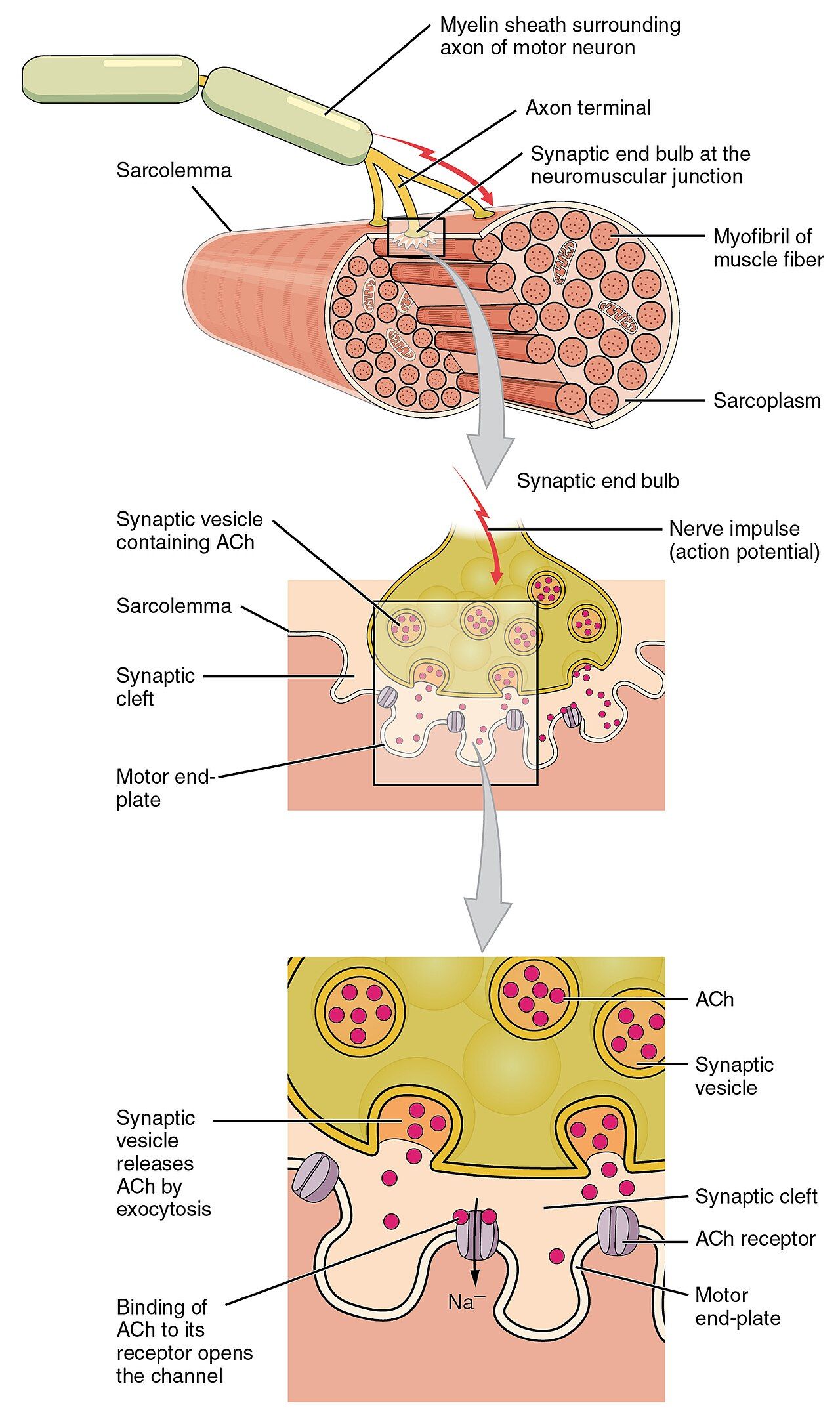
A different synapse, a much higher stake
Neuromuscular blocking agents (NMBAs) act on the nerves to skeletal muscle, which are not autonomic. But they belong here, because they work on the same molecule, acetylcholine, at a nicotinic receptor. They act at the neuromuscular junction, where nerve meets muscle. They block the NM receptor on the muscle end plate. This causes floppy paralysis for placing a breathing tube, surgery, and machine breathing (mechanical ventilation).
Three facts must be firmly fixed before any of the drug science matters. These drugs do not sedate. They do not ease pain. They do not erase memory. A paralyzed patient without enough sedation and pain relief is fully awake and feeling everything. They cannot move a finger or make a sound to tell you. It is one of the most terrifying things medicine can do to a person. NMBAs are high-alert medications. They are stored apart from other drugs, with extra warning labels. They are never given unless the airway can be secured and a breathing machine is ready right away. Paralysis always includes the diaphragm. Your duties are firm. Confirm that deep sedation and pain relief are running first. Never allow paralysis without a secured airway. Lubricate and tape the eyes, since the blink is gone. Turn the patient to prevent pressure sores. Give clot prevention (DVT prophylaxis). Keep talking to the patient, because hearing still works.
Depolarizing blockade: succinylcholine
Succinylcholine is the only depolarizing blocker in common use. It works by an odd trick. It is an agonist that paralyzes. It binds the nicotinic receptor and opens it. That causes a first wave of jumbled muscle twitches called fasciculations. But unlike acetylcholine, it is not broken down by acetylcholinesterase. So it sits on the receptor and holds the end plate in the "on" (depolarized) state. A membrane stuck there cannot fire again, so the muscle goes limp. It starts working in under a minute. It wears off in five to ten minutes as a blood enzyme, pseudocholinesterase, breaks it down. That is exactly the profile you want for rapid sequence intubation, placing a breathing tube fast.
Three dangers define it. First, there is no reversal drug. You wait it out, breathing for the patient the whole time. Giving an AChE inhibitor would only stretch out the block, since it adds more acetylcholine to an end plate already stuck "on." Second, the depolarizing leaks potassium out of every muscle cell in the body. So succinylcholine is not given to people with high potassium already. It is also not given after burns, crush injury, nerve loss to a muscle, spinal cord injury, or long bed rest beyond about 24 to 48 hours. In those cases, muscles grow extra receptors, and the potassium surge can be big enough to stop the heart. The same cause drives the drug's boxed warning. A child or teen may have a hidden muscle disease (myopathy). Duchenne muscular dystrophy is the main one, and it is often not yet clear in a young boy. After a single dose, such a child can have muscle breakdown with high potassium (rhabdomyolysis), dangerous heart rhythms, and cardiac arrest. So succinylcholine is not used for routine or planned intubation in children and teens. In children, it is saved for emergency airway control. Third, succinylcholine is a leading trigger of malignant hyperthermia in people with the gene for it. This is a crisis of runaway body heat and metabolism. Its earliest reliable sign is rising end-tidal CO2 (carbon dioxide in each breath out). A clenched jaw, a fast heart rate, and a late spike in temperature follow. The antidote is dantrolene, which must be on hand wherever the drug is used. A rare patient has an unusual pseudocholinesterase and stays paralyzed for hours. Care is simply more machine breathing and sedation until it clears.
Non-depolarizing blockade: the “-curium” and “-curonium” drugs
Rocuronium, vecuronium, cisatracurium, and atracurium take the more expected route. They are competitive antagonists. They sit in the nicotinic receptor without turning it on, so acetylcholine cannot get in. There are no twitches first. They start more slowly, though a large dose of rocuronium comes close to succinylcholine's speed. The block lasts much longer. Because the block is a competition, it can be reversed. Flood the junction with enough acetylcholine, and it wins out over the drug. That is what neostigmine does. It is always given with glycopyrrolate or atropine. Otherwise, the extra acetylcholine spilling onto muscarinic receptors would cause a slow heart rate and drowning secretions. Sugammadex is the newer, cleaner choice. It wraps up rocuronium or vecuronium molecules and pulls them out of the blood. It reverses even a deep block in minutes and does not touch the cholinergic system at all. Cisatracurium deserves special mention. It breaks down on its own in the blood (Hofmann elimination), not through the liver or kidney. That makes it the drug of choice when those organs are failing.
| Feature | Depolarizing (succinylcholine) | Non-depolarizing (rocuronium, vecuronium, cisatracurium) |
|---|---|---|
| Mechanism | Agonist: opens the receptor and holds it depolarized | Competitive antagonist: occupies the receptor, blocks ACh |
| Fasciculations | Yes, then flaccid paralysis | No |
| Onset / duration | Under 1 min / 5 to 10 min | 1 to 3 min / 30 to 60+ min |
| Reversal | None: ventilate and wait | Neostigmine + glycopyrrolate, or sugammadex (roc/vec) |
| Effect of AChE inhibitor | Prolongs the block | Reverses the block |
| Key dangers | Boxed warning: muscle breakdown with high potassium and cardiac arrest in children and teens with a hidden muscle disease, so not for routine or planned use in children. Also high potassium, malignant hyperthermia, muscle aches, and a slow heart rate in children | Prolonged paralysis, residual weakness; potentiated by aminoglycosides, magnesium, hypothermia |
| Typical use | Rapid sequence intubation | Surgical relaxation, ventilated ICU patients |
Checking is where you live with these drugs. Train-of-four (TOF) testing uses a nerve stimulator. It sends four small shocks and counts the twitches that follow. The depth of the block is set to a goal. For a steady drip, a common goal is one to two twitches out of four. Fewer twitches means a deeper block and a longer, harder recovery. Before the breathing tube comes out, recovery is judged by clear measures. The patient should hold their head up, take big enough breaths, grip firmly, and protect their own airway. Never judge by looks alone. A patient can look awake while still too weak to breathe. Also remember that several common things deepen and lengthen the block. These are aminoglycoside antibiotics, magnesium sulfate, calcium channel blockers, inhaled anesthetics, low body temperature, and too much acid in the blood. A patient after childbirth on a magnesium drip is a different drug problem than the same patient without it.
- NMBAs act at the nicotinic (NM) receptor of the muscle end plate. They are high-alert drugs that paralyze the diaphragm.
- They give no sedation, no pain relief, and no memory loss. Sedation and pain control must run first and the whole time.
- Succinylcholine depolarizes. It causes twitches, acts very briefly, and has no reversal. It risks high potassium and malignant hyperthermia (antidote dantrolene). Its boxed warning keeps it out of routine intubation in children, since a hidden muscle disease can mean high-potassium cardiac arrest.
- Non-depolarizers compete. No twitches, longer action, and reversible with neostigmine + glycopyrrolate or sugammadex.
- Check depth with train-of-four. Aminoglycosides and magnesium lengthen the block. Confirm real strength before removing the breathing tube.
The chapter in one breath
- The autonomic nervous system has a sympathetic (fight-or-flight, adrenergic) and a parasympathetic (rest-and-digest, cholinergic) division. All ganglia are nicotinic.
- The receptor map does the work: alpha-1 narrows vessels, alpha-2 feeds back to lower BP, beta-1 is the heart, beta-2 is the lungs, and muscarinic is SLUDGE.
- Epinephrine acts by dose (beta low, alpha high). It is the first drug in anaphylaxis, at 0.3 to 0.5 mg IM (1 mg/mL) in the outer thigh. A leaked vasopressor is reversed with phentolamine.
- Beta-2 agonists rescue airways at the cost of tremor, a fast heart rate, and low potassium. Long-acting ones are for daily control only.
- Alpha blockers cause fainting with the first dose, so give it at bedtime. Beta blockers save lives after a heart attack, and in HFrEF only as metoprolol succinate, bisoprolol, or carvedilol (not atenolol). They must never be stopped suddenly, and they hide low blood sugar, except sweating.
- AChE inhibitors boost the body's own acetylcholine (myasthenia, Alzheimer, reversal). Too much causes cholinergic crisis, treated with atropine + pralidoxime in organophosphate poisoning.
- Anticholinergics are dry, hot, red, blurred, fast, and confused, and their burden stacks dangerously in older adults. Physostigmine is the antidote for pure antimuscarinic toxicity only. It is not allowed when a TCA or a wide QRS is involved.
- Neuromuscular blockers paralyze without sedating. Succinylcholine depolarizes and cannot be reversed (high potassium, malignant hyperthermia → dantrolene). Non-depolarizers compete and are reversed with neostigmine + glycopyrrolate or sugammadex.
ReferenceWords worth knowing
A quick list of the terms in this chapter. Skim it now, or come back when a word trips you up.
- Acetylcholine (ACh)
- The chemical messenger at all autonomic ganglia, at parasympathetic organ junctions, at sympathetic sweat glands, and at the muscle end plate.
- Acetylcholinesterase (AChE)
- The enzyme that breaks down acetylcholine in the junction; blocking it boosts and lengthens cholinergic signals.
- Alpha-1 receptor
- Receptor on vessel smooth muscle, the pupil, and the bladder neck; turning it on narrows vessels, widens the pupil, and holds in urine.
- Alpha-2 receptor
- Receptor on the sending nerve and in the brain; turning it on lowers norepinephrine release, which lowers blood pressure (clonidine).
- Anticholinergic (antimuscarinic)
- A drug that blocks muscarinic receptors, causing dry mouth, blurred vision, a fast heart rate, constipation, trouble passing urine, and confusion.
- Anticholinergic burden
- The total antimuscarinic load from all of a person's drugs; a major cause of confusion and falls in older adults.
- Autonomic nervous system
- The automatic nervous system that controls the heart, vessels, airways, gut, bladder, glands, and pupils.
- Beta-1 receptor
- Heart (“one heart”) and kidney receptor; turning it on raises heart rate, squeeze strength, signal speed, and renin release.
- Beta-2 receptor
- Lung (“two lungs”), vessel, uterus, and liver receptor; turning it on opens airways and widens vessels.
- Cardioselective
- Describes a beta blocker that acts mainly on beta-1 and mostly spares beta-2; selectivity is relative and is lost at high doses.
- Cholinergic crisis
- Too much cholinergic action, causing SLUDGE plus muscle weakness and breathing failure; the mirror trap of myasthenic crisis.
- Depolarizing blocker
- A neuromuscular blocker (succinylcholine) that turns the end plate on and then holds it there; it has no reversal drug.
- Extravasation
- Leaking of a tissue-damaging drug, such as a vasopressor, into nearby tissue, which risks tissue death; reversed at the site with phentolamine.
- Malignant hyperthermia
- A crisis of runaway body heat and metabolism set off by succinylcholine or inhaled anesthetics; the earliest sign is rising end-tidal CO2; the antidote is dantrolene.
- Muscarinic receptor
- The acetylcholine receptor on parasympathetic target organs; turning it on causes the SLUDGE picture.
- Neuromuscular blocking agent (NMBA)
- A high-alert drug that paralyzes skeletal muscle at the nicotinic end plate without sedating or easing pain.
- Nicotinic receptor
- The acetylcholine receptor at autonomic ganglia (NN) and at the muscle end plate (NM).
- Non-depolarizing blocker
- A competitive nicotinic blocker (rocuronium, vecuronium, cisatracurium) that can be reversed with neostigmine or sugammadex.
- Parasympathetic division
- The rest-and-digest division; acetylcholine on muscarinic receptors slows the heart and stirs up the gut and bladder.
- SLUDGE
- Salivation, Lacrimation, Urination, Defecation, GI upset, Emesis: the muscarinic (too much cholinergic) picture.
- Sympathetic division
- The fight-or-flight division; mostly norepinephrine on adrenergic receptors, plus epinephrine released by the adrenal glands.
- Train-of-four (TOF)
- Nerve stimulation that sends four pulses to measure how deep a neuromuscular block is by counting the twitches.
Check yourself
Endocrine Drugs
The endocrine system runs on chemical messages. They are sent slowly, in tiny amounts, through the blood. Endocrine pharmacology is mostly the art of replacing a message the body stopped sending. Or it means quieting one the body sends too loudly. That sounds simple until you meet the feedback loop. The moment you give a hormone from outside, the loop quietly turns off the patient's own gland. Almost every endocrine drug error you will ever see goes back to that one fact, or to a decimal point in an insulin dose. This chapter covers the pituitary, the thyroid, the adrenal cortex, and the pancreas. These are the four glands you will treat with drugs most. It also covers the safety habits that keep those drugs from hurting the person you gave them to.
By the end of this chapter you can
- Explain negative feedback and predict what happens to a patient's own gland when you give the hormone from outside.
- Describe the main pituitary drugs, including desmopressin and octreotide, and how to check them.
- Teach how to take levothyroxine the right way, and spot too little or too much.
- Compare methimazole and propylthiouracil, and name the side effect that must be reported right away.
- List the main side effects of glucocorticoids and explain why long-term use must be tapered.
- Give the onset, peak, and duration of each insulin class, and use peak times to see low blood sugar coming.
- Spot and treat low blood sugar (hypoglycemia), including a glucagon rescue in a patient who will not respond.
- Describe metformin and the other diabetes pill classes, with the safety alert unique to each.
Section 1Hormone principles and the pituitary
What makes a hormone drug different
A hormone is a chemical messenger. A gland releases it into the blood. The blood carries it to a distant tissue. There, a receptor built to fit it picks it up. Two parts of this matter a great deal at the bedside. First, hormones work at tiny levels. A treatment dose of levothyroxine is measured in micrograms. That is a thousandth of the milligram doses you are used to. So a misplaced decimal point is a tenfold error. Mixing up micrograms and milligrams is a thousandfold error. Second, hormones come in two chemical families that act totally differently as drugs.
Fat-soluble hormones slip right through the cell membrane. These are thyroid hormone and the steroid hormones, such as cortisol. They act on receptors inside the cell and change which genes get read. They work by building new proteins. So their effects come on over hours to days and linger after the drug is gone. Because they dissolve in fat, they survive the gut and can be taken by mouth. Water-soluble hormones cannot cross the membrane. These are insulin, growth hormone, glucagon, vasopressin, and the other peptides (small proteins). They dock on a receptor on the cell's surface. That sets off a fast chain of signals inside the cell. They act in minutes. And they are proteins, which means digestive enzymes destroy them. That one chemical fact is why insulin cannot be a pill. It is not a sales choice or a gap in the science. A swallowed peptide is simply lunch.
Negative feedback: the idea the whole chapter rests on
Endocrine glands are run by negative feedback, which works like a thermostat. The hypothalamus signals the front part of the pituitary (anterior pituitary). The pituitary signals the target gland. The target gland releases its hormone. That hormone travels back through the blood and switches off the hypothalamus and pituitary that ordered it. The classic example is the thyroid system: TRH → TSH → thyroid hormone → less TRH and TSH. The adrenal system works the same way: CRH → ACTH → cortisol → less CRH and ACTH.
Here is what this means for care, and it is worth reading twice. The loop cannot tell hormone the patient made from hormone you gave. Say you give prednisone every day for two months. The patient's hypothalamus sees plenty of steroid and stops sending CRH. The pituitary stops sending ACTH. The adrenal cortex, unused and unstirred, shrinks (atrophies). Stop the prednisone suddenly, and there is no cortisol from either source. The drug is gone, and the gland cannot answer. That is adrenal crisis. It is why you will hear "never stop a steroid suddenly" for the rest of your career. The same logic explains why replacement doses are adjusted to the pituitary's signal. A TSH level is really the pituitary's opinion of whether your levothyroxine dose is right.
Drugs that act at the pituitary
The pituitary is two glands in one coat. The anterior pituitary makes its own hormones: growth hormone, TSH, ACTH, prolactin, FSH, and LH. The posterior pituitary makes nothing. It is a storage tank for two hormones made in the hypothalamus. These are antidiuretic hormone (ADH, vasopressin) and oxytocin. Pituitary drugs either replace a missing signal or shut down one that is too strong.
| Class | Prototype | Key effect | Safety alert |
|---|---|---|---|
| Growth hormone | somatropin | Replaces GH in deficiency; promotes linear growth in children | Subcutaneous only; rotate sites. Monitor growth velocity and blood glucose: GH is hyperglycemic. Report limp or hip/knee pain (slipped epiphysis). |
| Somatostatin analog | octreotide | Inhibits GH release; treats acromegaly, carcinoid, variceal bleeding | Monitor glucose (can swing either way), watch for gallstones, bradycardia, steatorrhea/cramping. Check IGF-1 for response. |
| Dopamine agonist | cabergoline, bromocriptine | Dopamine inhibits prolactin, so these lower prolactin and shrink prolactinomas | Orthostatic hypotension: first dose at bedtime, rise slowly. Nausea; take with food. Watch for compulsive behaviors. |
| ADH replacement | desmopressin (DDAVP) | Synthetic ADH; treats diabetes insipidus, nocturnal enuresis, mild hemophilia A/von Willebrand | Water intoxication and hyponatremia. Monitor daily weight, I&O, urine specific gravity, serum sodium. Report headache, confusion, seizure. |
| Vasopressin | vasopressin | ADH plus potent vasoconstriction; used in DI and in shock | IV in critical care; monitor BP, sodium, and the site: extravasation causes tissue necrosis. |
| Oxytocic | oxytocin | Stimulates uterine contraction and milk let-down | High-alert drug. Always on a pump, always titrated; monitor contraction pattern and fetal heart rate. Antidiuretic at high doses: watch sodium. |
Notice the pattern in that table. Diabetes insipidus and SIADH are mirror images, and so are their drugs. In diabetes insipidus, there is too little ADH. The kidney cannot hold on to water. The patient pours out liters of pale, watery urine. The urine specific gravity is low, and blood sodium climbs. You give desmopressin. In SIADH, there is too much ADH. Water is held in, urine is scant and dark, and sodium falls. Give too much desmopressin, and you have simply turned the first problem into the second. That is why desmopressin is checked by the sodium, not just the urine output.
- Hormones act at microgram levels, so decimal errors are a disaster. Peptide hormones like insulin are digested, so they cannot be taken by mouth.
- Negative feedback cannot tell the patient's hormone from yours. So hormone given from outside turns off and shrinks the patient's own gland.
- The pituitary drugs either replace (somatropin, desmopressin) or hold down (octreotide, cabergoline).
- Desmopressin's danger is water overload. Check blood sodium, daily weight, and brain status, not just urine output.
Section 2Thyroid drugs
Levothyroxine: replacing what is missing
Thyroid hormone sets the body's idle speed. Too little, and everything slows. The person is cold, constipated, with a slow heart rate, gaining weight, and thinking through fog. Levothyroxine (T4) is the man-made replacement. It is one of the most prescribed drugs in the country. It is the same chemical as the T4 the thyroid makes. The body turns it into the more active T3 in the tissues. That is exactly why T4 is preferred over giving T3 directly. The patient's own tissues decide how much active hormone they need. Levothyroxine has a long half-life, about 7 days. So it is taken once a day, and its effects take weeks to show. A single missed dose is not an emergency.
It is also a narrow therapeutic index drug, and that drives everything about how it is taken. Give it on an empty stomach with water, 30 to 60 minutes before breakfast, at the same time every day. Food lowers absorption, above all soy, walnuts, high-fiber meals, and coffee. Calcium, iron, multivitamins, antacids, sucralfate, and cholestyramine bind it in the gut. Keep those at least 4 hours apart from it. Absorption is so touchy that people should stay on the same product and not switch brands casually. The dose is adjusted by the TSH. Recheck it about 6 to 8 weeks after any change. Checking sooner just measures noise, because the hormone has not reached steady state.
Teach what too much feels like, because it looks just like an overactive thyroid. Signs are a fast heart rate, a pounding heart, nervousness, poor sleep, feeling too hot, tremor, and weight loss without trying. In older adults, too high a dose brings two real dangers. One is atrial fibrillation. The other, over years, is osteoporosis. That is why an older person, or anyone with coronary artery disease, starts on a low dose on purpose. It goes up slowly. A suddenly faster heart pushing through a narrowed heart artery can cause angina or a heart attack. Two more teaching points come up all the time. Levothyroxine is for life. Feeling better means it is working, not that it can be stopped. And needs go up in pregnancy, so a pregnant patient needs her dose and TSH checked early.
Antithyroid agents: turning the gland down
An overactive thyroid (hyperthyroidism) is the opposite picture. Signs are a racing heart, weight loss despite eating, feeling too hot, tremor, anxiety, and diarrhea. The thionamides, methimazole and propylthiouracil (PTU), block the enzyme that builds thyroid hormone. They do not touch hormone already stored in the gland. So the patient does not improve for several weeks. Tell them this up front. Otherwise they will decide the drug does not work and quit.
Methimazole is first-line. It is stronger, taken once a day, and better tolerated. PTU is saved for three cases. The first is the first trimester of pregnancy, since methimazole carries a risk of birth defects early in pregnancy. The second is thyroid storm, a life-threatening surge of thyroid hormone. PTU has the added benefit of blocking the change of T4 to T3 in the tissues. The third is people who cannot take methimazole. That is because PTU carries a boxed warning for severe liver harm, including liver failure. Both drugs share the effect you must burn into memory: agranulocytosis, a dangerous drop in white cells. If a patient on a thionamide reports a sore throat, fever, or mouth sores, that is not a cold. Hold the drug, tell the provider, and get a CBC with differential.
| Class | Prototype | Key effect | Safety alert |
|---|---|---|---|
| Thyroid replacement | levothyroxine (T4) | Restores metabolic rate; converted to T3 peripherally | Empty stomach, 30 to 60 min before breakfast; keep calcium, iron, and antacids 4 h apart. Adjust to the TSH every 6 to 8 wk. Report chest pain, a pounding heart, or weight loss. For life. |
| T3 replacement | liothyronine (T3) | Faster onset, shorter half-life; myxedema coma, selected cases | More cardiac stimulation than T4: monitor HR and rhythm closely. |
| Thionamide | methimazole | Blocks hormone synthesis; first-line for hyperthyroidism | Agranulocytosis: report sore throat/fever at once. Avoid in first trimester. Effect takes weeks. |
| Thionamide | propylthiouracil (PTU) | Blocks synthesis and peripheral T4→T3 conversion | Boxed warning: hepatotoxicity. Report jaundice, dark urine, RUQ pain, anorexia. Reserved for first trimester and thyroid storm. |
| Iodine solution | potassium iodide (SSKI, Lugol's) | High-dose iodine transiently shuts down hormone release; shrinks/firms gland pre-op | Give 1 hour after the thionamide. Dilute in juice, use a straw (stains teeth). Metallic taste. Short-term use only. |
| Radioactive iodine | iodine-131 | Destroys thyroid tissue permanently | Contraindicated in pregnancy/lactation. Radiation precautions; expect eventual hypothyroidism and lifelong levothyroxine. |
| Beta blocker | propranolol | Does not treat the thyroid: blocks the adrenergic symptoms | Symptom relief while thionamides take effect. Monitor HR and BP; caution in asthma. |
- Levothyroxine: empty stomach 30 to 60 min before breakfast, binders 4 h apart, adjust to TSH every 6 to 8 weeks, for life, and start low in older or heart patients.
- Too much looks like an overactive thyroid: fast heart rate, weight loss, poor sleep. Over time it risks atrial fibrillation and osteoporosis.
- Methimazole is first-line. PTU is for the first trimester and thyroid storm, and it carries a boxed warning for liver harm.
- Both thionamides can cause agranulocytosis. A sore throat, fever, or mouth sores means hold the drug and draw a CBC.
Section 3Corticosteroids
Two jobs in one gland
The adrenal cortex makes two kinds of steroid that matter here. Glucocorticoids raise blood sugar, calm inflammation, hold down the immune system, and help the body survive stress. Cortisol is the natural one. Mineralocorticoids make the kidney keep sodium and water and get rid of potassium. Aldosterone is the natural one. Every corticosteroid drug you give is a blend of those two actions. The blend is the whole reason there are so many of them.
Hydrocortisone is basically cortisol, with both actions. That makes it the drug of choice when you are replacing a missing adrenal gland. Prednisone and methylprednisolone are mostly glucocorticoid with a little mineralocorticoid. They are the everyday anti-inflammatory steroids. Dexamethasone is almost pure glucocorticoid. It is very strong and long-acting, with almost no salt-holding effect. That is why it is chosen for brain swelling (cerebral edema) and when fluid buildup would be a problem. Fludrocortisone is the mirror image. It is chosen for its mineralocorticoid punch, to replace aldosterone. One more fact about prednisone: it is a prodrug. The liver turns it into prednisolone. So a patient in liver failure may be given prednisolone directly.
| Agent | Equivalent dose | Glucocorticoid / mineralocorticoid | Common use and safety alert |
|---|---|---|---|
| hydrocortisone | 20 mg | Both, roughly balanced | Adrenal insufficiency replacement; IV stress dosing. Short-acting. |
| prednisone | 5 mg | Mostly gluco, some mineralo | Oral workhorse (asthma, RA, IBD). Prodrug: needs a working liver. Give with food. |
| methylprednisolone | 4 mg | Gluco > mineralo | IV equivalent of prednisone; dose packs taper by design: teach the schedule. |
| dexamethasone | 0.75 mg | Almost pure gluco; long-acting | Most potent; cerebral edema, croup, antiemetic. Little salt retention. Big glucose spikes. |
| fludrocortisone | - | Chosen for mineralo | Addison's disease. Monitor BP, weight, edema, and potassium: it drives K+ out. |
The adverse effects: predictable, and all one story
Every classic steroid side effect is just cortisol's normal job, turned up too far and left on too long. Cortisol raises sugar, so steroids cause high blood sugar. A person with diabetes started on prednisone will need more insulin, not less. Cortisol holds down immunity, so steroids bring infection risk. Worse, they hide the signs. They blunt fever and inflammation, so a serious infection can be far along before it shows. Cortisol breaks down tissue. So long-term use brings muscle wasting, thin fragile skin, easy bruising, poor wound healing, and osteoporosis. Fat moves around and gives the cushingoid look. That means a round "moon" face, a fat pad on the upper back (buffalo hump), and a heavy trunk on thin limbs. Add mood changes (high mood, agitation, poor sleep, and now and then real psychosis). Add stomach irritation and ulcer risk, which is worse with NSAIDs. Add cataracts and glaucoma and slowed growth in children. From the mineralocorticoid side come fluid buildup, high blood pressure, and low potassium.
What to do is short and concrete. Check blood sugar, even in people without diabetes. Take daily weights and blood pressures. Check potassium. Give oral doses with food. Watch for any infection, and be quick to suspect one. Teach the patient to avoid crowds and sick people and to report any fever. Live vaccines are usually avoided at doses that hold down the immune system. Doses are usually given in the morning, to match the body's natural cortisol peak. That lowers sleep problems and disturbs the system a little less. And everyone on long-term steroids should carry medical ID.
Tapering, and the crisis that follows if you don't
Go back to the feedback loop from Section 1. After about two to three weeks of a steroid dose that matters, the HPA system (hypothalamus, pituitary, adrenal) is turned off. The adrenal cortex starts to shrink. It cannot restart on demand. So a course longer than about two weeks is tapered. The dose steps down slowly over days to weeks. That gives the hypothalamus, pituitary, and adrenal time to wake up in order. Stop suddenly, and the patient falls into acute adrenal insufficiency (adrenal crisis). Signs are low blood pressure, shock, weakness, nausea and vomiting, belly pain, low blood sugar, and low sodium from water dilution. Notice what is not on that list. The potassium is usually normal. The steroid turned off ACTH only. Aldosterone answers to renin and angiotensin, not to ACTH, so it keeps working. High potassium belongs to primary adrenal insufficiency (Addison's disease). There, the cortex itself fails and aldosterone is lost too. That is why those patients also need fludrocortisone. Either way, it is a true emergency, treated with IV hydrocortisone and fluids.
The same science explains stress dosing. A healthy adrenal gland pumps out extra cortisol during surgery, injury, or serious infection. A turned-off one cannot. So people on long-term steroids need higher doses during body stress. Yet this is exactly when a well-meaning person with a stomach bug decides to skip their pills because they feel too sick to eat. Teach the reverse. Sick days are when the dose matters most. If they cannot keep it down, they need to be seen.
- Glucocorticoids (cortisol, prednisone) raise sugar and calm inflammation. Mineralocorticoids (aldosterone, fludrocortisone) keep sodium and water and get rid of potassium.
- Strength ladder: hydrocortisone 20 mg = prednisone 5 mg = methylprednisolone 4 mg = dexamethasone 0.75 mg (strongest, least salt-holding).
- Side effects are cortisol's job overdone: high blood sugar, infection risk with hidden signs, osteoporosis, cushingoid changes, mood swings, stomach ulcer, cataracts, fluid buildup, and low potassium.
- Never stop suddenly after more than 2 to 3 weeks. Taper, and raise the dose during illness, surgery, or injury to prevent adrenal crisis.
Section 4Insulins
The highest of the high-alert drugs
Insulin is the hormone that lets sugar out of the blood and into cells. It is on every "high-alert" list in every hospital in the country. That is not because it is unpredictable. It is because a wrong dose causes harm right away and can be fatal. The safety habits are firm and worth stating plainly. Use an insulin syringe (U-100) or an insulin pen. Never use a tuberculin or general syringe. Never write or accept "U" for units. A handwritten "10U" reads as "100" often enough that the shortcut is banned outright. Most facilities require an independent double-check by a second clinician before giving it. Insulin names look and sound alike: glargine, glulisine, lispro, degludec, detemir. So read the vial label, not the shelf spot.
For routine use, insulin is given under the skin (subcutaneously). The belly absorbs fastest and most predictably, then the arm, thigh, and buttock. Rotate sites within one body area rather than jumping between areas, so absorption stays steady. Space shots about an inch apart to prevent lipohypertrophy. These are rubbery fatty lumps that form at an overused site, and they absorb insulin unevenly. Do not rub the site. Do not exercise the injected limb right away. Both speed absorption and can drop the sugar faster than expected. Unopened vials go in the refrigerator. The vial or pen in use can stay at room temperature. It is usually thrown out after 28 days, but check the product. Avoid giving cold insulin straight from the fridge if you can. It stings.
Onset, peak, duration: the numbers that prevent hypoglycemia
Insulins are not all the same molecule. Regular and NPH are human insulin. NPH is that same insulin bound to protamine, so it seeps out of the tissue slowly. The rapid- and long-acting products are analogs. Some have swapped amino acids (lispro, aspart, glulisine, glargine). Others have added fatty acid side chains (detemir, degludec). These changes alter how the molecules clump, settle, and seep into the blood. That difference in build is the whole story. It is why glargine, which settles out at body tissue pH, can never be mixed with anything. It is also why protamine carried into a regular insulin vial would slow your fast insulin. The peak is the number that matters in care, because the peak is when the patient will go low. Learn the peaks, and you can predict low blood sugar instead of discovering it.
| Class | Prototype | Onset / peak / duration | Safety alert |
|---|---|---|---|
| Rapid-acting | lispro, aspart, glulisine | ~15 min / 1 to 2 h / 3 to 5 h | Give with the meal in front of the patient (within 15 min). If the tray does not come, the patient goes low. |
| Short-acting | regular insulin | ~30 min / 2 to 3 h / 5 to 8 h | Give 30 min before the meal. The standard insulin for IV use: DKA drips, hyperkalemia. Clear. |
| Intermediate | NPH (isophane) | 1 to 2 h / 4 to 12 h / 14 to 24 h | The only cloudy insulin: roll it gently, never shake. Its broad peak means a real risk of low blood sugar at night. Can be mixed with regular. |
| Long-acting | glargine, detemir | 1 to 2 h / no true peak / ~24 h | Background (basal) coverage, usually once a day; detemir's duration depends on dose, so it is often given twice a day. Never mix with any other insulin and never give IV. It is clear, so do not mistake it for rapid-acting. |
| Ultra-long | degludec | 1 h / no peak / >42 h | Very flat and forgiving; do not mix. Steady state takes ~3 days. |
| Premixed | 70/30 (NPH/regular), 75/25 | Combines both profiles | Cloudy: roll to resuspend. Convenience at the cost of flexibility; meals must be on time. |
When two insulins go into one syringe, the classic pair is NPH plus regular. The order is fixed. Inject air into the cloudy (NPH) vial. Inject air into the clear (regular) vial. Then draw up the clear first, then the cloudy. The rule is clear before cloudy, also said as regular before NPH. The reason is contamination. A trace of clear regular insulin carried into the NPH vial does no harm. But a trace of NPH's protamine carried into the regular vial would slow your fast insulin. You would never know it happened.
Hypoglycemia
A blood sugar below 70 mg/dL is hypoglycemia. It is the sudden danger of every insulin. The early signs come from the body's alarm system firing. The person is shaky, sweaty, with a fast heart rate, anxious, hungry, and pale. If sugar drops further, the brain runs out of fuel. Then the signs come from the starving brain: confusion, slurred speech, blurred vision, odd behavior, seizure, and coma. This second set is often mistaken for being drunk or a stroke. So a person with diabetes who will not respond gets a fingerstick before anything else. A patient on a beta blocker may lose the early alarm entirely, since the tremor and fast heart rate are blocked. Confusion may be the first sign. Sweating usually still comes through.
Treatment is the rule of 15. If the person is awake and can swallow, give 15 grams of fast-acting carbohydrate. That is 4 ounces of juice or regular soda, 3 to 4 glucose tablets, or a tablespoon of honey. Wait 15 minutes and recheck. Repeat until the sugar is above 70. Then give a snack with protein and a complex carbohydrate if the next meal is more than an hour away. That keeps the sugar from simply falling again. If the person cannot safely swallow, nothing goes in the mouth. Give IV dextrose 50% if there is IV access. If there is not, give glucagon into the muscle, under the skin, or into the nose.
- Insulin is a high-alert drug. Use an insulin syringe or pen only, never write "U" for units, get an independent double-check, and read the label, since the names look alike.
- The peak predicts the low. Rapid about 1 to 2 h, regular 2 to 3 h, NPH 4 to 12 h (lows at night). Glargine, detemir, and degludec have no true peak.
- Regular is the only IV insulin. NPH is the only cloudy one. Long-acting insulins are never mixed. Draw clear before cloudy.
- Low blood sugar under 70 mg/dL → rule of 15 if awake. D50 IV or glucagon if not. Beta blockers hide the early alarm signs.
Section 5Oral antidiabetics and glucagon
Metformin: the one to know cold
Type 2 diabetes is a problem of resistance. There is insulin, but the tissues have stopped listening. The liver keeps pouring out sugar it does not need to. Metformin, a biguanide, is the first drug for almost every adult with new type 2 diabetes. It is worth knowing better than any other diabetes pill. It works in three ways. It lowers the sugar the liver makes, which is its main effect. It lowers sugar absorbed from the gut. And it helps muscle and fat respond to the insulin already there.
Read that list again and notice what is missing. Metformin does not squeeze more insulin out of the pancreas. That is why metformin alone does not cause low blood sugar. This point is tested over and over. More important, it changes how you teach. Metformin also keeps weight steady or lowers it a little, which is a real plus. Its everyday problem is the gut: nausea, diarrhea, cramps, and a metal taste. These are mostly solved by taking it with food, starting low, and using the extended-release form. Long-term use can cause low vitamin B12. So B12 is checked from time to time, above all if anemia or nerve damage shows up.
The rare but serious harm is lactic acidosis, a dangerous acid buildup. It carries a boxed warning. It happens when metformin builds up. So the risk sits with anything that slows its clearing or lowers oxygen. That includes weak kidneys (metformin is not allowed at eGFR <30), sudden heart failure, low oxygen, sepsis, dehydration, liver disease, and heavy drinking. Teach the signs, because they are vague and easy to brush off. They are unusual muscle aches, deep or hard breathing, unusual sleepiness, and belly pain, and feeling generally unwell. Acid buildup is also why iodine contrast dye keeps coming up with this drug. Contrast can injure the kidney, and the kidney is metformin's only way out. The current rule is narrower than the blanket hold you may still hear about on the unit. Metformin is kept going through IV contrast when the eGFR is 30 mL/min/1.73 m2 or better and there is no sudden kidney injury (AKI). It is held at the time of the scan and for 48 hours after, until a repeat creatinine and eGFR come back, only in certain cases. These are an eGFR under 30, AKI that is present or suspected, or contrast given into an artery in a way likely to reach the kidney arteries.
The other classes, and the one alert that defines each
| Class | Prototype | Key effect | Safety alert |
|---|---|---|---|
| Biguanide | metformin | ↓ hepatic glucose output; ↑ insulin sensitivity | No low blood sugar when used alone. Take with food. Avoid at eGFR <30. Hold around iodine contrast only if eGFR <30, AKI, or a study into an artery; otherwise keep it going. Watch B12, and teach the signs of lactic acidosis. |
| Sulfonylurea | glipizide, glimepiride, glyburide | Stimulate beta cells to release insulin | Hypoglycemia: the big one, especially glyburide in older adults. Take with breakfast. Weight gain; sulfa allergy caution; alcohol may cause flushing. |
| Meglitinide | repaglinide, nateglinide | Short, fast insulin release for the meal | Take with each meal: skip the meal, skip the dose. Hypoglycemia risk. |
| Thiazolidinedione | pioglitazone | ↑ insulin sensitivity at muscle/fat | Boxed warning: heart failure. Fluid retention: report weight gain, edema, dyspnea. Monitor LFTs. Slow onset (weeks). |
| DPP-4 inhibitor | sitagliptin | Prolongs the body's own incretins → glucose-dependent insulin release | Well tolerated, weight-neutral. Report severe persistent abdominal pain (pancreatitis); joint pain. |
| GLP-1 agonist | semaglutide, liraglutide, dulaglutide | Incretin mimic: ↑ insulin, ↓ glucagon, slows gastric emptying, ↓ appetite | Given by shot (some by mouth). Nausea limits the dose; large weight loss. Boxed warning: thyroid C-cell tumors, so avoid with a personal or family history of medullary thyroid cancer or MEN 2. Pancreatitis; slows stomach emptying. |
| SGLT2 inhibitor | empagliflozin, dapagliflozin | Blocks renal glucose reabsorption → glucose out in the urine | Proven heart failure and kidney benefit. Genital yeast infections and UTIs, so teach hygiene and encourage fluids. Fluid loss and dizziness on standing. Euglycemic DKA: ketoacidosis with a near-normal sugar. |
| Alpha-glucosidase inhibitor | acarbose, miglitol | Slows carbohydrate digestion → blunts the post-meal spike | Take with the first bite. Gas and diarrhea. If blood sugar goes low on a combination, treat with glucose tablets, not table sugar or juice, since the body cannot break down table sugar (sucrose) on this drug. |
A few threads run through that table. The drugs that push the pancreas, sulfonylureas and meglitinides, are the pills that cause low blood sugar. The rest are much safer alone, though any of them can add to lows when combined with insulin. Two classes are now prescribed as much for the heart and kidney as for the sugar. SGLT2 inhibitors and GLP-1 agonists both showed heart and kidney benefits in large outcome studies. That is why you will see them on the drug lists of people whose A1C is nearly at goal. The euglycemic DKA of the SGLT2 drugs deserves a moment. These drugs dump sugar into the urine. So a person can be in true ketoacidosis, sick to the stomach, breathing deeply, with too much acid in the blood, yet have a sugar of 180. A normal fingerstick does not rule it out.
Glucagon: the rescue
Glucagon is insulin's opposite, the other hormone of the islets. When sugar falls, alpha cells release it. It tells the liver to break down stored sugar (glycogen) into glucose and release it into the blood. As a drug, it is the rescue for severe low blood sugar in a person who cannot safely swallow and has no IV. That may be a person having a seizure, a person who will not respond, or a child at home. It is given into the muscle, under the skin, or into the nose. It works in about 10 to 15 minutes.
Three facts about glucagon must be taught to the family, not just charted. First, it works by emptying the liver's glycogen stores. So it fails or works poorly in a person with no stores. That includes long-term heavy drinking, starvation, long fasting, and advanced liver disease. Those patients need IV dextrose. Second, vomiting is common after glucagon. Turn the person on their side before it takes effect, to protect the airway. Third, the effect is short-lived. The liver's stores run out, and the insulin that caused the low is often still working. As soon as the person is awake and can swallow, they need carbohydrate by mouth. They still need to be checked by a clinician. Rescuing someone with glucagon and leaving is how a person goes low a second time an hour later.
- Metformin is first-line. It lowers the sugar the liver makes and does not cause low blood sugar alone. Take it with food. It is avoided at eGFR <30. It is held around iodine contrast only when eGFR is <30, AKI is present, or the study is into an artery. It carries a lactic acidosis boxed warning. Check B12.
- Sulfonylureas and meglitinides squeeze the pancreas. They are the pills that cause low blood sugar. Skip the meal, skip the meglitinide.
- Class alerts: pioglitazone → heart failure; GLP-1 agonists → nausea, weight loss, thyroid C-cell boxed warning; SGLT2 inhibitors → genital infections and euglycemic DKA; acarbose → treat lows with glucose only.
- Glucagon frees the liver's glycogen for severe low blood sugar with no IV. It causes vomiting (turn the person), is short-lived (follow with carbs by mouth), and fails with no glycogen stores.
The chapter in one breath
- Negative feedback is the master idea. Hormone given from outside turns off and shrinks the patient's own gland. That is why steroids are tapered and why a TSH tells you whether a levothyroxine dose is right.
- Peptide hormones are digested, so insulin can never be a pill. Fat-soluble hormones (thyroid, steroids) act slowly on genes and can be swallowed.
- Pituitary drugs replace (somatropin, desmopressin) or hold down (octreotide, cabergoline). Desmopressin's danger is water overload and low sodium.
- Levothyroxine: empty stomach 30 to 60 min before breakfast, binders 4 hours apart, TSH every 6 to 8 weeks, for life, and start low in older and heart patients.
- Methimazole (first-line) and PTU (first trimester, thyroid storm, liver harm warning) both risk agranulocytosis. A sore throat and fever means hold and draw a CBC.
- Corticosteroid side effects are cortisol overdone: high sugar, infection with hidden signs, osteoporosis, cushingoid changes, mood changes, ulcers, and fluid buildup. Stopping suddenly after more than 2 to 3 weeks causes adrenal crisis.
- Insulin is high-alert. Know the peaks, because the peak is when the patient goes low. Regular is the only IV insulin, NPH is the only cloudy one, and long-acting insulins are never mixed. Low blood sugar under 70 gets the rule of 15, or, if the person cannot swallow, D50 or glucagon.
- Metformin leads the pills and causes no low blood sugar alone. Each other class has one key alert: sulfonylurea lows, pioglitazone heart failure, GLP-1 nausea and the C-cell warning, SGLT2 euglycemic DKA, and acarbose needing pure glucose to treat a low.
ReferenceWords worth knowing
A quick list of the terms in this chapter. Skim it now, or come back when a word trips you up.
- Adrenal crisis
- Sudden, life-threatening lack of cortisol: low blood pressure, shock, weakness, vomiting, low blood sugar, and low sodium from water dilution. It is classically set off by stopping a long-term steroid suddenly, or by body stress when the system is turned off. Potassium is usually normal in this steroid-withdrawal (secondary) form, because aldosterone still works; high potassium points to primary (Addison's) disease. Treated with IV hydrocortisone and fluids.
- Agranulocytosis
- A dangerous fall in neutrophils that leaves the patient unable to fight infection; the reason a sore throat, fever, or mouth sore on methimazole or PTU is an emergency, not a cold.
- Antidiuretic hormone (ADH, vasopressin)
- The posterior pituitary hormone that makes the kidney save water. Too little causes diabetes insipidus; too much causes SIADH.
- Basal insulin
- Long-acting insulin with no peak (glargine, detemir, degludec) that covers the body's steady background need between meals and overnight.
- Biguanide
- The class that includes metformin; lowers the sugar the liver makes and helps the body respond to insulin, without pushing the pancreas.
- Duration
- How long an insulin keeps lowering blood sugar after it is given.
- Euglycemic DKA
- Diabetic ketoacidosis with a near-normal blood sugar, seen with SGLT2 inhibitors because the drug sends sugar out in the urine; a normal fingerstick does not rule it out.
- Glucagon
- The pancreas alpha-cell hormone that frees the liver's glycogen to raise blood sugar; used as a rescue for severe low blood sugar when the person cannot swallow.
- Glucocorticoid
- A steroid whose main actions are raising blood sugar and holding down inflammation and the immune system; cortisol is the natural one, and prednisone and dexamethasone are common drugs.
- High-alert medication
- A drug with a higher risk of serious harm when used in error (insulin is the classic example), so it needs extra safety steps such as an independent double-check.
- Hypoglycemia
- Blood sugar below 70 mg/dL; early alarm signs (shaky, sweaty, fast heart rate, hungry) give way to signs of a starving brain (confusion, slurred speech, seizure, coma).
- Incretin
- A gut hormone (mainly GLP-1) released with a meal that boosts insulin, lowers glucagon, and slows stomach emptying; copied by GLP-1 agonists and made to last longer by DPP-4 inhibitors.
- Lactic acidosis
- The rare, serious metformin harm that happens when the drug builds up; suspect it with muscle aches, deep or hard breathing, unusual sleepiness, and belly pain.
- Lipohypertrophy
- Rubbery fatty thickening at an overused shot site that absorbs insulin unevenly; prevented by rotating sites within one body area.
- Mineralocorticoid
- A steroid whose main action is keeping sodium and water while losing potassium; aldosterone is the natural one, and fludrocortisone is the drug.
- Narrow therapeutic index
- A drug whose working dose and toxic dose sit very close together, so it needs exact dosing and checks; levothyroxine and insulin both qualify.
- Negative feedback
- The thermostat setup in which a hormone shuts off the signals that ordered it; the loop cannot tell outside hormone from the patient's own.
- Onset
- How long after it is given an insulin starts to lower blood sugar.
- Peak
- When an insulin has its strongest effect, and so when low blood sugar is most likely.
- Rule of 15
- Treatment of low blood sugar in a person who can swallow: 15 grams of fast-acting carbohydrate, wait 15 minutes, recheck, and repeat as needed.
- Taper
- Stepping a corticosteroid dose down slowly to end treatment, so the turned-off HPA system and shrunken adrenal cortex can start making hormone again.
- Thionamide
- The antithyroid class (methimazole and propylthiouracil) that blocks the making of thyroid hormone; it takes weeks to work because stored hormone is not affected.
Check yourself
Cardiovascular Drugs I
Blood has one job that is nearly impossible. It must stay liquid everywhere, yet turn solid in exactly one place, at exactly the right moment. The drugs in this chapter live on both sides of that line. Some thin the blood. Some help it clot. Some rebuild it. Some quietly lower the pressure that wears down a person's arteries year after year. Almost every one of them is a high-alert drug. An error does not cause a rash. It causes a bleed or a stroke. This chapter covers the clotting cascade and the anticoagulants and antiplatelets that block it. It covers the antidotes that reverse them and the drugs that rebuild blood. It also covers the blood pressure drugs. You will hang, adjust, hold, and teach these more than any other class in your career.
By the end of this chapter you can
- Describe hemostasis (vessel narrowing, the platelet plug, and the clotting cascade) and find where each anticoagulant acts.
- Compare heparin, low-molecular-weight heparin, warfarin, and the DOACs by how they work, the test that checks them, and their antidote.
- Explain how aspirin and clopidogrel differ from anticoagulants, and why dual antiplatelet therapy must not be stopped casually.
- Give the care priorities for alteplase, including time windows, reasons not to give it, and watching for bleeding.
- Describe erythropoiesis-stimulating agents, filgrastim, and the main blood products, with their key warnings and transfusion safety steps.
- Explain how cardiac output, systemic vascular resistance, baroreceptors, and the RAAS set blood pressure.
- Name the prototype, main effect, and key side effect of each main blood pressure drug class.
- Check for orthostatic hypotension and build a real adherence plan with a patient who feels perfectly fine.
Section 1Hemostasis and anticoagulants
How the body builds a clot
Cut a vessel, and three things happen in order. First, the vessel wall clamps down. This is vasoconstriction, and it narrows the hole. Second, platelets stick to the exposed collagen. They switch on, change shape, and glue themselves to one another. This makes a soft, short-term platelet plug. That plug will stop a paper cut, but it is fragile. A cough or a spike in blood pressure can blow it off. So third, the body reinforces it with the coagulation cascade. This is a chain of blood proteins. It ends by weaving a mesh of fibrin through the platelet plug and locking it in place.
The cascade has two on-ramps and one shared exit. The extrinsic pathway is the fast one. Damaged tissue releases tissue factor, which switches on factor VII. The intrinsic pathway is the slower one. It starts when blood touches a damaged surface inside the vessel. Both feed into the common pathway. There, factor X becomes factor Xa. Xa turns prothrombin (factor II) into thrombin. Thrombin turns fibrinogen into fibrin. Thrombin is the engine of the whole system. Factor Xa is the gate just before it. That is exactly why so many drugs aim at those two proteins.
Two lab tests match those two on-ramps, and you will read them for the rest of your career. PT/INR follows the extrinsic and common pathways. It is the warfarin test. aPTT follows the intrinsic and common pathways. It is the heparin test. Here is a memory hook that works. PeT the extrinsic dog (PT → extrinsic → warfarin). The PTT is for the intrinsic tubing (aPTT → intrinsic → heparin).
One more idea before the drugs. Nothing here dissolves a clot that is already there. Anticoagulants stop clots from forming and from growing. They do not melt the clot in the patient's leg. The body's own clot-dissolving system does that, slowly, over weeks. A patient may ask, "Is this shot breaking up my clot?" The honest answer is that it is holding the line while the body cleans up.
Heparins: fast, injectable, reversible
Unfractionated heparin (UFH) works indirectly. It binds antithrombin and makes it about a thousand times better at turning off thrombin and factor Xa. It does not affect how the liver makes clotting factors. So it works within minutes. IV heparin is almost instant. That is why it is the drug of choice when you need to stop clotting now, and might need to shut it off just as fast. Its half-life is short, about 60 to 90 minutes. So stopping the drip is itself a partial reversal. Check it with the aPTT (usual goal 1.5 to 2.5 times control) or an anti-Xa level, per your facility's protocol and dosing chart. The antidote is protamine sulfate.
The problem that defines heparin is heparin-induced thrombocytopenia (HIT). It goes against what you would expect, and it kills people. An immune response, usually 5 to 10 days in, drops the platelet count by 50% or more. And instead of bleeding, it causes clotting. A falling platelet count on heparin is never something to watch overnight. All heparin is stopped, including flushes and heparin-coated catheters. A non-heparin anticoagulant such as argatroban is started. Starting and repeat platelet counts are your job, not a lab formality.
Low-molecular-weight heparin (LMWH) has the prototype enoxaparin (Lovenox). It is heparin cut into shorter chains. These block factor Xa much more than thrombin. That gives a predictable dose under the skin based on weight. It needs no routine aPTT, lasts longer, and has a lower HIT risk. That is what let anticoagulation move out of the hospital. Give it deep under the skin in the belly "love handle," at least 2 inches from the belly button. Do not push out the air bubble in the prefilled syringe. That bubble clears the drug from the needle track and lowers bruising. Do not draw back, and do not rub the site. LMWH leaves through the kidneys, so it builds up dangerously when the kidneys are weak. It also has a boxed warning about bleeding around the spinal cord (spinal/epidural hematoma) with spinal or epidural anesthesia or a spinal tap. Fondaparinux and the DOACs share this warning. So timing around an epidural is always a team decision. Fondaparinux is a man-made indirect factor Xa inhibitor given under the skin. Like heparin, it works through antithrombin. That is why it is not a DOAC, and why protamine does not reverse it. It has almost no reliable reversal drug, which matters when choosing it.
Warfarin: slow, oral, and endlessly interactive
Warfarin (Coumadin) blocks vitamin K epoxide reductase, the enzyme that recycles vitamin K in the liver. Without recycled vitamin K, the liver cannot finish building the clotting factors that need vitamin K. These are factors II, VII, IX, and X (the "1972" factors). It also blocks the body's natural anticlotting proteins C and S. Notice what that means. Warfarin does nothing to the factors already in the blood. It takes 3 to 5 days for those to wear out before the patient is truly protected. That is why a patient with a new clot is bridged. They get heparin or LMWH until the INR is in range on two days in a row.
Check warfarin with the PT/INR. The usual goal is an INR of 2.0 to 3.0. A mechanical mitral valve or certain higher-risk cases may aim for 2.5 to 3.5. The antidote is vitamin K (phytonadione). For serious or life-threatening bleeding, add 4-factor prothrombin complex concentrate (PCC). PCC replaces the missing factors in minutes instead of hours. Fresh frozen plasma is an older choice when PCC is not available.
The route matters, and it is a decision point for you. A high INR without bleeding is handled by holding doses. If vitamin K is ordered at all, it is given by mouth (usually 2.5 to 5 mg). Major bleeding gets phytonadione 5 to 10 mg IV together with 4-factor PCC. Vitamin K restarts the liver's factor making over hours. PCC replaces the factors now. Giving PCC without vitamin K lets the INR bounce back as the concentrate wears off. The IV and IM routes carry a boxed warning. Severe, sometimes fatal allergy-like (anaphylactoid) reactions have happened, even with the first dose. So the IV dose is diluted and run in slowly, no faster than 1 mg/min. Keep the patient on a monitor with emergency equipment close by. Watch for flushing, low blood pressure, chest tightness, or shortness of breath. Never push it fast because the moment feels urgent. The PCC is what buys the minutes.
Warfarin is the great magnet for interactions. It binds heavily to protein and is broken down by CYP450. So antibiotics, amiodarone, azole antifungals, NSAIDs, herbs, alcohol, and even a change in appetite can move the INR. People most often get one teaching point backward. Patients are not told to avoid foods with vitamin K. They are told to be consistent. A person who eats a salad every day is easy to dose. A person who eats no greens for a month and then goes on a kale kick will swing from bleeding to clotting. Warfarin also causes birth defects. It is not allowed in pregnancy. Heparin and LMWH do not cross the placenta and are used instead.
DOACs: the modern default
Direct oral anticoagulants (DOACs) skip the liver-building detour and block a clotting protein directly. Dabigatran (Pradaxa) blocks thrombin directly. Apixaban (Eliquis), rivaroxaban (Xarelto), and edoxaban block factor Xa directly. The "-xaban" ending names the target: Xa ban. They start working fast, have few food interactions, use set doses, and need no routine INR checks. Patients love that. But it quietly removes the safety net that regular lab visits used to give.
Reversal drugs exist, but they have changed. Idarucizumab (Praxbind) reverses dabigatran. Andexanet alfa (Andexxa) was made to reverse apixaban and rivaroxaban. It was withdrawn from the US market in December 2025, after a trial showed more clots and clot-related deaths with it. For major bleeding on a factor Xa inhibitor, 4-factor PCC is now the usual choice. The care details matter here. Dabigatran must stay in its original bottle or blister pack. It soaks up moisture and breaks down. An opened bottle is thrown out after 4 months. The capsules are never opened or crushed, since that greatly raises absorption. Rivaroxaban's treatment doses are taken with food so they absorb. DOACs leave through the kidneys to different degrees. They need dose changes or avoidance in kidney disease. They are not used for mechanical heart valves or moderate to severe mitral stenosis. Those patients still get warfarin. Missed doses matter more than with warfarin. The short half-life means a patient is unprotected within a day. That is exactly why every DOAC carries a boxed warning that stopping early raises the risk of clots.
| Class | Prototype | Key effect | Monitor | Antidote | Safety alert |
|---|---|---|---|---|---|
| Unfractionated heparin | heparin (IV/SC) | Potentiates antithrombin → blocks thrombin and Xa | aPTT or anti-Xa; platelets | Protamine sulfate | Watch for HIT: falling platelets means stop, don't wait. High-alert; independent double check. |
| LMWH | enoxaparin | Mostly anti-Xa; predictable SC dosing | None routine; anti-Xa if obese/renal/pregnant | Protamine (partial only) | Deep SC in abdomen, don't expel the bubble, don't massage. Renal dosing. Spinal hematoma warning. |
| Indirect Xa inhibitor | fondaparinux | Selective Xa inhibition via antithrombin (not a DOAC) | None routine; anti-Xa if needed | None reliable: protamine does not work | Avoid in significant renal impairment; no reversal is a real risk. Spinal hematoma warning. |
| Vitamin K antagonist | warfarin | Blocks synthesis of factors II, VII, IX, X + protein C/S | PT/INR (goal 2 to 3) | Vitamin K (phytonadione): PO for high INR without bleeding; 5 to 10 mg IV + 4-factor PCC for major bleed | Starts in 3 to 5 days → bridge. Steady vitamin K intake. Huge list of interactions. Causes birth defects. IV phytonadione: run in at ≤1 mg/min because of the boxed anaphylactoid warning. |
| Direct thrombin inhibitor | dabigatran | Blocks thrombin directly | None routine | Idarucizumab | Original bottle only; discard 4 months after opening; never crush or open capsules. |
| Direct Xa inhibitor | apixaban, rivaroxaban | Blocks factor Xa directly | None routine; renal function | 4-factor PCC for major bleeding (andexanet alfa was withdrawn from the US market in 2025) | Rivaroxaban treatment doses with food. Not for mechanical valves. Missed doses matter fast. |
| Parenteral DTI (HIT) | argatroban | Direct thrombin inhibition, hepatic clearance | aPTT | None | The go-to when heparin is off the table for HIT. |
- Hemostasis = vessel narrowing → platelet plug → fibrin mesh. Thrombin and factor Xa are the drug targets.
- aPTT → heparin (intrinsic). PT/INR → warfarin (extrinsic). Antidotes: protamine and vitamin K.
- Anticoagulants stop clots from forming and growing. They do not dissolve a clot that is already there.
- HIT causes clots, not bleeding. A 50% platelet drop on heparin means stop all heparin.
- Warfarin needs 3 to 5 days and bridging. DOACs need no routine checks, but they need kidney-based dosing and every dose taken.
Section 2Antiplatelets and thrombolytics
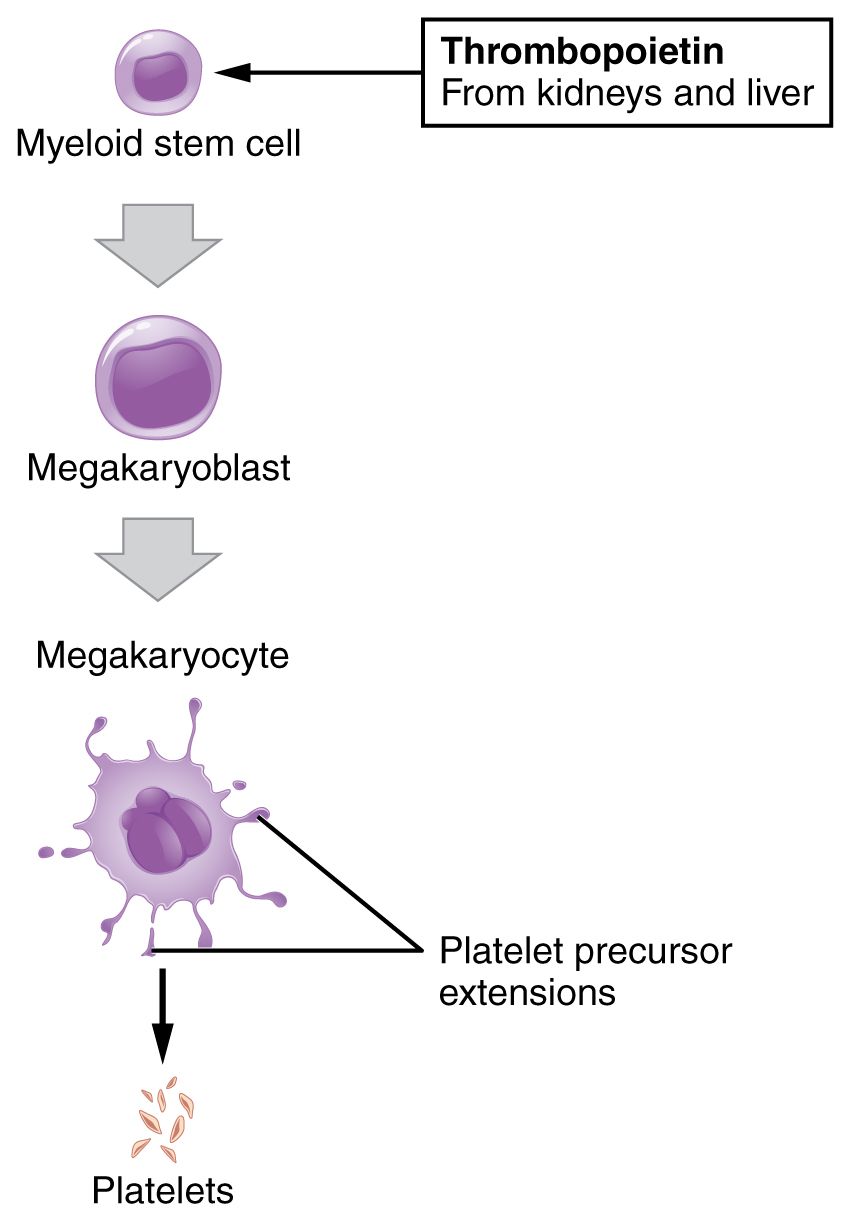
Two kinds of clot, two kinds of drug
Here is the idea that makes this section click. Clots in fast-moving artery blood are made mostly of platelets. They form on a burst fatty plaque and cause heart attacks and most strokes. Clots in slow-moving vein blood are made mostly of fibrin. They form in a leg vein or a fluttering upper heart chamber (atrial fibrillation). They cause DVT, PE, and strokes from clots that start in the heart. That is why a patient with a heart stent goes home on aspirin and clopidogrel. A patient with atrial fibrillation goes home on apixaban. Different clot, different drug. Giving the wrong one is not a small miss.
Aspirin and the P2Y12 inhibitors
Aspirin shuts off cyclooxygenase-1 (COX-1) inside the platelet for good. That stops thromboxane A2, the signal platelets use to call in other platelets and clump together. "For good" is the whole story. A platelet has no nucleus, so it cannot make new COX. One dose disables that platelet for its whole 7 to 10 day life. The effect only wears off as the marrow releases fresh platelets. So a low dose (81 mg) is enough for prevention. Aspirin is usually held about 7 days before planned surgery. A patient who took aspirin this morning still has the effect next week. In a suspected heart attack, the patient chews a tablet without a coating: 162 to 325 mg. That is often four 81 mg tablets or one 325 mg tablet. Chewing gets it absorbed in minutes when minutes matter. A coated tablet (enteric-coated) defeats the whole point.
Aspirin's costs are in the gut: upset stomach, ulcers, and GI bleeding. Ringing in the ears is an early sign of aspirin toxicity. It is not given to children and teens with a viral illness because of Reye syndrome. It is avoided in aspirin-exacerbated respiratory disease (the triad of asthma, nasal polyps, and aspirin sensitivity).
Clopidogrel (Plavix) blocks the platelet's P2Y12 ADP receptor. This is a different clumping signal. That is why aspirin plus clopidogrel truly add up. The pair is called dual antiplatelet therapy (DAPT). Clopidogrel is a prodrug that must be switched on by CYP2C19. People who are poor metabolizers get less protection. So do people who take a strong CYP2C19 blocker like omeprazole. Pantoprazole is the safer PPI to pair with it. Prasugrel is stronger. But it is not allowed after a past stroke or TIA because of bleeding in the brain. Ticagrelor wears off on its own and is taken twice a day. It is known for causing shortness of breath that is harmless but scary to patients. The aspirin given with it must stay at a low dose. The glycoprotein IIb/IIIa inhibitors (eptifibatide, tirofiban) block the last shared step of clumping. They are IV drugs used in the heart cath lab.
The most important DAPT teaching is this: a patient with a recent heart stent must not stop DAPT on their own. Stopping early can clot the stent and cause a huge heart attack. If a dentist or surgeon wants it held, that choice goes back to cardiology. It is not a bedside call, and it is not the patient's call.
Thrombolytics: the clot-busters
Thrombolytics are the one group here that actually dissolves a clot. Alteplase (tPA) and tenecteplase (TNK) are tissue plasminogen activators. They turn plasminogen into plasmin, the enzyme that digests fibrin. That is fantastic when the fibrin is blocking a brain artery. It is a disaster when the fibrin is the scab holding a recent surgical site together. And the drug cannot tell the difference. Every reason not to give it follows from that one fact.
Time is the drug. For a stroke from a blocked artery (acute ischemic stroke), IV alteplase is given within 3 hours of when the person was last known to be well. In selected patients, the window stretches to 4.5 hours. A head CT without contrast must first rule out bleeding. Giving a thrombolytic into a bleeding brain is fatal. For a STEMI (a major heart attack), clot-busting is the backup plan when the cath lab cannot open the artery in time. Ideally it is given within 30 minutes of arrival. The firm reasons not to give it center on bleeding you cannot press on. These include any past bleeding in the brain and a known brain blood vessel defect or cancer. They also include a stroke from a blocked artery within 3 months, active internal bleeding, a suspected tear in the aorta, and a major closed head injury within 3 months.
Care during and after a thrombolytic is mainly a bleeding watch with a brain exam attached. Start IVs, draw labs, and place any lines before the drip. Then leave the patient alone. No artery sticks and no shots into the muscle. No urinary catheter or nose tube unless truly needed. Hold pressure on any site far longer than usual. Do frequent brain checks and blood pressures. Blood pressure is kept below the ordered limit, because high pressure on tPA can turn the stroke into a bleed. A sudden headache, vomiting, a change in mental state, or a new brain sign means stop the drip and call. Keep bleeding precautions in mind too. Use a soft toothbrush and an electric razor. No rectal temperatures or suppositories. Prevent falls.
| Class | Prototype | Key effect | Safety alert |
|---|---|---|---|
| COX-1 inhibitor | aspirin | Irreversibly blocks thromboxane A2 for the platelet's 7 to 10 day life | Chew 162 to 325 mg of a non-coated tablet for a suspected heart attack. GI bleeding, ringing ears. No aspirin in children with a viral illness (Reye). Hold about 7 days before surgery. |
| P2Y12 inhibitor | clopidogrel | Blocks ADP-mediated aggregation; prodrug via CYP2C19 | Pair with pantoprazole, not omeprazole. Never stop DAPT after a stent without cardiology. |
| P2Y12 (others) | prasugrel, ticagrelor | More potent/reversible ADP blockade | Prasugrel contraindicated with prior stroke/TIA. Ticagrelor → dyspnea, BID dosing, low-dose ASA only. |
| GP IIb/IIIa inhibitor | eptifibatide, tirofiban | Blocks the final common aggregation step | IV, cath-lab; monitor platelets: can drop profoundly. |
| Other antiplatelet | cilostazol, dipyridamole | PDE inhibition → antiplatelet + vasodilation | Cilostazol for claudication; contraindicated in heart failure. Headache is common. |
| Thrombolytic | alteplase, tenecteplase | Plasminogen → plasmin → digests existing fibrin | Head CT first. Stroke window 3 to 4.5 h. Lines and labs before the drip. No needle sticks. Brain and BP checks. A sudden headache = stop. |
- Artery clots are mostly platelets (antiplatelets). Vein clots are mostly fibrin (anticoagulants).
- Aspirin's COX-1 block is permanent. One dose lasts that platelet's 7 to 10 day life.
- Clopidogrel is a CYP2C19 prodrug. Pair it with pantoprazole, and never stop DAPT after a stent without cardiology.
- Alteplase actually dissolves fibrin. CT first, a tight time window, lines before the drip, and constant brain and bleeding checks.
Section 3Hematopoietic agents and blood products
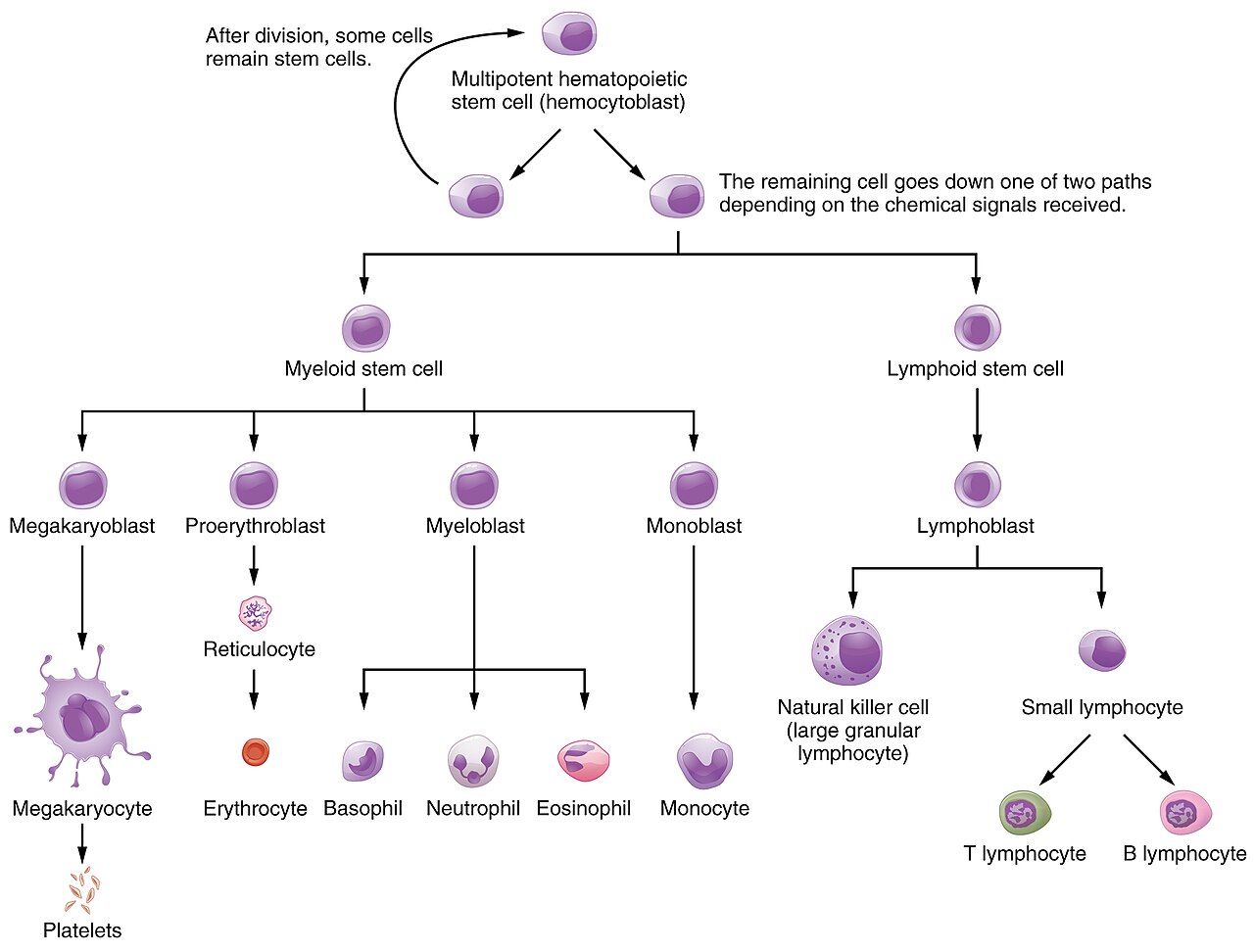
Pushing the marrow
Every blood cell comes from one blood-forming stem cell in the bone marrow. Each branch of that family tree has its own growth signal. Drug makers built copies of those signals. So we can now push a certain cell line. Erythropoietin pushes red cells. Filgrastim pushes neutrophils. Romiplostim pushes platelets. These are not transfusions. They are instructions. They take days to weeks to work. And they only work if the marrow can respond and has the raw materials on hand.
Erythropoiesis-stimulating agents (ESAs) include epoetin alfa (Epogen, Procrit) and the longer-acting darbepoetin alfa (Aranesp). They replace the erythropoietin a failing kidney can no longer make. They are used mainly for anemia from chronic kidney disease and anemia from chemotherapy. Their boxed warning is one to understand, not just memorize. Pushing hemoglobin too high or too fast raises death, heart attack, stroke, blood clots, and tumor growth. Thicker blood clots more. So we do not bring hemoglobin up to normal. We use the lowest dose that avoids a transfusion. Hold or lower the dose for a hemoglobin above about 11 g/dL, or a rise of more than about 1 g/dL in 2 weeks. ESAs also raise blood pressure, so check BP before each dose. And ESAs fail without iron. You can shout at the marrow all day, but with no iron to work with, no hemoglobin gets built. Check iron stores first, using ferritin and transferrin saturation. Do not shake the vial. It is a protein, and shaking damages it.
Filgrastim (Neupogen) is granulocyte colony-stimulating factor (G-CSF). It drives the marrow to pump out neutrophils. This shortens the time of low neutrophils after chemotherapy and lowers fever with neutropenia. Pegfilgrastim (Neulasta) is the long-acting form given once per cycle. Timing is the classic test point. Give it at least 24 hours after the chemotherapy dose, not with it. Chemotherapy kills dividing cells, and you have just told the marrow to divide. The key side effect is bone pain, often deep in the breastbone and pelvis. It is a sign the drug is working. It usually responds to acetaminophen or an NSAID (if allowed). Watch for the rare but serious burst spleen. Signs are pain in the upper left belly or the tip of the shoulder. Also watch for ARDS, a severe lung injury. Measure results with the absolute neutrophil count (ANC), not the white count. Sargramostim (GM-CSF) acts more broadly. Romiplostim and eltrombopag are thrombopoietin agonists for immune thrombocytopenia, an immune drop in platelets.
Blood products: when you cannot wait for the marrow
Growth factors take days. When a patient is bleeding now, you give them the cells. Each product answers a different need, and matching the product to the need is the point. Packed red blood cells carry oxygen. Platelets plug. Fresh frozen plasma supplies all the clotting factors. Cryoprecipitate is the concentrated fibrinogen part. Albumin holds fluid in the blood vessels. It does nothing for clotting or oxygen.
Transfusion safety is one of the most step-by-step jobs you do, and for good reason. Deaths come from human errors in identifying the patient, not from the biology. Here is the backbone, always following your facility's policy. Check the order and consent. Do a type and crossmatch. Use a large IV (18 to 20 gauge for red cells). Run only 0.9% normal saline through the Y-tubing. Dextrose bursts red cells, and lactated Ringer's has calcium that can clot the line. Do a two-person check at the bedside, comparing the patient's ID band, the unit, and the paperwork. Take starting vital signs. Then start slowly and stay with the patient for the first 15 minutes. That is when a deadly acute hemolytic reaction shows itself. Recheck vital signs per policy. Finish each unit within 4 hours. Never add drugs to blood.
Learn the reactions by their fingerprints. Acute hemolytic (wrong ABO type) comes within minutes. Signs are fever, chills, pain in the side or back, dark urine, low blood pressure, and a sense of doom. Febrile nonhemolytic is the most common. It is a fever rise with chills, from the donor's white cells. Allergic reactions range from hives and itching (mild) up to anaphylaxis. Anaphylaxis is more likely in people with IgA deficiency. TACO (circulatory overload) brings shortness of breath, crackles in the lungs, swollen neck veins (JVD), and high blood pressure. It is too much fluid too fast. It classically happens in small or older people or those with heart failure. TRALI is a sudden lung injury within 6 hours. It brings shortness of breath, low oxygen, and low blood pressure. It is a leading cause of death from transfusion. TACO and TRALI both drown the patient. Blood pressure is what tells them apart at the bedside.
The first action for any suspected reaction never changes. Stop the transfusion. Keep the IV open with normal saline using new tubing. Check the patient and take vital signs. Tell the provider and the blood bank. Send back the unit, the tubing, and the needed samples. Stopping first is not optional. Every extra milliliter of a mismatched unit means more red cells destroyed.
| Product / agent | Prototype | Key effect | Safety alert |
|---|---|---|---|
| ESA | epoetin alfa, darbepoetin | Stimulates red cell production (days-weeks) | Boxed warning: death, heart attack, stroke, VTE, and tumor growth if Hgb is pushed too high. Hold if Hgb is above about 11. Check iron and BP. Don't shake the vial. |
| G-CSF | filgrastim, pegfilgrastim | Raises neutrophils → shortens neutropenia | Give ≥ 24 h after chemo. Bone pain = working. Follow the ANC. Splenic rupture is rare but real. |
| TPO agonist | romiplostim, eltrombopag | Raises platelet count in ITP | Monitor platelets; rebound thrombocytopenia on abrupt stop. |
| Packed RBCs | - | Restores oxygen-carrying capacity | Type & cross, NS only, two-person check, stay 15 min, finish in 4 h. |
| Platelets | - | Corrects thrombocytopenia / platelet dysfunction | Infuse briskly; never refrigerate; check post-transfusion count. |
| Fresh frozen plasma | - | Replaces all clotting factors | Must be thawed; ABO compatible; watch for TACO with volume. |
| Cryoprecipitate | - | Concentrated fibrinogen, VIII, XIII, vWF | Think fibrinogen replacement: DIC, massive transfusion. |
| Albumin | 5% / 25% | Pulls and holds fluid in the vascular space | No clotting factors, no oxygen carriage. Fluid overload risk: watch lungs. |
- Growth factors instruct the marrow and take days. Blood products replace cells now.
- ESAs carry a boxed warning. Don't bring hemoglobin up to normal. Check iron and BP, and hold if Hgb is above about 11 g/dL.
- Filgrastim goes in at least 24 h after chemo. Bone pain means it is working. Follow the ANC.
- Transfusion: NS only, a two-person ID check, stay 15 minutes, a 4-hour limit, and stop first for any reaction.
- TACO = overload with high blood pressure. TRALI = lung injury with low blood pressure.
Section 4Blood pressure and antihypertensives
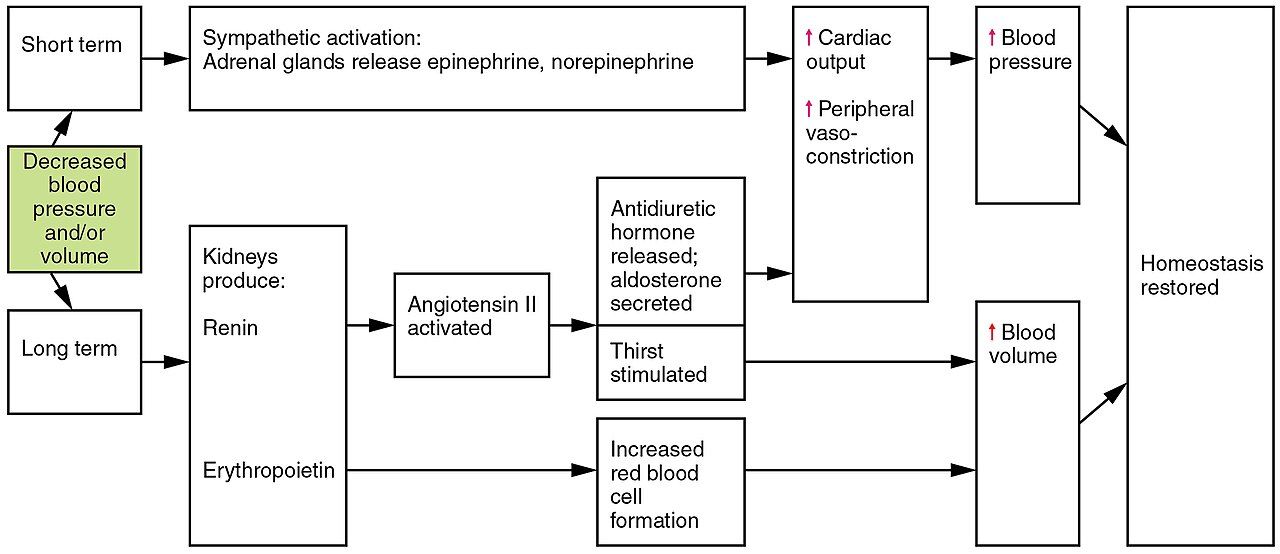
What actually sets the pressure
Every blood pressure drug works by moving one of two numbers in one equation:
Blood pressure = cardiac output × systemic vascular resistance. Cardiac output is how much blood the heart pumps each minute. It equals heart rate × stroke volume. Stroke volume depends on three things. They are preload (the blood coming back), contractility (the squeeze), and afterload (what the heart pushes against). So there are exactly four levers. You can drain the tank: diuretics lower fluid volume, which lowers preload. You can slow and soften the pump: beta blockers lower rate and squeeze. You can widen the pipes: vasodilators, CCBs, ACE inhibitors, and ARBs lower resistance. Or you can cut the hormone signal telling the body to do all of the above: RAAS blockers. Once you see a drug's lever, you can predict both its benefit and its side effects without memorizing them apart.
The body defends its blood pressure with two systems you will fight all the time. The baroreceptor reflex is the fast one. Stretch sensors in the neck artery (carotid sinus) and the aortic arch sense a pressure drop within seconds. They fire the sympathetic system. Heart rate goes up, and vessels narrow. This reflex catches you when you stand up. It also causes a reflex fast heart rate when a vasodilator drops pressure suddenly. The RAAS is the slow one. The kidney senses low blood flow and releases renin. Renin turns angiotensinogen into angiotensin I. ACE, mostly in the lung, turns it into angiotensin II, a fierce vessel narrower. Angiotensin II then sets off aldosterone, which holds on to sodium and water. It also sets off ADH, which holds on to water. Pressure goes up. Blocking this loop at any point is the backbone of modern blood pressure treatment.
Why bother? High blood pressure does its damage silently for decades. Then it shows up as a stroke, heart attack, heart failure, kidney failure, or blindness. The patient feels nothing. That one fact is the whole problem in care: the disease is invisible, and the treatment has side effects the patient can feel. It is the subject of the next section.
The classes, and what each one costs
Thiazide diuretics (hydrochlorothiazide, chlorthalidone) block the sodium-chloride pump in the distal convoluted tubule of the kidney. Less sodium means less water, less volume, and less preload. Over time they also widen vessels a little. They are cheap, taken by mouth, and first-line. Their cost is in body chemistry. Above all they cause low potassium. They also cause low sodium, high calcium, high uric acid (gout flares), high blood sugar, and high blood fats. Loop diuretics (furosemide) are stronger. They work at the thick ascending limb of the loop of Henle. They keep working when the kidneys are weak. They are the drugs for fluid overload and heart failure more than routine high blood pressure. They waste potassium and calcium. They can harm hearing (ototoxicity), above all when pushed IV too fast. Potassium-sparing drugs hold potassium back. Spironolactone, an aldosterone blocker, is the main one. That is useful, and it is why spironolactone's main danger is high potassium. It can also cause breast growth in men. Give all diuretics in the morning, so the patient is not up all night.
ACE inhibitors (lisinopril, the "-pril" family) block the change of angiotensin I to II. Less angiotensin II means wider vessels and less aldosterone. They protect people with heart failure, diabetic kidney disease, and a past heart attack. ACE also breaks down bradykinin. So blocking it lets bradykinin build up. That is why 10 to 20% of patients get a maddening dry, hacking cough. It is also why a small number get angioedema. This is swelling of the lips, tongue, and airway, and it is a true emergency. Less aldosterone means the body puts out less potassium. So expect high potassium, and teach patients to avoid salt substitutes made with potassium. Low blood pressure with the first dose is real. ACE inhibitors are not allowed in pregnancy. They cause fetal kidney injury and death.
ARBs (losartan, the "-sartan" family) block the angiotensin II receptor instead of the enzyme. They give the same benefit further down the line. But bradykinin is untouched, so there is no cough. That is exactly why patients get switched from a "-pril" to a "-sartan." ARBs still cause high potassium and are still not allowed in pregnancy. ACE inhibitors and ARBs are not combined.
Calcium channel blockers (CCBs) come in two types. The dihydropyridines (amlodipine, the "-dipine" family) act on the smooth muscle of the vessels. They just widen vessels. So expect ankle swelling (peripheral edema), flushing, headache, and a reflex fast heart rate. The non-dihydropyridines (diltiazem, verapamil) act on the heart too. They slow the heart's signals and weaken its squeeze. So expect a slow heart rate, heart block, worse heart failure, and verapamil's well-known constipation. Grapefruit juice raises the levels of several of these.
Beta blockers (metoprolol, atenolol, the "-olol" family) dull the sympathetic drive. They lower heart rate, squeeze strength, and renin release. Cardioselective drugs (metoprolol, atenolol, bisoprolol) prefer beta-1 in the heart. Nonselective drugs (propranolol) also hit beta-2. They can tighten the airways in asthma. Watch for a slow heart rate and tiredness. Watch for the sneaky one too. Beta blockers hide the fast heart rate and tremor of low blood sugar. So a patient with diabetes may lose their early warning, though sweating still gets through. Never stop a beta blocker suddenly. It can cause a rebound fast heart rate, high blood pressure, angina, or even a heart attack. Alpha-1 blockers (doxazosin, "-osin") relax vessels and the prostate. They cause dramatic fainting on standing with the first dose, so the first dose is given at bedtime. Central alpha-2 agonists (clonidine) lower the sympathetic signal from the brain. They cause sleepiness and dry mouth. They cause severe rebound high blood pressure if stopped suddenly, as a patch or a pill. Direct vasodilators (hydralazine, minoxidil) relax the small arteries directly. They cause a reflex fast heart rate and fluid buildup. So they are usually paired with a beta blocker and a diuretic. Sodium nitroprusside is the ICU emergency drip. It works almost instantly and is adjusted by an artery line reading. It must be kept from light. With long, high-dose use, it can build up as cyanide and thiocyanate.
| Class | Prototype (suffix) | Key effect | Safety alert |
|---|---|---|---|
| Thiazide diuretic | hydrochlorothiazide | ↓ Na/water → ↓ preload; first-line | Hypokalemia, hyponatremia, ↑ glucose, ↑ uric acid (gout). Dose in the morning. Sulfa cross-sensitivity. |
| Loop diuretic | furosemide | Potent volume removal; works in renal impairment | K and Ca loss; ototoxicity if pushed fast IV. Daily weight is the best measure. |
| K-sparing / aldosterone antagonist | spironolactone | Blocks aldosterone → keeps K | Hyperkalemia: no salt substitutes, no routine K supplement. Gynecomastia. |
| ACE inhibitor | lisinopril (-pril) | Blocks angiotensin I → II; renal + cardiac protection | Cough, angioedema (airway emergency), hyperkalemia, first-dose hypotension. Contraindicated in pregnancy. |
| ARB | losartan (-sartan) | Blocks the angiotensin II receptor | No cough: the swap for ACE intolerance. Still hyperkalemia; still contraindicated in pregnancy. |
| CCB: dihydropyridine | amlodipine (-dipine) | Vasodilation only | Peripheral edema, flushing, headache, reflex tachycardia. Grapefruit. |
| CCB: non-dihydropyridine | diltiazem, verapamil | Vasodilation + ↓ rate and contractility | Bradycardia, heart block, worsens HF. Verapamil → constipation. Hold for low HR per parameters. |
| Beta-blocker | metoprolol (-olol) | ↓ HR, ↓ contractility, ↓ renin | Bradycardia, fatigue; masks hypoglycemia; nonselective agents worsen asthma. Never stop abruptly. |
| Alpha-1 blocker | doxazosin (-osin) | Vasodilation; relaxes prostate | First-dose syncope: give at bedtime, rise slowly. |
| Central alpha-2 agonist | clonidine | ↓ Central sympathetic outflow | Sedation, dry mouth; severe rebound hypertension if stopped abruptly. Rotate patch sites. |
| Direct vasodilator | hydralazine, minoxidil | Direct arteriolar relaxation | Reflex tachycardia + fluid retention → usually paired with a beta-blocker and a diuretic. |
| Nitrovasodilator (IV) | nitroprusside | Immediate, titratable arterial + venous dilation | ICU only; arterial line; protect from light; cyanide/thiocyanate toxicity with prolonged high dose. |
- BP = CO × SVR. Every blood pressure drug drains fluid, slows the pump, widens the pipes, or blocks the RAAS.
- The baroreceptor reflex defends pressure in seconds (reflex fast heart rate). The RAAS defends it over hours.
- ACE inhibitors → cough, angioedema, high potassium. ARBs → same benefit, no cough. Both are not allowed in pregnancy.
- Dihydropyridine CCBs → ankle swelling. Non-dihydropyridines → slow heart rate and constipation.
- Beta blockers hide low blood sugar and must never be stopped suddenly. Clonidine causes rebound high blood pressure.
Section 5Antihypertensive care at the bedside
The number you write down is part of the treatment
A blood pressure drug is adjusted to a number that you produce. If the number is wrong, the dose is wrong. Poor technique can move a reading by 10 to 30 mmHg. That is more than most single drugs do. So technique is not a formality:
- Cuff size is the biggest error. A cuff that is too small reads falsely high. One that is too large reads falsely low. The inflatable bladder should wrap about 80% of the arm.
- Have the patient sit for 5 minutes with the back supported and feet flat on the floor. Crossed legs raise the reading. The arm should be bare and supported at heart level, since a dangling arm reads high. No talking during the reading.
- No caffeine, smoking, or exercise for 30 minutes before. The bladder should be empty.
- Take two readings at least a minute apart and average them. Check both arms at the first visit, and use the higher arm after that.
- Know your hold rules before you pour the pill. If there is no hold rule for a drug that can crash a pressure, that is a question to ask, not something to assume.
Around the drug itself, follow the labs and vital signs for each class. Check potassium and kidney function for ACE inhibitors, ARBs, spironolactone, and diuretics. Take an apical pulse for a full minute before a beta blocker or a non-dihydropyridine CCB. A common hold is a pulse under 60, or as ordered. Check a daily weight for anyone on a diuretic. Use the same time, scale, and clothing. A 1 kg change is about a liter of fluid, and weight catches it earlier than a lung exam. Check the ankles of the amlodipine patient. Ask about cough in the lisinopril patient. Look at the tongue and lips of anyone new on an ACE inhibitor.
Orthostatic hypotension: the side effect that breaks hips
Nearly every drug in the last section can drop a person's pressure when they stand up. Orthostatic hypotension is a fall of ≥ 20 mmHg systolic or ≥ 10 mmHg diastolic within 3 minutes of standing. This is not just a textbook definition. It is behind the 3 a.m. fall, the broken hip, and the brain bleed in a patient who is also on a blood thinner. The science is simple. Standing drops about half a liter of blood into the legs. The baroreceptor reflex normally fixes it in seconds. Beta blockers dull the heart rate half of that reflex. Alpha blockers dull the vessel-narrowing half. Diuretics remove the fluid the reflex needs to work with. The patient's own fix has been turned off by drugs.
Measure it the right way. Take BP and pulse lying down after a few minutes of rest. Then take them sitting. Then take them standing, at 1 minute and again at 3 minutes. Stay with the patient, with a gait belt or a chair behind them. The point of the test is to bring on a near-faint. Ask about symptoms, not just the number. Ask about lightheadedness, gray or tunnel vision, or a "wave" on standing.
What you teach is what protects them. Change positions slowly and use the three-stage rise. Lie, then sit, then dangle the legs for a full minute, then stand with support. Pump the ankles before rising. Take extra care getting up after a hot shower or a big meal, since both pull blood away from the brain. Give first doses and dose increases at bedtime, above all for alpha blockers. Call for help before getting up at night, and turn the light on. Drink enough fluid unless it is limited. No alcohol on top of the drug. Wear compression stockings if ordered. And keep the room safe: bed low, call light in reach, path clear, and non-skid shoes.
Adherence: the hardest part of the whole chapter
About half of people on long-term blood pressure drugs are not taking them as prescribed a year later. It is not because they are careless. Look at it from their side. The disease has no symptoms, and the drug has plenty. Before treatment they felt fine. Now they are dizzy, tired, coughing, passing urine all day, and swollen at the ankles. They may have sexual side effects nobody warned them about. All of this is to prevent a stroke they cannot picture having. Stopping is a sensible response to that math. Your job is to change the math, not to lecture.
Here is what actually helps. Name the trade honestly: "This doesn't make you feel better. It keeps you from having a stroke." Predict the side effects out loud, so when they come they feel expected, not like a betrayal. Teach that a side effect is a reason to call, not to quit. A cough can mean a switch to an ARB. Swelling can mean a lower dose. Pair the dose with something they already do every day. Give them a home BP log. A person with numbers becomes a partner instead of a subject. Simplify to once-daily or combination pills where you can. And ask about cost, plainly. The most common reason a prescription is not taken is that it was never filled.
And teach the rules that do not bend. Never stop a beta blocker or clonidine suddenly. That can cause rebound high blood pressure, a fast heart rate, angina, or a heart attack, and with clonidine, a blood pressure crisis. No potassium salt substitutes on an ACE inhibitor, ARB, or spironolactone. Beware of store-bought NSAIDs. They weaken blood pressure drugs and strain the kidney. Beware of decongestants like pseudoephedrine, which raise pressure. Avoid grapefruit juice with certain CCBs. Get up slowly, always. Report a cough that will not go away, any swelling of the face or tongue (go to the ER), a pulse under 60, a weight gain of more than 2 to 3 lb in a day or 5 lb in a week, or fainting. If pregnancy is possible, talk about it before starting an ACE inhibitor or an ARB. And do not stop because the numbers look good. The numbers look good because of the drug.
| If the patient is on… | Assess / monitor | Teach |
|---|---|---|
| Thiazide or loop diuretic | K, Na, renal function, daily weight, I&O, orthostatics | Take in the morning; potassium-rich foods; report muscle cramps, weakness, palpitations; rise slowly. |
| Spironolactone | K (hyperkalemia), renal function | No salt substitutes or K supplements; report breast tenderness. |
| ACE inhibitor / ARB | K, creatinine, BP, cough, lips & tongue | Cough → call (switchable). Swelling of face/tongue → ED now. No salt substitutes. Not in pregnancy. |
| Amlodipine (dihydropyridine) | Ankle/pedal edema, BP, headache | Elevate legs; report worsening swelling; avoid grapefruit juice. |
| Diltiazem / verapamil | Apical pulse 1 full minute, BP, HF signs, bowel pattern | Report pulse < 60 or dizziness; fiber and fluid for constipation. |
| Beta-blocker | Apical pulse, BP, glucose in diabetics, wheeze | Never stop abruptly. Hypoglycemia may feel different: check the meter, don't trust the tremor. |
| Doxazosin / clonidine | Orthostatic BP, sedation, fall risk | First dose at bedtime; dangle before standing; never stop clonidine abruptly; rotate patch sites. |
- An accurate BP is part of the treatment: right cuff, 5 minutes of rest, feet flat, arm at heart level, no talking, and the average of two readings.
- Orthostatic hypotension = a drop of ≥ 20 systolic or ≥ 10 diastolic within 3 minutes of standing. Measure lying, sitting, and standing at 1 and 3 min, and guard the patient.
- Teach the slow three-stage rise with a full minute of dangling. Give first doses of alpha blockers at bedtime.
- Not taking the drug makes sense when the disease is silent and the drug is not. Predict side effects, teach "call, don't quit," and use a home BP log.
- Never stop a beta blocker or clonidine suddenly. Avoid potassium salt substitutes, NSAIDs, and decongestants.
The chapter in one breath
- Hemostasis is vessel narrowing → platelet plug → fibrin mesh. Nearly every drug here aims at thrombin or factor Xa, and nearly every one is high-alert.
- aPTT tracks heparin (antidote protamine). PT/INR tracks warfarin (antidote vitamin K, plus PCC for major bleeding). DOACs need no routine checks but do need kidney-based dosing, every dose taken, and their own reversal plan.
- A falling platelet count on heparin is HIT. It clots instead of bleeding, and all heparin comes off.
- Artery clots are mostly platelets (aspirin, clopidogrel, and DAPT after a stent, never stopped casually). Vein clots are mostly fibrin (anticoagulants). Only thrombolytics dissolve fibrin already formed, on a harsh clock and with a long list of reasons not to give them.
- ESAs and filgrastim instruct the marrow over days. Don't bring hemoglobin up to normal, check iron and BP, and give G-CSF at least 24 hours after chemo. Blood products replace cells now, with the rules of NS only, a two-person check, staying 15 minutes, and a 4-hour limit.
- For any suspected transfusion reaction, stop the transfusion first. TACO is overload with high blood pressure. TRALI is lung injury with low blood pressure.
- BP = CO × SVR. Drugs drain the tank, slow the pump, widen the pipes, or block the RAAS. The ending (-pril, -sartan, -dipine, -olol, -osin) tells you the class, the side effect, and the teaching.
- The bedside work of high blood pressure is an accurate cuff reading, an orthostatic check, and an honest talk about taking the drug with a patient whose disease has never once made them feel sick.
ReferenceWords worth knowing
A quick list of the terms in this chapter. Skim it now, or come back when a word trips you up.
- Absolute neutrophil count (ANC)
- The number of germ-fighting neutrophils in the blood; the value that shows whether filgrastim is working and whether a patient is neutropenic.
- Afterload
- The resistance the heart must push against to pump blood out; lowered by vasodilators, CCBs, ACE inhibitors, and ARBs.
- Angioedema
- Fast swelling of the lips, tongue, face, or airway; an airway emergency and a firm reason to stop an ACE inhibitor for good.
- Anticoagulant
- A drug that stops fibrin clots from forming or growing; it does not dissolve a clot that is already there.
- Antiplatelet
- A drug that keeps platelets from clumping; the treatment for platelet-rich artery clots.
- aPTT
- Activated partial thromboplastin time: the test that follows the intrinsic and common pathways, used to check unfractionated heparin.
- Baroreceptor reflex
- The second-to-second reflex from the carotid sinus and aortic arch that brings blood pressure back by raising heart rate and narrowing vessels; dulled by many blood pressure drugs.
- Cardiac output
- Heart rate × stroke volume; one of the two factors that, with systemic vascular resistance, sets blood pressure.
- DAPT (dual antiplatelet therapy)
- Aspirin plus a P2Y12 inhibitor, standard after a heart stent; stopping it early risks a clot in the stent.
- DOAC
- Direct oral anticoagulant: dabigatran (blocks thrombin) or the "-xaban" drugs (block factor Xa); no routine checks, dosed by kidney function, with their own reversal plans.
- Fibrinolysis
- Breakdown of a fibrin clot by plasmin; the process thrombolytics speed up.
- Hemostasis
- The body's step-by-step way of stopping bleeding: vessel narrowing, a platelet plug, then a strengthening fibrin mesh.
- Heparin-induced thrombocytopenia (HIT)
- An immune reaction to heparin, usually 5 to 10 days in, that drops platelets by ≥ 50% and, against what you would expect, causes clots; all heparin must stop.
- High-alert medication
- A drug with a higher risk of serious harm when used in error; anticoagulants, thrombolytics, and IV blood pressure drugs all qualify.
- INR
- International normalized ratio: the standard PT used to dose warfarin; usual goal 2.0 to 3.0.
- Orthostatic hypotension
- A drop of ≥ 20 mmHg systolic or ≥ 10 mmHg diastolic within 3 minutes of standing; behind many falls caused by drugs.
- Preload
- The blood coming back to the heart that stretches it before it squeezes; lowered by diuretics and vein-widening drugs.
- RAAS
- Renin-angiotensin-aldosterone system: the hormone loop (renin → angiotensin II → aldosterone) that raises blood pressure, and that most first-line blood pressure drugs break.
- Systemic vascular resistance (SVR)
- The resistance of the small arteries to blood flow; the "width of the pipes" half of the blood pressure equation.
- TACO
- Transfusion-associated circulatory overload: shortness of breath, crackles, swollen neck veins, and high blood pressure from too much fluid too fast.
- Thrombolytic
- A drug such as alteplase that turns plasminogen into plasmin and dissolves fibrin already formed; the drug class with the highest bleeding risk in this chapter.
- TRALI
- Transfusion-related acute lung injury: shortness of breath and low oxygen with low blood pressure within 6 hours of a transfusion; a leading cause of death from transfusion.
Check yourself
Cardiovascular Drugs II
The first heart and blood vessel chapter was about pressure and volume. This one is about the heart muscle itself. It covers the plaque that starves it, the pain that warns you, the pump that fails, and the electricity that keeps it in rhythm. These drugs live on your high-alert list. Digoxin has a razor-thin safe window. Nitroglycerin can drop a blood pressure through the floor. Amiodarone quietly scars a lung over months. Statins are drugs most of your patients will take for life. What makes you valuable here is not memorizing every drug. It is knowing which number to check before you push. It is knowing which symptom means stop. And it is knowing which sentence, said clearly at discharge, keeps a patient out of the emergency room. That is what this chapter teaches.
By the end of this chapter you can
- Explain how statins lower LDL, and describe the muscle and liver checks that go with them.
- Compare the non-statin lipid drugs (ezetimibe, PCSK9 inhibitors, fibrates, niacin, bile acid sequestrants) and the key side effect of each.
- Teach safe use of nitroglycerin under the tongue, including storage, dose timing, and when to call 911.
- Name the drugs in the acute coronary syndrome bundle and the care priorities for each.
- Describe the four pillars of heart failure treatment and the checks each one needs.
- Spot digoxin toxicity early, name its antidote, and explain why potassium is the drug's hidden partner.
- Sort antiarrhythmics by Vaughan Williams class, and say what each class does to the heart's electrical cycle.
- Take and chart an apical pulse, and give the numbers that mean hold the dose and call.
Section 1Dyslipidemia drugs
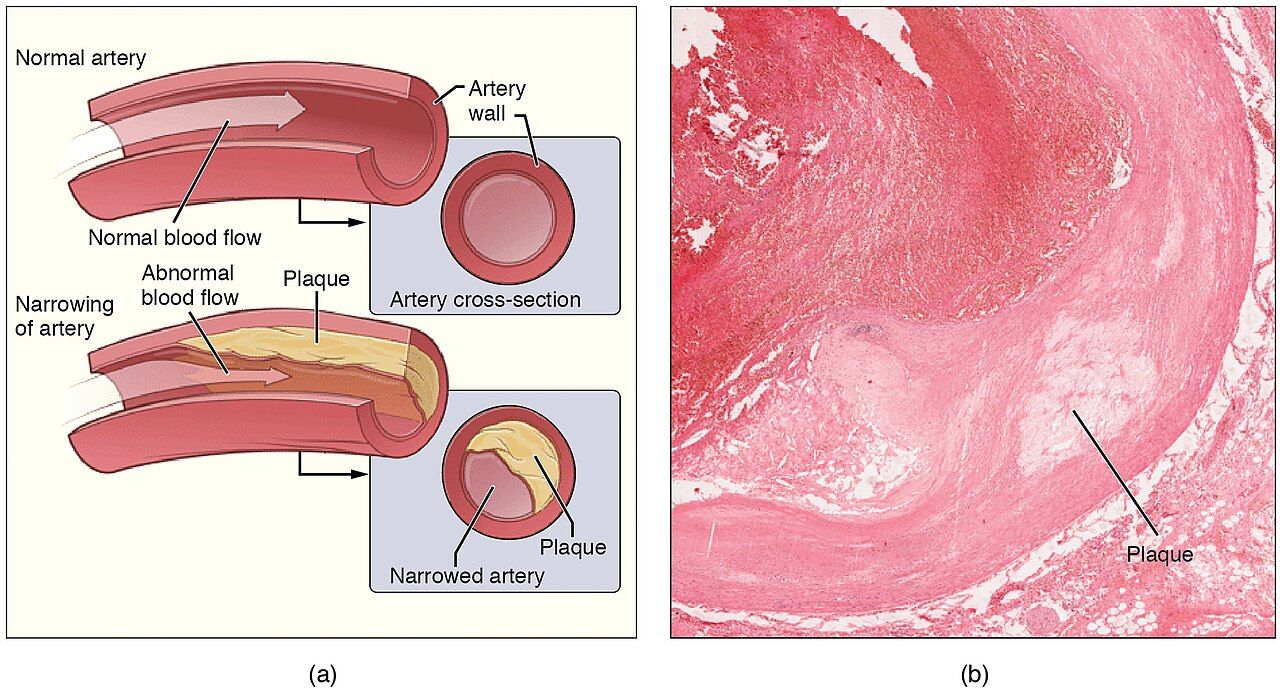
Why we chase a number the patient cannot feel
High blood fats (dyslipidemia) are the quietest diagnosis in the chart. Nobody feels a high LDL. There is no pain and no shortness of breath. There is no reason the person can feel to take a pill every night for thirty years. That is exactly the problem in care. Low-density lipoprotein (LDL) is the particle that carries cholesterol into the artery wall. There it gets damaged, draws in inflammatory cells, and builds the plaque in the figure above. High-density lipoprotein (HDL) carries cholesterol back out toward the liver. Triglycerides are a separate problem. At very high levels, above about 500 mg/dL, they stop being a heart issue. They become a risk for pancreatitis, an inflamed pancreas.
Modern lipid care is not really about hitting a magic number. It is about risk. How likely is this person to have a heart attack or stroke in the next ten years? How hard should we push? A person who has already had a heart attack gets high-intensity treatment without much debate. A healthy 45-year-old with borderline numbers gets a conversation. Your job is to make sure that conversation includes the truth. The drug does nothing you will notice, and it works only if you keep taking it.
Statins: the backbone
The HMG-CoA reductase inhibitors are every drug ending in -statin. They block the key enzyme the liver uses to make cholesterol. Starved of its own cholesterol, the liver cell puts more LDL receptors on its surface. Those receptors pull LDL out of the blood. That is the whole way it works, and it works very well. Atorvastatin 40 to 80 mg or rosuvastatin 20 to 40 mg are the two high-intensity plans. They cut LDL by about half. Statins also steady existing plaque and calm swelling in the vessels. That is why they are started in the hospital during a heart attack, even when the LDL looks fine.
Timing depends on half-life, and people get this backward all the time. The liver makes most of its cholesterol overnight. So the short-acting statins, simvastatin, lovastatin, and fluvastatin, are given in the evening. The long-acting ones, atorvastatin, rosuvastatin, and pitavastatin, last long enough to be taken at any steady hour. That is a gift for remembering doses.
Statins are broken down largely by CYP3A4. That is why grapefruit juice matters. Grapefruit blocks CYP3A4 in the gut and raises drug levels. The effect is real for simvastatin and lovastatin, so avoid grapefruit entirely. It is small for atorvastatin, where an occasional glass is usually fine. It is nearly absent for pravastatin, rosuvastatin, and pitavastatin. If a patient loves grapefruit and will not give it up, that is a reason to switch statins, not a reason to lose the patient.
Myopathy: the thing you are actually watching for
Muscle complaints are the reason statins get stopped. They fall along a range. Knowing where a patient falls on it is a truly useful skill.
Myalgia is muscle aching or weakness with a normal creatine kinase. It is common and uncomfortable but not dangerous. Myopathy, or myositis, means symptoms plus a rising creatine kinase (CK), a muscle enzyme. Rhabdomyolysis is the emergency. CK is usually more than ten times the top of normal. Muscle protein spills into the blood. Myoglobin clogs the kidney tubes and causes sudden kidney injury. The teaching sentence is short and clear: "If your muscles hurt badly, feel weak, and your urine turns the color of cola or tea, stop the drug and call today." Dark urine is the line between a nuisance and a hospital stay.
What do you actually check? Less than most people expect. Check a lipid panel at the start and again about 4 to 12 weeks after starting or changing a dose, then from time to time. Check liver enzymes (ALT) at the start. Repeat liver tests are no longer advised as a routine. They are checked only if signs of liver harm appear. Do not draw a routine CK either. Get a starting CK only in high-risk patients. That includes older adults and people with kidney disease, an underactive thyroid, or many interacting drugs. Draw one whenever a patient reports muscle symptoms. Risk climbs with age, a small body frame, weak kidneys, an untreated underactive thyroid, and heavy drinking. It also climbs with CYP3A4 blockers like clarithromycin, some azole antifungals, and certain HIV protease inhibitors.
Statins have also been stopped, by tradition, in pregnancy and while breastfeeding. The label has been softened to allow case-by-case use in a small group of very-high-risk patients. But the bedside rule stays the same. A patient who becomes pregnant or is planning a pregnancy stops the statin and calls the prescriber. Always ask about pregnancy plans before discharge in anyone who could become pregnant.
When a statin is not enough
Statins do the heavy lifting. Everything else is an add-on. Add-ons are for people who cannot reach their goal, cannot take statins, or have a triglyceride problem instead of an LDL problem.
| Class | Prototype | Key effect | Safety alert |
|---|---|---|---|
| HMG-CoA reductase inhibitor (statin) | atorvastatin, rosuvastatin | LDL down 30 to 55%; stabilizes plaque | Muscle pain plus dark urine = rhabdomyolysis. Draw CK if symptoms. Short-acting statins at night; avoid grapefruit with simvastatin/lovastatin |
| Cholesterol absorption inhibitor | ezetimibe | Blocks NPC1L1 in gut; adds another 15 to 25% LDL drop | Very well tolerated; muscle risk rises slightly when paired with a statin. Give it 2 h before or 4 h after a bile acid sequestrant |
| PCSK9 inhibitor (monoclonal antibody) | alirocumab, evolocumab | Frees LDL receptors for recycling; LDL down another ~50% | Subcutaneous every 2 to 4 weeks. Injection-site reactions; teach self-injection and refrigerated storage (warm to room temperature first) |
| Small interfering RNA | inclisiran | Silences PCSK9 synthesis in the liver | Subcutaneous, given in the office, then only twice a year. A powerful option for the nonadherent patient |
| ATP-citrate lyase inhibitor | bempedoic acid | LDL down ~15 to 25%; prodrug activated in liver, not muscle | Useful in statin intolerance. Watch uric acid (gout flares) and rare tendon rupture |
| Fibrate | fenofibrate, gemfibrozil | Best triglyceride reduction (~40 to 50%); modest HDL rise | Never combine gemfibrozil with a statin: severe myopathy. Fenofibrate is the safer partner. Gallstones; monitor renal function |
| Nicotinic acid (niacin) | niacin (extended release) | Raises HDL, lowers TG and LDL | Flushing is near-universal: aspirin 325 mg 30 min before, take with food, avoid alcohol and hot drinks. Also hyperglycemia, hyperuricemia, hepatotoxicity |
| Bile acid sequestrant | cholestyramine, colesevelam | Binds bile acids in the gut; liver burns cholesterol to replace them | Constipation, bloating. Binds other drugs: give other medications 1 h before or 4 h after. Can raise triglycerides |
| Omega-3 fatty acid | icosapent ethyl | Lowers triglycerides; reduces events in select patients | Bleeding risk with anticoagulants; small increase in atrial fibrillation. Fishy aftertaste and burping drive nonadherence |
- Statins block HMG-CoA reductase, which makes the liver pull LDL out of the blood. They also steady plaque.
- Give short-acting statins (simvastatin, lovastatin) in the evening. Give atorvastatin and rosuvastatin at any steady time.
- Check lipids at the start and at 4 to 12 weeks. Check ALT at the start only. Draw a CK when muscle symptoms appear, not as a routine.
- Muscle pain plus cola-colored urine equals rhabdomyolysis. Hold the drug and report it the same day.
Section 2Angina and acute coronary syndrome
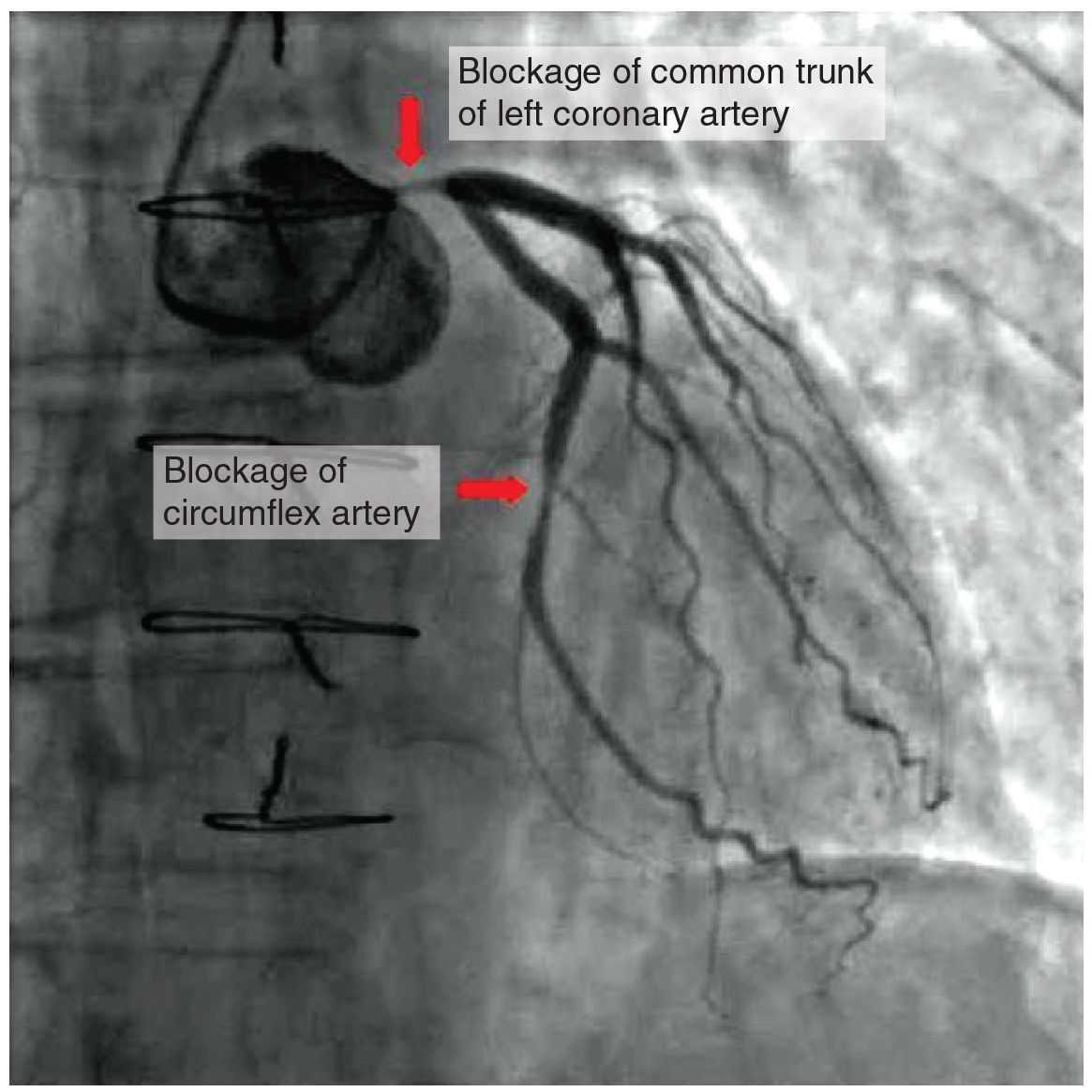
Supply versus demand, and nothing else
Every drug for angina (chest pain from the heart) does one of two things. It raises the oxygen supply reaching the heart muscle. Or it lowers the heart muscle's oxygen demand. That is the whole logic of this section. Hold on to it, and the drug list sorts itself.
Demand rises with heart rate, squeeze strength, and wall tension. Wall tension depends on preload and afterload. So a drug that slows the heart, softens the squeeze, or drains the heart before it squeezes will lower demand. Supply depends on blood flow in the heart arteries. That flow happens mostly when the heart relaxes and fills (diastole). That is another reason slowing the heart helps. A slower heart spends more of its time in diastole.
Stable angina is predictable. It comes on with exercise or strong feelings. It goes away with rest or nitroglycerin. A fixed plaque cannot pass enough blood when demand climbs. Unstable angina is new, getting worse, or happens at rest. The plaque has burst, and a clot is forming. Vasospastic (Prinzmetal) angina is a spasm of a heart artery that may be nearly normal. It classically strikes at rest and in the early morning. Acute coronary syndrome (ACS) is the umbrella over unstable angina, NSTEMI, and STEMI. What tells them apart is the troponin blood test and the ST segment on the ECG. It is not how loudly the patient complains.
Nitrates: the drug your patient carries in a pocket
Nitrates are turned into nitric oxide in the smooth muscle of the vessels, which relaxes it. At usual doses, the effect is mostly vein widening (venodilation). Blood pools in the veins, and less returns to the heart. Preload falls, the heart wall is under less tension, and demand drops. At higher doses, arteries widen too, which lowers afterload. The heart arteries themselves relax. That is why nitrates work so well for vasospastic angina.
Teaching nitroglycerin under the tongue is one of the most tested and most truly life-saving talks you will have. Sit or lie down first. This drug drops blood pressure, and people faint standing in their kitchens. Place one 0.4 mg tablet under the tongue, or give one spray onto or under the tongue. Let it dissolve. Do not swallow it, and do not chew it. A tingling or burning feeling may happen. But no tingle does not mean the tablet is dead. If the pain is not better, or is worse, 5 minutes after the first dose, call 911. Then keep going, up to a total of three doses, 5 minutes apart, while help is on the way. That order matters. The old teaching of "three doses, then call" delayed too many people.
Storage ruins a lot of prescriptions. Tablets belong in their original brown glass bottle, tightly capped. Keep them away from heat, light, and moisture. Do not keep them in a pill organizer, in a pocket against body heat, in a steamy bathroom cabinet, or in a hot car. Follow the label and the pharmacist on when to replace an opened bottle. Many sources say about every 6 months after opening. The metered spray keeps its strength better. It is often the better choice for someone who rarely uses it. Expect a headache. It is the most common effect, and it means the drug is working. Acetaminophen usually handles it. Warn about dizziness and dizziness on standing.
Other nitrate forms have their own traps. Skin patches and long-acting isosorbide mononitrate or dinitrate cause tolerance if given around the clock. So the plan builds in a nitrate-free break of 10 to 12 hours. Usually the patch goes on in the morning and comes off in the evening. Remove the old patch before putting on a new one. Rotate sites. Wear gloves, so you do not give yourself a headache. IV nitroglycerin is adjusted to pain and blood pressure. It traditionally needs non-PVC tubing (polyethylene or glass), because the drug sticks to standard PVC.
The rest of the antianginal cabinet
Beta blockers (metoprolol, atenolol, bisoprolol) are first-line for chronic stable angina. They lower deaths after a heart attack. They cut heart rate and squeeze strength, so demand falls and filling time gets longer. Hold and recheck for a slow heart rate, low blood pressure, or a sudden worsening of heart failure. Never stop them suddenly. A rebound fast heart rate and angina can set off a heart attack. One classic exception: avoid beta blockers in chest pain caused by cocaine. There, alpha action with no beta to balance it can worsen spasm in the heart arteries. Benzodiazepines and nitrates are used instead.
Calcium channel blockers widen the heart arteries and the body's arteries. Amlodipine and the other dihydropyridines mainly widen vessels. That causes ankle swelling, a reflex fast heart rate, and flushing. Verapamil and diltiazem also slow the heart and weaken its squeeze. That makes them useful when a beta blocker is not tolerated. But combining them with a beta blocker risks a dangerously slow heart rate and heart block. CCBs are the drugs of choice for vasospastic angina. Ranolazine is a later choice for chronic angina. It blocks the late sodium current in heart cells. It barely touches heart rate or blood pressure, which is its main appeal. But it lengthens the QT interval, and it is never used for a sudden attack.
The ACS bundle
When a patient with crushing chest pain comes through the door, a familiar set of drugs goes in fast. Older courses teach the memory trick MONA: morphine, oxygen, nitrates, aspirin. Keep the letters, but update the practice. Morphine has been moved down the list. It may weaken the absorption of antiplatelet drugs and can hide ongoing heart muscle damage. Oxygen is given only if the SpO2 is below about 90%. Routine oxygen for a patient whose oxygen level is fine gives no benefit and may cause harm. Aspirin is still the one drug that saves lives in the first minutes.
| Role | Prototype | Key effect | Safety alert |
|---|---|---|---|
| Antiplatelet (immediate) | aspirin 162 to 325 mg | Irreversible COX-1 blockade; stops thromboxane A2 | Chewed, not swallowed: faster absorption. Non-enteric-coated. Give first, ask questions second |
| P2Y12 inhibitor | clopidogrel, ticagrelor, prasugrel | Blocks ADP-mediated platelet aggregation | Ticagrelor causes dyspnea (not heart failure) and requires aspirin ≤100 mg/day. Prasugrel is contraindicated with prior stroke/TIA. Hold before CABG |
| Anticoagulant | heparin, enoxaparin, bivalirudin | Stops clot propagation | High-alert. Monitor aPTT (heparin), platelets for HIT, bleeding at all sites. Antidote for heparin: protamine sulfate |
| Nitrate | nitroglycerin SL, then IV | Lowers preload; relieves pain and spasm | Ask about PDE5 inhibitors. Hold for SBP <90 or RV infarction. Continuous BP monitoring on the drip |
| Beta blocker | metoprolol | Lowers demand; reduces mortality and reinfarction | Start within 24 h if stable. Hold for bradycardia, hypotension, decompensated HF, cocaine use |
| High-intensity statin | atorvastatin 80 mg | Stabilizes plaque; reduces recurrent events | Started in hospital regardless of the LDL number. Teach that this is a lifetime drug |
| ACE inhibitor | lisinopril | Limits ventricular remodeling after infarct | Start within 24 h if stable, especially with reduced EF. Watch first-dose hypotension, K+, creatinine, cough |
| Fibrinolytic | alteplase, tenecteplase | Dissolves the clot when PCI is unavailable | Screen hard for bleeding contraindications. Door-to-needle ≤30 min; PCI door-to-balloon ≤90 min |
| Analgesia (selective) | morphine | Pain and anxiety relief; mild venodilation | Now reserved for pain refractory to nitrates. Monitor BP and respirations; naloxone available |
- Every angina drug either raises supply or lowers demand. Nitrates work mainly by dropping preload.
- Nitroglycerin under the tongue: sit down, take one dose, and call 911 if not better at 5 minutes, up to 3 doses 5 minutes apart. Keep it in the original capped glass bottle, away from heat and moisture. Replace an opened bottle as the label or pharmacist directs. Headache is expected.
- Nitrates plus PDE5 inhibitors can kill. Ask about sildenafil (24 h) and tadalafil (48 h) before every dose.
- ACS: chewed aspirin right away, a P2Y12 inhibitor, an anticoagulant, a beta blocker, and a high-intensity statin. Oxygen only if SpO2 <90%. Morphine moved down the list.
Section 3Heart failure drugs
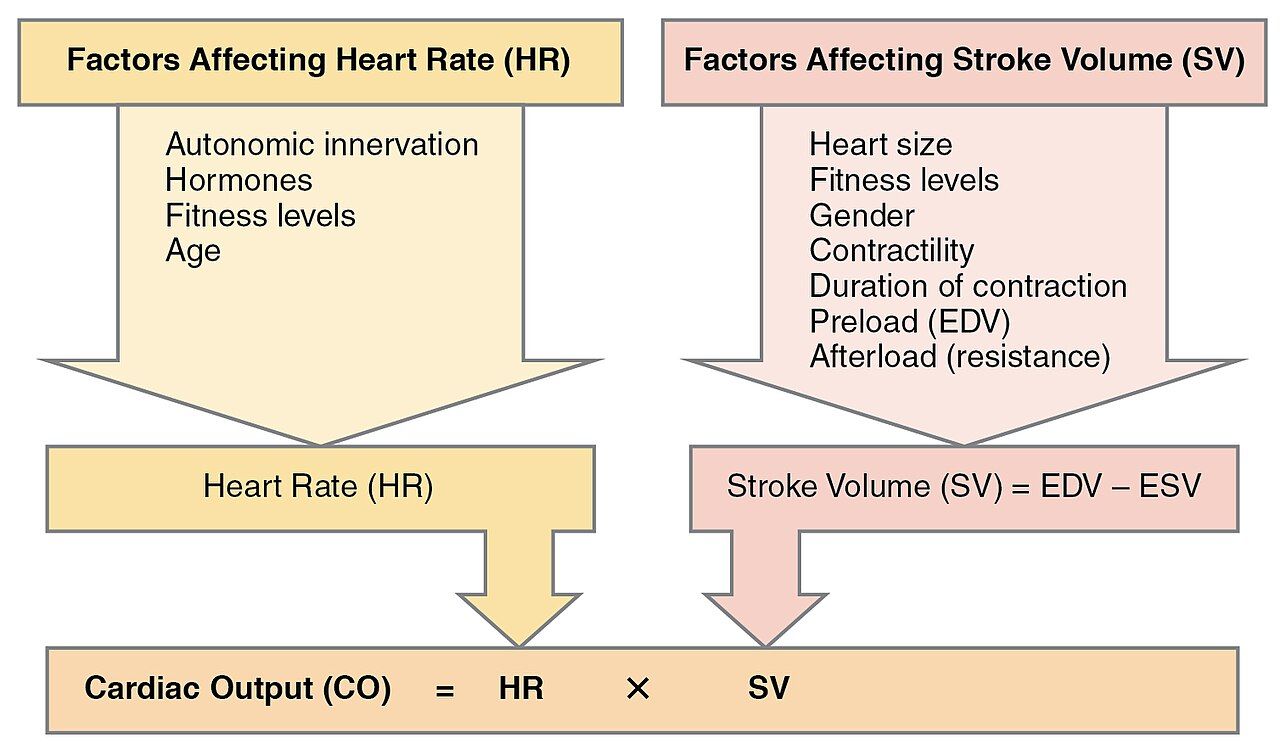
What a failing heart is actually doing
In heart failure with reduced ejection fraction (HFrEF), the heart cannot pump out enough blood. The body senses what looks like low volume and does exactly the wrong thing. The sympathetic system fires and raises heart rate and afterload. The renin-angiotensin-aldosterone system (RAAS) switches on. It holds on to sodium and water and narrows the vessels. Over months, angiotensin II and aldosterone reshape the heart. It becomes a stretched, scarred, poorly working bag. The body's fix becomes the disease.
That is why modern heart failure treatment looks odd at first. The main drugs slow the heart and block the very hormones the body is making. We are not helping the heart work harder. We are calling off the hormone attack on it. And the payoff is not just feeling better. These drugs lower deaths. That is why raising them to their goal doses matters more than almost anything else in clinic care.
The four pillars
Guideline treatment for HFrEF now rests on four drug classes. All are started early and raised as tolerated. You should be able to name all four cold.
| Pillar | Prototype | Key effect | Safety alert |
|---|---|---|---|
| ARNI (or ACE inhibitor / ARB) | sacubitril/valsartan; lisinopril; losartan | Blocks RAAS; ARNI also blocks neprilysin, preserving natriuretic peptides | 36-hour washout between an ACE inhibitor and an ARNI, since overlapping them causes angioedema. Never give both. Check BP, K+, and creatinine. Harms the fetus, so not allowed in pregnancy |
| Beta blocker (evidence-based only) | carvedilol, metoprolol succinate, bisoprolol | Blocks sympathetic overdrive; reverses remodeling; lowers mortality | Start low, go slow. Symptoms may get worse for weeks before they improve, so warn the patient or they will quit. Do not start during a sudden worsening. Metoprolol tartrate is not a heart failure drug |
| Mineralocorticoid receptor antagonist | spironolactone, eplerenone | Blocks aldosterone; antifibrotic; potassium-sparing | High potassium: check K+ and creatinine about 1 week and 1 month after starting or raising the dose. Spironolactone causes breast growth in men; eplerenone rarely does. No salt substitutes |
| SGLT2 inhibitor | dapagliflozin, empagliflozin | Improves outcomes in HF with or without diabetes | Genital mycotic infections (teach perineal hygiene), volume depletion, rare euglycemic DKA. Hold with acute illness or prolonged fasting |
Around the pillars sit useful extras. Hydralazine plus isosorbide dinitrate is added for patients who still have symptoms. It has proven benefit in patients who identify as Black. It is also a backup when ACE inhibitors and ARBs cannot be used because of kidney function or high potassium. Ivabradine slows the heart's natural pacemaker (the SA node's "funny current"). It is for patients in normal rhythm whose heart rate is still 70 or higher on the highest beta blocker dose they can take. It causes glowing flashes in the vision (phosphenes) that scare patients unless you warn them. Vericiguat is a choice after a worsening event.
The ACE inhibitor profile needs its own list, because it comes up everywhere. There is a lasting dry, hacking cough from built-up bradykinin. Switch to an ARB, since ARBs do not cause it. There is angioedema, a true emergency. Airway first. It rules out the whole class, and ARNIs too, for life. There is also high potassium, low blood pressure with the first dose (give the first dose at bedtime, and hold diuretics if possible), a rise in creatinine, and harm to the fetus.
Diuretics: symptom control, not survival
Diuretics are the drugs patients feel working. They are also the ones that do not, by themselves, help people live longer. They exist to pull water off a congested patient who cannot breathe.
Loop diuretics (furosemide, bumetanide, torsemide) block the Na-K-2Cl pump in the thick ascending limb of the kidney. They are strong enough to work even when kidney filtering is poor. Their costs are in the electrolytes. They cause low potassium, low magnesium, low sodium, low calcium, too much base in the blood (metabolic alkalosis), high uric acid, high blood sugar, and dehydration with dizziness on standing. They can harm hearing (ototoxicity). Ringing in the ears and hearing loss are usually reversible. They are linked to fast IV pushes and high doses. That is why IV furosemide is pushed slowly, often no faster than about 20 mg/min. It is also why a loop diuretic plus an aminoglycoside is a bad pair. Loops are related to sulfa drugs. Ethacrynic acid is the choice for a true sulfa allergy. Give the morning dose early and the second dose by mid-afternoon, so the patient is not up all night.
Thiazides (hydrochlorothiazide, chlorthalidone) are weaker. They stop working when kidney filtering (GFR) falls below about 30. Metolazone is the exception, used when diuretics stop working well. It is given about 30 minutes before the loop dose. The pair is strong enough to strip potassium dangerously fast, so watch the K+ closely. Potassium-sparing drugs (spironolactone, eplerenone, triamterene, amiloride) go the other way. They keep potassium.
Digoxin and its narrow window
Digoxin is the oldest drug in this chapter and the one most likely to hurt someone. It blocks the sodium-potassium pump (Na+/K+ ATPase) in heart muscle cells. Sodium builds up inside the cell. The sodium-calcium exchanger then runs less well. So calcium rises inside the cell, and the squeeze gets stronger. This is a positive inotropic effect. Separately, digoxin boosts the vagus nerve's effect at the AV node. That slows the heart's signal and the heart rate. These are negative chronotropic and negative dromotropic effects. That mix is why it is used for HFrEF with symptoms. It cuts hospital stays but has no effect on deaths. It is also used for rate control in atrial fibrillation, mainly in a patient with low blood pressure who cannot take a beta blocker.
The classic safe range is 0.5 to 2.0 ng/mL. But in heart failure, the modern goal is a narrower 0.5 to 0.9 ng/mL. Higher levels raise deaths without adding benefit. Draw the level as a trough, at least 6 to 8 hours after the last dose. Twelve hours after, or right before the next dose, is cleanest. A level drawn too early looks scary high. It shows the drug still spreading through the body, not toxicity.
The signs of toxicity are famous. They are test favorites, and they are easy to miss at 3 a.m.
| System | What you see | Why it matters |
|---|---|---|
| Gastrointestinal | Anorexia first, then nausea, vomiting, abdominal pain | Loss of appetite is the earliest sign: ask about it every visit |
| Visual | Blurred or yellow-green vision, halos around lights | Nearly pathognomonic; patients rarely mention it unless asked |
| Neurologic | Fatigue, weakness, confusion, delirium | In older adults, new confusion is often the only sign |
| Cardiac | Bradycardia, AV block, any arrhythmia (classically bidirectional VT, or atrial tachycardia with block) | The lethal endpoint. Digoxin can cause the very rhythms it treats |
| Electrolytes | Hypokalemia, hypomagnesemia, hypercalcemia | Each one potentiates toxicity at a normal drug level |
That last row is the idea people most often miss. Potassium and digoxin compete for the same spot on the Na+/K+ ATPase. Now think: when potassium falls, what drug is your heart failure patient also taking? A loop diuretic. Digoxin then binds more tightly. The patient can become toxic with a "normal" level on the lab report. A normal digoxin level does not rule out digoxin toxicity. Some drugs raise levels too. Amiodarone, verapamil, quinidine, and clarithromycin all push digoxin up. The digoxin dose is usually cut about in half when amiodarone is added.
Serious toxicity is treated with digoxin immune Fab (DigiFab). These are antibody pieces that bind digoxin and pull it out of the tissues. They are used for life-threatening rhythm problems, severe high potassium from a sudden overdose, or an unstable patient. After Fab is given, total blood digoxin levels cannot be read. They measure the bound drug. So treat the patient, not the number. Correct low potassium and low magnesium. In a sudden overdose with high potassium, calcium is usually avoided.
- Heart failure treatment blocks the body's own failing fix. The four pillars are an ARNI, ACEi, or ARB, a proven beta blocker, an MRA, and an SGLT2 inhibitor.
- Allow a 36-hour washout from an ACE inhibitor before an ARNI. ACE inhibitor cough means switch to an ARB. Angioedema means stop the class forever.
- Loop diuretics relieve congestion but waste potassium and magnesium and harm hearing if pushed fast. MRAs and ACE inhibitors keep potassium. Know which way each drug pulls.
- Digoxin: goal 0.5 to 0.9 ng/mL in HF, trough drawn 6 to 8 or more hours after the dose. Loss of appetite is the first sign. Low potassium makes toxicity more likely. The antidote is digoxin immune Fab.
Section 4Antiarrhythmics
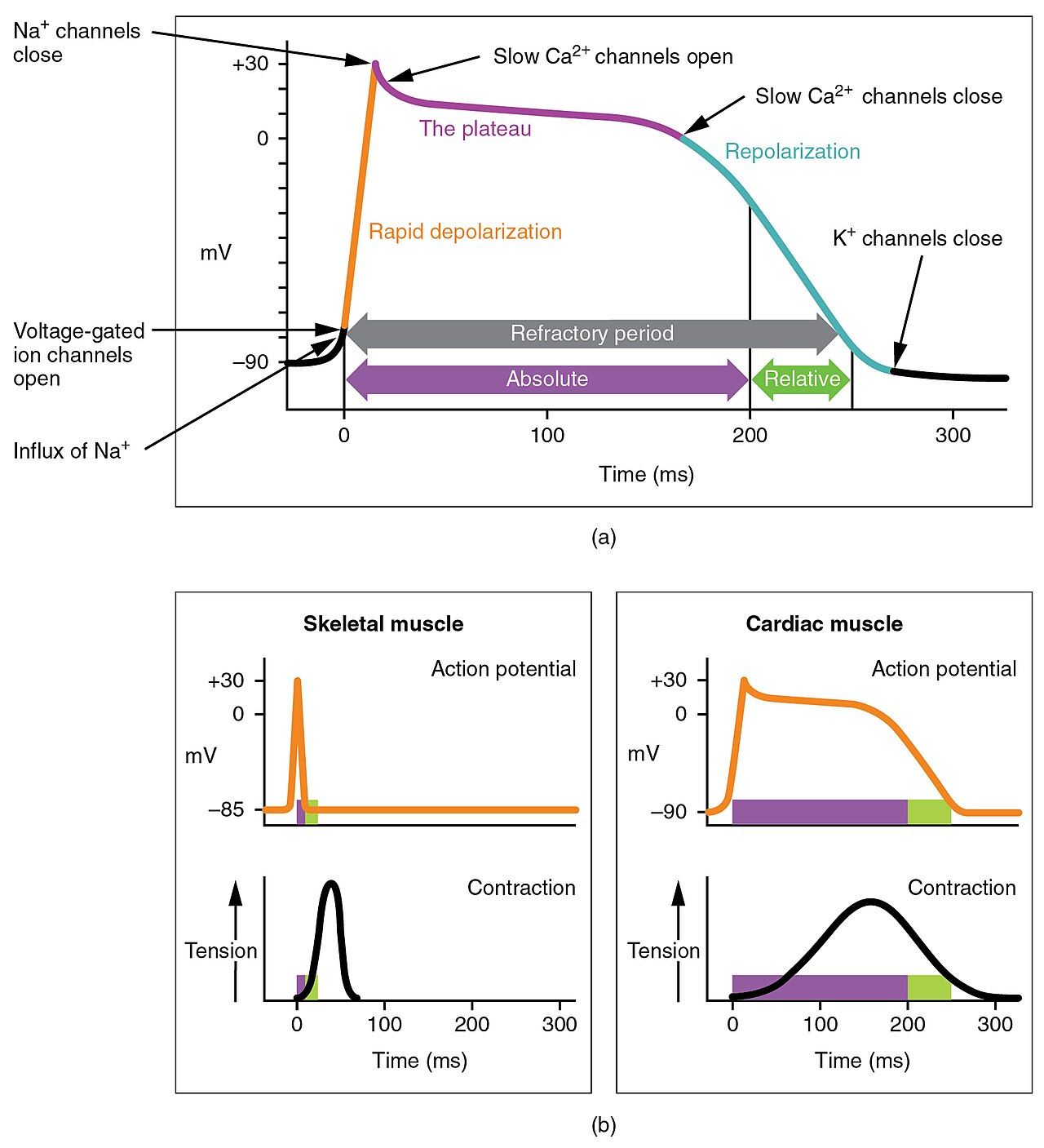
The five phases, and why anyone should care
Antiarrhythmics (rhythm drugs) seem scary to learn, because the grouping looks random. It is not. Each class is named for the ion channel it blocks. Each channel owns a phase of the electrical cycle. Learn the phases once, and the classes become obvious.
Here is the cycle in a working heart muscle cell. Phase 0 is the fast upstroke. Sodium rushes in, and the cell fires. Phase 1 is a short notch as potassium leaks out. Phase 2 is the long plateau found only in heart muscle. Calcium enters and drives the squeeze. This plateau keeps the heart from locking into a constant cramp. Phase 3 is resetting (repolarization) as potassium floods out. Phase 4 is rest. But in the pacemaker cells (SA and AV nodes), phase 4 is a slow upward drift on its own (the "funny current"). That drift sets the heart rate. In those cells, phase 0 is driven by calcium, not sodium. That last detail explains why calcium channel blockers act on the nodes, while sodium channel blockers act on the working muscle.
The Vaughan Williams classes
| Class | Prototype | Key effect | Safety alert |
|---|---|---|---|
| IA: Na+ block (moderate) | procainamide, quinidine, disopyramide | Slows phase 0; prolongs repolarization → widened QRS and longer QT | Procainamide: drug-caused lupus (joint pain, butterfly rash; check ANA), agranulocytosis, low blood pressure with a fast IV dose. Quinidine: cinchonism (ringing ears, headache, spinning dizziness), diarrhea, raises digoxin. Watch for torsades |
| IB: Na+ block (weak) | lidocaine, mexiletine | Slows phase 0 slightly; shortens repolarization; targets ischemic ventricular tissue | Ventricle rhythms only; useless in atrial fibrillation. Toxicity is in the brain and nerves: numb lips, ringing ears, confusion, twitching, seizures. Never give the lidocaine with epinephrine form IV |
| IC: Na+ block (strong) | flecainide, propafenone | Markedly slows phase 0; minimal effect on repolarization | Not allowed with structural heart disease or a past heart attack, since it raises deaths. Used in hearts with normal structure, sometimes as a "pill in the pocket" for AF |
| II: beta blockers | metoprolol, esmolol, atenolol | Blunt sympathetic drive; slow phase 4 in the SA node and slow AV conduction | Rate control workhorses. Hold for bradycardia or hypotension; caution in asthma (use cardioselective); mask hypoglycemia symptoms in diabetes; never stop abruptly |
| III: K+ block | amiodarone, sotalol, dofetilide, ibutilide, dronedarone | Prolong phase 3 repolarization → longer refractory period and longer QT | Long QT and torsades. Dofetilide and sotalol must be started in the hospital on a heart monitor. Sotalol is also a beta blocker. Dronedarone carries a boxed warning: it doubles deaths in heart failure that has suddenly worsened and in permanent AF. It is not allowed in NYHA class IV or recently worsened HF, in permanent AF, or in second- or third-degree heart block without a pacemaker. It also harms the liver and raises digoxin levels. See amiodarone below |
| IV: non-dihydropyridine Ca2+ block | verapamil, diltiazem | Slow phase 0 in nodal tissue; slow AV conduction and rate | Bradycardia, heart block, hypotension, constipation (verapamil). Avoid in HFrEF (negative inotropes) and use caution with a beta blocker |
| Unclassified | adenosine, digoxin, magnesium, atropine | Adenosine transiently blocks the AV node; magnesium treats torsades; atropine treats symptomatic bradycardia | See adenosine below. Magnesium is the answer for torsades de pointes. Atropine 1 mg IV for unstable bradycardia |
Two drugs that deserve their own paragraph
Amiodarone is the most useful and most toxic rhythm drug in the building. It blocks potassium channels (class III). It also blocks sodium, beta, and calcium. It is all four classes in one molecule, which is why it works on almost any rhythm. It also dissolves in fat and is stored there. That gives it a half-life of about 40 to 60 days. Side effects can show up months after starting and last months after stopping. Checking it is a tour of the body. Lung scarring (pulmonary fibrosis) is the feared one. Get a starting chest x-ray and lung function tests. Then look into any new dry cough or shortness of breath. The thyroid can go too high or too low, since the molecule is packed with iodine. Get a starting and repeat TSH. Liver harm needs liver tests. Tiny deposits in the cornea are usually harmless. Get a yearly eye exam, and report halos in the vision. The skin can turn blue-gray, with severe sun sensitivity. Teach sunscreen and covering clothes. This is a real quality-of-life issue that patients are not warned about often enough. Amiodarone raises digoxin and warfarin levels. So both doses come down when amiodarone goes up. IV amiodarone can cause low blood pressure and vein irritation. Use a central line or a large vein, and an in-line filter for steady drips.
Adenosine is the drug that makes new clinicians gasp. It is given for stable SVT, a fast rhythm from above the ventricles. It briefly blocks the AV node. The monitor shows a few seconds of flat line (asystole) before normal rhythm comes back. Its half-life is under 10 seconds. So it must be given as a rapid IV push. Give 6 mg, followed right away by a 20 mL saline flush. Use a large IV close to the heart, with the arm raised. A two-syringe or stopcock setup helps. Warn the patient first. For a few seconds they will feel chest pressure, flushing, and a sense of doom. Keep the defibrillator nearby and a rhythm strip running. The strip helps make the diagnosis even when the drug does not convert the rhythm.
- Vaughan Williams: I = sodium (phase 0), II = beta blockers (phase 4 and the AV node), III = potassium (phase 3, QT), IV = calcium (phase 0 in the nodes).
- IA lengthens resetting (procainamide → lupus-like illness). IB shortens it and works only in the ventricles (lidocaine → seizures). IC is not allowed with structural heart disease.
- Amiodarone works on everything and damages everything: lungs, thyroid, liver, cornea, and skin. Half-life 40 to 60 days. Cut digoxin and warfarin doses.
- Adenosine is a rapid push with a 20 mL flush. Warn the patient, and expect a short flat-line pause. Magnesium is the answer for torsades. Watch the QTc on every class III drug.
Section 5Cardiovascular monitoring and care
The apical pulse: a 60-second skill that prevents harm
Before digoxin, beta blockers, and non-dihydropyridine calcium channel blockers, you take an apical pulse. Not a wrist pulse, not the monitor's number, and not fifteen seconds times four. Place the flat side of the stethoscope at the fifth space between the ribs, in line with the middle of the collarbone. This is where the heartbeat is strongest. Count for a full minute. The full minute is not just ritual. These are exactly the patients with uneven rhythms and a pulse deficit. Weak beats make a heart sound but no wrist pulse. A 15-second count can be off by 20 beats.
Then apply the rule. Hold digoxin and tell the prescriber if the apical rate is below 60 in an adult. In a child, the cutoff is below 70. In a baby, it is below 90 to 110. Also hold if the rate is above 100 or the rhythm has newly changed. Chart the rate, the rhythm, what you held, and who you called. If a patient goes home on digoxin, they take their own wrist pulse for a full minute before every dose. Watch them do it. Do not just tell them.
Levels, potassium, and the numbers that matter
| What you check | Normal / target | When to check | Safety alert |
|---|---|---|---|
| Apical pulse | 60 to 100 bpm | Before every dose of digoxin, beta blocker, verapamil, diltiazem | Hold and call if <60 (adult). Full minute, fifth ICS midclavicular |
| Digoxin level | 0.5 to 2.0 ng/mL overall; 0.5 to 0.9 in heart failure | Trough: 6 to 8+ h after the dose, or just before the next one | A normal level does not rule out toxicity if K+ is low. Antidote: digoxin immune Fab |
| Potassium | 3.5 to 5.0 mEq/L | Baseline, then with every diuretic, ACEi/ARB/ARNI, or MRA change; ~1 week and 1 month after an MRA start | Low K+ → digoxin toxicity and torsades. High K+ → bradycardia and arrest. Both directions kill |
| Magnesium | 1.5 to 2.5 mg/dL | With loop diuretics; with any QT-prolonging drug; in refractory hypokalemia | You cannot correct potassium until magnesium is corrected. Magnesium is the treatment for torsades |
| Serum creatinine / eGFR | Baseline-dependent | Before and after starting ACEi/ARB/ARNI/MRA/SGLT2i; with diuretic changes | Digoxin is renally cleared: falling GFR means rising digoxin. A modest early creatinine rise on an ACE inhibitor is often acceptable |
| Blood pressure (with orthostatics) | Individualized | Before nitrates, ACEi/ARNI first doses, and any titration | Hold nitrates for SBP <90. A drop of ≥20 systolic or ≥10 diastolic on standing is orthostatic hypotension: a fall risk |
| QTc interval | <450 ms (men), <460 ms (women) | Baseline and with class IA/III drugs, ranolazine, and dose changes | QTc >500 ms or a rise >60 ms → call. Check K+ and Mg2+ at the same time |
| Daily weight | Patient's dry weight | Every morning at home in heart failure | 2 to 3 lb in a day or 5 lb in a week → call the clinic. Weight beats swelling as an early warning |
| Lipid panel | Risk-based LDL goal | Baseline; 4 to 12 weeks after a change; then periodically | Fasting is often unnecessary now. Adherence, not the number, is the usual reason a panel disappoints |
| Creatine kinase (CK) | Lab-specific | Only when a statin patient reports muscle symptoms (plus baseline in high-risk patients) | CK >10× ULN with symptoms and dark urine = rhabdomyolysis. Hold the statin |
The potassium row is the one to make your own. Your heart failure patient is often on drugs pulling potassium both ways at once. A loop diuretic dumps it. An ACE inhibitor plus spironolactone holds it. The total effect in any one person is hard to predict. That is why we measure instead of assume. Two teaching points follow. First, salt substitutes are potassium chloride. A patient carefully avoiding sodium with a shaker of "lite salt" while on lisinopril and spironolactone can arrive with high potassium and a slow heart rate. Ask about it directly. Second, potassium-rich foods (bananas, oranges, potatoes, tomatoes, spinach, avocado) are advice for a patient on a loop diuretic alone. They can be exactly wrong for a patient on an MRA.
What you say before they walk out the door
Heart drugs fail at home, not in the hospital. These are silent conditions treated with drugs that cause symptoms, and the patient will do the math. Discharge teaching is the treatment.
| Drug or class | What the patient must know |
|---|---|
| Statin | Take it forever, since it works without you feeling it. Report muscle pain, weakness, and above all dark urine. Evening doses for simvastatin and lovastatin. Grapefruit warning where it applies. Stop and call if you might be pregnant |
| Sublingual nitroglycerin | Sit down. One dose under the tongue. If not better in 5 minutes, call 911, then up to 3 doses total, 5 minutes apart. Original capped glass bottle, away from heat and moisture. Replace an opened bottle as the label or pharmacist directs. Headache is normal. No erection drugs |
| Nitroglycerin patch | Put it on in the morning and take it off in the evening for a 10 to 12 h nitrate-free break. Remove the old patch first, rotate sites, wash hands |
| Beta blocker | Never stop suddenly, or angina, a fast heart rate, or a heart attack can rebound. Check your pulse before doses. Get up slowly. With diabetes, it can hide the shakiness of low blood sugar, so check your sugar and do not go by feel |
| ACE inhibitor / ARB / ARNI | A dry nagging cough is worth reporting (it can be fixed). Any swelling of the lips, tongue, or throat is a 911 emergency. No salt substitutes. Not in pregnancy: call the day you find out |
| Loop diuretic | Morning doses so you can sleep. Weigh yourself daily: same time, same scale, after using the bathroom, before breakfast. 2 to 3 lb in a day or 5 lb in a week → call. Report ringing in the ears, cramps, or dizziness |
| Spironolactone / eplerenone | No salt substitutes, and no potassium pills unless told. Report sore or growing breasts (there is another choice). Keep your lab visits, since they catch high potassium before it hurts you |
| Digoxin | Take your pulse for a full minute before every dose; hold and call if under 60. Report loss of appetite, nausea, blurred or yellow-green vision, halos, or new confusion. Never double a missed dose. Keep your potassium labs |
| Amiodarone | Report any new cough or shortness of breath right away. Use sunscreen and covering clothes, or you will burn badly. Keep your thyroid, liver, and eye follow-ups. Tell every prescriber you take it, because it changes other drug levels |
| Antiplatelets / anticoagulants | Soft toothbrush, electric razor, no contact sports. Report black tarry stools, blood in urine, unusual bruising, or a headache after a fall. Never stop a P2Y12 inhibitor after a stent without calling the cardiologist, or the stent can clot |
One more layer sits under all of it. Several drugs in this chapter are official high-alert medications. These include IV anticoagulants, IV rhythm drugs, IV drugs that strengthen the squeeze (inotropes), and digoxin. High-alert does not mean they are used wrongly more often. It means that when an error happens, the harm is a disaster. That is why we use the independent double-check, smart pump limits, and the habit of saying the dose out loud with a second clinician. Use them. Nobody has ever been disciplined for checking a drip.
- Take an apical pulse for a full minute at the fifth rib space, mid-collarbone line, before digoxin, beta blockers, verapamil, and diltiazem. Hold and call if <60.
- Draw digoxin levels as a trough ≥6 to 8 h after the dose. The goal is 0.5 to 0.9 ng/mL in heart failure. A normal level does not rule out toxicity when potassium is low.
- Potassium is the master number. Loops dump it, MRAs and ACE inhibitors hold it, salt substitutes are potassium chloride, and both extremes can kill.
- Teach daily weights (2 to 3 lb a day or 5 lb a week means call), never stopping a beta blocker suddenly, and never mixing nitrates with PDE5 inhibitors.
The chapter in one breath
- Statins block HMG-CoA reductase and pull LDL out of the blood. Watch for myopathy, draw a CK only when muscles hurt, and treat muscle pain plus dark urine as rhabdomyolysis until proven otherwise.
- Non-statin drugs fill gaps: ezetimibe (absorption), PCSK9 inhibitors and inclisiran (receptor recycling), bempedoic acid (when statins cannot be taken), fibrates and icosapent ethyl (triglycerides), niacin (flushing, so pretreat with aspirin), and sequestrants (keep other drugs 1 to 4 hours apart).
- Angina drugs either raise supply or lower demand. Nitrates drop preload, cause headache, and are deadly with PDE5 inhibitors. Sit down, take one dose, call 911 at 5 minutes, take three doses at most, and keep the original capped glass bottle, replaced as the label or pharmacist directs.
- The ACS bundle is chewed aspirin, a P2Y12 inhibitor, an anticoagulant, a beta blocker, a high-intensity statin, and an ACE inhibitor. Oxygen only if SpO2 <90%, morphine moved down the list, and the artery opened within 30 (clot-buster) or 90 (balloon) minutes.
- Heart failure treatment calls off the body's own hormone attack. The four pillars are an ARNI, ACEi, or ARB, a proven beta blocker, an MRA, and an SGLT2 inhibitor. Diuretics ease symptoms but do not help people live longer.
- Digoxin strengthens the squeeze and slows the rate, with a razor-thin window. Loss of appetite comes first, then nausea, yellow-green vision, confusion, and rhythm problems. Low potassium makes it more toxic. The antidote is digoxin immune Fab.
- Rhythm drugs are named for the channel they block: I sodium, II beta, III potassium, IV calcium. Every one of them can also cause rhythm problems. Amiodarone works everywhere and damages the lungs, thyroid, liver, cornea, and skin.
- The core of bedside care is small, and it holds: a full-minute apical pulse, trough digoxin levels, potassium and magnesium, daily weights, the QTc, and the discharge sentences that keep the patient alive at home.
ReferenceWords worth knowing
A quick list of the terms in this chapter. Skim it now, or come back when a word trips you up.
- Acute coronary syndrome (ACS)
- The umbrella term for unstable angina, NSTEMI, and STEMI, all caused by a burst plaque and a clot in a heart artery.
- Afterload
- The resistance the heart must overcome to pump blood out; lowering it eases the heart's work.
- Angioedema
- Fast swelling of the lips, tongue, or airway; a rare but life-threatening reaction to ACE inhibitors and ARNIs, and a lifelong reason never to use the class again.
- Apical pulse
- The heart rate counted with a stethoscope at the fifth rib space, mid-collarbone line, for a full minute; required before digoxin and drugs that slow the heart.
- Chronotropic effect
- An effect on heart rate; digoxin and beta blockers slow the rate (negative chronotropes).
- Cinchonism
- Quinidine toxicity: ringing ears, headache, spinning dizziness, and vision changes.
- Creatine kinase (CK)
- A muscle enzyme that rises with muscle injury; drawn when a patient on a statin reports muscle symptoms.
- Digoxin immune Fab
- Antibody pieces that bind and turn off digoxin; the antidote for life-threatening digoxin toxicity.
- Guideline-directed medical therapy (GDMT)
- The proven drug plan for heart failure, built on four pillars and raised to goal doses.
- High-alert medication
- A drug that causes disaster-level harm when given in error (digoxin, heparin, IV rhythm drugs), so it needs an independent double-check.
- Inotropic effect
- An effect on how hard the heart squeezes; digoxin strengthens the squeeze (a positive inotrope).
- Low-density lipoprotein (LDL)
- The particle that delivers cholesterol into the artery wall; the main target of lipid treatment.
- Myopathy
- Muscle pain or weakness with a rising CK; the middle of the statin muscle range, between harmless aches and rhabdomyolysis.
- Nitrate tolerance
- Loss of nitrate effect from steady use; prevented by a daily nitrate-free break of 10 to 12 hours.
- Preload
- The blood stretching the heart just before it squeezes; nitrates and diuretics lower it.
- Proarrhythmia
- A new or worse rhythm problem caused by a rhythm drug; a risk of every drug in the class.
- Pulse deficit
- The gap between the apical and wrist pulse rates, caused by beats too weak to reach the wrist.
- QT interval (QTc)
- The ECG measure of the heart's resetting time; a long QTc raises the risk of torsades de pointes.
- Rhabdomyolysis
- Severe muscle breakdown with a very high CK and myoglobin in the urine (dark, cola-colored urine), which risks sudden kidney injury.
- Torsades de pointes
- A twisting, fast ventricle rhythm that comes from a long QT; treated with IV magnesium.
- Vasospastic (Prinzmetal) angina
- Chest pain from a spasm of a heart artery, often at rest; treated with nitrates and calcium channel blockers, not beta blockers.
- Vaughan Williams classification
- The system that sorts rhythm drugs by the ion channel they block: I sodium, II beta-adrenergic, III potassium, IV calcium.
Check yourself
Diuretics, IV Fluids & Poisoning
Almost everything in this chapter comes down to water and the particles dissolved in it. Diuretics pull water out of a person by tricking one short stretch of the kidney tube. IV fluids push water back in. Where that water lands depends on the tonicity printed on the bag. Electrolyte replacement sits in the middle. The fixes that correct a dangerous lab value can stop a heart if given too fast. And when the wrong substance gets into a person, by accident or on purpose, a small set of antidotes can reverse what would otherwise kill. These are some of the highest-alert drugs you will handle. Your watching is usually what makes them safe.
By the end of this chapter you can
- Follow fluid through the nephron and name the part each diuretic class blocks.
- Compare loop, thiazide, potassium-sparing, osmotic, and carbonic anhydrase inhibitor diuretics by prototype, strength, and effect on electrolytes.
- Expect and watch for the main side effects of each diuretic class, above all low potassium (hypokalemia) and high potassium (hyperkalemia).
- Sort an IV fluid as isotonic, hypotonic, or hypertonic, and predict which body space it will fill.
- Choose the right IV fluid for common bedside cases, and name the danger of each type.
- Replace potassium, calcium, and magnesium safely, including the rules that must never be broken.
- Match common poisonings to their antidotes, and describe your role in each reversal.
- Explain why diuretics, concentrated electrolytes, and reversal drugs are treated as high-alert medications.
Section 1The nephron & where diuretics act
One million tiny filters
Each kidney holds about a million nephrons. Each nephron is a tiny factory that does the same four jobs. They are filtration (straining), reabsorption (taking back), secretion (adding), and excretion (sending out). Blood arrives at the glomerulus. This is a tuft of tiny blood vessels tucked inside a cup called Bowman's capsule. Pressure squeezes water and small particles out into the tube. That strained fluid is huge: about 180 liters a day. Nobody passes 180 liters of urine. So the key point is plain. The nephron's real work is not making urine. It is taking almost all of it back. About 99 percent of the strained water is taken back. Urine is the leftover 1 percent.
This one idea makes diuretics make sense. A diuretic does not squeeze more fluid out of the blood. It gets in the way of taking fluid back. Water follows sodium. So any drug that keeps sodium from being pulled back out of the tube leaves that sodium in the fluid. The water stays with it and leaves as urine. Every diuretic in this chapter plays on that one theme. Block sodium from being taken back somewhere, and water comes along.
The segments, in order
Fluid leaves Bowman's capsule and enters the proximal convoluted tubule (PCT). This is the workhorse. It takes back about 65 percent of the strained sodium and water. It also takes back glucose, amino acids, and bicarbonate. Next comes the loop of Henle, which dips deep into the salty inner kidney. Its thick ascending limb pumps out another 20 to 25 percent of the sodium. It uses the Na⁺-K⁺-2Cl⁻ cotransporter, a pump that moves sodium, potassium, and chloride together. Then the distal convoluted tubule (DCT) takes back about 5 to 10 percent through a sodium-chloride cotransporter. Last, the collecting duct fine-tunes the final 2 to 3 percent under hormone control. Aldosterone tells it to keep sodium and dump potassium. Antidiuretic hormone (ADH) tells it to keep water by adding water channels (aquaporins).
The percentages tell you the strength ranking before you learn a single drug name. Block the loop, which handles a quarter of the sodium, and you get a strong flow of urine. Block the DCT, which handles under a tenth, and you get a moderate one. Block the collecting duct, which only fine-tunes, and you get a weak flow, but very fine control over potassium.
| Segment | Sodium reclaimed | Transporter / control | Diuretic that acts here |
|---|---|---|---|
| Proximal tubule | ~65% | Na⁺/H⁺ exchange; carbonic anhydrase; osmotic gradient | Carbonic anhydrase inhibitors; osmotic diuretics |
| Thick ascending limb | ~20 to 25% | Na⁺-K⁺-2Cl⁻ cotransporter | Loop diuretics: most potent |
| Distal convoluted tubule | ~5 to 10% | Na⁺-Cl⁻ cotransporter | Thiazides: moderate |
| Collecting duct | ~2 to 3% | Aldosterone-driven Na⁺ channels (ENaC); ADH/aquaporins | Potassium-sparing: weak, but K⁺-protective |
Why potassium is always in the conversation
Look at the collecting duct again. Aldosterone takes back sodium there and trades it for potassium, which goes out in the urine. Now picture a loop or thiazide diuretic further up, dumping a flood of sodium into the collecting duct. More sodium arriving means more sodium-potassium trading. That means more potassium lost. That is why loop and thiazide diuretics cause low potassium. It is not a random side effect. It is simple math. Drugs that block that trade at the collecting duct do the reverse. They hold potassium in. That is why they are called potassium-sparing, and why their main danger is high potassium.
- The nephron strains about 180 L a day and takes back about 99% of it. Urine is what is left.
- Diuretics work by blocking sodium from being taken back. Water follows sodium out.
- Strength follows the part: loop > thiazide > potassium-sparing, because that is the order of how much sodium each part handles.
- The collecting duct trades sodium for potassium under aldosterone. That is why most diuretics throw potassium off in one direction or the other.
Section 2Diuretic classes
Loop diuretics: the fire hose
Furosemide is the prototype, joined by bumetanide, torsemide, and ethacrynic acid. They block the Na⁺-K⁺-2Cl⁻ pump in the thick ascending limb. The result is the strongest flow of urine any drug can cause. Up to 20 to 25 percent of strained sodium goes out the door. IV furosemide starts working within minutes. That is exactly what you want in acute pulmonary edema, when a person is drowning in their own fluid and cannot wait. Loops also keep working when the kidneys are weak, unlike thiazides. So they are the diuretic for chronic kidney disease. Their classic uses are heart failure with fluid overload, fluid in the lungs (pulmonary edema), and swelling caused by kidney or liver disease.
The trade-off is that a fire hose flushes out everything. Loops waste potassium, magnesium, calcium, sodium, and chloride. They can cause dehydration, dizziness on standing (orthostatic hypotension), and too much base in the blood (metabolic alkalosis). They also harm hearing (ototoxic). Ringing in the ears and hearing loss are far more likely with a fast IV push or when paired with an aminoglycoside. Push IV furosemide slowly, no faster than about 20 mg a minute in an adult, and slower still in older adults. Furosemide is related to sulfa drugs, so ask about sulfa allergy. Ethacrynic acid is the choice with no sulfa.
Thiazides: the everyday drug
Hydrochlorothiazide is the prototype. Chlorthalidone lasts longer and is often preferred for blood pressure. Metolazone rounds out the group. These drugs block the Na⁺-Cl⁻ pump in the distal tubule. That is a smaller job, so the urine flow is gentler. But they also widen vessels mildly over time. That makes thiazides a cornerstone of high blood pressure treatment. They are also, happily, the only diuretic that keeps calcium. That makes them useful for kidney stones made of calcium, and mildly protective of bone. Note the limit. Thiazides stop working well once the kidney filter rate (GFR) falls below about 30 mL/min. That is when the prescriber switches to a loop. Metolazone is the exception worth knowing. It keeps working at a low GFR. That is why it is added to a loop on purpose when a patient stops responding to the loop alone. The pair is strong enough to be dangerous. Expect a fast flow of urine, and watch potassium and fluid status closely.
Teach the body chemistry trouble. Thiazides raise sugar, uric acid (watch for gout flares), blood fats, and calcium. They lower potassium, sodium, and magnesium. Low sodium from thiazides is a real and often missed cause of confusion and falls in older adults.
Potassium-sparing: the counterweight
Two ways of working, one result. Spironolactone and eplerenone are aldosterone blockers. They block aldosterone's receptor in the collecting duct. Amiloride and triamterene block the sodium channel directly, without touching the receptor. Either way, sodium leaves and potassium stays. The urine flow is weak. So these are rarely used alone to remove fluid. They are used with a loop or thiazide to cut potassium loss. Spironolactone and eplerenone are also used because they lower deaths on their own in heart failure with reduced ejection fraction. They do this by blocking the heart damage aldosterone drives. Spironolactone is also standard for belly fluid (ascites) from cirrhosis.
The danger is high potassium, and it can kill. Teach patients to avoid salt substitutes, which are mostly potassium chloride. Teach them never to add a potassium pill unless told to. Pairing a potassium-sparing diuretic with an ACE inhibitor or ARB stacks the risk. Spironolactone also acts on other steroid receptors. So it causes breast growth in men (gynecomastia), breast soreness, and changes in periods. Eplerenone is more selective and mostly avoids this.
Osmotic and carbonic anhydrase inhibitors: the specialists
Mannitol is an osmotic diuretic. It is a sugar alcohol that is strained out but not taken back. So it pulls water along with it all the way down the tube. Its real job is usually not the urine. It is pulling water out of swollen tissue. Mannitol is used for high pressure inside the skull, brain swelling, and suddenly high pressure inside the eye. It first expands the blood volume before it causes urine flow. So it can tip a frail patient into heart failure and fluid in the lungs. Mannitol forms crystals in a cold solution. So always use an in-line filter and look at the bag. Warm it if you see crystals.
Acetazolamide blocks carbonic anhydrase in the proximal tubule. That dumps bicarbonate. It is a weak diuretic, but it is useful in glaucoma, altitude sickness, and to make urine less acidic. It reliably causes too much acid in the blood (metabolic acidosis), which is sometimes the point.
| Class | Prototype | Site & key effect | Safety alert |
|---|---|---|---|
| Loop | Furosemide (bumetanide, torsemide, ethacrynic acid) | Blocks Na⁺-K⁺-2Cl⁻ in thick ascending limb; most potent; works in renal impairment | Hypokalemia, hypomagnesemia, hypocalcemia, dehydration, orthostasis; ototoxic: push IV slowly (≤20 mg/min), avoid with aminoglycosides; daily weight & I&O; sulfa cross-sensitivity |
| Thiazide | Hydrochlorothiazide (chlorthalidone, metolazone) | Blocks Na⁺-Cl⁻ in distal tubule; moderate; first-line for HTN; spares calcium | Low potassium, low sodium, high sugar, high uric acid (gout), high blood fats; does not work if GFR <30 mL/min (except metolazone, which still works and is added to a loop when diuretics stop working well); give in the morning |
| Potassium-sparing (aldosterone antagonist) | Spironolactone (eplerenone) | Blocks aldosterone receptor in collecting duct; weak diuresis; mortality benefit in HFrEF; ascites | Hyperkalemia: no salt substitutes, no K⁺ supplements; caution with ACE inhibitors/ARBs; gynecomastia (spironolactone) |
| Potassium-sparing (channel blocker) | Triamterene (amiloride) | Blocks collecting-duct Na⁺ channels directly; weak | Hyperkalemia; often combined with HCTZ to balance potassium; triamterene can tint urine blue-green |
| Osmotic | Mannitol | Filtered, not reabsorbed; osmotically drags water; reduces ICP and cerebral/ocular edema | In-line filter required (crystallizes); transient volume expansion may cause pulmonary edema/HF; monitor serum osmolality, neuro status, hourly urine output |
| Carbonic anhydrase inhibitor | Acetazolamide | Blocks proximal carbonic anhydrase; dumps bicarbonate; glaucoma, altitude sickness | Predictable metabolic acidosis; hypokalemia; paresthesias; sulfa derivative |
- Loops (furosemide) are the strongest, work when the kidneys fail, and harm hearing if pushed fast.
- Thiazides (hydrochlorothiazide) are first-line for high blood pressure, keep calcium, and fail below a GFR of about 30.
- Potassium-sparing drugs cause high potassium. Spironolactone adds a survival benefit in heart failure and causes breast growth in men.
- Mannitol treats high pressure in the skull, needs an in-line filter, and can briefly worsen heart failure.
- Loops and thiazides drop potassium. Potassium-sparing drugs raise it. They are often paired for exactly that reason.
Section 3IV fluids
Tonicity is a comparison, not a property
Tonicity compares how many particles are in a fluid with how many are inside the patient's cells. Normal blood osmolality is about 275 to 295 mOsm/kg. That is the reference point for everything below. Water always moves toward the side with more particles. So the tonicity of the bag decides which way water travels once it is in the vein. That is the whole lesson. An isotonic fluid matches the blood. No water shifts, so the fluid simply stays where you put it. It fills the space outside the cells. A hypotonic fluid is more watery than blood. So water leaves the vessel and moves into the cells, swelling them. A hypertonic fluid is more concentrated. It pulls water out of the cells and into the vessel.
Picture it this way. Isotonic stays. Hypotonic enters the cell. Hypertonic exits the cell. Now attach the danger to each. Too much isotonic fluid overloads the blood vessels → fluid in the lungs. Too much hypotonic fluid swells cells → brain swelling. Too much hypertonic fluid drags water into vessels that are already full → fluid overload and shrunken cells.
The bags you will actually hang
0.9% sodium chloride (normal saline) and lactated Ringer's (LR) are the isotonic workhorses. They are used for resuscitation, low blood volume, bleeding, dehydration, surgery, and keeping an IV open. Normal saline is the only fluid that can run with blood products. But large amounts of it cause too much chloride and acid in the blood (hyperchloremic metabolic acidosis). That is because you are pouring in far more chloride than the blood normally carries. Lactated Ringer's is closer to the body's own fluid. It carries potassium, calcium, and lactate, which the liver turns into bicarbonate. But avoid it in liver failure, where lactate is not cleared, and in serious high potassium. Never run it in the same line as blood, because its calcium can clot the tubing. D5W is a special case. It is isotonic in the bag. But the body uses up the sugar (dextrose) within minutes, and what is left is plain water. So it acts hypotonic once it is in. Do not use it for resuscitation. Do not use it in a patient at risk of brain swelling.
0.45% sodium chloride (half-normal saline) is the everyday hypotonic fluid. It is used when cells are dehydrated. It is also used as maintenance fluid in a patient with high sodium, or in diabetic ketoacidosis after the first resuscitation. Hypotonic fluids are not allowed in head injury, stroke, or any high pressure in the skull. The last thing a swollen brain needs is more water inside its cells. 3% sodium chloride is the hypertonic fluid you will see in the ICU. It is used for low sodium with symptoms or for brain swelling. It is a high-alert drug. It usually needs a central line and a pump, and it calls for frequent sodium checks. Fixing sodium too fast is its own disaster. The usual limit is no more than 8 to 10 mEq/L in 24 hours. Fixing long-standing low sodium too fast can cause osmotic demyelination syndrome, a terrible brain injury that cannot be undone. D5½NS and D5LR are hypertonic maintenance fluids that give some calories.
| Fluid | Tonicity | Where the water goes / when to use | Safety alert |
|---|---|---|---|
| 0.9% NaCl (normal saline) | Isotonic | Stays extracellular; resuscitation, hypovolemia, blood administration, KVO | Only fluid compatible with blood products; large volumes → hyperchloremic metabolic acidosis; overload risk in HF/renal disease |
| Lactated Ringer's | Isotonic | Stays extracellular; surgery, burns, trauma, GI losses; lactate → bicarbonate | Avoid in liver failure and hyperkalemia; never with blood (calcium clots the line) |
| D5W | Isotonic in the bag, hypotonic in the body | Dextrose burns off → free water; free-water replacement, drug diluent, hypernatremia | Not for resuscitation; contraindicated in raised ICP; monitor glucose |
| 0.45% NaCl (½NS) | Hypotonic | Water enters cells; cellular dehydration, hypernatremia, DKA maintenance | Cerebral edema risk: contraindicated in head injury/stroke/raised ICP; can cause hypotension & vascular collapse |
| 3% NaCl | Hypertonic | Pulls water out of cells; symptomatic hyponatremia, cerebral edema | High-alert; pump + frequent Na⁺; correct ≤8 to 10 mEq/L per 24 h to avoid osmotic demyelination; watch for overload |
| D5½NS / D5LR / D5NS | Hypertonic | Maintenance with calories; post-op fluid | Fluid overload; monitor glucose; not for a patient already fluid-overloaded |
- Isotonic stays, hypotonic enters the cell, hypertonic exits the cell. Every fluid choice starts here.
- Normal saline is the only fluid to hang with blood. Lactated Ringer's is avoided in liver failure and never runs with blood.
- D5W is isotonic in the bag but acts hypotonic in the patient. Never use it for resuscitation, and never with high pressure in the skull.
- Hypotonic fluids risk brain swelling. Hypertonic fluids risk fluid overload and, if sodium is fixed faster than about 8 to 10 mEq/L a day, osmotic demyelination.
Section 4Electrolyte replacement
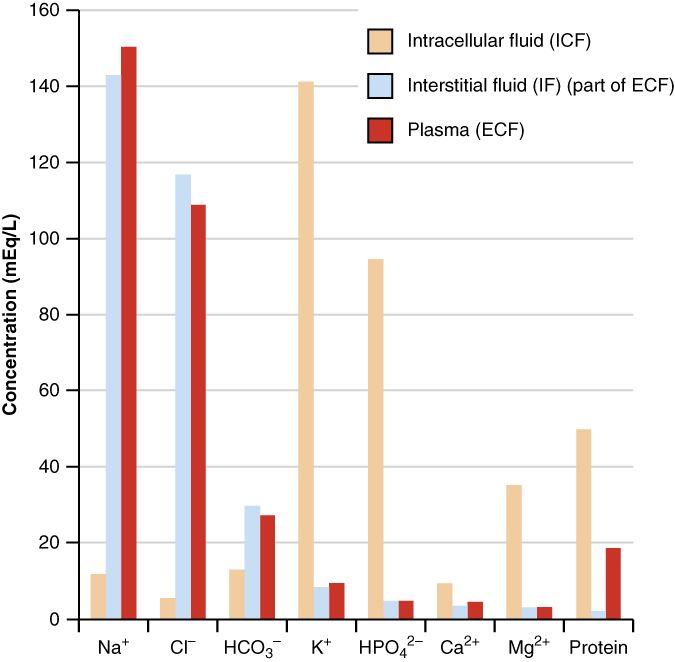
Potassium: the one that will kill you fastest
Normal blood potassium is 3.5 to 5.0 mEq/L. That narrow window is not an accident. Almost all the body's potassium lives inside cells. So the small amount in the blood is a razor-thin margin between a beating heart and a stopped one. Both directions are dangerous. Low potassium flattens the T waves on the ECG, adds U waves, and invites dangerous ventricle rhythms. It also greatly raises the risk of digoxin toxicity. So a patient on both a loop diuretic and digoxin needs a hard look at every potassium result. High potassium makes peaked T waves and a widening QRS, and in the end, cardiac arrest.
The replacement rules exist because people have died from breaking them. They are worth memorizing exactly:
- Never give potassium IV push. Never. Not ever. IV push potassium causes fatal cardiac arrest. It is always diluted and always given as a drip.
- Always on a pump, never by gravity, and never as a fast dose (bolus).
- In a peripheral vein, the rate usually does not go above 10 mEq an hour. Higher rates need a central line and constant heart monitoring, per policy.
- Never go over the facility's highest concentration, often 10 mEq per 100 mL in a peripheral vein.
- Check urine output before the drip. A common minimum is 30 mL an hour. Potassium leaves through the kidneys. Giving it to someone who makes no urine piles it up.
- Potassium burns. Vein irritation and leaking out of the vein are common. Check the site often, and stop if it hurts.
- Potassium by mouth irritates the gut. Give it with food and a full glass of water. Teach that extended-release tablets are not crushed.
For high potassium, the order of steps matters. IV calcium gluconate comes first. It does not lower potassium at all. It steadies the heart muscle's membrane so the heart survives the next few minutes. Then insulin with dextrose (and sometimes albuterol or sodium bicarbonate) moves potassium into cells for a while. Only then do you actually remove it. Use a binder such as sodium zirconium cyclosilicate or patiromer, a loop diuretic, or dialysis. Steady, shift, remove.
Calcium: the muscle and the vein
Normal total blood calcium is about 8.5 to 10.5 mg/dL. Remember that about half of it rides on albumin. Low albumin makes total calcium look falsely low. So check an ionized calcium (the free part) when it matters. Low calcium makes nerves and muscles twitchy. Signs are tingling around the mouth and fingertips and muscle cramps. Inflating a blood pressure cuff can make the hand spasm (Trousseau's sign). Tapping the cheek can make the face twitch (Chvostek's sign). At the extreme, the throat can close (laryngospasm), and the muscles lock in spasm (tetany). High calcium does the opposite. The muscles and mind go slack. Signs are weakness, tiredness, constipation, kidney stones, and confusion.
There are two IV forms, and they cannot be swapped. Calcium chloride carries about three times the usable calcium of calcium gluconate. It is also far more damaging if it leaks out of the vein. So gluconate is preferred in a peripheral vein. Chloride is usually saved for a central line in an emergency. Either way, push it slowly, since a fast push causes a slow heart rate and low blood pressure. Keep the patient on a heart monitor. Do not mix calcium with sodium bicarbonate or phosphate, which form crystals in the line. Calcium also boosts digoxin and can bring on toxicity. Teach that calcium by mouth should be taken with vitamin D for absorption. Keep it apart from certain antibiotics, which it binds.
Magnesium: check the reflexes
Normal magnesium is about 1.5 to 2.5 mEq/L. It is quietly essential. Magnesium helps hundreds of enzymes work. And, key for the bedside, you cannot fix a potassium until you have fixed the magnesium. Low potassium that will not correct is often caused by low magnesium that no one found. Low magnesium makes the kidney waste potassium, no matter how much potassium you give. Low magnesium causes brisk reflexes, tremor, positive Chvostek and Trousseau signs, and torsades de pointes. IV magnesium is itself the treatment for torsades. Low magnesium is common with long-term heavy drinking, poor nutrition, and loop diuretics.
High magnesium is the mirror image. It is the risk you manage during any magnesium drip. Watch the order. Loss of deep tendon reflexes comes first. Then comes slowed breathing, then low blood pressure and a slow heart rate, then cardiac arrest. That is why the reflex check is not busywork. A weak knee reflex is the early warning that buys you time. During IV magnesium (for eclampsia, for example), check reflexes, breathing rate, blood pressure, and urine output. Keep calcium gluconate at the bedside as the antidote.
| Electrolyte | Normal range | Deficiency & excess | Safety alert |
|---|---|---|---|
| Potassium | 3.5 to 5.0 mEq/L | Low: flat T waves, U waves, dysrhythmias, digoxin toxicity. High: peaked T waves, wide QRS, arrest | NEVER IV push; dilute, pump, ≤10 mEq/h peripherally; confirm urine output; watch the site (burns); do not crush ER tablets |
| Calcium | 8.5 to 10.5 mg/dL total | Low: perioral tingling, cramps, Trousseau & Chvostek, tetany, laryngospasm. High: weakness, lethargy, constipation, stones | Gluconate in a peripheral vein, chloride in a central line; push slowly on a monitor; never mix with bicarbonate or phosphate; boosts digoxin; check ionized Ca if albumin is low |
| Magnesium | 1.5 to 2.5 mEq/L | Low: hyperreflexia, tremor, torsades, refractory hypokalemia. High: reflexes lost → respiratory depression → arrest | Check deep tendon reflexes, the first sign of toxicity; check RR, BP, and urine output; calcium gluconate is the antidote; fix Mg before you can fix K⁺ |
- Potassium is never given IV push. It is always diluted, always on a pump, usually ≤10 mEq/h in a peripheral vein, and only with enough urine output.
- High potassium is treated steady (calcium) → shift (insulin + dextrose) → remove (binders, diuretic, dialysis).
- Calcium gluconate is safer in a peripheral vein than calcium chloride. Push slowly, and never with bicarbonate or phosphate.
- Fix magnesium before potassium. During a magnesium drip, loss of deep tendon reflexes is the first warning, and calcium gluconate is the antidote.
Section 5Poisoning & antidotes
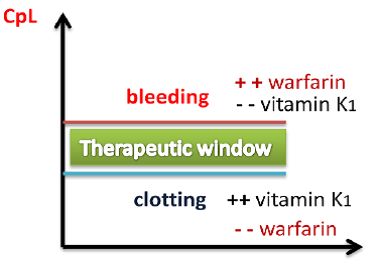
The patient comes before the poison
The first urge in a poisoning is to hunt for the antidote. Resist it. Most poisonings have no antidote at all. The people who survive do so because of supportive care: airway, breathing, circulation, blood sugar, and time. So the order is ABCs first, removing the poison second, an antidote third if one exists, and speeding its removal last. Along the way, call Poison Control early, not late. In the United States the number is 1-800-222-1222. They do this all day.
To remove a swallowed poison, activated charcoal is the main tool. It works by soaking up the poison in the gut before it is absorbed. It helps most within about an hour of swallowing. It is not allowed in a person with low alertness or an airway that is not protected. Charcoal breathed into the lungs causes a severe lung inflammation. It also does not bind everything. The classic misses are iron, lithium, alcohols, and strong acids and lyes. Never give charcoal for those corrosive acids and lyes anyway, since it blocks the view during a scope exam. Do not make the person vomit. Syrup of ipecac is outdated. It causes harm and does not improve outcomes.
The antidotes worth knowing cold
Learn these as pairs. They are the ones that show up on tests and in real emergencies. Acetaminophen overdose is the leading cause of sudden liver failure in the United States. It is quiet and fools people. The person may look fine for a day while a toxic breakdown product destroys liver cells. Acetylcysteine refills glutathione. It works very well when started early, ideally within 8 to 10 hours. Use the Rumack-Matthew nomogram to decide after a single overdose. Warn patients that the oral form smells like rotten eggs. The IV form can cause an allergy-like reaction.
Opioid overdose is spotted at the bedside by a triad: slowed breathing, pinpoint pupils, and low alertness. Naloxone reverses it within minutes. But it lasts a shorter time than most opioids. So the person can go back under, and more doses or a drip may be needed. Never leave a reversed person unwatched. In a person dependent on opioids, naloxone sets off sudden withdrawal. That is miserable but not deadly. Stopping breathing is deadly. Benzodiazepine overdose has an antidote too, flumazenil. But it is used with care and rarely. In a long-term benzodiazepine user or a mixed overdose, it can set off seizures that are very hard to stop.
The anticoagulants each have a partner. Warfarin is reversed by vitamin K (phytonadione). When the bleeding is life-threatening, prothrombin complex concentrate (PCC) is added. Heparin is reversed by protamine sulfate. Dabigatran has idarucizumab. For the factor Xa inhibitors apixaban and rivaroxaban, 4-factor PCC is now used for major bleeding. Their specific reversal drug, andexanet alfa, was withdrawn from the US market in 2025. Digoxin toxicity brings nausea, halos or yellow-green vision, a slow heart rate, and confusion. It is treated with digoxin immune Fab. Remember that low potassium makes digoxin toxicity far more likely, which ties right back to Section 2. Organophosphate or cholinergic poisoning shows the SLUDGE picture: drooling, tears, passing urine, passing stool, gut cramps, and vomiting. It is treated with atropine plus pralidoxime. And iron is bound up and removed with deferoxamine. Iron was once a leading cause of poisoning death in children. Deaths fell sharply after pills came in single-dose blister packs, but it is still a serious thing for a child to swallow.
| Poison / drug | Antidote | Key toxic signs | Safety alert |
|---|---|---|---|
| Acetaminophen | Acetylcysteine | Quiet early phase, then RUQ pain, rising AST/ALT, hepatic failure | Works best within 8 to 10 h; the oral form smells of sulfur (dilute it and use a straw); the IV form can cause an allergy-like reaction; use the Rumack-Matthew nomogram |
| Opioids | Naloxone | Respiratory depression + pinpoint pupils + ↓LOC | Shorter duration than the opioid: re-sedation risk, repeat doses/infusion; precipitates withdrawal in dependence; keep monitoring |
| Benzodiazepines | Flumazenil | Sedation, ataxia, slurred speech; respiratory depression if mixed | Use cautiously: may precipitate seizures in chronic users or mixed (e.g., TCA) overdose |
| Warfarin | Vitamin K (phytonadione) | Bleeding, elevated INR, bruising, hematuria | Onset takes hours: PCC/FFP for life-threatening bleed; monitor INR; teach consistent vitamin K intake |
| Heparin | Protamine sulfate | Bleeding, elevated aPTT, thrombocytopenia (HIT) | Give slowly: rapid administration causes hypotension & anaphylaxis; only partially reverses LMWH |
| Digoxin | Digoxin immune Fab | Nausea, anorexia, yellow-green/halo vision, bradycardia, confusion | Hold for apical pulse <60; hypokalemia potentiates toxicity; narrow therapeutic range (0.5 to 2 ng/mL) |
| Organophosphates / cholinergics | Atropine + pralidoxime | SLUDGE, bronchorrhea, bradycardia, miosis | Decontaminate the skin: protect yourself with PPE; large repeated atropine doses may be needed |
| Iron | Deferoxamine | Vomiting, GI bleeding, shock, and later liver failure; once a leading cause of poisoning death in children (deaths fell sharply after single-dose packaging, but still a serious thing to swallow) | Charcoal does not bind iron; urine may turn reddish-brown ("vin rosé"); teach childproof storage |
| Dabigatran | Idarucizumab | Bleeding | Factor Xa inhibitors (apixaban, rivaroxaban) use 4-factor PCC for major bleeding (andexanet alfa was withdrawn from the US market in 2025) |
| Most oral ingestions | Activated charcoal (adsorbent, not an antidote) | - | Within ~1 h; contraindicated with ↓LOC or unprotected airway; does not bind iron, lithium, alcohols, corrosives; never induce vomiting |
- Supportive care first: ABCs, then removing the poison, then the antidote. Call Poison Control early.
- Activated charcoal works within about an hour. It is not allowed with low alertness, and it misses iron, lithium, alcohols, and corrosives. Never make the person vomit.
- Learn the pairs: acetaminophen and acetylcysteine, opioids and naloxone, warfarin and vitamin K, heparin and protamine, digoxin and immune Fab, organophosphates and atropine + pralidoxime, and iron and deferoxamine.
- Naloxone lasts a shorter time than the opioid. Expect the person to go back under, and keep watching.
The chapter in one breath
- The nephron takes back about 99% of what it strains. Every diuretic works by blocking sodium from being taken back at one part, and water follows sodium.
- Strength follows the part: loop > thiazide > potassium-sparing, because that is the order of how much sodium each part handles.
- Furosemide is the fire hose (harms hearing if pushed fast, wastes K⁺). Hydrochlorothiazide is the everyday blood pressure drug (keeps calcium, fails below GFR 30). Spironolactone keeps K⁺ and saves lives in heart failure. Mannitol pulls water off a swollen brain.
- Isotonic stays, hypotonic enters the cell, hypertonic exits the cell. The danger of each is overload, brain swelling, and overload again.
- Normal saline is the only fluid to hang with blood. D5W acts hypotonic once the sugar is used up. 3% NaCl is high-alert, and sodium must not rise faster than about 8 to 10 mEq/L a day.
- Potassium is never IV push. It is always diluted, pumped, limited in rate, and given only with enough urine output.
- High potassium goes steady → shift → remove. Fix magnesium before potassium. During a magnesium drip, lost reflexes are the first warning, and calcium gluconate is the antidote.
- In poisoning, supportive care beats hunting for an antidote. But know the pairs cold, and remember that naloxone wears off before the opioid does.
ReferenceWords worth knowing
A quick list of the terms in this chapter. Skim it now, or come back when a word trips you up.
- Activated charcoal
- A powder given by mouth to soak up a swallowed poison before it is absorbed; helps within about an hour, not allowed with low alertness, and does not work on iron, lithium, alcohols, or corrosives.
- Aldosterone antagonist
- A potassium-sparing diuretic (spironolactone, eplerenone) that blocks aldosterone's receptor in the collecting duct, keeping potassium and lowering deaths in heart failure with reduced ejection fraction.
- Chvostek's sign
- A face muscle twitch set off by tapping over the facial nerve; a sign of low calcium.
- Collecting duct
- The last part of the nephron, where aldosterone drives sodium uptake in trade for potassium and ADH controls water uptake.
- Diuretic
- A drug that raises urine output by blocking sodium from being taken back somewhere along the nephron.
- Glomerulus
- The tuft of tiny blood vessels inside Bowman's capsule where blood is strained.
- High-alert medication
- A drug with a higher risk of serious harm when used in error: concentrated potassium, hypertonic saline, insulin, and anticoagulants among them.
- Hyperkalemia
- Blood potassium above about 5.0 mEq/L; causes peaked T waves, a widening QRS, and cardiac arrest; the key risk of potassium-sparing diuretics.
- Hypertonic
- A fluid more concentrated than blood; it pulls water out of cells and into the blood vessels.
- Hypokalemia
- Blood potassium below about 3.5 mEq/L; causes flat T waves, U waves, and rhythm problems, and raises the risk of digoxin toxicity; the key risk of loop and thiazide diuretics.
- Hypotonic
- A fluid more watery than blood; water moves into cells and swells them, which is why these fluids are not allowed with high pressure in the skull.
- Isotonic
- A fluid that matches the blood; it stays in the space outside the cells and causes no water shift into or out of cells.
- Loop diuretic
- The strongest diuretic class (furosemide, bumetanide, torsemide); works even when the kidneys are weak and harms hearing if given fast.
- Loop of Henle
- The part of the nephron whose thick ascending limb takes back 20 to 25% of strained sodium using the Na⁺-K⁺-2Cl⁻ pump; the target of loop diuretics.
- Nephron
- The working unit of the kidney, which strains, takes back, adds, and sends out; each kidney holds about a million.
- Osmotic demyelination syndrome
- Permanent brain injury caused by fixing long-standing low sodium too fast; prevented by limiting the sodium rise to about 8 to 10 mEq/L in 24 hours.
- Osmotic diuretic
- A particle that is strained but not taken back (mannitol), which pulls water along the tube; used to lower pressure inside the skull and the eye.
- Ototoxicity
- Damage to hearing or balance; a loop diuretic risk that rises with fast IV doses and with aminoglycosides.
- Potassium-sparing diuretic
- A weak diuretic that acts at the collecting duct and keeps potassium; the class whose main danger is high potassium.
- Thiazide diuretic
- A moderate diuretic (hydrochlorothiazide, chlorthalidone) that acts on the distal tubule's Na⁺-Cl⁻ pump; first-line for high blood pressure, keeps calcium, and does not work below a GFR of about 30 mL/min.
- Tonicity
- How a fluid's particle level compares with the inside of the body's cells; it decides which way water moves after the fluid is given.
- Trousseau's sign
- A hand spasm set off by inflating a blood pressure cuff on the upper arm; a sign of low calcium.
Check yourself
Respiratory Drugs & Eye/Ear
Breathing is the one thing a person cannot put off. When an airway narrows, the clock starts. The drugs you grab in the next sixty seconds are not the same drugs the person takes every morning to keep the airway from narrowing in the first place. This chapter sorts breathing drugs by the most important split of all: rescue versus controller. Then it covers the bronchodilators, the inhaled steroids, and the crowded shelf of cough, cold, and allergy products people buy without asking anyone. It ends with eye and ear drops. A drop is a real drug with real effects on the whole body. And putting drops in the right way is a skill that often falls to you alone. Learn the two airway targets first. Every drug that follows aims at one of them.
By the end of this chapter you can
- Explain bronchoconstriction (tight airways) and airway inflammation as the two separate drug targets in asthma and COPD.
- Tell a rescue drug from a controller drug, and explain why the difference is about safety, not just words.
- Compare SABAs, LABAs, anticholinergics, and theophylline by how fast they work, their role, and their main side effects.
- Teach the right way to use a metered-dose inhaler, a spacer, and the rinse-and-spit rule for inhaled steroids.
- Read peak flow zones, and see that using a rescue inhaler too often means poor control.
- Compare first- and second-generation antihistamines, and give safe advice on decongestants, cough suppressants, and expectorants.
- Describe how glaucoma drugs lower the pressure inside the eye, and why timolol eye drops can slow a heart or close an airway.
- Give and teach eye drops and ear drops the right way, including punctal occlusion and pulling the outer ear the right way.
Section 1Airway physiology, asthma & COPD
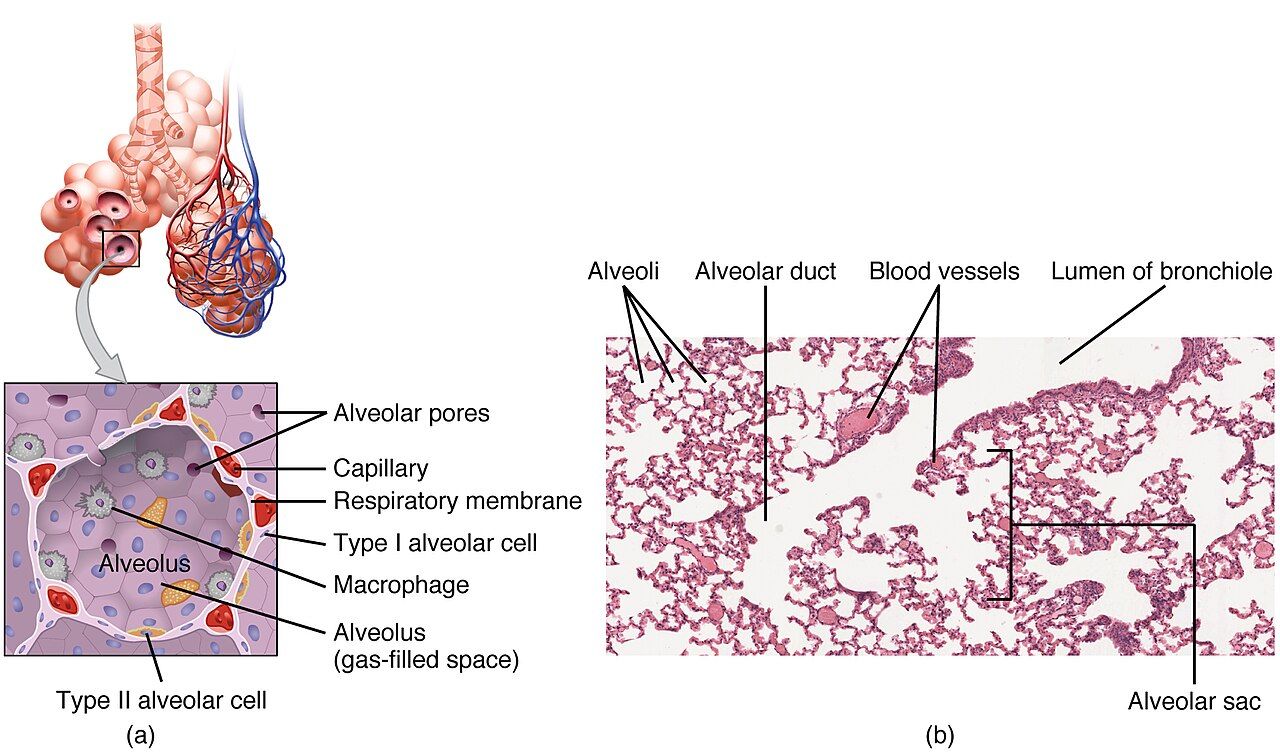
A tube with a muscle around it
Picture the airway as a branching tree of tubes that gets narrower with every split. From the mid-sized airways (bronchi) down to the smallest ones (bronchioles), each tube is wrapped in a ring of airway smooth muscle. That muscle has a job. It fine-tunes where air goes, and it takes orders from the autonomic nervous system. The parasympathetic nerves release acetylcholine onto M3 muscarinic receptors, and the muscle squeezes. This is bronchoconstriction, plus a squirt of mucus. Epinephrine in the blood hits beta-2 adrenergic receptors, and the muscle relaxes. This is bronchodilation. Two switches, opposite directions. Nearly every bronchodilator in this chapter either flips the beta-2 switch on or holds the M3 switch off.
Airflow through a tube is very sensitive to the tube's width. Narrow an airway a little, and resistance climbs steeply. That is why a person can go from talking in sentences to talking in single words within minutes. It is also why a drug that widens the tube even a little brings a dramatic improvement. And it explains why the same disease is far more dangerous in a toddler, whose airways are small to begin with.
Asthma and COPD: same organ, different problem
Asthma is two problems stacked on top of each other. The dramatic one is bronchoconstriction. The muscle clamps down in response to a trigger, such as cold air, exercise, pet dander, smoke, aspirin, or a virus. The quiet one, running underneath at all times, is long-lasting airway inflammation. The airway lining is swollen, mucus plugs build up, and allergy cells (eosinophils and mast cells) crowd in. The muscle spasm is what the person feels. The inflammation is what makes the muscle twitchy in the first place. This twitchy state is called airway hyperresponsiveness. Treat only the spasm, and you are mopping the floor with the faucet running. Key point: the blockage in asthma mostly goes away with treatment. A breathing test (spirometry) shows this when a bronchodilator opens the airway.
COPD is a different animal. It is chronic bronchitis plus emphysema, most often from tobacco. Here the blockage mostly does not go away. The walls of the air sacs have been destroyed, and the lungs have lost their spring. The airways collapse on breathing out, which traps air. Inflammation is there too. But it is driven more by neutrophils and responds much less to steroids than asthma's does. So the focus flips. In asthma, the inhaled steroid is the backbone. In COPD, the long-acting bronchodilators are the backbone. Inhaled steroids are added only for some, mostly people with frequent flare-ups, because in COPD they carry a real pneumonia risk.
| Feature | Asthma | COPD |
|---|---|---|
| Typical cause | Allergy / hyperresponsive airways; often starts young | Tobacco smoke (or long-term irritant exposure); usually after 40 |
| Obstruction | Largely reversible with a bronchodilator | Largely irreversible and progressive |
| Dominant cells | Eosinophils, mast cells | Neutrophils, macrophages |
| Course | Episodic: well between attacks | Daily symptoms with acute exacerbations |
| Backbone drug | Inhaled corticosteroid (controller) | Long-acting bronchodilator (LAMA and/or LABA) |
| Steroid response | Strong | Weak; ICS raises pneumonia risk |
Two targets, two jobs
Everything below follows from this. There are two problems, so there are two kinds of drugs, and patients must be able to tell them apart. A rescue (reliever) drug relaxes muscle right now and does nothing for inflammation. A controller (maintenance) drug calms inflammation over days to weeks and does nothing during an attack. People die from this mix-up. One person grabs a steroid inhaler during an attack and waits for relief that is not coming. Another feels fine on a rescue inhaler and quietly drops the controller that was keeping them fine.
- Airway smooth muscle squeezes through M3 muscarinic receptors and relaxes through beta-2 receptors. These are the two levers every bronchodilator pulls.
- Asthma = tight airways that can open again on top of long-lasting inflammation. COPD = mostly permanent, driven by smoking, and helped less by steroids.
- Two targets means two drug jobs: rescue (relax the muscle now) and controller (calm inflammation over weeks).
- A silent chest, exhaustion, drowsiness, or one-word speech in an asthma attack means breathing failure is close.
Section 2Bronchodilators
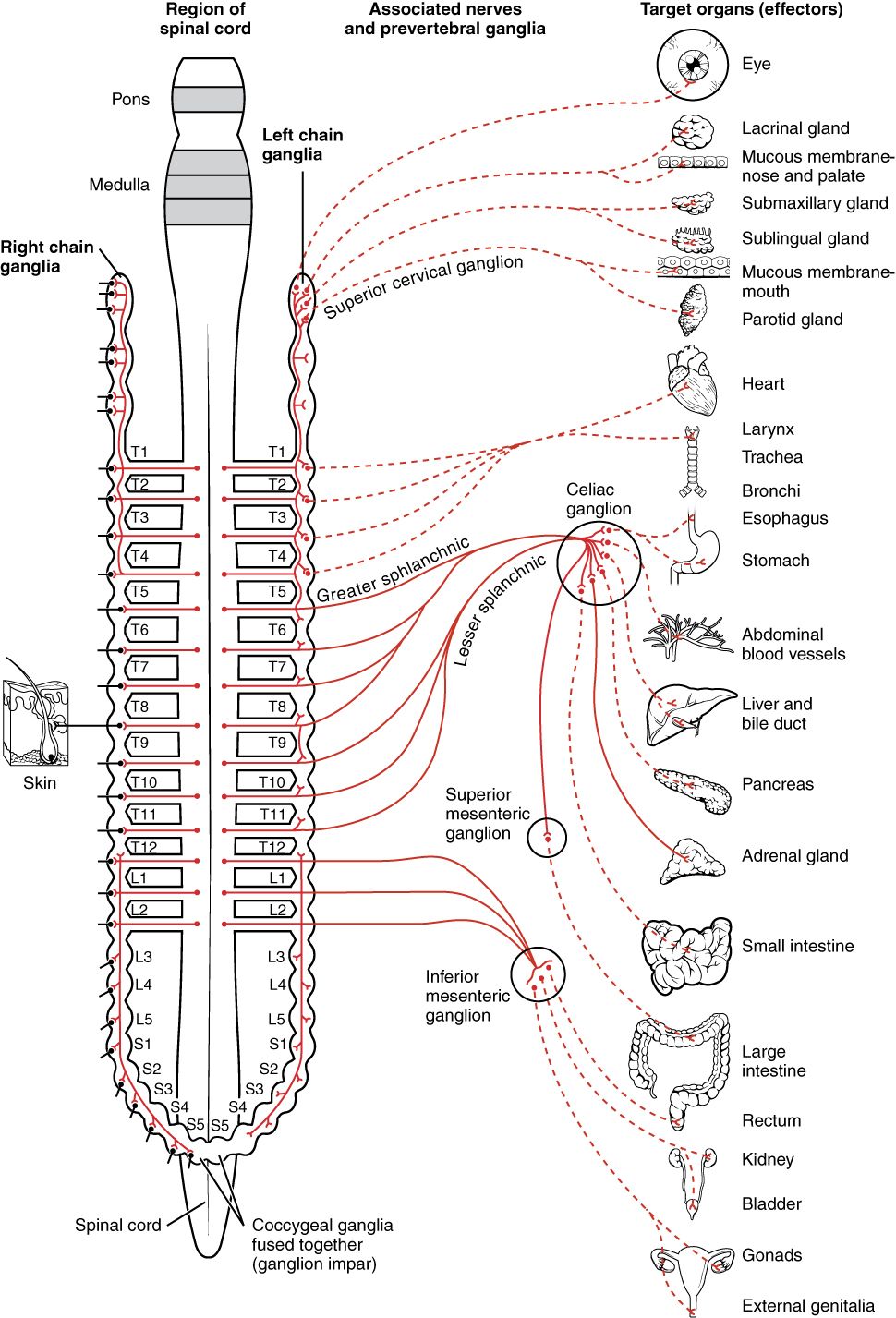
Beta-2 agonists: the fastest way to open a tube
A beta-2 agonist copies epinephrine at the beta-2 receptor on airway smooth muscle. It relaxes the muscle within minutes. The prototype short-acting beta-2 agonist (SABA) is albuterol. It is called salbutamol outside the United States. It starts working in about 5 minutes and lasts 4 to 6 hours. This is the rescue inhaler. It is also the drug used before exercise for airways that tighten with exercise. In a severe attack, it is given nonstop by nebulizer. Levalbuterol is the purified form of albuterol and is sold as gentler on the heart. In practice the difference is small.
The side effects are simply beta action leaking past the lung. Expect tremor, the most common complaint. Warn patients it is not an allergy. Expect a fast heart rate and a pounding heart, restlessness, and headache. Two effects on body chemistry matter more than most people expect. First, beta-2 action drives potassium into cells. So repeated or nonstop albuterol causes low potassium. Watch the potassium and the heart monitor in a severe, nonstop asthma attack (status asthmaticus). Second, it raises blood sugar. That push of potassium into cells is exactly why albuterol is also used, outside of breathing care, as an add-on for sudden high potassium.
Long-acting beta-2 agonists (LABAs), salmeterol and formoterol, hold the receptor for about 12 hours. Newer drugs such as vilanterol and indacaterol last 24 hours. They are daily control drugs, given on a schedule. Salmeterol starts slowly, which makes it useless in an attack. Here is the safety rule that must never be broken: a LABA is never used alone in asthma. Using a LABA alone in asthma was linked to more asthma deaths. So in asthma, a LABA is always used with an inhaled steroid, usually in one combination inhaler, for exactly that reason. In COPD, which works differently, a LABA alone is fine. Formoterol is the exception on speed. It starts fast. That is why some budesonide/formoterol plans use one inhaler as both controller and reliever.
Anticholinergics: holding the other switch off
Beta-2 agonists press the "relax" switch. Anticholinergics (antimuscarinics) block the "squeeze" switch. They sit in M3 receptors so acetylcholine cannot reach them. They open the airway a little more slowly than albuterol, but they also dry secretions as a bonus. Nerve signals that squeeze the airway play a big part in COPD. So these drugs help more in COPD than in asthma. Ipratropium is the short-acting one (SAMA). It is often paired with albuterol in one nebulizer solution or combination inhaler, because the pair works better than either alone in a flare-up. Tiotropium, umeclidinium, aclidinium, and glycopyrrolate are the long-acting ones (LAMAs). They are taken once or twice a day for control, never for rescue.
These molecules carry a charge and are poorly absorbed. So their whole-body anticholinergic effects are milder than with pills, but not zero. Expect a dry mouth. Offer sugar-free candy and good mouth care. Warn about trouble passing urine in men with a large prostate, and constipation in older adults. One practical point: if the mist gets into the eye, it can cause blurred vision, a wide pupil, and eye pain. It can even set off an attack of narrow-angle glaucoma. So use a mouthpiece instead of a loose face mask when you can, and keep the mist out of the eyes.
Theophylline: the drug with no margin
Theophylline is a methylxanthine, a chemical cousin of caffeine. It relaxes airway smooth muscle and mildly boosts the drive to breathe. It was once a mainstay. Now it is a last resort, for one reason: a narrow therapeutic index. The goal blood level is about 5 to 15 mcg/mL (older books say 10 to 20). The margin above it is thin. Side effects climb steeply once levels pass 20 mcg/mL. Early toxicity looks like too much coffee: nausea, vomiting, poor sleep, restlessness, and a fast heart rate. Serious toxicity means heart rhythm problems and seizures. In an older adult, a seizure can be the first sign. There is no antidote. Treatment is support, with activated charcoal and control of seizures and rhythm problems.
Theophylline is also a magnet for interactions. It is cleared by CYP1A2. Ciprofloxacin, cimetidine, erythromycin, and fluvoxamine push levels up. Rifampin, phenytoin, carbamazepine, and, importantly, cigarette smoking speed its breakdown and push levels down. That sets a neat trap. Picture a smoker who is stable on theophylline and then quits, or is admitted to a smoke-free hospital. They can drift into toxicity within days on the same dose. Teach patients to limit caffeine, which adds to the same symptoms. A related note: roflumilast is a PDE4 inhibitor pill. It is used in severe COPD with chronic bronchitis to cut flare-ups. It is not a bronchodilator and not a rescue drug. It causes weight loss, diarrhea, and mood changes worth screening for.
| Class | Prototype | Onset / role | Key effect | Safety alert |
|---|---|---|---|---|
| SABA | Albuterol | ~5 min; RESCUE | Beta-2 agonist → smooth muscle relaxes | Tremor, tachycardia, hypokalemia, hyperglycemia; must be carried at all times |
| LABA | Salmeterol, formoterol | 12 h; maintenance only | Sustained beta-2 agonism | Never alone in asthma: must be paired with an ICS; not for an attack |
| SAMA | Ipratropium | 15 to 30 min; acute add-on | Blocks M3 → less constriction & mucus | Dry mouth; keep mist out of the eyes; caution in BPH, narrow-angle glaucoma |
| LAMA | Tiotropium | 24 h; maintenance only | Long M3 blockade: COPD backbone | Not for rescue; dry mouth, urinary retention, constipation |
| Methylxanthine | Theophylline | Oral; last-line maintenance | Relaxes muscle; stimulates respiratory drive | Level 5 to 15 mcg/mL (toxic above ~20); N/V → arrhythmia → seizure; no antidote; smoking lowers levels, ciprofloxacin raises them |
| PDE4 inhibitor | Roflumilast | Oral; COPD exacerbation prevention | Anti-inflammatory, not bronchodilator | Weight loss, diarrhea, mood/psychiatric changes |
- Albuterol is the rescue drug and works in minutes. Expect tremor, a fast heart rate, low potassium, and high blood sugar.
- LABAs are never used alone in asthma. They are always combined with an inhaled steroid.
- Ipratropium and tiotropium block M3 receptors and matter more in COPD. Expect dry mouth, and keep the mist out of the eyes.
- Theophylline has a narrow window (5 to 15 mcg/mL). Nausea and poor sleep warn you, and seizures and rhythm problems kill. Smoking and ciprofloxacin swing levels hard.
Section 3Inhaled corticosteroids & controllers
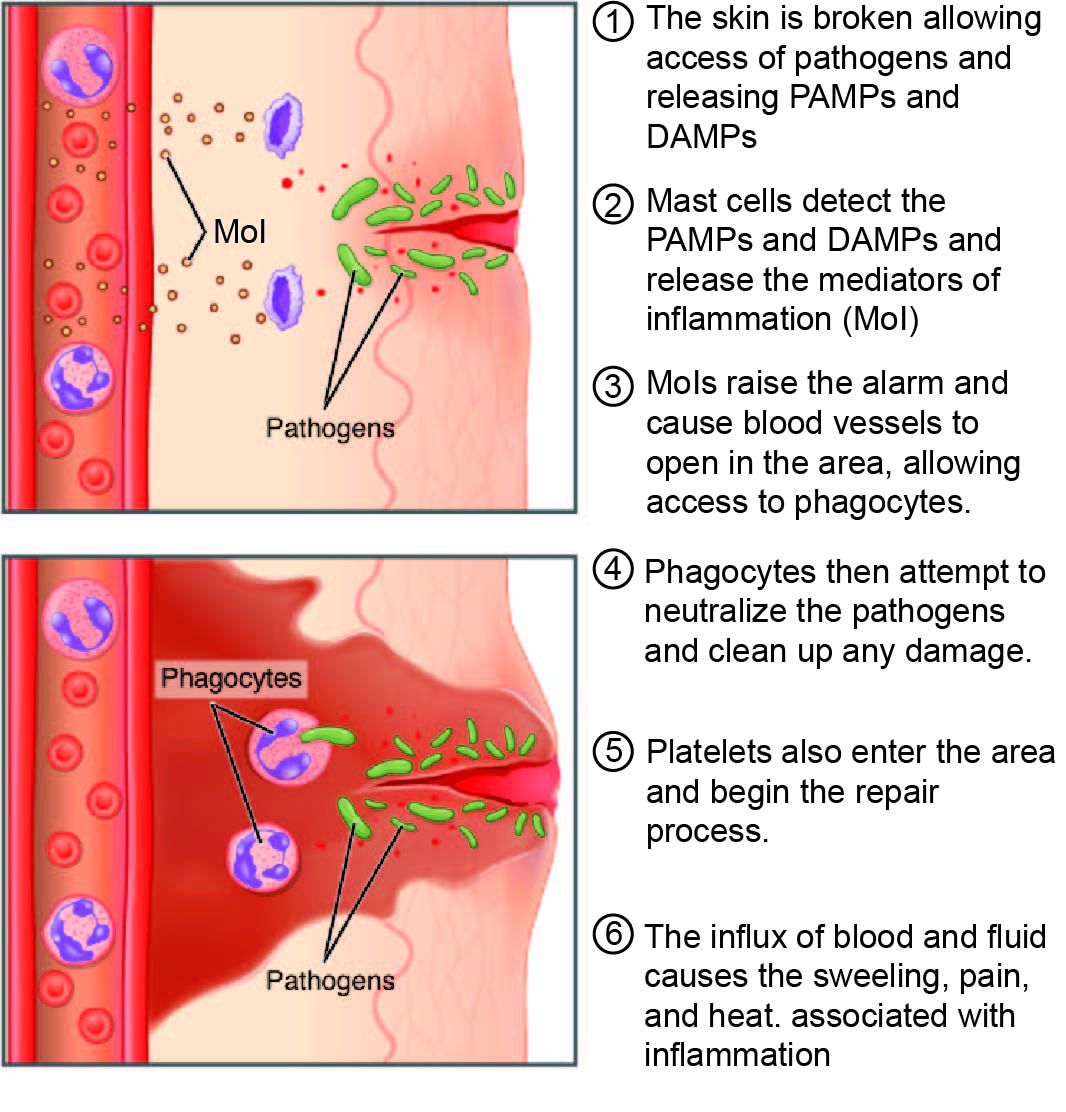
Inhaled corticosteroids: the backbone
Inhaled corticosteroids (ICS) include fluticasone, budesonide, beclomethasone, mometasone, and ciclesonide. They are the strongest anti-inflammatory drugs for asthma. They are the base of every step of treatment above the mildest. They work at the level of the genes. They calm inflammation chemicals, lower eosinophils, and shrink swelling in the lining. Over time, they also help beta-2 receptors respond again, so the rescue inhaler works better. That way of working explains the most important teaching point. An ICS is slow. It takes days to start working and one to two weeks, sometimes longer, for the full benefit. It is useless in an attack. Patients must take it every day, even when they feel perfectly well. That is exactly when people stop taking it.
The drug goes to the lung instead of being swallowed. So its effects on the whole body are far smaller than with prednisone pills. But the drug that lands in the mouth still matters. The two classic local effects are thrush in the mouth (oral candidiasis), with white patches and a sore mouth, and dysphonia, a hoarse voice from the steroid acting on the voice box muscles. Two habits prevent most of both. Rinse the mouth and spit after every dose, and use a spacer. At high doses over long periods, whole-body effects come back. These include slightly slower growth in children (check height at visits), bone loss, cataracts, and glaucoma. So we use the lowest dose that keeps control. In COPD, add one more: ICS use raises the risk of pneumonia.
The rest of the controller shelf
Combination inhalers put an ICS and a LABA in one device. Examples are fluticasone/salmeterol, budesonide/formoterol, and fluticasone/vilanterol. They improve both control and remembering doses, and they make sure the LABA is never taken alone. Triple therapy adds a LAMA in the same inhaler for severe disease.
Leukotriene modifiers are pills, which patients love. Montelukast blocks the leukotriene receptor. It is taken once a day in the evening. It helps people who also have hay fever, airways that tighten with exercise, or aspirin-exacerbated respiratory disease. It carries a boxed warning for serious mood and behavior changes. These include agitation, depression, nightmares, and suicidal thinking. Ask about mood and sleep at every visit, in children as well as adults. Tell families exactly what to watch for. Zafirlukast is similar. Zileuton blocks the making of leukotrienes and needs liver enzyme checks. None of these is a rescue drug.
Cromolyn calms mast cells. It only prevents. It stops the release of allergy chemicals and must be taken before exposure, such as before exercise or a known allergen, never during symptoms. Biologics are for severe asthma that is poorly controlled. They are given as shots in a setting where the patient can be watched. Omalizumab (anti-IgE) has a boxed warning for anaphylaxis, so watch the patient after the dose and have epinephrine ready. Mepolizumab (anti-IL-5), benralizumab (anti-IL-5 receptor), and dupilumab target asthma driven by eosinophils and "type 2" inflammation. Dupilumab blocks the IL-4 receptor alpha piece, so it blocks both IL-4 and IL-13 signals. Last come steroids by mouth or IV: prednisone pills or IV methylprednisolone. They are the workhorse of flare-ups. A short burst needs no taper. Courses longer than about two weeks must be tapered to let the adrenal system recover. Watch the blood sugar of every person with diabetes you start on a steroid burst.
| Class | Prototype | Role | Safety alert |
|---|---|---|---|
| Inhaled corticosteroid | Fluticasone, budesonide | Controller backbone: daily, asthma | Rinse and spit; use a spacer; thrush, hoarseness; not for an attack; monitor child growth |
| ICS + LABA | Fluticasone/salmeterol | Daily control when ICS alone is not enough | Still not rescue (unless a formoterol-based reliever regimen is ordered); same rinse rule |
| Leukotriene modifier | Montelukast | Oral add-on; asthma + allergic rhinitis | Boxed warning: neuropsychiatric events: ask about mood, sleep, agitation |
| 5-lipoxygenase inhibitor | Zileuton | Oral alternative | Monitor liver enzymes |
| Mast cell stabilizer | Cromolyn | Prophylaxis only: before exercise/allergen | Worthless once symptoms start; must be scheduled |
| Biologic | Omalizumab, mepolizumab | Severe, refractory asthma | Omalizumab: boxed warning: anaphylaxis; observe after injection, epinephrine available |
| Systemic corticosteroid | Prednisone | Exacerbation burst; severe disease | Hyperglycemia, infection risk, mood; taper if used beyond ~2 weeks |
Technique is the drug
An inhaler the patient cannot use correctly is a fake pill with a copay. Studies keep finding that most patients get it wrong, and so do a worrying share of clinicians. Teach the metered-dose inhaler (MDI) steps clearly, then have the patient show you. Shake the canister. Breathe all the way out. Seal the lips around the mouthpiece or spacer. Press as you start a slow, deep breath in. Hold that breath about 10 seconds. Wait about one minute between puffs. A spacer should be the default for any MDI. It removes the need for perfect hand and breath timing. It puts more drug in the lung and drops far less steroid on the throat. Dry powder inhalers (DPIs) flip one rule. The breath in must be fast and hard to break up the powder. The patient must never breathe out into the device, because moisture clumps the dose. Teach patients to track doses with the counter. The old trick of floating the canister in water does not work.
Peak flow monitoring gives the patient a clear number before symptoms get loud. First, find the person's best number. Then the zones read like a traffic light. Green is 80 to 100% of personal best: good control, keep going. Yellow is 50 to 79%: caution, so take the rescue inhaler and follow the action plan. Red is below 50%: a medical alert, so take the rescue inhaler now and get help. Every person with asthma should leave with a written action plan that names their drugs by job, not just by color.
- ICS is the controller backbone in asthma. It starts slowly, is taken daily even when well, and is never used as rescue.
- Prevent thrush and hoarseness with rinse-and-spit plus a spacer. High-dose, long-term ICS adds risks to growth, bone, cataracts, glaucoma, and (in COPD) pneumonia.
- Montelukast carries a boxed warning for mood and behavior effects. Omalizumab carries one for anaphylaxis. Zileuton needs liver test checks.
- MDI = slow, deep breath with a spacer. DPI = fast, hard breath, and never breathe out into it. Peak flow zones: green 80 to 100%, yellow 50 to 79%, red under 50%.
Section 4Cough, cold & allergy drugs
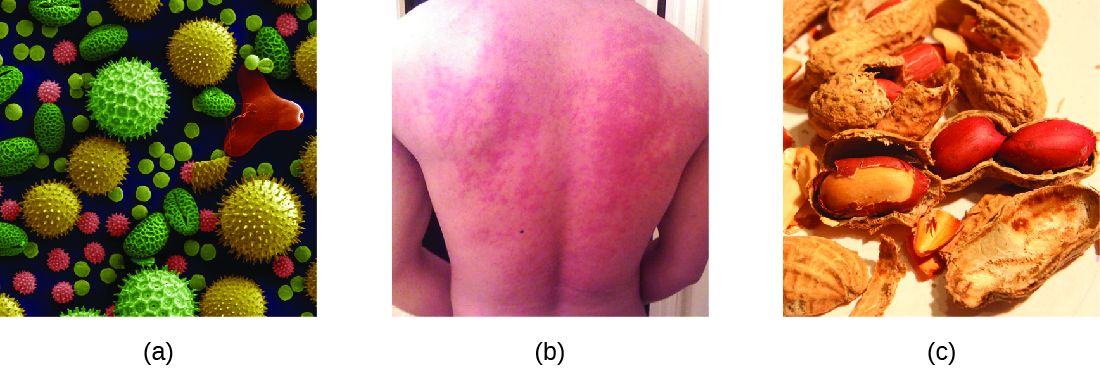
Antihistamines: two generations, one receptor
An allergen links up IgE antibodies on a mast cell. The cell bursts open and dumps histamine. Histamine acts on H1 receptors to cause the familiar package: itching, sneezing, runny nose, watery eyes, hives, and widened vessels. Antihistamines block H1. Two facts frame everything you teach about them. First, they block the receptor, but they do not remove histamine already bound. So they work far better taken before exposure than after symptoms peak. Second, antihistamines do not treat anaphylaxis. Epinephrine treats anaphylaxis. An antihistamine only softens the hives and itching afterward. Mixing up those two has killed people.
First-generation drugs include diphenhydramine, chlorpheniramine, hydroxyzine, and promethazine. They pass easily into the brain and are strongly anticholinergic. They cause strong sleepiness, which is why diphenhydramine is quietly sold as a sleep aid. They also cause dry mouth, blurred vision, constipation, and trouble passing urine. They are on the Beers criteria as drugs to avoid in older adults. In older adults, they add to confusion, falls, and trouble passing urine. In young children, they can cause excitement instead of sleep. Two special alarms come with promethazine. It has boxed warnings for severe tissue injury, including gangrene, when it leaks out of the vein or goes into an artery. Dilute it, give it slowly into a large, free-flowing line, and stop at once for burning or pain. It is also not allowed under 2 years of age because it can cause fatal slowed breathing.
Second-generation drugs include loratadine, cetirizine, fexofenadine, and levocetirizine. They barely enter the brain. So they cause far less sleepiness and far fewer anticholinergic effects. They are taken once a day. They are the right choice for someone who has to drive, study, or work. Cetirizine is the one most likely to cause some drowsiness. Here is a clear counseling point. Fexofenadine absorbs much less if taken with fruit juice (apple, orange, grapefruit) or too close to an antacid. Take it with water. For hay fever (allergic rhinitis), the most effective drugs are not antihistamines at all. They are steroid nose sprays (fluticasone, mometasone, triamcinolone). Teach that they need daily use for days before the full effect. Teach patients to aim the spray away from the wall between the nostrils (the septum), toward the ear on the same side. That prevents nosebleeds and, rarely, a hole in the septum.
Decongestants, antitussives, and the rest of the aisle
Decongestants are alpha-adrenergic agonists. They act mainly on alpha-1 receptors and narrow the swollen vessels in the nose lining. Pseudoephedrine pills work, but they act on the whole body. They raise blood pressure and heart rate and cause poor sleep and jitters. So they call for caution in high blood pressure, heart artery disease, an overactive thyroid, diabetes, an enlarged prostate (BPH), and narrow-angle glaucoma. Pseudoephedrine is kept behind the pharmacy counter because it can be used to make methamphetamine. Phenylephrine pills replaced it on open shelves. But the evidence says it barely works at approved doses by mouth. That is worth knowing when a patient says "the cold medicine did nothing." Nose sprays (oxymetazoline, phenylephrine) work beautifully. They carry the firmest rule in this section: no more than 3 days. After that, stopping causes rebound congestion (rhinitis medicamentosa) that is worse than the first stuffiness. People get trapped using the spray to treat the spray.
Cough suppressants (antitussives) quiet the cough reflex. That is right for a dry, worn-out, sleep-ruining cough. It is wrong for a wet cough that brings up mucus. You do not want to stop a person from clearing their airways. Dextromethorphan acts in the brain. It is safe at label doses but can be misused at high doses. It can add to serotonin syndrome when combined with MAOIs, SSRIs, or linezolid. Codeine is an opioid cough drug with all the opioid baggage: sleepiness, constipation, and slowed breathing. It carries a boxed warning. It is not allowed in children under 12. It is not allowed in anyone under 18 after tonsil or adenoid removal. Some people are ultrarapid CYP2D6 metabolizers. They turn codeine into morphine fast enough to stop breathing. Benzonatate is different. It numbs stretch sensors in the airway. It must be swallowed whole. Chewing or sucking the capsule numbs the mouth and throat and risks choking. Even a few capsules can kill a small child, so keep it locked up.
Two more are worth naming. Guaifenesin is an expectorant. It thins mucus so a cough can move it. It only works if the patient drinks plenty of fluid. That is the whole teaching point. Acetylcysteine is a mucolytic. It breaks the chemical bonds (disulfide bonds) that hold thick mucus together. It smells strongly of rotten eggs, so warn the patient. Have suction ready, because it can loosen a large amount of mucus at once. (The same molecule, given IV or by mouth, is the antidote for acetaminophen overdose. That is a useful hook.) Last, remember the rule for young children. Store-bought cough and cold mixes are not advised for young children. They are not allowed under 2 years and are labeled against use under 4. They carry real risk and have never been shown to help. Honey (over age 1), fluids, and moist air are the honest advice.
| Class | Prototype | Key effect | Safety alert |
|---|---|---|---|
| Antihistamine, 1st gen | Diphenhydramine | H1 block; crosses into CNS | Sedation + anticholinergic; Beers in elders; paradoxical excitation in kids; no driving |
| promethazine | Promethazine | H1 block, antiemetic | Boxed: gangrene with extravasation; contraindicated under 2 years |
| Antihistamine, 2nd gen | Loratadine, cetirizine, fexofenadine | Peripheral H1 block | Minimal sedation; fexofenadine: not with fruit juice or antacids |
| Intranasal steroid | Fluticasone nasal | Best drug for allergic rhinitis | Daily use, days for effect; aim away from the septum → epistaxis |
| Decongestant, oral | Pseudoephedrine | Alpha-1 → nasal vasoconstriction | Raises BP/HR, insomnia; caution in HTN, CAD, hyperthyroid, BPH, glaucoma |
| Decongestant, topical | Oxymetazoline | Fast, potent nasal vasoconstriction | 3 days maximum: rebound congestion beyond that |
| Antitussive, central | Dextromethorphan | Suppresses cough reflex | Abuse potential; serotonin syndrome with MAOIs/SSRIs; not for a productive cough |
| Antitussive, opioid | Codeine | Central cough suppression | Boxed: contraindicated under 12, and under 18 post-tonsillectomy; sedation, constipation |
| Antitussive, local | Benzonatate | Numbs airway stretch receptors | Swallow whole: never chew; fatal to small children; store locked |
| Expectorant | Guaifenesin | Thins secretions | Only works with generous fluid intake |
| Mucolytic | Acetylcysteine | Breaks mucus disulfide bonds | Rotten-egg odor; have suction ready; also the acetaminophen antidote |
- Antihistamines block H1 and do not treat anaphylaxis. Epinephrine does. They also work best taken before exposure.
- First-generation drugs cause sleepiness and are anticholinergic (on the Beers list for older adults). Second-generation drugs (loratadine, cetirizine, fexofenadine) mostly do not.
- Nose spray decongestants: 3 days at most, or rebound stuffiness. Pseudoephedrine pills raise BP and heart rate.
- Benzonatate is swallowed whole. Codeine has a boxed warning and is not allowed under 12. Guaifenesin only works with fluids.
Section 5Eye & ear drops
Glaucoma: a plumbing problem
The front of the eye makes a clear fluid all the time, called aqueous humor. It feeds the cornea and lens. Then it drains out through the angle where the iris meets the cornea. Pressure inside the eye (intraocular pressure, IOP) is simply the balance between how fast fluid is made and how fast it leaves. In glaucoma, drainage cannot keep up. Pressure rises, and the optic nerve is slowly choked. It happens painlessly, from the edges of vision inward. That is why glaucoma is called the silent thief of sight. It is also why patients cannot feel whether their drops are working. In open-angle glaucoma, the common long-term type, the drain is sluggish. In angle-closure glaucoma, the iris physically blocks the angle, and pressure spikes. The patient shows up with a red, rock-hard, terribly painful eye. The pupil is stuck half open. There are halos, headache, and vomiting. That is an emergency. Vision is lost in hours, not months.
Eye pressure is fluid made minus fluid out. So every drug in the class does one of two things. Prostaglandin analogs include latanoprost, bimatoprost, and travoprost. They help fluid drain out through another path. They are first-line and given once a day at bedtime. Warn patients about changes in looks, or they will stop the drug. These include a permanent brown color in the iris, darker eyelid skin, and longer, thicker lashes, sometimes in only one eye. Beta blockers such as timolol lower how much fluid is made. They are the hidden danger in this chapter. A drop that drains down the tear duct is absorbed into the whole body without ever passing the liver. Timolol drops have caused a slow heart rate, low blood pressure, and life-threatening airway tightening. Screen for asthma, COPD, heart block, and a slow heart rate before the drop goes in, and teach punctal occlusion. Alpha-2 agonists (brimonidine) both lower how much fluid is made and help it drain. They are not allowed under 2 years of age and are used with care in older children. In the very young, they can cause deep brain slowing, a slow heart rate, and pauses in breathing. Carbonic anhydrase inhibitors, such as dorzolamide drops and acetazolamide pills, lower how much fluid is made. They are sulfonamides, so ask about sulfa allergy. The pill form causes tingling, a metal taste, potassium loss, and too much acid in the blood. Cholinergic drugs that shrink the pupil (miotics), such as pilocarpine, pull the iris out of the angle. They are still useful in sudden angle closure. They cause dim, blurry vision and an ache above the eyes. Netarsudil is a Rho kinase inhibitor that helps fluid drain. It often reddens the eye.
| Class | Prototype | How it lowers IOP | Safety alert |
|---|---|---|---|
| Prostaglandin analog | Latanoprost | Increases outflow (uveoscleral) | First-line, once daily at bedtime; permanent iris/lid darkening, lash growth: warn or they quit |
| Beta blocker | Timolol | Decreases aqueous production | Systemically absorbed: bradycardia, bronchospasm; screen asthma/COPD/heart block; punctal occlusion |
| Alpha-2 agonist | Brimonidine | Decreases production + increases outflow | Dry mouth, drowsiness; avoid in infants: CNS depression, apnea |
| Carbonic anhydrase inhibitor | Dorzolamide (topical), acetazolamide (oral) | Decreases production | Sulfa agents; oral: paresthesias, metallic taste, hypokalemia, metabolic acidosis |
| Cholinergic miotic | Pilocarpine | Miosis opens the drainage angle | Dim/blurred vision, brow ache; fall risk at night; used in acute angle closure |
| Rho kinase inhibitor | Netarsudil | Increases trabecular outflow | Conjunctival redness is common and expected |
Getting the drop where it belongs
A drop that lands on a cheek is a missed dose that the chart will record as given. Teach and do the steps with care. Wash your hands and check that the label says "ophthalmic." Have the patient sit or lie with the head tilted back and eyes looking up. Pull the lower lid down to form a pouch, the conjunctival sac. Put one drop into it. Hold the bottle about an inch above, and never touch the tip to the eye, lashes, or fingers, which would make the bottle dirty. Have the patient close the eye gently. Squeezing pumps the drug out. Then apply punctal occlusion. Press lightly on the inner corner of the eye, near the nose, for 1 to 2 minutes. This one move keeps the drug in the eye and out of the blood. It is the difference between timolol treating an eye and timolol dropping a heart rate. The eye holds only about one drop. So a second drop of the same drug is waste. When two different drops are due, wait at least 5 minutes between them, or the second washes out the first. Give clear solutions before cloudy suspensions, and always put ointments last. Ointment blurs vision, so bedtime is ideal. It also seals the surface against anything that comes after. Take contact lenses out first. Each patient gets their own bottle, never shared.
Ear (otic) drops have their own rules, and the first one is absolute. Eye drops may be used in the ear, but ear drops must never go in the eye. Eye products are sterile and made for eye tissue. Ear products are not, and they will injure a cornea. Next, warm the bottle to about body temperature by rolling it in your hands. Cold fluid against the eardrum stirs up the balance organ in the inner ear. That causes dizziness, nausea, and a spinning feeling. Straighten the ear canal by pulling the outer ear (pinna) up and back for adults and children over about 3. Pull it down and back for babies and younger children, whose canals angle a different way. Drip the drops against the side of the canal so air can escape. Keep the patient lying on the other side for 3 to 5 minutes. If a cotton ball is used, place it loosely at the opening only. Never pack it in, or it soaks up the dose.
The drugs themselves are a short list. Ofloxacin ear drops and ciprofloxacin/dexamethasone treat outer ear infection (otitis externa) and infected ear tubes. The steroid part calms swelling and pain. Neomycin/polymyxin B/hydrocortisone works well but harms hearing. It is not allowed when the eardrum has a hole or ear tubes are in place. Neomycin reaching the middle ear can damage hearing for good. Check for a hole, drainage, or tubes before putting anything in. If you are unsure, stop and ask. Carbamide peroxide softens earwax by foaming. It is not an antibiotic. It must not be used on an ear that is draining or has a hole in the eardrum. And note that numbing ear drops are no longer an approved choice in many settings. Pain medicine by mouth is the safer route for ear pain.
- Eye pressure = fluid made minus fluid out. Latanoprost (first-line, bedtime) helps fluid drain. Timolol and dorzolamide lower how much is made.
- Timolol eye drops are absorbed into the whole body. A slow heart rate and airway tightening are real. Screen for asthma or COPD and teach punctal occlusion.
- Eye drops go in the conjunctival sac: one drop, the tip touches nothing, 5 minutes between different drops, and ointments last.
- Ear drops: warm the drops; pull the outer ear up and back (adult) or down and back (young child); never put ear drops in an eye; drops with neomycin are not allowed with a hole in the eardrum.
The chapter in one breath
- The airway has two drug targets: tight muscle (M3 squeezes, beta-2 relaxes) and inflammation. That is why every patient carries two kinds of inhaler.
- Rescue means albuterol, in minutes. Controller means an inhaled steroid, over weeks. Mixing them up is a deadly error, not a slip of the tongue.
- Albuterol brings tremor, a fast heart rate, low potassium, and high blood sugar. LABAs are never given alone in asthma. Ipratropium and tiotropium block M3 and anchor COPD treatment.
- Theophylline has almost no margin: 5 to 15 mcg/mL, nausea and poor sleep first, then rhythm problems and seizures. Smoking and ciprofloxacin move the level hard.
- Inhaled steroids need daily use, rinse-and-spit, and a spacer. Montelukast carries a boxed warning for mood and behavior changes. Teaching technique and peak flow zones (green, yellow, red) is the job.
- Antihistamines do not treat anaphylaxis. First-generation drugs cause sleepiness and are on the Beers list. Nose spray decongestants get 3 days before rebound. Benzonatate is swallowed whole.
- Glaucoma drugs either cut fluid making or open drainage. Latanoprost is first-line, and timolol eye drops can slow the heart or tighten the airways of the whole body.
- Technique is the drug: the conjunctival sac, one drop, punctal occlusion, 5 minutes between drops, and ointment last. Warm ear drops, and pull the outer ear up and back in adults and down and back in young children.
ReferenceWords worth knowing
A quick list of the terms in this chapter. Skim it now, or come back when a word trips you up.
- Airway hyperresponsiveness
- The twitchy, easily triggered state of long-inflamed airway smooth muscle; the reason controllers cut down attacks.
- Aqueous humor
- The clear fluid made in the front of the eye and drained at the angle; the balance of fluid made and fluid out sets the pressure inside the eye.
- Beta-2 agonist
- A drug that turns on beta-2 receptors on airway smooth muscle to open the airway, such as albuterol (short-acting) or salmeterol (long-acting).
- Bronchoconstriction
- Narrowing of the airway when airway smooth muscle squeezes, driven by acetylcholine at M3 muscarinic receptors.
- Bronchodilator
- Any drug that relaxes airway smooth muscle and widens the airway: beta-2 agonists, antimuscarinics, and methylxanthines.
- Conjunctival sac
- The pouch made by pulling down the lower eyelid; the right target for an eye drop, never the cornea itself.
- Controller (maintenance) drug
- A drug taken every day on a schedule that calms airway inflammation over days to weeks, such as an inhaled steroid; useless in an attack.
- Dysphonia
- Hoarseness or a change in the voice; a local side effect of inhaled steroids, lowered by a spacer and rinse-and-spit.
- Expectorant
- A drug such as guaifenesin that thins mucus so a cough can clear it; needs plenty of fluid to work.
- Glaucoma
- Damage to the optic nerve linked to high pressure in the eye; long-term open-angle disease is painless, while sudden angle closure is an emergency that threatens sight.
- Intraocular pressure (IOP)
- Pressure inside the eye, set by fluid made minus fluid out; the target every glaucoma drug can change.
- LABA
- Long-acting beta-2 agonist (salmeterol, formoterol); for daily control only, and never used alone in asthma.
- LAMA
- Long-acting muscarinic antagonist (tiotropium, umeclidinium); a once- or twice-daily control bronchodilator and the backbone of COPD treatment.
- Methylxanthine
- A bronchodilator related to caffeine, mainly theophylline; narrow therapeutic index with a goal level of about 5 to 15 mcg/mL.
- Mucolytic
- A drug such as acetylcysteine that breaks up thick mucus by cutting its disulfide bonds.
- Ototoxicity
- Drug damage to hearing or balance; the reason ear drops with neomycin are not allowed with a hole in the eardrum.
- Peak expiratory flow
- The fastest speed a person can blow out, compared with their personal best: green 80 to 100%, yellow 50 to 79%, red below 50%.
- Punctal occlusion
- Gentle pressure on the inner corner of the closed eye for 1 to 2 minutes after a drop, which keeps the drug in the eye and out of the blood.
- Rebound congestion (rhinitis medicamentosa)
- Worse nasal stuffiness caused by using a decongestant nose spray for more than about 3 days.
- Rescue (reliever) drug
- A fast-acting bronchodilator, with albuterol as the prototype, used for sudden symptoms; it treats the spasm, not the inflammation.
- SABA
- Short-acting beta-2 agonist (albuterol); starts in about 5 minutes and lasts 4 to 6 hours. This is the rescue inhaler.
- Spacer
- A holding chamber attached to a metered-dose inhaler that removes the need for perfect timing, puts more drug in the lung, and drops less steroid in the mouth and throat.
Check yourself
Gastrointestinal Drugs
The gut is the one body system patients will tell you about without being asked. Heartburn, nausea, constipation, and diarrhea are so common that it is easy to treat them casually. That is exactly where people get into trouble. A proton pump inhibitor given after breakfast loses much of its effect. A drug to stop diarrhea, given to the wrong patient, can turn an infection they would survive into toxic megacolon. A nausea drug pushed too fast into a small vein can cost a patient their hand. This chapter walks the gut from the stomach to the colon, one drug class at a time. It keeps coming back to the two questions that matter most at the bedside. When do I give this? And what do I watch for afterward?
By the end of this chapter you can
- Explain how the parietal cell makes acid, and where PPIs, H2 blockers, and antacids each stop it.
- Time acid-lowering and lining-protecting drugs the right way, and name the long-term risks of PPI use.
- Describe current treatment plans to wipe out Helicobacter pylori, and the teaching that makes them work.
- Map the four inputs to the vomiting center, and match each antiemetic class to the receptor it blocks.
- Compare laxative classes by how they work and how fast, and say when a laxative must not be given.
- Name the patients who must not get antidiarrheals, and explain why.
- Outline the drugs for inflammatory bowel disease, including the screening needed before a biologic.
- Rank the checks, teaching, and safety alerts for the main GI drug classes.
Section 1Acid and ulcer drugs
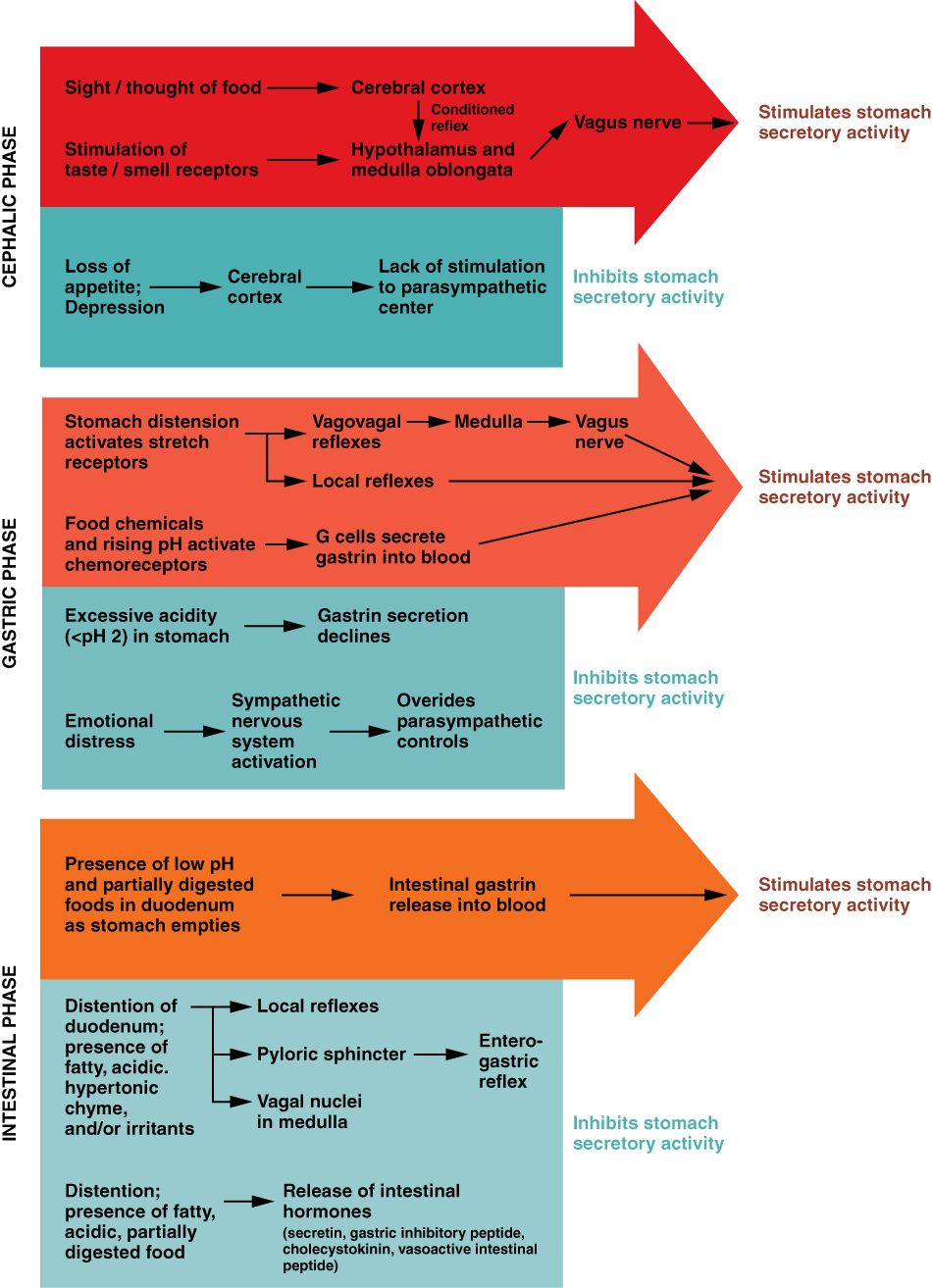
Why the stomach does not digest itself
The stomach lining is a standoff between two forces. On the attack is hydrochloric acid. The parietal cell pumps it into the stomach through an enzyme called the H+/K+-ATPase, the proton pump. Three signals turn that pump on. They are gastrin from G cells, histamine acting on H2 receptors, and acetylcholine from the vagus nerve acting on M3 receptors. Histamine is the amplifier. Block it, and the other two lose most of their punch.
On defense are a layer of mucus, a cushion of bicarbonate under it, strong blood flow to the lining, and prostaglandins that keep all three going. Damage happens when the defense fails, not just when acid rises. That is why the two great causes of ulcers are Helicobacter pylori, which burrows into the mucus layer, and NSAIDs, which shut off the prostaglandins that build it. This explains a confusing fact. Lowering acid heals ulcers, but it does not cure the cause.
Proton pump inhibitors: the strongest tool, and the most misused
Proton pump inhibitors (PPIs) include omeprazole, pantoprazole, esomeprazole, lansoprazole, rabeprazole, and dexlansoprazole. They shut down the pump itself, and they do it for good. The cell must build new pumps to recover. That is why one dose a day lowers acid for about 24 hours, even though the drug leaves the blood in a couple of hours. They are the drugs of choice for a worn-away food pipe (erosive esophagitis), peptic ulcer disease, H. pylori plans, preventing NSAID ulcers, and preventing stress ulcers in the ICU.
Timing is the most important thing you control here. A PPI is a prodrug. It only switches on inside a pump that is actively making acid. Give it to a fasting patient with resting pumps, and most of the dose is wasted. Give it 30 to 60 minutes before the first meal of the day. If a patient says they take their omeprazole at bedtime with a snack, you have just found the reason their reflux never got better.
The long-term picture deserves respect. Long-term PPI use is linked to low magnesium, low vitamin B12, poor iron absorption, more Clostridioides difficile infection, pneumonia caught in the community, kidney inflammation (acute interstitial nephritis), and broken hips, wrists, and spine bones. Stopping suddenly after months of use causes rebound acid overproduction. Symptoms flare, the patient thinks they need the drug forever, and the cycle locks in. Taper instead. One interaction is worth memorizing. Omeprazole and esomeprazole block CYP2C19, the enzyme that switches on clopidogrel. That weakens clopidogrel's effect on platelets. Pantoprazole is the preferred PPI for a patient on clopidogrel.
H2 blockers, antacids, and mucosal protectants
H2-receptor antagonists (famotidine, cimetidine, nizatidine) block histamine at the parietal cell. They work faster than PPIs but lower acid less. Tolerance builds within days to weeks. So they are best for symptoms that come and go or happen at night, not as a long-term stand-in for a PPI. (Ranitidine was pulled from the market in 2020 after it was found to contain NDMA, a likely cancer-causing chemical. Do not expect to see it.) Famotidine leaves through the kidneys. With weak kidneys, or in an older adult, an unadjusted dose causes confusion, agitation, and delirium. Cimetidine is the outlier. It strongly blocks CYP450 and raises levels of warfarin, phenytoin, and theophylline. It also blocks male hormones, causing breast growth and erection problems. It is rarely the right choice.
Antacids do not touch the pump. They chemically cancel out acid that is already there. They work in minutes and last an hour or two. The mineral in them decides the side effect. Magnesium hydroxide causes diarrhea. Aluminum hydroxide causes constipation, and combination products pair the two on purpose. Calcium carbonate constipates and can cause milk-alkali syndrome. Sodium bicarbonate brings a load of sodium and too much base in the body. With kidney failure, magnesium and aluminum build up. Antacids also bind (chelate) other drugs, such as levothyroxine, tetracyclines, fluoroquinolones, and iron. The safe time gap depends on the drug; there is no single rule. One to two hours is the minimum for ordinary pills. The sensitive ones need more. Keep levothyroxine at least 4 hours away from aluminum, magnesium, or calcium antacids and from iron. Give fluoroquinolones 2 hours before or 6 hours after an antacid with these minerals. Binding can cut absorption enough for the infection treatment to fail. Keep tetracyclines and iron pills at least 2 hours apart. When you are not sure, look up the drug instead of guessing “an hour or two.”
Sucralfate is a paste, not a blocker. In acid, it turns sticky and clings to the ulcer crater like a bandage. It needs acid to work, and it binds anything nearby. So give it on an empty stomach, 1 hour before meals and at bedtime. Hold other pills for 2 hours. Misoprostol is a prostaglandin E1 look-alike. It replaces what NSAIDs took away and prevents NSAID ulcers. But it makes the uterus contract and is not allowed in pregnancy. Confirm pregnancy status and teach reliable birth control before it is given out.
| Class | Prototype | Key effect | Safety alert |
|---|---|---|---|
| Proton pump inhibitor | Pantoprazole, omeprazole | Irreversibly blocks the H+/K+-ATPase; strongest acid suppression | 30 to 60 min before the first meal. Do not crush delayed-release forms. Watch Mg2+, B12, and C. diff. Use pantoprazole with clopidogrel. |
| H2 blocker | Famotidine | Blocks histamine H2 on the parietal cell; faster onset, weaker effect | Reduce dose in renal impairment: confusion and delirium in older adults. Tolerance develops. |
| Antacid | Aluminum/magnesium hydroxide | Neutralizes existing acid; onset in minutes | Keep apart from other pills; the gap depends on the drug. 1 to 2 h is the minimum, but levothyroxine needs 4 h, and fluoroquinolones need 2 h before or 6 h after (tetracyclines and iron at least 2 h). Mag = diarrhea, Al = constipation; both build up in kidney failure. |
| Mucosal protectant | Sucralfate | Forms a physical barrier over the ulcer bed | Empty stomach, 1 h before meals and at bedtime; separate other drugs by 2 h. Contains aluminum. |
| Prostaglandin analog | Misoprostol | Restores mucus and bicarbonate; prevents NSAID ulcers | Contraindicated in pregnancy: abortifacient. Diarrhea and cramping are common. |
| Bismuth compound | Bismuth subsalicylate | Coats mucosa, mildly antibacterial against H. pylori | Harmless black stool and black tongue: warn patients. It is a salicylate: avoid in children (Reye syndrome) and in aspirin allergy. |
Eradicating H. pylori
H. pylori causes most duodenal ulcers and many stomach ulcers. It is also a known risk factor for stomach cancer. So once it is found, wiping it out is not optional. Rising resistance to clarithromycin has changed the recipe. Bismuth quadruple therapy is now the preferred first plan in most places. It is a PPI plus bismuth, tetracycline, and metronidazole for 10 to 14 days. Rifabutin triple therapy (omeprazole, amoxicillin, rifabutin) is another first choice. The older clarithromycin triple therapy (PPI, amoxicillin, clarithromycin) is saved for places with low resistance and for patients who have never taken a macrolide.
These plans fail mostly for one reason: the patient stops taking them. Picture four drugs, several times a day, for two weeks. They bring a metal taste and dark stools. And the person feels better by day four. Your teaching is the treatment. Stress finishing every dose. Warn that metronidazole with alcohol causes a disulfiram-like reaction (flushing, vomiting, a pounding heart). Explain that bismuth turns the tongue and stool black, which is harmless. A follow-up breath or stool test confirms the cure. It is done at least 4 weeks after the antibiotics and bismuth end. Hold the PPI for 1 to 2 weeks before the test. Lowering acid also holds down the germ and gives a false "all clear."
- The parietal cell proton pump is the final shared step. PPIs block it for good. H2 blockers block its histamine trigger. Antacids cancel out acid further down.
- PPIs are prodrugs switched on by working pumps. Give them 30 to 60 minutes before the first meal, and taper instead of stopping suddenly.
- Long-term PPI risks: low magnesium, low B12, C. difficile, pneumonia, kidney inflammation, and broken bones. Use pantoprazole with clopidogrel.
- Bismuth quadruple therapy is first-line for H. pylori. Teaching people to take every dose, and the alcohol and metronidazole warning, is your job.
Section 2Antiemetics
Four roads to the vomiting center
Vomiting is a reflex. A network in the medulla, usually called the vomiting center, runs it. It has four separate inputs. Every class of nausea drug (antiemetic) works by cutting one of those roads. Match the drug to the road, and you will almost never pick the wrong one.
The first road is the chemoreceptor trigger zone (CTZ). It sits in a spot called the area postrema, on the floor of the fourth ventricle in the brain. It lies outside the blood-brain barrier. That makes it a chemical sensor for the blood. It senses opioids, chemotherapy, anesthetics, kidney failure waste, and toxins. It is packed with dopamine D2, serotonin 5-HT3, and neurokinin-1 (NK1) receptors. The second road is the gut itself. Chemotherapy and radiation damage gut cells that store serotonin (enterochromaffin cells). They dump serotonin onto 5-HT3 receptors on the vagus nerve. That signal travels from the small bowel to the medulla in minutes. The third road is the balance system of the inner ear (vestibular apparatus). It is rich in histamine H1 and muscarinic receptors. That is why motion sickness responds to antihistamines and scopolamine but not to ondansetron. The fourth road is the outer layer of the brain (cerebral cortex). Anxiety, smells, and memory come in this way. It is the source of nausea that starts before a treatment (anticipatory nausea). That is why a benzodiazepine is sometimes the right nausea drug.
The classes
| Class | Prototype | Key effect | Safety alert |
|---|---|---|---|
| 5-HT3 antagonist | Ondansetron | Blocks serotonin at vagal afferents and CTZ; first-line for chemo and post-op nausea | QT prolongation: check ECG and K+/Mg2+; push IV slowly. Headache and constipation are common. Serotonin syndrome risk with other serotonergic drugs. |
| NK1 antagonist | Aprepitant | Blocks substance P; covers delayed chemo-induced nausea | CYP3A4 interactions: reduces oral contraceptive efficacy (backup method for 1 month), alters warfarin and dexamethasone dosing. |
| Dopamine D2 antagonist | Metoclopramide, prochlorperazine; promethazine (phenothiazine, mainly H1) | Blocks D2 in the CTZ; metoclopramide also speeds gastric emptying. Promethazine's antiemetic effect is largely H1 and antimuscarinic. | Movement side effects (EPS) and, for metoclopramide, a boxed warning for tardive dyskinesia, so limit it to 12 weeks. Promethazine carries a boxed warning for severe tissue injury and gangrene if it leaks out of the vein. |
| Antihistamine (H1) | Meclizine, dimenhydrinate | Blocks the vestibular road; motion sickness and vertigo | Sedation, dry mouth, urinary retention; confusion and falls in older adults (Beers criteria). Useless for chemo-induced nausea. |
| Anticholinergic | Scopolamine (transdermal) | Blocks muscarinic vestibular input; motion sickness prophylaxis | Put it behind the ear 4 h before travel and change it every 72 h. Wash hands afterward, since drug on the fingers can reach the eye and widen the pupil. |
| Corticosteroid | Dexamethasone | Adjunct that boosts every other antiemetic in chemo regimens | Hyperglycemia, insomnia, mood change; check glucose in diabetic patients. |
| Cannabinoid | Dronabinol | Refractory chemo-induced nausea; also stimulates appetite | Dysphoria, dizziness, sedation: poorly tolerated by older adults. Schedule III. |
| Benzodiazepine | Lorazepam | Blunts anticipatory nausea driven by the cortex | Sedation and fall risk; not an antiemetic on its own. |
Two special cases are worth knowing cold. In pregnancy, the first drug for nausea and vomiting is doxylamine plus pyridoxine (vitamin B6). It is among the best-studied drugs in pregnancy. Ondansetron and metoclopramide are later choices. And treat promethazine with the care you would give a high-alert drug. It is not allowed in children under 2, because it can cause fatal slowed breathing. If it is given IV, it must be well diluted and run in slowly into a large, open vein. A leak around the vein causes tissue death severe enough to need amputation. A deep shot into a large muscle is safer.
What you actually do
Preventing nausea beats rescuing every time. Chemotherapy nausea drugs are given before the drug that causes the nausea, not after the patient is retching. The plan is matched to how likely the chemotherapy is to cause vomiting. For the drugs most likely to cause it, a common plan is a 5-HT3 antagonist plus dexamethasone plus an NK1 antagonist. Beyond dosing, check what vomiting is doing to the body. Losing stomach contents means losing hydrogen, chloride, and potassium. That causes low potassium, low chloride, and too much base in the blood (hypokalemic hypochloremic metabolic alkalosis), plus dehydration. Track intake and output, daily weight, skin turgor, blood pressure lying and standing, and electrolytes. Protect the airway in anyone who is sleepy or less alert. And keep asking why. Nausea is a symptom. A blocked bowel, high pressure in the skull, a heart attack, high calcium, and diabetic ketoacidosis all cause vomiting that no nausea drug will fix.
- Four inputs drive vomiting: the CTZ (D2, 5-HT3, NK1), vagus nerve signals from the gut (5-HT3), the inner ear balance system (H1, muscarinic), and the cortex.
- Ondansetron is first-line for nausea from chemo and after surgery. Watch the QT, potassium, and magnesium. It does nothing for motion sickness.
- Metoclopramide carries a boxed warning for tardive dyskinesia (limit to 12 weeks). Promethazine carries one for gangrene if it leaks out of the vein.
- Vomiting causes low potassium, low chloride, and too much base in the blood. Treat the fluid and electrolytes, and always look for the cause.
Section 3Laxatives and antidiarrheals
Laxatives: five ways to move stool
How hard or soft stool is comes down to water and how fast it moves. Every laxative either adds water, holds water, or hurries things along before water can be taken back.
Bulk-forming laxatives include psyllium and methylcellulose, which are soluble fibers, and calcium polycarbophil, a man-made water-holding material. They soak up water, swell, and stretch the bowel wall. That sets off the bowel's squeezing waves (peristalsis). They are among the safest classes and can be used every day for good. But they take 12 to 72 hours. And they carry one real danger. Taken without enough fluid, they can swell into a blockage in the food pipe or bowel. Teach a full glass of water with every dose. Never give one to a patient who cannot swallow well.
Osmotic laxatives pull water into the bowel. Polyethylene glycol 3350 (PEG) is the workhorse for long-term constipation. It is well tolerated, is not absorbed, causes no cramps, and is safe long-term. Lactulose is a sugar that is not absorbed, and it has a second job. In hepatic encephalopathy, confusion from liver failure, gut bacteria break it down into acid. The acid traps ammonia as ammonium so it leaves in the stool. In that setting, the dose is adjusted to 2 to 3 soft stools a day. A patient who is not passing stool is a patient whose ammonia is climbing. Magnesium salts work fast but build up dangerously when the kidneys are weak. Sodium phosphate products can cause severe electrolyte shifts and kidney damage from phosphate (acute phosphate nephropathy). Avoid them in older adults and anyone with kidney or heart disease.
Stimulant laxatives (senna, bisacodyl) irritate the gut's nerves directly. They cause a bowel movement in 6 to 12 hours by mouth, or 15 to 60 minutes by suppository. They cause cramps. Long-term use is linked to a harmless dark color in the colon lining (melanosis coli). Coated (enteric-coated) bisacodyl must not be crushed. It must not be taken within an hour of milk or antacids. Lowering stomach acid dissolves the coating early and irritates the stomach. Docusate, a stool softener, is the most ordered and least effective laxative in the hospital. The evidence for it alone is weak. Its real role is paired with senna for constipation caused by opioids. Mineral oil greases the bowel. But it risks lung damage (lipoid pneumonia) if breathed in, and it blocks absorption of the fat-soluble vitamins.
Two newer groups matter. Secretagogues make the intestine release fluid. They include lubiprostone, which opens chloride channels, and linaclotide and plecanatide, which turn on guanylate cyclase-C. They can cause severe dehydration in young children. Linaclotide's boxed warning and the rule against its use now apply to children under 2. The label was revised in 2021; it used to say under 6. Plecanatide's label still says not to use it under age 6. And PAMORAs are a clever idea. These gut-only opioid blockers include methylnaltrexone, naloxegol, and naldemedine. They block the opioid receptors in the gut that cause constipation while staying out of the brain. So the patient keeps their pain control and gets their bowels back.
| Class | Prototype | Key effect / onset | Safety alert |
|---|---|---|---|
| Bulk-forming | Psyllium | Absorbs water, adds bulk; 12 to 72 h | Full glass of water with every dose: obstruction risk without it. Safest for long-term use. |
| Osmotic | Polyethylene glycol 3350 | Draws water into the lumen; 1 to 3 days | First-line for chronic constipation. Lactulose is titrated to 2 to 3 soft stools/day in hepatic encephalopathy. |
| Saline osmotic | Magnesium hydroxide/citrate | Rapid osmotic pull; 30 min: 6 h | Avoid in renal impairment: magnesium toxicity. Sodium phosphate risks phosphate nephropathy. |
| Stimulant | Senna, bisacodyl | Stimulates enteric nerves; 6 to 12 h oral | Cramping; do not crush enteric-coated bisacodyl or give within 1 h of milk/antacids. |
| Surfactant (softener) | Docusate sodium | Lets water enter stool; 1 to 3 days | Weak as monotherapy; use paired with senna for opioid-induced constipation. |
| Secretagogue | Lubiprostone, linaclotide | Triggers intestinal fluid secretion | Nausea (take lubiprostone with food). Linaclotide: boxed warning, not allowed under age 2. Plecanatide: not allowed under age 6. |
| PAMORA | Methylnaltrexone, naloxegol | Blocks gut opioid receptors without reversing analgesia | Reserved for opioid-induced constipation; contraindicated in known or suspected bowel obstruction (perforation risk). |
One rule outranks all of the above. Never give a laxative to a patient with belly pain of unknown cause, a possible blocked bowel, or possible appendicitis. Stirring up the bowel against a blockage or an inflamed appendix invites a burst. A rigid belly, no bowel sounds, vomiting, and no gas: that patient needs an assessment, not a dose.
Antidiarrheals: slowing down, carefully
Loperamide is a mu-opioid agonist that acts on the gut and barely enters the brain at normal doses. That is why it is sold over the counter. It is not harmless. In the huge doses seen in opioid misuse, loperamide blocks sodium and potassium channels in the heart. It causes a long QT, torsades de pointes, and cardiac arrest. That led to an FDA warning and limits on package size. Repeat the top limit: 8 mg a day over the counter, 16 mg a day by prescription.
Diphenoxylate with atropine is a Schedule V opioid. The small dose of atropine is there only to make an overdose unpleasant. So anticholinergic symptoms are the sign that someone took too much. Bismuth subsalicylate is mild and useful for traveler's diarrhea, with the usual salicylate (aspirin-type) cautions. Octreotide handles severe watery diarrhea from carcinoid syndrome, a VIPoma (a hormone-making tumor), or chemotherapy diarrhea that will not stop. Cholestyramine treats diarrhea from bile acids. And for most sudden infectious diarrhea, the real treatment is oral rehydration solution. It is water plus sodium plus glucose. It works through the sodium-glucose carrier in the gut, which keeps working even when the gut is inflamed.
Now the rule that shows up on every test and, more important, at every bedside. Do not give a drug that slows the gut to a patient with bloody diarrhea, high fever, or possible C. difficile. Diarrhea is how the body flushes out a toxin. Slowing the gut keeps the toxin against the lining. That can bring on toxic megacolon: a swollen, stalled colon that can burst. If a patient on antibiotics gets new watery diarrhea, the answer is a C. difficile test, contact precautions, hand washing with soap and water (alcohol does not kill spores), and a call to the provider. Not loperamide.
- Bulk-forming laxatives are the safest for long-term use but need a full glass of water. PEG 3350 is first-line for long-term constipation.
- Lactulose for confusion from liver failure is adjusted to 2 to 3 soft stools a day to trap and remove ammonia.
- No laxative with belly pain of unknown cause, a possible blocked bowel, or possible appendicitis.
- No gut-slowing drug with bloody diarrhea, fever, or C. difficile, because of the risk of toxic megacolon. High-dose loperamide causes torsades.
Section 4IBD and other GI drugs
Inflammatory bowel disease
Inflammatory bowel disease (IBD) is long-lasting inflammation of the gut driven by the immune system. It comes in two shapes. Ulcerative colitis is continuous and shallow, and it stays in the colon and rectum. Crohn disease comes in patches and goes through the full thickness of the wall. It can strike anywhere from mouth to anus. That is why it causes fistulas (tunnels), abscesses, and narrowed spots (strictures). Treatment is built in two moves. First, bring on remission with something fast. Then keep it with something safe enough for years. Steroids bring on remission. They never keep it.
Aminosalicylates (5-ASA) calm inflammation on the surface of the bowel lining. Mesalamine comes as delayed-release pills and, importantly, as enemas and suppositories. For inflammation of the rectum (proctitis), a suppository puts the drug right where the disease is, with almost none reaching the body. Sulfasalazine is a prodrug. Gut bacteria split it into 5-ASA, the active half, and sulfapyridine, the half that causes most side effects. It is a sulfonamide, so ask about sulfa allergy. It stains urine, skin, and soft contact lenses orange-yellow. It causes a low sperm count that reverses. It blocks folate absorption, so patients take folic acid with it. Mesalamine can harm the kidneys, so check kidney function at the start and from time to time.
Corticosteroids break a flare. Budesonide is the clever one. The liver breaks most of it down on its first pass. So it acts on the gut with far fewer effects on the rest of the body. That makes it a good choice for mild to moderate Crohn disease in the ileum (the end of the small bowel). Prednisone pills or IV methylprednisolone handle bigger flares. Watch blood sugar, blood pressure, mood, and infection risk. Taper instead of stopping. Protect bone early.
Immunomodulators keep remission. Azathioprine and 6-mercaptopurine need TPMT and NUDT15 testing before the first dose. A patient with low enzyme activity will get a deep, possibly fatal marrow shutdown on a normal dose. Check CBC and liver enzymes. Know that pancreatitis and a higher lymphoma risk belong to this class. Methotrexate is used mainly in Crohn disease. It is given with folic acid, dosed weekly (never daily), and never allowed in pregnancy.
Biologics changed this disease. Anti-TNF drugs include infliximab (IV), adalimumab, certolizumab, and golimumab. They work very well and carry a boxed warning for serious infection and cancer. Before the first dose, every patient is screened for latent tuberculosis (a PPD skin test or an interferon-gamma release assay) and hepatitis B. Blocking TNF wakes up both. Live vaccines are not given during treatment. Bring inactivated vaccines up to date first. Newer drugs are more targeted. Vedolizumab blocks a signal that brings immune cells into the gut. So its infection risk stays mostly in the gut. Ustekinumab targets IL-12/23. Risankizumab and mirikizumab target IL-23. JAK inhibitor pills (tofacitinib, upadacitinib) work fast. But they carry a broad boxed warning for serious infection, cancer, blood clots, major heart events, and death.
| Class | Prototype | Key effect | Safety alert |
|---|---|---|---|
| Aminosalicylate | Mesalamine, sulfasalazine | Topical gut anti-inflammatory; mild-to-moderate UC | Sulfasalazine: sulfa allergy, orange-yellow staining of urine and contact lenses, give folic acid. Mesalamine: monitor renal function. |
| Corticosteroid | Prednisone, budesonide | Induces remission in a flare: never for maintenance | Glucose, blood pressure, mood, infection, bone loss. Taper; budesonide has fewer systemic effects. |
| Immunomodulator | Azathioprine, 6-mercaptopurine | Steroid-sparing maintenance | Check TPMT/NUDT15 before the first dose. Monitor CBC and LFTs; pancreatitis and lymphoma risk. |
| Anti-TNF biologic | Infliximab, adalimumab | Induces and maintains remission; heals fistulas | Screen for latent TB and hepatitis B first. Boxed warning: serious infection, malignancy. No live vaccines. Monitor infusion reactions. |
| Anti-integrin | Vedolizumab | Gut-selective blockade of lymphocyte trafficking | Favored when systemic infection risk is a concern; onset is slower than anti-TNF. |
| JAK inhibitor | Tofacitinib, upadacitinib | Oral, rapid onset for ulcerative colitis | Boxed warning: infection, malignancy, thrombosis, MACE, death. Check lipids, CBC, and clot risk. |
The rest of the GI cabinet
Prokinetics speed up a stomach that will not empty. Metoclopramide is the mainstay for slow stomach emptying from diabetes (diabetic gastroparesis). The same tardive dyskinesia warning applies, and the 12-week limit is not a suggestion. Erythromycin is borrowed from the antibiotic shelf. It turns on motilin receptors, which stir the stomach, though tolerance builds within weeks.
Antispasmodics (dicyclomine, hyoscyamine) are anticholinergics. They relax the gut's smooth muscle in irritable bowel syndrome (IBS). Their side effects are pure anticholinergic load: dry mouth, blurred vision, trouble passing urine, constipation, and confusion in older adults. Other IBS drugs include rifaximin, an antibiotic that stays in the gut. Eluxadoline is not allowed after gallbladder removal or with heavy drinking, because of pancreatitis risk. Alosetron is limited to women with severe IBS where diarrhea dominates. It is given under a special safety program (REMS), because it causes loss of blood flow to the colon (ischemic colitis).
Pancrelipase replaces the enzymes a scarred or removed pancreas no longer makes. The teaching is specific. Take it with every meal and every snack. Swallow the capsule whole. If it must be opened, sprinkle the beads on a small amount of acidic soft food such as applesauce. Foods that are not acidic dissolve the coating and destroy the enzymes. Do not let the beads sit in the mouth, since they irritate the lining. Do not go over the prescribed dose. Very high doses have been linked to scarring of the colon (fibrosing colonopathy). Ursodiol dissolves cholesterol gallstones and helps liver disease where bile does not flow well. Orlistat blocks the fat-digesting enzyme lipase and is used for weight loss. It causes oily stools and gas with leakage. It blocks absorption of vitamins A, D, E, and K. A vitamin taken at a different time of day is standard.
- IBD treatment brings on remission with steroids and keeps it with 5-ASAs, immunomodulators, or biologics. Steroids never keep it.
- Sulfasalazine: sulfa allergy, orange-yellow staining, and folic acid. Mesalamine: check the kidneys.
- TPMT/NUDT15 before azathioprine. Latent TB and hepatitis B screening before any anti-TNF biologic. No live vaccines on biologics.
- Pancrelipase goes with every meal and snack, with the capsule whole or sprinkled on acidic food only.
Section 5GI care at the bedside
Timing is the drug
More than any other body system, GI drugs are ruled by the clock and by food. The same tablet given at the wrong hour is a different drug. Learn this table once, and you will carry it for your whole career.
| Drug | When | Why |
|---|---|---|
| Proton pump inhibitor | 30 to 60 min before the first meal | It is a prodrug: it only activates in pumps that are actively secreting. |
| H2 blocker | 30 to 60 min before the meal that sets off symptoms when the goal is preventing meal-related symptoms; scheduled daily doses may be given without regard to food, with a bedtime dose for acid at night | It has to be in the body before the meal to blunt the acid rise after eating; the bedtime dose covers the rise overnight. |
| Antacid | 1 to 2 h after meals; keep other drugs at least 1 to 2 h apart: levothyroxine 4 h, fluoroquinolones 2 h before or 6 h after | Food buffers acid first; the antacid chelates and blocks other drugs, and the chelation-prone ones need a wider gap. |
| Sucralfate | 1 h before meals and at bedtime, empty stomach; other drugs 2 h apart | It needs acid to polymerize and it binds anything else present. |
| Pancrelipase | With every meal and every snack | The enzymes must be present when the food is. |
| Bulk laxative | Any time, with a full glass of water | Without fluid it swells into an obstruction. |
| Scopolamine patch | 4 h before travel, behind the ear, change q72h | Slow transdermal onset; wash hands afterward to avoid pupil dilation. |
| Chemotherapy antiemetics | Before the chemotherapy, on a schedule | Prevention is far more effective than rescue. |
Next to timing sits the form of the drug. Many GI drugs are delayed-release or enteric-coated. These include PPIs, bisacodyl, mesalamine, and pancrelipase. Crushing them destroys them or dumps the whole dose at once. When a patient cannot swallow, do not make things up. Check a do-not-crush list, and ask the pharmacist for another form. Some products have approved workarounds. Certain PPI capsules may be opened onto applesauce. Certain PPI granules may be given through a feeding tube in a specific liquid. But those are instructions for one product, not a general permission.
What to teach
Most GI drugs treat symptoms that lifestyle also treats. A person who changes both does far better than one who changes neither. For reflux: eat smaller meals, and eat nothing within three hours of lying down. Raise the head of the bed 6 to 8 inches on blocks. Extra pillows bend the belly and make reflux worse. Lose weight if needed. Talk honestly about tobacco, alcohol, caffeine, chocolate, peppermint, and late-night eating. For ulcers: no NSAIDs without a plan to protect the stomach, and if H. pylori was found, finish every dose. For constipation: fiber, fluid, movement, and a routine. The urge to go after eating (the gastrocolic reflex) is real. Sitting on the toilet 20 minutes after breakfast works better than most drugs. For anyone on a long-term laxative, say the goal out loud: a soft, comfortable stool, not a daily one. The belief that you must go every day drives a huge amount of needless laxative use.
Then teach the warning signs, in plain words, and make sure the patient can say them back. They are black, tarry stool or vomit that looks like coffee grounds (bleeding), bright red blood, trouble swallowing, weight loss without trying, vomiting that will not stop, severe or worsening belly pain, and new indigestion after age 60. Those symptoms mean testing, not another antacid. Since GI drugs are sold over the counter, they can feel trivial. Part of your job is to make clear that treating your own heartburn for months can hide something that needed a scope.
What to monitor
Watch the labs the drug touches. On long-term PPIs, check magnesium, vitamin B12, iron, and creatinine. Low magnesium shows up as tremor, muscle spasms, rhythm problems, and low potassium that will not correct. With vomiting or diarrhea from any cause, check potassium, chloride, bicarbonate, creatinine, intake and output, daily weight, and blood pressure lying and standing. Daily weight is the most honest fluid number you have. On ondansetron, above all IV or with other drugs that lengthen the QT, check an ECG, potassium, and magnesium. On sulfasalazine or azathioprine, check the CBC and liver enzymes. On methotrexate, check liver tests and CBC. Before any anti-TNF, get TB and hepatitis B screening. And on every patient, check bowel sounds, belly swelling, the last bowel movement, and what the stool looks like. Chart it as a number and a description, not as the word "normal."
Last, hold the safety alerts close, because these are the ones that hurt people. IV promethazine causes gangrene if it leaks. Dilute it, run it slowly, use a large vein, and stop at the first report of burning. It is not allowed under age 2. Metoclopramide causes tardive dyskinesia. Screen for odd movements and respect the 12-week limit. High doses of loperamide cause torsades. Gut-slowing drugs plus C. difficile equals toxic megacolon. Misoprostol plus pregnancy equals miscarriage. And any nausea drug or antihistamine that causes sleepiness is a fall risk in an older adult. Put the bed low, keep the call light close, and set the patient's expectations before you give it.
- Timing is the treatment: PPI before breakfast, sucralfate on an empty stomach, pancrelipase with food, nausea drugs before chemo, and antacids kept apart from everything.
- Do not crush delayed-release or enteric-coated GI drugs. Ask the pharmacist for another form.
- Teach the warning signs: black stool, coffee-ground vomit, trouble swallowing, weight loss, and new indigestion after 60. Teach the lifestyle steps that work along with the drug.
- Check Mg2+ and B12 on long-term PPIs, K+ and fluid status with vomiting or diarrhea, an ECG with IV ondansetron, and TB and HBV before any biologic.
The chapter in one breath
- PPIs block the parietal cell proton pump for good and must be given 30 to 60 minutes before the first meal. Long-term use costs magnesium, B12, and resistance to infection. Pantoprazole is the safe partner for clopidogrel.
- H2 blockers are faster and weaker, with tolerance and kidney-based dosing. Antacids cancel acid at once, bind other drugs, and their mineral decides the side effect. Sucralfate is a bandage that needs acid and an empty stomach.
- Bismuth quadruple therapy is first-line for H. pylori. Teaching people to take every dose, including the alcohol and metronidazole reaction, is what makes it work.
- Vomiting has four inputs: the CTZ, vagus nerve signals from the gut, the inner ear balance system, and the cortex. Match the nausea drug to the road, and give it before the trigger, not after.
- Metoclopramide (tardive dyskinesia), promethazine (gangrene if it leaks), ondansetron (QT), and high-dose loperamide (torsades) are the GI drugs most likely to cause real harm.
- Bulk laxatives need a full glass of water. PEG is first-line for long-term constipation. Lactulose is adjusted to 2 to 3 soft stools a day for confusion from liver failure. And no laxative goes into a belly whose pain has no known cause.
- Gut-slowing drugs are not allowed with bloody or feverish diarrhea or C. difficile. Toxic megacolon is the price of stopping a protective reflex.
- IBD care means steroids to bring on remission and something else to keep it, TPMT/NUDT15 before azathioprine, and TB and hepatitis B screening before any anti-TNF biologic.
ReferenceWords worth knowing
A quick list of the terms in this chapter. Skim it now, or come back when a word trips you up.
- Aminosalicylate (5-ASA)
- A drug such as mesalamine or sulfasalazine that calms inflammation on the gut lining; used mainly for mild to moderate ulcerative colitis.
- Antacid
- A base that chemically cancels out acid already in the stomach; it works fast, lasts a short time, and binds other pills.
- Antiemetic
- Any drug that prevents or eases nausea and vomiting by blocking one of the four inputs to the vomiting center.
- Bulk-forming laxative
- Fiber or a water-holding material (psyllium, methylcellulose, calcium polycarbophil) that soaks up water and stretches the bowel; among the safest classes, but it must be taken with a full glass of water.
- Chemoreceptor trigger zone (CTZ)
- A spot in the area postrema of the medulla that sits outside the blood-brain barrier and senses vomit-causing chemicals in the blood; rich in D2, 5-HT3, and NK1 receptors.
- Delayed-release (enteric-coated)
- A pill with a coating that dissolves past the stomach; crushing it destroys the drug or dumps the whole dose at once.
- Dyspepsia
- Upper belly discomfort, fullness, or burning; new indigestion after age 60 is a warning sign, not something to treat on your own.
- Gastroesophageal reflux disease (GERD)
- Stomach contents flowing back up into the food pipe, causing symptoms; treated with acid lowering plus changes in position and diet.
- H2-receptor antagonist
- A drug such as famotidine that blocks histamine at the parietal cell; faster but weaker than a PPI, with tolerance and kidney-based dose changes.
- Hepatic encephalopathy
- Confusion caused by ammonia building up in liver failure; treated with lactulose adjusted to 2 to 3 soft stools a day, often with rifaximin.
- Inflammatory bowel disease (IBD)
- Long-lasting bowel inflammation driven by the immune system: ulcerative colitis (continuous, in the colon, shallow) or Crohn disease (patchy, full thickness, mouth to anus).
- Melena
- Black, tarry stool from digested blood, a sign of bleeding high in the gut; an urgent finding, never a drug side effect to shrug off (except the harmless darkening from bismuth or iron).
- Osmotic laxative
- A drug such as polyethylene glycol or lactulose that pulls water into the bowel to soften stool.
- PAMORA
- A gut-only opioid blocker (methylnaltrexone, naloxegol) that eases constipation from opioids without undoing pain relief.
- Parietal cell
- The stomach cell that makes hydrochloric acid through the H+/K+-ATPase, and intrinsic factor for B12 absorption.
- Peptic ulcer disease (PUD)
- A break in the stomach or duodenum lining, caused most often by H. pylori or NSAIDs rather than by too much acid alone.
- Prokinetic
- A drug such as metoclopramide that speeds up stomach emptying and movement through the gut.
- Proton pump inhibitor (PPI)
- A prodrug that shuts down the parietal cell H+/K+-ATPase for good; the strongest acid lowerer, given before the first meal of the day.
- Quadruple therapy
- The preferred H. pylori plan: a PPI plus bismuth, tetracycline, and metronidazole for 10 to 14 days.
- Rebound acid hypersecretion
- A surge of acid making after suddenly stopping a long-term PPI; the reason to taper instead of stopping.
- Stimulant laxative
- A drug such as senna or bisacodyl that irritates the gut's nerves to set off squeezing waves; works in 6 to 12 hours by mouth, with cramps.
- Sucralfate
- A drug that turns sticky in acid and forms a protective paste over an ulcer; needs an empty stomach and must be kept apart from all other pills.
Check yourself
Reproductive System Drugs
Almost none of these drugs cure a disease. They prevent a pregnancy or help one happen. They ease menopause, restart a stalled labor, shrink a prostate, or bring back an erection. And every one of them touches something a person may find very private. That makes this area unusual. The science is hard, and the conversation is delicate. You have to be good at both at the same time. This chapter covers the hormones and the drugs that copy, block, or trick them. Then it does what matters most. It names exactly what you watch, teach, and refuse to let slide. Two drugs in this chapter are on the high-alert list. One of them kills people who were given nitroglycerin while being checked for chest pain. Another is dangerous to a pregnant person who merely picks up a broken tablet.
By the end of this chapter you can
- Explain how estrogen and progestin stop ovulation, and compare combined birth control with progestin-only birth control.
- Name the people who must not use birth control with estrogen because of clot risk, and teach the ACHES warning signs.
- Describe the role of hormone replacement therapy, why a uterus needs an added progestin, and what the boxed warnings say.
- Explain how clomiphene brings on ovulation, and which side effect means stop the drug and call.
- Adjust and watch oxytocin safely, spot tachysystole, and give the emergency response.
- Compare tocolytics, and describe magnesium sulfate checks and its antidote.
- Teach testosterone safety (including passing it to others by touch), and explain why PDE-5 inhibitors plus nitrates can be fatal.
- Compare alpha-1 blockers and 5-alpha reductase inhibitors for BPH, including how fast they work, their effect on PSA, and handling cautions in pregnancy.
Section 1Female hormones and contraception
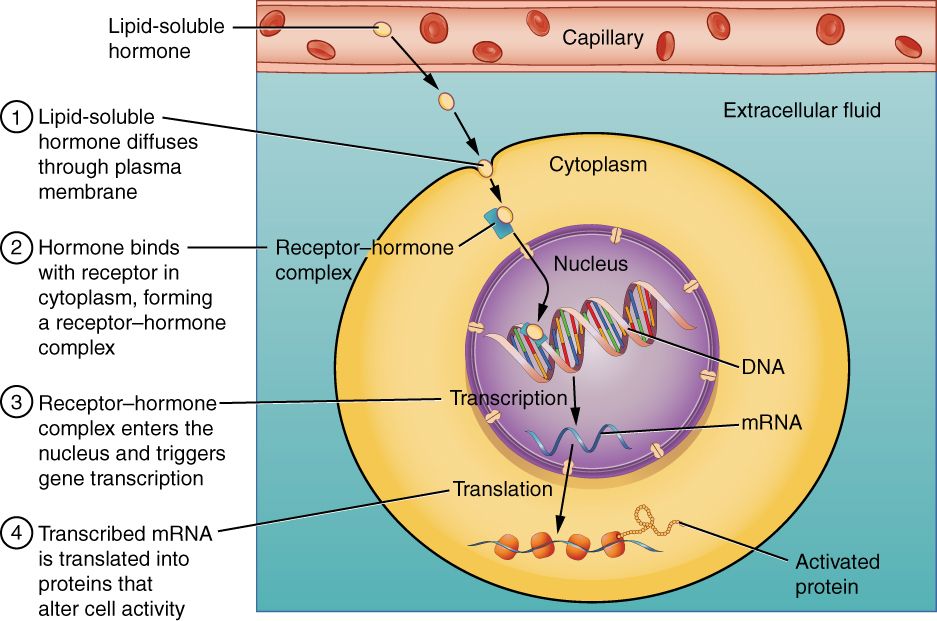
The two hormones behind almost everything in this section
Estrogen builds. The body's main one is estradiol. It thickens the uterine lining (endometrium) in the first half of the cycle. It keeps bones strong, keeps vaginal tissue plump and moist, and improves blood fat levels. Progesterone steadies. After ovulation, it turns that growing lining into a calm lining ready to receive an embryo. It thickens the mucus at the cervix into a plug. It calms the muscle of the uterus. When progesterone falls, the lining sheds. That drop is a period.
Both are steroid hormones, which explains a lot about how they act as drugs. They dissolve in fat. So they pass right through the cell membrane and bind receptors inside the cell that then act on DNA. That means their effects take days to build and days to fade. Nobody feels a birth control pill work. It also explains how they can be taken by mouth at all. A small chemical change (adding an ethinyl group to make ethinyl estradiol) protects the molecule from being destroyed in the liver on its first pass. That same trip through the liver is where the trouble starts. The liver responds to estrogen by mouth by making more clotting factors.
How contraception actually works
A combined hormonal contraceptive has a man-made estrogen, almost always ethinyl estradiol. It also has a progestin, such as norethindrone, levonorgestrel, norgestimate, or drospirenone. Steady hormone levels signal back to the hypothalamus and pituitary. They flatten the mid-cycle LH surge. No surge, no ovulation. The progestin adds two backup layers. It thickens the cervical mucus so sperm cannot swim through. It thins the uterine lining so an embryo is unlikely to attach. The estrogen has one more job that is plain but important. It steadies the lining so the person does not spot all the time.
A progestin-only method leaves out the estrogen entirely. The classic norethindrone "mini-pill" works mostly through the mucus and the lining. It stops ovulation only some of the time. That is why it has a strict three-hour window. More than three hours late counts as a missed dose. Take it, and use a backup method for 48 hours. A newer drospirenone-only pill has a kinder 24-hour window. The shot, the implant, and the hormone IUD are progestin-only too. The person cannot forget them daily, so they work far better in real life.
| Method | Prototype | Key effect | Safety alert |
|---|---|---|---|
| Combined oral pill | Ethinyl estradiol + norethindrone / levonorgestrel | Blocks the LH surge; thickens mucus; thins endometrium | Contains estrogen: screen for clot risk; teach ACHES; same time daily |
| Transdermal patch | Norelgestromin + ethinyl estradiol | Weekly patch ×3, then a patch-free week | Higher estrogen exposure than pills: greater VTE risk; less effective at higher body weight; rotate sites, never the breast |
| Vaginal ring | Etonogestrel + ethinyl estradiol | In 3 weeks, out 1 week (or a 1-year reusable ring) | Still estrogen: same contraindications; may be out up to 3 h; no refrigeration hysteria, just teach the schedule |
| Progestin-only pill | Norethindrone 0.35 mg | Mucus + endometrium; inconsistent ovulation block | 3-hour window. Safe when estrogen is not: breastfeeding, migraine with aura, VTE history |
| Injection | Medroxyprogesterone acetate (DMPA) IM/SubQ every 13 weeks | Reliably suppresses ovulation | Boxed warning: bone loss with long use; teach calcium, vitamin D, and weight-bearing exercise; fertility may take 10 to 18 months to return |
| Implant | Etonogestrel, up to 5 years, subdermal upper arm | Most effective reversible method | Approved length was extended from 3 to 5 years, so check the removal date against the current label. Irregular bleeding is the top reason people have it removed, so say so before it goes in, not after |
| Hormonal IUD | Levonorgestrel, 3 to 8 years | Local progestin; often stops periods entirely | Teach string checks; sudden severe pelvic pain or a positive pregnancy test needs same-day evaluation (ectopic) |
| Emergency contraception | Levonorgestrel 1.5 mg (OTC); ulipristal 30 mg (Rx); copper IUD | Delays or blocks ovulation; copper IUD is most effective | Not an abortifacient: it will not end an established pregnancy. Sooner is better; efficacy of levonorgestrel drops at higher body weight |
Clot risk, and the conversations that flow from it
This is the part of the chapter that saves lives. Estrogen taken by mouth passes through the liver. It pushes the liver to make more clotting factors while lowering some natural anticlotting proteins. The result is about a three- to fourfold rise in the risk of blood clots in the veins (venous thromboembolism). In a healthy young person, that is still a small number. It is lower than the clot risk of pregnancy itself, which is worth saying out loud to a scared patient. But it is not small at all once another risk factor stacks on top.
Methods with estrogen are not allowed for a person who smokes and is 35 or older. They are not allowed with migraine with aura at any age. They are not allowed after a past blood clot or with a known clotting disorder. They are not allowed with uncontrolled high blood pressure or less than 21 days after giving birth. They are not allowed with active breast cancer, lupus with antiphospholipid antibodies, or blood vessel damage from diabetes. Notice how many of these you only learn by asking. "Do your headaches come with flashing lights, zigzag lines, or a blind spot before the pain starts?" is a question that changes a prescription. For nearly all of these people, a progestin-only method is the answer, because it does not carry the estrogen clot risk. One exception is worth memorizing. Current breast cancer rules out progestin-only methods too. The tumor may be fed by hormones. So that person needs a method with no hormones (a copper IUD, a barrier method, or sterilization), not a switch to the mini-pill.
Teach the ACHES warning signs, and have the patient say them back. Abdominal pain that is severe. Chest pain or shortness of breath. Headache that is severe, sudden, or new with brain signs. Eye problems, such as vision loss or blurring. Severe leg pain or swelling, above all in one calf. Any of these means stop the pill and be seen today.
One more teaching point gets mangled all the time. Most antibiotics do not make birth control work less well. The real culprits are strong CYP3A4 inducers. These include rifampin and rifabutin, carbamazepine, phenytoin, phenobarbital, primidone, higher-dose topiramate, some HIV protease inhibitors, and St. John's wort. They speed up hormone breakdown and can drop levels below the point that prevents pregnancy. Ask about herbs by name. Patients rarely bring them up.
Hormone therapy at menopause
When the ovaries retire, estrogen falls, and some people are miserable. They have hot flashes, night sweats, ruined sleep, vaginal dryness and painful sex, and faster bone loss. Dryness and painful sex are now called genitourinary syndrome of menopause. Menopausal hormone therapy is the most effective treatment there is for hot flashes and night sweats. It is also the drug class the Women's Health Initiative study made everyone afraid of. The honest modern view sits between the extremes. Think of a person with symptoms who is under 60, or within 10 years of menopause, and has no reason not to take it. For them, the benefits generally outweigh the risks. Started later, the math flips.
The one rule you must never forget: a person with a uterus needs a progestin. Estrogen alone drives the uterine lining to grow without ever shedding. That is a straight road to an overgrown lining (endometrial hyperplasia) and uterine cancer. If the uterus has been removed, estrogen alone is right and actually has a better risk profile. Estrogen that acts on the whole body carries boxed warnings. They cover uterine cancer, heart and vessel events including stroke and blood clots, probable dementia when started in older women, and, with an added progestin, breast cancer. Give the lowest dose that works for the shortest sensible time, and review the choice every year.
Some people's only complaint is vaginal dryness or painful sex. For them, low-dose vaginal estrogen (cream, tablet, or ring) is a different animal. Very little reaches the blood. In practice it does not carry the same warnings. It usually does not need a progestin. Teach that it takes several weeks to work, and that stopping it means the symptoms come back.
- Combined birth control works by flattening the LH surge (no ovulation), plus thick mucus and a thin lining.
- Estrogen raises clot risk. It is not allowed with smoking at 35 or older, migraine with aura, a past clot, uncontrolled high blood pressure, or soon after giving birth. Use a progestin-only method instead.
- Teach ACHES. Teach that CYP3A4 inducers (rifampin, several seizure drugs, St. John's wort), not ordinary antibiotics, can make birth control fail.
- In hormone therapy, a uterus means a progestin. DMPA's boxed warning is bone loss.
Section 2Fertility and pregnancy drugs
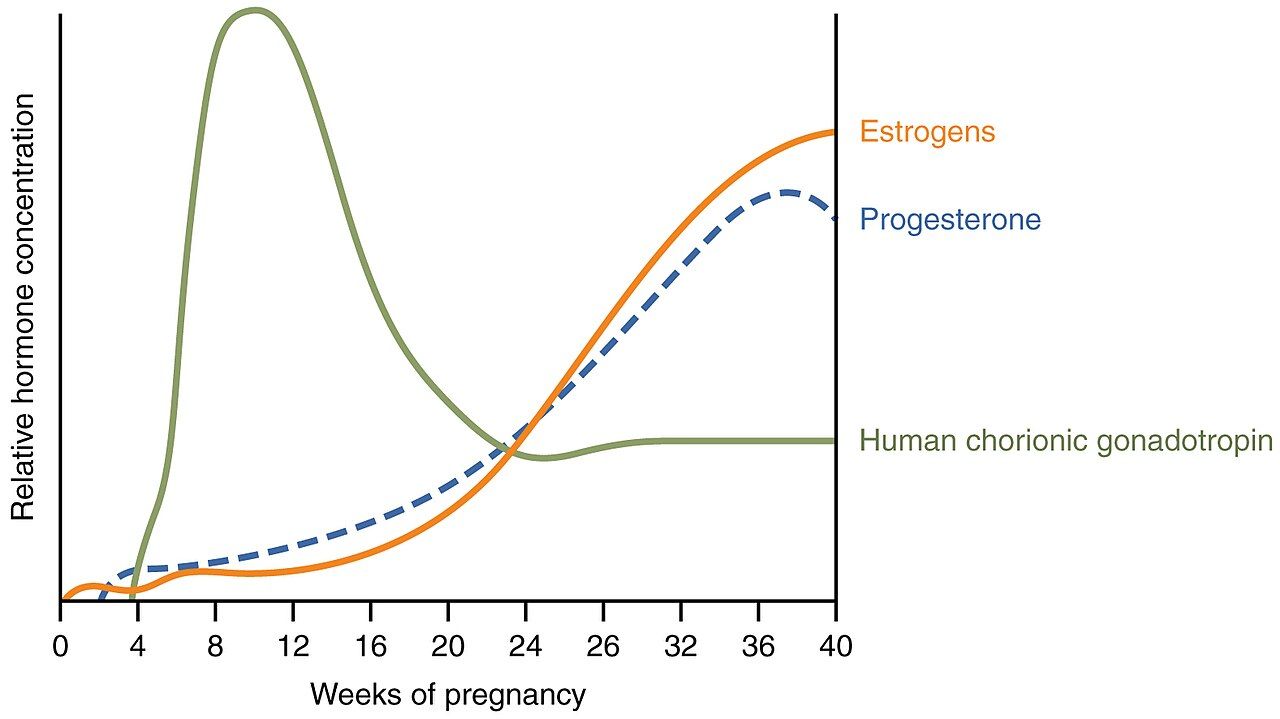
Making ovulation happen: clomiphene and its relatives
Clomiphene citrate is a clever bit of drug trickery. It is a selective estrogen receptor modulator that blocks estrogen receptors in the hypothalamus. The hypothalamus uses that estrogen signal to know estrogen is there. Without it, it decides levels are low and sends out more GnRH pulses. The pituitary answers with more FSH and LH. Follicles (egg sacs) grow, and ovulation follows. It is usually taken for five days early in the cycle, often days 5 through 9. Ovulation is expected about 5 to 10 days after the last tablet. The patient needs that timing, because the drug does nothing if nobody knows when to try.
The side effects follow from a "short, chemical lack of estrogen plus stirred-up ovaries." They are hot flashes, mood swings, sore breasts, belly bloating, and larger ovaries. Two matter more. Vision changes (blurring, floaters, flashes of light, afterimages) mean stop the drug and report right away. They usually go away, but not always. And clomiphene raises the chance of more than one baby to about 5 to 10 percent, mostly twins. That is a real conversation, not a footnote. Letrozole, an aromatase inhibitor borrowed from cancer care, has quietly become first-line for bringing on ovulation in polycystic ovary syndrome (PCOS). It gives more live births and fewer multiples than clomiphene.
When those fail, gonadotropin shots (menotropins, follitropin alfa) stir the ovary directly. Then an hCG trigger shot finishes ripening the egg and releases it. Their main danger is ovarian hyperstimulation syndrome (OHSS). The ovaries swell, small blood vessels leak, and fluid pours into the belly and chest. Teach the patient to call for fast weight gain (more than about 2 pounds a day), a swollen belly, severe pain, nausea and vomiting, less urine, or shortness of breath. Severe OHSS means a hospital stay with a real risk of clots. It is not just a bad week.
Oxytocin: the drug that needs your full attention
Oxytocin binds receptors on the smooth muscle of the uterus and makes it contract. The number of receptors climbs steeply near term. That is why the same dose that does nothing at 20 weeks can overstimulate at 40. It is a high-alert medication, meaning an error is more likely to cause serious harm. It earns that label honestly. There is no antidote, and no way to undo a contraction that has already squeezed the umbilical cord.
Give it as a dilute second (piggyback) drip into a main IV line. Always use a programmable pump. Connect it at the port closest to the patient, so it can be shut off at once with little drug left in the line. Doses are ordered in milliunits per minute. They are raised slowly based on how the contractions respond. After birth, the goal flips. A much larger dose runs to clamp down a soft (boggy) uterus and stop bleeding from a uterus that will not contract.
What you watch: how often contractions come, how long they last, how strong they are, and the resting tone between them. Also watch the fetal heart rate pattern. Tachysystole means more than five contractions in 10 minutes, averaged over 30 minutes. If it comes with a worrying fetal heart rate pattern, act. Here is the order to memorize. Stop the oxytocin. Turn the patient onto her left side. Give an IV fluid bolus. Give oxygen if needed. Tell the provider. Expect a tocolytic, such as terbutaline, to relax the uterus. Oxytocin is also built much like ADH. So long, high-dose drips with hypotonic fluid can cause water overload (water intoxication). Watch intake and output, headache, confusion, and falling sodium.
| Class | Prototype | Key effect | Safety alert |
|---|---|---|---|
| Ovulation inducer (SERM) | Clomiphene citrate | Blocks hypothalamic estrogen receptors, raising FSH/LH | Visual changes = stop and report. Counsel on multiples and OHSS |
| Ovulation inducer (aromatase inhibitor) | Letrozole | Lowers estrogen synthesis, raising FSH: first-line in PCOS | Fewer multiples than clomiphene; still monitor for OHSS |
| Uterotonic (posterior pituitary) | Oxytocin | Contracts uterine smooth muscle; induces/augments labor; controls postpartum atony | HIGH ALERT. Pump + piggyback at the closest port. Tachysystole (>5 in 10 min) → stop the drip, left side, fluids, O₂, tell the provider. Watch for water overload |
| Uterotonic (ergot) | Methylergonovine | Sustained uterine contraction for postpartum hemorrhage | Check the BP first: contraindicated in hypertension and preeclampsia (severe vasoconstriction) |
| Uterotonic (prostaglandin) | Carboprost tromethamine | Powerful contraction for refractory atony | Contraindicated in asthma (bronchospasm). Expect fever, diarrhea, vomiting: premedicate |
| Cervical ripening / uterotonic | Misoprostol | Softens the cervix; also contracts the uterus | Do not use for ripening with a prior cesarean scar (rupture risk); teratogenic if given for other indications in pregnancy |
| Tocolytic (CCB) | Nifedipine | Relaxes uterine muscle: usual first-line to delay preterm birth | Watch for maternal hypotension, flushing, headache. Avoid combining with magnesium (neuromuscular blockade) |
| Tocolytic (beta-2 agonist) | Terbutaline | Relaxes the uterus; also rescues tachysystole | Short-term only: FDA warns against prolonged use (maternal cardiac events, death). Watch tachycardia, tremor, pulmonary edema, hyperglycemia |
| Tocolytic (NSAID) | Indomethacin | Inhibits prostaglandins: used briefly before 32 weeks | Fetal ductus arteriosus constriction and oligohydramnios: limit to about 48 hours |
| Anticonvulsant / neuroprotectant | Magnesium sulfate | Seizure prophylaxis in preeclampsia; fetal neuroprotection before 32 weeks | HIGH ALERT. Monitor DTRs, RR ≥12, urine output ≥30 mL/h, LOC. Antidote: calcium gluconate |
| Antenatal corticosteroid | Betamethasone | Accelerates fetal lung maturity (surfactant) | Two IM doses 24 h apart: the benefit is time-dependent, so give on schedule. Watch maternal glucose |
| Immune globulin | Rho(D) immune globulin | Prevents maternal Rh sensitization | At ~28 weeks and within 72 hours of birth of an Rh-positive infant, and after any sensitizing event |
Stopping labor, and the drug that watches the drug
Tocolytics buy time, not a full-term pregnancy. Nobody stays pregnant to 40 weeks because of nifedipine. The real goal is 48 hours. That is long enough for two doses of betamethasone to ripen the baby's lungs. It is also long enough to move to a hospital with a newborn ICU. Putting it that way for a scared patient is honest and oddly comforting. We are not failing. We are buying the two days that matter most.
Magnesium sulfate needs its own paragraph, because it is the drug people get asked about and see most. It is not really used to stop contractions anymore. Its jobs are preventing seizures from eclampsia and protecting the brain of a premature baby. Magnesium slows the brain and nerves. As the level rises, toxicity climbs a set ladder. Deep tendon reflexes disappear first. Then breathing slows. Then the heart's electrical signals fail: a slow heart rate, heart block, and arrest. That order is a gift. It means checking reflexes warns you long before anything terrible happens. Urine output is not a rung on that ladder. It is the reason the ladder gets climbed. Magnesium leaves through the kidneys. So urine under 30 mL an hour means the drug is building up. That makes low urine a reason to hold and notify on its own. Stop the drip, tell the provider, and get a magnesium level, before reflexes or breathing are lost. Keep calcium gluconate at the bedside. One gram IV pushes magnesium aside and reverses it. It is saved for slowed breathing or heart toxicity, not for low urine alone.
- Clomiphene blocks estrogen receptors in the hypothalamus → more FSH and LH → ovulation. Vision changes mean stop the drug. Counsel on multiples and OHSS.
- Oxytocin is high-alert: pump, piggyback, milliunits per minute, and constant contraction and fetal heart rate monitoring.
- Tachysystole is >5 contractions in 10 min. Stop the drip, turn to the left side, give fluids and oxygen, tell the provider, and consider terbutaline.
- Magnesium sulfate: watch reflexes, breathing rate, urine output, and alertness. Reflexes vanish first, then breathing, then the heart's signals. Urine <30 mL/h is a hold-and-notify sign of build-up. Calcium gluconate is the antidote for breathing or heart toxicity.
Section 3Male hormones and ED drugs
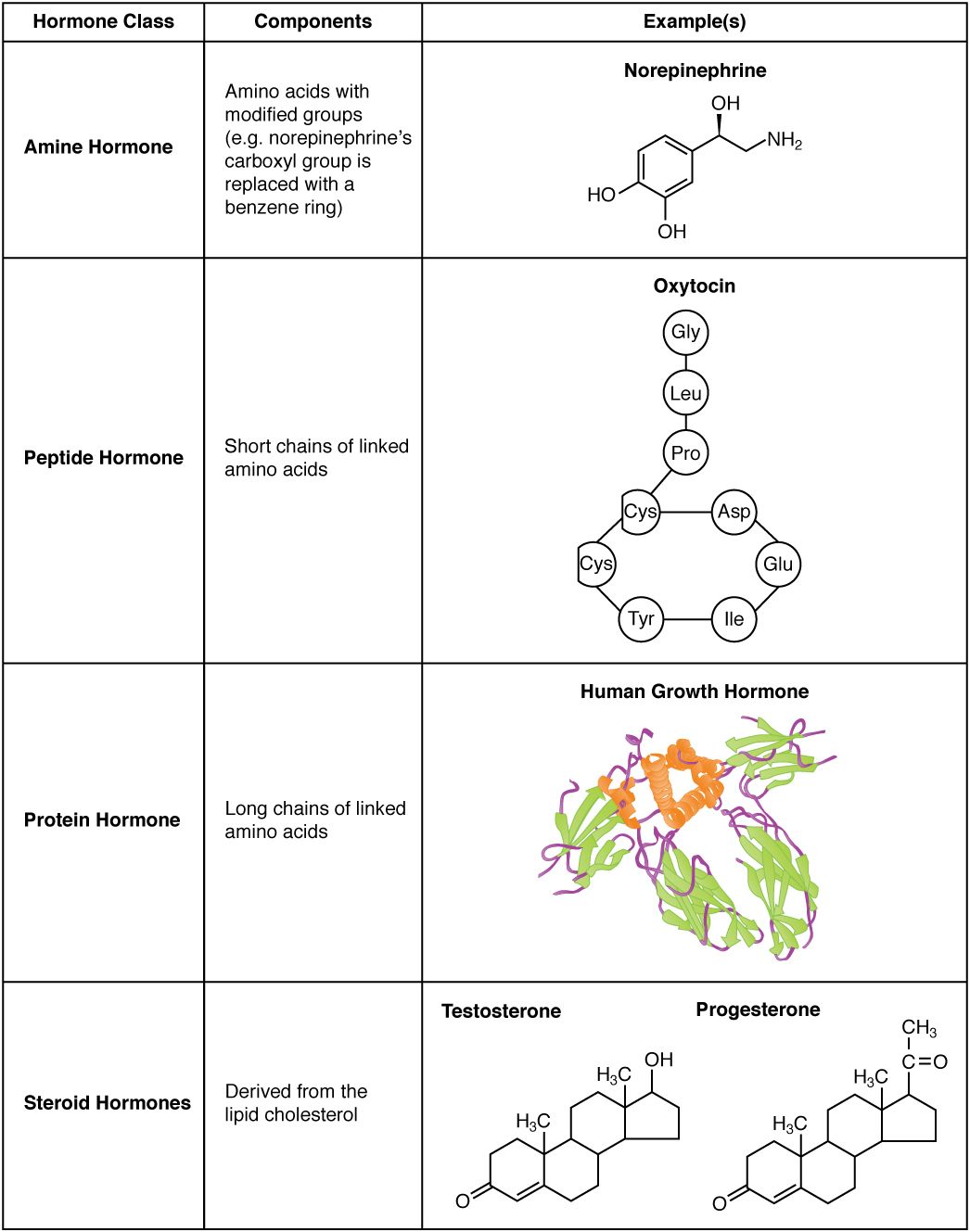
Testosterone: replacement, not enhancement
Testosterone is made mostly by the Leydig cells of the testes, under the control of LH. It builds muscle and bone. It drives sex drive and sperm making. It creates the adult male body traits. As a drug, it is a Schedule III controlled substance in the United States, because it is widely misused to build muscle and boost performance.
The proper reason to use it is confirmed hypogonadism (low testosterone). That means symptoms plus at least two low morning total testosterone levels. It does not mean "feeling tired at fifty." That difference matters for care, not for judging. In a man with normal testosterone, replacement gives no benefit. It still brings the full list of side effects and shuts down his own making of the hormone.
Plain testosterone pills are destroyed by the liver on the first pass. The older pills that survived (17-alpha-alkylated androgens) harmed the liver. That is why the routes are creative. (Newer testosterone undecanoate capsules get around this. They are absorbed through the lymph system instead of the portal vein. They must be taken with food and carry a boxed warning for raising blood pressure.) Skin gels carry a boxed warning for passing the drug to others. It moves by skin contact. It has caused male changes (virilization) in children and partners who simply hugged the patient. Teach it every single time. Apply it to the shoulders, upper arms, or belly as the product says. Wash your hands right away. Let it dry. Cover the site with clothing. Wash the area before skin-to-skin contact. Shots into the muscle of cypionate or enanthate are given every 1 to 2 weeks. They cause a peak-and-dip roller coaster of mood and energy that patients notice. Undecanoate shots into the muscle last about 10 weeks. But they need a special safety program (REMS) with 30 minutes of watching in the office. That is because of tiny oil clots in the lungs and anaphylaxis. Patches, tablets placed in the cheek, nose gel, and pellets placed under the skin round out the list.
What you check is specific and testable. Check the hematocrit. Testosterone boosts red cell making. A hematocrit climbing past about 54 percent means hold the drug and reassess, because thick blood causes strokes. Check the PSA and a prostate exam at the start and at follow-up. Testosterone is not allowed with known prostate or male breast cancer. Also check testosterone levels, blood fats, blood pressure, and signs of worsening sleep apnea. Expect acne, oily skin, swelling, mood changes, and smaller testicles. And there is one effect patients are never told about and must be. It causes infertility. Testosterone from outside shuts down the LH and FSH that drive sperm making. A man trying to father a child should not be on testosterone. It is also not allowed in pregnancy and can cause male changes in a female fetus.
PDE-5 inhibitors, and the interaction that kills
An erection is a plumbing event with a chemical trigger. Sexual arousal releases nitric oxide (NO) in the spongy tissue of the penis (corpus cavernosum). NO raises a signal molecule called cGMP. cGMP relaxes the smooth muscle of the arteries. Blood floods in and squeezes shut the veins that drain it. The enzyme phosphodiesterase type 5 (PDE-5) breaks down cGMP and ends the erection. PDE-5 inhibitors (sildenafil, tadalafil, vardenafil, avanafil) block that enzyme. So cGMP lasts, and the erection is firmer and lasts longer. Key point: they boost a signal; they do not create one. Without sexual arousal and NO release, nothing happens. People who expect an automatic result are let down and stop the drug, so say it plainly.
Now the part that must never be fumbled. Nitrates work by giving off nitric oxide. They include nitroglycerin, isosorbide mononitrate or dinitrate, and the street drugs called "poppers" that are breathed in (amyl or butyl nitrite). Combine a drug that floods the body with NO and a drug that stops cGMP from breaking down. You get a deep, long, stubborn drop in blood pressure. It does not respond well to fluids or blood pressure drugs. People have died. This is a firm, absolute ban, not a caution.
Here is the scene to burn in. A middle-aged man arrives with chest pain. The reflex is nitroglycerin under the tongue. Ask about PDE-5 inhibitors first. Ask in a way that gets an honest answer: privately, with no spouse or audience. The required nitrate-free gaps before a nitrate may be given are these. Wait at least 12 hours after avanafil, the shortest-acting of the group. Wait 24 hours after sildenafil or vardenafil. Wait at least 48 hours after tadalafil, which lasts much longer. Also ask about poppers, which people do not think of as medicine at all.
| Drug | Onset / duration | Key effect | Safety alert |
|---|---|---|---|
| Sildenafil | ~30 to 60 min; ~4 to 6 h | PDE-5 inhibition; also approved, under a separate name and dose, for pulmonary arterial hypertension | Fatty meals delay onset. Bluish vision tinge (PDE-6 cross-effect). No nitrate for 24 h |
| Tadalafil | ~30 to 45 min; up to 36 h | Longest acting; also 2.5 to 5 mg daily for ED and/or BPH symptoms | No nitrate for 48 h: the long tail is the trap. Back pain and myalgia are common |
| Vardenafil | ~30 to 60 min; ~4 to 6 h | PDE-5 inhibition | QT prolongation: avoid with class IA/III antiarrhythmics. No nitrate for 24 h |
| Avanafil | ~15 to 30 min; ~6 h | Fastest onset, shortest acting, more PDE-5 selective | No nitrate for at least 12 h: the shortest hold of the class |
| Alprostadil | Minutes; ~1 h | Prostaglandin E1: intracavernosal injection or urethral suppository; works without NO | An option when PDE-5 is contraindicated. Teach injection technique and the priapism rule |
| Testosterone | Route-dependent | Androgen replacement in confirmed hypogonadism | Schedule III. Gel transfer boxed warning. Monitor hematocrit, PSA, lipids; causes infertility |
The rest of the safety picture
PDE-5 inhibitors also stack with alpha-1 blockers. Many of these men take tamsulosin or doxazosin for BPH. Both drop blood pressure. So start at the lowest dose, make sure the alpha blocker dose is already steady, and give them at separate times. Strong CYP3A4 inhibitors such as ritonavir, ketoconazole, itraconazole, and clarithromycin raise levels sharply and call for a lower dose. The usual side effects (headache, face flushing, upset stomach, stuffy nose) are annoying, not dangerous.
Three things are emergencies, and patients must know them cold. Priapism is an erection that lasts more than 4 hours. It needs the emergency room, because tissue starved of blood turns into permanent scar. NAION is sudden, painless vision loss in one eye. Stop the drug and go now. Sudden hearing loss, sometimes with ringing or dizziness, follows the same rule. Last, remember that sex is exercise. A man whose heart is too weak to climb two flights of stairs needs a cardiology talk before an erection drug prescription, not after.
- Testosterone is Schedule III, for confirmed hypogonadism only. Check the hematocrit (hold near 54%), PSA, and blood fats. It causes infertility.
- Testosterone gel has a boxed warning for passing to others. Wash hands, cover the site, and wash before contact.
- PDE-5 inhibitors keep cGMP around and need sexual arousal to work at all.
- Nitrates are absolutely banned with them. Hold 12 h after avanafil, 24 h after sildenafil or vardenafil, and 48 h after tadalafil. An erection over 4 hours, sudden vision loss, or sudden hearing loss are emergencies.
Section 4BPH drugs
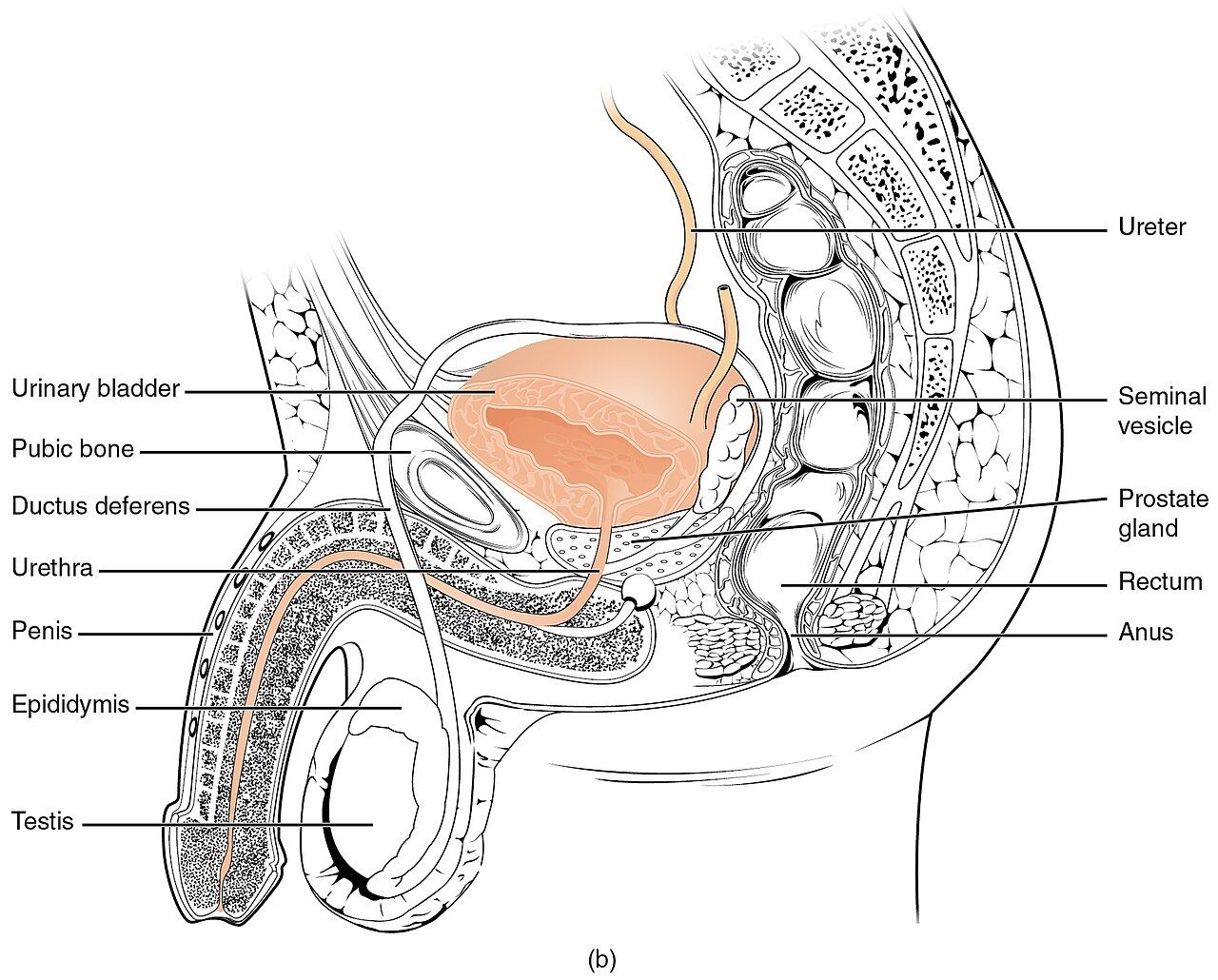
Why the prostate is a plumbing problem
The prostate wraps around the urethra like a ring on a garden hose. With age, it grows. This is benign prostatic hyperplasia (BPH). Benign means not cancer. It does not mean harmless. Symptoms come in two types. Blockage symptoms are a weak stream, trouble starting, dribbling, and not emptying fully. Irritation symptoms are going often, urgency, and getting up at night to go. Untreated, it can lead to repeat UTIs, bladder stones, sudden inability to pass urine (acute urinary retention), and kidney damage.
Two things narrow that urethra, and each has its own drug class. One is active (dynamic) blockage: smooth muscle tone in the prostate and bladder neck, held tight by alpha-1 receptors. The other is fixed (static) blockage: the sheer bulk of gland tissue grown under the push of dihydrotestosterone. Relax the muscle, and relief comes in days. Shrink the gland, and relief comes in months. That difference in how fast they work is the most useful thing to teach. A man who expects finasteride to work by Friday will throw it away by Monday.
Alpha-1 blockers: fast relief, watch the blood pressure
Alpha-1 blockers relax smooth muscle at the bladder neck and prostate, which widens the channel. Patients notice it working within days. They split into two useful groups. The urinary-tract-focused drugs are tamsulosin, silodosin, and alfuzosin. Alfuzosin is not selective in its chemistry, but its extended-release form acts that way in practice. These act on the alpha-1A receptors packed into the prostate. They lower blood pressure fairly little. The older nonselective drugs are doxazosin and terazosin. They also block alpha-1B receptors in blood vessels. So they lower blood pressure a real amount. That is a bonus if the man also has high blood pressure, and a problem if he does not.
The classic teaching point is the first-dose effect. There is a strong drop in blood pressure on standing, and possible fainting, with the first dose or after a dose increase. Give the first dose at bedtime. Teach the patient to rise slowly and sit on the edge of the bed first. Put a fall plan in place for an older adult. (The one exception to bedtime dosing is alfuzosin ER. Its label says to take it right after the same meal each day. The teaching about dizziness on standing still applies.) Two more counseling points matter. Retrograde ejaculation is common with tamsulosin and silodosin. Semen goes backward into the bladder, which causes a "dry" orgasm and cloudy urine. It is harmless and goes away. But a man who is not warned will assume something is badly wrong. Next is intraoperative floppy iris syndrome (IFIS). Alpha blockers relax the muscle that widens the pupil. That can make cataract surgery risky, sometimes years after the drug is stopped. Anyone on one of these must tell the eye surgeon before eye surgery. Note what alpha blockers do not do. They do not shrink the prostate, do not slow the disease, and do not change the PSA.
5-alpha reductase inhibitors: slow, real, and hazardous to a fetus
Inside prostate cells, the enzyme 5-alpha reductase turns testosterone into dihydrotestosterone (DHT). DHT is a far stronger male hormone. It is the real growth signal for prostate tissue. Block that enzyme with finasteride or dutasteride, and the gland shrinks by about 20 to 25 percent. This is the only class that changes how the disease plays out. It lowers the risk of sudden retention and the need for surgery. The cost is patience. It takes 3 to 6 months before symptoms ease much, and up to a year for the full effect. It works best in men with truly large prostates.
Two facts you cannot afford to get wrong. First, 5-alpha reductase inhibitors cut the PSA about in half within 6 to 12 months. If nobody accounts for that, a prostate cancer hides behind a reassuring number. The working rule: double the PSA in a man who has been on the drug for at least six months. Look into any rise from his new baseline. Chart the drug next to the lab value.
Second, and this is the safety point of the whole section: these drugs cause birth defects. DHT drives the forming of the male outer genitals. Blocking it can feminize a male fetus. A pregnant person, or one who might become pregnant, must not handle crushed or broken finasteride tablets or leaking dutasteride capsules. The drug is absorbed through the skin. Whole, coated tablets are safe to handle. Neither drug should be crushed. Men on these drugs should not donate blood, so a pregnant person never receives it in a transfusion. The two waiting times differ. Wait at least 1 month after the last finasteride dose. Wait at least 6 months after the last dutasteride dose. Dutasteride's half-life is about 5 weeks, so it lingers for months.
| Class | Prototype | Key effect | Safety alert |
|---|---|---|---|
| Alpha-1 blocker, uroselective | Tamsulosin, silodosin, alfuzosin | Relaxes prostatic/bladder-neck smooth muscle: relief in days; minimal BP effect | Retrograde ejaculation (harmless, but warn first). IFIS: tell the eye surgeon. Still teach rising slowly. Alfuzosin ER: take right after the same meal each day |
| Alpha-1 blocker, nonselective | Doxazosin, terazosin | Same relief, plus a real drop in blood pressure | First-dose syncope: give at bedtime, rise slowly, fall precautions. Additive hypotension with PDE-5 inhibitors and antihypertensives |
| 5-alpha reductase inhibitor | Finasteride, dutasteride | Blocks testosterone → DHT; shrinks the gland ~20 to 25%; reduces retention and surgery | 3 to 6 months to work. Cuts the PSA in half, so double the value. Causes birth defects: no one pregnant handles broken tablets; no blood donation (1 month after finasteride, 6 months after dutasteride) |
| Combination | Dutasteride + tamsulosin | Fast relief plus long-term shrinkage: best for large glands | Both alert sets apply at once |
| PDE-5 inhibitor | Tadalafil 5 mg daily | Improves BPH symptoms and ED together | Absolute nitrate contraindication still applies: 48 h. Additive hypotension with alpha blockers |
| Antimuscarinic / beta-3 agonist | Oxybutynin, tolterodine; mirabegron | Added for persistent urgency and frequency | Antimuscarinics can precipitate urinary retention: check post-void residual first; watch confusion in older adults |
Last, the drugs to avoid. Store-bought decongestants with pseudoephedrine or phenylephrine are alpha agonists. They tighten exactly the muscle you are trying to relax. They can push a man into sudden retention. First-generation antihistamines such as diphenhydramine add anticholinergic bladder relaxing on top. Every cold and flu aisle has both. Teach the patient to read labels and ask the pharmacist. "It's just a decongestant" has sent many men to the emergency room with a urinary catheter in their future. Saw palmetto, meanwhile, has failed again and again to beat a dummy pill in good trials. Do not argue about it. Just make sure it is not replacing something that works.
- Alpha-1 blockers relax smooth muscle, with relief in days. Teach a bedtime first dose, rising slowly, retrograde ejaculation, and warning the eye surgeon (IFIS).
- 5-alpha reductase inhibitors block testosterone→DHT and shrink the gland over 3 to 6 months. Only they lower the risk of retention and surgery.
- These drugs cut the PSA in half. Double it after six months of treatment, or a cancer can hide.
- They cause birth defects. Pregnant people must not handle broken tablets. No blood donation (1 month after finasteride, 6 months after dutasteride). Avoid decongestants and first-generation antihistamines in BPH.
Section 5Reproductive care at the bedside

Teaching: the drug only works if the conversation does
These drugs fail for social reasons more than for drug reasons. A pill is missed because the schedule was never explained. A patch is left off because nobody said it survives a shower. A shot appointment is skipped. A finasteride bottle is thrown away at week three. A man quietly stops tamsulosin because of a symptom he was too embarrassed to name. None of these are the molecule's fault.
So build the visit on purpose. Get privacy first. Not the hallway, and not with a partner or a parent in the room, unless the patient clearly wants them there. Ask permission before the sensitive questions, and explain why you need the answer: "I need to ask about your sexual health because it changes which medicine is safe for you. Is now a good time?" Use plain words, and let the patient use theirs. "Does the semen come out?" beats "have you experienced retrograde ejaculation?" Do not judge sexual activity, gender, number of partners, or drug use. A patient who feels judged holds back the poppers history. And that history is the one that stops you from giving nitroglycerin. End with teach-back. Not "any questions?" but "tell me what you'll do if you miss two pills."
The teaching points that carry the most weight, by class:
- Combined birth control: same time every day; the missed-pill rules and 7 days of backup; ACHES; tell the truth about smoking; name your herbs; nausea fades in 2 to 3 months; spotting is common early and does not mean failure. It does not protect against sexually transmitted infections, so condoms still matter.
- DMPA: the 13-week return date is not a suggestion; calcium, vitamin D, and weight-bearing exercise protect bone; fertility may take 10 to 18 months to return, so it is a poor choice if a pregnancy is planned soon.
- Hormone therapy: a uterus means a progestin; report any bleeding after menopause, new leg swelling, chest pain, or brain symptoms; this is a choice reviewed every year, not a lifetime prescription.
- Clomiphene: the timing is the treatment; stop and call for vision changes; call for fast weight gain, bloating, or shortness of breath (OHSS); more than one baby is a real possibility.
- Testosterone: wash hands, cover the site, and no skin contact until it is washed; expect infertility; report leg swelling, worse snoring, or too much sleepiness; keep the lab visits, because the hematocrit is the point.
- PDE-5 inhibitors: sexual arousal is needed; no nitrates in any form, including poppers; an erection over 4 hours, sudden vision loss, or sudden hearing loss means the emergency room; a fatty meal slows sildenafil.
- Alpha blockers: first dose at bedtime; get up slowly; the dry orgasm is expected and harmless; tell the eye surgeon.
- 5-alpha reductase inhibitors: give it three to six months before you judge it; nobody pregnant touches a broken tablet; no blood donation (1 month after finasteride, 6 months after dutasteride); remind every clinician who draws your PSA that you take this.
Monitoring: what to measure and when to stop
| Drug | What you monitor | Act when |
|---|---|---|
| Combined contraceptive | Blood pressure, smoking status, migraine character, leg/chest symptoms | Any ACHES sign; new hypertension; aura appears → switch to progestin-only |
| Hormone therapy | Postmenopausal bleeding, breast exam/mammography, BP, VTE symptoms | Any bleeding after menopause: investigate before adjusting the dose |
| DMPA | Injection date, bone risk factors, weight | Reassess prolonged use; reinforce calcium, vitamin D, exercise |
| Clomiphene / gonadotropins | Vision, weight, abdominal girth, urine output, dyspnea | Visual change → stop. Rapid weight gain or breathlessness → evaluate for OHSS today |
| Oxytocin | Contraction frequency, duration, intensity, resting tone; FHR; I&O; sodium; LOC | Tachysystole or nonreassuring FHR → stop the infusion, left lateral, fluids, O₂, notify |
| Magnesium sulfate | DTRs, respiratory rate, urine output, LOC, magnesium level | Reflexes gone or RR <12 → stop and give calcium gluconate. Urine <30 mL/h → stop, tell the provider, check a level, since the drug is building up (not yet a reason for the antidote) |
| Terbutaline | Maternal HR, lung sounds, glucose, fetal HR | Maternal HR >120, chest pain, or crackles (pulmonary edema) → stop and notify |
| Methylergonovine | Blood pressure, uterine tone, bleeding | Hold and notify if hypertensive: do not give in preeclampsia |
| Testosterone | Hematocrit, PSA, testosterone level, lipids, BP, sleep apnea symptoms | Hematocrit near/over ~54% → hold; PSA rise → urology |
| PDE-5 inhibitor | Nitrate use (every single time), BP, cardiac capacity, alpha blocker doses | Any nitrate on board → do not give; erection >4 h → ED |
| Alpha-1 blocker | Orthostatic BP, dizziness, falls, urinary stream, post-void residual | Symptomatic orthostasis → hold, notify, fall precautions |
| 5-alpha reductase inhibitor | PSA (doubled), symptom score, mood, sexual function | PSA rising from the new baseline → workup, do not assume the drug |
Safety: the four places this chapter hurts people
High-alert drugs. Oxytocin and magnesium sulfate are both on the high-alert list, meaning an error carries extra-high risk. Treat them that way. Get an independent double-check of the drug, strength, pump settings, and line at the start and at every rate change. Use standard strengths. Put the second line into the port closest to the patient. Keep the antidote (calcium gluconate for magnesium) right at the bedside, not "somewhere on the unit." Oxytocin has no antidote. Your off switch is the whole treatment.
The nitrate question. Build it into every chest pain check, every history before surgery, and every drug review for an adult male. Ask about erection drugs and about poppers. Ask privately, and chart the answer with a time. If the patient cannot answer, because he is unconscious or confused, and the family cannot either, treat the heart problem with drugs other than nitrates and write down why.
Handling drugs that cause birth defects. Finasteride and dutasteride are absorbed through the skin from broken pills. Never crush them. If a staff member who is or may be pregnant is handing them out, that calls for a talk about handling, not a shrug. The same idea covers testosterone gel. An invisible film on a father's shoulder has caused male changes in his toddler.
Privacy and dignity. Reproductive information is among the most private in the chart. Do not discuss it in a hallway, at the staff desk, or on a speakerphone. Do not tell family members about birth control, fertility care, erection treatment, or gender-affirming treatment without the patient's clear permission. Offer a chaperone for intimate exams, and chart it. Use the patient's name and pronouns. These are not soft skills laid on top of the drug science. They are how you get the history that makes the drugs safe.
- Oxytocin and magnesium sulfate are high-alert: independent double-check, pump, standard strength, and the antidote at the bedside.
- Ask about nitrates and PDE-5 inhibitors (including poppers) before nitroglycerin: privately, every time, and charted.
- Never crush finasteride or dutasteride. Pregnant people must not handle broken forms. Testosterone gel passes to others by touch.
- Privacy, plain words, no judgment, and teach-back are what make the history, and so the safety, possible.
The chapter in one breath
- Combined birth control flattens the LH surge to stop ovulation. The estrogen is what raises clot risk. So smokers over 35, people with migraine with aura, and people with a past clot get a progestin-only method instead. Teach ACHES.
- CYP3A4 inducers (rifampin, several seizure drugs, St. John's wort) make birth control fail. Ordinary antibiotics do not. In menopausal hormone therapy, a uterus always means an added progestin.
- Clomiphene tricks the hypothalamus into raising FSH and LH. Vision changes mean stop the drug. OHSS and more than one baby are the counseling points.
- Oxytocin is high-alert: pump, piggyback, milliunits per minute. For tachysystole, stop the drip first, then turn to the left side, give fluids and oxygen, and tell the provider.
- Magnesium sulfate toxicity climbs a set ladder: reflexes, then breathing, then the heart's signals. Falling urine output is not a rung. It is a hold-and-notify sign that the drug, cleared by the kidneys, is building up. The antidote for breathing or heart toxicity is calcium gluconate. Tocolytics buy 48 hours for betamethasone, not a full-term pregnancy.
- Testosterone is Schedule III for confirmed low testosterone. Check the hematocrit and PSA, expect infertility, and treat gel passing to others as a boxed-warning teaching point.
- PDE-5 inhibitors plus nitrates equals deadly low blood pressure. Hold nitrates at least 12 hours (avanafil), 24 hours (sildenafil, vardenafil), or 48 hours (tadalafil). An erection over 4 hours is an emergency.
- In BPH, alpha-1 blockers relax and relieve in days (dizziness on standing, retrograde ejaculation, IFIS). 5-alpha reductase inhibitors shrink the gland over 3 to 6 months, cut the PSA in half, and cause birth defects if handled when broken.
ReferenceWords worth knowing
A quick list of the terms in this chapter. Skim it now, or come back when a word trips you up.
- 5-alpha reductase inhibitor
- A drug (finasteride, dutasteride) that blocks the change of testosterone into DHT, shrinking the prostate over 3 to 6 months; it cuts the PSA in half and causes birth defects.
- ACHES
- The warning-sign memory tool for birth control with estrogen: Abdominal pain, Chest pain, Headache, Eye problems, Severe leg pain. Any one means stop the drug and be checked.
- Alpha-1 blocker
- A drug that relaxes smooth muscle in the prostate and bladder neck (tamsulosin, doxazosin), easing BPH symptoms within days without shrinking the gland.
- Benign prostatic hyperplasia (BPH)
- A non-cancer growth of the prostate with age that squeezes the urethra, causing blockage and irritation symptoms when passing urine.
- Combined hormonal contraceptive
- A method with both an estrogen (usually ethinyl estradiol) and a progestin; it works mainly by stopping the LH surge.
- Dihydrotestosterone (DHT)
- The strong male hormone made from testosterone by 5-alpha reductase; the growth signal for prostate tissue and the target of finasteride and dutasteride.
- Estrogen
- The steroid hormone (mainly estradiol) that builds the uterine lining and keeps bone and vaginal tissue healthy; taken by mouth, it makes the liver produce more clotting factors.
- First-dose phenomenon
- A strong drop in blood pressure on standing, or fainting, after the first dose or a dose increase of an alpha-1 blocker; prevented by bedtime dosing and rising slowly.
- Genitourinary syndrome of menopause
- Vaginal dryness, irritation, painful sex, and urinary symptoms from loss of estrogen; often best treated with low-dose vaginal estrogen.
- High-alert medication
- A drug with a higher risk of serious harm when used in error; oxytocin and magnesium sulfate are examples that need independent double-checks.
- Intraoperative floppy iris syndrome (IFIS)
- An unsteady iris during cataract surgery caused by alpha-1 blockers, sometimes lasting long after the drug is stopped; the eye surgeon must be told.
- Menopausal hormone therapy
- Estrogen (plus a progestin if the uterus is still there) given for the hot flashes and genital and urinary symptoms of menopause; it carries boxed warnings and is reviewed at least every year.
- NAION
- Nonarteritic anterior ischemic optic neuropathy: sudden, painless vision loss reported with PDE-5 inhibitors; stop the drug and get care right away.
- Ovarian hyperstimulation syndrome (OHSS)
- A problem with fertility drugs in which swollen ovaries leak fluid into the belly and chest; signs include fast weight gain, a swollen belly, little urine, and shortness of breath.
- Oxytocin
- The posterior pituitary hormone, given as a high-alert IV drip in milliunits per minute, that makes the uterus contract to start or speed up labor and to control bleeding after birth from a uterus that will not contract.
- PDE-5 inhibitor
- A drug (sildenafil, tadalafil, vardenafil, avanafil) that blocks cGMP breakdown in the spongy tissue of the penis, which boosts an erection; absolutely banned with nitrates.
- Priapism
- An erection that lasts more than 4 hours; an emergency, because tissue starved of blood becomes permanent scar.
- Progestin
- A man-made drug like progesterone (norethindrone, levonorgestrel, drospirenone, medroxyprogesterone) that thickens cervical mucus, thins the uterine lining, and protects the uterus from estrogen alone.
- Retrograde ejaculation
- Semen going backward into the bladder instead of out the urethra, common with tamsulosin and silodosin; harmless and reversible, but scary if not explained ahead of time.
- Tachysystole
- More than five contractions in 10 minutes, averaged over 30 minutes; with oxytocin, the first step is to stop the drip.
- Tocolytic
- A drug (nifedipine, terbutaline, indomethacin) given to delay an early birth, realistically for about 48 hours: long enough for steroid shots for the baby and a move to another hospital.
- Venous thromboembolism (VTE)
- A deep vein clot or a lung clot; the risk behind nearly every reason not to use estrogen.