Pharmacological Principles & Herbal Supplements
Every drug is a trade. You get the effect you want. In the same moment, you also get effects you do not want. Pharmacology is the study of that trade. It asks what the body does to a drug. It asks what the drug does to the body. It also asks how you can tip the odds toward help and away from harm. This chapter builds the words and the thinking you will use for every drug in this book. You will learn how drugs are named and grouped. You will see how they move through a person and how they act once they arrive. You will learn how to give them safely. And you will see why the bottle of ginkgo in a patient's purse belongs on the drug list too.
By the end of this chapter you can
- Tell a drug's chemical, generic, and trade names apart, and explain why safe care uses generic names.
- Define a drug class and a prototype drug, and use a prototype to predict what a whole class does.
- Describe the four pharmacokinetic steps (absorption, distribution, metabolism, excretion) and the first-pass effect.
- Use half-life to think through dose timing, steady state, and trough levels.
- Explain pharmacodynamics: receptors, agonists and antagonists, dose and response, and potency versus efficacy.
- Read the therapeutic index and name the common drugs with a narrow one.
- Use the rights of medication administration, match a drug to the right route, and name real ways to prevent errors.
- Name common herbal supplements and the drug interactions that matter most.
Section 1Drugs, names & classes
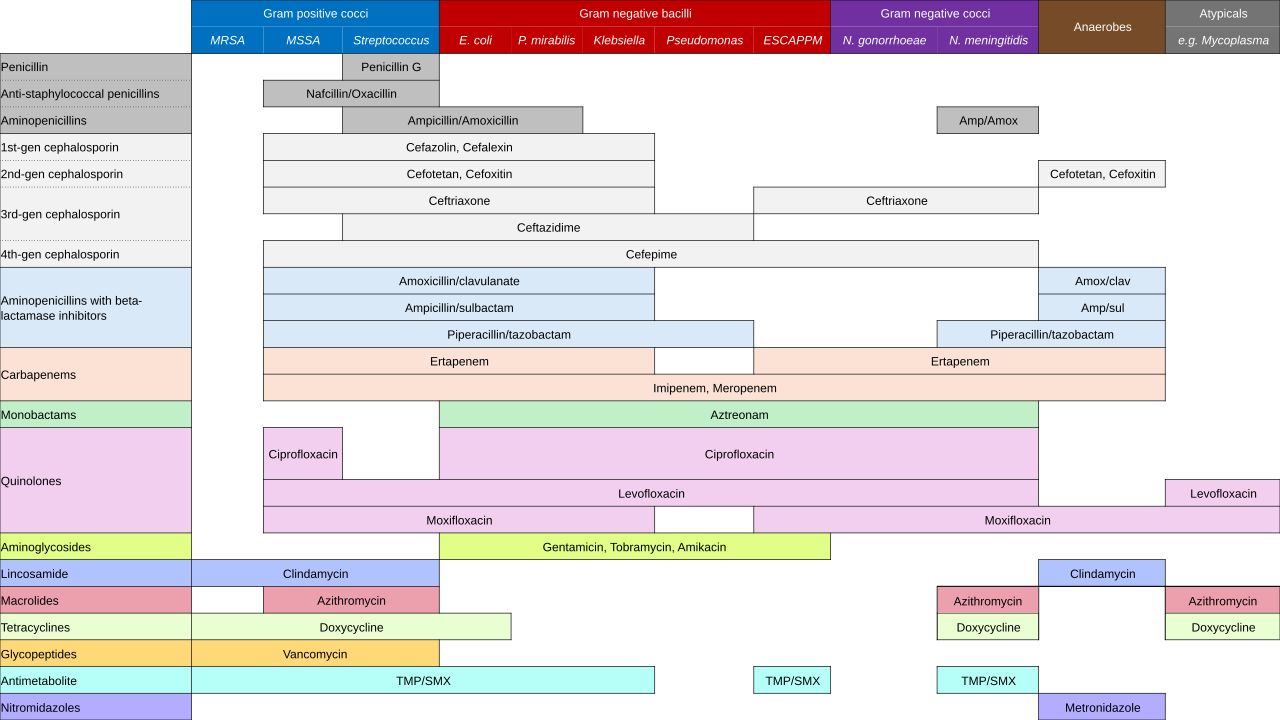
One drug, three names
A drug is any chemical that changes the way the body works. Every approved drug has three names. Mixing them up is a quiet cause of drug errors. The chemical name describes the molecule. For one common pain drug it is N-acetyl-para-aminophenol. You will almost never use it. The generic name is the drug's one true name. It is also called the nonproprietary name or the United States Adopted Name. For this drug it is acetaminophen. No company owns it, and it never changes. The order, the chart, and the drug guide all use it. The trade name is the brand name a company owns and sells under. It is also called the proprietary name. For acetaminophen it is Tylenol, plus a dozen others.
Here is why this matters in real care. One generic drug can have many trade names. A patient coming from home may know only the brand. Say a patient takes Tylenol, Percocet, and a nighttime cold medicine. That patient is taking acetaminophen three times. They may go past the top safe daily dose and never know it. Safe care uses generic names for this reason. The generic name is the only name that cannot hide a double dose.
Generic names also hold clues. Most classes share a stem. A stem is a piece of the name that tells you the drug type before you look it up. A name ending in -olol is a beta blocker. -pril means an ACE inhibitor. -statin means an HMG-CoA reductase inhibitor. -prazole means a proton pump inhibitor. -cillin means a penicillin. -sartan means an angiotensin II receptor blocker. Learning stems is one of the most useful hours you can spend on this book.
Classes: sorting drugs by what they do
A drug class is a group of drugs that work the same way. It is also called a pharmacologic class. The way a drug works is its mechanism of action. Drugs that share a mechanism also share effects, harmful effects, and care steps. This is why pharmacology can be learned at all. There are thousands of drugs. But only a few dozen mechanisms matter. You are not memorizing a long list. You are learning a small number of stories. Then you spot which story a new drug belongs to.
Drugs can be grouped in two ways, and you will see both. A therapeutic classification says what the drug is used for. Examples are antihypertensive (lowers blood pressure), anticoagulant (slows clotting), and analgesic (eases pain). A pharmacologic classification says how it works. Examples are calcium channel blocker, vitamin K antagonist, and opioid receptor agonist. One drug fits both systems at once. Metoprolol is used as an antihypertensive and an antianginal (eases chest pain). By how it works, it is a beta1-selective adrenergic blocker.
Prototype drugs
Drugs in a class work the same way. So each class has a prototype. The prototype is the well-studied member that stands for the whole class. You learn it very well. Then you use it as the model for every other drug in the family. Learn morphine, and you know most of hydromorphone, fentanyl, and oxycodone. Learn furosemide, and bumetanide and torsemide hold few surprises. When you meet a new drug, do not first ask "what does this do?" Ask "what class is this, and what is the prototype?"
| Class | Prototype | Key effect | Safety alert |
|---|---|---|---|
| Beta blockers (-olol) | metoprolol | Blocks beta1 receptors → lower heart rate and blood pressure, less cardiac workload | Hold the dose and tell the prescriber if HR is under 60 or SBP is under 90; never stop it suddenly (the heart can race back, with angina or MI); may hide the warning signs of low blood sugar |
| ACE inhibitors (-pril) | lisinopril | Blocks formation of angiotensin II → vasodilation, lower BP, renal protection | Dry hacking cough, hyperkalemia, first-dose hypotension; angioedema is an emergency; contraindicated in pregnancy |
| Loop diuretics | furosemide | Blocks Na-K-2Cl reabsorption in the loop of Henle → brisk diuresis | Watch hypokalemia, hypotension, dehydration; push IV slowly (ototoxicity); daily weight is the best measure of fluid loss |
| Opioid agonists | morphine | Mu-receptor agonist → analgesia, sedation, euphoria | Respiratory depression is the killer: monitor rate and sedation; constipation never resolves, treat it; antidote is naloxone |
| Benzodiazepines (-azepam, -azolam) | lorazepam | Enhances GABAA → sedation, anxiolysis, seizure control | Adds to the CNS and breathing slowdown from opioids and alcohol; raises fall risk in older adults; antidote is flumazenil (rarely used, since it can set off seizures) |
| Anticoagulants | warfarin | Inhibits vitamin K epoxide reductase → less synthesis of factors II, VII, IX, X → less clotting | Check the INR (usual goal 2 to 3); antidote is vitamin K (phytonadione); teach a steady intake of leafy greens, not zero; huge list of interactions. Compare heparin: works right away by boosting antithrombin, checked with the aPTT (1.5 to 2.5 times control), reversed by protamine sulfate; watch for HIT (heparin-induced thrombocytopenia, a drop in platelets) |
| Statins (-statin) | atorvastatin | Inhibits HMG-CoA reductase → lower LDL cholesterol | Report unexplained muscle pain or weakness (myopathy, rhabdomyolysis); avoid grapefruit juice with several agents; monitor liver enzymes |
| Proton pump inhibitors (-prazole) | omeprazole | Irreversibly blocks the gastric H+/K+-ATPase → much less acid | Give before the first meal of the day; long-term use is linked to low magnesium and B12, bone fractures, and C. difficile; stop it when the reason for it ends |
- Every drug has a chemical name, a generic name, and one or more trade names. Safe care uses generic names.
- Generic stems (-olol, -pril, -statin, -prazole, -sartan) show the class at a glance.
- A drug class shares a mechanism. So it shares effects, harmful effects, and care steps.
- Learn the prototype and you know the family. Sort a new drug into its class before you try to memorize it.
Section 2Pharmacokinetics: what the body does to the drug
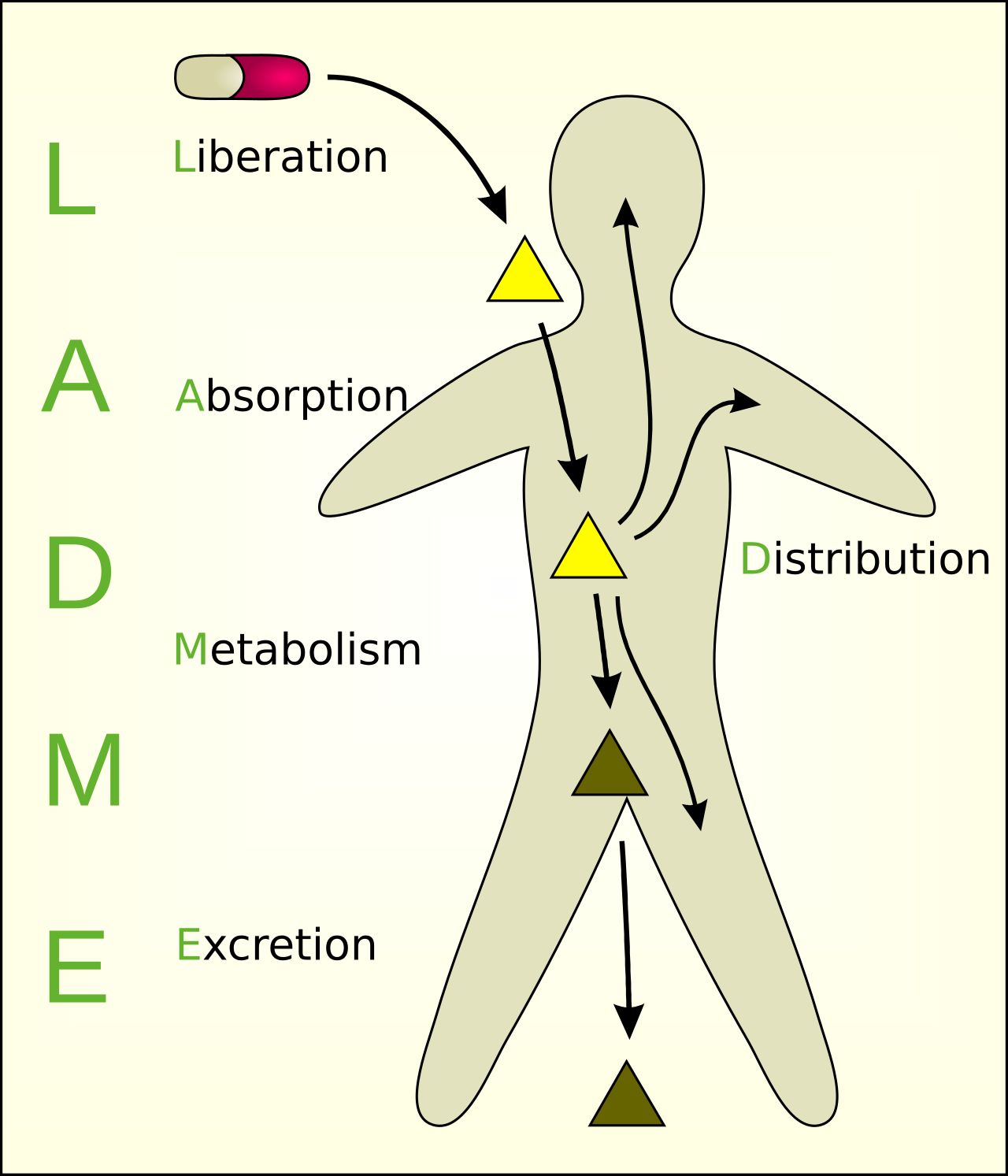
The four-step journey
Pharmacokinetics is the study of how a drug moves. It covers how a drug gets in and where it goes. It covers how the drug is changed and how it leaves. Four steps run at once from the moment the drug is given. They are remembered as ADME: Absorption, Distribution, Metabolism, Excretion. These four steps decide how much drug reaches its target. They also decide how long it stays. That is why the same 5 mg tablet acts very differently in a young athlete and in an 88-year-old with heart failure and kidney disease.
Absorption is the drug's move from where it was given into the blood. It depends on the route. IV is instant and complete. Oral is slow and partial. It depends on blood flow to the site. A person in shock absorbs almost nothing from a shot into the muscle. It depends on whether the drug can cross cell membranes. Drugs that dissolve in fat and carry no charge cross easily. Food in the gut matters too. Bioavailability is the share of a dose that reaches the main bloodstream unchanged. An IV dose is 100% bioavailable by definition. An oral dose is usually less.
Distribution is the drug's trip from the blood into the tissues. Blood flow decides who gets it first. The heart, brain, liver, and kidneys get lots of blood. Fat and resting muscle get much less. Two barriers matter. The blood-brain barrier lets only fat-soluble drugs cross easily. This is one reason some antihistamines make you sleepy and others do not. The placenta stops almost nothing. Distribution also depends on protein binding. Many drugs ride on albumin, a blood protein. Only the unbound (free) part of the drug is active. Some people have low albumin. This happens with poor nutrition, cirrhosis, or old age. They have more free drug from the same dose. So a "normal" dose can poison them.
Metabolism and the first-pass effect
Metabolism is the chemical change of a drug. It is also called biotransformation. It mostly happens in the liver. It mostly uses a family of enzymes called cytochrome P450 (CYP450). Most of the time, metabolism turns the drug off. It also makes the drug dissolve in water so it can leave the body. Sometimes it does the opposite. A prodrug is given in an inactive form. The body must change it before it works. Codeine must be turned into morphine by the enzyme CYP2D6. A person who is a poor metabolizer gets little pain relief. A person who is an ultrarapid metabolizer can get a dangerous overdose.
Most drug-drug interactions happen in the CYP450 system. An enzyme inducer speeds up metabolism. Examples are rifampin, phenytoin, carbamazepine, and St. John's wort. Partner drugs then fall too low to work. The classic disaster is a birth control pill or warfarin that stops working. An enzyme inhibitor slows metabolism. Examples are many azole antifungals, clarithromycin, amiodarone, and grapefruit juice. Partner drug levels then climb toward toxic.
The first-pass effect is why changing the route is never a simple swap. Anything absorbed from the stomach or gut drains into the portal vein. That vein carries it through the liver before it reaches the rest of the body. The liver may destroy most of the dose on that first trip. Oral morphine is the classic case. You need about three times the IV dose by mouth for the same effect. Some routes skip the portal vein. These are IV, under the tongue (sublingual), through the skin (transdermal), inhaled, and partly rectal. They escape the first pass. That is why nitroglycerin goes under the tongue and is not swallowed.
Excretion, half-life, and steady state
Excretion removes the drug. Most drugs leave through the kidneys. Weak kidneys let drug build up. Age, dehydration, and kidney disease can all weaken them. So drugs cleared by the kidneys get their doses adjusted to creatinine clearance or eGFR. These are measures of kidney function. Smaller routes matter for some drugs. These include bile and stool (some antibiotics) and the lungs (inhaled anesthetics). They also include breast milk. The amount in milk is tiny, but it is never tiny for the breastfed baby.
The most useful number in this topic is the half-life (t½). It is the time it takes for the drug level in the blood to drop by half. Half-life sets how often a dose is given. It also drives two rules worth memorizing. It takes about four to five half-lives to reach steady state. Steady state is the level point where the amount going in equals the amount going out. Only then is the drug doing its full job. It also takes about four to five half-lives to clear a drug after the last dose. That is why a loading dose exists. Some patients cannot wait days for steady state. A large first dose fills the tank right away. Smaller maintenance doses then keep it full.
| Step | What happens | What slows or changes it | What you do |
|---|---|---|---|
| Absorption | Drug enters the bloodstream from the administration site | Route, blood flow to the site, food, gastric pH, lipid solubility | Give on an empty stomach or with food as ordered; recognize that a hypotensive patient absorbs IM and SubQ drugs unreliably |
| Distribution | Drug travels from blood into tissue | Perfusion, protein binding, blood-brain barrier, placenta, body fat | Suspect toxicity at normal doses when albumin is low; assume the drug crosses the placenta and into breast milk |
| Metabolism | Liver enzymes (CYP450) alter the drug; prodrugs are activated | Liver disease, age (neonates and elders), inducers and inhibitors, genetics | Screen for CYP interactions; watch LFTs; know which drugs are prodrugs |
| Excretion | Drug leaves, mostly in urine | Renal function, urine pH, competition for tubular transport | Check creatinine and eGFR before renally cleared drugs; monitor intake and output |
- ADME (absorption, distribution, metabolism, excretion) is what the body does to the drug.
- Bioavailability is the share that reaches the blood unchanged. IV is 100%. Oral is usually less.
- Only the free (unbound) drug is active. Low albumin means more free drug and more risk of toxicity.
- The first-pass effect destroys much of an oral dose in the liver. Sublingual, transdermal, and IV routes skip it.
- It takes 4 to 5 half-lives to reach steady state and 4 to 5 to clear. A loading dose skips the wait.
Section 3Pharmacodynamics: what the drug does to the body
Receptors: the lock and the key
Pharmacodynamics is the other half of the story. Once the drug arrives, what does it actually do? Almost always, it binds to something. Most drugs act on a receptor. A receptor is a protein, often on a cell's surface. The body built it for its own signal molecule. Drugs do not create new jobs in the body. They borrow jobs that already exist. They turn the body's own switches up or down. Albuterol works because your lungs already have beta2 receptors waiting for epinephrine. Morphine works because your nerves already have mu receptors waiting for endorphins.
Two traits describe the fit. Affinity is how tightly a drug binds its receptor. Intrinsic activity is whether binding actually sets off a response. These two ideas build all the words below. They also explain selectivity. A drug is selective when it prefers one receptor type. But selectivity depends on dose and is never total. Metoprolol is beta1-selective at usual doses. So it is the safer pick if a person with asthma must take a beta blocker at all. At higher doses, though, it spills onto the beta2 receptors in the airway. Then it can still cause bronchospasm, a tightening of the airways. Nonselective drugs such as propranolol block beta2 from the first dose. They are avoided in people with reactive airway disease.
Agonists, antagonists, and everything between
An agonist binds and activates. It copies the body's own messenger and turns the response on. An antagonist binds and blocks. It has affinity but no intrinsic activity. It sits in the receptor and keeps the natural messenger (or another drug) out. Antagonists have no effect of their own. Their whole effect is stopping something else. A partial agonist binds and activates only weakly. It gives less than the full response, no matter how high the dose. That ceiling can be a safety feature.
| Type | What it does at the receptor | Example | What it means at the bedside |
|---|---|---|---|
| Agonist | Binds and activates; mimics the natural ligand | albuterol (beta2), morphine (mu) | Expect the natural signal, amplified: albuterol gives bronchodilation and the tremor and tachycardia that come with it |
| Antagonist | Binds and blocks; affinity, no intrinsic activity | naloxone (mu), metoprolol (beta1) | The classic antidote action; naloxone pushes the opioid off the receptor and reverses slowed breathing. But it wears off sooner than most opioids, so the patient can become sleepy again (re-sedation) and must be watched |
| Partial agonist | Binds, activates weakly; has a ceiling | buprenorphine (mu) | Less respiratory depression at high doses, but it will displace a full agonist and can precipitate withdrawal |
| Non-receptor action | Works by physical or chemical means, no receptor | antacids, osmotic laxatives, mannitol, chelators | Do not look for a receptor story: the mechanism is chemistry or osmosis |
Dose-response, potency, efficacy, and the therapeutic index
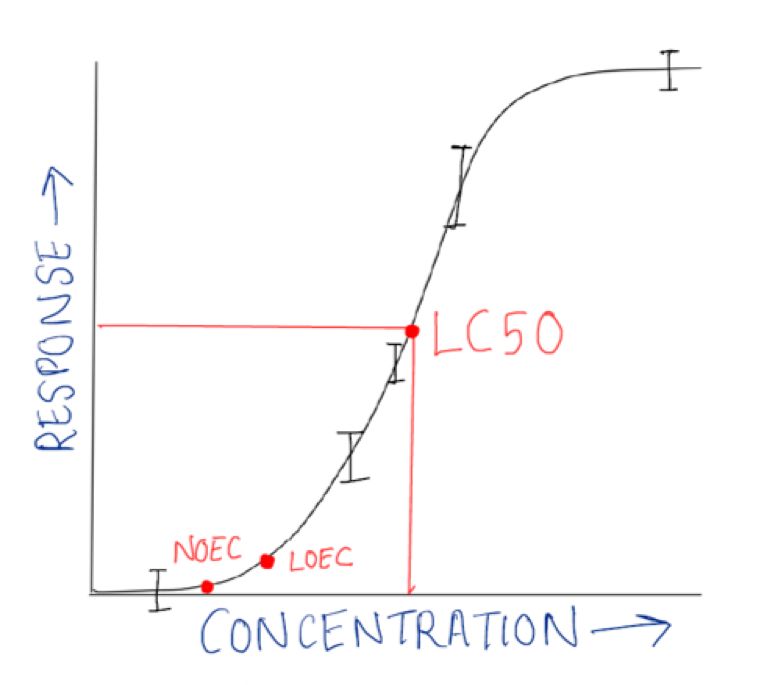
Plot dose against effect and you get the dose-response curve. At the bottom, little happens. This is below the threshold. Then the response rises fast through the useful middle. Then it flattens into a plateau. Here the receptors are full. More drug brings no more effect, only more toxicity. That plateau is why "the pain is still there, give more" at some point stops being treatment and starts being harm.
People often mix up two words. Potency is how much drug it takes to get a set effect. A more potent drug works at a smaller dose. Efficacy is the biggest effect the drug can produce, no matter the dose. Efficacy is what you want. Potency is only a milligram number. Hydromorphone is more potent than morphine, so fewer milligrams are needed. But it is not more efficacious. Ibuprofen, on the other hand, has a firm ceiling for pain relief that no dose can pass. For severe pain, an opioid's greater efficacy is the point.
The therapeutic index (TI) compares the dose that poisons to the dose that helps. It is written TD50/ED50. That is the dose toxic to half of people divided by the dose that works in half of people. A high TI means a wide, forgiving margin. A low (narrow) therapeutic index means the dose that works and the dose that harms are very close. These drugs get blood levels drawn. They get double-checked. They send people to the ED. Learn the list: warfarin, digoxin, lithium, phenytoin, levothyroxine, theophylline, carbamazepine, vancomycin, aminoglycosides (such as gentamicin), and insulin. The therapeutic range is the level window between "not working" and "poisoning." For these drugs, that window is a narrow ledge. You can fall off either side.
- Drugs act by binding receptors and turning the body's own signals up or down. Affinity is the fit. Intrinsic activity is whether it fires.
- An agonist turns on. An antagonist blocks (the antidote action). A partial agonist turns on weakly, with a ceiling.
- Potency = how many milligrams. Efficacy = the biggest effect possible. Efficacy is what the patient feels.
- A drug with a narrow therapeutic index (warfarin, digoxin, lithium, phenytoin, insulin) needs levels, close watching, and double-checks.
Section 4Safe medication administration
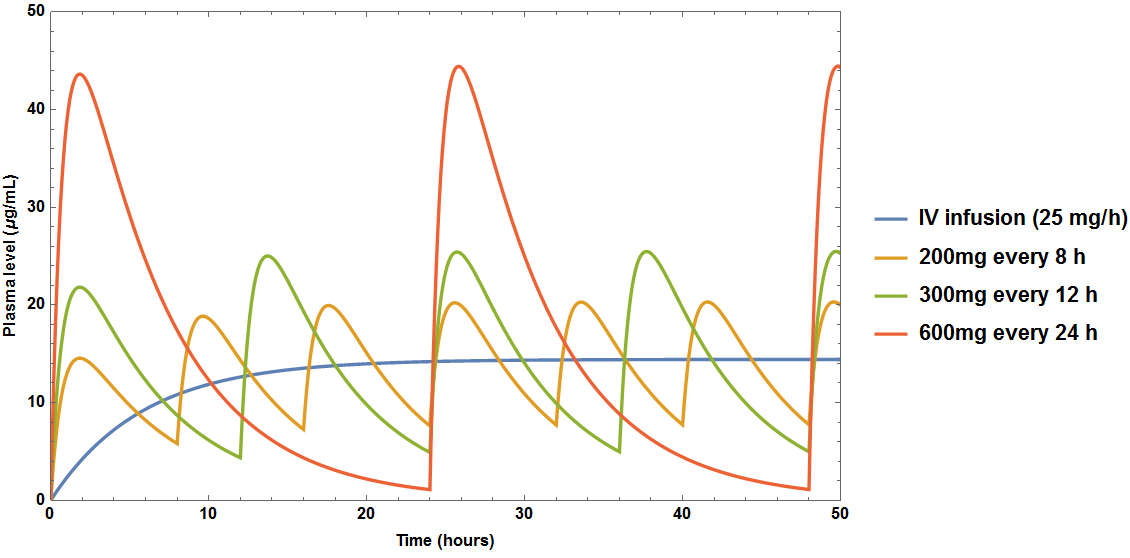
The rights of medication administration
All of the above is just theory until you stand by a patient with a med cup in your hand. The rights of medication administration are the checklist that turns knowledge into safety. The classic five are right patient, right drug, right dose, right route, right time. Most programs and employers add more. These are right documentation, right reason (why it is given), right response, right to refuse, and right education. Check them three times. Check when you pull the drug. Check when you prepare it. Check again at the bedside before you give it.
Two of these need extra weight, because they are skipped most often. Right patient means two identifiers. Match the name and date of birth to the armband. Never use the room number. Never trust a nod when you say the wrong name out loud. Right response means the job is not done when the drug goes in. You gave metoprolol, so you recheck the heart rate. You gave morphine, so you recheck pain and breathing rate and sleepiness. You gave insulin, so you know when the blood sugar will hit its low point. Chart a drug after you give it, never before. Charting a drug you have not given yet is how a dose gets given twice.
Routes
The route decides speed, how much gets in, and whether it can be undone. The most important safety rule in the table below is this: once it is in, you cannot take it back. The faster the route, the more true that is. An oral overdose can sometimes be stopped. An IV push cannot.
| Route | Onset | First pass? | Care notes |
|---|---|---|---|
| Oral (PO) | Slow (30 to 60 min) | Yes | Safest and cheapest; needs a working swallow and gut. Never crush extended-release or enteric-coated tablets; crushing an ER pill gives the whole day's dose at once |
| Sublingual / buccal | Fast (1 to 5 min) | No | Nothing to swallow or drink; nitroglycerin is the prototype, and a tingle suggests the tablet still works. Never give with a PDE-5 inhibitor (sildenafil, tadalafil, vardenafil): both widen blood vessels, and together they cause a dangerous drop in blood pressure; ask before you give |
| Subcutaneous | Slow, sustained | No | Small volumes (usually 1 mL or less); insulin and heparin; rotate sites; do not massage after heparin (bruising) |
| Intramuscular | Moderate | No | Larger volumes; ventrogluteal is the safest adult site; absorption fails in shock or poor perfusion |
| Intravenous | Immediate | No | 100% bioavailable and irreversible: know the push rate, the compatibility, and the antidote before you start; watch for infiltration and extravasation |
| Transdermal | Slow, steady | No | Remove the old patch before you put on a new one (stacked fentanyl patches have killed people); date and initial it; wear gloves; rotate sites |
| Inhaled | Fast, local | No | Works where it lands, with a small dose in the blood; if both are ordered, give the bronchodilator before the corticosteroid; rinse the mouth after inhaled steroids to prevent thrush |
| Rectal | Variable | Partial | Useful when the patient is vomiting or unconscious; absorption is unpredictable |
Orders and error prevention
A complete drug order names the patient, the date and time, the drug, the dose, the route, how often, and the prescriber's signature. Sometimes a part is missing or unclear. Sometimes it just does not make sense for this patient. Then the order is not valid, and you do not give it. You get it clarified. "The prescriber wrote it" has never been a defense. The person who gives the drug is responsible for it too.
High-alert medications are drugs that do great harm when something goes wrong. They are insulin, anticoagulants (heparin, warfarin), opioids, concentrated electrolytes (above all potassium chloride), chemotherapy, neuromuscular blockers, and sedatives. They need an independent double-check. A second clinician checks the drug, dose, pump settings, and patient on their own. You do not tell them what you already worked out. And one rule never changes: concentrated potassium chloride is never given IV push. It must be diluted and infused.
Then there is how numbers are written. Use a leading zero: 0.5 mg, not .5 mg. A missed decimal point becomes a tenfold overdose. Never use a trailing zero: 5 mg, not 5.0 mg, which can be read as 50. Write out "units" instead of "U," which can be misread as a zero. Avoid the shortcuts on your facility's do-not-use list. And know your look-alike/sound-alike (LASA) pairs. Examples are hydralazine and hydroxyzine, celecoxib and citalopram, metformin and metronidazole, and lamotrigine and lamivudine. The pair that sends people to the ICU is morphine and hydromorphone. Read the label three times. Read it when you pull it, when you prepare it, and when you put it back or throw it out.
- The rights (patient, drug, dose, route, time, plus documentation, reason, response, refusal, education) are checked three times. Right patient means two identifiers.
- The route sets how fast a drug acts and whether it can be undone. IV is instant and cannot be undone. Never crush ER or enteric-coated tablets.
- High-alert drugs (insulin, anticoagulants, opioids, concentrated KCl, chemo) need independent double-checks. KCl is never IV push.
- Use a leading zero and never a trailing zero. Write out "units." Know your LASA pairs.
- An unclear or incomplete order is clarified, not given. The person who gives the drug is responsible for it.
Section 5Herbal supplements & interactions
Supplements are drugs, whatever the label says
About one in five adults takes an herbal product. Most never tell a clinician. In their minds, a supplement is food, not medicine. That belief is the danger. In the United States, a dietary supplement is regulated as a food, not a drug. The law is the Dietary Supplement Health and Education Act (DSHEA) of 1994. It needs no proof of safety or efficacy before sale. The FDA can act only after harm shows up. Nobody checked the strength, the purity, or what is really inside the bottle in your patient's bag.
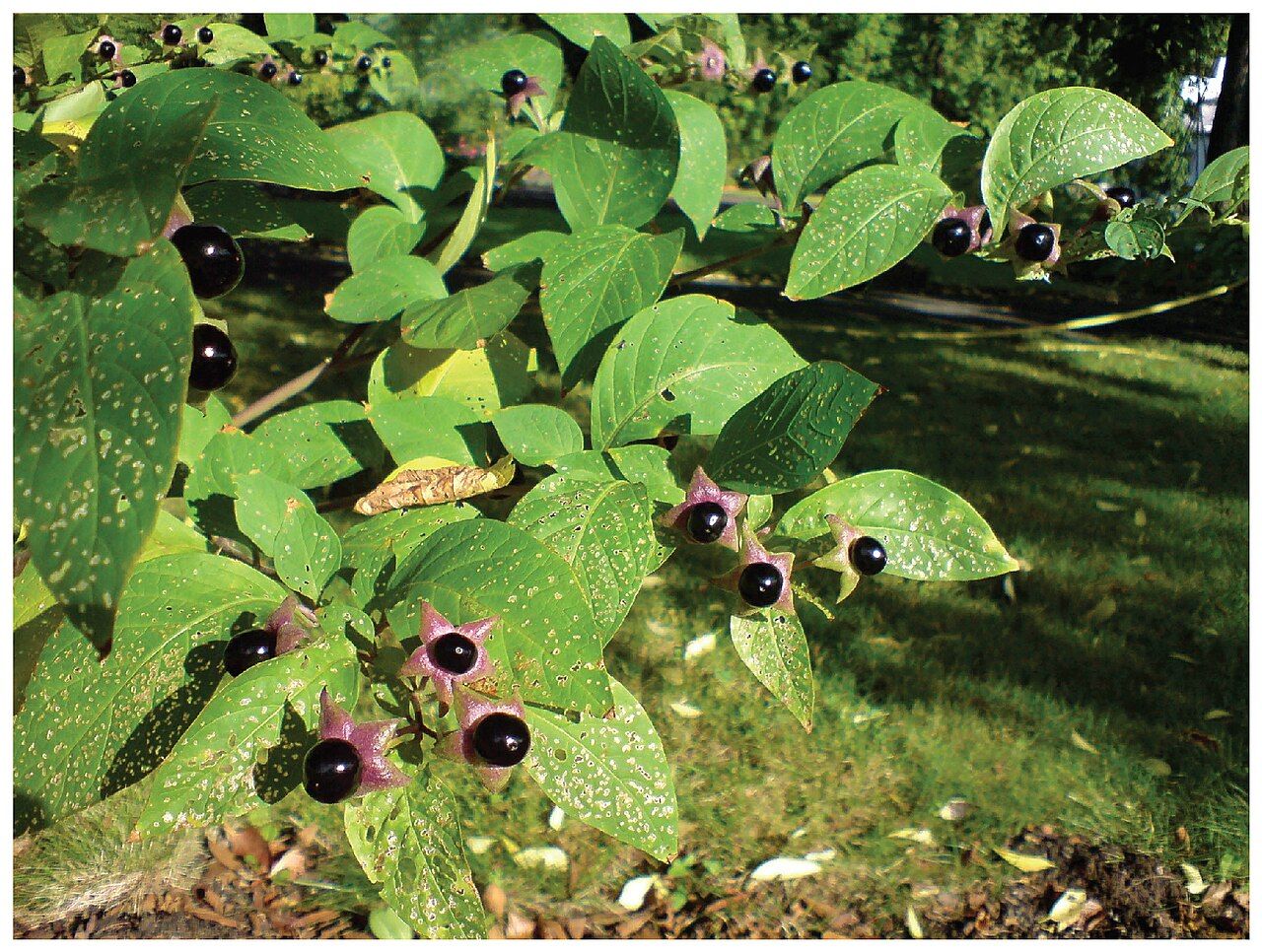
Yet the drug effects are completely real. Digoxin comes from foxglove. Aspirin comes from willow bark. Morphine comes from the poppy. Atropine comes from belladonna. Paclitaxel comes from the yew tree. Plants are chemists. "Natural" has never meant safe. Hemlock is natural. A compound strong enough to help is, by definition, strong enough to interact.
The interactions that actually matter
Herbal interactions fall into three predictable types. So you can reason instead of memorize. First are CYP450 and P-glycoprotein effects. St. John's wort is a strong inducer. It can wreck a drug plan by driving levels down. Second is bleeding risk. Products with antiplatelet action stack on top of anticoagulants, antiplatelets, and NSAIDs. The easy-to-remember group is the four G's plus feverfew: garlic, ginger, ginkgo, ginseng, and feverfew. Third is added drug effect. Kava and valerian add to CNS depressants. Ginseng pushes blood sugar down on top of diabetes drugs.
| Supplement | Common claimed use | Mechanism / concern | Safety alert |
|---|---|---|---|
| St. John's wort | Depression, mood | Potent CYP3A4 and P-glycoprotein inducer; serotonergic activity | The most dangerous common supplement. Lowers levels of warfarin, oral contraceptives, cyclosporine, HIV protease inhibitors, digoxin, and seizure drugs; transplant rejection and unplanned pregnancy have been reported. With an SSRI or a triptan, it raises the risk of serotonin syndrome |
| Ginkgo biloba | Memory, circulation | Inhibits platelet-activating factor → antiplatelet | Bleeding with warfarin, aspirin, clopidogrel, NSAIDs; lowers seizure threshold; typically stop 1 to 2 weeks before surgery |
| Garlic | Cholesterol, blood pressure | Antiplatelet; can reduce saquinavir levels | Additive bleeding risk; stop before surgery; may add to antihypertensives |
| Ginger | Nausea, motion sickness | Antiplatelet at higher doses | Reasonably safe in culinary amounts; bleeding risk with anticoagulants at supplement doses |
| Ginseng | Energy, "immune support" | Antiplatelet; lowers blood glucose; may reduce INR | Hypoglycemia with insulin or sulfonylureas; unpredictable warfarin effect; stimulant: insomnia, hypertension; interacts with MAOIs |
| Feverfew | Migraine prevention | Antiplatelet | Bleeding risk; abrupt discontinuation causes rebound headache |
| Kava | Anxiety, insomnia | Hepatotoxicity; CNS depression | Linked to severe liver injury and transplant; additive with benzodiazepines, alcohol, opioids; avoid with any hepatotoxic drug |
| Valerian | Insomnia | CNS depression (GABAergic) | Additive sedation with benzodiazepines, opioids, alcohol, antihistamines; fall risk in older adults |
| Echinacea | Colds, "immune support" | Immune stimulation; possible hepatotoxicity | Avoid in immunosuppression, transplant, autoimmune disease, and HIV; may oppose immunosuppressants |
| Black cohosh | Menopausal symptoms | Hepatotoxicity reports | Monitor liver enzymes; avoid with other hepatotoxic drugs; caution in hormone-sensitive cancer |
| Saw palmetto | Benign prostatic hyperplasia | Mild antiplatelet effect; hormonal activity | Bleeding risk; easing symptoms may hide untreated BPH or prostate cancer, so the prescriber must know the patient takes it. Controlled trials have not shown that it lowers PSA. The drugs that do are the 5-alpha-reductase inhibitors finasteride and dutasteride, which cut PSA about in half (double the value when reading a screen) |
| Milk thistle | Liver support | Generally well tolerated; modest CYP effects | Among the safer products; still verify against the patient's regimen, and it is not a treatment for liver disease |
| Grapefruit juice (not an herb, same problem) | Food | Intestinal CYP3A4 inhibitor | Raises levels of simvastatin, atorvastatin, amiodarone, many calcium channel blockers, and some immunosuppressants; a single glass can matter, and the effect lasts about 24 hours |
How to ask
How you ask changes the answer. "Are you taking any medications?" often gets a "no" from a person with three supplement bottles at home. They do not think of them as medicine. Ask this instead: "What do you take that you buy without a prescription? Think of vitamins, herbs, teas, powders, protein shakes, anything from the health-food aisle, or anything a family member suggested." Then ask them to bring in the actual bottles. Put each one on the drug list. Teach without judging. The goal is not to talk them out of a supplement. The goal is to keep them safe from a bleed, a rejected transplant, or a serotonin crisis they never saw coming. Two teaching points belong in almost every discharge. Tell every prescriber about every supplement. And stop most herbal products one to two weeks before surgery.
- Supplements are regulated as food, not drugs. There is no proof of safety, efficacy, strength, or purity before sale.
- St. John's wort is the riskiest common supplement. It is a CYP3A4/P-gp inducer that makes warfarin, birth control pills, cyclosporine, and HIV drugs fail. It also adds serotonin syndrome risk.
- The bleeding group (garlic, ginger, ginkgo, ginseng, feverfew) stacks with anticoagulants, antiplatelets, and NSAIDs. Stop them 1 to 2 weeks before surgery.
- Kava and black cohosh can harm the liver. Valerian and kava add to CNS depressants. Echinacea is a problem when the immune system is being held down on purpose.
- Ask directly about products bought without a prescription. Put every one on the drug list.
The chapter in one breath
- Every drug has a chemical, generic, and trade name. Safe care uses generic names. Stems like -olol and -pril show the class at a glance.
- A class shares a mechanism, so it shares effects and care steps. Learn the prototype and you know the family.
- Pharmacokinetics (ADME) is what the body does to the drug. Bioavailability, protein binding, and the first-pass effect explain why the same dose acts differently in different people.
- Half-life sets how often a dose is given. It takes about 4 to 5 half-lives to reach steady state and 4 to 5 to clear. A loading dose skips the wait.
- Pharmacodynamics is what the drug does to the body. Agonists turn on, antagonists block (the antidote action), and partial agonists have a ceiling.
- Potency is milligrams. Efficacy is the biggest effect. A narrow therapeutic index (warfarin, digoxin, lithium, phenytoin, insulin) calls for levels and double-checks.
- Safe giving means the rights, two identifiers, the right route, an independent double-check for high-alert drugs, and never IV push potassium.
- Herbal supplements are drugs with no safety check before sale. St. John's wort speeds up CYP3A4 and wrecks drug plans. The four G's plus feverfew raise bleeding. Kava and black cohosh harm the liver. So ask about the bottles no one prescribed.
ReferenceWords worth knowing
A quick list of the terms in this chapter. Skim it now, or come back when a word trips you up.
- Absorption
- The move of a drug from where it was given into the blood; the first step of pharmacokinetics.
- Adverse drug reaction (ADR)
- A harmful, unplanned response to a drug given at a normal dose; broader and more serious than an expected side effect.
- Agonist
- A drug that binds a receptor and turns it on, copying the body's own messenger.
- Antagonist
- A drug that binds a receptor and blocks it, with no effect of its own; the way antidotes such as naloxone work.
- Bioavailability
- The share of a given dose that reaches the main bloodstream unchanged; 100% for IV, usually less by mouth.
- Distribution
- The move of a drug from the blood into the tissues; shaped by blood flow, protein binding, and barriers such as the blood-brain barrier and the placenta.
- Efficacy
- The biggest effect a drug can produce, no matter the dose; what the drug is able to do.
- Excretion
- Removal of a drug and its breakdown products from the body, mostly by the kidneys.
- First-pass effect
- Breakdown of a swallowed drug by the liver before it reaches the main bloodstream; skipped by IV, sublingual, and transdermal routes.
- Half-life (t½)
- The time it takes for the drug level in the blood to fall by 50%; sets how often doses are given and predicts steady state and clearance.
- High-alert medication
- A drug that does great harm when used in error (insulin, anticoagulants, opioids, concentrated electrolytes, chemotherapy), so it needs an independent double-check.
- Loading dose
- A large first dose given to reach a working level fast, instead of waiting four to five half-lives.
- Metabolism (biotransformation)
- Chemical change of a drug, mostly by CYP450 enzymes in the liver; it usually turns the drug off but turns a prodrug on.
- Pharmacodynamics
- What the drug does to the body: receptor binding, how the drug works, and the link between dose and response.
- Pharmacokinetics
- What the body does to the drug: absorption, distribution, metabolism, and excretion.
- Potency
- How much drug it takes to get a set effect; a more potent drug works at a lower dose. Not the same as efficacy.
- Prodrug
- An inactive drug that the body must change into its active form; for example, codeine is turned into morphine.
- Prototype drug
- The well-studied member of a class that serves as the model for the rest of the family.
- Side effect
- An expected, dose-related effect other than the one you want; often bearable, sometimes the reason a person quits the drug.
- Steady state
- The level point where drug coming in equals drug going out; reached after about four to five half-lives of regular dosing.
- Therapeutic index
- The ratio of the toxic dose to the dose that works; a low (narrow) index means a dangerously small margin for error.
- Trough level
- The lowest drug level between doses, drawn within about 30 minutes before the next dose; the level that shows build-up.