Antimicrobial Drugs
Antimicrobials are the only drugs we give that aim at something other than the patient. Everything else on the drug cart changes the person in the bed. That includes the beta blocker, the insulin, and the opioid. An antibiotic is meant to kill an invader and leave the person alone. How well it does that is the difference between a cure and a kidney injury. This chapter shows how these drugs pick their target. It shows how they are grouped by the part of the microbe they break. It explains why microbes are learning to shrug them off. It also covers what you do at the bedside to make it all work safely. Learn the classes as families, and the details stop being memorization. They become predictions you can make.
By the end of this chapter you can
- Explain selective toxicity and use it to predict which drugs are safe and which are not.
- Tell narrow- from broad-spectrum drugs, and bactericidal from bacteriostatic drugs.
- Describe what culture and sensitivity testing does and why empiric therapy exists.
- Group antibacterials by how they work (cell wall, protein synthesis, nucleic acid, and metabolic blockers) and name a prototype for each.
- Explain how resistance starts, and name MRSA, VRE, and other resistant germs and their treatments.
- Describe the bedside role in antimicrobial stewardship.
- Compare the main antifungal and antiviral classes and the harm each one is known for.
- Describe the main antiprotozoal and anthelmintic drugs and the care that applies to every antimicrobial.
Section 1Principles of antimicrobial therapy
Selective toxicity: the whole game
Selective toxicity is the idea that makes these drugs possible. The drug attacks a part the microbe has and the patient does not. Bacteria build a cell wall out of a mesh called peptidoglycan. Your cells build no wall at all. So a drug that wrecks wall building barely touches you. Bacteria use 70S ribosomes, made of 30S and 50S pieces. Ribosomes are the cell's protein makers. Your cells use 80S ribosomes. So a drug shaped to jam the bacterial one mostly ignores yours. Bacteria must make their own folate, a B vitamin, from scratch. You get yours from food. So a drug that blocks folate making starves the bacterium and skips you.
Read that list backward and you can predict the side effects. Selective toxicity is never perfect. Your mitochondria (the cell's power plants) have ribosomes much like bacterial ones. That is why linezolid can shut down bone marrow. It is also why aminoglycosides damage the hair cells of the inner ear. The smaller the difference between microbe and person, the more toxic the drug. That one sentence explains a lot. It is why penicillin is safe enough for a toddler. It is also why amphotericin B has a nickname about shaking chills.
Spectrum, and cidal versus static
Narrow-spectrum drugs hit a small range of germs. Broad-spectrum drugs hit many. People often think broad is better. It is not. A broad drug wipes out the body's normal, helpful bacteria (normal flora) along with the germ. That opens the door to superinfection, a new infection that moves in. Examples are Clostridioides difficile colitis, Candida thrush, and vaginal yeast. A broad drug also pushes resistance across a much larger group of bacteria. Broad is a first guess, not a goal. The goal is always the narrowest drug that covers the actual germ.
Bactericidal drugs kill bacteria outright. Examples are beta-lactams, aminoglycosides, fluoroquinolones, vancomycin, and metronidazole. Bacteriostatic drugs stop bacteria from multiplying. Then the immune system finishes the job. Examples are tetracyclines, macrolides, clindamycin, sulfonamides, and linezolid. The difference matters most when the immune system cannot help. This is true in endocarditis (infection of a heart valve), meningitis, and neutropenia (very low white cells). There, a drug that kills is usually needed.
Culture and sensitivity, and the empiric window
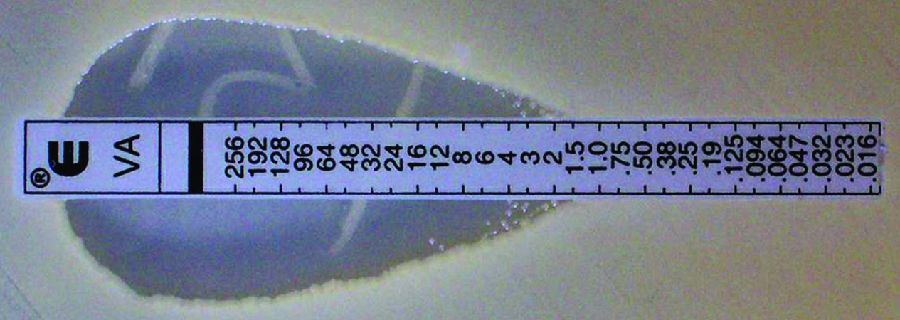
A culture and sensitivity (C&S) has two halves. The culture names the germ. The sensitivity panel tests the germ against a set of drugs. It reports the minimum inhibitory concentration (MIC). This is the lowest drug level that stops growth. Then each drug is labeled susceptible, intermediate, or resistant. A low MIC number by itself does not mean "best drug." The label next to it does. That label weighs how much drug actually reaches the site of infection.
Cultures take 24 to 72 hours. A patient with sepsis does not have 72 hours. So we start empiric therapy. This is a smart, broad guess. It is based on the site of infection and the germs that usually cause it there. It also uses the local antibiogram (a yearly chart of what local germs resist) and the patient's recent exposures. When the C&S comes back, the drug is de-escalated. That means you switch to a narrow drug the germ is actually susceptible to. Empiric therapy is a bridge, not a destination. A broad drug still running on day five, with a susceptibility report on the chart, is a stewardship failure.
| Term | What it means | Why it matters at the bedside |
|---|---|---|
| Selective toxicity | Attacks a microbial-only target | The narrower the microbe-host gap, the more toxic the drug and the more you monitor |
| Narrow-spectrum | Few organisms covered | Preferred once the organism is known: spares flora, less resistance |
| Broad-spectrum | Many organisms covered | Empiric starting point; watch for C. difficile and yeast |
| Bactericidal | Kills the organism | Required when host defenses can't help: endocarditis, meningitis, neutropenia |
| Bacteriostatic | Stops replication | Needs a working immune system to finish the job |
| MIC | Lowest concentration that inhibits growth | Read the susceptible/resistant label, not just the number |
| Empiric therapy | Best guess before results | Start fast in sepsis, but plan to de-escalate |
| Prophylaxis | Prevention, not treatment | Surgical dose timed within 60 min before incision |
- Selective toxicity (a target only the microbe has) makes the drug possible. Where microbe and person overlap, toxicity shows up.
- Narrow-spectrum is the goal. Broad-spectrum is a short-term guess that costs normal flora and breeds resistance.
- Bactericidal kills. Bacteriostatic stalls growth and needs a working immune system.
- C&S names the germ and reports the MIC. Empiric therapy covers the wait and is then de-escalated.
Section 2Antibiotics by mechanism
Cell wall inhibitors: break the box
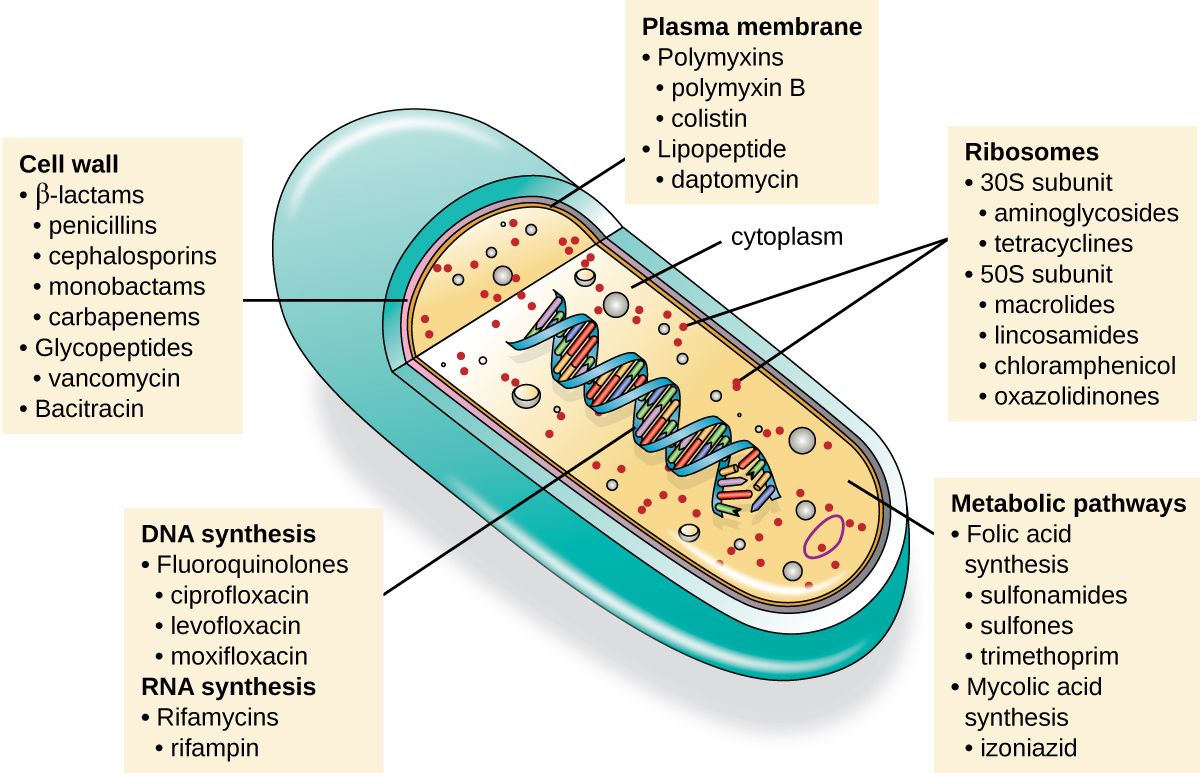
Bacteria live under huge pressure from the inside. A peptidoglycan mesh holds them together. Stop the mesh from linking up, and the cell swells and bursts. So all of these drugs are bactericidal. Human cells have no wall. That makes the beta-lactams some of the safest antimicrobials we have. But that safety belongs to the beta-lactams only, not the whole wall group. Vancomycin also attacks wall building. Yet it can harm the kidneys and ears. It needs trough or AUC levels and repeated creatinine checks. Daptomycin needs a weekly CPK, a muscle enzyme test.
The beta-lactams are named for the four-sided beta-lactam ring they share. They include penicillins, cephalosporins, carbapenems, and the monobactam aztreonam. They bind the penicillin-binding proteins that link the wall mesh. Penicillins range from narrow to broad. Penicillin G is narrow, for strep and syphilis. Amoxicillin and ampicillin are broader. Piperacillin-tazobactam even covers Pseudomonas. Cephalosporins climb through generations. Cefazolin is first generation, the classic drug to prevent surgical infection. Ceftriaxone is third, for meningitis and pneumonia. Cefepime is fourth, for Pseudomonas. Ceftaroline is fifth and works against MRSA. Carbapenems (meropenem, ertapenem, imipenem-cilastatin) are the heavy guns. They are saved for resistant gram-negative germs. Aztreonam covers gram-negatives only. It is the way out for a patient with true penicillin anaphylaxis.
The wall drugs that are not beta-lactams matter too. Vancomycin is a glycopeptide. It blocks wall building at a different step. It is a workhorse for MRSA. Daptomycin is a lipopeptide. It punches holes in the gram-positive membrane instead of the wall. Lung surfactant turns it off. So it is never the answer for pneumonia.
Protein synthesis inhibitors: jam the ribosome
The bacterial 70S ribosome has two halves. The drugs sort by which half they grab. Drugs that hit the 30S piece are aminoglycosides (gentamicin, tobramycin, amikacin) and tetracyclines (doxycycline, minocycline). Drugs that hit the 50S piece are macrolides (azithromycin, erythromycin, clarithromycin), clindamycin, linezolid, and chloramphenicol. A handy memory trick: "buy AT 30, CELL at 50." That is Aminoglycosides and Tetracyclines at 30S. Then Chloramphenicol, Erythromycin and other macrolides, Lincosamides (clindamycin), and Linezolid at 50S.
Here selective toxicity gets thin, and the harms show why. Aminoglycosides harm the kidneys and the ears. The hearing loss can be permanent. So they need peak and trough levels and a daily creatinine. Tetracyclines bind calcium. Long or repeated courses can stain growing teeth. So avoid them under age 8 and in pregnancy. There is one big exception. Doxycycline is first-line at any age for a suspected tick-borne rickettsial illness. These include Rocky Mountain spotted fever, ehrlichiosis, and anaplasmosis. A short course (under 21 days) does not cause meaningful staining. Holding the drug back can be fatal. Tetracyclines also stop working if swallowed with milk, antacids, or an iron pill. Macrolides lengthen the QT interval on the ECG. Clindamycin is the classic cause of C. difficile. Linezolid works on a ribosome that looks like the one in your mitochondria. So it causes low platelets (thrombocytopenia) and nerve damage in the eyes, hands, and feet. It is also a weak MAO inhibitor. Stacked on an SSRI, it can cause serotonin syndrome.
Nucleic acid and metabolic inhibitors: break the blueprint, starve the factory
Fluoroquinolones (ciprofloxacin, levofloxacin, moxifloxacin) poison DNA gyrase and topoisomerase IV. These enzymes untangle bacterial DNA. Fluoroquinolones are strong and work by mouth. They also carry more boxed warnings than almost any other drug. The warnings include tendinitis and tendon rupture. The Achilles tendon is the classic site. Risk is higher over age 60, on steroids, or after a transplant. Other warnings are aortic aneurysm and tear (dissection), nerve damage, brain effects, a long QT, and swings in blood sugar. Rifampin blocks bacterial RNA polymerase. It turns urine, sweat, and tears orange and stains contact lenses. It can harm the liver. It is also a very strong CYP450 inducer. It can quietly make birth control pills and warfarin fail. Metronidazole is switched on inside anaerobes and protozoa. There it shreds their DNA. It leaves a metal taste. With alcohol it causes a disulfiram-like reaction (flushing, vomiting, a racing heart).
The metabolic blockers starve the bacterium of folate. Sulfamethoxazole blocks the enzyme dihydropteroate synthase. Trimethoprim blocks dihydrofolate reductase. These are two steps in a row on one pathway. That is why the pair (TMP-SMX) works better together and kills bacteria. Watch for a rash that could turn into Stevens-Johnson syndrome. Also watch for high potassium, crystals in the urine (push fluids), sun sensitivity, and a sharp rise in the INR of anyone on warfarin. The same folate action matters in pregnancy. Trimethoprim works against folate. So TMP-SMX is avoided in the first trimester. It can cause neural tube defects and other birth defects. If it must be used, folic acid is advised. It is also avoided at term. There, the sulfa part pushes bilirubin loose, which risks kernicterus (brain damage from bilirubin) in the newborn. Isoniazid is a first-line TB drug. It blocks the making of mycolic acid. It can cause nerve damage, so it is given with pyridoxine (vitamin B6). It can also cause hepatitis.
| Class | Prototype | Mechanism / key effect | Safety alert |
|---|---|---|---|
| Penicillins | penicillin G, amoxicillin | Blocks cell wall cross-linking; bactericidal | True allergy vs. GI upset: ask what happened; observe 30 min after first dose; epinephrine available |
| Cephalosporins | cefazolin, ceftriaxone | Beta-lactam; generations broaden gram-negative reach | Cross-reactivity with penicillin is low (~1 to 2%) but ask; never mix ceftriaxone with calcium-containing IV in a neonate |
| Carbapenems | meropenem | Broadest beta-lactam; reserve drug | Seizure risk (highest with imipenem): more so in renal impairment |
| Monobactam | aztreonam | Gram-negative only | Safe option in true penicillin anaphylaxis |
| Glycopeptide | vancomycin | Blocks wall synthesis; MRSA workhorse | Infuse over at least 60 min; nephrotoxic + ototoxic; monitor trough/AUC and creatinine |
| Lipopeptide | daptomycin | Disrupts gram-positive membrane | Monitor CPK weekly (myopathy); inactivated by surfactant: not for pneumonia |
| Aminoglycosides | gentamicin | 30S; bactericidal; gram-negatives | Nephrotoxic + ototoxic (may be permanent); peak & trough levels; daily creatinine; report tinnitus or vertigo |
| Tetracyclines | doxycycline | 30S; bacteriostatic; atypicals, tick-borne | Sun sensitivity; teeth staining with long or repeated courses, so avoid under age 8 and in pregnancy, except doxycycline for suspected tick-borne rickettsial illness, which is first-line at any age; keep apart from dairy, antacids, and iron; take with a full glass of water and sit upright 30 min |
| Macrolides | azithromycin | 50S; bacteriostatic; atypical pneumonia | QT prolongation; GI cramping; erythromycin/clarithromycin are CYP3A4 inhibitors |
| Lincosamide | clindamycin | 50S; anaerobes, skin/soft tissue | Classic C. difficile trigger: report new diarrhea immediately |
| Oxazolidinone | linezolid | 50S; MRSA and VRE; oral = IV | Thrombocytopenia (weekly CBC); serotonin syndrome with SSRIs; optic neuropathy on long courses; tyramine caution |
| Fluoroquinolones | ciprofloxacin | DNA gyrase / topoisomerase IV; bactericidal | Tendon rupture, aortic aneurysm, neuropathy, CNS effects, QT, glucose swings; separate from calcium/iron/antacids by 2 to 6 h |
| Rifamycin | rifampin | Blocks bacterial RNA polymerase; TB | Orange urine/sweat/tears (stains lenses: harmless); hepatotoxic; potent CYP inducer: warn about contraceptive failure |
| Nitroimidazole | metronidazole | Damages DNA of anaerobes/protozoa | No alcohol during and 3 days after: disulfiram-like reaction; metallic taste; darkened urine |
| Sulfonamide combo | TMP-SMX | Sequential folate blockade; synergistic | Rash → watch for SJS; high potassium; push fluids to prevent urine crystals; raises INR on warfarin; avoid in the first trimester (blocks folate → neural tube defects) and at term (kernicterus) |
| Antitubercular | isoniazid | Blocks mycolic acid synthesis | Give pyridoxine (B6) to prevent neuropathy; hepatotoxic: teach dark urine, jaundice, RUQ pain; no alcohol |
- Cell wall drugs kill bacteria because humans have no cell wall. But only the beta-lactams are the safe ones. Vancomycin (levels, creatinine, hearing) and daptomycin (CPK) still need checks.
- Protein synthesis drugs split by ribosome piece. Aminoglycosides and tetracyclines act at 30S. Macrolides, clindamycin, and linezolid act at 50S.
- Nucleic acid drugs: fluoroquinolones (gyrase, tendon rupture), rifampin (RNA polymerase, orange fluids, CYP inducer), metronidazole (no alcohol).
- Metabolic drugs: TMP-SMX blocks two folate steps in a row. Watch rash, potassium, and INR.
Section 3Resistance and stewardship
How resistance arises
Antibiotics do not create resistance. They select for it. In any large group of bacteria, a few cells already carry a gene that weakens the drug. They got it by chance mutation or borrowed it from a neighbor. Give the antibiotic and you kill the susceptible majority. That is what you wanted. But you also hand the survivors an empty room with no competition. They multiply. This is plain natural selection, running at bacterial speed. Every unneeded dose speeds it up.
Bacteria also share DNA freely. Horizontal gene transfer lets a resistance gene jump between germs that are not even related. In conjugation, a plasmid (a small ring of DNA) passes through a direct bridge. In transformation, a cell picks up free DNA from a dead cell. In transduction, a virus that infects bacteria (a bacteriophage) carries the genes over. One gut germ can pass a resistance plasmid to a passing germ overnight.
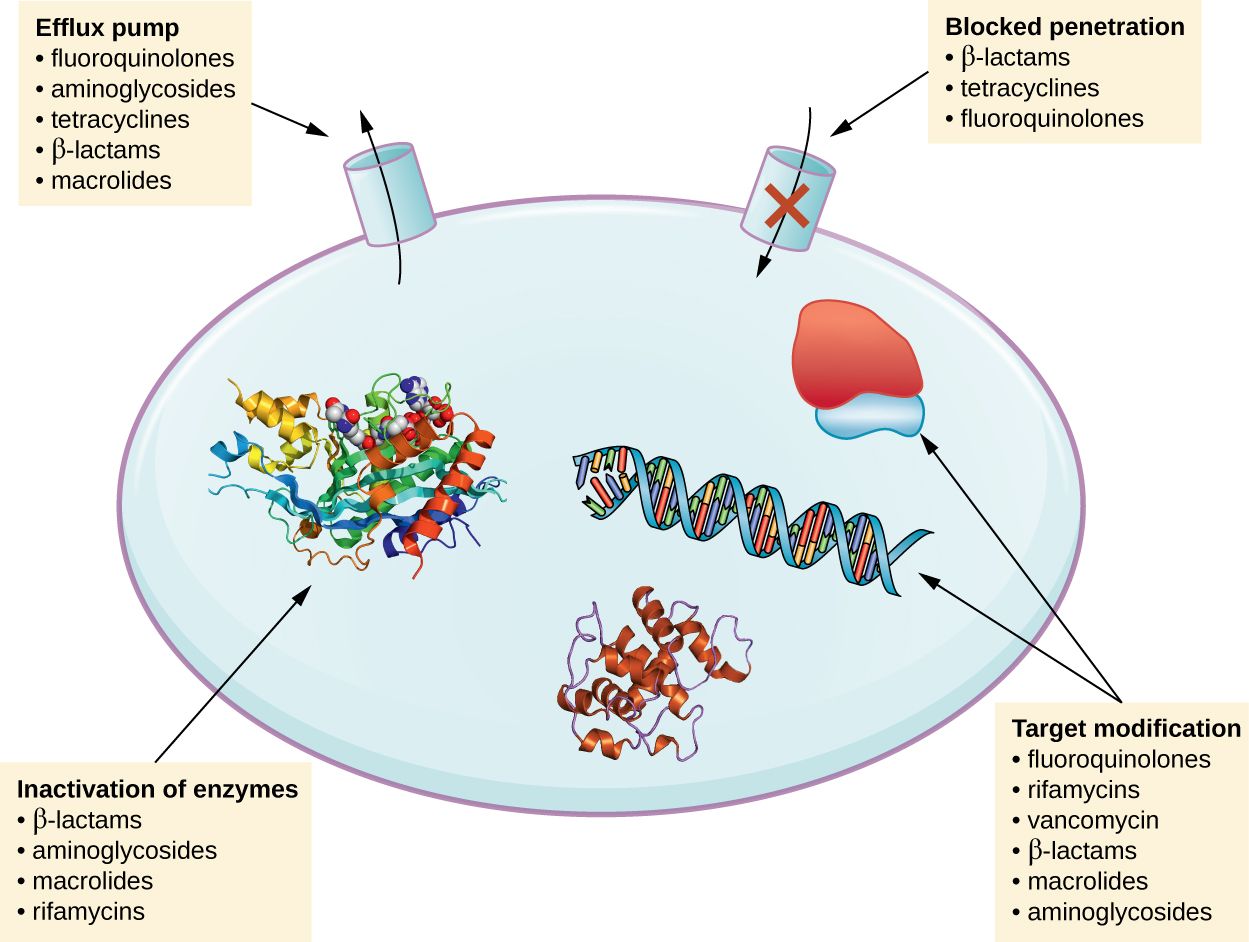
The resistance tricks come in four types. You can read them right off the figure. The first is enzymes that destroy the drug. Beta-lactamases cut open the beta-lactam ring. Extended-spectrum beta-lactamases (ESBLs) cut a wider range. Carbapenemases cut even carbapenems. The second is a changed target. MRSA's mecA gene builds a changed penicillin-binding protein called PBP2a. Ordinary beta-lactams cannot grip it. VRE's vanA gene rebuilds a wall building block. Its end changes from D-alanine-D-alanine to D-alanine-D-lactate, and vancomycin can no longer bind it. The third is efflux pumps, which bail the drug back out before it works. The fourth is less permeability. The germ shuts its porin doors, so the drug never gets in.
The organisms you will meet
MRSA is Staphylococcus aureus that resists the whole classic beta-lactam class at once, not just methicillin. That is because PBP2a ignores penicillins, cephalosporins, and carbapenems alike. One gene knocks out the safest, cheapest drugs you had. It forces a move to vancomycin, linezolid, daptomycin, or ceftaroline. Ceftaroline is the one beta-lactam built on purpose to bind PBP2a anyway. VRE goes further. It defeats the drug we reached for when MRSA showed up. ESBL-making gram-negatives push treatment toward carbapenems. CRE defeat the carbapenems and leave very few choices. C. difficile is not a resistance trick. It is the price of side damage. The antibiotic wipes out the gut's helpful bacteria, and C. diff grows in the empty space.
Stewardship at the bedside
Antimicrobial stewardship is a team effort to use these drugs only when needed. When they are needed, it means the right drug, dose, route, and length of time. It is often described as a pharmacy and physician program. That badly undersells the bedside role. The person at the bedside gets the culture, notices the report, gives the dose, and hears the patient's story.
Here is what that looks like. Get the cultures before the first dose. Take a real allergy history. "Penicillin upset my stomach when I was six" is not an allergy. About 9 in 10 people labeled allergic to penicillin are not. That label costs them broader, more toxic, more costly drugs for decades. Flag day 3. Is the culture back? Is the patient still on the broad empiric drug? Push the IV-to-PO switch once the patient is eating and stable. Linezolid, fluoroquinolones, metronidazole, doxycycline, and fluconazole are all almost fully absorbed by mouth. Question the length of the course. Evidence keeps making courses shorter. Teach that antibiotics do nothing for a cold. Teach that leftover pills are not saved or shared. Teach that the course should be taken as directed, not stopped the moment they feel better. And do the plain thing that prevents more resistant infections than any drug choice. Wash your hands.
| Organism | Resistance mechanism | Treatment options | Safety alert |
|---|---|---|---|
| MRSA | mecA → altered PBP2a; all traditional beta-lactams fail | vancomycin, linezolid, daptomycin, ceftaroline; TMP-SMX or doxycycline for skin | Contact precautions; nose decolonization plans; a standard cephalosporin such as cefazolin or ceftriaxone will not cover MRSA, and ceftaroline is the only exception |
| VRE | vanA/vanB → altered D-Ala-D-Ala binding site | linezolid, daptomycin | Contact precautions; survives on surfaces: dedicated equipment |
| ESBL gram-negatives | Extended-spectrum beta-lactamase inactivates penicillins/cephalosporins | Carbapenems (meropenem, ertapenem) | Escalation is appropriate here: a "susceptible" cephalosporin on the report may still fail |
| CRE | Carbapenemase (e.g., KPC) | ceftazidime-avibactam, meropenem-vaborbactam, sometimes colistin | Report to infection prevention; strict precautions; colistin is nephrotoxic |
| C. difficile | Not resistance: overgrowth after flora are destroyed | Oral vancomycin or fidaxomicin; fecal transplant for recurrence | Soap and water: alcohol gel does not kill spores; stop the offending antibiotic if possible; do not give antimotility agents |
- Antibiotics select for resistance instead of causing it. Horizontal gene transfer spreads it between unrelated germs.
- Four tricks: enzymes (beta-lactamase, ESBL, carbapenemase), changed targets (MRSA's PBP2a, VRE's vanA), efflux pumps, and less permeability.
- MRSA beats every classic beta-lactam at once, and ceftaroline is the built-on-purpose exception. VRE beats the drug we replaced it with. CRE leaves very few choices.
- Stewardship work at the bedside: cultures first, a true allergy history, day-3 review, IV-to-PO, the right length, teaching, and hand hygiene.
Section 4Antifungals and antivirals
Antifungals: a much smaller gap
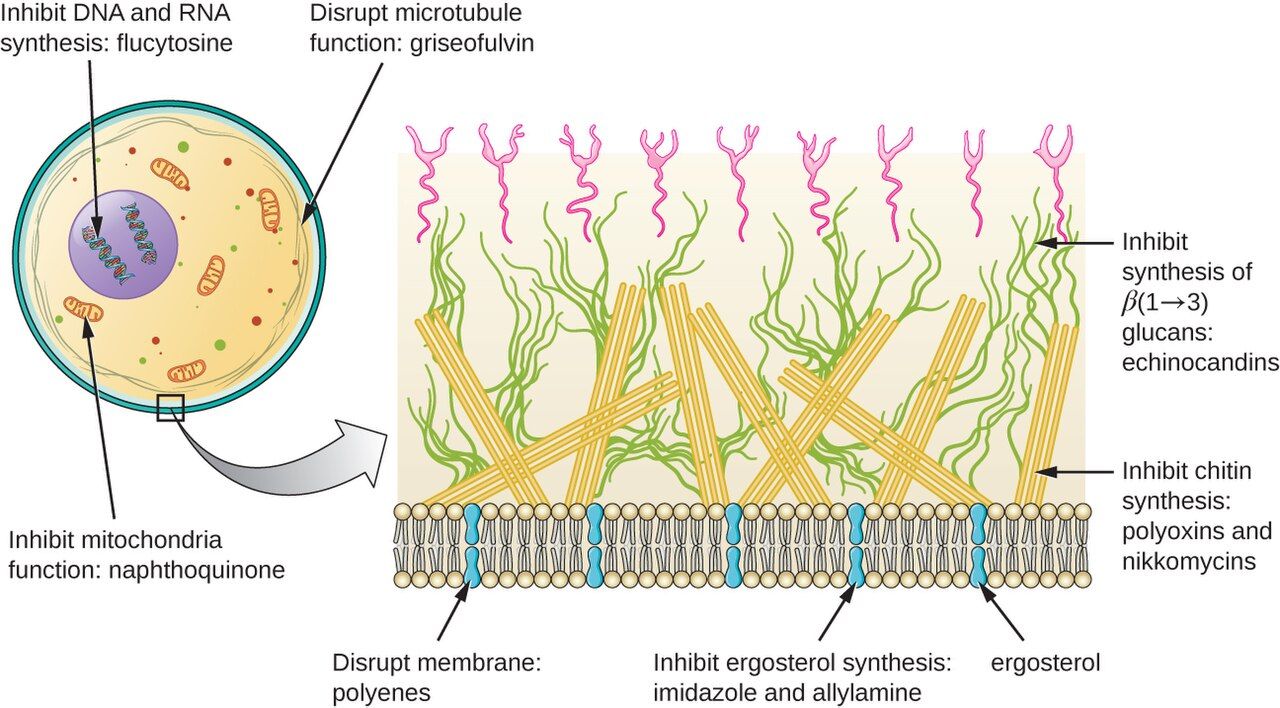
Fungi are eukaryotes. Their cells are built like yours, with a nucleus, 80S ribosomes, and similar membranes. So there are few targets that only the fungus has. That makes antifungals, as a group, much more toxic than antibacterials. Almost every antifungal uses one of two real differences. Fungal membranes use ergosterol where yours use cholesterol. Fungal cell walls contain beta-(1,3)-D-glucan, which you do not make at all.
Amphotericin B is a polyene. It binds ergosterol directly and rips holes in the membrane. It is strong, and it is rough. Fevers, rigors, and shaking chills during the drip earned it the nickname "shake and bake." It also harms the kidneys (nephrotoxicity), and this limits the dose. It drains potassium and magnesium too. Liposomal forms are much gentler. But here is a real safety trap. The standard and liposomal doses are very different and cannot be swapped. Check the form on the label against the order. The azoles are fluconazole, itraconazole, voriconazole, posaconazole, and isavuconazole. They block lanosterol 14-alpha-demethylase, the enzyme that makes ergosterol. They are the main oral antifungals. But they can harm the liver, lengthen the QT, and interact heavily through CYP450 with warfarin and statins. Voriconazole also causes a short-lived change in vision, blurred or with bright tints, plus sun sensitivity. The echinocandins are caspofungin, micafungin, and anidulafungin. They attack the beta-glucan wall, which humans do not have at all. So they are well tolerated. They are first-line for invasive candidemia (yeast in the blood) but are IV only. Terbinafine treats nail and skin fungus over long courses. Check liver tests and warn about taste changes. Nystatin works on contact. It is used as a swish and swallow for thrush. Teach the patient to hold it in the mouth before swallowing.
Antivirals: the narrowest gap of all
A virus copies itself using your cell's machinery. So there is almost nothing to attack that is not also yours. Antivirals target the few enzymes the virus brings with it. These include a viral polymerase, a protease, an integrase, and a neuraminidase. Most of the time, antivirals hold a virus down rather than cure it. They also depend on timing. The earlier you start, the more the drug can do. Still, in severe or high-risk illness, a late start is worth making.
Acyclovir and valacyclovir, its better-absorbed prodrug, treat herpes simplex and varicella-zoster (chickenpox and shingles). The clever part is how acyclovir gets switched on. It must first be changed by the virus's own enzyme, thymidine kinase. So it does almost nothing in a cell with no virus. IV acyclovir can form crystals in the kidney tubes. So hydrate the patient well and run it over at least an hour. Ganciclovir and valganciclovir treat CMV and can shut down bone marrow. Oseltamivir blocks the flu enzyme neuraminidase. It helps most when started within about 48 hours of the first symptoms in mild flu treated at home. Patients who are in the hospital, very sick, getting worse, or at high risk are treated no matter how long they have had symptoms. For HIV, antiretroviral therapy combines drug classes. These are NRTIs (tenofovir, emtricitabine, abacavir), NNRTIs (efavirenz), protease inhibitors (usually boosted with ritonavir), and integrase inhibitors (dolutegravir, bictegravir). Integrase inhibitors are now first-line. Two points stand out. Abacavir needs HLA-B*5701 screening before the first dose. A positive result predicts a reaction that can be fatal. And taking every dose is not optional. Missed doses let the virus mutate into resistance. Hepatitis C can now be cured in most people with 8 to 12 weeks of direct-acting antivirals. Examples are sofosbuvir-based or glecaprevir-pibrentasvir plans. Screen for hepatitis B first, since these drugs can wake it back up.
| Class | Prototype | Target | Safety alert |
|---|---|---|---|
| Polyene | amphotericin B | Binds ergosterol → membrane pores | "Shake and bake": premedicate per order; nephrotoxic; monitor K+ and Mg2+, creatinine; conventional vs. liposomal doses are not interchangeable |
| Azoles | fluconazole, voriconazole | Blocks ergosterol synthesis | Hepatotoxic (LFTs); QT prolongation; big CYP interactions: check warfarin and statins; voriconazole: visual changes, photosensitivity |
| Echinocandins | micafungin, caspofungin | Blocks beta-(1,3)-D-glucan wall synthesis | Best tolerated antifungal; IV only; first-line for invasive candidemia; infusion-site reactions |
| Allylamine | terbinafine | Blocks squalene epoxidase | Long courses for nails; baseline and periodic LFTs; taste and smell disturbance |
| Topical polyene | nystatin | Same as amphotericin, applied locally | Swish and swallow for thrush; hold in mouth, no food/drink 30 min after; treat the denture too |
| Anti-herpes | acyclovir, valacyclovir | Guanosine analog activated by viral thymidine kinase | Hydrate: the IV form crystallizes in the kidney; run it over ≥1 h; start within 72 h of a shingles rash, but still give it later if new spots are forming or the immune system is weak |
| Anti-CMV | ganciclovir, valganciclovir | Inhibits CMV DNA polymerase | Myelosuppression: monitor CBC; hazardous drug handling |
| Neuraminidase inhibitor | oseltamivir | Traps influenza virions on the host cell | Start within ~48 h of symptoms for the most benefit, but treat hospitalized, severe, or high-risk patients at any point; for nausea, take with food; does not replace the vaccine |
| NRTI | tenofovir, abacavir | Faulty nucleoside terminates viral DNA | HLA-B*5701 test before abacavir: hypersensitivity can be fatal; tenofovir: renal function and bone density |
| Integrase inhibitor | dolutegravir, bictegravir | Blocks integration into host DNA | First-line, well tolerated; weight gain; separate from antacids/calcium; adherence is everything |
| Protease inhibitor | ritonavir-boosted regimens | Blocks viral protein maturation | Ritonavir is a potent CYP3A4 inhibitor: screen every other medication; metabolic effects |
| HCV direct-acting | sofosbuvir-based, glecaprevir-pibrentasvir | Blocks the HCV NS3/4A protease, NS5A, or NS5B polymerase: regimens combine two targets | Cures >95% in 8 to 12 weeks; screen for hepatitis B: risk of HBV reactivation |
- Fungi are eukaryotes, so antifungals are more toxic. The real targets are ergosterol and beta-glucan.
- Amphotericin B = rigors and kidney harm. Azoles = liver, QT, and CYP interactions. Echinocandins = safest, IV only.
- Antivirals hit enzymes only the virus has. They mostly hold the virus down rather than cure it. They depend on timing: earliest is best, but severe or high-risk illness is treated at any point.
- Hydrate for IV acyclovir. Screen HLA-B*5701 before abacavir. Taking every ART dose prevents resistance.
Section 5Antiparasitics and care for every antimicrobial
Antiprotozoals
Protozoa are eukaryotes too. So again the safety margin is narrow. The drugs are chosen by the parasite's life stage, not just its name. Malaria is the clearest example. Artemisinin-based combination therapy (artemether-lumefantrine) is first-line for mild P. falciparum malaria. It should be taken with fatty food, which greatly improves absorption. Atovaquone-proguanil and doxycycline are used to prevent malaria. Chloroquine still works where the parasite has not become resistant. Long-term use risks permanent damage to the retina. The key piece is the sleeping liver form of P. vivax and P. ovale, called the hypnozoite. Treating only the blood stage leaves it in place. The patient then relapses months later. Clearing it takes primaquine or tafenoquine. Both cause severe breakdown of red cells (hemolysis) in people with G6PD deficiency. So screen for G6PD before the dose, every time.
Beyond malaria, metronidazole or tinidazole covers giardiasis, amebiasis, and trichomoniasis. For trichomoniasis, treat the partner too, or the patient simply gets it back. Repeat the alcohol warning, since these are the drugs behind the disulfiram-like reaction. Nitazoxanide covers Giardia and Cryptosporidium. TMP-SMX is still the drug of choice for Pneumocystis pneumonia. That germ is now classed as a fungus, but it is still taught with this group. Pentamidine is the backup. It can cause severe low blood sugar, followed by high blood sugar.
Anthelmintics
Worms are animals. The drugs against them mostly target the nerve, muscle, or skeleton parts the worm depends on. Albendazole and mebendazole block the worm's microtubules (tiny inner tubes), which starves it. Albendazole is absorbed far better with a fatty meal. Ivermectin opens glutamate-gated chloride channels and paralyzes the parasite. Mammals have no such channels. The blood-brain barrier keeps the drug away from similar channels in the human brain. It treats strongyloidiasis, onchocerciasis, and scabies. Praziquantel makes the outer skin of flukes and tapeworms leak calcium, which paralyzes them. Take it with food and warn about dizziness. Pyrantel pamoate is the over-the-counter choice for pinworm.
The teaching matters as much as the drug. Pinworm is a whole-household problem. Treat everyone in the home. Repeat the dose in two weeks to catch newly hatched eggs. Wash sheets and underwear in hot water. Cut and scrub fingernails. Do the tape test first thing in the morning, before bathing. These steps prevent more reinfection than any second prescription.
Care that applies to every antimicrobial
Take away the class differences, and the same backbone of care holds it all up. Before: take a real allergy history and get the culture. Check kidney and liver function against the drug and dose. Review interactions. Confirm pregnancy status where it matters. During: give doses on time and evenly spaced around the clock. This keeps blood levels above the MIC. A "late" antibiotic is not a small thing. Stay with the patient for the first dose of anything new. Draw troughs right before the next dose. Draw peaks at the set time after it. Chart the exact times. A level drawn at the wrong moment is worse than no level, because someone will act on it. After: watch for the response you expect, such as the fever curve, the white count, and the wound. Watch for the harm you were warned about. Check creatinine, CBC, liver tests, hearing, tendons, and QT. And watch for the superinfection you invited. Signs are new diarrhea, white patches in the mouth, and vaginal itching.
| What to do | Why | Watch for |
|---|---|---|
| Real allergy history | "Rash" vs. "throat closed" are different drugs and different risks | Mislabeled penicillin allergy pushing the patient to broader, more toxic therapy |
| Cultures before first dose | One dose can sterilize the specimen and cost the organism's name | In sepsis: draw fast, but antibiotics still go in within the hour |
| Check creatinine and LFTs | Most antimicrobials are renally cleared or hepatically metabolized | Rising creatinine on vancomycin, gentamicin, amphotericin B, colistin |
| Even, around-the-clock dosing | Keeps concentration above the MIC between doses | Clustered or missed doses: a real cause of treatment failure |
| Correct level timing | Trough immediately before the next dose; peak at the specified time after | Mis-timed levels lead to wrong dose changes: chart exact draw times |
| Stay for the first dose | Anaphylaxis usually shows itself within 30 min | Flushing, itching, wheeze, throat tightness, drop in BP |
| Assess for superinfection | Antibiotics destroy the protective normal flora | New diarrhea (C. diff), oral white plaques, vaginal itching |
| Teach the course | Adherence prevents relapse and resistance | Stopping early when they feel better; saving or sharing leftovers |
| Teach the specific warning | Every class has one that changes daily life | Sun (doxycycline, TMP-SMX), alcohol (metronidazole), orange fluids (rifampin), tendon pain (fluoroquinolones) |
- Malaria drugs are chosen by life stage. Clearing the hypnozoite takes primaquine or tafenoquine, so screen G6PD first.
- Metronidazole covers giardiasis, amebiasis, and trichomoniasis. Treat the partner, and no alcohol.
- Albendazole/mebendazole (microtubules), ivermectin (chloride channels), praziquantel (calcium leak). Pinworm needs the whole household treated plus a repeat dose in two weeks.
- The backbone of care for all of them: allergy history, culture first, organ function, on-time evenly spaced doses, correct timing of levels, watching for harm and superinfection, and teaching the course.
The chapter in one breath
- Selective toxicity makes antimicrobials possible. Where microbe and person overlap, toxicity appears. That is why antifungals and antivirals are rougher than antibacterials.
- Narrow-spectrum is the goal. Broad-spectrum is a short-term guess. Bactericidal drugs are needed when the immune system cannot help.
- C&S names the germ and reports the MIC. Empiric therapy bridges the wait and must then be de-escalated.
- Antibacterials sort by how they work: cell wall (beta-lactams, vancomycin), protein synthesis (30S: aminoglycosides, tetracyclines; 50S: macrolides, clindamycin, linezolid), nucleic acid (fluoroquinolones, rifampin, metronidazole), and metabolic (TMP-SMX).
- Antibiotics select for resistance. Enzymes, changed targets, efflux, and less permeability produce MRSA, VRE, ESBL, and CRE.
- Stewardship is bedside work: cultures first, an honest allergy history, day-3 review, IV-to-PO, the right length, teaching, and hand hygiene.
- Antifungals target ergosterol and beta-glucan. Antivirals target enzymes only the virus has. They hold the virus down rather than cure it, and they work best started early. Even so, severe and high-risk patients are treated whenever they show up.
- For every antimicrobial, check organ function and levels, space doses evenly, watch for superinfection, and teach the one warning that class carries.
ReferenceWords worth knowing
The words of antimicrobial treatment. Skim them now. Come back whenever a term on a culture report or a drug label stops you.
- Aminoglycoside
- A class that kills bacteria (gentamicin, tobramycin, amikacin) by binding the 30S ribosome piece; harms the kidneys and ears, so it needs peak and trough levels.
- Anthelmintic
- A drug that kills or drives out parasitic worms, such as albendazole, ivermectin, or praziquantel.
- Antimicrobial stewardship
- A team effort to use antimicrobials only when needed, and then in the right drug, dose, route, and length of time.
- Bactericidal
- Kills bacteria outright; needed when the body's defenses cannot help (endocarditis, meningitis, neutropenia).
- Bacteriostatic
- Stops bacteria from multiplying and relies on the immune system to clear them.
- Beta-lactam
- Any drug built around the beta-lactam ring (penicillins, cephalosporins, carbapenems, and the monobactam aztreonam) that blocks the linking of the cell wall.
- Beta-lactamase
- A bacterial enzyme that breaks beta-lactam drugs by opening the ring; extended-spectrum forms (ESBLs) break a much wider range.
- Broad-spectrum
- Works against a wide range of germs; useful as a first guess but wipes out normal flora and drives resistance.
- Culture and sensitivity (C&S)
- A lab test that names the germ and reports which drugs stop it, labeled susceptible, intermediate, or resistant.
- De-escalation
- Narrowing treatment from a broad first-guess drug to a targeted one once the culture and sensitivity result is back.
- Empiric therapy
- Treatment started before results are ready, based on the germs most likely for that site and patient.
- Ergosterol
- The sterol in fungal cell membranes (humans use cholesterol); the target of polyenes and of the azoles' building pathway.
- Methicillin-resistant Staphylococcus aureus (MRSA)
- S. aureus carrying mecA, which builds a changed penicillin-binding protein (PBP2a), so every classic beta-lactam fails at once; the anti-MRSA cephalosporins ceftaroline (and ceftobiprole) are built to bind PBP2a and still work.
- Minimum inhibitory concentration (MIC)
- The lowest drug level that stops visible growth of a germ in the lab.
- Narrow-spectrum
- Works against a small range of germs; the goal once the germ is known.
- Nephrotoxicity
- Kidney injury caused by a drug; a key risk of vancomycin, aminoglycosides, amphotericin B, and colistin.
- Ototoxicity
- Drug damage to hearing or balance, classically from aminoglycosides; may be permanent, so report ringing in the ears or spinning dizziness at once.
- Peak and trough
- Blood drug levels drawn at the expected highest point (peak) and right before the next dose (trough) to keep treatment working and safe.
- Prophylaxis
- Giving an antimicrobial to prevent infection instead of treating it, such as cefazolin within 60 minutes before the surgical cut.
- Selective toxicity
- Harming the microbe while sparing the patient by attacking a part the microbe has and human cells lack.
- Superinfection
- A new infection that appears during antimicrobial treatment because the protective normal flora were destroyed, such as C. difficile colitis or thrush.
- Vancomycin-resistant Enterococcus (VRE)
- Enterococcus that has changed the D-alanine binding site vancomycin depends on; usually treated with linezolid or daptomycin.