Immunomodulators & Antineoplastic Agents
Most drugs help by turning a body system up or down a little. The drugs in this chapter do something much bigger. Some change the rules the immune system plays by. Others poison cell division itself. That power is exactly why they work. A new kidney survives. A lupus flare calms down. A lymphoma melts away. That same power is also why they hurt. A person on drugs that hold down the immune system cannot make a fever the way you expect. A person on chemotherapy loses the gut lining and the blood-making marrow along with the tumor. This chapter covers the drugs that quiet the immune system and the drugs that wake it up. It also covers the drugs that kill dividing cells. At every step, you will see what to watch, what to teach, and what never to let slide.
By the end of this chapter you can
- Name the main immunosuppressant classes, their prototypes, and the harm each one is known for.
- Explain why infection is the biggest risk of immunosuppression and how that changes your assessment.
- Tell immunostimulants, biologics, and the main vaccine types apart, and say who must not get a live vaccine.
- Describe the cell cycle, and compare cell-cycle-specific with cell-cycle-nonspecific cancer drugs.
- Explain why chemotherapy harms normal, fast-dividing tissues, and predict which ones.
- Name the five chemotherapy classes with their prototypes and the harm each class is known for.
- Manage myelosuppression, nausea and vomiting, mucositis, alopecia, and extravasation at the bedside.
- Use hazardous drug safety steps to protect yourself, the patient, and the family.
Section 1Immunosuppressants
Why we deliberately weaken a defense system
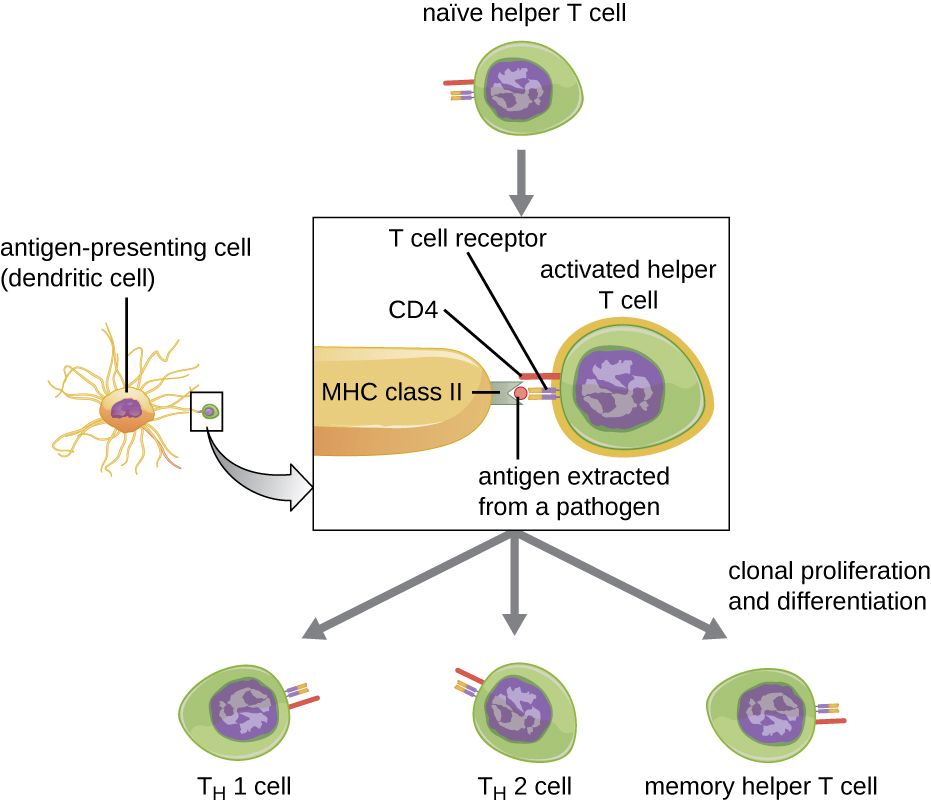
The immune system is great at one job. It tells self from not-self and destroys the not-self. That instinct causes trouble in two cases. In transplantation, the donated organ is not-self. An untreated immune system will reject it within days. In autoimmune disease, the system has wrongly marked the person's own tissue as foreign and attacks it. Examples are rheumatoid arthritis, lupus, Crohn disease, multiple sclerosis, and psoriasis. In both cases, we give drugs to turn the response down. But nothing comes free here. Every bit of immunity we take away was also guarding against bacteria, viruses, fungi, and cancer cells.
Transplant drug plans are usually built in two stages. Induction therapy is strong and short. It is given around the time of surgery. Examples are basiliximab (which blocks the interleukin-2 receptor) and antithymocyte globulin. Maintenance therapy lasts for life. It usually combines three drugs from different classes, each at a lower dose. These are a calcineurin inhibitor, an antiproliferative, and a corticosteroid. Three ways of working at modest doses beat one drug at a huge dose. That is because the harms do not pile up in the same organ.
The classes worth knowing cold
Calcineurin inhibitors (cyclosporine and tacrolimus) are the backbone of transplant care. They block the calcineurin signal a T cell needs to make interleukin-2. So the T cell never multiplies. Both have a narrow therapeutic index. Too little, and the new organ is rejected. Too much, and the kidneys fail. Trough levels are drawn right before the next dose. The whole plan depends on the patient taking doses at the same times every day. Both drugs are broken down by CYP3A4. That is why grapefruit juice, azole antifungals, and clarithromycin raise their levels to danger. Rifampin, phenytoin, and St. John's wort drop them toward rejection.
Antiproliferatives starve lymphocytes of the DNA building blocks they need to divide. Mycophenolate is the modern standard. Azathioprine is older. It carries one of the most famous interactions in pharmacology. Allopurinol blocks xanthine oxidase, the enzyme that clears azathioprine's active form. Give the two together, and drug levels climb. That can cause total marrow failure. mTOR inhibitors (sirolimus, everolimus) spare the kidney but slow wound healing. So they are usually held right after surgery. Corticosteroids blunt nearly every part of inflammation. They work well and cost little, but they harm the body in a dozen ways. They are tapered, never stopped suddenly. Long-term use shuts down the body's own adrenal hormone system.
For autoimmune disease, low-dose methotrexate is the anchor drug for rheumatoid arthritis. Here is the fact that saves lives. It is dosed once a week, not daily. Giving a weekly methotrexate order every day has killed people. Folic acid is given on the other days to lower mouth sores and marrow harm. Biologic DMARDs include the TNF inhibitors etanercept, adalimumab, and infliximab. They work extremely well. They need screening for hidden (latent) tuberculosis before the first dose. Knocking out TNF lets walled-off TB break loose.
| Class | Prototype | Key effect | Safety alert |
|---|---|---|---|
| Calcineurin inhibitor | Tacrolimus; cyclosporine | Blocks IL-2 production → T cells cannot proliferate | Narrow TI: trough levels before the dose; nephrotoxicity, hypertension, tremor, hyperkalemia; hyperglycemia (tacrolimus); gum overgrowth and hirsutism (cyclosporine); no grapefruit juice |
| Antiproliferative | Mycophenolate; azathioprine | Blocks purine synthesis → lymphocytes cannot divide | GI upset, leukopenia; mycophenolate is teratogenic (pregnancy prevention required); azathioprine + allopurinol = marrow failure |
| mTOR inhibitor | Sirolimus; everolimus | Blocks the growth signal downstream of IL-2 | Impaired wound healing, hyperlipidemia, mouth ulcers, pneumonitis; kidney-sparing |
| Corticosteroid | Prednisone; methylprednisolone | Broad anti-inflammatory and lymphocyte suppression | Hyperglycemia, osteoporosis, mood change, masks fever and infection; taper: never stop abruptly |
| Biologic (induction) | Basiliximab; antithymocyte globulin | Targets IL-2 receptor or depletes T cells at transplant | Infusion reactions; premedicate; monitor closely during and after the infusion |
| Antimetabolite DMARD | Methotrexate | Folate antagonist; anti-inflammatory at low dose | WEEKLY dosing: a daily order is a lethal error; give folic acid; monitor CBC, LFTs, creatinine; teratogenic |
| TNF inhibitor | Adalimumab; etanercept; infliximab | Neutralizes tumor necrosis factor | Screen for latent TB and hepatitis B before the first dose; serious infection and lymphoma risk; hold during active infection |
| JAK inhibitor | Tofacitinib; baricitinib | Blocks intracellular cytokine signaling (oral) | Boxed warning: serious infection, thrombosis, cardiovascular events, malignancy; monitor CBC and lipids |
Infection is the whole risk
A person whose immune system is held down does not look sick in the usual way. Steroids blunt fever. Neutropenia (very low neutrophils) removes the cells that make pus. So a wound infection may show no drainage. A pneumonia may show an almost clear chest x-ray. The classic signs of inflammation are partly the immune system at work. And you have turned it off. So your threshold for concern drops through the floor. A low fever, a new cough, a sore throat, a small red spot, or just "I don't feel right" all get taken seriously and reported.
Prevention drugs are standard, not optional, in this group. Usually that means trimethoprim-sulfamethoxazole against Pneumocystis jirovecii. It also means an antiviral against cytomegalovirus and, for high-risk patients, an antifungal. Live vaccines are not given when the immune system is strongly held down. Vaccines should be brought up to date before a transplant or before a biologic starts. Over the long term, these people also have a higher risk of cancer, above all skin cancer. So teaching sunscreen, covering clothes, and yearly skin checks is real care, not filler.
- Transplant plans stack three classes at lower doses (calcineurin inhibitor, antiproliferative, corticosteroid), so the harms do not pile up.
- Calcineurin inhibitors have a narrow therapeutic index. Think trough levels, kidney harm, CYP3A4 interactions, and no grapefruit.
- Methotrexate is weekly. Azathioprine plus allopurinol causes marrow failure. TNF inhibitors need TB screening first.
- People with held-down immunity hide infection (blunted fever, no pus) and must not get live vaccines.
Section 2Immunostimulants and vaccines
Drugs that wake the immune system up
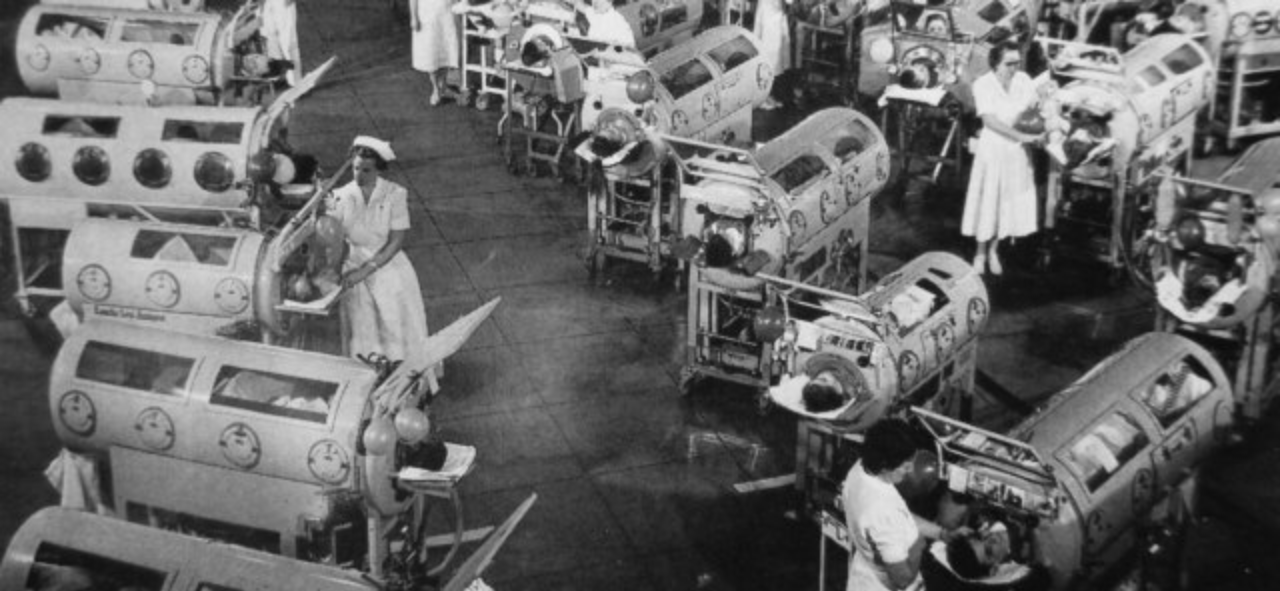
Immunosuppressants turn the dial down. Immunostimulants turn it up. They do it by rebuilding immune cells the body has lost. Or they release a brake that a tumor has been using. The ones you will hang most often are the colony-stimulating factors. Filgrastim and its long-acting cousin pegfilgrastim are man-made forms of G-CSF. They tell the marrow to pump out neutrophils. They are given after chemotherapy to shorten the time of dangerous neutropenia. The classic side effect is deep, aching bone pain. The marrow is truly working overtime. It is usually treated with acetaminophen or an NSAID, not by stopping the drug. Timing matters. These drugs are given at least 24 hours after chemotherapy, never with it. You do not want to stir up dividing marrow cells right when a drug that kills dividing cells is present.
Erythropoiesis-stimulating agents (epoetin alfa, darbepoetin) raise hemoglobin. They carry a boxed warning. Pushed too high, they shorten survival in some cancers. They also cause clots and stroke. They are used at the lowest dose that avoids a blood transfusion, not to make the number look nice. Interferons include interferon alfa-2b and interferon beta for multiple sclerosis. They reliably cause flu-like symptoms: fever, chills, and muscle aches. They can also cause depression severe enough to need screening. Interleukin-2 (aldesleukin) is strong and dangerous. Its main harm is capillary leak syndrome, where fluid leaks out of the blood vessels.
The most important new class is the immune checkpoint inhibitors. These are pembrolizumab and nivolumab (anti-PD-1), atezolizumab (anti-PD-L1), and ipilimumab (anti-CTLA-4). Tumors survive partly by pressing the immune system's own "stand down" buttons. These drugs cut that wire. The immune system wakes up, but sometimes it attacks the patient too. These are called immune-related adverse events. They include colitis, pneumonitis, hepatitis, thyroiditis, dermatitis, and hypophysitis. Each is inflammation of a body part: the colon, lungs, liver, thyroid, skin, or pituitary gland. Report any new diarrhea, cough, or shortness of breath in a patient on a checkpoint inhibitor. These are treated with corticosteroids, and delay does real harm.
Here is a quick decoder for biologic names, because it truly helps. -mab means monoclonal antibody. -cept means a receptor fusion protein. -nib means a small-molecule kinase inhibitor. -kin or -grastim marks a cytokine or growth factor.
Vaccines: borrowing the memory without the disease
A vaccine is the most cost-effective drug there is. It shows the immune system a harmless preview of a germ. Then memory B and T cells are already waiting when the real germ arrives. This is active immunity. It is slow to build but lasts a long time. Compare passive immunity. Here we simply inject someone else's ready-made antibodies. Examples are immune globulin, Rho(D) immune globulin, and rabies or tetanus immune globulin. Passive protection works within minutes and fades within weeks. That is because the person made no memory of their own. Use active immunity to prevent. Use passive immunity for a threat that is already here.
| Vaccine type | Prototype | Key effect | Safety alert |
|---|---|---|---|
| Live attenuated | MMR; varicella; rotavirus; intranasal influenza; yellow fever | Weakened but replicating organism: strongest, longest immunity | Contraindicated in pregnancy and significant immunosuppression; give before transplant or biologics, not during |
| Inactivated (killed) | Hepatitis A; injectable polio (IPV); rabies | Whole organism, killed: cannot replicate | Safe in immunosuppression; often needs boosters |
| Subunit / recombinant | Hepatitis B; HPV; recombinant zoster (Shingrix) | Only the pieces that matter, made in the lab | Safe in immunosuppression; recombinant zoster is notably reactogenic: warn about arm soreness and a day of feeling rough |
| Toxoid | Tetanus; diphtheria (Td, Tdap) | Inactivated toxin: immunity to the poison, not the bug | Booster every 10 years; Tdap in every pregnancy (27 to 36 weeks) to protect the newborn |
| Conjugate | Hib; pneumococcal (PCV); meningococcal | Sugar coat linked to a protein so infant immune systems respond | Essential for the very young and the asplenic |
| mRNA / viral vector | COVID-19 vaccines | Delivers the instructions; the patient's cells make the antigen | Not a live vaccine and does not alter DNA: a common patient question worth answering plainly |
| Passive (not a vaccine) | Immune globulin; Rho(D) immune globulin | Borrowed antibodies: immediate, temporary | Works within minutes, no memory made; used after exposure or for Rh-negative mothers |
Giving vaccines is a skill with a few firm rules. Hand over the Vaccine Information Statement before the shot and chart that you did. Have epinephrine ready right away. Watch the person for at least 15 minutes after, longer if they have had a reaction before. Chart the lot number, expiration date, site, and route. This is one of the few places where charting is itself a public health job. Teach that soreness, a low fever, and tiredness for a day mean the vaccine is working. Treat them with acetaminophen. Do not give aspirin to a child. And know the real reasons not to vaccinate from the false ones. A serious allergy to a vaccine part, or a past anaphylactic reaction, is a real reason. A mild cold, a runny nose, breastfeeding, or a family history of reactions is not.
- Filgrastim/pegfilgrastim rebuild neutrophils after chemo. Expect bone pain. Never give within 24 hours of chemotherapy.
- Checkpoint inhibitors (pembrolizumab, nivolumab, ipilimumab) release the immune brake. New diarrhea or shortness of breath means an immune-related adverse event until proven otherwise.
- Live vaccines (MMR, varicella, rotavirus, LAIV, yellow fever) are not given in pregnancy or immunosuppression.
- Active immunity (vaccines) is slow and lasting. Passive immunity (immune globulin) is instant and short-lived.
Section 3Antineoplastic principles
The cell cycle, and why it is the target
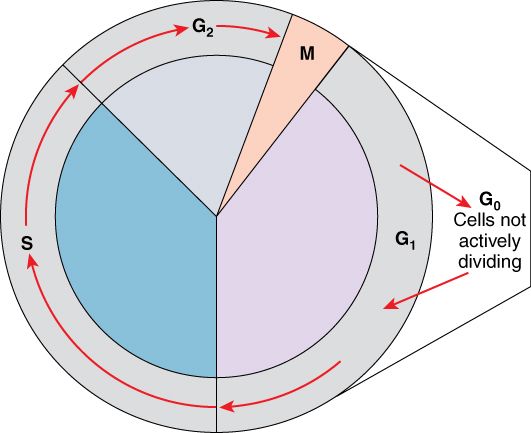
At its root, cancer is cell division that will not stop. So the oldest and still most common plan is to attack division itself. To see where each drug lands, you need the cycle. G1 is growth. The cell gets bigger and makes the enzymes it will need. S is synthesis. DNA is copied, and the cell is most open to chemical attack here. G2 is the second growth phase. The cell builds the spindle and proofreads the new DNA. M is mitosis. The chromosomes are pulled apart, and the cell splits in two. G0 is the resting state. The cell is alive and working but not dividing. G0 is the hiding place. Cell-cycle-specific drugs cannot touch a cell in G0 at all. Even the nonspecific ones work on it poorly. A resting cell is not copying DNA, and it has time to repair any damage. That safe spot is a big part of why cancers come back years later.
This map splits cancer drugs into two groups. Cell-cycle-specific (CCS) drugs work only on a cell in a certain phase. Antimetabolites act in S. Mitotic inhibitors act in M. Bleomycin acts in G2. They must catch the cell in the act. So they work best against fast-growing tumors. They are often given as a steady drip or in split doses to widen the window. Cell-cycle-nonspecific (CCNS) drugs damage DNA whenever they find it, even in G0. These are the alkylating agents, most antitumor antibiotics (the anthracyclines, dactinomycin, mitomycin), and the platinum drugs. Bleomycin is the exception among antitumor antibiotics. It is cell-cycle-specific and acts mainly in G2. The nonspecific drugs are usually given as one large dose. Their damage depends on the dose, not the timing.
Log kill, growth fraction, and why chemo comes in cycles
Here is the idea behind the whole shape of a chemotherapy plan. A dose of a drug kills a set percentage of tumor cells, not a set number. This is the log kill hypothesis, also called fractional kill. Say a dose kills 99.9 percent of a billion cancer cells. A million are still alive. The next cycle kills 99.9 percent of that million. That leaves a thousand. Now you can see why one round is never enough. You can see why the schedule is a schedule, not a suggestion. And you can see why a patient who feels great after two cycles still needs the other four.
The breaks between cycles are planned too. Normal marrow recovers from chemotherapy faster than tumor does. So a rest of two to three weeks lets blood counts climb back. Meanwhile the tumor gains less from the break. Combination chemotherapy uses the same thinking from another angle. Drugs are picked with different ways of working and different resistance patterns. Most important, they have harms that do not overlap. That way, no single organ takes the whole hit. Doses are worked out by body surface area, in mg/m2, not by weight. Carboplatin is dosed by a target AUC using the patient's kidney function. Small errors in this math are not small. That is why chemotherapy orders need an independent double-check by a second trained clinician.
Why chemotherapy hurts the patient too
Classic chemotherapy cannot tell a cancer cell from a healthy cell. It can only tell a dividing cell from a resting one. That one sentence holds the whole sad truth of this drug class. It also lets you predict every major side effect before you open the drug book. Ask which normal tissues in the body divide fast. That is your answer.
| Fast-dividing normal tissue | What chemo does to it | What the patient and you see |
|---|---|---|
| Bone marrow | Halts production of neutrophils, platelets, RBCs | Myelosuppression: infection risk, bleeding, fatigue; the dose-limiting toxicity of most regimens |
| GI mucosa (mouth to anus) | Lining is not replaced as it sloughs | Mucositis, stomatitis, esophagitis, diarrhea, nausea |
| Hair follicles | Matrix cells stop dividing; the shaft breaks | Alopecia: scalp, brows, lashes, body; temporary |
| Gonadal germ cells | Sperm and oocyte production impaired | Infertility, sometimes permanent: discuss banking before treatment starts |
| Skin and nails | Basal layer and nail matrix disrupted | Rash, photosensitivity, ridged or darkened nails, hand-foot syndrome |
| Fetal cells | Everything is dividing | Teratogenicity: pregnancy must be excluded; effective contraception is required |
Two more ideas finish the picture. Growth fraction is the share of a tumor's cells that are actively dividing. It predicts how well the tumor will respond. Leukemias and lymphomas have high growth fractions and melt away. Slow, bulky solid tumors respond much less. Also, drug resistance develops. The best-known cause is multidrug resistance proteins, such as P-glycoprotein. They sit in the cell membrane and pump the drug right back out. Resistance is another reason we combine drugs. It is also why we do not stretch out the schedule.
- The cycle is G1 → S → G2 → M. G0 is the resting phase. Cell-cycle-specific drugs cannot reach it at all, and nonspecific drugs reach it poorly. It is the source of relapse.
- CCS drugs hit one phase (antimetabolites in S, mitotic inhibitors in M). CCNS drugs damage DNA in any phase, even G0.
- The log kill hypothesis says each dose kills a percentage, not a number. That is why treatment comes in repeated cycles and why finishing the plan matters.
- Chemo cannot tell cancer from healthy tissue. It tells dividing from resting. That is why marrow, gut, hair, and gonads suffer.
Section 4Chemotherapy classes
Damaging the DNA: alkylating agents and antitumor antibiotics
Alkylating agents are the oldest class. They come from the sulfur mustard gas of World War I. That gas destroyed the bone marrow of exposed soldiers. This clue led doctors to try the nitrogen mustards against lymphoma in the 1940s. These drugs attach an alkyl group to DNA. This cross-links the two strands, so the DNA can no longer unzip and copy itself. They are cell-cycle-nonspecific and work broadly. Each subgroup has its own known harm. Cyclophosphamide breaks down into acrolein. Acrolein sits in the bladder and burns it. This is hemorrhagic cystitis, a bleeding bladder. It is prevented with lots of fluids, frequent voiding, and the rescue drug mesna. Ifosfamide does the same and adds nerve harm. The nitrosoureas, such as carmustine, cross the blood-brain barrier. That makes them useful for brain tumors. They cause a well-known delayed drop in marrow output that bottoms out four to six weeks later. The platinum drugs are grouped here by how they act. Cisplatin harms the kidneys and ears and is one of the most vomit-causing drugs in medicine. Carboplatin trades that for marrow suppression. Oxaliplatin causes an odd nerve pain triggered by cold. Teach patients not to drink cold drinks or touch cold metal for days after a dose.
Antitumor antibiotics come from soil bacteria. They slip between DNA strands and make free radicals that shred the DNA. The anthracyclines are doxorubicin, daunorubicin, and epirubicin. They are among the most useful cancer drugs and among the most feared. Their harm to the heart adds up over time and mostly cannot be undone. A lifetime dose limit is tracked across the patient's whole history. For doxorubicin it is about 550 mg/m2. The heart's pumping strength (ejection fraction) is measured first by echocardiogram or MUGA scan. Dexrazoxane may be given to protect the heart. Doxorubicin is also a strong vesicant (it destroys tissue if it leaks). It turns urine red-orange for a day or two. That is harmless, but scary if no one warned the patient. Bleomycin is the exception twice. It is the only one in this class that is cell-cycle-specific, acting in G2. It also causes almost no marrow suppression. Instead it causes pulmonary fibrosis, a scarring of the lungs. It has its own lifetime limit and needs a lung function test first.
Starving and stalling: antimetabolites and mitotic inhibitors
Antimetabolites are fakes at the molecule level. They look enough like the natural building blocks of DNA that the cell takes them in. Then they jam the cell's own machinery. So they act in the S phase and are strongly cell-cycle-specific. Methotrexate blocks dihydrofolate reductase and starves the cell of folate. High-dose plans are followed by leucovorin rescue, which gives folate back to normal cells. Never give NSAIDs or salicylates with high-dose methotrexate. They slow its clearance and can cause fatal toxicity. 5-fluorouracil and its oral prodrug capecitabine cause mouth sores, diarrhea, and the red, sore palms and soles of hand-foot syndrome. Cytarabine can also harm the cerebellum, which controls balance. It causes a chemical pink eye, which is prevented with corticosteroid eye drops.
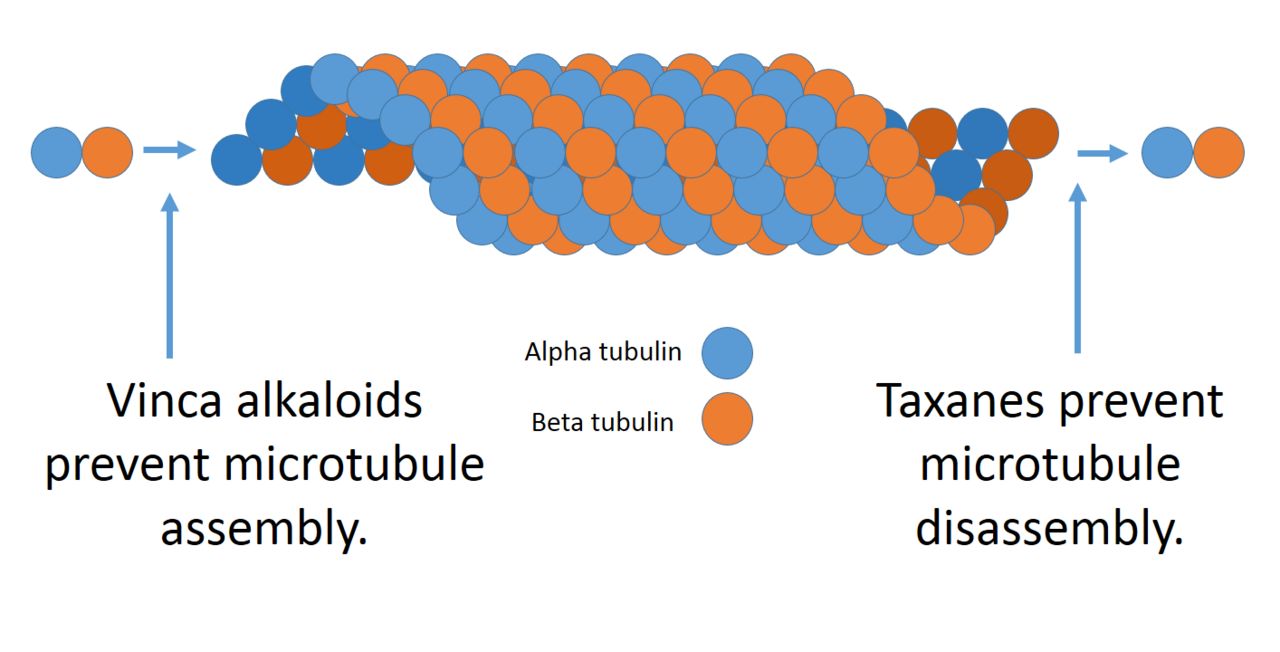
Mitotic inhibitors attack the spindle in the M phase, from opposite directions. The vinca alkaloids (vincristine, vinblastine) stop microtubules from building up. The taxanes (paclitaxel, docetaxel) do the reverse. They freeze microtubules so they cannot break down. Either way, mitosis stops. Vincristine's dose-limiting harm is peripheral neuropathy, or nerve damage. Signs are numb fingertips, foot drop, and a constipation from nerve damage that can turn into ileus (a stopped gut). That is why a bowel plan goes home with the drug. Vincristine also carries the firmest rule in cancer care. It is labeled "For intravenous use only: fatal if given by other routes." Given into the spinal fluid (intrathecal), it causes paralysis that climbs upward and death. Taxanes cause allergic reactions from the liquid they are mixed in. So patients get a corticosteroid, an antihistamine, and an H2 blocker first. Paclitaxel runs through non-PVC tubing with an in-line filter.
Aiming instead of carpet-bombing: targeted and hormonal therapy
Everything above kills dividing cells without choosing. Targeted therapy asks a better question. What is broken in this tumor? Imatinib shuts down the BCR-ABL kinase that drives chronic myeloid leukemia. It turned a fatal disease into one people can live with. Trastuzumab targets HER2-positive breast cancer. It can harm the heart. Unlike doxorubicin's harm, this is usually reversible. But the two together are a bad mix. Rituximab targets CD20 on B cells and can wake up hepatitis B. So screening comes first. Bevacizumab starves tumors of blood supply by blocking VEGF. The cost is high blood pressure, bleeding, slow wound healing, and, rarely, a hole in the gut. Targeted drugs are easier on the marrow but not gentle. They trade one set of harms for another. Hormonal agents use the same thinking on tumors fed by hormones. Tamoxifen blocks estrogen at the breast. It raises the risk of uterine (endometrial) cancer and clots. The aromatase inhibitors anastrozole and letrozole cut estrogen making in women after menopause. The cost is joint pain and bone loss. Leuprolide lowers testosterone in prostate cancer, after a first tumor flare.
| Class | Prototype | Key effect | Safety alert |
|---|---|---|---|
| Alkylating agent | Cyclophosphamide | Cross-links DNA (CCNS) | Hemorrhagic cystitis: hydrate aggressively, void often, give mesna; report pink or red urine |
| Platinum compound | Cisplatin; carboplatin; oxaliplatin | Cross-links DNA (CCNS) | Cisplatin: nephro- and ototoxic, highly emetogenic: pre-hydrate, monitor creatinine and hearing; oxaliplatin: avoid all cold: drinks, air, metal |
| Antimetabolite | Methotrexate; 5-fluorouracil; cytarabine | Fake nucleotides jam DNA synthesis (S phase) | Leucovorin rescue after high-dose methotrexate; no NSAIDs/salicylates with it; mucositis and hand-foot syndrome; assess the mouth daily |
| Antitumor antibiotic | Doxorubicin | Intercalates DNA, generates free radicals (CCNS) | Cumulative irreversible cardiotoxicity: track lifetime dose, baseline echo/MUGA; potent vesicant; red-orange urine is harmless: warn the patient |
| Antitumor antibiotic | Bleomycin | DNA strand breaks (G2) | Pulmonary fibrosis with a lifetime dose limit; baseline PFTs; report any new cough or dyspnea; minimal myelosuppression |
| Vinca alkaloid | Vincristine | Blocks microtubule assembly (M phase) | FATAL IF GIVEN INTRATHECALLY: IV use only; peripheral neuropathy and constipation/ileus: start a bowel regimen; vesicant |
| Taxane | Paclitaxel; docetaxel | Freezes microtubules so mitosis cannot finish (M phase) | Hypersensitivity: premedicate with steroid, antihistamine, H2 blocker; non-PVC tubing with in-line filter; neuropathy |
| Topoisomerase inhibitor | Etoposide; irinotecan | Prevents DNA from re-sealing after unwinding | Irinotecan: early cholinergic diarrhea (atropine) vs late diarrhea (high-dose loperamide): treat them differently |
| Targeted: kinase inhibitor | Imatinib; erlotinib | Blocks the specific driver signal in the tumor | Oral: adherence is the whole game; fluid retention, acneiform rash; many CYP3A4 interactions |
| Targeted: monoclonal antibody | Trastuzumab; rituximab; bevacizumab | Binds a surface marker or growth factor | Trastuzumab: cardiotoxicity (usually reversible), monitor LVEF; rituximab: screen hepatitis B, infusion reactions; bevacizumab: hypertension, bleeding, poor wound healing |
| Hormonal | Tamoxifen; anastrozole; leuprolide | Removes the hormone signal a tumor depends on | Tamoxifen: VTE and endometrial cancer, so report leg pain or vaginal bleeding; aromatase inhibitors: bone loss and joint pain; leuprolide: expect an early tumor flare |
- Alkylating agents and most antitumor antibiotics damage DNA in any phase (CCNS). Antimetabolites (S), mitotic inhibitors (M), and bleomycin (G2) are phase-specific (CCS).
- Key harms: cyclophosphamide → hemorrhagic cystitis (mesna); doxorubicin → heart damage; bleomycin → pulmonary fibrosis; vincristine → neuropathy, and death if given intrathecally; cisplatin → kidney and ear harm.
- Taxanes need premedicine for allergic reactions. Irinotecan causes two different kinds of diarrhea with two different treatments.
- Targeted and hormonal drugs spare the marrow but bring their own risks: heart harm, hepatitis B wake-up, bleeding, clots, and bone loss.
Section 5Chemotherapy toxicities and care
Myelosuppression: the toxicity that limits the dose
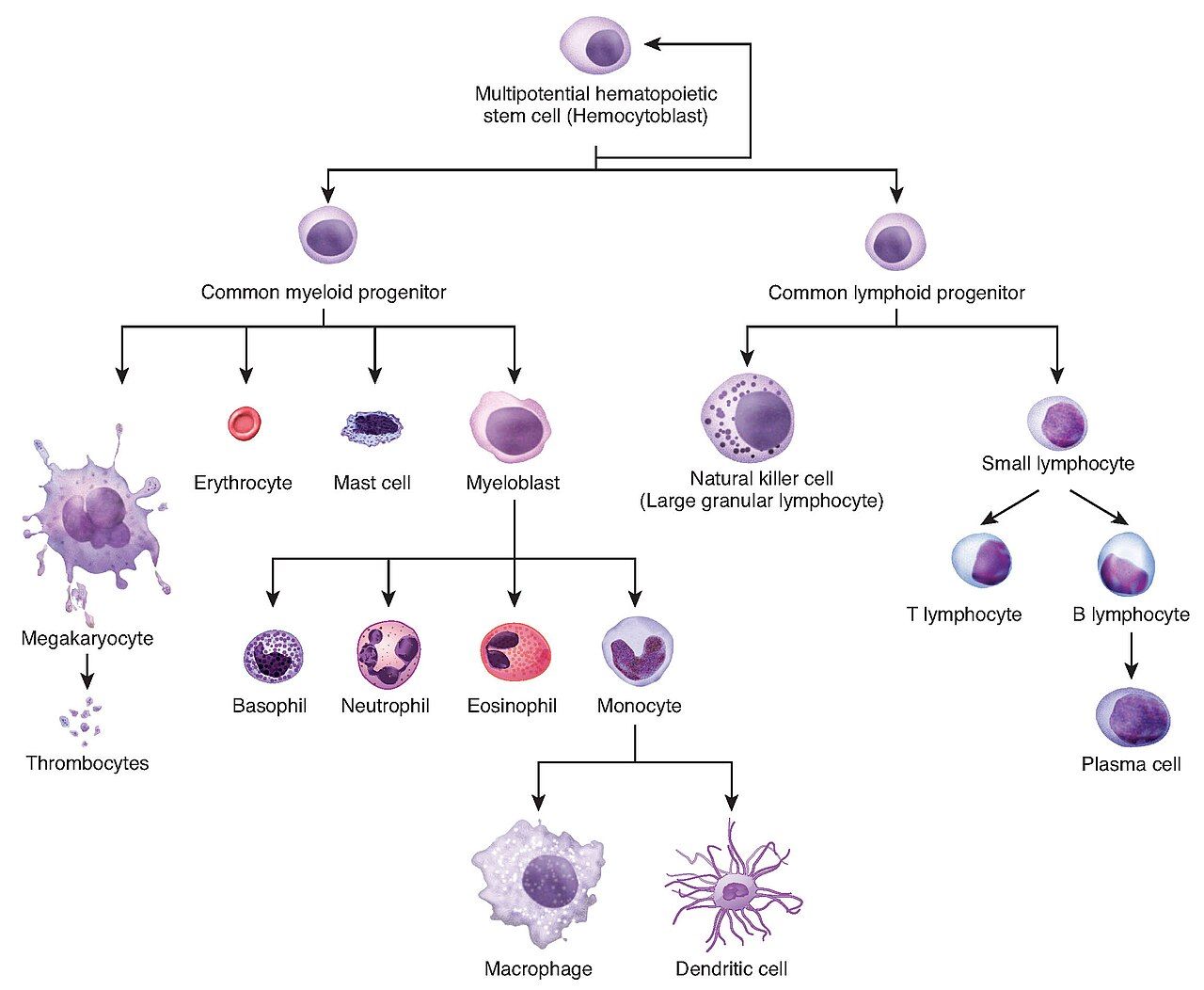
For most plans, the marrow decides how much drug a patient can take. Counts fall after each cycle. They hit bottom, called the nadir, usually 7 to 14 days later. Then they recover over the next two to three weeks. The three blood cell lines fail on their own schedules. Each one brings its own emergency.
Neutropenia is the deadliest. The absolute neutrophil count (ANC) is what matters, not the white count. An ANC below 1,000/mm3 is serious. Below 500/mm3 is severe. Fever with neutropenia is a cancer emergency. It means one oral temperature of 38.3°C (101°F), or 38.0°C (100.4°F) that lasts an hour, in a neutropenic patient. That calls for blood cultures now and broad-spectrum antibiotics within one hour. Not after rounds. Not after the culture results. Within the hour. There are no neutrophils to hold the line. A patient can go from a low fever to septic shock in a few hours. Teach that a fever at home means calling right away and going to the emergency department. Do not wait until morning.
Neutropenic precautions are mostly about removing sources of germs and breaks in the skin. Everyone cleans their hands with great care. No fresh flowers or standing water. No unpasteurized or raw foods. No crowds or sick visitors. And, a favorite of test writers because it truly matters, no rectal temperatures, suppositories, or enemas. A tear in the rectal lining of a neutropenic patient is a direct line into the blood. Thrombocytopenia (low platelets) calls for bleeding precautions below about 50,000/mm3. Below 20,000/mm3, bleeding can start on its own. Use an electric razor and a soft toothbrush. Give no aspirin or NSAIDs and no shots into the muscle. No flossing. Prevent falls. Anemia is the least dramatic and the most complained about. It brings deep tiredness, shortness of breath with activity, and a life shrunk down to the couch. Take it seriously. It is what patients remember.
Nausea, mouth, hair, and the things patients actually fear
Nausea and vomiting from chemotherapy come in three types, and each is handled differently. Acute vomiting starts within a few hours. Delayed vomiting starts more than 24 hours later. Cisplatin and cyclophosphamide are known for it. Patients get home, feel fine, and then get hit. Anticipatory nausea is learned. The patient vomits in the parking lot before the drug is even hung. The answer is a benzodiazepine such as lorazepam, plus better control in the first cycle. The most important rule is this. Antinausea drugs are given ahead of time and on a schedule, before the chemotherapy. Never as needed. Never playing catch-up. Modern plans combine a 5-HT3 antagonist (ondansetron; watch the QT), an NK-1 antagonist (aprepitant), dexamethasone, and often olanzapine.
Mucositis (sores in the mouth and gut lining) makes eating miserable. It also lets germs in. Check the mouth every day. Teach a soft toothbrush and rinses of salt water or baking soda water several times a day. Teach no mouthwash with alcohol. That is like pouring a stinging liquid on a burn. Sucking ice chips during a short 5-FU drip truly helps. Alopecia (hair loss) is not medically dangerous. Yet it is often what patients grieve most. It usually starts one to three weeks in. It takes brows, lashes, and body hair as well as the scalp. It grows back, sometimes in a new color or texture. Encourage choosing a wig or head cover before the hair falls out, since matching it later is harder. Scalp cooling lowers hair loss with some plans. Teach sun protection and gentle care for the scalp.
Extravasation and the drugs you never take your eyes off
A vesicant is a drug that kills tissue if it leaks out of the vein. The anthracyclines, the vinca alkaloids, mechlorethamine, and mitomycin are the classic ones. Damage from a leak can reach tendon and bone. It can end in skin grafts or amputation. Prevention is the whole plan. Use a central line for vesicants whenever you can. If not, use a fresh site with a confirmed blood return. Never use a site over a joint or in the bend of the elbow. And stay and watch. Do not start it and step out.
The patient may report burning or stinging. You may see swelling or redness, feel resistance, or lose the blood return. If so, stop the infusion right away. Do not pull the needle out. Disconnect the tubing. Try to draw back leftover drug through the catheter. Tell the provider. Mark and photograph the area, and raise the limb. Then the antidote depends on which drug leaked. Temperature is part of the antidote. For anthracyclines, apply cold and give dexrazoxane or topical DMSO. For vinca alkaloids, apply warm and give hyaluronidase. Cold keeps anthracyclines in one place. Warm spreads out the vincas. Swapping them makes the injury worse.
| Toxicity | Watch for | What to do |
|---|---|---|
| Febrile neutropenia | Temp 38.3°C once or 38.0°C for 1 hr; ANC <500 | Emergency: cultures then broad-spectrum antibiotics within 1 hour; no rectal temps, suppositories, or enemas |
| Thrombocytopenia | Platelets <50,000 (bleeding), <20,000 (spontaneous) | Electric razor, soft brush, no aspirin/NSAIDs, no IM injections, fall precautions |
| Nausea/vomiting | Acute, delayed (>24 hr), or anticipatory | Antiemetics scheduled before chemo; 5-HT3 + NK-1 + dexamethasone; lorazepam for anticipatory |
| Mucositis | Sore mouth, ulcers, dysphagia | Daily oral assessment, soft brush, saline/bicarb rinses; no alcohol-based mouthwash; ice chips with short 5-FU |
| Extravasation | Burning, swelling, no blood return, resistance | Stop, leave the needle in, aspirate, notify; anthracycline → cold + dexrazoxane; vinca → warm + hyaluronidase |
| Tumor lysis syndrome | Rising K+, phosphate, uric acid; falling calcium; AKI | Aggressive hydration, allopurinol or rasburicase, cardiac monitoring: highest risk in bulky, fast-growing tumors early in treatment |
| Infertility | Often permanent, especially alkylating agents | Raise sperm/oocyte banking before the first dose: afterward is too late |
Protecting yourself and the family
Chemotherapy drugs are hazardous drugs. They can cause cancer, gene damage, or birth defects in the people who handle them, not just the patient. Trained pharmacy staff prepare them in a biological safety cabinet, never on a unit counter. Giving them requires chemo-rated double gloves and a lint-free gown that closes in the back and blocks liquids. Wear eye protection if splashing could happen. Use closed-system transfer devices. Keep a spill kit where the drug is given. All chemo waste goes in the marked hazardous bin, not the regular sharps box. Staff who are pregnant, trying to conceive, or breastfeeding should not handle these drugs.
The safety steps follow the patient home, because the drug leaves in body fluids. For about 48 hours after a dose, teach the family to wear gloves when handling urine, stool, vomit, or soiled sheets. Close the toilet lid and flush twice. Wash soiled laundry apart from the rest of the household's. Wash hands well afterward. Say this out loud, not just in a pamphlet. And say why. Families who understand the reason follow it. Families who think they are being told their loved one is "toxic" often feel shame instead. Last, chemotherapy is a high-alert drug class. Two trained clinicians each check the order, the drug, the dose against the body surface area math, the route, and the patient's lifetime totals before anything is hung.
- The nadir comes 7 to 14 days after a cycle. Fever with neutropenia means cultures and antibiotics within one hour. No rectal temps, suppositories, or enemas.
- Antinausea drugs are scheduled before chemotherapy, not given as needed. Delayed vomiting (cisplatin) hits patients at home. Anticipatory vomiting responds to lorazepam.
- For extravasation: stop, leave the needle in, draw back, and notify. Then use cold for anthracyclines and warm for vinca alkaloids.
- Chemotherapy drugs are hazardous and high-alert. Use double gloves and a gown, get an independent double-check, and teach body-fluid safety at home for 48 hours.
The chapter in one breath
- Immunosuppressants keep a new organ alive and calm autoimmune disease by turning down the immune system. Every bit of immunity removed was also guarding against infection and cancer.
- Calcineurin inhibitors need trough levels and no grapefruit. Methotrexate is weekly. Azathioprine plus allopurinol means marrow failure. TNF inhibitors need TB screening first.
- People with held-down immunity hide infection (blunted fever, no pus). So any fever is an emergency, and live vaccines are not given.
- Immunostimulants rebuild counts (filgrastim, with bone pain) or release the brake (checkpoint inhibitors, with immune-related colitis, pneumonitis, and thyroiditis).
- Vaccines give slow, lasting active immunity. Immune globulin gives instant, short-lived passive immunity. Live vaccines are off-limits in pregnancy and immunosuppression.
- Chemotherapy targets the cell cycle. It cannot tell cancer from healthy tissue, only dividing from resting. That predicts myelosuppression, mucositis, alopecia, and infertility.
- The log kill hypothesis says each dose kills a percentage, not a number. It explains repeated cycles, rest periods, and combining drugs with harms that do not overlap.
- The class signatures: cyclophosphamide → hemorrhagic cystitis (mesna); doxorubicin → heart damage that adds up; bleomycin → pulmonary fibrosis; vincristine → fatal if intrathecal; cisplatin → kidney and ear harm.
- At the bedside: fever with neutropenia = antibiotics within one hour. Schedule antinausea drugs before the dose. For extravasation, stop and leave the needle in, then use cold for anthracyclines and warm for vincas. Handle every drug as hazardous and high-alert.
ReferenceWords worth knowing
A quick list of the terms in this chapter. Skim it now, or come back when a word trips you up.
- Absolute neutrophil count (ANC)
- The number of germ-fighting neutrophils per mm3; below 1,000 is serious and below 500 is severe neutropenia. The number that drives every precaution.
- Alkylating agent
- A cell-cycle-nonspecific drug that cross-links DNA so it cannot copy itself; prototype cyclophosphamide.
- Antimetabolite
- A drug that copies a normal DNA building block and jams DNA making in the S phase; prototypes methotrexate and 5-fluorouracil.
- Calcineurin inhibitor
- An immunosuppressant that blocks interleukin-2 making so T cells cannot multiply; tacrolimus, cyclosporine.
- Cell-cycle-nonspecific (CCNS)
- Acts on cells in any phase, even resting G0; alkylating agents, most antitumor antibiotics (bleomycin is the cell-cycle-specific exception), and platinum drugs.
- Cell-cycle-specific (CCS)
- Acts only on cells in a certain phase; antimetabolites (S), mitotic inhibitors (M), bleomycin (G2).
- Checkpoint inhibitor
- A monoclonal antibody that releases the immune system's brakes on a tumor (pembrolizumab, nivolumab, ipilimumab); causes immune-related adverse events.
- Extravasation
- Leaking of a drug out of the vein into nearby tissue; with a vesicant, this kills tissue.
- Febrile neutropenia
- Fever in a patient with neutropenia; a cancer emergency that needs cultures and broad-spectrum antibiotics within one hour.
- G0 phase
- The resting state, where a cell is alive but not dividing; cell-cycle-specific drugs cannot reach it and nonspecific drugs reach it poorly, which is why cancers come back.
- Hazardous drug
- A drug that can cause cancer, gene damage, or birth defects in handlers as well as patients; needs double gloves, a gown, closed systems, and special waste bins.
- Immune-related adverse event (irAE)
- Autoimmune injury (colitis, pneumonitis, hepatitis, thyroiditis) caused by a checkpoint inhibitor; treated with corticosteroids.
- Leucovorin rescue
- Giving a form of folate after high-dose methotrexate to restore normal cells while the tumor stays starved.
- Live attenuated vaccine
- A weakened germ that can still multiply (MMR, varicella, rotavirus, LAIV, yellow fever); not given in pregnancy or strong immunosuppression.
- Log kill hypothesis
- Each chemotherapy dose kills a set percentage of tumor cells, not a set number; the reason treatment comes in repeated cycles.
- Mesna
- A rescue drug that binds acrolein in the bladder, preventing the hemorrhagic cystitis caused by cyclophosphamide and ifosfamide.
- Mucositis
- Swelling and sores of the GI lining, mouth to anus, from loss of fast-dividing lining cells.
- Myelosuppression
- Chemo-caused shutdown of bone marrow output → neutropenia, thrombocytopenia, anemia; the harm that limits the dose in most plans.
- Nadir
- The lowest point blood counts reach after a chemotherapy cycle, usually 7 to 14 days later.
- Passive immunity
- Protection from borrowed, ready-made antibodies (immune globulin); instant but short-lived, with no memory formed.
- Tumor lysis syndrome
- Massive breakdown of cells that releases potassium, phosphate, and uric acid, drops calcium, and injures the kidney; prevented with fluids and allopurinol or rasburicase.
- Vesicant
- A drug that kills tissue if it leaks out of the vein: anthracyclines, vinca alkaloids, mechlorethamine, mitomycin.