Marriage & Family
Family is the most personal institution you will ever belong to — and the most sociological. It feels like the private opposite of “society,” yet almost nothing about it is truly private: who counts as kin, who may marry whom, who does the dishes, and what happens when a marriage ends are all shaped by law, economy, religion, and custom. Every known human society organizes reproduction, child-rearing, and intimacy through some form of family, but the forms vary enormously across cultures and are changing quickly in our own. This chapter defines the family sociologically, examines marriage and mate selection, applies the three major theoretical paradigms, and looks squarely at divorce, violence, and the striking transformation of family life now underway.
By the end of this chapter you can
- Define family sociologically and distinguish it from a household.
- Identify major family forms and distinguish family of orientation from family of procreation, and nuclear from extended families.
- Describe patterns of marriage, descent, residence, and authority across societies.
- Explain cohabitation and the sociology of mate selection — endogamy, exogamy, homogamy, and propinquity.
- Apply the functionalist, conflict, and symbolic interactionist perspectives to family life.
- Analyze divorce, remarriage and blended families, and family violence as social patterns, not just private troubles.
- Describe how family life is changing — single-parent, same-sex, cohabiting, and multigenerational households — and why the family endures.
Section 1What is a family?
Family versus household
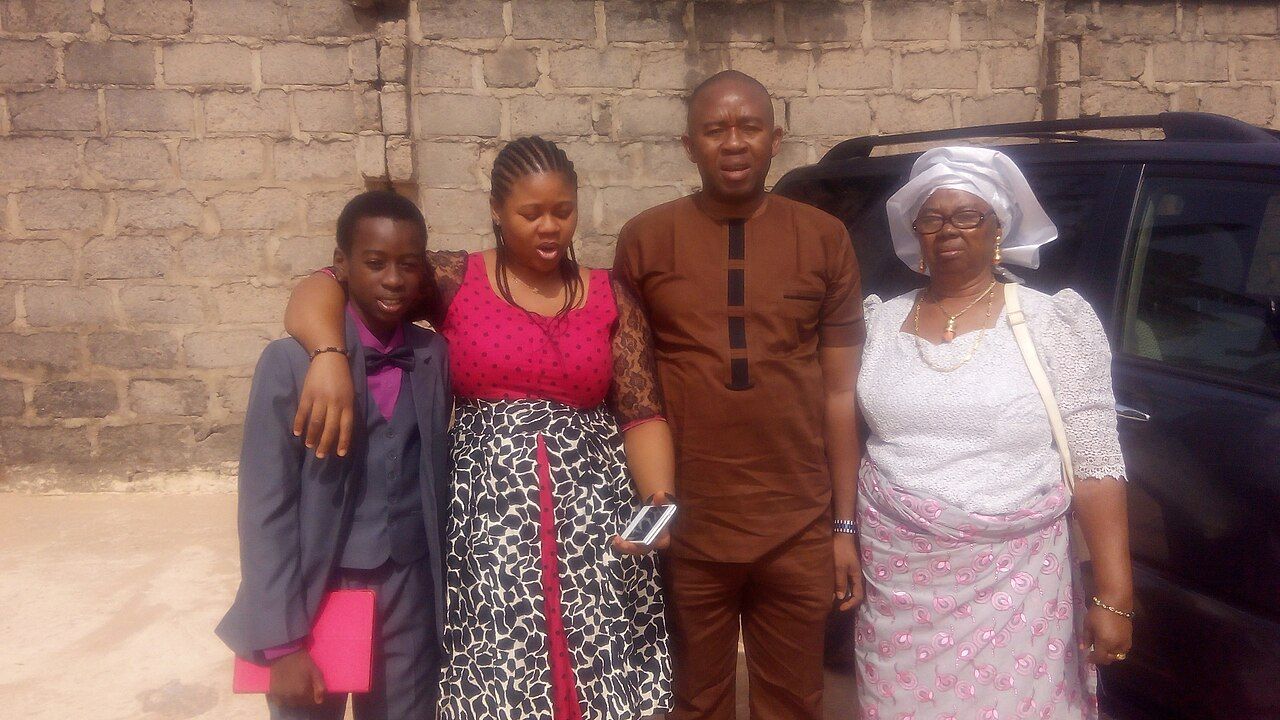
In everyday speech “family” and “household” blur together, but sociologists keep them apart because they answer different questions. A family is a socially recognized group — usually joined by blood, marriage, cohabitation, or adoption — whose members form an emotional bond and typically function as an economic unit. A household, by contrast, is simply all the people who occupy a single housing unit, whether or not they are related: three unrelated roommates are a household but not a family, while your grandmother across town is family but not part of your household. Governments count households because they are easy to see; sociologists study families because they are where so much social life actually happens.
Notice that the definition rests on social recognition, not biology alone. Adoption creates family without shared genes; a step-parent who raises a child is family in every sense that matters; and many cultures treat close friends, godparents, or clan members as kin. Because the boundary is drawn socially, it can be contested — which is exactly why debates over who counts as a “real” family (unmarried partners, same-sex couples, chosen families) are so heated. They are arguments about social recognition, and the sociological answer is that family is defined by the functions it performs, not by any single fixed form.
The many forms of family
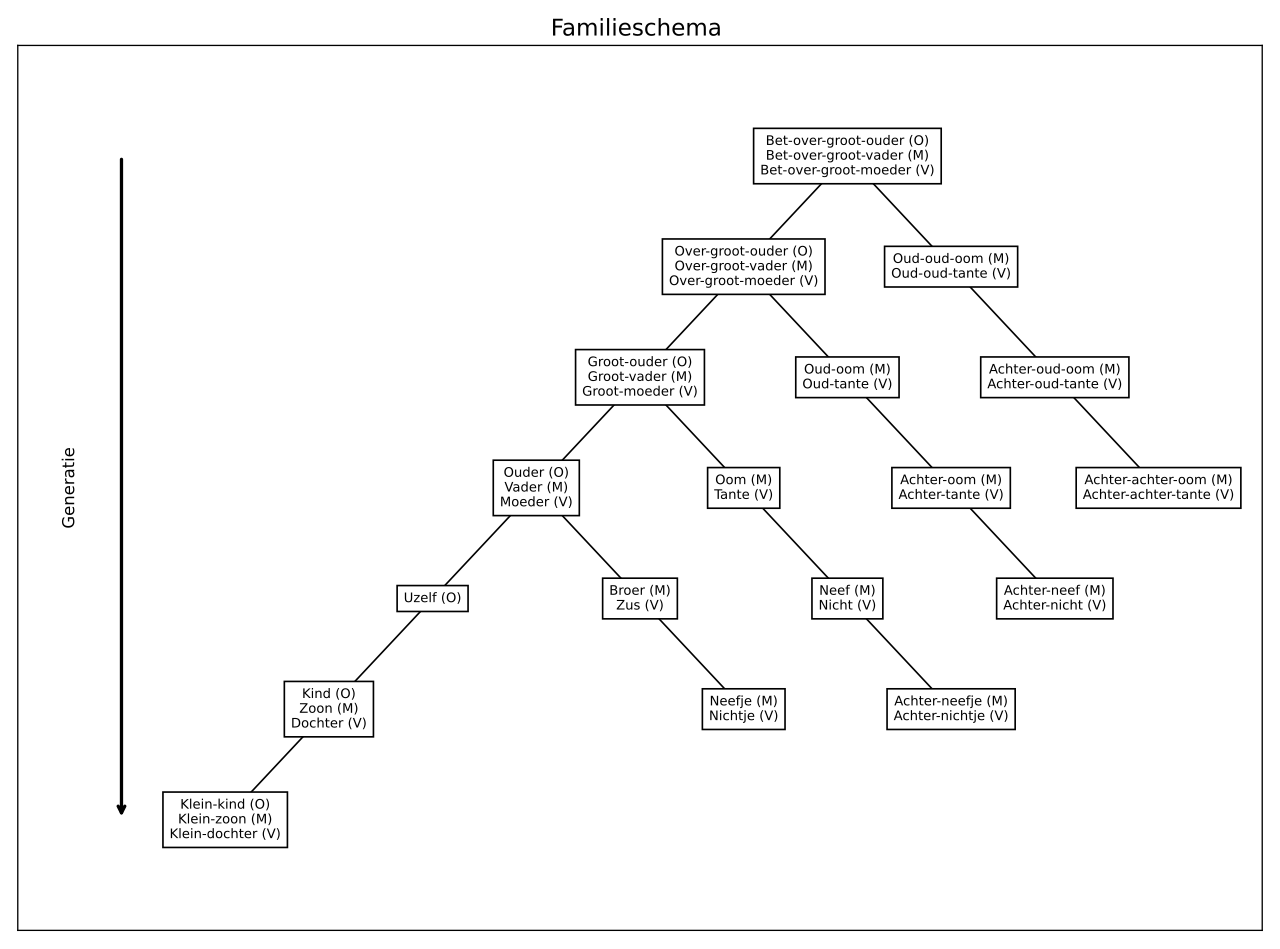
Two distinctions organize most of the world's family types. The first is between your family of orientation — the family you are born or adopted into and socialized by — and your family of procreation, the one you form as an adult through partnership and child-rearing. The second is between the nuclear family (a couple and their dependent children living together) and the extended family, which adds grandparents, aunts, uncles, or cousins into a larger cooperating unit. The isolated nuclear household feels “normal” to many Westerners, but across human history and much of the world today the multigenerational extended family has been the dominant and often the more resilient arrangement.
Beyond these lie a growing roster of recognized forms: single-parent families, cohabiting-couple families, same-sex-couple families, blended or stepfamilies, and childfree couples. Each is a genuine family, and each rearranges the same basic tasks — care, economic support, socialization — in a different way.
Kinship: descent, residence, and authority
Kinship is the web of culturally recognized ties of blood, marriage, and adoption, and societies organize it along three axes. Descent traces lineage and inheritance: patrilineal systems reckon through the father's line, matrilineal through the mother's, and bilateral (common in North America and Europe) through both. Residence patterns say where a new couple lives — patrilocal (with the husband's kin), matrilocal (with the wife's), or neolocal (a new home of their own). Authority describes who holds formal power: a patriarchy vests it in men, a matriarchy (rare and disputed) in women, and an egalitarian family shares it. Most industrial societies trend bilateral, neolocal, and at least formally egalitarian — a pattern that fits an economy in which couples move for work and both partners earn.
| Family form | What it is | Where it's common |
|---|---|---|
| Nuclear | Couple plus their dependent children in one home | Idealized in industrial societies |
| Extended | Adds grandparents and other kin into a cooperating unit | Much of the world; historically dominant |
| Single-parent | One parent raising children | Rising sharply in recent decades |
| Blended (step) | Remarriage joins parents and children from prior unions | Common after divorce/remarriage |
| Cohabiting | Unmarried partners sharing a household | Fast-growing across age groups |
| Same-sex | Two partners of the same sex, with or without children | Legally recognized in a growing number of nations |
- A family is a socially recognized kin/emotional/economic group; a household is whoever shares a dwelling.
- Family of orientation (born into) differs from family of procreation (formed as an adult); nuclear differs from extended.
- Kinship is organized by descent (patrilineal/matrilineal/bilateral), residence (patrilocal/matrilocal/neolocal), and authority (patriarchal/egalitarian).
- Family is defined by its functions, which is why its forms can vary and change.
Section 2Marriage & partnering
Marriage patterns across societies
Marriage is a socially and legally recognized union that establishes rights and obligations between partners and, usually, between them and any children. Its most visible variable is the number of spouses permitted. Monogamy — one spouse at a time — is the legal norm in most industrial nations; because divorce and remarriage are common, sociologists often describe the actual practice as serial monogamy, a sequence of exclusive unions over a lifetime. Polygamy (more than one spouse) takes two forms: polygyny, one husband with multiple wives, is by far the more common cross-culturally, while polyandry, one wife with multiple husbands, is rare and usually tied to specific ecological or economic pressures. Even where polygyny is permitted, most such marriages are in practice monogamous, because supporting several spouses requires wealth.
Societies also regulate whom one may marry. Endogamy is the norm or rule that people marry within a defined group — their religion, ethnicity, or social class — while exogamy requires marrying outside a group, most universally the incest taboo that forbids marriage within the immediate family. These rules are not quaint relics; they still steer marriage markets today, mostly informally, through the people families and communities encourage us to meet.
Cohabitation and the retreat from marriage
Fewer people are marrying, and those who do are marrying later. In the space they leave, cohabitation — unmarried partners sharing a household — has surged from a stigmatized arrangement to a mainstream stage of life, functioning variously as a prelude to marriage, a trial run, or a long-term alternative to it. The sociologist Andrew Cherlin coined the phrase “incomplete institution” in 1978 for remarriage and stepfamilies, and sociologists have since extended the same logic to cohabitation: it lacks the clear, shared norms that surround marriage — there is no script for how to introduce a live-in partner, no ceremony, and often no legal protection — which can leave partners improvising rules that marriage would have supplied. The rise of cohabitation is not simply about looser morals; it tracks economic insecurity, higher education, and the growing expectation that a marriage be an emotional and financial partnership of near-equals.
How we actually “choose” a mate
We tell ourselves that love strikes at random, yet mate selection is one of the most patterned behaviors sociologists study. Propinquity — simple physical and social proximity — means we tend to partner with people we repeatedly encounter at school, work, worship, or online in curated pools. Homogamy, the tendency to marry someone similar to ourselves in age, education, social class, race, and religion, is so strong that “opposites attract” is largely a myth: statistically, like marries like. Exchange theorists add that partners implicitly weigh what each brings to the union — income, status, attractiveness, warmth — and settle where the perceived exchange feels fair. None of this means love is an illusion; it means the pool from which we fall in love has already been narrowed by social structure long before we feel the spark.
| Principle | What it means | Everyday example |
|---|---|---|
| Propinquity | We pair with those we are near, physically or socially | Meeting a partner at work or on a campus |
| Homogamy | We marry people like us in key traits | Similar education, religion, or class background |
| Endogamy | Norms nudge marriage within a group | Family encouragement to marry within a faith |
| Exogamy | Rules require marrying outside a group | The near-universal incest taboo |
| Exchange | Partners weigh what each contributes | Perceived fairness of the “deal” two people strike |
- Monogamy (often serial in practice) is the industrial norm; polygyny is the most common form of polygamy cross-culturally.
- Endogamy pushes marriage within a group; exogamy pushes it outside, including the universal incest taboo.
- Cohabitation is now mainstream but has unclear norms — sociologists apply to it Cherlin’s “incomplete institution,” a phrase he coined in 1978 for remarriage.
- Propinquity and homogamy pattern mate selection: like tends to marry like.
Section 3Theoretical views of family
The functionalist view: what family does for society
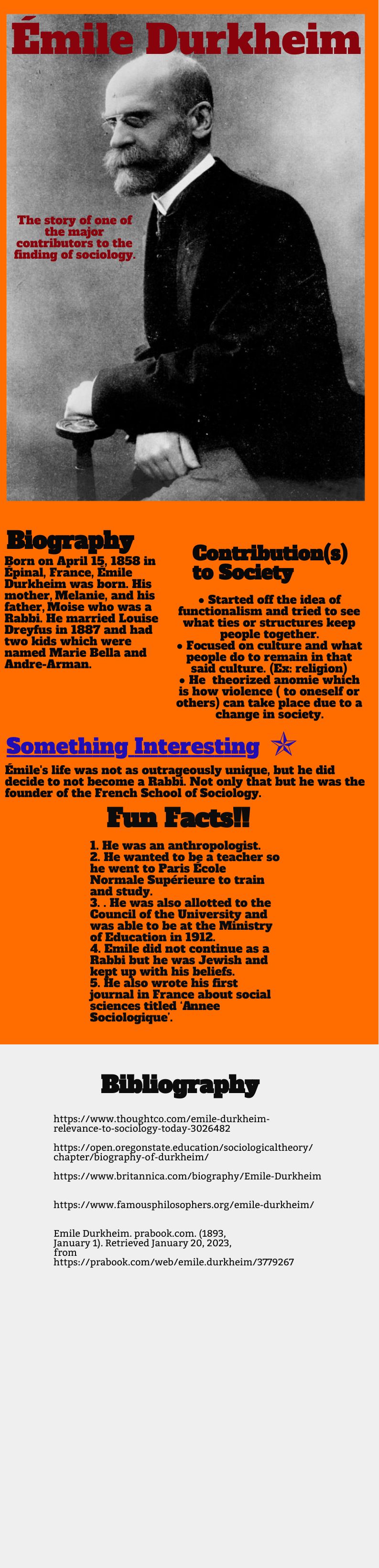
Functionalism asks what a persistent institution contributes to social stability, and by that test the family is indispensable. Building on Émile Durkheim's concern with social integration — he showed that married people are, on average, better buffered against isolation and anomie than the unattached — the anthropologist George Murdock argued that the family universally performs four functions: regulating sexual activity, reproduction, economic cooperation, and the socialization of children. Talcott Parsons narrowed the list for the modern nuclear family to two irreducible tasks: the primary socialization of children into society's norms and the stabilization of adult personalities — the family as an emotional refuge from an impersonal economy. Parsons also (controversially) described a division into instrumental and expressive roles. Critics note this reads a mid-century, middle-class American arrangement as if it were a functional necessity — a reminder that functionalism can mistake the familiar for the inevitable.
The conflict view: family as an engine of inequality
Conflict theory, rooted in Karl Marx, turns the question around: whom does the family's structure benefit, and at whose expense? Marx's collaborator Friedrich Engels argued in The Origin of the Family, Private Property and the State that the monogamous nuclear family arose to secure private property — men needed legitimate heirs to inherit wealth, which required controlling women's reproduction and subordinating them within the household. From this angle the family is a mechanism for transmitting class advantage across generations: wealthy families pass on capital, connections, and cultural capital, reproducing the stratification system chapter after chapter. Feminist conflict theorists extend the point to gender, highlighting the unpaid domestic labor — cooking, cleaning, caregiving — that disproportionately falls to women and quietly subsidizes the whole economy. Where functionalists see harmony, conflict theorists see power.
The interactionist view: family as everyday meaning-making
Symbolic interactionism zooms all the way in to the daily interactions through which a family is actually lived. Ernest Burgess captured it in his phrase that the family is “a unity of interacting personalities” — not a fixed structure but something continually created and re-created through communication. Charles Horton Cooley called the family the original primary group, the intimate circle in which, through the looking-glass self, we first come to see ourselves through others' eyes. George Herbert Mead showed how children develop a self by taking the role of parents and siblings in play, and Erving Goffman's dramaturgy reveals how family members perform roles — the “good son,” the “devoted spouse” — managing impressions front-stage and relaxing back-stage. For interactionists, whether an arrangement even counts as a “marriage” or who does the housework is settled not by law but by the meanings partners negotiate day to day.
| Paradigm | Core question | View of the family | Key figures |
|---|---|---|---|
| Functionalism | What does family do for social stability? | A vital institution performing socialization, regulation, economic and emotional support | Durkheim, Murdock, Parsons |
| Conflict | Who benefits and who is exploited? | A means of transmitting property, class, and gender inequality | Marx, Engels, feminist theorists |
| Symbolic interactionism | How is family meaning built in interaction? | A unity of interacting personalities defined by negotiated meanings and performed roles | Cooley, Mead, Goffman, Burgess |
- Functionalists (Durkheim, Murdock, Parsons) stress the family's contributions: socialization, regulation, economic and emotional support.
- Conflict theorists (Marx, Engels, feminists) see the family transmitting class and gender inequality — property, inheritance, unpaid domestic labor.
- Interactionists (Cooley, Mead, Goffman, Burgess) study family as meaning made in daily interaction — the primary group and performed roles.
- Each paradigm illuminates a different scale; together they give a fuller picture.
Section 4Family challenges
Divorce: private grief, social pattern
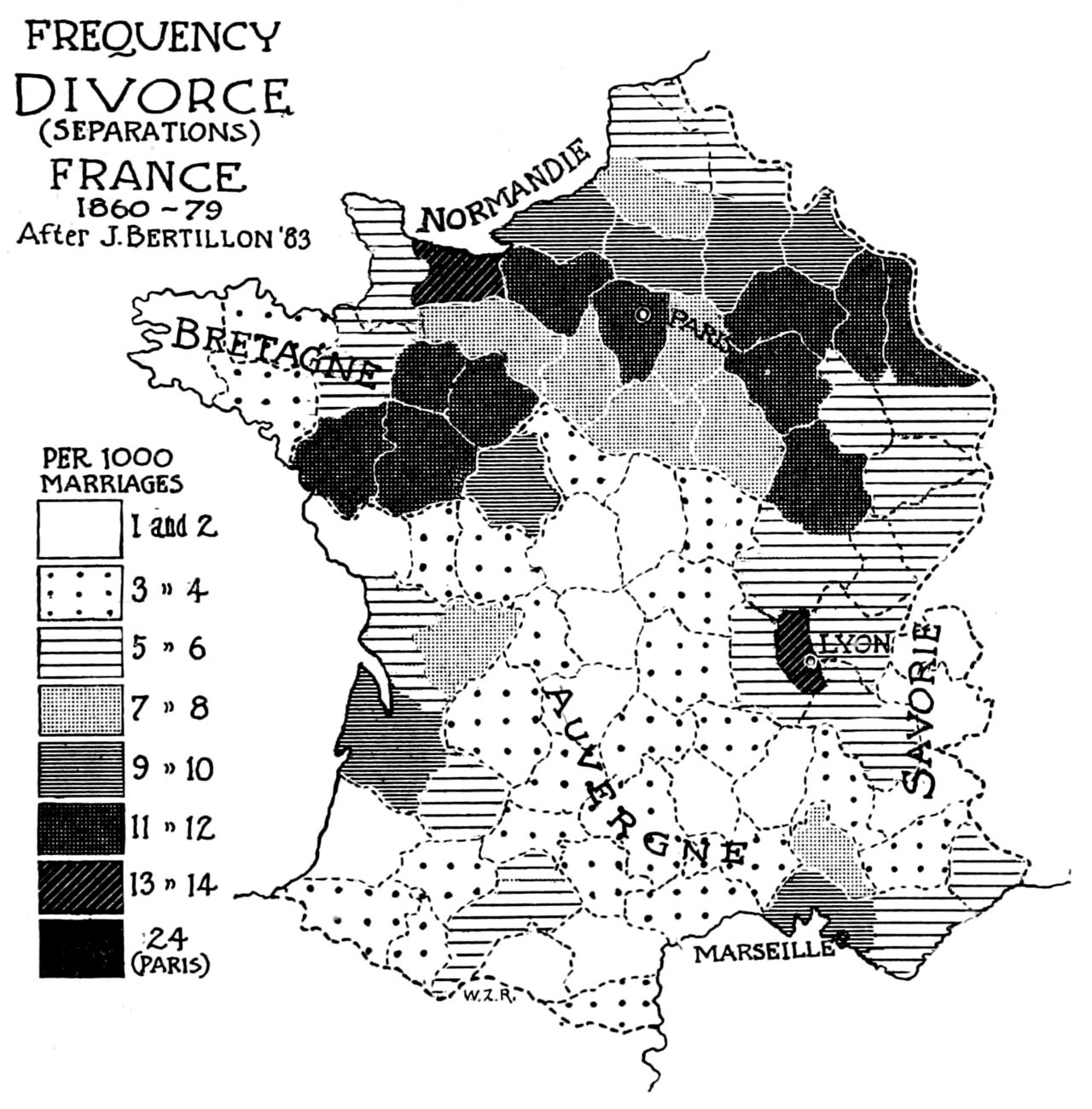
Divorce feels like the most individual of failures, yet its rates rise and fall with law, economy, and culture in ways no single couple controls. In the United States the divorce rate climbed steeply through the 1960s and 1970s — propelled in part by the spread of no-fault divorce, which let couples end a marriage without proving wrongdoing — and has since drifted downward, partly because fewer, and more selectively, people marry in the first place. Sociologists measure it carefully: the crude rate (divorces per 1,000 people) is easy to misread, so the refined divorce rate (divorces per 1,000 married women) gives a truer picture. Reliable predictors of divorce include marrying very young, low income and education, cohabiting with several partners before marriage, and having grown up with divorced parents — the last a modest but real intergenerational transmission.
The effects on children are real but frequently oversimplified. Decades of research suggest that it is persistent conflict, more than divorce itself, that harms children most; a low-conflict split can be less damaging than a high-conflict marriage that stays intact. That finding reframes divorce from a simple verdict — good or bad for kids — into a question about how conflict and disruption are managed.
Remarriage and blended families
Most divorced people remarry, and many form blended families (stepfamilies) that fold together children and parents from prior unions. Here Cherlin's “incomplete institution” idea returns to the case it was written for: his 1978 analysis was of remarriage, and its point was that our culture offers no clear norms — and barely any vocabulary — for step-relationships. What does a stepfather owe a teenage stepdaughter? What should stepsiblings call each other's grandparents? Because the roles are underdefined, blended families must negotiate from scratch the expectations that first marriages inherit ready-made — which is part of why remarriages, on average, dissolve somewhat more often than first marriages. Yet many blended families thrive precisely by inventing their own workable norms.
Family violence
The same institution that provides intimacy and refuge can also conceal harm. Family violence spans intimate-partner violence, child abuse and neglect, and elder abuse, and it shares a grim logic across those forms: it flourishes in private, exploits dependency, and is powerfully underreported because victims may love, rely on, or fear the person harming them. Sociologists resist framing it as isolated pathology; they trace patterns of power and control, note how economic stress and social isolation raise risk, and document a cycle in which children who witness violence are more likely to experience or perpetrate it later. Treating family violence as a social problem — addressed through law, shelters, screening, and support — rather than a purely private matter is one of the clearest cases of C. Wright Mills's distinction between a personal trouble and a public issue.
| Form of family violence | Who is harmed | Why it stays hidden |
|---|---|---|
| Intimate-partner violence | A current or former spouse or partner | Fear, financial dependence, shame, love for the abuser |
| Child abuse & neglect | Dependent children | Children cannot easily report; harm is normalized as discipline |
| Elder abuse | Older, often dependent adults | Isolation, frailty, reliance on the caregiver who harms them |
- Divorce rates track law and economy; the refined divorce rate is more accurate than the crude rate, and conflict harms children more than divorce itself.
- Most divorced people remarry into blended families, which must improvise norms our culture doesn't supply.
- Family violence — partner, child, and elder abuse — is patterned, underreported, and best understood as a public issue, not private pathology.
Section 5Families in transition
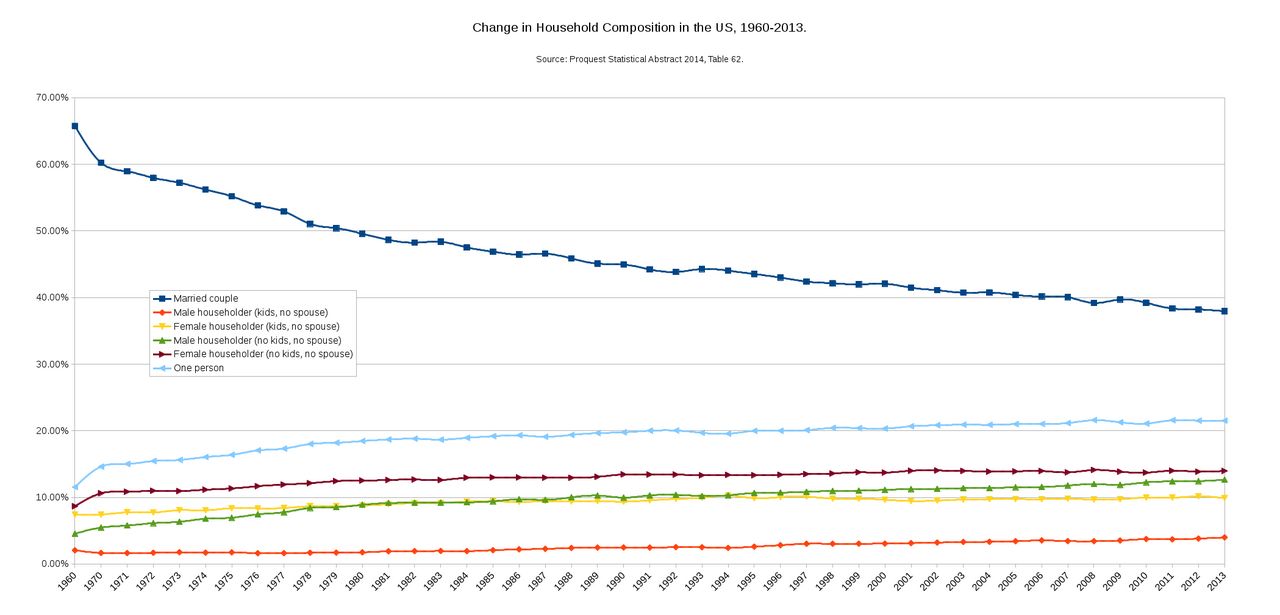
The changing shape of the household
The mid-twentieth-century image of the “typical” family — a breadwinner father, a homemaker mother, and their children in a single-family home — describes a shrinking minority of households today. Married-couple-with-children households have fallen as a share of the total, while people living alone, single-parent families, cohabiting couples, and multigenerational homes have all risen. This is not the collapse of the family so much as its diversification: the same enduring needs for care, support, and belonging are now met through a wider variety of arrangements. Demographers describe part of this shift as a second demographic transition, in which delayed marriage, delayed and reduced childbearing, and rising cohabitation accompany greater individual autonomy and gender equality.
New and newly visible family forms
Several trends stand out. Marriage is being delayed: the median age at first marriage has climbed as young adults finish schooling and establish careers first. Dual-earner families are now the norm, which has forced a renegotiation of housework — though the sociologist Arlie Hochschild's research on the “second shift” found that employed women still tend to do more unpaid domestic and emotional labor at home than their male partners, a stubborn inequality inside the modern egalitarian ideal. Same-sex families have moved from invisibility to legal recognition in a growing number of countries, including nationwide marriage rights in the United States since 2015. And a rising share of adults are childfree by choice or living alone, arrangements once treated as deviant and now increasingly ordinary.
Why the family endures
Given divorce, violence, and dizzying change, it is tempting to conclude that the family is failing. The sociological evidence points the other way. No society has ever done without some family form, because the tasks the family performs — raising the next generation, organizing care, anchoring identity — still must be done, and no other institution does them as well. What is dying is not the family but a single historically specific version of it. The family is not disappearing; it is doing what durable institutions do — adapting its form to a changed economy and culture while continuing to perform its oldest functions.
| Trend | Mid-20th century | Today |
|---|---|---|
| Age at first marriage | Early twenties | Later — often late twenties or beyond |
| Married-couple-with-children homes | Dominant household type | One form among many |
| Cohabitation before marriage | Rare and stigmatized | Common and mainstream |
| Women's paid employment | Minority of married mothers | Dual-earner is the norm |
| Same-sex families | Largely invisible, unrecognized | Increasingly recognized in law |
- The breadwinner–homemaker nuclear family is now a minority of households; family forms have diversified, not vanished.
- Marriage and childbearing are delayed; dual-earner families are the norm, yet the “second shift” leaves women doing more home labor.
- Same-sex families have gained legal recognition; living alone and being childfree are increasingly ordinary.
- The family endures because its core functions still must be performed; its form adapts to a changed economy and culture.
The chapter in one breath
- A family is a socially recognized kin, emotional, and economic group; a household is whoever shares a dwelling — and family is defined by function, not form.
- Forms range from nuclear to extended, with a growing roster of single-parent, cohabiting, blended, and same-sex families; kinship is organized by descent, residence, and authority.
- Marriage patterns include monogamy (often serial) and polygamy (mostly polygyny), bounded by endogamy and exogamy.
- Cohabitation is now mainstream but norm-poor; mate selection is patterned by propinquity and homogamy — like marries like.
- Functionalists stress the family's functions, conflict theorists its transmission of inequality, and interactionists its negotiated everyday meanings.
- Divorce tracks law and economy (conflict harms children more than divorce itself); most people remarry into blended families; family violence is a patterned public issue.
- Family life is diversifying — delayed marriage, dual earners, the second shift, same-sex recognition — yet the institution endures because its work still must be done.
ReferenceWords worth knowing
A quick reference for the terms in this chapter — skim it now, or circle back whenever a word trips you up.
- Bilateral descent
- Tracing kinship and inheritance through both the mother's and the father's lines; common in North America and Europe.
- Blended family (stepfamily)
- A family formed when remarriage joins parents and children from previous unions.
- Cohabitation
- An arrangement in which an unmarried couple shares a household and an intimate relationship.
- Egalitarian family
- A family in which authority and decision-making are shared roughly equally between partners.
- Endogamy
- A norm or rule encouraging marriage within one's own social group (religion, class, ethnicity).
- Exogamy
- A norm or rule requiring marriage outside a defined group; the incest taboo is its most universal form.
- Extended family
- A family unit that includes relatives beyond the nuclear core, such as grandparents, aunts, uncles, or cousins.
- Family
- A socially recognized group, usually joined by blood, marriage, cohabitation, or adoption, that forms an emotional bond and economic unit.
- Family of orientation
- The family into which a person is born or adopted and by which they are first socialized.
- Family of procreation
- The family a person forms as an adult through partnership and the raising of children.
- Homogamy
- The tendency to marry someone similar to oneself in traits such as age, education, class, race, or religion.
- Household
- All the people, related or not, who occupy a single housing unit.
- Kinship
- The culturally recognized web of ties among people based on blood, marriage, and adoption.
- Marriage
- A socially and legally recognized union that establishes rights and obligations between partners and toward children.
- Matrilineal descent
- Tracing kinship and inheritance through the mother's line.
- Monogamy
- Marriage to one spouse at a time; serial monogamy is a sequence of such unions over a lifetime.
- Neolocal residence
- A pattern in which a newly married couple establishes a household of their own, apart from either partner's kin.
- Nuclear family
- A family consisting of a couple and their dependent children sharing a household.
- Patriarchy
- A family or social system in which men hold predominant authority and power.
- Polygamy
- Marriage to more than one spouse at a time; polygyny (multiple wives) and polyandry (multiple husbands) are its two forms.
- Propinquity
- Physical and social proximity, which channels whom people meet and ultimately partner with.
- Serial monogamy
- A pattern of marrying, divorcing, and remarrying so that a person has one spouse at a time across several unions.