Memory
Right now you are reading these words. A moment from now you will remember reading them, or you won't. Memory is the set of steps that lets an experience leave a trace. It takes information in. It holds on to it. It pulls it back out when you need it. Memory feels like a video camera that records the past just as it happened. It is nothing like that. Memory is built, rebuilt, edited, and now and then made up. That is why it is one of the most useful things your mind does, and also one of the easiest to fool. This chapter follows a memory all the way from your eyes and ears to a courtroom.
By the end of this chapter you can
- Name the three basic memory processes, encoding, storage, and retrieval, and the three stores of the multi-store model.
- Compare sensory memory, short-term memory, and long-term memory by how long they last and how much they hold.
- Explain working memory and why it is more than a box that just holds things.
- Tell automatic processing from effortful processing, and use the levels-of-processing effect.
- Tell explicit (declarative) memory from implicit (nondeclarative) memory, and say where the brain handles each one.
- Compare recall and recognition, describe how retrieval cues work, and read Ebbinghaus's forgetting curve.
- Explain the misinformation effect and why eyewitness memory is less reliable than it feels.
Section 1How memory works
Three jobs: encoding, storage, retrieval
Before we ask where memories are kept, let's look at what the mind is doing. Every memory goes through three steps. Encoding means getting information in. The brain turns a sight, a sound, or an idea into a form it can hold. Storage means keeping it over time. That might be for a split second or for a whole life. Retrieval means getting it back out. A failure at any of the three steps feels the same from the inside: "I can't remember." But the cause is different each time, and so is the fix. Much of this chapter is about telling them apart.
The three-stage model
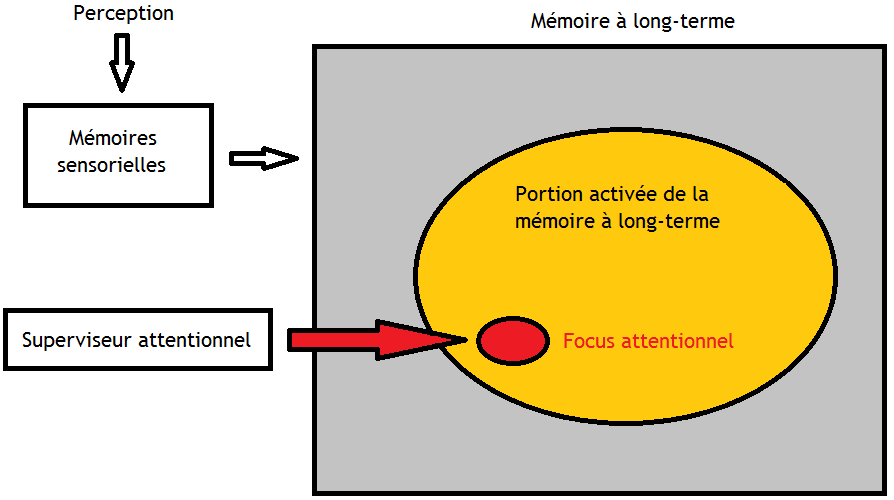
The best-known map of memory is the multi-store model. Richard Atkinson and Richard Shiffrin proposed it in 1968. In this model, information flows through three stores. The stores differ a great deal in how much they hold and for how long. New input lands first in sensory memory. This is a huge but very brief holding area. It keeps a near-exact copy of what your senses just picked up. The visual form is called iconic memory. It lasts about a quarter of a second. The sound form is called echoic memory. It lasts three to four seconds. That is long enough to "replay" the end of a sentence you were only half listening to. In 1960, George Sperling showed that we hold far more for a brief moment than we can report before the trace fades.
Whatever you pay attention to moves on to short-term memory (STM). This is the small workspace of the moment. If you do nothing with it, it holds information for only about fifteen to thirty seconds. Its space is famously small. In 1956, George Miller put it at "the magical number seven, plus or minus two" items. Later researchers, such as Nelson Cowan, lowered that to about four chunks. Chunking means grouping items into meaningful units. A phone number becomes three groups instead of ten digits. That is how we stretch our tiny short-term space. If you rehearse material, or encode it deeply, it moves into long-term memory (LTM). This is the store that lasts a long time. No one has found a limit to how much it can hold.
| Store | How long it lasts | How much it holds | Example |
|---|---|---|---|
| Sensory memory | Iconic about 0.25 s; echoic 3 to 4 s | Very large (a full copy of the input) | The glowing "trail" a sparkler leaves |
| Short-term / working | About 15 to 30 s without rehearsal | Small: about 4 chunks (classic estimate 7 ± 2) | Holding a phone number long enough to dial it |
| Long-term memory | Minutes to a lifetime | No known limit | Your name, your childhood home |
From short-term to working memory
The name "short-term memory" makes the middle store sound like a shelf. Items sit there and slowly slide off. In 1974, Alan Baddeley and Graham Hitch argued that it is really an active working memory. Think of a workbench in your mind. You don't just hold information there. You also work on it. In their model, a central executive acts as the boss. It directs attention and runs two helpers. The phonological loop handles sounds and words. It is the voice that repeats a number in your head. The visuospatial sketchpad handles pictures and places. You use working memory to do math in your head, to follow directions, or to hold a sentence in mind while you decide how to end it.
- Memory uses three processes: encoding (in), storage (keep), and retrieval (out).
- The multi-store model (Atkinson and Shiffrin) moves information through sensory, short-term, and long-term memory.
- Sensory memory is huge but lasts under a second (iconic) to a few seconds (echoic). STM holds about 4 chunks for 15 to 30 seconds. LTM has no known limit.
- Working memory (Baddeley and Hitch) is an active workspace, not a shelf.
Section 2Encoding: getting memories in
Automatic versus effortful processing
Some information slips into long-term memory with no work at all. Automatic processing stores details like place, time, and how often something happens. It also handles material you know very well. None of this needs conscious attention. You can usually say about where on a page a fact appeared. You know what you did yesterday. You know what a familiar word means. You never "tried" to remember any of it. But most of what school and work ask of you needs effortful processing. That takes focused attention, practice, and a plan. A definition, a formula, or a new name will not stick just because it passed in front of your eyes. You have to work on it.
The simplest effortful strategy is rehearsal. It comes in two kinds, and they are not equally useful. Maintenance rehearsal is plain repetition, like saying a number over and over. It keeps material alive in working memory. It does little to help you remember it later. Elaborative rehearsal links new material to what you already know. It is far more powerful. That difference leads straight to the next idea.
Levels of processing
In 1972, Fergus Craik and Robert Lockhart made a proposal. They said memory strength depends less on how long you hold something and more on how deeply you process it. This is the levels-of-processing effect. Shallow (structural) processing notices only the surface, such as whether a word is in capital letters. Intermediate (phonemic) processing pays attention to sound, such as whether it rhymes with another word. Deep (semantic) processing works with meaning. What does the word mean? How does it fit a sentence? How does it connect to you? The deeper the level, the better you remember it later, even when study time is the same.
| Level | What you focus on | Sample question about the word BRAIN | Later memory |
|---|---|---|---|
| Shallow (structural) | How it looks | Is it in capital letters? | Poor |
| Intermediate (phonemic) | How it sounds | Does it rhyme with train? | Fair |
| Deep (semantic) | What it means | Would it fit in "The surgeon examined the ___"? | Best |
Several study methods have strong research behind them. They all work by making you encode more deeply and in a more organized way. Mnemonics give a structure to material that has none. Examples are acronyms, peg words, and the method of loci. In the method of loci, you picture each item in a place you know well. The self-reference effect shows that tying facts to yourself builds some of the strongest memories of all. Ask, "Has this ever happened to me?" The spacing effect is also called distributed practice. It means study spread over several days beats the same hours crammed into one. The testing effect shows that quizzing yourself locks facts in. Pulling a fact out of memory works better than reading it again.
- Automatic processing stores place, time, frequency, and well-learned material without effort. Most learning needs effortful processing.
- Elaborative rehearsal (linking to what you know) works far better than maintenance rehearsal (plain repetition).
- The levels-of-processing effect: deep semantic encoding beats shallow structural or phonemic encoding.
- Spacing, the self-reference effect, mnemonics, and the testing effect all make encoding stronger.
Section 3Long-term memory: kinds and places
Explicit and implicit memory
Long-term memory is not one thing. Its biggest split is between two kinds. Some memories you can bring to mind on purpose. Others shape what you do without you knowing it. Explicit (declarative) memory holds facts and experiences you can recall on purpose and "declare," or say out loud. Endel Tulving split it into two parts. Semantic memory is general knowledge, like the capital of France or the meaning of a word. Episodic memory is your record of events you lived through, like your last birthday. Implicit (nondeclarative) memory works outside of awareness. It includes procedural memory for skills, like riding a bike or typing. It includes the effects of classical conditioning. It also includes priming. In priming, seeing something recently helps you recognize it faster later, without your knowing why.
| Type | Aware of it? | Subtypes | Example |
|---|---|---|---|
| Explicit (declarative) | Yes: you can say it | Semantic; episodic | "Paris is the capital of France"; "my first day of school" |
| Implicit (nondeclarative) | No: it shows in behavior | Procedural; conditioning; priming | Riding a bike; flinching at a sound; finishing a familiar phrase |
Where memories live
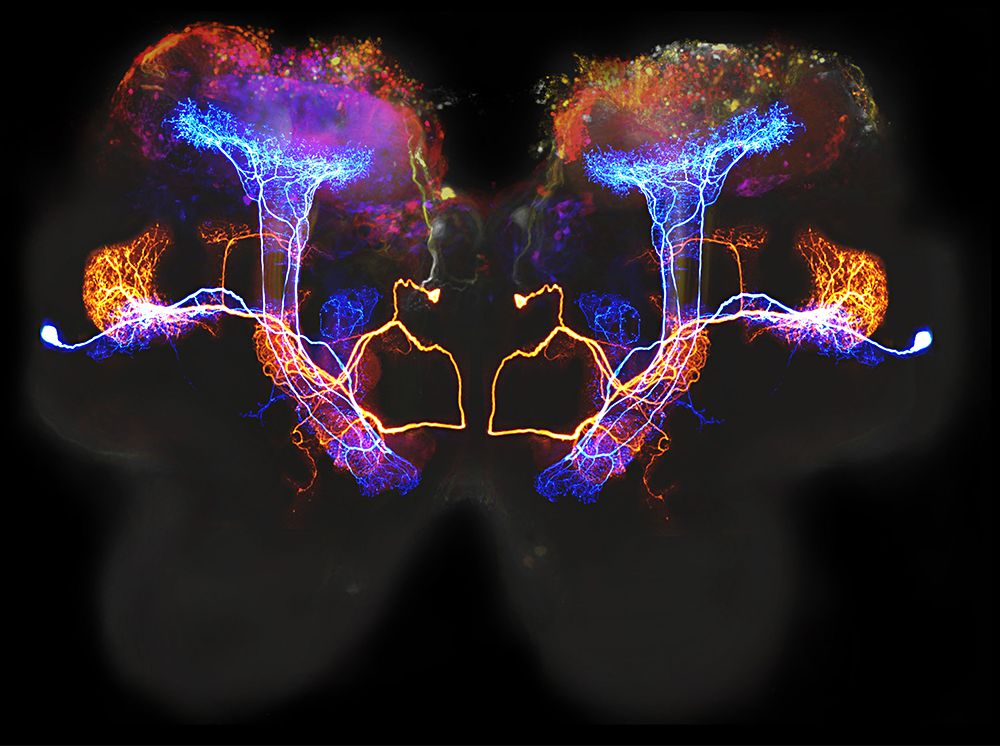
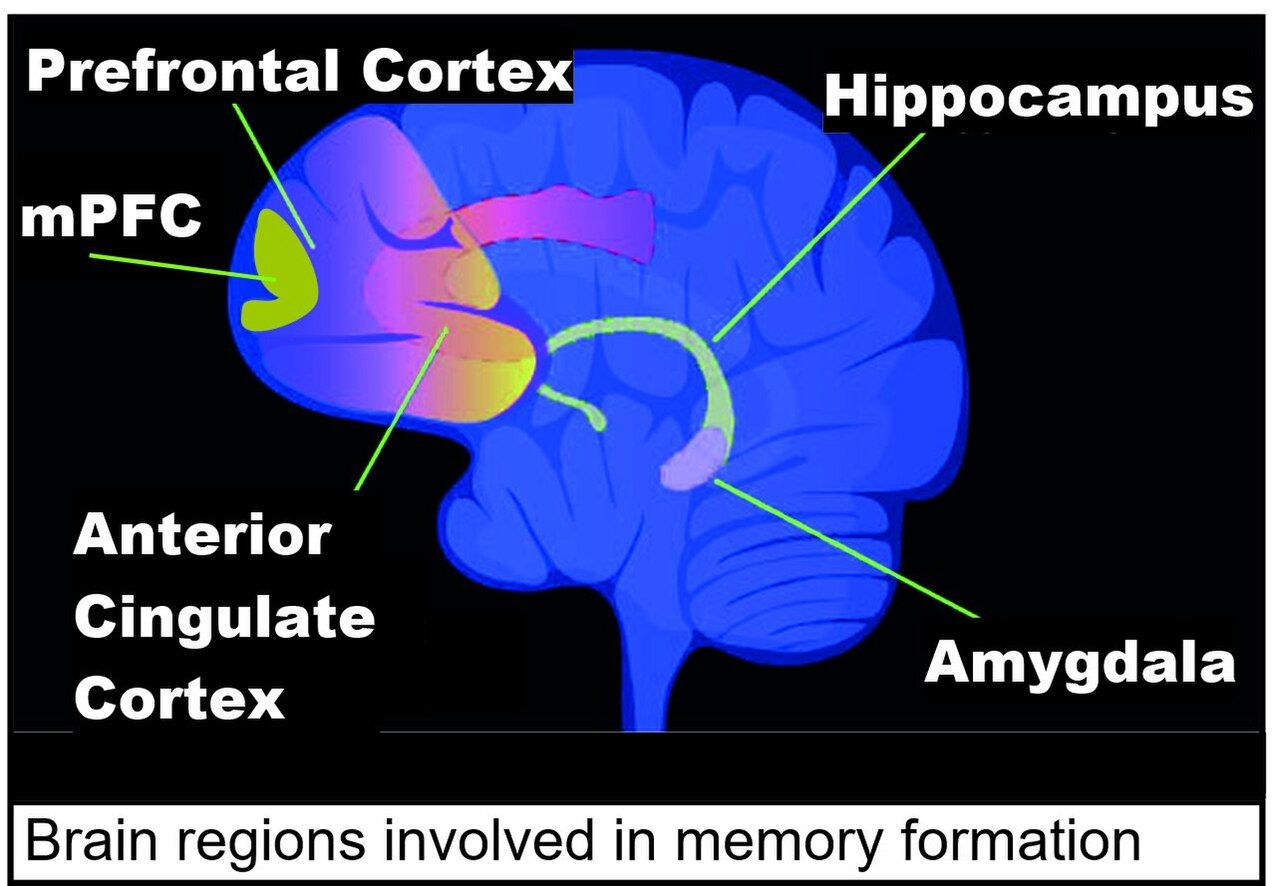
Different memory systems depend on different brain parts. That is why brain damage can wipe out one kind of memory and spare another. The hippocampus sits deep in the temporal lobe. It is needed to form new explicit memories. It also helps move them out to the cortex for long-term keeping. This steadying process is called consolidation. The amygdala sits right next to it. It tags memories with emotion. That is why scary or thrilling events are often remembered so clearly. Implicit memories rely on other structures. The cerebellum stores classically conditioned reflexes, like a learned eye blink. The basal ganglia support skills and habits. Long-term explicit memories are not filed in one spot. They are spread across the cerebral cortex. When you remember, the brain puts the pieces back together.
The most famous proof of this split is a patient known as H.M. (Henry Molaison). In 1953, surgeons removed much of his hippocampus and nearby medial temporal lobe on both sides. The goal was to treat his severe epilepsy. Afterward he could form almost no new explicit memories. He met the same people as strangers day after day. This is called anterograde amnesia. Yet he could still learn new motor skills. Each day he got better at a mirror-tracing task, while saying he had never done it before. His explicit memory for new events was gone. His implicit memory still worked. At the level of brain cells, storage is thought to involve long-term potentiation (LTP). LTP is a lasting strengthening of the links between neurons that fire together. Eric Kandel studied how learning strengthens synapses in a sea slug called Aplysia. That work earned him a share of the 2000 Nobel Prize.
- Explicit (declarative) memory is conscious. It splits into semantic (facts) and episodic (events). Implicit memory (procedural, conditioning, priming) works without awareness.
- The hippocampus forms new explicit memories and drives consolidation. The amygdala adds emotion.
- The cerebellum and basal ganglia support implicit and procedural memory. Long-term explicit memories are spread across the cortex.
- H.M. lost the ability to form new explicit memories but kept implicit learning. LTP is thought to be the synapse-level basis of storage.
Section 4Retrieval and forgetting
Recall, recognition, and cues
Getting information back out comes in different forms, and some are harder than others. Recall means producing information with no help. A fill-in-the-blank or essay question asks for recall. Recognition means picking out the right answer from choices, as on a multiple-choice question. It is much easier, because the answer is right in front of you. A third measure is relearning. Material you learned once and seem to have forgotten comes back faster the second time. The time you save is called savings. It shows memory that recall and recognition can miss.
Retrieval usually needs a retrieval cue. A cue is a reminder that leads back to stored information. Cues work best when they match the conditions you were in while learning. This rule is called encoding specificity. In context-dependent memory, being in the same place helps you remember. In 1975, Godden and Baddeley had scuba divers learn word lists. Lists learned underwater were recalled best underwater. Lists learned on land were recalled best on land. (A large 2021 repeat of this study found a much smaller effect, so the size of it is still debated.) In state-dependent and mood-congruent memory, your inner state works the same way. Being sober or intoxicated, happy or sad, can act as a cue. One more retrieval pattern is worth knowing. It is the serial position effect. From a list, you tend to remember the first items and the last items better than the middle. Remembering the first items is the primacy effect. They got extra rehearsal into LTM. Remembering the last items is the recency effect. They are still in working memory.
Why we forget
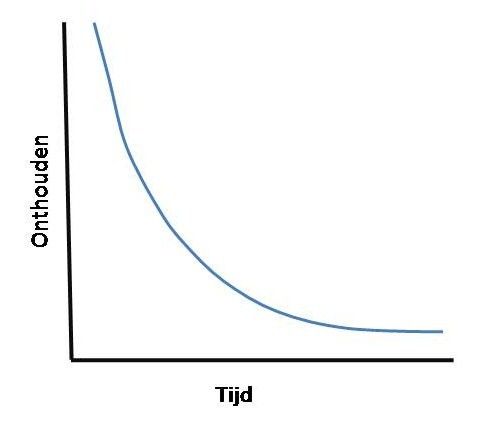
In the 1880s, Hermann Ebbinghaus tested himself on nonsense syllables. He plotted the first forgetting curve. Memory drops fast in the first hours and days after learning. Then it levels off. What survives the first week tends to last. Forgetting is not one problem but several. Encoding failure means the information never got into long-term memory at all. You can't lose what you never stored. That is why you can't draw a coin you have handled thousands of times. Storage decay is the fading of an unused memory over time. Retrieval failure means the information is stored but you can't reach it right now. The annoying tip-of-the-tongue feeling is one example. Interference happens when memories compete. In proactive interference, old learning gets in the way of new learning. Last year's locker combination keeps popping up when you want this year's. In retroactive interference, new learning gets in the way of old learning.
| Reason for forgetting | What went wrong | Everyday example |
|---|---|---|
| Encoding failure | Never stored (usually no attention) | Can't recall the exact design of a coin |
| Storage decay | The trace faded from lack of use | A language you haven't spoken in years |
| Retrieval failure | Stored but out of reach for now | A name on the tip of your tongue |
| Interference | Other memories compete | A new phone number blocks the old one |
- Recall (produce it) is harder than recognition (pick it out). Relearning shows hidden savings.
- Retrieval cues work best when they match encoding (encoding specificity). Place, inner state, and mood can all act as cues.
- The serial position effect favors the first (primacy) and last (recency) items of a list.
- We forget through encoding failure, storage decay, retrieval failure, and interference. The forgetting curve drops fast, then levels off. Spaced review flattens it.
Section 5Memory errors and eyewitnesses
Memory is rebuilt, not replayed
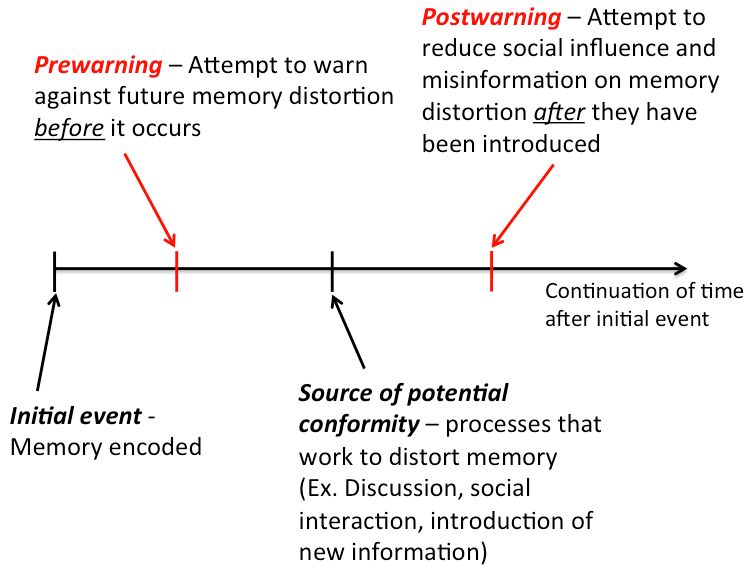
Here is the most important fact about memory: it does not work like a video. In the 1930s, Frederic Bartlett showed that people remember stories by fitting them to their schemas. A schema is a mental framework of what you expect. People dropped details that seemed strange. They added details that "should" have been there. Retrieval is an act of reconstruction. Each time you remember, the brain rebuilds the memory from pieces. It fills the gaps with good guesses. Most of the time this works well enough. But it means each act of remembering is also a chance to change the memory. And the changes feel just as real as the truth.
The clearest proof is the misinformation effect, studied by Elizabeth Loftus. Information you get after an event can quietly change your memory of it. In a classic 1974 study, Loftus and Palmer showed people a film of a car crash. Then they asked how fast the cars were going when they "hit" each other. Other groups heard "smashed into" instead. That one changed word pushed speed guesses higher. A week later, people who heard "smashed" were more likely to falsely remember broken glass. There was no broken glass in the film. Related errors include source amnesia, which means forgetting where a memory came from. They also include full false memories. In Loftus's "lost in the mall" studies, suggestion alone led about a quarter of the people to remember a childhood event that never happened.
Eyewitnesses and the courtroom
These findings matter outside the lab. A jury finds eyewitness testimony very convincing. Yet it is far less reliable than a witness's confidence suggests. Several things make it less accurate. Leading questions do. So does weapon focus: attention narrows onto a weapon and away from the face. Stress hurts accuracy. So does the cross-race effect: people identify faces of their own race more accurately than faces of other races. Unfair lineup methods hurt it too. Confidence needs care, because it depends on when it was measured. Once a memory has been changed by feedback, by suggestion, or by a second look at the same suspect, a witness's confidence is a poor guide to accuracy. Even an officer saying "Good, that's the one" can raise it. But confidence taken at the moment of a first, fair identification is a much better sign. A witness who says "That's him, I'm sure" in a fair, double-blind first lineup is usually right. It is confidence in the courtroom, months and many retellings later, that has drifted away from accuracy. The stakes are real. The Innocence Project found that mistaken eyewitness identification played a part in about 70% of U.S. convictions later overturned by DNA evidence.
| Factor | Effect on eyewitness accuracy |
|---|---|
| Leading questions / suggestion | Can add details that were never there |
| Weapon focus | Attention on the weapon lowers memory for the face |
| Cross-race identification | Own-race faces are identified more accurately |
| Feedback after the lineup | Raises confidence without raising accuracy |
| High stress / a brief look | Weakens encoding of details |
These errors are built into how memory works. So the fixes are about procedure. Researchers have pushed for double-blind lineups, where the person running the lineup does not know who the suspect is. They push for fair instructions that say the culprit may not be in the lineup. They ask that the witness's confidence be written down at the moment of the first identification. They also support the cognitive interview. This is a way of questioning that avoids leading questions and lets the witness remember freely. These changes do not turn memory into a recording. Nothing can. But they keep the rebuilding honest.
- Memory is reconstructive. Retrieval rebuilds the memory and fills gaps using schemas, which can add errors.
- The misinformation effect (Loftus) shows that information heard after an event changes memory. Suggestion can even plant full false memories.
- Eyewitness accuracy drops with leading questions, weapon focus, the cross-race effect, and feedback after the lineup. Confidence tracks accuracy only at the first, untouched identification. After feedback or repeat viewings, it no longer does.
- Mistaken identification is a leading cause of wrongful convictions. Changes like double-blind lineups and the cognitive interview lower the risk.
The chapter in one breath
- Memory runs on three processes: encoding, storage, and retrieval. The multi-store model moves information through sensory, short-term, and long-term memory.
- Sensory memory is huge but lasts under a second (iconic) to a few seconds (echoic). Short-term/working memory holds about four chunks for a short time and actively works on them. LTM has no known limit.
- Encoding ranges from automatic to effortful. By the levels-of-processing effect, deep, meaningful encoding beats shallow repetition. Spacing, self-reference, and self-testing all help.
- Long-term memory splits into explicit (semantic and episodic) and implicit (procedural, conditioning, priming). The hippocampus, amygdala, cerebellum, and cortex handle different parts. H.M. showed these systems are separate.
- Recall is harder than recognition. Retrieval cues and the serial position effect shape what we get back. The forgetting curve drops fast, then levels off, and spaced review flattens it.
- Memory is reconstructive. So the misinformation effect and rebuilding errors make eyewitness testimony less reliable than courtroom confidence suggests. This causes wrongful convictions. It is also the reason for reforms, such as writing down confidence at the very first identification.
ReferenceWords worth knowing
A quick list of the terms in this chapter. Skim it now, or come back any time a word trips you up.
- Amnesia
- Memory loss. Anterograde amnesia blocks new memories from forming. Retrograde amnesia wipes out memories from before the injury.
- Automatic processing
- Storing things like place, time, frequency, and well-learned material with little or no conscious effort.
- Chunking
- Grouping items into meaningful units so short-term memory can hold more.
- Effortful processing
- Encoding that takes attention and conscious work, such as rehearsal or study.
- Encoding
- Getting information into memory by turning it into a form the brain can use.
- Episodic memory
- Explicit memory of events you lived through, tied to a time and place.
- Explicit (declarative) memory
- Memory of facts and experiences that you can bring to mind on purpose and put into words.
- Forgetting curve
- Ebbinghaus's finding that memory drops fast soon after learning, then levels off.
- Hippocampus
- A structure in the temporal lobe that is needed to form new explicit memories and to consolidate them.
- Implicit (nondeclarative) memory
- Memory that shows in behavior without conscious awareness. It includes skills, conditioning, and priming.
- Interference
- Forgetting caused by memories competing. Proactive: old gets in the way of new. Retroactive: new gets in the way of old.
- Levels of processing
- The idea that deeper, meaning-based (semantic) encoding makes stronger memories than shallow encoding.
- Long-term memory (LTM)
- The lasting memory store, with no known limit on how much it holds.
- Long-term potentiation (LTP)
- A lasting strengthening of the links between neurons. It is thought to be the brain-cell basis of learning and memory.
- Misinformation effect
- When misleading information heard after an event changes the memory of that event.
- Recall
- Getting information back out with no cues, as on a fill-in-the-blank question.
- Recognition
- Picking out learned information from choices, as on a multiple-choice question.
- Retrieval
- Getting stored information back out of memory.
- Semantic memory
- Explicit memory for general knowledge and facts, apart from when you learned them.
- Sensory memory
- The very brief, very large store that holds a near-exact copy of what the senses take in (iconic and echoic).
- Serial position effect
- The pattern of remembering the first (primacy) and last (recency) items of a list best.
- Working memory
- The active workspace (Baddeley and Hitch) that holds and works on information, run by a central executive.