States of Consciousness
Right now you are aware. You are aware of these words and of the chair under you. You may now notice a background hum that you had tuned out until this sentence pointed to it. That awareness is consciousness. It is not one fixed thing. It shifts every day, from alert waking, to drowsiness, to sleep, to dreams. People also change it on purpose, with everything from coffee to anesthesia. This chapter follows consciousness across the twenty-four-hour day. You will meet the inner clock that drives it, the structure of a night's sleep, the strange world of dreams, the disorders that disrupt sleep, and the drugs that take over awareness. All of this matters because you spend about a third of your life asleep. What happens there shapes the memory, mood, and health of the two-thirds you spend awake.
By the end of this chapter you can
- Define consciousness and describe how awareness varies along a continuum.
- Explain what a biological rhythm is, and name the circadian rhythm as the body's daily clock.
- Describe how the suprachiasmatic nucleus, light, and melatonin control the sleep-wake cycle.
- Sum up the main theories of why we sleep.
- Tell the stages of NREM sleep from REM sleep by their brain waves, and describe how sleep cycles across a night.
- Compare theories of dreaming, including Freud's theory and the activation-synthesis hypothesis.
- Recognize the main sleep disorders: insomnia, sleep apnea, narcolepsy, and the parasomnias.
- Sort psychoactive drugs into depressants, stimulants, opioids, and hallucinogens, and explain tolerance and dependence.
Section 1What consciousness is
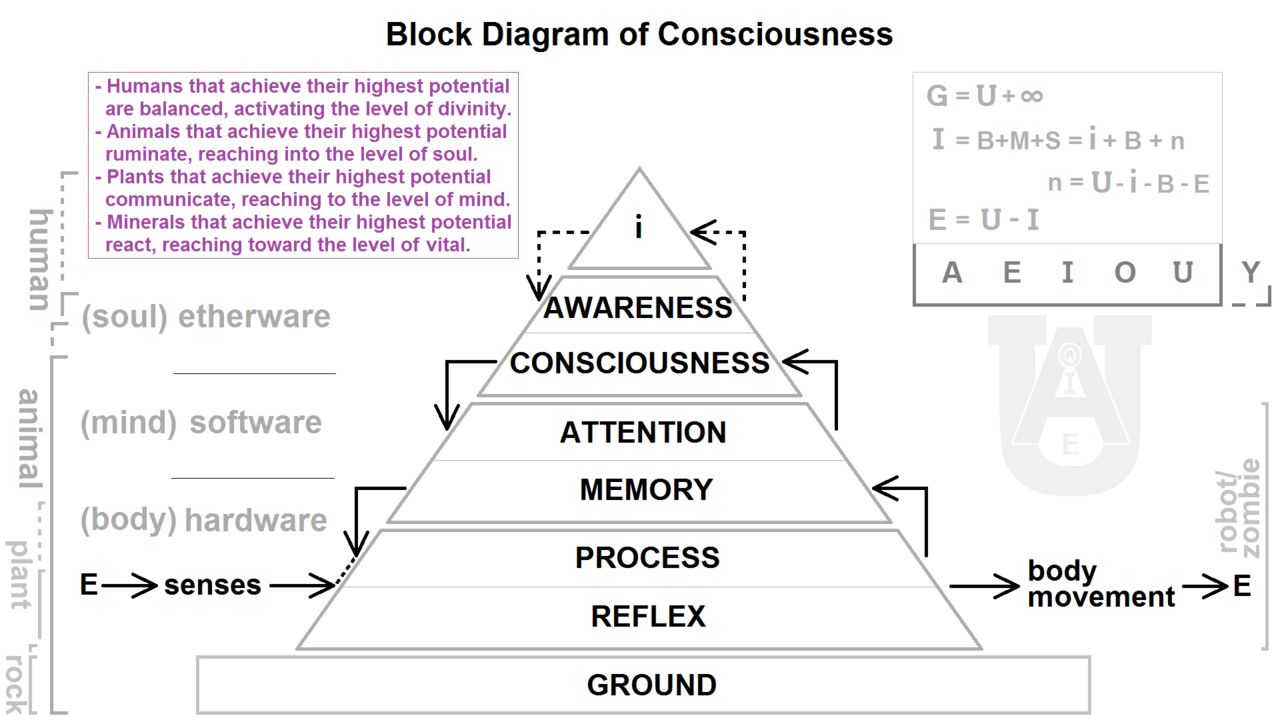
Awareness: the feature that defines consciousness
Psychologists define consciousness as your awareness of internal states and the external environment. The internal part includes your thoughts, your feelings, and body signals like hunger or pain. The external part includes everything your senses pick up from the world.
Consciousness is hard to study because it is private. No one else can directly see your experience. Yet it is the very thing psychology most wants to explain. In the early and middle 1900s, behaviorists set it aside because they could not test it. Today, tools like the EEG and brain scans let researchers link states of awareness to patterns of brain activity they can measure.
Consciousness is a continuum, not a switch
It is tempting to think you are simply "awake" or "unconscious." But awareness comes in shades. At one end is sharp, effortful attention. This is the controlled processing you use to learn a new skill. At the other end is automatic processing, a low-awareness autopilot. It lets an experienced driver get home while deep in talk, with almost no memory of the drive.
Sleep lowers awareness further, but it does not switch it off. Anesthesia or a coma lowers it further still. Even selective attention shows the limits of awareness. This is the "cocktail party" skill of following one voice in a noisy room. It shows that consciousness is a narrow spotlight, not a floodlight that takes in everything at once.
Biological rhythms: the body runs on clocks
Much of the daily rise and fall of awareness comes from biological rhythms. These are repeating cycles of body activity that are built into us. They are sorted by how long one cycle lasts.
- A circadian rhythm repeats about every twenty-four hours. It runs the sleep-wake cycle, body temperature, and the release of some hormones.
- An ultradian rhythm repeats more than once a day. The ninety-minute cycle inside a night's sleep is the classic example.
- An infradian rhythm lasts longer than a day. Examples are the menstrual cycle, which runs about twenty-eight days, and seasonal shifts in mood.
These clocks run whether or not you pay attention to them. That is why you get sleepy at about the same hour, even on a day with no plans.
| Rhythm | Cycle length | Examples in the body |
|---|---|---|
| Circadian | About 24 hours | Sleep-wake cycle, body temperature, cortisol and melatonin release, daily alertness |
| Ultradian | Shorter than 24 hours | The roughly 90-minute sleep cycle; cycles of hunger and focus across the day |
| Infradian | Longer than 24 hours | The menstrual cycle (about 28 days); seasonal patterns of mood and behavior |
- Consciousness is awareness of internal states and the external environment.
- Awareness is a continuum. It runs from controlled attention, through automatic processing and sleep, to anesthesia. It is not an on/off switch.
- Biological rhythms are built-in cycles: circadian (about 24 h), ultradian (less than 24 h), and infradian (more than 24 h).
- The circadian rhythm is the body's daily clock and the engine of the sleep-wake cycle.
Section 2Sleep and the circadian rhythm
The sleep-wake cycle and the master clock
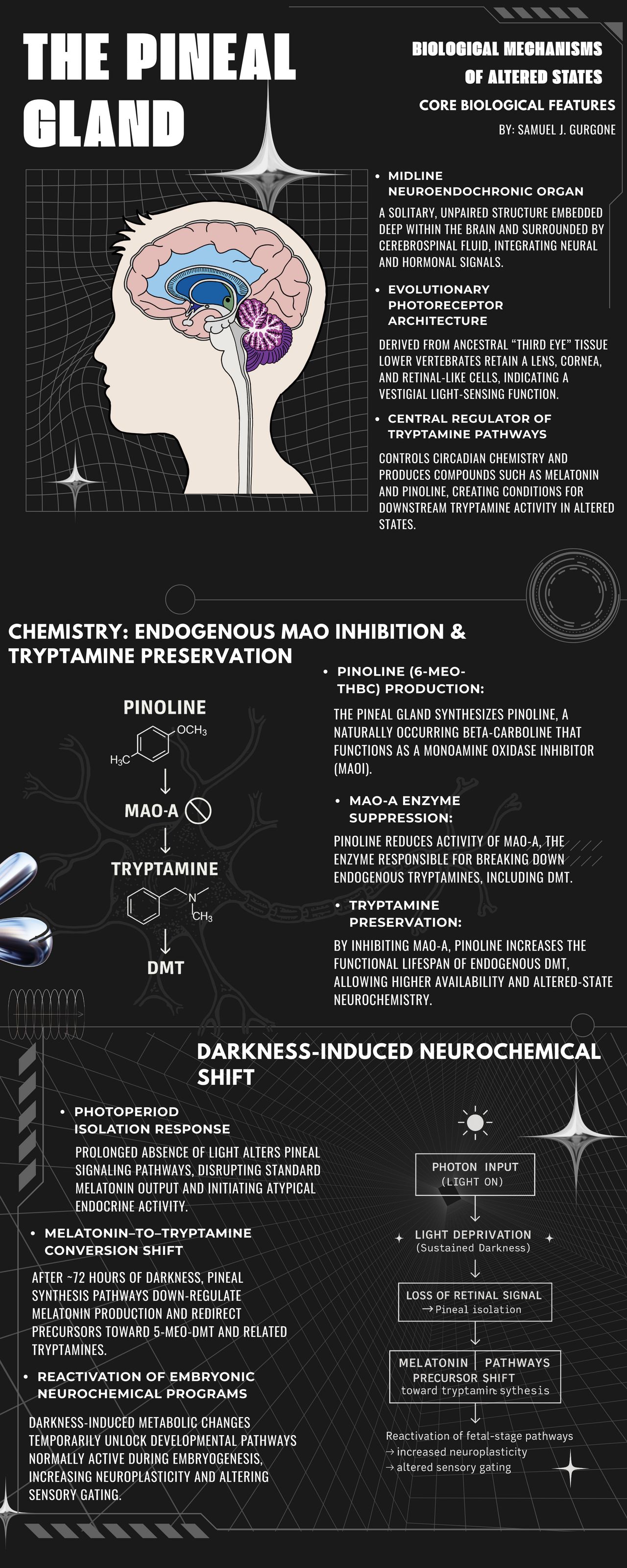
The body's twenty-four-hour clock is a real place in the brain. It is a small cluster of neurons called the suprachiasmatic nucleus (SCN). It sits in the hypothalamus, just above the spot where the two optic nerves cross. The SCN keeps its own beat of close to 24 hours, even in total darkness. But light keeps it in step with the outside world. Special cells in the retina report how bright it is straight to the SCN. The SCN then times the daily rise and fall of alertness, body temperature, and hormones.
Cues that reset this clock are called zeitgebers, which is German for "time-givers." Light is the main one. Meal times and activity help too. When you fly across time zones, your SCN is out of step with the local light for a while. The grogginess and broken sleep of jet lag is the clock catching up.
Melatonin: the darkness hormone
The SCN does much of its work through a small gland called the pineal gland. This gland releases the hormone melatonin. Melatonin is the body's chemical signal for "night." Its level climbs in the evening as light fades. It peaks in the small hours of the night and falls toward morning. It nudges you toward sleep and helps keep you there.
Light holds melatonin back. So the timing of light is powerful. Bright morning light moves the clock earlier and sharpens daytime alertness. Bright light late at night pushes the clock later and delays sleep. This is the reason behind one of the most common modern sleep complaints. It also explains why people use melatonin from the drugstore for jet lag and shift work.
Why do we sleep?
Sleep leaves an animal helpless for hours each day. If it were not doing something vital, evolution would likely have dropped it. Three theories explain the push to sleep. They fit together rather than compete.
- The restorative theory says sleep repairs the body and brain. Growth hormone is released and tissues rebuild. A cleaning system called the glymphatic pathway may also flush waste out of the brain, including proteins linked to brain disease. This cleaning idea comes from animal studies and is still being tested.
- The adaptive (evolutionary) theory says sleep evolved to save energy. It also keeps animals safely still during the hours when moving around would be dangerous.
- The memory-consolidation theory says sleep sorts, strengthens, and stores what you learned that day. That is why pulling an all-nighter before an exam so often backfires.
| Theory | Core idea | Supporting evidence |
|---|---|---|
| Restorative | Sleep repairs body and brain and may clear waste | Growth-hormone release and tissue repair peak in deep sleep; animal studies point to a glymphatic "wash-out" of waste |
| Adaptive / evolutionary | Sleep saves energy and keeps animals safe when activity is risky | The timing of a species' sleep tracks its way of life: predators, prey, and feeding schedules |
| Memory consolidation | Sleep sorts, strengthens, and stores the day's learning | People who sleep after studying remember more; both slow-wave and REM sleep help memory |
Sleep pressure: the second process
The clock is only half the story. The longer you stay awake, the more your brain builds up a chemical called adenosine. Adenosine creates sleep pressure, a growing need to sleep. Sleep clears it away again. Alexander Borbély described this as the two-process model of sleep (1982). Process S is sleep pressure. It climbs all day. Process C is the circadian clock. It sends a wake signal that is strongest in the evening. You fall asleep most easily when sleep pressure is high and the clock's wake signal fades.
This model also explains caffeine. Caffeine is an adenosine antagonist. It blocks adenosine receptors, so you do not feel the pressure for a while. The adenosine is still there, though. When the caffeine wears off, the pressure comes back.
- The suprachiasmatic nucleus (SCN) in the hypothalamus is the master circadian clock. Light resets it every day.
- The pineal gland releases melatonin in darkness to promote sleep. Light holds it back.
- Jet lag, shift work, and late-night screens put sleep out of step with the day.
- We sleep for restoration, adaptive safety and energy saving, and memory consolidation. Sleep timing comes from sleep pressure (adenosine) plus the circadian clock.
Section 3The stages of sleep
Reading sleep with the EEG
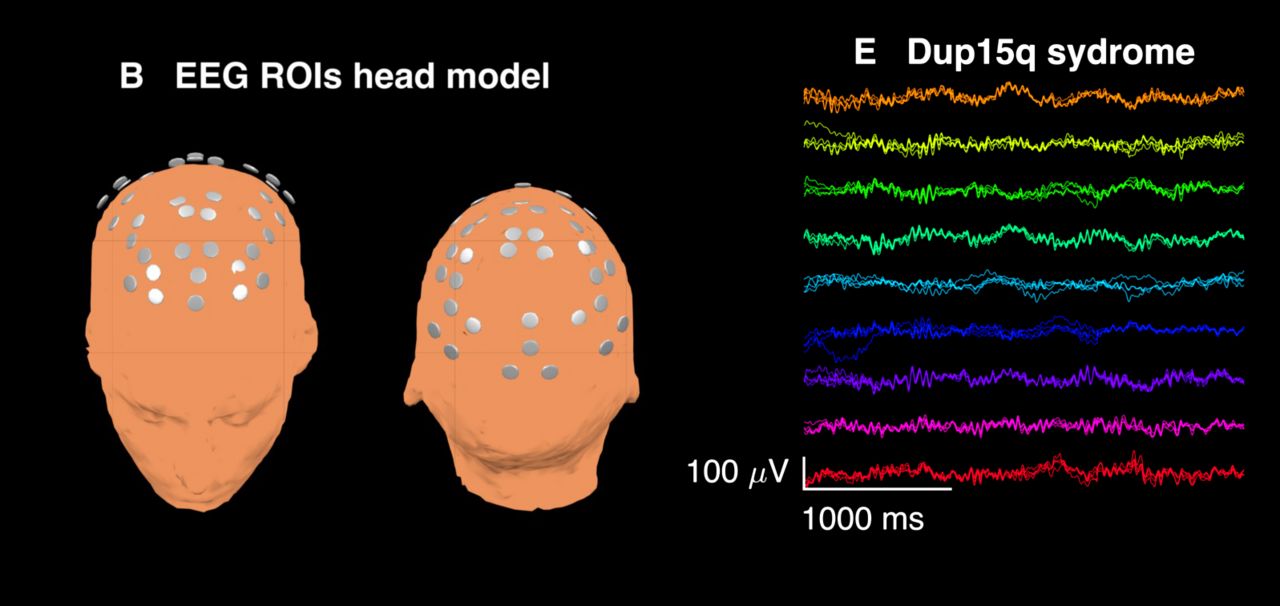
From the outside, sleep looks like nothing is happening. But an electroencephalogram (EEG) tells a different story. The EEG uses small sensors on the scalp to record the combined electrical activity of the cortex. It shows a night full of big, orderly changes.
When you are awake and alert, the EEG shows fast, small, jagged beta waves. When you close your eyes and relax, these turn into slower, more even alpha waves. From there the brain moves down through clear stages. Each stage has its own wave pattern. A turning point came in 1953. Eugene Aserinsky and Nathaniel Kleitman noticed times when a sleeper's eyes darted quickly under closed lids. This was the discovery of REM sleep. It overturned the old idea that sleep is one single, even state.
The four stages: N1, N2, N3, and REM
Sleep is divided into non-REM (NREM) stages and REM.
- N1 is light, drifting sleep. It is the doorway into sleep, marked by theta waves. Here you may feel like you are falling, or your body may give a sudden twitch called a hypnic jerk. If someone wakes you, you might insist you were not asleep.
- N2 is true sleep. It takes up about half the night. Its EEG shows quick bursts called sleep spindles and sharp, single waves called K-complexes. These are thought to help protect sleep and store memories.
- N3 is deep slow-wave sleep. Large, slow delta waves fill it. It is the hardest stage to wake from. It is also the stage most tied to repairing the body.
- REM is a puzzle. The brain waves look almost awake. The eyes move quickly, and vivid dreams unfold. Yet the body's major muscles are paralyzed. This safety state is called atonia. Because the mind is active while the body is switched off, REM is often called paradoxical sleep.
How sleep cycles across the night
You do not climb through these stages once and stop. A full cycle goes roughly N1, then N2, then N3, then back up through N2, and then into REM. One cycle takes about ninety minutes. You repeat it four to six times a night.
The mix changes as the night goes on. The early cycles are rich in deep N3 slow-wave sleep. That is why the first hours feel so restoring. The later cycles trade deep sleep for longer and longer REM periods. So most of your slow-wave sleep comes in the first one or two cycles after you fall asleep. What counts is the time since you fell asleep, not the time on the clock. Most of your dreaming happens in the hours before you wake. That is why a night cut short takes away mostly REM.
| Stage | Main EEG waves | What is happening |
|---|---|---|
| Awake, alert | Beta | Eyes open, active thinking and attention |
| Drowsy, relaxed | Alpha | Eyes closed, calm, on the edge of sleep |
| N1 (NREM) | Theta | Light sleep; hypnic jerks and drifting images; easy to wake |
| N2 (NREM) | Theta with sleep spindles and K-complexes | True sleep; heart rate and temperature fall; about half the night |
| N3 (NREM) | Delta (slow waves) | Deep slow-wave sleep; hardest to wake; body repair |
| REM | Small, fast, wake-like | Vivid dreams, darting eyes, muscle atonia; "paradoxical" sleep |
- The EEG defines sleep by the shape of brain waves: beta (awake), alpha (drowsy), theta (N1), spindles and K-complexes (N2), and delta (N3).
- Aserinsky and Kleitman discovered REM sleep in 1953. It showed that sleep is not one even state.
- REM is "paradoxical." The brain looks awake and dreams are vivid, but the body is paralyzed (atonia).
- A cycle lasts about 90 minutes. The early night favors deep N3. The later night favors longer REM.
Section 4Dreams and sleep disorders

Theories of dreaming
Everyone dreams several times a night, whether or not they remember it. Yet why the brain makes dreams is still debated.
Sigmund Freud offered the first major theory in The Interpretation of Dreams (1900). He said dreams are hidden wish fulfillment. He split a dream into two layers. The manifest content is the storyline you remember. The latent content is the hidden wish he believed the story stood for. Research has found little support for Freud's details. Still, his framework shaped a century of thinking.
A modern rival puts biology first. It is the activation-synthesis hypothesis of J. Allan Hobson and Robert McCarley (1977). During REM, the brainstem fires signals more or less at random. The cortex is always trying to make sense of things, so it weaves those signals into a story. In this view, dreams are the mind's way of explaining its own noise.
A third view is the information-processing view, also called the continuity view. It treats dreaming as part of memory consolidation. Dreams replay and sort the worries and events of waking life.
Insomnia, apnea, and narcolepsy
Sleep goes wrong for tens of millions of people. The disorders work in very different ways. The DSM-5-TR is the manual clinicians use to name these conditions, and its names appear below.
Insomnia is the most common complaint. It means ongoing trouble falling asleep or staying asleep, even with a full chance to sleep. The DSM-5-TR calls it insomnia disorder when it lasts at least three nights a week for three months. The first treatment to try is not a pill. It is cognitive behavioral therapy for insomnia (CBT-I), along with better sleep habits.
Sleep apnea is a breathing disorder. In the common obstructive form, the airway keeps collapsing during sleep. The sleeper stops breathing for seconds at a time. Then they jolt partway awake to gasp. They never reach restful deep sleep. The signs are loud snoring and crushing daytime tiredness. It is often treated with a CPAP machine, which gently blows air to hold the airway open.
Narcolepsy is rarer. It brings sudden, overpowering sleep attacks in the middle of the day. Many people with it also have cataplexy. This is a sudden loss of muscle tone set off by strong emotion, such as laughing. In the type with cataplexy, called narcolepsy type 1, the cause is the loss of brain cells that make a wake-promoting chemical called hypocretin (also called orexin).
Parasomnias: acting out of sleep
The parasomnias are unusual behaviors that break into sleep. Sleepwalking (somnambulism) and night terrors come from deep N3 slow-wave sleep, not from dreams. The DSM-5-TR groups them as NREM sleep arousal disorders. They cluster in the first third of the night. They are far more common in children, who get more N3.
In REM sleep behavior disorder, the normal REM paralysis fails. The sleeper acts out dreams with their body, sometimes forcefully. Sleep paralysis is the mirror image. The mind wakes up while REM atonia lingers. For a short time the person cannot move, and they may see or sense frightening things. Ordinary nightmares are different again. They are simply upsetting dreams that happen during REM.
| Disorder | Main feature | Notes |
|---|---|---|
| Insomnia | Ongoing trouble falling or staying asleep | The most common complaint; treated with better sleep habits and CBT-I |
| Sleep apnea | Repeated pauses in breathing during sleep | Loud snoring, gasping, daytime tiredness; obstructive form treated with CPAP |
| Narcolepsy | Sudden, uncontrollable sleep attacks | Often with cataplexy; type 1 is linked to loss of hypocretin (orexin) cells |
| Parasomnias | Unusual events during sleep | Sleepwalking and night terrors come from N3; REM sleep behavior disorder means acting out dreams |
- Freud saw dreams as wish fulfillment (manifest vs latent content). The activation-synthesis hypothesis (Hobson and McCarley) sees them as the cortex explaining random REM signals.
- Insomnia is trouble sleeping. The first care to try is CBT-I, not medication.
- Sleep apnea means breathing pauses (treated with CPAP). Narcolepsy means sleep attacks, often with cataplexy (type 1 involves hypocretin loss).
- Parasomnias such as sleepwalking and night terrors happen in deep N3, not in REM.
Section 5Psychoactive drugs
How drugs reach the mind
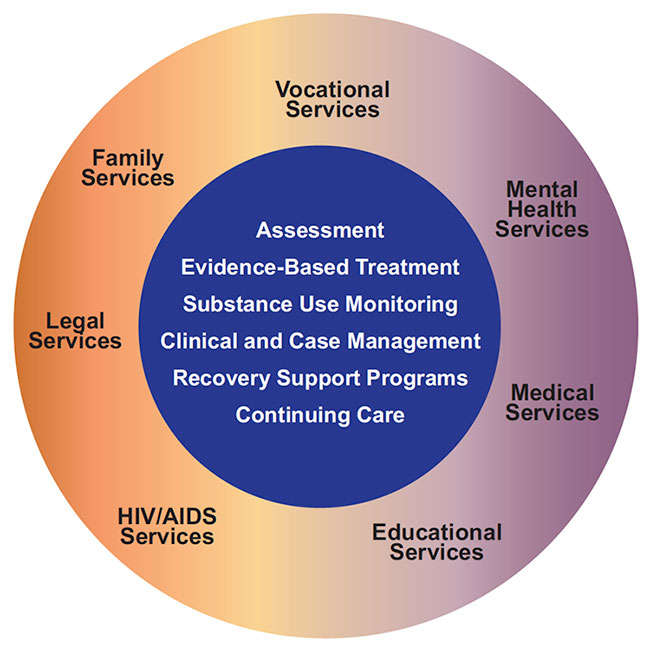
A psychoactive drug is any chemical that changes perception, mood, thinking, or behavior. It does this by changing activity at the synapse. It may copy a neurotransmitter or block its receptor. It may also change how much of it is released or taken back up. You met these moves in Chapter 3 as agonists and antagonists.
Many misused drugs hit one target: the brain's reward pathway. This is a dopamine circuit that runs from the ventral tegmental area to the nucleus accumbens. Normally it rewards survival behaviors like eating. Drugs flood this circuit with dopamine. That teaches the brain to want the drug again. This is the brain basis of craving. Psychoactive drugs fall into four broad families, based on what they do to the central nervous system.
The four families: depressants, stimulants, opioids, hallucinogens
- Depressants slow the central nervous system. They do this largely by boosting GABA, the brain's main calming messenger. Alcohol, barbiturates, and benzodiazepines belong here. In small doses they relax people and ease anxiety. But they harm coordination and judgment. In overdose, they can slow breathing until it stops.
- Stimulants do the opposite. They speed up the nervous system and raise dopamine and norepinephrine. Caffeine, nicotine, cocaine, amphetamines, and MDMA belong here. They bring alertness and a rush of good feeling, along with a racing heart and often a hard crash. (Caffeine works a little differently: it blocks adenosine, as you saw above.)
- Opioids include morphine, codeine, heroin, oxycodone, and the very strong drug fentanyl. They bind to the same receptors as the body's own endorphins. They give powerful pain relief and good feelings. They also slow breathing in a dangerous way.
- Hallucinogens include LSD, psilocybin, and mescaline. They change perception and the senses. Sometimes they bring vivid images or a feeling that reality has shifted. LSD works mainly by acting on serotonin receptors.
Some drugs do not fit neatly in one family. Cannabis, for example, mixes mild changes in perception with relaxation. Its main chemical, THC, acts on the brain's own cannabinoid receptors.
Tolerance, dependence, and addiction
Using a drug again and again changes the brain. Tolerance means the same dose has less effect over time. The nervous system adapts, so a person needs more to get the first effect. This slide can push people toward dangerous amounts.
Dependence comes in two forms. Physical dependence means the body has adjusted to the drug. When the drug stops, a withdrawal syndrome appears, and it can be severe. Withdrawal often feels like the opposite of the drug's effect. Psychological dependence is the emotional pull. It is the craving and the drive to seek the drug, and it can last long after the body is clear.
When drug use becomes compulsive and goes on despite clear harm, clinicians call it a substance use disorder. This is the DSM-5-TR term for what people often call addiction. Today it is understood as a long-lasting brain condition that can be treated, not a simple lack of willpower. Tolerance and withdrawal alone do not mean a person has this disorder. Someone taking a pain medicine exactly as prescribed may have both and still not have a substance use disorder.
| Family | Examples | Effect on the nervous system |
|---|---|---|
| Depressants | Alcohol, barbiturates, benzodiazepines | Slow the CNS (boost GABA); relaxation, sleepiness, poor coordination; overdose can stop breathing |
| Stimulants | Caffeine, nicotine, cocaine, amphetamines, MDMA | Speed the CNS (raise dopamine and norepinephrine); alertness, euphoria, faster heart rate, crash |
| Opioids | Morphine, codeine, heroin, oxycodone, fentanyl | Bind endorphin receptors; strong pain relief and euphoria; dangerous slowing of breathing |
| Hallucinogens | LSD, psilocybin, mescaline, PCP | Change perception and the senses; LSD acts on serotonin receptors |
- A psychoactive drug changes mood, perception, or awareness by changing activity at the synapse. Many take over the dopamine reward pathway.
- The four families are depressants (slow the CNS), stimulants (speed the CNS), opioids (act on endorphin receptors), and hallucinogens (change perception).
- Tolerance means needing more for the same effect. Dependence means physical withdrawal plus psychological craving.
- Mixing depressants (such as opioids and alcohol) adds up the slowing of breathing. Naloxone reverses opioid overdose.
The chapter in one breath
- Consciousness is awareness of what is inside you and around you. It runs along a continuum from focused attention, to automatic processing, to sleep.
- Biological rhythms (circadian, about 24 h; ultradian; infradian) drive the daily rise and fall of alertness and sleep.
- The SCN in the hypothalamus is the master clock, reset by light. It drives melatonin release from the pineal gland to time sleep. Sleep pressure from adenosine builds while you are awake.
- We sleep for restoration, evolutionary safety, and memory consolidation.
- Sleep moves through NREM stages N1 to N3 and REM, each defined by EEG waves. Cycles last about 90 minutes, with deep sleep early and REM late.
- Dreams are explained by Freud's wish fulfillment and by the activation-synthesis hypothesis. Sleep disorders include insomnia, apnea, narcolepsy, and the parasomnias.
- Psychoactive drugs (depressants, stimulants, opioids, hallucinogens) change the brain and can lead to tolerance and dependence.
ReferenceWords worth knowing
Here is a quick guide to the terms in this chapter. Skim it now, or come back any time a word trips you up.
- Activation-synthesis hypothesis
- The theory that dreams are the cortex trying to make sense of random signals fired by the brainstem during REM sleep.
- Adenosine
- A chemical that builds up in the brain while you are awake and creates sleep pressure. Caffeine blocks its receptors.
- Cataplexy
- A sudden loss of muscle tone, often set off by strong emotion. It is a key sign of narcolepsy type 1.
- Circadian rhythm
- A body cycle of about 24 hours, such as the sleep-wake cycle, run by the body's inner clock.
- Consciousness
- Awareness of internal states and of the external environment.
- Dependence
- A state in which the body or mind has adapted to a drug. Stopping it brings withdrawal (physical) or craving (psychological).
- Depressant
- A drug that slows the central nervous system, such as alcohol or a benzodiazepine.
- Hallucinogen
- A drug that changes perception and the senses, such as LSD or psilocybin.
- Insomnia
- Ongoing trouble falling asleep or staying asleep, even with a full chance to sleep.
- Latent content
- In Freud's theory, the hidden meaning beneath a dream's storyline.
- Manifest content
- In Freud's theory, the storyline of a dream as you remember it.
- Melatonin
- A hormone the pineal gland releases in darkness that makes you sleepy.
- Narcolepsy
- A disorder of sudden, uncontrollable sleep attacks, often with cataplexy.
- NREM sleep
- Non-rapid-eye-movement sleep. It includes stages N1, N2, and N3.
- Opioid
- A drug that binds the body's endorphin receptors to relieve pain and cause euphoria, such as morphine or heroin.
- Parasomnia
- An unusual behavior or event during sleep, such as sleepwalking or night terrors.
- Psychoactive drug
- A chemical that changes perception, mood, or awareness by changing brain chemistry.
- REM sleep
- Rapid-eye-movement sleep. It has wake-like brain waves, vivid dreams, and muscle paralysis (atonia).
- Sleep apnea
- A disorder in which breathing stops and starts again and again during sleep.
- Stimulant
- A drug that speeds up the central nervous system, such as caffeine or cocaine.
- Suprachiasmatic nucleus (SCN)
- A small part of the hypothalamus that serves as the body's master circadian clock.
- Tolerance
- A smaller response to a drug over time, so a larger dose is needed for the same effect.
- Two-process model
- Borbély's model of sleep timing: sleep pressure (Process S) and the circadian clock (Process C) work together.
- Withdrawal
- Unpleasant physical and mental symptoms that appear when a dependent person stops using a drug.