Autonomic Drugs
Your patient's heart rate, blood pressure, pupils, bladder, gut, and airways are all being run quietly, second by second. A nervous system no one chose to switch on is in charge. Autonomic drugs work by pushing on that system. They press the gas, step on the brake, or cut a wire. Once you know which receptor a drug lands on, and what that receptor does to the organ under it, the side effects stop being a list. You can predict them from the ground up. This chapter makes the rest of pharmacology click. So many drugs are really autonomic drugs wearing a different name tag. That includes drugs for high blood pressure, asthma, glaucoma, overactive bladder, shock, and anesthesia.
By the end of this chapter you can
- Compare the sympathetic and parasympathetic divisions, and predict what each one does to the main organs.
- Match alpha-1, alpha-2, beta-1, beta-2, beta-3, muscarinic, and nicotinic receptors to where they are and what they do.
- Explain how adrenergic agonists work, and describe how epinephrine acts differently at different doses.
- Describe the care points for alpha blockers and beta blockers, including low blood pressure with the first dose and the rebound from stopping suddenly.
- Compare cholinergic agonists, acetylcholinesterase inhibitors, and anticholinergics, and spot the crisis state of each.
- Tell depolarizing from non-depolarizing neuromuscular blockade and explain why only one can be reversed.
- Name the antidotes for cholinergic crisis, anticholinergic toxicity, and non-depolarizing blockade.
- Name the high-alert autonomic drugs and the checks you are responsible for with each.
Section 1The autonomic nervous system
Two divisions, one body
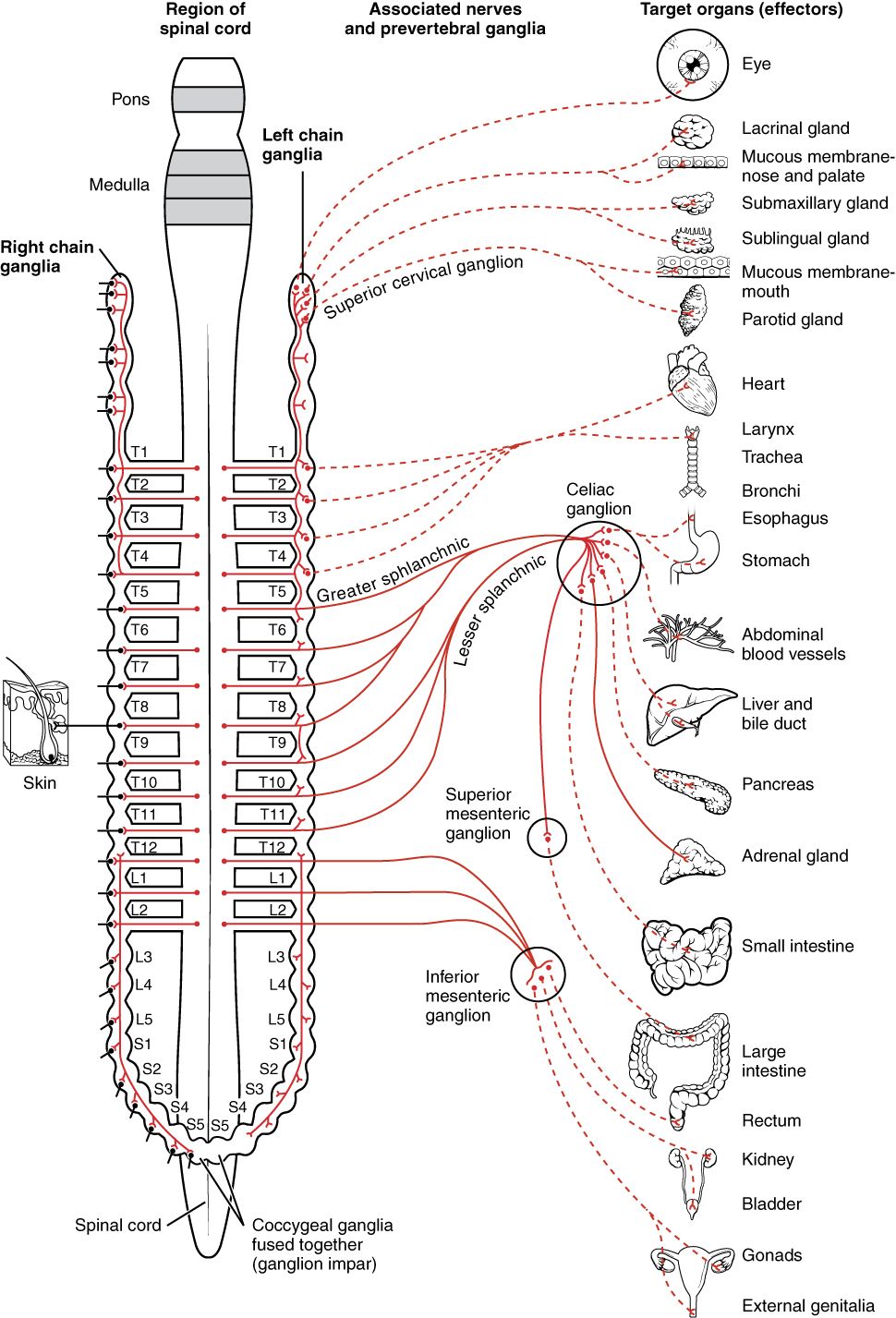
The autonomic nervous system (ANS) runs everything you do not choose on purpose. That includes heart rate, blood vessel tone, airways, digestion, sweating, pupil size, and emptying the bladder. It has two divisions that mostly work against each other. The classic shorthand is worth keeping, because it truly predicts what happens. The sympathetic division is fight or flight. It gets the body ready to run from something. The parasympathetic division is rest and digest. It settles the body down to do housekeeping. Ask what a person sprinting from danger needs, and the sympathetic effects appear on their own. They need a faster heart, higher pressure, open airways, and wide pupils to see the threat. They need sugar released for fuel. They need blood sent to muscle and away from the gut and bladder. Ask what a person napping after a meal needs, and you get the parasympathetic list. That is a slower heart, small pupils, an active gut, and a bladder that empties.
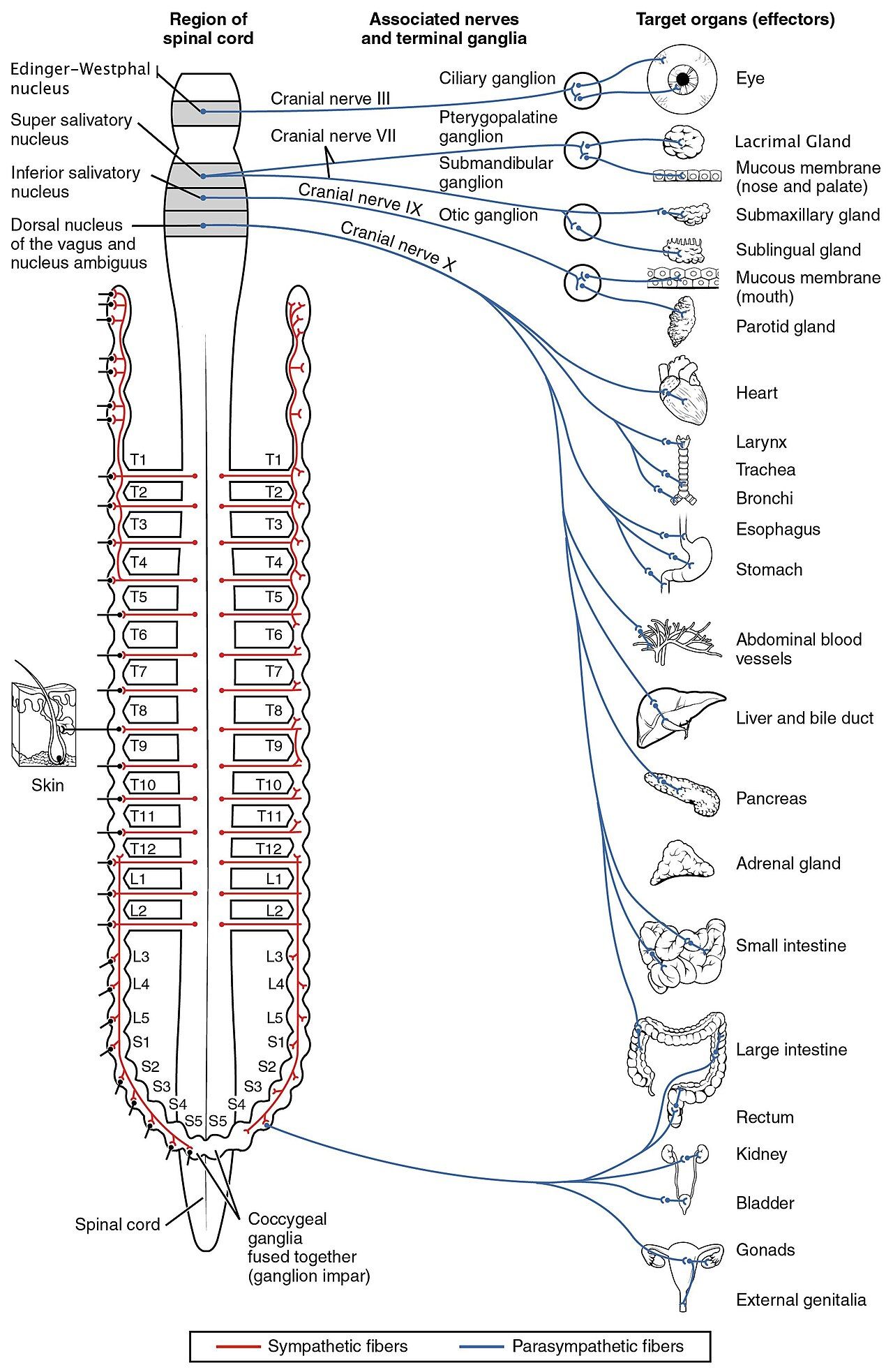
The two divisions use different chemicals, and that is where drugs get their grip. Every autonomic pathway uses two nerve cells in a row. A ganglion (a junction) sits between them. At every ganglion, in both divisions, the chemical is acetylcholine (ACh) acting on nicotinic receptors. What changes is the last step, at the organ itself. Parasympathetic nerves release acetylcholine onto muscarinic receptors. These are the cholinergic junctions. Most sympathetic nerves release norepinephrine onto adrenergic receptors. Two sympathetic exceptions are worth memorizing now, because they explain odd drug effects later. First, the adrenal medulla is a changed ganglion. It dumps epinephrine straight into the blood as a hormone. Second, sweat glands are sympathetic, but they use acetylcholine on muscarinic receptors. That is exactly why anticholinergic drugs make people hot and dry.
The receptor map: the single most useful table in pharmacology
Nearly everything in this chapter comes from the table below. A drug does not have effects because of its name. It has effects because of which receptor it hits and where that receptor lives. Learn the receptor, and you have learned the drug, its use, and its side effects in one stroke.
| Receptor | Transmitter | Where it lives | What happens when stimulated |
|---|---|---|---|
| Alpha-1 | Norepinephrine | Vascular smooth muscle, pupil (radial muscle), bladder neck & prostate | Vasoconstriction → raised BP; pupil dilation (mydriasis); urinary retention |
| Alpha-2 | Norepinephrine | Presynaptic nerve terminals; CNS (brainstem) | Negative feedback: less norepinephrine released → lower BP, sedation |
| Beta-1 | Norepinephrine | Heart (“1 heart”); kidney juxtaglomerular cells | Faster rate, stronger contraction, faster conduction; renin release |
| Beta-2 | Epinephrine (circulating) | Lungs (“2 lungs”); skeletal-muscle vessels; uterus; liver | Bronchodilation; vasodilation; uterine relaxation; glycogenolysis |
| Beta-3 | Norepinephrine | Bladder detrusor muscle; fat cells | Detrusor relaxation (bladder holds more); lipolysis |
| Muscarinic | Acetylcholine | Heart, gut, bladder detrusor, airways, glands, eye, sweat glands | SLUDGE: slower heart, gut motility, bladder emptying, secretions, bronchoconstriction, miosis |
| Nicotinic (NN) | Acetylcholine | All autonomic ganglia; adrenal medulla | Transmission through the ganglion; catecholamine release |
| Nicotinic (NM) | Acetylcholine | Skeletal muscle end plate (somatic, not autonomic) | Muscle contraction: the target of neuromuscular blockers |
Two memory hooks pay off again and again. “One heart, two lungs” puts beta-1 in the heart and beta-2 in the lungs. You will never mix them up. It also shows at once why a nonselective beta blocker is dangerous in asthma. SLUDGE (Salivation, Lacrimation, Urination, Defecation, GI upset, Emesis) is the muscarinic picture. Lacrimation means tears, and emesis means vomiting. The anticholinergic picture is simply its mirror image. A common rhyme captures it: dry as a bone, red as a beet, blind as a bat, mad as a hatter, hot as a hare.
Four things a drug can do
Every drug in this chapter falls into one of four buckets. The words are worth pinning down now. A sympathomimetic (adrenergic agonist) copies the sympathetic system. A sympatholytic (adrenergic antagonist, or blocker) blocks it. A parasympathomimetic (cholinergic agonist) copies the parasympathetic system. A parasympatholytic (anticholinergic) blocks it. Notice the neat pattern hiding here. Blocking one division looks a lot like turning on the other. A beta blocker slows the heart, and so does a cholinergic drug. Different receptor, same slow heart on your monitor. Do not let the picture alone tell you which drug your patient took.
- The sympathetic division is fight-or-flight (mostly norepinephrine on adrenergic receptors). The parasympathetic is rest-and-digest (acetylcholine on muscarinic receptors).
- All ganglia in both divisions use acetylcholine on nicotinic receptors. The divisions differ at the organ, not the ganglion.
- One heart (beta-1), two lungs (beta-2). Alpha-1 narrows vessels. Alpha-2 is a feedback brake on the sending nerve that lowers BP.
- Sympathetic sweat glands are cholinergic. That is why anticholinergics cause dry, hot skin.
Section 2Adrenergic agonists
Turning up the sympathetic gas
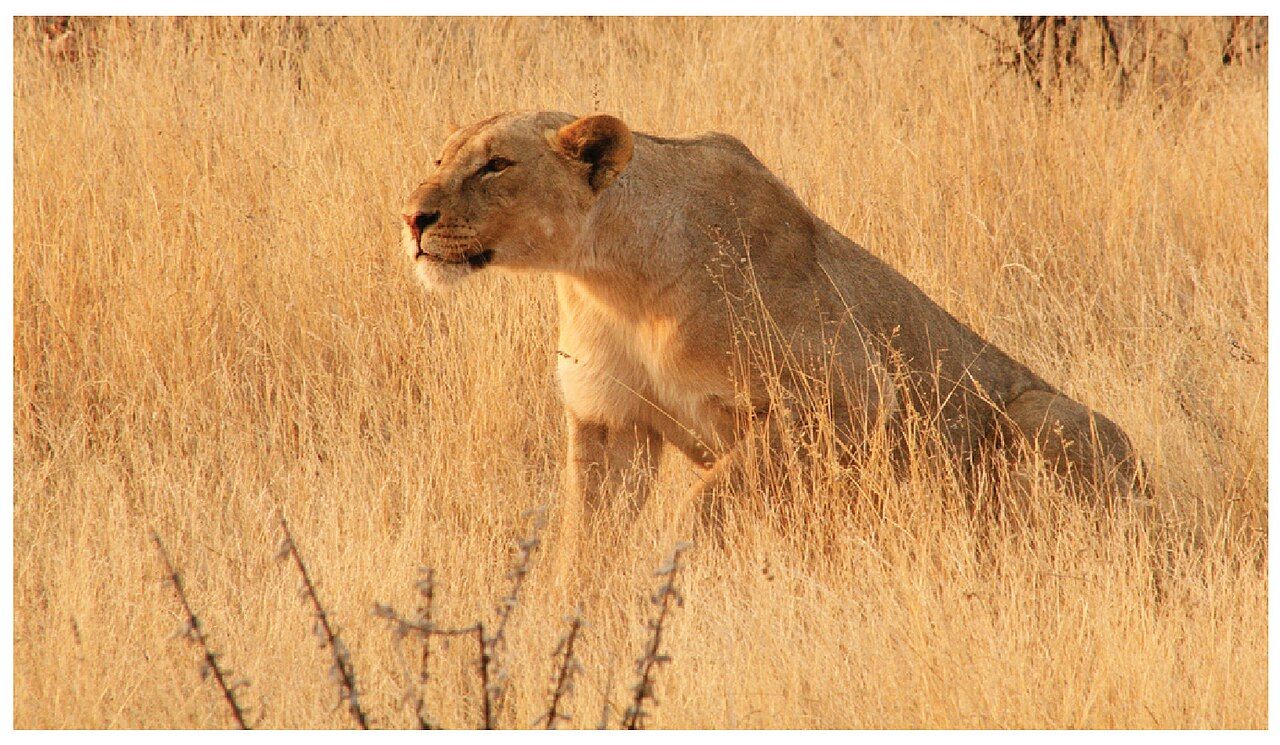
An adrenergic agonist, or sympathomimetic, causes the effects the sympathetic system would cause. Some do it directly, by binding the receptor themselves. Examples are epinephrine, norepinephrine, phenylephrine, and albuterol. Others do it indirectly. They make the nerve ending dump its own stored norepinephrine, or they block its reuptake. Examples are ephedrine (which works both ways), amphetamines, and cocaine. Either way, the receptor sees more signal, and the organ responds.
What makes this class confusing at first is that one drug can hit several receptors at once. So its effect depends on which receptors it reaches and at what dose. Selectivity is the whole game. A drug that hits only beta-2 opens airways without racing the heart. One that hits everything opens airways and races the heart and squeezes the vessels. Selectivity also depends on dose. Push the dose high enough, and a “selective” drug starts spilling onto its neighbors. This is exactly why a person with asthma who overuses albuterol gets a fast heart rate and tremor. At high doses, its beta-2 selectivity leaks onto beta-1.
Epinephrine: the drug that changes personality with dose
Epinephrine is the prototype and the one to know cold. It is nonselective. It hits alpha-1, alpha-2, beta-1, and beta-2. But these receptors respond at different levels, so the drug acts differently at different doses. At low doses, beta effects win. The heart speeds up and squeezes harder, and airways open. Vessels in skeletal muscle actually widen, which can drop the lower (diastolic) blood pressure. At high doses, alpha-1 effects take over. Vessels narrow, and blood pressure climbs hard. This split by dose is why one molecule is used for anaphylaxis, cardiac arrest, and shock. It is also used in dental and local anesthetic mixes to keep lidocaine from washing away.
In anaphylaxis, epinephrine does three jobs at once, and you should be able to name all three. Alpha-1 narrows vessels. That reverses the dangerous drop in blood pressure and shrinks airway swelling. Beta-1 supports the heart's output. Beta-2 opens the airways and calms mast cells so they release fewer allergy chemicals. No other drug does all of that. Antihistamines and steroids are add-ons and are never the first move. The first-line route for anaphylaxis is into the muscle of the outer thigh (vastus lateralis). That muscle's rich blood supply absorbs the drug faster and more reliably than fat under the skin or the shoulder muscle. Know the numbers, because this is where deadly errors happen. The adult dose is 0.3 to 0.5 mg IM, drawn from the 1 mg/mL (1:1,000) strength. Repeat it every 5 to 15 minutes if the response is not enough. For a child, it is 0.01 mg/kg IM, up to a top dose of 0.3 to 0.5 mg. The 0.1 mg/mL (1:10,000) prefilled syringe is the IV cardiac arrest strength. It must never be swapped in for the IM anaphylaxis dose. That swap, in either direction, is the classic tenfold strength error this drug is known for.
The workhorses, drug by drug
| Drug | Receptors | Main use | Safety alert |
|---|---|---|---|
| Epinephrine | Alpha-1/2, beta-1/2 | Anaphylaxis, cardiac arrest, severe asthma, shock | High alert. Anaphylaxis: 0.3 to 0.5 mg IM (1 mg/mL) into the outer thigh, repeat every 5 to 15 min; children 0.01 mg/kg IM up to a 0.3 to 0.5 mg max. The 0.1 mg/mL (1:10,000) syringe is the IV arrest strength, never the IM dose. Strength errors are classic and deadly, so get an independent double-check. |
| Norepinephrine | Alpha-1 >> beta-1 | Septic shock: first-line vasopressor | High alert, central line preferred. Watch the site continuously; extravasation causes tissue necrosis: antidote is phentolamine infiltrated locally. |
| Dopamine | Dose-dependent: dopaminergic → beta-1 → alpha-1 | Shock, symptomatic bradycardia | Same extravasation risk; monitor urine output and rhythm continuously. |
| Dobutamine | Beta-1 selective | Acute decompensated heart failure: inotropic support | Raises contractility; can cause tachycardia and drop BP through mild beta-2 vasodilation. |
| Phenylephrine | Alpha-1 selective | Hypotension, nasal decongestant, mydriatic drops | Raises BP with reflex bradycardia; caution in BPH (retention) and glaucoma. |
| Albuterol | Beta-2 selective (short-acting) | Rescue bronchodilator in asthma/COPD | Tremor, tachycardia, hypokalemia (drives K+ into cells). Rescue, not maintenance: rising use signals poor control. |
| Salmeterol, formoterol | Beta-2 selective (long-acting) | Asthma/COPD maintenance | Never for an acute attack; in asthma must be paired with an inhaled corticosteroid, never used alone. |
| Clonidine | Alpha-2 agonist (central) | Hypertension, ADHD, opioid/nicotine withdrawal | Counterintuitive: stimulating alpha-2 lowers BP. Sedation, dry mouth; never stop abruptly: rebound hypertensive crisis. |
| Terbutaline | Beta-2 selective | Bronchospasm; off-label short-term tocolysis | Maternal tachycardia and hyperglycemia; not for prolonged tocolysis. |
Look again at clonidine, because it trips up nearly everyone. It is an agonist, yet it lowers blood pressure. The reason is where its receptor sits. Alpha-2 receptors are brakes on the sending nerve. Turning them on tells the nerve ending to release less norepinephrine. So an alpha-2 agonist acts like a sympathetic blocker. It is a good reminder that where a receptor sits matters as much as what type it is.
- Sympathomimetics copy the sympathetic system directly (binding the receptor) or indirectly (releasing the chemical or blocking its reuptake).
- Epinephrine acts by dose: beta effects at low doses, alpha vessel narrowing at high doses. The anaphylaxis dose is 0.3 to 0.5 mg IM (1 mg/mL) into the outer thigh, every 5 to 15 min as needed, and 0.01 mg/kg for children. The 0.1 mg/mL syringe is for IV arrest only.
- Beta-2 agonists (albuterol) rescue airways but cause tremor, a fast heart rate, and low potassium. Long-acting ones are never rescue drugs.
- Clonidine is an alpha-2 agonist that lowers BP through feedback on the sending nerve. It rebounds dangerously if stopped suddenly.
- A vasopressor that leaks out of the vein (extravasation) kills tissue. The antidote is phentolamine injected at the site.
Section 3Adrenergic antagonists
Alpha blockers: releasing the vessels
An alpha-1 blocker stops norepinephrine from squeezing the smooth muscle in vessel walls. The vessels relax, resistance falls, and blood pressure comes down. The same receptor sits in the bladder neck and the smooth muscle of the prostate. Blocking it also relaxes the outflow path. That is why the “-osin” drugs are workhorses in benign prostatic hyperplasia (BPH), a big but noncancerous prostate. They let men empty a bladder that a big prostate had squeezed shut. Tamsulosin acts mostly on the urinary tract and lowers pressure less. Doxazosin, terazosin, and prazosin lower blood pressure more and are sometimes used for that. Prazosin is also used off-label for nightmares from PTSD, though the trial evidence is mixed.
The main danger is low blood pressure on standing with the first dose. The first dose, or the first dose after any increase, can drop a person's pressure enough to make them faint. A fainting fall in an older adult is a broken hip waiting to happen. Here is what to do. Give the first dose at bedtime. Teach the patient to rise slowly and sit on the edge of the bed before standing. Warn them not to drive after the first dose. Check blood pressure lying and standing. Phentolamine is a nonselective alpha blocker used in other ways. It is the antidote for a leaked vasopressor. It is also used for too many stress hormones, as with pheochromocytoma (a tumor that makes them).
Beta blockers: the “-olol” family
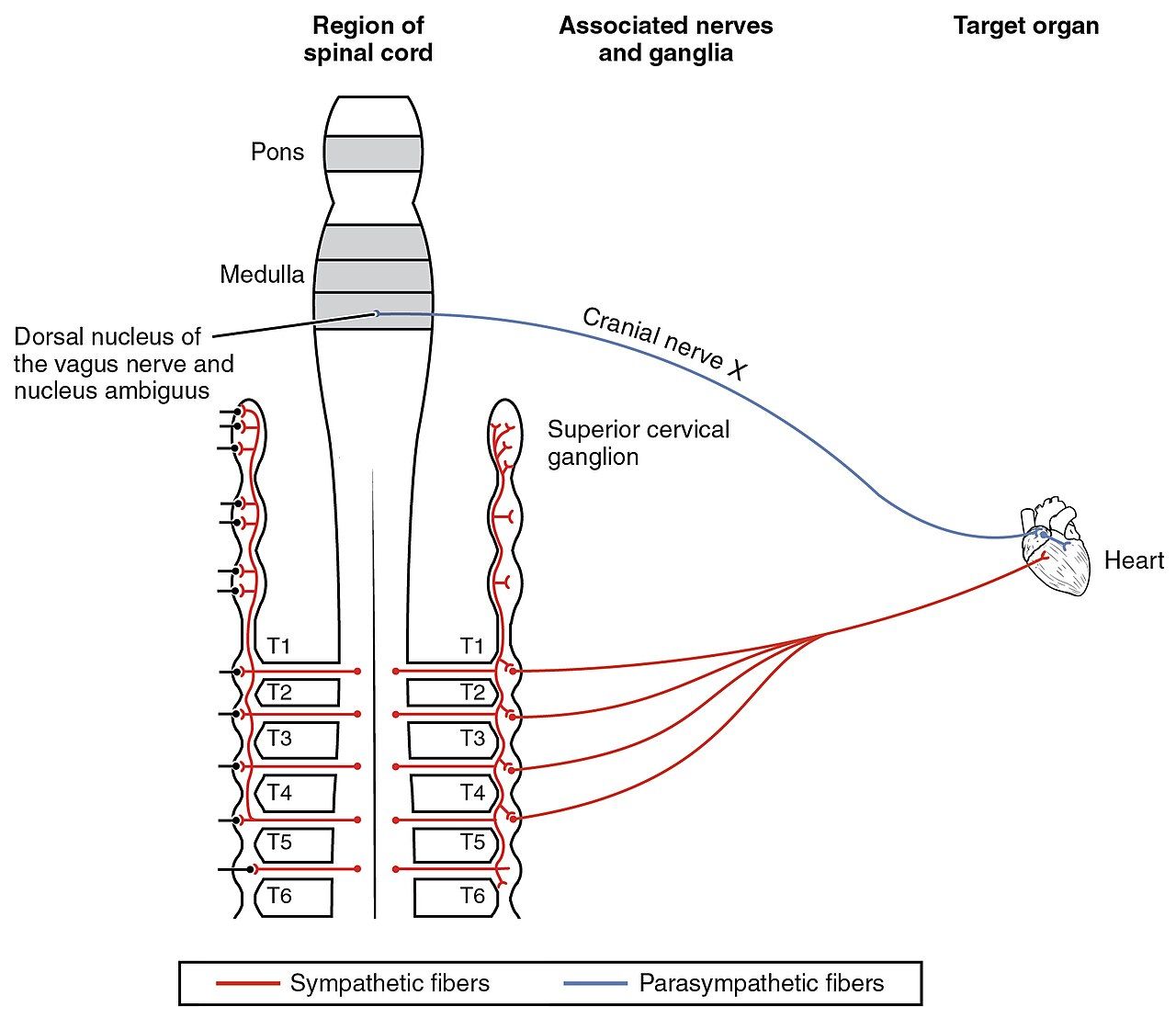
A beta blocker sits in beta receptors so stress hormones (catecholamines) cannot. Blocking beta-1 slows the heart rate, weakens each squeeze, slows the signal through the AV node, and lowers renin release. Together, these lower blood pressure. They ease angina by cutting the heart's need for oxygen. They control rate in atrial fibrillation. Most important, they help people live longer after a heart attack and, for three certain drugs, in chronic heart failure. That last point surprises people. A drug that weakens each squeeze helps the failing heart. It does this by shielding the heart from years of stress hormone whipping. The point also matters because the benefit does not belong to the whole class. Only metoprolol succinate (the extended-release salt), bisoprolol, and carvedilol have proven that they lower deaths in heart failure with reduced ejection fraction. Atenolol has no heart failure use. Plain metoprolol tartrate is not the heart failure drug either. Do not give the survival claim to a beta blocker that has not earned it. In heart failure, the beta blocker starts at a low dose and goes up slowly. It is never started during a sudden worsening.
The key difference in this class is cardioselectivity. Cardioselective drugs block mainly beta-1 and mostly spare the lungs. These are metoprolol, atenolol, bisoprolol, and esmolol, the ones that start with A through M. Nonselective drugs block beta-2 as well, so they can tighten the airways. These are propranolol, nadolol, timolol, and sotalol, N through Z. That is why they call for caution in asthma and COPD. The A to M letter trick is a study aid, not a rule. Carvedilol and labetalol are the classic exceptions. Both start in the first half of the alphabet, yet they block beta-1, beta-2, and alpha-1. Cardioselectivity is also relative, not total, and it is lost at higher doses. So even a “cardioselective” blocker is used carefully in reactive airway disease.
| Class / drug | Blocks | Main use | Safety alert |
|---|---|---|---|
| Tamsulosin | Alpha-1 (uroselective) | BPH | Orthostasis, dizziness, retrograde ejaculation; flag before cataract surgery (floppy iris syndrome). |
| Prazosin, doxazosin, terazosin | Alpha-1 | Hypertension, BPH; prazosin off-label for PTSD nightmares | First-dose syncope: give at bedtime, rise slowly, check orthostatics. |
| Phentolamine | Alpha-1 & alpha-2 | Vasopressor extravasation; pheochromocytoma | Reflex tachycardia; infiltrate the extravasation site promptly. |
| Metoprolol, atenolol, bisoprolol | Beta-1 (cardioselective) | Hypertension, angina, post-MI, rate control. Heart failure only with metoprolol succinate (ER) or bisoprolol: not atenolol, not metoprolol tartrate | Hold and recheck if HR is under 60 or SBP is low per the order; never stop suddenly. Check that the metoprolol salt and form match the reason it is given. |
| Esmolol | Beta-1 (ultra-short IV) | Acute rate control, perioperative | Continuous cardiac and BP monitoring; effect ends within minutes of stopping. |
| Propranolol, nadolol | Beta-1 & beta-2 (nonselective) | Hypertension, migraine prophylaxis, tremor, performance anxiety, thyroid storm | Caution in asthma/COPD (bronchospasm); masks hypoglycemia signs. |
| Timolol (ophthalmic) | Beta-1 & beta-2 | Glaucoma: reduces aqueous production | Eye drops are systemic drugs. Apply punctal occlusion for 1 to 2 minutes; bradycardia and bronchospasm are real. |
| Carvedilol, labetalol | Beta plus alpha-1 | Heart failure (carvedilol); hypertensive urgency and pregnancy (labetalol) | Added alpha blockade means more orthostasis; take carvedilol with food. |
The three cautions you must own
First, never stop a beta blocker suddenly. Long-term blocking makes the heart grow extra beta receptors. Pull the drug away, and that oversensitive heart meets the stress hormones in the blood. Rebound fast heart rate, severe high blood pressure, angina, and heart attack have all been reported. Taper over one to two weeks. Teach this clearly. A patient who feels fine and stops on their own is the one who ends up in the emergency room.
Second, beta blockers hide low blood sugar. Shaking, a racing heart, and anxiety warn a person with diabetes that their sugar is falling. These warnings are sympathetic signals that run through beta receptors. Block beta, and the warning goes quiet. Sweating is the one sign that remains, because sweat glands are cholinergic. Teach people with diabetes on beta blockers to check their sugar instead of trusting how they feel. Never assume a person with no tremor is safe.
Third, you enforce the hold rules. Take an apical pulse for a full minute before every dose. If the heart rate is under 60, or blood pressure is below the ordered limit, hold the dose and tell the prescriber. Do not just give it and chart the vital signs. Beta blockers also blunt the fast heart rate the body uses to make up for blood loss. So a bleeding patient on metoprolol may not show the fast heart rate you would expect. In a beta blocker overdose, there is a very slow heart rate and low blood pressure that atropine does not fix. The specific antidote is glucagon. It raises a heart signal molecule (cAMP) by a route that skips the blocked receptor entirely.
- Alpha-1 blockers (“-osin”) relax vessels and the bladder outlet for high blood pressure and BPH. They cause fainting on standing with the first dose, so give it at bedtime.
- Cardioselective beta blockers (A to M: metoprolol, atenolol) spare beta-2. Nonselective ones (N to Z: propranolol) risk tight airways in asthma or COPD.
- Beta blockers help people live longer after a heart attack. In chronic HFrEF, only metoprolol succinate, bisoprolol, and carvedilol do, not atenolol. They start low and go up slowly, never during a sudden worsening.
- Never stop them suddenly (rebound crisis). They hide low blood sugar, except sweating. Check the apical pulse and follow the hold rules.
- Beta blocker overdose antidote: glucagon. Leaked vasopressor antidote: phentolamine.
Section 4Cholinergic and anticholinergic drugs
Cholinergic agonists: turning up rest-and-digest
A cholinergic agonist (parasympathomimetic) copies what acetylcholine does at muscarinic receptors. The result is SLUDGE: drooling, tears, passing urine, passing stool, gut cramps, and vomiting. Add a slow heart rate, tight airways, and small pupils (miosis). Written out that way, it sounds like a poisoning. At high doses, it is. But used on purpose at treatment doses, two of those effects are useful. Bethanechol stirs up the bladder muscle and the gut. That makes it the drug for urinary retention (trouble emptying the bladder) that is not caused by a blockage. This difference matters a great deal. Squeezing a bladder against a blocked outlet risks bursting it. Pilocarpine, as eye drops, shrinks the pupil and opens the drainage angle in glaucoma. By mouth, it helps make saliva for dry mouth. Cholinergic agonists are not used in asthma (tight airways), a slow heart rate or heart block, peptic ulcer disease, or a blocked bowel or bladder.
AChE inhibitors: making the body's own acetylcholine last longer
Acetylcholinesterase (AChE) is the enzyme that chews up acetylcholine in the junction within thousandths of a second. Block the enzyme, and acetylcholine lingers. So the same signal hits harder. This is an indirect cholinergic agonist. It is behind three very different treatments. In myasthenia gravis, the body's own antibodies have destroyed nicotinic receptors where nerve meets muscle. Pyridostigmine keeps acetylcholine around long enough for the remaining receptors to work, which brings back strength. Timing doses around meals matters, so people can chew and swallow safely. In Alzheimer disease, donepezil, rivastigmine, and galantamine raise acetylcholine in the brain. They modestly improve or steady symptoms for a time. But they do not cure the disease or stop the brain damage underneath. In anesthesia, neostigmine reverses non-depolarizing neuromuscular blockade, which Section 5 covers.
Push cholinergic action too far and you get cholinergic crisis. It is heavy SLUDGE with a slow heart rate, tight airways, and floods of secretions. The part that kills is muscle weakness and breathing failure. The muscle end plate is overwhelmed and stuck in the "on" state. This is how organophosphate poisoning works. Organophosphates are found in bug sprays and nerve agents. They shut down AChE for good. The treatment is two drugs, not one. Atropine blocks the muscarinic effects and dries the secretions. Pralidoxime pulls the organophosphate off the enzyme before the bond “ages” and becomes permanent. Atropine alone will not fix the nicotinic muscle weakness. That fact is worth understanding, not just memorizing.
The cruel trap in myasthenia is this. Myasthenic crisis (too little drug) and cholinergic crisis (too much drug) both show up as severe weakness and breathing failure. The clue is what comes along with the weakness. Cholinergic crisis brings SLUDGE: drooling, tears, cramps, tiny pupils, and a slow heart rate. Myasthenic crisis does not. Either way, the airway comes first.
Anticholinergics: blocking rest-and-digest
An anticholinergic (antimuscarinic, parasympatholytic) blocks muscarinic receptors. So the picture is SLUDGE in reverse. That means a dry mouth, no sweat, blurred close-up vision and large pupils, a fast heart rate, constipation, and trouble passing urine. When the drug reaches the brain, confusion follows. Atropine is the prototype. It is the drug you push for a slow heart rate with symptoms. It is used to dry secretions before surgery. It is also used in organophosphate poisoning. Ipratropium and tiotropium are inhaled anticholinergics. They open the airways in COPD by a route totally different from albuterol's. That is why the two are often combined. Oxybutynin, tolterodine, and solifenacin calm an overactive bladder. Scopolamine patches prevent motion sickness. Benztropine and trihexyphenidyl rebalance the dopamine and acetylcholine seesaw. They are used in Parkinson disease and for movement side effects caused by drugs.
| Class / drug | Action | Main use | Safety alert |
|---|---|---|---|
| Bethanechol | Direct muscarinic agonist | Non-obstructive urinary retention | Contraindicated in obstruction (rupture risk) and asthma; keep a urinal/commode within reach: it works fast. |
| Pilocarpine | Direct muscarinic agonist | Glaucoma; xerostomia | Miosis causes dim, blurred vision: fall risk, caution at night. |
| Pyridostigmine | AChE inhibitor | Myasthenia gravis | Time doses 30 to 60 min before meals; watch for cholinergic vs myasthenic crisis. |
| Donepezil, rivastigmine, galantamine | Central AChE inhibitors | Alzheimer disease | Eases symptoms modestly; does not cure or stop progression. Nausea, diarrhea, bradycardia, weight loss, vivid dreams. |
| Neostigmine | AChE inhibitor | Reverses non-depolarizing blockade | Always paired with an antimuscarinic (glycopyrrolate/atropine) to prevent bradycardia. |
| Atropine | Antimuscarinic | Symptomatic bradycardia; preop drying; organophosphate poisoning | For a slow heart rate, give 1 mg IV push quickly, repeat every 3 to 5 min up to 3 mg total; a slow push or too small a dose can make the slow heart rate worse. Antidote for pure anticholinergic toxicity: physostigmine, which is not allowed if a TCA or other sodium channel blocker is involved or the QRS is >100 ms. |
| Ipratropium, tiotropium | Inhaled antimuscarinic | COPD: ipratropium short-acting (also added to albuterol in acute exacerbation); tiotropium long-acting maintenance | Dry mouth: sugar-free gum, sips of water; caution with peanut/soy allergy for some inhaler formulations. |
| Oxybutynin, tolterodine, solifenacin | Antimuscarinic | Overactive bladder | Dry mouth, constipation, retention, confusion in older adults; a Beers-list concern. |
| Scopolamine | Antimuscarinic (patch) | Motion sickness, secretions | Wash hands after handling: touching the eye causes unilateral mydriasis; remove old patch before applying new. |
| Benztropine | Central antimuscarinic | Parkinson disease; drug-induced EPS | Anticholinergic burden, especially cognitive effects in older adults. |
Every one of those anticholinergic effects can be predicted from the table in Section 1, and so can the danger. Anticholinergic burden is the total load of every drug with antimuscarinic action a person takes. It is not just the drugs above. Many antihistamines, tricyclic antidepressants, and antipsychotics have hidden antimuscarinic action. Stack three or four in an 80-year-old, and you get confusion, falls, trouble passing urine, and constipation. These often get mistaken for “dementia” or “just getting older.” Adding up the anticholinergic burden on a drug list is one of the most useful things you can do for an older patient.
- Cholinergic agonists cause SLUDGE. Use bethanechol for trouble emptying the bladder with no blockage, and pilocarpine for glaucoma and dry mouth.
- AChE inhibitors raise the body's own acetylcholine: pyridostigmine (myasthenia), donepezil (Alzheimer), neostigmine (reversal).
- Cholinergic crisis = SLUDGE plus weakness and breathing failure. Organophosphate poisoning is treated with atropine plus pralidoxime.
- Anticholinergics are the mirror image: dry, hot, red, blurred, fast heart, holding urine, confused. Physostigmine treats pure antimuscarinic toxicity with a normal QRS. It is never used when a TCA or a QRS >100 ms is involved (use benzodiazepines and sodium bicarbonate instead).
- Anticholinergic burden stacks across drug classes and drives confusion, falls, and trouble passing urine in older adults.
Section 5Neuromuscular blockers
A different synapse, a much higher stake
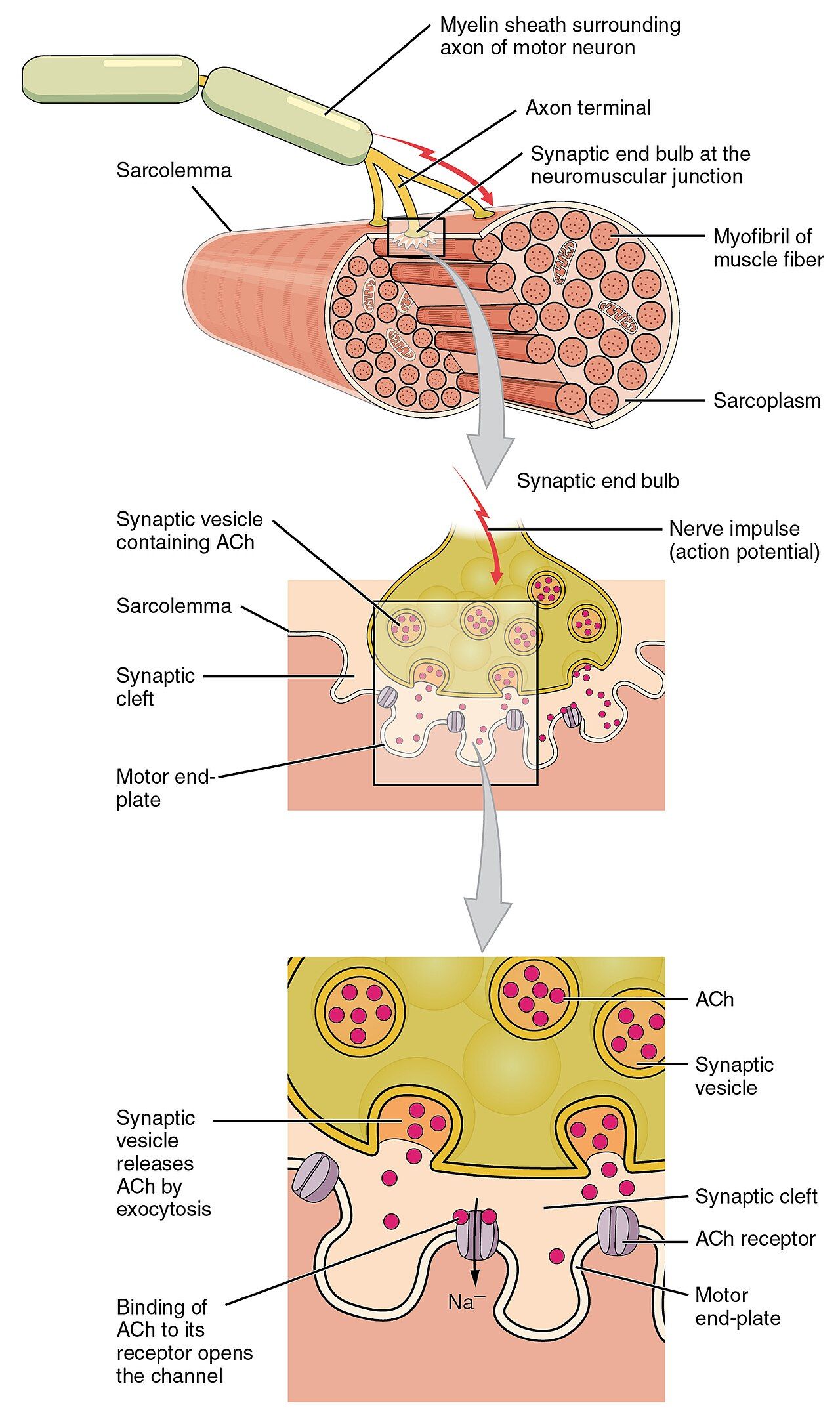
Neuromuscular blocking agents (NMBAs) act on the nerves to skeletal muscle, which are not autonomic. But they belong here, because they work on the same molecule, acetylcholine, at a nicotinic receptor. They act at the neuromuscular junction, where nerve meets muscle. They block the NM receptor on the muscle end plate. This causes floppy paralysis for placing a breathing tube, surgery, and machine breathing (mechanical ventilation).
Three facts must be firmly fixed before any of the drug science matters. These drugs do not sedate. They do not ease pain. They do not erase memory. A paralyzed patient without enough sedation and pain relief is fully awake and feeling everything. They cannot move a finger or make a sound to tell you. It is one of the most terrifying things medicine can do to a person. NMBAs are high-alert medications. They are stored apart from other drugs, with extra warning labels. They are never given unless the airway can be secured and a breathing machine is ready right away. Paralysis always includes the diaphragm. Your duties are firm. Confirm that deep sedation and pain relief are running first. Never allow paralysis without a secured airway. Lubricate and tape the eyes, since the blink is gone. Turn the patient to prevent pressure sores. Give clot prevention (DVT prophylaxis). Keep talking to the patient, because hearing still works.
Depolarizing blockade: succinylcholine
Succinylcholine is the only depolarizing blocker in common use. It works by an odd trick. It is an agonist that paralyzes. It binds the nicotinic receptor and opens it. That causes a first wave of jumbled muscle twitches called fasciculations. But unlike acetylcholine, it is not broken down by acetylcholinesterase. So it sits on the receptor and holds the end plate in the "on" (depolarized) state. A membrane stuck there cannot fire again, so the muscle goes limp. It starts working in under a minute. It wears off in five to ten minutes as a blood enzyme, pseudocholinesterase, breaks it down. That is exactly the profile you want for rapid sequence intubation, placing a breathing tube fast.
Three dangers define it. First, there is no reversal drug. You wait it out, breathing for the patient the whole time. Giving an AChE inhibitor would only stretch out the block, since it adds more acetylcholine to an end plate already stuck "on." Second, the depolarizing leaks potassium out of every muscle cell in the body. So succinylcholine is not given to people with high potassium already. It is also not given after burns, crush injury, nerve loss to a muscle, spinal cord injury, or long bed rest beyond about 24 to 48 hours. In those cases, muscles grow extra receptors, and the potassium surge can be big enough to stop the heart. The same cause drives the drug's boxed warning. A child or teen may have a hidden muscle disease (myopathy). Duchenne muscular dystrophy is the main one, and it is often not yet clear in a young boy. After a single dose, such a child can have muscle breakdown with high potassium (rhabdomyolysis), dangerous heart rhythms, and cardiac arrest. So succinylcholine is not used for routine or planned intubation in children and teens. In children, it is saved for emergency airway control. Third, succinylcholine is a leading trigger of malignant hyperthermia in people with the gene for it. This is a crisis of runaway body heat and metabolism. Its earliest reliable sign is rising end-tidal CO2 (carbon dioxide in each breath out). A clenched jaw, a fast heart rate, and a late spike in temperature follow. The antidote is dantrolene, which must be on hand wherever the drug is used. A rare patient has an unusual pseudocholinesterase and stays paralyzed for hours. Care is simply more machine breathing and sedation until it clears.
Non-depolarizing blockade: the “-curium” and “-curonium” drugs
Rocuronium, vecuronium, cisatracurium, and atracurium take the more expected route. They are competitive antagonists. They sit in the nicotinic receptor without turning it on, so acetylcholine cannot get in. There are no twitches first. They start more slowly, though a large dose of rocuronium comes close to succinylcholine's speed. The block lasts much longer. Because the block is a competition, it can be reversed. Flood the junction with enough acetylcholine, and it wins out over the drug. That is what neostigmine does. It is always given with glycopyrrolate or atropine. Otherwise, the extra acetylcholine spilling onto muscarinic receptors would cause a slow heart rate and drowning secretions. Sugammadex is the newer, cleaner choice. It wraps up rocuronium or vecuronium molecules and pulls them out of the blood. It reverses even a deep block in minutes and does not touch the cholinergic system at all. Cisatracurium deserves special mention. It breaks down on its own in the blood (Hofmann elimination), not through the liver or kidney. That makes it the drug of choice when those organs are failing.
| Feature | Depolarizing (succinylcholine) | Non-depolarizing (rocuronium, vecuronium, cisatracurium) |
|---|---|---|
| Mechanism | Agonist: opens the receptor and holds it depolarized | Competitive antagonist: occupies the receptor, blocks ACh |
| Fasciculations | Yes, then flaccid paralysis | No |
| Onset / duration | Under 1 min / 5 to 10 min | 1 to 3 min / 30 to 60+ min |
| Reversal | None: ventilate and wait | Neostigmine + glycopyrrolate, or sugammadex (roc/vec) |
| Effect of AChE inhibitor | Prolongs the block | Reverses the block |
| Key dangers | Boxed warning: muscle breakdown with high potassium and cardiac arrest in children and teens with a hidden muscle disease, so not for routine or planned use in children. Also high potassium, malignant hyperthermia, muscle aches, and a slow heart rate in children | Prolonged paralysis, residual weakness; potentiated by aminoglycosides, magnesium, hypothermia |
| Typical use | Rapid sequence intubation | Surgical relaxation, ventilated ICU patients |
Checking is where you live with these drugs. Train-of-four (TOF) testing uses a nerve stimulator. It sends four small shocks and counts the twitches that follow. The depth of the block is set to a goal. For a steady drip, a common goal is one to two twitches out of four. Fewer twitches means a deeper block and a longer, harder recovery. Before the breathing tube comes out, recovery is judged by clear measures. The patient should hold their head up, take big enough breaths, grip firmly, and protect their own airway. Never judge by looks alone. A patient can look awake while still too weak to breathe. Also remember that several common things deepen and lengthen the block. These are aminoglycoside antibiotics, magnesium sulfate, calcium channel blockers, inhaled anesthetics, low body temperature, and too much acid in the blood. A patient after childbirth on a magnesium drip is a different drug problem than the same patient without it.
- NMBAs act at the nicotinic (NM) receptor of the muscle end plate. They are high-alert drugs that paralyze the diaphragm.
- They give no sedation, no pain relief, and no memory loss. Sedation and pain control must run first and the whole time.
- Succinylcholine depolarizes. It causes twitches, acts very briefly, and has no reversal. It risks high potassium and malignant hyperthermia (antidote dantrolene). Its boxed warning keeps it out of routine intubation in children, since a hidden muscle disease can mean high-potassium cardiac arrest.
- Non-depolarizers compete. No twitches, longer action, and reversible with neostigmine + glycopyrrolate or sugammadex.
- Check depth with train-of-four. Aminoglycosides and magnesium lengthen the block. Confirm real strength before removing the breathing tube.
The chapter in one breath
- The autonomic nervous system has a sympathetic (fight-or-flight, adrenergic) and a parasympathetic (rest-and-digest, cholinergic) division. All ganglia are nicotinic.
- The receptor map does the work: alpha-1 narrows vessels, alpha-2 feeds back to lower BP, beta-1 is the heart, beta-2 is the lungs, and muscarinic is SLUDGE.
- Epinephrine acts by dose (beta low, alpha high). It is the first drug in anaphylaxis, at 0.3 to 0.5 mg IM (1 mg/mL) in the outer thigh. A leaked vasopressor is reversed with phentolamine.
- Beta-2 agonists rescue airways at the cost of tremor, a fast heart rate, and low potassium. Long-acting ones are for daily control only.
- Alpha blockers cause fainting with the first dose, so give it at bedtime. Beta blockers save lives after a heart attack, and in HFrEF only as metoprolol succinate, bisoprolol, or carvedilol (not atenolol). They must never be stopped suddenly, and they hide low blood sugar, except sweating.
- AChE inhibitors boost the body's own acetylcholine (myasthenia, Alzheimer, reversal). Too much causes cholinergic crisis, treated with atropine + pralidoxime in organophosphate poisoning.
- Anticholinergics are dry, hot, red, blurred, fast, and confused, and their burden stacks dangerously in older adults. Physostigmine is the antidote for pure antimuscarinic toxicity only. It is not allowed when a TCA or a wide QRS is involved.
- Neuromuscular blockers paralyze without sedating. Succinylcholine depolarizes and cannot be reversed (high potassium, malignant hyperthermia → dantrolene). Non-depolarizers compete and are reversed with neostigmine + glycopyrrolate or sugammadex.
ReferenceWords worth knowing
A quick list of the terms in this chapter. Skim it now, or come back when a word trips you up.
- Acetylcholine (ACh)
- The chemical messenger at all autonomic ganglia, at parasympathetic organ junctions, at sympathetic sweat glands, and at the muscle end plate.
- Acetylcholinesterase (AChE)
- The enzyme that breaks down acetylcholine in the junction; blocking it boosts and lengthens cholinergic signals.
- Alpha-1 receptor
- Receptor on vessel smooth muscle, the pupil, and the bladder neck; turning it on narrows vessels, widens the pupil, and holds in urine.
- Alpha-2 receptor
- Receptor on the sending nerve and in the brain; turning it on lowers norepinephrine release, which lowers blood pressure (clonidine).
- Anticholinergic (antimuscarinic)
- A drug that blocks muscarinic receptors, causing dry mouth, blurred vision, a fast heart rate, constipation, trouble passing urine, and confusion.
- Anticholinergic burden
- The total antimuscarinic load from all of a person's drugs; a major cause of confusion and falls in older adults.
- Autonomic nervous system
- The automatic nervous system that controls the heart, vessels, airways, gut, bladder, glands, and pupils.
- Beta-1 receptor
- Heart (“one heart”) and kidney receptor; turning it on raises heart rate, squeeze strength, signal speed, and renin release.
- Beta-2 receptor
- Lung (“two lungs”), vessel, uterus, and liver receptor; turning it on opens airways and widens vessels.
- Cardioselective
- Describes a beta blocker that acts mainly on beta-1 and mostly spares beta-2; selectivity is relative and is lost at high doses.
- Cholinergic crisis
- Too much cholinergic action, causing SLUDGE plus muscle weakness and breathing failure; the mirror trap of myasthenic crisis.
- Depolarizing blocker
- A neuromuscular blocker (succinylcholine) that turns the end plate on and then holds it there; it has no reversal drug.
- Extravasation
- Leaking of a tissue-damaging drug, such as a vasopressor, into nearby tissue, which risks tissue death; reversed at the site with phentolamine.
- Malignant hyperthermia
- A crisis of runaway body heat and metabolism set off by succinylcholine or inhaled anesthetics; the earliest sign is rising end-tidal CO2; the antidote is dantrolene.
- Muscarinic receptor
- The acetylcholine receptor on parasympathetic target organs; turning it on causes the SLUDGE picture.
- Neuromuscular blocking agent (NMBA)
- A high-alert drug that paralyzes skeletal muscle at the nicotinic end plate without sedating or easing pain.
- Nicotinic receptor
- The acetylcholine receptor at autonomic ganglia (NN) and at the muscle end plate (NM).
- Non-depolarizing blocker
- A competitive nicotinic blocker (rocuronium, vecuronium, cisatracurium) that can be reversed with neostigmine or sugammadex.
- Parasympathetic division
- The rest-and-digest division; acetylcholine on muscarinic receptors slows the heart and stirs up the gut and bladder.
- SLUDGE
- Salivation, Lacrimation, Urination, Defecation, GI upset, Emesis: the muscarinic (too much cholinergic) picture.
- Sympathetic division
- The fight-or-flight division; mostly norepinephrine on adrenergic receptors, plus epinephrine released by the adrenal glands.
- Train-of-four (TOF)
- Nerve stimulation that sends four pulses to measure how deep a neuromuscular block is by counting the twitches.