Autonomic Drugs
Your patient's heart rate, blood pressure, pupils, bladder, gut, and airways are all being quietly managed — second by second — by a nervous system nobody chose to switch on. Autonomic drugs work by pushing on that system: turning up the gas, stepping on the brake, or cutting a wire. Once you understand which receptor a drug lands on and what that receptor does to the organ underneath it, the adverse effects stop being a list to memorize and start being something you can predict from first principles. This is the chapter that makes the rest of pharmacology click, because so many drugs — for hypertension, asthma, glaucoma, overactive bladder, shock, and anesthesia — are simply autonomic drugs wearing a different name badge.
By the end of this chapter you can
- Contrast the sympathetic and parasympathetic divisions and predict each one's effect on the major organs.
- Match alpha-1, alpha-2, beta-1, beta-2, beta-3, muscarinic, and nicotinic receptors to their locations and responses.
- Explain how adrenergic agonists work, and describe the dose-dependent behavior of epinephrine.
- Describe the nursing implications of alpha blockers and beta blockers, including first-dose hypotension and abrupt-withdrawal rebound.
- Compare cholinergic agonists, acetylcholinesterase inhibitors, and anticholinergics, and recognize crisis states of each.
- Distinguish depolarizing from non-depolarizing neuromuscular blockade and explain why only one is reversible.
- Name the antidotes for cholinergic crisis, anticholinergic toxicity, and non-depolarizing blockade.
- Identify the high-alert autonomic drugs and the monitoring a nurse owns for each.
Section 1The autonomic nervous system
Two divisions, one body
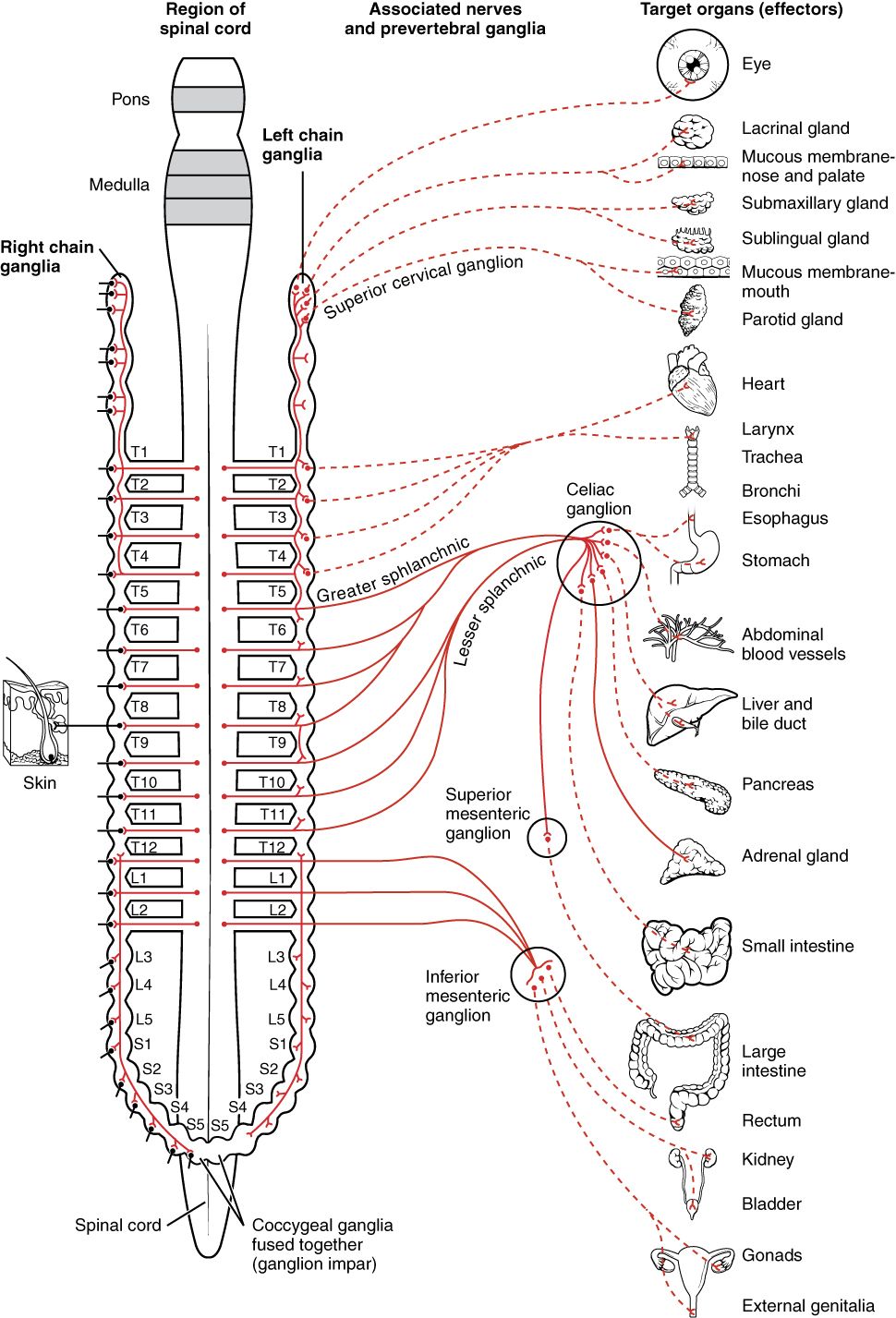
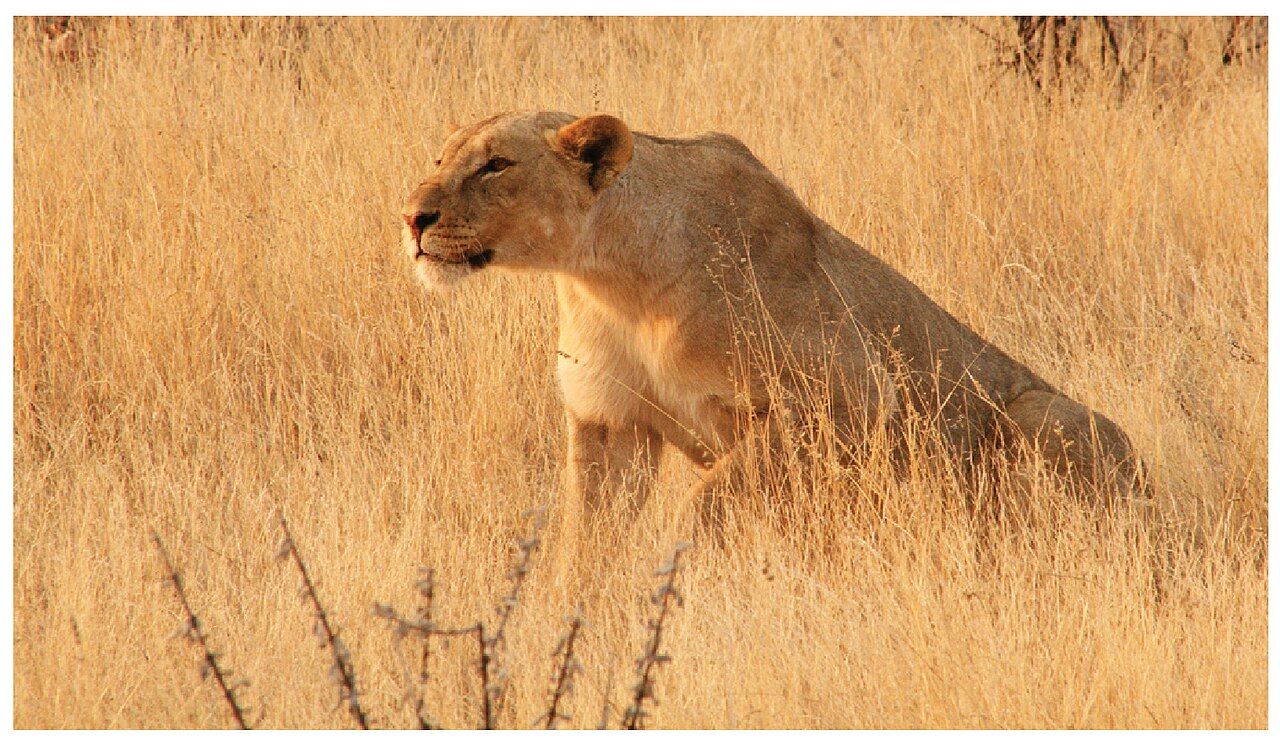
The autonomic nervous system (ANS) runs everything you do not consciously decide: heart rate, vessel tone, breathing passages, digestion, sweating, pupil size, bladder emptying. It has two divisions that mostly oppose each other, and the classic shorthand is worth keeping because it is genuinely predictive. The sympathetic division is fight or flight — the body preparing to run from something. The parasympathetic division is rest and digest — the body settling down to housekeeping. Ask yourself what a person sprinting from danger needs, and sympathetic effects fall out on their own: faster heart, higher pressure, open airways, dilated pupils to see the threat, glucose released for fuel, blood shunted to muscle and away from gut and bladder. Ask what a person napping after a meal needs, and the parasympathetic list appears: slower heart, constricted pupils, active gut, a bladder that empties.
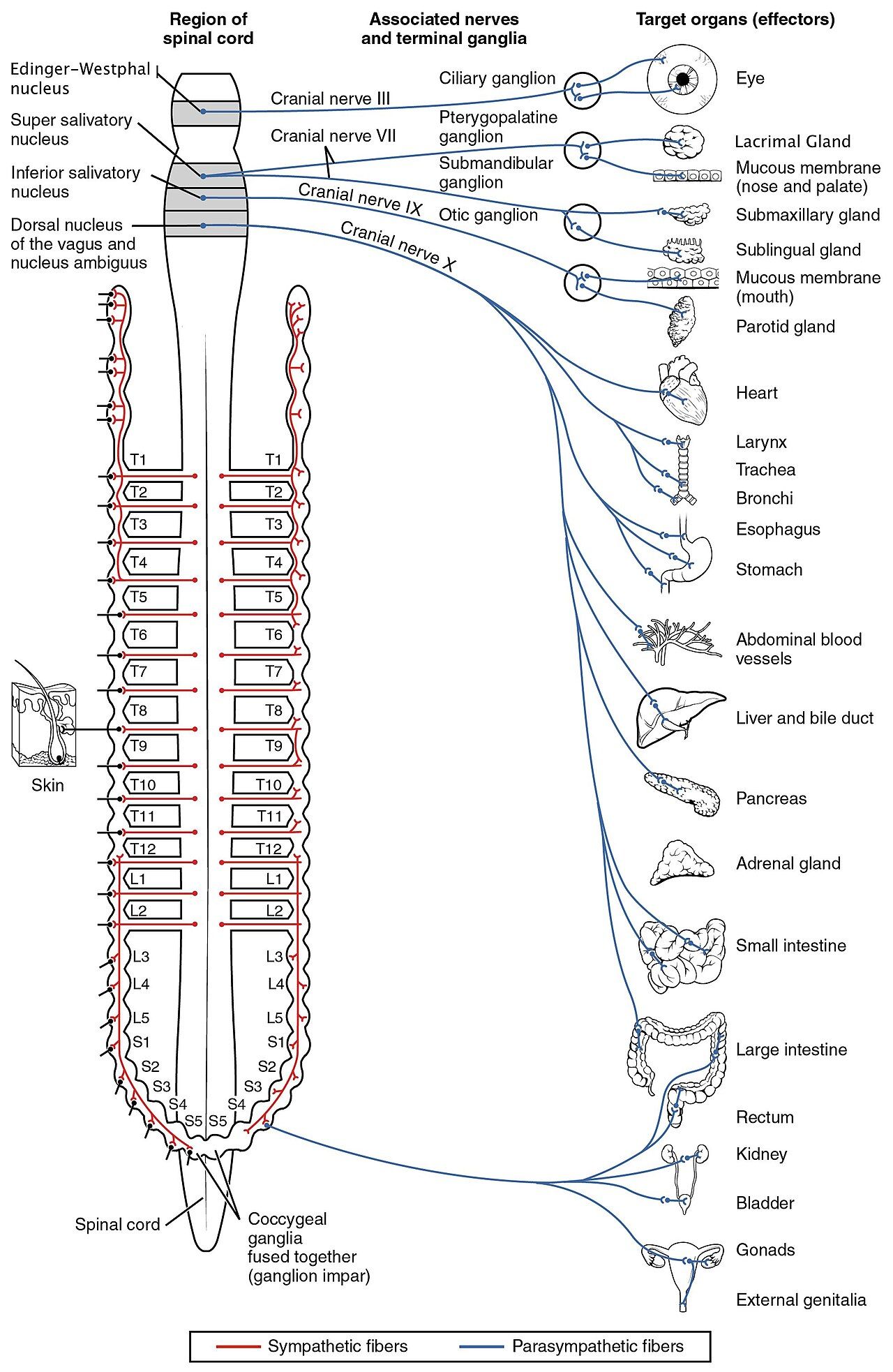
The two divisions differ in their chemistry, and that is where drugs get their leverage. Every autonomic pathway uses two neurons in series with a ganglion (a synapse) between them. At every ganglion, in both divisions, the transmitter is acetylcholine (ACh) acting on nicotinic receptors. What changes is the last step, at the organ itself. Parasympathetic nerves release acetylcholine onto muscarinic receptors — these are the cholinergic synapses. Most sympathetic nerves release norepinephrine onto adrenergic receptors. Two important sympathetic exceptions are worth memorizing now, because they explain odd drug effects later: the adrenal medulla is a modified ganglion that dumps epinephrine straight into the blood as a hormone, and the sweat glands are sympathetic but use acetylcholine on muscarinic receptors — which is exactly why anticholinergic drugs make patients hot and dry.
The receptor map — the single most useful table in pharmacology
Nearly everything in this chapter is an application of the table below. A drug does not have effects because of its name; it has effects because of which receptor it hits and where that receptor lives. Learn the receptor and you have learned the drug, the therapeutic use, and the adverse effect profile in one stroke.
| Receptor | Transmitter | Where it lives | What happens when stimulated |
|---|---|---|---|
| Alpha-1 | Norepinephrine | Vascular smooth muscle, pupil (radial muscle), bladder neck & prostate | Vasoconstriction → raised BP; pupil dilation (mydriasis); urinary retention |
| Alpha-2 | Norepinephrine | Presynaptic nerve terminals; CNS (brainstem) | Negative feedback — less norepinephrine released → lower BP, sedation |
| Beta-1 | Norepinephrine | Heart (“1 heart”); kidney juxtaglomerular cells | Faster rate, stronger contraction, faster conduction; renin release |
| Beta-2 | Epinephrine (circulating) | Lungs (“2 lungs”); skeletal-muscle vessels; uterus; liver | Bronchodilation; vasodilation; uterine relaxation; glycogenolysis |
| Beta-3 | Norepinephrine | Bladder detrusor muscle; fat cells | Detrusor relaxation (bladder holds more); lipolysis |
| Muscarinic | Acetylcholine | Heart, gut, bladder detrusor, airways, glands, eye, sweat glands | SLUDGE — slower heart, gut motility, bladder emptying, secretions, bronchoconstriction, miosis |
| Nicotinic (NN) | Acetylcholine | All autonomic ganglia; adrenal medulla | Transmission through the ganglion; catecholamine release |
| Nicotinic (NM) | Acetylcholine | Skeletal muscle end plate (somatic, not autonomic) | Muscle contraction — the target of neuromuscular blockers |
Two memory hooks pay for themselves all semester. “One heart, two lungs” puts beta-1 in the heart and beta-2 in the lungs and never lets you mix them up — and it instantly explains why a nonselective beta blocker is dangerous in asthma. SLUDGE (Salivation, Lacrimation, Urination, Defecation, GI upset, Emesis) is the muscarinic picture; the anticholinergic picture is simply its mirror image, which students remember as dry as a bone, red as a beet, blind as a bat, mad as a hatter, hot as a hare.
Four things a drug can do
Every drug in this chapter falls into one of four buckets, and the vocabulary is worth pinning down now. A sympathomimetic (adrenergic agonist) mimics the sympathetic system. A sympatholytic (adrenergic antagonist, or blocker) blocks it. A parasympathomimetic (cholinergic agonist) mimics the parasympathetic system. A parasympatholytic (anticholinergic) blocks it. Notice the elegance hiding in there: blocking one division looks a great deal like stimulating the other. A beta blocker slows the heart, and so does a cholinergic drug — different receptor, same bradycardia on your monitor. Do not let the clinical picture alone tell you which drug your patient took.
- The sympathetic division is fight-or-flight (mostly norepinephrine on adrenergic receptors); the parasympathetic is rest-and-digest (acetylcholine on muscarinic receptors).
- All ganglia in both divisions use acetylcholine on nicotinic receptors; the divisions differ at the organ, not the ganglion.
- One heart (beta-1), two lungs (beta-2); alpha-1 constricts vessels; alpha-2 is presynaptic negative feedback that lowers BP.
- Sympathetic sweat glands are cholinergic — the reason anticholinergics cause dry, hot skin.
Section 2Adrenergic agonists
Turning up the sympathetic gas
An adrenergic agonist, or sympathomimetic, produces the effects the sympathetic nervous system would produce. Some do it directly, by binding the receptor themselves (epinephrine, norepinephrine, phenylephrine, albuterol). Others do it indirectly, by causing the nerve terminal to dump its own stored norepinephrine or by blocking its reuptake (ephedrine, which is mixed direct and indirect; amphetamines; cocaine). Either way the receptor sees more signal, and the organ responds.
What makes this class confusing at first is that a single drug can hit several receptors at once, so its effect depends on which receptors it reaches and at what dose. Selectivity is the whole game. A drug that hits only beta-2 opens airways without racing the heart; one that hits everything opens airways and races the heart and clamps down the vessels. Selectivity is also dose-dependent — push the dose high enough and a “selective” drug starts spilling onto its neighbors. This is precisely why an asthmatic patient who overuses albuterol develops tachycardia and tremor: at high doses the beta-2 selectivity leaks onto beta-1.
Epinephrine: the drug that changes personality with dose
Epinephrine is the prototype and the one to know cold. It is a nonselective agonist — alpha-1, alpha-2, beta-1, and beta-2 — but its receptors have different sensitivities, so the drug behaves differently at different doses. At low doses, beta effects dominate: the heart speeds up, contractility rises, and airways open while skeletal-muscle vessels actually dilate, which can drop the diastolic pressure. At high doses, alpha-1 effects take over and vasoconstriction wins, driving blood pressure up hard. This dose-dependent split is why the same molecule is used for anaphylaxis, for cardiac arrest, for shock, and (in dental and local anesthetic mixtures) to keep lidocaine from washing away.
In anaphylaxis, epinephrine is doing three jobs simultaneously, and the nurse should be able to name all three: alpha-1 constricts vessels to reverse the catastrophic drop in blood pressure and reduce airway edema; beta-1 supports cardiac output; beta-2 dilates the bronchi and stabilizes mast cells against further mediator release. No other drug does all of that. Antihistamines and steroids are adjuncts and never the first move. The first-line route for anaphylaxis is intramuscular into the vault of the lateral thigh (vastus lateralis), because that muscle's rich blood supply absorbs the drug faster and more reliably than subcutaneous tissue or the deltoid. Know the numbers, because this is where the fatal errors happen: the adult dose is 0.3–0.5 mg IM drawn from the 1 mg/mL (1:1,000) concentration, repeated every 5–15 minutes if the response is inadequate; for a child it is 0.01 mg/kg IM, to a maximum of 0.3–0.5 mg. The 0.1 mg/mL (1:10,000) prefilled syringe is the intravenous cardiac-arrest concentration and must never be substituted for the IM anaphylaxis dose — that swap, in either direction, is the classic tenfold concentration error this drug is known for.
The workhorses, drug by drug
| Drug | Receptors | Main use | Nursing alert |
|---|---|---|---|
| Epinephrine | Alpha-1/2, beta-1/2 | Anaphylaxis, cardiac arrest, severe asthma, shock | High alert. Anaphylaxis: 0.3–0.5 mg IM (1 mg/mL) into the lateral thigh, repeat q5–15 min; pediatric 0.01 mg/kg IM to a 0.3–0.5 mg max. The 0.1 mg/mL (1:10,000) syringe is the IV arrest concentration, never the IM dose. Concentration errors are classic and lethal — verify with an independent double-check. |
| Norepinephrine | Alpha-1 >> beta-1 | Septic shock — first-line vasopressor | High alert, central line preferred. Watch the site continuously; extravasation causes tissue necrosis — antidote is phentolamine infiltrated locally. |
| Dopamine | Dose-dependent: dopaminergic → beta-1 → alpha-1 | Shock, symptomatic bradycardia | Same extravasation risk; monitor urine output and rhythm continuously. |
| Dobutamine | Beta-1 selective | Acute decompensated heart failure — inotropic support | Raises contractility; can cause tachycardia and drop BP through mild beta-2 vasodilation. |
| Phenylephrine | Alpha-1 selective | Hypotension, nasal decongestant, mydriatic drops | Raises BP with reflex bradycardia; caution in BPH (retention) and glaucoma. |
| Albuterol | Beta-2 selective (short-acting) | Rescue bronchodilator in asthma/COPD | Tremor, tachycardia, hypokalemia (drives K+ into cells). Rescue, not maintenance — rising use signals poor control. |
| Salmeterol, formoterol | Beta-2 selective (long-acting) | Asthma/COPD maintenance | Never for an acute attack; in asthma must be paired with an inhaled corticosteroid, never used alone. |
| Clonidine | Alpha-2 agonist (central) | Hypertension, ADHD, opioid/nicotine withdrawal | Counterintuitive: stimulating alpha-2 lowers BP. Sedation, dry mouth; never stop abruptly — rebound hypertensive crisis. |
| Terbutaline | Beta-2 selective | Bronchospasm; off-label short-term tocolysis | Maternal tachycardia and hyperglycemia; not for prolonged tocolysis. |
Look again at clonidine, because it trips up nearly everyone. It is an agonist, yet it lowers blood pressure. The reason is where its receptor sits: alpha-2 receptors are presynaptic brakes. Stimulating them tells the nerve terminal to release less norepinephrine. So an alpha-2 agonist functionally behaves like a sympathetic blocker — a good reminder that receptor location matters as much as receptor type.
- Sympathomimetics mimic the sympathetic system directly (receptor binding) or indirectly (transmitter release/reuptake block).
- Epinephrine is dose-dependent: beta effects at low doses, alpha vasoconstriction at high doses; anaphylaxis dose is 0.3–0.5 mg IM (1 mg/mL) into the lateral thigh, q5–15 min PRN, pediatric 0.01 mg/kg — the 0.1 mg/mL syringe is for IV arrest only.
- Beta-2 agonists (albuterol) rescue airways but cause tremor, tachycardia, and hypokalemia; long-acting agents are never rescue drugs.
- Clonidine is an alpha-2 agonist that lowers BP via presynaptic feedback — and rebounds dangerously if stopped abruptly.
- Vasopressor extravasation causes necrosis; the antidote is local phentolamine.
Section 3Adrenergic antagonists
Alpha blockers: releasing the vessels
An alpha-1 blocker stops norepinephrine from constricting vascular smooth muscle. The vessels relax, resistance falls, and blood pressure comes down. The same receptor sits in the bladder neck and prostatic smooth muscle, so blocking it also relaxes the outflow tract — which is why the “-osin” drugs are workhorses in benign prostatic hyperplasia (BPH), letting men empty a bladder that a big prostate had been squeezing shut. Tamsulosin is relatively uroselective and drops pressure less; doxazosin, terazosin, and prazosin lower blood pressure more and are sometimes used for that purpose (prazosin is also used off-label for PTSD-related nightmares, though the trial evidence is mixed).
The signature hazard is first-dose orthostatic hypotension. The first dose — or the first dose after any increase — can drop a patient's pressure sharply enough to cause syncope, and a syncopal fall in an older adult is a hip fracture waiting to happen. The nursing response is concrete: give the first dose at bedtime, teach the patient to rise slowly and to sit on the edge of the bed before standing, warn them not to drive after the first dose, and check orthostatic vitals. Phentolamine is a nonselective alpha blocker used differently — as the antidote for vasopressor extravasation and in the management of catecholamine excess such as pheochromocytoma.
Beta blockers: the “-olol” family
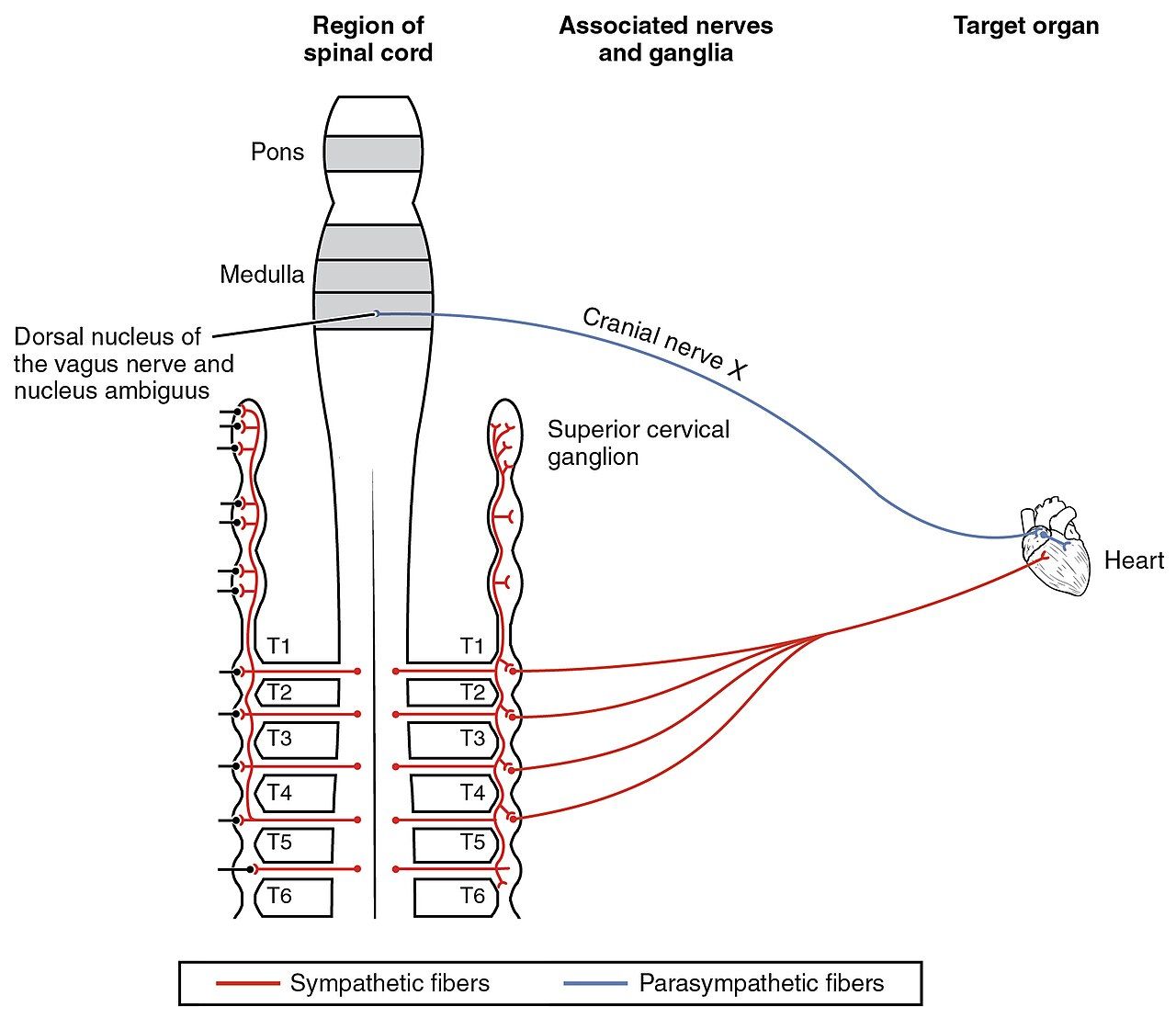
A beta blocker occupies beta receptors so catecholamines cannot. Blocking beta-1 slows the heart rate, weakens contraction, slows AV conduction, and suppresses renin release — the combination that lowers blood pressure, quiets angina by cutting myocardial oxygen demand, controls rate in atrial fibrillation, and, most importantly, improves survival after myocardial infarction and — for three specific agents — in chronic heart failure. That last point deserves emphasis because it is counterintuitive: a drug that weakens contraction helps the failing heart, because it protects it from years of catecholamine flogging. It also deserves emphasis because the benefit does not belong to the class as a whole. Only metoprolol succinate (the extended-release salt), bisoprolol, and carvedilol have proven a mortality benefit in heart failure with reduced ejection fraction; atenolol has no heart failure indication, and plain metoprolol tartrate is not the heart failure agent either. Do not transfer the survival claim to a beta blocker that has not earned it. In heart failure the beta blocker is started at a low dose and titrated up slowly — and never started during an acute decompensation.
The critical distinction in this class is cardioselectivity. Cardioselective agents (metoprolol, atenolol, bisoprolol, esmolol — the ones that start with A through M) block mainly beta-1 and largely spare the lungs. Nonselective agents (propranolol, nadolol, timolol, sotalol — N through Z) block beta-2 as well, which means they can constrict bronchi. That is the mechanism behind the caution in asthma and COPD. The A–M letter trick is a study aid, not a rule — carvedilol and labetalol are the classic exceptions, since both begin in the first half of the alphabet yet block beta-1, beta-2, and alpha-1. Cardioselectivity is also relative, not absolute, and is lost at higher doses, so even a “cardioselective” blocker gets used cautiously in reactive airway disease.
| Class / drug | Blocks | Main use | Nursing alert |
|---|---|---|---|
| Tamsulosin | Alpha-1 (uroselective) | BPH | Orthostasis, dizziness, retrograde ejaculation; flag before cataract surgery (floppy iris syndrome). |
| Prazosin, doxazosin, terazosin | Alpha-1 | Hypertension, BPH; prazosin off-label for PTSD nightmares | First-dose syncope — give at bedtime, rise slowly, check orthostatics. |
| Phentolamine | Alpha-1 & alpha-2 | Vasopressor extravasation; pheochromocytoma | Reflex tachycardia; infiltrate the extravasation site promptly. |
| Metoprolol, atenolol, bisoprolol | Beta-1 (cardioselective) | Hypertension, angina, post-MI, rate control. Heart failure only with metoprolol succinate (ER) or bisoprolol — not atenolol, not metoprolol tartrate | Hold and reassess if HR under 60 or SBP low per parameters; never stop abruptly. Check the metoprolol salt and formulation against the indication. |
| Esmolol | Beta-1 (ultra-short IV) | Acute rate control, perioperative | Continuous cardiac and BP monitoring; effect ends within minutes of stopping. |
| Propranolol, nadolol | Beta-1 & beta-2 (nonselective) | Hypertension, migraine prophylaxis, tremor, performance anxiety, thyroid storm | Caution in asthma/COPD (bronchospasm); masks hypoglycemia signs. |
| Timolol (ophthalmic) | Beta-1 & beta-2 | Glaucoma — reduces aqueous production | Eye drops are systemic drugs. Apply punctal occlusion for 1–2 minutes; bradycardia and bronchospasm are real. |
| Carvedilol, labetalol | Beta plus alpha-1 | Heart failure (carvedilol); hypertensive urgency and pregnancy (labetalol) | Added alpha blockade means more orthostasis; take carvedilol with food. |
The three cautions a nurse must own
First, never stop a beta blocker abruptly. Chronic blockade upregulates beta receptors, and yanking the drug away exposes a hypersensitized heart to circulating catecholamines — rebound tachycardia, severe hypertension, angina, and infarction have all been documented. Taper over one to two weeks, and teach the patient this explicitly, because a patient who feels fine and stops on their own is the one who ends up in the emergency department.
Second, beta blockers mask hypoglycemia. The trembling, racing heart, and anxiety that warn a diabetic patient their glucose is falling are beta-mediated sympathetic signals — block beta and the warning goes silent. Sweating is the one sign that survives, because sweat glands are cholinergic. Teach patients on beta blockers with diabetes to check their glucose rather than trust how they feel, and never assume a patient without tremor is safe.
Third, hold parameters are yours to enforce. Take an apical pulse for a full minute before every dose. If the heart rate is under 60 or the blood pressure is below the ordered threshold, hold the dose and notify the prescriber — do not simply give it and chart the vitals. Beta blockers also blunt the compensatory tachycardia of hypovolemia, so a bleeding patient on metoprolol may not mount the heart rate you would otherwise expect. In beta blocker overdose — profound bradycardia and hypotension unresponsive to atropine — the specific antidote is glucagon, which raises cardiac cAMP by a route that bypasses the blocked receptor entirely.
- Alpha-1 blockers (“-osin”) relax vessels and the bladder outlet — hypertension and BPH — and cause first-dose orthostatic syncope; dose at bedtime.
- Cardioselective beta blockers (A–M: metoprolol, atenolol) spare beta-2; nonselective ones (N–Z: propranolol) risk bronchospasm in asthma/COPD.
- Beta blockers improve survival post-MI; in chronic HFrEF only metoprolol succinate, bisoprolol, and carvedilol do — not atenolol. They are started low and titrated slowly, never during acute decompensation.
- Never stop abruptly (rebound crisis); they mask hypoglycemia except sweating; check apical pulse and honor hold parameters.
- Beta blocker overdose antidote: glucagon. Vasopressor extravasation antidote: phentolamine.
Section 4Cholinergic and anticholinergic drugs
Cholinergic agonists: turning up rest-and-digest
A cholinergic agonist (parasympathomimetic) reproduces what acetylcholine does at muscarinic receptors, and the resulting picture is SLUDGE: salivation, lacrimation, urination, defecation, GI cramping, emesis — plus bradycardia, bronchoconstriction, and miosis. Written out that way it sounds purely like a poisoning, and at high doses it is. Used deliberately at therapeutic doses, though, two of those effects are useful. Bethanechol selectively stimulates the bladder detrusor and gut, which makes it the drug for urinary retention that is not caused by an obstruction — a distinction that matters enormously, because squeezing a bladder against a blocked outlet risks rupture. Pilocarpine, given as eye drops, constricts the pupil and opens the drainage angle in glaucoma, and orally it stimulates saliva in xerostomia. Cholinergic agonists are contraindicated in asthma (bronchoconstriction), in bradycardia or heart block, in peptic ulcer disease, and in bowel or bladder obstruction.
AChE inhibitors: making the body's own acetylcholine last longer
Acetylcholinesterase (AChE) is the enzyme that chews up acetylcholine in the synapse within milliseconds. Block the enzyme and acetylcholine lingers, so the same signal hits harder — an indirect cholinergic agonist. This is the mechanism behind three quite different therapies. In myasthenia gravis, where autoantibodies have destroyed nicotinic receptors at the muscle end plate, pyridostigmine keeps acetylcholine around long enough for the surviving receptors to work, restoring strength; the timing of doses around meals matters so patients can chew and swallow safely. In Alzheimer disease, donepezil, rivastigmine, and galantamine raise central acetylcholine — they modestly improve or stabilize symptoms for a time, but they neither cure the disease nor halt the underlying neurodegeneration. And in anesthesia, neostigmine reverses non-depolarizing neuromuscular blockade, which Section 5 takes up.
Push cholinergic stimulation too far and you get cholinergic crisis: profound SLUDGE with bradycardia, bronchoconstriction, copious secretions, and — the part that kills — muscle weakness and respiratory failure from a depolarized, overwhelmed end plate. This is the mechanism of organophosphate poisoning (insecticides and nerve agents), which irreversibly inactivates AChE. The treatment is two drugs, not one: atropine to block the muscarinic effects and dry the secretions, and pralidoxime to pull the organophosphate off the enzyme before the bond “ages” and becomes permanent. Atropine alone will not fix the nicotinic muscle weakness — a fact worth understanding rather than memorizing.
The cruel clinical trap in myasthenia is that myasthenic crisis (too little drug) and cholinergic crisis (too much) both present as severe weakness and respiratory failure. The differentiator is the company the weakness keeps: cholinergic crisis brings SLUDGE — drooling, tearing, cramping, tiny pupils, bradycardia — while myasthenic crisis does not. Either way the airway comes first.
Anticholinergics: blocking rest-and-digest
An anticholinergic (antimuscarinic, parasympatholytic) blocks muscarinic receptors, so the picture is SLUDGE in reverse: dry mouth, no sweat, blurred near vision and dilated pupils, tachycardia, constipation, and urinary retention, with confusion when the drug reaches the brain. Atropine is the prototype — the drug you push for symptomatic bradycardia, use to dry secretions preoperatively, and reach for in organophosphate poisoning. Ipratropium and tiotropium are inhaled anticholinergics that bronchodilate in COPD by a route completely different from albuterol's, which is why the two are often combined. Oxybutynin, tolterodine, and solifenacin quiet an overactive bladder. Scopolamine patches prevent motion sickness. Benztropine and trihexyphenidyl rebalance the dopamine–acetylcholine seesaw in Parkinson disease and in drug-induced extrapyramidal symptoms.
| Class / drug | Action | Main use | Nursing alert |
|---|---|---|---|
| Bethanechol | Direct muscarinic agonist | Non-obstructive urinary retention | Contraindicated in obstruction (rupture risk) and asthma; keep a urinal/commode within reach — it works fast. |
| Pilocarpine | Direct muscarinic agonist | Glaucoma; xerostomia | Miosis causes dim, blurred vision — fall risk, caution at night. |
| Pyridostigmine | AChE inhibitor | Myasthenia gravis | Time doses 30–60 min before meals; watch for cholinergic vs myasthenic crisis. |
| Donepezil, rivastigmine, galantamine | Central AChE inhibitors | Alzheimer disease | Eases symptoms modestly; does not cure or stop progression. Nausea, diarrhea, bradycardia, weight loss, vivid dreams. |
| Neostigmine | AChE inhibitor | Reverses non-depolarizing blockade | Always paired with an antimuscarinic (glycopyrrolate/atropine) to prevent bradycardia. |
| Atropine | Antimuscarinic | Symptomatic bradycardia; preop drying; organophosphate poisoning | Bradycardia dose is 1 mg IV push rapidly, repeat q3–5 min to a 3 mg max — a slow push or an underdose can paradoxically worsen bradycardia. Antidote for pure anticholinergic toxicity: physostigmine — contraindicated if a TCA or other sodium-channel blocker is involved or the QRS is >100 ms. |
| Ipratropium, tiotropium | Inhaled antimuscarinic | COPD — ipratropium short-acting (also added to albuterol in acute exacerbation); tiotropium long-acting maintenance | Dry mouth — sugar-free gum, sips of water; caution with peanut/soy allergy for some inhaler formulations. |
| Oxybutynin, tolterodine, solifenacin | Antimuscarinic | Overactive bladder | Dry mouth, constipation, retention, confusion in older adults; a Beers-list concern. |
| Scopolamine | Antimuscarinic (patch) | Motion sickness, secretions | Wash hands after handling — touching the eye causes unilateral mydriasis; remove old patch before applying new. |
| Benztropine | Central antimuscarinic | Parkinson disease; drug-induced EPS | Anticholinergic burden, especially cognitive effects in older adults. |
Every one of those anticholinergic effects is predictable from the table in Section 1, and so is the danger. Anticholinergic burden is the additive load of every drug with antimuscarinic activity a patient is taking — and it is not just the drugs above. Many antihistamines, tricyclic antidepressants, and antipsychotics carry hidden antimuscarinic activity. Stack three or four in an 80-year-old and you get confusion, falls, retention, and constipation that get misread as “dementia” or “just getting older.” Counting up anticholinergic burden on a medication list is one of the highest-yield things a nurse can do for an older patient.
- Cholinergic agonists produce SLUDGE; bethanechol for non-obstructive retention, pilocarpine for glaucoma and dry mouth.
- AChE inhibitors raise the body's own acetylcholine: pyridostigmine (myasthenia), donepezil (Alzheimer), neostigmine (reversal).
- Cholinergic crisis = SLUDGE plus weakness and respiratory failure; organophosphate poisoning is treated with atropine plus pralidoxime.
- Anticholinergics are the mirror image: dry, hot, red, blurred, tachycardic, retaining, confused. Physostigmine treats pure antimuscarinic toxicity with a normal QRS — never when a TCA or QRS >100 ms is involved (benzodiazepines and sodium bicarbonate instead).
- Anticholinergic burden stacks across drug classes and drives confusion, falls, and retention in older adults.
Section 5Neuromuscular blockers
A different synapse, a much higher stake
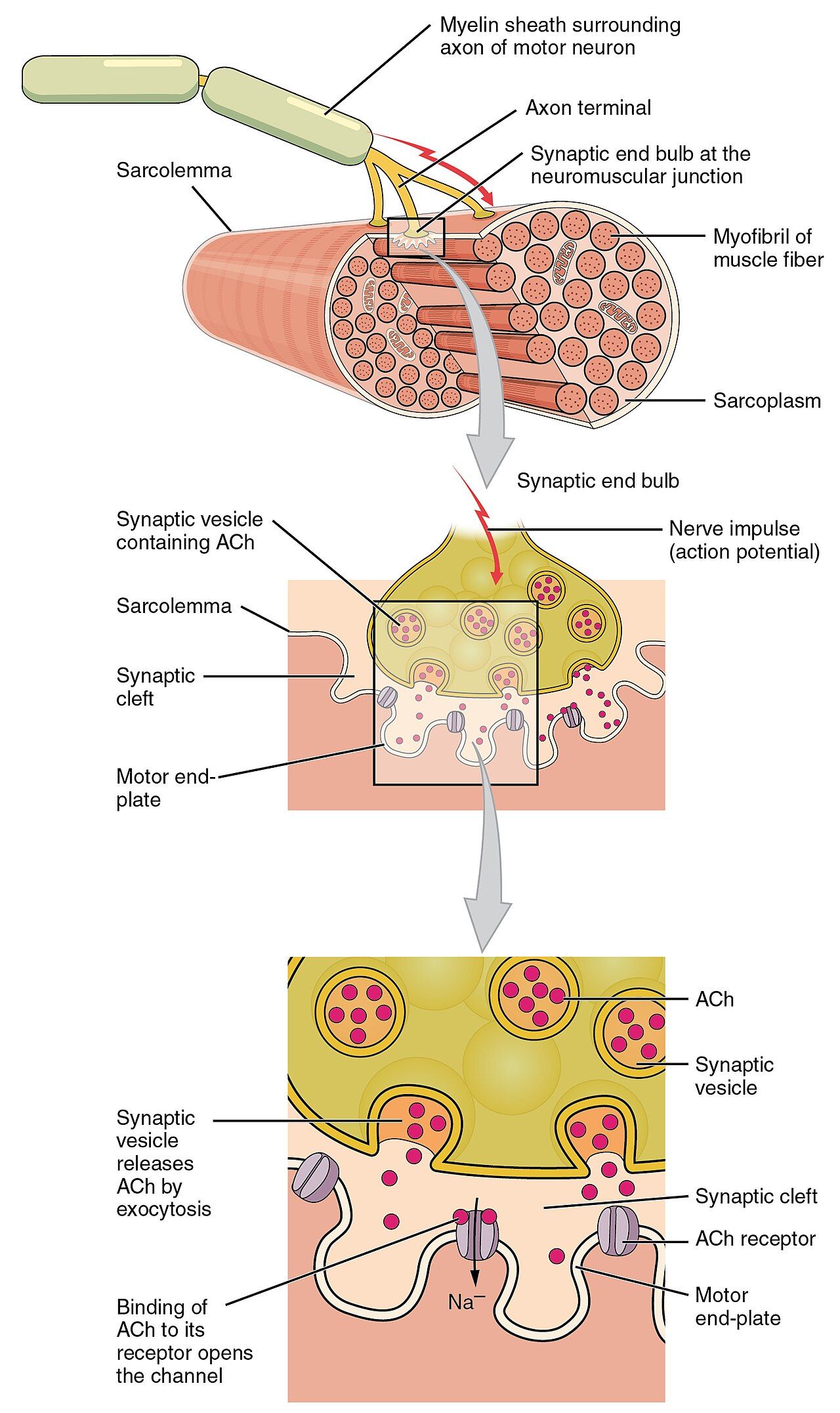
Neuromuscular blocking agents (NMBAs) are technically somatic, not autonomic, but they belong here because they work on the same molecule — acetylcholine — at a nicotinic receptor. They act at the neuromuscular junction, on the NM receptor of the skeletal muscle end plate, to produce flaccid paralysis for intubation, surgery, and mechanical ventilation.
Three facts must be absolutely fixed before any of the pharmacology matters. These drugs do not sedate. They do not relieve pain. They do not cause amnesia. A paralyzed patient who has not been given adequate sedation and analgesia is fully awake, feeling everything, and unable to move a finger or make a sound to tell you — among the most terrifying experiences medicine can inflict. NMBAs are high-alert medications, stored separately with auxiliary warnings, and they are never given except where the airway can be secured and mechanical ventilation is immediately available. Paralysis always includes the diaphragm. The nurse's obligations are non-negotiable: confirm deep sedation and analgesia are running first, never allow paralysis without a secured airway, provide eye lubrication and taping (the blink is gone), reposition to prevent pressure injury, provide DVT prophylaxis, and keep talking to the patient because hearing is unaffected.
Depolarizing blockade: succinylcholine
Succinylcholine is the only depolarizing agent in common use, and it works by an odd trick: it is an agonist that paralyzes. It binds the nicotinic receptor and opens it — producing an initial wave of disorganized contractions called fasciculations — but unlike acetylcholine it is not broken down by acetylcholinesterase, so it sits on the receptor and holds the end plate depolarized. A depolarized membrane cannot fire again, and the muscle goes flaccid. Onset is under a minute and the effect wears off in five to ten minutes as plasma pseudocholinesterase metabolizes it, which is exactly the profile you want for rapid sequence intubation.
Three hazards define it. First, there is no reversal agent — you wait it out, ventilating the patient the whole time. Giving an AChE inhibitor would only prolong the block by adding more acetylcholine to an already depolarized plate. Second, the depolarization leaks potassium out of every muscle cell in the body, so succinylcholine is contraindicated in patients with existing hyperkalemia, and in burns, crush injury, denervation, spinal cord injury, or prolonged immobility beyond roughly 24–48 hours, where receptor upregulation can produce a potassium surge large enough to cause cardiac arrest. The same mechanism drives the drug's boxed warning: a child or adolescent with an undiagnosed skeletal muscle myopathy — Duchenne muscular dystrophy above all, often not yet apparent in a young boy — can develop hyperkalemic rhabdomyolysis, ventricular dysrhythmia, and cardiac arrest after a single dose. For that reason succinylcholine is not used for routine or elective intubation in children and adolescents; its pediatric use is reserved for emergency airway control. Third, succinylcholine is a leading trigger of malignant hyperthermia in genetically susceptible patients — a hypermetabolic crisis whose earliest reliable sign is a rising end-tidal CO2, with masseter rigidity, tachycardia, and a late temperature spike. The antidote is dantrolene, which must be immediately available wherever the drug is used. A rare patient with atypical pseudocholinesterase stays paralyzed for hours; the management is simply continued ventilation and sedation until it clears.
Non-depolarizing blockade: the “-curium” and “-curonium” drugs
Rocuronium, vecuronium, cisatracurium, and atracurium take the more intuitive route: they are competitive antagonists that occupy the nicotinic receptor without activating it, so acetylcholine cannot get in. There are no fasciculations, onset is slower (though a large dose of rocuronium approaches succinylcholine's speed), and the block lasts much longer. Because the blockade is competitive, it is reversible — flood the junction with enough acetylcholine and it outcompetes the drug. That is what neostigmine does, and it is always given with glycopyrrolate or atropine, because the extra acetylcholine spilling onto muscarinic receptors would otherwise cause bradycardia and drowning secretions. Sugammadex is the newer and cleaner option: it physically encapsulates rocuronium or vecuronium molecules and drags them out of circulation, reversing even deep blockade in minutes without touching the cholinergic system at all. Cisatracurium earns a special mention because it degrades spontaneously in plasma (Hofmann elimination) rather than through liver or kidney, making it the agent of choice in organ failure.
| Feature | Depolarizing (succinylcholine) | Non-depolarizing (rocuronium, vecuronium, cisatracurium) |
|---|---|---|
| Mechanism | Agonist — opens the receptor and holds it depolarized | Competitive antagonist — occupies the receptor, blocks ACh |
| Fasciculations | Yes, then flaccid paralysis | No |
| Onset / duration | Under 1 min / 5–10 min | 1–3 min / 30–60+ min |
| Reversal | None — ventilate and wait | Neostigmine + glycopyrrolate, or sugammadex (roc/vec) |
| Effect of AChE inhibitor | Prolongs the block | Reverses the block |
| Key dangers | Boxed warning — hyperkalemic rhabdomyolysis and cardiac arrest in children/adolescents with undiagnosed myopathy, so not for routine or elective pediatric use. Also hyperkalemia, malignant hyperthermia, myalgias, bradycardia in children | Prolonged paralysis, residual weakness; potentiated by aminoglycosides, magnesium, hypothermia |
| Typical use | Rapid sequence intubation | Surgical relaxation, ventilated ICU patients |
Monitoring is where the nurse lives with these drugs. Train-of-four (TOF) peripheral nerve stimulation delivers four small shocks and counts the resulting twitches; the depth of blockade is titrated to a target, commonly one to two twitches out of four for a continuous infusion. Fewer twitches means deeper block and a longer, harder recovery. Before extubation, recovery is judged by objective criteria — sustained head lift, adequate tidal volume and grip, the ability to protect the airway — and never by appearance alone, because a patient can look awake while still too weak to breathe. Remember too that several common drugs deepen and prolong blockade: aminoglycoside antibiotics, magnesium sulfate, calcium channel blockers, inhaled anesthetics, hypothermia, and acidosis. A postpartum patient on a magnesium drip is a different pharmacologic problem than the same patient without it.
- NMBAs act at the nicotinic (NM) receptor of the motor end plate; they are high-alert drugs that paralyze the diaphragm.
- They provide no sedation, no analgesia, no amnesia — sedation and pain control must run first and continuously.
- Succinylcholine depolarizes: fasciculations, ultra-short action, no reversal; risks hyperkalemia and malignant hyperthermia (antidote dantrolene). Its boxed warning keeps it out of routine pediatric intubation — undiagnosed myopathy can mean hyperkalemic arrest.
- Non-depolarizers compete: no fasciculations, longer action, reversible with neostigmine + glycopyrrolate or sugammadex.
- Monitor depth with train-of-four; aminoglycosides and magnesium prolong blockade; confirm real strength before extubation.
The chapter in one breath
- The autonomic nervous system has a sympathetic (fight-or-flight, adrenergic) and a parasympathetic (rest-and-digest, cholinergic) division; all ganglia are nicotinic.
- The receptor map does the work: alpha-1 constricts, alpha-2 feeds back to lower BP, beta-1 is the heart, beta-2 is the lungs, muscarinic is SLUDGE.
- Epinephrine is dose-dependent (beta low, alpha high) and is the first-line drug in anaphylaxis at 0.3–0.5 mg IM (1 mg/mL) in the lateral thigh; vasopressor extravasation is reversed with phentolamine.
- Beta-2 agonists rescue airways at the price of tremor, tachycardia, and hypokalemia; long-acting agents are maintenance only.
- Alpha blockers cause first-dose syncope (dose at bedtime); beta blockers save lives post-MI, and in HFrEF only as metoprolol succinate, bisoprolol, or carvedilol (not atenolol); they must never be stopped abruptly and mask hypoglycemia except sweating.
- AChE inhibitors amplify the body's own acetylcholine (myasthenia, Alzheimer, reversal); overshoot is cholinergic crisis, treated with atropine + pralidoxime in organophosphate poisoning.
- Anticholinergics are dry, hot, red, blurred, tachycardic, and confused — and their burden stacks dangerously in older adults; physostigmine is the antidote for pure antimuscarinic toxicity only, and is contraindicated when a TCA or a wide QRS is involved.
- Neuromuscular blockers paralyze without sedating: succinylcholine depolarizes and cannot be reversed (hyperkalemia, malignant hyperthermia → dantrolene); non-depolarizers compete and reverse with neostigmine + glycopyrrolate or sugammadex.
ReferenceWords worth knowing
A quick reference for the terms in this chapter — skim it now, or circle back whenever a word trips you up.
- Acetylcholine (ACh)
- The transmitter at all autonomic ganglia, at parasympathetic organ synapses, at sympathetic sweat glands, and at the skeletal muscle end plate.
- Acetylcholinesterase (AChE)
- The enzyme that breaks down acetylcholine in the synapse; blocking it amplifies and prolongs cholinergic signaling.
- Alpha-1 receptor
- Receptor on vascular smooth muscle, pupil, and bladder neck; stimulation causes vasoconstriction, mydriasis, and urinary retention.
- Alpha-2 receptor
- Presynaptic and central receptor whose stimulation reduces norepinephrine release, lowering blood pressure (clonidine).
- Anticholinergic (antimuscarinic)
- A drug that blocks muscarinic receptors, producing dry mouth, blurred vision, tachycardia, constipation, retention, and confusion.
- Anticholinergic burden
- The cumulative antimuscarinic load from all of a patient's drugs, a major cause of confusion and falls in older adults.
- Autonomic nervous system
- The involuntary nervous system controlling heart, vessels, airways, gut, bladder, glands, and pupils.
- Beta-1 receptor
- Cardiac (“one heart”) and renal receptor; stimulation raises rate, contractility, conduction, and renin release.
- Beta-2 receptor
- Pulmonary (“two lungs”), vascular, uterine, and hepatic receptor; stimulation causes bronchodilation and vasodilation.
- Cardioselective
- Describing a beta blocker that acts mainly on beta-1 and largely spares beta-2; selectivity is relative and lost at high doses.
- Cholinergic crisis
- Excess cholinergic stimulation causing SLUDGE plus muscle weakness and respiratory failure; the mirror trap of myasthenic crisis.
- Depolarizing blocker
- A neuromuscular blocker (succinylcholine) that activates and then holds the end plate depolarized; has no reversal agent.
- Extravasation
- Leakage of a vesicant such as a vasopressor into surrounding tissue, risking necrosis; reversed locally with phentolamine.
- Malignant hyperthermia
- A hypermetabolic crisis triggered by succinylcholine or volatile anesthetics; earliest sign is rising end-tidal CO2; antidote is dantrolene.
- Muscarinic receptor
- The acetylcholine receptor on parasympathetic target organs; stimulation produces the SLUDGE picture.
- Neuromuscular blocking agent (NMBA)
- A high-alert drug that paralyzes skeletal muscle at the nicotinic end plate without sedating or relieving pain.
- Nicotinic receptor
- The acetylcholine receptor at autonomic ganglia (NN) and at the skeletal muscle end plate (NM).
- Non-depolarizing blocker
- A competitive nicotinic antagonist (rocuronium, vecuronium, cisatracurium) reversible with neostigmine or sugammadex.
- Parasympathetic division
- The rest-and-digest division; acetylcholine on muscarinic receptors slows the heart and activates gut and bladder.
- SLUDGE
- Salivation, Lacrimation, Urination, Defecation, GI upset, Emesis — the muscarinic (cholinergic excess) picture.
- Sympathetic division
- The fight-or-flight division; mostly norepinephrine on adrenergic receptors, plus adrenal epinephrine release.
- Train-of-four (TOF)
- Peripheral nerve stimulation delivering four impulses to gauge the depth of neuromuscular blockade by counting twitches.