Pain & Substance Use
Pain is the reason most people come to us. Easing it is one of the few things you do that a patient feels within minutes. It is also one of the most dangerous things we do. The drugs that treat pain best can stop breathing, poison the liver, and make the stomach bleed. For some people, they start a story that ends in a substance use disorder. This chapter covers the whole arc. It starts with how pain is made and how we measure something we cannot see. Then come the non-opioids, with their firm ceilings and quiet harms. Next are the opioids, which have no ceiling at all. Then the adjuvants, which treat pain the classic drugs cannot touch. Last come the substances people use and the withdrawal syndromes that bring them into your care. One theme repeats. The drug is only half of it. The other half is the person who assesses, watches, teaches, and refuses to look away.
By the end of this chapter you can
- Describe the four steps of nociception and explain where each class of pain drug stops them.
- Tell acute from chronic pain and nociceptive from neuropathic pain, and match each to the drug that works.
- Pick the right pain scale for an adult who can talk, a young child, a person who cannot speak, and a critically ill patient on a breathing tube.
- Explain the ceiling effect of non-opioid pain drugs and the harms of acetaminophen and NSAIDs, with their antidotes and checks.
- Compare opioid full agonists, partial agonists, agonist-antagonists, and antagonists, and describe what to do about opioid-caused respiratory depression.
- Tell tolerance, physical dependence, and substance use disorder apart, and use accurate words that do not shame.
- Explain how adjuvant analgesics and triptans work, and teach safe use.
- Spot alcohol, opioid, sedative, and stimulant withdrawal, and name the drugs that treat each.
Section 1Pain and how we assess it
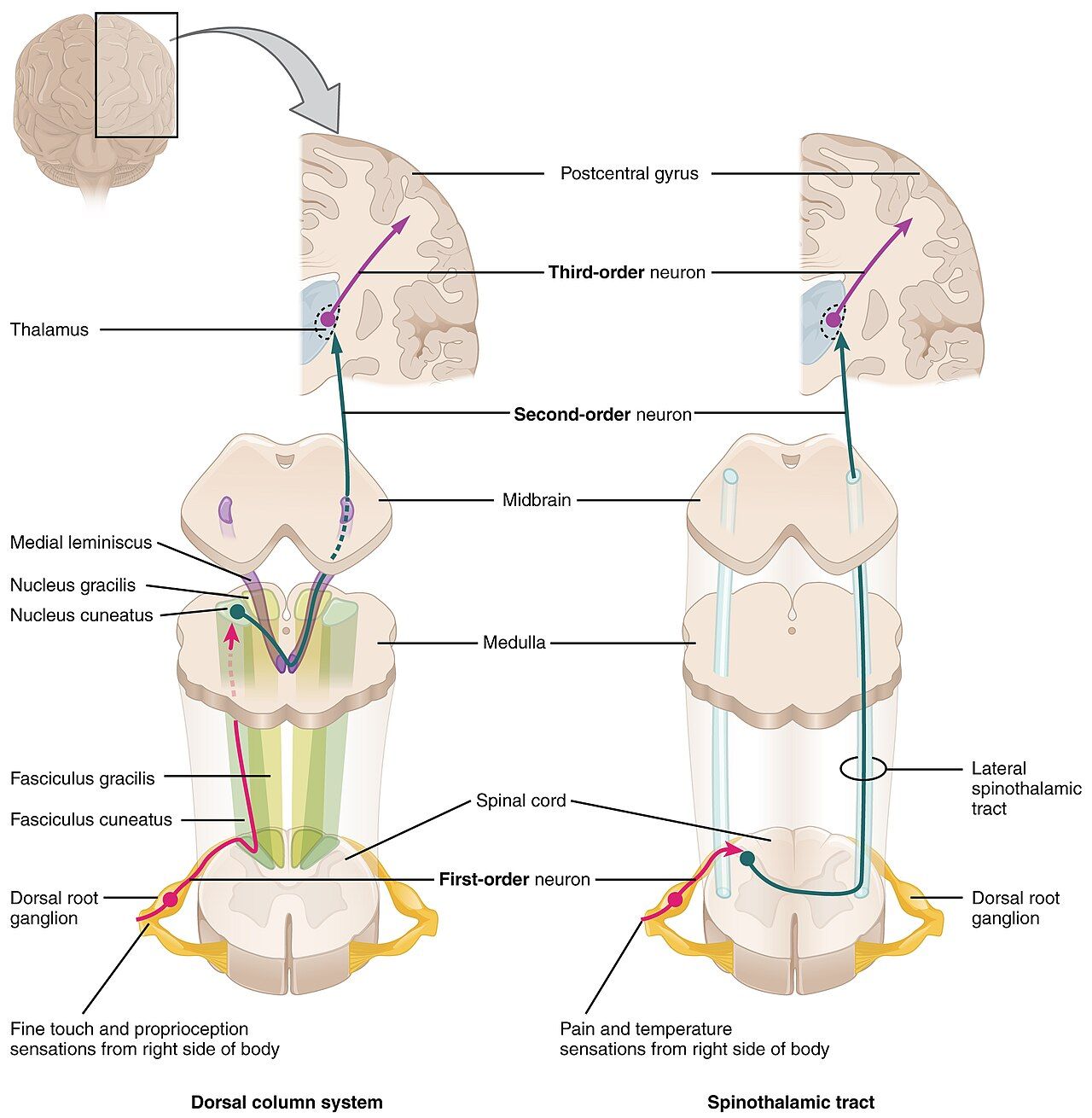
Nociception: four steps, four places to intervene
Pain starts as a physical event and ends as a personal one. The physical part is called nociception. It happens in four steps. They are worth learning as four steps, because each class of pain drug in this chapter blocks a different one.
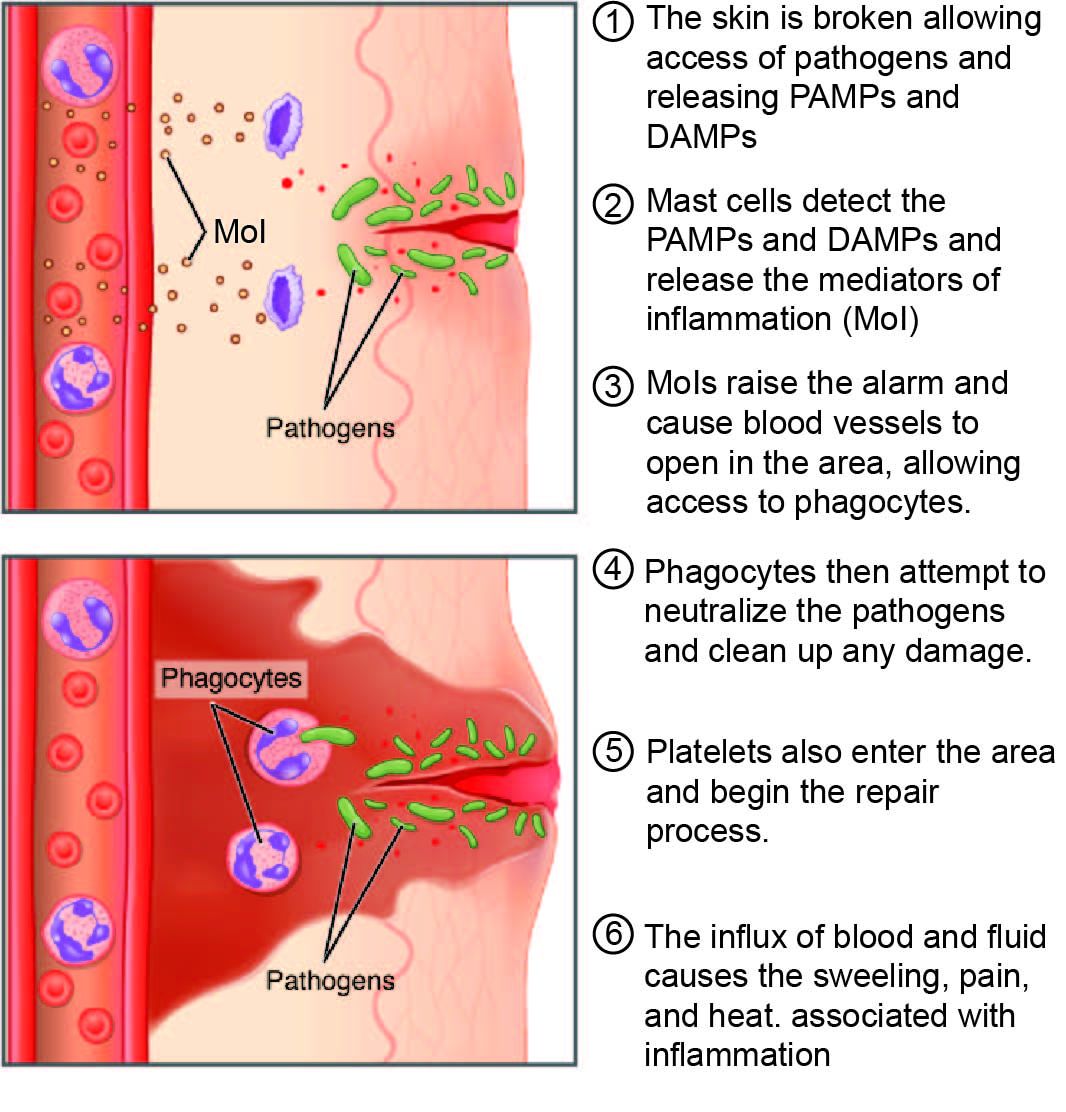
Transduction is the moment an injury turns into an electrical signal. Damaged cells spill potassium, hydrogen ions, bradykinin, histamine, and, most important, prostaglandins. Prostaglandins do not cause pain so much as make nerve endings touchier. These free nerve endings are called nociceptors. Once they are touchy, even a light touch on sunburned skin screams. This is exactly where NSAIDs work. Block prostaglandin making, and the nerve endings calm back toward normal.
Transmission carries the signal to the spinal cord along two very different fibers. Thin A-delta fibers have a fatty coat (myelin) and conduct fast. They deliver the sharp, bright "ouch" you feel the instant you touch a hot pan, and you know just where it is. C fibers have no myelin and conduct slowly. They deliver the dull, burning, aching misery that comes a second later and stays. It is hard to point to. In the dorsal horn of the spinal cord, these fibers release glutamate and substance P. These chemicals pass the signal to the next nerve cells. Those cells cross to the other side and climb the spinothalamic tract to the thalamus. Opioids act mostly here and higher up. They lower the release of substance P and quiet the receiving nerve cell.
Perception is when the thalamus passes the signal on. It goes to the sensory cortex (where is it, and how bad). It goes to the limbic system (how much do I hate it). It goes to the frontal lobe (what does this mean for me). That is why the same injury hurts more when a person is scared, worn out, or alone. And it is why a warm blanket, an explanation, and a hand on the shoulder are real treatments, not "soft" ones.
Modulation is the body pushing back. Fibers run down from the periaqueductal gray in the midbrain. They release serotonin and norepinephrine onto the dorsal horn and turn the volume down. Small nerve cells there release the body's own opioids. These are endorphins, enkephalins, and dynorphins. They act on the very receptors that morphine uses. Modulation explains an odd fact. Antidepressants that raise serotonin and norepinephrine ease pain. This is not because the person is depressed. It is because the drugs strengthen the body's own downward brake. Modulation also explains gate control theory. Rubbing a bumped elbow fires large touch fibers. These partly close a "gate" in the dorsal horn on the pain signal. That is the science behind massage, heat, cold, and TENS units.
Acute, chronic, nociceptive, neuropathic
Acute pain has a clear cause, a predictable course, and an end. It protects and warns. It goes away as tissue heals. It usually comes with a fight-or-flight surge: a fast heart rate, high blood pressure, sweating, and guarding. Chronic pain lasts past the expected healing time, usually about three months. It has often outlived its use. And here is the trap that costs patients dearly: the fight-or-flight signs are gone. The nervous system adapts. A person with chronic pain can sit quietly with a heart rate of 68. She can smile at her grandson on a video call. And she can still be in real 8-out-of-10 pain. Anyone who uses vital signs and facial expression as a lie detector will undertreat the very people who suffer most.
Pain also sorts another way. Nociceptive pain comes from real tissue damage, sensed by healthy nerves. It responds well to the classic pain drugs. It splits into two types. Somatic pain comes from skin, muscle, or bone. It is sharp or aching and easy to point to. Visceral pain comes from organs. It is cramping, squeezing, and deep. It is hard to pin down and is often referred to a distant patch of skin. An example is left arm pain during a heart attack. Neuropathic pain is a different kind. The nerve itself is damaged or misfiring. So the alarm rings with no fire. People call it burning, shooting, electric, pins and needles, or numb but painful. Here is the key part for care. It responds poorly to opioids and NSAIDs and well to adjuvants (Section 4). Diabetic nerve pain, postherpetic neuralgia (pain after shingles), phantom limb pain, sciatica, and nerve pain from chemotherapy all belong here.
| Pain type | How patients describe it | Classic examples | What actually works |
|---|---|---|---|
| Somatic (nociceptive) | Sharp, aching, throbbing; easy to point to | Surgical incision, fracture, bone metastases | NSAIDs, acetaminophen, opioids |
| Visceral (nociceptive) | Cramping, squeezing, deep, diffuse; often referred | Bowel obstruction, renal colic, MI, labor | Opioids; antispasmodics; treat the cause |
| Neuropathic | Burning, shooting, electric, tingling, numb yet painful | Diabetic neuropathy, postherpetic neuralgia, phantom limb | Adjuvants: gabapentinoids, TCAs, SNRIs, lidocaine patch |
| Breakthrough | Sudden flare over controlled baseline pain | Cancer pain during a dressing change | Short-acting opioid on top of the long-acting baseline |
| Chronic (any origin) | Persistent past healing; normal vital signs | Low back pain, fibromyalgia, osteoarthritis | Multimodal: non-opioid + adjuvant + non-drug; opioids last |
Measuring something you cannot see
Pain is personal. The patient's own report is the gold standard. Pain is whatever the person feeling it says it is, whenever they say it is there. Your job is not to check if it is true. Your job is to describe it. A structured assessment does that. Ask about onset, what makes it worse or better, its quality, where it is and where it spreads, how bad it is, its timing, and how it affects daily life. The memory tools OLDCARTS and PQRST both get you there. The last item, function, is the one people skip. Yet it matters most in chronic pain. "Can you sleep? Can you get to the bathroom? Can you play with your grandkids?" These measure progress better than any number.
Then pick a scale that fits the person in front of you. A number means nothing if the patient cannot give you one. Using the 0 to 10 scale for a toddler, a person with advanced dementia, or an ICU patient on a breathing tube is how pain gets missed.
| Scale | Who it is for | What you actually do |
|---|---|---|
| Numeric rating (NRS) 0 to 10 | Verbal adults, older children | Ask for a number; also ask their acceptable goal (e.g., "a 3 lets me sleep") |
| Wong-Baker FACES / FPS-R | Children roughly 3 years and up; adults with language barriers | Patient points to a face: their face, not your read of their expression |
| FLACC | Nonverbal patients; children ~2 months to 7 years | Score Face, Legs, Activity, Cry, Consolability (0 to 10) |
| CRIES | Neonates | Crying, oxygen Requirement, Increased vitals, Expression, Sleeplessness |
| PAINAD | Advanced dementia | Observe breathing, vocalization, expression, body language, consolability |
| CPOT / BPS | Critically ill, intubated, sedated | Behavioral observation: never vital signs alone |
Assessment does not end when the pill goes down. Reassess. Check about 15 to 30 minutes after an IV dose and about 60 minutes after an oral dose. For anything else, check at peak effect. Chart the recheck. A pain drug with no recheck is an unfinished job. In a court record, it looks exactly like one.
Last, the modern plan: multimodal analgesia. Instead of raising the opioid dose, stack drugs that work in different ways. Think scheduled acetaminophen plus an NSAID plus a nerve block plus gabapentin plus ice and repositioning. Each does part of the work at a lower, safer dose. The old WHO analgesic ladder still teaches the idea. It goes from a non-opioid, to adding a weak opioid, to a strong opioid, with adjuvants on every rung. The lesson: start low, add instead of replace, and never skip the non-drug rung.
- Nociception = transduction → transmission → perception → modulation. NSAIDs act at transduction. Opioids act at transmission and perception. Adjuvants and endorphins act at modulation.
- A-delta = fast, sharp, easy to point to. C fibers = slow, dull, spread out. Both connect in the dorsal horn and climb the spinothalamic tract.
- Neuropathic pain responds poorly to opioids and NSAIDs and well to adjuvants. Hearing "burning, shooting, electric" changes the prescription.
- Self-report is the gold standard. Match the scale to the patient (NRS, FACES, FLACC, CRIES, PAINAD, CPOT) and always recheck after the dose.
Section 2Non-opioid analgesics
The ceiling effect, and why it matters
Non-opioid pain drugs share a trait opioids lack: a ceiling effect. Past a certain dose, pain relief stops getting better. The enzyme they block is already fully blocked. But the harm keeps climbing in a straight line. Six ibuprofen do not ease more pain than three. They only make more stomachs bleed. Six grams of acetaminophen do not ease more pain than three. They only kill more liver cells. This is the most important teaching point for the whole class. When relief is not enough, the natural human urge is to take more. The right move is to add a drug that works a different way, not more of the same one.
They share good traits too. They do not slow breathing. They do not cause dependence. They do not cause drowsiness. And they are the base the rest of the pain plan is built on. Acetaminophen given on a schedule around the clock after surgery truly lowers the amount of opioid a person needs. That is called opioid sparing, and it is the whole point.
Acetaminophen: the gentle one that destroys livers
Acetaminophen (Tylenol) eases pain and lowers fever. It seems to work by blocking cyclooxygenase inside the brain and spinal cord. What it does not do matters just as much. It has almost no anti-inflammatory effect and no effect on platelets. It does not cause stomach ulcers or harm the kidneys the way NSAIDs do. That makes it the pain drug of choice for people who cannot take NSAIDs. This includes people with peptic ulcers, chronic kidney disease, bleeding risk, blood thinners, heart failure, or pregnancy. It is also the first-line fever drug for children. For osteoarthritis, it is a fair first try and the safest choice when NSAIDs are ruled out. But be honest about the evidence. Current guidelines favor NSAIDs, on the skin or by mouth. The benefit of acetaminophen in osteoarthritis is small at best.
The danger is the dose. Most acetaminophen is turned into harmless products. But a small share goes through the enzyme CYP2E1. That makes a harsh middle product called NAPQI. Glutathione, a protective molecule in the liver, neutralizes it right away. Now give too much. Or start with low glutathione, as happens with long-term heavy drinking, poor nutrition, or fasting. Then NAPQI runs out of guards. It binds liver cells directly and kills them. This is called centrilobular hepatic necrosis. Acetaminophen is the leading cause of sudden liver failure in the United States. Much of it is accidental.
It is accidental because acetaminophen hides. It is inside oxycodone/acetaminophen and hydrocodone/acetaminophen tablets. It is inside nighttime cold and flu powders, sinus tablets, and menstrual pills. Picture a person who takes two Percocet every six hours, a NyQuil at bedtime, and two Tylenol for a headache. That person has not been careless. They have been sold a maze. Your job is to add up every source. The top limit for a healthy adult is 4 g in 24 hours. Many clinicians teach a safer 3 g a day. With chronic liver disease, long-term heavy drinking, or frailty, the limit is 2 g a day or less.
Overdose fools you on the first day. There may be nausea, vomiting, sweating, and feeling unwell. Or there may be nothing at all, while the liver is already being hurt. At 24 to 72 hours, the right upper belly hurts and the liver enzymes AST and ALT climb. At 72 to 96 hours, liver damage peaks. Signs are yellow skin, bleeding problems, confusion, and possibly death. The antidote is acetylcysteine, which refills glutathione. It works far best when started within 8 to 10 hours of the overdose. Do not wait for symptoms. Do not wait for the level to look "impressive." Get a level 4 hours after the overdose. Plot it on the Rumack-Matthew nomogram, a chart that shows liver risk. Start acetylcysteine if there is any doubt. Oral acetylcysteine smells and tastes like rotten eggs. The IV form can cause an allergy-like reaction (flushing, wheezing, low blood pressure). This is usually handled by slowing the drip, not stopping the drug.
NSAIDs: three drugs in one, and a toxicity for each organ
NSAIDs block cyclooxygenase (COX), so they shut down prostaglandin making. Prostaglandins make nerve endings touchy, drive inflammation, and reset the brain's thermostat. So one drug gives you three effects. It is analgesic, anti-inflammatory, and antipyretic: it eases pain, calms inflammation, and lowers fever. The anti-inflammatory action is exactly what acetaminophen lacks. That is why NSAIDs beat it for sprains, gout, period cramps, kidney stone pain, and inflammatory arthritis.
The problem is that COX comes in two types, and you hit both. COX-1 is the housekeeper. Its prostaglandins protect the stomach lining, keep blood flowing to the kidneys, and help platelets clump (through thromboxane A2). COX-2 is made mostly at sites of inflammation. A nonselective NSAID blocks both. You get relief from blocking COX-2. You get the harm from blocking COX-1. That one sentence explains every side effect on the list:
- GI: upset stomach, erosions, peptic ulcer, and painless GI bleeding (the drug eases pain, so it hides the warning). Take it with food or milk. Add a PPI for people at high risk. Teach patients to report black, tarry stools or vomit that looks like coffee grounds.
- Kidney: prostaglandins widen the small artery that feeds each kidney filter (the afferent arteriole). Take them away in someone who is dehydrated, older, or in heart failure, and filtering drops. The result is acute kidney injury. Watch for the "triple whammy." An ACE inhibitor or ARB, plus a diuretic, plus an NSAID together is a well-known recipe for kidney injury. Check creatinine, urine output, and weight.
- Heart and blood vessels: a boxed warning for higher risk of heart attack and stroke. The risk is worse at higher doses and with longer use. NSAIDs are not allowed for pain around the time of CABG (bypass) surgery. They also make the body hold on to salt and water. That raises blood pressure and can tip heart failure out of control.
- Bleeding: weakens platelet function. Hold before surgery per protocol. Adds to the effect of blood thinners.
- Lungs: can trigger tight airways in aspirin-exacerbated respiratory disease. This is the triad of asthma, nasal polyps, and aspirin sensitivity.
- Pregnancy: the same prostaglandin block that hurts the stomach and kidney also affects the fetus. Prostaglandins hold a fetal blood vessel open. Avoid NSAIDs from 20 weeks of pregnancy onward. Blocking fetal prostaglandins harms the fetal kidneys and causes oligohydramnios, too little fluid around the baby. This has been an FDA warning since 2020. Treat them as not allowed in the third trimester. Then they can cause early closing of the ductus arteriosus, a vessel the fetus needs. Near delivery, they also lengthen labor and raise bleeding in mother and baby. Acetaminophen is the pain drug of choice in pregnancy. The one planned exception is low-dose aspirin (81 mg), prescribed to help prevent preeclampsia.
Celecoxib is COX-2 selective. So it is much easier on the stomach. But it still carries kidney and heart risk. It is a sulfonamide, so ask about sulfa allergy. Ketorolac is the outlier worth memorizing. It is an NSAID shot with truly opioid-like strength for sudden pain. That is wonderful. But its stomach and kidney risks are just as harsh. That is why total use, all routes combined, is limited to 5 days.
Aspirin belongs here but acts differently. It blocks COX for good (irreversibly). So one dose disables a platelet for its whole 7 to 10 day life. That is no help when you want pain relief. It is very helpful at low dose when you want to protect the heart. Two warnings belong to aspirin alone. Reye syndrome is a sudden brain swelling with fatty liver. Because of it, aspirin is avoided in children and teens with a viral illness such as flu or chickenpox. Salicylism is the early warning of aspirin toxicity. Signs are ringing in the ears, hearing loss, dizziness, and fast breathing. Ringing in the ears is a drug level, not a coincidence.
| Drug (class) | Prototype effect | Key effect | Safety alert |
|---|---|---|---|
| Acetaminophen | Central COX inhibition | Analgesic + antipyretic only; no anti-inflammatory, no antiplatelet | Add up every source; max 4 g/day healthy adult, 2 g/day or less in liver disease. Antidote: acetylcysteine |
| Ibuprofen (nonselective NSAID) | COX-1 + COX-2 inhibition | Analgesic, anti-inflammatory, antipyretic | Take with food; watch for GI bleeding, creatinine, and BP; ceiling effect, so more is not better; avoid from 20 weeks of pregnancy (oligohydramnios) and in the third trimester (early ductus closing) |
| Naproxen (nonselective NSAID) | COX-1 + COX-2, long acting | Twice-daily dosing for arthritis | Same GI/renal/CV cautions; longer half-life means longer risk |
| Ketorolac (nonselective NSAID) | Potent injectable NSAID | Opioid-sparing for acute pain | 5-day maximum, all routes combined; high GI bleed and AKI risk |
| Celecoxib (COX-2 selective) | Spares COX-1 | Much less GI injury; no antiplatelet effect | Sulfonamide: ask about sulfa allergy; CV and renal risk remain |
| Aspirin (salicylate) | Irreversible COX inhibition | Antiplatelet for the platelet's 7 to 10 day life | Reye syndrome: avoid in febrile children/teens; tinnitus = early toxicity |
- Non-opioids have a ceiling effect. Past the top dose, harm rises but relief does not. Add a different drug, not more milligrams.
- Acetaminophen = eases pain and fever, with no anti-inflammatory or platelet action. The danger is the total dose and hidden combination products. The antidote is acetylcysteine, best within 8 to 10 hours.
- NSAIDs block COX → ease pain, calm inflammation, and lower fever. Blocking COX-1 explains the stomach, kidney, bleeding, and heart failure harms. In pregnancy, avoid from 20 weeks on (oligohydramnios). Treat as not allowed in the third trimester (early closing of the ductus arteriosus).
- Memory hooks: ketorolac 5 days, celecoxib = sulfa, aspirin = Reye + ringing ears, NSAID + ACE inhibitor + diuretic = kidney injury.
Section 3Opioids
One receptor family, every effect on the list
Opioids work because the body already has an opioid system. Endorphins, enkephalins, and dynorphins act at receptors that the drugs borrow. The one that matters most is the mu receptor. Nearly everything you need to know about opioids follows from one fact: pain relief and slowed breathing come from the same receptor. You cannot have one without risking the other. Turning on mu gives pain relief, euphoria, sleepiness, slowed breathing, constipation, small pupils (miosis), and physical dependence. Turning on kappa gives pain relief and sleepiness, but tends toward a bad mood (dysphoria) instead of euphoria. Delta adds to pain relief and mood.
Opioids come in four types. Knowing which one is in your hand tells you what will happen:
- Full agonists: morphine (the prototype), hydromorphone, fentanyl, oxycodone, hydrocodone, methadone, codeine, and tramadol. These have no ceiling on pain relief. Raise the dose, and you get more relief, and more slowed breathing. Only the patient's tolerance and your watching stand between the two.
- Partial agonist: buprenorphine. It grabs mu tightly but turns it on only partway. So it has a ceiling on slowed breathing, which makes it fairly safe. It grabs so tightly that it can push a full agonist off the receptor. That can set off sudden withdrawal in someone who is dependent on opioids.
- Agonist-antagonists: butorphanol and nalbuphine (they turn on kappa and block mu). They have a ceiling on slowed breathing, lower misuse risk, and more bad mood. They, too, can set off sudden withdrawal in someone on a full agonist. Never give nalbuphine casually to a patient on long-term morphine.
- Antagonists: naloxone, naltrexone, and the gut-only drugs methylnaltrexone and naloxegol. They sit in the receptor and do nothing.
Respiratory depression: sedation comes first
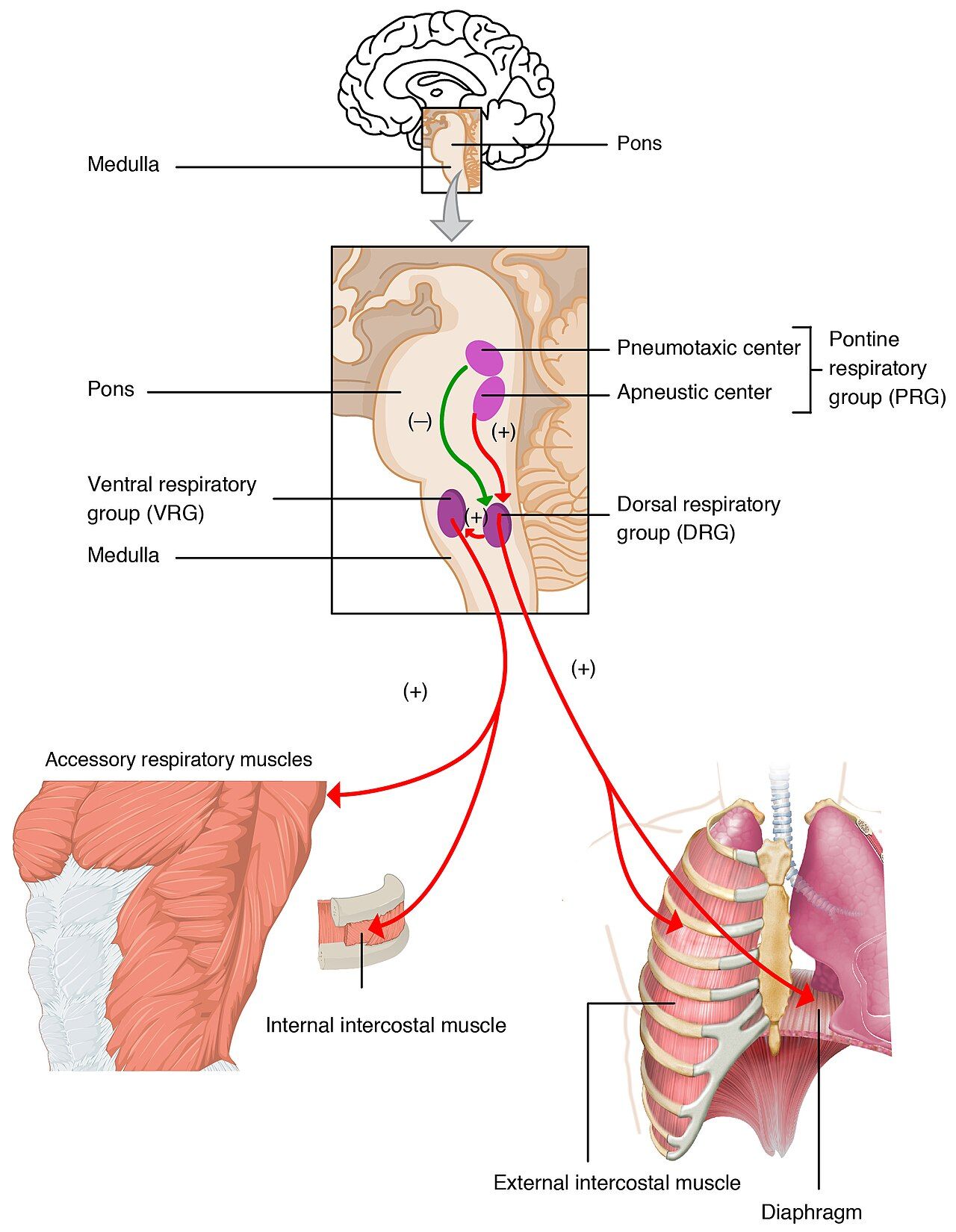
Opioids dull the brainstem sensors that respond to rising carbon dioxide. So the patient simply stops feeling the urge to breathe. Here is the point that saves lives, and the one people most often get backward: sleepiness comes before slowed breathing. The breathing rate is a late sign. By the time you count 6 breaths a minute, you are already late. The early sign is a patient who is unusually drowsy. They drift off mid-sentence. They need a shake instead of a word. That is why the POSS (Pasero Opioid-induced Sedation Scale) exists. Check sleepiness at every opioid check. When the patient becomes hard to wake, hold the next dose and tell the prescriber, before the rate falls.
Risk stacks up. It is higher in people new to opioids and in the first 24 hours of use. It is higher with obesity or untreated obstructive sleep apnea, with older age, and with kidney or liver disease. Above all, it rises with other drugs that slow the brain. These include benzodiazepines, alcohol, sedating antihistamines, gabapentinoids, and muscle relaxants. The opioid plus benzodiazepine mix carries a boxed warning for a reason.
The classic overdose triad is low alertness, pinpoint pupils, and slowed breathing. The reversal drug is naloxone. Given IV, it works in 1 to 2 minutes. It can also be given into a muscle, under the skin, or into the nose by a bystander. Two things about naloxone must be automatic. First, adjust the dose to the breathing rate, not to full wakefulness. Dumping a full dose into someone in pain strips every receptor at once. That causes agony, vomiting, high blood pressure, and a racing heart. In someone dependent on opioids, it causes violent sudden withdrawal. Second, and more dangerous: naloxone lasts about 30 to 90 minutes, which is shorter than most opioids. The patient wakes up and everyone relaxes. Then the naloxone wears off. The opioid still in the body puts them back under. Every naloxone dose must be followed by more watching, and often more doses or a drip. This is also the whole teaching point of take-home naloxone kits. Give the dose, then call emergency services and stay.
The rest of the effect list, and the traps
Constipation needs its own paragraph. It is the effect to which little or no tolerance develops. Most other opioid effects fade with time. The bowel does not adapt. A person on long-term opioids with no bowel plan is headed for a blocked bowel. Start a stimulant laxative (senna), with or without a stool softener, on the same order as the opioid. Do not wait for the problem. For constipation that will not budge, try a gut-only antagonist such as methylnaltrexone or naloxegol. These block mu receptors in the gut but do not enter the brain. So the bowel moves and the pain relief stays.
Also expect nausea and vomiting (tolerance usually builds in days). Expect itching and flushing from histamine release. This is worst with morphine, and it is not an allergy. Watch for trouble passing urine, dizziness on standing, small pupils, and spasm of the bile ducts.
Each drug has its own traps. Morphine has an active breakdown product that builds up when the kidneys are weak. That causes long-lasting sleepiness. So hydromorphone or fentanyl is usually preferred as kidney function falls. Meperidine makes a nerve-toxic product, normeperidine, which causes tremors and seizures. It is avoided in older adults and in kidney disease. It has mostly been abandoned. Codeine and tramadol are prodrugs switched on by CYP2D6. That enzyme varies hugely between people. Ultrarapid metabolizers make a surge of active drug. That is why both are not allowed in children under 12. They are also not allowed after tonsil or adenoid removal in anyone under 18. Tramadol also blocks the reuptake of serotonin and norepinephrine. So it lowers the seizure threshold and can add to serotonin syndrome. Methadone has a long, unpredictable half-life. It keeps building up for days after the pain relief has faded. It also lengthens the QT interval. Fentanyl skin patches are for opioid-tolerant patients only. Never use them in someone new to opioids, and never for sudden pain. They take 12 to 24 hours to start working. Heat speeds up absorption into an overdose. That includes fever, a heating pad, a hot bath, or a sauna. Remove the old patch when you put on the new one. Teach patients to fold used patches sticky side together and throw them away safely. A used patch still holds enough drug to kill a child or a pet.
| Class | Prototype | Key effect | Safety alert |
|---|---|---|---|
| Full agonist | Morphine | Mu agonism; no analgesic ceiling | Sedation before respiratory depression; active metabolite accumulates in renal failure; start a bowel regimen day one |
| Full agonist, potent | Fentanyl / hydromorphone | Rapid onset (fentanyl); high potency per mg | High-alert: do not confuse mg with mcg; patch is for opioid-tolerant only; heat increases patch absorption |
| Full agonist, prodrug | Codeine / tramadol | Needs CYP2D6 activation; tramadol also blocks serotonin/NE reuptake | Contraindicated <12 years and post-tonsillectomy <18; tramadol lowers seizure threshold, serotonin syndrome risk |
| Full agonist, long/variable | Methadone | Long, unpredictable half-life; used for OUD and pain | Accumulates for days; QT prolongation: get an ECG; for OUD, dispensed by certified programs |
| Partial agonist | Buprenorphine | Tight binding, ceiling on respiratory depression | Can precipitate withdrawal if given too soon after a full agonist: wait for moderate withdrawal |
| Agonist-antagonist | Nalbuphine / butorphanol | Kappa agonist, mu antagonist; ceiling on respiratory depression | Precipitates withdrawal in opioid-dependent patients; dysphoria |
| Antagonist | Naloxone | Reverses all opioid effects within 1 to 2 minutes IV | Duration is shorter than the opioid: the patient can re-sedate. Titrate to respiratory rate; keep monitoring |
| Antagonist, peripheral | Methylnaltrexone / naloxegol | Blocks gut mu receptors only | Relieves opioid-induced constipation without reversing analgesia |
Tolerance, dependence, and the words we use
Three ideas get mixed up all the time, and the mix-up harms patients. Tolerance is a drug effect. The same dose works less over time, so the dose must rise. Physical dependence is also a drug effect. The body has adapted. Stopping suddenly, or giving an antagonist, causes a withdrawal syndrome. Both are expected, normal, and predictable with steady opioid use. Neither one means addiction. Opioid use disorder is a diagnosis. It is defined by compulsive use, loss of control, craving, and use that continues despite harm. Picture a person with spreading cancer on 200 mg of morphine a day. They are tolerant and physically dependent. In all likelihood, they are not addicted at all. There is also pseudoaddiction. This is a person whose pain is truly undertreated. They watch the clock, ask for certain drugs, and look "drug-seeking." Yet the behavior vanishes the moment the pain is treated well.
Opioids are high-alert medications. That means independent double-checks per policy and close attention to mg versus mcg. With patient-controlled analgesia (PCA) there is one firm rule: only the patient presses the button. "PCA by proxy" means a caring family member pushes the button for a sleeping patient. That defeats the built-in safety feature. A patient too sleepy to press cannot overdose themselves. PCA by proxy has killed people. Teach the patient and the family. Keep naloxone and a bag-valve mask close by. Check sleepiness, breathing rate, and pulse oximetry. Add capnography (a carbon dioxide monitor) for high-risk patients.
- Turning on the mu receptor gives pain relief and slowed breathing. The benefit and the risk cannot be separated. Full agonists have no ceiling on pain relief.
- Sleepiness comes before slowed breathing. Check sleepiness (POSS), not just breathing rate. Overdose triad: low alertness, pinpoint pupils, slow breathing.
- Naloxone reverses in 1 to 2 minutes but lasts only 30 to 90 minutes. Watch for re-sedation, and adjust the dose to the breathing rate, not to full wakefulness.
- Tolerance builds to nearly everything except constipation. Start a stimulant laxative with the first opioid order.
- Tolerance and physical dependence are expected and are not addiction. Opioid use disorder is compulsive use despite harm.
Section 4Adjuvants and migraine drugs
What an adjuvant is, and why it is not a consolation prize
An adjuvant analgesic, or co-analgesic, is a drug with another main job. That job may be treating seizures, depression, inflammation, or muscle spasm. But in certain cases it also eases pain. People sometimes think of these as "second string." It is the opposite. For neuropathic pain, adjuvants are first-line, and opioids are the letdown. When a nerve is the problem, adding morphine mostly adds sleepiness and constipation. Adding gabapentin or duloxetine adds relief.
The gabapentinoids are gabapentin and pregabalin. They bind part of the calcium channels on overexcited nerve cells, called the alpha-2-delta subunit. This lowers the release of chemicals that fire up nerves. In short, they turn down a nerve that is shouting. They are used for diabetic nerve pain, pain after shingles, and fibromyalgia (pregabalin). More and more, they are part of multimodal plans after surgery. Expect dizziness, sleepiness, unsteady walking, swollen ankles, weight gain, and blurred vision. Both leave through the kidneys. So the dose must be lowered when the kidneys are weak. Older adults are far more sensitive. Two safety points. Do not stop them suddenly. Taper them, since stopping fast can trigger seizures in people who take them for epilepsy. And heed the label warning about serious slowed breathing when combined with opioids or other brain-slowing drugs. This is most true in older adults or people with COPD. Pregabalin is a controlled substance (schedule V).
The antidepressants work by strengthening the downward brake from Section 1. More serotonin and norepinephrine in the dorsal horn means a stronger brake. Tricyclics (amitriptyline, nortriptyline) work at doses well below the doses used for depression. Their anticholinergic effects are what hold them back. These are dry mouth, constipation, trouble passing urine, blurred vision, dizziness on standing, sleepiness, and a long QT. Nortriptyline is easier on older adults. SNRIs, duloxetine above all, have fewer side effects. They are approved for diabetic nerve pain, fibromyalgia, and long-term muscle and joint pain. Teach that these are given for pain, not because you think the pain is "in their head." That one sentence prevents a lot of skipped doses. Also teach that relief takes days to weeks, unlike a regular pain pill.
The rest of the toolbox. Carbamazepine is first-line for trigeminal neuralgia, a severe face pain. Watch for low sodium, a dangerous drop in white cells (agranulocytosis), and severe skin reactions. Screen for HLA-B*1502 in people of at-risk ancestry. Corticosteroids such as dexamethasone shrink the swelling around a squeezed nerve, a cancer spot in bone, or a brain tumor. A lidocaine 5% patch numbs a small area, such as pain after shingles, with almost none reaching the blood. Capsaicin uses up substance P. Bisphosphonates ease pain from cancer in the bone. Low-dose ketamine blocks NMDA receptors for nerve pain and pain that opioids cannot reach. Muscle relaxants (cyclobenzaprine, tizanidine, baclofen) treat pain from muscle spasm. One standing warning: suddenly stopping intrathecal baclofen (given into the spinal fluid by a pump) is a life-threatening emergency.
Migraine: abort it or prevent it, two entirely different jobs
Migraine is not "a bad headache." It is a nerve and blood vessel event. The trigeminal nerve fires and releases calcitonin gene-related peptide (CGRP) and other signal proteins. Blood vessels in the head widen. Swelling (with no infection) follows around the vessels. The result is throbbing pain on one side, with nausea and sensitivity to light and sound. Sometimes an aura comes first. Migraine drugs split cleanly into two jobs. Mixing them up is the most common patient error you will correct.
Abortive (acute) treatment stops an attack in progress. Triptans are the main abortive drugs, and sumatriptan is the prototype. They are serotonin 5-HT1B/1D agonists. They narrow the widened vessels, block the release of swelling proteins, and quiet the trigeminal nerve. The teaching is simple and firm: take it at the first sign of the headache. A triptan given late into a full attack works poorly. They come as pills, nasal sprays, and shots. The shot matters when vomiting makes a pill useless. Expect flushing, tingling, and warmth. Expect the classic "triptan sensations" of tightness in the chest, neck, or jaw. That chest tightness is usually harmless. But because triptans narrow blood vessels, they are not allowed in coronary artery disease, past heart attack or stroke, uncontrolled high blood pressure, peripheral vascular disease, or hemiplegic or basilar migraine. They must not be taken within 24 hours of an ergot. Ergotamine and dihydroergotamine are older, less selective vessel-narrowing drugs. They cause more nausea and risk ergotism, a dangerous loss of blood flow. They are not allowed in pregnancy or with strong CYP3A4 inhibitors. Newer choices avoid narrowing vessels entirely. The gepants (ubrogepant, rimegepant) block the CGRP receptor and can be used by people with heart disease. The ditan lasmiditan targets 5-HT1F without narrowing vessels. But it causes enough dizziness that people must not drive for 8 hours.
Preventive (prophylactic) treatment is taken every day, headache or not. It is considered when attacks are frequent or disabling, or when abortive drugs are failing. The main choices are propranolol or metoprolol and topiramate. Topiramate can cause tingling, mental fog, weight loss, kidney stones, and birth defects. Others are valproate (not allowed in pregnancy) and amitriptyline. There are also the CGRP monoclonal antibodies (erenumab, fremanezumab, galcanezumab, eptinezumab), given as shots monthly or every three months. OnabotulinumtoxinA is used for chronic migraine. Set expectations. Prevention is judged over 8 to 12 weeks. Success means fewer, milder attacks, not zero.
Teach every person with migraine one more thing: medication overuse headache. Using acute drugs too often causes a headache nearly every day that is driven by the treatment itself. "Too often" is roughly more than 10 to 15 days a month, depending on the drug. A person reaching for a triptan or a combination pain pill most days needs prevention, not a bigger acute prescription.
| Class | Prototype | Key effect | Safety alert |
|---|---|---|---|
| Gabapentinoid | Gabapentin / pregabalin | Binds alpha-2-delta calcium channel subunit; calms neuropathic firing | Dizziness, somnolence, edema; renal dose adjustment; fall risk; taper: do not stop abruptly; respiratory depression with opioids |
| Tricyclic antidepressant | Amitriptyline / nortriptyline | Boosts descending serotonin/NE inhibition at low doses | Anticholinergic effects, orthostasis, QT; give at bedtime; caution in older adults |
| SNRI | Duloxetine | Diabetic neuropathy, fibromyalgia, chronic musculoskeletal pain | Takes days to weeks; teach "this is for pain"; do not stop abruptly |
| Anticonvulsant | Carbamazepine | First-line for trigeminal neuralgia | Hyponatremia, agranulocytosis, severe rash (HLA-B*1502); many interactions |
| Corticosteroid | Dexamethasone | Shrinks inflammation around nerve, bone, or tumor | Hyperglycemia, infection risk, insomnia; give in the morning |
| Topical / local | Lidocaine 5% patch | Localized block with minimal systemic drug | Postherpetic neuralgia; apply to intact skin; follow on/off schedule |
| Triptan (abortive) | Sumatriptan | 5-HT1B/1D agonist: constricts cranial vessels, blocks neuropeptide release | Take at first sign; contraindicated in CAD, prior MI/stroke, uncontrolled HTN; chest tightness is common; no ergot within 24 h |
| Gepant / ditan (abortive) | Ubrogepant / lasmiditan | CGRP receptor block / 5-HT1F agonism: no vasoconstriction | Options when triptans are contraindicated; lasmiditan: no driving for 8 hours |
| Prophylaxis | Propranolol / topiramate / CGRP mAbs | Taken daily (or monthly) to reduce attack frequency | Not for an acute attack; judge over 8 to 12 weeks; topiramate and valproate are teratogenic |
- Adjuvants are first-line for neuropathic pain, not a fallback. Opioids work poorly on damaged nerves.
- Gabapentin/pregabalin: kidney-based dosing, dizziness and falls, taper when stopping, and risk of slowed breathing with opioids.
- TCAs and duloxetine ease pain by strengthening the downward brake. They work at lower doses than for depression, and more slowly than pain pills.
- Triptans stop an attack; they do not prevent one. Take at the first sign. Not allowed in coronary artery disease or uncontrolled high blood pressure. Gepants and ditans do not narrow vessels.
- Acute migraine drugs used more than about 10 to 15 days a month cause medication overuse headache.
Section 5Substance use and withdrawal
The words come first
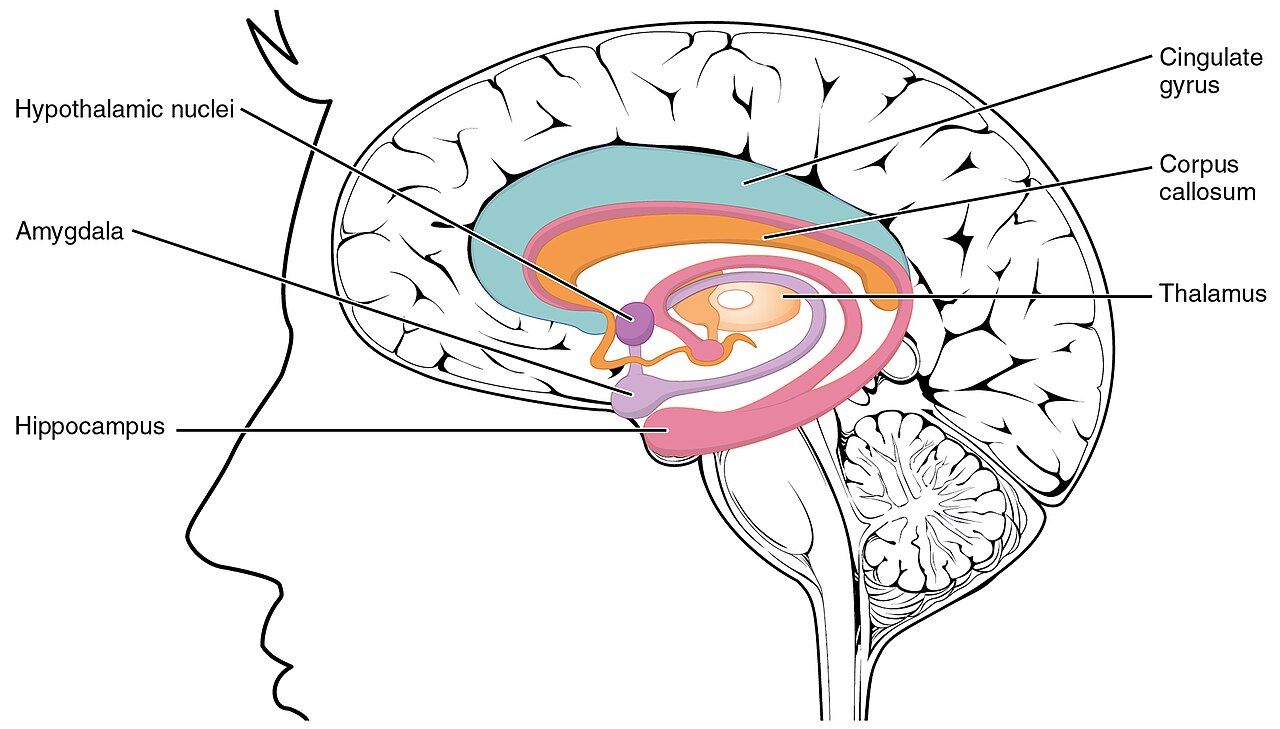
Misused substances are not related to each other chemically. But they all meet at one circuit. It is the mesolimbic dopamine pathway. It evolved to make food, safety, and connection feel worth repeating. Drugs flood it far harder than any natural reward. With repeat use, the circuit rewires. The drug feels needed, and everything else feels flat. That describes a brain, not a character flaw.
That is why words matter for care, not just for manners. Say a person with a substance use disorder, not "an addict." Say a positive toxicology screen, not "dirty urine." Say a person in recovery, not "clean." Patients hear shame and stop telling you things. And a patient who will not tell you what they took is a patient you cannot keep alive. Keep Section 3's ideas in mind. Tolerance (needing more for the same effect) and physical dependence (withdrawal on stopping) are drug effects and can happen to anyone. Substance use disorder is compulsive use despite harm.
Alcohol: the withdrawal that kills
Alcohol slows the brain. It boosts GABA-A, the brain's main "calm down" signal. It also blocks NMDA receptors, which carry "fire up" signals. Over time, the brain fights back. It turns GABA down and turns NMDA up. Take the alcohol away, and that fight-back suddenly has no opponent. The brain is left raw and overexcited. That is the whole cause of alcohol withdrawal, and it is why withdrawal can kill.
The timeline is worth memorizing. About 6 to 24 hours after the last drink come tremor, anxiety, poor sleep, nausea, sweating, a fast heart rate, and high blood pressure. At 12 to 24 hours, alcoholic hallucinosis can appear. The hallucinations are often things seen, while the mind is otherwise clear. At 12 to 48 hours, withdrawal seizures can strike. These are generalized tonic-clonic seizures. At 48 to 96 hours comes delirium tremens (DTs). Signs are deep confusion, agitation, hallucinations, fever, and wild swings in heart rate and blood pressure. People can die from it even with treatment. Use a proven tool (CIWA-Ar) and give doses based on the score.
Treatment swaps in a safer drug for the same receptor. Benzodiazepines (lorazepam, diazepam, chlordiazepoxide) restore GABA tone and prevent seizures and DTs. Lorazepam is often chosen in liver disease, since the liver has less effect on how it breaks down. Add thiamine, vitamin B1. And here is a rule to make automatic: thiamine before glucose. A brain low in thiamine that gets a sugar load can be pushed into Wernicke encephalopathy. Signs are confusion, an unsteady walk, and weak eye movements (ophthalmoplegia). If missed, it becomes Korsakoff syndrome, which is permanent. Also replace folate and magnesium, and correct the electrolytes.
For long-term treatment there are three main drugs. Naltrexone is an opioid antagonist. It dulls craving and reward. It comes as a pill or a monthly shot. It needs a period with no opioids first, and care in liver disease. Acamprosate helps rebalance glutamate and GABA. It is dosed by kidney function, which makes it useful when the liver is damaged. Disulfiram blocks aldehyde dehydrogenase. Then drinking causes a miserable acetaldehyde reaction: flushing, a pounding headache, vomiting, a fast heart rate, and low blood pressure. Disulfiram teaching must be complete. No alcohol in anything. That includes mouthwash, cough syrup, sauces, vinegars, aftershave, and hand sanitizer. This lasts for at least 14 days after the last dose.
Opioids, sedatives, stimulants, nicotine
Opioid withdrawal is the mirror image of alcohol withdrawal. It is miserable but rarely deadly in an otherwise healthy adult. Signs are yawning, watery eyes, a runny nose, and large pupils (mydriasis). That is the opposite of the pinpoint pupils of overdose. There is also gooseflesh (piloerection), which gave us the phrase "cold turkey." Add muscle aches, belly cramps, vomiting, diarrhea, restlessness, and deep anxiety. Score it with COWS. But do not let "not deadly" become "not important." Untreated withdrawal is exactly what drives people back to use. After even a short break, their tolerance has dropped. So the old dose is now a deadly dose. Withdrawal treated badly kills people one step removed.
The treatments are medications for opioid use disorder. They are the proven standard, not a moral failure. Buprenorphine is usually combined with naloxone to discourage misuse. Remember the partial agonist trap from Section 3. Give it too early, and it pushes the full agonist off and sets off withdrawal. So wait until there are clear signs of moderate withdrawal. Methadone works well. For opioid use disorder, it is given out through certified programs. Naltrexone (a long-acting shot) is given after 7 to 10 days with no opioids. Clonidine or lofexidine are alpha-2 agonists. They calm the storm of fast heart rate, sweating, and high blood pressure. Watch for low blood pressure and sleepiness. They do not touch craving. And for every person at risk, and their family, send home take-home naloxone with real teaching, not a pamphlet.
Sedative-hypnotics (benzodiazepines, barbiturates) act like alcohol, because they share the GABA receptor. Their withdrawal can be life-threatening, with seizures and delirium. Never stop a long-term benzodiazepine suddenly. Taper it slowly. Flumazenil is the benzodiazepine antagonist. But it is used sparingly. It is rarely given to long-term users or in mixed overdoses. Stripping away GABA support can set off seizures that are very hard to stop.
Stimulants (cocaine, methamphetamine, prescription amphetamines) do the opposite. They cause a fight-or-flight overdrive. Signs are high blood pressure, a fast heart rate, high body temperature, large pupils, agitation, paranoia and psychosis, and chest pain. They can cause heart attack, stroke, and seizures. For chest pain from cocaine, the classic teaching is benzodiazepines and nitroglycerin. Avoid a beta blocker given alone. Blocking beta while alpha runs free can tighten the heart's arteries more and raise blood pressure. Stimulant withdrawal is the "crash." It is not physically dangerous. But it brings low mood, long sleep, big appetite, vivid dreams, agitation, fierce craving, and depression with real suicide risk. Screen for it. There is no approved drug treatment. Behavior therapy and contingency management (rewards for staying drug-free) are what work.
Nicotine drives the deadliest habit in this section. Nicotine itself causes the dependence. The deaths come from the smoke breathed in alongside it. That is why smoking kills more people than every other drug here combined. Withdrawal brings irritability, anxiety, poor focus, more appetite, and craving. It peaks in the first week. Treatment starts with nicotine replacement (NRT). The most effective plan is a long-acting patch for the base, plus a short-acting gum, lozenge, or inhaler for sudden cravings. Varenicline is a partial agonist at the nicotine receptor. It gives enough to dull withdrawal while blocking the reward of a cigarette. Expect nausea, vivid dreams, and poor sleep. Bupropion lowers the seizure threshold. It is not allowed in seizure disorders or eating disorders. Cannabis deserves a word too. Its withdrawal is real but mild (irritability, poor sleep, loss of appetite). Cannabinoid hyperemesis syndrome shows up in emergency rooms often. It is bouts of vomiting that hot showers relieve.
| Substance | Withdrawal picture | Danger level | Treatment agents |
|---|---|---|---|
| Alcohol | Tremor/anxiety 6 to 24 h → seizures 12 to 48 h → DTs 48 to 96 h | Can be fatal | Benzodiazepines (CIWA-Ar guided) + thiamine before glucose, folate, magnesium; then naltrexone, acamprosate, disulfiram |
| Opioids | Yawning, lacrimation, rhinorrhea, mydriasis, piloerection, cramps, diarrhea, myalgias (COWS) | Miserable, rarely fatal, but relapse after lost tolerance is | Buprenorphine (wait for moderate withdrawal), methadone, naltrexone, clonidine/lofexidine; take-home naloxone |
| Benzodiazepines / sedatives | Anxiety, tremor, insomnia, seizures, delirium | Can be fatal | Slow taper; long-acting benzodiazepine substitution; flumazenil rarely (seizure risk) |
| Stimulants (cocaine, meth) | "Crash": dysphoria, hypersomnia, hyperphagia, craving, depression/suicidality | Not physically fatal; suicide risk is | No approved drug; contingency management. Intoxication: benzodiazepines, cooling; avoid unopposed beta blockade |
| Nicotine | Irritability, anxiety, poor concentration, appetite, craving; peaks in week 1 | Withdrawal not dangerous, but smoking is the deadliest habit here | NRT (patch + short-acting), varenicline, bupropion (lowers seizure threshold) |
| Cannabis | Irritability, insomnia, appetite loss, vivid dreams | Mild | Supportive; watch for cannabinoid hyperemesis syndrome |
- All misused substances meet at the mesolimbic reward pathway. Use person-first words that do not shame. Getting the truth is a safety step.
- Alcohol withdrawal: tremor → seizures → delirium tremens (48 to 96 h), and it can be fatal. Treat with benzodiazepines guided by CIWA-Ar, and give thiamine before glucose.
- Opioid withdrawal is rarely fatal but drives relapse into overdose. Buprenorphine, methadone, and naltrexone are the proven treatments. Buprenorphine given too early sets off withdrawal.
- Benzodiazepine withdrawal can be fatal, so always taper. Stimulant withdrawal is not physically dangerous, but screen for suicide risk.
- Quitting smoking: NRT, varenicline, bupropion. Bupropion is not allowed with seizure or eating disorders.
The chapter in one breath
- Nociception runs transduction → transmission → perception → modulation. Each class of pain drug blocks a different step. That is exactly why multimodal analgesia works better than a bigger dose of one drug.
- Self-report is the gold standard. Match the scale to the patient, ask about function, and recheck after every dose. Vital signs are not a pain scale.
- Non-opioids have a ceiling effect: more milligrams buy harm, not relief. Acetaminophen hides in combination products and kills livers (antidote acetylcysteine). NSAIDs make stomachs bleed, hurt kidneys, raise heart risk, and are avoided from 20 weeks of pregnancy on.
- Opioid mu agonists give pain relief and slowed breathing from the same receptor, with no ceiling on either. Sleepiness always comes before the breathing rate falls.
- Naloxone reverses in minutes but wears off before the opioid does. Adjust the dose to breathing rate and keep watching for re-sedation. Little or no tolerance builds to constipation, so order the laxative on day one.
- Neuropathic pain needs adjuvants (gabapentinoids, TCAs, duloxetine, lidocaine patch), not more opioid. Triptans stop a migraine and are not allowed in coronary artery disease. Preventives are taken daily and judged over weeks.
- Tolerance and physical dependence are expected drug effects. Substance use disorder is compulsive use despite harm. The words you choose decide whether the patient tells you the truth.
- Alcohol and sedative withdrawal can be fatal (benzodiazepines, CIWA-Ar, thiamine before glucose). Opioid withdrawal rarely is, but it drives the relapse that kills. Treat it, and send naloxone home.
ReferenceWords worth knowing
A quick list of the terms in this chapter. Skim it now, or come back when a word trips you up.
- Adjuvant analgesic
- A drug whose main use is not pain but which eases it in certain conditions (gabapentinoids, TCAs, SNRIs, corticosteroids); first-line for neuropathic pain.
- Agonist-antagonist
- An opioid that turns on kappa receptors while blocking mu (nalbuphine, butorphanol); has a ceiling on slowed breathing and can set off withdrawal in someone dependent on opioids.
- Breakthrough pain
- A short flare of pain over an otherwise controlled baseline, treated with a short-acting opioid on top of the long-acting plan.
- Ceiling effect
- The dose past which more drug gives no more effect. With non-opioids, the ceiling is on pain relief while harm keeps climbing, so more milligrams buy only harm. With partial agonists such as buprenorphine, the ceiling is on slowed breathing, which is a safety plus.
- CIWA-Ar
- A proven scoring tool for how severe alcohol withdrawal is, used to decide benzodiazepine doses.
- COWS
- The Clinical Opiate Withdrawal Scale, used to grade opioid withdrawal, including the moderate level needed before starting buprenorphine.
- Cyclooxygenase (COX)
- The enzyme that makes prostaglandins; COX-1 protects the stomach, kidney, and platelets, COX-2 drives inflammation, and NSAIDs block one or both.
- Delirium tremens
- Severe alcohol withdrawal at about 48 to 96 hours: confusion, hallucinations, fever, and unstable heart rate and blood pressure; a medical emergency that can kill.
- Endorphin
- A natural opioid protein released as part of the body's own pain control; acts at the same receptors as morphine.
- Gate control theory
- The idea that firing large touch fibers partly closes a "gate" in the dorsal horn on pain signals; the reason massage, heat, cold, and TENS help.
- Mu receptor
- The opioid receptor behind pain relief, euphoria, sleepiness, slowed breathing, constipation, small pupils, and physical dependence; pain relief and slowed breathing come from the same receptor, which is why they cannot be separated.
- Multimodal analgesia
- Combining drugs that work in different ways, plus non-drug steps, so each helps at a lower, safer dose; the basis of opioid sparing.
- NAPQI
- The toxic acetaminophen breakdown product that glutathione normally neutralizes; in overdose it builds up and kills liver cells.
- Neuropathic pain
- Pain from damaged or misfiring nerves (burning, shooting, electric) that responds poorly to opioids and NSAIDs and well to adjuvants.
- Nociception
- The body's sensing and sending of a harmful stimulus: transduction, transmission, perception, and modulation.
- Nociceptive pain
- Pain from real tissue damage sensed by healthy nerves; split into somatic and visceral.
- Opioid-induced constipation
- A slowed gut from mu receptor activation; an opioid effect to which little or no tolerance develops, so it needs a scheduled stimulant laxative.
- Physical dependence
- The body's adaptation so that stopping suddenly, or giving an antagonist, causes withdrawal; expected with steady opioid use and not the same as addiction.
- Pseudoaddiction
- Drug-seeking behavior caused by undertreated pain that goes away once the pain is well controlled.
- Reye syndrome
- Sudden brain swelling with fatty liver linked to aspirin use in children and teens during a viral illness; the reason aspirin is avoided in that group.
- Substance use disorder
- A diagnosis of compulsive use, craving, loss of control, and use that continues despite harm; different from tolerance and physical dependence.
- Tolerance
- A drop in effect from the same dose over time, so the dose must rise; an expected drug effect, not addiction.