Mental Health, Antiepileptic & Anesthetic Drugs
Every drug in this chapter works in the same place. That place is the tiny gap between two nerve cells. Speed up a chemical signal, slow it down, or silence it, and you change mood, thought, movement, awareness, and pain. That is huge power, and it comes with huge responsibility. These are the drugs that cause serotonin syndrome, that stop a seizure, and that can stop breathing. This chapter works from the gap between nerve cells outward. It covers what the nerve chemicals do and what each drug class does to them. It also covers what you do about it, as the one holding the syringe and watching the monitor.
By the end of this chapter you can
- Describe how a chemical synapse works and name the four nerve chemicals most mind drugs target.
- Compare SSRIs, SNRIs, TCAs, and MAOIs by how they work, their harms, and what to teach.
- Spot serotonin syndrome early and describe what to do.
- Explain why lithium is a high-alert drug, and give its therapeutic range, signs of toxicity, and monitoring plan.
- Tell typical from atypical antipsychotics, and spot EPS, tardive dyskinesia, and neuroleptic malignant syndrome.
- Describe how benzodiazepines work, why they can be habit-forming, and what to do in an overdose.
- Explain the main ways antiepileptic drugs stop seizures, including the SV2A route used by levetiracetam, and check the main drugs safely.
- Compare general and local anesthesia and describe the care priorities in each stage of anesthesia.
Section 1Neurotransmitters & drug targets
The synapse is the whole story
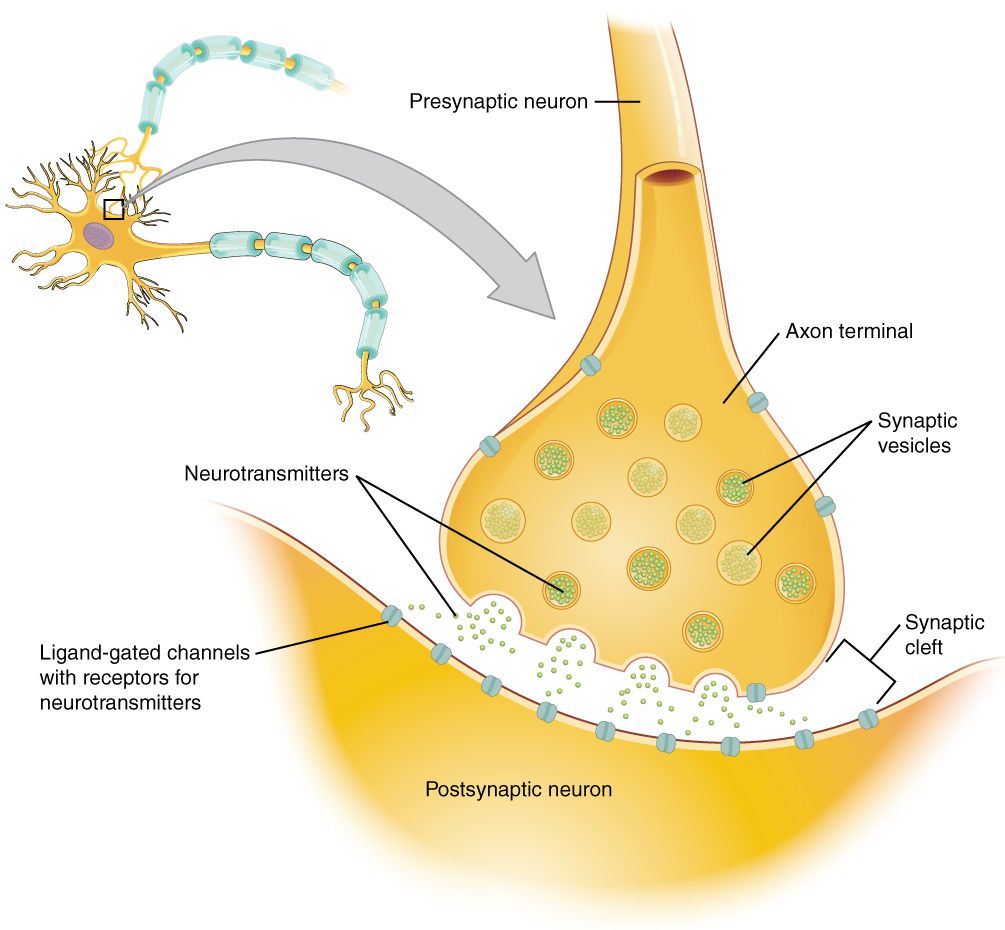
Nerve cells do not touch. Where one ends and the next begins, there is a tiny gap. It is called the synaptic cleft. The message crosses it as a puff of chemical called a neurotransmitter. The sending (presynaptic) nerve cell packs the chemical into small sacs called vesicles. When an electrical signal arrives, it dumps them into the gap. The chemical drifts across and binds receptors on the receiving (postsynaptic) nerve cell. Then it must be cleared, or the signal never turns off. Clearing happens two ways. A reuptake pump vacuums the chemical back into the sending cell. Or an enzyme chops it up.
Those few steps are your whole map of mental health drugs. No drug "fixes depression." Some drugs block a reuptake pump. Some block an enzyme that breaks down a chemical. Some sit in a receptor so the real chemical cannot. Some make a receptor respond more than it would on its own. Once you know which step a drug touches, its effects become something you can reason out. Wanted or unwanted, they stop being a list to memorize.
Two words earn their place here. An agonist binds a receptor and turns it on, copying the natural chemical. An antagonist binds the receptor and turns nothing on. It just sits there and blocks the real chemical from docking. Most antipsychotics are antagonists. Most antidepressants are neither. They leave more chemical in the gap by blocking its removal.
The four transmitters that matter most
Serotonin (5-HT) is the chemical for mood, sleep, appetite, and anxiety. It is not found only in the brain. Most of the body's serotonin lives in the gut. That is exactly why serotonin drugs cause nausea and diarrhea. It is also why too much serotonin causes the gut storm you will read about soon. Dopamine runs four different circuits. One handles reward and drive. One handles fine movement (the basal nuclei). One controls hormones, since dopamine holds down prolactin. And one is a trigger zone in the brainstem for vomiting. Block dopamine and you hit all four. That is why antipsychotics cause both the effect you want and the movement problems you do not.
Norepinephrine (NE) is alertness, drive, energy, and blood pressure. It is the body's gas pedal. Boost it, and depressed people gain energy. Boost it too much, and they get a fast heart rate, shakes, and high blood pressure. GABA (gamma-aminobutyric acid) is the brain's brake pedal. It is the main calming chemical. When GABA binds its receptor, chloride flows into the nerve cell and makes it harder to fire. Nearly every sedative, anxiety drug, many seizure drugs, and most general anesthetics work by pressing that brake. That is also why they all stack on top of one another. And it is why combining them can stop a person's breathing.
| Transmitter | What it does | Too little looks like | Too much looks like |
|---|---|---|---|
| Serotonin | Mood, sleep, appetite, anxiety, GI motility | Depression, anxiety, poor sleep | Serotonin syndrome: agitation, clonus, hyperthermia, diarrhea |
| Dopamine | Reward, movement, prolactin suppression, vomiting trigger | Parkinsonism, flat affect, high prolactin (blockade) | Psychosis, hallucinations, dyskinesia |
| Norepinephrine | Alertness, drive, blood pressure | Fatigue, low motivation | Tachycardia, tremor, hypertension, insomnia |
| GABA | Main inhibitory brake; raises seizure threshold | Anxiety, seizures, withdrawal states | Sedation, ataxia, respiratory depression |
| Acetylcholine | Memory, GI motility, secretions, bladder emptying | Dry mouth, constipation, urinary retention, blurred vision, confusion | SLUDGE: salivation, lacrimation, urination, defecation, GI upset, emesis |
Notice that last row. These drugs do not usually aim at acetylcholine. It is the innocent bystander. Older antidepressants and older antipsychotics block acetylcholine receptors by accident. That accident causes the anticholinergic effects patients actually complain about. These are a cotton-dry mouth, constipation, and trouble passing urine. In an older adult, it can also cause confusion that gets mistaken for dementia.
- Nerve chemicals cross the synaptic cleft, bind receptors, and are cleared by a reuptake pump or an enzyme. Every mind drug touches one of those steps.
- Agonists turn a receptor on. Antagonists block it. Antidepressants mostly do neither. They block clearing.
- Serotonin = mood and gut. Dopamine = reward, movement, prolactin, and vomiting. Norepinephrine = drive and blood pressure. GABA = the brake.
- Anticholinergic effects (dry mouth, constipation, trouble passing urine, blurred vision, confusion) are usually an accident of older drugs, not their purpose.
Section 2Antidepressants & mood stabilizers
Four generations of the same idea
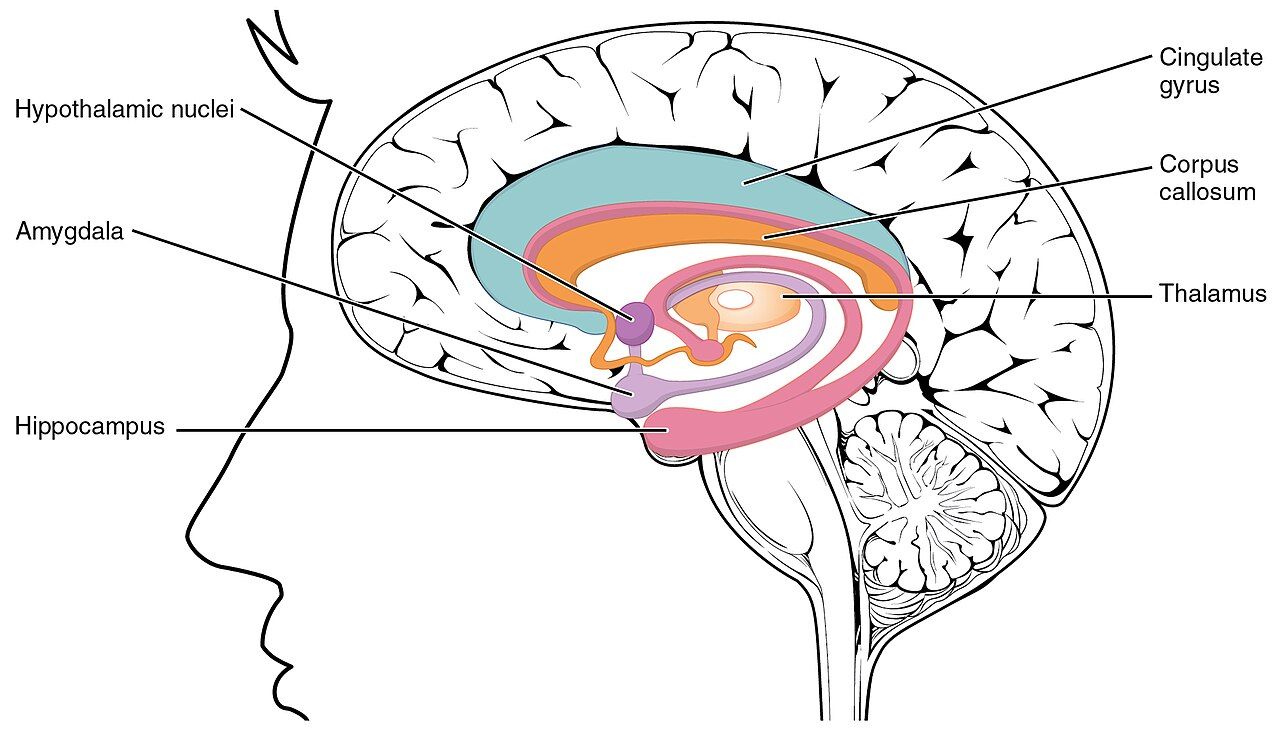
All four antidepressant classes raise the amount of serotonin, norepinephrine, or both in the synapse. They differ mostly in how selectively they do it. And selectivity means safety. The classes came in the order they did because each generation learned to hit the target and miss the bystanders.
SSRIs (selective serotonin reuptake inhibitors) include fluoxetine, sertraline, escitalopram, paroxetine, and citalopram. They block only the serotonin pump. They are first-line because they are hard to die from, not because they work better than the old drugs. Expect nausea and headache in the first week, since the gut is full of serotonin receptors. Expect trouble sleeping or drowsiness. Over the long run, expect sexual side effects. These are the most common reason people quietly stop taking them. Ask about it directly and without embarrassment. A person who feels free to say "this is ruining my sex life" can be switched to another drug instead of relapsing in silence.
SNRIs (venlafaxine, duloxetine) block the serotonin pump and the norepinephrine pump. That second target adds energy and dulls nerve pain. Duloxetine truly helps in diabetic nerve pain and fibromyalgia. But it also adds high blood pressure. Check blood pressure at every visit on venlafaxine.
TCAs (amitriptyline, nortriptyline, imipramine) block both pumps too. But they also bump into histamine, acetylcholine, and alpha-1 receptors. So they cause sleepiness, anticholinergic misery, and dizziness on standing. Their real danger is to the heart. In overdose, they block sodium channels in the heart. This widens the QRS on the ECG and causes deadly rhythm problems. A widening QRS is the signal to act. The treatment is IV sodium bicarbonate, which overcomes the sodium channel block. A one-week supply can kill. That makes them a poor choice for a person at risk of suicide. MAOIs (phenelzine, tranylcypromine, selegiline) take the enzyme route. They disable monoamine oxidase, the enzyme that destroys serotonin, norepinephrine, and dopamine. They work well, but a strict diet hems them in.
The MAOI diet, and why it is not optional
Monoamine oxidase in the gut wall exists to destroy tyramine. Tyramine is an amine found in aged and fermented food. Disable that enzyme, and tyramine walks into the blood. It floods nerve endings and dumps stored norepinephrine all at once. The result is a hypertensive crisis. Signs are a pounding headache at the back of the head, a stiff neck, and sweating. Blood pressure can go above 180/120, and a stroke is a real risk. Teach the food list: aged cheeses, cured and smoked meats, tap and craft beer, red wine, soy sauce, sauerkraut, fava beans, overripe fruit, and yeast extracts. Teach it as if it were an allergy list, because in practice it is.
| Class | Prototype | Key effect | Safety alert |
|---|---|---|---|
| SSRI | Fluoxetine, sertraline | Blocks serotonin reuptake only | Nausea & headache early; sexual dysfunction long-term; taper: do not stop abruptly |
| SNRI | Venlafaxine, duloxetine | Blocks serotonin and norepinephrine reuptake; helps neuropathic pain | Monitor blood pressure: venlafaxine raises it dose-dependently |
| TCA | Amitriptyline, nortriptyline | Blocks both pumps; also blocks histamine, ACh, alpha-1 | Lethal in overdose: widened QRS, dysrhythmias; treat with IV sodium bicarbonate. Sedation, anticholinergic effects, orthostasis |
| MAOI | Phenelzine | Inhibits the enzyme that destroys all three monoamines | Tyramine-free diet or hypertensive crisis; 2-week washout to/from serotonergic drugs, but 5 weeks after fluoxetine (long half-life) |
| Atypical | Bupropion | NE/dopamine reuptake; no sexual dysfunction; aids smoking cessation | Lowers seizure threshold: avoid in seizure disorder, bulimia, anorexia |
| Atypical | Mirtazapine | Sedating; increases appetite | Useful when depression comes with insomnia and weight loss; give at bedtime |
| Mood stabilizer | Lithium | Damps the highs and lows of bipolar disorder | High-alert: narrow therapeutic range 0.6 to 1.2 mEq/L; steady salt & fluid intake |
The two-week lie, and the black box
Every antidepressant raises nerve chemical levels within hours. Yet mood does not lift for two to six weeks. The benefit needs slow changes in the receptors further down the line. Patients do not know this. They take a pill for eight days, feel nothing but nausea, and quit. Tell them up front: "The side effects come first and fade. The benefit comes later and lasts." It is one of the most useful things you can say all shift.
The gap is also dangerous. Antidepressants carry a boxed warning for more suicidal thinking in people under 25. There is a clear reason the risk comes early: energy returns before mood does. A deeply depressed person may lack the drive to act on suicidal thoughts. Two weeks in, the drive is back but the hopelessness is not. Check for suicidal thinking at every contact during that window, not just at the start.
Two more habits. First, do not stop an SSRI or SNRI suddenly. Discontinuation syndrome brings dizziness, flu-like aches, electric-shock "brain zaps," and irritability. It is miserable and easy to avoid by tapering. Paroxetine and venlafaxine are the worst for this because of their short half-lives. Second, screen for bipolar disorder before starting. An antidepressant given alone to a person with hidden bipolar disorder can flip them into mania.
Serotonin syndrome
Serotonin syndrome is too much serotonin activity. It usually comes from combining drugs. Examples are an SSRI plus tramadol, triptans for migraine, linezolid, St. John's wort, or an MAOI. It comes on fast, usually within hours of the new drug or a dose increase. It is known by a triad. The first is a change in mental state (agitation, confusion). The second is an unsteady nervous system (fever, fast heart rate, sweating, diarrhea). The third is overactive nerves and muscles. That means tremor, brisk reflexes, and clonus. Clonus is a rhythmic jerking, often worst in the legs, and it is the most specific sign. Stop the serotonin drugs and call the provider. Support with cooling and IV fluids. Give benzodiazepines for agitation and stiffness. In severe cases, give cyproheptadine, the antidote that blocks serotonin.
Lithium has a narrow safe range. It is 0.6 to 1.2 mEq/L for long-term use. Anything over 1.5 mEq/L counts as toxic. Over 2.0 mEq/L is a medical emergency. Draw levels as troughs, 12 hours after the evening dose. At safe levels, expect a fine hand tremor, mild thirst, and passing more urine. Early toxicity hits the gut first, with nausea, vomiting, and diarrhea. It also brings a coarse tremor and slurred speech. Later come an unsteady walk, confusion, seizures, and collapse of the heart and circulation. There is no antidote. Treatment is fluids and, at high levels, dialysis. Lithium leaves through the kidneys and affects the thyroid. So every monitoring plan needs starting and repeat kidney function and TSH, plus pregnancy status. Valproate and lamotrigine also work as mood stabilizers. Both carry their own warnings, covered in the seizure section.
- All antidepressants raise serotonin, norepinephrine, or both in the synapse. Selectivity equals safety, which is why SSRIs are first-line.
- Mood lifts in 2 to 6 weeks, while side effects come first. The boxed warning for suicidal thinking in people under 25 exists because energy returns before mood.
- Serotonin syndrome = mental state change + unsteady nervous system + overactive nerves and muscles (clonus). Stop the drug, cool, give fluids, give benzodiazepines, and give cyproheptadine.
- Lithium is high-alert. Range 0.6 to 1.2 mEq/L, trough draws, steady salt and fluid. Watch NSAIDs, thiazides, and dehydration. Check kidney function and TSH.
Section 3Antipsychotics & anxiolytics
Typical antipsychotics: dopamine blockade, and the price of it
Typical (first-generation) antipsychotics include haloperidol, fluphenazine, and chlorpromazine. They block dopamine D2 receptors. They are good at exactly one thing: the positive symptoms of psychosis. Hallucinations, delusions, and jumbled thinking are the "added" symptoms. Blocking dopamine strips them away. These drugs barely touch the negative symptoms. Those are a flat face, few words, pulling away from people, and lost drive. This matters at the bedside. A person whose voices are gone but who still cannot get out of bed is not treatment-resistant. They are not yet fully treated.
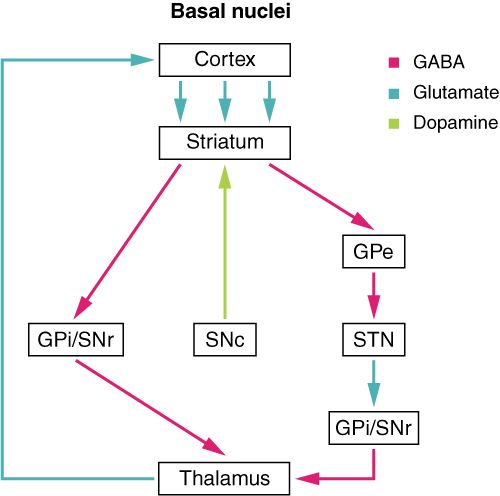
The price is movement. Blocking dopamine in the basal nuclei, the circuit in the figure above, causes extrapyramidal symptoms (EPS). They arrive in a set order. That order is worth knowing, because the timing tells you what you are looking at.
| EPS type | When | What you see | What to do |
|---|---|---|---|
| Acute dystonia | Hours to days | Sudden muscle spasm: neck twisting, eyes rolled up (oculogyric crisis), laryngospasm | Emergency. Airway first; give IM/IV diphenhydramine or benztropine |
| Akathisia | Days to weeks | Unbearable inner restlessness; pacing, cannot sit still | Often mistaken for worsening psychosis: do not raise the dose. Beta blocker or benzodiazepine; consider switching |
| Parkinsonism | Weeks | Tremor, rigidity, bradykinesia, mask-like face, shuffling gait | Fall risk. Anticholinergic (benztropine) or amantadine; dose reduction |
| Tardive dyskinesia | Months to years | Involuntary lip-smacking, tongue-thrusting, facial grimacing, writhing | Often permanent. Screen with AIMS, since catching it early is what keeps the chance of reversal. A VMAT2 inhibitor (valbenazine, deutetrabenazine) can treat it; anticholinergics make it worse |
Two more effects follow straight from the dopamine map. Dopamine normally holds prolactin down. So blocking it raises prolactin. Expect galactorrhea (milk leaking from the breast), missed periods, breast growth in men, and sexual problems. People feel embarrassed by these, hide them, and then stop the drug. The second effect is neuroleptic malignant syndrome (NMS), a rare reaction that can kill. Signs are fever (often above 40 °C), lead-pipe rigidity (stiff muscles), changed alertness, and an unsteady heart rate and blood pressure. Creatine kinase climbs sky-high from muscle breakdown. Stop the antipsychotic, cool hard, and give fluids. Expect dantrolene or bromocriptine. NMS and serotonin syndrome look alike. The tell is this. NMS is stiff and slow: it builds over days, with lead-pipe rigidity and weak reflexes. Serotonin syndrome is fast and jumpy: it starts within hours, with clonus, brisk reflexes, and diarrhea.
Atypicals: fewer movements, more metabolism
Atypical (second-generation) antipsychotics include risperidone, olanzapine, quetiapine, aripiprazole, ziprasidone, and clozapine. They block dopamine D2 and serotonin 5-HT2A receptors. Aripiprazole is the exception. It is a D2 partial agonist, which is why it is less sedating and rarely raises prolactin. The serotonin action buys two advantages: less EPS and some real effect on negative symptoms. But they did not come free. They traded movement problems for metabolic syndrome. That means weight gain, new type 2 diabetes, and unhealthy blood fats. Olanzapine and clozapine are the worst. Ziprasidone and aripiprazole are gentler. So metabolic checks are part of the job. Check weight, waist size, blood pressure, fasting glucose or A1C, and a lipid panel, at the start and on a schedule.
Clozapine is the one to know cold. It is the most effective antipsychotic there is. It is saved for schizophrenia that has not responded to other drugs. It can cause severe neutropenia (agranulocytosis), a dangerous loss of white cells. That is why regular absolute neutrophil count (ANC) checks are required for as long as it is taken. A fever or sore throat on clozapine is not a cold until an ANC proves it. It also causes heart muscle inflammation (myocarditis), seizures at higher doses, and severe constipation that can turn into a stopped gut. Oddly, it also causes drooling. All antipsychotics carry a boxed warning against use in older adults with psychosis from dementia, because they raise the risk of death.
Benzodiazepines and the GABA brake
Benzodiazepines include lorazepam, diazepam, alprazolam, midazolam, and clonazepam. They do not open the chloride channel themselves. They are positive allosteric modulators. They sit beside the GABA receptor and make GABA's own effect stronger. They do this by making the chloride channel open more often when GABA binds. That way of working has a built-in ceiling. It is why a benzodiazepine alone is fairly hard to die from. With no GABA present, the drug does nothing. But add an opioid or alcohol, which press the same brake by other routes, and the ceiling disappears. Most benzodiazepine deaths are mixed-drug deaths.
They are excellent short-term drugs. They give fast anxiety relief, sleepiness, muscle relaxing, stopping of seizures, and help with alcohol withdrawal. They are poor long-term drugs. Tolerance builds, and dependence follows. Stopping suddenly after long-term use can cause seizures and death. A benzodiazepine taper is not a courtesy. It is a safety step. In older adults, they are on the Beers list (drugs to avoid in older adults) for a reason: falls, hip fractures, and confusion. Flumazenil reverses them, but use it with care. In a long-term user or a mixed overdose, it can set off seizures that are very hard to stop. A safer choice for long-term anxiety is buspirone. It causes no sleepiness and no dependence, and needs no reversal. But it takes weeks to work and is useless as a rescue.
- Typicals block dopamine. They are good for positive symptoms and heavy on EPS: dystonia (hours) → akathisia (days) → parkinsonism (weeks) → tardive dyskinesia (months, often permanent).
- Atypicals block dopamine and serotonin. Less EPS, more metabolic syndrome. Check weight, glucose, and lipids.
- Clozapine is the most effective and the most dangerous. ANC checks for agranulocytosis are required. Treat fever or sore throat as an emergency.
- NMS = fever + lead-pipe rigidity + changed mental state. It is slow and stiff. Serotonin syndrome is fast and jumpy, with clonus.
- Benzodiazepines boost GABA (how often the channel opens). They are dangerous with opioids or alcohol, are never stopped suddenly, and are reversed by flumazenil with caution.
Section 4Antiepileptic drugs
Three ways to stop a seizure, and one more
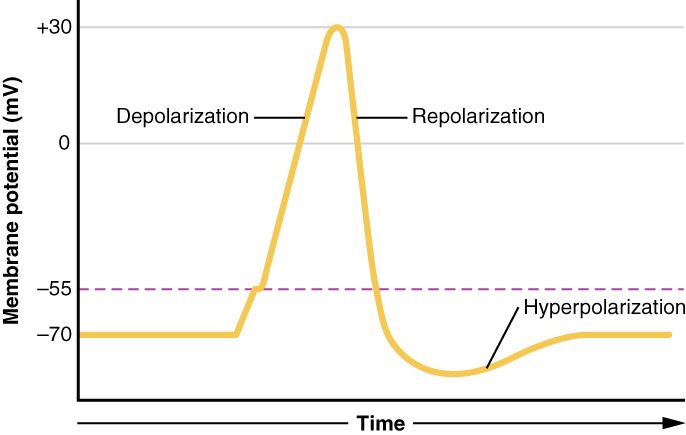
A seizure is a riot of nerve cells. A group of them fires too fast and all together, and the firing spreads to their neighbors. There are three basic ways a drug can calm it. Most antiepileptic drugs (AEDs) use at least one of them. They are also called anticonvulsants; the two words mean the same thing. A smaller group, led by the drug you will see ordered most often, works by a fourth route entirely.
Slow the sodium channels. A nerve cell cannot fire without opening its voltage-gated sodium channels. After each firing, those channels need a moment to reset. Phenytoin, carbamazepine, lamotrigine, and others lengthen that reset time. So a nerve cell can still fire at a normal rate but cannot fire at a runaway rate. That is clever: normal traffic passes, but the riot does not. Slow the calcium channels. The T-type calcium channels in the thalamus drive the rhythmic 3-per-second firing of absence seizures. Ethosuximide blocks them. That is why it works for absence seizures and nothing else. Boost GABA. More calming raises the seizure threshold for the whole brain. This is how benzodiazepines and phenobarbital work, and part of how valproate works.
Then there is the fourth route, which does not fit the channel and brake picture at all: quiet the release itself. Levetiracetam and its relative brivaracetam bind synaptic vesicle protein 2A (SV2A) on the vesicle in the sending cell. This lowers how much chemical is dumped into the gap to begin with. Do not file this away as an oddity. Levetiracetam is one of the most often ordered broad AEDs on the unit. So your mental map needs a place for it. Say it as "three channel and GABA ways, plus SV2A," and every drug in the table below has a home.
Two care points follow. First, most AEDs are broad brakes on how excitable the brain is. So sleepiness, dizziness, and an unsteady walk (ataxia) come with the whole class. Fall precautions and a talk about not driving until stable belong in the plan. Second, AEDs prevent seizures; they are not a rescue. Missed doses are the most common reason a controlled patient has a seizure. Never stop an AED suddenly. In a person with epilepsy, sudden stopping can set off status epilepticus, a seizure that will not stop. It can even cause withdrawal seizures in a person taking the drug for pain or mood who has never had a seizure.
| Drug | Mechanism | Key effect / use | Safety alert |
|---|---|---|---|
| Phenytoin | Na channel | Tonic-clonic & focal seizures | Level 10 to 20 mcg/mL; gum overgrowth (teach flossing), extra body hair; an unsteady walk and jerky eye movements (nystagmus) = toxicity; IV only in normal saline (it forms crystals in dextrose); push slowly to avoid low blood pressure and rhythm problems; many interactions |
| Fosphenytoin | Na channel | IV/IM prodrug of phenytoin | Safer IV option; dosed in PE (phenytoin equivalents): a classic dosing error |
| Carbamazepine | Na channel | Focal seizures; trigeminal neuralgia; bipolar | Stevens-Johnson syndrome (screen HLA-B*1502 in patients of Asian descent); agranulocytosis, aplastic anemia; hyponatremia (SIADH); autoinduces its own metabolism |
| Valproic acid | Na, Ca, & GABA | Broad spectrum; bipolar; migraine prophylaxis | Level 50 to 100 mcg/mL; hepatotoxicity and pancreatitis; highly teratogenic: neural tube defects; monitor LFTs and ammonia |
| Lamotrigine | Na channel | Broad spectrum; bipolar maintenance | Titrate slowly: rapid escalation causes SJS/TEN; any rash stops the drug and gets reported same day |
| Levetiracetam | SV2A vesicle protein: cuts transmitter release | Broad spectrum; few interactions; a workhorse | Behavioral effects: irritability, agitation, mood change; ask the family, not just the chart |
| Ethosuximide | T-type Ca channel | Absence seizures only | GI upset, drowsiness; ineffective for tonic-clonic |
| Phenobarbital | GABA (duration) | Refractory seizures; neonatal seizures | Heavy sedation; strong enzyme inducer; respiratory depression |
| Lorazepam / diazepam | GABA (frequency) | Acute seizure & status epilepticus: the rescue drugs | Watch respirations; have airway support ready; not for maintenance |
Monitoring, teaching, and the seizure itself
Phenytoin and valproic acid have narrow safe ranges and get blood levels. Lamotrigine and levetiracetam usually do not. Draw levels as troughs, just before the next dose. Remember that phenytoin binds heavily to protein. With low albumin, the total level can look normal while the free (active) drug is toxic. If the number says fine but the patient has jerky eye movements, an unsteady walk, and slurred speech, believe the patient.
Teaching carries real weight here. Take doses at the same times every day. Do not stop, even after years with no seizures, without a supervised taper. Carry medical ID. Know your state's driving rules. Alcohol lowers the seizure threshold and adds sleepiness. Many AEDs, such as carbamazepine, phenytoin, and phenobarbital, are enzyme inducers. They can make birth control pills fail. Valproate and carbamazepine cause birth defects. So birth control counseling is a must for anyone who could become pregnant. AEDs also carry a class warning for suicidal thoughts. Screen for mood changes at follow-up visits.
And when a seizure happens, your job is not to stop it with your hands. Stay with the person and protect the head. Turn them on their side. Loosen tight clothing and clear the area. Time it. Never force anything into the mouth. A full-body seizure that lasts more than five minutes is status epilepticus. So are repeated seizures with no return to normal in between. It is a true emergency. It is treated with IV benzodiazepines first, then a loading drug such as fosphenytoin, valproate, or levetiracetam.
- Most AEDs stop seizures three ways: they lengthen sodium channel reset, block T-type calcium channels (absence), or boost GABA. A fourth route: levetiracetam and brivaracetam bind SV2A to cut chemical release.
- Sleepiness, dizziness, and ataxia come with the class. Never stop an AED suddenly, since it can set off status epilepticus.
- Phenytoin 10 to 20 mcg/mL and valproate 50 to 100 mcg/mL, drawn as troughs. Check albumin before trusting a phenytoin level.
- Key harms: phenytoin → gum overgrowth; carbamazepine → SJS, blood cell problems, low sodium; valproate → liver harm, pancreatitis, birth defects; lamotrigine → SJS if increased too fast; levetiracetam → mood and behavior changes.
- Status epilepticus = >5 minutes or no return to normal. Give an IV benzodiazepine first.
Section 5Anesthetics
Two entirely different jobs
The words sound alike, but general and local anesthesia use opposite plans. General anesthesia takes away the brain. It causes unconsciousness, memory loss, pain relief, and stillness, all through the whole body. The patient's protective reflexes, breathing included, are turned off on purpose. Local anesthesia leaves the brain alone and cuts the wire instead. The drug blocks sodium channels in one nerve, so the pain signal never leaves the tissue. The patient is awake and knows exactly what is happening. One takes the receiver offline. The other cuts the phone line.
Modern general anesthesia is almost never one drug. It is balanced anesthesia, a planned mix. An IV induction drug puts the patient to sleep fast. An inhaled drug keeps them asleep. An opioid handles pain. A neuromuscular blocker keeps them still. Mixing lets each drug be given at a lower, safer dose. Inhaled drugs (sevoflurane, desflurane, isoflurane, nitrous oxide) are adjusted breath by breath and leave through the lungs. IV drugs come next. Propofol is fast and smooth and fights nausea, but it strongly slows breathing and widens blood vessels. Ketamine causes a dreamlike, detached state. It keeps airway reflexes and breathing drive, which makes it useful in trauma. Its known downside is confusion and agitation on waking. Etomidate is gentle on blood pressure, so it is chosen for unstable patients, but it holds down the adrenal glands. Midazolam is used to calm anxiety and block memory.
Neuromuscular blockers deserve special fear. Succinylcholine is depolarizing and very short-acting. It causes muscle twitching, a risk of high potassium, and a link to malignant hyperthermia. Rocuronium and vecuronium are non-depolarizing. They are reversed with neostigmine or sugammadex. All of them cause paralysis with no sedation or pain relief at all. A paralyzed patient who is not well sedated is fully awake, in pain, and unable to show it. These are high-alert drugs. They are stored apart from other drugs. They are given only where an airway can be secured right away.
The stages of anesthesia
Guedel's four stages were described in the days of ether, when going under was slow enough to watch. Modern drugs rush through the first three in under a minute. But the stages are still taught, because they name what you are watching for. Also, Stage II is where a patient can be hurt.
| Stage | Name | What you see | Care priority |
|---|---|---|---|
| I | Analgesia / induction | Awake but drowsy; pain sense dulled; can still follow commands | Quiet room, reassurance; the patient can still hear you |
| II | Excitement / delirium | Loss of consciousness with excitation: irregular breathing, struggling, dilated pupils; vomiting & laryngospasm risk | The dangerous stage. No noise, no stimulation. Suction ready, restrain gently for safety, get through it fast |
| III | Surgical anesthesia | Regular breathing, relaxed muscles, reflexes lost, pupils constricted | The target plane; positioning, warming, continuous monitoring |
| IV | Medullary depression / overdose | Respiratory arrest, circulatory collapse, fixed dilated pupils | Never intended. Stop the agent; ventilate and support circulation |
Waking up runs the stages in reverse. So the patient passes back through Stage II on the way out. That is why the recovery room (PACU) is kept quiet. It is why lying on the side with suction close by is standard. And it is why a waking patient who thrashes is not "being difficult." Two emergencies live here. Malignant hyperthermia is a genetic reaction to inhaled anesthetics and succinylcholine. Muscles release calcium out of control. This causes a clenched jaw (masseter rigidity) and a fast rise in breathed-out carbon dioxide (end-tidal CO₂), the earliest sign. Then come stiff muscles, a fast heart rate, and a body temperature that climbs fast. It is treated with dantrolene, stopping the trigger at once, cooling, and treating high potassium. Ask about any family history of anesthesia problems before surgery. That question saves lives. The second emergency is aspiration, breathing stomach contents into the lungs. It is why patients take nothing by mouth (NPO) before surgery. Anesthesia strips away the gag reflex.
Local anesthetics: the wire cut
Local anesthetics come in two chemical families, and the difference matters. Esters (procaine, benzocaine, tetracaine) are broken down in the blood. They cause more allergic reactions. Benzocaine sprays can also cause methemoglobinemia, where the blood cannot carry oxygen well. Suspect it when a patient looks blue with a normal PaO₂ and the blood is chocolate brown. Treat it with methylene blue. Amides (lidocaine, bupivacaine, ropivacaine) are broken down by the liver and rarely cause true allergy. Note the telltale second "i" in their names. Local anesthetics are given on the skin, injected into the area, as a nerve block, into the epidural space, or into the spinal fluid.
Epinephrine is often added to a local anesthetic. It narrows the vessels, which keeps the drug where you put it. That means a longer block, less bleeding, and less drug in the blood. The old rule was to avoid it in fingers, toes, nose, ears, and penis. Modern evidence has largely revised that rule for fingers and toes. But it is still a caution worth knowing and following wherever facility policy says so.
The danger of local anesthetics is drug getting into the blood. That can come from too much drug or from injecting into a vessel by accident. Local anesthetic systemic toxicity (LAST) shows up in the brain first. Signs are numbness around the mouth, a metal taste, ringing in the ears, dizziness, and agitation. Then come seizures, then cardiac arrest. Bupivacaine is the hardest on the heart and can go straight to arrest. Treatment is airway support, benzodiazepines for seizures, and IV lipid emulsion. Every unit that does nerve blocks keeps it close by. After a spinal or epidural, watch for low blood pressure from the blocked nerves that control vessel tone. Check how high the block reaches, and keep the patient lying flat per protocol. The block wears off from the top down, so the feet and the area around the bottom are the last to fully wake up. Movement usually comes back before full feeling and before steady blood pressure. So a patient who can wiggle the toes may still lack full sensation and may get dizzy on standing. That is exactly the patient who tries to stand and falls. The fall risk lasts until feeling, strength, and blood pressure are all fully back.
- General anesthesia turns off awareness and reflexes through the whole body. Local anesthesia blocks sodium channels in one nerve and leaves the patient awake.
- Balanced anesthesia mixes an induction drug, an inhaled drug, an opioid, and a neuromuscular blocker so each can be dosed lower and safer.
- Neuromuscular blockers paralyze without sedating. High-alert, used only where the airway is ready.
- Stage II (excitement) is the dangerous stage, with vomiting and a closing throat (laryngospasm). The patient passes back through it on waking.
- Malignant hyperthermia (inhaled drugs, succinylcholine) → dantrolene. LAST (numb lips, metal taste, ringing ears → seizures → arrest) → IV lipid emulsion.
The chapter in one breath
- Every drug here acts at the synapse. It blocks a reuptake pump, an enzyme, a receptor, or an ion channel. Name the step, and you can predict the effects.
- Serotonin drives mood and the gut. Dopamine drives reward, movement, prolactin, and vomiting. Norepinephrine is drive and blood pressure. GABA is the brake.
- Antidepressants take 2 to 6 weeks to lift mood, while side effects come first. Suicide risk rises early because energy returns before mood does.
- Serotonin syndrome is fast and jumpy, with clonus. NMS is slow, stiff, and feverish. Telling them apart is a bedside skill.
- Lithium is high-alert: 0.6 to 1.2 mEq/L, steady salt and fluid, and beware of NSAIDs, thiazides, and dehydration. Check kidney function and TSH.
- Typicals cause EPS on a set timeline that ends in permanent tardive dyskinesia. Atypicals trade that for metabolic syndrome. Clozapine needs ANC checks.
- AEDs slow sodium or calcium channels, boost GABA, or, like levetiracetam, bind SV2A to cut chemical release. They are never stopped suddenly, and each has its own harms. Report any rash on lamotrigine or carbamazepine today.
- General anesthesia takes away the brain. Local anesthesia cuts the wire. The emergencies to know are malignant hyperthermia (dantrolene) and LAST (lipid emulsion).
ReferenceWords worth knowing
These are the words you will use in reports and when you question an order. Skim them now, and come back whenever a term stops you.
- Agonist
- A drug that binds a receptor and turns it on, copying the body's own nerve chemical.
- Akathisia
- A movement side effect of unbearable inner restlessness and not being able to sit still; often mistaken for worsening psychosis.
- Antagonist
- A drug that binds a receptor without turning it on, which blocks the natural chemical from acting.
- Antiepileptic drug (AED)
- A drug that raises the seizure threshold. Most work by slowing sodium or calcium channels or boosting GABA. Some (levetiracetam, brivaracetam) bind synaptic vesicle protein 2A to lower chemical release. Also called an anticonvulsant.
- Balanced anesthesia
- Mixing an induction drug, an inhaled drug, an opioid, and a neuromuscular blocker so each can be given at a lower, safer dose.
- Discontinuation syndrome
- Dizziness, flu-like aches, irritability, and "brain zaps" after suddenly stopping an SSRI or SNRI; prevented by tapering.
- Dystonia
- A sudden, lasting muscle spasm, such as neck twisting, eyes rolling up (oculogyric crisis), or a closing throat, within hours to days of starting an antipsychotic; an emergency.
- Extrapyramidal symptoms (EPS)
- Movement problems caused by blocking dopamine in the basal nuclei: dystonia, akathisia, parkinsonism, and tardive dyskinesia.
- Flumazenil
- The benzodiazepine reversal drug; used with care, since it can set off seizures in long-term users or mixed overdoses.
- GABA
- Gamma-aminobutyric acid, the brain's main calming chemical; opening its chloride channel makes nerve cells harder to fire.
- Local anesthetic systemic toxicity (LAST)
- Toxicity from a local anesthetic getting into the blood: numbness around the mouth, a metal taste, and ringing ears that progress to seizures and cardiac arrest; treated with IV lipid emulsion.
- Malignant hyperthermia
- A genetic reaction to inhaled anesthetics or succinylcholine that can kill, causing stiff muscles, rising end-tidal CO₂, and a very high temperature; treated with dantrolene.
- Monoamine oxidase (MAO)
- The enzyme that breaks down serotonin, norepinephrine, and dopamine, plus tyramine from food in the gut wall.
- Negative symptoms
- The "taken away" symptoms of psychosis (flat face, few words, pulling away, lost drive); typical antipsychotics treat them poorly.
- Neuroleptic malignant syndrome (NMS)
- A rare antipsychotic reaction of high fever, lead-pipe rigidity, changed alertness, unsteady heart rate and blood pressure, and high creatine kinase.
- Neuromuscular blocker
- A high-alert drug that paralyzes skeletal muscle with no sedation or pain relief at all; needs a secured airway.
- Positive symptoms
- The "added" symptoms of psychosis (hallucinations, delusions, jumbled thinking) that respond best to dopamine blocking.
- Reuptake pump
- The carrier that vacuums a nerve chemical back into the sending nerve cell; the target of SSRIs, SNRIs, and TCAs.
- Serotonin syndrome
- Too much serotonin activity, causing a change in mental state, an unsteady nervous system, and overactive nerves and muscles with clonus; treated by stopping the drugs, support, and cyproheptadine.
- Status epilepticus
- A seizure that lasts more than five minutes, or repeated seizures with no return to normal in between; treated first with an IV benzodiazepine.
- Tardive dyskinesia
- Late, uncontrolled lip-smacking, tongue-thrusting, and face-making after months to years of dopamine blocking; often permanent.
- Tyramine
- An amine in aged, fermented, and cured foods that sets off a hypertensive crisis in a person taking an MAOI.