Carbohydrates
Carbohydrates supply most of the world's food energy. They do it at a steady 4 kilocalories per gram. That is the same as protein, and well under fat's 9. But "carbohydrate" is not one thing. It covers the single sugar molecules in fruit, the starch in a potato, and the fiber in a bean that your own enzymes cannot touch at all. Those forms act very differently once they reach the gut. The differences explain why two foods with the same grams of carbohydrate can have very different effects on digestion, blood glucose and long-term health. This chapter follows carbohydrate from its chemical structure, through digestion and absorption, and into the blood. Then it looks at how much we need and what the research really supports. Along the way, try not to sort foods into "good" and "bad." How the body works is far more interesting than judging.
By the end of this chapter you can
- Sort carbohydrates into monosaccharides, disaccharides or polysaccharides, and name the common members of each.
- Give the energy yield of carbohydrate and compare it with protein, fat and alcohol.
- Tell soluble from insoluble fiber and describe what each does in the gut.
- Trace starch from the mouth to the portal vein, naming the enzymes and carriers at each step.
- Explain how insulin and glucagon keep blood glucose in a narrow range.
- Define glycemic index and glycemic load, and state the limits of both.
- Give the RDA and AMDR for carbohydrate and the AI for fiber, with the group and units for each.
- Describe what the evidence does, and does not, show about added sugars and type 2 diabetes risk.
Section 1Types of carbohydrates
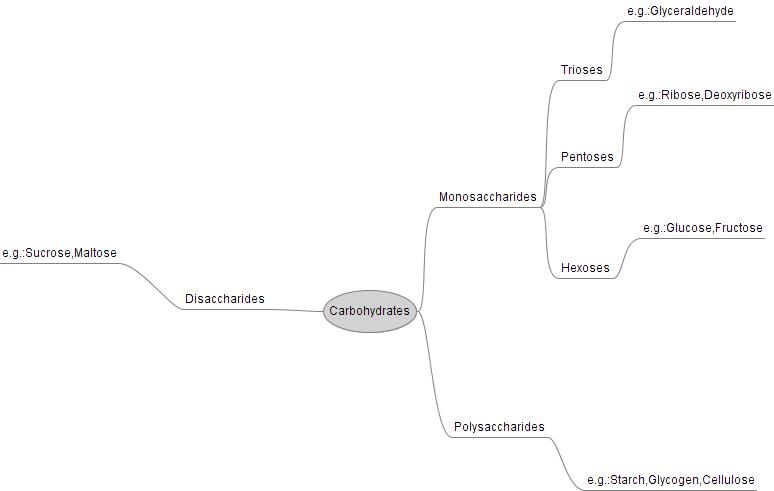
One building block, many arrangements
Every carbohydrate in food is built from small sugar units. The name is left over from chemistry in the 1800s. Carbo means carbon and hydrate means water. These molecules carry carbon, hydrogen and oxygen in about a 1 to 2 to 1 ratio. What makes a spoonful of table sugar different from a slice of bread is not the atoms. It is the architecture, or the way they are built. How many sugar units are strung together? And at what angle are the links between them? That build decides whether your digestive enzymes can take the molecule apart. That one fact drives most of this chapter.
Carbohydrates that your small intestine can break down and absorb give 4 kilocalories per gram. Put that number next to the others. Protein also gives 4 kcal/g, fat gives 9 kcal/g and alcohol gives 7 kcal/g. Carbohydrate is not an extra-packed fuel. It is simply the most plentiful one in most food supplies.
Monosaccharides and disaccharides: the sugars
A monosaccharide is a single sugar unit. Digestion cannot break it down any further. Three matter for nutrition. Glucose is the body's main fuel. It is the sugar that flows in the blood and the one the brain relies on most. Fructose is found in fruit and honey. It is the sweetest of the common sugars, and the liver handles most of it. Galactose is rarely found free in food. It arrives as part of milk sugar.
A disaccharide is two monosaccharides joined together. Sucrose (glucose + fructose) is table sugar. Its chemistry is the same whether it came from cane, beets or a fruit. Lactose (glucose + galactose) is the sugar in milk. Maltose (glucose + glucose) shows up mostly as a middle step, when starch is being digested or grain is being malted. Notice that all six of these, three monosaccharides and three disaccharides, are what we call "sugars" in everyday talk. Every one of them must become single sugars before it can cross the wall of the intestine.
Polysaccharides: starch, glycogen, and fiber
String hundreds or thousands of glucose units together and you get a polysaccharide. Starch is how plants store energy. It comes in two shapes. Amylose is a long, straight chain. Amylopectin is a branched chain. Branching matters, because enzymes attack the ends of chains. A branched molecule offers many more ends at once. That is part of why foods rich in amylopectin digest faster than foods rich in amylose. Glycogen is how animals store energy. It is even more branched. You store it in your liver (about 100 g) and your muscles (about 400 g). It is not a real source of carbohydrate in food, because it breaks down quickly after an animal is killed.
Fiber is the third group. It is defined by what your body cannot do. Cellulose is also a straight chain of glucose, the same building block as starch. But the bonds joining the units point a different way. Starch has alpha bonds. Cellulose has beta bonds. Human digestive enzymes have no key for that lock. The rule is narrow, not a blanket. Lactase in the brush border is a beta-galactosidase. It cuts the beta-1,4 bond of lactose perfectly well. What no human enzyme can cut is the beta-1,4 bond of cellulose. So cellulose passes into the colon whole. That one difference in shape is the whole reason lettuce and bread act so differently.
| Class | Members | Built from | Common food sources |
|---|---|---|---|
| Monosaccharides | Glucose, fructose, galactose | One sugar unit | Fruit, honey, some vegetables; glucose in syrups |
| Disaccharides | Sucrose, lactose, maltose | Two sugar units | Table sugar, milk and yogurt, malted grains |
| Oligosaccharides | Raffinose, stachyose, fructans | 3 to 10 units | Legumes, onions, wheat: mostly fermented, not digested |
| Digestible polysaccharides | Amylose, amylopectin (starch); glycogen | Hundreds to thousands of glucose units, alpha bonds | Grains, potatoes, legumes, roots |
| Fiber polysaccharides | Cellulose, hemicellulose, pectin, beta-glucan, gums | Many units, beta or other bonds we cannot digest | Whole grains, vegetables, fruit, legumes, seeds |
An oligosaccharide, in the table, is a short chain of 3 to 10 sugar units.
- Digestible carbohydrate gives 4 kcal/g. Protein gives 4, fat 9 and alcohol 7.
- Monosaccharides (glucose, fructose, galactose) are single units. Disaccharides (sucrose, lactose, maltose) are pairs.
- Polysaccharides include digestible starch and glycogen (alpha bonds) and undigestible fiber (beta and other bonds).
- Every carbohydrate the body absorbs must first become a monosaccharide.
Section 2Fiber
Two behaviors: soluble and insoluble
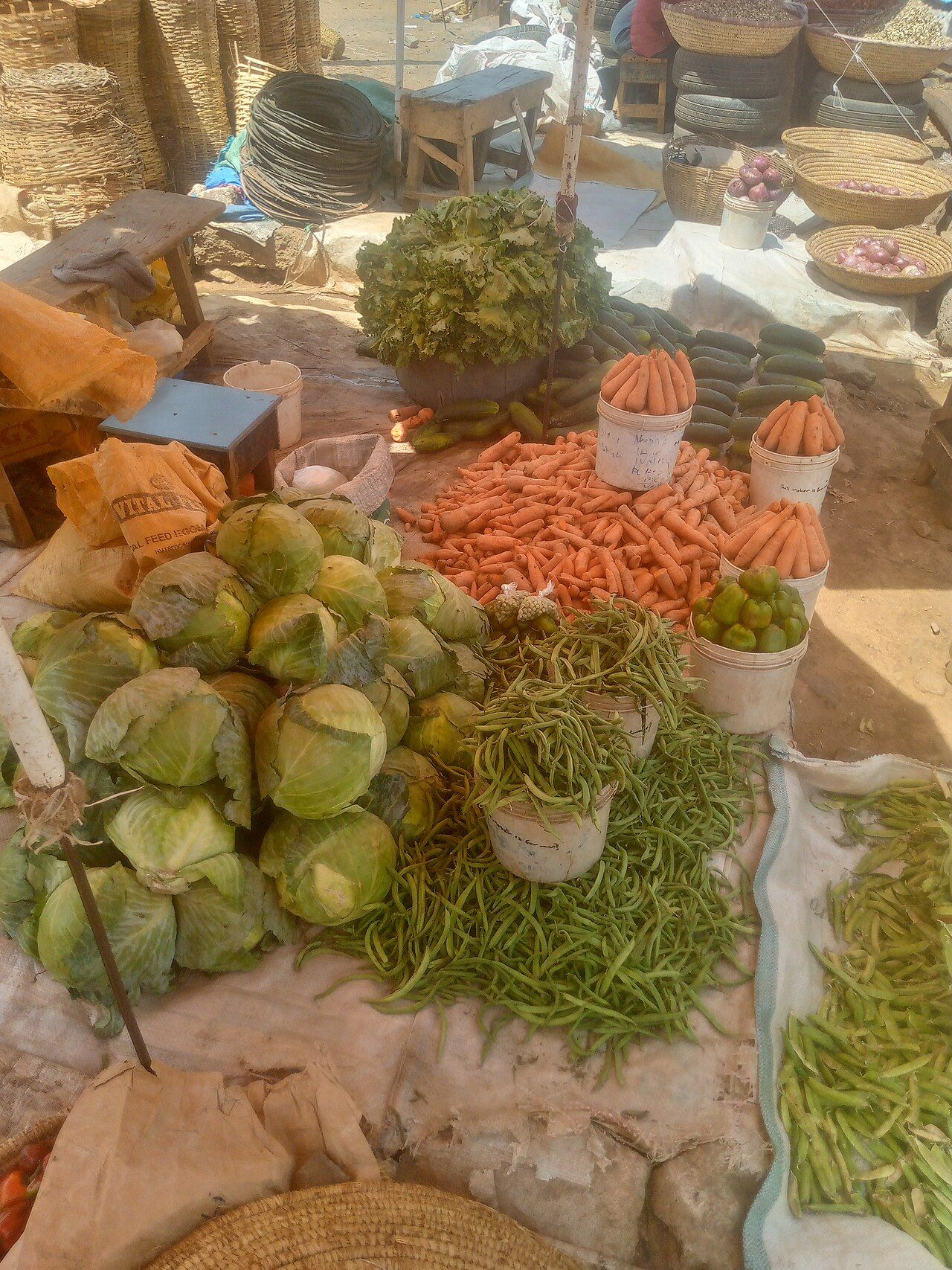
Dietary fiber is carbohydrate that is not digested in the small intestine. It also includes lignin, a woody plant material that is not a carbohydrate. Scientists sort fiber by how it acts in water. In real food the groups overlap. But they still predict real differences in the body.
Soluble fiber dissolves or spreads out in water, and it often forms a gel. Pectin in apples and citrus, beta-glucan in oats and barley, gums, inulin and psyllium all belong here. The group is not all the same, though. The split that matters most is viscosity, or thickness. Beta-glucan, pectin, guar gum and psyllium thicken. Inulin dissolves but does not form a gel. When a gel does form, it slows how fast the stomach empties. It also slows how fast glucose is absorbed. That softens the rise in blood glucose after a meal. Thick soluble fibers also grab bile acids and carry them out in the stool. The liver then has to pull cholesterol from the blood to make more. This is how oat beta-glucan and psyllium lower LDL cholesterol a little. LDL is the kind of cholesterol linked to heart disease. This effect has strong evidence. Many controlled trials have shown it again and again.
Insoluble fiber does not dissolve. Cellulose, most hemicelluloses and lignin are the classic examples. They are found mostly in the bran (outer layers) of grains, in vegetable stalks, and in seeds and skins. Insoluble fiber works mechanically. It holds water, adds bulk to stool and speeds the trip through the colon. Eating little fiber overall is often linked to harder, slower stool. But here is something worth knowing. For treating constipation that is already there, the trial evidence is strongest for thick soluble fiber such as psyllium. The neat textbook rule "insoluble fiber means regularity" describes how fiber works better than it describes the results of trials.
What the colon does with it
Fiber is not idle once it reaches the large intestine. Gut bacteria ferment much of the soluble fiber and some of the insoluble fiber. This makes gas and short-chain fatty acids (SCFAs). The main ones are acetate, propionate and butyrate. Butyrate is the favorite fuel of the cells lining the colon. Together, the SCFAs make the colon more acidic and feed the microbes that live there. Some of the energy from fermenting is taken back by the body. So fiber is not truly calorie-free. Food rules count fermentable fiber as about 2 kcal/g, well below the 4 of digestible carbohydrate.
Resistant starch deserves a mention here, because it is starch that acts like fiber. Some starch escapes digestion in the small intestine and gets fermented in the colon instead. This includes starch trapped inside whole grains and legumes. It includes the high-amylose starch of green bananas. It also includes retrograded starch, which forms when cooked potatoes, rice or pasta are cooled. Retrograded means the starch has re-formed tight bundles that enzymes cannot easily reach.
How much, and who needs how much
Fiber has an Adequate Intake (AI), not an RDA. The evidence was judged strong enough to set a target, but not to set an exact requirement. The AI is set at 14 g of total fiber per 1,000 kcal. Watching studies link that level to lower risk of heart disease. Because it grows with energy intake, the gram target differs by age and sex. It also rises in pregnancy and breastfeeding.
| Group | Total fiber AI | Note |
|---|---|---|
| Men 19 to 50 y | 38 g/day | Highest energy needs, highest target |
| Men 51 y and older | 30 g/day | Drops as energy intake drops |
| Women 19 to 50 y | 25 g/day | - |
| Women 51 y and older | 21 g/day | - |
| Pregnancy | 28 g/day | Matches higher energy needs |
| Breastfeeding (lactation) | 29 g/day | Matches higher energy needs |
| Children 1 to 3 y | 19 g/day | Same 14 g per 1,000 kcal rule |
Real intake falls far short of these numbers. Adults in the United States average about 15 g/day. That is well under half the target for younger men. There is no Tolerable Upper Intake Level for fiber. Very high intakes cause bloating, gas and discomfort, not poisoning. But extremely high intakes can lower the absorption of some minerals a little.
- Soluble, thick fiber forms a gel and slows glucose absorption. Oat beta-glucan and psyllium also lower LDL cholesterol a little (strong evidence).
- Insoluble fiber adds bulk and speeds transit. But for treating constipation that is already there, the trial evidence is strongest for thick soluble fiber such as psyllium.
- Fermenting in the colon makes short-chain fatty acids, including butyrate, the favorite fuel of colon cells.
- The AI is 14 g per 1,000 kcal: 38 g/day for men 19 to 50 y, 25 g/day for women 19 to 50 y, 28 g/day in pregnancy. There is no UL.
Section 3Digestion and absorption
Mouth and stomach: a short start, then a pause
Digestion starts before you swallow. Chewing breaks food apart. Saliva brings salivary amylase, which starts cutting the alpha bonds of starch. It makes shorter chains, called dextrins, and maltose. This is why a plain cracker held in your mouth slowly turns sweet. The work is short, though. When the food reaches the stomach, stomach acid drops the pH far below the range where amylase can work. The enzyme shuts off. No real carbohydrate digestion happens in the stomach, and none is absorbed there.
Small intestine: pancreatic amylase and the brush border
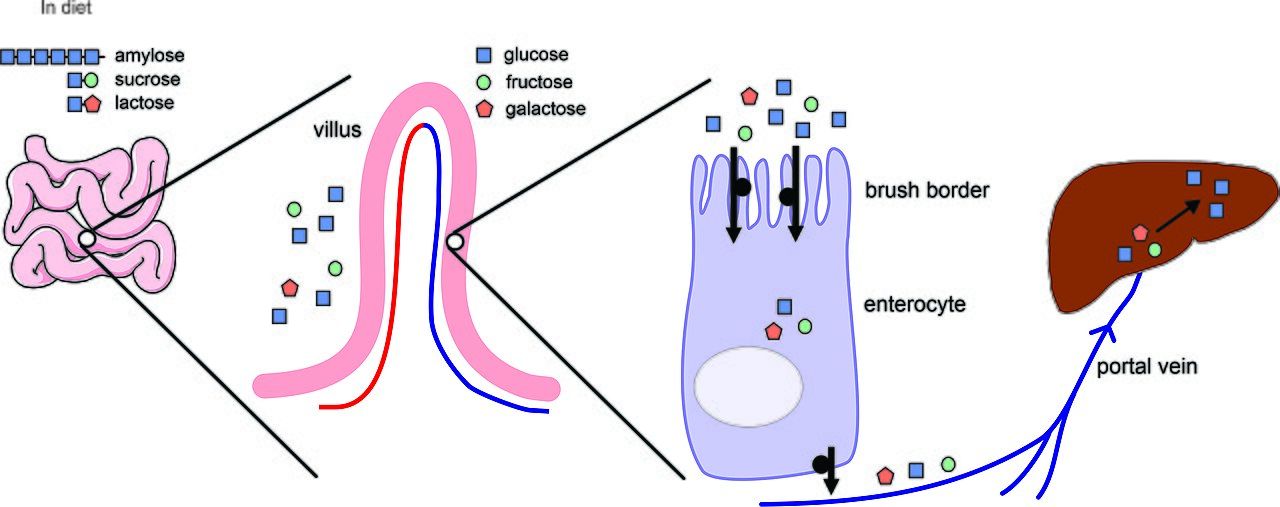
The real work happens in the duodenum. The pancreas releases pancreatic amylase into the small intestine. By then bicarbonate has canceled out the acid. Starch is quickly broken down into disaccharides and short oligosaccharides. These pieces are still too large to absorb. So the last cut is made by enzymes fixed in the brush border, the microvilli that cover the intestine's cells. Maltase splits maltose into two glucose molecules. Sucrase splits sucrose into glucose and fructose. Lactase splits lactose into glucose and galactose. Only now, as single sugars, can carbohydrate be absorbed.
| Site | Enzyme | Acts on | Product |
|---|---|---|---|
| Mouth | Salivary amylase | Starch | Dextrins, maltose |
| Stomach | None working | - | Amylase is shut off by acid |
| Small intestine (lumen) | Pancreatic amylase | Starch, dextrins | Maltose, short oligosaccharides |
| Brush border | Maltase | Maltose | Glucose + glucose |
| Brush border | Sucrase | Sucrose | Glucose + fructose |
| Brush border | Lactase | Lactose | Glucose + galactose |
| Large intestine | Bacteria ferment | Fiber, resistant starch | Short-chain fatty acids, gases |
Crossing the wall and reaching the liver
The three monosaccharides do not all get in the same way. Glucose and galactose ride a carrier called SGLT1, which moves sodium and glucose together. It is a secondary active transport system. That means it uses the push of sodium flowing into the cell to pull sugar in, even "uphill" against its gradient. Oral rehydration drinks use this same trick when they pair glucose with sodium. Fructose takes a different route. It enters by facilitated diffusion through GLUT5. This needs no energy and moves fructose only "downhill." All three sugars then leave the far side of the cell through GLUT2 and enter the capillaries of the villus.
From there, blood carries the sugars through the hepatic portal vein straight to the liver. This layout is no accident. The liver sees the whole absorbed load first. It turns most fructose and galactose into glucose or into liver glycogen before the rest of the body ever meets them. What leaves the liver and enters the general blood flow is mostly glucose.
- Salivary amylase starts starch digestion. The stomach adds nothing, since acid shuts the enzyme off.
- Pancreatic amylase plus the brush-border enzymes maltase, sucrase and lactase finish the job in the small intestine.
- Glucose and galactose enter by SGLT1 (active, needs sodium). Fructose enters by GLUT5 (facilitated diffusion).
- Absorbed sugars travel the hepatic portal vein to the liver, which turns most of them into glucose or glycogen.
Section 4Blood glucose regulation
A two-hormone thermostat
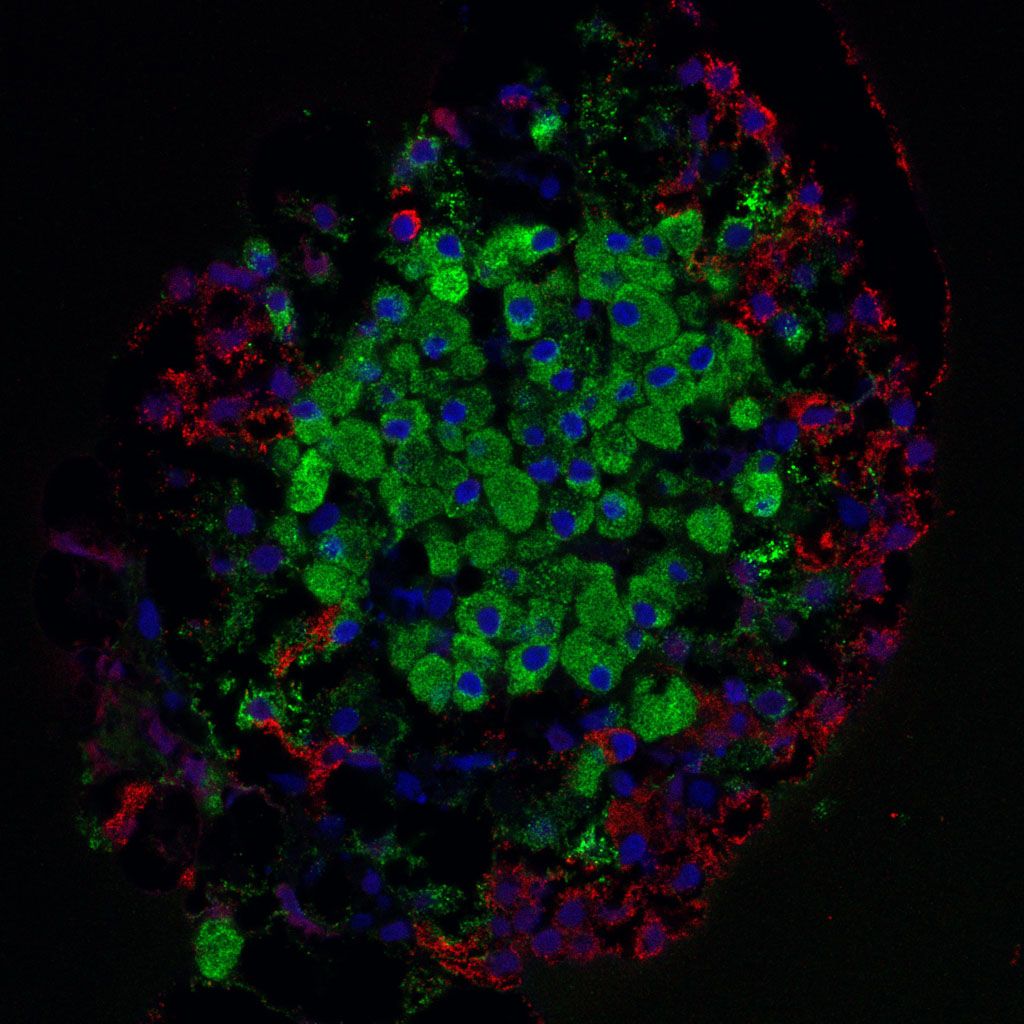
Blood glucose is kept in a very narrow band. In a person without diabetes, fasting blood glucose stays below 100 mg/dL (5.6 mmol/L). It rarely goes above about 140 mg/dL, even after a large meal. The control system is a classic negative feedback loop. That means a change sets off a response that pushes things back the other way. The loop is run from the islets of Langerhans, small clusters of cells in the pancreas.
When glucose rises after a meal, beta cells release insulin. Insulin is the "store it" signal. It tells muscle and fat cells to move GLUT4 carriers to their surfaces, so glucose can get in. It drives the liver and muscle to build glycogen. It also switches off the liver's own glucose making. When glucose falls, such as between meals, overnight or during exercise, alpha cells release glucagon. It does the opposite. It breaks liver glycogen back down, which is called glycogenolysis. As that store runs low, it drives the liver to make new glucose from amino acids and glycerol. That is called gluconeogenesis. During stress, the hormones epinephrine, cortisol and growth hormone back up glucagon's side.
| Insulin | Glucagon | |
|---|---|---|
| Source | Pancreatic beta cells | Pancreatic alpha cells |
| Trigger | Rising blood glucose (after eating) | Falling blood glucose (fasting, exercise) |
| Net effect | Lowers blood glucose | Raises blood glucose |
| Main actions | Glucose uptake by GLUT4; glycogen building; fat and protein building | Glycogenolysis; gluconeogenesis |
| Main target | Muscle, fat tissue, liver | Liver |
Where the glucose goes, and what runs out first
The body's glucose stores are small. Liver glycogen (about 100 g) is the only store that can be sent back into the blood. It is mostly used up after 12 to 24 hours without food. Muscle glycogen (about 400 g) is much larger, but it is locked in place. Muscle lacks the enzyme needed to release free glucose. So muscle glycogen fuels only that muscle and never rescues blood glucose. Past those stores, the brain still needs a lot of glucose each day, about 120 g. That need is met by gluconeogenesis, which uses up body protein. As fasting goes on, it is met more and more by ketone bodies, a fuel the liver makes from fat. Eating enough carbohydrate spares that protein. This is the body-based reason behind the carbohydrate RDA you will meet in the next section.
Glycemic index and glycemic load
The glycemic index (GI) ranks a food by how much it raises blood glucose over two hours. It compares the food with pure glucose, which is set at 100. The portions are matched so each has 50 g of carbohydrate the body can use, called available carbohydrate. Values of 55 or below are called low, 56 to 69 medium, and 70 or above high. GI ignores portion size. For example, watermelon has a high GI but very little carbohydrate per slice. So the glycemic load (GL) was created. GL is the GI times the grams of available carbohydrate in a real serving, divided by 100. A GL of 10 or below is low. A GL of 20 or above is high.
Both tools are truly useful for understanding why foods differ. Low-GI eating patterns show modest benefits for glucose after meals in controlled trials. But treat published values with care. GI varies a lot between people eating the very same food. Within one food, it shifts with ripeness, particle size, cooking time, cooling, and whatever else is on the plate. Fat, protein, acid and fiber all lower the glucose response to a mixed meal. GI also says nothing about how nutritious a food is. A food can have a low GI and little else going for it.
- Insulin (beta cells) lowers blood glucose by driving uptake and storage. Glucagon (alpha cells) raises it through glycogenolysis and gluconeogenesis.
- Liver glycogen (about 100 g) keeps up blood glucose. Muscle glycogen (about 400 g) fuels only that muscle.
- The brain uses about 120 g of glucose per day. It comes from food, gluconeogenesis and, in time, ketones.
- GI ranks a fixed 50 g carbohydrate portion. GL adjusts for real serving size. Both change with cooking, ripeness and the rest of the meal.
Section 5Carbohydrate and health
The actual numbers
The RDA for carbohydrate is 130 g/day for adults and for children aged 1 year and older, of both sexes. That number is not about the best health. It is the amount judged enough to supply the brain's glucose without forcing the body to rely on gluconeogenesis. The RDA rises to 175 g/day in pregnancy and 210 g/day in breastfeeding. These match the glucose needs of the growing baby and of making milk. Infants have Adequate Intakes, not an RDA. They are 60 g/day at 0 to 6 months and 95 g/day at 7 to 12 months.
On its own, the Acceptable Macronutrient Distribution Range (AMDR) for carbohydrate is 45 to 65% of total energy. It applies to adults and children aged 1 year and older. Notice what these two numbers are doing. The 130 g is a floor for one body job. The 45 to 65% is the range in which groups of people seem to meet their nutrient needs while keeping chronic disease risk low. There is no Tolerable Upper Intake Level for total carbohydrate.
| Reference value | Amount | Group |
|---|---|---|
| Carbohydrate RDA | 130 g/day | Adults and children ≥1 y, both sexes |
| Carbohydrate RDA, pregnancy | 175 g/day | Pregnant teens and adults |
| Carbohydrate RDA, breastfeeding | 210 g/day | Breastfeeding teens and adults |
| Carbohydrate AMDR | 45 to 65% of energy | Adults and children ≥1 y |
| Total fiber AI | 14 g per 1,000 kcal | All ages ≥1 y (gram target varies by age and sex) |
| Added sugars (US Dietary Guidelines) | 2020 to 2025 edition: less than 10% of energy from age 2, and none under age 2. 2025 to 2030 edition: no amount recommended, and children under 11 (age 10 and younger) should avoid them | All ages |
| Free sugars (WHO) | Less than 10% of energy (strong advice) | Adults and children; cutting further to below 5% is a weaker, conditional advice |
| Carbohydrate UL | None set | - |
Added sugars
Added sugars are sugars and syrups put into foods while they are processed or made. They also include sugar from syrups and honey and from concentrated fruit or vegetable juices. They are kept apart from the sugars that are naturally part of whole fruit, vegetables and milk. In chemistry the molecules are the same. The difference is the package they come in and what other foods they push out of the diet. Regulators find the difference useful enough that added sugars now have their own line on the US Nutrition Facts label. Free sugars, the World Health Organization's term, means added sugars plus the sugars in honey, syrups and fruit juices.
What does the evidence say? Two conclusions are solid. First, added sugars give energy with almost no vitamins, minerals or fiber. So at high intakes they push out nutrient-dense foods. This is a simple dilution argument. Second, how often and how much free sugar people eat is strongly and steadily linked to dental caries, or tooth decay. This is one of the best-proven links between diet and disease in all of nutrition. Sugary drinks are the largest single source of added sugars in many countries. In cohort studies, drinking them is steadily linked to weight gain and to type 2 diabetes risk. Part of the reason may be that calories in drinks seem to cause less cutting back at later meals. Claims that fructose causes specific harm at normal intakes are still early. They are mostly based on studies that fed very high doses. Whole fruit, which also contains fructose, is steadily linked to lower disease risk.
Carbohydrate and diabetes risk
Type 1 diabetes is an autoimmune disease, which means the immune system attacks the body's own cells. Here it destroys the beta cells of the pancreas, so the body makes no insulin at all. It is not caused by diet. No eating pattern in childhood causes or prevents it. Type 2 diabetes is different. It combines insulin resistance with beta cells that slowly fail. Insulin resistance means muscle, liver and fat respond poorly to insulin. The risk is shaped by genes, age, physical activity, sleep, where body fat is stored and eating pattern, all together.
The strongest diet findings point to carbohydrate quality, not amount. Eating more whole grains, legumes and total fiber is steadily linked to less type 2 diabetes. This holds across large cohorts followed for many years. Eating more refined grains and sugary drinks tracks the other way. Randomized trials have tested lifestyle programs that combine diet change with physical activity. These programs greatly reduce the move from prediabetes (blood glucose higher than normal, but not yet diabetes) to type 2 diabetes. That is strong evidence. But the programs change many things at once. So no single nutrient can get the credit. Very low carbohydrate patterns can improve blood glucose markers for a short time in trials. But long-term evidence comparing diets is mixed. Sticking with a diet, not its mix of macronutrients, tends to predict results.
- Carbohydrate RDA: 130 g/day for adults and children ≥1 y. It is 175 g/day in pregnancy and 210 g/day in breastfeeding.
- AMDR: 45 to 65% of energy. There is no UL for total carbohydrate.
- The 2020 to 2025 US guidelines held added sugars below 10% of energy from age 2, with none under age 2. The 2025 to 2030 guidelines recommend none at all, and say children under 11 should avoid them. The link to tooth decay is strong evidence.
- For type 2 diabetes, carbohydrate quality (whole grains, legumes, fiber) tracks with lower risk more reliably than total carbohydrate does.
The chapter in one breath
- Digestible carbohydrate gives 4 kcal/g. That is the same as protein and less than fat's 9 and alcohol's 7.
- Carbohydrates are monosaccharides, disaccharides or polysaccharides. The shape of their bonds decides whether human enzymes can digest them. The beta-1,4 bonds of cellulose defeat every human enzyme. Starch's alpha bonds and lactose's beta-1,4 bond do not.
- Soluble fiber forms a gel and slows glucose absorption. The thick types, oat beta-glucan and psyllium, also lower LDL cholesterol a little. Insoluble fiber adds bulk and speeds transit. Colon bacteria ferment the soluble share and part of the insoluble share into short-chain fatty acids.
- The fiber AI is 14 g per 1,000 kcal: 38 g/day for men 19 to 50 y and 25 g/day for women 19 to 50 y. Typical intakes are about half that.
- Starch is digested by salivary and pancreatic amylase and finished by brush-border maltase, sucrase and lactase. Single sugars enter by SGLT1 (glucose, galactose) and GLUT5 (fructose) and travel the portal vein to the liver.
- Insulin stores glucose and glucagon releases it. Liver glycogen (about 100 g) guards blood glucose, while muscle glycogen (about 400 g) serves only muscle.
- GI and GL describe how foods affect blood glucose. But they shift with ripeness, cooking, cooling and the rest of the meal, and they vary between people.
- The RDA is 130 g/day (175 in pregnancy, 210 in breastfeeding), and the AMDR is 45 to 65% of energy. The strongest health signal is carbohydrate quality, not a verdict on any single food.
ReferenceWords worth knowing
A quick list of the terms in this chapter. Skim it now, or come back whenever a word trips you up.
- Added sugars
- Sugars and syrups added when food is processed or made, plus sugars from honey, syrups and concentrated juices. They are kept apart from sugars that are naturally part of whole fruit, vegetables and milk.
- Amylase
- The enzyme that cuts the alpha bonds of starch. The salivary glands make it, and the pancreas makes far more of it.
- Amylopectin
- The branched form of plant starch. Its many chain ends let enzymes digest it faster than amylose.
- Amylose
- The straight-chain form of plant starch. It digests more slowly and is more likely to turn into resistant starch when cooled.
- Dietary fiber
- Carbohydrate (plus lignin) that is not digested in the human small intestine and passes into the colon.
- Disaccharide
- Two monosaccharides joined together: sucrose, lactose or maltose.
- Fructose
- A monosaccharide found in fruit and honey, and in half of every sucrose molecule. It is absorbed by GLUT5, and the liver handles most of it.
- Glucagon
- The hormone from the pancreas's alpha cells that raises blood glucose through glycogenolysis and gluconeogenesis.
- Gluconeogenesis
- The liver's making of new glucose from things that are not carbohydrate, such as amino acids and glycerol.
- Glycemic index (GI)
- A ranking of how much a food portion with 50 g of available carbohydrate raises blood glucose over two hours, compared with glucose set at 100.
- Glycemic load (GL)
- Glycemic index adjusted for the carbohydrate really in a normal serving: GI × available carbohydrate ÷ 100.
- Glycogen
- The highly branched storage form of glucose in animals. It is held in the liver (about 100 g) and muscle (about 400 g).
- Insulin
- The hormone from the pancreas's beta cells that lowers blood glucose. It helps cells take up glucose through GLUT4 and drives storage.
- Lactase nonpersistence
- The normal drop in lactase, set by genes, after early childhood. It affects most of the world's adults and is the basis of lactose intolerance.
- Lactose
- Milk sugar. A disaccharide of glucose and galactose.
- Monosaccharide
- A single sugar unit: glucose, fructose or galactose. It is the only form of carbohydrate that can be absorbed.
- Polysaccharide
- A carbohydrate of many sugar units: starch and glycogen (digestible) or fiber such as cellulose (not digestible).
- Resistant starch
- Starch that escapes digestion in the small intestine. It may be trapped in whole grains, high in amylose, or retrograded by cooling. It is fermented in the colon.
- Short-chain fatty acids (SCFAs)
- Acetate, propionate and butyrate. Colon bacteria make them when they ferment fiber. Butyrate is the favorite fuel of colon cells.
- Soluble fiber
- Fiber that spreads out in water: pectin, beta-glucan, gums, inulin, psyllium. The thick, gel-forming kinds slow glucose absorption and lower LDL cholesterol a little. Soluble fibers that are not thick, such as inulin, do not reliably do either.
- Starch
- The storage form of glucose in plants. It is made of amylose and amylopectin and is the largest source of carbohydrate in food around the world.
- Sucrose
- Table sugar. A disaccharide of glucose and fructose, with the same chemistry whatever plant it came from.
Check yourself
Want the longer wording? Read this chapter in the full textbook.