Lipids
For decades, fat has been the most misunderstood molecule on the plate. First it was blamed for everything. Then it was called harmless. Now we know it is more interesting than either story. Lipids are a mixed family of chemicals with one trait in common: they do not dissolve in water. That one trait explains almost everything about them. It explains why they store more energy per gram than any other nutrient. It explains why your cell membranes are built from them, and why four vitamins cannot be absorbed without them. It also explains why your body has to build tiny delivery trucks, wrapped in protein, just to move them through your blood. This chapter takes lipids apart, follows them from the fork to the cell, and then looks honestly at what the evidence does and does not say about fat and heart health.
By the end of this chapter you can
- Describe the structure and role in the diet of triglycerides, phospholipids and sterols.
- Sort fatty acids by chain length, degree of saturation and shape (cis vs trans).
- Name the two essential fatty acids, give their Adequate Intakes with group and units, and describe deficiency.
- Trace fat digestion from emulsification by bile, through micelle forming, to chylomicron release into lymph.
- Rank the main lipoprotein types by density and cargo, and explain what each one delivers.
- Explain fat's roles in energy storage, insulation and protection, and absorbing fat-soluble vitamins.
- Tell what is strongly proven about LDL and heart risk from what is still early.
- Give current intake advice for whole populations for total fat, saturated fat and trans fat.
Section 1Types of lipids

What makes something a lipid
Carbohydrates are defined by their chemistry. Proteins are defined by their building blocks. But lipids are defined by how they act. They are the molecules of life that dissolve poorly in water and easily in organic solvents, liquids such as oils or alcohol-like chemicals. That is a loose definition, and on purpose. It gathers molecules that look nothing alike. A stick of butter is a lipid. So is the membrane around every one of your cells. So are the cholesterol in your blood, vitamin D, and the estrogen and testosterone in your body right now. What they share is a backbone made mostly of carbon and hydrogen, with very little oxygen. That is exactly why they repel water, which is called being hydrophobic. As we will see, it is also why they carry so much energy.
Three families matter most for nutrition. Triglycerides are what people mean when they say "fat." They are about 95% of the lipid you eat and nearly all of what your body stores. Phospholipids are the lipids that build membranes. Sterols are lipids shaped like rings. Cholesterol is the famous one. Learn these three shapes and the rest of the chapter falls into place.
Triglycerides: the storage and dietary form
A triglyceride is also called a triacylglycerol. It is built from a three-carbon backbone called glycerol. Three fatty acids hang off it, one on each carbon, held by ester bonds. Picture a capital E. The spine is glycerol, and the three arms are fatty acids. The three fatty acids on one triglyceride are usually not the same. Their makeup decides whether the fat is a firm solid at room temperature or an oil you can pour. What matters is how long they are and how saturated they are.
This is why kitchen words and lab words differ. In chemistry, a fat is a triglyceride that is solid at room temperature. An oil is one that is liquid. But both are triglycerides, and both give 9 kcal per gram. That is more than twice the 4 kcal per gram from carbohydrate or protein. Being liquid or solid does not change the energy. When the body breaks triglycerides down for fuel, the glycerol can enter glucose pathways, and the fatty acids are burned for energy.
Phospholipids and sterols
A phospholipid is a triglyceride with one change. One fatty acid is swapped for a group that contains phosphate. The result is a molecule with two sides. Its phosphate head is hydrophilic, or water-loving. Its two fatty acid tails are hydrophobic. Drop enough of these into water and they line up on their own, tails in and heads out. This forms the lipid bilayer, the double layer that is the base of every cell membrane in your body. That same two-sided nature makes phospholipids great emulsifiers, molecules that let fat and water mix. Lecithin (phosphatidylcholine) is the classic food example. It is found in egg yolks and soybeans. It is why an egg yolk holds mayonnaise together. Your liver makes all the phospholipid you need, so none of them are essential in the diet.
Sterols look totally different. They are four carbon rings joined together, flat and stiff, with various side groups. Cholesterol is the main animal sterol. It is found only in foods from animals. There is no cholesterol in any plant oil, no matter what the label brags. But you do not need to eat it. Your body makes about 800 to 1,000 mg of it each day. Much of that is made in the liver, though nearly every cell can make some. That is a lot more than most people eat. Cholesterol is a must for the body's structure. It stiffens and steadies membranes. It is also the raw material for bile acids, vitamin D, and the hormones cortisol, aldosterone, estrogen and testosterone. Plants make their own versions, called phytosterols. In the gut they compete with cholesterol to be absorbed.
| Lipid class | Structure | Share of lipid eaten | Main role | Food examples |
|---|---|---|---|---|
| Triglycerides | Glycerol + 3 fatty acids | ≈95% | Energy supply and storage | Oils, butter, meat fat, nuts, avocado |
| Phospholipids | Glycerol + 2 fatty acids + phosphate head | ≈4 to 5% | Cell membranes; mixing fat and water | Egg yolk, soybeans, liver (lecithin) |
| Sterols | Four joined carbon rings | <1% | Firm membranes; raw material for bile acids, vitamin D, steroid hormones | Cholesterol: egg yolk, shellfish, organ meats, dairy fat |
| Phytosterols | Plant sterols and stanols | Trace | Compete with cholesterol to be absorbed | Vegetable oils, nuts, seeds, fortified spreads |
- Lipids are defined by being hydrophobic, not by one shared structure. The nutrition families are triglycerides, phospholipids and sterols.
- A triglyceride is glycerol plus three fatty acids and gives 9 kcal/g. That compares with 4 kcal/g for carbohydrate and protein and 7 kcal/g for alcohol.
- Phospholipids have a water-loving head and water-fearing tails. This builds membranes and makes them natural emulsifiers.
- Cholesterol is found only in animal foods. The liver makes plenty of it. It is the raw material for bile acids, vitamin D and steroid hormones.
Section 2Fatty acids

Chain length and saturation
A fatty acid is a chain of carbon atoms with hydrogens along its length. It has an acid group, called a carboxyl group, at one end. Two traits describe any fatty acid you will meet. The first is chain length. Short-chain fatty acids have fewer than 6 carbons. Medium-chain ones have 6 to 12. Long-chain ones have more than 12. Most fatty acids in food are long-chain, usually 16 or 18 carbons. (The cut-offs vary a little between sources. Some books use 14 instead of 12 as the long-chain line.) Chain length is not trivia. It changes the whole absorption route, as Section 3 shows.
The second trait is saturation. It means how many hydrogens the chain carries compared with the most it could hold. A saturated fatty acid has every carbon holding as much hydrogen as it can. It has no double bonds between carbons. The chain is straight, so the molecules pack together tightly. That is why saturated fats such as butter, coconut oil and beef fat are solid at room temperature. A monounsaturated fatty acid (MUFA) has exactly one double bond. Oleic acid in olive oil is the standard example. A polyunsaturated fatty acid (PUFA) has two or more. In nature, double bonds are in the cis form. Each one puts a stiff bend in the chain, so the molecules cannot stack neatly. That is why most plant and fish oils are liquid. Double bonds also react easily. That is why polyunsaturated oils go rancid, or spoil, faster than saturated ones.
The trans problem
Nearly all unsaturated fatty acids in nature are in the cis form. In this form, both hydrogens sit on the same side of the double bond. That is what makes the bend. In the trans form, the hydrogens sit on opposite sides. The chain straightens out. It acts much more like a saturated fat, even though it is still unsaturated.
Small amounts of trans fat occur naturally in dairy and beef from ruminants, animals such as cows that have stomachs with several chambers. But the big source in the past was partial hydrogenation. This is a factory process that bubbles hydrogen through liquid oil. It makes the oil firmer and helps it last longer on the shelf. Along the way, it turns some cis bonds into trans bonds. This is one of the few places in nutrition where the evidence points one way and is strong. Factory-made trans fat raises LDL cholesterol and lowers HDL cholesterol. Large cohort studies link it to more coronary heart disease, the disease of the heart's own blood vessels. Regulators acted firmly. The U.S. Food and Drug Administration took away the "generally recognized as safe" status of partially hydrogenated oils. Food makers had to comply in steps through 2020 to 2021. The World Health Organization has pushed to remove factory-made trans fat worldwide. People eat far less of the natural ruminant trans fats, and the evidence about them is much less clear. It is a useful reminder that dose and source matter.
The two essential fatty acids
Your body can make almost every fatty acid it needs. But human enzymes cannot put a double bond past the ninth carbon, counting from the carboxyl end. So we cannot place one in the part of the chain closest to the other end, called the methyl end. We can make an omega-9 fatty acid such as oleic acid. We cannot make an omega-6 or an omega-3. That one gap in our enzymes makes exactly two fatty acids essential. They must come from food:
- Linoleic acid (18:2, an omega-6 fatty acid). It is plentiful in soybean, corn, sunflower and safflower oils, and in nuts and seeds. It is the parent of arachidonic acid and of many signaling compounds.
- Alpha-linolenic acid, or ALA (18:3, an omega-3 fatty acid). It is found in flaxseed, chia, walnuts, canola oil and soybean oil. The body turns ALA into the longer omega-3s EPA and DHA. But it does this poorly. That is why ready-made EPA and DHA from fatty fish and algae are counted separately.
The numbers such as 18:2 mean 18 carbons and 2 double bonds. The "omega" number counts carbons from the methyl (omega) end of the chain to the first double bond. No true RDA could be set. So the Food and Nutrition Board set Adequate Intakes (AI) instead. These differ by sex, age, pregnancy and breastfeeding. Always give the group along with the number.
| Essential fatty acid | Group | Adequate Intake | AMDR (% of energy) |
|---|---|---|---|
| Linoleic acid (omega-6) | Men 19 to 50 y | 17 g/day | 5 to 10% |
| Linoleic acid (omega-6) | Men 51+ y | 14 g/day | |
| Linoleic acid (omega-6) | Women 19 to 50 y | 12 g/day | |
| Linoleic acid (omega-6) | Women 51+ y | 11 g/day | |
| Linoleic acid (omega-6) | Pregnancy | 13 g/day | |
| Linoleic acid (omega-6) | Breastfeeding | 13 g/day | |
| Alpha-linolenic acid (omega-3) | Men 19+ y | 1.6 g/day | 0.6 to 1.2% |
| Alpha-linolenic acid (omega-3) | Women 19+ y | 1.1 g/day | |
| Alpha-linolenic acid (omega-3) | Pregnancy | 1.4 g/day | |
| Alpha-linolenic acid (omega-3) | Breastfeeding | 1.3 g/day |
Essential fatty acid deficiency is truly rare in people who eat normal mixed diets. That is because linoleic acid is so common in the food supply. It shows up in certain medical cases. These include long-term fat-free feeding by vein, called parenteral nutrition. They include severe failure to absorb fat. They also include very low fat diets kept up for months. The classic signs are a scaly, flaking skin rash called dermatitis, hair loss, slow wound healing and, in infants, poor growth. The lab sign is a rising triene-to-tetraene ratio. It shows that an unusual fatty acid is filling in where arachidonic acid should be.
- Fatty acids differ by chain length (short, medium, long) and by saturation (saturated, monounsaturated, polyunsaturated).
- Cis double bonds bend the chain and keep oils liquid. Trans double bonds straighten it, so trans fats act like saturated fats.
- Factory-made trans fat raises LDL, lowers HDL and is linked to heart disease. This evidence is strong, and partially hydrogenated oils have been removed from the U.S. food supply.
- The only essential fatty acids are linoleic acid (omega-6) and alpha-linolenic acid (omega-3). Their AIs differ by sex, age, pregnancy and breastfeeding.
Section 3Digestion, absorption, and transport
The problem with digesting fat
Every other macronutrient dissolves in the watery contents of the gut. Fat does not. That creates a real design problem. The enzymes that break down triglycerides are proteins that live in water. They can only work at the surface of a fat drop. One big drop of fat has very little surface for its size. So digestion would be hopelessly slow. The whole system of fat digestion solves this one problem. First it adds surface area. Then it carries the products, which do not dissolve in water, to the cell that absorbs them.
Digestion starts in a small way. Lingual lipase from the mouth and gastric lipase in the stomach start cutting a small share of the triglycerides. The churning of the stomach breaks the fat into large drops. Gastric lipase matters more in infants. Their pancreas is still maturing, and their diet is high in milk fat.
Bile, micelles, and the enterocyte
The key step happens in the small intestine. Fat entering the duodenum sets off the release of the hormone cholecystokinin (CCK). CCK does two things at once. It tells the gallbladder to squeeze out stored bile. It also tells the pancreas to release digestive enzymes. The liver makes bile all the time from cholesterol. The gallbladder makes it stronger between meals. Bile has no enzymes at all. Bile acts like soap. It does not digest anything itself. Its bile salts break the large fat drops into a fine mix of tiny ones. This is called emulsification. It adds a huge amount of surface area.
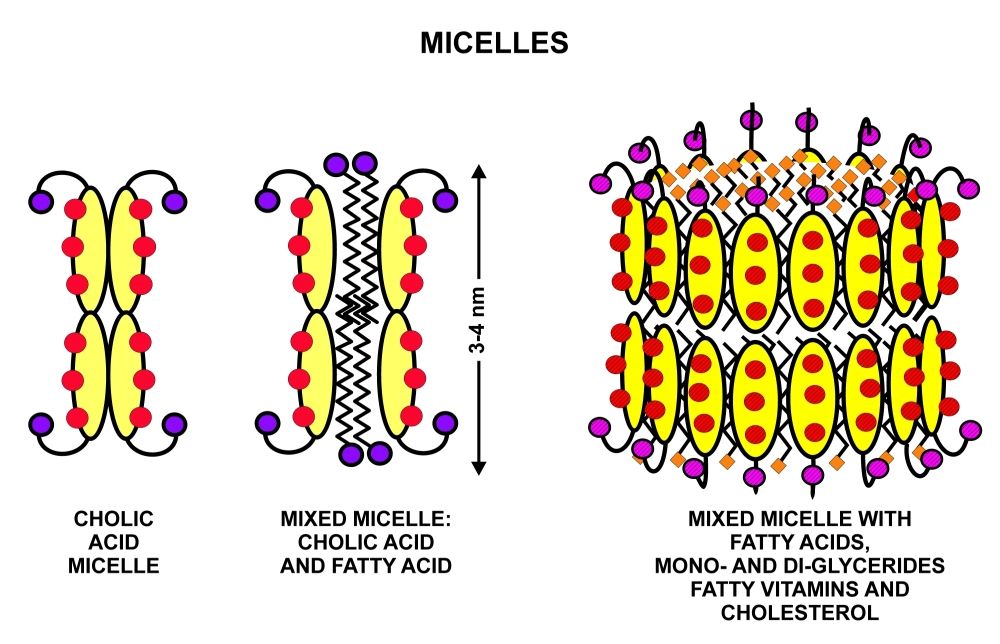
Now pancreatic lipase, working with its helper protein colipase, can do its job well. It cuts triglycerides into monoglycerides and free fatty acids. Two more pancreas enzymes, phospholipase and cholesterol esterase, handle phospholipids and cholesterol. These products still do not dissolve in water. So bile salts wrap around them to form micelles. A micelle is a tiny ball with the fat cargo tucked inside and the water-friendly sides of the bile salts facing out. The micelle carries its passengers across the watery layer next to the gut wall. It delivers them to the brush border of the enterocyte, where they move into the cell. The bile salts are not absorbed here. Most are taken back up later, in the ileum. They return to the liver through the enterohepatic circulation. This thrifty loop reuses each bile salt many times.
Chylomicrons and the lipoprotein fleet
Inside the enterocyte, the route splits by chain length. Short- and medium-chain fatty acids dissolve well enough in water to pass straight into the capillaries of the portal vein. They ride on a blood protein called albumin and go straight to the liver. That route is fast and simple. Long-chain fatty acids make up most fat in food, and they take the long way. Inside the enterocyte they are rebuilt into triglycerides. Then they are packed with cholesterol, phospholipids and proteins into a chylomicron.
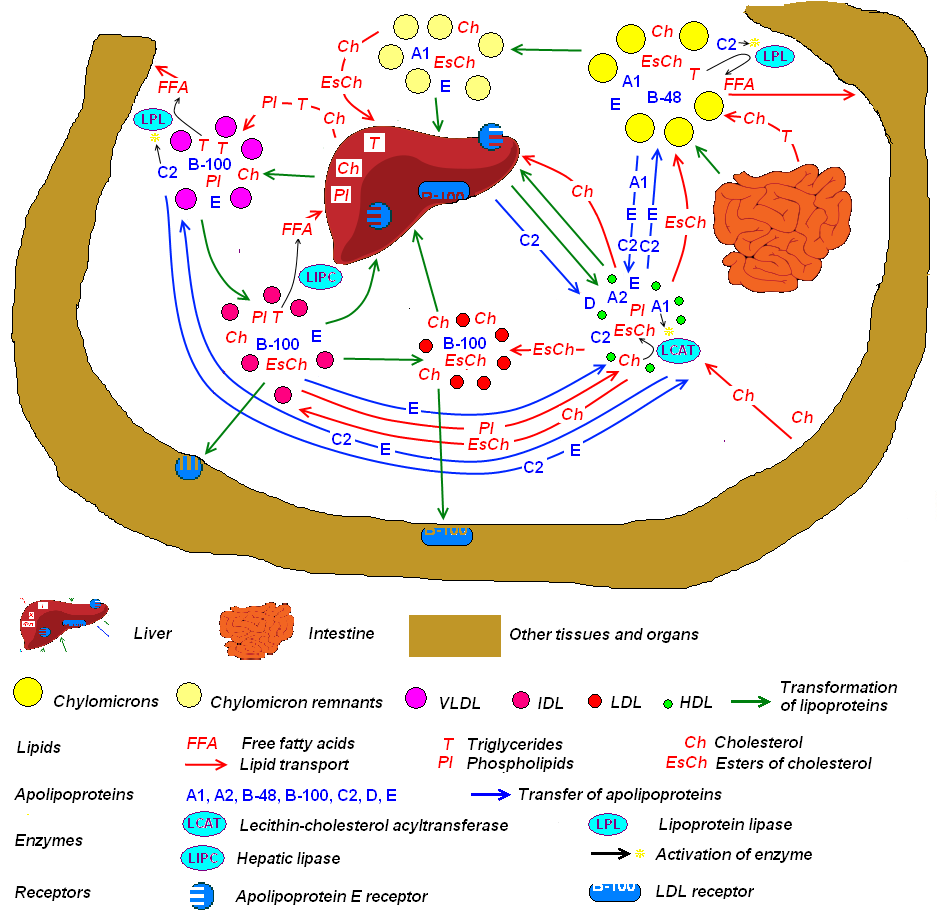
A chylomicron is the first of the lipoproteins. Lipoproteins are round delivery trucks. Their core is fat that repels water. Their shell faces the water and is made of phospholipids, cholesterol and proteins called apolipoproteins. Chylomicrons are too big to enter blood capillaries. So they leave through a lacteal, a lymph vessel inside each villus of the intestine. They travel through the lymph system to the thoracic duct. Finally they enter the blood near the left subclavian vein, a large vein under the collarbone. This is why fat, unlike any other nutrient, skips the liver's first pass. As chylomicrons travel, an enzyme called lipoprotein lipase strips out their triglycerides. This enzyme is fixed to the walls of capillaries in muscle and fat tissue. The liver then clears the shrunken leftover.
The liver then builds its own trucks. The family is named by density. The more fat and the less protein, the less dense the particle.
| Lipoprotein | Made by | Density | Main cargo | Job |
|---|---|---|---|---|
| Chylomicron | Small intestine | Lowest | Triglyceride from food | Carries absorbed fat from the gut to tissues by way of lymph |
| VLDL | Liver | Very low | Triglyceride made in the liver | Delivers triglyceride from the liver to muscle and fat tissue |
| IDL | From VLDL in the blood | Intermediate | Triglyceride + cholesterol | In-between particle; becomes LDL or is cleared |
| LDL | From IDL in the blood | Low | Cholesterol | Delivers cholesterol to body tissues |
| HDL | Liver and intestine | Highest (most protein) | Cholesterol + protein | Reverse cholesterol transport: brings cholesterol back to the liver |
The short forms stand for very-low-density (VLDL), intermediate-density (IDL), low-density (LDL) and high-density (HDL) lipoprotein.
- Digesting fat is a surface-area problem. Bile solves it by emulsifying fat, and bile has no enzymes.
- CCK makes the gallbladder squeeze and the pancreas release enzymes. Pancreatic lipase with colipase does most of the work.
- Micelles carry monoglycerides and fatty acids to the enterocyte. Bile salts are recycled through the enterohepatic circulation.
- Short- and medium-chain fatty acids go straight to the portal vein. Long-chain fatty acids are packed into chylomicrons and enter the lymph.
Section 4Functions of fat
The densest fuel and the deepest reserve
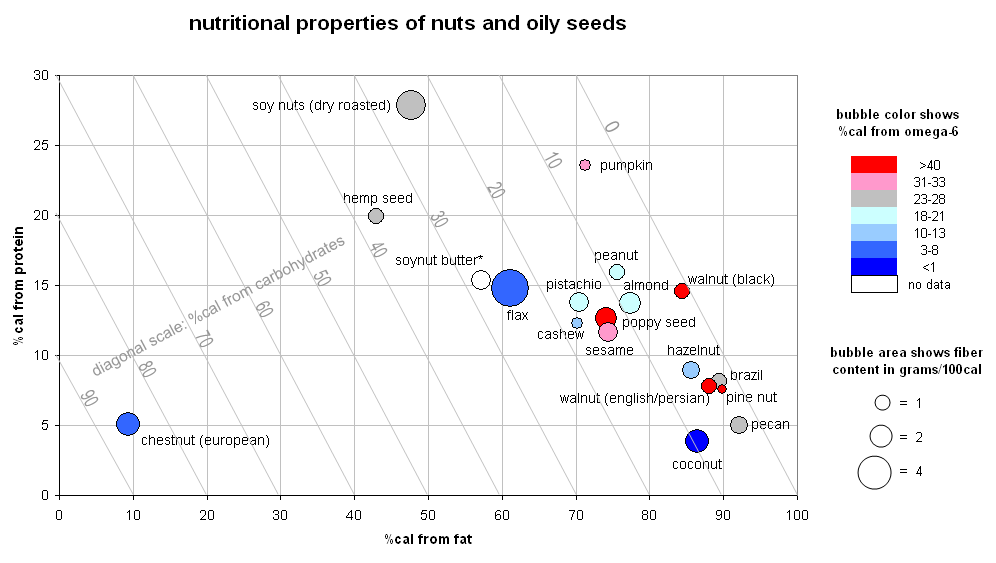
Fat gives 9 kcal per gram. That is more than twice the 4 kcal per gram from carbohydrate or protein, and well above alcohol's 7 kcal per gram. The reason is chemical. Fatty acid chains are almost pure carbon and hydrogen, with very little oxygen already attached. So there is far more left to burn. That density is a strength, not a flaw. It lets the body store a lot of energy in a small mass.
The advantage is even bigger than the per-gram number suggests. Glycogen, the carbohydrate store, loves water. It holds about three to four grams of water for every gram of glycogen. So its real energy density is a small part of fat's. Fat tissue stores triglyceride with almost no water. A typical adult carries maybe 1,500 to 2,000 kcal of glycogen. But that same adult carries tens of thousands of kilocalories in fat tissue. That is the difference between a day's supply and a season's. Fat is also the main fuel at rest and during long, easy to moderate activity. Carbohydrate takes over as the effort gets harder.
Two practical notes follow. Fat is energy-dense, so small amounts of fat-rich food carry a lot of energy. That is useful when appetite is poor, energy needs are high, or a person is trying to gain weight. Otherwise it is simply a fact about what food is made of. Also, fat slows how fast the stomach empties and boosts CCK. So meals with fat leave the stomach more slowly. Does that mean you feel full longer? That is less settled than people often say. Per calorie, fat usually tests as no more filling than carbohydrate, and clearly less filling than protein. Short-term studies of appetite disagree with each other. Treat the slower stomach emptying as proven, and the fullness payoff as early.
Insulation, protection, and structure
Nutrition experts tell two kinds of fat apart. Storage fat is the fat tissue that grows and shrinks with energy balance. Essential fat is the lipid built into cell membranes, nerve tissue, bone marrow and organs. The body cannot spare it. Both do structural work. Subcutaneous fat tissue sits under the skin. It keeps heat in, slowing heat loss to the air. Visceral fat tissue is packed around the kidneys, heart and other organs. It cushions them against bumps. Fat tissue is also an endocrine organ in its own right, which means it releases hormones. These include leptin and adiponectin, which take part in appetite and metabolism signals.
Lipids build structures beyond storage too. Every cell membrane is a phospholipid bilayer kept steady by cholesterol. The myelin sheath that wraps and insulates nerve fibers is rich in lipid. That is one reason infants and toddlers need more fat for their size than adults. The AMDR for fat is 30 to 40% of energy for ages 1 to 3 years. It is 25 to 35% for ages 4 to 18. For adults it is 20 to 35%. Fatty acids are also the raw material for eicosanoids. These are local signaling compounds that take part in inflammation, blood clotting and the tone of blood vessels.
Fat-soluble vitamin absorption
Vitamins A, D, E and K are lipids themselves. So they dissolve in fat from food, ride in the same micelles and are packed into the same chylomicrons. Eat them without any fat and absorption drops a lot. A salad of carrots and dark greens with an oil-based dressing gives clearly more carotenoids (plant pigments, some of which become vitamin A) than the same salad served dry. Fat also carries the flavors and gives the texture that make many vegetables tasty in the first place. That is a nutrition reason in its own right.
These vitamins are stored in the liver and fat tissue instead of being freely flushed out in urine. So a deficiency develops slowly. But too much from strong supplements can also build up. The values below are for adults. Needs differ for children and during pregnancy and breastfeeding.
| Vitamin | Adult reference intake | Upper limit (adults) | Deficiency illness | Excess |
|---|---|---|---|---|
| A | RDA 900 µg RAE/day men; 700 µg RAE/day women | UL 3,000 µg/day preformed retinol | Night blindness, xerophthalmia | Hypervitaminosis A (vitamin A poisoning); preformed retinol can cause birth defects in pregnancy |
| D | RDA 15 µg (600 IU)/day ages 1 to 70; 20 µg (800 IU)/day ages 71+ | UL 100 µg (4,000 IU)/day | Rickets in children; osteomalacia in adults | Hypercalcemia (too much calcium in the blood) |
| E | RDA 15 mg alpha-tocopherol/day | UL 1,000 mg/day from supplements | Rare; nerve damage and bursting of red blood cells, mostly with fat malabsorption or in babies born early | May interfere with clotting at high supplement doses |
| K | AI 120 µg/day men; 90 µg/day women | No UL set | Poor clotting, bleeding | No known poisoning from food forms |
RAE means retinol activity equivalents, a unit that counts all forms of vitamin A by how active they are.
- Fat gives 9 kcal/g and stores energy with almost no water. So fat tissue holds a far larger reserve than glycogen.
- Subcutaneous fat keeps heat in, visceral fat cushions organs, and fat tissue also acts as an endocrine organ.
- Lipids build cell membranes and myelin. Children need more fat for their size (AMDR 30 to 40% at ages 1 to 3) than adults (20 to 35%).
- Vitamins A, D, E and K need fat from food to be absorbed. So failing to absorb fat predicts running short of them.
Section 5Lipids and health
LDL, HDL, and what a lipid panel actually measures
A standard lipid panel is a blood test. It reports total cholesterol, LDL cholesterol, HDL cholesterol and triglycerides. It is worth being exact about what those labels mean. LDL cholesterol is not a type of cholesterol. It measures how much cholesterol is being carried inside low-density lipoprotein particles. Cholesterol is one molecule. The particles carrying it are what differ.
LDL particles deliver cholesterol out to the tissues. When there are too many, they can get stuck in the artery wall. There they become oxidized, or chemically damaged, and they start the inflamed process of atherosclerosis. This is the plaque that narrows arteries. Plaque can burst and cause a heart attack or an ischemic stroke, a stroke caused by a blocked blood vessel. The evidence that LDL causes atherosclerotic heart and blood vessel disease is about as strong as this kind of science gets. It comes from three directions that agree. There are cohort studies that follow people forward. There are gene studies of people born with lifelong high or low LDL. And there are randomized trials. These trials show that lowering LDL in several different ways lowers the number of heart attacks and strokes in step.
HDL particles run the other way. They collect cholesterol from tissues and bring it back to the liver. This is called reverse cholesterol transport. Low HDL cholesterol reliably predicts higher heart risk. But here the story splits in a useful way, and the difference is worth holding onto. HDL is a strong risk marker, a sign of risk. That is well proven. But the idea that raising HDL causes lower risk is not supported. Several large trials tested drugs that raised HDL cholesterol a lot. They failed to cut heart attacks and strokes. A sign of risk and a cause of risk are different things. Mixing them up is one of the most common errors in nutrition thinking.
What dietary fat does to blood lipids
The most often repeated finding is a replacement effect. What matters is less "how much saturated fat" on its own and more "what takes its place." Controlled feeding trials show again and again that swapping saturated fat for polyunsaturated fat lowers LDL cholesterol. When randomized trials are pooled, they also find a modest drop in coronary heart disease events along with it. The LDL effect is the better proven of the two. The data on heart events come from a fairly small set of older trials. Swapping saturated fat for refined carbohydrate, on the other hand, gives little or no benefit. Refined carbohydrates are grains and starches with the bran and germ removed, such as white flour. This is why a low-fat product full of refined starch is not always an improvement. It is also why "swap toward unsaturated sources" is more useful advice than "avoid fat."
Several other points need care. Cholesterol in food was long thought to drive blood cholesterol. But for most people the effect is modest. When you eat more, the liver makes less of its own. U.S. diet advice dropped the 300 mg/day cap. It now says to keep intake as low as is practical while still eating a nutritious diet. People do differ a lot in how they respond. Omega-3 supplements are a case where excitement has run ahead of the trial data. Eating fish is steadily linked to lower heart risk in cohort studies. But large randomized trials of omega-3 pills in the general public have shown little or no drop in heart events. In groups with high triglycerides, trial results have not agreed with each other. Call that early and disputed, not settled. Coconut oil raises LDL cholesterol much as other highly saturated fats do. Claims of a special benefit are not supported by controlled trials.
Current recommendations, and how to hold them
These are guidelines for whole populations, for general learning. They are not personal medical advice. They are not treatment for any diagnosed condition. Anyone managing a blood fat disorder, heart disease or a condition where fat is not absorbed needs care from their own clinician and a registered dietitian.
| Target | Advice | On a 2,000 kcal day | Strength of evidence |
|---|---|---|---|
| Total fat | AMDR 20 to 35% of energy (adults); 25 to 35% ages 4 to 18; 30 to 40% ages 1 to 3 | ≈44 to 78 g/day for adults | Agreed range, not a hard line |
| Saturated fat | Less than 10% of calories, ages 2 and older (Dietary Guidelines for Americans) | Under ≈22 g/day | Strong for the swap to unsaturated fat |
| Trans fat | As low as possible; partially hydrogenated oils removed from the U.S. food supply | Close to zero | Strong |
| Linoleic acid | AMDR 5 to 10% of energy | ≈11 to 22 g/day | Proven essential |
| Alpha-linolenic acid | AMDR 0.6 to 1.2% of energy | ≈1.3 to 2.7 g/day | Proven essential |
| Seafood | About 8 oz (two servings) per week for adults | - | Moderate; mostly from cohort data |
| Cholesterol in food | No number limit; keep as low as practical within a nutritious diet | - | Effect on blood lipids modest and varies |
One last note on framing. Fats are not moral groups, and neither are the people who eat them. Butter is not a sin and olive oil is not a virtue. They are different mixes of fatty acids with different measurable effects on blood fats. They are eaten as part of a whole eating pattern, a body, a budget, a culture and a life. The fairest summary the evidence supports is plain. Eating patterns that lean toward unsaturated fats from liquid plant oils, nuts, seeds and fish are linked to lower heart risk. So are patterns with plenty of vegetables, fruits, legumes and whole grains. No single food, and no single fatty acid, delivers that result by itself.
- LDL delivers cholesterol to tissues and causes atherosclerotic heart and blood vessel disease. That conclusion is strongly supported.
- HDL does reverse cholesterol transport and is a good risk marker. But raising it with drugs has not lowered heart events. A marker is not a cause.
- The key diet finding is a replacement effect. Swapping saturated fat for polyunsaturated fat lowers LDL and heart events. Swapping it for refined carbohydrate does not.
- Population advice: total fat 20 to 35% of energy for adults, saturated fat under 10%, trans fat as low as possible.
The chapter in one breath
- Lipids are hydrophobic molecules in three nutrition families: triglycerides (about 95% of fat eaten), phospholipids (membranes and mixing fat with water) and sterols (cholesterol and the hormones made from it).
- Fat gives 9 kcal/g, against 4 for carbohydrate, 4 for protein and 7 for alcohol.
- Fatty acids differ by chain length and saturation. Cis double bonds bend chains and keep oils liquid. Factory-made trans fat straightens them and clearly raises heart risk.
- Only two fatty acids are essential: linoleic acid (omega-6) and alpha-linolenic acid (omega-3). Their Adequate Intakes vary by sex, age, pregnancy and breastfeeding.
- Bile emulsifies fat without any enzyme action. Pancreatic lipase cuts it. Micelles carry the products to the enterocyte. Chylomicrons carry long-chain fat out through the lymph.
- The lipoprotein fleet runs from chylomicron to VLDL to IDL to LDL to HDL. It gets denser and richer in protein as it goes.
- Fat is the body's densest energy store. It keeps heat in and cushions organs. It builds membranes and myelin. It is needed to absorb vitamins A, D, E and K.
- LDL causes atherosclerosis. HDL is a risk marker but not a proven target. The strongest diet lever is replacing saturated fat with unsaturated fat, not with refined carbohydrate.
ReferenceWords worth knowing
A quick list of the terms in this chapter. Skim it now, or come back whenever a word trips you up.
- Adequate Intake (AI)
- A suggested average daily intake used when the evidence is too thin to set an RDA. The essential fatty acids have AIs, not RDAs.
- Alpha-linolenic acid (ALA)
- The essential omega-3 fatty acid (18:3). It is found in flaxseed, chia, walnuts, canola and soybean oil. The body turns it, poorly, into EPA and DHA.
- AMDR
- Acceptable Macronutrient Distribution Range: the share of total energy a macronutrient should supply. For adults, 20 to 35% from fat.
- Atherosclerosis
- The slow build-up of cholesterol-rich, inflamed plaque inside artery walls. It is the process behind most heart attacks and ischemic strokes.
- Bile
- A fluid made by the liver and stored in the gallbladder. It holds bile salts made from cholesterol. It emulsifies fat and has no digestive enzymes.
- Cholecystokinin (CCK)
- The hormone released when fat and protein reach the duodenum. It makes the gallbladder squeeze and the pancreas release enzymes.
- Cholesterol
- The main animal sterol. It is part of membranes and the raw material for bile acids, vitamin D and the steroid hormones. The liver makes it, and it is found only in foods from animals.
- Chylomicron
- The lipoprotein built in the enterocyte to carry absorbed triglyceride from food out through the lymph system.
- Cis fatty acid
- An unsaturated fatty acid with both hydrogens on the same side of the double bond, which bends the chain. It is the form found in nature.
- Emulsification
- Breaking large fat drops into a fine mix of small drops. It greatly increases the surface area lipase can work on.
- Enterohepatic circulation
- The recycling loop in which bile salts are taken back up in the ileum and returned to the liver for reuse.
- Essential fatty acid
- A fatty acid the body cannot make and must get from food: linoleic acid and alpha-linolenic acid.
- HDL (high-density lipoprotein)
- The protein-rich lipoprotein that does reverse cholesterol transport. It is a strong risk marker, but it has not been shown to cause lower risk.
- Hydrogenation
- Adding hydrogen across double bonds to firm up a liquid oil. Partial hydrogenation was the main factory source of trans fat.
- LDL (low-density lipoprotein)
- The lipoprotein that delivers cholesterol to tissues. It causes atherosclerotic heart and blood vessel disease.
- Linoleic acid
- The essential omega-6 fatty acid (18:2). It is plentiful in soybean, corn, sunflower and safflower oils, nuts and seeds.
- Lipoprotein
- A round particle with a fat core and a shell of phospholipid and protein. It moves lipids, which do not dissolve in water, through blood or lymph.
- Micelle
- A ball of bile salts that holds monoglycerides, fatty acids, cholesterol and fat-soluble vitamins and carries them to the gut's brush border.
- Phospholipid
- A lipid with a phosphate head and two fatty acid tails. It is the base of cell membranes and a natural emulsifier.
- Sterol
- A lipid built on four joined carbon rings: cholesterol in animals, phytosterols in plants.
- Trans fatty acid
- An unsaturated fatty acid whose hydrogens sit on opposite sides of the double bond. This straightens the chain so it acts like a saturated fat.
- Triglyceride
- Glycerol plus three fatty acids. It is the main fat in food and in body storage, and it gives 9 kcal per gram.
Check yourself
Want the longer wording? Read this chapter in the full textbook.