Carbohydrates
Carbohydrates supply most of the world's dietary energy, and they do it at a steady 4 kilocalories per gram — the same as protein, and well under fat's 9. But "carbohydrate" is not one thing: it covers the single sugar molecules in fruit, the starch in a potato, and the fiber in a bean that your own enzymes cannot touch at all. Those forms behave very differently once they reach the gut, and the differences explain why two foods with identical carbohydrate grams can have very different effects on digestion, blood glucose, and long-term health. This chapter follows carbohydrate from its chemical structure through digestion and absorption into the bloodstream, then out to the evidence on how much we need and what the research actually supports. Along the way, resist the urge to sort foods into "good" and "bad" — the physiology is far more interesting than the moralizing.
By the end of this chapter you can
- Classify carbohydrates as monosaccharides, disaccharides, or polysaccharides, and name the common members of each.
- State the energy yield of carbohydrate and compare it with protein, fat, and alcohol.
- Distinguish soluble from insoluble fiber and describe what each does in the gut.
- Trace starch from the mouth to the portal vein, naming the enzymes and transporters at each step.
- Explain how insulin and glucagon hold blood glucose within a narrow range.
- Define glycemic index and glycemic load, and state the limits of both.
- Cite the RDA and AMDR for carbohydrate and the AI for fiber, with the population and units for each.
- Describe what the evidence does — and does not — show about added sugars and type 2 diabetes risk.
Section 1Types of carbohydrates
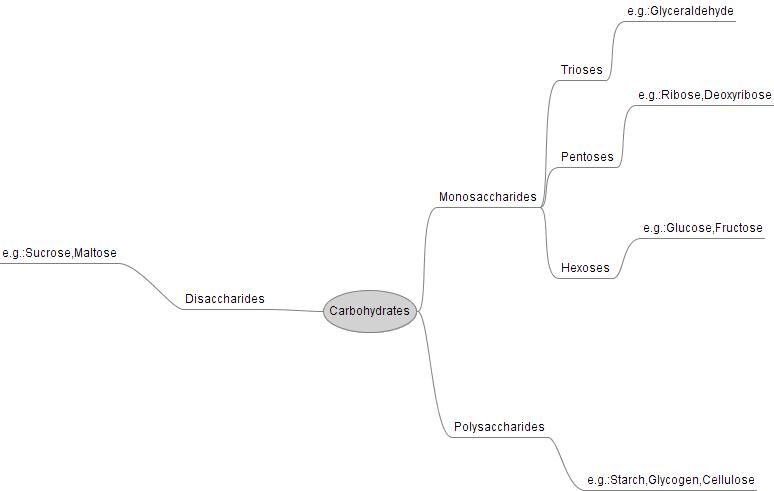
One building block, many arrangements
Every dietary carbohydrate is built from small sugar units, and the name is a fossil of nineteenth-century chemistry: carbo (carbon) plus hydrate (water), because these molecules carry carbon, hydrogen, and oxygen in roughly a 1:2:1 ratio. What separates a spoonful of table sugar from a slice of bread is not the atoms but the architecture — how many sugar units are strung together and how the links between them are angled. That architecture decides whether your digestive enzymes can take the molecule apart, and that single fact drives most of this chapter.
Carbohydrates that your small intestine can break down and absorb yield 4 kilocalories per gram. Hold that number next to the others: protein also yields 4 kcal/g, fat yields 9 kcal/g, and alcohol yields 7 kcal/g. Carbohydrate is not an unusually dense fuel; it is simply the most abundant one in most food supplies.
Monosaccharides and disaccharides — the sugars
A monosaccharide is a single sugar unit and cannot be broken down further by digestion. Three matter nutritionally. Glucose is the body's reference fuel, the sugar that circulates in blood and the one the brain relies on most heavily. Fructose, found in fruit and honey, is the sweetest of the common sugars and is handled largely by the liver. Galactose rarely appears free in food; it arrives bound up in milk sugar.
A disaccharide is two monosaccharides joined together. Sucrose (glucose + fructose) is table sugar, and chemically it is identical whether it came from cane, beet, or a fruit. Lactose (glucose + galactose) is the sugar of milk. Maltose (glucose + glucose) appears mostly as an intermediate when starch is being digested or grain is being malted. Notice that all six of these — three monosaccharides and three disaccharides — are what everyday language calls "sugars," and every one of them ends up as monosaccharides before it can cross the intestinal wall.
Polysaccharides — starch, glycogen, and fiber
String hundreds or thousands of glucose units together and you get a polysaccharide. Starch is the plant storage form and comes in two shapes: amylose, a long straight chain, and amylopectin, a branched chain. Branching matters, because enzymes attack chain ends, and a branched molecule offers many more ends at once — which is part of why amylopectin-rich foods digest faster than amylose-rich ones. Glycogen is the animal storage form, even more highly branched, and it is stored in your liver (roughly 100 g) and muscle (roughly 400 g); it is not a meaningful source of carbohydrate in food, because it degrades quickly after slaughter.
Fiber is the third group, and it is defined by what your body cannot do. Cellulose is also a straight chain of glucose — the same monomer as starch — but the bonds joining the units are oriented differently (beta rather than alpha linkages), and human digestive enzymes have no key for that lock. The rule is specific, not blanket: brush-border lactase is a beta-galactosidase and cleaves the beta-1,4 bond of lactose perfectly well. What no human enzyme can cut is the beta-1,4 bond of cellulose, so cellulose passes into the colon intact. That one geometric difference is the entire reason lettuce and bread behave so unlike each other.
| Class | Members | Built from | Common food sources |
|---|---|---|---|
| Monosaccharides | Glucose, fructose, galactose | One sugar unit | Fruit, honey, some vegetables; glucose in syrups |
| Disaccharides | Sucrose, lactose, maltose | Two sugar units | Table sugar, milk and yogurt, malted grains |
| Oligosaccharides | Raffinose, stachyose, fructans | 3–10 units | Legumes, onions, wheat — largely fermented, not digested |
| Digestible polysaccharides | Amylose, amylopectin (starch); glycogen | Hundreds to thousands of glucose units, alpha bonds | Grains, potatoes, legumes, roots |
| Fiber polysaccharides | Cellulose, hemicellulose, pectin, beta-glucan, gums | Many units, beta or otherwise indigestible bonds | Whole grains, vegetables, fruit, legumes, seeds |
- Digestible carbohydrate yields 4 kcal/g; protein 4, fat 9, alcohol 7.
- Monosaccharides (glucose, fructose, galactose) are single units; disaccharides (sucrose, lactose, maltose) are pairs.
- Polysaccharides include digestible starch and glycogen (alpha bonds) and indigestible fiber (beta and other bonds).
- Every absorbable carbohydrate must be reduced to a monosaccharide before it can cross the intestinal wall.
Section 2Fiber

Two behaviors: soluble and insoluble
Dietary fiber is carbohydrate (plus the non-carbohydrate polymer lignin) that resists digestion in the small intestine. Nutrition scientists sort it by how it behaves in water, and while the categories overlap in real food, they predict real physiological differences.
Soluble fiber dissolves or disperses in water and often forms a gel. Pectin in apples and citrus, beta-glucan in oats and barley, gums, inulin, and psyllium all belong here. The category is not uniform, though, and the split that matters physiologically is viscosity: beta-glucan, pectin, guar gum, and psyllium thicken, while inulin dissolves without gelling. Where a gel does form, it slows gastric emptying and slows the rate at which glucose is absorbed, which blunts the rise in blood glucose after a meal. Viscous soluble fibers also bind bile acids and carry them out in the stool, forcing the liver to pull cholesterol from circulation to make replacements — the mechanism behind the well-replicated finding that oat beta-glucan and psyllium modestly lower LDL cholesterol. That specific effect is strong evidence, reproduced across many controlled trials.
Insoluble fiber does not dissolve. Cellulose, most hemicelluloses, and lignin are the classic examples, and they concentrate in the bran layers of grains, in vegetable stalks, and in seeds and skins. Insoluble fiber works mechanically: it holds water, adds bulk to stool, and speeds transit through the colon. Low total fiber intake is commonly associated with harder, slower-moving stool. Worth noting, though, that the trial evidence for relieving established constipation is actually strongest for viscous soluble fiber such as psyllium; the neat textbook pairing of "insoluble fiber equals regularity" describes the mechanism better than it describes the outcome data.
What the colon does with it
Fiber is not inert once it reaches the large intestine. Gut bacteria ferment much of the soluble and some of the insoluble fraction, producing gas and short-chain fatty acids (SCFAs) — chiefly acetate, propionate, and butyrate. Butyrate is the preferred fuel of the cells lining the colon, and the SCFAs collectively lower colonic pH and feed the resident microbial community. Because some of this fermentation energy is recovered, fiber is not truly calorie-free; regulatory bodies assign fermentable fiber roughly 2 kcal/g, well below the 4 of digestible carbohydrate.
Resistant starch deserves a mention here, because it is starch that behaves like fiber. Starch trapped inside intact grains and legumes, the high-amylose starch of green bananas, and the retrograded starch that forms when cooked potatoes, rice, or pasta are cooled all escape small-intestinal digestion and are fermented in the colon instead.
How much, and who needs how much
Fiber has an Adequate Intake (AI) rather than an RDA, because the evidence was judged sufficient to set a target but not to define a precise requirement. The AI is anchored at 14 g of total fiber per 1,000 kcal, a level associated in observational studies with lower coronary heart disease risk. Because it scales with energy intake, the gram target differs by age and sex, and it rises in pregnancy and lactation.
| Population | Total fiber AI | Note |
|---|---|---|
| Men 19–50 y | 38 g/day | Highest energy needs, highest target |
| Men 51 y and older | 30 g/day | Falls with declining energy intake |
| Women 19–50 y | 25 g/day | — |
| Women 51 y and older | 21 g/day | — |
| Pregnancy | 28 g/day | Reflects increased energy needs |
| Lactation | 29 g/day | Reflects increased energy needs |
| Children 1–3 y | 19 g/day | Same 14 g/1,000 kcal principle |
Actual intake falls far short of these figures — adults in the United States average roughly 15 g/day, well under half the target for younger men. There is no Tolerable Upper Intake Level for fiber; very high intakes cause bloating, gas, and discomfort rather than toxicity, though extremely high intakes can modestly reduce absorption of some minerals.
- Soluble/viscous fiber gels, slows glucose absorption, and — for oat beta-glucan and psyllium — modestly lowers LDL cholesterol (strong evidence).
- Insoluble fiber adds bulk and speeds transit; for relieving established constipation, however, the trial evidence is strongest for viscous soluble fiber such as psyllium.
- Colonic fermentation yields short-chain fatty acids, including butyrate, the colonocyte's preferred fuel.
- The AI is 14 g/1,000 kcal — 38 g/day for men 19–50 y, 25 g/day for women 19–50 y, 28 g/day in pregnancy; there is no UL.
Section 3Digestion and absorption
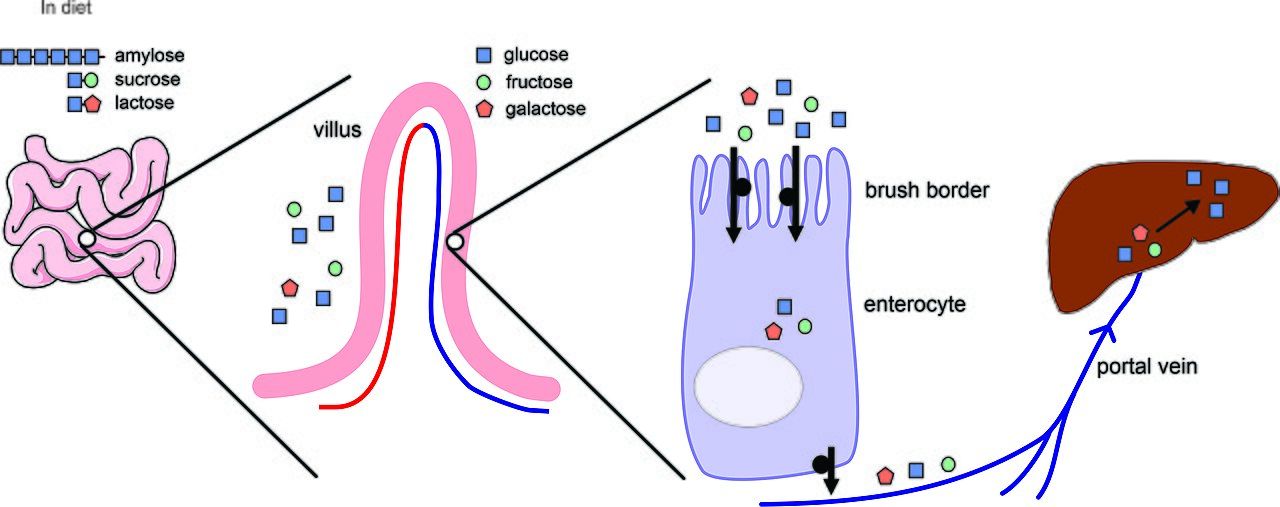
Mouth and stomach: a short start, then a pause
Digestion begins before you swallow. Chewing breaks food apart mechanically, and saliva delivers salivary amylase, which starts cleaving the alpha bonds of starch into shorter chains called dextrins and into maltose. This is why a plain cracker held in the mouth slowly turns sweet. The work is brief, though: as the bolus reaches the stomach, gastric acid drops the pH far below amylase's working range and the enzyme is inactivated. No meaningful carbohydrate digestion occurs in the stomach, and none is absorbed there.
Small intestine: pancreatic amylase and the brush border
The real work happens in the duodenum. The pancreas releases pancreatic amylase into the small intestine, where bicarbonate has neutralized the acid, and starch is rapidly reduced to disaccharides and short oligosaccharides. These fragments are still too large to absorb, so the final cut is made by enzymes anchored in the brush border — the microvilli covering the intestinal cells. Maltase splits maltose into two glucose molecules, sucrase splits sucrose into glucose and fructose, and lactase splits lactose into glucose and galactose. Only now, as single sugars, can carbohydrate be absorbed.
| Site | Enzyme | Substrate | Product |
|---|---|---|---|
| Mouth | Salivary amylase | Starch | Dextrins, maltose |
| Stomach | None active | — | Amylase is inactivated by acid |
| Small intestine (lumen) | Pancreatic amylase | Starch, dextrins | Maltose, short oligosaccharides |
| Brush border | Maltase | Maltose | Glucose + glucose |
| Brush border | Sucrase | Sucrose | Glucose + fructose |
| Brush border | Lactase | Lactose | Glucose + galactose |
| Large intestine | Bacterial fermentation | Fiber, resistant starch | Short-chain fatty acids, gases |
Crossing the wall and reaching the liver
The three monosaccharides do not all enter the same way. Glucose and galactose ride the sodium-glucose cotransporter SGLT1, a secondary active transport system that uses the sodium gradient to pull sugar in against its concentration gradient — the same physiology that oral rehydration solutions exploit when they pair glucose with sodium. Fructose takes a different route, entering by facilitated diffusion through GLUT5, which needs no energy and moves fructose only down its gradient. All three then exit the far side of the cell through GLUT2 into the capillaries of the villus.
From there, blood carries the sugars through the hepatic portal vein straight to the liver — a deliberate piece of anatomy. The liver sees the entire absorbed load first and converts most fructose and galactose into glucose or into liver glycogen before the rest of the body ever meets them. What leaves the liver and enters general circulation is largely glucose.
- Salivary amylase starts starch digestion; the stomach contributes nothing, since acid inactivates the enzyme.
- Pancreatic amylase plus the brush-border enzymes maltase, sucrase, and lactase finish the job in the small intestine.
- Glucose and galactose enter via SGLT1 (active, sodium-dependent); fructose enters via GLUT5 (facilitated diffusion).
- Absorbed sugars travel the hepatic portal vein to the liver, which converts most of them to glucose or glycogen.
Section 4Blood glucose regulation
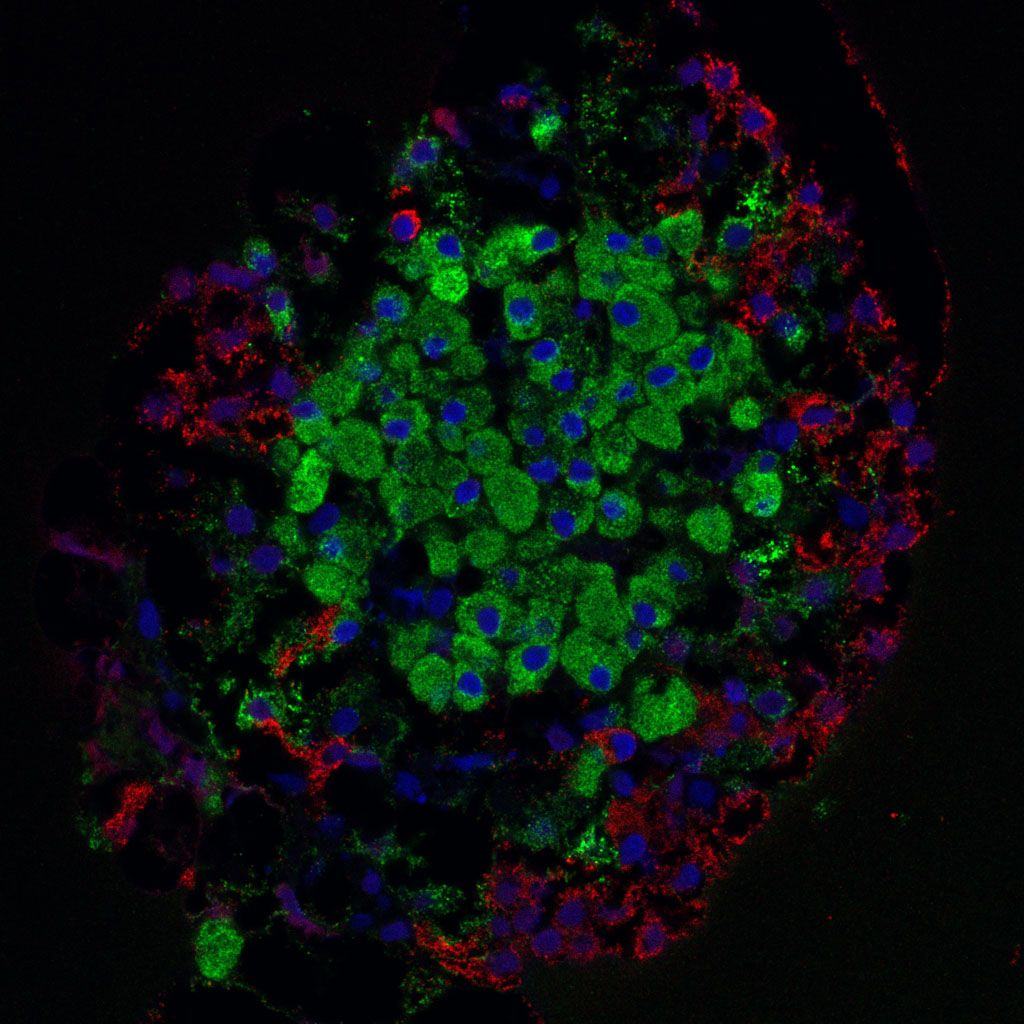
A two-hormone thermostat
Blood glucose is held within a remarkably narrow band. In a person without diabetes, fasting plasma glucose sits below 100 mg/dL (5.6 mmol/L) and rarely exceeds about 140 mg/dL even after a large meal. The control system is a classic negative feedback loop run from the islets of Langerhans in the pancreas.
When glucose rises after a meal, beta cells release insulin. Insulin is the storage signal: it prompts muscle and adipose cells to move GLUT4 transporters to their surfaces so glucose can enter, it drives the liver and muscle to build glycogen, and it switches off the liver's own glucose production. When glucose falls — between meals, overnight, during exercise — alpha cells release glucagon, which does the opposite: it breaks liver glycogen back down (glycogenolysis) and, as that store runs low, drives the liver to manufacture new glucose from amino acids and glycerol (gluconeogenesis). Epinephrine, cortisol, and growth hormone reinforce glucagon's side of the ledger during stress.
| Insulin | Glucagon | |
|---|---|---|
| Source | Pancreatic beta cells | Pancreatic alpha cells |
| Trigger | Rising blood glucose (after eating) | Falling blood glucose (fasting, exercise) |
| Net effect | Lowers blood glucose | Raises blood glucose |
| Main actions | Glucose uptake via GLUT4; glycogen synthesis; fat and protein synthesis | Glycogenolysis; gluconeogenesis |
| Chief target | Muscle, adipose, liver | Liver |
Where the glucose goes, and what runs out first
The body's glucose reserves are small. Liver glycogen (roughly 100 g) is the only store that can be released back into the bloodstream, and it is largely depleted after 12–24 hours without food. Muscle glycogen (roughly 400 g) is far larger but is locked in place: muscle lacks the enzyme needed to release free glucose, so muscle glycogen fuels that muscle only and never rescues blood glucose. Beyond those stores, the brain's substantial daily glucose requirement — on the order of 120 g — is met by gluconeogenesis, which consumes body protein, and increasingly by ketone bodies as fasting continues. Adequate dietary carbohydrate spares that protein, which is the physiological argument behind the carbohydrate RDA you will meet in the next section.
Glycemic index and glycemic load
The glycemic index (GI) ranks a food by how much it raises blood glucose over two hours compared with a reference (pure glucose = 100), using portions matched for 50 g of available carbohydrate. Values of 55 or below are called low, 56–69 medium, and 70 or above high. Because GI ignores portion size — watermelon has a high GI but very little carbohydrate per slice — the glycemic load (GL) was introduced: GI multiplied by the grams of available carbohydrate in an actual serving, divided by 100. A GL of 10 or below is low; 20 or above is high.
Both tools are genuinely useful for understanding why foods differ, and low-GI dietary patterns show modest benefits for post-meal glucose in controlled trials. But treat published values cautiously. GI varies substantially between individuals eating the identical food, and within a food it shifts with ripeness, particle size, cooking time, cooling, and whatever else is on the plate: fat, protein, acid, and fiber all lower the glycemic response of a mixed meal. GI also says nothing about nutritional quality — a food can have a low GI and little else to recommend it.
- Insulin (beta cells) lowers blood glucose by driving uptake and storage; glucagon (alpha cells) raises it via glycogenolysis and gluconeogenesis.
- Liver glycogen (≈100 g) maintains blood glucose; muscle glycogen (≈400 g) fuels only that muscle.
- The brain uses on the order of 120 g of glucose per day, met by diet, gluconeogenesis, and eventually ketones.
- GI ranks a fixed 50 g carbohydrate portion; GL adjusts for real serving size — both vary with cooking, ripeness, and the rest of the meal.
Section 5Carbohydrate and health
The actual numbers
The RDA for carbohydrate is 130 g/day for adults and for children aged 1 year and older, of both sexes. That figure is not about health optimization; it is the amount judged sufficient to supply the brain's glucose needs without forcing reliance on gluconeogenesis. The RDA rises in pregnancy to 175 g/day and in lactation to 210 g/day, reflecting fetal and milk glucose demands. Infants have Adequate Intakes rather than an RDA: 60 g/day at 0–6 months and 95 g/day at 7–12 months.
Separately, the Acceptable Macronutrient Distribution Range (AMDR) for carbohydrate is 45–65% of total energy for adults and children aged 1 year and older. Note what these two numbers are doing: 130 g is a floor for a specific physiological function, while 45–65% describes the range within which populations appear to meet nutrient needs while keeping chronic disease risk low. There is no Tolerable Upper Intake Level for total carbohydrate.
| Reference value | Amount | Population |
|---|---|---|
| Carbohydrate RDA | 130 g/day | Adults and children ≥1 y, both sexes |
| Carbohydrate RDA, pregnancy | 175 g/day | Pregnant adolescents and adults |
| Carbohydrate RDA, lactation | 210 g/day | Lactating adolescents and adults |
| Carbohydrate AMDR | 45–65% of energy | Adults and children ≥1 y |
| Total fiber AI | 14 g/1,000 kcal | All ages ≥1 y (gram target varies by age/sex) |
| Added sugars (US Dietary Guidelines) | Less than 10% of energy | Age 2 y and older; avoid added sugars under age 2 |
| Free sugars (WHO) | Less than 10% of energy (strong recommendation) | Adults and children; further reduction below 5% is conditional |
| Carbohydrate UL | None established | — |
Added sugars
Added sugars are sugars and syrups put into foods during processing or preparation, plus sugars from syrups and honey and from concentrated fruit or vegetable juices. They are distinguished from the sugars intrinsic to intact fruit, vegetables, and milk. Chemically the molecules are the same; the distinction is about the package they arrive in and about what the food displaces. Regulators find the distinction useful enough that added sugars now appear as their own line on the US Nutrition Facts label.
What is the evidence? Two conclusions are solid. First, added sugars supply energy with essentially no vitamins, minerals, or fiber, so at high intakes they crowd out nutrient-dense foods — a straightforward dilution argument. Second, the frequency and amount of free sugars is strongly and consistently linked to dental caries; this is among the best-established diet-disease relationships in nutrition. Sugar-sweetened beverages are the largest single source of added sugars in many countries, and their consumption is consistently associated with weight gain and with type 2 diabetes risk in cohort studies — a relationship attributed partly to the fact that liquid calories seem to trigger less compensatory reduction in later eating. Claims about specific metabolic harms of fructose at ordinary dietary intakes remain preliminary, extrapolated largely from high-dose feeding studies; whole fruit, which also contains fructose, is consistently associated with lower disease risk.
Carbohydrate and diabetes risk
Type 1 diabetes is an autoimmune destruction of pancreatic beta cells producing absolute insulin deficiency. It is not caused by diet, and no eating pattern in childhood causes or prevents it. Type 2 diabetes is different: insulin resistance in muscle, liver, and fat combined with progressive beta-cell failure. Its risk is shaped by genetics, age, physical activity, sleep, body-fat distribution, and dietary pattern together.
The most robust dietary findings point to carbohydrate quality rather than quantity. Higher intakes of whole grains, legumes, and total fiber are consistently associated with lower type 2 diabetes incidence across large cohorts and long follow-up; higher intakes of refined grains and sugar-sweetened beverages track the other way. Randomized lifestyle-intervention trials show that structured programs combining dietary change with physical activity substantially reduce progression from prediabetes to type 2 diabetes — strong evidence, though those programs change many things at once, which makes it impossible to credit any single nutrient. Very-low-carbohydrate patterns can improve glycemic markers over the short term in trials, but long-term comparative evidence is mixed, and adherence, not macronutrient ratio, tends to predict outcomes.
- Carbohydrate RDA: 130 g/day for adults and children ≥1 y; 175 g/day in pregnancy, 210 g/day in lactation.
- AMDR: 45–65% of energy; there is no UL for total carbohydrate.
- Guidance caps added sugars below 10% of energy (age 2+), with none recommended under age 2; the caries link is strong evidence.
- For type 2 diabetes, carbohydrate quality — whole grains, legumes, fiber — tracks with lower risk more reliably than total carbohydrate does.
The chapter in one breath
- Digestible carbohydrate yields 4 kcal/g — the same as protein, less than fat's 9 and alcohol's 7.
- Carbohydrates are monosaccharides, disaccharides, or polysaccharides; bond geometry decides whether human enzymes can digest them — the beta-1,4 bonds of cellulose defeat every human enzyme, while starch's alpha bonds and lactose's beta-1,4 bond do not.
- Soluble fiber gels and slows glucose absorption; the viscous types — oat beta-glucan, psyllium — also modestly lower LDL cholesterol. Insoluble fiber adds bulk and speeds transit. Colonic bacteria ferment the soluble fraction and part of the insoluble one into short-chain fatty acids.
- The fiber AI is 14 g/1,000 kcal — 38 g/day for men 19–50 y, 25 g/day for women 19–50 y — and typical intakes are roughly half that.
- Starch is digested by salivary and pancreatic amylase and finished by brush-border maltase, sucrase, and lactase; monosaccharides enter via SGLT1 (glucose, galactose) and GLUT5 (fructose) and travel the portal vein to the liver.
- Insulin stores glucose and glucagon releases it; liver glycogen (≈100 g) defends blood glucose while muscle glycogen (≈400 g) serves only muscle.
- GI and GL describe glycemic behavior but shift with ripeness, cooking, cooling, and the rest of the meal, and vary between people.
- The RDA is 130 g/day (175 in pregnancy, 210 in lactation), the AMDR is 45–65% of energy, and the strongest health signal is carbohydrate quality — not a verdict on any individual food.
ReferenceWords worth knowing
A quick reference for the terms in this chapter — skim it now, or circle back whenever a word trips you up.
- Added sugars
- Sugars and syrups added during processing or preparation, plus sugars from honey, syrups, and concentrated juices; distinguished from sugars intrinsic to intact fruit, vegetables, and milk.
- Amylase
- The enzyme that cleaves the alpha bonds of starch; secreted by the salivary glands and, far more importantly, by the pancreas.
- Amylopectin
- The branched form of plant starch; its many chain ends allow faster enzymatic digestion than amylose.
- Amylose
- The straight-chain form of plant starch; digests more slowly and is more likely to retrograde into resistant starch on cooling.
- Dietary fiber
- Carbohydrate (plus lignin) that resists digestion in the human small intestine and passes into the colon.
- Disaccharide
- Two monosaccharides joined together: sucrose, lactose, or maltose.
- Fructose
- A monosaccharide found in fruit and honey and in half of every sucrose molecule; absorbed via GLUT5 and handled largely by the liver.
- Glucagon
- The pancreatic alpha-cell hormone that raises blood glucose through glycogenolysis and gluconeogenesis.
- Gluconeogenesis
- The liver's synthesis of new glucose from non-carbohydrate precursors such as amino acids and glycerol.
- Glycemic index (GI)
- A ranking of how much a 50 g available-carbohydrate portion of a food raises blood glucose over two hours, relative to glucose set at 100.
- Glycemic load (GL)
- Glycemic index adjusted for the carbohydrate actually present in a realistic serving: GI × available carbohydrate ÷ 100.
- Glycogen
- The highly branched storage polysaccharide of animals, held in liver (≈100 g) and muscle (≈400 g).
- Insulin
- The pancreatic beta-cell hormone that lowers blood glucose by promoting cellular uptake via GLUT4 and stimulating storage.
- Lactase nonpersistence
- The normal, genetically programmed decline in lactase production after early childhood, affecting most of the world's adults; the basis of lactose intolerance.
- Lactose
- Milk sugar; a disaccharide of glucose and galactose.
- Monosaccharide
- A single sugar unit — glucose, fructose, or galactose — and the only form of carbohydrate that can be absorbed.
- Polysaccharide
- A carbohydrate of many sugar units: starch and glycogen (digestible) or fiber such as cellulose (not digestible).
- Resistant starch
- Starch that escapes small-intestinal digestion — trapped in intact grains, high in amylose, or retrograded on cooling — and is fermented in the colon.
- Short-chain fatty acids (SCFAs)
- Acetate, propionate, and butyrate, produced when colonic bacteria ferment fiber; butyrate is the preferred fuel of colon cells.
- Soluble fiber
- Fiber that disperses in water — pectin, beta-glucan, gums, inulin, psyllium. The viscous, gel-forming members slow glucose absorption and modestly lower LDL cholesterol; non-viscous soluble fibers such as inulin do not reliably do either.
- Starch
- The plant storage polysaccharide, made of amylose and amylopectin and the largest source of dietary carbohydrate worldwide.
- Sucrose
- Table sugar; a disaccharide of glucose and fructose, chemically identical whatever plant it was refined from.