Suffixes: Conditions, Procedures and Specialties
A medical word does not announce its meaning at the front. It announces it at the end. The suffix is the part that tells you whether you are looking at a disease, a symptom, a test, an operation, a specialist or a simple adjective — and once you can name that category on sight, an unfamiliar term stops being a wall of letters and becomes a short sentence you can finish. This chapter teaches roughly seventy high-yield suffixes in four working groups: the ones that name what has gone wrong, the ones that name how we look at it, the ones that name what we do about it, and the ones that name who does it. Along the way you will learn when to keep the combining vowel, why gastrectomy loses its o but gastrostomy keeps it, and how to turn a singular Latin noun into a plural that a chart auditor will accept.
By the end of this chapter you can
- State the job a suffix does in a medical term and read any term back-to-front, beginning with its suffix.
- Apply the combining vowel rule to decide when a combining form keeps or drops its o, including the root-to-root exception.
- Decode terms built on the condition suffixes -itis, -osis, -iasis, -pathy, -algia, -emia, -oma, -megaly, -malacia, -sclerosis, -stenosis, -ptosis, -cele, -ectasis, -lysis and -penia.
- Distinguish the four members of the -rrh family — -rrhage/-rrhagia, -rrhea, -rrhexis and -rrhaphy — and use each correctly.
- Separate the instrument, the process and the record in the pairs -scope/-scopy, -graph/-graphy/-gram, -meter/-metry and -tome/-tomy.
- Contrast -ectomy, -tomy and -stomy, and select the correct suffix among -plasty, -pexy, -rrhaphy, -desis, -centesis and -tripsy for a described operation.
- Name the specialty and the specialist for a given body system using -logy/-logist, -iatry/-iatrics/-iatrist and -ician.
- Convert singular to plural for terms ending in -a, -us, -um, -is, -ix/-ex, -oma, -nx and -on.
- Explain the current professional convention for eponyms and give the descriptive equivalent for common examples.
Section 1What a Suffix Actually Decides
Read the last part first
In everyday English we read left to right and expect the important idea early. Medical terminology inverts that habit. The suffix carries the grammatical and clinical payload, and the root tells you only where in the body the payload landed. So the disciplined way to attack an unfamiliar word is to find the suffix, translate it, and then walk backward through the rest of the word. Take myocarditis. The suffix is -itis, inflammation. Now go backward: card is heart, my/o is muscle. Reassembled front to back, my/o + card + -itis = inflammation of the heart muscle (my-oh-kar-DYE-tis). You never had to know the word. You only had to know four pieces.
That backward habit also protects you from a common beginner error, which is guessing from a word that looks similar. Nephrology and nephropathy and nephrectomy all begin identically, and a student reading forward tends to blur them together into a vague sense of “something kidney.” A student reading backward gets three completely different answers: the study of the kidney, disease of the kidney, and surgical removal of the kidney. Same root, three unrelated clinical realities. The suffix is where the difference lives.
Suffixes fall into four working jobs, and it is worth naming them now because the rest of the chapter is organized around them. Some suffixes name a condition — a disease, a symptom or an abnormal state. Some name a procedure — a way of looking, recording, measuring, cutting, repairing or removing. Some name a specialty or a specialist. And some do nothing clinical at all: they simply turn a root into an adjective or a plain noun so the word can sit in a sentence. When you meet a new term, deciding which of those four jobs the ending is doing gets you most of the way to a meaning even if the root is unfamiliar.
The combining vowel rule
Chapter 1 introduced the combining form — a root plus a linking vowel, almost always o, written with a slash: cardi/o, gastr/o, oste/o, neur/o. The vowel is not decoration; it exists to keep consonants from piling up into something unpronounceable. That gives a rule with one exception, and the rule is worth memorizing verbatim because it governs the spelling of thousands of terms.
Keep the combining vowel when the suffix begins with a consonant. Drop it when the suffix begins with a vowel. Always keep it between two roots, even if the second root begins with a vowel. So gastr/o plus -scopy (begins with s, a consonant) gives gastroscopy, but gastr/o plus -itis (begins with i, a vowel) gives gastritis, not “gastroitis.” And gastr/o plus enter/o plus -logy gives gastroenterology, because the junction between two roots always keeps its vowel.
| Build | Suffix begins with | Combining vowel | Result and meaning |
|---|---|---|---|
| gastr/o + -itis | vowel (i) | drop the o | gastritis (gas-TRY-tis) — inflammation of the stomach |
| gastr/o + -scopy | consonant (s) | keep the o | gastroscopy (gas-TROS-koh-pee) — visual exam of the stomach |
| arthr/o + -itis | vowel (i) | drop the o | arthritis (ar-THRY-tis) — inflammation of a joint |
| arthr/o + -pathy | consonant (p) | keep the o | arthropathy (ar-THROP-ah-thee) — joint disease |
| neur/o + -algia | vowel (a) | drop the o | neuralgia (noo-RAL-jee-ah) — nerve pain |
| oste/o + -malacia | consonant (m) | keep the o | osteomalacia (os-tee-oh-mah-LAY-shah) — softening of bone |
| cardi/o + -ac | vowel (a) | drop the o | cardiac (KAR-dee-ak) — pertaining to the heart |
| oste/o + arthr/o + -itis | root meets root | keep the first o | osteoarthritis (os-tee-oh-ar-THRY-tis) — inflammation of bone and joint |
Where the hidden o comes from
Most textbooks list three surgical endings as -ectomy, -otomy and -ostomy. That is a convenient shortcut, but it hides something useful. The true suffixes are -ectomy (excision, from Greek ek, out, plus tome, a cutting), -tomy (incision) and -stomy (creation of an opening, from stoma, mouth). The o you see in “-otomy” and “-ostomy” is not part of the suffix at all — it is the root’s own combining vowel, kept because -tomy and -stomy begin with consonants.
Once you see that, an otherwise baffling spelling pattern becomes obvious. Gastr/o plus -ectomy drops the vowel and yields gastrectomy. Gastr/o plus -tomy keeps it and yields gastrotomy. Gastr/o plus -stomy keeps it and yields gastrostomy. The same logic explains colectomy against colostomy, and appendectomy against tracheostomy. You are not memorizing three arbitrary spellings; you are applying one rule three times.
Build the habit physically. Whenever a term stalls you, put a slash in front of the last recognizable chunk and translate that chunk first: hepat/o/megaly, chol/e/cyst/itis, thromb/o/cyt/o/penia. The ending tells you what kind of word you are holding before you know a single root, and everything in front of it is just an address.
The suffix assigns the word to a category — condition, procedure, specialty or description — so translate it first and work backward through the rest of the term.
Section 2Suffixes That Name a Condition
Disease, inflammation and abnormal state
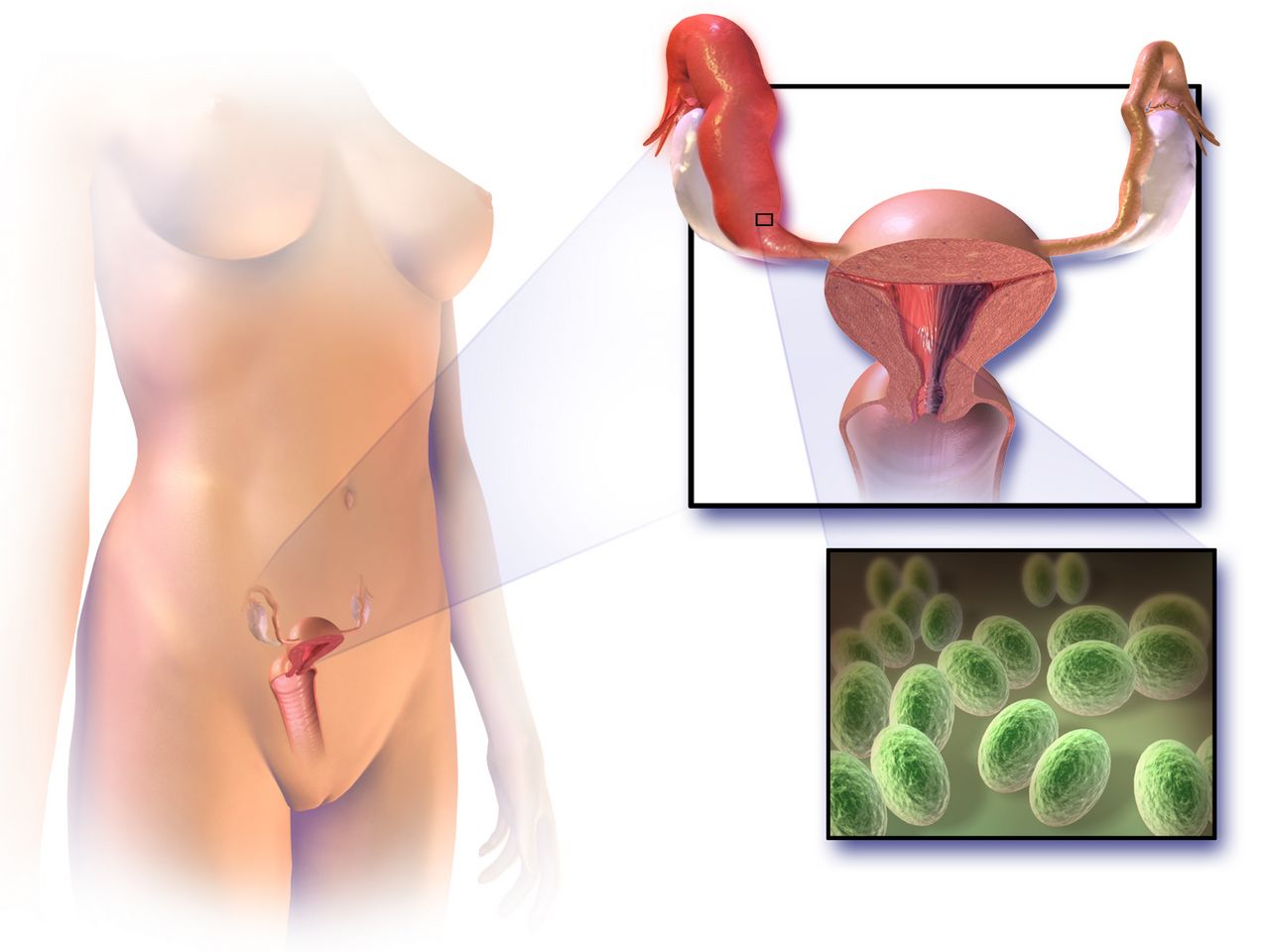
Four endings do most of the diagnostic work in medicine. -itis means inflammation and is the single most common suffix on a hospital problem list. -osis means abnormal condition, and when it attaches to a blood-cell root it specifically means an increase in those cells. -iasis also means abnormal condition but carries the flavor of “presence of” something, most often stones. -pathy is the generic word for disease, used when the process is real but the mechanism is unnamed or mixed.
Compare them on one root. Nephr/itis is inflammation of the kidney. Nephr/osis is an abnormal kidney condition without prominent inflammation. Nephr/o/lith/iasis (nef-roh-lih-THIGH-ah-sis) is the condition of having kidney stones. Nephr/o/pathy (nef-ROP-ah-thee) is kidney disease of whatever cause — the word a clinician reaches for when writing “diabetic nephropathy” because the damage is metabolic rather than infectious. One root, four suffixes, four different notes in a chart.
Two more deserve early attention. -oma means tumor or mass, and it is not automatically cancer: a lipoma (lih-POH-mah) is a benign fatty mass, a hematoma (hee-mah-TOH-mah) is simply a collection of clotted blood, and a myoma is a benign muscle tumor. Malignancy is signaled by the roots carcin/o (epithelial cancer) and sarc/o (connective-tissue cancer), as in carcinoma and osteosarcoma. And -emia means a blood condition: anemia, leukemia, hyperglycemia (high-per-gly-SEE-mee-ah), uremia.
| Suffix | Meaning | Example term | What the example means |
|---|---|---|---|
| -itis | inflammation | peri/card/itis (per-ih-kar-DYE-tis) | inflammation of the sac around the heart |
| -osis | abnormal condition; increase (of cells) | leuk/o/cyt/osis (loo-koh-sye-TOH-sis) | increased number of white blood cells |
| -iasis | abnormal condition, presence of | chol/e/lith/iasis (koh-lee-lih-THIGH-ah-sis) | presence of gallstones |
| -pathy | disease | neur/o/pathy (noo-ROP-ah-thee) | disease of the nerves |
| -oma | tumor, mass | lip/oma (lih-POH-mah) | a benign fatty tumor |
| -emia | blood condition | an/emia | deficiency of red blood cells or hemoglobin |
| -ism | state, condition, process | hyper/thyroid/ism | state of excess thyroid activity |
| -ia | condition | pneumon/ia (noo-MOH-nee-ah) | condition of the lung (infection or inflammation) |
| -lith | stone, calculus | ur/o/lith | a stone in the urinary tract |
Suffixes that describe structural change
A second family tells you what physically happened to the tissue: it got bigger, softer, harder, narrower, it drooped, it bulged, it stretched, it broke down, or there is not enough of it. These are enormously efficient because a single ending replaces a whole clause of description. Splen/o/megaly (splee-noh-MEG-ah-lee) says “the spleen is enlarged” in five syllables. Arteri/o/sclerosis says “the walls of the arteries have hardened.”
Work through a hard one. Bronchi/ectasis (brong-kee-EK-tah-sis) is bronchi (the bronchial tubes — the Latin plural of bronchus, so the i belongs to the root, not to a combining vowel) plus -ectasis (dilation, expansion) — permanently widened airways. Split it as bronchi + -ectasis and the rule holds: no combining vowel was added in front of a vowel-initial suffix. Then note the mirror image: atel/ectasis (at-eh-LEK-tah-sis) is atel/o (incomplete) plus the same -ectasis, meaning incomplete expansion, which clinicians simply call lung collapse. Same suffix, opposite bedside picture, and the difference is entirely in the root.
-ptosis (TOH-sis) is worth singling out because the initial p is silent when the suffix opens a word but audible in the middle of one. It means drooping, sagging or prolapse. Blephar/o/ptosis (blef-ah-rop-TOH-sis) is a drooping eyelid; nephr/o/ptosis is a dropped kidney; gastr/o/ptosis is a sagging stomach. Do not confuse it with -ptysis (TIH-sis), meaning spitting, as in hem/o/ptysis (hee-MOP-tih-sis), coughing up blood.
| Suffix | Meaning | Example term | What the example means |
|---|---|---|---|
| -megaly | enlargement | hepat/o/megaly (hep-ah-toh-MEG-ah-lee) | enlargement of the liver |
| -malacia | softening | oste/o/malacia (os-tee-oh-mah-LAY-shah) | abnormal softening of bone |
| -sclerosis | hardening | ather/o/sclerosis (ath-er-oh-skleh-ROH-sis) | hardening of arteries from fatty plaque |
| -stenosis | narrowing, stricture | pylor/ic stenosis (steh-NOH-sis) | narrowing of the stomach outlet |
| -ptosis | drooping, prolapse | blephar/o/ptosis (blef-ah-rop-TOH-sis) | drooping of the upper eyelid |
| -cele | hernia, protrusion, swelling | mening/o/cele (meh-NING-goh-seel) | protrusion of the meninges through a defect |
| -ectasis | dilation, expansion | bronchi/ectasis (brong-kee-EK-tah-sis) | permanent widening of the airways |
| -lysis | breakdown, destruction, separation | hem/o/lysis (hee-MOL-ih-sis) | destruction of red blood cells |
| -penia | deficiency, abnormal decrease | thromb/o/cyt/o/penia (throm-boh-sye-toh-PEE-nee-ah) | deficiency of platelets |
| -rrhage, -rrhagia | bursting forth, rapid bleeding | hem/o/rrhage (HEM-eh-rij) | rapid loss of blood |
| -rrhea | flow, discharge | rhin/o/rrhea (rye-noh-REE-ah) | discharge from the nose |
| -rrhexis | rupture | angi/o/rrhexis | rupture of a blood vessel |
The four-way -rrh trap. All four begin with a double r and all four are misspelled constantly. -rrhage/-rrhagia is bursting forth (bleeding). -rrhea is a steady flow or discharge. -rrhexis is rupture. -rrhaphy is the odd one out — it is not a symptom at all but a surgical repair by suturing, as in herni/o/rrhaphy (her-nee-OR-ah-fee). Menorrhagia is heavy menstrual bleeding; menorrhea is normal menstrual flow. A few letters apart, two very different notes home.
Symptoms and altered function
The last condition group describes what the patient feels or cannot do. These attach most often to prefixes rather than roots, which is why they will reappear in Chapter 3. -algia and -dynia both mean pain; -pnea means breathing; -phagia means swallowing or eating; -phasia means speech; -uria means a urine condition; -plegia means paralysis and -paresis means partial paralysis or weakness.
Decoding practice: hemi/plegia is paralysis of one side; hemi/paresis is weakness of one side — a distinction that changes a stroke patient’s entire rehabilitation plan. Dys/uria (dis-YOO-ree-ah) is painful or difficult urination; an/uria (an-YOO-ree-ah) is absence of urine output; poly/uria is excessive urine output; hemat/uria (hee-mah-TOO-ree-ah) is blood in the urine. Four terms, one suffix, four different pages of a nursing assessment.
| Suffix | Meaning | Example term | What the example means |
|---|---|---|---|
| -algia, -dynia | pain | my/algia (my-AL-jee-ah) | muscle pain |
| -pnea | breathing | dys/pnea (DISP-nee-ah) | difficult or labored breathing |
| -phagia | swallowing, eating | dys/phagia (dis-FAY-jee-ah) | difficulty swallowing |
| -phasia | speech | a/phasia (ah-FAY-zee-ah) | loss of the ability to speak or understand speech |
| -uria | urine condition | olig/uria (ol-ih-GYOO-ree-ah) | scanty urine output |
| -plegia | paralysis | para/plegia | paralysis of the lower body and both legs |
| -paresis | partial paralysis, weakness | hemi/paresis (hem-ee-pah-REE-sis) | weakness on one side of the body |
| -esthesia | sensation, feeling | an/esthesia | absence of sensation |
| -emesis | vomiting | hemat/emesis (hee-mah-TEM-eh-sis) | vomiting blood |
| -spasm | sudden involuntary contraction | blephar/o/spasm (BLEF-ah-roh-spazm) | involuntary twitching of the eyelid |
| -trophy | development, nourishment | a/trophy (AT-roh-fee) | wasting away from lack of use or nourishment |
| -phobia | abnormal fear | phot/o/phobia | painful sensitivity to light |
my/o is not myel/o. My/o means muscle; myel/o means bone marrow or spinal cord, with context deciding which. So myopathy (my-OP-ah-thee) is muscle disease, while myelopathy (my-eh-LOP-ah-thee) is spinal cord disease — two entirely different neurology consults. A myeloma is a marrow tumor; a myelogram images the spinal canal. In the same spirit, keep arthr/o (joint), arteri/o (artery) and ather/o (fatty plaque) apart: arthritis hurts when you walk, arteritis inflames a vessel wall, and atherectomy shaves plaque out of one.
Condition suffixes tell you the kind of abnormality — inflammation, enlargement, hardening, deficiency, discharge or pain — while the root supplies only its address.
Section 3Suffixes of Looking, Recording and Measuring

Instrument, process and record
Diagnostic suffixes come in tidy sets of two or three, and the pattern repeats so reliably that learning it once buys you a dozen terms. The bare form names the instrument. Adding -y converts it into the process of using that instrument. In the imaging family, a third form names the record the process produces.
So -scope is the viewing instrument and -scopy is the visual examination: a colonoscope is the device, a colonoscopy (koh-lon-OS-koh-pee) is the procedure. -graph is the recording instrument, -graphy is the process of recording, and -gram is the finished image or tracing: an electrocardiograph is the machine, electrocardiography is what the technician does, and the electrocardiogram is the strip of paper the physician reads. -meter is the measuring instrument and -metry the process: a thermometer against thermometry, a spirometer against spirometry (spy-ROM-eh-tree). Finally -tome is a cutting instrument and -tomy the act of cutting — an osteotome versus an osteotomy.
Try a long one. Electr/o/encephal/o/gram (ee-lek-troh-en-SEF-ah-loh-gram) breaks into electr/o (electricity) plus encephal/o (brain) plus -gram (record) = a record of the brain’s electrical activity. Or esophag/o/gastr/o/duoden/o/scopy (eh-sof-ah-goh-gas-troh-doo-oh-deh-NOS-koh-pee), which is nothing more than three addresses in anatomical order — esophagus, stomach, duodenum — followed by “visual examination.” It looks intimidating and decodes in about eight seconds.
| Suffix | Meaning | Example term | What the example means |
|---|---|---|---|
| -scope | instrument for viewing | laryng/o/scope (lah-RING-goh-skope) | instrument for viewing the voice box |
| -scopy | visual examination | lapar/o/scopy (lap-ah-ROS-koh-pee) | visual examination inside the abdomen |
| -graph | instrument that records | electr/o/cardi/o/graph | machine that records the heart’s electrical activity |
| -graphy | process of recording | mamm/o/graphy (mah-MOG-rah-fee) | process of imaging the breast |
| -gram | the record or image produced | arteri/o/gram (ar-TEER-ee-oh-gram) | the image of an artery after contrast |
| -meter | instrument for measuring | pelvi/meter | instrument for measuring the pelvis |
| -metry | process of measuring | audi/o/metry (aw-dee-OM-eh-tree) | measurement of hearing |
| -opsy | process of viewing (tissue) | bi/opsy (BYE-op-see) | removal and viewing of living tissue |
| -tome | instrument that cuts | derm/a/tome (DER-mah-tome) | instrument for cutting thin slices of skin |
When the machine name and the study name diverge
Real charting is not perfectly tidy, and two habits are worth knowing. First, clinicians routinely say “the patient had an echo” or “get an EKG,” collapsing process and record into one word. Echocardiography is the process; the echocardiogram is the report. Both abbreviate to ECHO. The abbreviation ECG and the older EKG mean the same test; EKG survives from the German Elektrokardiogramm and persists partly because it is harder to mishear than EEG over a noisy phone line.
Second, a handful of studies are named for what is injected rather than what is imaged. Pyelography images the renal pelvis (pyel/o), and an intravenous pyelogram is a kidney study named for the route of contrast. Angiography (angi/o, vessel) covers arteries and veins alike, while venography and arteriography specify which. Knowing the suffix still gets you to “imaging study of a vessel” even before you know which vessel.
-graphy, -graph, -gram. Say it as a sentence: the -graph does the -graphy and produces the -gram. A patient is never “scheduled for an angiograph” and a radiologist never “reads the angiography.” The same three-way test works for -scope/-scopy and -meter/-metry: if you can point at it and it has a serial number, it ends in the consonant form; if it appears on a schedule, it ends in -y.
Diagnostic suffixes separate the tool from the act from the result — -scope/-scopy, -graph/-graphy/-gram, -meter/-metry — and the final -y is what turns an object into a procedure.
Section 4Suffixes of Surgical and Therapeutic Procedure
The big three: remove, cut into, open onto the skin
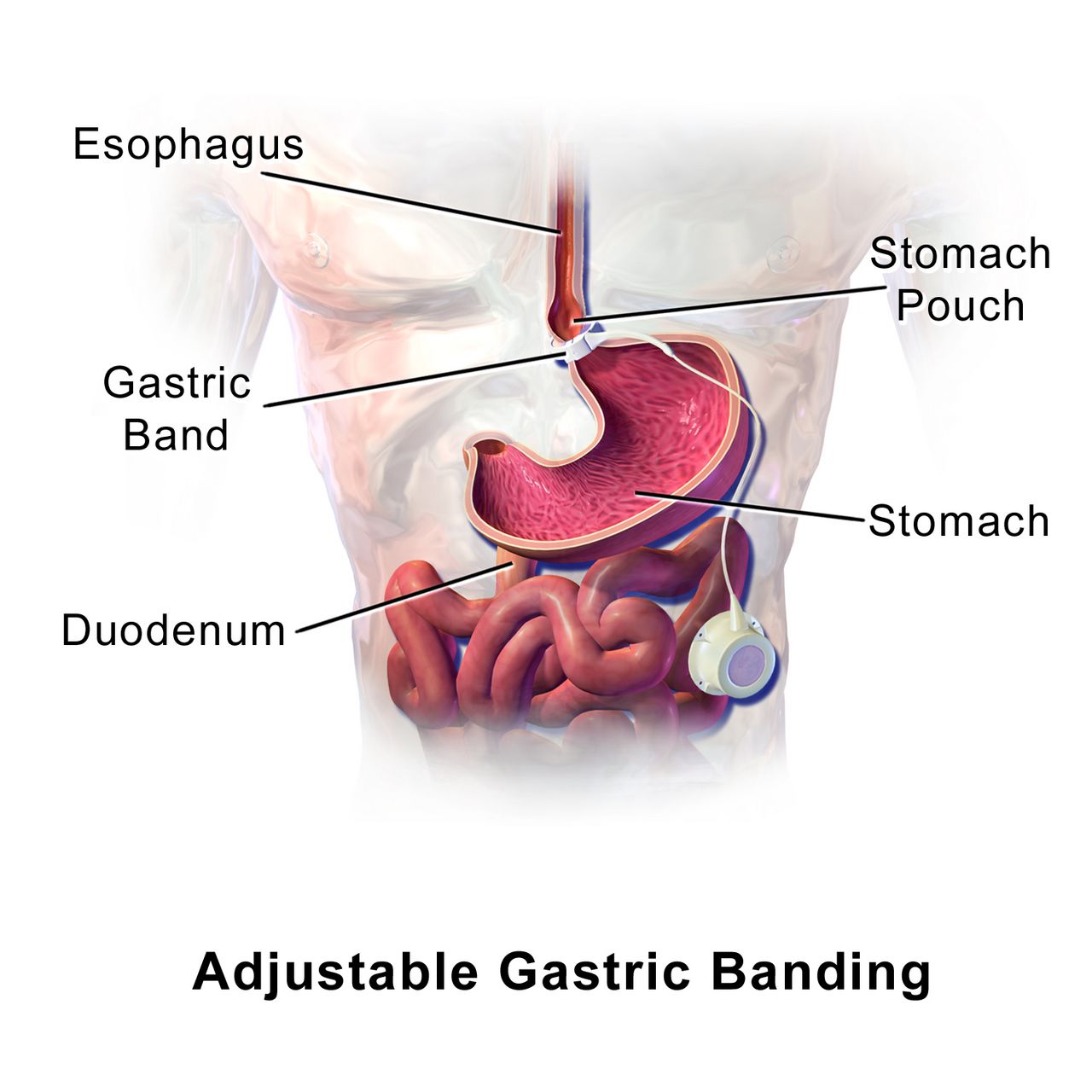
If you learn only three surgical suffixes, learn these. -ectomy means surgical removal or excision: an appendectomy (ap-en-DEK-toh-mee) takes the appendix out and it does not come back. -tomy means incision — cutting into a structure that then gets closed again: a laparotomy (lap-ah-ROT-oh-mee) is an incision into the abdominal wall to gain access. -stomy means the surgical creation of an artificial opening, usually a permanent or semi-permanent one connecting a hollow organ to the body surface or to another organ.
The clearest teaching pair in all of medical terminology is tracheotomy against tracheostomy. A tracheotomy (tray-kee-OT-oh-mee) is the incision itself — the surgeon cuts into the trachea. A tracheostomy (tray-kee-OS-toh-mee) is the resulting opening that is matured, held open and used for ventilation. In everyday speech the two blur; in an operative note and on a billing sheet they do not. The same distinction separates gastrotomy (cut into the stomach) from gastrostomy (create a stomach opening for a feeding tube) and colotomy from colostomy.
Note also how -stomy behaves when two organs are joined. A colostomy brings the colon to the skin. A gastrojejunostomy joins the stomach to the jejunum — two roots, one opening between them. A choledochoduodenostomy connects the common bile duct to the duodenum. Long, but not hard: read the last chunk, then walk backward through the addresses.
| Suffix | Meaning | Example term | What the example means |
|---|---|---|---|
| -ectomy | surgical removal, excision | chol/e/cyst/ectomy (koh-lee-sis-TEK-toh-mee) | surgical removal of the gallbladder |
| -tomy | incision, cutting into | crani/o/tomy (kray-nee-OT-oh-mee) | incision into the skull |
| -stomy | creation of an artificial opening | ile/o/stomy (il-ee-OS-toh-mee) | opening from the ileum to the abdominal wall |
| -plasty | surgical repair, reconstruction | rhin/o/plasty (RYE-noh-plas-tee) | surgical reshaping of the nose |
| -pexy | surgical fixation, suspension | orchi/o/pexy (or-kee-oh-PEK-see) | surgical fixation of an undescended testis |
| -rrhaphy | suturing, repair by suture | herni/o/rrhaphy (her-nee-OR-ah-fee) | surgical repair of a hernia by suturing |
| -desis | surgical fusion, binding together | arthr/o/desis (ar-throh-DEE-sis) | surgical fusion of a joint |
| -centesis | surgical puncture to withdraw fluid | thorac/o/centesis, contracted to thoracentesis (thor-ah-sen-TEE-sis) | puncture of the chest wall to drain fluid |
| -tripsy | crushing | lith/o/tripsy (LITH-oh-trip-see) | crushing of a stone |
| -clasis, -clast | to break; a cell that breaks down | oste/o/clasis (os-tee-OK-lah-sis) | surgical fracture of a bone to correct deformity |
| -lysis | separation, freeing (surgical) | adhesiolysis | surgical freeing of adhesions |
| -therapy | treatment | chem/o/therapy | treatment with chemical agents |
Choosing among repair, fixation, suture and fusion
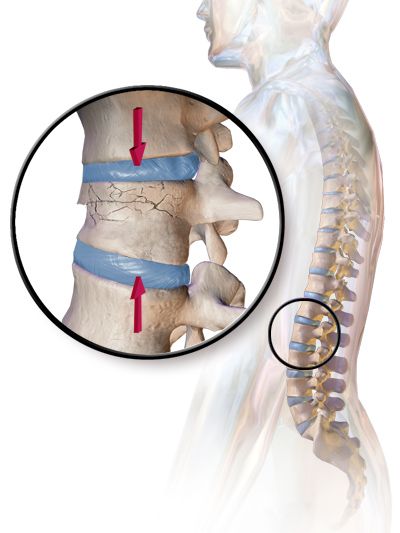
Four suffixes all sound like “fix it,” and students who lump them together write nonsense in care plans. -plasty is reconstruction: tissue is reshaped or replaced, as in arthroplasty (a joint replacement) or angioplasty (reopening a narrowed vessel). -pexy is fixation: the structure is not rebuilt, it is anchored where it belongs, as in nephropexy for a dropped kidney or hysteropexy for a prolapsed uterus. -rrhaphy is stitching a defect or a tear closed — neurorrhaphy, colporrhaphy (kol-POR-ah-fee), herniorrhaphy. -desis is fusion, deliberately eliminating motion, as in arthrodesis of an ankle or spondylodesis of vertebrae.
The therapeutic suffixes follow the same logic of specificity. -centesis always means a needle or trocar puncture to remove fluid, whether it is amniocentesis (am-nee-oh-sen-TEE-sis), paracentesis (par-ah-sen-TEE-sis) or arthrocentesis. -tripsy always means crushing, most famously in extracorporeal shock wave lithotripsy, which pulverizes a kidney stone from outside the body. And -clast names a cell that breaks something down, which is why the bone-resorbing cell is the osteoclast and its building counterpart is the osteoblast.
Three endings, three bills. -ectomy takes it out. -tomy cuts in and closes up. -stomy makes a mouth — an opening meant to stay. Memorize the anchor trio: colectomy (remove colon), colotomy (cut into colon), colostomy (bring colon to the skin). If you can say those three cold, the pattern transfers to every organ in the body.
Two spelling traps that change the operation. An ileostomy opens the ileum, the last segment of small intestine; the ilium is the flaring hip bone, giving iliac crest. Remember ileum = eat and ilium = hip. Likewise ureter/o names the two tubes from kidney to bladder, while urethr/o names the single tube from bladder to outside; ur/o is the whole urinary tract. So ureterolithiasis is a stone stuck between kidney and bladder, and urethritis is inflammation at the outflow — different patients, different orders.
Procedure suffixes are precise verbs: -ectomy removes, -tomy incises, -stomy creates a lasting opening, -plasty rebuilds, -pexy anchors, -rrhaphy sutures, -desis fuses, -centesis drains and -tripsy crushes.
Section 5Specialties, Specialists, Adjectives and Plurals
Who studies it, and who treats it
-logy means the study of, and -logist means one who studies or specializes in it. Cardi/o/logy is the study of the heart; a cardiologist practices it. That pair alone generates most of the specialty vocabulary in a hospital directory: dermatology, neurology, hematology, nephrology, endocrinology, gastroenterology, oncology (onc/o, tumor), rheumatology, pathology, radiology, and the department every student mispronounces, otorhinolaryngology (oh-toh-rye-noh-lar-ing-GOL-oh-jee) — ear, nose & throat.
A second family comes from Greek iatros, physician or healer. -iatry names the field and -iatrist names the practitioner: psychiatry and psychiatrist, podiatry (poh-DYE-ah-tree) and podiatrist. -iatrics also names a field but pairs with -ician: pediatrics and pediatrician, geriatrics (jer-ee-AT-riks) and geriatrician. Notice that ped/o here means child, from Greek pais, while the ped/o in orthopedics comes from the same root by way of a specialty that began as the straightening (orth/o) of children’s bone deformities, and the pod/o in podiatry means foot. So ped/o is the same root in both specialties, pod/o is unrelated to it, and the Latin ped- that gives pedal and pedicure also means foot — look-alike chunks with different parents.
Not every practitioner title ends in -logist. Chiropractic comes from Greek cheir (hand) plus praktikos (done by), and the practitioner is a chiropractor. A physiatrist (fih-ZYE-ah-trist) practices physical medicine and rehabilitation. The eye is served by three different titles that students must not interchange: an ophthalmologist (of-thal-MOL-oh-jist) is a physician and surgeon of the eye, an optometrist measures vision and prescribes correction, and an optician fits the lenses.
| Suffix | Meaning | Example term | What the example means |
|---|---|---|---|
| -logy | study of | hemat/o/logy | the study of blood |
| -logist | one who studies; specialist | nephr/o/logist (nef-ROL-oh-jist) | medical specialist in kidney disease |
| -iatry | medical treatment, field of healing | psych/iatry (sy-KYE-ah-tree) | medical treatment of the mind |
| -iatrist | specialist in a field of treatment | pod/iatrist (poh-DYE-ah-trist) | specialist in care of the foot |
| -iatrics | field of medical treatment | ger/iatrics (jer-ee-AT-riks) | medical care of older adults |
| -ician | specialist, practitioner | ped/iatr/ician | physician who treats children |
| -ist | one who specializes | anesthet/ist | one who administers anesthesia |
Adjective suffixes: the quiet workhorses
A great many of the words in a clinical note end in a suffix that means nothing more than “pertaining to.” They carry no diagnosis; they simply let a root modify a noun. English inherited several of them and uses them almost interchangeably, which is why cardiac, renal, muscular, pulmonary, esophageal and gastric all mean the same grammatical thing with different endings. There is no rule to derive which ending a given root takes; you learn them term by term, but recognizing the category means you never mistake one for a disease.
Two members of this family do carry a shade of meaning. -oid means resembling, so a fibroid resembles fibrous tissue and mucoid drainage resembles mucus without being it. -genic means producing or originating, so carcinogenic means cancer-producing and cardiogenic shock originates in the heart. And -form means shaped like: the appendix is described as vermiform, worm-shaped.
| Suffix | Meaning | Example term | What the example means |
|---|---|---|---|
| -ac | pertaining to | cardi/ac | pertaining to the heart |
| -al | pertaining to | ren/al | pertaining to the kidney |
| -ar | pertaining to | ventricul/ar | pertaining to a ventricle |
| -ary | pertaining to | pulmon/ary | pertaining to the lungs |
| -eal | pertaining to | esophag/eal (eh-sof-ah-JEE-al) | pertaining to the esophagus |
| -ic, -tic | pertaining to | thorac/ic, necr/otic | pertaining to the chest; pertaining to dead tissue |
| -ous | pertaining to, composed of | fibr/ous | composed of fibers |
| -oid | resembling | lip/oid | resembling fat |
| -genic | producing, originating in | carcin/o/genic | cancer-producing |
| -form | shaped like | vermi/form | worm-shaped |
| -y | process, condition | lobectom/y | the process of removing a lobe |
Making plurals the way the chart expects
Medical English keeps Latin and Greek plurals, and getting them wrong is one of the fastest ways to look untrained in writing. The rules are mechanical and there are only eight of them worth memorizing. Learn the pattern, then check the exceptions: virus becomes viruses and sinus becomes sinuses because both were already irregular in Latin, and modern usage now permits English plurals such as carcinomas and appendixes alongside the classical forms.
| Singular ends in | Change to | Singular example | Plural |
|---|---|---|---|
| -a | -ae | vertebra (VER-teh-brah) | vertebrae (VER-teh-bree) |
| -us | -i | bronchus (BRONG-kus) | bronchi (BRONG-kye) |
| -um | -a | bacterium, ovum, atrium | bacteria, ova, atria |
| -is | -es | diagnosis, metastasis, testis | diagnoses, metastases, testes |
| -ix, -ex | -ices | appendix, cortex, apex | appendices, cortices, apices |
| -oma | -omata (or -omas) | fibroma, carcinoma | fibromata, carcinomata |
| -nx | -nges | phalanx, larynx, meninx | phalanges (fah-LAN-jeez), larynges, meninges |
| -on | -a | ganglion, spermatozoon | ganglia, spermatozoa |
Eponyms and where they stand today
An eponym is a term built from a person’s name rather than from word parts — Parkinson disease, Cushing syndrome, Hodgkin lymphoma, Bell palsy, Crohn disease. Because they are not decodable, they must be memorized outright, which is exactly why the profession has been moving away from them. Two conventions matter for your writing. First, current style drops the possessive apostrophe: write Down syndrome and Alzheimer disease, not “Down’s” or “Alzheimer’s,” in formal clinical documentation, although the possessive persists in patient-facing and advocacy usage.
Second, descriptive names are steadily replacing eponyms where a mechanism-based term exists. Wegener granulomatosis is now granulomatosis with polyangiitis; Reiter syndrome is now reactive arthritis; the fallopian tubes are increasingly called the uterine tubes. Some eponyms are entrenched and will not move — Whipple procedure is far easier to say than pancreaticoduodenectomy, though the second one is the term you can decode. Read both, write the descriptive one when you have the choice.
-logy is a subject, -logist is a person. You are referred to cardiology and you are seen by a cardiologist. The same test applies to -iatry/-iatrist and -iatrics/-ician. And beware two look-alike pairs in the adjective family: mucus is the substance while mucous is the adjective, so mucous membranes secrete mucus; likewise serum is the fluid and serous is the adjective. Charting “copious mucous” is a spelling error, not a finding.
Specialty, adjective and plural suffixes carry no diagnosis — they name a field, a practitioner, a description or a number — and recognizing them keeps you from reading disease into a word that has none.
The chapter in one breath
Medical words are read from the back. The suffix declares what kind of word you are holding — a condition, a procedure, a specialty or a plain description — and the roots in front of it supply only the address. Combining forms keep their o before a suffix that begins with a consonant, drop it before a suffix that begins with a vowel, and always keep it between two roots, which is why gastritis loses its vowel while gastroscopy keeps it. Condition suffixes name the kind of abnormality: -itis inflammation, -osis abnormal condition, -oma mass, -megaly enlargement, -sclerosis hardening, -stenosis narrowing, -penia deficiency, -algia pain. The -rrh family splits four ways, and only -rrhaphy is surgical. Diagnostic suffixes separate the tool from the act from the record: -scope/-scopy, -graph/-graphy/-gram, -meter/-metry. Surgical suffixes are precise verbs: -ectomy removes, -tomy incises, -stomy makes a lasting opening, -plasty rebuilds, -pexy anchors, -rrhaphy sutures, -desis fuses, -centesis drains, -tripsy crushes. -logy names a field, -logist a person. Latin and Greek plurals follow eight mechanical rules, and eponyms — undecodable by design — are gradually yielding to descriptive names.
Words worth knowing
| Term | What it means |
|---|---|
| Suffix | The word part at the end of a term that assigns its category — condition, procedure, specialty or description. |
| Combining vowel | The linking vowel, almost always o, kept before a consonant suffix and between roots, dropped before a vowel suffix. |
| Pericarditis (per-ih-kar-DYE-tis) | peri- (around) + card (heart) + -itis (inflammation): inflammation of the sac surrounding the heart. |
| Nephrolithiasis (nef-roh-lih-THIGH-ah-sis) | nephr/o (kidney) + lith (stone) + -iasis (presence of): kidney stones. |
| Thrombocytopenia (throm-boh-sye-toh-PEE-nee-ah) | thromb/o (clot) + cyt/o (cell) + -penia (deficiency): abnormally low platelet count. |
| Blepharoptosis (blef-ah-rop-TOH-sis) | blephar/o (eyelid) + -ptosis (drooping): a drooping upper eyelid. |
| Atelectasis (at-eh-LEK-tah-sis) | atel/o (incomplete) + -ectasis (expansion): incomplete expansion, or collapse, of lung tissue. |
| Hemoptysis (hee-MOP-tih-sis) | hem/o (blood) + -ptysis (spitting): coughing up blood from the airways. |
| Myelopathy (my-eh-LOP-ah-thee) | myel/o (spinal cord or marrow) + -pathy (disease): disease of the spinal cord — not muscle disease, which is myopathy. |
| Electroencephalogram (ee-lek-troh-en-SEF-ah-loh-gram) | electr/o + encephal/o (brain) + -gram (record): a record of the brain’s electrical activity. |
| Cholecystectomy (koh-lee-sis-TEK-toh-mee) | chol/e (bile) + cyst (bladder) + -ectomy (removal): surgical removal of the gallbladder. |
| Tracheostomy (tray-kee-OS-toh-mee) | trache/o (windpipe) + -stomy (artificial opening): a maintained surgical opening into the trachea. |
| Herniorrhaphy (her-nee-OR-ah-fee) | herni/o (hernia) + -rrhaphy (suturing): surgical repair of a hernia by suturing. |
| Arthrodesis (ar-throh-DEE-sis) | arthr/o (joint) + -desis (fusion): surgical fusion of a joint to eliminate motion. |
| Thoracentesis (thor-ah-sen-TEE-sis) | thorac/o (chest) + -centesis (puncture to withdraw fluid): drainage of fluid from the pleural space. |
| Lithotripsy (LITH-oh-trip-see) | lith/o (stone) + -tripsy (crushing): crushing a stone, often with focused shock waves. |
| Otorhinolaryngology (oh-toh-rye-noh-lar-ing-GOL-oh-jee) | ot/o (ear) + rhin/o (nose) + laryng/o (voice box) + -logy: the ear, nose & throat specialty. |
| Eponym | A term named for a person rather than built from word parts; current style drops the possessive, as in Parkinson disease. |