How Medical Words Are Built
Medical language looks like a wall of memorization, and that is exactly the wrong way to meet it. Nearly every term you will read in a chart, hear in report or write in a note is assembled from a small stock of reusable parts — roots that name a structure, suffixes that name a condition or a procedure, prefixes that adjust position, number, time or negation. Learn perhaps three hundred parts and you can read tens of thousands of words, including words you have never seen. This chapter teaches the assembly rules, the decoding habit, the pronunciation traps, the Greek and Latin plurals, and the look-alike roots that cause real clinical confusion. Everything in the thirteen chapters that follow is an application of what you build here. Read this one slowly; it pays interest for the rest of the book and the rest of your career.
By the end of this chapter you can
- Identify the four word parts — word root, combining vowel, suffix and prefix — in any medical term.
- Write a root correctly as a combining form (cardi/o, gastr/o, oste/o) and explain what the slash notation means.
- Apply the three rules that decide when a combining vowel is kept and when it is dropped.
- Decode an unfamiliar term by reading the suffix first, then the beginning, then the middle, and state its meaning in plain English.
- Distinguish the classic look-alike parts: ile/o and ili/o, my/o and myel/o, arteri/o, ather/o and arthr/o, ur/o, ureter/o and urethr/o.
- Contrast the operative suffixes -ectomy, -tomy and -stomy and use each in a correct term.
- Pronounce silent and shifting letter combinations (ps-, pn-, x-, ch, -rrh-) and mark the stressed syllable.
- Form the plural of Greek and Latin nouns ending in -a, -us, -um, -is, -ix, -oma, -nx, -on and -ax.
- Explain why eponyms are being replaced by descriptive terms and why certain abbreviations appear on official do-not-use lists.
Section 1The Four Building Blocks
The root carries the meaning
The word root is the core of the term and almost always names a body structure, a substance or a quality. In carditis (kar-DYE-tis) the root is cardi-, heart. In gastric the root is gastr-, stomach. In osteoporosis the root is oste-, bone. Strip away everything else and the root is what is left standing: the thing the term is about.
A term may contain more than one root, and long terms usually do. Gastroenterology (gas-troh-en-ter-OL-oh-jee) holds two — gastr- (stomach) and enter- (small intestine) — before the ending that means study of. Osteoarthritis (os-tee-oh-ar-THRY-tis) holds two as well: oste- (bone) and arthr- (joint), with an ending meaning inflammation. When a term contains several roots, they normally appear in anatomical order, following the path a structure or a scope would take. That is why esophagogastroduodenoscopy (eh-sof-uh-goh-gas-troh-doo-oh-den-OS-koh-pee) lists esophagus, then stomach, then duodenum: it is the itinerary of the endoscope.
Roots by themselves are rarely words. You do not say “cardi” or “nephr.” They are raw material, and they need an ending before they can stand up in a sentence.
The combining vowel and the combining form
Most roots are hard to say when jammed against another word part. Gastr + scopy is a mouthful of consonants. Medical language solves this with a combining vowel, almost always the letter o, occasionally i. Insert it and the term becomes pronounceable: gastroscopy.
Because the vowel is so predictable, dictionaries and textbooks write the root together with its vowel and separate them with a slash. That package is the combining form: cardi/o, gastr/o, oste/o, nephr/o, arthr/o. Read the slash as “the vowel comes off when it is not needed.” Learning combining forms rather than bare roots saves a step, because the notation already tells you the spelling you will use most of the time. A handful of combining forms take i instead of o — calc/i (calcium), ov/i (egg), dent/i (tooth) — and a few take both.
| Combining form | Meaning | Example term | What the example means |
|---|---|---|---|
| cardi/o | heart | cardiology | the study of the heart |
| gastr/o | stomach | gastritis | inflammation of the stomach |
| hepat/o | liver | hepatomegaly | enlargement of the liver |
| nephr/o | kidney (Greek) | nephrectomy | surgical removal of a kidney |
| oste/o | bone | osteopenia | deficiency of bone tissue |
| arthr/o | joint | arthroscopy | visual examination inside a joint |
| neur/o | nerve | neuropathy | disease of the nerves |
| derm/o, dermat/o | skin | dermatitis | inflammation of the skin |
| hem/o, hemat/o | blood | hematology | the study of blood |
| cyt/o | cell | cytology | the study of cells |
| path/o | disease | pathologist | a specialist in disease |
| my/o | muscle | myalgia | muscle pain |
The suffix ends the term and decides what kind of word it is
The suffix is attached to the end, and it does the heavy grammatical lifting. It tells you whether the term names an inflammation, a disease, a surgery, an imaging study, a specialist or simply a descriptive adjective. Change nothing but the suffix and you change the entire clinical event: nephr/itis is inflammation of the kidney, nephr/ectomy is removal of the kidney, nephr/ology is the study of the kidney, and nephr/omegaly is an enlarged kidney. Same organ, four different sentences in a chart.
Every medical term has a suffix, even when the suffix is only an adjective ending such as -ic, -al, -ar, -ous or -eal. Cardiac, renal, muscular, venous and esophageal are all root-plus-adjective-suffix. These endings usually translate as “pertaining to.”
| Suffix | Meaning | Example term | What the example means |
|---|---|---|---|
| -itis | inflammation | tendinitis | inflammation of a tendon |
| -osis | abnormal condition | cyanosis | abnormal bluish condition of the skin |
| -pathy | disease | cardiomyopathy | disease of heart muscle |
| -algia, -dynia | pain | neuralgia | nerve pain |
| -megaly | enlargement | splenomegaly | enlargement of the spleen |
| -oma | tumor, mass | lipoma | a benign fatty tumor |
| -emia | blood condition | anemia | a deficiency of red blood cells |
| -uria | urine condition | hematuria | blood in the urine |
| -penia | deficiency, too few | leukopenia | too few white blood cells |
| -ectomy | surgical removal, excision | appendectomy | surgical removal of the appendix |
| -tomy | incision, cutting into | tracheotomy | a cut into the trachea |
| -stomy | creation of an artificial opening | colostomy | a surgical opening from the colon to the surface |
| -plasty | surgical repair or reshaping | rhinoplasty | surgical repair of the nose |
| -centesis | surgical puncture to withdraw fluid | thoracentesis | puncture of the chest wall to drain fluid |
| -scopy | visual examination | colonoscopy | visual examination of the colon |
| -graphy | process of recording an image | mammography | the process of imaging the breast |
| -gram | the record or image produced | electrocardiogram | the tracing of the heart’s electrical activity |
| -graph | the instrument that records | electrocardiograph | the machine that produces the tracing |
| -logy / -logist | study of / specialist in | oncologist | a specialist in tumors and cancer |
The prefix adjusts the front
A prefix sits at the beginning and modifies the term without changing what it is fundamentally about. Prefixes handle position (peri-, endo-, sub-, retro-), number (bi-, poly-, hemi-), time and sequence (pre-, post-, neo-), and negation or degree (a-, an-, anti-, hyper-, hypo-). Not every term has one; gastritis does not. But when a prefix is present it usually carries the clinically decisive detail. Peri/card/itis (per-ih-kar-DYE-tis) breaks down as around + heart + inflammation, which is inflammation of the sac around the heart — a completely different problem from endocarditis, inflammation of the lining inside the heart, or myocarditis, inflammation of the heart muscle itself. Three terms, one root, three prefixes or roots of position, three different admissions.
Prefixes attach directly to what follows; they do not need a combining vowel. A few change shape for euphony: a- becomes an- before a vowel (a/pnea but an/emia), and syn- becomes sym- before b, m or p (symphysis, symbiosis).
| Prefix | Meaning | Example term | What the example means |
|---|---|---|---|
| a-, an- | without, absence of | apnea | absence of breathing |
| anti- | against | antipyretic | an agent working against fever |
| brady- | slow | bradycardia | a slow heart rate |
| tachy- | fast | tachypnea | rapid breathing |
| dys- | painful, difficult, abnormal | dysuria | painful or difficult urination |
| eu- | good, normal | eupnea | normal, easy breathing |
| hyper- | excessive, above normal | hyperglycemia | excessive sugar in the blood |
| hypo- | deficient, below normal, beneath | hypoglycemia | deficient sugar in the blood |
| peri- | around, surrounding | periosteum | the membrane around a bone |
| endo- | within, inner | endoscope | an instrument for viewing within |
| epi- | upon, above | epidermis | the outer layer of skin, lying upon the dermis |
| sub- | under, below | subcutaneous | under the skin |
| inter- | between | intercostal | between the ribs |
| intra- | within a structure | intravenous | within a vein |
| poly- | many, much | polyuria | excessive volume of urine |
| oligo- | scanty, few | oliguria | scanty urine output |
| pre-, ante- | before, in front of | prenatal | before birth |
| post- | after, behind | postpartum | after childbirth |
Every medical term is a root or roots naming a structure, a suffix naming what is happening to it, and an optional prefix adjusting position, number, time or degree.
Section 2Rules of Assembly and the Habit of Decoding
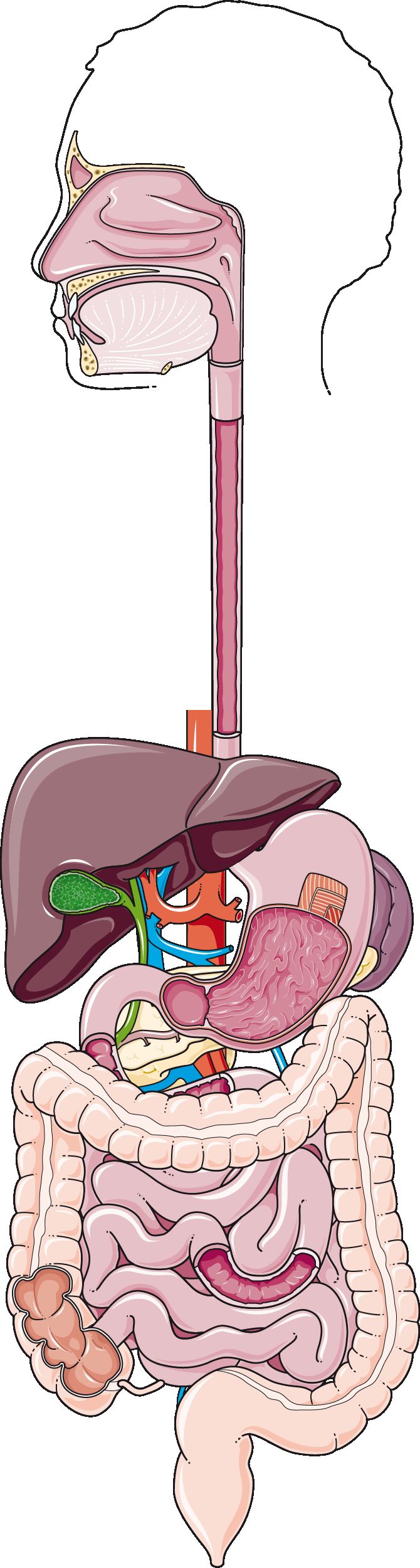
Three rules govern the combining vowel
Rule one: keep the combining vowel between a root and a suffix that begins with a consonant. Arthr/o plus -scopy gives arthroscopy (ar-THROS-koh-pee). Gastr/o plus -pathy gives gastropathy. Without the o these words are unsayable, which is precisely why the vowel exists.
Rule two: drop the combining vowel when the suffix begins with a vowel. Arthr/o plus -itis gives arthritis, not arthroitis. Neur/o plus -algia gives neuralgia. Hepat/o plus -ectomy gives hepatectomy. This single rule accounts for most of the spellings that look irregular at first glance.
Rule three: keep the combining vowel between two roots, even when the second root begins with a vowel. Oste/o plus arthr/o plus -itis gives osteoarthritis — the o survives in the middle because it sits between two roots, then disappears before -itis. Gastr/o plus enter/o plus -logy gives gastroenterology. Electr/o plus cardi/o plus -gram gives electrocardiogram. Rule three is what makes long compound terms readable instead of a consonant pileup.
Prefixes stand outside this system. They attach straight to whatever follows, with no vowel negotiation: sub/lingual, peri/cardium, hyper/tension. If you ever find yourself inserting an o after a prefix, you have misidentified the part.
Read the suffix first, then the front, then the middle
Decoding is a fixed procedure, and doing it in order matters. Start at the end of the word, because the suffix tells you what kind of thing you are looking at. Then jump to the beginning for the prefix, if there is one. Then read whatever is in the middle, left to right. Finally, translate the literal string into ordinary English.
Work through pericarditis that way. The suffix is -itis, inflammation, so this is an inflammatory condition. The prefix is peri-, around. The middle is cardi-, heart. Literal reading: inflammation around the heart. Plain English: inflammation of the pericardium, the fibrous sac enclosing the heart. Now try polyneuropathy (pol-ee-noo-ROP-uh-thee). Suffix -pathy, disease. Prefix poly-, many. Root neur-, nerve. Literal: disease of many nerves. Plain English: a disorder affecting many peripheral nerves at once, which is exactly what a long-standing diabetic patient with numb feet has.
One more, and a long one: esophagogastroduodenoscopy. Suffix -scopy, visual examination. No prefix. Roots in order: esophag- (esophagus), gastr- (stomach), duoden- (duodenum). Literal: visual examination of the esophagus, stomach and duodenum. Plain English: upper endoscopy, universally abbreviated EGD. The word runs twenty-six letters and contains not one thing you did not already know.
| Term | Broken into parts | Literal reading | Plain English |
|---|---|---|---|
| hepatomegaly (hep-uh-toh-MEG-uh-lee) | hepat/o + -megaly | liver + enlargement | an enlarged liver, felt below the right costal margin |
| cholecystectomy (koh-lee-sis-TEK-toh-mee) | chol/e + cyst + -ectomy | bile + sac + removal | surgical removal of the gallbladder |
| nephrolithotomy (nef-roh-lih-THOT-oh-mee) | nephr/o + lith/o + -tomy | kidney + stone + incision | an incision into the kidney to remove a stone |
| arthrocentesis (ar-throh-sen-TEE-sis) | arthr/o + -centesis | joint + puncture to withdraw fluid | tapping a joint to drain or sample synovial fluid |
| thrombocytopenia (throm-boh-sye-toh-PEE-nee-uh) | thromb/o + cyt/o + -penia | clot + cell + deficiency | too few platelets, so the patient bruises and bleeds |
| electroencephalogram (ee-lek-troh-en-SEF-uh-loh-gram) | electr/o + encephal/o + -gram | electricity + brain + record | the tracing of brain electrical activity, the EEG |
| hypercholesterolemia | hyper- + cholesterol + -emia | excessive + cholesterol + blood condition | a high blood cholesterol level |
| dysrhythmia | dys- + rhythm + -ia | abnormal + rhythm + condition | an abnormal heart rhythm |
The literal meaning is a doorway, not a definition
Decoding gets you into the right neighborhood, not always to the right address. Diarrhea decodes as dia- (through) plus -rrhea (flow), literally a flowing through, which is evocative but clinically vague; the working definition is an increase in the frequency, volume or looseness of stool. Malaria means bad air, a wrong nineteenth-century guess frozen permanently into the vocabulary. Hysterectomy reads exactly as removal of the uterus, from the Greek hystera, and there the literal sense is precise — but the cousin word hysteria preserves an obsolete and frankly sexist theory of disease that medicine has discarded.
So use the decode as a first pass, then confirm the clinical definition. In practice this takes seconds: break the word, form a hypothesis, check it against the context or a reference. Students who do this consistently stop needing flashcards somewhere around chapter six, because the parts begin recognizing themselves.
Keep the combining vowel before a consonant and between two roots, drop it before a vowel, and always decode by reading the suffix first, the prefix second and the middle last.
Section 3Roots Worth Knowing — and the Ones That Trip Everyone
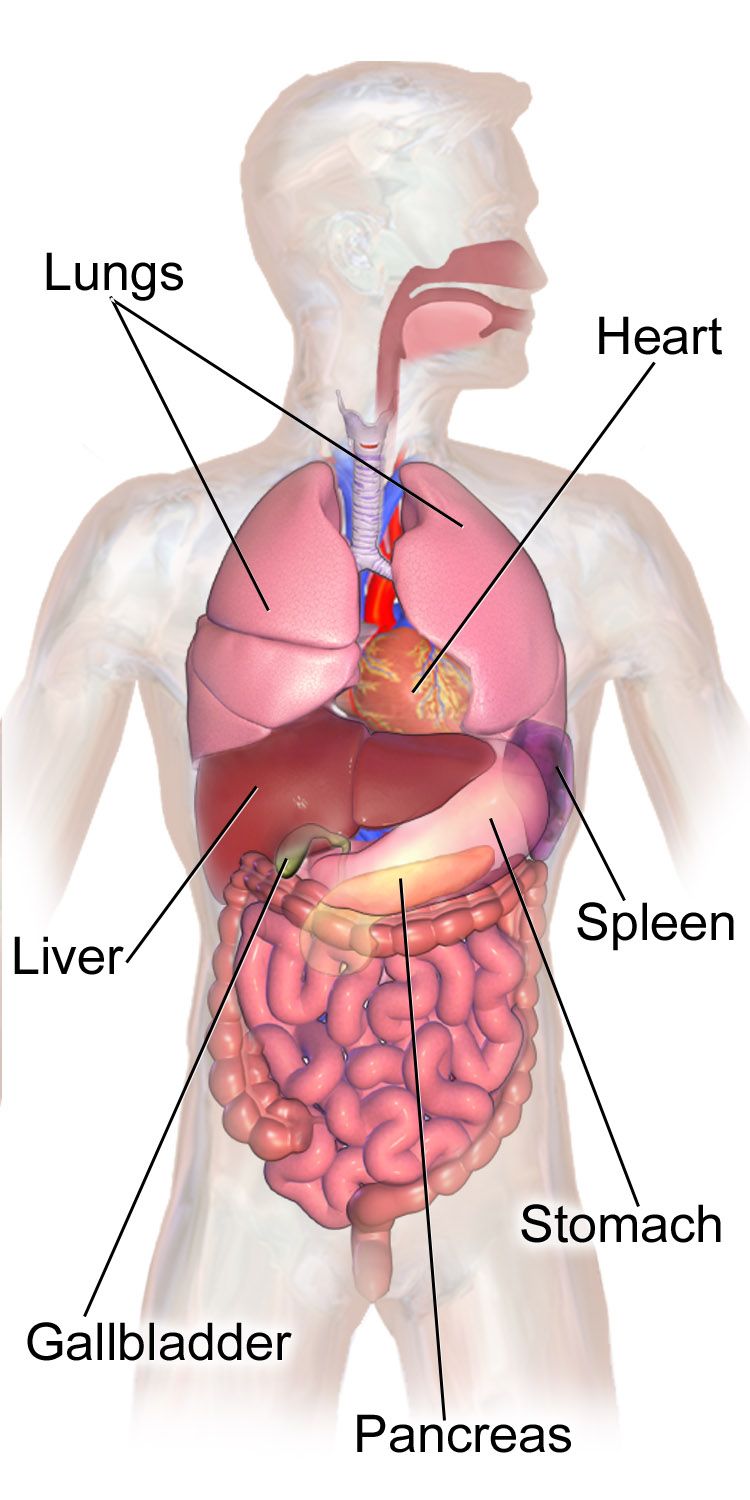
One organ, two roots: the Greek and Latin doublets
Medicine inherited two vocabularies. Greek arrived through the classical medical texts and generally supplies the words for disease and surgery. Latin arrived through anatomy and generally supplies the words for structures and descriptions. The result is that most organs carry two combining forms, and both are correct in their own lane.
The kidney is the clearest case. The Greek root nephr/o gives nephritis, nephrectomy and nephrology — disease and surgery. The Latin root ren/o gives renal artery, renal failure and renal function — the adjective describing the structure. Nobody says nephral artery, and nobody says renectomy. The pattern repeats across the body, and once you notice it, much of the apparent redundancy in medical vocabulary resolves into a usable rule of thumb.
| Structure | Greek form | Latin form | How each is used |
|---|---|---|---|
| kidney | nephr/o | ren/o | nephrectomy (surgery) · renal failure (description) |
| skin | derm/o, dermat/o | cutane/o | dermatitis (disease) · subcutaneous (position) |
| uterus | hyster/o, metr/o | uter/o | hysterectomy (surgery) · uterine wall (description) |
| mouth | stomat/o | or/o | stomatitis (disease) · oral cavity (description) |
| tooth | odont/o | dent/i | periodontal (around the tooth) · dentist |
| tongue | gloss/o | lingu/o | glossitis (disease) · sublingual (under the tongue) |
| nose | rhin/o | nas/o | rhinoplasty (surgery) · nasogastric tube |
| vein | phleb/o | ven/o | phlebotomy (drawing blood) · intravenous |
| fat | lip/o | adip/o | lipoma (tumor) · adipose tissue |
| eye | ophthalm/o | ocul/o | ophthalmology (specialty) · oculomotor nerve |
| lung | pneumon/o | pulmon/o | pneumonectomy (surgery) · pulmonary edema |
| abdomen | lapar/o | abdomin/o | laparoscopy (procedure) · abdominal pain |
Colors, sizes and qualities
A second family of roots describes not structures but properties, and these appear constantly in laboratory and physical-assessment vocabulary. Cyan/o means blue, so cyanosis (sye-uh-NOH-sis) is the dusky blue discoloration of poor oxygenation. Leuk/o means white, so a leukocyte (LOO-koh-site) is a white blood cell and leukemia is a malignancy of those cells. Erythr/o means red: an erythrocyte is a red blood cell and erythema is redness of the skin. Melan/o means black, which is why melanin darkens skin and a melanoma is the pigmented malignancy arising from the cells that make it.
| Word part | Meaning | Example term | What the example means |
|---|---|---|---|
| cyan/o | blue | acrocyanosis | bluish discoloration of the extremities |
| erythr/o | red | erythropoietin | the hormone that stimulates red cell production |
| leuk/o | white | leukocytosis | an elevated white blood cell count |
| melan/o | black, dark | melanocyte | the skin cell that makes dark pigment |
| xanth/o | yellow | xanthoma | a yellowish lipid deposit in the skin |
| poli/o | gray | poliomyelitis | inflammation of the gray matter of the spinal cord |
| scler/o | hard | scleroderma | abnormal hardening of the skin |
| malac/o | soft | osteomalacia | abnormal softening of bone |
| -stenosis | narrowing | aortic stenosis | narrowing of the aortic valve opening |
| megal/o, -megaly | large | acromegaly | enlargement of the hands, feet and face |
| micr/o | small | microcytic | pertaining to abnormally small cells |
| necr/o | death of tissue | necrosis | the condition of dead tissue |
The look-alike roots
A handful of word parts differ by one or two letters and mean something anatomically unrelated. These produce the errors that survive into charts, because spellcheck does not catch them and the eye slides right over them. Learn them as deliberate pairs, now, before the systems chapters bury them.
Set my/o against myel/o. My/o is muscle; myel/o is bone marrow or spinal cord depending on context, and it also gives us myelin. So myopathy (my-OP-uh-thee) is muscle disease, while myelopathy (my-eh-LOP-uh-thee) is spinal cord disease — and osteomyelitis (os-tee-oh-my-eh-LYE-tis) is infection of bone and marrow, not of bone and muscle. Two letters, three different consultations.
The urinary family behaves the same way. Ur/o refers to urine or the urinary tract in general, ureter/o is the tube from kidney to bladder, and urethr/o is the tube from bladder to the outside. So ureterolithiasis is a stone lodged in a ureter, a flank-pain emergency, whereas urethritis is inflammation of the urethra, an entirely different complaint. Hold on to the fact that the paired tubes are the ureters and the single outlet is the urethra, the one with the th that runs through to the outside.
| Look-alike parts | Meanings | Contrasting terms | Why it matters |
|---|---|---|---|
| ile/o vs ili/o | ileum (last small intestine) vs ilium (flaring hip bone) | ileostomy vs iliac crest | one is bowel surgery, the other a pelvic landmark |
| my/o vs myel/o | muscle vs marrow or spinal cord | myopathy vs myelopathy | a weakness workup goes two different directions |
| arteri/o vs ather/o vs arthr/o | artery vs fatty plaque vs joint | arteriosclerosis vs atherosclerosis vs arthritis | vessel wall, plaque and joint are unrelated problems |
| ur/o vs ureter/o vs urethr/o | urine vs ureter vs urethra | urology vs ureteroscopy vs urethral stricture | places the obstruction above or below the bladder |
| pyel/o vs py/o | renal pelvis vs pus | pyelonephritis vs pyothorax | one names a location, the other names an exudate |
| cyst/o vs cyt/o | bladder or fluid-filled sac vs cell | cystoscopy vs cytology | one is a scope, the other a microscope slide |
| col/o vs colp/o | colon vs vagina | colostomy vs colposcopy | a single p changes the body region entirely |
| ment/o vs mening/o | mind or chin vs meninges | mental status vs meningitis | similar openings, unrelated structures |
| ante- vs anti- | before vs against | antepartum vs antiemetic | timing versus opposition |
| peri- vs para- | around vs beside, near or abnormal | perianal vs paraesophageal | encircling versus adjacent |
Most organs carry a Greek root for disease and surgery and a Latin root for description, and a short list of near-identical roots must be learned as deliberate contrasts rather than trusted to the eye.
Section 4Saying It, Spelling It, Pluralizing It
Letters that do not behave
Greek and Latin brought their spelling conventions with them, and English pronunciation only partly absorbed them. The result is a short list of combinations that look impossible until somebody tells you the rule. At the start of a word, the p is silent in ps-, pn- and pt-: psychology is sye-KOL-oh-jee, pneumonia is noo-MOH-nee-uh, ptosis is TOH-sis. Move that same combination into the middle of a word and the p comes back to life: apnea is AP-nee-uh and blepharoptosis is blef-uh-rop-TOH-sis.
Initial x is pronounced z, as in xiphoid (ZIF-oyd) and xerostomia (zeer-oh-STOH-mee-uh). The letters c and g are soft — s and j — before e, i and y, and hard — k and g — before a, o and u. That is why cyst begins with an s sound and colon with a k sound, and why gingivitis (jin-jih-VYE-tis) sounds nothing like gastric. The cluster ch is usually a k, as in cholesterol, chondral and chemotherapy. Doubled rrh gives a plain r sound and signals flow or rupture: hemorrhage, diarrhea, rhinorrhea, myorrhexis.
| Letters | How it sounds | Example term | Pronunciation |
|---|---|---|---|
| ps- at the start | s (p is silent) | psychosis | sye-KOH-sis |
| pn- at the start | n (p is silent) | pneumothorax | noo-moh-THOR-aks |
| pt- at the start | t (p is silent) | ptyalism | TYE-uh-lizm |
| -pnea inside a word | p is sounded | dyspnea | DISP-nee-uh |
| x- at the start | z | xanthoma | zan-THOH-muh |
| c before e, i, y | soft s | cirrhosis | sih-ROH-sis |
| c before a, o, u | hard k | carcinoma | kar-sih-NOH-muh |
| g before e, i, y | soft j | gingivitis | jin-jih-VYE-tis |
| ch | usually k | cholecystitis | koh-lee-sis-TYE-tis |
| -rrh- | plain r | hemorrhage | HEM-or-ij |
| eu- | you | euthyroid | yoo-THIGH-royd |
| -ia, -ea endings | ee-uh | anemia | uh-NEE-mee-uh |
Stress, and why it moves
English medical pronunciation puts the accent in fairly predictable places. Terms ending in -logy, -pathy, -scopy, -tomy, -graphy and -megaly nearly always take the accent on the third syllable from the end: cardiOLogy, nePHROPathy, coloNOScopy, tracheOTomy, mamMOGraphy, hepatoMEGaly. Terms ending in -itis put the accent on the -i- of the suffix, and that i is long: appendiCItis is ap-en-dih-SYE-tis, tonsillItis is ton-sih-LYE-tis.
Stress carries meaning in a few pairs, so it is worth saying words out loud rather than only reading them. Changing the suffix can move the accent entirely: the instrument is a microscope (MY-kroh-skohp) but the procedure is microscopy (my-KROS-koh-pee). And in speech, mispronunciation is often read as uncertainty. On a busy unit, the nurse who says cholecystectomy smoothly is heard differently from the one who stalls at the second syllable, whatever their actual knowledge.
Singular and plural
Medical nouns keep the plurals of the languages they came from, and these appear in charting constantly — one bronchus but two bronchi, one vertebra but five lumbar vertebrae, one diagnosis but a list of diagnoses. There are nine patterns that cover almost everything you will meet.
| Singular ends in | Plural ends in | Examples | Watch out for |
|---|---|---|---|
| -a | -ae | vertebra to vertebrae · bursa to bursae · pleura to pleurae | pronounced -ee or -ay; both are accepted |
| -us | -i | bronchus to bronchi · alveolus to alveoli · calculus to calculi | virus to viruses and sinus to sinuses stay English |
| -um | -a | ovum to ova · atrium to atria · septum to septa · ilium to ilia | bacterium to bacteria: bacteria is already plural |
| -is | -es | diagnosis to diagnoses · metastasis to metastases · testis to testes | the plural is said -eez, not -ez |
| -ix, -ex | -ices | appendix to appendices · cervix to cervices · apex to apices | appendixes is acceptable in casual use, appendices in writing |
| -oma | -omata or -omas | carcinoma to carcinomata or carcinomas · fibroma to fibromas | both forms are correct; -omas dominates in charts |
| -nx | -nges | phalanx to phalanges · larynx to larynges · meninx to meninges | meninges is the form you will actually see |
| -on | -a | ganglion to ganglia · mitochondrion to mitochondria | a criterion, several criteria |
| -ax | -aces | thorax to thoraces | thoraxes appears informally |
Two of these deserve a moment. Bacteria and data are plural nouns whose singulars, bacterium and datum, have nearly vanished from speech; write “the bacteria are sensitive to vancomycin.” And note that ilium follows the -um to -a pattern, so the two hip bones are the ilia — while the ileum, being a different word entirely, has no everyday plural at all.
Silent letters, soft and hard consonants and inherited Greek and Latin plurals follow a small number of stable rules, and saying terms aloud is what converts those rules into fluency.
Section 5Where Terms Come From, and Where They Are Going
Greek, Latin and the modern coinages
The Greek layer is the oldest, arriving with the Hippocratic writings and never leaving; it gave us diagnosis (knowing through), prognosis (knowing beforehand), symptom, therapy and the whole vocabulary of disease. The Latin layer arrived with Roman medicine and was reinforced by the Renaissance anatomists, who wrote in Latin and named nearly every structure they dissected. That is why the anatomy list reads like a Latin dictionary: vena cava (hollow vein), foramen magnum (great hole), musculus latissimus dorsi (widest muscle of the back).
New terms are still being coined, and modern coinages are noticeably plainer. Bypass, stent, pacemaker, scan and screening are ordinary English promoted into technical use. Others are built from brand-new roots for brand-new things: a monoclonal antibody takes mono- (one) plus clon/o (a copy) and describes exactly what it is. When you meet a term that resists decoding, it is usually one of these — recent, coined rather than inherited, and best learned whole.
Eponyms and the drift toward description
An eponym is a term named after a person, usually the clinician who first described the finding, occasionally the patient or family in whom it was found. Parkinson disease, Crohn disease, Cushing syndrome, the islets of Langerhans and the circle of Willis are all eponyms. They are convenient, they honor history, and they teach you nothing: nothing in the word Crohn tells you the disease is transmural inflammation anywhere from mouth to anus.
Two shifts are worth knowing. First, style has moved away from the possessive form. Major style guides, including the AMA Manual of Style, now recommend Down syndrome rather than Down’s syndrome, on the reasoning that Dr. Down described the condition rather than owning it. Both forms remain in circulation, and you will see the possessive in older records. Second, descriptive replacements are steadily taking over, both because they are more informative and because some namesakes were later found to have been complicit in atrocities. Reiter syndrome is now reactive arthritis, and Wegener granulomatosis is now granulomatosis with polyangiitis — changes driven partly by clarity and partly by the Nazi affiliations of the original describers.
| Eponym | What it names | Descriptive term now preferred |
|---|---|---|
| Fallopian tube | the tube carrying the ovum toward the uterus | uterine tube |
| Eustachian tube | the tube from middle ear to pharynx | auditory tube (pharyngotympanic tube) |
| Reiter syndrome | arthritis following certain infections | reactive arthritis |
| Wegener granulomatosis | a small-vessel vasculitis | granulomatosis with polyangiitis |
| Bundle of His | the conduction pathway below the AV node | atrioventricular bundle |
| Down’s syndrome | trisomy 21 | Down syndrome, non-possessive form |
| Crohn disease | transmural inflammatory bowel disease | still eponymous; no accepted replacement |
| Alzheimer disease | the commonest neurodegenerative dementia | still eponymous; no accepted replacement |
Abbreviations, acronyms and the ones that are banned
An acronym is pronounced as a word — AIDS, CABG said as cabbage, TURP. An initialism is spelled out letter by letter — COPD, CHF, EGD, NPO. Both save time, and both are the single largest source of ambiguity in the medical record, because most of them mean more than one thing. Context usually rescues you, but not always, and “usually” is a poor standard when a drug dose is on the line.
That risk is formal, not theoretical. The Joint Commission maintains an official Do Not Use list for abbreviations that have caused real harm, and the Institute for Safe Medication Practices publishes a longer list of error-prone abbreviations. The rules that matter most: write unit, never U or u, because U is misread as a zero, a four or cc; write International Unit, never IU, because IU is misread as IV or as the number 10 — two separate rules, with two different replacements, so never swap one for the other; write daily, never Q.D., and every other day, never Q.O.D., because the period after the Q looks like an I; never use a trailing zero (write 1 mg, not 1.0 mg, which reads as 10 mg); always use a leading zero (write 0.5 mg, not .5 mg, whose decimal point disappears); and spell out morphine sulfate and magnesium sulfate rather than MS, MSO4 or MgSO4.
| Abbreviation | Can mean | Can also mean | Safer practice |
|---|---|---|---|
| MS | multiple sclerosis | mitral stenosis, morphine sulfate, magnesium sulfate | spell out the intended term every time |
| PE | pulmonary embolism | physical examination, pleural effusion | spell it out in the assessment line |
| BS | bowel sounds | breath sounds, blood sugar | write bowel sounds or breath sounds in full |
| CP | chest pain | cerebral palsy, chest physiotherapy | spell out in handoff and admission notes |
| DM | diabetes mellitus | diastolic murmur | write diabetes mellitus with its type |
| U | unit | read as 0, 4 or cc in handwriting | banned; always write unit |
| IU | International Unit | read as IV or as the number 10 | banned; always write International Unit |
| Q.D. / Q.O.D. | daily / every other day | mistaken for each other and for QID | banned; write daily or every other day |
| 1.0 mg | one milligram | read as 10 mg if the point is missed | banned; write 1 mg with no trailing zero |
The vocabulary is a living inheritance — Greek for disease, Latin for structure, eponyms fading toward descriptive names, and abbreviations useful enough to be dangerous and therefore governed by explicit safety rules.
The chapter in one breath
Medical terminology is an assembly language, not a list. Four parts do all the work: a root naming a structure or substance, a combining vowel (nearly always o) that makes the root sayable, a suffix that declares whether you are looking at an inflammation, a disease, an operation, an image or a specialist, and an optional prefix that adjusts position, number, time or degree. Three rules govern the vowel: keep it before a consonant, drop it before a vowel, keep it between two roots. Decoding runs suffix first, prefix second, middle last, and then you translate the literal reading into clinical English — peri/card/itis becomes inflammation of the sac around the heart. Most organs carry both a Greek root for disease and surgery and a Latin root for description, which is why the kidney is both nephr/o and ren/o. A short list of near-identical parts — ile/o and ili/o, my/o and myel/o, arteri/o and ather/o and arthr/o, -ectomy and -tomy and -stomy — must be learned as contrasts. Add the silent-letter rules, the nine plural patterns, the retreat of eponyms and the abbreviations that safety bodies have banned, and you have the working toolkit for every chapter that follows.
Words worth knowing
| Term | What it means |
|---|---|
| word root | The core of a term, naming a body structure, substance or quality; cardi- in carditis. |
| combining vowel | A vowel, almost always o, inserted to make word parts pronounceable together. |
| combining form | A root written with its combining vowel and a slash, such as gastr/o or oste/o. |
| suffix | The ending that states what is happening to the root and fixes the word’s grammatical type. |
| prefix | A beginning part that modifies position, number, time, degree or negation. |
| eponym | A term named for a person, such as Crohn disease or the circle of Willis. |
| acronym | An abbreviation pronounced as a word, such as AIDS or CABG. |
| initialism | An abbreviation spelled out letter by letter, such as COPD or EGD. |
| -itis | Inflammation; appendicitis (ap-en-dih-SYE-tis) is inflammation of the appendix. |
| -ectomy | Surgical removal; a nephrectomy takes out a kidney. |
| -tomy | An incision that is made and then closed, as in tracheotomy. |
| -stomy | Surgical creation of a lasting artificial opening, as in colostomy. |
| -centesis | Surgical puncture to withdraw fluid; thoracentesis drains the pleural space. |
| -emia | A blood condition; hyperglycemia is excess sugar in the blood. |
| ile/o | The ileum, the final segment of small intestine; ileostomy is a bowel stoma. |
| ili/o | The ilium, the wing of the hip bone; the iliac crest is its palpable ridge. |
| myel/o | Bone marrow or spinal cord; osteomyelitis is bone and marrow infection. |
| ather/o | Fatty plaque; atherosclerosis is plaque buildup inside arterial walls. |
| dysphagia | Difficulty swallowing (dis-FAY-jee-uh), distinct from dysphasia, impaired speech. |
| Do Not Use list | The Joint Commission’s set of banned abbreviations, including U, IU, Q.D. and trailing zeros. |