What Is Psychology?
Almost everyone has a theory about people. Why did a friend snap? Why did an ad work? Why do we keep a New Year's goal, or drop it? Psychology is what happens when those hunches are put to a fair test. It is the scientific study of mind and behavior. It is not a pile of opinions about people. It is a set of methods for finding out which claims about people really hold up. This chapter defines that science. It tells the short story of how it broke away from philosophy. It lays out the main lenses psychologists use to explain the same behavior in different ways. It shows what psychologists really do for a living. And it shows why a little of their doubt is worth carrying into everyday life.
By the end of this chapter you can
- Define psychology and explain what makes it a science and not just opinion.
- State psychology's four goals, describe, explain, predict, change, and give an example of each.
- Tell real science from pop-psychology and from plain “common sense.”
- Trace where the field came from: Wundt and structuralism, James and functionalism, and the shift toward a science of behavior and mind.
- Compare the seven major perspectives. Say what each one looks at first.
- Describe the main subfields. Contrast clinical, research, and applied work, and a psychologist with a psychiatrist.
- Use critical thinking to judge a claim. That includes telling correlation from cause, and a story from real evidence.
Section 1Psychology as a science
A definition worth taking apart
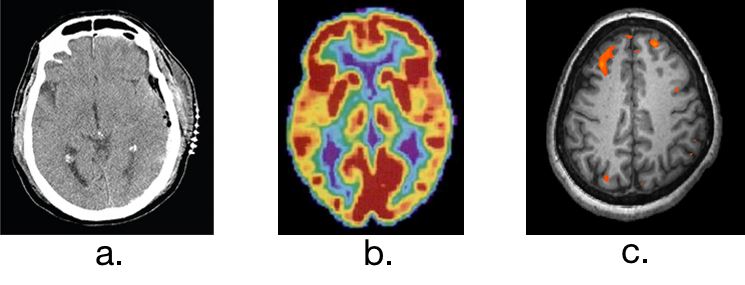
Psychology is the scientific study of mind and behavior. Each word in that phrase has a job. Behavior is anything a living thing does that others can see or record. A frown counts. So does a reaction time, an answer on a survey, or a rat pressing a lever. Mind means the inner events we cannot watch directly. Thoughts, memories, feelings, and motives are all part of the mind. We figure them out from behavior. The word scientific is what sets psychology apart from every kitchen-table theory about people. Psychologists do not just say what people are like. They gather empirical evidence, which means facts collected by careful, planned observation. Then they let that evidence decide.
Being empirical is what makes psychology a science, even though so much of what it studies is hidden. You cannot see a memory. But you can count how many words a person recalls. You cannot see worry. But you can time how long someone stays away from a feared object, and you can record their heart rate. Psychologists turn hidden processes into things they can measure. That lets them use the scientific method on old questions. The method is a cycle: observe, form a guess called a hypothesis, test it, and revise. For centuries, philosophers could only argue about these questions. Psychology tests them.
The four goals
Psychological science has four goals. Each one asks a little more than the one before. To describe is to say what happens, carefully and without bending the facts. To explain is to say why it happens, which means finding the causes. To predict is to say when it will happen again, and under what conditions. To change is to use that knowledge to make things better. This goal is sometimes called control or influence. It might mean easing a phobia, raising a test score, or designing a safer cockpit. A description with no explanation is only a list. An explanation that cannot predict is only a story. A good prediction proves its worth when it helps us change outcomes for the better.
| Goal | Question it answers | Everyday example |
|---|---|---|
| Describe | What is happening? | Teens who sleep less report more low mood |
| Explain | Why is it happening? | Lost sleep upsets the brain circuits that steady our emotions |
| Predict | When will it happen again? | Students at early-start schools will report more mood problems |
| Change | How can we make it better? | Later school start times cut reported mood problems |
Why “common sense” is not enough
People often say psychology just proves the obvious. The trouble is that “the obvious” often points both ways. Common sense says birds of a feather flock together. It also says opposites attract. It says absence makes the heart grow fonder, and also out of sight, out of mind. Folk wisdom has a saying for every outcome. So it predicts nothing ahead of time. It only sounds wise after we know the answer. That trap is called hindsight bias, the feeling that we “knew it all along.”
Worse, a lot of popular pop-psychology is simply false. You may have heard that we use only ten percent of our brains. You may have heard that opposites make the best couples, or that venting anger drains it away. Many people believe that each learner has a fixed “learning style,” and that teaching must match it. Each of these claims has been tested. Each one failed. The point of a science of the mind is not to agree with our hunches. It is to check them.
- Psychology is the scientific study of mind and behavior. Behavior is what we can see. The mind is what goes on inside, which we figure out from behavior.
- It is a science because it rests on empirical evidence and the scientific method. Opinion and gut feeling do not count as proof.
- Its four goals are to describe, explain, predict, and change behavior.
- “Common sense” can explain any outcome after the fact (hindsight bias). So it cannot replace testing claims ahead of time.
Section 2A short history
1879: psychology leaves philosophy
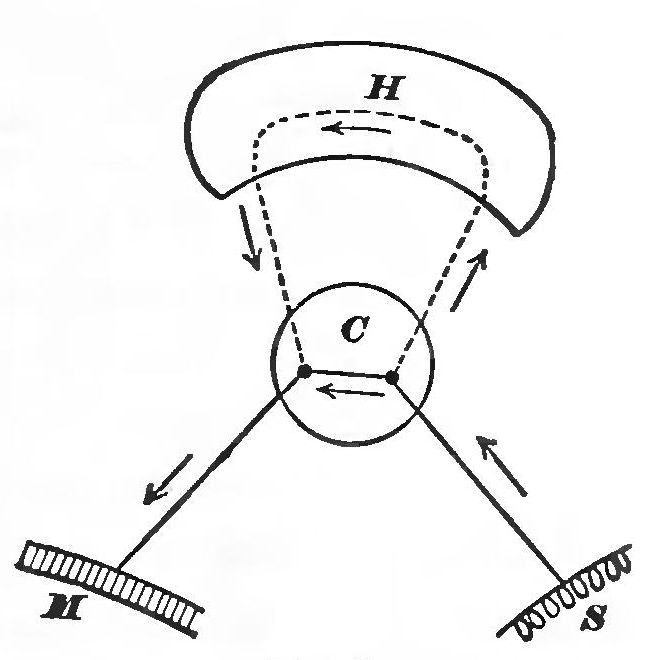
Questions about the mind are very old. Aristotle, Descartes, and Locke all had answers. But for most of history, those questions belonged to philosophy. People settled them by argument, not by experiment. Psychology as its own science has a birthday: 1879. That year, Wilhelm Wundt opened the first laboratory built to study the mind by experiment. It was in Leipzig, Germany. Wundt's method was introspection, which means looking inward. He trained people to report their own conscious experience under tightly controlled conditions. For example, they might describe the exact feelings a ticking metronome produced. Introspection seems rough today. The bold step was the setting. It was a laboratory, with set stimuli, measurements, and repeated trials. Wundt is remembered as the father of experimental psychology.
Two founding schools: structuralism and functionalism
Wundt's student Edward Titchener carried these ideas to the United States. He built them into structuralism, the first school of thought in psychology. Wundt supplied the lab methods. Titchener gave the school its name and its narrow aim. Structuralists wanted to break conscious experience into its basic parts: sensations, images, and feelings. It was like a chemist breaking water into hydrogen and oxygen. The plan rested entirely on introspection, and it stalled. Trained observers looking inward at the same stimulus often reported different things. There was no way to settle who was right.
A rival grew up in America around William James. His 1890 book, The Principles of Psychology, shaped the field for a generation. James was strongly shaped by Darwin. He did not ask what the mind is made of. He asked what it is for. That approach is called functionalism. Why do we have memory, emotion, and habit? Because they serve a function. They help a living thing adapt to its world and survive. Functionalism did not last as a formal school either. But its central question still runs through modern psychology: what is this mental process good for? That question leads straight into the evolutionary perspective.
| School | Key figure(s) | Core question | Method / what happened |
|---|---|---|---|
| Structuralism | Titchener, building on Wundt's lab methods | What are the parts of conscious experience? | Introspection; fell apart as unreliable |
| Functionalism | William James | What is the mind for? | Folded into later psychology |
| Behaviorism | Watson, Pavlov, Skinner | What can we learn from behavior we can see? | Led the field from the 1920s to the 1950s |
The turn to behavior, and back to the mind
By the 1910s, many psychologists were tired of how unreliable introspection was. John B. Watson argued that a real science should study only what can be seen and measured. That meant behavior. His school was called behaviorism. It drew on Ivan Pavlov's discovery of classical conditioning in dogs. It reached full strength with B. F. Skinner. Skinner showed how rewards and punishments shape what animals and people do. Behaviorism led psychology for decades. It left powerful tools that therapy and teaching still use. But it treated the mind as a “black box” that was not worth opening. By the 1950s and 1960s, that felt like a real loss.
Then came the cognitive revolution. The computer, a new machine that processed information, gave researchers a fresh model for the mind. Memory, attention, language, and thought moved back to the center of the science. This time they were studied with careful experiments, not introspection.
- Wundt opened the first psychology lab in 1879. He used introspection, or looking inward, in a tightly run setting.
- Structuralism (Titchener) looked for the parts of conscious experience. Functionalism (James) asked what mental processes are for.
- Behaviorism (Watson, Pavlov, Skinner) studied only behavior we can see. It led the field for decades.
- The cognitive revolution brought the mind back. It kept the strict demand for proof.
Section 3The major perspectives
One behavior, several lenses
Modern psychology is not built around one grand theory. Instead it uses a set of perspectives. Each one is a different angle on the same behavior. Ask why a student freezes before an exam. Each perspective gives a different answer, and each is partly true. It might be a hidden fear of failure. It might be a history of being punished for mistakes. It might be a chain of worst-case thoughts. It might be a blocked need to feel capable. It might be a surge of stress hormones. It might be an ancient threat response. Or it might be the pressure of a culture that prizes grades. No single answer is the whole story. Together they are far more complete. This is why psychologists talk about the biopsychosocial model. It says behavior comes from biological, psychological, and social causes all at once.
The seven you should know
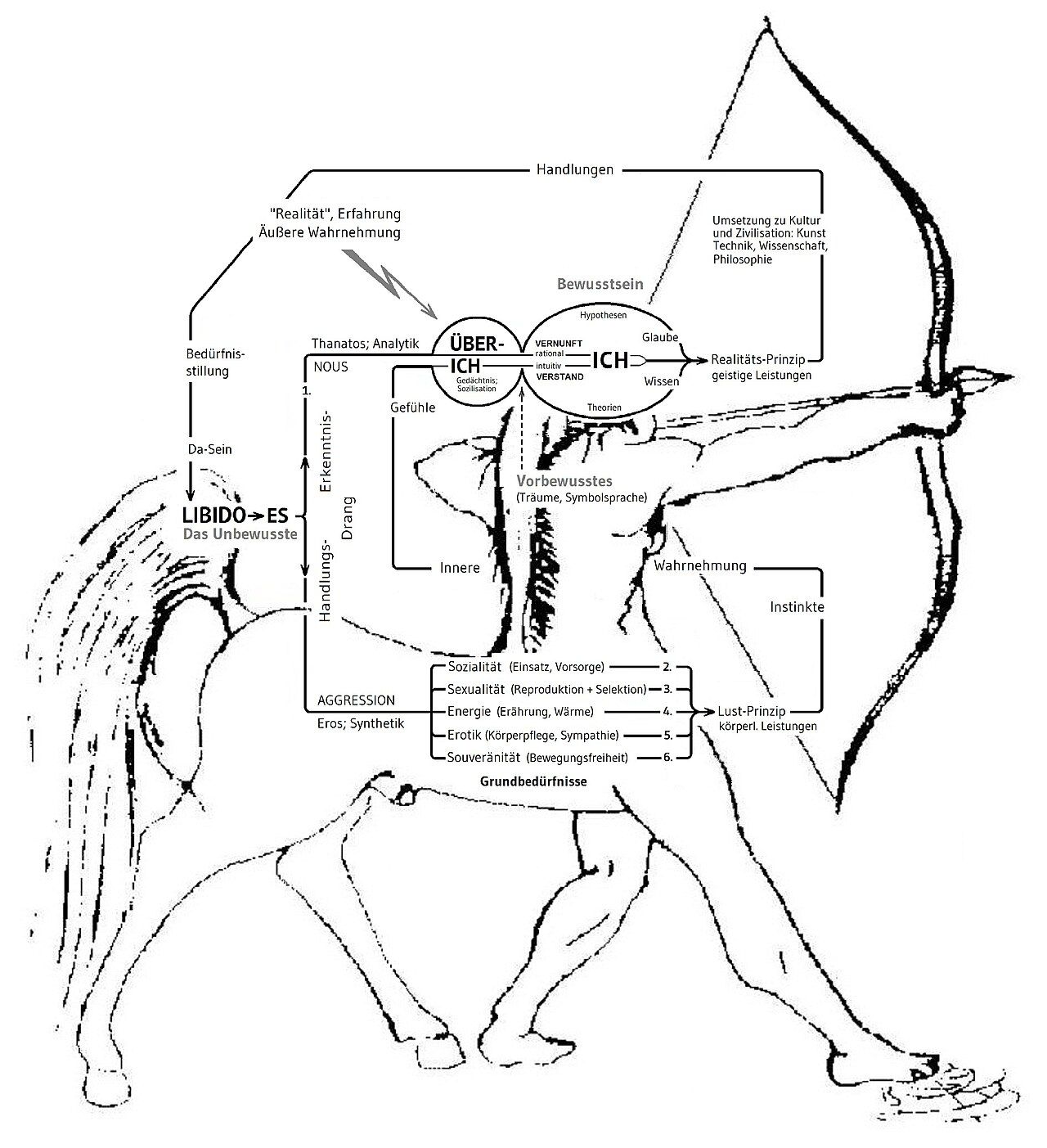
The psychodynamic perspective was founded by Sigmund Freud. Followers such as Carl Jung, Alfred Adler, and Erik Erikson revised it. It traces behavior to hidden, unconscious conflicts and to early life experience. The behavioral perspective comes from Pavlov, Watson, and Skinner. Albert Bandura extended it with his work on learning by watching others. It explains behavior through conditioning and reward. The cognitive perspective studies the mental steps in between. It asks how we notice, remember, reason, and solve problems. Jean Piaget's account of how children's thinking grows is a landmark here. The humanistic perspective is linked with Carl Rogers and Abraham Maslow. It stresses free will, personal growth, and the drive to reach our full potential, called self-actualization.
Three more complete the set. The biological perspective is also called the neuroscience perspective. It looks for the roots of behavior in the brain, in chemical messengers called neurotransmitters, in hormones, and in genes. Hans Selye's work on how the body responds to stress is a classic example. The evolutionary perspective comes from Darwin. It asks how a trait or behavior might have helped our ancestors survive and have children. The sociocultural perspective looks at how other people and the surrounding culture shape us. It is the tradition behind Solomon Asch's studies of conformity and Stanley Milgram's studies of obedience.
| Perspective | Core idea | Key figures | Sample question |
|---|---|---|---|
| Psychodynamic | Hidden conflicts and early experience drive behavior | Freud, Jung, Adler, Erikson | What childhood conflict feeds this fear? |
| Behavioral | Behavior is learned through conditioning and reward | Pavlov, Watson, Skinner, Bandura | What rewards or punishments shaped this? |
| Cognitive | The way we process information shapes behavior | Piaget, Neisser | How is this person thinking about the threat? |
| Humanistic | People have free will and strive to grow | Rogers, Maslow | What unmet need is blocking growth here? |
| Biological | Brain, genes, and hormones underlie behavior | Selye | What is happening in the nervous system? |
| Evolutionary | Traits last because they helped survival | Darwin (the root idea) | How might this response have helped our ancestors? |
| Sociocultural | Culture and other people shape behavior | Asch, Milgram | How do others and culture influence this? |
Under all of them runs psychology's oldest debate, the nature-nurture question. How much of who we are comes from the biology we inherit? How much comes from experience and our surroundings? Today's answer is not “which one.” It is “how do they work together?” Genes and experience keep shaping each other, all through life. The biological and sociocultural perspectives study that give-and-take from opposite ends.
- Psychology does not use one master theory. It uses several perspectives that work together.
- There are seven core lenses. They are psychodynamic, behavioral, cognitive, humanistic, biological, evolutionary, and sociocultural.
- Each lens has its big names. Freud is psychodynamic. Skinner and Bandura are behavioral. Piaget is cognitive. Rogers and Maslow are humanistic. Selye is biological. Darwin is evolutionary. Asch and Milgram are sociocultural.
- Today the nature-nurture debate is not a contest. Genes and experience work together.
Section 4Subfields & careers
Three broad kinds of work
“Psychologist” is an umbrella word. It covers a wide range of jobs. Those jobs sort roughly into three families. Clinical and counseling psychologists assess and treat mental health conditions and emotional distress. This is the popular picture of the field, but it is only one part. Research psychologists run studies and teach. They are also called experimental or academic psychologists. They build the base of knowledge itself. Applied psychologists take that knowledge out into the world. They work in offices, schools, courts, hospitals, sports teams, and product design, solving real problems. One person may do more than one of these. A professor might study memory, teach classes, and advise a company on how to train its staff.
A tour of the subfields
The research side alone holds a dozen specialties. Developmental psychologists study how we change as we grow up and grow old. Piaget studied how children reason. Mary Ainsworth studied how babies bond with caregivers, called attachment. Erikson described stages of identity. Cognitive psychologists study memory, attention, and language. Biological psychologists and neuroscientists study the brain behind them. Social psychologists study how people affect one another, as Asch and Milgram did. Personality psychologists study the ways each of us stays the same over time, and how we differ from others.
On the applied side, industrial-organizational (I/O) psychologists improve workplaces and hiring. School and educational psychologists support learning. Health psychologists study how habits and stress affect illness. They build on Selye's work. Forensic psychologists work where psychology meets the law. Sports psychologists help athletes perform. Human-factors psychologists make tools, screens, and machines easier and safer to use.
| Family | Example subfields | What they do |
|---|---|---|
| Clinical / counseling | Clinical, counseling, health psychology | Assess and treat mental health conditions; support coping and well-being |
| Research / academic | Developmental, cognitive, social, biological, personality | Run studies, teach, and build new knowledge |
| Applied | Industrial-organizational, school, forensic, sports, human factors | Use findings at work, in learning, in law, and in design |
Psychologist versus psychiatrist
People mix these two up all the time, and the difference matters. A clinical psychologist usually holds a doctoral degree, either a Ph.D. or a Psy.D. Clinical psychologists treat mental health conditions mainly through testing and psychotherapy, which is talk-based, behavioral, and thinking-based treatment. A psychiatrist is a medical doctor, with an M.D. or a D.O. A psychiatrist finished medical school and then extra training in psychiatry, called a residency. As a physician, a psychiatrist focuses on the biological side and can prescribe medicine. In most U.S. states, psychologists cannot prescribe. A few states let psychologists with extra training in medicines prescribe some of them. In most settings, the two work as a team. The psychiatrist manages medicine while the psychologist provides therapy. Counseling psychologists, clinical social workers, and licensed counselors complete the mental health team. Each has a different level and kind of training.
- Psychology jobs fall into three families: clinical/counseling, research, and applied. Clinical care is only one part.
- Some subfields mostly do research. Think of developmental, cognitive, social, biological, and personality. Others mostly put ideas to use. Think of I/O, school, health, forensic, and sports.
- A psychologist usually holds a Ph.D. or Psy.D. and treats mainly with therapy. A psychiatrist is a medical doctor (M.D. or D.O.) who can prescribe medicine.
- Big names span the subfields: Piaget and Ainsworth in development, Asch and Milgram in social, Selye in health.
Section 5Why psychology matters
A toolkit for thinking clearly
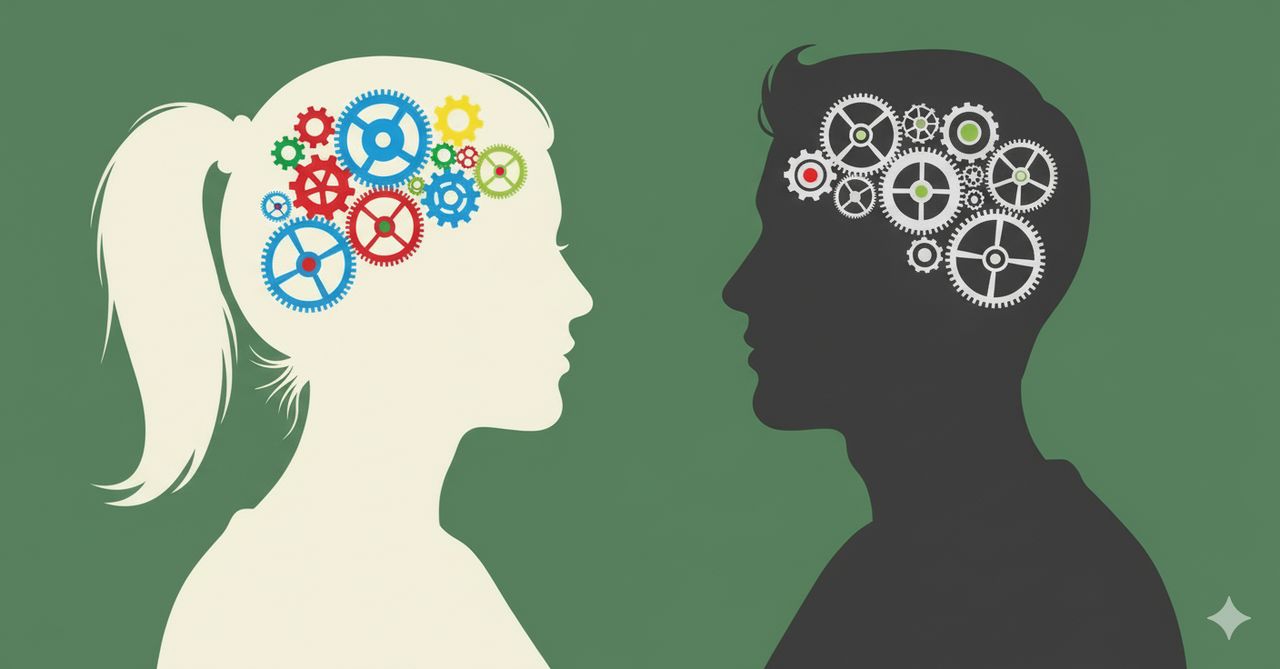
Many people never take another psychology class. Even so, the field gives them something valuable: a habit of mind. That habit is critical thinking. It means carefully checking claims and evidence before you accept them. Psychology has to teach this, because the mind is the one tool that keeps fooling its owner. We remember some things and forget others. We notice facts that fit what we already believe, and we skip the rest. That habit is called confirmation bias. We also see patterns in random noise. And we rewrite the past to fit the present. Knowing all this does not make us immune. But it makes us careful in the right places. Doubting our own certainty is the start of wisdom.
Reading claims with healthy doubt
Claims about the mind are everywhere. They show up in ads, headlines, self-help books, and social media feeds. Most have never been tested. A few questions knock down most of the bad ones.
First, is this one story, or real data? A vivid anecdote is a single personal story, such as “it worked for my cousin.” It is not evidence. A controlled study of many people is. Second, and most important, does a correlation prove a cause? A correlation means two things rise and fall together. That does not mean one causes the other. Ice-cream sales and drownings both climb in summer. Neither causes the other. Hot weather drives both. Third, has the finding been replicated? That means other researchers repeated the study and got the same result. One flashy result is not enough. Fourth, does the claim only look like science? Pseudoscience borrows the look of science but none of its substance. Astrology, “detox” cures, and personality typing that can never be shown wrong are examples.
| When you hear… | Ask… | Why it matters |
|---|---|---|
| “It worked for me!” | Is this one story or real data? | One case cannot rule out luck or the placebo effect |
| “X is linked to Y” | Correlation or cause? | A third factor may cause both |
| “A new study shows…” | Has it been repeated? | A single result is often a fluke |
| “Science-backed!” | Could the claim be proven wrong? | Claims that can never be tested are pseudoscience |
Better everyday decisions
The payoff is practical. Knowing how rewards work helps you build good habits and drop bad ones. Knowing how stress works, Selye's ground, helps you protect your health. Knowing how memory works tells you why cramming fails and spaced practice works. Knowing about conformity and obedience, from Asch and Milgram, helps you spot social pressure while you can still resist it. Psychology will not hand you a formula for life. But it will make you a sharper reader of the endless claims about how people think, feel, and act. That includes the claims you make about yourself.
Confirmation bias is easier to read about than to escape. In 1960 the psychologist Peter Wason gave people a short number puzzle. Most of them tested only guesses they expected to be right, and so they never found the real rule. Try the same puzzle below. Watch which kind of test you reach for first.
- The skill you can take anywhere is critical thinking. It means you check a claim and its proof before you believe it.
- Human thinking is prone to confirmation bias, hindsight bias, and seeing patterns that are not there. That is exactly why careful methods are needed.
- Test a claim by asking: one story or data? correlation or cause? repeated? able to be proven wrong (not pseudoscience)?
- Used wisely, the science improves real choices about health, habits, learning, and standing up to social pressure.
The chapter in one breath
- Psychology is the scientific study of mind and behavior. What makes it a science is empirical testing, not opinion.
- Its four goals are to describe, explain, predict, and change behavior. It is needed because “common sense” explains everything only in hindsight.
- The field became a science with Wundt's 1879 lab. Structuralism and functionalism gave way to behaviorism, and then to the cognitive revolution.
- Modern psychology uses seven perspectives. They work as a team. Each one looks at the same act from a new side.
- The old nature-nurture debate is now seen as genes and experience shaping each other.
- Psychologists work in clinical/counseling, research, and applied jobs. A psychologist is not the same as a psychiatrist. A psychiatrist is a medical doctor who can prescribe.
- Psychology's best gift is critical thinking. Above all, it teaches that correlation is not causation.
ReferenceWords worth knowing
A quick guide to the terms in this chapter. Skim it now, or come back whenever a word trips you up.
- Applied psychology
- Using what psychology knows to solve real problems in places such as workplaces, schools, courts, and product design.
- Behaviorism
- The school led by Watson and Skinner that limits psychology to behavior we can observe, and to how that behavior is conditioned.
- Biological perspective
- The lens that explains behavior through the brain, neurotransmitters, hormones, and genes. It is also called biopsychology or neuroscience.
- Clinical psychology
- The subfield that assesses and treats mental health conditions, usually through therapy. It requires a doctoral degree.
- Cognitive perspective
- The lens that studies mental processes, such as noticing, remembering, reasoning, and language, as causes of behavior.
- Correlation
- A link in which two things change together. A correlation does not, by itself, prove that one causes the other.
- Critical thinking
- Carefully checking claims and evidence before accepting them.
- Empiricism
- The idea that knowledge should rest on evidence gathered by careful observation and experiment.
- Evolutionary perspective
- The lens, which comes from Darwin, that asks how a behavior might have helped survival and having children.
- Functionalism
- William James's school, which asked what mental processes are for: how they help a living thing adapt.
- Humanistic perspective
- The lens linked with Rogers and Maslow. It stresses free will, personal growth, and self-actualization.
- Introspection
- Wundt's method of having trained observers report what they were consciously experiencing.
- Nature-nurture question
- The old question of how much behavior comes from inherited biology and how much from experience. Today it is seen as the two working together.
- Pseudoscience
- Claims that borrow the look of science but cannot be tested or shown to be wrong. Astrology is one example.
- Psychiatry
- The medical specialty, practiced by physicians (M.D. or D.O.), that treats mental health conditions and can prescribe medicine.
- Psychodynamic perspective
- The lens founded by Freud. It traces behavior to hidden, unconscious conflict and early experience.
- Psychology
- The scientific study of mind and behavior.
- Scientific method
- The cycle of observing, forming a testable hypothesis, gathering data, and revising based on the results.
- Sociocultural perspective
- The lens that looks at how other people and the surrounding culture shape behavior.
- Structuralism
- The first school of thought (Titchener, building on Wundt). It used introspection to break conscious experience into basic parts.
- Theory
- An organized explanation of many observations that leads to predictions we can test.