Respiratory Drugs & Eye/Ear
Breathing is the one thing a patient cannot postpone. When an airway narrows, the clock starts, and the drugs you reach for in the next sixty seconds are not the same drugs the patient takes every morning to keep that airway from narrowing in the first place. This chapter sorts respiratory pharmacology into that single most important division — rescue versus controller — then walks the bronchodilators, the inhaled steroids, and the crowded shelf of cough, cold, and allergy products that patients buy without asking anyone. It closes with eye and ear drops, because a drop is a real drug with real systemic effects, and because instillation technique is nursing work that nobody else in the building will do. Learn the two airway targets first; every drug that follows is aimed at one of them.
By the end of this chapter you can
- Explain bronchoconstriction and airway inflammation as the two separate drug targets in asthma and COPD.
- Distinguish a rescue drug from a controller drug and explain why the difference is a safety issue, not a vocabulary issue.
- Compare SABAs, LABAs, anticholinergics, and theophylline by onset, role, and key adverse effects.
- Teach correct metered-dose inhaler technique, spacer use, and the rinse-and-spit rule for inhaled corticosteroids.
- Interpret peak flow zones and recognize rescue-inhaler overuse as a marker of poor control.
- Compare first- and second-generation antihistamines, and counsel safely on decongestants, antitussives, and expectorants.
- Describe how glaucoma agents lower intraocular pressure and why topical timolol can slow a heart or close an airway.
- Perform and teach correct eye drop and otic drop instillation, including punctal occlusion and pinna positioning.
Section 1Airway physiology, asthma & COPD
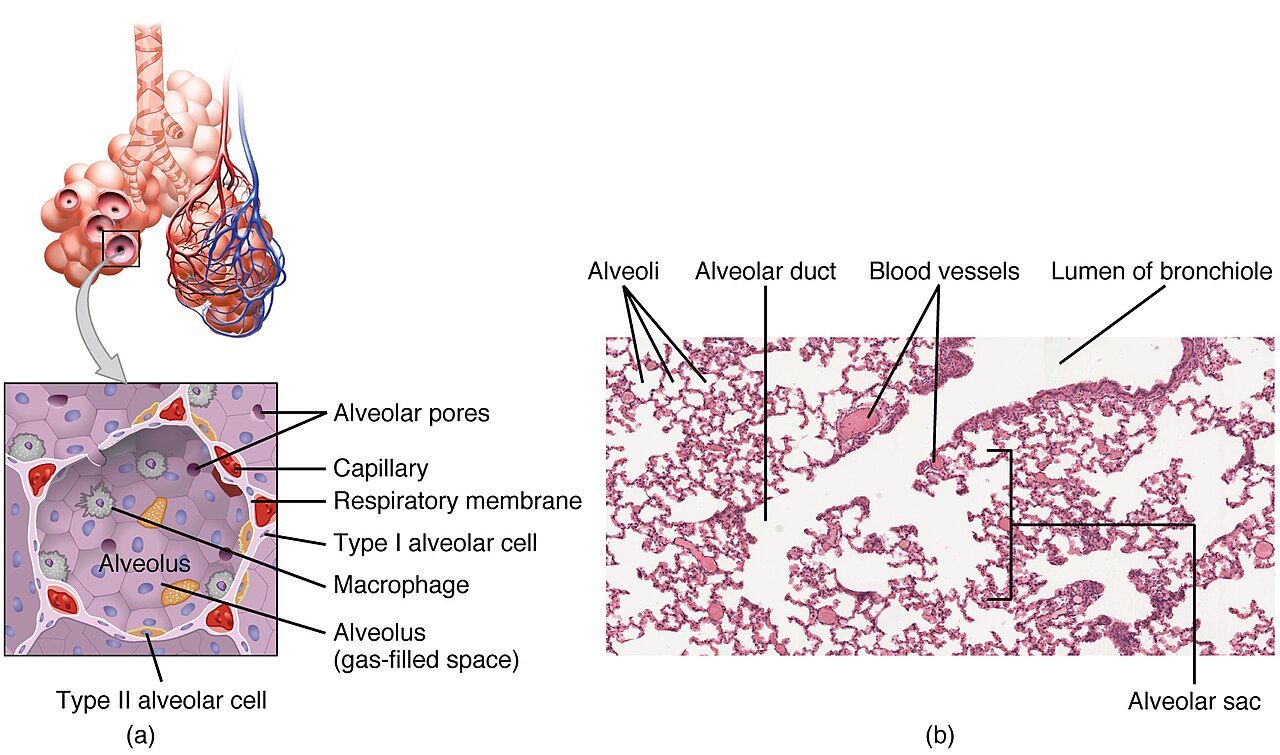
A tube with a muscle around it
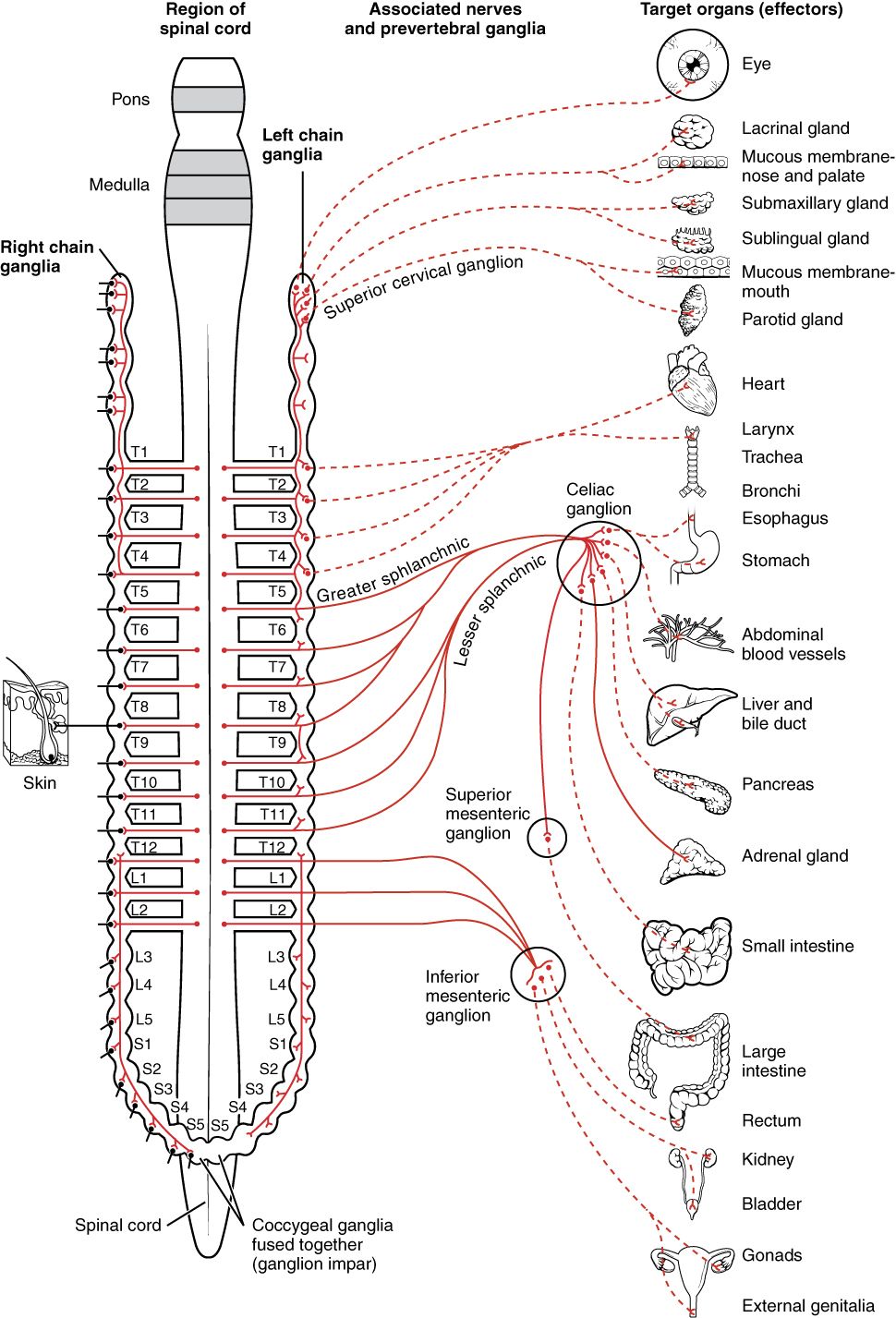
Picture the airway as a branching tree of tubes that gets narrower with every division. From the mid-sized bronchi down to the terminal bronchioles, each tube is wrapped in a ring of bronchial smooth muscle. That muscle has a job — it fine-tunes where air goes — and it takes its orders from the autonomic nervous system. The parasympathetic nerves release acetylcholine onto M3 muscarinic receptors, and the muscle squeezes: bronchoconstriction, plus a squirt of mucus. Circulating epinephrine hits beta-2 adrenergic receptors, and the muscle relaxes: bronchodilation. Two switches, opposite directions. Nearly every bronchodilator in this chapter either pushes the beta-2 switch on or holds the M3 switch off.
Airflow through a tube is exquisitely sensitive to that tube's radius. Narrow a bronchiole a little and resistance climbs steeply — which is why a patient can go from talking in sentences to talking in single words in a matter of minutes, and why a drug that widens the tube even modestly produces a dramatic clinical improvement. It also explains why the same disease is far more dangerous in a toddler, whose airways are small to begin with.
Asthma and COPD: same organ, different problem
Asthma is two problems stacked on top of each other. The dramatic one is bronchoconstriction — the muscle clamping down in response to a trigger (cold air, exercise, dander, smoke, aspirin, a viral infection). The quiet one, running underneath at all times, is chronic airway inflammation: a swollen, edematous airway lining, mucus plugging, and an infiltrate of eosinophils and mast cells. The muscle spasm is what the patient feels. The inflammation is what makes the muscle twitchy in the first place — a state called airway hyperresponsiveness. Treat only the spasm and you are mopping the floor with the faucet running. Critically, asthma obstruction is largely reversible; that reversibility is what a bronchodilator demonstrates on spirometry.
COPD — chronic bronchitis plus emphysema, most often from tobacco — is a different animal. Here the obstruction is largely irreversible: alveolar walls have been destroyed, elastic recoil is gone, and airways collapse on exhalation, trapping air. Inflammation is present but is more neutrophil-driven and much less steroid-responsive than asthma's. So the emphasis flips. In asthma, the inhaled steroid is the backbone. In COPD, the long-acting bronchodilators are the backbone, and inhaled steroids are added selectively — mostly for frequent exacerbators — because in COPD they carry a real pneumonia risk.
| Feature | Asthma | COPD |
|---|---|---|
| Typical cause | Allergy / hyperresponsive airways; often starts young | Tobacco smoke (or long-term irritant exposure); usually after 40 |
| Obstruction | Largely reversible with a bronchodilator | Largely irreversible and progressive |
| Dominant cells | Eosinophils, mast cells | Neutrophils, macrophages |
| Course | Episodic — well between attacks | Daily symptoms with acute exacerbations |
| Backbone drug | Inhaled corticosteroid (controller) | Long-acting bronchodilator (LAMA and/or LABA) |
| Steroid response | Strong | Weak; ICS raises pneumonia risk |
Two targets, two jobs
Everything downstream follows from this: because there are two problems, there are two kinds of drugs, and patients must be able to tell them apart. A rescue (reliever) drug relaxes muscle right now and does nothing for inflammation. A controller (maintenance) drug calms inflammation over days to weeks and does nothing in an attack. Patients die from this confusion — reaching for a steroid inhaler during an attack and waiting for relief that is not coming, or feeling fine on their rescue inhaler and quietly abandoning the controller that was keeping them fine.
- Bronchial smooth muscle constricts via M3 muscarinic receptors and relaxes via beta-2 receptors — the two levers every bronchodilator pulls.
- Asthma = reversible bronchoconstriction layered on chronic inflammation; COPD = largely irreversible, smoking-driven, less steroid-responsive.
- Two targets means two drug jobs: rescue (relax muscle now) and controller (reduce inflammation over weeks).
- A silent chest, exhaustion, drowsiness, or single-word speech in an asthma attack signals impending respiratory failure.
Section 2Bronchodilators
Beta-2 agonists: the fastest way to open a tube
A beta-2 agonist imitates epinephrine at the beta-2 receptor on bronchial smooth muscle, relaxing it within minutes. The prototype short-acting beta-2 agonist (SABA) is albuterol (known as salbutamol outside the United States) — onset within about 5 minutes, duration 4 to 6 hours. This is the rescue inhaler. It is also the drug given before exercise for exercise-induced bronchospasm, and the drug nebulized continuously in a severe attack. Levalbuterol is the purified isomer, marketed as gentler on the heart; in practice the difference is modest.
The adverse effects are simply beta stimulation leaking beyond the lung. Expect tremor (the most common complaint — warn patients, it is not an allergy), tachycardia and palpitations, restlessness, and headache. Two metabolic effects matter more than students expect: beta-2 stimulation drives potassium into cells, so repeated or continuous albuterol causes hypokalemia — watch the potassium and the monitor in status asthmaticus — and it raises blood glucose. That intracellular potassium shift is exactly why albuterol is also used, off the respiratory service entirely, as an adjunct in acute hyperkalemia.
Long-acting beta-2 agonists (LABAs) — salmeterol and formoterol — hold the receptor for about 12 hours; newer ultra-long agents such as vilanterol and indacaterol last 24. They are maintenance drugs, dosed on a schedule, and salmeterol's slow onset makes it useless in an attack. The safety rule that must never be broken: a LABA is never used alone in asthma. LABA monotherapy in asthma was linked to increased asthma-related deaths, and every asthma LABA is now sold combined with an inhaled corticosteroid for exactly that reason. (In COPD, where the mechanism differs, LABA monotherapy is acceptable.) Formoterol is the exception on speed — it has a fast onset, which is why some budesonide/formoterol regimens are used as both controller and reliever from one inhaler.
Anticholinergics: holding the other switch off
If beta-2 agonists push the "relax" switch, anticholinergics (antimuscarinics) block the "constrict" one, occupying M3 receptors so acetylcholine cannot reach them. They dilate a little more slowly than albuterol but dry secretions as a bonus, and because vagal tone contributes heavily to COPD obstruction, they are proportionally more useful in COPD than in asthma. Ipratropium is the short-acting agent (SAMA) — frequently paired with albuterol in a single nebulizer solution or combination inhaler because the combination outperforms either alone in an exacerbation. Tiotropium, umeclidinium, aclidinium, and glycopyrrolate are the long-acting agents (LAMAs), dosed once or twice daily for maintenance — never for rescue.
These molecules are quaternary and poorly absorbed, so systemic anticholinergic effects are milder than with oral agents — but they are not zero. Expect dry mouth (offer sugar-free candy and good oral care), and counsel about urinary retention in men with prostatic enlargement and constipation in the elderly. One practical teaching point: if the mist escapes into the eye it can cause blurred vision, pupil dilation, and eye pain, and it can precipitate an attack in narrow-angle glaucoma — so use a mouthpiece rather than a loose face mask when you can, and keep the nebulizer mist out of the eyes.
Theophylline: the drug with no margin
Theophylline is a methylxanthine — chemically a cousin of caffeine — that relaxes airway smooth muscle and mildly stimulates respiratory drive. It was once a mainstay and is now a last resort, for one reason: a narrow therapeutic index. The target serum level is roughly 5–15 mcg/mL (older references cite 10–20), and the margin above it is thin — adverse effects climb steeply as levels pass 20 mcg/mL. Early toxicity looks like too much coffee — nausea, vomiting, insomnia, restlessness, tachycardia. Serious toxicity is cardiac dysrhythmias and seizures, and seizures can be the first sign in an older adult. There is no antidote; treatment is supportive, with activated charcoal and control of seizures and arrhythmias.
Theophylline is also an interaction magnet, cleared by CYP1A2. Ciprofloxacin, cimetidine, erythromycin, and fluvoxamine push levels up. Rifampin, phenytoin, carbamazepine, and — importantly — cigarette smoking induce metabolism and push levels down, which sets a beautiful trap: a smoker stabilized on theophylline who quits (or is admitted to a smoke-free hospital) can drift into toxicity within days on an unchanged dose. Teach patients to limit caffeine, which stacks additively on the same symptoms. Related note: roflumilast, an oral PDE4 inhibitor, is used in severe COPD with chronic bronchitis to reduce exacerbations — it is not a bronchodilator and not a rescue drug, and it causes weight loss, diarrhea, and mood changes worth screening for.
| Class | Prototype | Onset / role | Key effect | Nursing alert |
|---|---|---|---|---|
| SABA | Albuterol | ~5 min; RESCUE | Beta-2 agonist → smooth muscle relaxes | Tremor, tachycardia, hypokalemia, hyperglycemia; must be carried at all times |
| LABA | Salmeterol, formoterol | 12 h; maintenance only | Sustained beta-2 agonism | Never alone in asthma — must be paired with an ICS; not for an attack |
| SAMA | Ipratropium | 15–30 min; acute add-on | Blocks M3 → less constriction & mucus | Dry mouth; keep mist out of the eyes; caution in BPH, narrow-angle glaucoma |
| LAMA | Tiotropium | 24 h; maintenance only | Long M3 blockade — COPD backbone | Not for rescue; dry mouth, urinary retention, constipation |
| Methylxanthine | Theophylline | Oral; last-line maintenance | Relaxes muscle; stimulates respiratory drive | Level 5–15 mcg/mL (toxic above ~20); N/V → arrhythmia → seizure; no antidote; smoking lowers levels, ciprofloxacin raises them |
| PDE4 inhibitor | Roflumilast | Oral; COPD exacerbation prevention | Anti-inflammatory, not bronchodilator | Weight loss, diarrhea, mood/psychiatric changes |
- Albuterol is the rescue drug: onset in minutes; expect tremor, tachycardia, hypokalemia, and hyperglycemia.
- LABAs are never used as monotherapy in asthma — always combined with an inhaled corticosteroid.
- Ipratropium/tiotropium block M3 receptors; more central in COPD; dry mouth, and keep the mist out of the eyes.
- Theophylline has a narrow window (5–15 mcg/mL) — nausea and insomnia warn, seizures and arrhythmias kill; smoking and ciprofloxacin swing levels hard.
Section 3Inhaled corticosteroids & controllers
Inhaled corticosteroids: the backbone
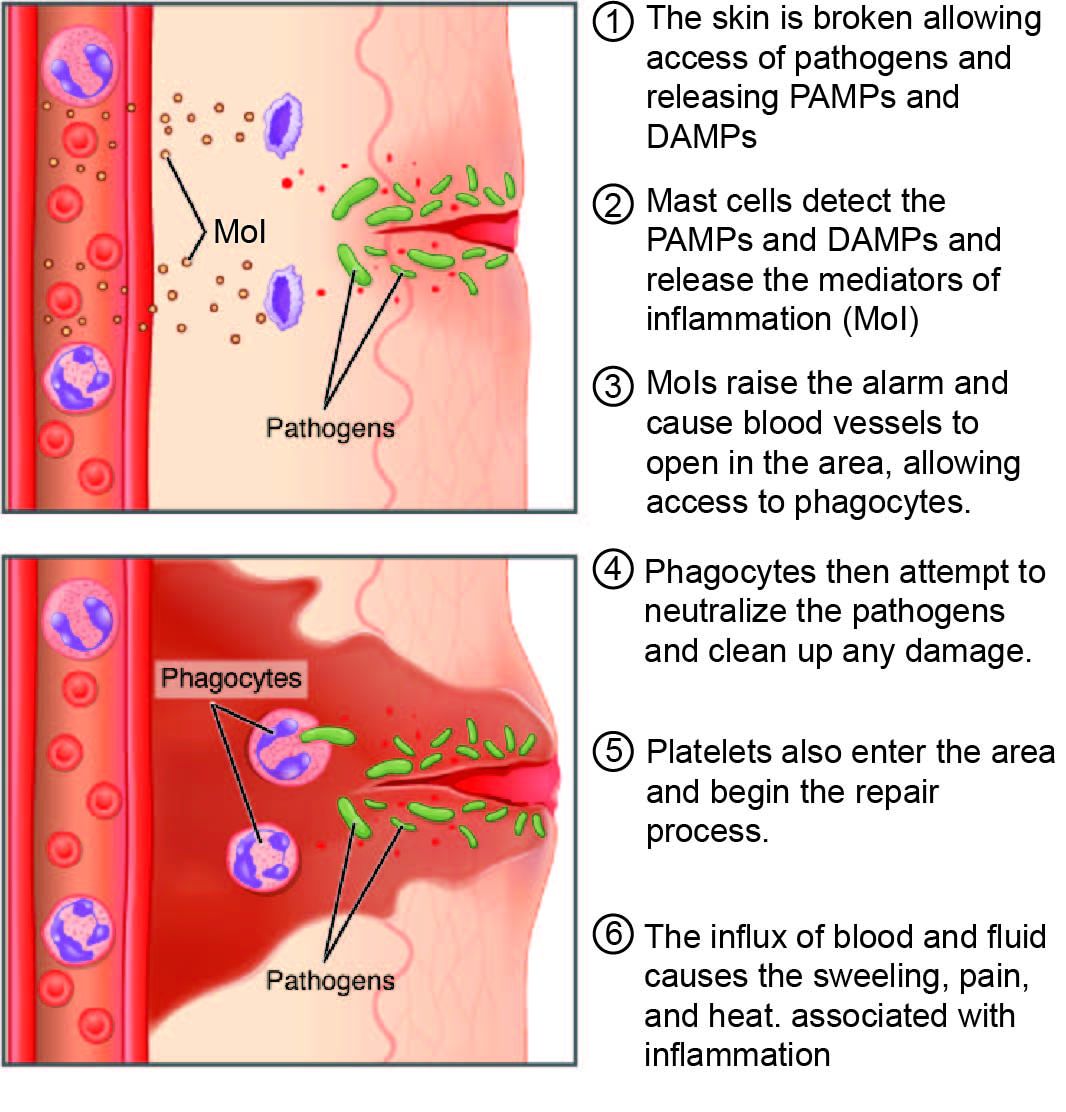
Inhaled corticosteroids (ICS) — fluticasone, budesonide, beclomethasone, mometasone, ciclesonide — are the most effective anti-inflammatory drugs available for asthma and the foundation of every step of therapy above the mildest. They work at the level of gene transcription: suppressing inflammatory mediators, reducing eosinophils and mucosal edema, and — over time — restoring beta-2 receptor responsiveness so the rescue inhaler works better. That mechanism explains the single most important teaching point: an ICS is slow. It takes days to begin working and one to two weeks (sometimes longer) for full benefit, and it is useless in an acute attack. Patients must take it every day even when they feel perfectly well, which is precisely when adherence collapses.
Because the drug is delivered to the lung rather than swallowed, systemic effects are far smaller than with oral prednisone — but the drug that lands in the mouth still matters. The two classic local effects are oral candidiasis (thrush — white plaques, sore mouth) and dysphonia, a hoarse voice from steroid effect on the laryngeal muscles. Both are largely prevented by two habits: rinse the mouth and spit after every dose, and use a spacer. At high doses over long periods, systemic effects reappear — a small reduction in growth velocity in children (monitor height at visits), bone density loss, cataracts, and glaucoma — so we use the lowest dose that maintains control. In COPD, add one more: ICS use increases the risk of pneumonia.
The rest of the controller shelf
Combination inhalers put an ICS and a LABA in one device (fluticasone/salmeterol, budesonide/formoterol, fluticasone/vilanterol), which improves both control and adherence and guarantees the LABA is never taken alone. Triple therapy adds a LAMA in the same inhaler for severe disease.
Leukotriene modifiers are oral, which patients love. Montelukast blocks the leukotriene receptor; it is taken once daily in the evening, is helpful in patients with concurrent allergic rhinitis, exercise-induced bronchospasm, or aspirin-exacerbated respiratory disease — and it carries a boxed warning for serious neuropsychiatric events, including agitation, depression, nightmares, and suicidal thinking. Ask about mood and sleep at every visit, in children as well as adults, and tell families exactly what to watch for. Zafirlukast is similar; zileuton blocks leukotriene synthesis and requires liver enzyme monitoring. None of these is a rescue drug.
Cromolyn, a mast cell stabilizer, is purely prophylactic — it prevents mediator release and must be taken before exposure (dosed before exercise or a known allergen), never during symptoms. Biologics are for severe, poorly controlled disease and are given by injection in a monitored setting: omalizumab (anti-IgE) carries a boxed warning for anaphylaxis, so observe the patient after dosing and have epinephrine ready; mepolizumab (anti–IL-5) and benralizumab (anti–IL-5 receptor) and dupilumab (blocks the IL-4 receptor alpha subunit, so both IL-4 and IL-13 signaling) target eosinophilic and type-2 phenotypes. Finally, systemic corticosteroids — oral prednisone or IV methylprednisolone — are the workhorse of exacerbations. A short burst needs no taper; courses beyond roughly two weeks must be tapered to let the adrenal axis recover. Watch glucose in every diabetic patient you put on a steroid burst.
| Class | Prototype | Role | Nursing alert |
|---|---|---|---|
| Inhaled corticosteroid | Fluticasone, budesonide | Controller backbone — daily, asthma | Rinse and spit; use a spacer; thrush, hoarseness; not for an attack; monitor child growth |
| ICS + LABA | Fluticasone/salmeterol | Daily control when ICS alone is not enough | Still not rescue (unless a formoterol-based reliever regimen is ordered); same rinse rule |
| Leukotriene modifier | Montelukast | Oral add-on; asthma + allergic rhinitis | Boxed warning: neuropsychiatric events — ask about mood, sleep, agitation |
| 5-lipoxygenase inhibitor | Zileuton | Oral alternative | Monitor liver enzymes |
| Mast cell stabilizer | Cromolyn | Prophylaxis only — before exercise/allergen | Worthless once symptoms start; must be scheduled |
| Biologic | Omalizumab, mepolizumab | Severe, refractory asthma | Omalizumab: boxed warning — anaphylaxis; observe after injection, epinephrine available |
| Systemic corticosteroid | Prednisone | Exacerbation burst; severe disease | Hyperglycemia, infection risk, mood; taper if used beyond ~2 weeks |
Technique is the drug
An inhaler the patient cannot use correctly is a placebo with a copay, and studies consistently find that most patients — and a discouraging share of clinicians — get it wrong. Teach the metered-dose inhaler sequence explicitly, then have the patient demonstrate it back: shake the canister; breathe all the way out; seal the lips around the mouthpiece or spacer; press as you begin a slow, deep breath in; hold that breath about 10 seconds; wait roughly one minute between puffs. A spacer should be the default for any MDI — it removes the need for perfect hand-breath timing, puts more drug in the lung, and drops far less steroid on the throat. Dry powder inhalers reverse one rule: the breath in must be fast and forceful to break up the powder, and the patient must never exhale into the device, because humidity clumps the dose. Teach patients to track doses with the counter rather than the old float-the-canister trick, which does not work.
Peak flow monitoring gives the patient an objective number before symptoms get loud. After establishing a personal best, the zones are read like a traffic light: green is 80–100% of personal best (good control, continue), yellow is 50–79% (caution — take the rescue inhaler and follow the action plan), and red is below 50% (medical alert — rescue inhaler now and get help). Every asthma patient should leave with a written action plan that names their drugs by job, not just by color.
- ICS is the controller backbone in asthma — slow onset, taken daily even when well, never used as rescue.
- Prevent thrush and dysphonia with rinse-and-spit plus a spacer; high-dose long-term ICS adds growth, bone, cataract, glaucoma, and (in COPD) pneumonia risk.
- Montelukast carries a boxed warning for neuropsychiatric effects; omalizumab for anaphylaxis; zileuton needs LFT monitoring.
- MDI = slow deep breath with a spacer; DPI = fast forceful breath, never exhale into it. Peak flow zones: green 80–100%, yellow 50–79%, red under 50%.
Section 4Cough, cold & allergy drugs
Antihistamines: two generations, one receptor
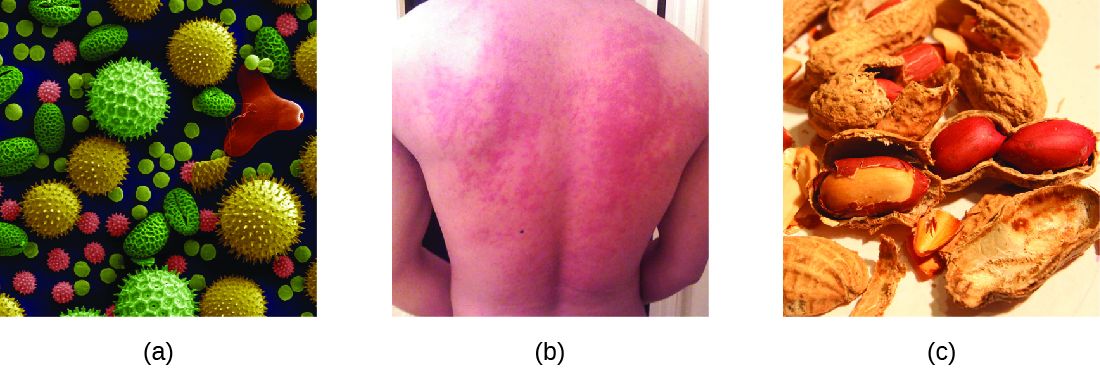
When an allergen cross-links IgE on a mast cell, the cell degranulates and dumps histamine, which acts on H1 receptors to produce the familiar package: itch, sneezing, runny nose, watery eyes, hives, and vasodilation. Antihistamines block H1. Two facts frame everything a nurse teaches about them. First, they block the receptor rather than remove histamine already bound — so they work far better taken before exposure than after symptoms peak. Second, antihistamines do not treat anaphylaxis. Epinephrine treats anaphylaxis; an antihistamine only softens the hives and itch afterward. Confusing those two has killed people.
First-generation agents — diphenhydramine, chlorpheniramine, hydroxyzine, promethazine — cross the blood-brain barrier freely and are strongly anticholinergic. They cause pronounced sedation (which is why diphenhydramine is quietly sold as a sleep aid) plus dry mouth, blurred vision, constipation, and urinary retention. They are on the Beers criteria as potentially inappropriate in older adults, where they contribute to confusion, falls, and retention; in young children they can produce paradoxical excitation instead of sleep. Two specific alarms: promethazine carries boxed warnings for severe tissue injury including gangrene when it extravasates or is given intra-arterially (dilute it, give it slowly into a large free-flowing line, stop instantly for burning or pain), and it is contraindicated under 2 years of age because of fatal respiratory depression.
Second-generation agents — loratadine, cetirizine, fexofenadine, levocetirizine — barely cross into the brain, so they are far less sedating and far less anticholinergic, dose once daily, and are the right choice for a person who has to drive, study, or work. Cetirizine is the most likely of the group to cause some drowsiness. A concrete counseling point: fexofenadine absorption drops substantially if taken with fruit juice (apple, orange, grapefruit) or too close to an antacid — take it with water. For allergic rhinitis specifically, the most effective drugs are not antihistamines at all but intranasal corticosteroids (fluticasone, mometasone, triamcinolone). Teach patients they need daily use for days before full effect, and to aim the spray away from the nasal septum — toward the same-side ear — to prevent epistaxis and, rarely, septal perforation.
Decongestants, antitussives, and the rest of the aisle
Decongestants are alpha-adrenergic agonists — acting chiefly at alpha-1 receptors — that vasoconstrict swollen nasal mucosa. Oral pseudoephedrine works but is systemic: it raises blood pressure and heart rate and causes insomnia and jitteriness, so it is cautioned in hypertension, coronary disease, hyperthyroidism, diabetes, BPH, and narrow-angle glaucoma, and it is kept behind the pharmacy counter because it can be diverted into methamphetamine manufacture. Oral phenylephrine replaced it on open shelves, but the evidence says it is essentially ineffective at approved oral doses — a fact worth knowing when a patient reports that "the cold medicine did nothing." Topical sprays (oxymetazoline, phenylephrine) work beautifully and carry the hardest rule in this section: no more than 3 days. Beyond that, stopping causes rebound congestion (rhinitis medicamentosa) worse than the original, and patients get trapped in a cycle of using the spray to treat the spray.
Antitussives suppress the cough reflex, which is appropriate for a dry, exhausting, sleep-wrecking cough and inappropriate for a wet, productive one — you do not want to stop a patient from clearing secretions. Dextromethorphan acts centrally; it is safe at label doses but has real abuse potential at high doses and can contribute to serotonin syndrome when combined with MAOIs, SSRIs, or linezolid. Codeine is an opioid antitussive with all the opioid baggage — sedation, constipation, respiratory depression — and a boxed warning: it is contraindicated in children under 12, and in anyone under 18 after tonsillectomy or adenoidectomy, because ultra-rapid CYP2D6 metabolizers convert it to morphine fast enough to stop breathing. Benzonatate is different: it numbs stretch receptors in the airway. It must be swallowed whole — chewing or sucking the capsule numbs the mouth and throat and risks choking — and even a few capsules can be fatal to a small child, so it goes somewhere locked.
Two more worth naming. Guaifenesin, an expectorant, thins secretions so a cough can move them; it only works if the patient drinks plenty of fluid, which is the entire teaching point. Acetylcysteine, a mucolytic, breaks the disulfide bonds in mucus — it smells strongly of rotten eggs, so warn the patient, and have suction available because it can loosen a large volume at once. (The same molecule, given IV or orally, is the antidote for acetaminophen overdose — a useful hook.) Finally, remember the pediatric rule: over-the-counter cough and cold combinations are not recommended in young children — contraindicated under 2 years and labeled against under 4 — because they carry real risk and have never shown benefit. Honey (over age 1), fluids, and humidified air are the honest advice.
| Class | Prototype | Key effect | Nursing alert |
|---|---|---|---|
| Antihistamine, 1st gen | Diphenhydramine | H1 block; crosses into CNS | Sedation + anticholinergic; Beers in elders; paradoxical excitation in kids; no driving |
| — promethazine | Promethazine | H1 block, antiemetic | Boxed: gangrene with extravasation; contraindicated under 2 years |
| Antihistamine, 2nd gen | Loratadine, cetirizine, fexofenadine | Peripheral H1 block | Minimal sedation; fexofenadine: not with fruit juice or antacids |
| Intranasal steroid | Fluticasone nasal | Best drug for allergic rhinitis | Daily use, days for effect; aim away from the septum → epistaxis |
| Decongestant, oral | Pseudoephedrine | Alpha-1 → nasal vasoconstriction | Raises BP/HR, insomnia; caution in HTN, CAD, hyperthyroid, BPH, glaucoma |
| Decongestant, topical | Oxymetazoline | Fast, potent nasal vasoconstriction | 3 days maximum — rebound congestion beyond that |
| Antitussive, central | Dextromethorphan | Suppresses cough reflex | Abuse potential; serotonin syndrome with MAOIs/SSRIs; not for a productive cough |
| Antitussive, opioid | Codeine | Central cough suppression | Boxed: contraindicated under 12, and under 18 post-tonsillectomy; sedation, constipation |
| Antitussive, local | Benzonatate | Numbs airway stretch receptors | Swallow whole — never chew; fatal to small children; store locked |
| Expectorant | Guaifenesin | Thins secretions | Only works with generous fluid intake |
| Mucolytic | Acetylcysteine | Breaks mucus disulfide bonds | Rotten-egg odor; have suction ready; also the acetaminophen antidote |
- Antihistamines block H1 and do not treat anaphylaxis — epinephrine does; they also work best taken before exposure.
- First-generation agents sedate and are anticholinergic (Beers in elders); second-generation agents (loratadine, cetirizine, fexofenadine) do not.
- Topical decongestants: 3 days maximum or rebound congestion; oral pseudoephedrine raises BP and HR.
- Benzonatate is swallowed whole, codeine is boxed-warning contraindicated under 12, and guaifenesin only works with fluids.
Section 5Eye & ear drops
Glaucoma: a plumbing problem
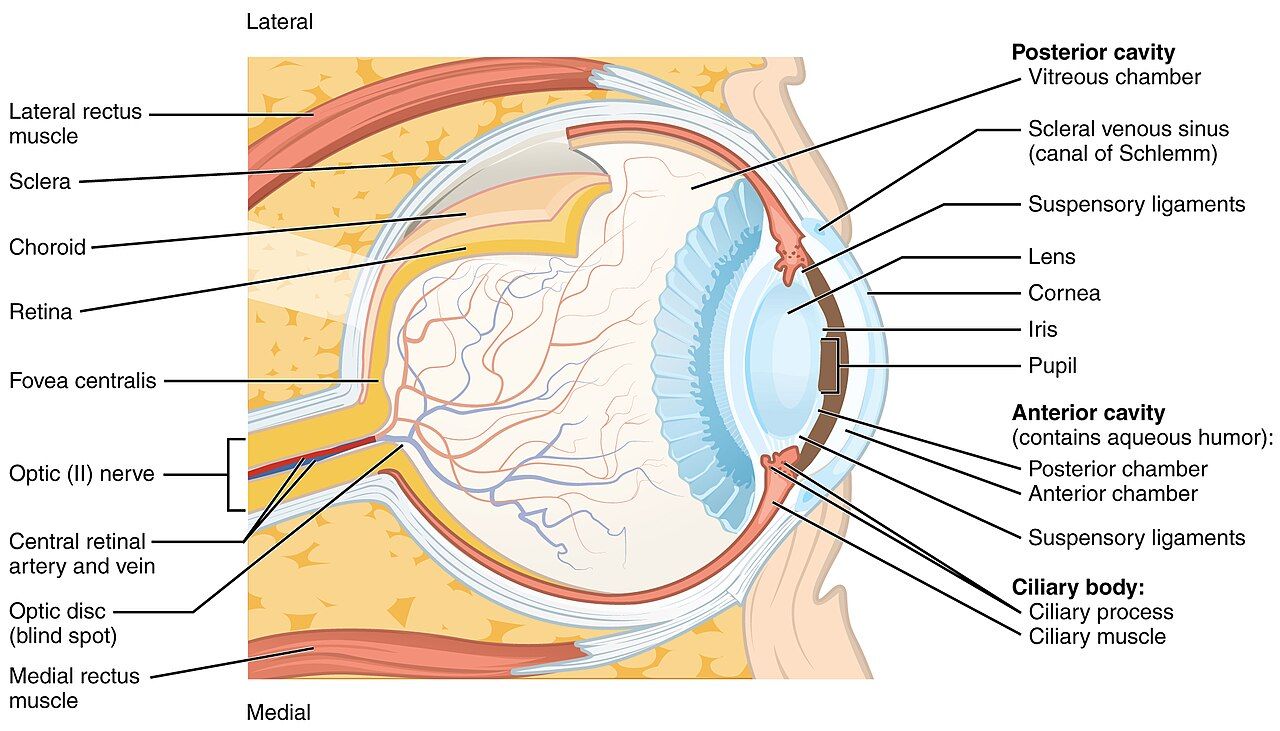
The front of the eye continuously makes a clear fluid, aqueous humor, which nourishes the cornea and lens and then drains out through the angle where the iris meets the cornea. Intraocular pressure (IOP) is simply the balance between how fast fluid is made and how fast it leaves. In glaucoma, drainage cannot keep up, pressure rises, and the optic nerve is slowly strangled — painlessly, from the periphery inward, which is why it is called the silent thief of sight and why patients cannot feel whether their drops are working. In open-angle glaucoma (the common, chronic form) the drain is sluggish; in angle-closure glaucoma the iris physically blocks the angle, pressure spikes, and the patient presents with a red, rock-hard, agonizing eye, a fixed mid-dilated pupil, halos, headache, and vomiting. That is an emergency — vision is lost in hours, not months.
Since IOP is production minus outflow, every drug in the class does one of two things. Prostaglandin analogs — latanoprost, bimatoprost, travoprost — increase uveoscleral outflow, are first-line, and are dosed once daily at bedtime. Warn patients about the cosmetic effects, or they will stop the drug: permanent brown iris pigmentation, darkening of the eyelid skin, and longer, thicker lashes, sometimes in only one eye. Beta blockers — timolol — reduce aqueous production. They are the hidden danger in this chapter: a drop that drains down the tear duct is absorbed systemically without ever passing the liver, and topical timolol has caused bradycardia, hypotension, and life-threatening bronchospasm. Screen for asthma, COPD, heart block, and bradycardia before it is instilled, and teach punctal occlusion. Alpha-2 agonists (brimonidine) both reduce production and improve outflow; they are contraindicated under 2 years of age and used cautiously in older children, because they can cause profound CNS depression, bradycardia, and apnea in the very young. Carbonic anhydrase inhibitors — topical dorzolamide, oral acetazolamide — reduce production; they are sulfonamides (ask about sulfa allergy), and the oral form causes paresthesias, a metallic taste, potassium loss, and metabolic acidosis. Cholinergic miotics (pilocarpine) constrict the pupil to pull the iris out of the angle — still valuable in acute angle closure — and cause dim, blurry vision and brow ache. Netarsudil, a Rho kinase inhibitor, improves outflow and commonly reddens the eye.
| Class | Prototype | How it lowers IOP | Nursing alert |
|---|---|---|---|
| Prostaglandin analog | Latanoprost | Increases outflow (uveoscleral) | First-line, once daily at bedtime; permanent iris/lid darkening, lash growth — warn or they quit |
| Beta blocker | Timolol | Decreases aqueous production | Systemically absorbed: bradycardia, bronchospasm; screen asthma/COPD/heart block; punctal occlusion |
| Alpha-2 agonist | Brimonidine | Decreases production + increases outflow | Dry mouth, drowsiness; avoid in infants — CNS depression, apnea |
| Carbonic anhydrase inhibitor | Dorzolamide (topical), acetazolamide (oral) | Decreases production | Sulfa agents; oral: paresthesias, metallic taste, hypokalemia, metabolic acidosis |
| Cholinergic miotic | Pilocarpine | Miosis opens the drainage angle | Dim/blurred vision, brow ache; fall risk at night; used in acute angle closure |
| Rho kinase inhibitor | Netarsudil | Increases trabecular outflow | Conjunctival redness is common and expected |
Getting the drop where it belongs
A drop that lands on a cheek is a missed dose that the chart will record as given. Teach and perform the sequence deliberately. Wash hands and check the label for "ophthalmic." Have the patient sit or lie with the head tilted back and eyes looking up. Pull the lower lid down to form a pouch — the conjunctival sac — and instill one drop into it, holding the bottle about an inch above and never touching the tip to the eye, lashes, or fingers, which contaminates the bottle. Have the patient close the eye gently (not squeeze, which pumps the drug out) and apply punctal occlusion: light pressure on the inner corner near the nose for 1–2 minutes. This one maneuver keeps the drug in the eye and out of the bloodstream, and it is the difference between timolol treating an eye and timolol dropping a heart rate. The eye only holds about one drop's worth of volume, so a second drop of the same drug is waste. When two different drops are due, wait at least 5 minutes between them or the second washes out the first. Give solutions before suspensions, and always put ointments last — ointment blurs vision (so bedtime is ideal) and seals the surface against anything that follows. Contact lenses come out first; each patient gets their own bottle, never shared.
Otic drops follow their own rules, and the first one is absolute: ophthalmic drops may be used in the ear, but otic drops must never go in the eye. Ophthalmic preparations are sterile and formulated for eye tissue; otic ones are not, and will injure a cornea. Beyond that, warm the bottle to about body temperature by rolling it in your hands — cold fluid against the tympanic membrane stimulates the vestibular apparatus and causes dizziness, nausea, and vertigo. Straighten the canal by pulling the pinna up and back for adults and children over about 3, and down and back for infants and younger children, whose canals angle differently. Instill the drops against the side of the canal so air can escape, keep the patient lying on the unaffected side for 3–5 minutes, and if a cotton ball is used, place it loosely at the opening only — never pack it, or it absorbs the dose.
The drugs themselves are a short list. Ofloxacin otic and ciprofloxacin/dexamethasone treat otitis externa and infected tubes; the steroid component calms swelling and pain. Neomycin/polymyxin B/hydrocortisone is effective but ototoxic — it is contraindicated when the tympanic membrane is perforated or tubes are present, because neomycin reaching the middle ear can damage hearing permanently. Assess for perforation, drainage, or tubes before instilling anything, and if you are unsure, stop and ask. Carbamide peroxide softens cerumen by foaming; it is not an antibiotic and must not be used on a draining or perforated ear. And note that topical anesthetic ear drops are no longer an approved option in many settings — systemic analgesia is the safer route for ear pain.
- IOP = production minus outflow; latanoprost (first-line, bedtime) increases outflow, timolol and dorzolamide reduce production.
- Topical timolol is absorbed systemically — bradycardia and bronchospasm are real; screen for asthma/COPD and teach punctal occlusion.
- Eye drops go in the conjunctival sac, one drop, tip touches nothing, 5 minutes between different drops, ointments last.
- Otic: warm the drops; pinna up and back (adult) or down and back (young child); never put otic drops in an eye; neomycin-containing drops are contraindicated with a perforated eardrum.
The chapter in one breath
- The airway has two drug targets: bronchoconstriction (M3 constricts, beta-2 relaxes) and inflammation — which is why every patient carries two kinds of inhaler.
- Rescue means albuterol, in minutes; controller means an inhaled corticosteroid, over weeks. Mixing them up is a fatal error, not a vocabulary slip.
- Albuterol brings tremor, tachycardia, hypokalemia, and hyperglycemia; LABAs are never given alone in asthma; ipratropium/tiotropium block M3 and anchor COPD therapy.
- Theophylline has almost no margin — 5–15 mcg/mL, nausea and insomnia first, then arrhythmias and seizures; smoking and ciprofloxacin move the level hard.
- Inhaled corticosteroids demand daily use, rinse-and-spit, and a spacer; montelukast carries a neuropsychiatric boxed warning; technique and peak-flow zones (green/yellow/red) are the teaching.
- Antihistamines do not treat anaphylaxis; first-generation agents sedate and are Beers-listed; topical decongestants get 3 days before rebound; benzonatate is swallowed whole.
- Glaucoma drugs either cut aqueous production or open outflow; latanoprost is first-line, and topical timolol can bradycard or bronchospasm a systemic patient.
- Technique is the drug: conjunctival sac, one drop, punctal occlusion, 5 minutes between drops, ointment last — and warm otic drops with the pinna up and back in adults, down and back in young children.
ReferenceWords worth knowing
A quick reference for the terms in this chapter — skim it now, or circle back whenever a word trips you up.
- Airway hyperresponsiveness
- The twitchy, easily triggered state of chronically inflamed bronchial smooth muscle; the reason controllers reduce attacks.
- Aqueous humor
- The clear fluid made in the anterior eye and drained at the angle; its production-versus-outflow balance sets intraocular pressure.
- Beta-2 agonist
- A drug that stimulates beta-2 receptors on bronchial smooth muscle to produce bronchodilation, e.g., albuterol (short-acting) or salmeterol (long-acting).
- Bronchoconstriction
- Narrowing of the airway by contraction of bronchial smooth muscle, mediated by acetylcholine at M3 muscarinic receptors.
- Bronchodilator
- Any drug that relaxes bronchial smooth muscle and widens the airway — beta-2 agonists, antimuscarinics, and methylxanthines.
- Conjunctival sac
- The pouch formed by pulling down the lower eyelid; the correct target for an eye drop, never the cornea itself.
- Controller (maintenance) drug
- A scheduled daily drug that reduces airway inflammation over days to weeks, e.g., an inhaled corticosteroid; useless in an acute attack.
- Dysphonia
- Hoarseness or voice change; a local adverse effect of inhaled corticosteroids, reduced by a spacer and rinse-and-spit.
- Expectorant
- A drug such as guaifenesin that thins respiratory secretions so a cough can clear them; requires generous fluid intake to work.
- Glaucoma
- Optic nerve damage associated with elevated intraocular pressure; chronic open-angle disease is painless, while acute angle-closure is a sight-threatening emergency.
- Intraocular pressure (IOP)
- Pressure inside the eye, determined by aqueous humor production minus outflow; the modifiable target of every glaucoma drug.
- LABA
- Long-acting beta-2 agonist (salmeterol, formoterol); maintenance only, and never used as monotherapy in asthma.
- LAMA
- Long-acting muscarinic antagonist (tiotropium, umeclidinium); a once- or twice-daily maintenance bronchodilator and the backbone of COPD therapy.
- Methylxanthine
- A caffeine-related bronchodilator, chiefly theophylline; narrow therapeutic index with a target level of about 5–15 mcg/mL.
- Mucolytic
- A drug such as acetylcysteine that chemically breaks up thick mucus by cleaving disulfide bonds.
- Ototoxicity
- Drug-induced injury to hearing or balance; the reason neomycin-containing otic drops are contraindicated with a perforated eardrum.
- Peak expiratory flow
- The fastest speed a patient can blow out, measured against personal best: green 80–100%, yellow 50–79%, red below 50%.
- Punctal occlusion
- Gentle pressure on the inner corner of the closed eye for 1–2 minutes after a drop, keeping drug in the eye and out of systemic circulation.
- Rebound congestion (rhinitis medicamentosa)
- Worsening nasal congestion caused by topical decongestant use beyond about 3 days.
- Rescue (reliever) drug
- A fast-acting bronchodilator, prototypically albuterol, used for acute symptoms; it treats the spasm, not the inflammation.
- SABA
- Short-acting beta-2 agonist (albuterol); onset about 5 minutes, duration 4–6 hours — the rescue inhaler.
- Spacer
- A holding chamber attached to a metered-dose inhaler that removes the need for perfect timing, increases lung delivery, and reduces oropharyngeal steroid deposition.