Antimicrobial Drugs
Antimicrobials are the only drugs we give that are aimed at something that is not the patient. Everything else in the medication room — the beta blocker, the insulin, the opioid — changes the person in the bed. An antibiotic is meant to kill an invader while leaving that person untouched, and how well it manages that trick is the difference between a cure and a kidney injury. This chapter walks through how these drugs pick their target, how they are grouped by the machinery they break, why the microbes are learning to shrug them off, and what the nurse does at the bedside to make the whole thing work safely. Learn the classes as families and the details stop being memorization — they start being predictions you can make.
By the end of this chapter you can
- Explain selective toxicity and use it to predict which drugs are safe and which are not.
- Distinguish narrow- from broad-spectrum and bactericidal from bacteriostatic therapy.
- Describe the role of culture and sensitivity testing and why empiric therapy exists.
- Group antibacterials by mechanism — cell wall, protein synthesis, nucleic acid, and metabolic inhibitors — and name a prototype for each.
- Explain how resistance arises and identify MRSA, VRE, and other resistant organisms and their treatments.
- State the nurse's role in antimicrobial stewardship.
- Compare the major antifungal and antiviral classes and their signature toxicities.
- Describe the major antiprotozoal and anthelmintic drugs and the nursing care common to all antimicrobial therapy.
Section 1Principles of antimicrobial therapy
Selective toxicity: the whole game
Selective toxicity is the principle that makes antimicrobial therapy possible: the drug attacks a structure the microbe has and the patient does not. Bacteria build a peptidoglycan cell wall; your cells build no wall at all, so a drug that sabotages wall construction is nearly invisible to you. Bacteria run 70S ribosomes assembled from 30S and 50S subunits; your cells run 80S ribosomes, so a drug shaped to jam the bacterial one mostly ignores yours. Bacteria have to synthesize their own folate from scratch; you eat yours, so a drug that blocks the synthesis pathway starves the bacterium and skips you entirely.
Read that list backwards and you have predicted the side effects. Selective toxicity is never perfect. Human mitochondria carry ribosomes that resemble bacterial ones — which is exactly why linezolid suppresses bone marrow and why aminoglycosides damage the hair cells of the inner ear. The narrower the gap between microbe and host, the more toxic the drug. That is the single sentence that explains why penicillin is safe enough to give a toddler and amphotericin B has a nickname involving rigors.
Spectrum, and cidal versus static
Narrow-spectrum drugs hit a limited range of organisms; broad-spectrum drugs hit many. Students often assume broad is better. It is not. Broad-spectrum therapy clear-cuts the patient's normal flora along with the pathogen, opening the door to superinfection — Clostridioides difficile colitis, Candida thrush, vaginal yeast — and it applies selection pressure across a far wider bacterial population. Broad is a starting guess, not a goal. The goal is always the narrowest drug that covers the actual organism.
Bactericidal drugs kill outright (beta-lactams, aminoglycosides, fluoroquinolones, vancomycin, metronidazole). Bacteriostatic drugs stall replication and let the immune system finish the job (tetracyclines, macrolides, clindamycin, sulfonamides, linezolid). The distinction matters most when the immune system cannot help — endocarditis, meningitis, neutropenia — where a cidal drug is generally required.
Culture and sensitivity, and the empiric window
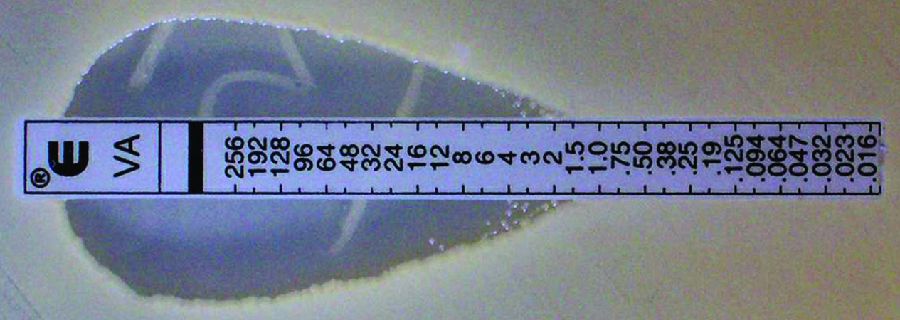
A culture and sensitivity (C&S) has two halves. The culture identifies the organism. The sensitivity panel exposes it to a series of drugs and reports the minimum inhibitory concentration (MIC) — the lowest concentration that stops growth — then labels each drug susceptible, intermediate, or resistant. A low MIC number alone does not mean "best drug"; the interpretation next to it does, because it factors in what concentration the drug actually reaches at the site of infection.
Cultures take 24 to 72 hours. A septic patient does not have 72 hours. So we start empiric therapy — an educated, broad guess based on the suspected site, the likely organisms for that site, the local antibiogram, and the patient's recent exposures. Then, when the C&S returns, therapy is de-escalated to a narrow drug that the organism is actually susceptible to. Empiric therapy is a bridge, not a destination, and a broad antibiotic still running on day five with a susceptibility report on the chart is a stewardship failure.
| Term | What it means | Why it matters at the bedside |
|---|---|---|
| Selective toxicity | Attacks a microbial-only target | The narrower the microbe–host gap, the more toxic the drug and the more you monitor |
| Narrow-spectrum | Few organisms covered | Preferred once the organism is known — spares flora, less resistance |
| Broad-spectrum | Many organisms covered | Empiric starting point; watch for C. difficile and yeast |
| Bactericidal | Kills the organism | Required when host defenses can't help: endocarditis, meningitis, neutropenia |
| Bacteriostatic | Stops replication | Needs a working immune system to finish the job |
| MIC | Lowest concentration that inhibits growth | Read the susceptible/resistant label, not just the number |
| Empiric therapy | Best guess before results | Start fast in sepsis — but plan to de-escalate |
| Prophylaxis | Prevention, not treatment | Surgical dose timed within 60 min before incision |
- Selective toxicity — a microbial-only target — makes the drug possible; where microbe and host overlap, toxicity appears.
- Narrow-spectrum is the goal; broad-spectrum is a temporary guess that costs flora and breeds resistance.
- Bactericidal kills; bacteriostatic stalls and needs an immune system.
- C&S names the organism and reports the MIC; empiric therapy covers the gap and is then de-escalated.
Section 2Antibiotics by mechanism
Cell wall inhibitors: break the box
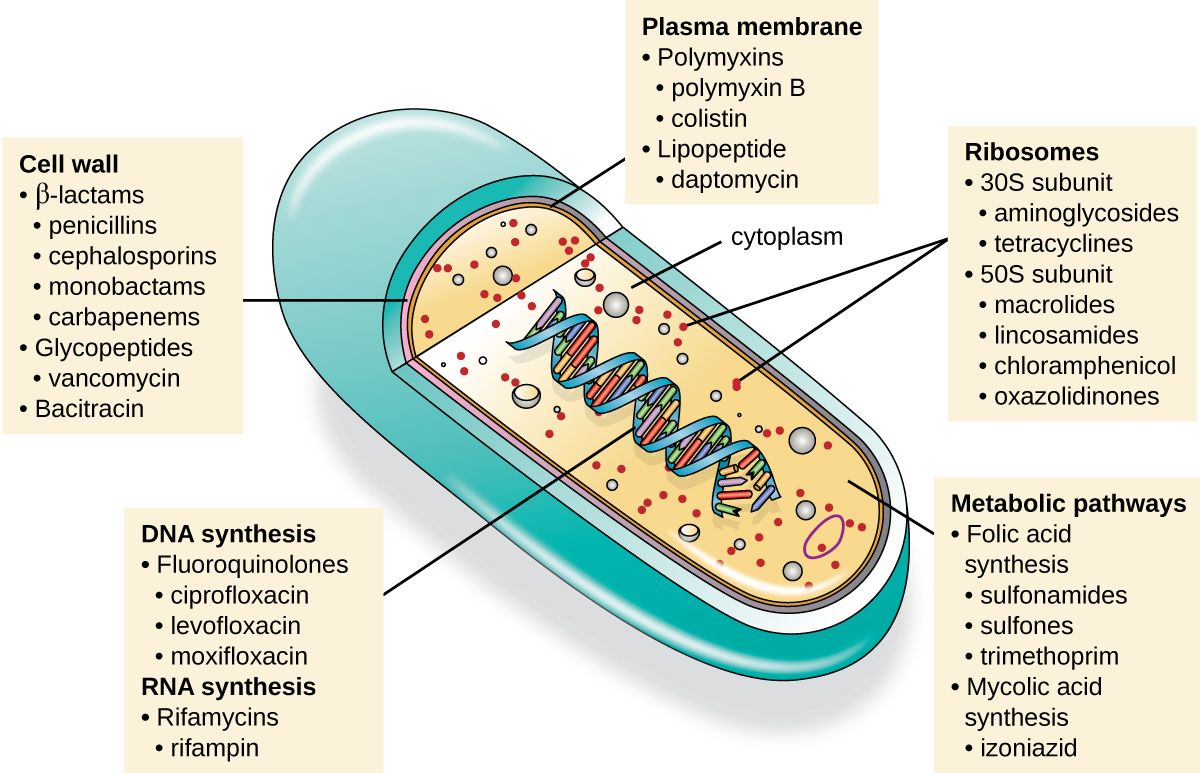
Bacteria live under enormous internal osmotic pressure and are held together by a peptidoglycan mesh. Interrupt the cross-linking and the cell swells and bursts. All of these drugs are therefore bactericidal, and because human cells have no wall, the beta-lactams are among the safest antimicrobials we own. That mechanism-based safety belongs to the beta-lactams, not to the whole wall-active group: vancomycin attacks wall synthesis too but is nephrotoxic and ototoxic and needs trough/AUC levels with serial creatinine, and daptomycin needs weekly CPK.
The beta-lactams — named for the four-membered beta-lactam ring they share — include penicillins, cephalosporins, carbapenems, and the monobactam aztreonam. They bind the penicillin-binding proteins that do the cross-linking. Penicillins run from narrow (penicillin G, for strep and syphilis) to broader (amoxicillin, ampicillin) to antipseudomonal (piperacillin-tazobactam). Cephalosporins climb through generations — cefazolin (first, the classic surgical prophylaxis drug), ceftriaxone (third, meningitis and pneumonia), cefepime (fourth, Pseudomonas), ceftaroline (fifth, active against MRSA). Carbapenems (meropenem, ertapenem, imipenem-cilastatin) are the heavy artillery reserved for resistant gram-negatives. Aztreonam covers gram-negatives only and is the escape hatch for a patient with true penicillin anaphylaxis.
The non-beta-lactam wall drugs matter too. Vancomycin, a glycopeptide, blocks wall building at a different step and is a workhorse for MRSA. Daptomycin is a lipopeptide that punches holes in the gram-positive membrane rather than the wall; it is inactivated by lung surfactant, so it is never the answer for pneumonia.
Protein synthesis inhibitors: jam the ribosome
The bacterial 70S ribosome is a target with two halves, and the drugs sort by which half they grab. Hitting the 30S subunit: aminoglycosides (gentamicin, tobramycin, amikacin) and tetracyclines (doxycycline, minocycline). Hitting the 50S subunit: macrolides (azithromycin, erythromycin, clarithromycin), clindamycin, linezolid, and chloramphenicol. A useful mnemonic: "buy AT 30, CELL at 50" — Aminoglycosides and Tetracyclines at 30S; Chloramphenicol, Erythromycin/macrolides, Lincosamides (clindamycin), and Linezolid at 50S.
This is where selective toxicity gets thin, and the toxicities are the reason. Aminoglycosides are nephrotoxic and ototoxic — the hearing loss can be permanent — so they demand peak and trough levels and daily creatinine. Tetracyclines chelate calcium: prolonged or repeated courses stain developing teeth, so avoid them under age 8 and in pregnancy — with one exception that matters enormously, because doxycycline is first-line at any age for suspected tick-borne rickettsial illness (Rocky Mountain spotted fever, ehrlichiosis, anaplasmosis), where a short course (under 21 days) does not cause clinically significant staining and withholding the drug can be fatal. They are also inactivated if the patient swallows them with milk, antacids, or an iron pill. Macrolides prolong the QT interval. Clindamycin is the classic C. difficile offender. Linezolid, working on a ribosome that looks like the one in your mitochondria, causes thrombocytopenia, optic and peripheral neuropathy, and — because it is a weak MAO inhibitor — serotonin syndrome when stacked on an SSRI.
Nucleic acid and metabolic inhibitors: break the blueprint, starve the factory
Fluoroquinolones (ciprofloxacin, levofloxacin, moxifloxacin) poison DNA gyrase and topoisomerase IV, the enzymes that untangle bacterial DNA. They are potent, oral, and carry more boxed warnings than almost anything else on the shelf: tendinitis and tendon rupture (Achilles, worse over 60, on steroids, or post-transplant), aortic aneurysm and dissection, peripheral neuropathy, CNS effects, QT prolongation, and blood glucose swings. Rifampin blocks bacterial RNA polymerase, turns urine, sweat, and tears orange (stains contact lenses), is hepatotoxic, and is a ferocious CYP450 inducer that can quietly defeat oral contraceptives and warfarin. Metronidazole is activated inside anaerobes and protozoa where it shreds DNA; it produces a metallic taste and a disulfiram-like reaction with alcohol.
The metabolic inhibitors starve the bacterium of folate. Sulfamethoxazole blocks dihydropteroate synthase and trimethoprim blocks dihydrofolate reductase — two sequential steps in one pathway, which is why the combination (TMP-SMX) is synergistic and bactericidal. Watch for rash that could become Stevens-Johnson syndrome, hyperkalemia, crystalluria (push fluids), photosensitivity, and a sharp rise in the INR of anyone on warfarin. That same folate mechanism closes a loop in pregnancy: because trimethoprim antagonizes folate, TMP-SMX is avoided in the first trimester (neural tube and other structural defects — folic acid supplementation is advised if it must be used) and again at term, where the sulfonamide displaces bilirubin and risks kernicterus in the newborn. Isoniazid, a first-line TB drug, blocks mycolic acid synthesis and causes peripheral neuropathy — which is why it is co-prescribed with pyridoxine (vitamin B6) — and hepatitis.
| Class | Prototype | Mechanism / key effect | Nursing alert |
|---|---|---|---|
| Penicillins | penicillin G, amoxicillin | Blocks cell wall cross-linking; bactericidal | True allergy vs. GI upset — ask what happened; observe 30 min after first dose; epinephrine available |
| Cephalosporins | cefazolin, ceftriaxone | Beta-lactam; generations broaden gram-negative reach | Cross-reactivity with penicillin is low (~1–2%) but ask; never mix ceftriaxone with calcium-containing IV in a neonate |
| Carbapenems | meropenem | Broadest beta-lactam; reserve drug | Seizure risk (highest with imipenem) — more so in renal impairment |
| Monobactam | aztreonam | Gram-negative only | Safe option in true penicillin anaphylaxis |
| Glycopeptide | vancomycin | Blocks wall synthesis; MRSA workhorse | Infuse over at least 60 min; nephrotoxic + ototoxic; monitor trough/AUC and creatinine |
| Lipopeptide | daptomycin | Disrupts gram-positive membrane | Monitor CPK weekly (myopathy); inactivated by surfactant — not for pneumonia |
| Aminoglycosides | gentamicin | 30S; bactericidal; gram-negatives | Nephrotoxic + ototoxic (may be permanent); peak & trough levels; daily creatinine; report tinnitus or vertigo |
| Tetracyclines | doxycycline | 30S; bacteriostatic; atypicals, tick-borne | Photosensitivity; teeth staining on prolonged/repeated courses — avoid under age 8 and in pregnancy, except doxycycline for suspected tick-borne rickettsial illness, which is first-line at any age; separate from dairy, antacids, iron; full glass of water, sit upright 30 min |
| Macrolides | azithromycin | 50S; bacteriostatic; atypical pneumonia | QT prolongation; GI cramping; erythromycin/clarithromycin are CYP3A4 inhibitors |
| Lincosamide | clindamycin | 50S; anaerobes, skin/soft tissue | Classic C. difficile trigger — report new diarrhea immediately |
| Oxazolidinone | linezolid | 50S; MRSA and VRE; oral = IV | Thrombocytopenia (weekly CBC); serotonin syndrome with SSRIs; optic neuropathy on long courses; tyramine caution |
| Fluoroquinolones | ciprofloxacin | DNA gyrase / topoisomerase IV; bactericidal | Tendon rupture, aortic aneurysm, neuropathy, CNS effects, QT, glucose swings; separate from calcium/iron/antacids by 2–6 h |
| Rifamycin | rifampin | Blocks bacterial RNA polymerase; TB | Orange urine/sweat/tears (stains lenses — harmless); hepatotoxic; potent CYP inducer — warn about contraceptive failure |
| Nitroimidazole | metronidazole | Damages DNA of anaerobes/protozoa | No alcohol during and 3 days after — disulfiram-like reaction; metallic taste; darkened urine |
| Sulfonamide combo | TMP-SMX | Sequential folate blockade; synergistic | Rash → watch for SJS; hyperkalemia; push fluids for crystalluria; raises INR on warfarin; avoid in the first trimester (folate antagonism → neural tube defects) and at term (kernicterus) |
| Antitubercular | isoniazid | Blocks mycolic acid synthesis | Give pyridoxine (B6) to prevent neuropathy; hepatotoxic — teach dark urine, jaundice, RUQ pain; no alcohol |
- Cell wall drugs are bactericidal because humans have no cell wall — but only the beta-lactams are the safe ones; vancomycin (levels, creatinine, hearing) and daptomycin (CPK) still demand monitoring.
- Protein synthesis drugs split by subunit: aminoglycosides and tetracyclines at 30S; macrolides, clindamycin, and linezolid at 50S.
- Nucleic acid drugs: fluoroquinolones (gyrase — tendon rupture), rifampin (RNA polymerase — orange fluids, CYP inducer), metronidazole (no alcohol).
- Metabolic drugs: TMP-SMX blocks two sequential folate steps — watch rash, potassium, and INR.
Section 3Resistance and stewardship
How resistance arises
Antibiotics do not create resistance. They select for it. In any large bacterial population a few cells already carry a gene that happens to blunt the drug — through random mutation, or borrowed wholesale from a neighbor. Give the antibiotic and you kill the susceptible majority, which is exactly the outcome you wanted, but you also hand the survivors an empty room with no competition. They multiply. This is ordinary natural selection running at bacterial speed, and every unnecessary dose accelerates it.
Bacteria are also promiscuous with DNA. Horizontal gene transfer lets a resistance gene jump between organisms that are not even related: conjugation passes a plasmid through a direct bridge, transformation scoops up free DNA from a dead cell, and transduction ferries genes by bacteriophage. One gut organism can donate a resistance plasmid to a passing pathogen overnight.
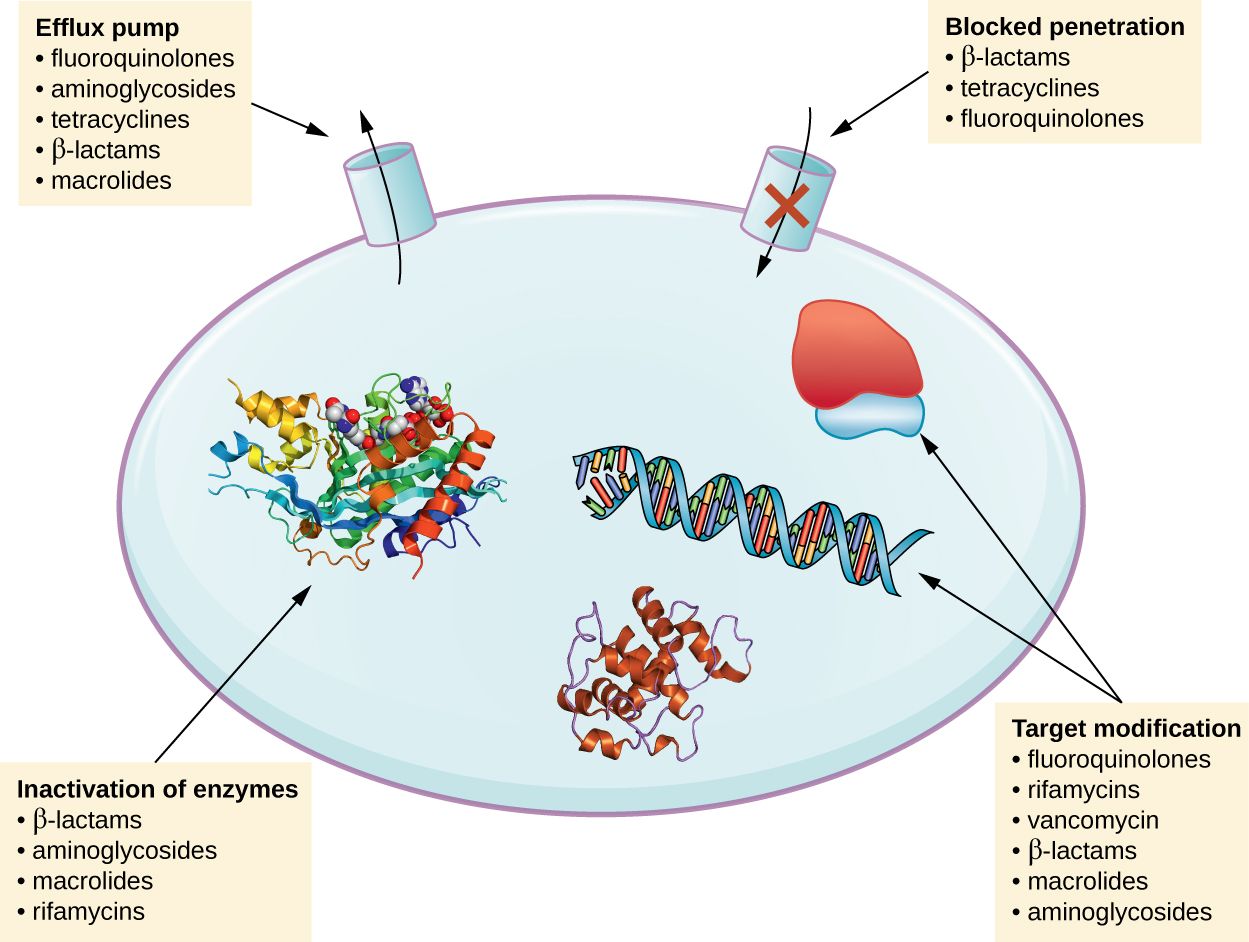
The mechanisms themselves come in four shapes, and you can read them straight off the resistance figure. Enzymatic inactivation — beta-lactamases chew open the beta-lactam ring; extended-spectrum beta-lactamases (ESBLs) chew a wider menu; carbapenemases chew even carbapenems. Target modification — MRSA's mecA gene builds an altered penicillin-binding protein (PBP2a) that ordinary beta-lactams cannot grip; VRE's vanA gene rebuilds the wall precursor so that its terminal D-alanine-D-alanine becomes D-alanine-D-lactate, which vancomycin can no longer bind. Efflux pumps bail the drug back out before it works. Reduced permeability shuts the porin doors so the drug never gets in.
The organisms you will meet
MRSA is Staphylococcus aureus that has become immune to the entire traditional beta-lactam class at once — not just methicillin — because PBP2a ignores penicillins, cephalosporins, and carbapenems alike. That single gene knocks out the safest, cheapest drugs you had and forces a move to vancomycin, linezolid, daptomycin, or ceftaroline — the one beta-lactam specifically engineered to bind PBP2a anyway. VRE pushes further, defeating the drug we reached for when MRSA appeared. ESBL-producing gram-negatives push therapy toward carbapenems; CRE defeat the carbapenems and leave a genuinely thin bench. And C. difficile, while not a resistance mechanism itself, is the price of collateral damage: the antibiotic wipes out the gut community and C. diff blooms in the vacancy.
Stewardship and the nurse
Antimicrobial stewardship is the coordinated effort to use these drugs only when needed, and then in the right drug, dose, route, and duration. It is often described as a pharmacy-and-physician program, which badly understates the nurse's role — the nurse is the person who actually gets the culture, notices the report, gives the dose, and hears the patient's story.
Concretely: get the cultures before the first dose. Take a real allergy history — "penicillin gave me an upset stomach at age six" is not an allergy, and roughly 9 in 10 people labeled penicillin-allergic are not, so that label costs them broader, more toxic, more expensive drugs for decades. Flag day 3: is the culture back, and is the patient still on the broad empiric drug? Push the IV-to-PO switch when the patient is eating and stable (linezolid, fluoroquinolones, metronidazole, doxycycline, and fluconazole are all essentially fully absorbed orally). Question the duration — evidence keeps shortening courses. Teach the patient that antibiotics do nothing for a cold, that leftovers are not to be saved or shared, and that the prescribed course should be taken as directed rather than stopped the moment they feel better. And do the unglamorous thing that prevents more resistant infections than any drug decision: wash your hands.
| Organism | Resistance mechanism | Treatment options | Nursing alert |
|---|---|---|---|
| MRSA | mecA → altered PBP2a; all traditional beta-lactams fail | vancomycin, linezolid, daptomycin, ceftaroline; TMP-SMX or doxycycline for skin | Contact precautions; nasal decolonization protocols; a standard cephalosporin such as cefazolin or ceftriaxone will not cover MRSA — ceftaroline is the lone exception |
| VRE | vanA/vanB → altered D-Ala-D-Ala binding site | linezolid, daptomycin | Contact precautions; survives on surfaces — dedicated equipment |
| ESBL gram-negatives | Extended-spectrum beta-lactamase inactivates penicillins/cephalosporins | Carbapenems (meropenem, ertapenem) | Escalation is appropriate here — a "susceptible" cephalosporin on the report may still fail |
| CRE | Carbapenemase (e.g., KPC) | ceftazidime-avibactam, meropenem-vaborbactam, sometimes colistin | Report to infection prevention; strict precautions; colistin is nephrotoxic |
| C. difficile | Not resistance — overgrowth after flora are destroyed | Oral vancomycin or fidaxomicin; fecal transplant for recurrence | Soap and water — alcohol gel does not kill spores; stop the offending antibiotic if possible; do not give antimotility agents |
- Antibiotics select for resistance rather than causing it; horizontal gene transfer spreads it between unrelated organisms.
- Four mechanisms: enzymes (beta-lactamase, ESBL, carbapenemase), target modification (MRSA's PBP2a, VRE's vanA), efflux pumps, reduced permeability.
- MRSA defeats every traditional beta-lactam at once — ceftaroline is the engineered exception; VRE defeats the drug we replaced it with; CRE leaves very few options.
- The nurse's stewardship work: cultures first, accurate allergy history, day-3 review, IV-to-PO, right duration, patient teaching, hand hygiene.
Section 4Antifungals and antivirals
Antifungals: a much smaller gap
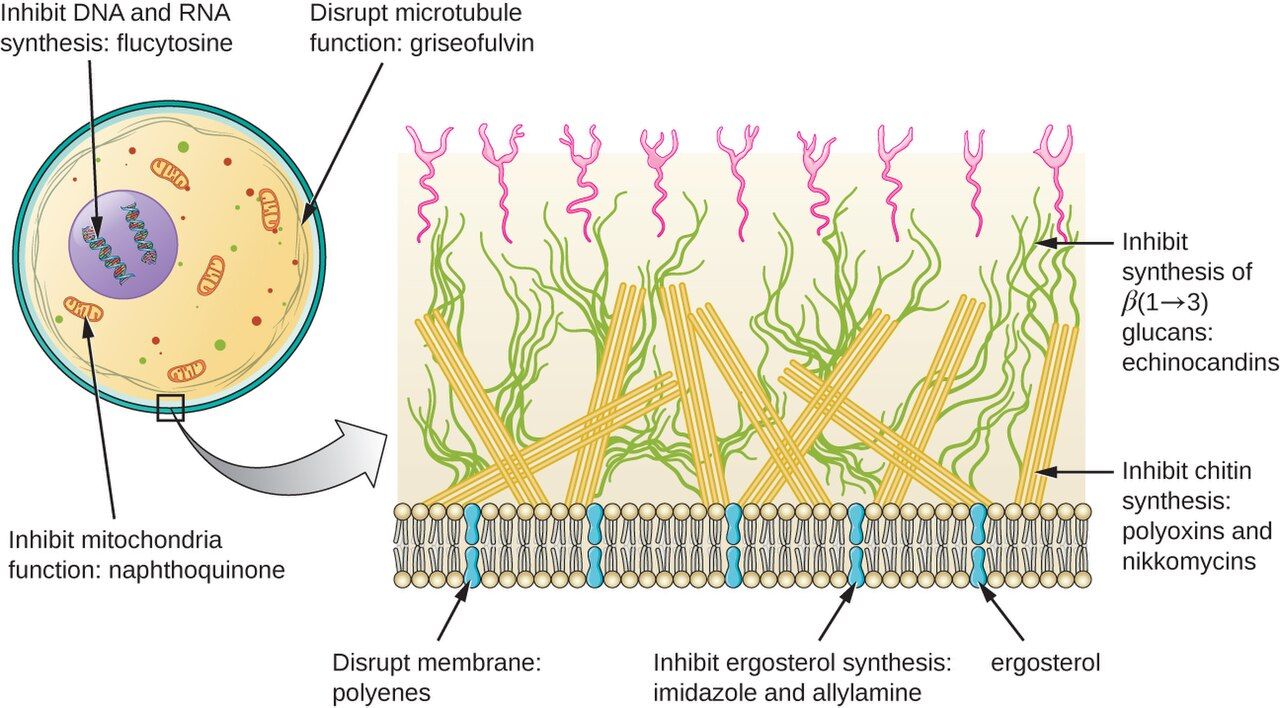
Fungi are eukaryotes. Their cells are built like yours — nucleus, 80S ribosomes, similar membranes — which means the pool of microbe-only targets is small and antifungal drugs are, as a group, markedly more toxic than antibacterials. Almost every antifungal exploits one of two genuine differences: fungal membranes use ergosterol where yours uses cholesterol, and fungal cell walls contain beta-(1,3)-D-glucan, which you do not make at all.
Amphotericin B (a polyene) binds ergosterol directly and rips pores in the membrane. It is powerful, and it is rough: infusion-related fevers, rigors, and shaking chills earned it the nickname "shake and bake," plus dose-limiting nephrotoxicity with potassium and magnesium wasting. Liposomal formulations are considerably gentler — and this is a genuine safety trap, because the conventional and liposomal doses are very different and are not interchangeable. Verify the formulation on the label against the order. The azoles (fluconazole, itraconazole, voriconazole, posaconazole, isavuconazole) block lanosterol 14-alpha-demethylase, the enzyme that makes ergosterol; they are the mainstay of oral therapy but bring hepatotoxicity, QT prolongation, and heavy CYP450 interactions with warfarin and statins. Voriconazole adds a distinctive transient visual disturbance — blurred or bright-tinged vision — and photosensitivity. The echinocandins (caspofungin, micafungin, anidulafungin) attack the beta-glucan wall, a target humans simply do not have, and are correspondingly well tolerated; they are first-line for invasive candidemia but are IV-only. Terbinafine treats nail and skin fungus over long courses — monitor liver function and warn about taste changes. Nystatin is topical: swish and swallow for thrush, and teach the patient to hold it in the mouth before swallowing.
Antivirals: the narrowest gap of all
A virus replicates using your cellular machinery, so there is almost nothing to attack that is not also yours. Antivirals work by targeting the handful of enzymes the virus brings itself — a viral polymerase, a protease, an integrase, a neuraminidase. They also suppress rather than cure most of the time, and they are time-sensitive: the earlier the start, the more the drug can do — though in severe or high-risk illness a late start is still worth making.
Acyclovir and its better-absorbed prodrug valacyclovir treat herpes simplex and varicella-zoster. The elegance is in the activation: acyclovir must be phosphorylated by viral thymidine kinase before it works, so it is essentially inert in an uninfected cell. IV acyclovir crystallizes in renal tubules, so hydrate the patient well and infuse over at least an hour. Ganciclovir and valganciclovir handle CMV and are bone-marrow suppressive. Oseltamivir blocks influenza neuraminidase and gives its greatest benefit when started within about 48 hours of symptom onset in uncomplicated outpatient flu; hospitalized, severe, progressive, or high-risk patients are treated no matter how long symptoms have lasted. For HIV, antiretroviral therapy combines drug classes — NRTIs (tenofovir, emtricitabine, abacavir), NNRTIs (efavirenz), protease inhibitors (usually boosted with ritonavir), and integrase inhibitors (dolutegravir, bictegravir), which are now first-line. Two nursing points dominate: abacavir requires HLA-B*5701 screening before the first dose because a positive result predicts a potentially fatal hypersensitivity reaction, and adherence is not a soft outcome — missed doses let the virus mutate into resistance. Hepatitis C is now curable in most patients with 8–12 weeks of direct-acting antivirals such as sofosbuvir-based or glecaprevir-pibrentasvir regimens; screen for hepatitis B first, since these drugs can reactivate it.
| Class | Prototype | Target | Nursing alert |
|---|---|---|---|
| Polyene | amphotericin B | Binds ergosterol → membrane pores | "Shake and bake" — premedicate per order; nephrotoxic; monitor K+ and Mg2+, creatinine; conventional vs. liposomal doses are not interchangeable |
| Azoles | fluconazole, voriconazole | Blocks ergosterol synthesis | Hepatotoxic (LFTs); QT prolongation; big CYP interactions — check warfarin and statins; voriconazole: visual changes, photosensitivity |
| Echinocandins | micafungin, caspofungin | Blocks beta-(1,3)-D-glucan wall synthesis | Best tolerated antifungal; IV only; first-line for invasive candidemia; infusion-site reactions |
| Allylamine | terbinafine | Blocks squalene epoxidase | Long courses for nails; baseline and periodic LFTs; taste and smell disturbance |
| Topical polyene | nystatin | Same as amphotericin, applied locally | Swish and swallow for thrush; hold in mouth, no food/drink 30 min after; treat the denture too |
| Anti-herpes | acyclovir, valacyclovir | Guanosine analog activated by viral thymidine kinase | Hydrate — IV form crystallizes in the kidney; infuse over ≥1 h; start within 72 h of a shingles rash — still indicated later if new lesions are forming or the patient is immunocompromised |
| Anti-CMV | ganciclovir, valganciclovir | Inhibits CMV DNA polymerase | Myelosuppression — monitor CBC; hazardous drug handling |
| Neuraminidase inhibitor | oseltamivir | Traps influenza virions on the host cell | Start within ~48 h of symptoms for maximum benefit — but treat hospitalized, severe, or high-risk patients at any point in the illness; nausea — take with food; not a substitute for the vaccine |
| NRTI | tenofovir, abacavir | Faulty nucleoside terminates viral DNA | HLA-B*5701 test before abacavir — hypersensitivity can be fatal; tenofovir: renal function and bone density |
| Integrase inhibitor | dolutegravir, bictegravir | Blocks integration into host DNA | First-line, well tolerated; weight gain; separate from antacids/calcium; adherence is everything |
| Protease inhibitor | ritonavir-boosted regimens | Blocks viral protein maturation | Ritonavir is a potent CYP3A4 inhibitor — screen every other medication; metabolic effects |
| HCV direct-acting | sofosbuvir-based, glecaprevir-pibrentasvir | Blocks the HCV NS3/4A protease, NS5A, or NS5B polymerase — regimens combine two targets | Cures >95% in 8–12 weeks; screen for hepatitis B — risk of HBV reactivation |
- Fungi are eukaryotes, so antifungals are more toxic; the real targets are ergosterol and beta-glucan.
- Amphotericin B = rigors and nephrotoxicity; azoles = liver, QT, CYP interactions; echinocandins = safest, IV only.
- Antivirals hit viral-only enzymes, mostly suppress rather than cure, and are time-dependent — earliest is best, but severe or high-risk illness is treated at any point.
- Hydrate for IV acyclovir; screen HLA-B*5701 before abacavir; ART adherence prevents resistance.
Section 5Antiparasitics and nursing care
Antiprotozoals
Protozoa are eukaryotes too, so once again the safety margin is narrow and the drugs are chosen around the parasite's life stage rather than just its name. Malaria is the clearest example. Artemisinin-based combination therapy (artemether-lumefantrine) is first-line for uncomplicated P. falciparum and should be taken with fatty food, which dramatically improves absorption. Atovaquone-proguanil and doxycycline serve for prophylaxis; chloroquine still works where resistance is absent, and long-term use risks irreversible retinopathy. The critical piece is the dormant liver form, the hypnozoite, of P. vivax and P. ovale: treating the blood stage alone leaves it in place and the patient relapses months later. Clearing it requires primaquine or tafenoquine — and both cause severe hemolysis in G6PD deficiency, so screen G6PD before the dose, without exception.
Beyond malaria, metronidazole or tinidazole covers giardiasis, amebiasis, and trichomoniasis. For trichomoniasis, treat the partner too or the patient simply gets it back — and reinforce the alcohol warning, since these are the drugs behind the disulfiram-like reaction. Nitazoxanide covers Giardia and Cryptosporidium. TMP-SMX remains the drug of choice for Pneumocystis pneumonia (an organism reclassified as a fungus but still taught alongside this group), with pentamidine as an alternative that can cause severe hypoglycemia followed by hyperglycemia.
Anthelmintics
Worms are animals, and the drugs against them are mostly aimed at neuromuscular or cytoskeletal machinery the worm depends on. Albendazole and mebendazole block the worm's microtubule assembly, starving it; albendazole is absorbed far better with a fatty meal. Ivermectin opens glutamate-gated chloride channels, paralyzing the parasite — mammals have no such channels at all, and the blood-brain barrier keeps the drug away from the similar channels in the human CNS — it treats strongyloidiasis, onchocerciasis, and scabies. Praziquantel makes the tegument of flukes and tapeworms leak calcium, causing paralysis; take with food and warn about dizziness. Pyrantel pamoate is the over-the-counter pinworm option.
The teaching matters as much as the drug. Pinworm is a household diagnosis: treat all household members, repeat the dose in two weeks to catch newly hatched eggs, wash bed linens and underwear in hot water, cut and scrub fingernails, and collect the diagnostic tape test first thing in the morning before bathing. That set of instructions prevents more reinfection than any second prescription.
Nursing care that applies to every antimicrobial
Strip away the class differences and the same nursing spine holds up all of it. Before: take a real allergy history, get the culture, check renal and hepatic function against the drug and the dose, review interactions, and confirm pregnancy status where it matters. During: give doses on schedule and evenly spaced around the clock so blood levels stay above the MIC — a "late" antibiotic is not a trivial late medication. Stay with the patient for the first dose of anything new. Draw troughs immediately before the next dose and peaks at the specified interval after it, and chart the exact times, because a level drawn at the wrong moment is worse than no level at all: it will be acted upon. After: watch for the response you expect (fever curve, white count, the wound), for the toxicity you were warned about (creatinine, CBC, LFTs, hearing, tendons, QT), and for the superinfection you invited — new diarrhea, white patches in the mouth, vaginal itching.
| Nursing action | Why | Watch for |
|---|---|---|
| Real allergy history | "Rash" vs. "throat closed" are different drugs and different risks | Mislabeled penicillin allergy pushing the patient to broader, more toxic therapy |
| Cultures before first dose | One dose can sterilize the specimen and cost the organism's name | In sepsis: draw fast, but antibiotics still go in within the hour |
| Check creatinine and LFTs | Most antimicrobials are renally cleared or hepatically metabolized | Rising creatinine on vancomycin, gentamicin, amphotericin B, colistin |
| Even, around-the-clock dosing | Keeps concentration above the MIC between doses | Clustered or missed doses — a real cause of treatment failure |
| Correct level timing | Trough immediately before the next dose; peak at the specified time after | Mis-timed levels lead to wrong dose changes — chart exact draw times |
| Stay for the first dose | Anaphylaxis usually shows itself within 30 min | Flushing, itching, wheeze, throat tightness, drop in BP |
| Assess for superinfection | Antibiotics destroy the protective normal flora | New diarrhea (C. diff), oral white plaques, vaginal itching |
| Teach the course | Adherence prevents relapse and resistance | Stopping early when they feel better; saving or sharing leftovers |
| Teach the specific warning | Every class has one that changes daily life | Sun (doxycycline, TMP-SMX), alcohol (metronidazole), orange fluids (rifampin), tendon pain (fluoroquinolones) |
- Antimalarials are chosen by life stage; hypnozoite clearance needs primaquine/tafenoquine — screen G6PD first.
- Metronidazole covers giardiasis, amebiasis, trichomoniasis — treat the partner, no alcohol.
- Albendazole/mebendazole (microtubules), ivermectin (chloride channels), praziquantel (calcium influx); pinworm needs household treatment plus a repeat dose in two weeks.
- Universal nursing spine: allergy history, culture first, organ function, on-time evenly spaced dosing, correct level timing, watch for toxicity and superinfection, teach the course.
The chapter in one breath
- Selective toxicity makes antimicrobials possible; where microbe and host overlap, toxicity appears — which is why antifungals and antivirals are rougher than antibacterials.
- Narrow-spectrum is the goal, broad-spectrum is a temporary guess; bactericidal drugs are required when the immune system cannot help.
- C&S names the organism and reports the MIC; empiric therapy bridges the wait and must then be de-escalated.
- Antibacterials sort by mechanism: cell wall (beta-lactams, vancomycin), protein synthesis (30S: aminoglycosides, tetracyclines; 50S: macrolides, clindamycin, linezolid), nucleic acid (fluoroquinolones, rifampin, metronidazole), metabolic (TMP-SMX).
- Antibiotics select for resistance; enzymes, target modification, efflux, and reduced permeability produce MRSA, VRE, ESBL, and CRE.
- Stewardship is nursing work: cultures first, honest allergy history, day-3 review, IV-to-PO, right duration, teaching, and hand hygiene.
- Antifungals target ergosterol and beta-glucan; antivirals target viral-only enzymes, suppress rather than cure, and work best started early — though severe and high-risk patients are treated whenever they present.
- Across every antimicrobial, the nurse monitors organ function and levels, times doses evenly, watches for superinfection, and teaches the one warning that class carries.
ReferenceWords worth knowing
The vocabulary of antimicrobial therapy — skim it now, then come back whenever a term on a culture report or a drug label stops you.
- Aminoglycoside
- A bactericidal class (gentamicin, tobramycin, amikacin) that binds the 30S ribosomal subunit; nephrotoxic and ototoxic, requiring peak and trough monitoring.
- Anthelmintic
- A drug that kills or expels parasitic worms, e.g., albendazole, ivermectin, praziquantel.
- Antimicrobial stewardship
- The coordinated effort to use antimicrobials only when indicated, and then in the right drug, dose, route, and duration.
- Bactericidal
- Kills bacteria outright; required when host defenses are unavailable (endocarditis, meningitis, neutropenia).
- Bacteriostatic
- Inhibits bacterial replication and relies on the immune system to clear the organism.
- Beta-lactam
- Any drug built around the beta-lactam ring — penicillins, cephalosporins, carbapenems, and the monobactam aztreonam — that blocks cell wall cross-linking.
- Beta-lactamase
- A bacterial enzyme that inactivates beta-lactam drugs by opening the ring; extended-spectrum forms (ESBLs) inactivate a much wider range.
- Broad-spectrum
- Active against a wide range of organisms; useful empirically but destroys normal flora and drives resistance.
- Culture and sensitivity (C&S)
- A laboratory test that identifies the organism and reports which drugs inhibit it, with susceptible/intermediate/resistant interpretations.
- De-escalation
- Narrowing therapy from an empiric broad-spectrum drug to a targeted one once the culture and sensitivity result returns.
- Empiric therapy
- Treatment started before results are available, based on the likely organisms for that site and patient.
- Ergosterol
- The sterol in fungal cell membranes (humans use cholesterol); the target of polyenes and the azoles' synthesis pathway.
- Methicillin-resistant Staphylococcus aureus (MRSA)
- S. aureus carrying mecA, which builds an altered penicillin-binding protein (PBP2a) so that every traditional beta-lactam fails at once; the anti-MRSA cephalosporins ceftaroline (and ceftobiprole) are engineered to bind PBP2a and remain active.
- Minimum inhibitory concentration (MIC)
- The lowest drug concentration that prevents visible growth of an organism in vitro.
- Narrow-spectrum
- Active against a limited range of organisms; the goal once the pathogen is identified.
- Nephrotoxicity
- Drug-induced kidney injury; a signature risk of vancomycin, aminoglycosides, amphotericin B, and colistin.
- Ototoxicity
- Drug-induced damage to hearing or balance, classically from aminoglycosides; may be permanent, so report tinnitus or vertigo at once.
- Peak and trough
- Serum drug levels drawn at the expected maximum (peak) and immediately before the next dose (trough) to keep therapy effective and non-toxic.
- Prophylaxis
- Giving an antimicrobial to prevent infection rather than treat it, e.g., cefazolin within 60 minutes before surgical incision.
- Selective toxicity
- Harming the microbe while sparing the patient by attacking a structure the microbe has and human cells lack.
- Superinfection
- A new infection that appears during antimicrobial therapy because the protective normal flora were destroyed, e.g., C. difficile colitis or thrush.
- Vancomycin-resistant Enterococcus (VRE)
- Enterococcus that has altered the D-alanine binding site vancomycin depends on; usually treated with linezolid or daptomycin.