Nutrition Through the Lifespan
Nutrient needs are not a fixed target you hit once and then forget. They move under you your whole life. Think of four bodies. One is building a second body. One is doubling its birth weight in six months. One is adding half its adult skeleton in four years. One is holding on to muscle at eighty. All four are solving different problems with the same set of nutrients. This chapter walks that path: pregnancy, breastfeeding and infancy, childhood, the teen years, and older adulthood. At each stage, the body's workings show which nutrients get tight. Those tight nutrients tell you what a sensible eating pattern looks like. All the way through, the focus is on what the evidence really supports. And it describes bodies and foods without judging either one.
By the end of this chapter you can
- Explain why advice on gestational weight gain, the weight gained in pregnancy, differs by BMI before pregnancy, and what the added weight is made of.
- Give the folate and iron advice for pregnancy with units and group, and explain the timing problem that makes folate before pregnancy matter.
- List the foods and substances to avoid in pregnancy, and give the reason for each.
- Describe what is in human milk, the nutrients that need attention in infancy, and how infant formula is designed and safely made.
- Spot when a baby is ready for complementary foods, and sum up current evidence on giving common allergy-causing foods.
- Explain why appetite drops and swings in toddlers, and use a division of responsibility approach to feeding.
- Link the teen growth spurt to peak calcium and iron needs, and describe ways to talk with teens about food and bodies that do not focus on weight.
- Explain why nutrient density becomes the central issue for older adults, and name the nutrients most often short.
Section 1Pregnancy
Energy, weight gain, and what the gain is made of
Pregnancy is one of the most demanding states a human body goes through for nutrition. Yet the energy cost is smaller than most people expect. In the United States, the extra energy needed is about zero in the first trimester. It is about +340 kcal/day in the second and about +452 kcal/day in the third. That is a snack and a half, not a second dinner. The old phrase "eating for two" greatly overstates the calories. It also understates the part that really changes. The need for certain nutrients climbs much faster than the need for energy. That is exactly why nutrient density matters more here than amount.
Weight gain in pregnancy is not a side effect. It is the physical stuff of the pregnancy. Only a small share of it is the fetus, the growing baby. The rest is the placenta, the fluid around the baby (amniotic fluid), a larger uterus and breast tissue, more blood, more fluid between cells, and fat stores laid down to support breastfeeding. The healthiest amount of gain depends on where a person started. So the advice is set by BMI before pregnancy. These ranges come from watching studies that link weight gain to results such as early birth, birth weight and cesarean delivery, birth by surgery. They are advice for whole populations, for a clinician to fit to each person. They are not a moral scorecard. Gaining too little and gaining too much both carry risk.
| BMI before pregnancy | Advised total gain (one baby) | About how much per week, 2nd & 3rd trimester |
|---|---|---|
| Under 18.5 | 28 to 40 lb (12.5 to 18 kg) | ~1 lb (0.51 kg) |
| 18.5 to 24.9 | 25 to 35 lb (11.5 to 16 kg) | ~1 lb (0.42 kg) |
| 25.0 to 29.9 | 15 to 25 lb (7 to 11.5 kg) | ~0.6 lb (0.28 kg) |
| 30.0 and above | 11 to 20 lb (5 to 9 kg) | ~0.5 lb (0.22 kg) |
Protein needs rise from the general adult RDA of 0.8 g/kg/day to about 1.1 g/kg/day in pregnancy. That is about 25 g/day more. Most normal eating patterns meet it easily, including well-planned vegetarian and vegan ones.
Folate and iron: the two that get tight
Two nutrients lead pregnancy advice. Both have large rises in need and real harm when short. Folate is needed to build DNA and divide cells. So it is under the most strain wherever cells divide fastest. Its best-known role is helping close the neural tube, which becomes the brain and spinal cord. This closing happens by about 28 days after conception. That is often before a person knows they are pregnant. That timing is the whole reason for getting folate before pregnancy. The evidence here is unusually strong. Randomized controlled trials in the late 1980s and early 1990s showed that folic acid around the time of conception greatly lowers neural tube defects. These include spina bifida, an open spine, and anencephaly, where much of the brain and skull does not form. Many countries then made it a rule to add folic acid to enriched grains.
Note the two forms. Folate is the natural form in leafy greens, legumes, citrus and liver. Folic acid is the man-made form used in supplements and fortified foods, and it is absorbed better. Advice is given in dietary folate equivalents (DFE) to put the two on one scale. The RDA is 400 µg DFE/day for adults who are not pregnant, 600 µg DFE/day in pregnancy and 500 µg DFE/day in breastfeeding. On top of that, public health advice says anyone who could become pregnant should get 400 µg/day of folic acid from fortified food or a supplement, in addition to food folate. The Tolerable Upper Intake Level of 1,000 µg/day applies only to man-made folic acid, not to folate from food. The worry is that a lot of folic acid can fix the anemia of vitamin B12 deficiency while the nerve damage quietly goes on.
Iron is the second pressure point. During pregnancy, plasma volume grows by about 50%. The number of red cells grows by a smaller share. By simple math, that lowers the concentration of hemoglobin. This is the normal, expected physiologic hemodilution of pregnancy. It is a dilution effect. On its own it is not a deficiency. Still, true iron-deficiency anemia is also common, and it is linked to early birth and low birth weight. The iron RDA rises from 18 mg/day for women aged 19 to 50 who are not pregnant (and 8 mg/day for adult men and women past menopause) to 27 mg/day in pregnancy. Few eating patterns close that gap without a supplement. That is why prenatal vitamins usually carry iron. Heme iron from meat, poultry and fish is absorbed several times better than non-heme iron from plants and supplements. Vitamin C eaten in the same meal clearly helps non-heme absorption. The tannins in tea and coffee and the phytates in whole grains and legumes lower it.
| Nutrient | Adult female, not pregnant (19 to 50) | Pregnancy | Breastfeeding | Why it changes |
|---|---|---|---|---|
| Folate | 400 µg DFE | 600 µg DFE | 500 µg DFE | Fast cell division; neural tube closing |
| Iron | 18 mg | 27 mg | 9 mg | More red cells, placenta, the baby's own stores |
| Iodine | 150 µg | 220 µg | 290 µg | The baby's thyroid hormone and brain growth |
| Choline (AI) | 425 mg | 450 mg | 550 mg | Membrane phospholipids, brain growth |
| Calcium | 1,000 mg | 1,000 mg: no change | 1,000 mg | The gut absorbs about twice as well instead |
The calcium row surprises people. Pregnancy does not raise the calcium RDA for adults, because the gut sharply boosts calcium absorption on its own. (For pregnant teens aged 14 to 18, calcium stays at the higher teen value of 1,300 mg/day, because they are still building their own skeleton.)
What to avoid, and why
Lists of foods to avoid get passed around a lot. They are often longer than the evidence supports. So it helps to know the real reason behind each item. Three groups explain nearly all of it. Teratogens are things that cause birth defects. Foodborne pathogens are germs carried in food. Bioaccumulated toxicants are poisons that build up in the food chain.
| Avoid or limit | Why | Strength of evidence |
|---|---|---|
| Alcohol | A teratogen that crosses the placenta freely; causes fetal alcohol spectrum disorders | Strong: no safe amount has been found |
| High-mercury fish (shark, swordfish, king mackerel, tilefish, bigeye tuna) | Methylmercury builds up and harms the growing brain | Strong |
| Unpasteurized milk, soft cheeses from raw milk, deli meats, smoked seafood, raw sprouts | Listeria monocytogenes; pregnancy makes infection many times more likely, and it crosses the placenta | Strong |
| Raw or undercooked eggs, meat, shellfish | Salmonella, Toxoplasma, Campylobacter | Strong |
| High-dose preformed vitamin A (retinol pills, retinoid medicines, eating liver very often) | Causes birth defects above the UL of 3,000 µg RAE/day preformed vitamin A; beta-carotene is not a concern | Strong |
| Caffeine above ~200 mg/day (about one 12 oz coffee) | Crosses the placenta; the baby clears it slowly | Moderate: from watching studies with mixed-up factors; advice is to be safe |
Unpasteurized means not heated to kill germs. Notice the other side of the fish advice. Most fish are encouraged in pregnancy, not discouraged. Low-mercury choices such as salmon, sardines, tilapia, cod and canned light tuna supply omega-3 fats, including DHA. The balance of evidence favors eating them. U.S. advice suggests about 8 to 12 oz per week of low-mercury seafood. Evidence that DHA pills improve a child's brain development is mixed and should be called early. Evidence that they lower very early births a little is somewhat stronger, but still not settled.
- Extra energy is modest (0 / +340 / +452 kcal/day by trimester). Extra nutrient needs are much larger by comparison.
- Pregnancy weight gain ranges are set by BMI before pregnancy. The gain is mostly placenta, fluid, blood and tissue, not just the baby.
- Folate 600 µg DFE/day in pregnancy, plus 400 µg/day folic acid before pregnancy. Iron 27 mg/day, compared with 18 mg/day when not pregnant.
- Lists of things to avoid come down to three reasons: teratogens, foodborne germs and poisons that build up. Most seafood is encouraged, not avoided.
Section 2Lactation and infancy
Lactation: an energy cost on the order of late pregnancy
Making milk costs a lot of energy. It is about the same as the third trimester, not far above it. A person with a full milk supply makes about 750 to 800 mL/day in the first six months. That sends out about 500 kcal/day as milk. The extra energy needed is about +330 kcal/day in the first six months. That is the full cost minus about 170 kcal/day expected from using fat stored during pregnancy. It is about +400 kcal/day in the second six months, when no such fat use is counted. Compare those with the +452 kcal/day of the third trimester. The honest summary is that late pregnancy and breastfeeding sit in the same range. But several vitamin and mineral needs truly peak here, not in pregnancy. Vitamin A rises to 1,300 µg RAE/day and iodine to 290 µg/day. One need goes down sharply. Iron falls to 9 mg/day for breastfeeding adults, lower than the 18 mg/day starting point, because periods usually stop for a while. Fluid needs rise with milk output, and thirst is a fair guide.
Human milk has about 65 to 70 kcal per 100 mL. Per 100 mL it has about 7 g lactose, 3.5 to 4.5 g fat and about 1 g protein. Fat gives 9 kcal/g, while carbohydrate and protein each give 4 kcal/g (and alcohol gives 7 kcal/g). So that small amount of fat supplies close to half the total energy. Infancy is the one life stage where a high-fat diet is clearly the right one for the body. The first milk, called colostrum, is small in amount but rich in protein and in secretory IgA, an antibody that guards the gut lining. Human milk also contains human milk oligosaccharides (HMOs). The baby cannot digest them at all. They exist to feed good bacteria called Bifidobacterium in the baby's gut. It is a neat case of a food part whose target is not the eater.
The advice is to feed only breast milk for about the first six months. Then keep breastfeeding alongside other foods through at least twelve months, and longer if both parent and child want to. Watching studies steadily and strongly show fewer gut and chest infections in babies. Claims about long-term IQ and chronic disease are weaker. They are heavily mixed up with family income and similar factors, and should be stated with care. Two supplements are standard in infancy. Vitamin K is given at birth to prevent vitamin K deficiency bleeding. Vitamin D 400 IU/day is given to babies who are fed all or partly breast milk. Human milk is truly low in vitamin D, no matter how well the breastfeeding parent eats.
Formula, and feeding without judgment
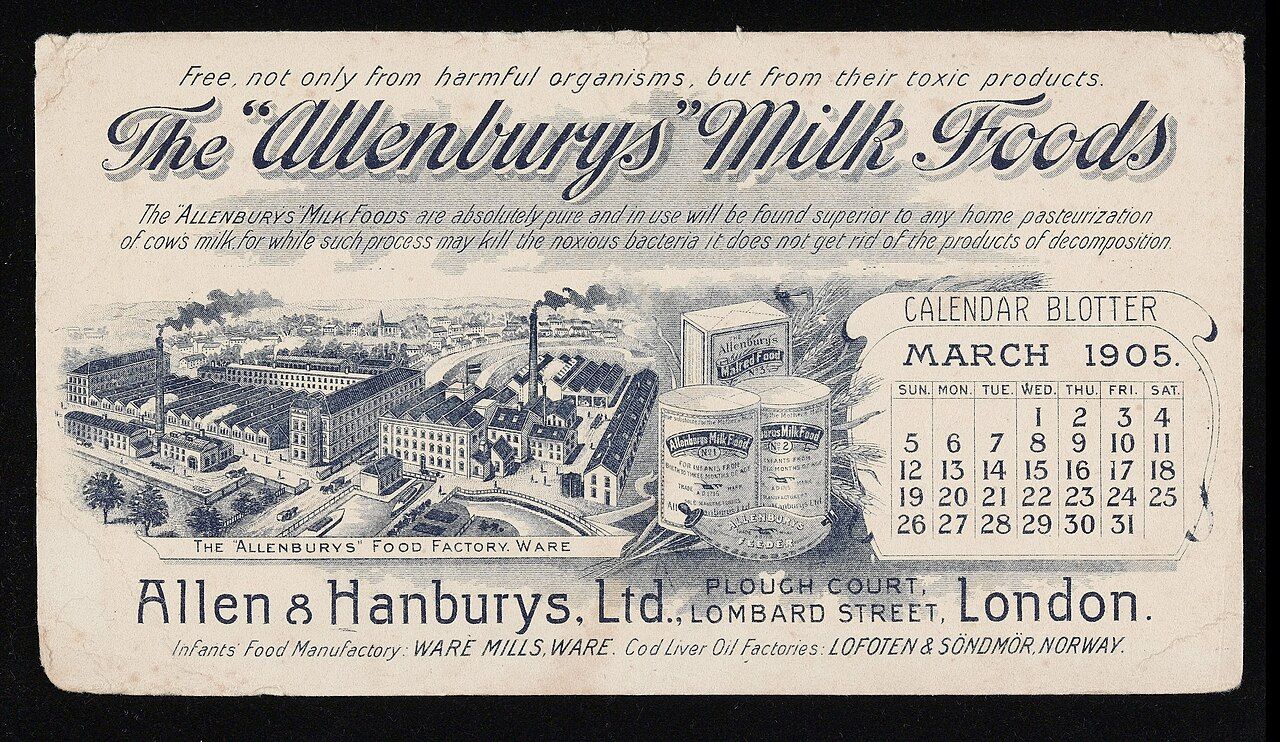
Store-bought infant formula is a regulated food designed to match the nutrients in human milk. In the United States, the Infant Formula Act sets what goes in it. Standard iron-fortified formula based on cow's milk is the right default for babies who are not fed only breast milk. Special formulas exist for certain medical needs: soy-based, extensively hydrolyzed (with protein broken into small pieces), and amino-acid-based. They are not upgrades for typical babies. Formula feeding is a safe, complete way to feed a baby. Saying otherwise adds guilt without adding nutrition.
The safety issues in formula feeding are almost all about how it is made, and they are serious. Formula must be mixed exactly as the label says. Adding extra water to stretch a can causes water poisoning and low blood sodium (hyponatremia), because a baby's kidneys cannot get rid of a large load of extra water. It also means too little energy. Homemade formula recipes have put babies in the hospital with salt and mineral imbalances and nutrient shortages. They should never be used. Powdered formula is not sterile, or germ-free. So advice for very young or medically fragile babies may call for hot water or ready-to-feed liquid.
| Feature | Human milk | Standard iron-fortified formula |
|---|---|---|
| Energy | ~65 to 70 kcal/100 mL | ~67 kcal/100 mL (20 kcal/oz) |
| Type of protein | Mostly whey; changes over time | Cow's milk protein, adjusted to more whey |
| Iron | Small amount but very well absorbed | Added; absorbed less well, so more is added |
| Vitamin D | Low: supplement advised | Added to meet needs |
| Immune factors | Secretory IgA, lactoferrin, live cells, HMOs | Not copied |
| Makeup | Changes by feed, time of day and baby's age | The same every time |
Introducing solids
Babies grow faster in the first year than they ever will again. Birth weight about doubles by 4 to 6 months and triples by 12 months. Their energy needs per kilogram show it. They start near 100 kcal/kg/day and ease toward 80 kcal/kg/day by the first birthday. A typical adult needs about 30 to 35 kcal/kg/day. Milk alone stops covering this around six months. The nutrient that runs out first is iron. A baby born at full term has iron stores that last about 4 to 6 months. That is the body reason that other foods start when they do, and the reason iron-rich first foods are stressed.
Being ready depends on development, not the calendar. Look for a baby who can sit with support and hold the head steady. Look for the fading of the extrusion reflex, the automatic tongue push that pushes a spoon back out. And look for real interest in reaching for food. Offer single new foods a few days apart. Move to thicker textures as mouth skills grow. Some firm rules belong in every talk about feeding babies. No honey before 12 months: spores of the germ Clostridium botulinum can grow in the young gut and cause infant botulism, a serious illness. No cow's milk as a main drink before 12 months: it has too little iron, puts too much load on the kidneys, and can cause hidden blood loss in the gut. No juice in the first year. And watch closely for choking risks, such as whole grapes, nuts, popcorn and hot dogs cut into coin shapes.
Advice on allergens, foods that commonly cause allergies, has truly flipped. It is worth knowing exactly. For years, waiting to give peanut, egg and other allergens was standard advice. Then came the LEAP randomized trial, published in 2015. It found that giving peanut early, between about 4 and 11 months, greatly lowered peanut allergy in high-risk babies. This is strong, randomized evidence. Guidelines now advise giving common allergens in the first year instead of waiting. Babies with severe eczema (an itchy skin rash) or a known food allergy should get medical advice first.
- Breastfeeding adds about +330 kcal/day (0 to 6 mo) and +400 kcal/day (7 to 12 mo). That is about the same as the third trimester's +452, not far above it. Iron needs drop to 9 mg/day, while vitamin A and iodine reach their peak for the whole lifespan.
- Fat supplies about half of human milk's energy at 9 kcal/g. HMOs feed the baby's gut bacteria, not the baby.
- Standard supplements in infancy: vitamin K at birth and vitamin D 400 IU/day for breastfed babies. Formula is a safe, complete choice when made exactly as the label says.
- Other foods start around 6 months, when iron stores run down. Give common allergens early instead of waiting, and never give honey before 12 months.
Section 3Childhood
Growth slows, and so does appetite
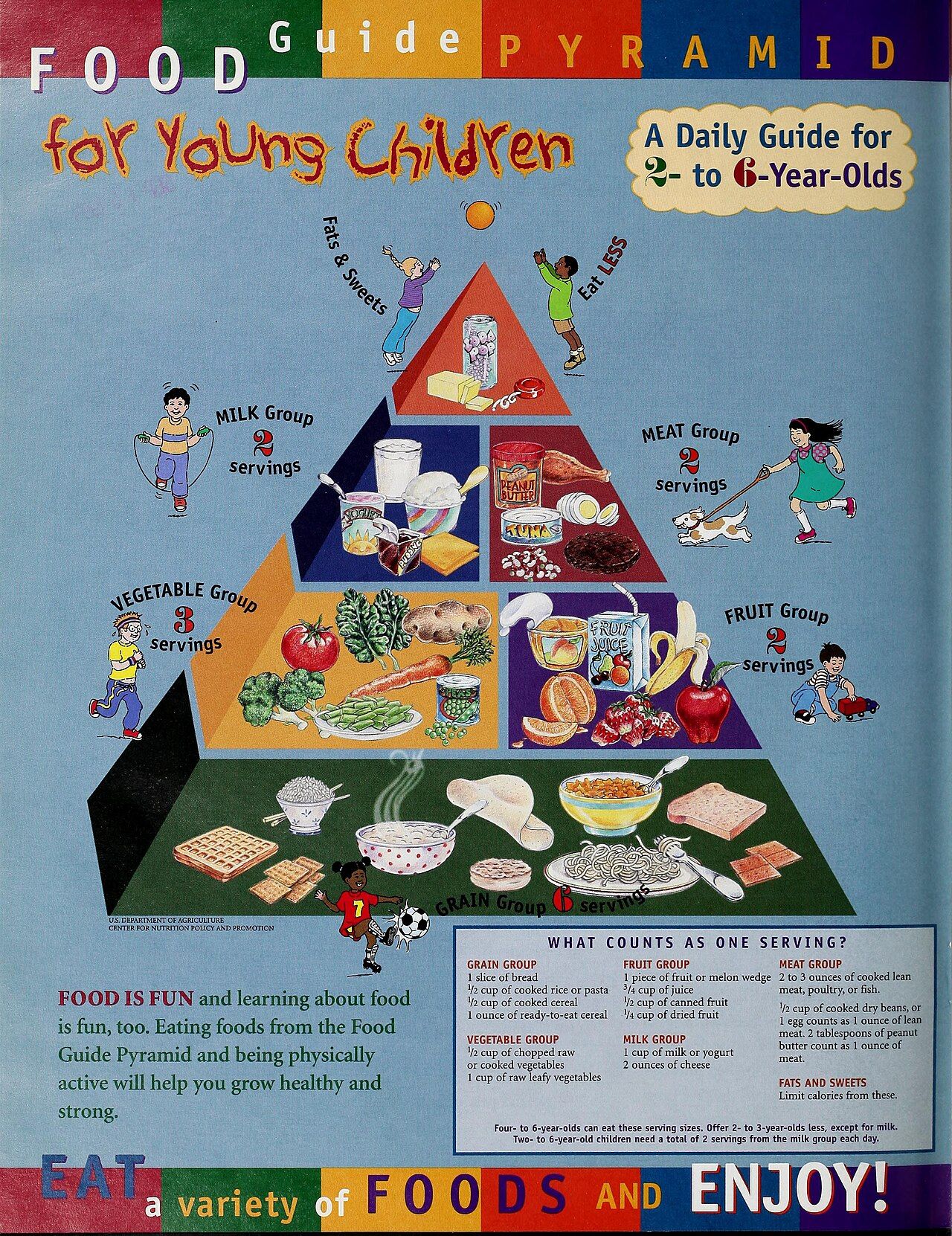
After the first birthday, growth slows down a lot. A toddler who gained about 7 kg in the first year gains only about 2 to 3 kg per year after that. Preschoolers grow about 7 to 8 cm per year. School-age children grow about 5 to 6 cm per year. Appetite follows growth, so it drops too. This normal drop is sometimes called the physiologic anorexia of toddlerhood, a natural fall in toddler appetite. It causes a huge amount of needless worry. A child who ate everything at eleven months and picks at dinner at eighteen months is usually not sick, not stubborn and not underfed. They are just growing more slowly.
What young children eat also swings wildly from day to day, while staying very steady across a week. A toddler may eat almost nothing at dinner and then eat a huge breakfast. Judge intake over five to seven days, not one meal. The more reliable sign is the growth chart. WHO charts are used from birth to two years. CDC charts are used from two to twenty years. What matters is whether a child is following their own usual curve, not which percentile that curve is on. A child who stays at the 15th percentile is doing fine. A child who drops from the 75th to the 25th needs a closer look.
| Nutrient | Ages 1 to 3 | Ages 4 to 8 | Ages 9 to 13 | Note |
|---|---|---|---|---|
| Protein (RDA) | 1.05 g/kg | 0.95 g/kg | 0.95 g/kg | Higher per kg than the adult 0.8 g/kg |
| Calcium (RDA) | 700 mg | 1,000 mg | 1,300 mg | Rises steeply as bone building speeds up |
| Iron (RDA) | 7 mg | 10 mg | 8 mg | Toddlers are a peak-risk group for deficiency |
| Vitamin D (RDA) | 600 IU (15 µg) | 600 IU (15 µg) | 600 IU (15 µg) | The same from age 1 through 70 |
| Fiber (AI) | 19 g | 25 g | 26 to 31 g | About 14 g per 1,000 kcal at every age |
Iron deficiency needs a special warning at this age. When cow's milk becomes a child's main drink, it pushes out iron-rich foods. It adds almost no iron itself. It can also cause small blood losses in the gut. Together these cause microcytic hypochromic anemia, with small, pale red cells, in a toddler who looks well fed. Iron deficiency in early childhood is linked to slower development of thinking and movement skills. Some of that does not seem to fully reverse when iron is given later. That is why children are screened for it instead of waiting.
Building habits without turning meals into a battle
Food neophobia means not wanting to try new foods. It starts around age two and peaks between about two and six. It is a normal stage of growing up. It may even protect children, since toddlers can walk around before they are sensible. It also fades with plain, repeated exposure. A child often needs eight to fifteen or more calm, no-pressure tries before accepting a food. So "she doesn't like broccoli" after three tries is too early a conclusion.
What steadily backfires is pressure. Studies of child feeding, both experiments and long-term studies, keep finding the same things. Pushing a child to eat a food makes them like it less. Using a disliked food to earn a liked one ("two more bites of peas and you get dessert") lowers the value of the peas and raises the value of dessert. That is the exact opposite of what was meant. Strictly limiting certain foods tends to make a child more interested in them, and they eat more when they get the chance. The practical choice is widely taught as the division of responsibility. It splits the job. Caregivers decide what food is offered, when and where. The child decides whether to eat and how much. This keeps the child's own hunger and fullness signals working. Those signals are the control system you want to keep healthy for the next eighty years.
- Growth and appetite both slow sharply after age one. The drop is normal, and intake should be judged over a week, not one meal.
- Track a child's own growth curve over time, not a single percentile.
- Too much cow's milk pushing out iron-rich foods is a leading cause of iron-deficiency anemia in toddlers.
- Fear of new foods fades with repeated calm tries. Pressure and food as a reward lower liking, while the division of responsibility keeps self-control working.
Section 4Adolescence
The growth spurt is a construction project
The teen years bring the second-fastest growth of life. Teens add about 15 to 20% of their adult height. More important for nutrition, they add close to half of their adult bone mass in these years. Peak height velocity, the fastest growth, comes around ages 11 to 12 in girls and 13 to 14 in boys. In that peak year, teens grow about 8 to 10 cm. Lean tissue, blood volume and organ size all grow along with height. Energy needs at this time vary a lot from teen to teen. They depend far more on growth stage and activity than on age. That makes fixed calorie targets unhelpful, and appetite a better guide than math.
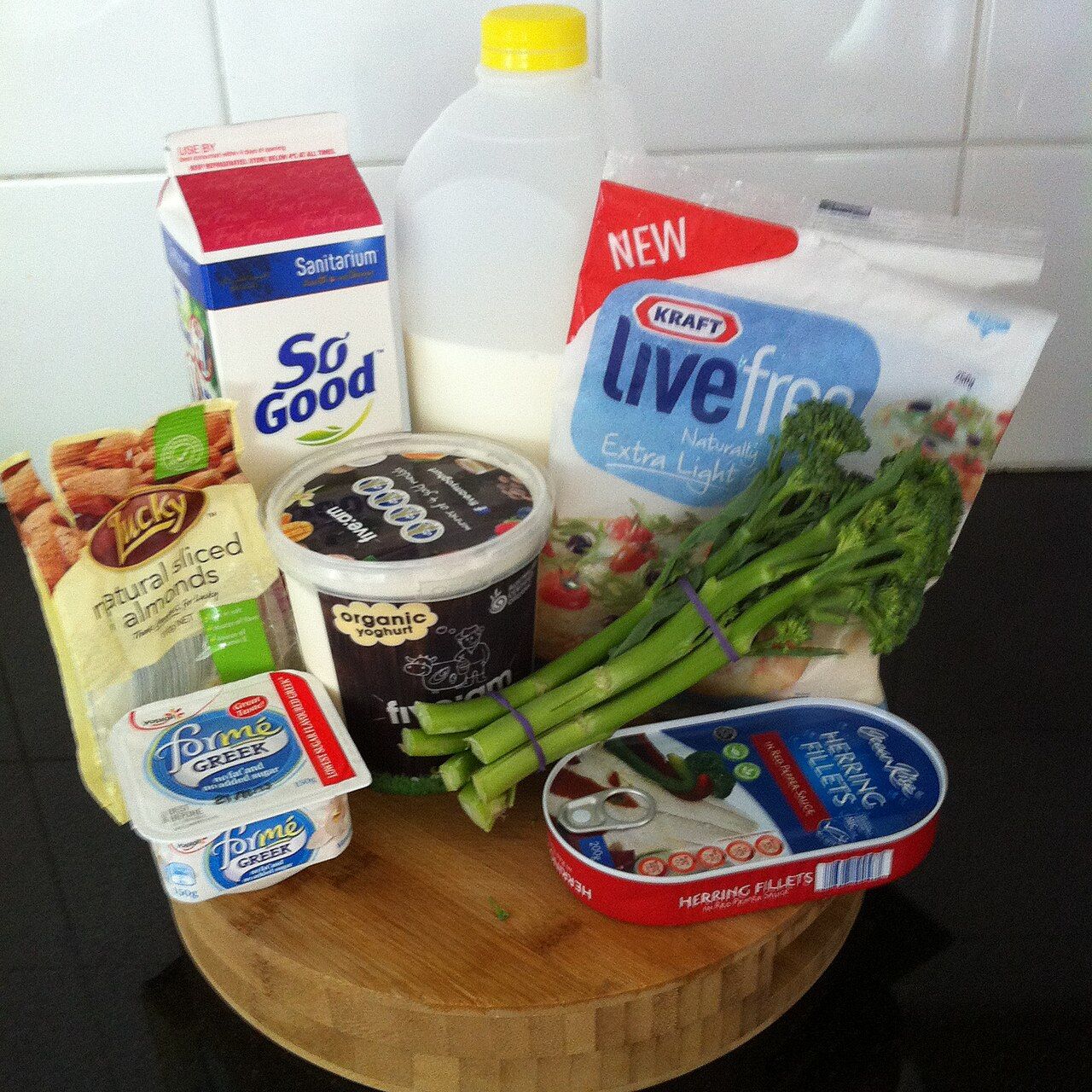
The bone story is the one to stress, because it has a deadline. About 90% of peak bone mass is built by about age 18 to 20. The peak itself comes in the mid to late twenties. After that, the skeleton mostly just holds on and slowly declines. So calcium intake and weight-bearing activity in the teen years, such as running and jumping, affect the risk of broken bones fifty years later. And the window does not open again. That is why the calcium RDA is 1,300 mg/day for ages 9 to 18 in both sexes. It is the highest of any life stage, higher than in pregnancy. It is paired with 600 IU (15 µg)/day of vitamin D. Surveys keep finding that teens eat less calcium than that, especially girls.
Iron needs rise in both sexes, for different reasons. That makes a useful contrast. In males, growing lean tissue and blood volume drive the rise, and it eases once growth is done. In females, periods begin, and the higher need lasts through the years of having periods. Hence the split RDA at ages 14 to 18: 11 mg/day for males and 15 mg/day for females. Zinc, needed for growth and sexual maturing, also splits, at 11 mg/day and 9 mg/day.
| Nutrient | Ages 9 to 13 (both) | Ages 14 to 18 male | Ages 14 to 18 female | Driver |
|---|---|---|---|---|
| Calcium | 1,300 mg | 1,300 mg | 1,300 mg | Peak bone building |
| Vitamin D | 600 IU (15 µg) | 600 IU (15 µg) | 600 IU (15 µg) | Calcium absorption, bone hardening |
| Iron | 8 mg | 11 mg | 15 mg | Lean tissue and blood volume; period losses |
| Zinc | 8 mg | 11 mg | 9 mg | Growth and sexual maturing |
| Protein | 0.95 g/kg | 0.85 g/kg | 0.85 g/kg | Fast building of lean tissue |
Body image, and how not to make it worse
The teen years are also when unhappiness with one's body and disordered eating most often begin. That gives anyone teaching nutrition to teens real influence, for good or for harm. The evidence on this is steadier than people expect. Long-term studies find that adults' talk about weight, teasing about weight, and pushing teens to control their weight are linked to more disordered eating. They do not improve healthy habits. Talk that focuses on habits instead of bodies does not carry the same risk. Examples are eating regularly, eating enough, moving in ways you enjoy and sleeping.
Two things follow in practice. First, words that do not focus on weight are not just polite. They are the choice better supported by the evidence on results. That evidence is mostly from long-term watching studies, but it points the same way unusually often. Describe what nutrients do and what foods contain. Drop the language of "good" and "bad" foods, "guilt-free," "earning" dessert and "cheat meals." The moral framing is what does the harm, and it does not improve what teens eat. Second, know that this age group is where not eating enough is a common and often missed problem. In active teens, low energy availability, not eating enough to cover both training and growth, is linked to missed periods, weaker bone building, stress fractures (small cracks in bone from overuse) and poor recovery. The link to energy availability is well supported. The wider ways of describing the illness are still changing. Ongoing food restriction, strict food rules, distress after eating, or loss of periods are signs to bring in a trained clinician. They are not something to teach around.
- Teens add 15 to 20% of adult height and about half their adult bone mass. Energy needs differ from teen to teen and do not follow a formula.
- Calcium 1,300 mg/day (ages 9 to 18) is the highest of any life stage. About 90% of peak bone mass is set by age 18 to 20.
- The iron RDA splits at 14 to 18: 11 mg/day male, 15 mg/day female. Different body reasons, same nutrient.
- Talk about weight and teasing about weight predict disordered eating. Talk that focuses on habits, not weight, is both kinder and better supported.
Section 5Older adults

Fewer calories, the same or more of everything else
The key nutrition feature of later life is a split. Energy needs fall. Lean tissue shrinks, resting metabolic rate follows it down, and activity usually drops. Meanwhile, needs for most vitamins and minerals stay the same, and several actually rise. Less food comes in, yet the same or more nutrients are needed from it. That squeeze is why nutrient density, the amount of nutrient per calorie, becomes the central idea of this life stage. It is no longer just one idea among many.
Several DRIs change at 51 and again at 71. The pattern is worth learning as a group, not one at a time.
| Nutrient | Adults 19 to 50 | Ages 51 to 70 | Over 70 | Reason |
|---|---|---|---|---|
| Vitamin D | 600 IU (15 µg) | 600 IU (15 µg) | 800 IU (20 µg) | Skin makes less; less time in the sun |
| Calcium | 1,000 mg | 1,000 mg men / 1,200 mg women | 1,200 mg both | Faster bone loss after menopause |
| Vitamin B6 | 1.3 mg | 1.7 mg men / 1.5 mg women | Same | The body uses it less well |
| Vitamin B12 | 2.4 µg | 2.4 µg from fortified food or a supplement | Same | Atrophic gastritis blocks B12 bound in food |
| Fiber (AI) | 38 g men / 25 g women | 30 g men / 21 g women | Same | Follows lower energy intake |
| Water (AI, total) | 3.7 L men / 2.7 L women | No change | No change | The need is the same; the feeling of thirst is not |
The B12 row is the one that trips people up, so read it carefully. The amount does not change, but the advised source does. About 10 to 30% of older adults develop atrophic gastritis, a thinning of the stomach lining. They make too little stomach acid and pepsin to free B12 from the protein that holds it in food. The free (crystalline) B12 in fortified cereals and supplements is not bound to protein, so it is absorbed normally. That is why the DRI clearly advises adults over 50 to get most of their B12 from those sources. Untreated deficiency causes megaloblastic (macrocytic) anemia. It also causes nerve problems: tingling or numbness (paresthesias), trouble walking and changes in thinking. The nerve damage can become permanent. This is also where the folic acid warning from Section 1 comes back. A lot of folic acid can make the blood count look normal while the nerve damage moves on unseen.
Muscle is the other big story. Sarcopenia is the loss of muscle mass and function that comes with age. It starts quietly around age thirty and speeds up after sixty. It is one of the strongest nutrition-related causes of falls, broken bones and loss of independence. The protein RDA stays at 0.8 g/kg/day at all adult ages. But several expert groups argue this is too low for older adults. They suggest about 1.0 to 1.2 g/kg/day. Be exact about what that number is. It comes from expert agreement and reasoning about how the body works. It is not a new DRI, and the trials are not all positive. What is well proven is that protein works far better together with strength exercise than alone. Spreading protein across meals, instead of packing it into dinner, also likely works better.
Appetite, access, and the practical work
Appetite often drops with age. This is sometimes called the anorexia of aging, and its causes pile up. The stomach empties more slowly, and fullness hormones change, so fullness comes sooner and lasts longer. Taste and smell get weaker, so eating is less rewarding. Tooth problems, dry mouth and trouble swallowing (dysphagia) make eating hard work. Many common medicines change taste or cause nausea. And causes outside the body matter at least as much. These include eating alone after losing a spouse, depression, being less able to shop and cook, and not having enough food on a fixed income.
One medical point is worth stating plainly. In older adults, weight loss that was not planned is a warning sign, not a win. It usually means losing muscle along with fat. It is linked to worse outcomes: falls, slow healing, infection and death. Weight loss in an older adult that has no clear reason belongs in front of a clinician. It should not be praised.
The steps that follow are simple and they work. Put protein in every meal, not just dinner. Use lots of flavor, such as herbs, sour flavors like vinegar or lemon, and onion and garlic, to make up for weaker taste without leaning on salt. Choose textures that match chewing and swallowing ability, instead of giving up whole food groups. Offer smaller, more frequent meals when feeling full early is the problem. Keep drinks in sight and offer them on a schedule, since thirst cannot be trusted. Add fluid when adding fiber. And treat group meal programs, meals delivered to the home and grocery help as real nutrition care. Eating with other people reliably raises how much people eat. That makes company itself a nutrition factor.
- Energy needs fall while vitamin and mineral needs hold or rise. That makes nutrient density the central concern of later life.
- Needs that rise: vitamin D 800 IU/day after 70, calcium 1,200 mg/day, vitamin B6. B12 stays at 2.4 µg, but it should come from fortified food or a supplement.
- Sarcopenia drives falls and lost independence. Expert groups suggest 1.0 to 1.2 g/kg/day protein with strength exercise, above the RDA of 0.8 g/kg/day. That is expert agreement, not a new DRI.
- Appetite loss has many causes, thirst cannot be trusted, and weight loss that was not planned is a red flag in older adults.
The chapter in one breath
- Pregnancy adds modest energy (0 / +340 / +452 kcal/day by trimester) but sharply higher nutrient needs. Weight gain ranges are set by BMI before pregnancy. They describe outcomes, not virtue.
- Folate (600 µg DFE/day in pregnancy, plus 400 µg/day folic acid before pregnancy) protects the closing of the neural tube. That happens by day 28, often before a pregnancy is known.
- Iron rises to 27 mg/day in pregnancy. Plasma volume grows too, which also causes normal hemodilution. Advice on what to avoid comes down to teratogens, germs and poisons that build up.
- Breastfeeding costs about as much energy as late pregnancy (+330 to +400 kcal/day, against about 500 kcal/day sent out as milk). Human milk gets about half its energy from fat at 9 kcal/g, and its HMOs feed the baby's gut bacteria instead of the baby.
- Infancy needs vitamin D supplements during breastfeeding, iron-rich other foods from about six months, no honey before twelve months, and early instead of delayed allergen introduction.
- Childhood growth and appetite both slow. Judge intake across a week and track the child's own growth curve. Pressure and food as a reward lower liking, while calm repeated tries build it.
- The teen years store nearly all peak bone mass. That makes calcium 1,300 mg/day the highest of any life stage. It is also the age when talk about weight does measurable harm.
- Older adults need fewer calories but as many or more nutrients, so nutrient density rules. Watch the B12 source, vitamin D, calcium, protein against sarcopenia, and thirst and appetite that cannot be trusted.
ReferenceWords worth knowing
A quick list of the terms in this chapter. Skim it now, or come back whenever a word trips you up.
- Anorexia of aging
- The drop in appetite common in later life. It has many causes: slower stomach emptying, changes in fullness signals, weaker taste and smell, tooth and swallowing problems, medicines, and life and social factors.
- Colostrum
- The first milk made after birth. It is small in amount, high in protein and secretory IgA, and lower in fat and lactose than later milk.
- Complementary foods
- Foods other than human milk or formula, started around six months of age to add to milk feeding, not to replace it.
- Dietary folate equivalents (DFE)
- The unit used for folate advice. It adjusts for the better absorption of man-made folic acid compared with folate found naturally in food.
- Division of responsibility
- A feeding approach in which the caregiver decides what food is offered, when and where, while the child decides whether to eat and how much.
- Exclusive breastfeeding
- Feeding a baby only human milk, with no other drinks or foods except prescribed supplements such as vitamin D. It is advised for about the first six months.
- Extrusion reflex
- A baby's automatic tongue push that pushes solid food out of the mouth. When it fades, that is one sign of being ready for other foods.
- Food neophobia
- Not wanting to try new foods. It starts around age two and peaks between two and six. It usually fades with repeated calm tries.
- Gestational weight gain
- The total weight gained in pregnancy. It is made of the baby, placenta, amniotic fluid, uterus and breast tissue, extra blood and fluid, and fat stores. Advised ranges are set by BMI before pregnancy.
- Heme iron
- Iron held in hemoglobin and myoglobin in meat, poultry and fish. It is absorbed several times better than non-heme iron and is less affected by blockers in food.
- Human milk oligosaccharides (HMOs)
- Complex carbohydrates in human milk that the baby cannot digest. They act as prebiotics, food for good bacteria, and mainly feed Bifidobacterium in the baby's gut.
- Neural tube defect
- A birth defect such as spina bifida or anencephaly. It comes from the neural tube not closing fully by about day 28 after conception. Folic acid around conception greatly lowers the risk.
- Non-heme iron
- Iron from plant foods, eggs, fortified foods and supplements. It is absorbed less well. Vitamin C helps its absorption. Phytates, polyphenols and calcium taken in the same meal block it.
- Nutrient density
- How many essential nutrients a food gives for its energy. It is the key idea when energy needs fall but nutrient needs do not.
- Peak bone mass
- The most bone mineral a person ever reaches. About 90% of it is built by age 18 to 20, and the peak comes in the mid to late twenties.
- Peak height velocity
- The time of fastest growth in height during the teen growth spurt, usually around ages 11 to 12 in girls and 13 to 14 in boys.
- Physiologic hemodilution of pregnancy
- The expected drop in hemoglobin concentration when plasma volume grows by about 50% while red cells grow by less. It is a dilution effect, not the same as true iron-deficiency anemia.
- Sarcopenia
- The loss of muscle mass and function that comes with age. It starts in the thirties and speeds up after sixty. It is a major cause of falls, broken bones and loss of independence.
- Teratogen
- Something that causes defects in a growing baby before birth. Examples linked to diet are alcohol, methylmercury and high-dose preformed vitamin A.
- Weaning
- The slow change from feeding a baby only milk to eating family foods. It takes months. It is not a single event.
Check yourself
Want the longer wording? Read this chapter in the full textbook.