Minerals & Water
Everything you have studied so far burns. Carbohydrate and protein give 4 kilocalories per gram, fat gives 9 and alcohol gives 7. Minerals and water do not burn. They give zero kilocalories per gram. Yet nothing in the body works without them. There would be no heartbeat, no nerve signal, no bone, no thyroid hormone and no oxygen delivery. Minerals are simple elements that are not organic. The body cannot make them and cannot destroy them. So they must come in with food and leave in urine, sweat and stool. Water is the setting where all of this happens. It is also the nutrient a person runs out of fastest. This chapter walks through the major minerals, the trace minerals and the special case of iron. Then it covers the fluid-and-electrolyte system that keeps blood pressure and cell size where they belong.
By the end of this chapter you can
- Tell major minerals from trace minerals, and explain why neither gives energy.
- Give the main job, a reference intake with its group and units, and the deficiency or toxicity picture for calcium, phosphorus, magnesium, sodium, potassium and chloride.
- Do the same for the trace minerals iron, zinc, iodine, selenium and fluoride.
- Explain bioavailability, and name foods and factors that help or block mineral absorption.
- Compare heme and nonheme iron, describe how absorption is controlled, and put in order the stages from empty stores to iron-deficiency anemia.
- Describe the jobs of body water, account for daily fluid balance, and give the Adequate Intake for total water by sex.
- Explain how the sodium-potassium pump, osmosis and hormones spread fluid between the body's compartments.
- Sum up what the evidence does and does not support about sodium, potassium and blood pressure, keeping strong findings apart from early ones.
Section 1Major minerals
What a mineral is, and what it is not
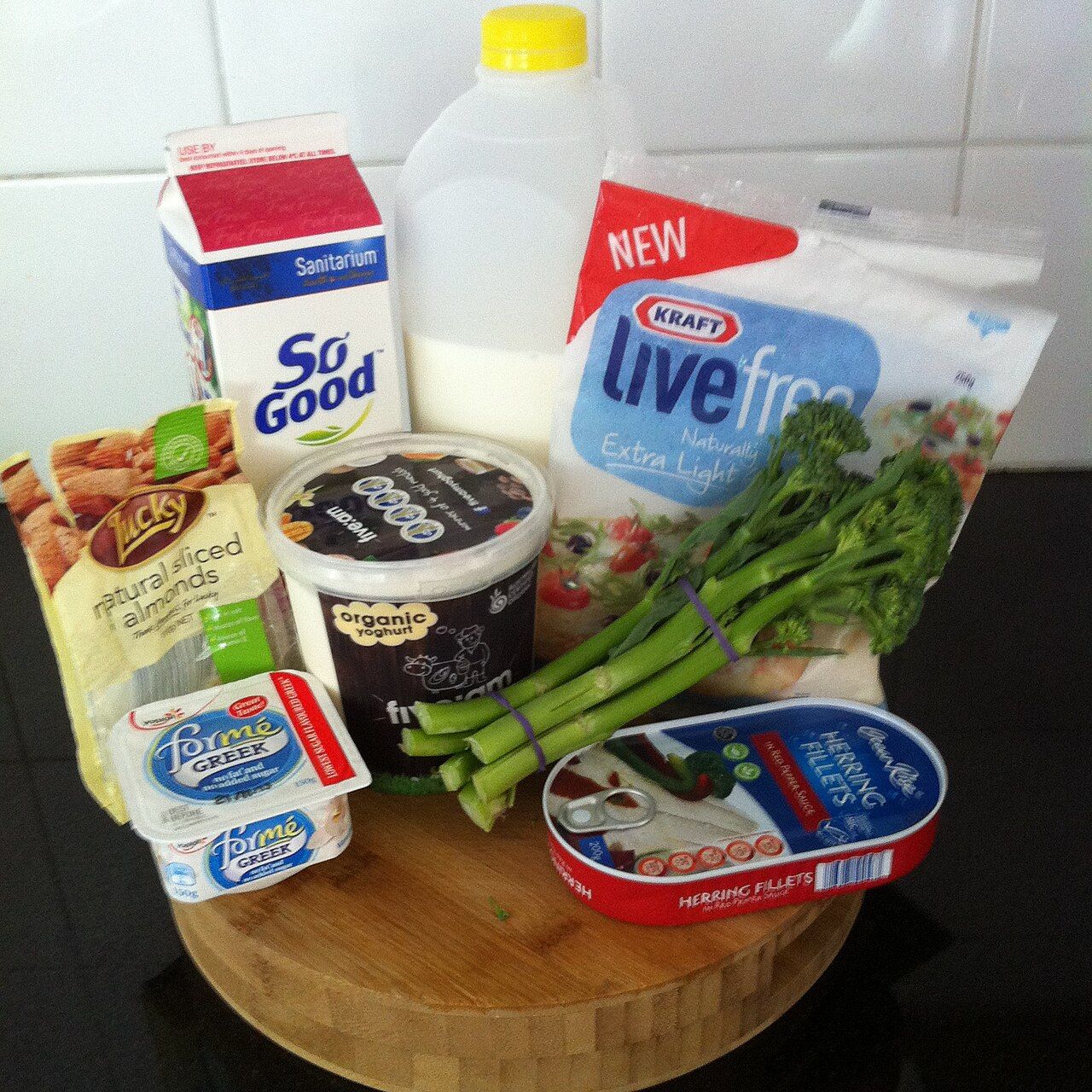
A mineral is a single element, such as calcium, iron or zinc, that the body needs but cannot make. It is inorganic, which means it is not a carbon compound built by living things. This makes minerals very different from the vitamins in the last chapter. A vitamin is a complex organic molecule. Heat, light, oxygen or long storage can destroy it. A mineral is an element. You cannot break calcium down into something that is not calcium. Minerals survive cooking, survive the oven and even survive being burned to ash. What they can do is dissolve. That is why boiling vegetables and pouring off the water sends potassium and magnesium down the drain.
Minerals are not burned for fuel. So they give 0 kcal per gram. Their value is in building and control. They build the crystal frame of bone. They carry electric charge across membranes. They sit at the working spot of enzymes. And they create the osmotic pressure, the pull of dissolved particles, that decides where water goes.
Nutrition experts split minerals by how much the body needs, not by how important they are. A major mineral, or macromineral, is needed in amounts of more than 100 mg per day. Or it is present in the body in amounts above about 5 grams. A trace mineral is needed in smaller amounts, often milligrams or micrograms. A trace mineral is not a minor mineral. Iodine need is measured in micrograms, yet a lack causes goiter and harms brain development.
The structural three: calcium, phosphorus, magnesium
Calcium is the most plentiful mineral in the body. About 99 percent of it is locked into bone and teeth as a crystal called hydroxyapatite. The other one percent flows in blood and sits inside cells. It does the exciting work: muscle squeezing, nerve signals, hormone release and blood clotting. The RDA is 1,000 mg per day for adults 19 to 50. It rises to 1,200 mg per day for women 51 and older and men 71 and older. It is highest of all in the teen years: 1,300 mg per day for ages 9 to 18, when the skeleton is being built. Pregnancy in adults does not raise the need. It stays at 1,000 mg for ages 19 to 50, because the body absorbs calcium better instead. Pregnant and breastfeeding teens stay at 1,300 mg. The Tolerable Upper Intake Level is 2,500 mg per day for adults 19 to 50 and 2,000 mg for adults 51 and older.
Phosphorus teams up with calcium in bone. But it is also in every molecule of ATP, the cell's energy carrier. It is in every phospholipid membrane and in the backbone of DNA and RNA. The RDA is 700 mg per day for adults and 1,250 mg per day for ages 9 to 18. A lack from diet is rare. Phosphorus is plentiful in foods with protein and in phosphate additives. The medical problem is more often the opposite: failing kidneys cannot clear phosphate.
Magnesium helps more than 300 enzymes. This includes every reaction that uses ATP, because ATP works in the body as a magnesium-ATP pair. About half of body magnesium is in bone. The RDA differs by sex and shifts at age 31. It is 400 mg per day for men 19 to 30 and 420 mg for men 31 and older. It is 310 mg for women 19 to 30 and 320 mg for women 31 and older. Pregnancy adds about 40 mg. Note one odd point. The UL of 350 mg per day applies only to magnesium from supplements, not to magnesium from food. It is set by the laxative effect of magnesium salts, not by any harm from food.
The salts of body fluid: sodium, potassium, chloride
These three are the body's main electrolytes. These are minerals that split into charged particles, called ions, when they dissolve. So they carry electricity, hold water in place and help keep the balance of acid and base. Sodium and chloride lead in the fluid outside cells. Potassium leads in the fluid inside them. These ions set the osmotic pressure. So they set blood volume, and so they set blood pressure. Section 5 takes that story further.
Their reference values are Adequate Intakes, not RDAs. The evidence was not strong enough to set an average requirement. For adults, the sodium AI is 1,500 mg per day. The chloride AI is 2,300 mg per day for ages 19 to 50, falling to 2,000 mg at 51 to 70 and 1,800 mg at 71 and older. The potassium AI is 3,400 mg per day for men 19 and older and 2,600 mg per day for women 19 and older, with 2,900 mg in pregnancy. In its 2019 review, the National Academies replaced the sodium UL with a Chronic Disease Risk Reduction Intake (CDRR) of 2,300 mg per day. This is a line above which eating less sodium is expected to lower the risk of chronic disease. The average intake in the United States is near 3,400 mg per day.
| Mineral | Adult reference intake | Main jobs | Food sources | Deficiency / excess |
|---|---|---|---|---|
| Calcium | RDA 1,000 mg/d (19 to 50); 1,200 mg/d (women 51+, men 71+); 1,300 mg/d (9 to 18) | Bone mineral; muscle squeezing; nerve signals; clotting | Dairy, fortified plant drinks, tofu set with calcium, kale, bok choy, canned fish with bones | Low intake over years → less peak bone mass, osteoporosis risk; very high supplement intake → too much blood calcium, kidney stones in some people |
| Phosphorus | RDA 700 mg/d | Bone; ATP; phospholipids; DNA/RNA; buffer | Protein foods, dairy, legumes, whole grains, phosphate additives | A lack from diet is rare; excess is a problem mainly in kidney disease |
| Magnesium | RDA 400/420 mg/d men (19 to 30 / 31+); 310/320 mg/d women | Helps 300+ enzymes; Mg-ATP; nerve and muscle work | Nuts, seeds, legumes, whole grains, leafy greens, some mineral waters | Severe lack → twitchy nerves and muscles, shaking, irregular heartbeat, low potassium and calcium that resist treatment; too much from supplements → diarrhea |
| Sodium | AI 1,500 mg/d; CDRR 2,300 mg/d | Main positive ion outside cells; fluid volume; nerve signals; helps carry nutrients into cells | Packaged and restaurant foods, breads, cured meats, cheese, table salt | A lack from diet is almost unknown; low blood sodium comes from losses or too much water; high intake raises blood pressure in salt-sensitive people |
| Potassium | AI 3,400 mg/d men; 2,600 mg/d women | Main positive ion inside cells; electric charge across membranes; heart rhythm | Potatoes, beans, lentils, bananas, oranges, tomatoes, yogurt, leafy greens, fish | Low potassium usually from vomiting, diarrhea or water pills → weakness, irregular heartbeat; high potassium is a risk in kidney disease |
| Chloride | AI 2,300 mg/d (19 to 50) | Negative ion outside cells; stomach acid; acid-base balance | Table salt and salted foods (comes with sodium) | Heavy vomiting → low chloride with too little acid in the blood (hypochloremic metabolic alkalosis) |
- Minerals are inorganic elements that give 0 kcal/g. Heat cannot destroy them, but they can leach into cooking water.
- Major minerals are needed in amounts above 100 mg/day: calcium, phosphorus, magnesium, sodium, potassium, chloride (plus sulfur).
- The calcium RDA is 1,000 mg/d for adults 19 to 50, 1,200 mg/d for women 51+ and men 71+, and 1,300 mg/d for ages 9 to 18.
- Sodium, potassium and chloride have Adequate Intakes, not RDAs. Sodium also has a CDRR of 2,300 mg/d.
Section 2Trace minerals
Small amounts, large consequences
Trace minerals are needed in milligram or microgram amounts. The total amount of some of them in an adult body would not cover a fingernail. Their small size fools people. Most trace minerals work as the working core of a protein. Iron sits in the heme group of hemoglobin. Zinc holds the shape of hundreds of transcription factors, proteins that turn genes on and off. Iodine is built right into thyroid hormone. Selenium is built in as a special amino acid, selenocysteine. It goes into an antioxidant enzyme called glutathione peroxidase and into the enzymes that turn on thyroid hormone. Remove a few micrograms and a whole hormone system stalls.
The working range is narrow. So trace minerals are also the group where the gap between "not enough" and "too much" is smallest. Selenium is the classic example. The RDA is 55 mcg per day for adults, and the UL is 400 mcg per day. That is barely seven times as much. (Here mcg means micrograms, the same as µg.) Some vitamins have a much wider margin. Vitamin E has an RDA of 15 mg against a UL of 1,000 mg. Others are tight too, such as niacin and folate. So the rule is not absolute. The point is that for most trace minerals there is very little room above the need.
Five worth knowing well
Iron carries oxygen in hemoglobin (in red blood cells) and myoglobin (in muscle). It also drives electron transport. Its RDA depends a lot on sex and life stage. It is 8 mg per day for men 19 and older, 18 mg per day for women 19 to 50, 8 mg per day for women 51 and older, and 27 mg per day in pregnancy. Section 3 is all about iron.
Zinc works in more than 300 enzymes. It also forms "zinc fingers," shapes that let transcription factors grip DNA. The RDA is 11 mg per day for men and 8 mg per day for women. It rises to 11 mg in pregnancy and 12 mg in breastfeeding. The UL is 40 mg per day. A lack shows up as poor growth in children, slow wound healing, a weak immune response, loss of taste, hair loss and a certain kind of rash. Taking high-dose zinc pills for a long time causes a copper deficiency. That is because zinc makes the gut build a protein that traps copper.
Iodine has one purpose: making thyroid hormone. The RDA is 150 mcg per day for adults, 220 mcg per day in pregnancy and 290 mcg per day in breastfeeding. The UL is 1,100 mcg per day for adults. A lack swells the thyroid into a goiter. It also causes hypothyroidism, too little thyroid hormone. A lack during pregnancy harms the baby's brain development. In the past it has been the leading preventable cause of intellectual disability around the world. Too much iodine can also upset the thyroid. So the risk curve is U-shaped: harm at both ends.
Selenium guards cells against damage from oxygen, through glutathione peroxidase. It also turns on thyroid hormone, through enzymes called deiodinases. The RDA is 55 mcg per day for adults (60 mcg in pregnancy, 70 mcg in breastfeeding), and the UL is 400 mcg per day. A lack happens in certain regions with selenium-poor soil. In parts of China it caused Keshan disease, a disease of the heart muscle. Toxicity, called selenosis, causes brittle nails, hair loss, breath that smells of garlic and stomach upset.
Fluoride is the odd one out. Life does not require it. But it clearly strengthens tooth enamel against acid that wears it away. The AI is 4 mg per day for men 19 and older and 3 mg per day for women. The UL is 10 mg per day for adults. The evidence that fluoride lowers tooth decay is strong and goes back a long way. Too much while adult teeth are forming causes dental fluorosis. This ranges from white flecks to brown mottling of the enamel. That is why fluoride intake in young children is watched closely.
Bioavailability: the label number is not the absorbed number
Bioavailability is the share of a nutrient you eat that is really absorbed and usable. For minerals it can swing hugely depending on what else is on the plate. Phytate (phytic acid) in whole grains, legumes, nuts and seeds grabs onto zinc, iron, calcium and magnesium. Oxalate in spinach, rhubarb and beet greens grabs calcium so tightly that spinach is a poor calcium source, even though its calcium number looks high on paper. Working the other way, vitamin C sharply raises nonheme iron absorption. Soaking, sprouting, fermenting and raising bread with yeast all lower phytate and raise mineral availability. That is a big part of why traditional ways of preparing food around the world use exactly those steps.
Minerals also compete. Large supplement doses of one mineral can crowd out another at shared carriers in the gut. Zinc competes with copper, calcium with iron, and iron with zinc. This competition comes from supplement doses. Normal mixed meals do not cause it.
| Trace mineral | Adult reference intake | Adult UL | Key role | Deficiency | Excess |
|---|---|---|---|---|---|
| Iron | RDA 8 mg/d men; 18 mg/d women 19 to 50; 8 mg/d women 51+; 27 mg/d pregnancy | 45 mg/d | Hemoglobin, myoglobin, electron transport | Empty stores → iron-deficiency anemia (small, pale red cells) | Hereditary hemochromatosis; a large overdose is a leading poisoning in young children |
| Zinc | RDA 11 mg/d men; 8 mg/d women; 11 mg/d pregnancy | 40 mg/d | 300+ enzymes; zinc-finger transcription factors; immune function | Poor growth, slow wound healing, weak immunity, taste loss, rash | Nausea; copper deficiency with long-term high doses |
| Iodine | RDA 150 mcg/d adults; 220 mcg/d pregnancy; 290 mcg/d breastfeeding | 1,100 mcg/d | Making thyroid hormone | Goiter, hypothyroidism; harm to the baby's brain development | Thyroid problems: the curve is U-shaped |
| Selenium | RDA 55 mcg/d adults; 60 mcg/d pregnancy; 70 mcg/d breastfeeding | 400 mcg/d | Glutathione peroxidase; turning on thyroid hormone | Keshan heart muscle disease in selenium-poor regions | Selenosis: brittle nails, hair loss, garlic breath |
| Fluoride | AI 4 mg/d men; 3 mg/d women | 10 mg/d | Strengthens enamel against acid | More tooth decay | Dental fluorosis while teeth form; bone fluorosis at very high long-term intakes |
Hereditary hemochromatosis, in the table, is an inherited condition in which the body absorbs and stores too much iron.
- Trace minerals are needed in mg or mcg amounts and usually work inside a certain protein: heme, a zinc finger, thyroid hormone, selenocysteine.
- The gap between deficiency and toxicity is narrow: selenium RDA 55 mcg/d versus UL 400 mcg/d.
- A lack of iodine causes goiter and, in pregnancy, harm to the baby's brain development. The need rises to 220 mcg/d in pregnancy.
- Bioavailability is changed by phytate, oxalate, vitamin C, food preparation and minerals competing at shared carriers.
Section 3Iron and anemia
Two forms of dietary iron
Iron comes in food in two forms with different chemistry. They act so differently that they are absorbed by separate routes. Heme iron is iron already held inside a ring-shaped molecule called a porphyrin. It comes from the hemoglobin and myoglobin of meat, poultry and fish. The gut cell takes it up whole and absorbs about 15 to 35 percent of it. That is efficient, and the rest of the meal barely affects it. Nonheme iron is free iron, not held in a ring. It is what you get from plants, eggs, dairy, and enriched or fortified grains. Its absorption ranges from about 2 to 20 percent. It is very sensitive to the rest of the meal.
Most iron in most diets is nonheme, even for people who eat meat. That is why the things that change its absorption matter so much. Vitamin C changes ferric iron into the ferrous form, which the gut absorbs. It also keeps the iron dissolved. A citrus fruit, tomatoes or peppers eaten with a bean dish can multiply the iron absorbed from it. Something in meat, poultry and fish also raises nonheme iron absorption from the same meal. It is still not fully understood. In the past it was called the MFP factor. Working the other way are phytates in whole grains and legumes, polyphenols and tannins (bitter plant compounds) in tea and coffee, large supplement doses of calcium, and oxalates. The DRI committee took this into account. They estimate that people who eat no meat, poultry or fish need about 1.8 times the standard RDA for iron.
Absorption is the control valve
Here is the fact that organizes all of iron's story: the body has no controlled way to get rid of iron. Small amounts are lost in shed skin and gut cells, in menstrual blood, and in any bleeding. But no hormone tells the kidney to dump extra iron. So iron balance is controlled almost entirely at the point of absorption.
The gatekeeper is a liver hormone called hepcidin. When the body has plenty of iron, or when there is inflammation, hepcidin rises. It grabs and breaks down ferroportin, the protein that lets iron out of gut cells and certain immune cells (macrophages). So absorbed iron stays trapped in the gut lining cell. It is lost when that cell is shed. When iron is scarce, hepcidin falls. Ferroportin stays, and more iron enters the blood. There, a carrier protein called transferrin brings it to the bone marrow, where red blood cells are made. Iron is stored as ferritin, mostly in the liver, spleen and marrow.
The same logic explains two medical facts. First, large doses of iron pills are poorly absorbed, and less and less well as the dose grows. A big dose briefly drives hepcidin up. Second, in long-lasting inflammatory disease, hepcidin stays high. Iron is locked away in storage even though the marrow needs it. This is the anemia of inflammation. It is a different problem from iron lacking in the diet, and it is not fixed the same way.
From depleted stores to anemia
Iron deficiency is not on or off. It builds up in stages, and anemia is the last one. That means a person can be truly low in iron with a completely normal hemoglobin.
| Stage | What is happening | What changes in the labs | Symptoms |
|---|---|---|---|
| 1. Empty stores | Ferritin stores are being used up | Blood ferritin falls; hemoglobin still normal | Usually none |
| 2. Early working shortage | Iron in transport drops; the marrow starts to run short | Transferrin saturation falls, total iron-binding capacity rises, erythrocyte protoporphyrin rises | Tiredness may start |
| 3. Iron-deficiency anemia | Red cells are made small and pale for lack of iron | Hemoglobin and hematocrit fall; MCV below about 80 fL (small cells), pale cells | Tiredness, pale skin, short of breath with effort, feeling cold, sometimes pica (craving non-food items such as ice or clay) |
Some lab terms in that table: transferrin saturation is how full the iron carrier is. Hematocrit is the share of blood made of red cells. MCV is the average size of red blood cells, measured in femtoliters (fL). Small cells are called microcytic, and pale cells are called hypochromic.
The groups at greatest risk follow straight from how iron works. They are people who menstruate, pregnancy (RDA 27 mg per day), infants and toddlers, teens in a growth spurt, frequent blood donors, people losing blood in the gut, and people who eat no meat, poultry or fish. Iron deficiency is still the most common single nutrient shortage in the world.
| Helps nonheme iron absorption | Blocks nonheme iron absorption |
|---|---|
| Vitamin C in the same meal | Phytates in whole grains, legumes, nuts, seeds |
| MFP factor from meat, poultry, fish | Polyphenols and tannins in tea, coffee, some herbs |
| Low body iron stores (low hepcidin) | High-dose calcium pills taken with the meal |
| Acid in the stomach | Oxalates; high-dose zinc pills; high hepcidin from inflammation |
- Heme iron (meat, poultry, fish) is absorbed at about 15 to 35 percent. Nonheme iron is absorbed at about 2 to 20 percent, and the meal changes it a lot.
- The body cannot control how much iron it gets rid of, so absorption is the control point. Hepcidin and ferroportin run it.
- Deficiency moves in steps: empty stores (low ferritin) → early working shortage → anemia with small, pale red cells.
- The iron RDA is 18 mg/d for women 19 to 50, 8 mg/d for men and for women 51+, and 27 mg/d in pregnancy. The adult UL is 45 mg/d.
Section 4Water

What water does
Water is the nutrient the body needs in the largest amount. It is also the one it can live without for the shortest time: days, compared with weeks without food. Water makes up about 50 to 70 percent of body weight. The difference between people comes mostly from what their tissues are made of. Lean tissue is about 73 percent water, while fat tissue holds much less. So people with more lean tissue have a higher percent. Infants are the most watery, near 70 to 75 percent. The share drops slowly over the lifespan. That is one reason losing too much water is a bigger threat at the two ends of life.
Its jobs are so basic they are easy to miss. Water is the universal solvent. Nearly every reaction in the body happens in it. Water also takes part directly. Every hydrolysis reaction in digestion uses up a water molecule. Water is the transport medium: blood plasma, lymph and urine. It controls body heat. Water takes a lot of heat to warm up and a lot of heat to turn into vapor. So sweating off a modest amount gets rid of a lot of heat. It lubricates and cushions, as joint fluid, the fluid around the brain and spinal cord, mucus, tears, and the fluid around a baby in the womb. And because it carries the electrolytes, it keeps up blood volume and so blood pressure.
Body water is split into two compartments. About two thirds is intracellular fluid (ICF), inside cells. About one third is extracellular fluid (ECF). The ECF is the fluid between cells, called interstitial fluid, plus the plasma inside blood vessels. Water moves freely between them by osmosis. It always moves toward the side with more dissolved particles. Nothing pumps water. Water always follows what is dissolved in it, called the solute.
Where it comes in, where it goes out
Water comes in from three sources. Drinks of all kinds give about 80 percent of total water intake. This includes coffee and tea. At normal amounts, caffeine makes you pass a little more urine, but not more than the fluid the drink itself gives. Food gives most of the rest. Fruits and vegetables can be 85 to 95 percent water, and even bread is about one third water. A small last share is metabolic water, about 250 to 350 mL per day. It is made as a by-product when carbohydrate, fat and protein are burned.
Water goes out by four routes. Urine is the only one that is finely controlled. The kidney must make at least about 500 mL per day, just to carry out the day's urea, sodium and other dissolved wastes. This is the obligatory water loss. Insensible losses through skin and breath are about 700 to 1,000 mL per day. They go on whether you notice them or not. Sweat is small at rest and huge during heat and hard work. It can be more than a liter per hour. Feces account for only 100 to 200 mL in health. But that number rises sharply with diarrhea. That is why diarrhea is a leading cause of death from water loss in young children around the world.
Two hormone systems keep the books balanced. Sensors in the brain's hypothalamus notice when the blood gets more concentrated. They set off thirst. They also release antidiuretic hormone (ADH), also called vasopressin, which tells the kidney to keep water. When blood volume or pressure falls, a hormone chain called the renin-angiotensin-aldosterone system switches on. Its last hormone, aldosterone, makes the kidney keep sodium. Water follows the sodium by osmosis.
How much? The honest answer
The Adequate Intake for total water, from drinks plus food combined, is 3.7 L per day for men 19 and older and 2.7 L per day for women 19 and older. About 3.0 L and 2.2 L of those totals come from drinks. Food supplies the rest. In pregnancy the total-water AI is 3.0 L per day. In breastfeeding it is 3.8 L per day.
Keep two warnings in mind about these numbers. First, they are Adequate Intakes for whole populations, based on what generally healthy people drink and eat. They are not a target every person must hit. Real needs swing widely with air temperature, humidity, altitude, physical activity, fever, illness and body size. Second, the well-known "eight glasses a day" rule is not a DRI. It has no clear source in the evidence. Eight 8-ounce glasses is about 1.9 L. That is in the right range of drinks for some women and low for many men. It also ignores food entirely. For most healthy adults, drinking when thirsty plus drinking with meals matches needs well. The important exception is older adults. Their sense of thirst is truly weaker, so thirst is a less reliable signal.
| Water in (typical adult, mL/day) | Amount | Water out | Amount |
|---|---|---|---|
| Drinks | ~1,500 to 2,500 | Urine (controlled; at least ~500) | ~1,000 to 2,000 |
| Food | ~700 to 1,000 | Insensible: skin and lungs | ~700 to 1,000 |
| Metabolic water from burning fuel | ~250 to 350 | Sweat (at rest) | ~100 to 500; heat or hard work can add >1,000 per hour |
| - | - | Feces (much higher in diarrhea) | ~100 to 200 |
- Water is 50 to 70 percent of body weight. About two thirds is intracellular and one third is extracellular. Water moves by osmosis, following solute.
- Jobs: solvent and reactant, transport, body heat control, lubricating and cushioning, blood volume.
- The total-water AI is 3.7 L/day for men and 2.7 L/day for women (3.0 L in pregnancy, 3.8 L in breastfeeding), counting water from food.
- Thirst and ADH guard concentration. Aldosterone guards volume. Thirst is weaker in older adults.
Section 5Electrolytes and fluid balance
Ions, compartments, and the pump that keeps them apart
An electrolyte is a mineral salt that splits into ions in water. Sodium (Na+) and chloride (Cl−) are the main ions in the fluid outside cells. Potassium (K+), magnesium and phosphate lead inside the cell. Blood sodium is normally about 135 to 145 mEq/L. Blood potassium is about 3.5 to 5.0 mEq/L. (mEq/L, milliequivalents per liter, is a unit for counting ions.) Notice how narrow that potassium window is. That is exactly why potassium problems threaten the heart.
That split does not happen on its own. It costs energy. The sodium-potassium pump (Na+/K+-ATPase) sits in every cell membrane. It pushes three sodium ions out and brings two potassium ions in for each molecule of ATP. Running this pump uses a large share of the energy you burn at rest. Estimates vary by tissue and by method, but it is a constant cost that cannot be skipped. The payoff is the electric charge across the membrane, called the membrane potential, that makes nerve signals and muscle squeezing possible. The pump also creates the sodium push that drives the gut's carriers for glucose and amino acids. That, by the way, is the reason oral rehydration drinks contain both salt and sugar.
Water follows solute by osmosis. So where these ions are decides where fluid is. Keep sodium and the fluid outside cells grows. Lose sodium and it shrinks. This is the direct link from a mineral to a vital sign.
Sodium, potassium, and blood pressure
This is one of the most heavily studied questions in nutrition. So it is worth keeping what is well proven apart from what is still being worked out.
Strong evidence. Eating less sodium lowers blood pressure on average. This comes from many randomized controlled feeding trials, pooled in several meta-analyses, and the effect is steady. The size is modest for one person and larger in certain groups. People who already have hypertension (high blood pressure), older adults and Black adults tend to show bigger drops. This trait is called salt sensitivity. The DASH-Sodium trial showed two things. Lowering sodium lowered blood pressure. Following an eating pattern rich in fruits, vegetables and low-fat dairy also lowered it. And the two effects added together.
Moderate evidence. Eating more potassium also lowers blood pressure in randomized trials. But there are fewer trials than for sodium, so the evidence is usually rated moderate, not strong. The effect is clearest in adults who already have hypertension and eat a lot of sodium. It is small or uneven in adults with normal blood pressure. Tellingly, when the National Academies reviewed potassium in 2019, they judged the chronic-disease evidence too thin to set a CDRR. Sodium did get one. Still, the direction of the effect fits the idea that the two ions act on the same system from opposite sides.
Early evidence. Does eating less sodium lower heart attacks and strokes, not just blood pressure? That rests on less evidence, because the trials needed are long and costly. Long-term follow-up of the Trials of Hypertension Prevention found fewer heart and blood vessel events in the groups that cut sodium. A large trial of a salt substitute with added potassium in rural China reported fewer strokes and deaths. These are hopeful. But they are a small number of trials in certain groups. Saying they apply to everyone would overstate the case. Some watching studies suggest the sodium-to-potassium ratio predicts risk better than either ion alone. That is believable but not proven. Watching data cannot separate the ratio from everything else that comes with a potassium-rich diet.
What is truly uncertain. Whether very low sodium intakes carry their own risk is still argued. The studies on both sides have measuring problems. It is famously hard to estimate a person's usual sodium intake well. Honest teaching says so.
Where the sodium actually comes from
About 70 percent of the sodium in the United States food supply is already in packaged, processed and restaurant foods before anyone picks up a salt shaker. It is in bread, cured meats, cheese, soups, sauces and salty snacks. Table salt added at home and at the table is a smaller share. One teaspoon of table salt holds about 2,300 mg of sodium. Salt is about 40 percent sodium by weight. That is why food labels list sodium, not salt.
Where sodium comes from shapes how we should talk about it. How much sodium people eat is mostly a trait of the food supply, not a personal failing. When food makers change their recipes, it shifts a whole population's intake far more than each person watching closely does. Salt is also not a villain. It carries iodine in iodized salt. It makes food taste good. And food that people do not want to eat has no nutrition value at all. The useful skill is reading a Nutrition Facts label and knowing roughly where a day's total lands. It is not worry about any single meal.
| Ion | Where it leads | Usual blood range | Reference intake (adults) | Link to blood pressure |
|---|---|---|---|---|
| Sodium | Fluid outside cells | 135 to 145 mEq/L | AI 1,500 mg/d; CDRR 2,300 mg/d | Higher intake raises blood pressure on average; effect largest in salt-sensitive groups (strong evidence) |
| Potassium | Fluid inside cells | 3.5 to 5.0 mEq/L | AI 3,400 mg/d men; 2,600 mg/d women | Higher intake lowers blood pressure, most in people with hypertension and high sodium intake (moderate evidence: fewer trials than sodium) |
| Chloride | Fluid outside cells | 98 to 107 mEq/L | AI 2,300 mg/d (19 to 50) | Comes with sodium; sodium chloride raises pressure more than sodium paired with other ions |
| Na/K ratio | - | - | No DRI set | Lower ratio linked to lower risk (watching studies: early) |
- Sodium and chloride rule the fluid outside cells. Potassium rules the fluid inside cells. The Na+/K+-ATPase keeps them apart (3 Na out, 2 K in, per ATP).
- Water follows solute by osmosis. So sodium balance sets the volume of fluid outside cells, and so blood pressure.
- Strong evidence: less sodium lowers blood pressure. Moderate evidence: more potassium lowers it too, mainly in people with hypertension. Weaker evidence: how much this lowers heart attacks and strokes.
- About 70 percent of sodium comes from packaged and restaurant foods. 1 teaspoon of salt is about 2,300 mg sodium.
The chapter in one breath
- Minerals are inorganic elements that give 0 kcal/g (compared with carbohydrate and protein at 4, fat at 9 and alcohol at 7). Yet they are needed for structure, signals and enzyme work.
- Major minerals (calcium, phosphorus, magnesium, sodium, potassium, chloride) are needed above 100 mg/day. The calcium RDA is 1,000 mg/d for adults 19 to 50, 1,200 mg/d for women 51+ and men 71+, and 1,300 mg/d for ages 9 to 18.
- Trace minerals work in mcg to mg amounts inside certain proteins. Their window between deficiency and toxicity is narrow: selenium RDA 55 mcg/d against a UL of 400 mcg/d.
- Bioavailability is the real variable. Phytate, oxalate, tannins and minerals competing lower absorption. Vitamin C, the MFP factor, and soaking, sprouting or fermenting raise it.
- Iron comes as well-absorbed heme (15 to 35 percent) and meal-sensitive nonheme (2 to 20 percent). The body cannot control iron loss, so hepcidin controls balance at absorption.
- Iron deficiency runs empty stores → early working shortage → anemia with small, pale red cells. So a normal hemoglobin does not rule out low iron, and not every anemia is about iron.
- Water is 50 to 70 percent of body weight. It is solvent, transport, coolant, cushion and reactant. The total-water AI is 3.7 L/day for men and 2.7 L/day for women, counting food.
- Electrolytes decide where fluid goes. Less sodium lowers blood pressure (strong evidence). More potassium does too, but with fewer trials and mainly in people with hypertension (moderate evidence). The effect of either on heart attacks and strokes rests on even fewer trials (weaker evidence).
ReferenceWords worth knowing
A quick list of the terms in this chapter. Skim it now, or come back whenever a word trips you up.
- Adequate Intake (AI)
- A reference intake used when evidence is too thin to set an RDA. It is based on what healthy groups are seen to eat. Sodium, potassium, chloride, fluoride and water all use AIs.
- Bioavailability
- The share of a nutrient you eat that is really absorbed and ready for use. For minerals, the rest of the meal changes it a lot.
- Chronic Disease Risk Reduction Intake (CDRR)
- A reference value set in 2019 for sodium (2,300 mg/day for adults). Above it, eating less is expected to lower the risk of chronic disease.
- Dental fluorosis
- White flecks to brown mottling of tooth enamel, caused by too much fluoride while adult teeth are forming.
- Electrolyte
- A mineral salt that splits into charged ions when dissolved. It carries electricity and decides where fluid goes. Mainly sodium, potassium and chloride.
- Extracellular fluid (ECF)
- Body water outside cells: the fluid between cells plus blood plasma. It is about one third of body water, and sodium and chloride lead in it.
- Ferritin
- The stored form of iron and the usual lab marker of iron stores. It also rises during inflammation, which can make stores look higher than they are.
- Goiter
- A swollen thyroid gland. The classic cause is a lack of iodine, as the gland strains to make hormone without its raw material.
- Heme iron
- Iron held inside a ring-shaped porphyrin, found in meat, poultry and fish. About 15 to 35 percent is absorbed, and other foods in the meal barely affect it.
- Hepcidin
- A liver hormone that controls iron absorption by breaking down ferroportin. It rises with high iron stores and with inflammation, closing the gate.
- Hyponatremia
- Blood sodium below the normal range, from losing sodium or from too much water. Symptoms range from headache and nausea to confusion and seizures.
- Insensible water loss
- Water lost each day without notice through the skin and breath. It is about 700 to 1,000 mL per day in an adult at rest.
- Intracellular fluid (ICF)
- Body water inside cells. It is about two thirds of body water, and potassium, magnesium and phosphate lead in it.
- Iron-deficiency anemia
- The last stage of running out of iron. Hemoglobin falls, and red cells are small (MCV below about 80 fL) and pale.
- Major mineral (macromineral)
- A mineral needed in amounts of more than 100 mg per day: calcium, phosphorus, magnesium, sodium, potassium, chloride, sulfur.
- Metabolic water
- Water made as a by-product of burning carbohydrate, fat and protein. It is about 250 to 350 mL per day.
- Nonheme iron
- Free iron from plants, eggs, dairy and fortified grains. About 2 to 20 percent is absorbed, and helpers and blockers in the meal change it a lot.
- Phytate (phytic acid)
- A phosphorus store in whole grains, legumes, nuts and seeds. It grabs zinc, iron, calcium and magnesium and lowers their absorption.
- Salt sensitivity
- When blood pressure changes a lot with sodium intake. It is more common with high blood pressure, with older age and among Black adults.
- Sodium-potassium pump
- The Na+/K+-ATPase. It moves three sodium ions out and two potassium ions into the cell for each ATP, keeping up the membrane's electric charge.
- Tolerable Upper Intake Level (UL)
- The highest daily intake unlikely to harm almost anyone. Going above it raises the risk of poisoning, as with selenium above 400 mcg/day.
- Trace mineral
- A mineral needed in amounts below 100 mg per day. These include iron, zinc, iodine, selenium, copper, manganese, fluoride, chromium and molybdenum.
Check yourself
Want the longer wording? Read this chapter in the full textbook.