Adaptive Immunity & Immunization
Your innate defenses are fast, but they are blunt. They treat every microbe the same, and they never learn. Adaptive immunity works the other way around. It is slow to start, it is extremely precise, and it remembers. It can pick one microbe out of millions. It builds an attack cut to fit that microbe. Then it files the microbe away for years, sometimes for life. This chapter follows the two cell families that do the work. They are the T cells and the B cells. You will see how an antibody is built and what it does. You will see why a second meeting with a microbe goes so much faster than the first. That one fact is the whole reason vaccines work, so the chapter ends with them.
By the end of this chapter you can
- Contrast innate and adaptive immunity. Then name the three hallmarks of the adaptive response. They are specificity, memory, and self-tolerance.
- Define antigen and epitope, and say what it means to tell self from non-self.
- Tell helper (CD4) T cells from cytotoxic (CD8) T cells, and give the job of MHC molecules in showing them antigen.
- Describe how a B cell becomes a plasma cell, and sketch the basic antibody shape.
- List the five antibody classes and the four main jobs antibodies do. The jobs are neutralization, opsonization, agglutination, and complement activation.
- Compare the primary and secondary antibody responses, and explain immunologic memory.
- Sort immunity as active or passive, and as natural or artificial. Then match each box to a real example.
- Describe the major vaccine types, and say which ones are held back from a vulnerable host.
Section 1The adaptive response
Two systems, one defense
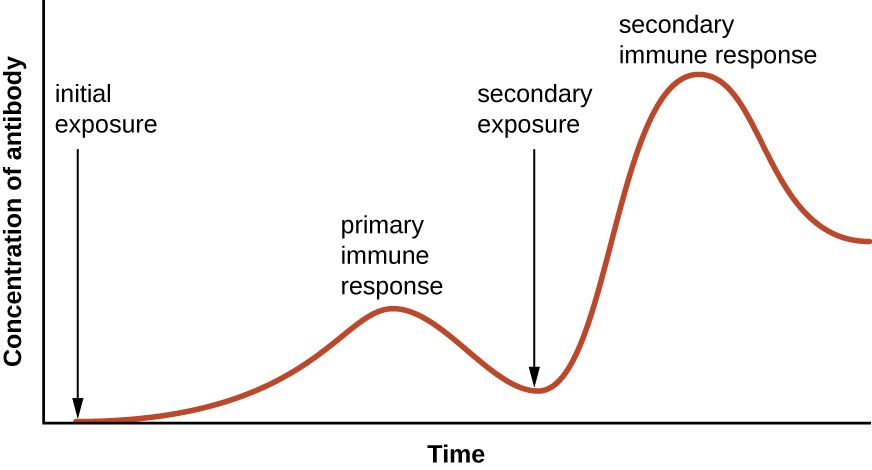
Your immune system runs two teams, and they work together. Innate immunity is there from the day you are born. It is your skin, your mucus, and your stomach acid. It is also fever, inflammation, and the phagocytes that swallow invaders. It answers in minutes to hours. It treats almost every invader the same way. Its job is to buy time. Adaptive immunity is the specialist team behind it. The first time out, it needs days to get going. In trade, it picks out one particular microbe with great precision. When the fight ends, it keeps a record of that microbe. The next meeting is faster and stronger. Almost everything protective about a vaccine comes from this second team. So does the fact that you catch some illnesses only once. So does a positive antibody titer on a lab report.
Adaptive immunity splits into two branches of its own. The humoral branch is the antibody branch. It is run by B lymphocytes, which pour antibodies into blood and body fluids. Those antibodies go after threats outside of cells. Think of bacteria in the bloodstream, loose toxins, and viruses in transit. The cell-mediated branch is run by T lymphocytes. T cells handle threats inside cells. Virus-infected cells and cancer cells are the main targets. Both branches start the same way. Something foreign has to be spotted first.
Antigens, epitopes, and what foreign means
An antigen is any molecule the immune system can spot and react to. Most antigens are proteins or long sugar chains on the surface of a microbe. An adaptive cell does not read a whole antigen at once. Each one reads a small patch of it called an epitope. One bacterium carries many different epitopes. That is why a single infection can wake up many different lymphocytes at once. Here is the part that is hard to believe. Your body builds millions of different lymphocytes in advance. Each one is tuned to a different epitope. All of that happens before it has ever met the microbe. When a matching antigen turns up, the one rare cell that fits it gets picked out. That cell is then told to multiply. The step is called clonal selection.
Specificity, memory, and tolerance
Three properties define adaptive immunity. Specificity means one response is aimed at one antigen and nothing near it. Immunity to measles does nothing at all for mumps. Memory means the system keeps a record of a past antigen. On a second meeting it reacts faster and harder. That is the property vaccines are built on. Self-tolerance means the system learns to leave your own molecules alone. Your own molecules are self. Foreign ones are non-self. Lymphocytes that would attack self are normally deleted or switched off early. When that quality check fails, the immune system turns on the body. That failure is the root of autoimmune disease. Type 1 diabetes, rheumatoid arthritis, and lupus all work that way.
| Feature | Innate immunity | Adaptive immunity |
|---|---|---|
| Present when? | From birth, always ready | Builds after exposure to an antigen |
| Speed | Minutes to hours | Days on first exposure |
| Specificity | Broad — same response to many microbes | Exact — one antigen at a time |
| Memory? | No — reacts the same every time | Yes — faster & stronger on re-exposure |
| Key cells | Phagocytes, NK cells, mast cells | T lymphocytes and B lymphocytes |
- Innate immunity is fast and broad. Adaptive immunity is slower, very specific, and it remembers.
- Adaptive immunity has two arms. Humoral means B cells and antibodies against threats outside cells. Cell-mediated means T cells against threats inside cells.
- An antigen is read at a small patch called an epitope. Clonal selection multiplies the one lymphocyte that fits.
- The three hallmarks are specificity, memory, and self-tolerance. Lost tolerance causes autoimmunity.
Section 2T cells
Where T cells come from and how they see
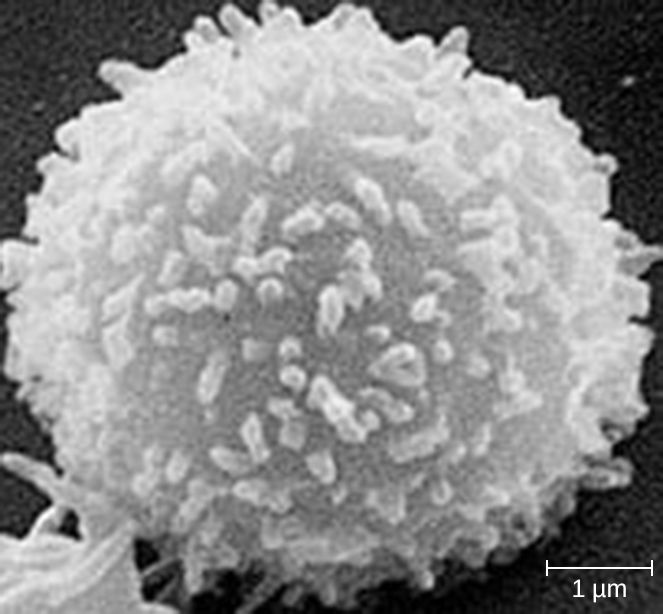
T lymphocytes are born in the bone marrow. They finish their training in the thymus, and the T stands for thymus. During that training the dangerous ones get weeded out. Those are the cells that would attack self. A mature T cell cannot grab a free-floating antigen the way an antibody can. It reacts only to antigen that has been chopped up and put on display. The display molecule is called MHC. The letters are short for major histocompatibility complex. Picture MHC as a serving tray. A cell holds up a scrap of protein on its tray. A passing T cell leans in and inspects it. The whole step is called antigen presentation. It is the reason a T cell can tell an infected cell from a healthy one.
There are two kinds of tray. MHC class I sits on almost every nucleated cell in your body. It shows scraps of whatever that cell is building inside. So a virus-infected cell advertises the virus without meaning to. MHC class II sits only on professional antigen-presenting cells. Those are dendritic cells, macrophages, and B cells. They swallow microbes on purpose, then hold up the pieces to call for help.
Helper T cells, the conductors (CD4)
Helper T cells wear a surface marker called CD4. They read antigen shown on MHC class II. They kill nothing themselves. They conduct. When a helper T cell meets its antigen, it releases chemical messengers called cytokines. Those messengers switch the rest of the response on. They push B cells to make antibody. They help arm cytotoxic T cells. They rev up macrophages. Helper cells sit at the center of the network. Losing them is a disaster. That is exactly what makes HIV so dangerous.
Cytotoxic T cells, the killers (CD8)
Cytotoxic T cells wear CD8 and read antigen on MHC class I. A cell showing viral or tumor protein on its class I tray is marked for death. The CD8 cell delivers it. It fires perforin, which drills pores in the target membrane. It also fires granzymes, enzymes that slip inside and trip the self-destruct switch. The target dies by apoptosis, which means programmed cell death. The virus factory goes down with it. This is the front line against viral infection and against abnormal cells. There is a tidy way to keep the pairings straight. Call it the rule of eight. CD4 times MHC II is 8. CD8 times MHC I is 8. Each T cell works with the MHC class whose number multiplies out to eight.
| Feature | Helper T cell | Cytotoxic T cell |
|---|---|---|
| Surface marker | CD4 | CD8 |
| Reads antigen on | MHC class II | MHC class I |
| Found on | Antigen-presenting cells only | Almost every nucleated cell |
| Main job | Coordinate & amplify the response with cytokines | Kill infected or abnormal cells directly |
| Weapons | Cytokines such as IL-2 and IFN-γ | Perforin and granzymes |
| Best against | Directing every response, B cells included | Virus-infected cells, tumor cells |
| Clinical note | Target of HIV; the count tracks immune status | Key defense in viral illness; drives transplant rejection |
- T cells mature in the thymus. They see antigen only when it is presented on MHC.
- Helper T cells (CD4) read MHC II and run the response with cytokines. They do not kill directly.
- Cytotoxic T cells (CD8) read MHC I and destroy infected or abnormal cells with perforin and granzymes.
- MHC I is on nearly all cells. MHC II is only on antigen-presenting cells. HIV strips out CD4 cells and cripples the whole system.
Section 3B cells & antibodies
From B cell to antibody factory
B lymphocytes mature in the bone marrow, and the B is a handy match for bone marrow. Each B cell carries one unique receptor on its surface. When that receptor binds its matching antigen, the B cell wakes up. Most of the time it also needs a push from a helper T cell. Then it divides. Most of the daughter cells become plasma cells. A plasma cell is a short-lived factory. It pumps out thousands of identical antibodies every second. A smaller share of the daughters become memory B cells. Those linger for years and wait for a repeat visit. Antibodies have a second name, immunoglobulins, usually shortened to Ig. They are the working product of the humoral branch.
Antibody structure: the Y
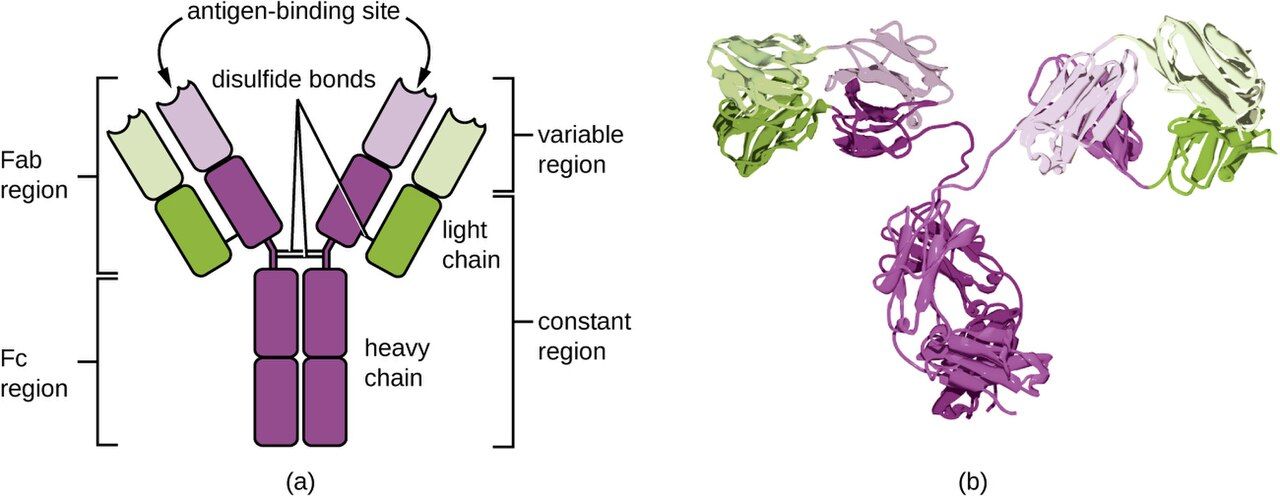
Every antibody is built on the same basic shape. It is a Y made of four protein chains. Two are identical long heavy chains. Two are identical short light chains. Disulfide bonds hold the four of them together. The two tips of the Y are the variable regions. Their amino-acid order differs from one antibody to the next. That is what gives each antibody its own antigen-binding site. The stem of the Y is the constant region. It is the same in every antibody of a class. The stem works as a handle, and phagocytes and complement proteins grab it. So one end of the molecule does the recognizing. The other end does the recruiting.
What antibodies actually do
Antibodies rarely destroy a microbe on their own. They tag it and disable it instead, in four main ways. In neutralization, antibodies coat a virus or a toxin. The coated particle can no longer dock onto a host cell. Antitoxins work this way, and so do many vaccine antibodies. In opsonization, antibodies coat a microbe so a phagocyte can get a grip on it. The constant stem is the handle it grips. In agglutination, antibodies cross-link many microbes into clumps. A clump is easier to clear and it cannot spread. In complement activation, a cluster of antibodies sets off the complement cascade. Complement can then punch holes in a bacterial membrane. The five classes below differ in their constant stems. That is why each one travels somewhere different and does a different job.
| Class | Shape | Where / role | Clinical pearl |
|---|---|---|---|
| IgG | Single Y (monomer) | Most abundant in blood, about 75–80% of serum antibody; long-term protection; crosses the placenta | Signals a past or resolved infection, or settled immunity; protects the newborn |
| IgM | Five Y units joined (pentamer) | First antibody made in a new infection; large, so it stays in blood; strongest trigger of complement | A positive IgM points to a current or recent infection |
| IgA | Two Y units in secretions (dimer) | Guards mucous membranes and secretions: saliva, tears, mucus, and breast milk | Passes protection to the breastfeeding infant's gut |
| IgE | Single Y (monomer) | Trace amounts in blood; binds mast cells; drives allergy and defense against parasitic worms | The antibody behind hay fever and anaphylaxis |
| IgD | Single Y (monomer) | Mostly on the surface of naive B cells, not in serum | Helps switch the B cell on; the least understood class |
- B cells mature in bone marrow. An activated B cell gives rise to antibody-secreting plasma cells and long-lived memory B cells.
- An antibody is a Y. The variable tips recognize antigen. The constant stem recruits phagocytes and complement.
- Antibodies work by neutralization, opsonization, agglutination, and complement activation.
- The five classes are IgG, IgM, IgA, IgE, and IgD. IgM means a new infection. IgG means past or lasting. IgA guards mucosa and milk. IgE drives allergy.
Section 4Primary vs secondary response
The primary response: slow and costly
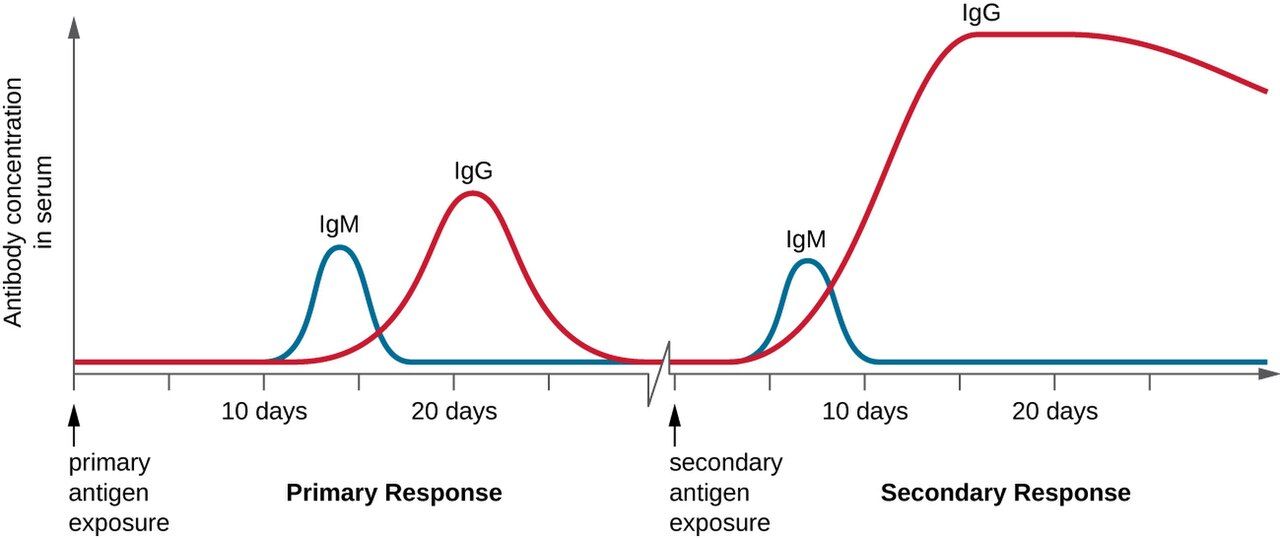
The first time the body meets a new antigen, it has work to do. It must find the one rare lymphocyte that fits. It must switch that cell on. Then it must let the cell multiply. Only after all of that does a real defense appear. This primary response has a lag of roughly one to two weeks. It makes a modest amount of antibody. IgM leads the way, because IgM is the first class made, and IgG builds up behind it. During that lag the person is often sick. The immune system is fighting from behind. This delay is exactly why a brand-new infection can be dangerous. It is also why someone who has never met the microbe gets no head start.
Memory cells: the immune system's notebook
As the primary response winds down, it does not simply pack up and leave. It leaves memory B cells and memory T cells behind. These are long-lived cells, and some of them last for decades. Each one carries the receptor for that one antigen. They circulate quietly, already primed. Memory is the physical basis of immunity. It is what having had a disease, or having had a vaccine, actually means at the level of cells.
The secondary response: fast and fierce
When the same antigen comes back, memory cells are already waiting. So the body skips most of the search-and-switch-on delay. The secondary response starts in hours to a few days. It makes far more antibody, often ten to a hundred times more. It is dominated by high-affinity IgG. High affinity means the antibody grips its target more tightly than the first batch did. Often the microbe is cleared before any symptom appears. That is why you may never know you were exposed again. Every booster dose sets off a secondary response on purpose. It pushes antibody levels back up and refreshes the pool of memory cells.
| Feature | Primary response | Secondary response |
|---|---|---|
| Trigger | First exposure to the antigen | Re-exposure to the same antigen |
| Lag before antibody | ~1–2 weeks | Hours to a few days |
| Amount of antibody | Low | Much higher, often 10–100× |
| Dominant class | IgM first, then IgG | Mostly high-affinity IgG |
| Driven by | Naive lymphocytes | Memory B and T cells |
- The primary response is slow, with a one to two week lag. It is small, and IgM comes first.
- Memory B and T cells persist for years. They are the physical basis of lasting immunity.
- The secondary response is faster, much larger, and IgG-dominant. It often clears the microbe before symptoms appear.
- Boosters and titers both run on that memory. One refreshes it, the other measures it.
Section 5Immunization & vaccines
Four kinds of immunity
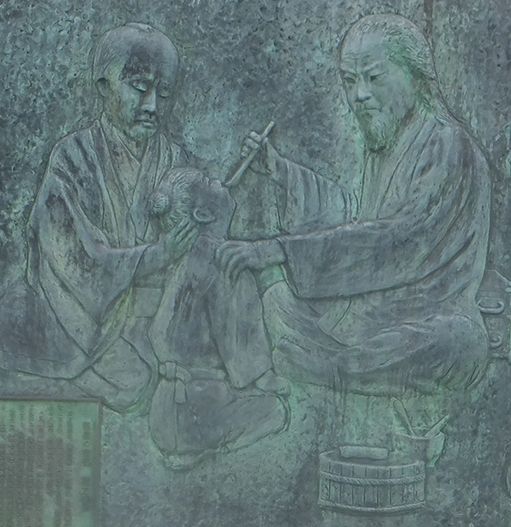
Immunity in the clinic is sorted along two lines. The first line is active against passive. In active immunity the person's own immune system makes the antibody and builds the memory, so it lasts. In passive immunity ready-made antibody is handed over instead. That protects right away, but only until the borrowed antibody breaks down. No memory forms at all. The second line is natural against artificial. Natural means it happened through ordinary life. Artificial means it was given on purpose. Cross the two lines and you get four boxes. Every kind of immunization fits in one of them.
| Type | How it happens | Example | Lasting? |
|---|---|---|---|
| Natural active | You catch the illness and recover | Immunity after chickenpox or measles | Yes — memory forms |
| Artificial active | A vaccine teaches your immune system | MMR, hepatitis B, tetanus vaccine | Yes — memory forms |
| Natural passive | Antibody handed over by nature | Mother's IgG across the placenta; IgA in breast milk | No — wears off in months |
| Artificial passive | Ready-made antibody injected | Antivenom; rabies or tetanus immune globulin; RhoGAM | No — temporary |
How vaccines are built
Every vaccine does the same job. It shows the immune system an antigen so memory can form. They differ in how they present it, and that difference drives the precautions. Live attenuated vaccines use a weakened but living microbe. MMR, varicella, oral polio, and the intranasal flu vaccine all work this way. They give strong, long-lasting immunity. They are also held back from pregnancy and from a badly weakened immune system, because even a weakened live microbe can cause trouble there. Inactivated vaccines, also called killed vaccines, use a dead microbe. Hepatitis A, the injectable polio vaccine, and most flu shots are in this group. They are safer in a vulnerable host, and they often need boosters.
Three more types use only a part of the microbe. Subunit vaccines use one purified piece, such as the surface protein in the hepatitis B vaccine or the acellular pertussis pieces in DTaP. Conjugate vaccines glue a sugar coat to a carrier protein, which is how the Hib and pneumococcal conjugate vaccines work. That glue matters more than it sounds. A bare sugar antigen barely recruits helper T cells, so it protects young children poorly. Attach it to a protein and the helper T cells join in. Toxoid vaccines use an inactivated bacterial toxin, and the tetanus and diphtheria toxoids are the classic pair. Last come mRNA and viral vector vaccines. These deliver the genetic instructions for a single antigen, so your own cells make that antigen briefly and learn to spot it. The COVID-19 mRNA vaccines are the best known. None of the non-live types can give a person the real infection.
Herd immunity
When enough of a community is immune, a microbe runs out of room. It can no longer find enough hosts to keep spreading. That effect is herd immunity, and it shelters the few who cannot be vaccinated. Newborns, people with weakened immune systems, and people with a true contraindication all ride on it. Keeping that share high is ordinary, practical work. Each vaccine has to be given by the right route and at the right age. Someone has to watch for the rare immediate reaction. The lot number and the injection site get written down. And honest, calm answers have to be ready when families ask questions. Doubt about vaccines is answered far better in a quiet conversation than in a headline.
- Active immunity means the body makes its own antibody and memory, so it lasts. Passive means borrowed antibody, immediate but temporary.
- Natural against artificial is just whether it happened through life or was given on purpose. That gives four boxes.
- Vaccine types are live attenuated, inactivated, subunit, conjugate, toxoid, and mRNA or vector. Only live types can grow in the host.
- Live vaccines are held back in pregnancy and in serious immune suppression. Herd immunity covers the people who cannot be vaccinated.
The chapter in one breath
- Adaptive immunity is slow, but it is specific and it remembers. Its arms are humoral, meaning B cells and antibodies, and cell-mediated, meaning T cells.
- Its hallmarks are specificity, memory, and self-tolerance. Lost tolerance causes autoimmunity.
- T cells read antigen on MHC. Helper (CD4) cells coordinate with cytokines. Cytotoxic (CD8) cells kill infected cells. HIV destroys CD4 cells.
- B cells become plasma cells that secrete antibodies. An antibody is a Y, with variable tips that recognize and a constant stem that recruits.
- Antibodies work by neutralization, opsonization, agglutination, and complement. The classes are IgG, IgM, IgA, IgE, and IgD.
- The secondary response is faster and stronger than the primary, thanks to memory cells. That is the basis of boosters and titers.
- Immunity is active or passive and natural or artificial. Vaccines build artificial active immunity, and live vaccines are avoided in pregnancy and in immune suppression.
ReferenceWords worth knowing
A quick reference for the terms in this chapter. Skim it now, or circle back whenever a word trips you up.
- Active immunity
- Protection the person's own immune system builds by making antibody and memory; long-lasting.
- Adaptive immunity
- The specific, memory-forming arm of the immune system, run by T and B lymphocytes.
- Antibody (immunoglobulin)
- A Y-shaped protein made by plasma cells that binds one specific antigen to tag or block it.
- Antigen
- Any molecule the immune system can recognize and react to; it is read at a small patch called an epitope.
- Antigen-presenting cell (APC)
- A dendritic cell, macrophage, or B cell that displays antigen on MHC class II to switch on helper T cells.
- Attenuated vaccine
- A vaccine built from a living but weakened microbe; strong immunity, but avoided in pregnancy and immune suppression.
- CD4 (helper) T cell
- A T cell that reads antigen on MHC II and coordinates the response with cytokines; the target of HIV.
- CD8 (cytotoxic) T cell
- A T cell that reads antigen on MHC I and kills infected or abnormal cells with perforin and granzymes.
- Clonal selection
- The step in which the one lymphocyte matching an antigen is picked out and told to multiply.
- Conjugate vaccine
- A sugar antigen glued to a carrier protein so helper T cells join in; it works in young children where a bare sugar does not.
- Epitope
- The small, specific part of an antigen that a lymphocyte or antibody actually binds.
- Herd immunity
- Protection of a whole community, the non-immune included, once enough members are immune to stop spread.
- Humoral immunity
- The antibody branch of adaptive immunity, driven by B cells; it fights threats outside of cells.
- Immunologic memory
- The lasting presence of memory cells, which makes a repeat response faster and stronger.
- Memory cell
- A long-lived B or T lymphocyte that stays behind after an infection and powers the secondary response.
- MHC (major histocompatibility complex)
- Surface molecules that display antigen fragments to T cells; class I on most cells, class II on APCs.
- mRNA vaccine
- A vaccine that delivers the genetic instructions for one antigen so your own cells make it briefly.
- Opsonization
- Coating a microbe with antibody so phagocytes can grip and swallow it more easily.
- Passive immunity
- Protection from ready-made antibody handed to the person; immediate but temporary, with no memory.
- Plasma cell
- An activated B cell that secretes large amounts of antibody.
- Primary response
- The slow, modest, IgM-first reaction to a first exposure to an antigen.
- Secondary response
- The fast, large, IgG-dominant reaction to re-exposure, driven by memory cells.
- Self-tolerance
- The immune system's learned habit of leaving the body's own molecules alone; its failure causes autoimmunity.
- Toxoid vaccine
- A vaccine built from an inactivated bacterial toxin, such as the tetanus and diphtheria toxoids.