The Nervous System, Psychiatry and the Special Senses
This is the chapter where medical language stops describing plumbing and starts describing experience. The nervous system generates movement, sensation, speech, memory and mood, so its vocabulary has to name not only structures — brain, cord, nerve, meninges — but also losses: the missing word, the numb foot, the drooping eyelid, the flattened affect. You will learn a compact set of combining forms (neur/o, encephal/o, myel/o, mening/o, cerebr/o) and a powerful set of suffixes (-plegia, -paresis, -esthesia, -phasia, -lepsy) that recombine into hundreds of chart terms. Then you will extend the same machinery into psychiatry, where roots for mind and mood build the diagnostic language, and into the special senses, where the eye and ear each contribute their own dense root families. Decode the parts once and the terms stop being a list to memorize.
By the end of this chapter you can
- Divide and define nervous-system terms built from neur/o, encephal/o, mening/o, myel/o, cerebr/o, cerebell/o, radicul/o and gli/o.
- Distinguish the deficit suffixes -plegia, -paresis, -esthesia, -algesia, -phasia, -kinesia, -taxia and -lepsy, and use the correct prefix of extent (hemi-, para-, tetra-, mono-).
- Explain the classic decoding traps my/o versus myel/o, phas/o versus phag/o, and pupill/o versus papill/o.
- Build and interpret pathology terms such as meningitis, hydrocephalus, radiculopathy, glioblastoma and myelomeningocele.
- Name common neurologic tests and operations — lumbar puncture, electroencephalography, craniotomy, laminectomy, ventriculoperitoneal shunt — from their word parts.
- Use core psychiatric vocabulary correctly, including affect versus mood, delusion versus hallucination, obsession versus compulsion, and anhedonia.
- Decode ophthalmic and otic terms from blephar/o, kerat/o, irid/o, retin/o, ot/o, tympan/o, myring/o and audi/o.
- Form correct plurals for ganglion, meninx, gyrus, sulcus, iris, conjunctiva, psychosis and stapes.
- Interpret the abbreviations a student actually meets on a chart, and name the eye and ear abbreviations now flagged as unsafe.
Section 1The word parts that build the nervous system
Two divisions, one vocabulary
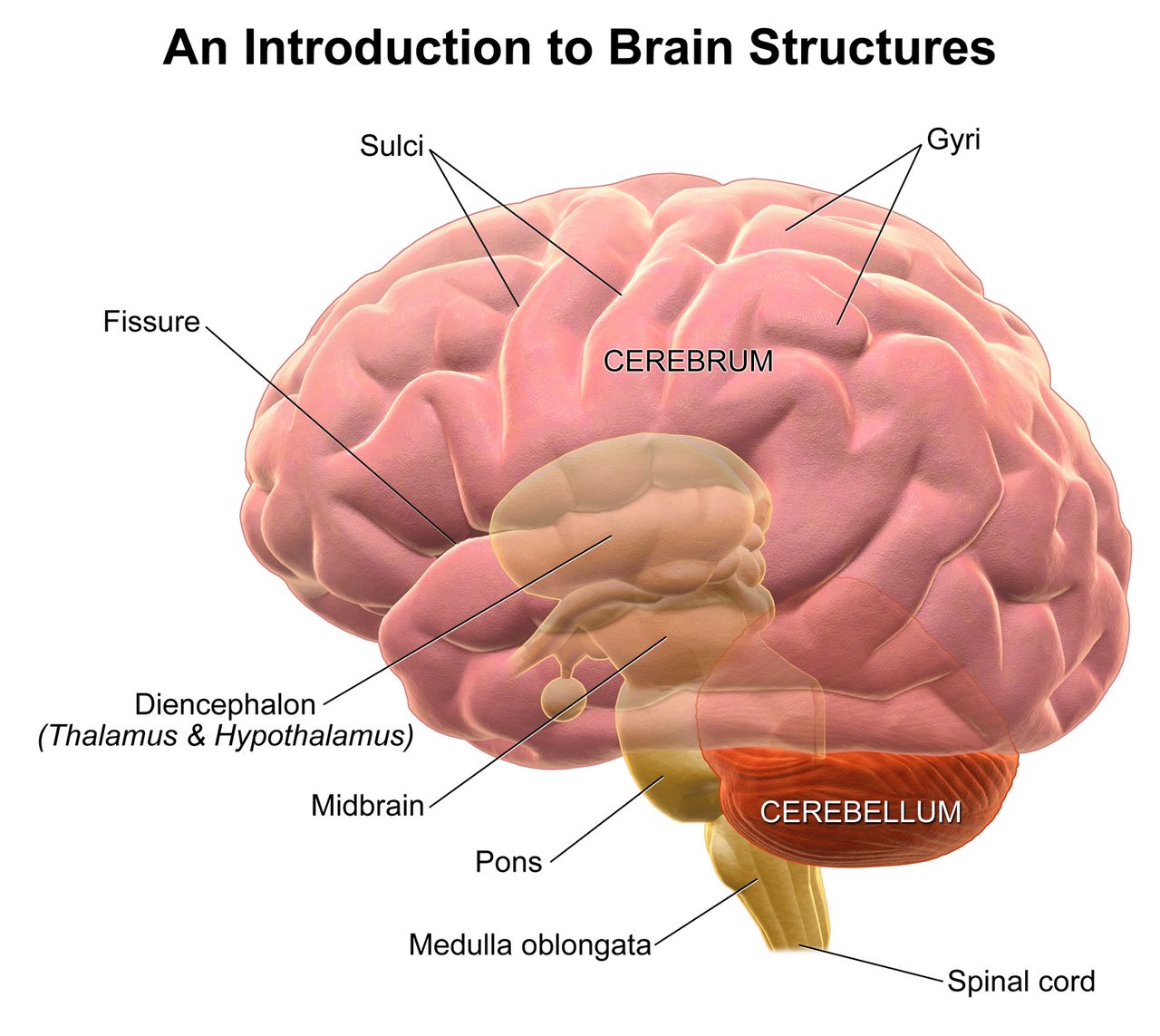
Anatomy splits the nervous system into the central nervous system (CNS) — brain and spinal cord — and the peripheral nervous system (PNS), the cranial and spinal nerves that branch outward. Terminology mostly ignores that boundary and organizes itself around structures instead. The single most productive root is neur/o, meaning nerve or nerve tissue. Attach a suffix and you have a specialty (neur/o/logy), a practitioner (neur/o/logist), an inflammation (neur/itis), a pain (neur/algia, noo-RAL-jee-uh), a tumor (neur/oma), a disease process (neur/o/pathy) and a suturing (neur/o/rrhaphy, noo-ROR-uh-fee, surgical suture of a severed nerve — -rrhaphy is suture specifically, not repair in general, which is -plasty).
The functional unit is the neuron, and the supporting cells are the neuroglia (noo-ROG-lee-uh) — literally nerve glue, from gli/o. That root matters clinically far more than its humble meaning suggests, because most primary brain tumors arise from glial cells, not neurons: a gli/oma is a tumor of glial tissue, and glioblastoma (glye-oh-blas-TOH-muh) adds blast/o, immature or germ cell, to name its most aggressive form.
Notice the pattern already forming. You are not memorizing neuralgia, neuritis, neuropathy and neurorrhaphy as four separate words. You are memorizing one root and four suffixes you already met in Chapter 2, then multiplying. Every root in the table below multiplies the same way.
| Word part | Meaning | Example term | What the example means |
|---|---|---|---|
| neur/o | nerve | neuropathy | disease of the nerves |
| encephal/o | brain | encephalitis | inflammation of the brain |
| cerebr/o | cerebrum, brain | cerebral | pertaining to the cerebrum |
| cerebell/o | cerebellum | cerebellar | pertaining to the cerebellum |
| mening/o, meningi/o | meninges (membranes covering brain and cord) | meningioma | tumor arising from the meninges |
| myel/o | spinal cord; also bone marrow | myelitis | inflammation of the spinal cord |
| gli/o | glue; neuroglial tissue | glioma | tumor of glial cells |
| gangli/o, ganglion/o | ganglion (cluster of nerve cell bodies) | ganglionectomy | excision of a ganglion |
| radicul/o | nerve root | radiculopathy | disease of a spinal nerve root |
| rhiz/o | root (nerve root) | rhizotomy | incision into a nerve root |
| dur/o | dura mater (tough outer meninx) | subdural | pertaining to below the dura |
| ventricul/o | ventricle (CSF-filled cavity) | ventriculostomy | surgical opening into a ventricle |
| crani/o | skull | craniotomy | surgical incision into the skull |
| cephal/o | head | cephalalgia | headache |
| thalam/o | thalamus | thalamotomy | incision into the thalamus |
| medull/o | medulla; inner portion | medullary | pertaining to the medulla or inner region |
| poli/o | gray (gray matter) | poliomyelitis | inflammation of spinal cord gray matter |
| vag/o | vagus nerve | vagotomy | incision of the vagus nerve |
Work one of these all the way through. Encephal/o plus -pathy gives encephalopathy (en-sef-uh-LOP-uh-thee), any disease of the brain — a deliberately broad word a hospitalist uses when a patient is confused and the cause is not yet known. Add electr/o and the recording suffix and you get electr/o/encephal/o/gram: an electrical record of the brain. Put hydr/o in front of cephal/o and add -us and you get hydrocephalus (hye-droh-SEF-uh-lus): water in the head, the accumulation of cerebrospinal fluid inside the ventricles.
The trap that costs the most points: my/o versus myel/o. My/o means muscle. Myel/o means marrow — and because the spinal cord sits in the bony canal the way marrow sits in bone, myel/o was extended to mean spinal cord as well. So myelitis is inflammation of the spinal cord, but myeloma is a marrow tumor and myelogenous leukemia arises in marrow. Context decides: neurology contexts point to cord, hematology contexts point to marrow. And myositis (muscle inflammation) is a completely different disease from myelitis — one letter cluster apart.
Suffixes that name what was lost
Neurologic charting is largely subtraction. The exam records what a patient can no longer do, so the highest-yield suffixes in this chapter describe deficits. Learn these eight and you can read most of a neurology note.
| Word part | Meaning | Example term | What the example means |
|---|---|---|---|
| -plegia | paralysis | hemiplegia | paralysis of one side of the body |
| -paresis | partial paralysis, weakness | hemiparesis | weakness of one side of the body |
| esthesi/o, -esthesia | sensation, feeling | paresthesia | abnormal sensation (tingling, pins and needles) |
| -algesia, algesi/o | sensitivity to pain | analgesia | absence of pain sensation |
| phas/o, -phasia | speech | aphasia | loss of the ability to use or understand language |
| kinesi/o, -kinesia | movement | bradykinesia | abnormally slow movement |
| tax/o, -taxia | coordination, order | ataxia | lack of muscular coordination |
| -lepsy | seizure | narcolepsy | sudden uncontrollable attacks of sleep |
| -mnesia, mnem/o | memory | amnesia | loss of memory |
| gnos/o, -gnosia | knowledge, recognition | agnosia | inability to recognize familiar objects |
| ton/o | tone, tension | hypotonia | decreased muscle tone |
| lex/o, -lexia | word, phrase | dyslexia | impaired ability to read and process words |
| somn/o, -somnia | sleep | insomnia | inability to sleep |
| narc/o | stupor, numbness | narcotic | agent producing stupor and pain relief |
| syncop/o | to cut off, cut short | syncope | transient loss of consciousness; fainting |
Now add the prefixes of extent, which tell you how much of the body is involved. Mono- is one limb, hemi- is one side, para- conventionally means both lower limbs, and quadri- or tetra- means all four. So quadri/plegia and tetra/plegia name the same condition; tetraplegia is preferred in formal writing because tetra- and -plegia are both Greek, while quadri- is Latin, making quadriplegia a hybrid. Para/plegia is worth a second look: para- normally means beside or abnormal, and its use for the lower half of the body is a convention inherited from Greek usage rather than a literal decode. This is the rare case where the parts do not quite deliver the meaning, so learn the word as a fixed unit.
Combine deficits with location and you can read a stroke note almost cold. Right hemiparesis with expressive aphasia tells you the patient is weak on the right and struggling to produce speech, which points to the left frontal lobe, because motor pathways cross and the language production area sits on the left in most people. No new vocabulary is required — only recombination.
Four pairs students reliably swap. -plegia is paralysis (no movement); -paresis is weakness (some movement) — charting one for the other misstates the severity of a stroke. Phas/o is speech, phag/o is swallowing: dysphasia (dis-FAY-zhuh) is difficulty with language, dysphagia (dis-FAY-jee-uh) is difficulty swallowing, and a stroke patient may have both. Esthesi/o is sensation, algesi/o is pain specifically, so anesthesia removes all sensation while analgesia removes only pain. And cerebr/o is the cerebrum, cerebell/o the cerebellum — cerebellar ataxia and cerebral infarction are not neighbors on the exam or in the skull.
Plurals you will be asked to produce
Nervous-system anatomy is unusually rich in Greek and Latin plurals, and the singular forms show up in the singular so rarely that students often learn the plural first and then guess wrong when a single structure is meant. The rules are the ones from Chapter 4, applied to new stems.
| Singular | Plural | Rule | Note |
|---|---|---|---|
| ganglion | ganglia | -on becomes -a | Also seen as ganglions in surgical usage |
| meninx (MEN-inks) | meninges (meh-NIN-jeez) | -nx becomes -nges | The singular is almost never used clinically |
| gyrus | gyri | -us becomes -i | Ridges of the cerebral cortex |
| sulcus | sulci | -us becomes -i | Grooves between gyri |
| cortex | cortices | -ex becomes -ices | Outer layer of an organ |
| plexus | plexuses | English -es accepted | Brachial plexus, choroid plexus |
| stimulus | stimuli | -us becomes -i | Common in exam documentation |
| diagnosis | diagnoses | -is becomes -es | Same rule as psychosis, neurosis |
One more habit worth building now: read the hyphenated combining vowel as a signal, not decoration. Radicul/o/pathy keeps its o because -pathy begins with a consonant; radicul/itis drops it because -itis begins with a vowel. That single rule, applied consistently, is why you will spell encephalitis and encephalopathy correctly without memorizing either.
A small set of structural roots plus a small set of deficit suffixes generates most neurologic vocabulary, so decoding beats memorizing — provided you keep my/o, myel/o, phas/o and phag/o straight.
Section 2When the wiring fails: neurologic pathology
Vascular events: stroke and its relatives
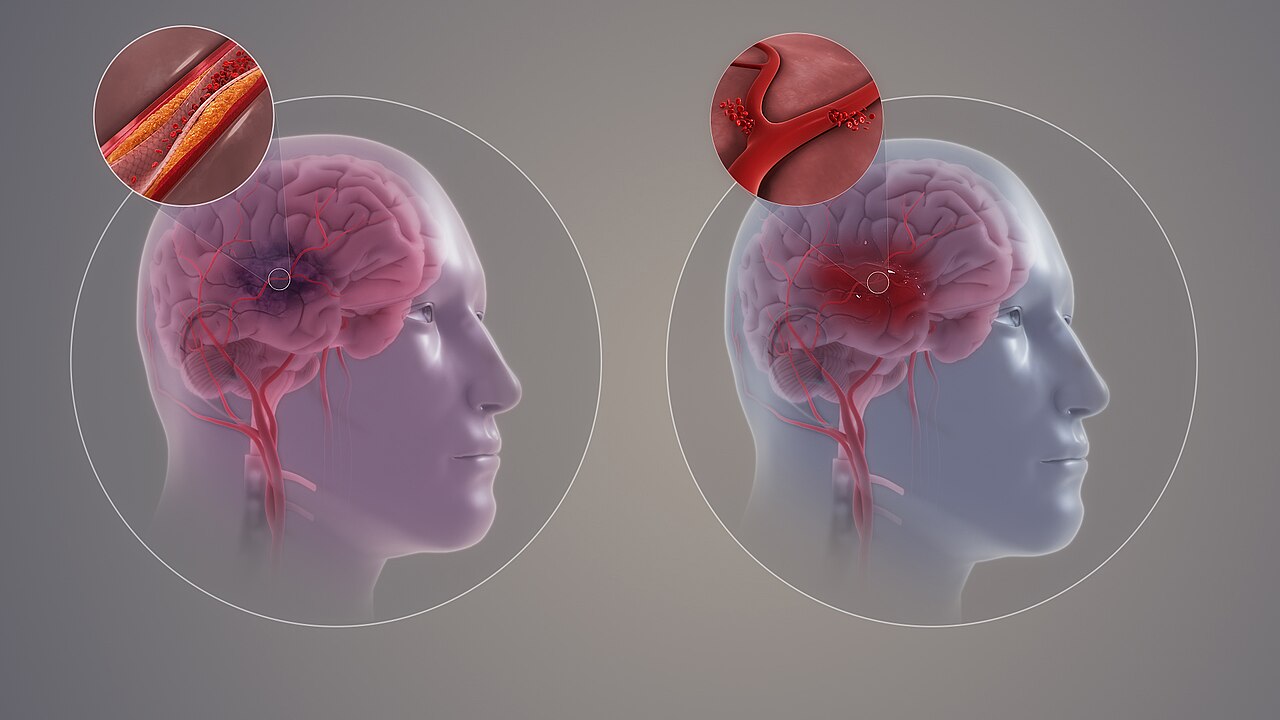
A cerebrovascular accident (CVA) is an interruption of blood flow to brain tissue. The term is being retired in favor of stroke or the more precise cerebral infarction, because accident wrongly implies an unavoidable event when most strokes follow modifiable risk factors. Decode it anyway: cerebr/o (brain) + vascul/o (vessel) + -ar (pertaining to). Roughly four of five strokes are ischemic (is-KEE-mik), from isch/o, to hold back, plus -emia, blood condition — blood held back by a clot. The rest are hemorrhagic, from a vessel that has burst.
A transient ischemic attack (TIA) produces the same deficits but resolves, classically within an hour and without infarction on imaging. Read a TIA as a warning shot rather than a mild stroke. The upstream culprit is often atherosclerosis of the carotid artery, and here three roots that look alike diverge completely: ather/o means fatty plaque, arteri/o means artery, and arthr/o means joint. Atherosclerosis is plaque hardening a vessel; arteritis is inflammation of an artery; arthritis has nothing to do with either.
When a weakened arterial wall balloons, it forms an aneurysm (AN-yoo-rizm). Rupture of a cerebral aneurysm produces subarachnoid hemorrhage (SAH) — bleeding into the space beneath the arachnoid membrane, described by patients as the worst headache of their life. Trauma produces the other two named bleeds, and both are decoded from dur/o.
Epidural versus subdural: the prefix tells you the vessel and the speed. An epi/dural hematoma sits above the dura, usually from a torn middle meningeal artery; arterial pressure makes it fast, and the classic story is a lucid interval followed by rapid decline. A sub/dural hematoma sits beneath the dura, from torn bridging veins; venous pressure makes it slow, and in older adults on anticoagulants it may surface weeks later as confusion. Same root, opposite prefix, entirely different urgency — and hemat/oma itself decodes as blood + mass, a collection of blood, not a neoplasm.
Inflammation, infection and pressure
Meningitis (men-in-JYE-tis) is inflammation of the meninges; encephalitis (en-sef-uh-LYE-tis) is inflammation of the brain itself; and when both are involved the chart reads meningoencephalitis. The cardinal signs of meningeal irritation are fever, headache, photophobia (phot/o, light + -phobia, fear or aversion) and nuchal rigidity, stiffness of the back of the neck. Diagnosis rests on examining cerebrospinal fluid, which is why the next section opens with the lumbar puncture.
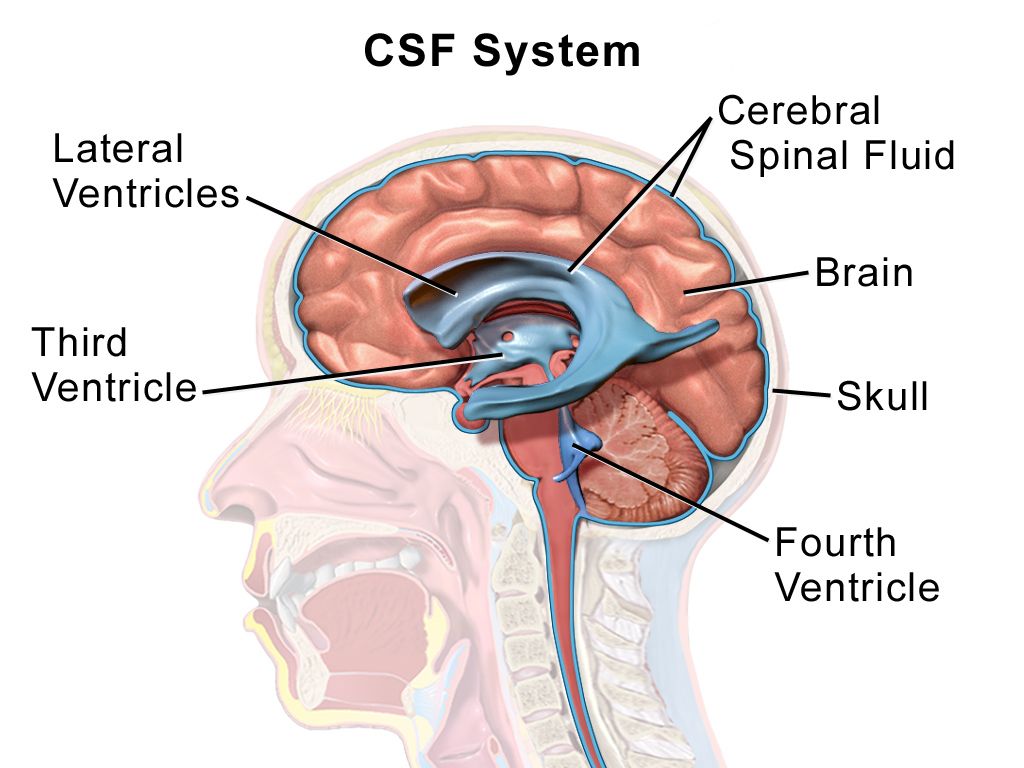
Hydrocephalus is an excess of cerebrospinal fluid within the ventricles, from obstruction, overproduction or failed absorption. In infants, whose cranial sutures have not fused, the head enlarges; in adults the skull cannot expand, so the pressure rises instead. That rise has its own abbreviation, ICP (intracranial pressure), and its own decodable signs: papilledema (pap-il-eh-DEE-muh), swelling of the optic disc, and eventually herniation of brain tissue through an opening it does not belong in.
Congenital defects of neural tube closure give a family of terms built on -cele, hernia or protrusion. Spina bifida occulta is a hidden bony defect with no protruding sac. A mening/o/cele is a sac containing meninges only. A myel/o/mening/o/cele (my-eh-loh-meh-NING-goh-seel) contains meninges and spinal cord tissue, and is the form associated with neurologic deficit below the lesion. Notice that the word tells you the severity: whichever tissues are named are the tissues inside the sac.
Degenerative, demyelinating and neuromuscular disease
Several major diseases attack the insulating myelin sheath rather than the neuron. Multiple sclerosis — abbreviated MS in casual speech, but spell it out in writing, since MS is on the Joint Commission Do Not Use list — is a chronic autoimmune demyelinating disease of the CNS; scler/o means hard, and the sclerotic plaques scattered through the white matter give the disease its name. Guillain-Barré syndrome (ghee-YAN bah-RAY) is its peripheral counterpart, an acute inflammatory polyradiculoneuropathy — many (poly-) nerve roots (radicul/o) and nerves (neur/o) diseased (-pathy) — typically producing ascending weakness after an infection.
Parkinson disease is a degenerative disorder of dopamine-producing neurons whose cardinal features are named with roots you now own: bradykinesia (slow movement), rigidity, resting tremor and postural instability. Alzheimer disease is the most common cause of dementia (de-, down or away + ment/o, mind), a progressive loss of cognitive function. Amyotrophic lateral sclerosis (ay-my-oh-TROH-fik), or ALS, decodes beautifully: a- without + my/o muscle + troph/o nourishment or development + -ic — muscles wasting because their motor neurons are dying.
At the junction between nerve and muscle sits myasthenia gravis (my-as-THEE-nee-uh GRAV-is): my/o muscle + -asthenia weakness, with gravis meaning severe. Its hallmark is fatigable weakness that worsens with use and often shows first in the eyelids as ptosis (TOH-sis, the p silent) and in double vision, diplopia.
| Term | Word parts | Literal decode | Clinical meaning |
|---|---|---|---|
| encephalopathy | encephal/o + -pathy | brain + disease | any diffuse disease or dysfunction of the brain |
| radiculopathy | radicul/o + -pathy | nerve root + disease | pain or deficit from a compressed spinal nerve root |
| polyneuropathy | poly- + neur/o + -pathy | many + nerve + disease | symmetric damage to many peripheral nerves |
| hemiparesis | hemi- + -paresis | half + weakness | weakness of one side of the body |
| quadriplegia | quadri- + -plegia | four + paralysis | paralysis of all four limbs (tetraplegia) |
| neuralgia | neur/o + -algia | nerve + pain | sharp pain along the course of a nerve |
| meningioma | meningi/o + -oma | meninges + tumor | usually benign tumor of the meninges |
| glioblastoma | gli/o + blast/o + -oma | glue + immature + tumor | highly aggressive malignant glial tumor |
| hydrocephalus | hydr/o + cephal/o + -us | water + head | excess cerebrospinal fluid in the ventricles |
| poliomyelitis | poli/o + myel/o + -itis | gray + cord + inflammation | viral inflammation of spinal cord gray matter |
| encephalocele | encephal/o + -cele | brain + herniation | protrusion of brain tissue through a skull defect |
| dysarthria | dys- + arthr/o + -ia | difficult + articulate + condition | slurred speech from weak speech muscles |
That last row deserves a pause. Dysarthria uses arthr/o in its older sense of articulation — jointing, whether of bones or of syllables. Dysarthria is a motor problem: the patient knows the word and cannot pronounce it. Dysphasia is a language problem: the word itself is unavailable. Charting one for the other sends the workup in the wrong direction.
Two eponyms remain in daily use and are worth knowing precisely. Broca aphasia is nonfluent or expressive — effortful, telegraphic speech with relatively preserved comprehension, from a lesion in the left frontal lobe. Wernicke aphasia is fluent or receptive — words flow but do not make sense, and comprehension is impaired, from a lesion in the left temporal lobe. Current style writes these without the possessive: Broca aphasia, not Broca’s. Similarly, Bell palsy (unilateral facial weakness from cranial nerve VII dysfunction) and trigeminal neuralgia (try-JEM-ih-nal, lancinating facial pain along cranial nerve V) keep their names but drop the apostrophe.
Neurologic disease names are almost always self-describing — the prefix tells you where the process sits, the root tells you which tissue is involved, and the suffix tells you whether it is inflamed, herniated, weakened or malignant.
Section 3Looking inside: neurologic tests, imaging and surgery
Sampling, recording and imaging
The lumbar puncture (LP), or spinal tap, withdraws cerebrospinal fluid (CSF) from the subarachnoid space, usually between L3 and L4 or L4 and L5 — below the level where the spinal cord ends, so the needle meets nerve roots that drift aside rather than cord tissue. The fluid is examined for cells, protein, glucose and organisms, and an opening pressure is measured. The related term myelography (my-eh-LOG-ruh-fee) injects contrast into that same space so the cord and roots can be imaged, usually paired with CT.
Electrical recordings carry the suffix -graphy for the process and -gram for the result. Electroencephalography (ee-lek-troh-en-sef-uh-LOG-ruh-fee, EEG) records the brain’s electrical activity through scalp electrodes and is the central test in seizure evaluation. Electromyography (EMG) records electrical activity in muscle and pairs with nerve conduction studies to separate a muscle problem from a nerve problem — the very my/o versus neur/o distinction the two tests are named for. Evoked potentials time the brain’s response to a repeated visual, auditory or sensory stimulus.
Imaging follows the same suffix logic. Computed tomography (CT) uses tom/o, to cut or section — images built as slices. It is the first study in acute stroke because it rapidly shows blood. Magnetic resonance imaging (MRI) shows soft tissue in far greater detail, with MRA (angiography) dedicated to vessels. Cerebral angiography injects contrast into arteries (angi/o, vessel) to map an aneurysm or occlusion. PET (positron emission tomography) images function and metabolism rather than structure.
At the bedside, the examination has its own compact language. The Glasgow Coma Scale (GCS) scores eye opening, verbal response and motor response for a total of 3 to 15, with 15 fully awake. The NIH Stroke Scale (NIHSS) quantifies stroke severity from 0 to 42. Deep tendon reflexes (DTRs) are graded 0 to 4+. The Babinski sign — the great toe turning upward when the sole is stroked — is normal in infants but abnormal past roughly age two, where it points to an upper motor neuron lesion. The Romberg test asks a standing patient to close their eyes; swaying suggests a problem with position sense rather than with the cerebellum.
Operating on the nervous system
Surgical suffixes behave here exactly as they did in earlier chapters, but the structures are less forgiving, so precision matters more. Crani/o/tomy (kray-nee-OT-oh-mee) is a temporary opening of the skull with the bone flap replaced. Crani/ectomy removes a portion of skull and deliberately leaves it out, giving a swelling brain room. Ventricul/o/stomy creates an opening into a ventricle so fluid can drain and pressure can be measured.
-otomy, -ectomy and -ostomy, one more time, where it counts. -otomy is a cut into (craniotomy: open, operate, close). -ectomy is removal (craniectomy: bone comes out and stays out). -ostomy is the creation of a lasting opening (ventriculostomy: a drainage route). Read these as three different promises to the patient, not three spellings of surgery. The same triad governs laminotomy, laminectomy and, elsewhere in the body, colostomy.
| Term | Word parts | Meaning | Why it is done |
|---|---|---|---|
| laminectomy (lam-ih-NEK-toh-mee) | lamin/o + -ectomy | excision of a vertebral lamina | decompress a cord or nerve root |
| discectomy | disc/o + -ectomy | removal of an intervertebral disc | treat a herniated nucleus pulposus (HNP) |
| neurorrhaphy | neur/o + -rrhaphy | suture of a nerve | repair a severed peripheral nerve |
| neurolysis | neur/o + -lysis | freeing or breaking down a nerve | release a nerve from scar, or destroy it for pain |
| rhizotomy (rye-ZOT-oh-mee) | rhiz/o + -otomy | incision of a nerve root | relieve intractable pain or spasticity |
| cordotomy | cord/o + -otomy | incision into the spinal cord | interrupt pain pathways |
| ventriculoperitoneal shunt | ventricul/o + periton/o + -eal | ventricle to peritoneum | divert CSF in hydrocephalus (VP shunt) |
| endarterectomy (end-ar-ter-EK-toh-mee) | end- + arteri/o + -ectomy | removal from within an artery | strip carotid plaque to prevent stroke |
| thrombectomy | thromb/o + -ectomy | removal of a clot | restore flow in large-vessel ischemic stroke |
| stereotactic radiosurgery | stere/o + tact/o | three-dimensional + touch or aim | deliver focused radiation to a deep lesion |
Two pharmacologic terms belong beside these. Thrombolysis (thromb/o, clot + -lysis, breakdown) dissolves a clot, most familiarly with tissue plasminogen activator (tPA) inside a narrow time window after ischemic stroke onset. Anticonvulsant or antiepileptic drugs suppress seizure activity, and analgesics — from the -algesia you already learned — treat pain without removing all sensation.
Abbreviations you will meet on the chart
Neurology is abbreviation-dense, and unlike the eye and ear abbreviations you will meet in Section 5, most of these appear constantly in real documentation and are read without difficulty. Two in the table below are exceptions and are marked as such: MS sits on the Joint Commission Do Not Use list, and tPA sits on the ISMP list of error-prone abbreviations. Both are medication-related, which is exactly why they are dangerous.
| Abbreviation | Meaning | Abbreviation | Meaning |
|---|---|---|---|
| CNS / PNS | central / peripheral nervous system | CSF | cerebrospinal fluid |
| CVA | cerebrovascular accident (stroke) | TIA | transient ischemic attack |
| ICP | intracranial pressure | LP | lumbar puncture |
| LOC | level (or loss) of consciousness | A&O ×4 | alert and oriented to person, place, time, situation |
| EEG | electroencephalogram | EMG | electromyogram |
| GCS | Glasgow Coma Scale | NIHSS | National Institutes of Health Stroke Scale |
| TBI | traumatic brain injury | SCI | spinal cord injury |
| SAH / SDH | subarachnoid / subdural hemorrhage | HNP | herniated nucleus pulposus |
| MS (do not use) | multiple sclerosis — but also morphine sulfate and magnesium sulfate. On the Joint Commission Do Not Use list; spell out the drug or the diagnosis, never MS. | ALS | amyotrophic lateral sclerosis |
| DTR | deep tendon reflex | CN I–XII | cranial nerves one through twelve |
| tPA (error-prone) | tissue plasminogen activator (alteplase). On the ISMP error-prone list because tPA, TPA and t-PA are mistaken for tenecteplase (TNKase); write the specific drug name. | DBS | deep brain stimulation |
Neurologic procedures are named for the structure entered and the action performed, so craniotomy, craniectomy and ventriculostomy describe three genuinely different operations rather than three ways of saying brain surgery.
Section 4The language of psychiatry and mental health
Roots for mind, mood and treatment
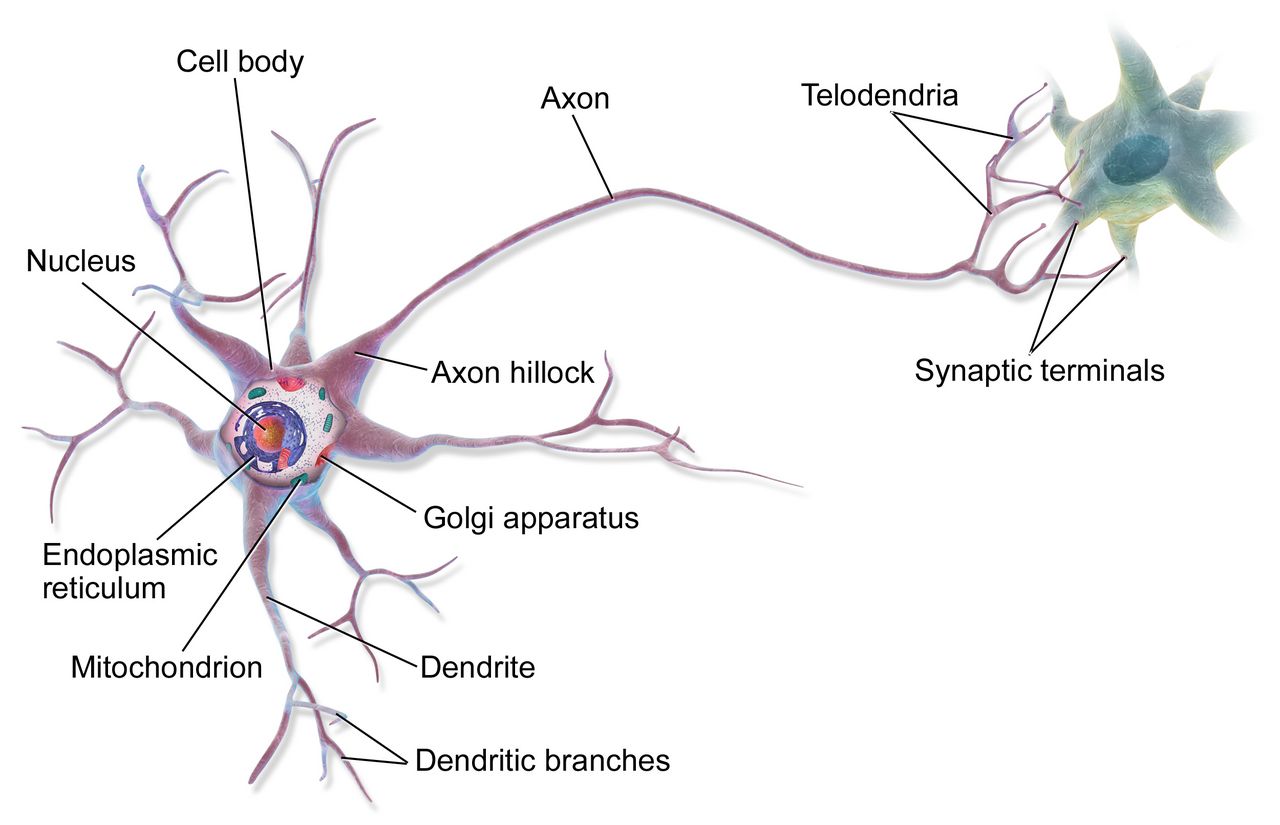
Psychiatry is a medical specialty, so its terms are built exactly like every other specialty’s. The pivot root is psych/o, mind, from the Greek psyche. Add iatr/o (physician, treatment) and -y and you get psychiatry, the medical treatment of the mind; a psychiatrist is a physician. Swap in -logy and you get psychology, the study of the mind, practiced by a psychologist who holds a doctorate but is not a physician. That single suffix difference — -iatry versus -logy — is the whole distinction, and it also explains pediatrics, geriatrics and podiatry.
Ment/o is the Latin root for mind and survives mostly in mental and dementia. Phren/o is a third root for mind, and it carries the chapter’s most famous ambiguity, addressed in the pearl below. To these add the mood suffixes. -thymia means mind or emotion: dysthymia (dis-THY-mee-uh) is chronic low-grade depressed mood, euthymic describes a normal mood state, and cyclothymia names alternating highs and lows. -phoria means to bear or to feel: euphoria is exaggerated well-being, dysphoria is a state of unease or dissatisfaction.
Two suffixes name whole categories of diagnosis. -mania denotes an excessive preoccupation or impulse — kleptomania (klep-toh-MAY-nee-uh) from klept/o, to steal; pyromania from pyr/o, fire. -phobia denotes a persistent, disproportionate fear: agoraphobia (ag-uh-ruh-FOH-bee-uh) is fear of situations that feel hard to escape, from agora, marketplace; claustrophobia is fear of enclosed spaces. Note that -phobia in a clinical diagnosis means fear, but in words such as photophobia and hydrophobia it means aversion or intolerance — a patient with meningitis is not afraid of light, they cannot tolerate it.
| Word part | Meaning | Example term | What the example means |
|---|---|---|---|
| psych/o | mind | psychosis | abnormal condition of the mind with loss of contact with reality |
| ment/o | mind | mental status | the state of a patient’s cognition and awareness |
| phren/o | mind; also diaphragm | schizophrenia | split mind: a chronic psychotic disorder |
| schiz/o | split, divided | schizoaffective | features of both psychosis and a mood disorder |
| iatr/o, -iatry | physician, treatment | iatrogenic | produced by medical treatment itself |
| somat/o | body | somatic | pertaining to the body rather than the mind |
| -thymia | mind, emotion, mood | dysthymia | chronic mild depressive mood |
| -phoria | to bear, to feel | dysphoria | state of unease or dissatisfaction |
| -mania | excessive preoccupation or impulse | kleptomania | compulsive impulse to steal |
| -phobia | fear, aversion | agoraphobia | fear of situations that feel inescapable |
| hedon/o | pleasure | anhedonia | inability to feel pleasure |
| orex/o, -orexia | appetite | anorexia | loss of appetite |
| hypn/o | sleep | hypnotic | agent that induces sleep |
| -lalia | speech, babble | echolalia | involuntary repetition of another’s words |
| -lytic | reducing, dissolving | anxiolytic | drug that reduces anxiety |
Phren/o means mind and diaphragm, and only context saves you. Schizo/phren/ia (skit-soh-FREE-nee-uh) uses the mind sense — a term coined for the split between thought and reality, not for split personality, which is a different condition entirely (dissociative identity disorder). But the phrenic nerve and phrenic arteries serve the diaphragm, and phrenoplegia is paralysis of the diaphragm. Ask what specialty you are reading in: if it is psychiatry, phren/o is mind; if it is thoracic anatomy, it is muscle. Then remember the plurals — psychosis becomes psychoses, neurosis becomes neuroses, diagnosis becomes diagnoses, all by the -is to -es rule.
The words the mental status exam actually uses
Documentation in psychiatry rewards precision, because several near-synonyms are not synonyms at all. Mood is the patient’s sustained internal emotional state, reported by the patient; affect is the observable emotional expression, described by the clinician as full, constricted, blunted, flat or labile. A note may honestly read mood “fine,” affect flat, and the mismatch is itself clinical information.
Delusion and hallucination are likewise distinct. A delusion is a fixed false belief that persists despite contrary evidence. A hallucination is a false sensory perception without an external stimulus — auditory hallucinations are the most common in psychotic disorders, while visual hallucinations more often suggest a medical cause such as delirium or withdrawal. An illusion, by contrast, is a misinterpretation of a stimulus that really is there.
Obsession and compulsion pair the same way: an obsession is an intrusive, unwanted thought; a compulsion is the repetitive behavior performed to relieve the distress the obsession creates. Obsessive-compulsive disorder (OCD) is named for the loop between them. Add anhedonia (an-hee-DOH-nee-uh), the loss of pleasure in activities once enjoyed, and catatonia (kat-uh-TOH-nee-uh), a syndrome of marked psychomotor disturbance ranging from immobility to purposeless agitation, and you have most of the high-frequency descriptors.
Two more distinctions matter at intake. Delirium is an acute, fluctuating disturbance of attention and awareness with an identifiable medical cause — infection, medication, metabolic derangement — and it is potentially reversible. Dementia is a chronic, progressive decline in cognition. Confusing them delays a workup that a delirious patient urgently needs. And ideation simply means the formation of ideas, so suicidal ideation (SI) documents thoughts, which the note then qualifies as passive or active, with or without plan and intent.
Treatments, categories and current usage
Psychopharmacology names drugs by what they oppose or produce. Antidepressants include the selective serotonin reuptake inhibitors (SSRIs). Anxiolytics (ang-zee-oh-LIT-iks) reduce anxiety, from anxi/o plus -lytic, to loosen or dissolve. Antipsychotics, historically called neuroleptics, treat psychotic symptoms. Mood stabilizers such as lithium moderate the swings of bipolar disorder. Sedative-hypnotics calm and induce sleep. Somatic treatments include electroconvulsive therapy (ECT) and transcranial magnetic stimulation (TMS); psychotherapies include cognitive behavioral therapy (CBT).
Diagnostic language is standardized by the Diagnostic and Statistical Manual of Mental Disorders, currently the DSM-5-TR. Because the manual is revised, terminology shifts, and a student who learned an older word may meet its replacement on a chart. Mental retardation has been replaced by intellectual disability. Manic depression is now bipolar disorder. Asperger disorder was folded into autism spectrum disorder. Neurosis and hysteria have been retired from formal diagnosis, though neurosis survives in older records and in general speech. Preferred phrasing is person-first: a patient with schizophrenia, not a schizophrenic.
| Abbreviation | Meaning | Abbreviation | Meaning |
|---|---|---|---|
| DSM-5-TR | Diagnostic and Statistical Manual, 5th ed., text revision | MSE | mental status examination |
| MDD | major depressive disorder | GAD | generalized anxiety disorder |
| OCD | obsessive-compulsive disorder | PTSD | posttraumatic stress disorder |
| ADHD | attention-deficit/hyperactivity disorder | ASD | autism spectrum disorder |
| SI / HI | suicidal / homicidal ideation | SUD | substance use disorder |
| ECT | electroconvulsive therapy | CBT | cognitive behavioral therapy |
| SSRI | selective serotonin reuptake inhibitor | TMS | transcranial magnetic stimulation |
Psychiatric terms are built from the same parts as the rest of medicine, but the pairs that matter most — mood and affect, delusion and hallucination, obsession and compulsion, delirium and dementia — are distinguished by meaning rather than by word part, so learn them as contrasts.
Section 5The special senses: eye, ear and beyond
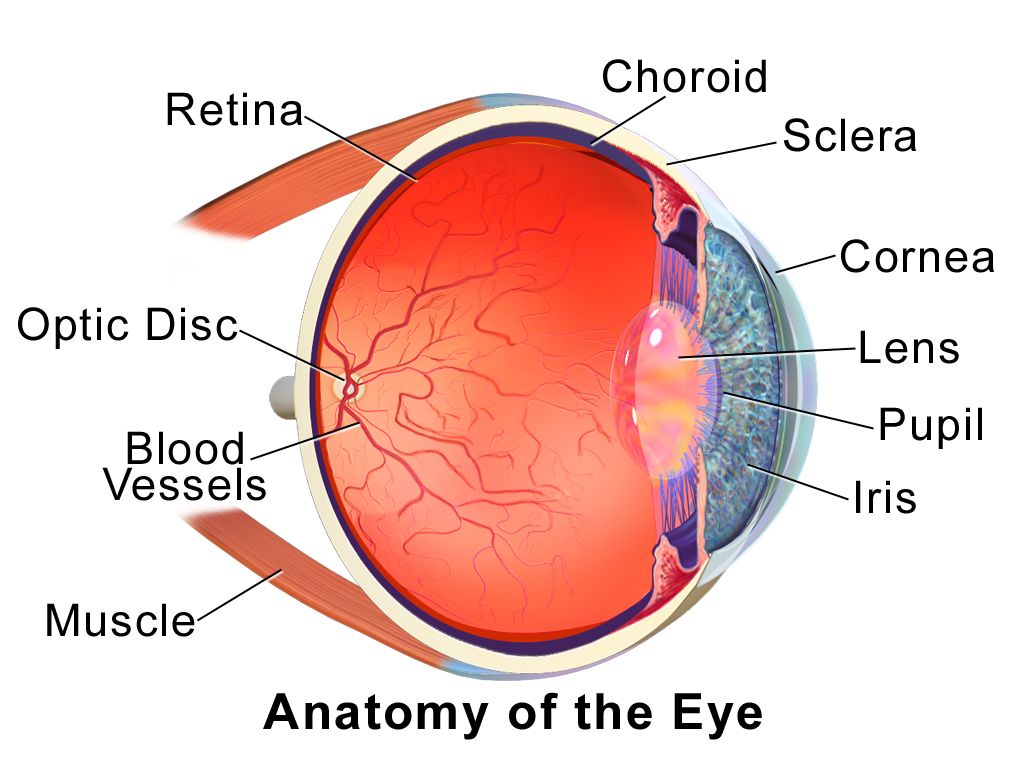
The eye: roots from front to back
Three roots mean eye or vision, and they are not interchangeable in practice. Ophthalm/o is Greek for eye and builds the medical specialty: an ophthalmologist (of-thal-MOL-uh-jist) is a physician who treats eye disease surgically and medically. Note the spelling — ph, th, alm — the most commonly misspelled word in the chapter. Ocul/o is Latin for eye and appears in descriptive terms such as intraocular and extraocular. Opt/o and optic/o mean vision, and give optometrist (a doctor of optometry who examines eyes and prescribes correction) and optician (who fits lenses).
Now travel through the eye. The blephar/o (eyelid) opens onto the conjunctiv/o (the membrane lining lid and sclera), tears arrive from the lacrim/o or dacry/o apparatus, light passes the kerat/o or corne/o (cornea), through the pupil framed by the irid/o (iris), through the phac/o or phak/o (lens), across the vitre/o (vitreous body) and onto the retin/o (retina), whose central macula gives sharp vision and whose papill/o (optic disc) carries the optic nerve out of the eye. Wrapping it all is the scler/o, the white outer coat.
| Word part | Meaning | Example term | What the example means |
|---|---|---|---|
| ophthalm/o | eye | ophthalmoscopy | visual examination of the interior of the eye |
| ocul/o | eye | intraocular | pertaining to within the eye |
| opt/o, optic/o | vision, sight | optometry | measurement of vision |
| blephar/o | eyelid | blepharoptosis | drooping of the eyelid |
| conjunctiv/o | conjunctiva | conjunctivitis | inflammation of the conjunctiva (pinkeye) |
| kerat/o, corne/o | cornea | keratitis | inflammation of the cornea |
| irid/o, ir/o | iris | iridectomy | excision of part of the iris |
| cycl/o | ciliary body | cycloplegia | paralysis of the ciliary muscle |
| uve/o | uvea (iris, ciliary body, choroid) | uveitis | inflammation of the uveal tract |
| phac/o, phak/o | lens | aphakia | absence of the lens |
| vitre/o | vitreous body, glassy | vitrectomy | removal of the vitreous |
| retin/o | retina | retinopathy | disease of the retina |
| scler/o | sclera; hard | scleritis | inflammation of the sclera |
| dacry/o, lacrim/o | tear, tear duct | dacryocystitis | inflammation of the tear sac |
| papill/o | optic disc; nipple-like | papilledema | swelling of the optic disc |
| pupill/o | pupil | pupillary | pertaining to the pupil |
| -opia, -opsia | vision condition | hemianopsia | loss of vision in half the visual field |
| presby/o | old age | presbyopia | age-related loss of near focusing |
| ambly/o | dull, dim | amblyopia | reduced vision in an otherwise healthy eye |
| -tropia | turning (manifest eye deviation) | esotropia | inward turning of an eye |
Decode a few before moving on. Blephar/o/ptosis (blef-uh-rop-TOH-sis) = eyelid + drooping. Kerat/o/plasty = cornea + surgical repair, better known as corneal transplant. Dacry/o/cyst/o/rhin/o/stomy = tear + sac + nose + new opening, an operation that drains a blocked tear sac into the nose. Presby/opia (prez-bee-OH-pee-uh) = old age + vision condition, the reason reading glasses arrive in the mid-forties. Compare it with myopia (nearsightedness) and hyperopia (farsightedness), and with emmetropia, normal refraction.
Four eye look-alikes that change the diagnosis. Kerat/o means cornea in ophthalmology but horny or hardened tissue in dermatology — keratitis is an inflamed cornea, keratosis is a thickened skin lesion. Scler/o is the white of the eye here, but simply hard in scleroderma and multiple sclerosis. Papill/o (optic disc) versus pupill/o (pupil): papilledema is a sign of raised intracranial pressure, while a pupillary finding is about the black aperture — one letter, two different exams. And -opia versus -opsia are simply two spellings of the same vision-condition suffix; both are correct, so hemianopia and hemianopsia name one condition.
Eye pathology, tests and operations
A cataract is a clouding of the lens; the standard repair is phacoemulsification (fay-koh-ee-mul-sih-fih-KAY-shun), in which the lens is broken up with ultrasound and replaced with an intraocular lens (IOL). Glaucoma is optic nerve damage usually associated with elevated intraocular pressure (IOP), which is why tonometry (toh-NOM-eh-tree), the measurement of pressure, is a screening test. Age-related macular degeneration (AMD) destroys central vision; diabetic retinopathy damages retinal vessels; retinal detachment separates the retina from its supporting layer and is an emergency.
Alignment and movement have their own words. Strabismus (struh-BIZ-mus) is misalignment of the eyes, subdivided into esotropia (inward) and exotropia (outward). Untreated in childhood it can lead to amblyopia (am-blee-OH-pee-uh). Nystagmus (nis-TAG-mus) is involuntary rhythmic eye movement, often a neurologic sign. Lid and surface complaints include hordeolum (hor-DEE-oh-lum, a stye), chalazion (kuh-LAY-zee-on, a blocked meibomian gland), blepharitis and xerophthalmia (dry eye, from xer/o, dry).
Examination terms are equally decodable. Visual acuity (VA) is measured with a Snellen chart. Ophthalmoscopy or funduscopy inspects the retina. Perimetry maps the visual fields. A slit-lamp exam magnifies the anterior segment; fluorescein angiography images retinal circulation. Surgical options beyond cataract repair include LASIK, trabeculoplasty and iridotomy for glaucoma, scleral buckle for detachment, blepharoplasty for the lids, and enucleation, removal of the entire eyeball.
Plurals here follow familiar rules: conjunctiva becomes conjunctivae, cornea becomes corneae, iris becomes irides (IR-ih-deez), macula becomes maculae, and fundus becomes fundi.
The ear, and the senses that ride along
Two roots mean ear — Greek ot/o and Latin aur/o or auricul/o — and two mean hearing, audi/o and acous/o (with the suffix form -acusis or -cusis). The specialty is otology, nested inside otolaryngology, commonly charted as ENT. Anatomy divides into outer ear, middle ear (the tympan/o or myring/o membrane plus the ossicles malle/o, incud/o and staped/o, connected to the throat by the auditory or eustachian tube, salping/o) and inner ear (cochle/o for hearing, vestibul/o and labyrinth/o for balance). The ossicles keep Latin plurals worth rehearsing: one malleus but two mallei, one incus but two incudes, while stapes is unchanged in the plural — one stapes, two stapes (the form stapedes is also correct but rare).
| Word part | Meaning | Example term | What the example means |
|---|---|---|---|
| ot/o | ear | otalgia | ear pain |
| aur/o, auricul/o | ear | aural | pertaining to the ear |
| audi/o, audit/o | hearing | audiometry | measurement of hearing |
| acous/o, -acusis | hearing | presbycusis | age-related hearing loss |
| tympan/o | tympanic membrane, middle ear | tympanoplasty | surgical repair of the eardrum |
| myring/o | tympanic membrane | myringotomy | incision of the eardrum to drain fluid |
| staped/o | stapes (stirrup) | stapedectomy | removal of the stapes |
| salping/o | auditory (eustachian) tube; also uterine tube | salpingitis | inflammation of a tube |
| cochle/o | cochlea | cochlear implant | device stimulating the cochlear nerve |
| labyrinth/o | inner ear labyrinth | labyrinthitis | inflammation of the inner ear |
| vestibul/o | vestibule (balance apparatus) | vestibular | pertaining to balance structures |
| mastoid/o | mastoid process | mastoiditis | inflammation of the mastoid air cells |
| cerumin/o | cerumen, earwax | ceruminolytic | agent that softens earwax |
| -osmia | smell | anosmia | loss of the sense of smell |
| -geusia | taste | dysgeusia | distorted sense of taste |
Common conditions decode cleanly. Otitis media is inflammation of the middle ear, the childhood classic treated with myringotomy (mir-in-GOT-oh-mee) and pressure-equalizing tubes when it recurs. Otitis externa is swimmer’s ear. Otorrhea is discharge from the ear (-rrhea, flow) and otorrhagia is bleeding. Otosclerosis (oh-toh-skleh-ROH-sis) is abnormal bone growth fixing the stapes, producing conductive loss. Tinnitus (TIN-ih-tus) is ringing; vertigo is the illusion of movement; Ménière disease combines vertigo, tinnitus, aural fullness and fluctuating hearing loss.
Hearing loss is classified by where the problem sits: conductive loss involves the outer or middle ear, sensorineural (SNHL) involves the cochlea or the eighth cranial nerve, and mixed involves both. Audiometry (aw-dee-OM-eh-tree) quantifies thresholds; tympanometry tests eardrum mobility; otoscopy inspects the canal and drum; and the tuning-fork Rinne and Weber tests separate conductive from sensorineural loss at the bedside. A vestibular schwannoma, still often called acoustic neuroma, is a benign tumor of the eighth nerve sheath.
Two ear cautions worth carrying into clinical. First, salping/o means tube and serves two organs: in the ear it is the auditory (eustachian) tube, in gynecology the uterine tube. Salpingectomy in an operative report is nearly always gynecologic — read the specialty before you read the root. Second, the eye and ear abbreviations OD, OS, OU (right eye, left eye, both eyes) and AD, AS, AU (right ear, left ear, both ears) appear on ISMP’s list of error-prone abbreviations because they are so easily confused with each other and with other codes. You must recognize them when reading older charts, but current practice is to write out right eye, left ear, both eyes. Note also that OD separately abbreviates overdose and doctor of optometry — three meanings, one abbreviation, which is exactly the problem.
| Abbreviation | Meaning | Abbreviation | Meaning |
|---|---|---|---|
| IOP | intraocular pressure | VA | visual acuity |
| EOM | extraocular movements | PERRLA | pupils equal, round, reactive to light and accommodation |
| AMD (ARMD) | age-related macular degeneration | IOL | intraocular lens |
| SNHL | sensorineural hearing loss | TM | tympanic membrane |
| ABR / BAER | auditory brainstem response | PE tubes | pressure-equalizing (tympanostomy) tubes |
| ENT | ear, nose and throat | HEENT | head, eyes, ears, nose and throat |
| OD, OS, OU | right eye, left eye, both eyes — avoid; write out | AD, AS, AU | right ear, left ear, both ears — avoid; write out |
The eye and ear each supply a dense, front-to-back family of combining forms, so learning the anatomy in order gives you the vocabulary in order — while kerat/o, scler/o, papill/o and salping/o demand that you check the specialty before you commit to a meaning.
The chapter in one breath
The nervous system gave you a compact structural core — neur/o, encephal/o, cerebr/o, cerebell/o, mening/o, myel/o, radicul/o, gli/o, dur/o, ventricul/o, crani/o — and a deficit vocabulary that does most of the clinical work: -plegia and -paresis for paralysis and weakness, -esthesia and -algesia for sensation and pain, -phasia for language, -kinesia for movement, -taxia for coordination, -lepsy for seizure. Prefixes of extent (mono-, hemi-, para-, tetra-) then say how much of the body is involved. Pathology recombined those parts into meningitis, hydrocephalus, radiculopathy, myelomeningocele and glioblastoma; procedures added craniotomy, craniectomy, laminectomy, ventriculostomy and the VP shunt. Psychiatry reused the machinery with psych/o, ment/o, phren/o, -thymia, -mania and -phobia, but its highest-yield knowledge is a set of contrasts — mood versus affect, delusion versus hallucination, obsession versus compulsion, delirium versus dementia. The special senses closed the chapter with two dense root families, front-to-back through the eye and outer-to-inner through the ear. Throughout, the same discipline applies: divide the word, check whether a root has a second meaning in another specialty, and reassemble.
Words worth knowing
| Term | What it means |
|---|---|
| aphasia (uh-FAY-zhuh) | Loss of the ability to produce or understand language, from a lesion in the language areas of the brain; distinct from dysarthria, which is a problem of articulation. |
| ataxia (uh-TAK-see-uh) | Lack of muscular coordination, classically from cerebellar disease; a- without + -taxia coordination. |
| encephalopathy (en-sef-uh-LOP-uh-thee) | Any diffuse disease or dysfunction of the brain, often used before the cause is identified. |
| hemiparesis (hem-ee-puh-REE-sis) | Weakness of one side of the body; contrast hemiplegia, complete paralysis of one side. |
| hydrocephalus (hye-droh-SEF-uh-lus) | Accumulation of cerebrospinal fluid within the ventricles, often treated with a ventriculoperitoneal shunt. |
| meninges (meh-NIN-jeez) | The three membranes covering the brain and spinal cord; singular meninx. |
| myelomeningocele (my-eh-loh-meh-NING-goh-seel) | Neural tube defect in which meninges and spinal cord tissue protrude through a vertebral opening. |
| paresthesia (par-es-THEE-zhuh) | Abnormal sensation such as tingling, burning or pins and needles, without an external cause. |
| radiculopathy (ra-dik-yoo-LOP-uh-thee) | Disease of a spinal nerve root, typically producing pain, numbness or weakness in that root’s distribution. |
| syncope (SING-kuh-pee) | Transient loss of consciousness from a temporary drop in cerebral perfusion; fainting. |
| craniectomy | Removal of a portion of the skull that is not immediately replaced, done to accommodate brain swelling. |
| anhedonia (an-hee-DOH-nee-uh) | Inability to experience pleasure from activities that were previously enjoyable; a core feature of major depression. |
| affect | The emotional expression observed by the clinician (full, blunted, flat, labile); mood is what the patient reports. |
| delusion | A fixed false belief maintained despite clear contrary evidence; contrast hallucination, a false sensory perception. |
| delirium | Acute, fluctuating disturbance of attention and awareness with a medical cause; potentially reversible, unlike dementia. |
| blepharoptosis (blef-uh-rop-TOH-sis) | Drooping of the upper eyelid; often shortened to ptosis, with a silent initial p. |
| presbyopia (prez-bee-OH-pee-uh) | Age-related loss of the lens’s ability to focus on near objects. |
| phacoemulsification (fay-koh-ee-mul-sih-fih-KAY-shun) | Ultrasonic fragmentation and removal of a cataractous lens, usually with intraocular lens implantation. |
| presbycusis (prez-bih-KYOO-sis) | Progressive, age-related sensorineural hearing loss, typically affecting high frequencies first. |
| myringotomy (mir-in-GOT-oh-mee) | Surgical incision of the tympanic membrane to drain middle ear fluid, often with placement of PE tubes. |