What Ethics Is, and What It Is Not
Somewhere in your working week there is a moment nobody trained you for. A family asks you to keep a diagnosis from their mother. A supervisor tells you to chart something you did not personally verify. A colleague cuts a corner that saves forty minutes and probably harms no one. You already know these moments feel different from ordinary problems, and you already have instincts about them. What you may not have is a vocabulary precise enough to explain those instincts to someone who disagrees, or to check whether they are worth trusting. That is the job of this chapter and this book. We begin by drawing a boundary: ethics is the systematic study of how we ought to act and what kind of people we ought to become — and it is not law, not religion, not custom, not etiquette, not compliance, and not simply how you feel about a thing at eight in the morning after a bad shift.
By the end of this chapter you can
- Distinguish descriptive ethics, normative ethics, metaethics and applied ethics, and sort a given question into the right one.
- Explain how the words ethics and morality are used in professional settings, and why that split is a useful convention rather than a discovery about the world.
- Show, with at least one historical case each, why ethics cannot be reduced to law, religion, custom, etiquette, feeling or compliance.
- State Hume’s law (the is–ought gap) and G. E. Moore’s naturalistic fallacy, and identify them in everyday arguments.
- Summarise the Euthyphro dilemma and say precisely what it does and does not establish about divine command theory.
- Map the three main families of normative theory — consequentialism, deontology and virtue ethics — onto the questions each answers best.
- Use the language of obligation accurately: obligatory, permissible, forbidden, supererogatory, prima facie duty, moral status, rights and correlative duties.
- Tell a genuine moral dilemma apart from moral distress, moral uncertainty and moral injury.
- Explain why professional codes function as floors rather than ceilings, drawing on the 1932–1972 Tuskegee study and the 1986 Challenger launch decision.
Section 1The Study of the Ought
A subject defined by a single question
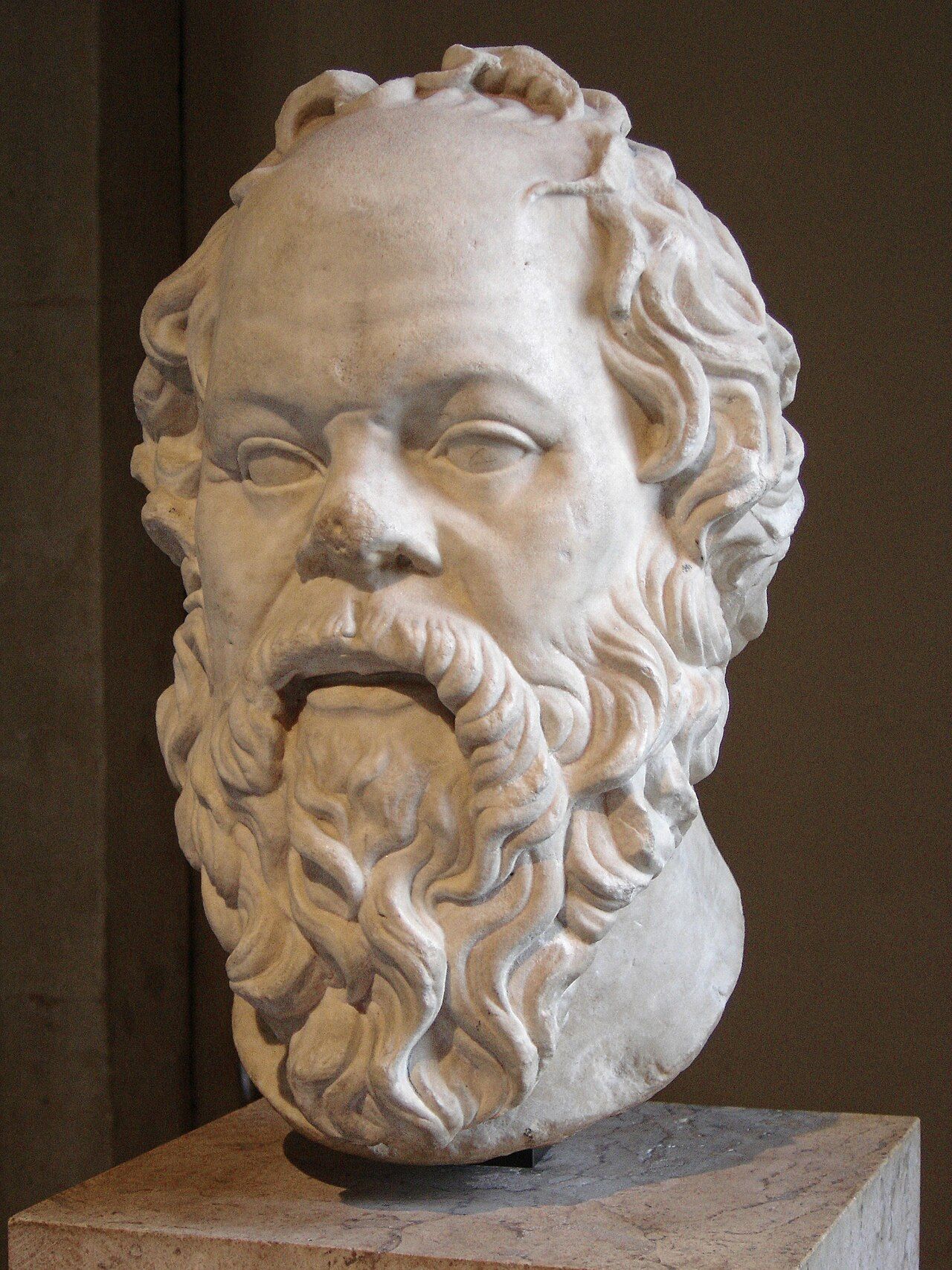
In Book I of Plato’s Republic, written around 375 BCE, Socrates stops an argument to remind his companions what is actually at stake. They are not debating a small matter, he says, but how a person ought to live. That sentence is the whole discipline in miniature. Ethics is the branch of inquiry that takes seriously the difference between what is the case and what ought to be the case — between describing how people behave and judging how they should. Physics, epidemiology and accounting are all in the business of description. Ethics is in the business of the ought.
That may sound abstract until you notice that almost every serious disagreement at work is an ought disagreement wearing a disguise. Two nurses agree completely about the patient’s creatinine, the family’s wishes and the hospital’s staffing ratio, and still disagree about what to do. No additional fact will settle it. What they need is a way to reason about the ought itself: to say what makes an action right, whose interests count, how much they count, and what to do when the answers pull in different directions. Ethics supplies that machinery. It does not supply certainty, and any book that promises certainty is selling something.
A word about the two nouns. Morality and ethics come from nearly identical roots — Latin mores and Greek ethos, both meaning custom or character — and most philosophers use them interchangeably. In professional and clinical settings a convention has grown up that is worth adopting because it is convenient, not because it is deep: morality names the actual norms a person or community lives by, while ethics names the systematic, critical reflection on those norms. On that convention, everyone has a morality; ethics is what happens when you hold it up to the light and ask whether it survives inspection.
Four kinds of question, four branches
Confusion in ethics is very often a category error — two people answering different questions and each wondering why the other is being obtuse. Four branches of inquiry are usually distinguished, and learning to name them will save you hours. Descriptive ethics is empirical: it asks what people actually believe and do, and it belongs to anthropology, sociology and psychology. When Gallup reports that roughly seven in ten American adults say doctors should be allowed to end a terminally ill patient’s life by painless means at the patient’s request, that is descriptive ethics. It tells you about a population, not about whether aid in dying is permissible.
Normative ethics asks the ought question directly: what makes actions right or wrong, and what general standard should guide us? This is the home of the great theories — utilitarianism, Kantian duty ethics, virtue ethics — and it occupies Chapters 3 through 6. Metaethics steps back further and asks about the status of moral claims themselves. When you say “torturing prisoners is wrong,” are you stating a fact that could be true or false, or expressing an attitude? Are there moral truths independent of what any culture believes? Chapter 7 lives here. Applied ethics — the reason this book exists — brings the tools to bear on concrete domains: clinical care, business, technology, the environment.
The branches interlock. A committee arguing about a ventilator allocation protocol is doing applied ethics, but its members are leaning on normative theories they may not have named, and their disagreement may turn out to be metaethical. Knowing which floor of the building you are on is the first practical skill this course teaches.
| Branch | The question it asks | A sample question | Who does it |
|---|---|---|---|
| Descriptive ethics | What do people actually believe and do? | What proportion of nurses report having falsified a chart entry? | Psychologists, sociologists, anthropologists |
| Normative ethics | What ought we to do, and why? | Is it ever right to deceive a patient for their own good? | Moral philosophers |
| Metaethics | What are moral claims, and can they be true? | Is “cruelty is wrong” a fact or an expression of feeling? | Philosophers of language and mind |
| Applied ethics | How do the general standards resolve this case? | Should this hospital ration ICU beds by predicted survival? | Clinicians, ethicists, lawyers, engineers, committees |
Why you cannot squeeze an ought out of an is
In 1740, in Book III of A Treatise of Human Nature — the volume on morals, which appeared a year after the first two — David Hume noticed something about the moral arguments of his contemporaries. They would proceed for pages in the ordinary way, making claims about what is and is not the case, and then, imperceptibly, the verbs would change: suddenly every sentence was about what ought to be. Hume asked, mildly, how this new relation had been deduced from the old ones. Nobody had an answer. The point has been known ever since as Hume’s law or the is–ought gap: no set of purely factual premises entails an evaluative conclusion without at least one evaluative premise smuggled in.
In 1903, in Principia Ethica, G. E. Moore sharpened a related complaint into what he called the naturalistic fallacy: the mistake of defining goodness in terms of some natural property such as pleasure, or survival, or what evolution selected for. His test was the open question argument. If “good” simply meant “pleasant,” then asking “this is pleasant, but is it good?” would be as empty as asking “this is a bachelor, but is he unmarried?” It is not empty. The question stays open, which suggests the two terms are not identical. Philosophers still argue about how much Moore proved, but the practical lesson is durable.
You will meet the gap constantly. “It is natural, so it is fine.” “Everyone does it, so it cannot be wrong.” “The algorithm found this pattern in the data, so we should act on it.” Each of these leaps from a description to a prescription and hopes you will not notice the seam. Facts matter enormously in ethics — you cannot reason well about opioid prescribing without knowing pharmacology — but they never do the work alone.
Ethics is the disciplined study of what we ought to do and become, and its central logical feature is that no pile of facts, however large, yields an ought without a stated value premise.
Section 2Six Things Ethics Is Not
Not law, and not compliance
The most common confusion is the easiest to dispel. Law and ethics overlap heavily — both prohibit assault and fraud — but they come apart in all four possible ways. Some things are legal and wrong: the Fugitive Slave Act of 1850 required citizens of free states to assist in returning escaped enslaved people, and the Nuremberg Laws of 1935 were duly enacted German statutes. Some things are illegal and right, or at least defensible: when Rosa Parks refused to surrender her seat in Montgomery on 1 December 1955, she was breaking a valid municipal ordinance. Some things are both, and some are neither.
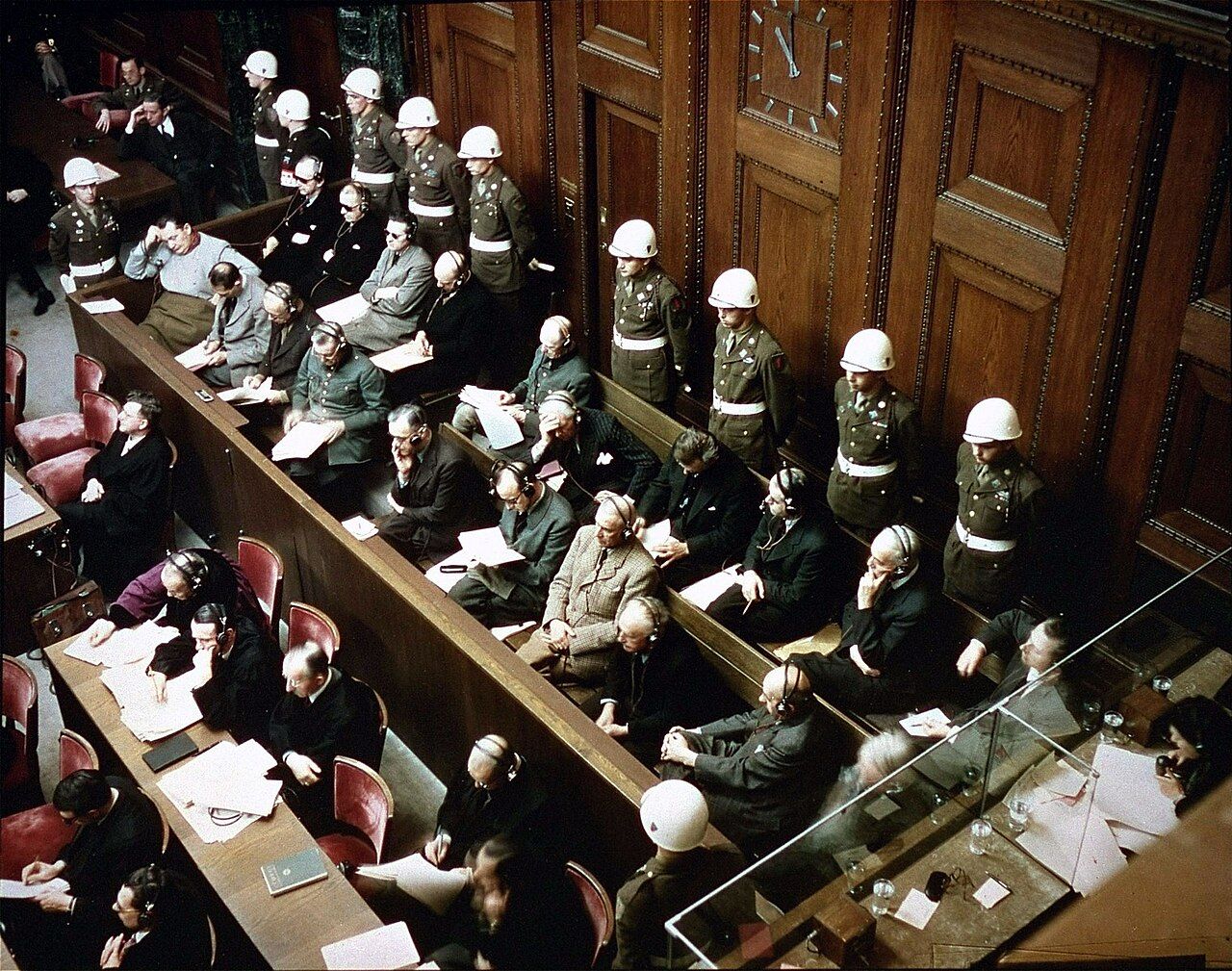
The Nuremberg Doctors’ Trial of 1946–47 forced this into legal doctrine. Twenty-three German physicians and administrators were tried for experiments on concentration camp prisoners; several argued that no German law had forbidden what they did and that no international code of research ethics existed. The tribunal answered by writing one. The Nuremberg Code of 1947 opens with the sentence that the voluntary consent of the human subject is absolutely essential. It had no direct statutory force anywhere, and it changed research worldwide, which tells you something about where moral authority actually comes from.
A modern cousin of this confusion is treating ethics as compliance — the belief that if you have completed the annual training module and followed policy, you have behaved ethically. Enron had a sixty-four-page code of ethics. In 1999 its board voted twice — in June and again in October — to waive that code so that chief financial officer Andrew Fastow could run the off-books partnerships that helped conceal the company’s debt; the firm filed for bankruptcy in December 2001, costing thousands of employees their jobs and much of their retirement savings. A code you can suspend when it becomes inconvenient is not a moral commitment. It is paperwork.
Not religion, though religions carry ethics
Most of the world’s moral traditions have been transmitted inside religious ones, and it would be both false and ungrateful to pretend otherwise. But ethics as a discipline is not identical to any theology, for two reasons. The first is practical: a nurse in a public hospital in a religiously plural society must be able to justify a decision to a Catholic family, a Muslim family, a Hindu family and an atheist family in terms all of them can evaluate. Shared moral reasoning is the only common currency available.
The second reason is older and sharper. In Plato’s dialogue Euthyphro, set outside the Athenian courts around 399 BCE, Socrates asks a young man who claims expertise in piety a devastating question: is what is holy loved by the gods because it is holy, or is it holy because the gods love it? This is the Euthyphro dilemma, and it presses on any divine command theory that defines rightness simply as what God commands. Take the first horn and there is a standard of goodness independent of the command, which the command tracks. Take the second and goodness becomes arbitrary — cruelty would have been good had it been commanded — which most believers themselves reject.
Serious theologians have serious replies, most commonly that God’s commands flow from a divine nature that simply is good, so the dilemma poses a false choice. This is a live debate rather than a settled rout, and honest teaching should say so. What the dilemma does establish is narrower and still important: appealing to authority, divine or otherwise, does not by itself end a moral argument, because one can always ask what makes that authority worth obeying.
Not feelings, not custom, not etiquette
“It just feels wrong” is where moral thinking often begins, and the psychology backs that up. Jonathan Haidt’s 2001 paper in Psychological Review argued that moral judgement is usually intuition first and reasoning afterwards; in his experiments participants were “morally dumbfounded,” certain that an act was wrong yet unable to produce a reason. Joshua Greene’s 2001 imaging studies in Science found that up-close, personal dilemmas recruit emotional circuitry that impersonal ones do not. Feelings are data. They are the smoke detector, and a smoke detector that never went off would be useless.
But a smoke detector also goes off when you make toast. Disgust has historically tracked people as often as pathogens — it has been mobilised against interracial marriage, against people with disabilities, against those with HIV. If a strong feeling were self-justifying, there would be no way to say that any of those reactions were mistaken, and we plainly want to say exactly that. The role of reasoning is to audit the intuition: to ask what the feeling is responding to, whether that feature is morally relevant, and whether we would accept the same reasoning applied to ourselves.
Custom fails for the same structural reason. Foot-binding, duelling and child labour were all customary, widely endorsed, and defended by decent people at the time. So does etiquette, which governs a real but different domain: which fork, how to address a judge, whether to use a colleague’s first name. Etiquette is local, largely arbitrary and revisable by agreement. Ethics claims a stronger kind of authority — you cannot repeal the wrongness of exploiting a patient by holding a vote. Confusing the two produces the person who is scandalised by informality and untroubled by cruelty.
| Ethics is confused with… | The tempting thought | Why it fails | Case in point |
|---|---|---|---|
| Law | “If it is legal, it is permitted.” | Laws can be unjust; law lags behind moral insight and is silent on much of life. | Fugitive Slave Act, 1850; Nuremberg Laws, 1935 |
| Compliance | “I followed policy, so I am clear.” | Policies are drafted by fallible institutions and can be waived by them. | Enron board waives its own ethics code, 1999 |
| Religion | “It is right because it is commanded.” | Euthyphro dilemma; and plural societies need shared reasons. | Plato, Euthyphro, c. 399 BCE |
| Feelings | “It feels wrong, therefore it is.” | Intuitions are informative but demonstrably trackable to bias. | Haidt’s moral dumbfounding studies, 2000–2001 |
| Custom | “This is how it is done here.” | Customs have endorsed slavery, foot-binding and child labour. | Reform movements of the 19th century |
| Etiquette | “It is rude, so it is wrong.” | Etiquette is conventional and locally revisable; ethics is not. | Forms of address versus fraud |
Law, compliance, religious authority, feeling, custom and etiquette all shape moral life, but none of them can substitute for moral reasoning, because each can be — and historically has been — wrong.
Section 3The Map of Moral Theory
Three questions, three families
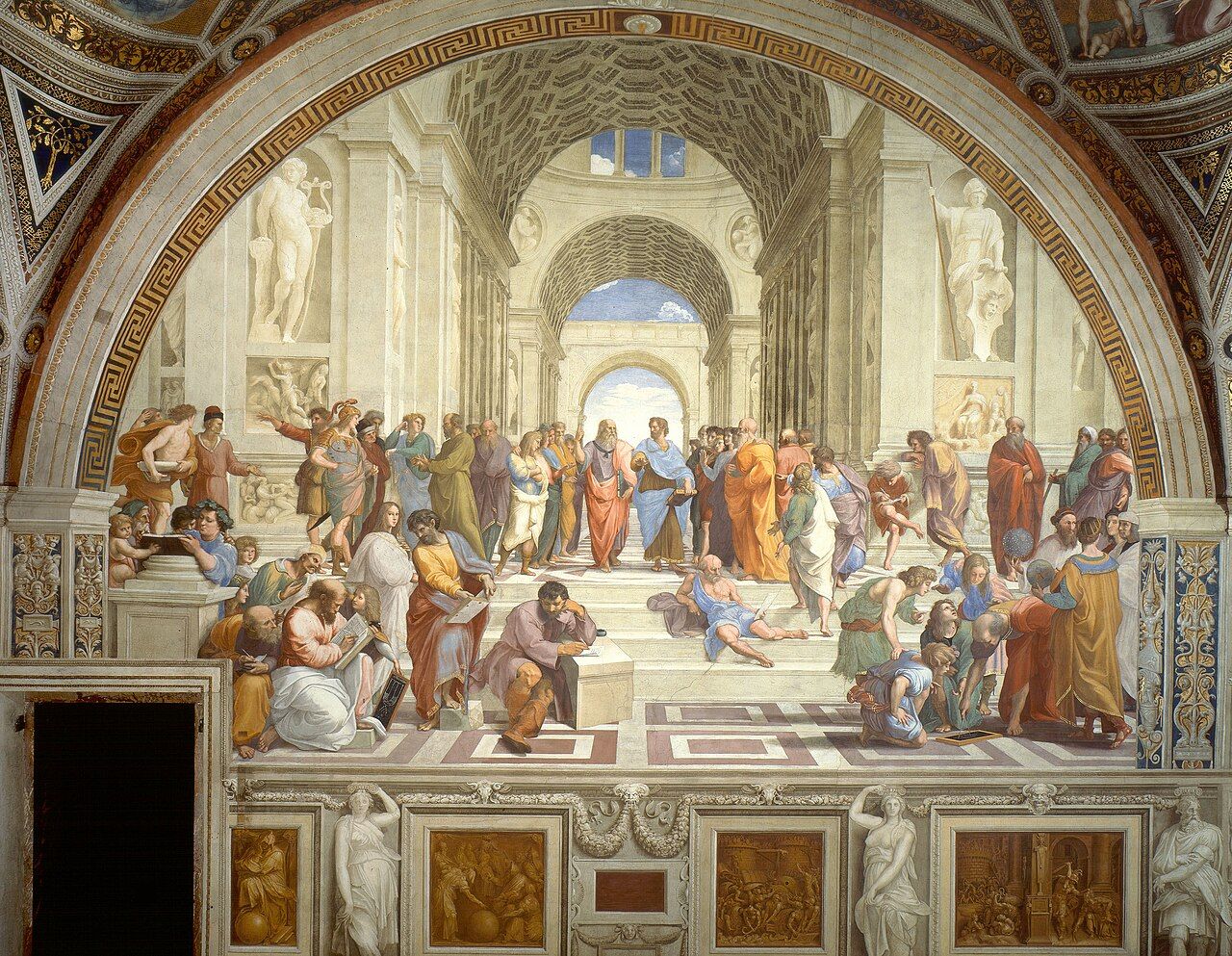
Faced with a choice, you can ask three quite different things. What will happen? What am I required to do? What kind of person would do this? Each question, taken as the fundamental one, generates a family of theory, and the rest of this book is largely an extended examination of the three.
Consequentialism holds that the rightness of an act depends entirely on its outcomes. Its most influential form, utilitarianism, was systematised by Jeremy Bentham in An Introduction to the Principles of Morals and Legislation (1789) and refined by John Stuart Mill in Utilitarianism (1861): act so as to produce the greatest happiness, counting each person’s happiness equally. It is the native language of public health, cost–benefit analysis and triage, and its strength is that it takes suffering seriously wherever it occurs. Its notorious weakness is that it can, in principle, license sacrificing an individual for aggregate gain.
Deontology holds that some acts are right or wrong in themselves, regardless of outcome. Immanuel Kant’s Groundwork of the Metaphysics of Morals (1785) grounds this in the categorical imperative, one formulation of which requires that we treat humanity, in ourselves and others, always as an end and never merely as a means. This is where rights, consent and human dignity live — and where the intuition comes from that you may not harvest one patient’s organs to save five, no matter how the arithmetic looks. Its weakness is rigidity when duties collide.
Virtue ethics, the oldest of the three, asks not “what should I do?” but “what should I be?” Aristotle’s Nicomachean Ethics (c. 340 BCE) locates the moral life in stable traits of character — courage, honesty, temperance, practical wisdom — developed by habituation and aimed at eudaimonia, human flourishing. It captures something the other two miss: that the clinician you want at three in the morning is defined less by the rules she can recite than by the person she has become. Its weakness is that it gives less action-guidance in a specific hard case.
A fourth tradition, care ethics, grew out of dissatisfaction with all three — it argues that they abstract away the concrete relationships in which most moral work actually happens. It appears in the table below and is taken up in Chapter 6.
| Family | Core question | Founding text | Best at | Where it strains | Chapter |
|---|---|---|---|---|---|
| Consequentialism / utilitarianism | What outcome does this produce? | Bentham 1789; Mill 1861 | Policy, triage, resource allocation | Can justify sacrificing individuals | 3 |
| Deontology | What duty binds me here? | Kant 1785; Ross 1930 | Consent, rights, confidentiality | Rigid when duties conflict | 4 |
| Virtue ethics | What would a good person do? | Aristotle, c. 340 BCE | Professional formation, character | Thin guidance in a novel case | 5 |
| Care ethics | What does this relationship require? | Gilligan 1982; Noddings 1984 | Dependency, family, nursing | Risk of partiality and burnout | 6 |
The theories are lenses, not switches
Students often want to be told which theory is correct so they can stop worrying. Resist that. In practice, mature moral reasoning is more like clinical reasoning: you run the case past several frames and pay attention when they converge or diverge. If consequentialist, deontological and virtue analyses all point the same way, you can act with confidence. When they diverge, the divergence itself is diagnostic — it usually locates exactly what is hard about the case.
Consider the thought experiment that has done more teaching work than any other. In 1967 the Oxford philosopher Philippa Foot, in an article about abortion and the doctrine of double effect, described a runaway tram that will kill five workers unless the driver diverts it onto a spur where it will kill one. Judith Jarvis Thomson developed the family of cases in 1976 and 1985, adding the version in which you can stop the trolley only by pushing a large stranger off a footbridge. Most people say divert, and most people refuse to push, even though the arithmetic is identical. That gap between the two answers is not stupidity; it is the deontological intuition about using a person as a means asserting itself against the consequentialist calculation.
None of this means the theories are mere flavours. They make incompatible claims and cannot all be wholly right. But the working assumption of applied ethics, following W. D. Ross’s The Right and the Good (1930), is that our considered moral judgements are evidence too. A theory that tells you it would be fine to frame an innocent person to prevent a riot has, most of us think, produced a reason to doubt the theory.
Consequences, duties and character each capture something real, and skilled moral reasoning uses all three as lenses rather than betting everything on one.
Section 4The Working Vocabulary
Values, norms, principles and rules
These four words get used interchangeably and should not be. A value is something held to be worth pursuing or protecting — health, autonomy, honesty, fairness. Values are what you care about. A norm is a standing expectation about conduct within a community; norms may or may not be morally defensible, which is why “normal” and “right” are not synonyms. A principle is a general action-guiding standard, broad enough to cover many cases: respect autonomy, do no harm, act justly. A rule is specific and operational: obtain written consent before an invasive procedure; do not accept gifts over fifty dollars.
The distinction earns its keep when principles and rules conflict. Rules are efficient because they do not require deliberation in the moment — a surgical checklist works precisely because nobody debates it at the bedside. But rules are written in advance by people who could not foresee your case, and every rule eventually meets a situation that its authors would have exempted. When that happens, the right move is to go back to the principle the rule was serving and ask what it actually requires here. That is not rule-breaking. It is what the rule was for.
Notice, too, that a value conflict is not the same as a fact conflict. Two colleagues who disagree about disclosing a diagnosis to a patient with early dementia may hold identical values in identical rank order and simply disagree about her capacity. Diagnosing which kind of conflict you are in determines whether the fix is a conversation about values or a further assessment.
Obligatory, permissible, forbidden, supererogatory
Moral philosophy uses a small set of deontic categories that sort actions by their status. An act is obligatory if you are required to do it — reporting suspected child abuse where you are a mandated reporter. It is forbidden if you are required not to do it. It is permissible if it is neither required nor forbidden, which covers most of life. And it is supererogatory if it is morally admirable but goes beyond what duty demands: the surgeon who flies to a disaster zone on unpaid leave does something praiseworthy that nobody could have demanded of her.
That last category matters more than its odd name suggests. Confusing the supererogatory with the obligatory is a reliable route to burnout, and it is epidemic in caring professions. If every extra shift, every unpaid hour and every sacrifice of your own family is felt as a duty, then falling short of superhuman becomes a moral failure. It is not. Recognising the category lets you honour the person who goes beyond duty without condemning the person who merely meets it.
Two further pieces of vocabulary. A right is a justified claim that generates a correlative duty in others: your right to refuse treatment imposes on me a duty not to treat you against your will. Rights divide into negative rights (claims that others not interfere) and positive rights (claims to be provided with something), and much political disagreement is really about how many positive rights exist. Moral status is the question of who or what counts morally at all — competent adults certainly, but also infants, patients in persistent vegetative states, fetuses, animals, future generations and, increasingly contested, artificial systems. Chapters 12 and 13 return to this.
| Category | Meaning | Test | Clinical example |
|---|---|---|---|
| Obligatory | Required; omitting it is wrong | Blame is appropriate if you do not | Reporting a needle-stick exposure |
| Forbidden | Required not to do it | Blame is appropriate if you do | Falsifying a medication record |
| Permissible | Allowed, but not required | No blame either way | Choosing which of two equivalent dressings to use |
| Supererogatory | Praiseworthy beyond duty | Praise if you do; no blame if you do not | Volunteering for a month in a cholera outbreak |
| Prima facie duty | A real duty that can be outweighed | Survives as a “moral residue” even when overridden | Truth-telling, when overridden by an immediate duty to prevent harm |
Prima facie duties and moral residue
W. D. Ross, writing in 1930 against what he saw as the over-tidiness of both Kant and Mill, proposed that we recognise several prima facie duties — fidelity, reparation, gratitude, justice, beneficence, self-improvement and non-maleficence — none of which is absolute. Each is a genuine duty that holds unless outweighed by another. When you break a lunch appointment to help at the scene of a crash, the duty of fidelity did not evaporate; it was outweighed, and it leaves behind an obligation to apologise and explain. Ross called what settles this judgement, and he was candid that no formula supplies it.
The residue is the philosophically interesting part. If overridden duties simply vanished, you would owe nothing at all to the person you stood up, and that is not how it feels or how we behave. Bernard Williams pressed this point from 1965 onward against theories that treat moral conflict as merely apparent: the regret we feel after choosing rightly in a hard case is evidence that something real was sacrificed. In practice, moral residue is why a good institution debriefs after a difficult decision instead of declaring the matter closed.
Ross’s framework is also the direct ancestor of the approach that dominates clinical ethics today. When Tom Beauchamp and James Childress published Principles of Biomedical Ethics in 1979, their four principles — respect for autonomy, non-maleficence, beneficence and justice — were explicitly presented as prima facie, none automatically trumping the others. Chapter 8 unpacks them in full.
Precise vocabulary — values against norms, principles against rules, obligatory against supererogatory, duties that can be outweighed but not erased — is what turns a vague unease into an argument someone else can check.
Section 5Why Applied Ethics, and Why It Fails
Knowing is not doing
The uncomfortable finding of a century of research is that moral knowledge and moral behaviour come apart. The psychologist James Rest proposed in the 1980s that ethical action requires four separate components, each of which can fail independently: moral sensitivity (noticing that a situation has an ethical dimension at all), moral judgement (working out what is right), moral motivation (prioritising it over competing goals such as career or convenience), and moral character (having the persistence to carry it through against resistance). Most professional failures are not failures of judgement. People usually know. They fail at step one or step three.
Stanley Milgram’s obedience studies, run at Yale in 1961 and 1962 and first published in 1963, remain the starkest demonstration of step three collapsing. In the best-known variation, twenty-six of forty ordinary participants continued administering what they believed were escalating electric shocks to the maximum 450-volt level because a man in a grey coat calmly told them the experiment required it. Milgram’s interpretation has been contested — archival work by Gina Perry and others has shown the experimenter improvised beyond the script and that compliance varied enormously across the two dozen variations — and the Stanford prison study of 1971 has come under even heavier methodological criticism. The headline number is less secure than the textbooks once implied. What survives the criticism is the finding that situational pressure, especially graded and incremental pressure from an authority, predicts behaviour far better than people’s stated values do.
Hannah Arendt, reporting on Adolf Eichmann’s 1961 trial in Jerusalem, called this the banality of evil: catastrophic harm delivered not by monsters but by careerists processing paperwork. Historians have since complicated her portrait of Eichmann specifically, showing he was more ideologically committed than she believed. The general phenomenon she named is nevertheless well documented, and it should change how you think about prevention. If harm mostly comes from ordinary people inside systems, then designing better systems matters as much as producing better individuals.
What went wrong at Tuskegee, and on the night before Challenger
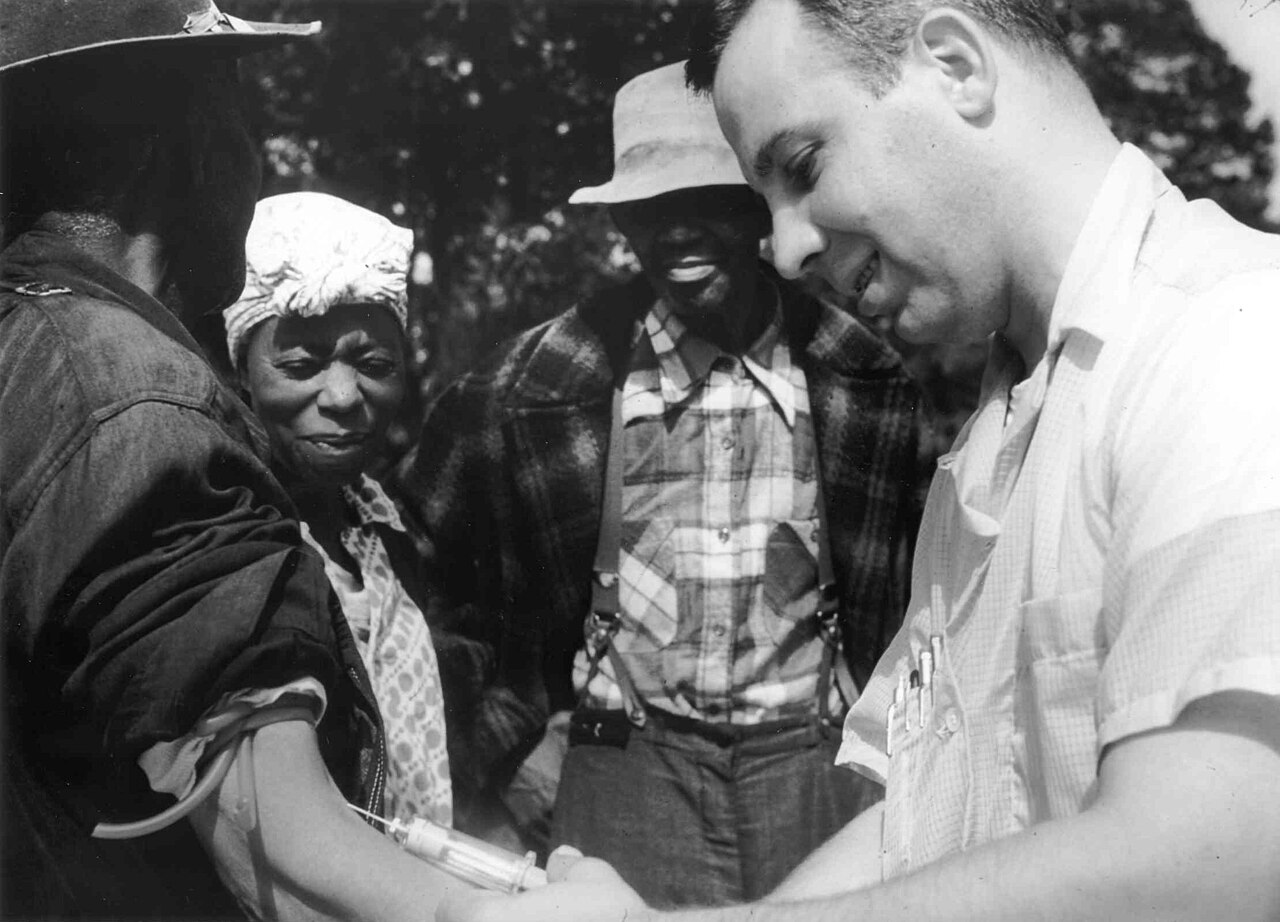
In 1932 the United States Public Health Service began a study in Macon County, Alabama, of the natural course of untreated syphilis in Black men. Six hundred men enrolled, 399 with latent infection and 201 controls. They were not told they had syphilis; they were told they were being treated for “bad blood” and given placebos, spinal taps described as free treatment, and a burial stipend. Penicillin became the standard cure by 1947. It was deliberately withheld, and the men were shielded from receiving it elsewhere, for another twenty-five years. A PHS venereal disease investigator named Peter Buxtun raised objections internally in 1966 and again in 1968 and got nowhere; he eventually gave the story to the Associated Press, and Jean Heller’s report ran on 25 July 1972. The study stopped that November.
Nothing about Tuskegee was rogue. It was funded, supervised, presented at conferences and published in the medical literature over four decades. It ended only because someone outside the chain of command was told. The consequences were structural: the National Research Act of 1974, which put institutional review boards on a statutory footing, and the Belmont Report of 18 April 1979 with its three principles of respect for persons, beneficence and justice. President Clinton apologised on behalf of the nation on 16 May 1997; five of the eight surviving participants were at the White House to hear it. The damage to Black Americans’ trust in medicine is measurable to this day.
The Challenger case shows a different failure mode. On the evening of 27 January 1986, engineers at Morton Thiokol including Roger Boisjoly and Allan McDonald argued against launching the next morning, because the rubber O-ring seals in the solid rocket boosters had never been tested near the forecast temperature and had shown erosion on previous cold launches. In the teleconference, senior management asked one of their own to set aside his engineering judgement and think like a manager. The recommendation was reversed. Challenger broke apart seventy-three seconds after lift-off on 28 January 1986; all seven aboard, including the teacher Christa McAuliffe, were killed. Nobody in that room wanted anyone to die. The organisation had simply made it easier to say yes than to say no.
Dilemma, distress, uncertainty and injury
The philosopher Andrew Jameton, then teaching ethics to nurses, introduced the term moral distress in 1984 to name an experience his students kept describing and had no word for: you know what the right course is, and institutional constraints prevent you from taking it. Staffing, hierarchy, cost, policy, a family’s insistence, an attending’s decision. The distinguishing feature is that the difficulty is not cognitive. Distress is not confusion; it is powerlessness, and it responds to different remedies. Confusion is treated with analysis. Powerlessness is treated with structural change — escalation pathways, ethics consultation, protected reporting, staffing standards.
Distinguish it from moral uncertainty, where you genuinely do not know what is right, and from a true moral dilemma, where two obligations conflict irreducibly. Distinguish all three from moral injury, a heavier concept brought from military psychiatry by Jonathan Shay in 1994 and developed by Brett Litz and colleagues in 2009: the lasting damage of having perpetrated, failed to prevent or witnessed acts that violate one’s deepest moral commitments. Sustained, unaddressed moral distress can become moral injury, and during the COVID-19 pandemic clinicians reported both at rates that made the distinction clinically urgent rather than academic.
Which brings us back to codes. Every profession has one — the American Nurses Association’s Code of Ethics for Nurses, first adopted in 1950 and most recently revised in 2025; the AMA’s, tracing to 1847. These documents are genuinely valuable: they encode hard-won consensus, they give you something to point at when pressured, and they set enforceable minimums. But they are floors. Wells Fargo employees opened roughly two million unauthorised customer accounts — a count a later review raised to about 3.5 million — and the bank paid a 185-million-dollar penalty in September 2016; it had a published code of ethics. So did the engineers who wrote Volkswagen’s emissions defeat device, revealed in September 2015. The point of studying ethics is to be the person who can tell when the floor is not high enough.
| Experience | What is happening | What it feels like | What actually helps |
|---|---|---|---|
| Moral uncertainty | You do not know which course is right | Confusion, second-guessing | Analysis, consultation, more information |
| Moral dilemma | Two obligations, both cannot be met | Being trapped; regret either way | Reasoned choice, then acknowledgement of residue |
| Moral distress | You know the right course but cannot take it | Powerlessness, frustration, anger | Structural change: escalation paths, staffing, ethics consults |
| Moral injury | You participated in or witnessed a deep violation | Shame, guilt, loss of trust in self or institution | Acknowledgement, restitution where possible, clinical support |
Ethical failure in professional life is rarely ignorance of the right answer — it is failure to notice, failure to act under pressure, or a system that made silence easier than objection.
The chapter in one breath
Ethics is the systematic study of how we ought to act and what we ought to become, and it divides into four kinds of inquiry: descriptive (what people do), normative (what makes acts right), metaethical (what moral claims even are) and applied (what follows in this case). Its defining logical feature, noticed by Hume in 1740 and sharpened by Moore in 1903, is that no accumulation of facts yields an ought without an explicit value premise. Ethics overlaps with law, religion, custom, etiquette, feeling and compliance, and is reducible to none of them — the Fugitive Slave Act was law, the Nuremberg Laws were statutes, and Enron had a sixty-four-page code. Normative theory clusters into three families that ask about consequences, duties and character; each captures something true, and skilled reasoning treats them as lenses rather than rival algorithms. A working vocabulary — obligatory, permissible, forbidden, supererogatory, prima facie duty, moral residue, moral status — converts unease into argument. And the hard lesson from Tuskegee, from Challenger, and from the research on moral distress is that knowing the right answer is only the first of several places where people fail.
Words worth knowing
| Term | What it means |
|---|---|
| Applied ethics | The use of moral theory to resolve concrete problems in a domain such as medicine, business or technology. |
| Banality of evil | Arendt’s term for grave harm produced by unremarkable people performing routine institutional roles without moral reflection. |
| Categorical imperative | Kant’s supreme moral principle, one formulation of which forbids treating any person merely as a means to an end. |
| Consequentialism | The view that the rightness of an act depends entirely on its outcomes. |
| Deontic categories | The classification of acts as obligatory, forbidden, permissible or supererogatory. |
| Deontology | The view that some acts are right or wrong in themselves, independent of consequences. |
| Descriptive ethics | The empirical study of what people actually believe and do morally. |
| Divine command theory | The view that an act is right because it is commanded by God; challenged by the Euthyphro dilemma. |
| Euthyphro dilemma | Socrates’ question of whether the holy is loved by the gods because it is holy, or holy because they love it. |
| Hume’s law | The principle that no ought-conclusion follows from purely is-premises without an evaluative premise. |
| Metaethics | Inquiry into the nature, status and truth-conditions of moral claims themselves. |
| Moral dilemma | A situation in which two genuine obligations conflict and neither can be met without violating the other. |
| Moral distress | Jameton’s term for knowing the right action but being prevented from taking it by institutional constraint. |
| Moral injury | Lasting psychological and spiritual damage from perpetrating, failing to prevent or witnessing a deep moral violation. |
| Moral residue | What remains owed after a genuine duty has been overridden by a stronger one — apology, explanation, regret. |
| Moral status | The question of which beings count morally and to what degree. |
| Naturalistic fallacy | Moore’s term for defining goodness in terms of a natural property such as pleasure or survival. |
| Normative ethics | Inquiry into general standards of right action and good character. |
| Prima facie duty | Ross’s term for a real duty that binds unless outweighed by a stronger competing duty. |
| Supererogatory | Morally admirable but beyond what duty requires; praiseworthy to do, not blameworthy to omit. |