Socialization
A newborn human is one of the most helpless creatures on Earth — unable to walk, speak, feed itself, or even name what it wants. And yet, within a few short years, that infant becomes a person: someone with a language, a name, a conscience, a sense of humor, and a place in a social world. Socialization is the lifelong process through which that transformation happens — the way we absorb the culture, norms, values, and skills of the groups we belong to, and in doing so become who we are. This chapter asks how much of us is born and how much is made, traces how the self takes shape through interaction, introduces the agents that do the shaping, and shows that the process never really stops. It ends in the strangest corners of social life — the prison, the boot camp, the monastery — where society tries to build a new person out of an old one.
By the end of this chapter you can
- Define socialization and explain why it, more than biology alone, makes us human.
- Weigh the nature–nurture debate and use cases of isolation to show what socialization supplies.
- Explain Cooley's looking-glass self and Mead's stages in the development of the self.
- Distinguish the “I” from the “Me,” and the significant other from the generalized other.
- Identify the major agents of socialization — family, school, peers, and media — and what each teaches.
- Describe how socialization continues across the life course, including anticipatory socialization.
- Explain resocialization and Goffman's concept of the total institution.
- Apply the three sociological paradigms to the process of socialization.
Section 1Nature, nurture, and becoming human

What socialization is
Socialization is the lifelong process by which people learn the culture of their society — its language, its norms, its values, its beliefs, and the skills needed to take part in social life. It is how each new generation is handed the accumulated knowledge of the ones before, and how a biological organism becomes a member of a group. Sociologists treat socialization as the very hinge between the individual and society: it is the mechanism through which society reproduces itself in the minds and habits of its members, and the mechanism through which a person acquires a self. Nothing you consider most personal — your tastes, your morals, your sense of what is funny or shameful — arrived without it.
The nature–nurture question
How much of what we are is written in our genes (nature), and how much is learned from our surroundings (nurture)? For most of the twentieth century this was posed as a contest, and thinkers lined up on opposite sides. Some emphasized biology: the field of sociobiology, associated with Edward O. Wilson, argued that many human behaviors are rooted in evolutionary instinct. Sociologists have historically pushed back hard, insisting that what looks “instinctive” is usually cultural — that a behavior found in one society and absent in another cannot be explained by a gene all humans share. The modern consensus is that the contest was always a false one: nature and nurture are not rivals but partners. Biology gives us capacities — a brain wired for language, a long dependent childhood — and socialization fills those capacities with content. A child is born able to speak some language; which language, and everything it lets her think, comes from the people around her.
| Paradigm | Core question about socialization | How it answers | Rooted in |
|---|---|---|---|
| Structural functionalism | How does socialization hold society together? | It transmits shared norms and values across generations, producing the moral consensus and social order that keep society stable | Émile Durkheim |
| Conflict theory | Whose interests does socialization serve? | It reproduces inequality — teaching people to accept the class, gender, and racial hierarchy they are born into as natural and fair | Karl Marx |
| Symbolic interactionism | How is a self actually created? | Through everyday face-to-face interaction and shared symbols, individuals build a self by taking the role of others | Mead & Cooley |
What isolation reveals
The clearest evidence that socialization — not biology alone — makes us human comes from tragic natural experiments: children deprived of it. Sociologist Kingsley Davis documented Anna and Isabelle, two girls kept in near-total isolation through early childhood in the 1930s and 40s; both arrived unable to speak, walk normally, or respond to others, essentially without a human self. The most studied case, “Genie,” discovered in California in 1970 after years of confinement, never fully acquired language despite intensive help — suggesting that some socialization must happen within critical windows. Psychologist Harry Harlow's experiments with infant rhesus monkeys pointed the same way: given a choice between a wire “mother” that dispensed milk and a soft cloth one that did not, the babies clung to the cloth, showing that the social bond of comfort mattered as much as food. A so-called feral child is not a wild human being; it is a human being who was never made social, and the deficit is devastating and often permanent.
- Socialization is the lifelong learning of a society's culture, norms, values, and skills.
- The nature–nurture debate is best resolved as both: biology supplies capacities, socialization supplies content.
- Cases of isolation (Anna, Isabelle, Genie) and Harlow's monkeys show that without social contact, a human self does not develop.
- The three paradigms ask different questions of socialization: order (functionalism), power (conflict), and the self (interactionism).
Section 2The development of the self
The self is social, not inborn
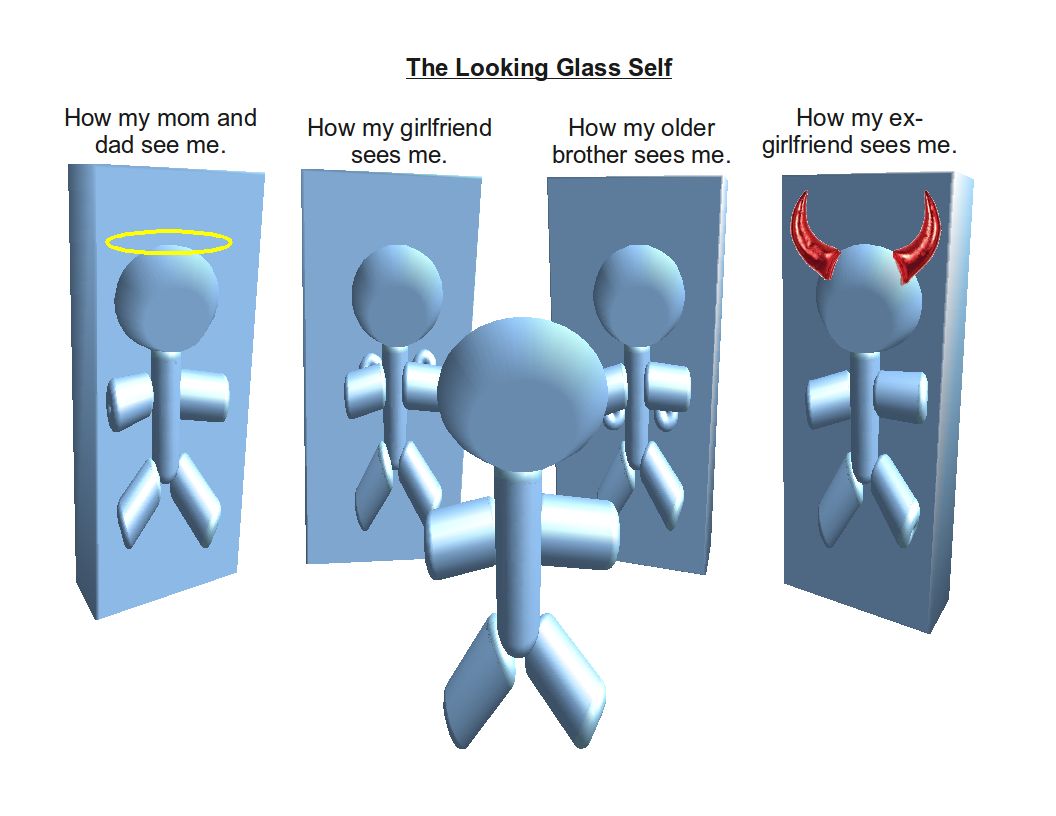
The self is your sense of who you are — a distinct identity, separate from others, that you can reflect on. It feels like the most private thing you own, but sociologists in the symbolic-interactionist tradition argue that it is entirely social in origin. You cannot develop a self alone; the self is built out of interaction, out of seeing yourself through the eyes of other people. Two early American sociologists worked out how this happens, and their ideas remain the backbone of how we understand identity.
Cooley's looking-glass self
Charles Horton Cooley proposed that we develop a self by imagining ourselves as others see us — a process he called the looking-glass self. It unfolds in three steps: first, we imagine how we appear to another person; second, we imagine that person's judgment of that appearance; and third, we develop a self-feeling — pride or shame — based on that imagined judgment. The crucial and often-missed point is that we react not to what others actually think, but to what we imagine they think, which can be badly mistaken. A student who is certain a professor finds her foolish may carry real shame built entirely on a misreading. As Cooley put it, we are, in a sense, what we think others think we are.
Mead's stages and the “I” and “Me”
George Herbert Mead, the founder of the interactionist view of the self, argued that the self emerges through role-taking — learning to put ourselves in others' positions — and that children do this in a predictable sequence. In the preparatory stage (roughly birth to age two) they simply imitate the people around them without grasping the meaning. In the play stage they take the role of one significant other at a time — playing “mommy” or “doctor,” trying on a single perspective. In the game stage they can hold the roles of many others at once and see how those roles fit together, the way a shortstop must anticipate every player on the field. From this final stage emerges the generalized other: the internalized attitudes and expectations of society as a whole, the imagined community whose standards we measure ourselves against. Mead also split the self into two phases — the “I,” the spontaneous, creative, unsocialized part that acts, and the “Me,” the socialized part that has internalized society's expectations and judges the “I.” Every act is a conversation between them.
| Mead's stage | Typical age | Key ability | Illustration |
|---|---|---|---|
| Preparatory | Birth–2 | Imitation without understanding | Babbling into a toy phone because a parent does |
| Play | ~2–6 | Takes the role of one significant other at a time | “Playing house” as the parent |
| Game | ~7 and up | Takes the roles of many others at once; grasps rules | Fielding a ball while tracking every teammate |
| Generalized other | Emerges from the game stage | Internalizes society's overall expectations | “What would people think?” |
- The self is not inborn; it is produced through social interaction.
- Cooley's looking-glass self has three steps: imagine how we appear, imagine the judgment, feel pride or shame.
- Mead's stages — preparatory, play, game — move the child from imitation to taking many roles at once, yielding the generalized other.
- The “I” is the spontaneous self; the “Me” is the socialized self that has internalized others' expectations.
Section 3Agents of socialization
Family: the primary agent
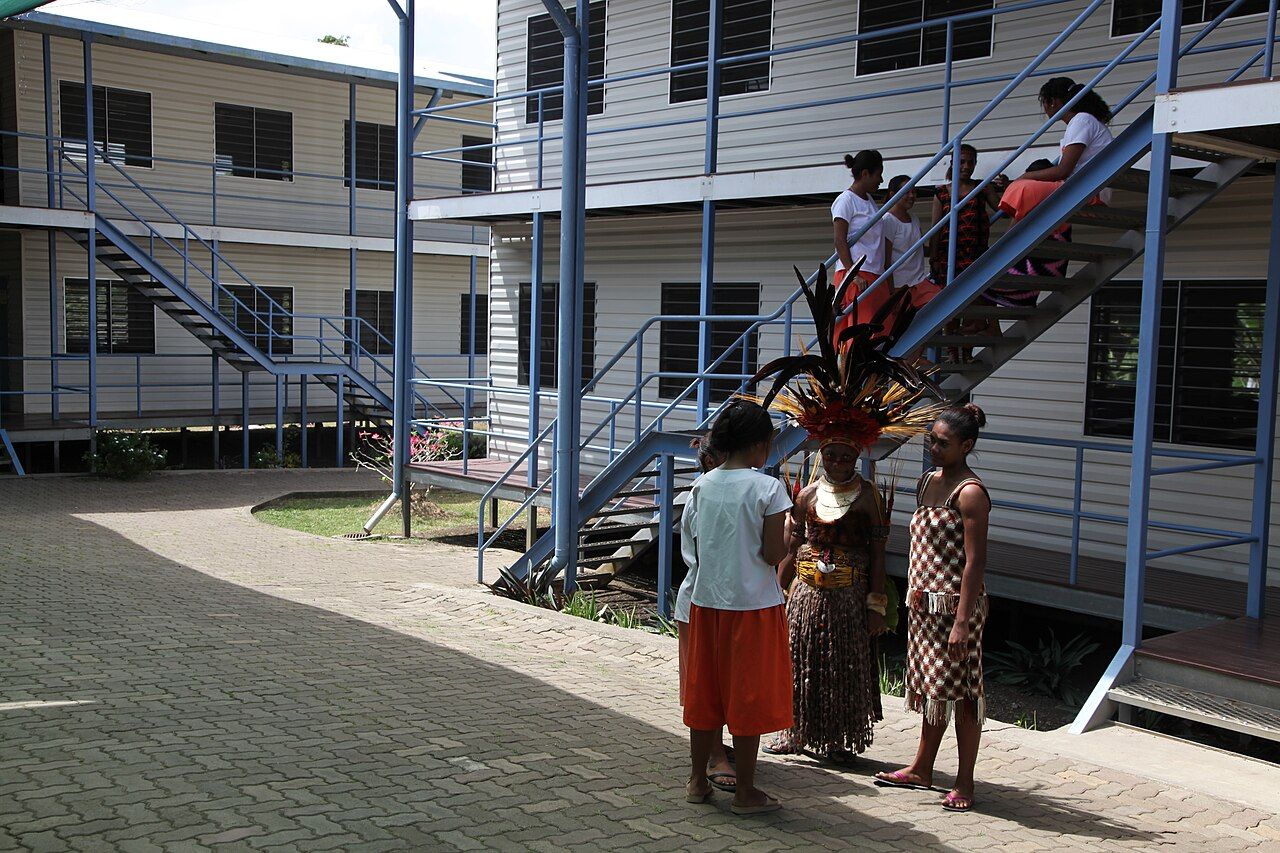
The people and groups that teach us are called agents of socialization, and the first and most powerful is the family. Long before we can choose, our family gives us a language, a first set of norms and values, a religion or its absence, and — whether anyone intends it — a position in the social structure: a social class, a race and ethnicity, a set of gendered expectations. Sociologist Melvin Kohn found that class shapes what parents prize: working-class parents, whose own jobs reward following orders, tended to stress obedience and conformity in their children, while middle-class parents, whose jobs reward initiative, stressed self-direction and curiosity. In this quiet way, families tend to reproduce the class position of the children they raise — a point conflict theorists press hard.
School and the hidden curriculum
School has an obvious manifest function — teaching reading, arithmetic, history — but sociologists are just as interested in its latent functions, the lessons no one lists on the syllabus. This hidden curriculum teaches punctuality, obedience to authority, standing in line, competition, and respect for rules — exactly the dispositions a worker will later need. Conflict theorists Samuel Bowles and Herbert Gintis argued that schooling corresponds to the workplace, sorting children and training them to accept hierarchy, so that schools help reproduce inequality across generations. In Mead's terms, the classroom is also where a child first meets the generalized other at full scale: an impersonal set of rules that applies to everyone alike.
Peers and the media
A peer group is made of people roughly equal in age and status, and its power surges in adolescence. Unlike family and school, peers are not authorities; among equals a young person learns to negotiate, to lead and follow, to build an identity partly independent of adults — and sometimes to adopt norms adults would not sanction. Finally, the mass media — and now social media above all — have become a pervasive agent, transmitting norms, ideals of beauty and success, gender scripts, stereotypes, and the habits of consumer culture to audiences of every age, for many hours a day. Religion, the workplace, and the state socialize us too, but family, school, peers, and media do the heaviest lifting.
| Agent | When it dominates | What it chiefly teaches | Note |
|---|---|---|---|
| Family | Infancy & childhood | Language, first norms and values, class and identity | Primary agent; most enduring influence |
| School | Childhood–adolescence | Academics plus the hidden curriculum: punctuality, obedience, competition | Manifest and latent functions |
| Peer group | Adolescence | Autonomy, negotiation, youth culture | Members are equals, not authorities |
| Mass & social media | All ages, and rising | Norms, ideals, stereotypes, consumer values | Pervasive and screen-based |
- Agents of socialization are the groups and institutions that teach us the culture.
- The family is the primary agent, transmitting language, values, and social position.
- Schools carry a hidden curriculum (obedience, competition) alongside academics; conflict theorists see this as reproducing inequality.
- Peer groups socialize among equals; media now reach every age with norms, ideals, and stereotypes.
Section 4Socialization over the life course
A process that never ends
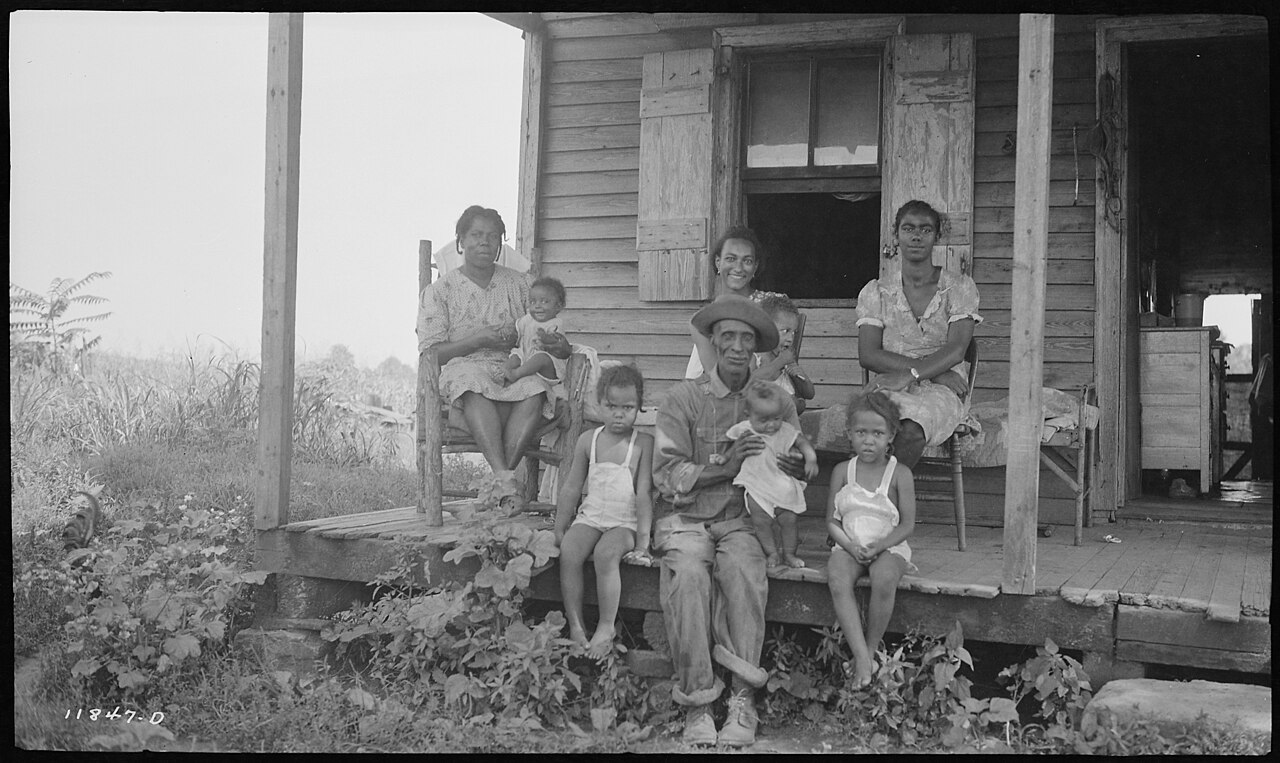
It is tempting to think of socialization as something that happens to children and then stops. It does not. Socialization is lifelong, because we keep entering new groups and taking on new roles — student, employee, spouse, parent, retiree — and each requires fresh learning. Sociologists organize this with the idea of the life course: the sequence of socially defined stages people pass through from birth to death. The key sociological insight is that these stages are not simply biological facts but social constructions that vary across cultures and history. The historian Philippe Ariès argued that childhood as we know it — a protected, playful, separate phase — is a fairly modern invention; for much of history, children were treated as small adults. Adolescence as a recognized stage emerged only with industrial society, which delayed the entry into adult work.
Anticipatory socialization and role transitions
Much of adult socialization is anticipatory — a term from Robert Merton for learning the norms of a role we expect to occupy before we actually hold it. A student who begins dressing and speaking “professionally,” or a soon-to-be parent who reads every book on the subject, is rehearsing a future self. Cultures also mark major transitions with a rite of passage. The anthropologist Arnold van Gennep showed these rituals share a three-part shape: separation from an old status, a transition or in-between phase, and incorporation into the new status. A graduation, a wedding, a retirement party, a religious confirmation — each publicly moves a person from one socially recognized role into the next, and hands them the expectations that go with it.
| Type of socialization | What it is | Example |
|---|---|---|
| Primary socialization | The basic, foundational learning of early childhood | A toddler learning to say “please” and share |
| Secondary socialization | Later learning of the norms of specific settings and roles | Absorbing the unwritten rules of a first job |
| Anticipatory socialization | Rehearsing a role before actually occupying it | A student “acting professional” before graduating |
| Resocialization | Shedding old norms and adopting sharply new ones | Basic training in the military (see Section 5) |
- Socialization is lifelong; adults continually learn the norms of new roles.
- The life course and its stages (childhood, adolescence, adulthood, old age) are socially constructed and vary by time and place.
- Anticipatory socialization (Merton) is rehearsing a role before holding it.
- A rite of passage ritually moves a person between statuses through separation, transition, and incorporation.
Section 5Resocialization and total institutions

Resocialization: unmaking and remaking a self
Sometimes society does not merely add to a person's socialization but tries to replace it. Resocialization is the deliberate process of shedding one set of norms, values, and behaviors and adopting a sharply different set in their place. It can be voluntary — entering a monastery, enlisting in the military, joining a demanding new profession — or involuntary, as in a prison or a psychiatric hospital. What sets resocialization apart from ordinary learning is its intensity and its aim: not to build on the old self, but to break it down and construct a new one in its place.
Goffman's total institution
The most powerful resocialization happens inside what Erving Goffman, in his 1961 book Asylums, called a total institution: a place where a large number of people are cut off from the wider society for an extended period and lead an enclosed, formally administered life under a single authority. Prisons, military boot camps, psychiatric hospitals, monasteries, boarding schools, and some cults all qualify. Goffman noted their shared features: all spheres of life — sleep, work, play — occur in one place under one authority; each activity is carried out in the company of others treated exactly alike; the day is tightly scheduled from above; and the whole regime is bent toward the institution's official goals rather than the individual's.
Mortification and rebuilding
Resocialization in a total institution typically runs in two phases. First comes the mortification of the self — Goffman's term for a systematic stripping away of the old identity. The new arrival surrenders personal possessions and clothes for a uniform, may be assigned a number, submits to a standardized haircut, and loses control over the ordinary details of daily life. Sociologist Harold Garfinkel called the public ceremonies that lower a person's status degradation ceremonies. Second comes the rebuilding: through a tightly controlled system of rewards and punishments, the institution rewards behavior that conforms to the new identity and punishes what remains of the old, until the recruit becomes a soldier, the novice becomes a monk, and the person becomes an inmate. The results are never guaranteed — some resist, and the imprint can fade or, conversely, leave people so “institutionalized” they struggle to live outside — but the design is unmistakable.
| Dimension of life | In everyday society | In a total institution |
|---|---|---|
| Where you sleep, work, play | Different places, different authorities | One place, one authority |
| Daily schedule | Largely self-directed | Tightly imposed and uniform |
| Identity markers | Personal clothes, name, possessions | Uniform, number, standardized |
| Contact with the outside | Free | Restricted or barred |
- Resocialization discards an old set of norms and installs a new one; it can be voluntary or involuntary.
- A total institution (Goffman) encloses people under one authority, controlling all of daily life toward the institution's goals.
- Resocialization runs in two phases: mortification of the self (stripping the old identity, via degradation ceremonies) then rebuilding through rewards and punishments.
- The process confirms the chapter's theme: the self is a social achievement, capable of being remade.
The chapter in one breath
- Socialization is the lifelong learning of a society's culture — the process that turns a biological infant into a social person.
- The nature–nurture question resolves into both; cases of isolation (Anna, Isabelle, Genie) show that without social contact, no human self develops.
- The self is social in origin: Cooley's looking-glass self and Mead's preparatory–play–game stages explain how it forms through role-taking.
- The “I” is the spontaneous self and the “Me” the socialized self; the generalized other is society's internalized expectations.
- Agents of socialization — family, school (with its hidden curriculum), peers, and media — do the shaping, and often reproduce inequality.
- Socialization is lifelong: the life course is socially constructed, and anticipatory socialization rehearses future roles.
- Resocialization in a total institution (Goffman) unmakes and remakes the self through mortification and rebuilding.
- The three paradigms read socialization as social order (Durkheim), reproduced inequality (Marx), and the making of the self (Mead and Cooley).
ReferenceWords worth knowing
A quick reference for the terms in this chapter — skim it now, or circle back whenever a word trips you up.
- Agents of socialization
- The groups and institutions — family, school, peers, media, and others — that teach us the culture.
- Anticipatory socialization
- Merton's term for learning the norms of a role before one actually occupies it.
- Degradation ceremony
- Garfinkel's term for a public ritual that lowers a person's social status, often opening resocialization.
- Feral child
- A child raised in isolation from normal human contact, who fails to develop a full social self and language.
- Game stage
- Mead's third stage, in which a child can take the roles of many others at once and grasp shared rules.
- Generalized other
- The internalized attitudes and expectations of society as a whole, against which we judge ourselves.
- Hidden curriculum
- The unstated lessons of school — punctuality, obedience, competition — taught alongside academics.
- “I” and “Me”
- Mead's two phases of the self: the spontaneous, acting “I” and the socialized, self-judging “Me.”
- Life course
- The socially defined sequence of stages a person passes through from birth to death.
- Looking-glass self
- Cooley's idea that we form a self by imagining how we appear to others and how they judge us.
- Mortification of the self
- Goffman's term for the systematic stripping away of a person's old identity in a total institution.
- Nature versus nurture
- The debate over how far behavior is shaped by biology versus by social environment; resolved as both.
- Peer group
- A group of people who are roughly equal in age and social status, influential especially in adolescence.
- Play stage
- Mead's second stage, in which a child takes the role of one significant other at a time.
- Preparatory stage
- Mead's first stage, in which a child merely imitates others without understanding the meaning.
- Resocialization
- The deliberate shedding of old norms and behaviors and the adoption of sharply new ones.
- Rite of passage
- A ritual (van Gennep) that moves a person between statuses through separation, transition, and incorporation.
- Role-taking
- Putting oneself in another's position to see the world, and oneself, from their point of view.
- Self
- A person's distinct, reflective sense of identity, developed through social interaction.
- Significant other
- A specific person, such as a parent, whose viewpoint strongly shapes a child's developing self.
- Socialization
- The lifelong process of learning the culture, norms, values, and skills of one's society.
- Total institution
- Goffman's term for an enclosed setting where an authority controls all of daily life, e.g., a prison or boot camp.