Diuretics, IV Fluids & Poisoning
Almost everything in this chapter comes down to water and the particles dissolved in it. Diuretics pull water out of a person by tricking one short stretch of the kidney tube. IV fluids push water back in. Where that water lands depends on the tonicity printed on the bag. Electrolyte replacement sits in the middle. The fixes that correct a dangerous lab value can stop a heart if given too fast. And when the wrong substance gets into a person, by accident or on purpose, a small set of antidotes can reverse what would otherwise kill. These are some of the highest-alert drugs you will handle. Your watching is usually what makes them safe.
By the end of this chapter you can
- Follow fluid through the nephron and name the part each diuretic class blocks.
- Compare loop, thiazide, potassium-sparing, osmotic, and carbonic anhydrase inhibitor diuretics by prototype, strength, and effect on electrolytes.
- Expect and watch for the main side effects of each diuretic class, above all low potassium (hypokalemia) and high potassium (hyperkalemia).
- Sort an IV fluid as isotonic, hypotonic, or hypertonic, and predict which body space it will fill.
- Choose the right IV fluid for common bedside cases, and name the danger of each type.
- Replace potassium, calcium, and magnesium safely, including the rules that must never be broken.
- Match common poisonings to their antidotes, and describe your role in each reversal.
- Explain why diuretics, concentrated electrolytes, and reversal drugs are treated as high-alert medications.
Section 1The nephron & where diuretics act
One million tiny filters
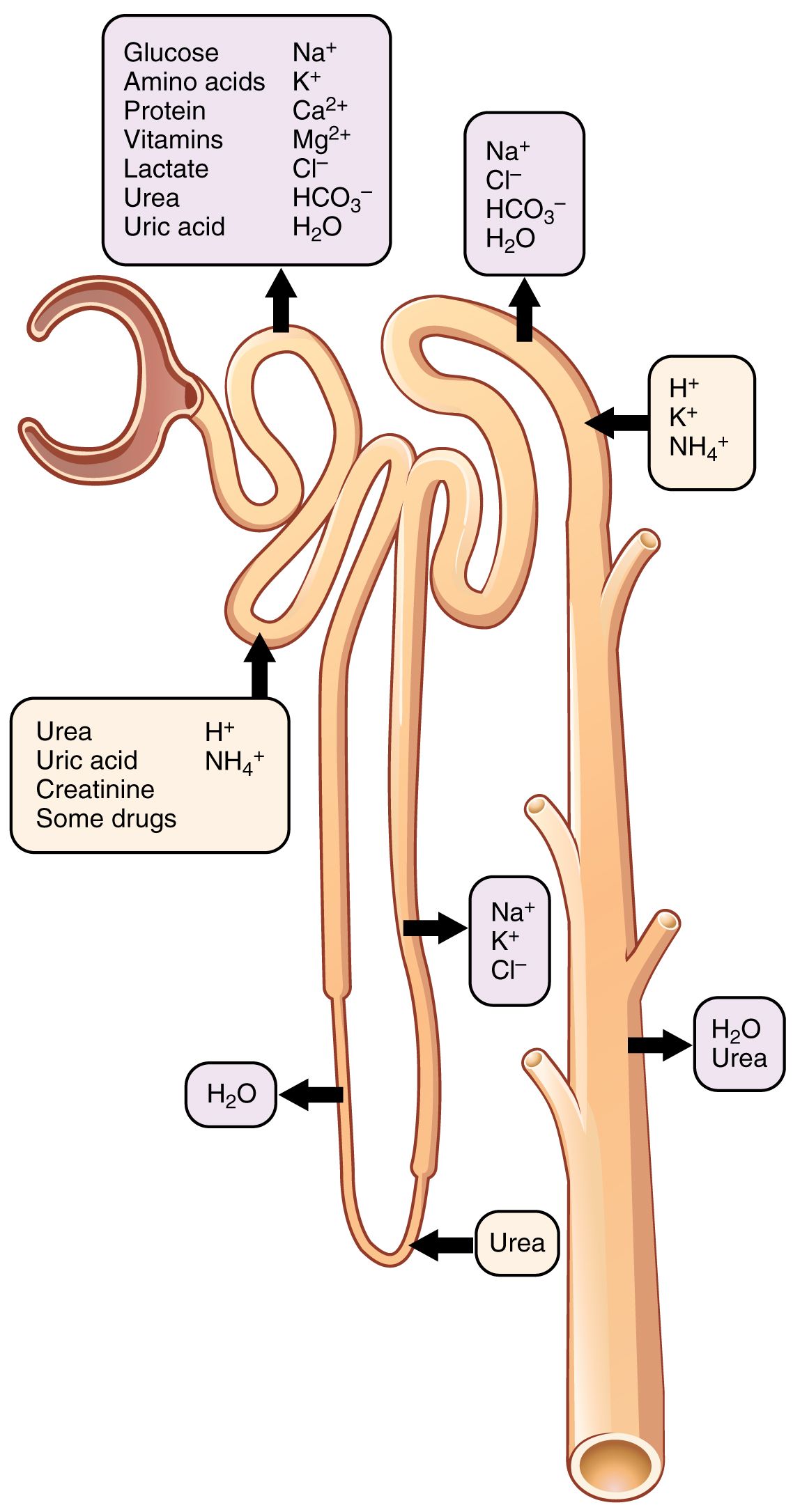
Each kidney holds about a million nephrons. Each nephron is a tiny factory that does the same four jobs. They are filtration (straining), reabsorption (taking back), secretion (adding), and excretion (sending out). Blood arrives at the glomerulus. This is a tuft of tiny blood vessels tucked inside a cup called Bowman's capsule. Pressure squeezes water and small particles out into the tube. That strained fluid is huge: about 180 liters a day. Nobody passes 180 liters of urine. So the key point is plain. The nephron's real work is not making urine. It is taking almost all of it back. About 99 percent of the strained water is taken back. Urine is the leftover 1 percent.
This one idea makes diuretics make sense. A diuretic does not squeeze more fluid out of the blood. It gets in the way of taking fluid back. Water follows sodium. So any drug that keeps sodium from being pulled back out of the tube leaves that sodium in the fluid. The water stays with it and leaves as urine. Every diuretic in this chapter plays on that one theme. Block sodium from being taken back somewhere, and water comes along.
The segments, in order
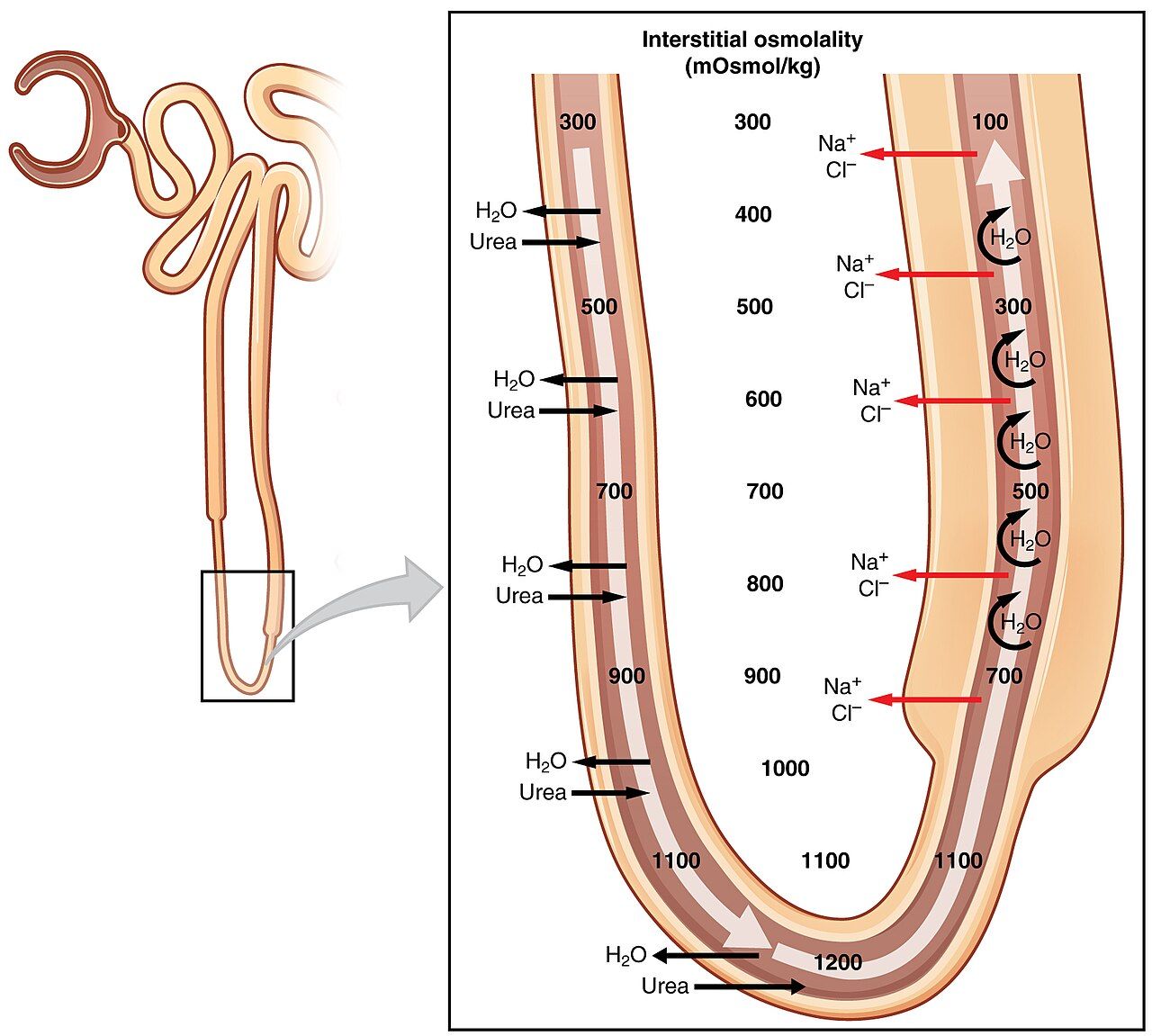
Fluid leaves Bowman's capsule and enters the proximal convoluted tubule (PCT). This is the workhorse. It takes back about 65 percent of the strained sodium and water. It also takes back glucose, amino acids, and bicarbonate. Next comes the loop of Henle, which dips deep into the salty inner kidney. Its thick ascending limb pumps out another 20 to 25 percent of the sodium. It uses the Na⁺-K⁺-2Cl⁻ cotransporter, a pump that moves sodium, potassium, and chloride together. Then the distal convoluted tubule (DCT) takes back about 5 to 10 percent through a sodium-chloride cotransporter. Last, the collecting duct fine-tunes the final 2 to 3 percent under hormone control. Aldosterone tells it to keep sodium and dump potassium. Antidiuretic hormone (ADH) tells it to keep water by adding water channels (aquaporins).
The percentages tell you the strength ranking before you learn a single drug name. Block the loop, which handles a quarter of the sodium, and you get a strong flow of urine. Block the DCT, which handles under a tenth, and you get a moderate one. Block the collecting duct, which only fine-tunes, and you get a weak flow, but very fine control over potassium.
| Segment | Sodium reclaimed | Transporter / control | Diuretic that acts here |
|---|---|---|---|
| Proximal tubule | ~65% | Na⁺/H⁺ exchange; carbonic anhydrase; osmotic gradient | Carbonic anhydrase inhibitors; osmotic diuretics |
| Thick ascending limb | ~20 to 25% | Na⁺-K⁺-2Cl⁻ cotransporter | Loop diuretics: most potent |
| Distal convoluted tubule | ~5 to 10% | Na⁺-Cl⁻ cotransporter | Thiazides: moderate |
| Collecting duct | ~2 to 3% | Aldosterone-driven Na⁺ channels (ENaC); ADH/aquaporins | Potassium-sparing: weak, but K⁺-protective |
Why potassium is always in the conversation
Look at the collecting duct again. Aldosterone takes back sodium there and trades it for potassium, which goes out in the urine. Now picture a loop or thiazide diuretic further up, dumping a flood of sodium into the collecting duct. More sodium arriving means more sodium-potassium trading. That means more potassium lost. That is why loop and thiazide diuretics cause low potassium. It is not a random side effect. It is simple math. Drugs that block that trade at the collecting duct do the reverse. They hold potassium in. That is why they are called potassium-sparing, and why their main danger is high potassium.
- The nephron strains about 180 L a day and takes back about 99% of it. Urine is what is left.
- Diuretics work by blocking sodium from being taken back. Water follows sodium out.
- Strength follows the part: loop > thiazide > potassium-sparing, because that is the order of how much sodium each part handles.
- The collecting duct trades sodium for potassium under aldosterone. That is why most diuretics throw potassium off in one direction or the other.
Section 2Diuretic classes
Loop diuretics: the fire hose
Furosemide is the prototype, joined by bumetanide, torsemide, and ethacrynic acid. They block the Na⁺-K⁺-2Cl⁻ pump in the thick ascending limb. The result is the strongest flow of urine any drug can cause. Up to 20 to 25 percent of strained sodium goes out the door. IV furosemide starts working within minutes. That is exactly what you want in acute pulmonary edema, when a person is drowning in their own fluid and cannot wait. Loops also keep working when the kidneys are weak, unlike thiazides. So they are the diuretic for chronic kidney disease. Their classic uses are heart failure with fluid overload, fluid in the lungs (pulmonary edema), and swelling caused by kidney or liver disease.
The trade-off is that a fire hose flushes out everything. Loops waste potassium, magnesium, calcium, sodium, and chloride. They can cause dehydration, dizziness on standing (orthostatic hypotension), and too much base in the blood (metabolic alkalosis). They also harm hearing (ototoxic). Ringing in the ears and hearing loss are far more likely with a fast IV push or when paired with an aminoglycoside. Push IV furosemide slowly, no faster than about 20 mg a minute in an adult, and slower still in older adults. Furosemide is related to sulfa drugs, so ask about sulfa allergy. Ethacrynic acid is the choice with no sulfa.
Thiazides: the everyday drug
Hydrochlorothiazide is the prototype. Chlorthalidone lasts longer and is often preferred for blood pressure. Metolazone rounds out the group. These drugs block the Na⁺-Cl⁻ pump in the distal tubule. That is a smaller job, so the urine flow is gentler. But they also widen vessels mildly over time. That makes thiazides a cornerstone of high blood pressure treatment. They are also, happily, the only diuretic that keeps calcium. That makes them useful for kidney stones made of calcium, and mildly protective of bone. Note the limit. Thiazides stop working well once the kidney filter rate (GFR) falls below about 30 mL/min. That is when the prescriber switches to a loop. Metolazone is the exception worth knowing. It keeps working at a low GFR. That is why it is added to a loop on purpose when a patient stops responding to the loop alone. The pair is strong enough to be dangerous. Expect a fast flow of urine, and watch potassium and fluid status closely.
Teach the body chemistry trouble. Thiazides raise sugar, uric acid (watch for gout flares), blood fats, and calcium. They lower potassium, sodium, and magnesium. Low sodium from thiazides is a real and often missed cause of confusion and falls in older adults.
Potassium-sparing: the counterweight
Two ways of working, one result. Spironolactone and eplerenone are aldosterone blockers. They block aldosterone's receptor in the collecting duct. Amiloride and triamterene block the sodium channel directly, without touching the receptor. Either way, sodium leaves and potassium stays. The urine flow is weak. So these are rarely used alone to remove fluid. They are used with a loop or thiazide to cut potassium loss. Spironolactone and eplerenone are also used because they lower deaths on their own in heart failure with reduced ejection fraction. They do this by blocking the heart damage aldosterone drives. Spironolactone is also standard for belly fluid (ascites) from cirrhosis.
The danger is high potassium, and it can kill. Teach patients to avoid salt substitutes, which are mostly potassium chloride. Teach them never to add a potassium pill unless told to. Pairing a potassium-sparing diuretic with an ACE inhibitor or ARB stacks the risk. Spironolactone also acts on other steroid receptors. So it causes breast growth in men (gynecomastia), breast soreness, and changes in periods. Eplerenone is more selective and mostly avoids this.
Osmotic and carbonic anhydrase inhibitors: the specialists
Mannitol is an osmotic diuretic. It is a sugar alcohol that is strained out but not taken back. So it pulls water along with it all the way down the tube. Its real job is usually not the urine. It is pulling water out of swollen tissue. Mannitol is used for high pressure inside the skull, brain swelling, and suddenly high pressure inside the eye. It first expands the blood volume before it causes urine flow. So it can tip a frail patient into heart failure and fluid in the lungs. Mannitol forms crystals in a cold solution. So always use an in-line filter and look at the bag. Warm it if you see crystals.
Acetazolamide blocks carbonic anhydrase in the proximal tubule. That dumps bicarbonate. It is a weak diuretic, but it is useful in glaucoma, altitude sickness, and to make urine less acidic. It reliably causes too much acid in the blood (metabolic acidosis), which is sometimes the point.
| Class | Prototype | Site & key effect | Safety alert |
|---|---|---|---|
| Loop | Furosemide (bumetanide, torsemide, ethacrynic acid) | Blocks Na⁺-K⁺-2Cl⁻ in thick ascending limb; most potent; works in renal impairment | Hypokalemia, hypomagnesemia, hypocalcemia, dehydration, orthostasis; ototoxic: push IV slowly (≤20 mg/min), avoid with aminoglycosides; daily weight & I&O; sulfa cross-sensitivity |
| Thiazide | Hydrochlorothiazide (chlorthalidone, metolazone) | Blocks Na⁺-Cl⁻ in distal tubule; moderate; first-line for HTN; spares calcium | Low potassium, low sodium, high sugar, high uric acid (gout), high blood fats; does not work if GFR <30 mL/min (except metolazone, which still works and is added to a loop when diuretics stop working well); give in the morning |
| Potassium-sparing (aldosterone antagonist) | Spironolactone (eplerenone) | Blocks aldosterone receptor in collecting duct; weak diuresis; mortality benefit in HFrEF; ascites | Hyperkalemia: no salt substitutes, no K⁺ supplements; caution with ACE inhibitors/ARBs; gynecomastia (spironolactone) |
| Potassium-sparing (channel blocker) | Triamterene (amiloride) | Blocks collecting-duct Na⁺ channels directly; weak | Hyperkalemia; often combined with HCTZ to balance potassium; triamterene can tint urine blue-green |
| Osmotic | Mannitol | Filtered, not reabsorbed; osmotically drags water; reduces ICP and cerebral/ocular edema | In-line filter required (crystallizes); transient volume expansion may cause pulmonary edema/HF; monitor serum osmolality, neuro status, hourly urine output |
| Carbonic anhydrase inhibitor | Acetazolamide | Blocks proximal carbonic anhydrase; dumps bicarbonate; glaucoma, altitude sickness | Predictable metabolic acidosis; hypokalemia; paresthesias; sulfa derivative |
- Loops (furosemide) are the strongest, work when the kidneys fail, and harm hearing if pushed fast.
- Thiazides (hydrochlorothiazide) are first-line for high blood pressure, keep calcium, and fail below a GFR of about 30.
- Potassium-sparing drugs cause high potassium. Spironolactone adds a survival benefit in heart failure and causes breast growth in men.
- Mannitol treats high pressure in the skull, needs an in-line filter, and can briefly worsen heart failure.
- Loops and thiazides drop potassium. Potassium-sparing drugs raise it. They are often paired for exactly that reason.
Section 3IV fluids
Tonicity is a comparison, not a property
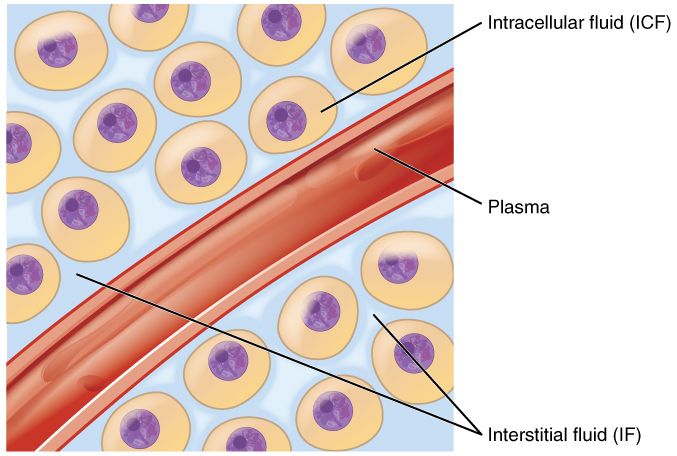
Tonicity compares how many particles are in a fluid with how many are inside the patient's cells. Normal blood osmolality is about 275 to 295 mOsm/kg. That is the reference point for everything below. Water always moves toward the side with more particles. So the tonicity of the bag decides which way water travels once it is in the vein. That is the whole lesson. An isotonic fluid matches the blood. No water shifts, so the fluid simply stays where you put it. It fills the space outside the cells. A hypotonic fluid is more watery than blood. So water leaves the vessel and moves into the cells, swelling them. A hypertonic fluid is more concentrated. It pulls water out of the cells and into the vessel.
Picture it this way. Isotonic stays. Hypotonic enters the cell. Hypertonic exits the cell. Now attach the danger to each. Too much isotonic fluid overloads the blood vessels → fluid in the lungs. Too much hypotonic fluid swells cells → brain swelling. Too much hypertonic fluid drags water into vessels that are already full → fluid overload and shrunken cells.
The bags you will actually hang
0.9% sodium chloride (normal saline) and lactated Ringer's (LR) are the isotonic workhorses. They are used for resuscitation, low blood volume, bleeding, dehydration, surgery, and keeping an IV open. Normal saline is the only fluid that can run with blood products. But large amounts of it cause too much chloride and acid in the blood (hyperchloremic metabolic acidosis). That is because you are pouring in far more chloride than the blood normally carries. Lactated Ringer's is closer to the body's own fluid. It carries potassium, calcium, and lactate, which the liver turns into bicarbonate. But avoid it in liver failure, where lactate is not cleared, and in serious high potassium. Never run it in the same line as blood, because its calcium can clot the tubing. D5W is a special case. It is isotonic in the bag. But the body uses up the sugar (dextrose) within minutes, and what is left is plain water. So it acts hypotonic once it is in. Do not use it for resuscitation. Do not use it in a patient at risk of brain swelling.
0.45% sodium chloride (half-normal saline) is the everyday hypotonic fluid. It is used when cells are dehydrated. It is also used as maintenance fluid in a patient with high sodium, or in diabetic ketoacidosis after the first resuscitation. Hypotonic fluids are not allowed in head injury, stroke, or any high pressure in the skull. The last thing a swollen brain needs is more water inside its cells. 3% sodium chloride is the hypertonic fluid you will see in the ICU. It is used for low sodium with symptoms or for brain swelling. It is a high-alert drug. It usually needs a central line and a pump, and it calls for frequent sodium checks. Fixing sodium too fast is its own disaster. The usual limit is no more than 8 to 10 mEq/L in 24 hours. Fixing long-standing low sodium too fast can cause osmotic demyelination syndrome, a terrible brain injury that cannot be undone. D5½NS and D5LR are hypertonic maintenance fluids that give some calories.
| Fluid | Tonicity | Where the water goes / when to use | Safety alert |
|---|---|---|---|
| 0.9% NaCl (normal saline) | Isotonic | Stays extracellular; resuscitation, hypovolemia, blood administration, KVO | Only fluid compatible with blood products; large volumes → hyperchloremic metabolic acidosis; overload risk in HF/renal disease |
| Lactated Ringer's | Isotonic | Stays extracellular; surgery, burns, trauma, GI losses; lactate → bicarbonate | Avoid in liver failure and hyperkalemia; never with blood (calcium clots the line) |
| D5W | Isotonic in the bag, hypotonic in the body | Dextrose burns off → free water; free-water replacement, drug diluent, hypernatremia | Not for resuscitation; contraindicated in raised ICP; monitor glucose |
| 0.45% NaCl (½NS) | Hypotonic | Water enters cells; cellular dehydration, hypernatremia, DKA maintenance | Cerebral edema risk: contraindicated in head injury/stroke/raised ICP; can cause hypotension & vascular collapse |
| 3% NaCl | Hypertonic | Pulls water out of cells; symptomatic hyponatremia, cerebral edema | High-alert; pump + frequent Na⁺; correct ≤8 to 10 mEq/L per 24 h to avoid osmotic demyelination; watch for overload |
| D5½NS / D5LR / D5NS | Hypertonic | Maintenance with calories; post-op fluid | Fluid overload; monitor glucose; not for a patient already fluid-overloaded |
- Isotonic stays, hypotonic enters the cell, hypertonic exits the cell. Every fluid choice starts here.
- Normal saline is the only fluid to hang with blood. Lactated Ringer's is avoided in liver failure and never runs with blood.
- D5W is isotonic in the bag but acts hypotonic in the patient. Never use it for resuscitation, and never with high pressure in the skull.
- Hypotonic fluids risk brain swelling. Hypertonic fluids risk fluid overload and, if sodium is fixed faster than about 8 to 10 mEq/L a day, osmotic demyelination.
Section 4Electrolyte replacement
Potassium: the one that will kill you fastest
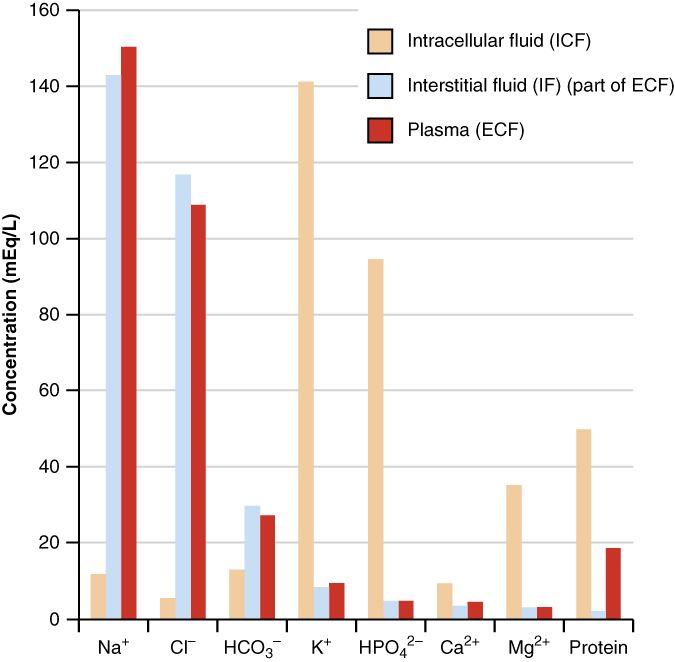
Normal blood potassium is 3.5 to 5.0 mEq/L. That narrow window is not an accident. Almost all the body's potassium lives inside cells. So the small amount in the blood is a razor-thin margin between a beating heart and a stopped one. Both directions are dangerous. Low potassium flattens the T waves on the ECG, adds U waves, and invites dangerous ventricle rhythms. It also greatly raises the risk of digoxin toxicity. So a patient on both a loop diuretic and digoxin needs a hard look at every potassium result. High potassium makes peaked T waves and a widening QRS, and in the end, cardiac arrest.
The replacement rules exist because people have died from breaking them. They are worth memorizing exactly:
- Never give potassium IV push. Never. Not ever. IV push potassium causes fatal cardiac arrest. It is always diluted and always given as a drip.
- Always on a pump, never by gravity, and never as a fast dose (bolus).
- In a peripheral vein, the rate usually does not go above 10 mEq an hour. Higher rates need a central line and constant heart monitoring, per policy.
- Never go over the facility's highest concentration, often 10 mEq per 100 mL in a peripheral vein.
- Check urine output before the drip. A common minimum is 30 mL an hour. Potassium leaves through the kidneys. Giving it to someone who makes no urine piles it up.
- Potassium burns. Vein irritation and leaking out of the vein are common. Check the site often, and stop if it hurts.
- Potassium by mouth irritates the gut. Give it with food and a full glass of water. Teach that extended-release tablets are not crushed.
For high potassium, the order of steps matters. IV calcium gluconate comes first. It does not lower potassium at all. It steadies the heart muscle's membrane so the heart survives the next few minutes. Then insulin with dextrose (and sometimes albuterol or sodium bicarbonate) moves potassium into cells for a while. Only then do you actually remove it. Use a binder such as sodium zirconium cyclosilicate or patiromer, a loop diuretic, or dialysis. Steady, shift, remove.
Calcium: the muscle and the vein
Normal total blood calcium is about 8.5 to 10.5 mg/dL. Remember that about half of it rides on albumin. Low albumin makes total calcium look falsely low. So check an ionized calcium (the free part) when it matters. Low calcium makes nerves and muscles twitchy. Signs are tingling around the mouth and fingertips and muscle cramps. Inflating a blood pressure cuff can make the hand spasm (Trousseau's sign). Tapping the cheek can make the face twitch (Chvostek's sign). At the extreme, the throat can close (laryngospasm), and the muscles lock in spasm (tetany). High calcium does the opposite. The muscles and mind go slack. Signs are weakness, tiredness, constipation, kidney stones, and confusion.
There are two IV forms, and they cannot be swapped. Calcium chloride carries about three times the usable calcium of calcium gluconate. It is also far more damaging if it leaks out of the vein. So gluconate is preferred in a peripheral vein. Chloride is usually saved for a central line in an emergency. Either way, push it slowly, since a fast push causes a slow heart rate and low blood pressure. Keep the patient on a heart monitor. Do not mix calcium with sodium bicarbonate or phosphate, which form crystals in the line. Calcium also boosts digoxin and can bring on toxicity. Teach that calcium by mouth should be taken with vitamin D for absorption. Keep it apart from certain antibiotics, which it binds.
Magnesium: check the reflexes
Normal magnesium is about 1.5 to 2.5 mEq/L. It is quietly essential. Magnesium helps hundreds of enzymes work. And, key for the bedside, you cannot fix a potassium until you have fixed the magnesium. Low potassium that will not correct is often caused by low magnesium that no one found. Low magnesium makes the kidney waste potassium, no matter how much potassium you give. Low magnesium causes brisk reflexes, tremor, positive Chvostek and Trousseau signs, and torsades de pointes. IV magnesium is itself the treatment for torsades. Low magnesium is common with long-term heavy drinking, poor nutrition, and loop diuretics.
High magnesium is the mirror image. It is the risk you manage during any magnesium drip. Watch the order. Loss of deep tendon reflexes comes first. Then comes slowed breathing, then low blood pressure and a slow heart rate, then cardiac arrest. That is why the reflex check is not busywork. A weak knee reflex is the early warning that buys you time. During IV magnesium (for eclampsia, for example), check reflexes, breathing rate, blood pressure, and urine output. Keep calcium gluconate at the bedside as the antidote.
| Electrolyte | Normal range | Deficiency & excess | Safety alert |
|---|---|---|---|
| Potassium | 3.5 to 5.0 mEq/L | Low: flat T waves, U waves, dysrhythmias, digoxin toxicity. High: peaked T waves, wide QRS, arrest | NEVER IV push; dilute, pump, ≤10 mEq/h peripherally; confirm urine output; watch the site (burns); do not crush ER tablets |
| Calcium | 8.5 to 10.5 mg/dL total | Low: perioral tingling, cramps, Trousseau & Chvostek, tetany, laryngospasm. High: weakness, lethargy, constipation, stones | Gluconate in a peripheral vein, chloride in a central line; push slowly on a monitor; never mix with bicarbonate or phosphate; boosts digoxin; check ionized Ca if albumin is low |
| Magnesium | 1.5 to 2.5 mEq/L | Low: hyperreflexia, tremor, torsades, refractory hypokalemia. High: reflexes lost → respiratory depression → arrest | Check deep tendon reflexes, the first sign of toxicity; check RR, BP, and urine output; calcium gluconate is the antidote; fix Mg before you can fix K⁺ |
- Potassium is never given IV push. It is always diluted, always on a pump, usually ≤10 mEq/h in a peripheral vein, and only with enough urine output.
- High potassium is treated steady (calcium) → shift (insulin + dextrose) → remove (binders, diuretic, dialysis).
- Calcium gluconate is safer in a peripheral vein than calcium chloride. Push slowly, and never with bicarbonate or phosphate.
- Fix magnesium before potassium. During a magnesium drip, loss of deep tendon reflexes is the first warning, and calcium gluconate is the antidote.
Section 5Poisoning & antidotes
The patient comes before the poison
The first urge in a poisoning is to hunt for the antidote. Resist it. Most poisonings have no antidote at all. The people who survive do so because of supportive care: airway, breathing, circulation, blood sugar, and time. So the order is ABCs first, removing the poison second, an antidote third if one exists, and speeding its removal last. Along the way, call Poison Control early, not late. In the United States the number is 1-800-222-1222. They do this all day.
To remove a swallowed poison, activated charcoal is the main tool. It works by soaking up the poison in the gut before it is absorbed. It helps most within about an hour of swallowing. It is not allowed in a person with low alertness or an airway that is not protected. Charcoal breathed into the lungs causes a severe lung inflammation. It also does not bind everything. The classic misses are iron, lithium, alcohols, and strong acids and lyes. Never give charcoal for those corrosive acids and lyes anyway, since it blocks the view during a scope exam. Do not make the person vomit. Syrup of ipecac is outdated. It causes harm and does not improve outcomes.
The antidotes worth knowing cold
Learn these as pairs. They are the ones that show up on tests and in real emergencies. Acetaminophen overdose is the leading cause of sudden liver failure in the United States. It is quiet and fools people. The person may look fine for a day while a toxic breakdown product destroys liver cells. Acetylcysteine refills glutathione. It works very well when started early, ideally within 8 to 10 hours. Use the Rumack-Matthew nomogram to decide after a single overdose. Warn patients that the oral form smells like rotten eggs. The IV form can cause an allergy-like reaction.
Opioid overdose is spotted at the bedside by a triad: slowed breathing, pinpoint pupils, and low alertness. Naloxone reverses it within minutes. But it lasts a shorter time than most opioids. So the person can go back under, and more doses or a drip may be needed. Never leave a reversed person unwatched. In a person dependent on opioids, naloxone sets off sudden withdrawal. That is miserable but not deadly. Stopping breathing is deadly. Benzodiazepine overdose has an antidote too, flumazenil. But it is used with care and rarely. In a long-term benzodiazepine user or a mixed overdose, it can set off seizures that are very hard to stop.
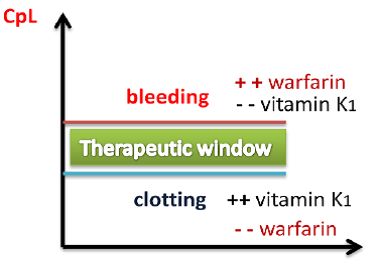
The anticoagulants each have a partner. Warfarin is reversed by vitamin K (phytonadione). When the bleeding is life-threatening, prothrombin complex concentrate (PCC) is added. Heparin is reversed by protamine sulfate. Dabigatran has idarucizumab. For the factor Xa inhibitors apixaban and rivaroxaban, 4-factor PCC is now used for major bleeding. Their specific reversal drug, andexanet alfa, was withdrawn from the US market in 2025. Digoxin toxicity brings nausea, halos or yellow-green vision, a slow heart rate, and confusion. It is treated with digoxin immune Fab. Remember that low potassium makes digoxin toxicity far more likely, which ties right back to Section 2. Organophosphate or cholinergic poisoning shows the SLUDGE picture: drooling, tears, passing urine, passing stool, gut cramps, and vomiting. It is treated with atropine plus pralidoxime. And iron is bound up and removed with deferoxamine. Iron was once a leading cause of poisoning death in children. Deaths fell sharply after pills came in single-dose blister packs, but it is still a serious thing for a child to swallow.
| Poison / drug | Antidote | Key toxic signs | Safety alert |
|---|---|---|---|
| Acetaminophen | Acetylcysteine | Quiet early phase, then RUQ pain, rising AST/ALT, hepatic failure | Works best within 8 to 10 h; the oral form smells of sulfur (dilute it and use a straw); the IV form can cause an allergy-like reaction; use the Rumack-Matthew nomogram |
| Opioids | Naloxone | Respiratory depression + pinpoint pupils + ↓LOC | Shorter duration than the opioid: re-sedation risk, repeat doses/infusion; precipitates withdrawal in dependence; keep monitoring |
| Benzodiazepines | Flumazenil | Sedation, ataxia, slurred speech; respiratory depression if mixed | Use cautiously: may precipitate seizures in chronic users or mixed (e.g., TCA) overdose |
| Warfarin | Vitamin K (phytonadione) | Bleeding, elevated INR, bruising, hematuria | Onset takes hours: PCC/FFP for life-threatening bleed; monitor INR; teach consistent vitamin K intake |
| Heparin | Protamine sulfate | Bleeding, elevated aPTT, thrombocytopenia (HIT) | Give slowly: rapid administration causes hypotension & anaphylaxis; only partially reverses LMWH |
| Digoxin | Digoxin immune Fab | Nausea, anorexia, yellow-green/halo vision, bradycardia, confusion | Hold for apical pulse <60; hypokalemia potentiates toxicity; narrow therapeutic range (0.5 to 2 ng/mL) |
| Organophosphates / cholinergics | Atropine + pralidoxime | SLUDGE, bronchorrhea, bradycardia, miosis | Decontaminate the skin: protect yourself with PPE; large repeated atropine doses may be needed |
| Iron | Deferoxamine | Vomiting, GI bleeding, shock, and later liver failure; once a leading cause of poisoning death in children (deaths fell sharply after single-dose packaging, but still a serious thing to swallow) | Charcoal does not bind iron; urine may turn reddish-brown ("vin rosé"); teach childproof storage |
| Dabigatran | Idarucizumab | Bleeding | Factor Xa inhibitors (apixaban, rivaroxaban) use 4-factor PCC for major bleeding (andexanet alfa was withdrawn from the US market in 2025) |
| Most oral ingestions | Activated charcoal (adsorbent, not an antidote) | - | Within ~1 h; contraindicated with ↓LOC or unprotected airway; does not bind iron, lithium, alcohols, corrosives; never induce vomiting |
- Supportive care first: ABCs, then removing the poison, then the antidote. Call Poison Control early.
- Activated charcoal works within about an hour. It is not allowed with low alertness, and it misses iron, lithium, alcohols, and corrosives. Never make the person vomit.
- Learn the pairs: acetaminophen and acetylcysteine, opioids and naloxone, warfarin and vitamin K, heparin and protamine, digoxin and immune Fab, organophosphates and atropine + pralidoxime, and iron and deferoxamine.
- Naloxone lasts a shorter time than the opioid. Expect the person to go back under, and keep watching.
The chapter in one breath
- The nephron takes back about 99% of what it strains. Every diuretic works by blocking sodium from being taken back at one part, and water follows sodium.
- Strength follows the part: loop > thiazide > potassium-sparing, because that is the order of how much sodium each part handles.
- Furosemide is the fire hose (harms hearing if pushed fast, wastes K⁺). Hydrochlorothiazide is the everyday blood pressure drug (keeps calcium, fails below GFR 30). Spironolactone keeps K⁺ and saves lives in heart failure. Mannitol pulls water off a swollen brain.
- Isotonic stays, hypotonic enters the cell, hypertonic exits the cell. The danger of each is overload, brain swelling, and overload again.
- Normal saline is the only fluid to hang with blood. D5W acts hypotonic once the sugar is used up. 3% NaCl is high-alert, and sodium must not rise faster than about 8 to 10 mEq/L a day.
- Potassium is never IV push. It is always diluted, pumped, limited in rate, and given only with enough urine output.
- High potassium goes steady → shift → remove. Fix magnesium before potassium. During a magnesium drip, lost reflexes are the first warning, and calcium gluconate is the antidote.
- In poisoning, supportive care beats hunting for an antidote. But know the pairs cold, and remember that naloxone wears off before the opioid does.
ReferenceWords worth knowing
A quick list of the terms in this chapter. Skim it now, or come back when a word trips you up.
- Activated charcoal
- A powder given by mouth to soak up a swallowed poison before it is absorbed; helps within about an hour, not allowed with low alertness, and does not work on iron, lithium, alcohols, or corrosives.
- Aldosterone antagonist
- A potassium-sparing diuretic (spironolactone, eplerenone) that blocks aldosterone's receptor in the collecting duct, keeping potassium and lowering deaths in heart failure with reduced ejection fraction.
- Chvostek's sign
- A face muscle twitch set off by tapping over the facial nerve; a sign of low calcium.
- Collecting duct
- The last part of the nephron, where aldosterone drives sodium uptake in trade for potassium and ADH controls water uptake.
- Diuretic
- A drug that raises urine output by blocking sodium from being taken back somewhere along the nephron.
- Glomerulus
- The tuft of tiny blood vessels inside Bowman's capsule where blood is strained.
- High-alert medication
- A drug with a higher risk of serious harm when used in error: concentrated potassium, hypertonic saline, insulin, and anticoagulants among them.
- Hyperkalemia
- Blood potassium above about 5.0 mEq/L; causes peaked T waves, a widening QRS, and cardiac arrest; the key risk of potassium-sparing diuretics.
- Hypertonic
- A fluid more concentrated than blood; it pulls water out of cells and into the blood vessels.
- Hypokalemia
- Blood potassium below about 3.5 mEq/L; causes flat T waves, U waves, and rhythm problems, and raises the risk of digoxin toxicity; the key risk of loop and thiazide diuretics.
- Hypotonic
- A fluid more watery than blood; water moves into cells and swells them, which is why these fluids are not allowed with high pressure in the skull.
- Isotonic
- A fluid that matches the blood; it stays in the space outside the cells and causes no water shift into or out of cells.
- Loop diuretic
- The strongest diuretic class (furosemide, bumetanide, torsemide); works even when the kidneys are weak and harms hearing if given fast.
- Loop of Henle
- The part of the nephron whose thick ascending limb takes back 20 to 25% of strained sodium using the Na⁺-K⁺-2Cl⁻ pump; the target of loop diuretics.
- Nephron
- The working unit of the kidney, which strains, takes back, adds, and sends out; each kidney holds about a million.
- Osmotic demyelination syndrome
- Permanent brain injury caused by fixing long-standing low sodium too fast; prevented by limiting the sodium rise to about 8 to 10 mEq/L in 24 hours.
- Osmotic diuretic
- A particle that is strained but not taken back (mannitol), which pulls water along the tube; used to lower pressure inside the skull and the eye.
- Ototoxicity
- Damage to hearing or balance; a loop diuretic risk that rises with fast IV doses and with aminoglycosides.
- Potassium-sparing diuretic
- A weak diuretic that acts at the collecting duct and keeps potassium; the class whose main danger is high potassium.
- Thiazide diuretic
- A moderate diuretic (hydrochlorothiazide, chlorthalidone) that acts on the distal tubule's Na⁺-Cl⁻ pump; first-line for high blood pressure, keeps calcium, and does not work below a GFR of about 30 mL/min.
- Tonicity
- How a fluid's particle level compares with the inside of the body's cells; it decides which way water moves after the fluid is given.
- Trousseau's sign
- A hand spasm set off by inflating a blood pressure cuff on the upper arm; a sign of low calcium.