Reproductive
The reproductive systems bring their own set of disorders. Some are hormonal. Some are structural. Some are infections, and some are cancers. This chapter covers the common female and male conditions that turn up most often. It covers the cancers to screen for. And it covers the sexually transmitted infections that quietly cause the most harm over time.
By the end of this chapter you can
- Recognize common female disorders (PCOS, endometriosis, fibroids, PID).
- Name the female cancers. Say how cervical and breast cancer are screened.
- Explain BPH, and tell it apart from prostate cancer.
- Spot testicular torsion as an emergency.
- Tell the major bacterial and viral STIs apart.
Section 1Female reproductive disorders
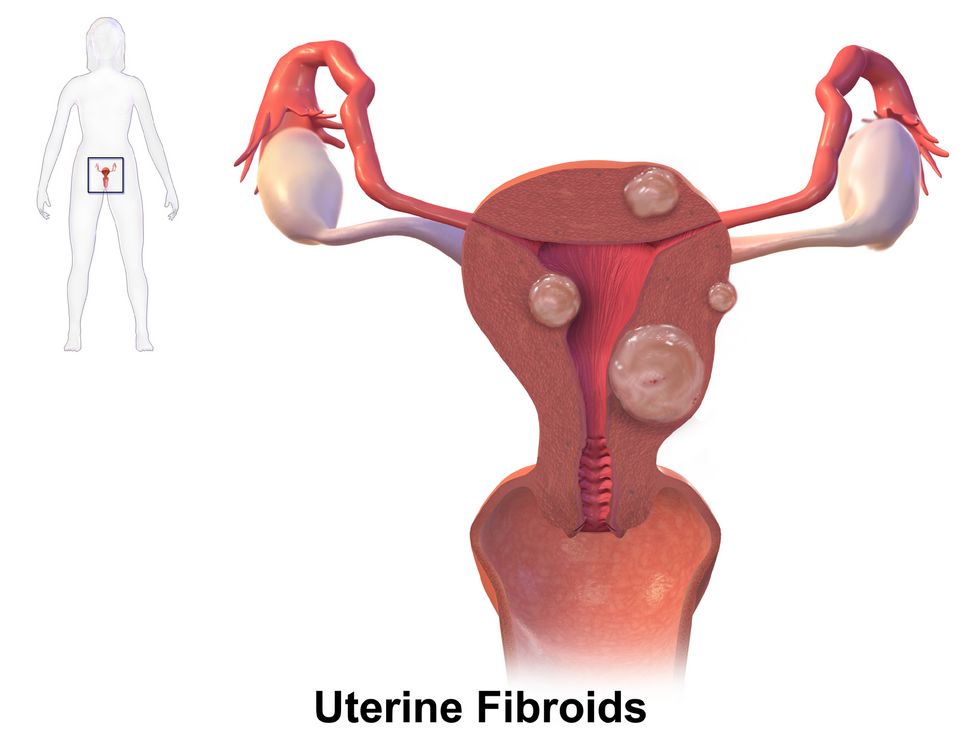
Every month, a healthy uterus rehearses for a pregnancy that usually does not come. This rehearsal is the menstrual cycle. Learn its normal rhythm first. Then almost every female disorder gets easier to reason through. The first half is the follicular phase. The pituitary releases FSH. An ovarian follicle matures. Rising estrogen thickens the uterine lining, the endometrium. Then a surge of LH triggers ovulation, around day 14. The emptied follicle becomes the corpus luteum. It pumps out progesterone to hold the lining steady. That is the luteal phase. If no pregnancy implants, the corpus luteum dies. Hormones fall. The lining sheds as menstruation. The loop runs about 28 days. But 21 to 35 days is often normal.
When the cycle misbehaves: menstrual disorders
Dysmenorrhea is painful periods. The primary type comes from too many prostaglandins. They make the uterine muscle cramp hard. That cramp briefly cuts off its own blood supply. Less blood flow is called ischemia. It is what makes the pain crampy, like labor. NSAIDs block prostaglandins, so they work well here. Secondary dysmenorrhea points to another problem. Think endometriosis or fibroids.
Amenorrhea means absent periods. Primary means they never started by about age 15. Secondary means regular cycles stopped for 3 months or more. Pregnancy is the top cause of the secondary kind. So rule it out first. Other causes can also shut the cycle down. Stress, hard exercise, low body weight, and thyroid or prolactin problems all can. They quiet the hypothalamic-pituitary-ovarian axis, the hormone chain that runs the cycle.
Abnormal uterine bleeding (AUB) covers three things. Bleeding that is too heavy (menorrhagia). Bleeding that comes too often. And bleeding between periods (metrorrhagia). Often the cause is anovulation, which means no egg is released. With no ovulation there is no progesterone. So estrogen builds the lining with nothing to balance it. The lining outgrows its blood supply and sheds in a ragged way. Heavy loss month after month often causes iron-deficiency anemia.
PCOS: the hormone-and-metabolism tangle
Polycystic ovary syndrome is the most common hormone disorder in women of child-bearing age. Think of three linked problems. First, irregular or absent cycles, from months of anovulation. Second, androgen excess. That brings extra hair growth (hirsutism), acne, and thinning scalp hair. Third, insulin resistance. The insulin piece is the engine. High insulin pushes the ovaries to make more androgens. It also lowers SHBG, so even more testosterone runs free. The ovaries fill with many small young follicles. That is the "polycystic" look on ultrasound. Cycles never finish, so the lining sits under unopposed estrogen. Over years that raises the risk of endometrial hyperplasia. PCOS also raises the risk of type 2 diabetes and metabolic syndrome. So lifestyle change comes first, and sometimes metformin.
Endometriosis: the right tissue in the wrong place
In endometriosis, tissue that acts like endometrium grows outside the uterus. It lands on the ovaries, the ligaments, and the lining of the pelvis. It still answers the monthly hormone cues. So it thickens and bleeds with each cycle. But that blood has nowhere to drain. The result is lasting inflammation and scarring. Scar bands called adhesions glue pelvic organs together. The classic signs are pelvic pain that tracks the cycle and gets worse with menses. Add dyspareunia, which is painful intercourse, and infertility. On the ovary, trapped old blood can form a "chocolate cyst," called an endometrioma. Laparoscopy often confirms the diagnosis.
Fibroids and pelvic inflammatory disease
Uterine fibroids (leiomyomas) are benign tumors of the smooth muscle in the uterine wall. They are estrogen-sensitive. So they tend to grow during the child-bearing years. They shrink after menopause. Many cause no symptoms at all. Larger ones cause heavy or long periods, and pelvic pressure. Some press on the bladder, so the woman needs to urinate often.
Pelvic inflammatory disease (PID) is an infection that climbs upward. It usually starts with Chlamydia or gonorrhea. It travels from the cervix up into the uterus, the tubes, and the ovaries. The inflammation scars the fallopian tubes. That is why PID is a leading cause of ectopic pregnancy and infertility. Watch for lower belly pain, fever, and discharge. Watch too for cervical motion tenderness, which means pain when the cervix is moved.
| Feature | Endometriosis | Uterine fibroids |
|---|---|---|
| What it is | Endometrial-type tissue outside the uterus | Benign smooth-muscle tumor in the uterine wall |
| Hallmark pain | Pain that tracks the cycle, plus dyspareunia | Pressure and heaviness; often no pain |
| Bleeding | Varies | Heavy or long periods |
| Effect on fertility | Common, from adhesions | Depends on size and location |
You can explore these disorders side by side in the interactive figure below.
Pregnancy adds another layer. The figure below covers what can harm a developing fetus, and two genetic ideas that sit beside it.
- The cycle runs on FSH and LH. Estrogen builds the lining. Then progesterone steadies it. When ovulation fails, estrogen is unopposed. That causes abnormal bleeding, and it raises endometrial cancer risk.
- Primary dysmenorrhea comes from prostaglandins that cramp the uterus and cut its blood flow. So NSAIDs help. In secondary amenorrhea, rule out pregnancy first.
- PCOS links three things: no ovulation, too much androgen, and insulin resistance. The insulin resistance often drives the androgen excess.
- Endometriosis is uterine-type tissue outside the uterus. It causes pain that tracks the cycle, plus adhesions and infertility. Fibroids are benign muscle tumors that answer to estrogen. They cause heavy bleeding and pressure.
- PID is an STI-related infection that climbs upward and scars the tubes. That raises the risk of ectopic pregnancy and infertility.
Section 2Cancers of the female system
During the child-bearing years, the ovaries release estrogen and progesterone on a careful schedule. Estrogen tells the endometrium, the uterine lining, to grow and thicken. Progesterone comes after ovulation. It matures that lining, then lets it shed as a period. The cervix is the neck of the uterus. It is lined by fast-turnover cells, right where two tissue types meet. The breast is built from milk-making glands and ducts. They answer those same hormones. Cancer starts when the instructions for cell growth get corrupted. Cells then divide with no stop signal. Here is where that goes wrong in the female system, and why each cancer acts the way it does.
Cervical cancer: a virus you can vaccinate against
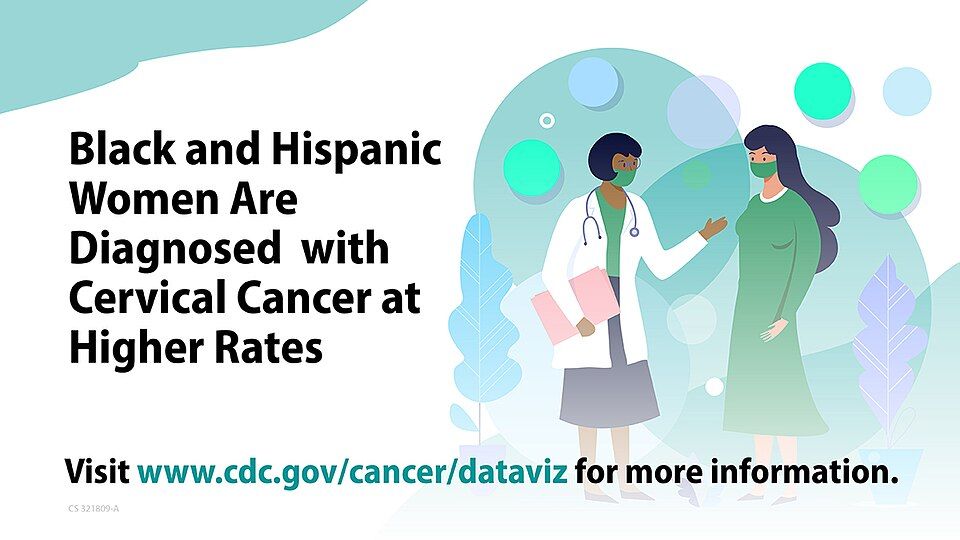
Nearly all cervical cancer starts with human papillomavirus (HPV). HPV is a common sexually transmitted virus. High-risk strains matter most, above all types 16 and 18. They slip proteins into cervical cells. Those proteins switch off the body’s tumor-suppressor genes. So damaged cells keep dividing instead of self-destructing. This usually happens slowly. Normal cells first become dysplasia, which is pre-cancer. Only years later does it turn into invasive cancer. That slow lag is what makes cervical cancer so preventable. A Pap smear scrapes cells from the cervix. It catches dysplasia before it turns malignant. HPV co-testing looks for the virus itself. The HPV vaccine blocks infection in the first place. It works best around ages 11 to 12, before exposure. Early cervical cancer is often silent. One classic later sign is postcoital bleeding, which is bleeding after sex. Other odd spotting counts too.
Endometrial (uterine) cancer: too much estrogen, unopposed
Estrogen builds the endometrium. Progesterone holds that growth in check and triggers shedding. Sometimes estrogen acts without enough progesterone to balance it. Then the lining keeps thickening. This is called unopposed estrogen. Over time it drives endometrial hyperplasia, which can turn into cancer. That explains the risk factors. Obesity matters, because fat tissue makes extra estrogen. So does never having been pregnant. Early menarche and late menopause add up to more lifetime estrogen. PCOS raises risk. So does taking estrogen therapy without progesterone. The good news is that this cancer speaks up early. It shows postmenopausal bleeding, or other abnormal uterine bleeding. Any bleeding after menopause is endometrial cancer until proven otherwise. It needs a prompt workup.
Ovarian cancer: the quiet one
The ovaries sit deep in the pelvis, with room to grow unnoticed. So ovarian cancer often causes no clear signs until it has spread. When signs do appear they are vague and easy to brush off. Look for bloating, and early satiety, which means feeling full fast. Add pelvic or belly discomfort and a sudden urge to urinate. There is no reliable screening test for women at average risk. So it is often found late. That is why it kills so many. Risk rises with BRCA1/BRCA2 gene mutations and with family history. It also rises with more lifetime ovulations. That makes one habit matter. Take new, lasting bloating or fullness seriously.
Breast cancer: risk, warning signs, and screening
Breast tissue answers to estrogen. So most risk factors trace back to lifetime estrogen and to genes. They include early menarche, late menopause, never breastfeeding, and older age. Inherited BRCA1/BRCA2 mutations matter most. They sharply raise both breast and ovarian risk. The warning signs come from a growing mass pulling normal tissue out of shape. Look for a hard, fixed, painless lump. Look for skin dimpling, or a peau d’orange texture, which looks like orange peel. Watch for a nipple pulled inward, or bloody nipple discharge. Screening mammography finds tumors before anyone can feel them. It usually starts around age 40 to 50, then repeats on a schedule.
| Feature | Cervical | Endometrial |
|---|---|---|
| Main driver | HPV infection | Unopposed estrogen |
| Key prevention or screen | Pap smear, HPV vaccine | Watch for abnormal bleeding |
| Classic warning sign | Bleeding after intercourse | Bleeding after menopause |
| When it is found | Often early, because we can screen | Often early, because it bleeds |
Notice the pattern. Cancers that bleed are caught early. So are cancers we can screen for. The quiet ovaries are caught late. That one idea organizes most of what you need to remember.
Run the years in the figure below and see what each screening plan catches.
- Cervical cancer is caused by HPV. The Pap smear catches pre-cancer. The vaccine stops the infection. So this cancer is highly preventable.
- Endometrial cancer is driven by unopposed estrogen. Risk rises with obesity, with never having been pregnant, and with estrogen-only therapy. Bleeding after menopause is the key early sign.
- Ovarian cancer is the quiet one. It is usually found late, with vague bloating and fullness. There is no reliable screening test.
- Breast cancer risk rises with estrogen exposure and with BRCA1/BRCA2. Watch for a hard fixed lump, skin dimpling, or nipple changes. Screen with mammography.
- Any bleeding after menopause is cancer until proven otherwise. It needs a prompt workup.
Section 3Male reproductive disorders
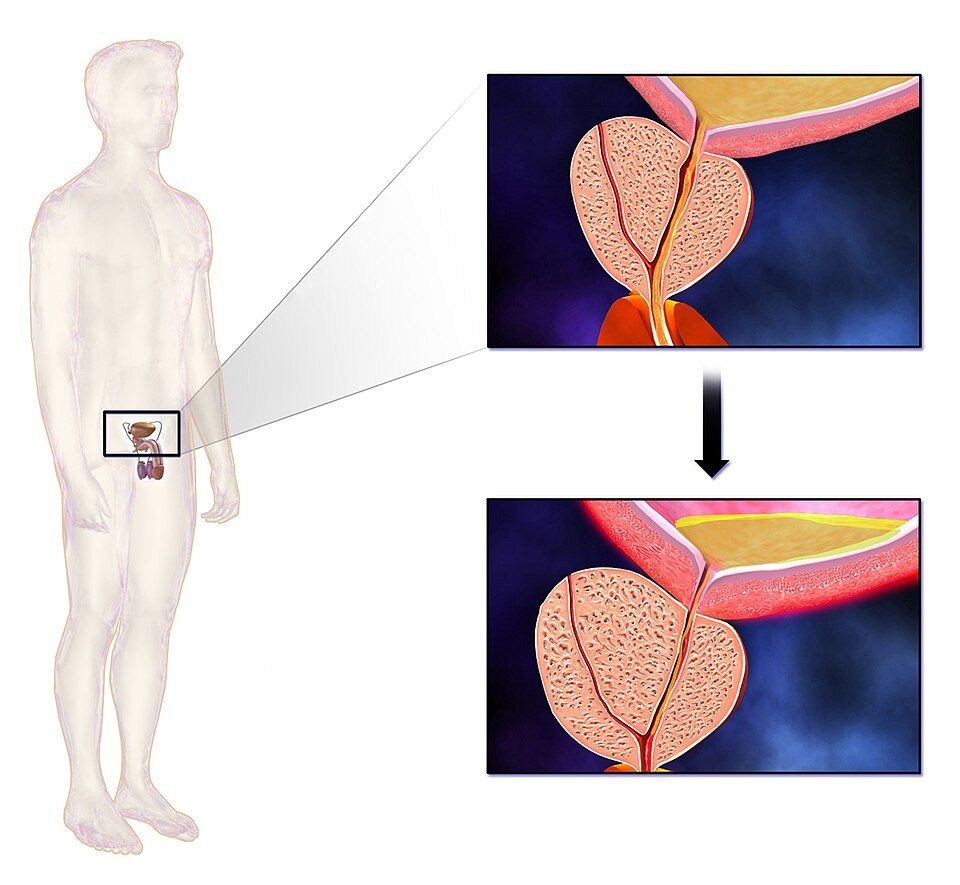
The male reproductive system is built around a simple plumbing problem. One tube, the urethra, has two jobs. It carries urine out of the bladder. It also carries semen out during ejaculation. That urethra runs straight through the middle of the prostate. The prostate is a walnut-sized gland. It sits just below the bladder and adds fluid to semen. Blood flow matters too. An erection is really a vascular event. Arteries relax, and blood pools inside the penis. Keep those two ideas in mind. The tube runs through the prostate, and blood flow drives the erection. Most male disorders then start to make sense.
Benign prostatic hyperplasia (BPH)
BPH is exactly what the name says. It is benign, which means not cancer. And it is hyperplasia, which means too many cells. With age, the prostate slowly enlarges. A lifetime of androgen exposure drives it, mostly DHT (dihydrotestosterone). The urethra passes right through the gland. So that growth squeezes the tube, like a hand closing gently around a straw. Everything else follows from the pinch. The stream turns weak and hesitant, because urine is harder to push past the narrowing. The bladder muscle, the detrusor, has to work harder. It thickens and gets irritable. That drives urinary frequency and urgency. It also drives nocturia, which means waking at night to void. In time the bladder cannot empty fully. Residual urine is left behind. In the worst case flow stops completely. That is acute urinary retention. These lower urinary tract symptoms are often grouped as LUTS.
Prostatitis
Prostatitis is inflammation of that same gland. It feels very different from BPH. Acute bacterial prostatitis usually comes from gut or urine organisms, often E. coli. They track into the prostate. This is an active infection, so the man is truly sick. Expect fever, chills, and malaise. Add pelvic or perineal pain, and painful, hard urination (dysuria). On exam the prostate is boggy, swollen, and very tender. Chronic prostatitis is the slow-burn version. It brings lasting pelvic discomfort and repeat urine infections. But it causes few whole-body signs.
| Feature | BPH | Acute prostatitis |
|---|---|---|
| Cause | Age-related growth, driven by androgens | Bacterial infection |
| Fever or feeling sick | No | Yes, often high fever |
| Onset | Slow, over years | Sudden, over hours to days |
| Prostate on exam | Enlarged, smooth, firm | Swollen, boggy, very tender |
| Main problem | Blocked flow | Infection plus painful urination |
Erectile dysfunction (ED)
Erectile dysfunction is the ongoing inability to get or keep an erection firm enough for sex. An erection needs arteries to widen and fill the penis with blood. So ED is most often a vascular problem. The same processes that clog coronary arteries hurt the small penile vessels. Those are atherosclerosis, diabetes, hypertension, and smoking. They also damage the endothelium, the thin vessel lining. That lining releases nitric oxide, the signal that tells smooth muscle to relax. This is why ED is often an early warning sign. The small vessels narrow before the big ones cause a heart attack. Nerve damage adds to the picture, as in diabetes or after prostate surgery. So do low testosterone, some medicines, and psychological factors.
Testicular torsion
Testicular torsion is a true surgical emergency. The testicle twists on its spermatic cord. That kinks the blood supply, exactly like stepping on a garden hose. With no arterial flow the testicle becomes ischemic, meaning starved of blood. If it is not fixed fast, it dies. It classically strikes adolescents. The pain is sudden and severe, on one side of the scrotum. Nausea and vomiting often come with it. The affected testicle may sit high and horizontal. The cremasteric reflex is typically absent. Normally, stroking the inner thigh lifts the testicle. Time is the whole story. Salvage rates are best within about 6 hours. So torsion goes straight to surgery. Often it is not imaged first, if the diagnosis is clear.
Explore the figure below. See where each of these disorders sits in the male body.
- BPH is benign, age-related prostate growth. It squeezes the urethra, so the stream gets weak. Expect frequency, nocturia, and sometimes retention.
- Prostatitis is inflammation of the prostate. The acute bacterial form brings fever, pelvic pain, and a boggy, tender gland. BPH enlarges the gland without pain.
- Erectile dysfunction is usually vascular. It can be an early warning sign of heart and vessel disease, such as atherosclerosis or diabetes.
- Testicular torsion is a surgical emergency. The pain is sudden and severe, and the cremasteric reflex is absent. The testicle is best saved within about 6 hours.
- The urethra runs through the prostate. So most prostate disorders show up first as a change in the stream.
Section 4Cancers of the male system

The male reproductive system runs on two organs with very different jobs. The testes sit outside the body, in the scrotum. It is slightly cooler there. That lets them make sperm and pump out testosterone. The prostate is a walnut-sized gland. It wraps around the urethra, just below the bladder. Its job is to add fluid to semen. The prostate hugs the urine tube. So anything that makes it swell can squeeze that tube and change how a man urinates. Keep that anatomy in mind. It explains almost every symptom in this section.
Prostate cancer: common and often patient
Prostate cancer is the most common non-skin cancer in men. The risk climbs steeply with age, above all after 65. It is also often slow-growing. So many men live for years with disease that never threatens them. The tumor usually starts in the peripheral zone, the outer part of the gland. That is why it often causes no early symptoms. It is also why a clinician can sometimes feel a hard, uneven nodule. The test for that is a digital rectal exam (DRE). Screening pairs the DRE with a blood test for PSA (prostate-specific antigen). The prostate normally leaks a little PSA. Cancer cells disrupt the gland, so more PSA escapes into the blood. A rising level is a red flag. It is not a diagnosis. Prostate cancer likes to spread to bone. So a later sign can be deep, unexplained back or hip pain.
Cancer versus BPH: same gland, different problem
These two get mixed up all the time. Both make the prostate bigger, and both upset urination. The key difference is where the growth sits, and what kind it is. Benign prostatic hyperplasia (BPH) is overgrowth that is not cancer. It starts in the inner, or transitional, zone. That is the part closest to the urethra. So it squeezes the tube early and loudly. Cancer usually grows in the outer zone. So it stays quiet until it is further along.
| Feature | BPH (benign) | Prostate cancer |
|---|---|---|
| What it is | Overgrowth of normal cells | Malignant cells that can spread |
| Usual zone | Inner or transitional, near the urethra | Peripheral, the outer zone |
| Early urinary symptoms | Common and obvious | Often none until advanced |
| DRE finding | Smooth, rubbery, even | Hard, uneven nodule |
| PSA | Mildly raised | Often higher, or rising |
The urinary symptoms of BPH follow straight from the squeezed urethra. Expect a weak stream. Expect hesitancy, which means waiting for flow to start. Expect dribbling, and nocturia, which means waking to urinate. The bladder never empties fully. These same symptoms can show up in advanced cancer. So symptoms alone cannot tell the two apart. That is exactly why the exam and the PSA matter.
Testicular cancer: the young man's cancer
Testicular cancer flips the age script. It is the most common solid cancer in men roughly 15 to 35 years old. The biggest risk factor is an undescended testicle (cryptorchidism). That holds true even if surgery fixed it in childhood. The classic sign is a painless, firm lump or swelling in one testicle. It is often found by chance, or in the shower. It does not hurt, so men easily ignore it. That is dangerous, because these tumors can grow fast. Many start in germ cells. They can raise tumor markers such as AFP, beta-hCG, and LDH, which help with diagnosis and tracking. Here is the reassuring part. Testicular cancer responds very well to treatment. Cure rates stay excellent even after it has spread. So finding it early changes a lot.
When to worry and refer
Refer promptly when you find a hard or nodular prostate on exam. Refer for a rising or clearly raised PSA. Refer for new bone pain in a man with a prostate history. For the testes, any painless testicular mass needs an urgent workup. So does new firmness, or a change in size. That usually means a scrotal ultrasound, before anyone calls it harmless. Other red flags count too. Watch for blood in the urine or semen, weight loss with no clear cause, and trouble urinating. Your job is not to diagnose. It is to notice, document, and route. It is also to make screening feel normal, so men actually show up.
Grow each zone in the figure below and watch the stream, the PSA, and the exam.
- Prostate cancer is common and often slow-growing, and it favors older men. It grows in the outer zone of the gland. Screening uses PSA plus a digital rectal exam.
- BPH is benign inner-zone overgrowth. It squeezes the urethra early, so expect weak stream, hesitancy, and nocturia. Cancer stays outer and quiet until late. So exam and PSA tell them apart.
- PSA is a clue, not a diagnosis. Infection, BPH, and a recent exam can raise it. A rising level earns a referral.
- Testicular cancer strikes young men, usually 15 to 35. It is typically a painless firm mass, and it is highly curable. So monthly self-exam and early reporting matter.
- Refer promptly for a hard or nodular prostate. Refer for a rising PSA, new bone pain, or any painless testicular mass.
Section 5Sexually transmitted infections
The reproductive tract has built-in defenses. The vagina keeps an acidic pH, thanks to bacteria called lactobacilli. Cervical mucus forms a physical plug. The lining of the urethra, cervix, and rectum is coated in immune cells. They stand ready to trap invaders. Sexually transmitted infections (STIs) happen when a germ gets past those defenses. It may be a bacterium, a virus, or a protozoan. It passes through vaginal, anal, or oral contact. Then it settles on mucosa, or enters the bloodstream. Here is the tricky part. Many STIs are silent. The person feels fine. Meanwhile the germ quietly climbs the tract, or spreads through the body.
Bacterial STIs: chlamydia and gonorrhea
Chlamydia trachomatis and Neisseria gonorrhoeae are the two most reported bacterial STIs. They often travel together. Both infect the tall, column-shaped lining cells of the cervix and urethra. Symptoms, when they come, are few. Expect dysuria, which means painful urination. Expect thick cloudy discharge, or bleeding after sex. But roughly 70% of women have no symptoms at all. Many men have none either. That is exactly why these infections spread. The silence is dangerous. The germ can climb from the cervix into the uterus and tubes. Then it triggers pelvic inflammatory disease (PID). Inflammation and scarring can block the tubes, so the egg cannot pass. That causes infertility. It also raises the risk of a life-threatening ectopic pregnancy. Gonorrhea can spread into blood and joints too. That is called disseminated gonococcal infection. Antibiotics treat both. Chlamydia gets doxycycline, and gonorrhea gets ceftriaxone. But treatment cannot undo scarring that is already there.
Syphilis and its stages
Syphilis comes from the spiral bacterium Treponema pallidum. It is called the great imitator. It moves through the body in clear stages. Each stage brings different signs. The germ spreads from local tissue, to the bloodstream, and in the end to the nervous system.
| Stage | What you see | Why |
|---|---|---|
| Primary | A single painless chancre at the entry site, which heals on its own | The spirochete is multiplying locally; it is often missed, because it does not hurt |
| Secondary | Widespread rash, often on palms and soles, with fever and swollen lymph nodes | The organism has spread through the blood, so the whole immune system reacts |
| Latent | No symptoms, but blood tests are positive | The bacteria persist quietly; early on it can still be passed to others |
| Tertiary | Gummas, heart and vessel damage, neurosyphilis | Years of unchecked damage to tissue and vessels |
Penicillin is still the treatment. The early sores are painless, and they heal on their own. That is exactly why untreated syphilis keeps moving forward. The patient assumes it is gone.
Viral STIs
Viral STIs differ in a key way. Antibiotics do nothing against them. And several last for life. The virus either slips into host DNA, or it hides inside host cells.
- Human papillomavirus (HPV): infects flat surface cells, called squamous epithelium. Low-risk strains cause genital warts. High-risk strains, 16 and 18, disable tumor-suppressor genes. They drive cervical, anal, and oropharyngeal cancers. The HPV vaccine prevents the high-risk strains. Pap and HPV screening catch pre-cancer early.
- Herpes simplex virus (HSV): causes painful blister-like genital sores. Then it retreats into nerve clusters near the tailbone, the sacral ganglia. It stays there for life and flares under stress. Antivirals such as acyclovir hold outbreaks down. They do not cure it.
- HIV: attacks CD4 T-helper cells. Immunity slowly falls apart. In the end, infections that a healthy body shrugs off define AIDS. Modern antiretroviral therapy lets people live long lives. When the viral load is undetectable, it also stops transmission.
- Hepatitis B: spreads through blood and through sex. It inflames the liver. Over years it can cause chronic hepatitis, cirrhosis, and liver cancer. A vaccine prevents it.
Why screening and prevention matter
So many STIs cause no symptoms. That is why screening is what finds them before damage sets in. Treating partners breaks the reinfection loop. Prevention layers together. Barrier methods such as condoms cut transmission. Vaccines stop HPV and hepatitis B before exposure. Prompt treatment shortens the window when a person can pass it on. Patient teaching here is practical and free of judgment. It rests on one truth. Catching an STI early is almost always easier than treating what it becomes.
Move through the stages in the figure below, then treat and see what is left.
- Chlamydia and gonorrhea are often silent. But they can climb upward and cause PID, infertility, and ectopic pregnancy. Treat the patient, and treat the partners.
- Syphilis moves through four stages. Primary brings a painless chancre. Secondary brings a body-wide rash. Then comes latent, then tertiary, with neurosyphilis and damage to the heart and vessels. Penicillin treats it.
- Viral STIs are HPV, HSV, HIV, and hepatitis B. Antibiotics do not touch them, and they are often lifelong. Vaccines prevent HPV and hepatitis B.
- High-risk HPV drives cervical and other cancers. HIV destroys CD4 cells and the immunity they run.
- Four things prevent the worst outcomes: screening, partner treatment, barrier methods, and vaccination.
The chapter in one breath
- Endometriosis is endometrial tissue in the wrong place. It still bleeds each cycle. That causes chronic pelvic pain and dysmenorrhea. Adhesions and scarring then cause infertility.
- PID is usually chlamydia or gonorrhea climbing upward. It inflames the upper tract. Its scarring is a leading cause of ectopic pregnancy and infertility.
- Cervical cancer is nearly always caused by lasting high-risk HPV, types 16 and 18. That is why the vaccine plus Pap and HPV co-testing catch it early.
- Breast cancer risk climbs with lifetime estrogen and with BRCA1/BRCA2 mutations. A new hard, fixed, painless lump calls for mammography. So does a nipple change.
- BPH is enlargement of the prostate’s inner zone, and it is not cancer. It squeezes the urethra. That causes hesitancy, weak stream, nocturia, and urinary retention.
- Prostate cancer usually starts in the outer zone. So it can be felt on DRE, and it rarely blocks flow early. It is often silent until the PSA rises, or until bone metastases appear.
- Testicular cancer is the most common solid tumor in young men, ages 15 to 35. It typically shows up as a painless, firm lump in one testicle.
- STIs often hide in silence. Chlamydia and gonorrhea may cause no symptoms, yet still cause PID and infertility. Untreated syphilis moves from a primary chancre, to a secondary rash, to tertiary organ damage.
ReferenceWords worth knowing
A quick reference for the terms in this chapter. Skim it now, or come back whenever a word trips you up.
- Amenorrhea
- Having no menstrual periods. Primary means they never started by the expected age. Secondary means they stopped for three or more cycles in someone who used to menstruate. It often signals pregnancy, a hormone imbalance, or too much stress or exercise.
- Benign prostatic hyperplasia (BPH)
- A non-cancerous enlargement of the prostate gland, common in aging men. It squeezes the urethra and causes urinary symptoms such as a weak stream, hesitancy, frequency, and waking at night to urinate (nocturia).
- BRCA
- The BRCA1 and BRCA2 tumor-suppressor genes. Inherited mutations in them sharply raise lifetime risk of breast and ovarian cancer, and some prostate cancer, because the damaged gene can no longer help repair DNA.
- Chlamydia
- A very common bacterial sexually transmitted infection caused by Chlamydia trachomatis. It is often silent, with no symptoms, yet it can quietly scar the reproductive tract and lead to pelvic inflammatory disease and infertility if it is not treated.
- Dysmenorrhea
- Painful menstrual cramping, caused mainly by prostaglandin-driven uterine contractions. Primary means there is no underlying disease. Secondary means it comes from a condition such as endometriosis or fibroids.
- Endometriosis
- A condition in which tissue like the uterine lining grows outside the uterus. It bleeds with each period, which causes chronic pelvic pain, painful intercourse, and often infertility.
- Fibroid
- A benign, non-cancerous tumor of uterine smooth muscle, also called a leiomyoma. It can enlarge the uterus and cause heavy menstrual bleeding, pelvic pressure, and pain.
- Gonorrhea
- A bacterial sexually transmitted infection caused by Neisseria gonorrhoeae. It inflames the urethra, cervix, or other mucous membranes. Left untreated, it can spread and cause pelvic inflammatory disease or whole-body infection.
- HPV (human papillomavirus)
- A very common sexually transmitted virus. Its high-risk strains can cause cervical, anal, and other cancers. Its low-risk strains cause genital warts.
- HPV vaccine
- A vaccine, such as Gardasil, that protects against the high-risk human papillomavirus strains most likely to cause cervical and other cancers. It works best given before a person becomes sexually active.
- Pap smear
- A screening test that samples cells from the cervix to find pre-cancerous or cancerous changes early. It is often paired with HPV testing, to catch problems before they become cancer.
- Pelvic inflammatory disease (PID)
- An infection of the upper female reproductive organs: the uterus, fallopian tubes, and ovaries. It usually spreads upward from an untreated STI such as chlamydia or gonorrhea. It can scar the tubes and cause infertility or ectopic pregnancy.
- Polycystic ovary syndrome (PCOS)
- A common hormone disorder marked by irregular or absent ovulation, high androgens (which cause acne and extra hair growth), and often insulin resistance. Ultrasound frequently shows many small ovarian follicles.
- PSA (prostate-specific antigen)
- A protein made by the prostate and measured in the blood as a screening marker. Higher levels can point to prostate cancer, but they also rise with benign prostatic hyperplasia, infection, or inflammation.
- Syphilis
- A sexually transmitted infection caused by the bacterium Treponema pallidum. It moves through stages, starting with a painless sore called a chancre. Untreated, it can eventually damage the heart, brain, and other organs.
- Testicular torsion
- A surgical emergency in which the testicle twists on its spermatic cord. That cuts off blood flow and causes sudden severe scrotal pain and swelling. It must be relieved within hours to save the testicle.
DrillFlashcards for this unit
These are the Week 12 cards. They are the same deck as the hub, pulled in here so you can review the moment you finish reading. Tap the card to flip it. Hit Shuffle to mix them up. To grade yourself and track mastery across the whole deck, open the full flashcards page.