Nutrition & Physical Activity
Movement costs energy. The body is very good at paying that bill from several accounts at once. Which account it draws on depends almost entirely on how hard and how long you are working. There is the tiny cash supply of stored ATP. There is the checking account of glycogen. And there is the huge savings account of body fat. This chapter walks through the fuel systems that power activity. Then it turns them into the practical questions people really ask. How much carbohydrate? How much protein? How much fluid? And are any of the products on the supplement shelf worth the money? Along the way you will learn to tell claims backed by strong, repeated evidence from claims that rest on one small study and a big sales budget. Nothing here is personal advice. It is the body science and the evidence that sit under such advice.
By the end of this chapter you can
- Describe the three energy systems, and predict which one leads for a certain effort level and length of time.
- Give the energy yields of carbohydrate, protein, fat and alcohol, and estimate the size of the body's fuel stores.
- Explain what glycogen is, why it runs out, and what carbohydrate loading does and does not do.
- Use evidence-based carbohydrate intake ranges by training load and by how long exercise lasts.
- Compare the protein RDA with the higher intakes studied in active people, and give the group and units for each value.
- Tell dehydration from exercise-associated hyponatremia, and explain why the fix for one makes the other worse.
- Sort common ergogenic aids into strong evidence, early evidence and no believable evidence.
- Recognize low energy availability, and explain why not eating enough is a problem for both performance and health.
Section 1Fueling activity

One currency, three ways to mint it
Every muscle squeeze is paid for in ATP, the cell's energy currency. The amount of ATP sitting in a muscle fiber at any moment is tiny. It is enough for only about one to two seconds of all-out work. So the body does not store much energy as ATP. It stores energy as other molecules and keeps remaking ATP from them. Three systems do that remaking. They are not steps that happen one after another. They are more like three taps that are always open, each by a different amount.
The phosphagen system, also called the ATP-PCr system, uses phosphocreatine stored in the muscle. It turns ADP, the "spent" form, back into ATP almost at once. It needs no oxygen and makes no acid. But the tank is small. All-out effort empties it in about ten seconds. Anaerobic glycolysis breaks glucose or muscle glycogen down to a molecule called pyruvate without oxygen. ("Anaerobic" means without oxygen.) It makes ATP quickly but in small amounts. When it gets ahead of what the mitochondria can take in, lactate builds up. This system carries efforts lasting about ten seconds to two minutes. The oxidative system, run by the mitochondria, takes over for anything longer. It burns carbohydrate and fat all the way, using oxygen. It is slow to get going but almost unlimited in how much it can do.
| Energy system | Fuel used | Needs oxygen? | Leads for about | Everyday example |
|---|---|---|---|---|
| Phosphagen (ATP-PCr) | Stored ATP, phosphocreatine | No | 0 to 10 seconds, all-out | One jump, a heavy lift, a short sprint |
| Anaerobic glycolysis | Muscle glycogen, blood glucose | No | ~10 seconds to ~2 minutes | Running up several flights of stairs |
| Oxidative: carbohydrate | Glycogen, blood glucose | Yes | Minutes to a few hours, moderate to hard | A steady hard run or a hard group bike ride |
| Oxidative: fat | Fat in fat tissue and inside muscle | Yes | Rest through easy to moderate work | Sitting, walking, an easy hike |
Which fuel dominates, and why intensity is the switch
Once oxygen-using energy is in charge, the question becomes carbohydrate or fat. Both are always being burned. What changes is the mix. At rest and during easy work, fat gives most of the energy. As intensity, or effort level, climbs, the share from carbohydrate rises steadily and the share from fat falls. Scientists call this pattern the crossover. At about moderate effort the two give about the same amount. At hard effort, carbohydrate gives most of it. The reason is mechanical. Burning fat takes more steps and depends on moving it into the mitochondria. So it simply cannot make ATP fast enough for hard work. Carbohydrate can be broken down quickly. It is also the only fuel that can be used without oxygen.
The energy yields themselves are fixed and worth learning, because every calculation in sports nutrition rests on them. Carbohydrate gives 4 kcal per gram, protein 4 kcal per gram, fat 9 kcal per gram and alcohol 7 kcal per gram. Notice what those numbers do to the size of the body's stores. Carbohydrate is stored as glycogen, which is bound with about three grams of water per gram. That makes it heavy and bulky, so the body keeps only a modest supply. Fat is stored with almost no water and gives more than twice as much energy per gram. So even a very lean person carries a store of tens of thousands of kilocalories.
| Fuel store | Usual amount in an adult | About how much energy | What it means in practice |
|---|---|---|---|
| Glucose in the blood | ~4 to 5 g | ~20 kcal | Minutes at most; the liver guards it closely |
| Liver glycogen | ~80 to 110 g | ~320 to 440 kcal | Keeps blood glucose steady, even overnight |
| Muscle glycogen | ~300 to 500 g | ~1,200 to 2,000 kcal | The fuel that runs out first in long, hard exercise |
| Triglyceride in fat tissue | Several kilograms | Tens of thousands of kcal | Almost unlimited; never the fuel that runs out |
Protein is the fourth fuel, and a minor one. During most exercise, burning amino acids gives only about five percent of the energy used. It rises a little when muscle glycogen is low. That is a reason to eat enough carbohydrate, not a reason to eat more protein. Enough carbohydrate spares protein for the building and enzyme jobs it is better suited to.
Not eating enough is not a training plan. When a person's usual food does not cover both training and basic body work, the body turns down what it can. It slows bone renewal. It turns down menstrual and reproductive hormones, immune function and thyroid activity. It harms mood, and in the end performance itself. This state is called low energy availability. The wider illness is called Relative Energy Deficiency in Sport (RED-S). It happens in people of every body size and every sex. It is often missed, because the person may look well and even perform well for a while. It is a medical problem, not a discipline problem. Eating enough is part of training, not a failure of it.
- Three systems remake ATP: phosphagen (seconds), anaerobic glycolysis (seconds to ~2 minutes) and oxidative (minutes to hours).
- Energy yields are carbohydrate 4, protein 4, fat 9, alcohol 7 kcal per gram.
- Effort level is the switch. Fat leads at rest and easy effort. Carbohydrate leads as effort rises.
- Glycogen stores are small (~1,500 to 2,400 kcal) and limit long, hard efforts. Fat stores never do.
- Low energy availability harms bone, hormones, immunity and performance, in every body and every sex.
Section 2Carbohydrate for performance
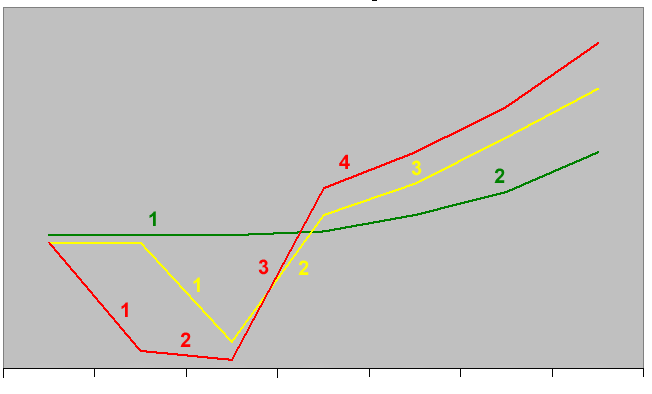
Glycogen: the tank that actually runs out
Glycogen is a large, very branched chain of glucose. It is the body's storage form of carbohydrate. Its branches matter. The many free ends let enzymes snip glucose units off from dozens of points at once. That is exactly what a working muscle needs. Muscle glycogen is a private store. The muscle that stores it is the muscle that uses it. That is because skeletal muscle lacks the enzyme needed to send free glucose back into the blood. Liver glycogen is the public store. The liver releases it as glucose to keep blood levels steady for the brain, the red blood cells and any muscle that needs it.
When muscle glycogen runs low during long, hard exercise, power drops sharply. This usually happens somewhere past the ninety-minute mark at a demanding effort. Endurance athletes call it hitting the wall. It feels less like normal tiredness and more like someone swapped your legs for another person's. The body still has huge fat stores at that moment. But fat cannot be burned fast enough to keep the pace. This is one of the clearest and most repeated findings in sports nutrition. It was shown in controlled lab trials, not guessed from watching people. For exercise lasting more than about ninety minutes at a hard effort, the carbohydrate available limits performance.
| Training load | Usual daily carbohydrate | Comment |
|---|---|---|
| Light activity | ~3 to 5 g per kg body mass per day | Normal daily movement, easy training |
| Moderate (about 1 h per day) | ~5 to 7 g per kg per day | Most adults who exercise for fun |
| Endurance (1 to 3 h per day, moderate to high) | ~6 to 10 g per kg per day | Serious endurance training |
| Very high (more than ~4 to 5 h per day) | ~8 to 12 g per kg per day | Races over several days, days with more than one session |
These ranges come from joint position papers by sports nutrition groups. They are given per kilogram of body mass, so they fit each person's size. They are advice for groups of generally healthy people, not plans for one person. Someone who trains an hour a day does not need the intake of someone who trains five.
Loading: what it does, and who it helps
Carbohydrate loading means filling muscle glycogen above its normal level on purpose before a long event. This is called supercompensation. The first method, from Scandinavia in the 1960s, needed a harsh draining phase first. It used hard, exhausting exercise plus several low-carbohydrate days before the loading days. That misery turned out not to be needed. Modern methods simply combine a taper, an easing off of training, with a high carbohydrate intake. The intake is about 10 to 12 g per kg body mass per day for the 36 to 48 hours before the event. They reach the same high glycogen.
Two warnings keep loading honest. First, it only helps events that would otherwise use up glycogen. That means about ninety minutes or more of steady, demanding effort. For a 5 km race, a soccer match or a gym session, there is nothing to gain, because glycogen was never the limit. Second, glycogen is stored with water. So loading usually adds one to two kilograms of body mass. In a marathon that water is useful. In a short event, or one where weight matters, it is just extra load to carry.
Timing: before, during, and after
Timing is where carbohydrate advice gets oddly exact. The exactness is earned. These numbers come from decades of controlled trials. Before long exercise, a meal with carbohydrate one to four hours ahead tops off liver glycogen. The amount is about 1 to 4 g per kg body mass, depending on how much time there is to digest. During exercise, the advice depends almost entirely on how long it lasts. Below about 45 minutes, no carbohydrate is needed. Between about 45 and 75 minutes, only small amounts seem to help. Even a carbohydrate mouth rinse, swishing a sports drink and spitting it out, seems to help. Between about one and two and a half hours, about 30 to 60 g per hour improves endurance performance. Beyond about two and a half to three hours, intakes up to about 90 g per hour have been shown to help. But this works only if the carbohydrate comes from multiple transportable carbohydrates, usually a mix of glucose and fructose. The reason is neat. The gut's glucose carrier, SGLT1, is maxed out near 60 g per hour. Fructose enters by a separate carrier, GLUT5. So mixing them raises the total amount that can be absorbed. Even higher hourly intakes are being studied and should be treated as early.
Afterward, how urgent refueling is depends on when the next session is. If a second hard session is less than about eight hours away, fast refueling helps most. That means about 1.0 to 1.2 g per kg body mass per hour for the first four hours. If the next session is a day away, normal meals that meet the daily target refill glycogen fully within 24 hours. No special time window applies. Adding protein to a recovery meal is sensible for other reasons. But it does not speed up glycogen refilling when carbohydrate intake is already enough.
Train the gut, not just the legs. Absorbing 60 to 90 g of carbohydrate per hour while running hard is a skill the gut has to practice. Athletes who try race-day amounts for the first time on race day often get stomach and gut trouble instead of a personal best. The gut can be trained to handle it. That is why practicing fueling during training is standard, and why no fueling plan should start at the starting line.
- Muscle glycogen is a local store. Liver glycogen keeps up blood glucose for the whole body.
- The carbohydrate available limits performance in efforts longer than about 90 minutes at a hard effort.
- Daily carbohydrate grows with training load, about 3 to 12 g per kg body mass per day.
- Loading (about 10 to 12 g per kg per day for 36 to 48 h plus a taper) helps only long events, and it adds 1 to 2 kg of water weight.
- During exercise: little or nothing needed under ~45 to 75 min; 30 to 60 g per hour for 1 to 2.5 h; up to ~90 g per hour beyond that, using glucose plus fructose.
Section 3Protein and activity

What the numbers actually say
The RDA for protein is 0.8 g per kg body mass per day for healthy adults aged 19 and older, of both sexes. That number is often misread. An RDA is set to meet the needs of nearly all healthy people in a group. It is a floor for "enough" in the general public. It comes mostly from nitrogen balance studies in people who are not training hard. It was never meant to describe the intake that best supports getting stronger or fitter from training.
Several other values differ by life stage. Quoting an RDA without its group is one of the most common errors in this field. For teens aged 14 to 18, the RDA is 0.85 g per kg per day. For pregnancy and breastfeeding, it rises to 1.1 g per kg per day (about 71 g per day for many pregnant adults). Older adults are often said to need more than 0.8 g per kg. That is because of anabolic resistance, which means their muscles respond less to the same dose of protein. Expert groups often suggest 1.0 to 1.2 g per kg per day for this group. But this is advice, not a new RDA.
For people who train regularly, joint position papers from sports nutrition and dietetics groups describe a range of about 1.2 to 2.0 g per kg body mass per day. The lower end fits endurance training. The upper end fits heavy strength training, times of fast muscle gain, or times of eating less energy, when keeping lean tissue matters. Evidence for benefit above about 2.0 g per kg per day is weak for most people. The benefit levels off. This is a range, not a target to push as high as possible.
| Group | Value | Units | Basis |
|---|---|---|---|
| Adults 19+, both sexes | 0.8 | g per kg body mass per day | RDA: enough for nearly all healthy adults |
| Teens 14 to 18 | 0.85 | g per kg per day | RDA: includes growth needs |
| Pregnancy and breastfeeding | 1.1 | g per kg per day | RDA: supports new tissue and making milk |
| Endurance training | ~1.2 to 1.6 | g per kg per day | Position paper advice, not an RDA |
| Strength training / muscle gain | ~1.6 to 2.0 | g per kg per day | Position paper advice, not an RDA |
| Per meal or snack (adults) | ~0.25 to 0.3 | g per kg, or about 20 to 40 g | The dose that best boosts muscle protein building |
Timing, distribution, and the myth of the window
Muscle protein synthesis, the building of new muscle protein, rises after a meal with protein. It also rises after strength exercise, and the two effects add up. The rise is driven partly by total amino acids and partly by leucine, which acts as a signal. About 2 to 3 g of leucine per meal seems to be the level that sets off a full response in younger adults. Older adults often need more. The response to one dose levels off. So spreading protein across three or four meals gives a somewhat better daily result than packing it into one large evening meal.
Then there is the famous "anabolic window." This is the claim that protein must be eaten within 30 to 60 minutes of training, or the session is wasted. It has not held up. Meta-analyses that took total daily protein into account found the timing effect mostly disappeared. The studies that showed a timing benefit had usually also given the timed group more protein overall. Muscles stay sensitive to protein for many hours after exercise. So eating within a few hours is sensible, and eating within thirty minutes is not required. Total daily intake and steady habits matter most. Timing is a fine-tuning step.
| Common claim | What the evidence shows |
|---|---|
| "You must eat protein within 30 minutes." | Not supported. The window is hours wide; total daily protein matters far more. |
| "The body can only use 20 to 30 g at a time; the rest is wasted." | Too simple. The muscle-building response levels off, but larger doses are still digested and used for other jobs, and whole-food meals keep amino acids raised for longer. |
| "High protein damages the kidneys." | Not supported in people with healthy kidneys. Advice differs when kidney disease is present: a medical matter, not a general one. |
| "Plant protein cannot build muscle." | Not supported. Plant sources usually have less leucine and are a little less digestible, so a bit more in total and a variety of sources make up for it. |
| "Athletes need protein powder." | Not supported as a must. Powders are a convenience food; normal mixed diets at normal energy intakes usually reach 1.2 to 2.0 g per kg. |
| "More protein always means more muscle." | Not supported. Beyond about 2.0 g per kg per day the benefit levels off; the training itself becomes the limit. |
Protein is a building material, not a magic one. Amino acids build muscle only when there is training to drive it and enough total energy. If the body is short on fuel, protein from food gets sent to be burned or turned into glucose (gluconeogenesis) instead of building tissue. That is why "eat more protein" cannot make up for eating too little overall. Foods that carry protein also carry iron, zinc, B12, calcium and fiber, depending on the source. None of those foods are good or bad in a moral sense.
- The protein RDA is 0.8 g per kg per day for adults 19+; 0.85 for ages 14 to 18; 1.1 for pregnancy and breastfeeding.
- Active people are often guided toward 1.2 to 2.0 g per kg per day, with little added benefit above that.
- About 0.25 to 0.3 g per kg (about 20 to 40 g) per meal gives the biggest muscle-building response.
- The narrow "anabolic window" is not supported. Total daily protein and spreading it out matter more.
- Most people meet higher needs from food. Supplements are a convenience, not a must.
Section 4Fluid and electrolytes

How much water, and how much is lost
Water does not give energy. But it is the setting where everything else happens. Blood volume, cooling the body by sweating, moving nutrients and removing waste all depend on it. The Adequate Intake (AI) for total water counts drinks and food, since about 20 percent comes from food. It is 3.7 L per day for men aged 19 and older and 2.7 L per day for women aged 19 and older. It rises to about 3.0 L per day in pregnancy and 3.8 L per day in breastfeeding. An AI is a best estimate of a typical healthy intake. It is not a need each person must hit. Real needs swing widely with body size, climate and activity.
Sweat is where activity changes the math. Sweat rates usually range from about 0.5 to 2.0 L per hour. They can go higher in hot, humid weather or in large athletes working hard. Sweat is hypotonic, which means it is more dilute than blood plasma. But it is not pure water. Its sodium is usually somewhere between about 20 and 80 mmol per liter, and it varies several times over from person to person. (A mmol, or millimole, is a unit for counting particles.) Sweat also has smaller amounts of potassium, chloride and magnesium. That variety is why one-size-fits-all electrolyte advice makes little sense, and why personal sweat testing exists.
Dehydration, and its mirror image
Losing fluid without replacing it lowers plasma volume. At the same workload, it raises heart rate and core body temperature. It harms endurance performance and thinking. These effects become clearly measurable once losses pass about 2 percent of body mass, and heat makes them worse. Losses below that line are usually handled well. Checking is simple and works. Weigh yourself before and after a session to estimate how much fluid you lost. Pale, straw-colored urine usually means you are well hydrated. Urine that stays dark and strong suggests otherwise. Thirst is a real and fairly good signal in most cases.
The mirror-image problem is exercise-associated hyponatremia (EAH). It means blood sodium below 135 mmol per liter that comes on during or soon after long exercise. Its main cause is drinking dilute fluid, plain water or sports drink, beyond what sweat takes away. It is usually made worse because the body releases antidiuretic hormone for reasons other than blood concentration. That stops the kidneys from getting rid of the extra water. The result is dilution. Total body sodium may be normal while its concentration falls. Water moves into cells, and the brain swells inside the fixed space of the skull. The early symptoms are nausea, headache, bloating, puffiness and confusion. They overlap almost perfectly with dehydration. That is the danger. The natural response of drinking more makes hyponatremia worse fast. Severe EAH causes seizures, swelling of the brain and lungs, and death. It is a medical emergency that needs professional care right away.
| Feature | Dehydration | Exercise-associated hyponatremia |
|---|---|---|
| Main problem | Fluid lost is more than fluid taken in | Dilute fluid taken in is more than losses; blood sodium is diluted |
| Blood sodium | Normal or high | Below 135 mmol/L |
| Body mass during event | Down | Same or up |
| Typical setting | Hot weather, little access to fluid | Events longer than ~4 h, slower finishers, lots of drink stations |
| Shared symptoms | Headache, nausea, tiredness, confusion | Headache, nausea, bloating, confusion |
| Clue that tells them apart | Weight loss, dark strong urine, thirst | Weight gain, puffy hands or face, drinking far beyond thirst |
| Effect of drinking more water | Helps | Makes it worse |
The two look alike, but the treatments differ. So expert panels now steer away from strict drinking schedules. They favor drinking to thirst. They add the rule that gaining weight during an endurance event is a warning sign, not a success. Drinks with sodium help replace sweat sodium and make people want to drink. But they do not prevent EAH, because they too are dilute compared with plasma. After exercise, when the goal is to fully rehydrate, drink about 1.25 to 1.5 L of fluid for each kilogram of body mass lost. Get sodium from drinks or food along with it. The extra fluid covers ongoing urine losses.
You cannot tell them apart by symptoms alone. An endurance athlete who collapses with headache, nausea and confusion could be dehydrated or hyponatremic. The right response is totally different. That is exactly why measuring sodium on site is standard at long endurance events. It is also why a general learning chapter can teach you to spot the pattern but cannot replace a medical exam of a real person.
- Total water AI: 3.7 L per day for men 19+, 2.7 L per day for women 19+. About 20 percent comes from food.
- Sweat rates run about 0.5 to 2.0 L per hour. Sweat sodium varies widely (~20 to 80 mmol/L).
- Performance and thinking clearly drop once fluid loss passes about 2 percent of body mass.
- EAH is diluted blood sodium (below 135 mmol/L) from drinking too much. It looks like dehydration and is a medical emergency.
- Drinking to thirst, and avoiding weight gain during long events, is the current agreed approach.
Section 5Supplements and ergogenic aids
A very short list has strong evidence
An ergogenic aid is anything taken to improve performance. The group is huge. The selling never stops. Yet the number of products with truly strong evidence is very small. Expert reviews agree on about five: caffeine, creatine monohydrate, dietary nitrate, beta-alanine and sodium bicarbonate. Add sports foods such as drinks, gels and bars. These are useful mainly because they deliver carbohydrate and fluid easily, not because of any special power.
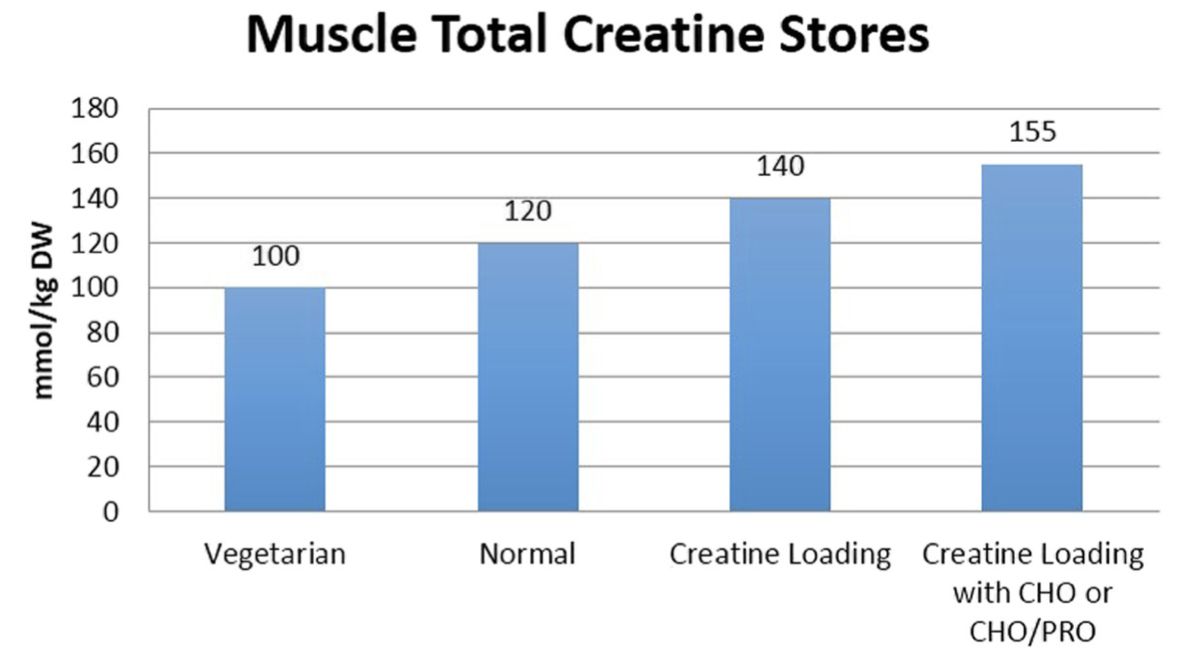
Creatine monohydrate is the most studied supplement in sport. It raises muscle phosphocreatine, which makes the phosphagen tank from Section 1 bigger. It steadily improves performance in repeated short, hard efforts. Combined with strength training, it also helps gains in lean tissue and strength. It has been studied a lot in healthy adults over years of use. Two honest warnings come with it. Some people do not respond, usually because their muscle creatine is already near full. And an early gain of one to two kilograms is mostly water inside the cells. Caffeine has strong evidence for endurance and some hard, high-effort performance. It has been studied mainly at about 3 to 6 mg per kg body mass, taken about an hour before exercise. That is the range trials have used, not a recommendation. Higher amounts give no more benefit and more side effects. How sensitive people are to it varies with their genes. And poor sleep from caffeine can easily wipe out the gain. Beta-alanine raises muscle carnosine, a buffer inside cells that soaks up acid. It helps efforts lasting about 30 seconds to 10 minutes. Harmless skin tingling is common. Sodium bicarbonate soaks up acid outside the cell and helps efforts of similar length. It has a real cost in stomach and gut upset. Dietary nitrate, usually from beetroot juice, improves exercise economy, how much oxygen a given pace costs. But the effect is smaller and less steady in highly trained athletes.
| Substance | Evidence | Likely effect | Warnings |
|---|---|---|---|
| Creatine monohydrate | Strong | Repeated hard efforts; lean tissue and strength with training | Some people do not respond; early water-weight gain of 1 to 2 kg |
| Caffeine | Strong | Endurance and some hard, high-effort performance | People differ a lot in sensitivity; can harm sleep and recovery |
| Beta-alanine | Strong | Efforts of ~30 s to ~10 min | Skin tingling; takes weeks of loading to raise carnosine |
| Sodium bicarbonate | Strong | Hard efforts of ~1 to 7 min | Frequent stomach and gut upset |
| Dietary nitrate (beetroot) | Strong, but smaller | Better exercise economy | Effect smaller in highly trained athletes |
| Iron, vitamin D | Only when lacking: strong for iron, weaker for vitamin D | Fixing proven iron deficiency brings back endurance; fixing vitamin D deficiency supports bone and muscle health, with less certain effects on performance | No boost in people who already have enough; deficiency is found by testing, not guessed |
| HMB, ketone esters, tart cherry, probiotics | Early or mixed | Possible small effects in certain settings | Small studies; results not steadily repeated |
| BCAAs, glutamine, "testosterone boosters," most fat burners | No believable evidence | - | BCAAs are a worse amino acid source than complete protein; the others rest mostly on marketing |
BCAAs, in the table, are branched-chain amino acids (leucine, isoleucine and valine) sold on their own.
Reading claims, and the contamination problem
Two habits protect you from most supplement nonsense. The first is asking what the evidence really is. How many people were studied? Were they trained or untrained? Was there a placebo group, given a dummy pill? Was the result a real performance measure, or a stand-in such as a blood marker? And has the finding been repeated by separate labs? One small trial in untrained volunteers is a reason to be curious, not a reason to be convinced. The second habit is doubting claims that one nutrient causes a big effect. Nutrients act within diets and within body systems. A confident sentence such as "compound X boosts metabolism" almost always squeezes a small lab finding, true only in certain settings, into a promise it cannot keep.
There is also a rule-making fact worth knowing. In the United States, dietary supplements are regulated more like foods than like drugs. Makers are responsible for safety and labels. Products are not checked or approved for whether they work before they reach the shelf. Rules are mostly enforced after problems appear. Independent tests have found again and again that some products contain things not on the label. These include stimulants and muscle-building drugs (anabolic agents). Tests have also found doses that do not match the label. For athletes who compete under anti-doping rules, this risk is real. The athlete is responsible for a positive test, even if they did not mean to take a banned substance. Third-party certification programs that test each batch are the standard way to lower that risk. They reduce the risk but do not remove it.
Supplements sit on top of a diet, not in place of one. The payoff from the basics dwarfs anything on the supplement shelf. The basics are enough energy, enough carbohydrate around training, enough total protein, decent sleep and steady training. None of the well-supported aids work well in someone who is not eating enough. When the basics are truly in place, a small number of aids can add a small, real edge. That is the honest size of the effect.
- Only a short list has strong evidence: creatine, caffeine, beta-alanine, sodium bicarbonate and dietary nitrate.
- Iron and vitamin D improve performance only by fixing a proven deficiency, not as boosters.
- Most other products have early, mixed or no believable evidence. BCAAs are worse than complete protein.
- Supplements are regulated as foods, not drugs. Contamination with things not on the label has been found. Testing each batch lowers the risk.
- Judge claims by whether they were repeated, placebo-controlled and measured real performance, not by stories about how they might work.
The chapter in one breath
- ATP is remade by three systems: phosphagen (seconds), anaerobic glycolysis (seconds to ~2 min) and oxidative (minutes to hours). Effort level decides which one leads.
- Energy yields are fixed: carbohydrate 4, protein 4, fat 9, alcohol 7 kcal per gram. Fat stores are almost unlimited, while glycogen stores are only ~1,500 to 2,400 kcal.
- The glycogen available limits hard efforts beyond about 90 minutes. Daily carbohydrate grows with training load, at about 3 to 12 g per kg per day.
- Carbohydrate loading helps only long events. During exercise the targets are ~30 to 60 g per hour, rising toward ~90 g per hour with glucose-plus-fructose mixes.
- The protein RDA is 0.8 g per kg per day for adults 19+ (0.85 for ages 14 to 18; 1.1 in pregnancy and breastfeeding). Active people are guided toward 1.2 to 2.0 g per kg per day.
- The narrow anabolic window is a myth. Total daily protein, spreading it out sensibly and enough energy do the work.
- Fluid losses past about 2 percent of body mass harm performance. Drinking too much causes exercise-associated hyponatremia, which looks like dehydration and is made worse by drinking.
- Only a handful of ergogenic aids have strong evidence. Supplements are regulated as foods, not drugs. None of them replace eating enough.
ReferenceWords worth knowing
A quick list of the terms in this chapter. Skim it now, or come back whenever a word trips you up.
- Anabolic window
- The popular claim that protein must be eaten within about 30 to 60 minutes after training. Controlled trials show the sensitive time lasts hours, and that total daily protein matters far more.
- Anaerobic glycolysis
- Breaking down glucose or glycogen to pyruvate without oxygen. It makes ATP fast but briefly, and it supports efforts of about 10 seconds to 2 minutes.
- Beta-alanine
- An amino acid that raises muscle carnosine, a buffer inside cells. It has strong evidence for efforts lasting about 30 seconds to 10 minutes.
- Carbohydrate loading
- Filling muscle glycogen above normal on purpose before a long event, by pairing a training taper with high carbohydrate intake for 36 to 48 hours.
- Creatine monohydrate
- The most studied sport supplement. It raises muscle phosphocreatine and improves repeated hard efforts and training gains in lean tissue and strength.
- Dehydration
- A shortage of body water because losses are more than intake. Performance and thinking clearly drop once losses pass about 2 percent of body mass.
- Energy availability
- The food energy left to support basic body work after the energy cost of exercise is taken away. It is given per kilogram of fat-free mass.
- Ergogenic aid
- Anything taken or done to improve performance. Only a small number have strong supporting evidence.
- Euhydration
- A normal, balanced state of body water: neither too low nor too high.
- Exercise-associated hyponatremia (EAH)
- Blood sodium below 135 mmol per liter during or after long exercise. It usually comes from drinking dilute fluid beyond losses. It is a medical emergency that looks like dehydration.
- Gluconeogenesis
- Making glucose from things that are not carbohydrate, such as amino acids, glycerol and lactate, mainly in the liver.
- Glycogen
- The branched storage form of glucose in the liver and muscle. Muscle glycogen fuels the muscle that stores it. Liver glycogen keeps up blood glucose.
- Leucine threshold
- The rough amount of the amino acid leucine per meal that sets off a full muscle-building response: about 2 to 3 g in younger adults, often more in older adults.
- Multiple transportable carbohydrates
- A mix of glucose and fructose that uses two gut carriers (SGLT1 and GLUT5). It raises how much carbohydrate can be absorbed above the limit of about 60 g per hour for glucose alone.
- Muscle protein synthesis
- The building of new muscle protein. Protein from food and strength exercise both boost it, and their effects add up.
- Osmolality
- How many particles are dissolved in a fluid. Sweat is more dilute than plasma, which is why heavy sweating plus plain water can dilute blood sodium.
- Oxidative (aerobic) system
- Energy made in the mitochondria using oxygen to burn carbohydrate and fat all the way. It is slow to start but almost unlimited.
- Phosphagen system
- The instant ATP-phosphocreatine system that powers all-out efforts of about 10 seconds. It needs no oxygen and makes no acid.
- Phosphocreatine
- A high-energy compound stored in muscle. It gives a phosphate to remake ATP from ADP almost at once.
- Relative Energy Deficiency in Sport (RED-S)
- An illness of harmed bone, hormone, immune, energy and mental function caused by low energy availability over time. It happens in all sexes and body sizes.
- Sweat rate
- Fluid lost through sweating per unit of time. It is often 0.5 to 2.0 L per hour and varies a lot with heat, humidity, effort and body size.
- Third-party certification
- Outside testing of each batch of a supplement for things not on the label. It lowers but does not remove the risk of contamination.
Check yourself
Want the longer wording? Read this chapter in the full textbook.