Nutrition Basics
Every day you make many choices about what to eat. Each choice sends a mix of chemicals into a body that needs certain chemicals to work. Nutrition is the science that links the two: the food on the plate and the body that uses it. This chapter lays the ground for the rest of the book. You will learn what a nutrient is and the six groups that nutrients fall into. You will learn how food energy is measured and where the numbers 4, 4 and 9 come from. You will meet the standards that say how much of each nutrient people need. Last, you will see how those numbers become advice about real food. None of this asks you to call a food good or bad. It asks you to know what the food does.
By the end of this chapter you can
- Define nutrition, food and nutrient, and explain what makes a nutrient essential.
- Name the six classes of nutrients and sort them into macronutrients and micronutrients.
- Give the energy in one gram of carbohydrate, protein, fat and alcohol, and use those numbers to find the energy in a food.
- Tell a kilocalorie apart from a calorie and from a kilojoule.
- Explain what the DRIs are. Define EAR, RDA, AI and UL, and say who each one is for.
- Explain why a nutrient goal changes with age, sex, pregnancy and breastfeeding.
- Compare nutrient density with energy density. Say what "empty calories" means and why the phrase is loose.
- Tell a nutrition claim with strong evidence apart from one that is still preliminary, which means early and not yet proven.
Section 1What nutrition is

Food, nutrients, and the difference between them
Nutrition is the science of how the body takes in food. It covers how the body breaks food down, absorbs it, moves it around, uses it and gets rid of what is left. It also covers how all of this affects health over a lifetime. Food is what you actually eat. It is a real thing you buy at a store, cook in a kitchen and share at a table. Nutrients are the single chemicals inside that food. The body needs them to grow, to repair itself, to run its machinery and to control that machinery.
Keeping these two words apart matters. Food is never just one nutrient. A chickpea gives you protein, starch, fiber, folate, iron, magnesium and water all at once. Those parts come packed together in a physical structure, called the food matrix. The matrix changes how fast they are digested. This is why a whole food often acts differently from one nutrient taken out of it. It is also why a pill with one compound often fails to give the benefit seen with the food.
Essential nutrients: the short list your body cannot make
The body makes thousands of compounds for itself. A nutrient is called essential, or indispensable, when the body cannot make it at all, or cannot make enough. Then it has to come from the diet. There are about forty essential nutrients. The test for one is simple. Take the nutrient out of the diet, and a certain deficiency shows up. A deficiency is a shortage that causes harm. Put the nutrient back, and the deficiency goes away. That reversal is the test.
The essential list has nine essential amino acids. They are histidine, isoleucine, leucine, lysine, methionine, phenylalanine, threonine, tryptophan and valine. It has two essential fatty acids: linoleic acid, which is an omega-6, and alpha-linolenic acid, which is an omega-3. It also has thirteen vitamins, a set of minerals, and water. Notice what is not on the list. There is no essential carbohydrate. The body can make the glucose it needs from other building blocks. That is why people can survive on very low carbohydrate diets. But that fact does not tell us whether such diets are the best choice. That is a separate question, and the evidence on it is much messier.
| Term | What it means | Example |
|---|---|---|
| Food | The thing you eat, with all its parts and its physical structure | An orange |
| Nutrient | A certain chemical in food that the body needs | Vitamin C in the orange |
| Essential nutrient | The body cannot make enough; the diet must supply it | Vitamin C: humans lost the enzyme that makes it |
| Non-essential nutrient | Useful, but the body can make it from other material | Alanine, an amino acid the body builds itself |
| Phytochemical | A plant compound that acts on the body but has no set requirement | Lycopene in tomatoes |
| Deficiency disease | The illness that appears when an essential nutrient runs short | Scurvy from a long lack of vitamin C |
Why diet matters to health, and how strongly
Diet affects health in at least three ways. Each way has a different strength of evidence. The first is deficiency. The classic deficiency diseases are scurvy, beriberi, pellagra, rickets, iodine-deficiency goiter and iron-deficiency anemia. Their causes are settled. We know the nutrient, the illness and the cure. That is some of the most solid knowledge in all of medicine. The second way is dietary pattern and chronic disease. A chronic disease is one that lasts a long time, such as heart disease. Large studies that follow people for years, called cohort studies, link certain eating patterns to less heart and blood vessel disease. So do a smaller number of randomized trials, where people are assigned by chance to one diet or another. These patterns are rich in vegetables, fruits, legumes, whole grains, nuts and unsaturated fats. This evidence is good. But it is about patterns, not single foods. The third way is food insecurity and access. This means not having steady access to enough food. It shapes what people can really eat long before taste comes into it.
Compare this with claims about single-nutrient supplements. It is a lesson worth learning early. Some studies once watched people and found that those who ate more beta-carotene had less lung cancer. Then large randomized trials gave beta-carotene pills to smokers. Lung cancer went up, not down. In the same way, large trials of vitamin D pills have not shown the broad benefits beyond bone that the watching studies hinted at. This pattern happens so often that it works as a rule of thumb. How a nutrient acts inside a whole diet does not reliably predict how it acts inside a pill.
- Nutrition is the science of how the body uses food. Food is what is eaten, and nutrients are the chemicals inside it.
- An essential nutrient is one the body cannot make in large enough amounts. Removing it causes a deficiency, and putting it back cures the deficiency.
- There are about forty essential nutrients. They include 9 essential amino acids, 2 essential fatty acids, 13 vitamins, several minerals and water. There is no essential carbohydrate.
- Evidence for deficiency diseases is very strong. Evidence for whole dietary patterns is good. Evidence that single-nutrient supplements prevent chronic disease is mostly weak or negative.
Section 2The six classes of nutrients

Six classes, two categories
Every nutrient in every food belongs to one of exactly six classes. They are carbohydrate, lipid (fat), protein, vitamin, mineral and water. This list has not changed in a hundred years. Learn it early. Almost every later topic in nutrition builds on one of these six.
The classes also split another way. Macronutrients are needed in grams each day. They are carbohydrate, lipid, protein and, by most counts, water. Micronutrients are needed in milligrams or micrograms. A milligram (mg) is one thousandth of a gram. A microgram (µg) is one millionth of a gram. The micronutrients are the vitamins and minerals. "Macro" means large and "micro" means small. They describe the amount needed, not how important the nutrient is. The suggested carbohydrate intake for adults is 130 g a day. That number comes from the least glucose the brain uses on average. It does not mean carbohydrate is essential. The iodine goal is 150 µg. That is close to a millionfold difference. Yet running out of iodine harms the thyroid just as surely as running out of energy starves the body.
The energy-yielding three, plus the three that are not
Only three classes give the body energy it can use: carbohydrate, lipid and protein. Vitamins, minerals and water give none. People get this wrong all the time, mostly about vitamins. A "B-complex for energy" pill does not contain any energy. Several B vitamins work as coenzymes. A coenzyme is a helper that lets an enzyme do its job. These coenzymes help the pathways that release energy from macronutrients. That is a real and important role. But a coenzyme is a tool, not fuel. Giving extra tools to a system that already has enough does not make it run faster.
Here is a quick tour of the six. Carbohydrates are sugars, starches and fibers. They are the fuel the body uses most easily. Glucose is the brain's favorite fuel. Mature red blood cells have no mitochondria, the parts of a cell that burn fuel with oxygen. So glucose is the only fuel red blood cells can use. Fiber is a carbohydrate that human enzymes cannot digest. It reaches the colon mostly whole and feeds the gut microbiota, the tiny living things in the gut. Lipids include triglycerides, phospholipids and sterols. They are the most packed fuel store. They build every cell membrane. They carry the fat-soluble vitamins A, D, E and K. They also supply the two essential fatty acids. Proteins are chains of amino acids. They build and repair tissue. They also work as enzymes, carriers, antibodies and some hormones. The body will burn protein for fuel, but that is a backup, not its job. Vitamins are organic compounds, which means they contain carbon. Four are fat-soluble (A, D, E, K). Nine are water-soluble: vitamin C and the eight B vitamins. Vitamins control body processes. Minerals are inorganic elements, which means they are not carbon compounds. The major minerals are needed at more than 100 mg a day. They are calcium, phosphorus, magnesium, sodium, potassium, chloride and sulfur. The trace minerals are needed in smaller amounts. They are iron, zinc, iodine, selenium, copper, manganese, fluoride, chromium and molybdenum. Water is a nutrient in its own right. It makes up about 50 to 70% of an adult's body weight. It is also the nutrient whose lack kills fastest: in days, not weeks or months.
| Class | Macro or micro | Organic? | Gives energy? | Main jobs |
|---|---|---|---|---|
| Carbohydrate | Macro | Yes | Yes: 4 kcal/g | Main fuel; fiber feeds gut microbes and adds bulk to stool |
| Lipid (fat) | Macro | Yes | Yes: 9 kcal/g | Packed fuel and storage; membranes; carries vitamins A, D, E, K |
| Protein | Macro | Yes | Yes: 4 kcal/g | Structure and repair; enzymes, carriers, antibodies |
| Vitamin | Micro | Yes | No | Control body processes; many act as coenzymes |
| Mineral | Micro | No | No | Structure (bone), fluid balance, nerve and muscle signals, cofactors |
| Water | Macro | No | No | Dissolves things, moves things, controls body heat, takes part in reactions |
Deficiency and excess both have consequences
Micronutrients are needed in tiny amounts. So it is tempting to think they are minor. The deficiency diseases show otherwise. They are worth knowing by name. A lack of vitamin C causes scurvy. A lack of thiamin (B1) causes beriberi. With heavy long-term drinking, it can also cause Wernicke-Korsakoff syndrome, a brain disorder. A lack of niacin (B3) causes pellagra. A lack of vitamin D causes rickets in growing children and osteomalacia, or soft bones, in adults. A lack of vitamin A causes night blindness. This can get worse and become xerophthalmia, a drying and damage of the eye. It is a leading cause of preventable blindness in children around the world. A lack of iodine causes goiter, a swollen thyroid. In pregnancy it also harms the baby's brain development. A lack of iron causes iron-deficiency anemia, which means too few healthy red blood cells. A lack of vitamin B12 causes megaloblastic anemia, with large, faulty red blood cells. It also causes nerve damage that can become permanent.
Too much can also cause harm. Fat-soluble vitamins are stored rather than easily flushed out. So high intakes of preformed vitamin A over a long time can damage the liver. Preformed means the ready-made form found in animal foods and pills. It is also teratogenic in pregnancy, which means it can cause birth defects. Too much iron is toxic. Swallowing a large amount of iron at once is a classic poisoning in young children. Even water can harm in extreme amounts. It can dilute the sodium in the blood, a condition called hyponatremia. The lesson is that each nutrient has two danger ends: too little and too much. The upper limit in Section 4 exists to deal with the "too much" end.
- The six classes are carbohydrate, lipid, protein, vitamin, mineral and water.
- Macronutrients (carbohydrate, lipid, protein, water) are needed in grams. Micronutrients (vitamins, minerals) are needed in milligrams or micrograms.
- Only carbohydrate, lipid and protein give energy. Vitamins, minerals and water give none.
- Carbohydrate, lipid, protein and vitamins are organic (they contain carbon). Minerals and water are inorganic. Vitamins are compounds; minerals are single elements.
- Both deficiency and excess cause known illnesses. That is why standards set an upper limit as well as a suggested amount.
Section 3Calories and energy

What a Calorie actually is
A calorie is a unit of energy. It is the heat needed to warm one gram of water by one degree Celsius. That unit is far too small for food. So nutrition uses the kilocalorie, which is 1,000 calories. It is written kcal. It is the heat needed to warm one kilogram of water by one degree Celsius. Here is the word trap. The "Calories" on a food label are kilocalories. A 200-Calorie granola bar has 200 kcal. In strict physics terms, that is 200,000 calories. Some countries and most science journals use a different unit, the kilojoule (kJ). 1 kcal = 4.184 kJ. The food stays the same. Only the units change.
Food energy was first measured with a bomb calorimeter. You burn a weighed bit of food in oxygen inside a sealed box. Water surrounds the box. You measure how much the water warms. That gives the gross, or total, energy. But the body is not a bomb calorimeter. It does not absorb everything, and it does not burn everything all the way. So nutrition uses body-based values. W. O. Atwater and his team worked them out. They are called the Atwater factors.
The 4-4-9 rule (and 7 for alcohol)
These four numbers are among the few worth learning by heart:
| Substance | Energy per gram | Per gram in kJ | Note |
|---|---|---|---|
| Carbohydrate | 4 kcal/g | ~17 kJ/g | For sugars and starches, the carbohydrate we can digest |
| Protein | 4 kcal/g | ~17 kJ/g | Total energy is higher (~5.65 kcal/g). Its nitrogen leaves in urine as urea, so ~4 is usable |
| Fat (lipid) | 9 kcal/g | ~37 kJ/g | More than twice carbohydrate or protein: the most packed fuel |
| Alcohol (ethanol) | 7 kcal/g | ~29 kJ/g | Gives energy but is not a nutrient: no body job needs it |
| Fiber | ~2 kcal/g | ~8 kJ/g | Not digested by our enzymes; some energy comes back when colon microbes ferment it |
| Vitamins, minerals, water | 0 kcal/g | 0 | Essential, but give no energy at all |
With these factors you can work out a food's energy from what is in it. Say a food has 30 g carbohydrate, 10 g protein and 12 g fat. It gives (30 × 4) + (10 × 4) + (12 × 9) = 120 + 40 + 108 = 268 kcal. You can also work backward to find the share of energy from each macronutrient. Here fat gives 108 of the 268 kcal. That is about 40% of the energy. Yet fat is only about 23% of the 52 g of macronutrient weight. Fat is a small share of the weight but a large share of the energy. That gap comes straight from the number 9.
Energy in, energy out
The energy you burn each day has three main parts. Basal metabolic rate (BMR) is the energy needed to keep a resting body alive. It runs breathing, blood flow, the balance of charged particles across cells, and the replacing of old cells. It is by far the largest part. In an adult who does not move much, it is usually about 60 to 70% of the total. Physical activity changes the most from person to person. It can be a few percent of the total. In athletes and people who do heavy physical work, it can be a very large share. The thermic effect of food is the energy used to digest and process a meal. It is about 10% of what you eat. Needs differ a lot with body size, body makeup, age, sex, growth, pregnancy, breastfeeding and activity. That is exactly why the standards in the next section are set for defined groups, not as one number for everyone.
- A food-label Calorie is a kilocalorie (kcal). 1 kcal = 4.184 kJ.
- Energy per gram: carbohydrate 4, protein 4, fat 9, alcohol 7 kcal/g. Fiber gives about 2 kcal/g.
- Vitamins, minerals and water give no energy. Alcohol gives energy but is not a nutrient.
- Multiply grams by these factors to get a food's energy. Divide by the total energy to get the percent of calories from each macronutrient.
- Energy burned = BMR (largest share) + physical activity (changes the most) + thermic effect of food (about 10% of intake).
Section 4Dietary standards
The DRI framework
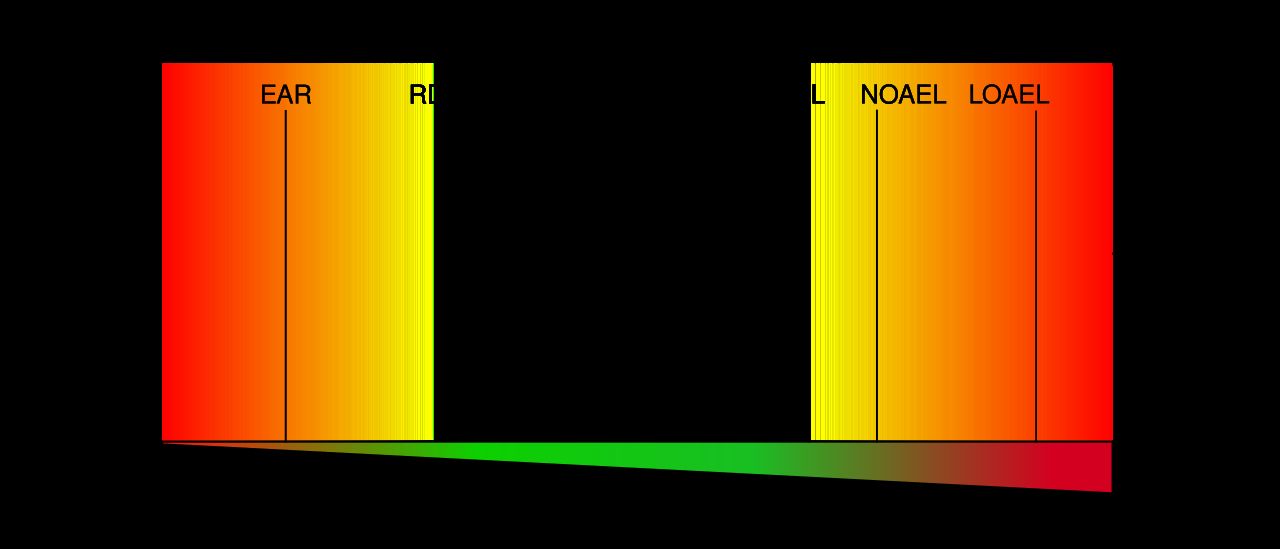
The Dietary Reference Intakes (DRIs) are a set of reference values for how much of each nutrient to take in. Expert groups at the U.S. National Academies of Sciences, Engineering, and Medicine set them, working with Canada. The DRIs are not one number per nutrient. They are a family of four related values: EAR, RDA, AI and UL. Each one answers a different question. Each is set on its own for defined life-stage and sex groups. These groups include infants, children by age band, teen boys and girls, adult men and women by age band, pregnancy, and lactation, which means breastfeeding.
Two points clear up most of the confusion. First, the DRIs describe healthy people. They are not doses to treat disease. Second, the RDA and AI are goals for your usual intake averaged over time. They are not targets to hit exactly at every meal or even every day. Someone who eats no vitamin A on Tuesday and plenty on Wednesday is fine. These values are built around the body's ability to store and replace nutrients.
EAR, RDA, AI, and UL: one at a time
The Estimated Average Requirement (EAR) is the intake that meets the need of half the healthy people in a life-stage and sex group. Half the group needs more than the EAR. So it is a poor goal for one person. It has two real uses. It helps judge whether intakes are adequate across whole populations. It is also the math starting point for the RDA.
The Recommended Dietary Allowance (RDA) is the intake that meets the need of nearly all healthy people in the group: about 97 to 98%. It is built from the EAR. By custom, it is the EAR plus two standard deviations. A standard deviation is a measure of how spread out the needs are. The RDA is the right goal for an individual. It is set on the generous side on purpose. Most people need less than the RDA. An intake below it is not, by itself, proof of a deficiency.
The Adequate Intake (AI) is used when the evidence is too thin to set an EAR. Without an EAR, an RDA cannot be worked out. The AI is a best estimate based on what healthy people are seen to eat, or on experiments. You use an AI the same way you use an RDA, as a personal goal. But it comes with less certainty. That difference in confidence is the whole reason for a separate label.
The Tolerable Upper Intake Level (UL) is the highest usual daily intake that is likely to cause no harm for almost everyone in the group. Above the UL, the risk of harm goes up. Keep two warnings in mind. The UL is not a suggested intake. And if a nutrient has no UL, it means there was not enough data to set one. It does not mean any amount is safe. For some nutrients, the UL covers only certain forms. The folate UL covers only man-made folic acid from pills and fortified foods. It does not cover the folate found naturally in food.
| Value | Covers | Use it for | Do not use it for |
|---|---|---|---|
| EAR | Meets the need of 50% of the group | Judging a group's or population's intake; building the RDA | One person's daily goal |
| RDA | Meets the need of 97 to 98% of the group | One person's daily intake goal | Judging a population's average |
| AI | Best estimate when evidence cannot support an EAR | A personal goal, with less confidence | Deciding that a lower intake is a deficiency |
| UL | Highest usual intake likely to cause no harm | A ceiling: a safety check on pills and fortified foods | A target or a suggested amount |
The Acceptable Macronutrient Distribution Ranges (AMDRs) work in a different way. They give goals as a percent of total energy for adults: carbohydrate 45 to 65%, fat 20 to 35% and protein 10 to 35% of calories. There is also an Estimated Energy Requirement (EER) for calories. Notice that there is no RDA for energy. An energy value that covered 97 to 98% of a group would be too high for the average person every time.
Reading a real value: population, units, and life stage
A DRI value means nothing without its group and its units. Here are some worked examples. All are for healthy people, and all are per day:
| Nutrient | Type and value | Group | How it shifts |
|---|---|---|---|
| Protein | RDA 0.8 g/kg body weight | Adults 19+, both sexes | Higher in pregnancy and breastfeeding; higher per kg in infancy and childhood |
| Vitamin C | RDA 90 mg / 75 mg | Adult men / adult women 19+ | Add 35 mg/day for people who smoke; higher in pregnancy and breastfeeding |
| Iron | RDA 8 mg / 18 mg | Men 19+; women 19 to 50 | Drops to 8 mg for women 51+; rises to 27 mg in pregnancy. UL 45 mg |
| Calcium | RDA 1,000 mg | Adults 19 to 50 | 1,200 mg for women 51+ and for everyone 71+. UL 2,500 mg (19 to 50) |
| Vitamin D | RDA 600 IU (15 µg) | Ages 1 to 70 | 800 IU (20 µg) at 71+. UL 4,000 IU (100 µg) for adults |
| Folate | RDA 400 µg DFE | Adults 19+ | 600 µg DFE in pregnancy. UL 1,000 µg/day of folic acid only |
| Fiber | AI 38 g / 25 g | Men / women 19 to 50 | An AI, not an RDA: based on about 14 g per 1,000 kcal |
| Total water | AI 3.7 L / 2.7 L | Adult men / adult women | Counts water from food and all drinks, not just plain water |
A few short forms in that table: IU means international units, an older way to count some vitamins. DFE means dietary folate equivalents, a unit that adjusts for how well each form of folate is absorbed.
- The DRIs are a family of reference values for healthy people, set on their own for each life stage and sex.
- EAR covers 50% of a group. It is a population tool and the base of the RDA.
- RDA covers 97 to 98% of a group. It is the right personal goal.
- AI stands in for the RDA when evidence is thin. It is used the same way but with less confidence.
- UL is a safety ceiling, not a target. No UL means not enough data, not proven safety.
- Always give the group and units with any value. Iron is 8 mg/day for adult men, but 18 mg/day for women 19 to 50 and 27 mg/day in pregnancy.
Section 5Dietary guidelines and nutrient density

From nutrient numbers to something you can eat
Nobody shops for 18 mg of iron. The DRIs are written in nutrients. But people buy, cook and eat foods. So a step is needed to turn one into the other. That step is the food-based dietary guideline. Most countries publish one. In the United States, the Dietary Guidelines for Americans are updated every five years. The U.S. Departments of Agriculture and of Health and Human Services write them. A picture for the public comes with them. For years that picture was a pyramid. From 2011 it was the MyPlate plate icon. The 2025 to 2030 edition, released in January 2026, brought back a pyramid, this time drawn upside down. Other countries use their own pictures, from Canada's plate to Japan's spinning top. But the nutrient science under them is mostly shared.
Recent U.S. editions agree on a few lasting themes. Follow a healthy dietary pattern at every stage of life, rather than chasing single nutrients. Fit that pattern to personal taste, culture, tradition and budget. A guideline that ignores cost or culture will not be followed, and a guideline nobody follows helps no one. Meet nutrient needs mainly from nutrient-dense foods. And limit added sugars, saturated fat, sodium and alcohol. For adults, the usual number targets have been under 10% of calories from saturated fat and under 2,300 mg of sodium per day. For years the added sugars target was under 10% of calories. The 2025 to 2030 edition goes further. It says no amount of added sugar is recommended, and it says children under 11 (age 10 and younger) should avoid added sugars. The MyPlate picture shows the pattern as shares of a plate. About half the plate is vegetables and fruit. About a quarter is grains, with at least half of those whole grains. About a quarter is protein foods. Dairy or a fortified swap sits on the side.
Nutrient density versus energy density
Nutrient density is how many helpful nutrients a food gives for its energy: nutrients per calorie. Energy density is a separate measure: calories per gram of food. The two rise and fall on their own. Mixing them up causes real mistakes. Nuts are high in energy density and also high in nutrient density. A sugary soft drink is low in nutrient density. It gives a fair amount of energy with almost no nutrients alongside. It is also about nine tenths water. So it is low in energy density too, only about 0.4 kcal per gram. That mix is exactly why drinks are easy to have too much of. A 12-ounce can is not calorie-packed per gram. Yet it still gives about 150 kcal. It needs no chewing, and it does little to make you feel full. Lettuce sits in a third corner. Its energy density is very low. Because its calories are so few, it scores well on nutrients per calorie, even though one serving gives only small amounts. A fortified breakfast cereal can be nutrient-dense for some micronutrients and still carry a lot of added sugar. The idea is a tool for comparing foods. It is not a way to sort foods into allowed and forbidden.
That brings us to empty calories, a phrase you will hear all the time. It means energy that comes with few nutrients. The classic sources are added sugars, solid fats and alcohol. It is a handy shortcut, but a loose one. Current advice has mostly moved to naming the exact part instead, such as calories from added sugars or calories from saturated fat. It no longer labels whole foods "empty." That change is on purpose. In real life the label got stuck on foods, and then on the people who ate them. A truer way to see it: nearly every diet has some foods eaten mainly for pleasure, for a party or for ease. The useful question is what the overall pattern looks like. It is not whether any single item earns approval.
| Idea | Definition | Units | Worth remembering |
|---|---|---|---|
| Nutrient density | Helpful nutrients per calorie | Nutrients / kcal | Compares foods at equal energy; high means more nutrition per calorie |
| Energy density | Energy per gram of food | kcal / g | Driven mostly by fat and water content; separate from nutrient density |
| Added sugars | Sugars added when food is processed or made | g, or % of kcal | Long-used target: under 10% of calories for adults; the 2025 to 2030 guidelines recommend none |
| "Empty calories" | Loose term for energy with few nutrients alongside | - | Not exact; better to name added sugars, saturated fat or alcohol |
| Dietary pattern | The overall mix of foods eaten over time | - | The level where the chronic-disease evidence is strongest |
How much confidence do the guidelines deserve?
Different parts of the advice rest on different footing. A careful reader keeps them apart. The strongest support is for the nutrient standards themselves. We know each nutrient is essential, and we know the intakes that prevent deficiency. Decades of take-away-and-give-back studies showed this. Also strong: adding folic acid to food lowers neural tube defects, which are birth defects of the brain and spine. And eating less sodium lowers blood pressure. Next is evidence that is good, mostly from cohort studies plus a limited set of randomized trials. It shows that eating patterns rich in vegetables, fruits, legumes, whole grains, nuts and unsaturated fats go along with lower heart disease risk. Evidence is weaker or disputed for exact best percents of each macronutrient. It is also weak for most claims that a single nutrient in pill form prevents chronic disease.
None of this makes the guidelines random. It means they are a fair summary of evidence that varies in strength. They are aimed at whole populations, and they should be read that way. They are a starting frame, not a plan for any one person. Personal advice belongs with a trained clinician or a registered dietitian, a licensed nutrition expert. That expert knows the person's history, medicines, lab results, resources and tastes.
- Food-based dietary guidelines turn nutrient standards into foods, food groups and shares that people can act on.
- Common adult targets: saturated fat under 10% of calories and sodium under 2,300 mg/day. Added sugars were long held under 10% of calories; the 2025 to 2030 guidelines recommend no added sugars at all.
- MyPlate shares: about half vegetables and fruit, a quarter grains (at least half whole), a quarter protein foods, plus dairy or a fortified swap.
- Nutrient density is nutrients per calorie. Energy density is calories per gram. They are separate measures.
- "Empty calories" is a loose shortcut for energy with few nutrients. Naming added sugars, saturated fat or alcohol is more exact and less easily misused.
- The dietary pattern, not the single food, is the level where the chronic-disease evidence is strongest.
The chapter in one breath
- Nutrition studies how the body uses food. Food is what is eaten, and nutrients are the chemicals inside it. Essential nutrients are the ones the body cannot make in large enough amounts.
- There are exactly six classes of nutrients: carbohydrate, lipid, protein, vitamin, mineral and water.
- Macronutrients are needed in grams (carbohydrate, lipid, protein, water). Micronutrients are needed in milligrams or micrograms (vitamins, minerals). The labels describe amount, not importance.
- Energy per gram is carbohydrate 4, protein 4, fat 9 and alcohol 7 kcal/g. Vitamins, minerals and water give none. A label "Calorie" is a kilocalorie (1 kcal = 4.184 kJ).
- The DRIs set nutrient values for healthy people by life stage and sex. EAR covers 50% of a group, RDA covers 97 to 98%, AI stands in when evidence is thin, and UL is a safety ceiling, not a goal.
- Any value needs its group and units. Iron is 8 mg/day for adult men, 18 mg/day for women 19 to 50, and 27 mg/day in pregnancy.
- Dietary guidelines turn nutrient standards into food groups and shares, such as MyPlate. They set limits on added sugars, saturated fat, sodium and alcohol.
- Nutrient density (nutrients per calorie) is the more exact name for the idea behind "empty calories." The dietary pattern over time, not any single food, is what the chronic-disease evidence is really about.
ReferenceWords worth knowing
A quick list of the terms from this chapter. Skim it now. Come back whenever a word slows you down.
- Acceptable Macronutrient Distribution Range (AMDR)
- A DRI value that gives a healthy range for an energy nutrient as a percent of total calories. For adults: carbohydrate 45 to 65%, fat 20 to 35%, protein 10 to 35%.
- Adequate Intake (AI)
- A DRI used when evidence is too thin to set an EAR, and so an RDA. It is a best estimate of what healthy people eat. It is used as a personal goal, with less confidence.
- Calorie (kilocalorie, kcal)
- The unit of food energy. One kilocalorie is the heat needed to warm one kilogram of water by one degree Celsius. It equals 1,000 small calories and 4.184 kilojoules. The capital-C "Calorie" on a label is a kilocalorie.
- Carbohydrate
- A macronutrient class made of sugars, starches and fibers. The forms we can digest give 4 kcal/g and are the fuel the body uses most easily.
- Dietary Reference Intakes (DRIs)
- The full set of nutrient reference values (EAR, RDA, AI, UL and related numbers) for healthy people, set by life stage and sex.
- Empty calories
- A loose term for energy that comes with few nutrients, often from added sugars, solid fats or alcohol. It is not exact, and it is more and more replaced by naming the exact part.
- Energy density
- The energy a food gives per gram, in kcal per gram. It is separate from nutrient density.
- Essential nutrient
- A nutrient the body cannot make in large enough amounts, so the diet must supply it. Without it, a certain deficiency appears, and putting it back cures it.
- Estimated Average Requirement (EAR)
- The intake that meets the need of 50% of healthy people in a life-stage and sex group. It is used to judge populations and to build the RDA.
- Kilojoule (kJ)
- The science (SI) unit of energy used on food labels in many countries. 1 kcal = 4.184 kJ.
- Lipid
- The macronutrient class that includes triglycerides, phospholipids and sterols. It gives 9 kcal/g, builds cell membranes, and carries the fat-soluble vitamins A, D, E and K.
- Macronutrient
- A nutrient needed in grams each day: carbohydrate, lipid, protein and (by custom) water.
- Micronutrient
- A nutrient needed in milligrams or micrograms each day: the vitamins and minerals.
- Mineral
- An inorganic element needed in the diet. Major minerals are needed at more than 100 mg/day; trace minerals in smaller amounts. Minerals give no energy.
- Nutrient density
- How many helpful nutrients a food gives for its energy: nutrients per calorie.
- Nutrition
- The science of how the body takes in, digests, absorbs, moves, uses and gets rid of what is in food, and how this affects health.
- Protein
- The macronutrient class made of chains of amino acids. It gives 4 kcal/g and supplies structure, enzymes, carriers, antibodies and some hormones. Nine amino acids are essential.
- Recommended Dietary Allowance (RDA)
- The average daily intake that meets the need of about 97 to 98% of healthy people in a life-stage and sex group. It is the right personal goal.
- Tolerable Upper Intake Level (UL)
- The highest average daily intake likely to cause no harm for almost everyone in a group. It is a ceiling, never a target.
- Vitamin
- An organic compound needed in small amounts to control body processes. Four are fat-soluble (A, D, E, K) and nine are water-soluble (vitamin C and eight B vitamins). Vitamins give no energy.
- Water
- An essential nutrient that makes up about 50 to 70% of an adult's body weight. It dissolves and moves things, controls body heat and takes part in reactions. It gives no energy.
Check yourself
Want the longer wording? Read this chapter in the full textbook.