Food Safety
Nutrition assumes a working food supply, and most of the time we have one — yet an estimated 48 million people in the United States get sick from something they ate each year, about 128,000 are hospitalized, and roughly 3,000 die. Almost none of that is caused by exotic contamination; it is caused by ordinary time, ordinary temperature, and ordinary hands. This chapter walks through the pathogens that actually cause foodborne illness and how they announce themselves, the temperature rules that stop bacteria from multiplying, the handling habits that keep raw and ready-to-eat foods apart, and who carries the most risk and why. It closes with the harder question students ask constantly — what about additives, pesticide residues, and processing? — and gives you a method for weighing that evidence instead of a list of foods to fear.
By the end of this chapter you can
- Name the major foodborne pathogens and match each to its typical onset time, hallmark symptoms, and classic food sources.
- Explain why onset time distinguishes a preformed toxin from an infection, and why that distinction changes what you expect clinically.
- State the boundaries of the temperature danger zone and apply the two-hour rule to holding, cooling, and storage.
- Recall the safe minimum internal cooking temperatures for poultry, ground meat, whole cuts, fish, and reheated leftovers.
- Describe the four core safe-handling practices — clean, separate, cook, chill — and justify each mechanistically.
- Identify the four higher-risk populations and explain the physiology behind each one’s vulnerability.
- List the foods that carry disproportionate risk during pregnancy, infancy, later life, and immunosuppression.
- Distinguish hazard from risk, and weigh evidence about additives, residues, and processing without overstating single findings.
Section 1Foodborne illness
What “food poisoning” actually is
The phrase covers two mechanically different events. In an infection, you swallow a living microbe, it survives the stomach, it multiplies in the gut or invades beyond it, and you become ill only after that population has grown — which takes hours to days. In an intoxication, the microbe did its work in the food before you ever picked up the fork, leaving behind a preformed toxin; you are poisoned by a chemical, not colonized by an organism, and symptoms arrive fast. A third category, toxicoinfection, sits between them: the organism is swallowed alive and produces toxin once inside you.
That mechanical split is why onset time is the most useful single clue in a suspected foodborne illness. Vomiting that begins two hours after a meal cannot be an infection — no organism multiplies that fast — so it points to a preformed toxin, classically Staphylococcus aureus or the emetic form of Bacillus cereus. Bloody diarrhea three days after a cookout points to an invasive organism that needed time to establish. And a meal eaten four weeks ago is still a plausible source for hepatitis A.
The organisms worth knowing
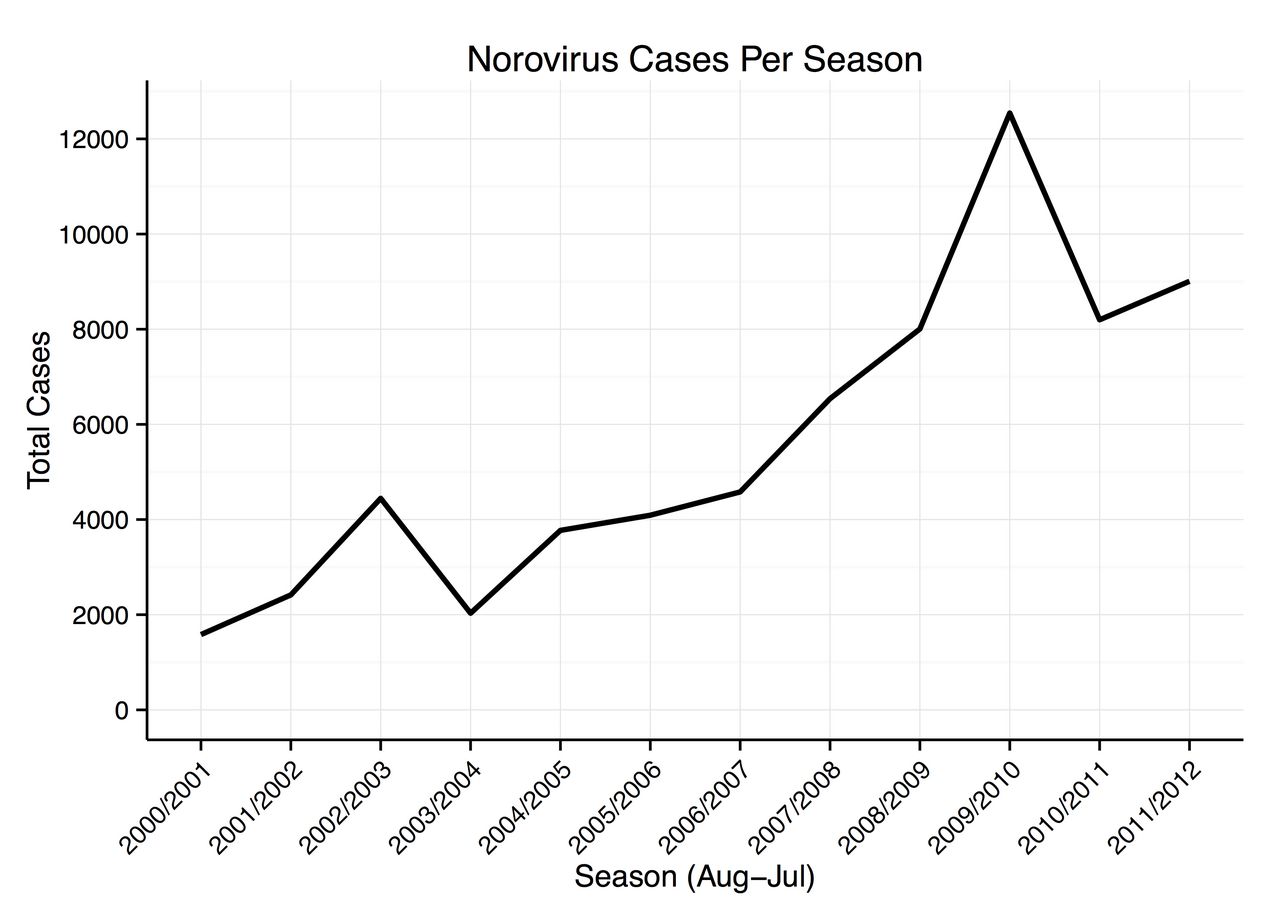
Norovirus is the leader by a wide margin, responsible for roughly 58 percent of domestically acquired foodborne illness from known agents. It is extraordinarily transmissible — as few as roughly eighteen viral particles can infect — it is shed in enormous numbers in vomit and stool, it survives on surfaces, and it resists alcohol-based hand sanitizer. It produces one to three days of vomiting and watery diarrhea and then relents. Infected food handlers, raw shellfish, and contaminated leafy greens are the usual routes.
Among bacteria, nontyphoidal Salmonella causes the most hospitalizations and deaths, arriving twelve to seventy-two hours after poultry, eggs, produce, or contact with reptiles and backyard poultry. Campylobacter jejuni is the most common bacterial cause of diarrheal illness, incubating two to five days, most often traced to undercooked poultry or unpasteurized milk, and occasionally followed weeks later by Guillain–Barré syndrome. Shiga toxin–producing E. coli (STEC, especially O157:H7) causes bloody diarrhea with severe cramps and often no fever, and in roughly five to ten percent of cases — concentrated in children under five — progresses to hemolytic uremic syndrome, a triad of hemolytic anemia, thrombocytopenia, and acute kidney injury. Because of that risk, clinicians are cautious about antibiotics and antimotility drugs in suspected STEC.
Listeria monocytogenes deserves its own paragraph because it breaks the usual rules: it grows at refrigerator temperature, it tolerates salt, and its invasive form can incubate for weeks. In healthy adults it may cause only a brief febrile gastroenteritis; in pregnancy, later life, and immunosuppression it crosses into blood and central nervous system, and invasive listeriosis carries a case-fatality around one in five. Clostridium botulinum is rarer still but unmistakable: a heat-labile neurotoxin from improperly home-canned low-acid foods producing symmetric descending flaccid paralysis with cranial nerve signs — double vision, difficulty swallowing, slurred speech — in an alert, afebrile person. Infant botulism is a separate route, which is why honey should not be given to infants under twelve months.
| Agent | Typical onset | Hallmark | Classic sources |
|---|---|---|---|
| Staphylococcus aureus | 30 min – 8 h | Abrupt vomiting; preformed, heat-stable toxin — reheating does not help | Hand-handled foods held warm: salads, pastries, sliced meats |
| Bacillus cereus (emetic) | 30 min – 6 h | Vomiting; cereulide toxin | Cooked rice and pasta held at room temperature |
| Bacillus cereus (diarrheal) | 6 – 15 h | Watery diarrhea, cramps | Meats, stews, sauces, vegetable dishes |
| Clostridium perfringens | 6 – 24 h | Cramps and diarrhea, little vomiting or fever; resolves in a day | Large batches of meat, gravy, beans cooled or held too slowly |
| Norovirus | 12 – 48 h | Vomiting and diarrhea, 1–3 days; alcohol gel unreliable | Infected food handlers, raw shellfish, leafy greens |
| Salmonella (nontyphoidal) | 12 – 72 h | Diarrhea, fever, cramps, 4–7 days | Poultry, eggs, produce, raw flour, reptiles |
| Campylobacter jejuni | 2 – 5 days | Diarrhea (often bloody), fever; rare later Guillain–Barré | Undercooked poultry, unpasteurized milk, untreated water |
| STEC / E. coli O157:H7 | 3 – 4 days | Bloody diarrhea, often afebrile; risk of HUS in young children | Undercooked ground beef, raw leafy greens, unpasteurized juice |
| Vibrio species | 2 – 48 h | Diarrhea; V. vulnificus can cause sepsis in liver disease | Raw oysters and shellfish, warm coastal waters |
| Listeria monocytogenes | 1 day – 10 weeks | Febrile gastroenteritis, or invasive sepsis/meningitis; grows at 4°C | Deli meats, soft cheeses from raw milk, smoked seafood, melon, sprouts |
| Clostridium botulinum | 12 – 72 h | Descending flaccid paralysis, cranial nerve palsies, no fever | Improperly home-canned low-acid foods; honey in infants |
| Hepatitis A | 15 – 50 days | Fatigue, nausea, jaundice; vaccine-preventable | Infected food handlers, shellfish, frozen berries |
| Scombroid (histamine) | Minutes – 1 h | Flushing, headache, rash; chemical, not infectious | Temperature-abused tuna, mahi-mahi, mackerel |
What the body loses, and what it needs back
Most foodborne illness in an otherwise healthy adult is self-limiting, and the real hazard is not the organism but the fluid and electrolyte loss. Diarrheal stool carries sodium, potassium, chloride, and bicarbonate. Oral rehydration works because glucose and sodium are absorbed together by a shared intestinal transporter, dragging water along with them — which is why the standard reduced-osmolarity oral rehydration solution defined by the World Health Organization pairs sodium at 75 mmol/L with glucose at 75 mmol/L for a total osmolarity near 245 mOsm/L, rather than simply offering water. Plain water does not restore sodium, and high-sugar soft drinks can worsen osmotic diarrhea.
This is general education, not clinical instruction: signs such as bloody stools, high fever, neurologic symptoms, signs of dehydration, or illness in an infant, an older adult, a pregnant person, or someone immunosuppressed warrant prompt medical evaluation rather than home management.
- Infection (organism multiplies in you, slower onset) differs from intoxication (preformed toxin, rapid onset).
- Norovirus causes the most illness; Salmonella causes the most hospitalizations and deaths among bacteria.
- STEC risks hemolytic uremic syndrome, especially in children under five; Listeria uniquely grows at refrigerator temperature.
- The immediate danger in most cases is fluid and electrolyte loss, which is why glucose-plus-sodium rehydration outperforms plain water.
Section 2Temperature control
The danger zone and the two-hour rule
Bacteria are not exotic; they are arithmetic. Under favorable conditions a single bacterial cell divides roughly every twenty minutes, so one organism becomes more than a million in about seven hours. The temperature danger zone is the range in which that arithmetic runs fast: the U.S. Department of Agriculture defines it as 40°F to 140°F (4°C to 60°C), while the FDA Food Code used by retail and food-service operations tightens it slightly to 41°F to 135°F (5°C to 57°C). The two numbers differ because they were set for different settings, not because anyone disagrees about the microbiology.
The practical rule that follows is the two-hour rule: perishable food should not sit in the danger zone for more than two hours cumulatively, counting time on the counter, on the buffet, and in the car. Above 90°F (32°C) — a summer picnic, a hot car — that budget drops to one hour. Cumulative is the word people miss: an hour thawing on the counter plus ninety minutes on a serving table has already spent the budget, even though neither step felt long.
Cooking: the kill step
Cooking is the one moment in the chain that reliably reduces the pathogen load rather than merely holding it steady. But it only works if the coldest interior point reaches temperature, which colour and texture cannot tell you — browning is a Maillard reaction driven by surface chemistry, not a thermometer. A ground beef patty can look grey and still be under temperature, and a well-cooked steak can look pink from myoglobin chemistry. Use a food thermometer in the thickest part, away from bone and fat, and calibrate it occasionally in an ice-water slurry, which should read 32°F (0°C).
| Food | Safe minimum internal temperature | Note |
|---|---|---|
| Poultry — all forms | 165°F (74°C) | Whole birds, pieces, ground poultry, and stuffing alike |
| Ground meats (beef, pork, lamb, veal) | 160°F (71°C) | Grinding moves surface bacteria throughout the interior |
| Whole cuts — steaks, chops, roasts | 145°F (63°C) | Plus a 3-minute rest before carving or eating |
| Fish and shellfish | 145°F (63°C) | Or until flesh is opaque and separates easily |
| Egg dishes; eggs cooked for holding | 160°F (71°C) | Cook plain eggs until yolk and white are firm |
| Leftovers, casseroles, reheated dishes | 165°F (74°C) | Reheat to steaming throughout, not just warm at the edge |
| Hot holding / cold holding | ≥135°F (57°C) / ≤41°F (5°C) | Holding maintains safety; it does not create it |
Cooling, thawing, and storage
Cooling is where home and food-service kitchens fail most often, because a large stockpot cools from the outside in and can sit for hours in the middle of the danger zone while the surface feels cold. The Food Code therefore specifies two-stage cooling: from 135°F down to 70°F within two hours, then from 70°F down to 41°F within four more hours — six hours total, with the first stage the strict one. You buy that speed by increasing surface area: divide into shallow pans no more than about two inches deep, use an ice bath, stir with an ice paddle, and leave the container uncovered or loosely covered until it is cold.
Thawing has exactly four safe methods — in the refrigerator, submerged in cold running or frequently changed water, in the microwave with cooking to follow immediately, or as part of the cooking process itself. The counter is not on the list, because the outer layer reaches danger-zone temperature long before the centre thaws. Keep the refrigerator at or below 40°F (4°C) and the freezer at 0°F (−18°C), verified with an appliance thermometer rather than the dial. Refrigerated leftovers are generally best used within three to four days; freezing extends that indefinitely from a safety standpoint, though quality declines.
Two limits are worth stating plainly. Freezing does not kill most bacteria — it suspends them, and they resume growing on thawing (it does reliably kill some parasites, which is why certain fish for raw consumption is required to be frozen). And refrigeration is not a stop, only a brake: Listeria monocytogenes multiplies happily at 4°C, which is the whole reason long-stored, ready-to-eat refrigerated foods behave differently from everything else in this chapter.
- The danger zone is 40–140°F (4–60°C) by USDA convention, 41–135°F (5–57°C) in the FDA Food Code.
- The two-hour rule is cumulative, and drops to one hour above 90°F (32°C).
- Key temperatures: poultry 165°F, ground meat 160°F, whole cuts 145°F plus a 3-minute rest, leftovers reheated to 165°F.
- Two-stage cooling: 135→70°F in 2 hours, then 70→41°F in 4 more.
- Freezing suspends bacteria rather than killing them, and Listeria grows at refrigerator temperature.
Section 3Cross-contamination and hygiene
Clean, separate, cook, chill
Public-health agencies compress the entire field into four verbs, and each one has a mechanism behind it. Clean removes organisms from hands and surfaces before they can be moved. Separate keeps raw animal foods away from anything that will not receive a kill step. Cook applies that kill step to a verified internal temperature. Chill denies survivors the time and temperature they need to multiply. Sections 1 and 2 covered cook and chill; this section is about the other two, which is where most household transmission actually happens.
Hands, and why twenty seconds
Handwashing works mechanically, not chemically. Soap is a surfactant: its molecules have a water-loving head and a fat-loving tail, so they lift oils, soil, and microbes off the skin and suspend them in water, where running water carries them down the drain. Twenty seconds of friction is the interval that reliably reaches the places people skip — thumbs, fingertips, nail beds, and the backs of the hands — and then a clean towel finishes the job, because damp hands transfer organisms far more readily than dry ones.
Alcohol-based hand sanitizer at 60 percent or above is a genuine tool, but a limited one. It denatures proteins and disrupts lipid envelopes, so it handles many bacteria and enveloped viruses well. It is unreliable against norovirus, which has a tough non-enveloped capsid, against Clostridioides difficile spores, and against any hand that is visibly soiled or greasy, because it does not physically remove anything. In a kitchen, sanitizer supplements soap and water; it does not replace it.
Wash before starting to prepare food, after handling raw meat, poultry, seafood, eggs, or flour, after using the bathroom, after handling garbage or pets, after diaper changes, and after coughing, sneezing, or blowing your nose. The same logic governs who should be in a kitchen at all: anyone with vomiting, diarrhea, jaundice, a sore throat with fever, or an open infected lesion on the hands should not be preparing food for others. Gloves do not change this — they are a barrier for ready-to-eat food, not a substitute for clean hands, and they must be changed between tasks exactly as hands would be washed between tasks.
Keeping raw and ready-to-eat apart
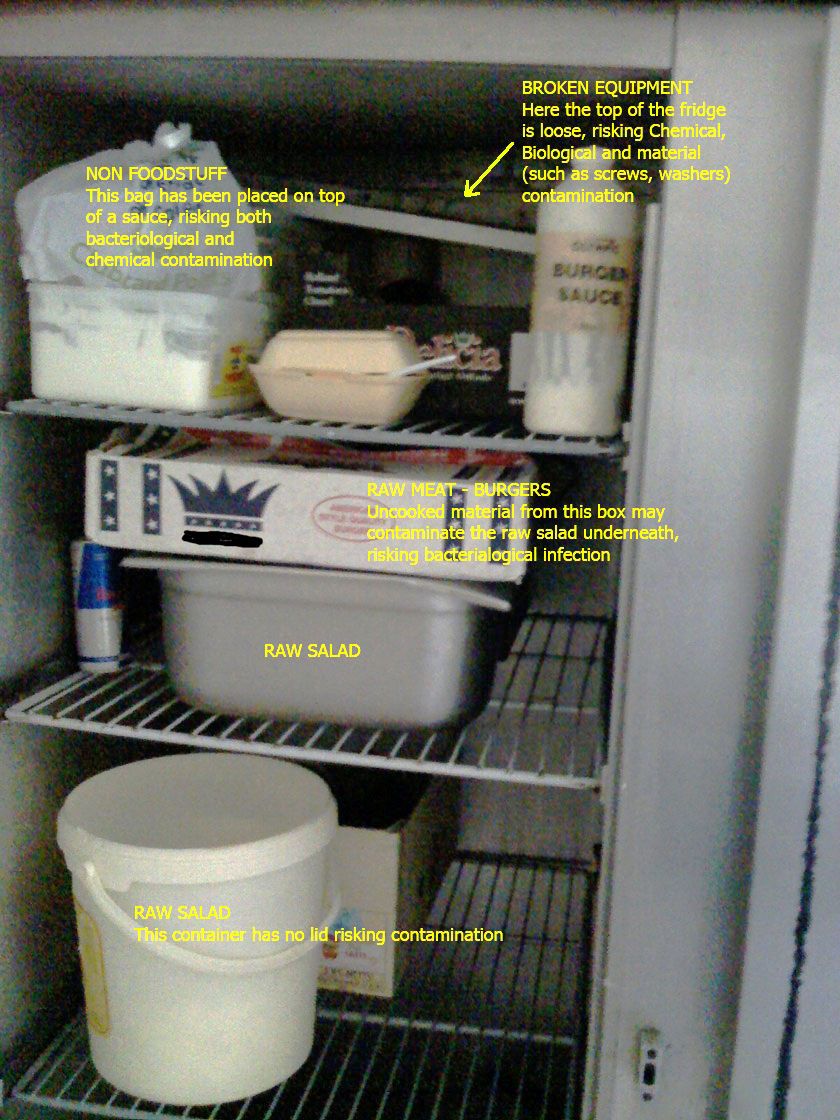
Cross-contamination is the transfer of pathogens from one food, surface, or hand to another. The classic path runs from raw poultry to a cutting board to a salad, and the classic error is thinking a rinse in between was enough. Use separate boards for raw animal foods and for produce and other ready-to-eat items; wash boards, knives, and counters with hot soapy water and then sanitize; never return cooked food to the plate that held it raw. In the refrigerator, store raw meat, poultry, and seafood on the bottom shelf in sealed containers so nothing can drip onto foods below.
Two counterintuitive rules are worth internalizing. First, do not wash raw poultry or meat. Rinsing does not remove pathogens meaningfully, and controlled kitchen studies using tracer organisms have repeatedly shown that it splashes and spreads bacteria around the sink and onto nearby surfaces and foods; cooking to 165°F is the step that works. Second, do wash produce — but only with running water. Rub firm produce under the tap or scrub it with a clean brush, wash melon rinds before cutting so the knife does not carry surface organisms into the flesh, and skip soap, detergent, bleach, and commercial produce washes, which are not approved for that use and can leave residues. Bagged greens labelled “washed” or “ready to eat” do not need rewashing, and rewashing them in a home sink can add contamination rather than remove it.
| Practice | What to do | Why it works |
|---|---|---|
| Clean — hands | Soap and running water, 20 seconds of friction, dry with a clean towel | Surfactant lifts microbes; friction and rinsing physically remove them |
| Clean — surfaces | Wash with hot soapy water, then sanitize; launder cloths hot; replace sponges often | Washing removes soil so the sanitizer can actually contact the surface |
| Separate — boards | Dedicated boards for raw animal foods vs. ready-to-eat foods | Ready-to-eat foods get no later kill step |
| Separate — fridge | Raw meat, poultry, seafood sealed on the bottom shelf | Gravity: drips can only fall onto things below |
| Separate — plates | Never reuse the raw-meat platter or marinade for cooked food | The plate carries the same load the raw food did |
| Do not do | Washing raw chicken; washing produce with soap or bleach | Rinsing splashes pathogens; detergents are not approved for produce |
| Cook | Verify internal temperature with a thermometer | Appearance is Maillard chemistry, not a measure of pathogen kill |
| Chill | Refrigerate within 2 hours (1 hour above 90°F); shallow containers | Removes the time and temperature bacteria need to multiply |
- The four core practices are clean, separate, cook, chill, and each has a mechanism.
- Handwashing is mechanical removal: soap plus friction plus running water plus a dry towel, 20 seconds.
- Alcohol sanitizer (≥60%) supplements soap but fails against norovirus, spores, and soiled hands.
- Do not wash raw poultry; do wash produce under running water only, including melon rinds before cutting.
- Store raw animal foods sealed on the bottom shelf, and keep boards and plates for raw and ready-to-eat foods separate.
Section 4High-risk foods and populations
Who is more vulnerable, and why
Four groups carry substantially more risk from the same contaminated meal: pregnant people, children under five, adults over sixty-five, and people who are immunocompromised. The reasons are physiological, not behavioural, and it is worth knowing them rather than memorizing the list.
Pregnancy shifts cell-mediated immunity in ways that protect the fetus from maternal rejection but leave the pregnant person less able to contain intracellular pathogens. The result is a risk of listeriosis roughly ten times that of the general population. Listeria can cross the placenta even when the pregnant person feels only mildly unwell, causing miscarriage, stillbirth, preterm birth, or neonatal sepsis and meningitis. Toxoplasma gondii, acquired from undercooked meat or contaminated soil and cat litter, poses a parallel congenital risk.
Children under five have immature adaptive immunity, a less-developed gastric acid barrier in infancy, and a small body mass, so both the infectious dose required and the fluid reserve available work against them. This is the age band in which STEC infection most often progresses to hemolytic uremic syndrome, and in which dehydration from any gastroenteritis escalates fastest. Infants under twelve months are additionally susceptible to infant botulism, because their gut flora is not yet established enough to suppress germinating C. botulinum spores — hence the honey rule.
Adults over sixty-five face immunosenescence, reduced gastric acid secretion, slower intestinal motility that prolongs contact with pathogens, more comorbid disease, and more medications. Immunocompromising conditions and treatments — cancer chemotherapy, transplant immunosuppression, advanced HIV, chronic corticosteroids, diabetes, liver disease, and kidney disease — blunt the same defences. One underappreciated group cuts across all of these: people taking acid-suppressing medication such as proton pump inhibitors lose much of the gastric acid barrier, and observational studies consistently associate their use with higher rates of Salmonella, Campylobacter, and Vibrio infection — a pattern consistent with a lowered infectious dose, though the size of the effect is debated. And people with liver disease or iron overload are at particular risk from Vibrio vulnificus in raw oysters, because the organism thrives on available iron.
| Group | Physiological reason | Chief concerns |
|---|---|---|
| Pregnancy | Shift in cell-mediated immunity; placental transfer | Listeria (about 10× risk), Toxoplasma, methylmercury, preformed vitamin A excess |
| Under 5 years | Immature immunity, low gastric acid, small fluid reserve | STEC/HUS, Salmonella, rapid dehydration; botulism under 12 months |
| 65 and older | Immunosenescence, less gastric acid, slower motility, comorbidity | Listeria, Salmonella, higher hospitalization and death rates |
| Immunocompromised | Impaired cell-mediated immunity and phagocytosis | Invasive Listeria and Salmonella, bacteremia, meningitis |
| On acid suppression | Gastric acid barrier blunted | Higher observed rates of Salmonella, Campylobacter, Vibrio |
| Liver disease / iron overload | Available iron favours the organism | Vibrio vulnificus sepsis from raw shellfish |
The foods that carry disproportionate risk
A food earns a place on this list for one of two reasons: it is eaten without a kill step, or its structure protects organisms from one. Raw and undercooked animal foods are obvious. Less obvious are raw sprouts, whose warm, humid germination conditions are effectively an incubator for any pathogen on the seed; precut melon and leafy greens, where surface contamination is redistributed by cutting and never heated; raw flour, which is an unprocessed agricultural product and has caused both Salmonella and STEC outbreaks in raw dough; and refrigerated ready-to-eat foods such as deli meats, patés, and smoked seafood, which sit for weeks at exactly the temperature Listeria tolerates.
Unpasteurized milk deserves a direct answer, because the claims made for it are nutritional. Pasteurization does not meaningfully reduce the nutritional value of milk. Protein, fat, and calcium are unaffected — a cup of milk supplies roughly 300 mg of calcium either way, against an RDA of 1,000 mg/day for adults aged 19–50 and men to 70, rising to 1,200 mg/day for women 51 and older and for everyone over 70. Losses are limited to a small fraction of a few heat-sensitive vitamins, and milk is not a meaningful source of those. There is no good evidence that raw milk relieves lactose intolerance or prevents asthma, and there is abundant evidence that it transmits Campylobacter, Salmonella, STEC, and Listeria. Standard high-temperature short-time pasteurization — 161°F (72°C) for 15 seconds — is one of the highest-return public-health interventions ever adopted.
Two nutrient-specific cautions belong here as well. In pregnancy, fish is beneficial: the long-chain omega-3 fatty acid DHA supports fetal brain and retinal development, and joint FDA and EPA advice is to eat two to three servings a week from lower-mercury “best choices” such as salmon, sardines, canned light tuna, shrimp, tilapia, and cod, while avoiding the highest-methylmercury species — shark, swordfish, king mackerel, Gulf tilefish, bigeye tuna, marlin, and orange roughy. The message is which fish, not whether fish. Separately, preformed vitamin A (retinol) is teratogenic in excess, with an adult tolerable upper intake level of 3,000 μg RAE/day; liver is extraordinarily concentrated in it, which is why liver is limited in pregnancy. Beta-carotene from plant foods does not carry this risk, because conversion to retinol is regulated.
- The four higher-risk groups are pregnancy, under five, sixty-five and older, and immunocompromised, for identifiable physiological reasons.
- Pregnancy carries roughly ten times the listeriosis risk; children under five carry the highest HUS risk from STEC.
- High-risk foods lack a kill step: raw animal foods, raw sprouts, precut melon, raw flour, and refrigerated ready-to-eat foods.
- Pasteurization (161°F/72°C for 15 s) removes pathogens without meaningfully reducing milk’s nutritional value.
- In pregnancy, choose lower-mercury fish rather than avoiding fish, and limit preformed vitamin A (UL 3,000 μg RAE/day).
Section 5Additives, residues, and processing
Who regulates what
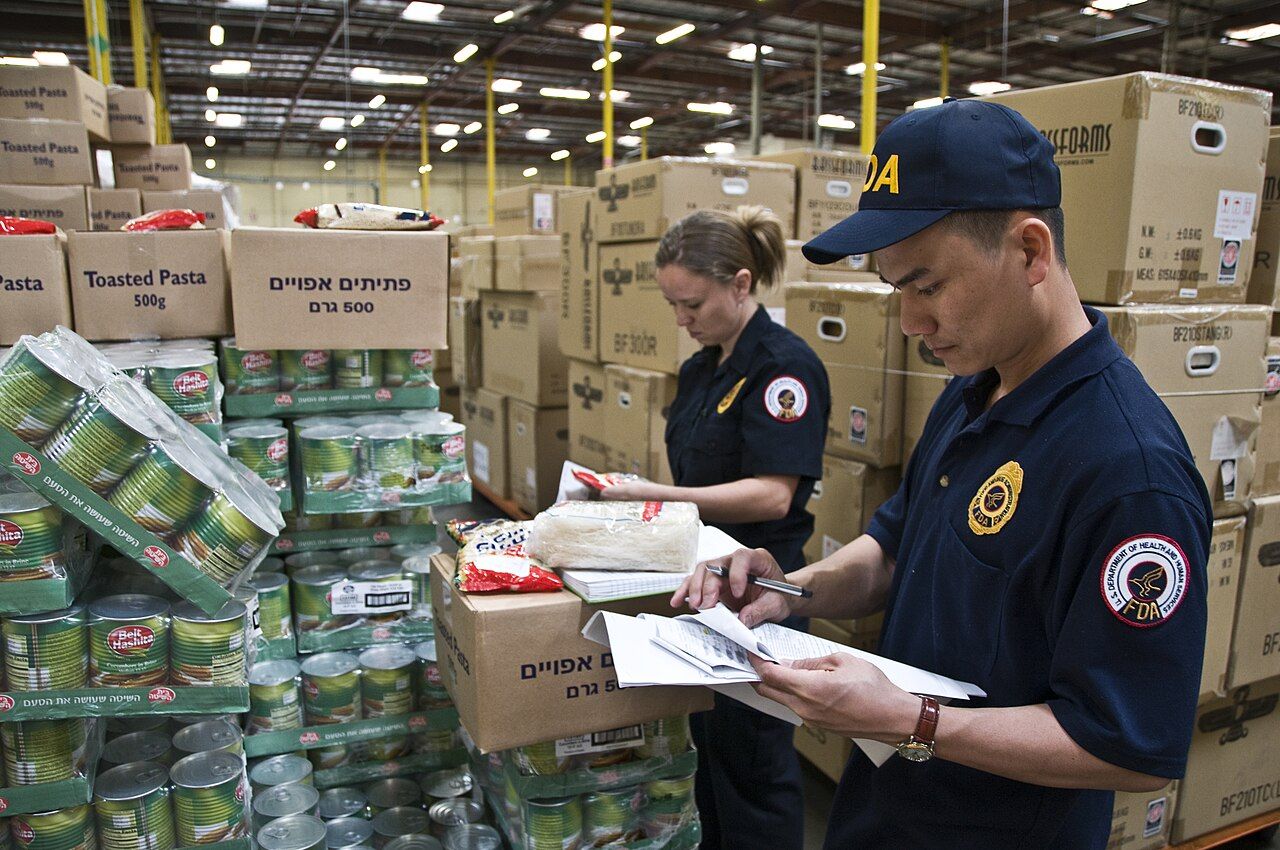
In the United States the responsibility is split. The Food and Drug Administration oversees most of the food supply, including additives, labelling, and produce safety. The USDA Food Safety and Inspection Service handles meat, poultry, catfish, and processed egg products, with continuous inspection at slaughter and processing plants. The Environmental Protection Agency sets the legal maximum residue level — the tolerance — for each pesticide on each crop, and the FDA and USDA enforce those tolerances in monitoring programs. The Food Safety Modernization Act of 2011 shifted the FDA’s posture from reacting to outbreaks toward requiring preventive controls, and most commercial food processors now operate a HACCP plan — Hazard Analysis and Critical Control Points — that identifies where in the process a hazard can be controlled and monitors those points continuously.
Additives are approved under the Federal Food, Drug, and Cosmetic Act as amended in 1958. A substance either goes through formal food-additive approval or qualifies as GRAS — Generally Recognized As Safe — based on scientific consensus or long-standing use. The Delaney Clause in that law bars approval of any food additive shown to induce cancer in humans or animals, which is why the FDA revoked authorization for FD&C Red No. 3 in food in January 2025 on the basis of rat thyroid tumours, even though the mechanism involved is not thought to operate in humans. It is fair to note the system’s most-criticized feature honestly: companies may self-affirm GRAS status without notifying the FDA, and that loophole is a legitimate subject of scientific and policy debate.
How safety limits are actually set
The core concept is the Acceptable Daily Intake (ADI): the amount, in milligrams per kilogram of body weight per day, that can be consumed over a lifetime without appreciable risk. It is derived from the highest dose producing no observed adverse effect in animal studies (the NOAEL), divided by a safety factor of 100 — a factor of ten for possible differences between animals and humans, and another ten for variation among humans. Real-world intakes typically fall far below the ADI. Aspartame is the standard teaching case: the FDA sets its ADI at 50 mg/kg body weight per day and the WHO/FAO Joint Expert Committee on Food Additives (JECFA) at 40 mg/kg body weight per day. In 2023 the International Agency for Research on Cancer classified aspartame as “possibly carcinogenic to humans” (Group 2B) on the basis of limited evidence, while JECFA — reviewing the same literature for risk rather than hazard — reaffirmed its 40 mg/kg ADI unchanged.
That apparent contradiction is the single most important idea in this section. Hazard asks whether a substance can cause harm under some conditions. Risk asks whether it will, at the doses people actually encounter. IARC classifies hazards, not risks — which is why processed meat sits in Group 1 (sufficient evidence) alongside tobacco while conferring a vastly smaller absolute risk. The processed-meat finding itself is a good example of reading a number properly: roughly an 18 percent higher relative risk of colorectal cancer per 50 g/day consumed. Applied to a baseline lifetime risk of about four to five percent, that is a change of well under one percentage point — real, worth knowing, and not equivalent to smoking. It is also an association from observational cohorts, so the effect size should be held loosely. Note also that nitrite in cured meat is there partly to prevent botulism, and that “uncured” products preserved with celery powder deliver nitrite from a natural source rather than none at all.
| Concern | What is known | Strength of evidence |
|---|---|---|
| Pesticide residues | EPA sets crop-specific tolerances; USDA monitoring consistently finds over 99 percent of samples at or below tolerance, and washing and peeling reduce residues further | Strong that exposures are low; limited that they cause harm at those levels |
| Organic produce | Reliably lowers measured pesticide-residue exposure | Strong for residue reduction; preliminary for health outcomes |
| Processed meat | IARC Group 1; about 18% higher relative colorectal cancer risk per 50 g/day | Strong association; modest absolute effect |
| Aspartame | IARC Group 2B (2023); JECFA reaffirmed its ADI of 40 mg/kg body weight/day (FDA uses 50) | Limited and contested; label warning is for phenylketonuria |
| Synthetic food dyes | Red No. 3 authorization revoked (2025) under the Delaney Clause; some children may show behavioural sensitivity | Preliminary for behaviour; regulatory action is statutory, not risk-based |
| Acrylamide | Forms above about 120°C in starchy foods (asparagine plus reducing sugars); IARC Group 2A | Strong in animals; inconsistent in human studies |
| Heavy metals | Arsenic in rice, lead and cadmium traces in some foods; FDA action levels tightening | Strong that exposure is measurable; guidance is precautionary, focused on infants and young children |
| Ultra-processed foods | Cohort studies link higher intake to cardiometabolic outcomes; one small inpatient randomized crossover trial found about 500 kcal/day greater spontaneous intake | Consistent observationally; mechanism unresolved |
Processing: neither villain nor neutral
“Processed” is not one thing. Pasteurization, canning, freezing, refrigeration, fortification, and milling are all processing, and several of them are among the most effective public-health measures in the history of food — iodized salt largely ended endemic goiter, folic acid fortification of enriched grains was followed by a substantial drop in neural tube defects, and pasteurization removed a whole category of dairy-borne disease. Frozen and canned vegetables are nutritionally comparable to fresh and are often cheaper and more accessible.
The current research interest is narrower, focused on ultra-processed foods as defined by the NOVA classification: industrial formulations built largely from refined substances and additives rather than from recognizable whole foods. Observational cohorts consistently associate higher intake with cardiometabolic outcomes, and a small inpatient randomized crossover trial in twenty adults found participants spontaneously ate roughly 500 kcal/day more on an ultra-processed diet matched for presented macronutrients. That is a genuine finding, but a single trial in twenty people, and the mechanism is unsettled — candidates include energy density, softer texture and faster eating rate, hyperpalatability, and lower satiety per calorie. Energy density itself is arithmetic: fat supplies 9 kcal/g, while carbohydrate and protein each supply 4 kcal/g and alcohol supplies 7 kcal/g, so a food’s fat and water content largely determine how many calories arrive per bite. Treat the additive hypothesis as preliminary, and do not convert an association into a claim about any one ingredient.
When you meet the next headline, run five questions. What was the study design — test tube, animal, observational cohort, or randomized trial? Was the dose realistic, or hundreds of times typical intake? Is the number a relative or an absolute risk? Is this a hazard classification or a risk estimate? And does one study overturn a body of prior evidence, or add to it? That method is more durable than any list of ingredients to avoid, and it keeps a small, uncertain risk from crowding out a benefit that rests on far better evidence — diets richer in fruits and vegetables are among the most consistently supported patterns in nutrition, backed by large cohorts and by trials of dietary patterns, so residue anxiety that reduces produce intake trades a well-supported benefit for a speculative one.
- FDA covers most foods, USDA-FSIS covers meat, poultry, and egg products, and EPA sets pesticide tolerances; HACCP and FSMA made prevention the operating model.
- The ADI comes from the animal NOAEL divided by a safety factor of 100, and typical intakes fall far below it.
- Hazard ≠ risk: IARC classifies hazards, so Group 1 processed meat and Group 1 tobacco differ enormously in absolute risk.
- Processing includes protective steps — pasteurization, fortification, freezing — and the ultra-processed literature is consistent observationally but mechanistically unresolved.
- Energy density follows the yields: fat 9 kcal/g, carbohydrate and protein 4 kcal/g each, alcohol 7 kcal/g.
The chapter in one breath
- Foodborne illness is either an infection (organism multiplies in you, slower onset) or an intoxication from a preformed toxin (rapid onset), and onset time is the fastest way to tell them apart.
- Norovirus causes the most illness; Salmonella the most bacterial hospitalizations and deaths; STEC risks HUS in young children; Listeria uniquely grows at refrigerator temperature.
- The danger zone is 40–140°F (4–60°C), and the two-hour rule is cumulative — one hour above 90°F.
- Cook poultry to 165°F, ground meat to 160°F, whole cuts to 145°F with a 3-minute rest, and reheat leftovers to 165°F; cool 135→70°F in 2 hours, then 70→41°F in 4 more.
- Clean, separate, cook, chill: wash hands 20 seconds with soap and running water, keep raw animal foods on the bottom shelf and on their own board, wash produce under running water only, and never rinse raw poultry.
- Higher risk falls on pregnancy, children under five, adults 65 and older, and the immunocompromised for reasons of immunity, gastric acid, and reserve — and on anyone taking acid-suppressing medication.
- Pasteurization removes pathogens without meaningfully costing nutrition, and in pregnancy the advice on fish is which fish, not whether fish.
- For additives, residues, and processing, separate hazard from risk and relative from absolute, weight evidence by study design, and let strong evidence outrank preliminary evidence.
ReferenceWords worth knowing
A quick reference for the terms in this chapter — skim it now, or circle back whenever a word trips you up.
- Acceptable Daily Intake (ADI)
- The amount of a substance, in mg per kg body weight per day, judged safe to consume daily over a lifetime; derived from the animal NOAEL divided by a safety factor, conventionally 100.
- Acrylamide
- A compound formed from asparagine and reducing sugars when starchy foods are cooked above roughly 120°C; classified by IARC as probably carcinogenic to humans based mainly on animal data.
- Cross-contamination
- Transfer of pathogens from one food, surface, utensil, or hand to another — classically from raw animal foods to ready-to-eat foods.
- Danger zone
- The temperature range in which bacteria multiply rapidly: 40–140°F (4–60°C) by USDA convention, 41–135°F (5–57°C) in the FDA Food Code.
- Delaney Clause
- The provision of U.S. food law barring approval of any food additive shown to induce cancer in humans or animals, regardless of dose.
- GRAS
- Generally Recognized As Safe — a regulatory status allowing use of a substance without formal food-additive approval, based on scientific consensus or long-standing safe use.
- HACCP
- Hazard Analysis and Critical Control Points — a preventive food-safety system that identifies where hazards can be controlled in a process and monitors those points continuously.
- Hazard
- The capacity of a substance or agent to cause harm under some conditions, independent of the dose actually encountered.
- Hemolytic uremic syndrome (HUS)
- A complication of Shiga toxin–producing E. coli infection — hemolytic anemia, thrombocytopenia, and acute kidney injury — most common in children under five.
- Immunosenescence
- The age-related decline in immune function that contributes to higher foodborne-illness severity in older adults.
- Infection (foodborne)
- Illness caused by swallowing a living pathogen that multiplies in the host; onset is typically hours to days.
- Intoxication (foodborne)
- Illness caused by a toxin already present in the food before it was eaten; onset is typically minutes to a few hours.
- Listeriosis
- Infection with Listeria monocytogenes, which grows at refrigerator temperature and causes invasive disease chiefly in pregnancy, older adults, and the immunocompromised.
- NOAEL
- No Observed Adverse Effect Level — the highest tested dose producing no detectable harm in toxicology studies; the starting point for setting an ADI.
- Pasteurization
- Controlled heating that destroys pathogens without sterilizing; the high-temperature short-time standard for milk is 161°F (72°C) for 15 seconds.
- Preformed toxin
- A toxin produced by microbes in the food itself; staphylococcal enterotoxin is heat-stable, so reheating does not make the food safe.
- Relative risk
- The ratio of risk between exposed and unexposed groups; must be applied to a baseline risk to yield the absolute change that matters practically.
- Risk
- The probability that harm actually occurs at the exposure levels people encounter — hazard combined with dose.
- Tolerance (pesticide)
- The legal maximum residue of a specific pesticide permitted on a specific food, set by the EPA and enforced by the FDA and USDA.
- Two-hour rule
- The guidance that perishable food should spend no more than two cumulative hours in the danger zone, reduced to one hour above 90°F (32°C).
- Two-stage cooling
- Cooling cooked food from 135°F to 70°F within two hours, then from 70°F to 41°F within four additional hours.
- Ultra-processed food
- Under the NOVA classification, an industrial formulation built largely from refined substances and additives rather than recognizable whole foods.