Antimicrobial Drugs
Few discoveries have saved more lives than the antibiotic. In the span of a single lifetime, infections that once emptied hospital wards — pneumonia, sepsis, a wound gone bad — became, for the most part, curable. That victory rests on one elegant idea: a bacterium is built differently from you, and a well-chosen drug can exploit that difference to kill the microbe while leaving your patient unharmed. This chapter unpacks how antimicrobials work, how we pick the right one, and why bacteria are fighting back. Along the way you will see that the nurse is not a bystander to antibiotic therapy but one of its most important stewards — deciding when cultures are drawn, whether a dose lands on time, and whether the whole enterprise keeps working for the next patient.
By the end of this chapter you can
- Explain selective toxicity and why it makes antimicrobial therapy possible.
- Define the therapeutic index and connect a narrow index to the need for drug-level monitoring.
- Name the five bacterial targets antibacterial drugs attack and give a drug class for each.
- Distinguish bactericidal from bacteriostatic and narrow- from broad-spectrum drugs.
- Describe how susceptibility testing (MIC, Kirby–Bauer, Etest) guides drug choice.
- Summarize the four main resistance mechanisms and how resistance genes spread.
- Explain what MRSA is and why it matters at the bedside.
- State the goals of antibiotic stewardship and the nurse's concrete role in it.
Section 1What makes a good antimicrobial
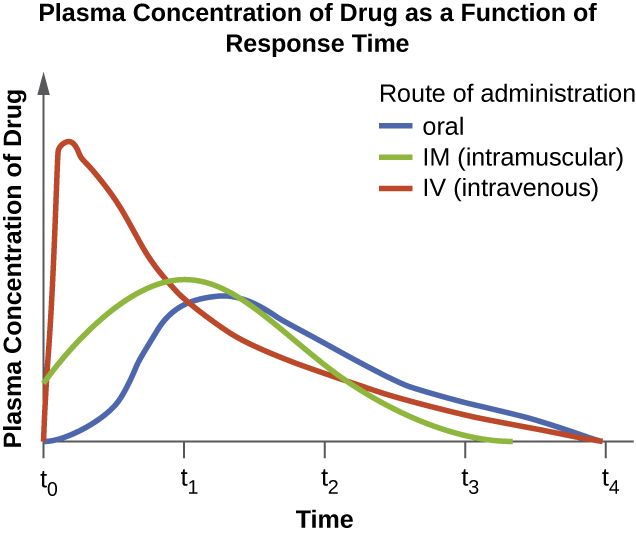
Selective toxicity: hurt the microbe, spare the patient
The reason we can pour a poison into a sick person and call it medicine is a principle named selective toxicity: a good antimicrobial harms the microbe far more than it harms the host. This is possible because a bacterium is a prokaryote — it is built from parts your own cells simply do not have. It wraps itself in a rigid cell wall made of peptidoglycan; your cells have no wall. Its ribosomes (the machines that build proteins) are a different size and shape from yours. It makes its own folic acid from scratch, while you get folate from your diet. Each of those differences is a handle a drug can grab. Aim at a structure the microbe has and the patient lacks, and you get a cure without collateral damage.
Selective toxicity is a matter of degree, not perfection. The drugs with the widest safety margin tend to be those that attack the cell wall — the penicillins and cephalosporins — precisely because human cells have no equivalent target to injure. Drugs that hit something bacteria and humans share, even a little, are more likely to cause the toxicities nurses watch for: an aminoglycoside can damage the kidney and the inner ear, and an antifungal that targets the fungal cell membrane can also disturb the patient's own membranes because both are built from sterols. The closer a microbe is to us biologically — a fungus, a protozoan, a human cell hijacked by a virus — the harder selective toxicity becomes, which is exactly why antibacterials are gentler than most antifungals and antivirals.
The therapeutic index: how much room for error
Every drug has a dose that helps and a higher dose that harms. The therapeutic index puts a number on the gap between them — roughly, the toxic dose divided by the effective dose. A large index means a comfortable margin: you would have to overshoot badly before the patient got hurt, which is why penicillin can be given in generous doses with little worry. A small or narrow therapeutic index means the helpful dose and the harmful dose sit uncomfortably close together, so the drug must be dosed carefully and, often, measured directly in the blood.
This is where the graph above becomes a bedside tool. The goal is to keep the drug's concentration inside the therapeutic window — high enough to kill bacteria, low enough to spare the patient. For narrow-index antimicrobials such as vancomycin and the aminoglycosides (gentamicin, tobramycin), we do not guess. We draw blood levels: a trough just before the next dose to confirm the drug has not built up to toxic levels, and sometimes a peak to confirm it climbed high enough to work.
| Drug | Therapeutic index | What that means for nursing |
|---|---|---|
| Penicillins | Wide | Large safety margin; routine levels not needed |
| Cephalosporins | Wide | Well tolerated; watch for allergy, not toxicity |
| Vancomycin | Narrow | Monitor trough levels; watch kidney function |
| Aminoglycosides | Narrow | Monitor peak & trough; risk of kidney & ear toxicity |
- Selective toxicity — hitting a target the microbe has and the host lacks — is what makes antimicrobial therapy possible.
- The beta-lactams (penicillins, cephalosporins) are the safest drugs because human cells have no wall to injure — but vancomycin also targets the wall and is still nephrotoxic and narrow-index, so target alone does not guarantee safety.
- The therapeutic index is the gap between the helpful dose and the harmful one.
- Narrow-index drugs (vancomycin, aminoglycosides) need blood-level monitoring; timing of the draw is everything.
Section 2How the drugs work
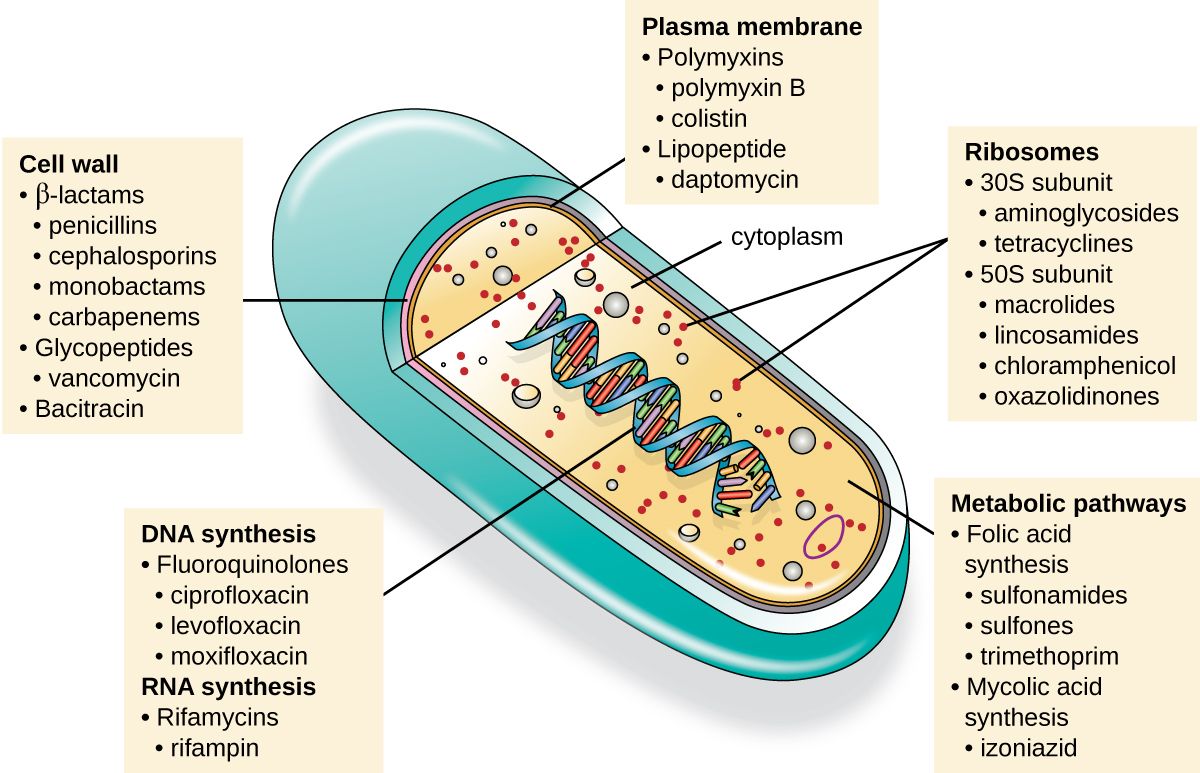
Five ways to kill a bacterium
For all their variety, antibacterial drugs attack a bacterium in only a handful of places. Learn these five targets and you can slot almost any antibiotic you meet into a mental map — and, more usefully, predict its selective toxicity and its side effects.
1. Cell wall synthesis. The peptidoglycan wall is the bacterium's pressure vessel; without it the cell bursts. Penicillins, cephalosporins, and vancomycin block wall construction, so growing bacteria lyse. Because human cells have no wall, this is the most selectively toxic target of all. Drugs in the penicillin and cephalosporin families share a chemical ring called a beta-lactam, which is why they are grouped as beta-lactam antibiotics.
2. Protein synthesis. Bacterial ribosomes (built from 30S and 50S subunits) differ from the human 40S/60S version, so a drug can jam the bacterial machine while sparing yours. Aminoglycosides and tetracyclines hit the 30S subunit; macrolides (azithromycin, erythromycin) and clindamycin hit the 50S. The match is imperfect, however — your mitochondria carry bacteria-like ribosomes, which helps explain some of these drugs' toxicities.
3. Nucleic acid synthesis. Some drugs block the enzymes bacteria use to copy and unwind DNA. The fluoroquinolones (ciprofloxacin, levofloxacin) inhibit bacterial DNA gyrase and topoisomerase, enzymes shaped differently from the human versions.
4. Metabolic (folate) pathways. Bacteria must synthesize folic acid themselves; you eat yours. Sulfonamides and trimethoprim starve the bacterium of folate by blocking two steps of that pathway — a target you simply do not possess.
5. Cell membrane. A few drugs punch holes in the bacterial membrane, causing the cell's contents to leak out. These tend to be more toxic, because your cells have membranes too; they are reserved for stubborn infections.
Kill it or just stop it: -cidal vs -static
Drugs also differ in how thoroughly they act. A bactericidal drug kills the bacterium outright (penicillins, aminoglycosides, fluoroquinolones). A bacteriostatic drug merely halts its growth (tetracyclines, macrolides, sulfonamides), then leaves the finishing blow to the patient's own immune system. In a healthy person, static is often enough. In a patient whose immune defenses are down — a neutropenic chemotherapy patient, someone with endocarditis or meningitis — the team usually reaches for a bactericidal drug, because there is no reliable immune backup to mop up survivors.
| Target | Example drug classes | Why it is selective |
|---|---|---|
| Cell wall synthesis | Penicillins, cephalosporins, vancomycin | Human cells have no cell wall |
| Protein synthesis (ribosome) | Aminoglycosides, tetracyclines, macrolides | Bacterial ribosome (70S) differs from human (80S) |
| Nucleic acid synthesis | Fluoroquinolones | Bacterial DNA enzymes differ from human ones |
| Folate metabolism | Sulfonamides, trimethoprim | Humans get folate from diet; bacteria make it |
| Cell membrane | Polymyxins, daptomycin | Least selective — reserved for resistant cases |
- Antibacterials hit five targets: cell wall, ribosome, nucleic acids, folate metabolism, and cell membrane.
- Beta-lactams (penicillins, cephalosporins) attack the cell wall — the safest, most selective target.
- Bactericidal drugs kill; bacteriostatic drugs stall growth and rely on the immune system to finish.
- Immunocompromised patients usually need a bactericidal drug.
Section 3Spectrum and choosing a drug
Narrow versus broad spectrum
A drug's spectrum of activity is simply the range of bacteria it works against. A narrow-spectrum drug hits only a few kinds of bacteria; a broad-spectrum drug hits many. Broad sounds better, and in a crisis it can be lifesaving — but breadth has a cost. A broad-spectrum antibiotic clear-cuts the patient's normal flora along with the pathogen, opening the door to a superinfection such as Clostridioides difficile colitis or a yeast overgrowth, and every unnecessary exposure nudges the whole bacterial population toward resistance. The goal, whenever the culprit is known, is the narrowest drug that will do the job.
Empiric first, then definitive
Cultures take time, and a septic patient cannot wait a day or two for results. So therapy usually happens in two stages. Empiric therapy is the educated first guess: based on the likely source, the local resistance patterns, and how sick the patient is, the team starts a broad-spectrum drug immediately — but only after cultures are drawn. Once the lab reports what grew and what it is susceptible to, the team switches to definitive therapy, ideally narrowing (or de-escalating) to a focused drug. This is why the order in which things happen at the bedside matters so much: cultures first, then antibiotics.
Susceptibility testing: proving the drug will work
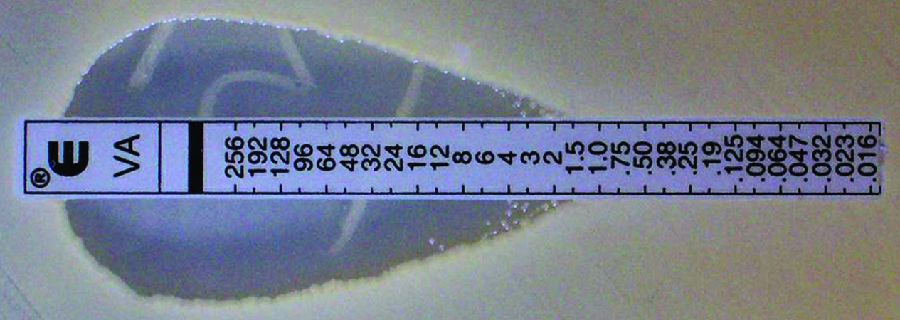
How does the lab know which drug to recommend? By testing the patient's own isolate against a panel of antibiotics. The key number is the minimum inhibitory concentration (MIC) — the lowest drug concentration that stops the bacterium from growing. Several methods get at it. In the classic Kirby–Bauer (disk-diffusion) test, paper disks soaked in different antibiotics sit on a lawn of bacteria; the larger the clear zone of inhibition around a disk, the more susceptible the organism — though disk diffusion sorts the isolate into susceptible, intermediate, or resistant rather than reading out an exact MIC. The Etest strip in the figure refines this into an actual MIC value, and automated broth microdilution systems do the same in tiny wells. The result comes back to the chart as S (susceptible), I (intermediate), or R (resistant) — a report the nurse reads alongside the team when a patient is not improving on the current drug.
| Narrow-spectrum | Broad-spectrum | |
|---|---|---|
| Bacteria covered | Few, targeted | Many |
| Effect on normal flora | Spares most of it | Wipes out much of it |
| Superinfection risk | Lower | Higher (C. diff, yeast) |
| Resistance pressure | Lower | Higher |
| Best used when | The pathogen is known | Empirically, while awaiting cultures |
- Spectrum is the range of bacteria a drug covers; narrow is preferred once the pathogen is known.
- Broad-spectrum drugs invite superinfection and resistance — use them empirically, then narrow.
- Empiric therapy is the first guess; definitive therapy follows the culture and de-escalates.
- The MIC is the lowest concentration that inhibits growth; results are reported as S / I / R.
Section 4How bacteria fight back
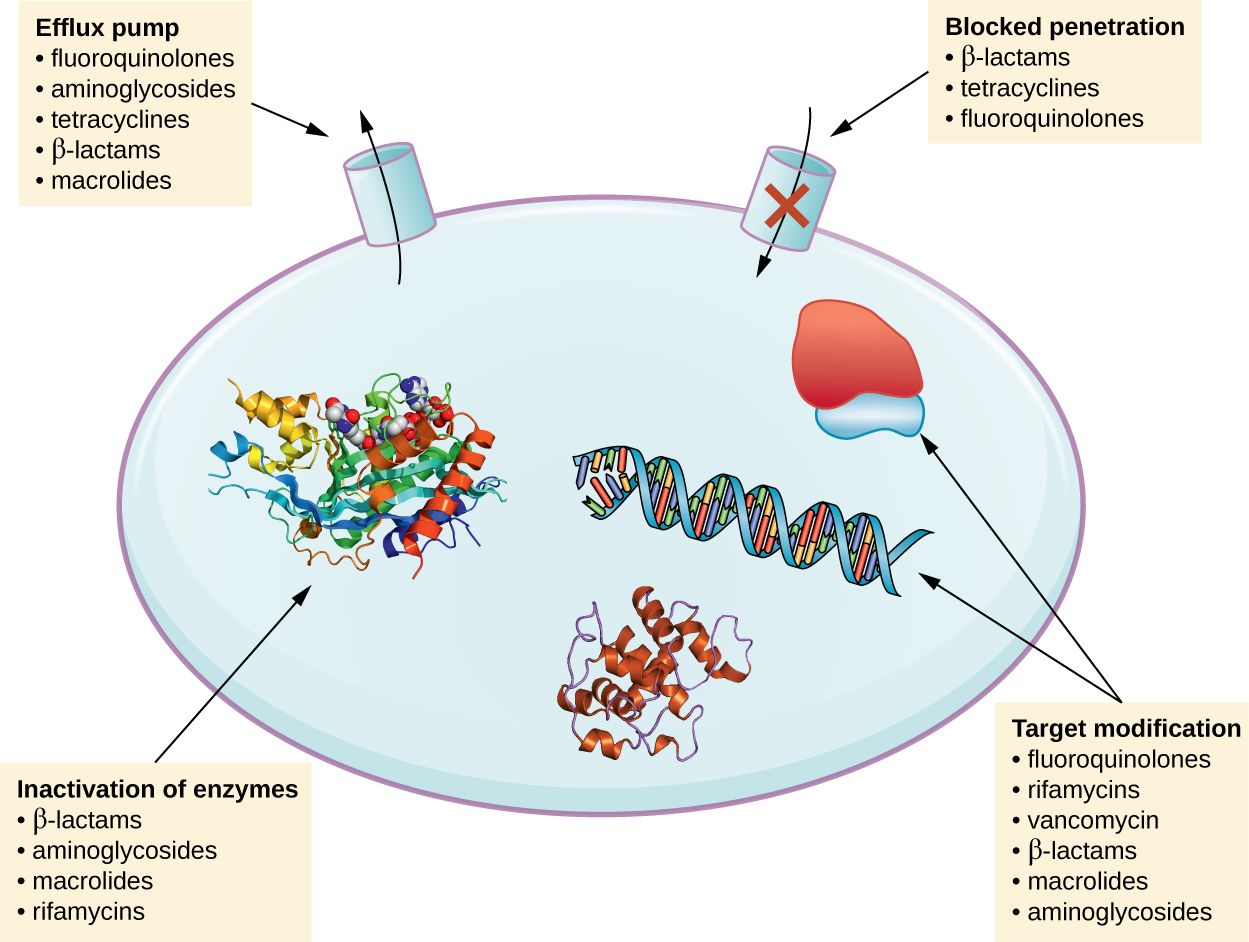
Four ways to survive the drug
Resistance is not the drug “wearing off.” It is evolution in fast-forward: a drug kills the susceptible bacteria and leaves the rare survivor that happened to carry a defense, and that survivor's descendants inherit the trick. There are four main defenses, and the figure lays them out.
Destroy the drug. The most famous example is beta-lactamase, an enzyme that snips open the beta-lactam ring of penicillins before it can work. This is why some penicillins are combined with a beta-lactamase inhibitor (as in amoxicillin–clavulanate) to protect the drug.
Change the target. If the drug can no longer recognize its binding site, it cannot act. This is the trick behind MRSA: the bacterium acquires an altered penicillin-binding protein that beta-lactams cannot grip.
Pump the drug out. Efflux pumps in the membrane actively bail the antibiotic back out before it reaches a lethal concentration inside the cell.
Keep the drug out. By altering the porins or the permeability of its outer membrane, a bacterium can simply reduce how much drug gets in at all.
How resistance spreads — and why it spreads so fast
Resistance can arise by spontaneous mutation, but its terrifying speed comes from horizontal gene transfer: bacteria pass resistance genes to one another, even across species, on mobile loops of DNA called plasmids. A single plasmid can carry resistance to several drug classes at once, so one exposure can select for a strain resistant to antibiotics it never even met. Every unnecessary antibiotic anywhere — in a clinic, a farm, a fish tank — adds to the selective pressure that favors these survivors.
The named threats: MRSA and friends
MRSA — methicillin-resistant Staphylococcus aureus — is resistant to essentially all beta-lactam antibiotics, which knocks out the safest, most familiar drugs and forces the team toward vancomycin and its relatives. It spreads readily in hospitals and communities, so patients known to carry it are often placed on contact precautions. It is not alone: VRE (vancomycin-resistant enterococci), ESBL-producing and carbapenem-resistant gram-negatives, and multidrug-resistant tuberculosis all crowd the same worrying list. The common thread is that our shelf of reliable drugs is shrinking faster than we are refilling it.
| Mechanism | What the bacterium does | Example |
|---|---|---|
| Drug inactivation | Makes an enzyme that destroys the drug | Beta-lactamase vs penicillins |
| Target modification | Alters the drug's binding site | MRSA's altered binding protein |
| Efflux pump | Pumps the drug back out | Tetracycline resistance |
| Reduced uptake | Keeps the drug from entering | Altered porins in gram-negatives |
- Bacteria resist drugs four ways: destroy the drug, change the target, pump it out, or keep it out.
- Resistance genes spread fast by horizontal gene transfer on plasmids, driven by selective pressure.
- MRSA resists all beta-lactams by altering the drug's binding site, forcing a switch to vancomycin.
- Contact precautions and hand hygiene contain resistant organisms on the unit.
Section 5Stewardship and the nurse
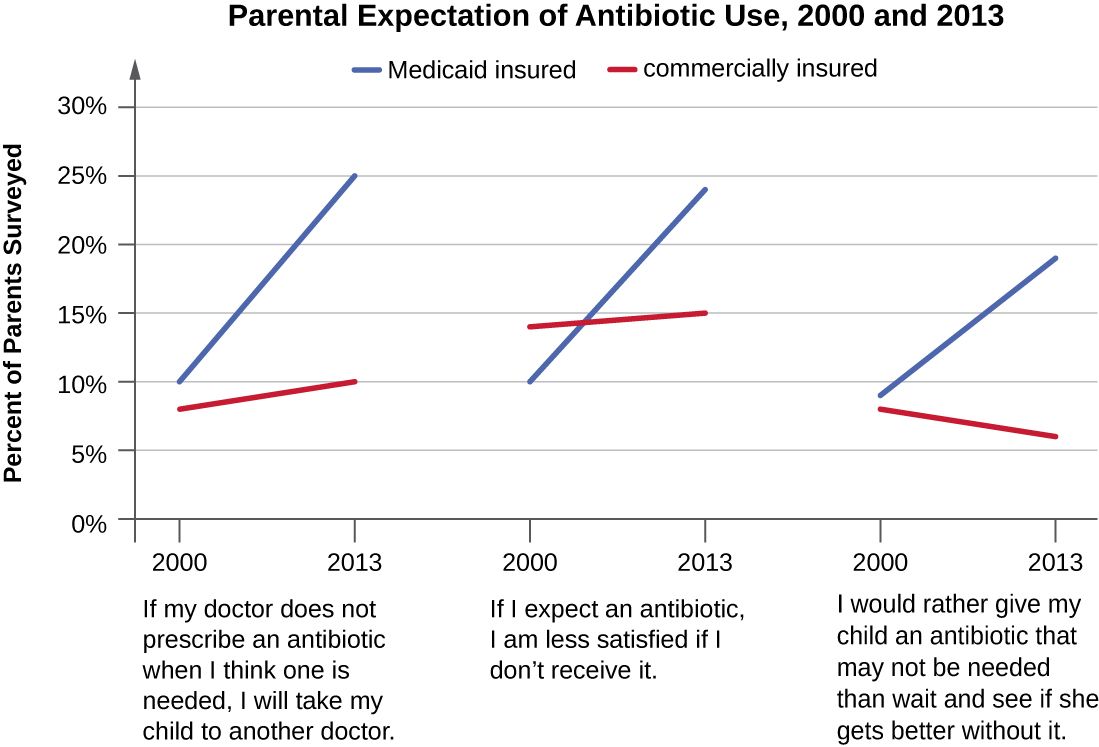
What stewardship means
Antibiotic stewardship is the coordinated effort to use these drugs only when they help, and to use them well. It is often summarized as the five rights of antimicrobials: the right drug, at the right dose, by the right route, for the right duration, in the right patient. The purpose is twofold — better outcomes for the patient in front of you (fewer side effects, less C. diff, shorter stays) and protection of the drugs themselves for the patients who come after. Because resistance is a shared resource being spent, stewardship is genuinely a public-health duty, not just a cost-control exercise.
The nurse is a steward — here is how
Stewardship is often described as a physician-and-pharmacist activity, but the nurse touches nearly every point of it. You are the one who draws cultures before the first dose, who gives antibiotics on time so blood levels stay effective, and who monitors the patient for both improvement and toxicity. You are positioned to ask the questions that trim unnecessary drug use: Can this IV antibiotic switch to an oral one now that the patient is eating and improving? Is this still needed on day 5, or is it just still ordered? Are two drugs covering the same bug? And you are the last check on the allergy history — clarifying a vague “penicillin allergy” so the patient is not pushed onto a broader, more toxic alternative for no reason.
Adherence and what you teach the patient
Stewardship reaches beyond the hospital, and here patient teaching is the tool. Explain that antibiotics do nothing for colds, flu, and most sore throats — and that demanding them “just in case” carries real risk with no benefit. Teach patients to take the drug exactly as prescribed, to never save or share leftover antibiotics, and to never use someone else's. The old blanket rule to “always finish every pill” is being refined — some infections do better with shorter courses — so the honest, durable message is simpler and stronger: take it the way it was prescribed, and call before stopping early or doubling up.
| Stewardship goal | What the nurse does |
|---|---|
| Right diagnosis | Collect cultures before the first antibiotic dose |
| Right timing | Give doses on schedule to keep levels effective |
| Right duration | Prompt the team to review or de-escalate ongoing orders |
| Right route | Flag when a stable, eating patient could switch IV → oral |
| Right patient | Verify and clarify the allergy history |
| Prevention | Hand hygiene, timely device removal, patient teaching |
- Stewardship = right drug, dose, route, duration, and patient — for the patient now and for future patients.
- The nurse steward draws cultures first, gives doses on time, and watches for toxicity.
- Advocate to de-escalate, switch IV to oral, and clarify allergies.
- Teach adherence: take as prescribed, never share or save antibiotics, and don't expect them for viral illness.
The chapter in one breath
- Selective toxicity — attacking a microbe-only target — is why antimicrobials cure without poisoning the patient.
- The therapeutic index is the safety margin; narrow-index drugs like vancomycin and aminoglycosides need blood-level monitoring.
- Antibacterials hit five targets: cell wall, ribosome, nucleic acids, folate metabolism, and cell membrane.
- Drugs are bactericidal or bacteriostatic, and narrow- or broad-spectrum; narrow and cidal have their place, and so does empiric breadth.
- Susceptibility testing (MIC via Kirby–Bauer, Etest, or microdilution) reports S / I / R to guide definitive therapy — after cultures are drawn.
- Bacteria resist by destroying, dodging, ejecting, or excluding the drug, and spread resistance fast via plasmids; MRSA is the headline example.
- Stewardship protects both the patient and the drugs, and the nurse is a frontline steward — cultures first, doses on time, de-escalation advocated, adherence taught.
ReferenceWords worth knowing
A quick reference for the terms in this chapter — skim it now, or circle back whenever a word trips you up.
- Adherence
- Taking a medication exactly as prescribed — correct dose, timing, and duration.
- Antibiotic stewardship
- The coordinated effort to use antimicrobials only when needed and to use them well, protecting both the patient and future effectiveness.
- Bactericidal
- Describes a drug that kills bacteria outright.
- Bacteriostatic
- Describes a drug that halts bacterial growth, leaving the immune system to finish.
- Beta-lactam
- The chemical ring shared by penicillins and cephalosporins; the part a beta-lactamase attacks.
- Beta-lactamase
- A bacterial enzyme that destroys beta-lactam antibiotics, a common resistance mechanism.
- Broad-spectrum
- Active against many kinds of bacteria; convenient empirically but harder on normal flora.
- De-escalation
- Narrowing therapy from a broad drug to a focused one once cultures identify the pathogen.
- Efflux pump
- A membrane transporter that pumps an antibiotic back out of the cell before it can act.
- Empiric therapy
- Best-guess antibiotic treatment started before culture results are available.
- Horizontal gene transfer
- The passing of genes (including resistance genes) between bacteria, often on plasmids.
- Kirby–Bauer test
- Disk-diffusion susceptibility test; zone-of-inhibition size reflects susceptibility.
- Minimum inhibitory concentration (MIC)
- The lowest drug concentration that prevents visible bacterial growth.
- MRSA
- Methicillin-resistant Staphylococcus aureus; resistant to all beta-lactams via an altered binding protein.
- Narrow-spectrum
- Active against only a few kinds of bacteria; preferred once the pathogen is known.
- Selective toxicity
- Harming the microbe far more than the host by targeting a structure the microbe has and the host lacks.
- Spectrum of activity
- The range of bacterial types a given antimicrobial can affect.
- Superinfection
- A new infection (e.g., C. diff or yeast) that arises after a drug disrupts the normal flora.
- Susceptibility testing
- Laboratory testing of a patient's isolate against antibiotics, reported as S, I, or R.
- Therapeutic index
- The safety margin between a drug's effective dose and its toxic dose.
- Trough level
- The drug concentration measured just before the next dose, used to avoid toxic accumulation.