Anxiety, Obsessive-Compulsive and Trauma-Related Disorders
Anxiety is not a defect. It is the body’s oldest alarm system doing exactly what evolution built it to do — sharpening attention, moving blood to muscle, preparing the organism to survive a threat. It becomes a disorder only when the alarm fires without a fire, fires too loudly, or refuses to switch off, and when the person’s life narrows around avoiding it. This chapter follows that thread through three families of diagnoses that share the same anxious core but wear different clothing: the anxiety disorders, where fear is the presenting problem; the obsessive-compulsive and related disorders, where intrusive thoughts drive repetitive behaviour that briefly buys relief; and the trauma- and stressor-related disorders, where the alarm was installed by something that actually happened. You will learn to grade anxiety by level and match your communication to it, to separate a panic attack from a myocardial infarction, to sit with a person mid-ritual without ripping the ritual away, to deliver trauma-informed care that does not re-traumatise, and to recognise the pharmacologic emergencies — serotonin syndrome, benzodiazepine withdrawal — that turn a quiet unit into a rapid response.
By the end of this chapter you can
- Explain the neurobiology of the threat response — amygdala, prefrontal cortex, hippocampus, the HPA axis, and the roles of GABA, serotonin and norepinephrine — and connect each to an observable clinical sign.
- Grade a patient’s anxiety using Peplau’s levels of anxiety (mild, moderate, severe, panic) and select communication and interventions matched to that level.
- Differentiate panic disorder, agoraphobia, generalised anxiety disorder, social anxiety disorder, specific phobia and separation anxiety disorder by course, trigger and functional impact.
- Screen for anxiety using the GAD-7 and rule out medical and substance-related mimics before attributing symptoms to a psychiatric cause.
- Distinguish obsessions from compulsions, describe exposure and response prevention, and provide nursing care that neither shames nor abruptly blocks a ritual.
- Apply the criteria and clusters of post-traumatic stress disorder and acute stress disorder, and use grounding techniques for dissociation and flashbacks.
- Practise the six principles of trauma-informed care and identify unit practices that risk re-traumatisation.
- Monitor first-line pharmacotherapy — SSRIs, SNRIs, buspirone, prazosin, hydroxyzine, benzodiazepines — and recognise serotonin syndrome, akathisia and benzodiazepine withdrawal as red flags.
- De-escalate an escalating patient, and treat seclusion and restraint as last-resort interventions that carry a real risk of re-traumatisation.
- Delegate appropriately on a behavioural health unit and escalate deterioration using SBAR.
Section 1Anxiety as a Signal: Neurobiology, Levels and the Line into Disorder
The circuitry of threat
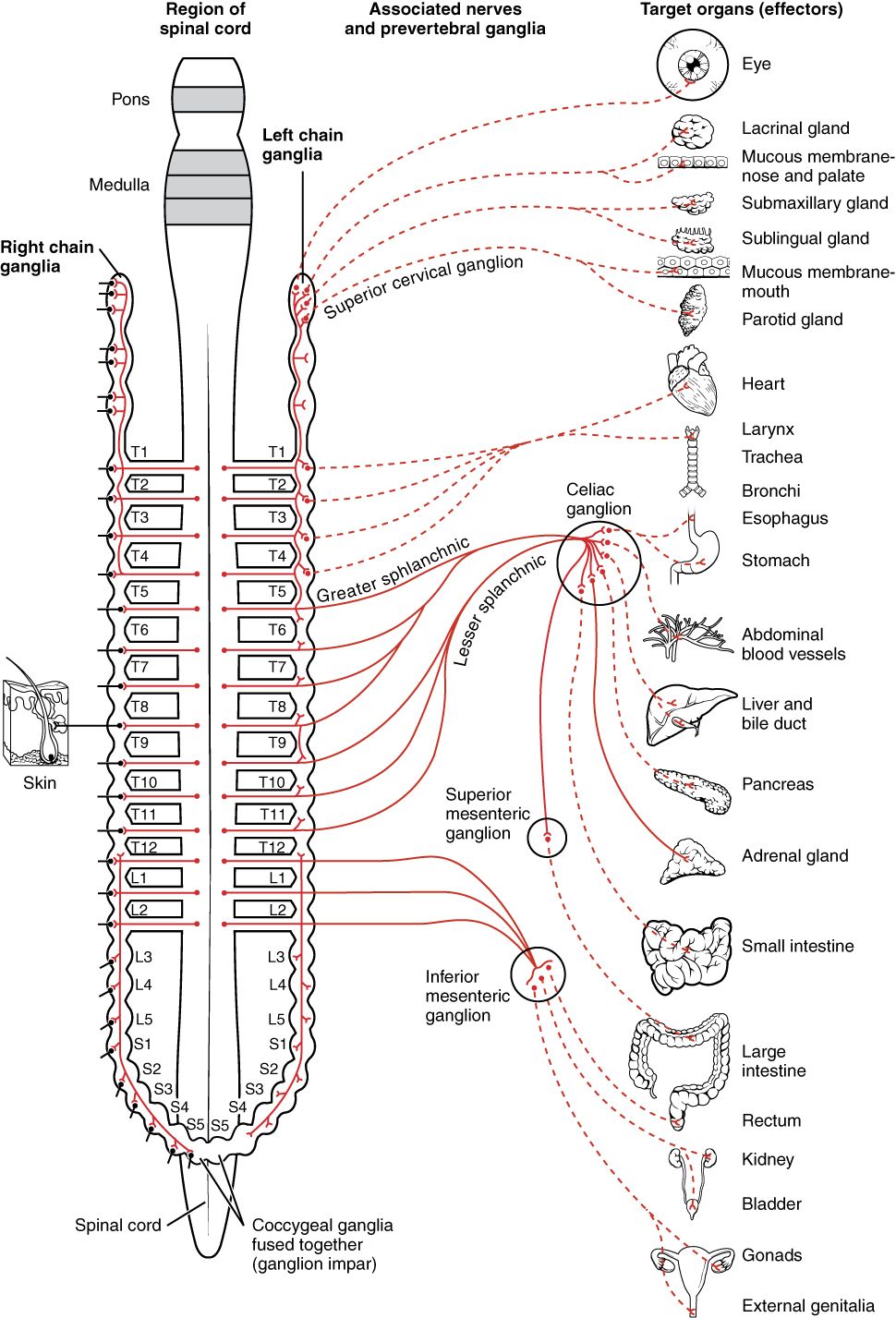
The fear response begins before the person is aware of it. Sensory information reaches the thalamus and then splits: a fast, crude route straight to the amygdala, and a slower, detailed route through the cortex. The fast route is why a patient flinches at a dropped clipboard a full second before recognising the sound. When the amygdala fires, it recruits the hypothalamus, which drives sympathetic outflow — tachycardia, diaphoresis, mydriasis, bronchodilation, shunting of blood from gut to skeletal muscle — and simultaneously activates the hypothalamic-pituitary-adrenal (HPA) axis, releasing corticotropin-releasing hormone, then adrenocorticotropic hormone, then cortisol. Every physical complaint your anxious patient brings you — the pounding chest, the dry mouth, the nausea, the trembling hands, the urge to urinate — is a legible readout of that cascade. Naming it as such is itself therapeutic; people are frightened by their own physiology when nobody explains it.
What normally ends the alarm is the prefrontal cortex, which appraises context and inhibits the amygdala, and the hippocampus, which supplies memory of place and time — this is not that alley, this is a hallway, and it is daytime. In anxiety and trauma-related disorders, imaging and clinical behaviour both suggest an overactive amygdala paired with weakened prefrontal inhibition, and a hippocampus that fails to stamp the memory as belonging to the past. That single sentence explains a great deal of practice: why reasoning with a person in severe anxiety does not work (the very structure you are appealing to is offline), why slow diaphragmatic breathing and grounding do work (they act on the body and on orientation rather than on argument), and why a flashback feels like a present-tense event rather than a recollection.
Three neurotransmitters carry most of the clinical weight. GABA is the brain’s principal inhibitory transmitter; benzodiazepines potentiate it, which is why they calm within minutes and why abrupt withdrawal produces the mirror image — seizures. Serotonin modulates the amygdala-prefrontal loop over weeks, which is why SSRIs are first-line and why they are useless as a rescue medication. Norepinephrine, driven from the locus coeruleus, produces the hyperarousal, startle and nightmares of PTSD, which is why an alpha-1 antagonist such as prazosin can quiet trauma nightmares. Match the mechanism to the symptom and the medication chapter stops being memorisation.
Peplau’s levels of anxiety
Hildegard Peplau’s four levels remain the most practical bedside tool in this chapter because they translate directly into what you should say and do. Anxiety is not simply present or absent; it exists on a continuum on which perceptual field, learning capacity and problem-solving all change predictably. At mild anxiety the perceptual field actually widens and learning is enhanced — this is the alertness that makes a student study and a nurse double-check a drip rate. At moderate anxiety the field narrows to the immediate; the person attends selectively, misses peripheral detail, and can still learn with direction and repetition. At severe anxiety the field collapses to a fragment; the person fixates on one detail, cannot problem-solve, and reports headache, nausea, dizziness. At the level of panic there is disorganisation, loss of rational thought, possible hallucination or dissociation, and a genuine risk of injury from disorganised flight.
The nursing implication is the inverse relationship between anxiety level and complexity of communication. As anxiety rises, your sentences get shorter, your voice gets lower and slower, your choices get fewer, and your physical presence gets steadier. Teaching a newly diagnosed patient about their medication is appropriate at mild-to-moderate anxiety and futile at severe. A patient in panic needs a calm nurse, a quiet low-stimulus environment, a simple repeated instruction, and someone who stays — not a pamphlet.
| Level | Perception and function | Typical signs | What the nurse does |
|---|---|---|---|
| Mild | Perceptual field widens; learning enhanced; problem-solving intact | Restlessness, fidgeting, increased alertness, mild irritability | Teach now — this is the learning window; explore what is worrying the person |
| Moderate | Field narrows to immediate task; selective inattention; can learn with guidance | Voice tremor, muscle tension, increased heart and respiratory rate, pacing, gastrointestinal upset | Focus attention, give short clear directions, use paced breathing, offer a walk or another physical outlet |
| Severe | Field greatly reduced; fixates on one detail; cannot problem-solve | Headache, nausea, dizziness, hyperventilation, purposeless activity, confusion | Stay with the person, reduce stimuli, speak in short simple sentences, repeat calmly, do not teach |
| Panic | Disorganised thought; may misperceive or dissociate; risk of injury | Immobility or wild movement, dilated pupils, sense of impending doom, feeling of unreality | Ensure safety, remain present, minimal verbal content, quiet space, consider PRN per order, never leave alone |
Where the line into disorder falls
Every human being experiences anxiety, so the diagnostic threshold cannot be the presence of the symptom. Three features push a normal response across the line. First, proportion: the fear is out of keeping with the actual danger, judged against the person’s culture and context — a first-generation immigrant’s vigilance about immigration enforcement is not irrational, and calling it a symptom is a clinical error. Second, persistence: the DSM-5-TR requires duration — six months for generalised anxiety disorder, specific phobia and social anxiety disorder; more than one month for PTSD. Third, and most important for nursing, functional impairment: work, school, relationships or self-care are measurably narrowed, usually by avoidance. Avoidance is the engine of every disorder in this chapter. It works brilliantly in the short term, which is exactly why it is so hard to give up, and it guarantees the fear will never be disconfirmed.
These are among the most common psychiatric conditions worldwide, with anxiety disorders affecting roughly one in five adults in a given year and beginning earlier in life than most other diagnoses — often in childhood or adolescence. They cluster heavily with depressive disorders, with substance use disorders (alcohol and benzodiazepines being the classic self-medication route), and with medical illness. Comorbidity is the rule, not the exception, so screening for depression and suicide risk in an anxious patient is not optional. Untreated anxiety disorders are also strongly associated with increased use of emergency departments and with poorer outcomes in chronic medical disease.
It is worth saying plainly, because students absorb the opposite from popular media: people living with these conditions are far more likely to be the victims of violence than the perpetrators of it. Anxiety, obsessive-compulsive and trauma-related disorders make people withdraw, avoid and endure — not attack. When you hear a colleague describe a patient as “dramatic” or “attention-seeking,” translate it: the patient is doing something that has not yet been understood, and the next question is what the behaviour is communicating.
Anxiety exists on a graded continuum — assess the level first, because the level determines whether your patient can be taught, redirected, or only accompanied.
Section 2The Anxiety Disorders: Recognition, Screening and Nursing Care
Panic disorder and agoraphobia
A panic attack is an abrupt surge of intense fear that peaks within minutes and includes at least four of a defined list of symptoms: palpitations, sweating, trembling, shortness of breath, choking sensation, chest pain, nausea, dizziness, chills or heat sensations, paraesthesias, derealisation or depersonalisation, fear of losing control, and fear of dying. Attacks typically resolve within twenty to thirty minutes and leave the person exhausted. A panic attack is a specifier, not a diagnosis — it can occur in any disorder. Panic disorder requires recurrent unexpected attacks plus at least one month of persistent worry about further attacks or a maladaptive change in behaviour to avoid them. That second half is the disorder: the fear of the fear.
The clinical trap is that panic mimics catastrophe. Chest pain, dyspnoea and a sense of impending doom are the presentation of myocardial infarction, pulmonary embolism, arrhythmia, hypoglycaemia, thyrotoxicosis, asthma, pheochromocytoma and stimulant intoxication. A first-time attack in a person over forty, or any attack with focal neurological signs, syncope, hypoxia or an abnormal electrocardiogram, is a medical workup until proven otherwise. Never diagnose panic by reassurance alone, and never let a documented psychiatric history shorten a medical evaluation — diagnostic overshadowing kills people.
Agoraphobia is fear of situations from which escape would be difficult or help unavailable if panic-like symptoms occurred: public transport, open spaces, enclosed spaces, queues and crowds, being outside the home alone. Two or more of those five situations are required. The person either avoids them, endures them with intense distress, or requires a companion. In its severe form it confines a person to their home for years. Agoraphobia is now a stand-alone diagnosis and may occur with or without panic disorder.
Generalised anxiety, social anxiety, phobias and separation anxiety
Generalised anxiety disorder is excessive, hard-to-control worry occurring more days than not for at least six months, about multiple domains, with at least three of six physical symptoms in adults: restlessness or feeling keyed up, fatigability, difficulty concentrating, irritability, muscle tension and sleep disturbance. The worry migrates — finances this week, a child’s health next week — and the person often describes it as having been present “my whole life.” The muscle tension is real and often brings them first to a primary care or musculoskeletal clinic rather than to psychiatry.
Social anxiety disorder is marked fear of social or performance situations where the person may be scrutinised, driven by fear of acting in a way that will be humiliating or negatively judged. The performance-only subtype affects musicians, presenters and clinicians. Specific phobia is intense fear of a circumscribed object or situation — animal, natural environment, blood-injection-injury, situational, other. The blood-injection-injury type is unique in producing a vasovagal response with bradycardia and syncope rather than tachycardia, which matters enormously in nursing: lay that patient supine before the venipuncture, and teach applied tension rather than only relaxation. Separation anxiety disorder is no longer confined to childhood; adults can meet criteria, requiring six months’ duration and centring on fear of losing, or being apart from, attachment figures. Selective mutism is the consistent failure to speak in specific social situations despite speaking elsewhere — a child who talks freely at home and not at school is not being oppositional.
| Disorder | Core fear | Duration | Nursing focus |
|---|---|---|---|
| Panic disorder | The next attack, and what it means (dying, losing control) | Attacks plus 1 month of worry or behaviour change | Rule out medical mimics; interoceptive education; presence during attacks |
| Agoraphobia | Being unable to escape or get help | 6 months, two or more situations | Graded exposure hierarchy; do not reinforce companion dependence |
| Generalised anxiety disorder | Everything — uncontrollable multi-domain worry | 6 months, most days | Sleep, caffeine, muscle tension, worry-time scheduling |
| Social anxiety disorder | Negative evaluation and humiliation | 6 months | Role-play and rehearsal; skills before exposure; avoid alcohol as a crutch |
| Specific phobia | One object or situation | 6 months | Systematic desensitisation; supine positioning for blood-injection-injury type |
| Separation anxiety disorder | Loss of, or separation from, an attachment figure | 6 months in adults, 4 weeks in children | Predictable routine; brief rehearsed separations; involve caregivers |
Screening, medical mimics and the therapeutic interview
Assessment precedes intervention every time. The GAD-7 is a seven-item self-report scored 0 to 21, with cut points at 5, 10 and 15 for mild, moderate and severe anxiety; a score of 10 or above warrants further evaluation. It is a screening tool, not a diagnosis, and it is only as good as the conversation around it. Pair it with a depression screen and a direct suicide risk question, because anxiety plus depression plus insomnia is a high-risk combination; if risk is present, move to the formal risk assessment and safety planning process your service uses. Document the score, the date and the plan — a screen with no downstream action is worse than no screen.
Before attributing symptoms to an anxiety disorder, subtract the mimics. Endocrine: hyperthyroidism, hypoglycaemia, pheochromocytoma, Cushing syndrome. Cardiopulmonary: arrhythmia, heart failure, asthma, chronic obstructive pulmonary disease, pulmonary embolism. Neurological: complex partial seizures, vestibular disorders. Substances: caffeine, nicotine, stimulants, decongestants, albuterol, thyroid replacement, high-dose corticosteroids, and withdrawal from alcohol, benzodiazepines or opioids. Medication side effects: akathisia from antipsychotics or, less commonly, SSRIs, is an inner motor restlessness that patients describe as unbearable anxiety and that is treated by lowering the dose or adding propranolol — not by adding another antipsychotic. Missing akathisia and escalating the offending drug is a classic and dangerous error.
The interview itself is an intervention. Sit down. Give your full attention. Use open-ended invitations, then broad openings, then reflection. Silence is a tool, not a failure. Avoid the reflexive habits that feel kind and are not: false reassurance closes the conversation, advice-giving takes the problem away from the person, and “why” questions demand a justification the person does not have.
| Non-therapeutic | Why it lands badly | Therapeutic alternative |
|---|---|---|
| “Don’t worry, everything will be fine.” | False reassurance; promises what you cannot know and ends the topic | “You are carrying a lot right now. Tell me what the worst of it is.” |
| “Why are you so anxious about a simple blood draw?” | “Why” demands justification and implies the fear is unreasonable | “What happens in your body when you see the needle?” |
| “I know exactly how you feel.” | Claims an experience that is not yours and recentres you | “I have not been where you are. Help me understand what it is like.” |
| “You should just try yoga and cut out coffee.” | Advice before assessment; skips over the person’s own solutions | “What has helped even a little when this has happened before?” |
| “At least it is not cancer.” | Minimising; ranks suffering and shames the person for struggling | “This is hard, and it makes sense that it is hard.” |
Screen with the GAD-7, subtract the medical and medication mimics, and remember that akathisia is the anxiety that gets worse every time you treat it as anxiety.
Section 3Obsessive-Compulsive and Related Disorders
Obsessions, compulsions and the relief trap
Obsessions are recurrent, persistent, intrusive thoughts, urges or images that the person experiences as unwanted and that cause marked anxiety. They are ego-dystonic — the person recognises them as alien to their own values, which is precisely why they are so distressing. Common themes are contamination, doubt about harm (did I lock the door, did I hit someone with my car), symmetry and exactness, forbidden aggressive, sexual or religious thoughts, and fear of losing control. A parent tormented by an intrusive image of harming their infant is describing an obsession, not an intention; the horror they feel is diagnostic, and treating that disclosure as a child-safety confession without careful assessment does enormous harm.
Compulsions are repetitive behaviours or mental acts the person feels driven to perform in response to an obsession or according to rigid rules, aimed at preventing or reducing distress. Washing, checking, ordering, counting, repeating, praying and mental reviewing are typical. The compulsion works — briefly. Anxiety falls, the ritual is negatively reinforced, and the brain learns that the only thing standing between the person and catastrophe is the ritual. That is the relief trap, and it is the entire rationale for treatment: the anxiety must be allowed to fall on its own, without the ritual, so the brain can learn the catastrophe does not come.
Obsessive-compulsive disorder requires that obsessions, compulsions or both consume more than one hour per day or cause clinically significant distress or impairment. The DSM-5-TR adds an insight specifier — good or fair, poor, or absent insight with delusional beliefs — and a tic-related specifier. Severity is commonly quantified with the Yale-Brown Obsessive Compulsive Scale (Y-BOCS). Do not confuse OCD with obsessive-compulsive personality disorder: the latter is a lifelong ego-syntonic style of perfectionism, rigidity and control that the person does not experience as intrusive and generally does not want changed.
The related disorders
The DSM-5-TR groups several conditions with OCD because they share intrusive preoccupation plus repetitive behaviour. Body dysmorphic disorder is preoccupation with perceived defects in appearance that are not observable or appear slight to others, with repetitive mirror-checking, grooming, reassurance-seeking or comparison. It carries a high rate of suicidal ideation and of repeated cosmetic procedures that never satisfy; a muscle dysmorphia subtype is recognised. Hoarding disorder is persistent difficulty discarding possessions regardless of value, due to a perceived need to save them and distress at parting with them, resulting in accumulation that congests living areas — a genuine fire, fall and sanitation hazard. Forced clear-outs without the person’s participation are traumatic and reliably followed by re-accumulation.
Trichotillomania (hair-pulling disorder) and excoriation (skin-picking) disorder are body-focused repetitive behaviours with recurrent pulling or picking, repeated attempts to stop, and resulting hair loss or skin lesions. They respond best to habit reversal training — awareness training, a competing response such as clenching the fists, and social support — rather than to willpower or to being told to stop. Substance- and medication-induced obsessive-compulsive disorder and that due to another medical condition complete the group.
| Disorder | Preoccupation | Repetitive behaviour | Nursing priority |
|---|---|---|---|
| Obsessive-compulsive disorder | Contamination, doubt, symmetry, forbidden thoughts | Washing, checking, ordering, counting, mental review | Skin integrity, time for rituals, ERP support, sleep and nutrition |
| Body dysmorphic disorder | Perceived appearance defect | Mirror-checking, camouflaging, reassurance-seeking | Suicide risk screening; do not argue about appearance or offer reassurance |
| Hoarding disorder | Need to save; distress at discarding | Acquiring and retaining; living space congestion | Home safety, fire and fall risk; collaborative not coercive sorting |
| Trichotillomania | Urge preceding the pull | Hair pulling with hair loss | Habit reversal training; scalp assessment; screen for trichophagia |
| Excoriation disorder | Urge to pick, often at perceived imperfection | Skin picking with lesions | Wound and infection care; competing response; nail care |
Nursing care and exposure and response prevention
The single most important nursing rule on an inpatient unit is that you do not abruptly block a ritual. A person whose ritual is stopped without preparation experiences a surge to severe or panic-level anxiety, and the therapeutic alliance is often the casualty. Early in admission, allow time for rituals — build them into the schedule, wake the patient earlier so that a two-hour morning routine does not make them miss breakfast and groups, and record baseline frequency and duration. As the alliance and the treatment plan develop, work with the team and the patient to set collaboratively agreed limits, and reduce gradually. Never shame, never mock, never let staff joke about it in earshot.
Exposure and response prevention is the first-line psychotherapy and the gold standard. The person is exposed, in a graded hierarchy, to the feared stimulus — touching a doorknob — and then prevented from performing the neutralising ritual, while the anxiety is allowed to rise and fall naturally. Habituation and, more accurately, inhibitory learning occur: the brain acquires new, competing information that the feared outcome does not follow. The nurse’s role is to know the patient’s hierarchy, to coach rather than rescue during a rising-anxiety window, and — critically — to avoid providing reassurance, because reassurance-seeking is itself a compulsion. Answering “are you sure my hands are clean?” for the fifth time feels kind and is anti-therapeutic. A better response is: “I am not going to answer that one, because answering it feeds the doubt. Let us sit with the uncertainty together for ten minutes.”
Pharmacologically, SSRIs remain first-line but OCD typically requires higher doses and a longer trial — often eight to twelve weeks — than depression or generalised anxiety. Clomipramine, a tricyclic with strong serotonergic activity, is effective and reserved for refractory cases because of anticholinergic effects, orthostatic hypotension, lowered seizure threshold and cardiac conduction effects; a baseline electrocardiogram is standard. Augmentation with a low-dose second-generation antipsychotic is used in resistant illness. Assess physical consequences relentlessly: dermatitis and fissures from washing, dental erosion, dehydration, malnutrition from food-contamination fears, and the exhaustion of a person who sleeps four hours because the checking routine takes three.
Never rip a ritual away — allow it, schedule it, measure it, and reduce it collaboratively while exposure and response prevention teaches the brain that the catastrophe never arrives.
Section 4Trauma- and Stressor-Related Disorders and Trauma-Informed Care
Post-traumatic stress disorder and acute stress disorder
These are the only diagnoses in the manual that require an external event. Criterion A is exposure to actual or threatened death, serious injury or sexual violence — directly, as a witness, by learning it happened to a close family member or friend, or through repeated extreme exposure to aversive details in the course of one’s work. That last route is why first responders, forensic staff, child-protection workers and nurses themselves are at risk. Media exposure alone does not qualify unless it is work-related.
Post-traumatic stress disorder then requires symptoms in four clusters, lasting more than one month. Intrusion: unwanted memories, nightmares, flashbacks in which the event is re-experienced as if occurring now, intense distress or physiological reactivity to cues. Avoidance: effortful avoidance of internal reminders (thoughts, feelings) or external ones (people, places, conversations). Negative alterations in cognitions and mood: dissociative amnesia for part of the event, persistent negative beliefs (“I am permanently damaged,” “no one can be trusted”), distorted self-blame, persistent negative emotional state, anhedonia, detachment, inability to feel positive emotion. Alterations in arousal and reactivity: irritable or aggressive outbursts, reckless or self-destructive behaviour, hypervigilance, exaggerated startle, concentration problems, sleep disturbance. Specifiers include with dissociative symptoms (depersonalisation or derealisation) and with delayed expression when full criteria are not met until at least six months after the event.
Acute stress disorder covers the same territory from three days to one month after the trauma, requiring nine or more symptoms across five categories. Most people who meet criteria for acute stress disorder will not go on to develop PTSD, and most people who develop PTSD did not meet criteria for acute stress disorder — so it is a marker of current distress needing support, not a prediction. Note also what is not indicated: single-session psychological debriefing immediately after a critical incident has been shown to be ineffective and potentially harmful. Psychological first aid — safety, comfort, connection to supports, practical help — is what the evidence supports.
Adjustment disorders, grief and childhood attachment disorders
Adjustment disorder is the diagnosis for emotional or behavioural symptoms that develop within three months of an identifiable stressor, are out of proportion to the stressor or cause significant impairment, and resolve within six months of the stressor (or its consequences) ending. Subtypes specify depressed mood, anxiety, mixed, disturbance of conduct, or mixed disturbance of emotions and conduct. It is common in medical-surgical settings after a new diagnosis, a job loss or a divorce, and it is not a “lesser” diagnosis — suicide risk in adjustment disorder is real and must be screened.
Prolonged grief disorder was added to the DSM-5-TR: intense yearning or preoccupation with the deceased, plus symptoms such as identity disruption, disbelief, avoidance of reminders, emotional numbness and difficulty re-engaging, persisting at least twelve months after the death in adults and causing impairment. Naming it matters, because it distinguishes normal grief — which is not a disorder and does not need treatment — from a stuck, disabling form that does. In children, reactive attachment disorder (emotionally withdrawn, rarely seeks or responds to comfort) and disinhibited social engagement disorder (overly familiar with unfamiliar adults) both arise from grossly insufficient care, and both require the caregiving environment to change, not just the child.
Trauma-informed care in practice
Trauma-informed care begins from an assumption, not a screening result: any person you care for may have a trauma history, and the way care is delivered can either support recovery or reproduce the original dynamics of powerlessness. The SAMHSA framework rests on six principles — safety; trustworthiness and transparency; peer support; collaboration and mutuality; empowerment, voice and choice; and attention to cultural, historical and gender issues. Translated to a shift, they sound like this: explain before you touch, tell people what will happen and when, keep every small promise, ask permission, offer real choices even when the options are narrow, and never use force when persuasion has not yet been tried.
Re-traumatisation is usually accidental. Restraint and seclusion recreate physical helplessness; forced medication, being searched, being watched while undressing, being woken by a stranger with a flashlight, having a door held open, being touched from behind, raised voices and being talked about in the third person while present — all of these are ordinary hospital events and all of them can trigger a survivor. Small changes are disproportionately powerful: announce yourself, approach from the front, offer a same-gender staff member for intimate care, ask “is there anything about being in hospital that is especially hard for you?” on admission, and honour the answer in the care plan.
When a flashback or dissociative episode occurs, the intervention is grounding. Orient the person to the present without touching them unannounced: say your name and role, say where they are and what the date is, and invite the senses back online — the 5-4-3-2-1 method (name five things you see, four you can touch, three you hear, two you smell, one you taste), cold water on the hands, feet flat on the floor, a textured object. Speak slowly and in the present tense. Do not ask for the trauma narrative during an episode; the goal is safety and orientation, not disclosure. Evidence-based psychotherapies — cognitive processing therapy, prolonged exposure and eye movement desensitisation and reprocessing — are delivered by trained therapists in a planned way, never improvised at the bedside.
| Situation | Re-traumatising | Trauma-informed |
|---|---|---|
| Night safety checks | Shine a flashlight on the face without warning | Knock, say your name softly, use indirect light, explain the round at bedtime |
| Patient escalating in the dayroom | Three staff approach silently from behind and grasp the arms | One staff approaches from the front, names the feeling, offers two real choices, others stay back |
| Body search on admission | Rapid, silent, no explanation, mixed-gender staff | Explain purpose and steps, offer same-gender staff, ask permission at each step, allow pauses |
| Disclosure of past abuse | “Tell me everything that happened” in the hallway | “Thank you for telling me. You control what you share and when.” Private space, documented, referred |
| Flashback | Grabbing the person to “snap them out of it” | Grounding, orientation, no unannounced touch, stay within sight |
Assume a trauma history may be present in everyone, deliver care with transparency and choice, and use grounding — not the trauma narrative — when a person is dissociating.
Section 5Pharmacology, Milieu, Delegation and Escalation
First-line agents and the drugs that support them
SSRIs and SNRIs are first-line for essentially every disorder in this chapter. They increase synaptic serotonin (and norepinephrine, for the SNRIs), and over weeks they downregulate postsynaptic receptors and restore prefrontal modulation of the amygdala. Three teaching points decide whether the patient succeeds. First, start low and go slow in anxious patients: a full starting dose commonly produces an initial jitteriness and worsened anxiety in the first one to two weeks, and a patient who is not warned will stop the drug and conclude that medication makes them worse. Second, full effect takes four to six weeks — twelve for OCD — so this is not a rescue medication. Third, do not stop abruptly: discontinuation syndrome (flu-like symptoms, dizziness, electric-shock sensations, insomnia, irritability) is uncomfortable and is worst with short-half-life agents such as paroxetine and venlafaxine. All antidepressants carry a boxed warning for increased suicidal ideation and behaviour in patients under twenty-five; monitor closely in the first weeks and after every dose change.
Buspirone is a 5-HT1A partial agonist used for generalised anxiety disorder. It is non-sedating, non-addictive and does not potentiate alcohol — and it takes two to four weeks to work, so it is worthless as a PRN and patients must be told this explicitly. Hydroxyzine, an antihistamine, is a genuinely useful non-habit-forming PRN with anticholinergic and sedative effects; monitor for dry mouth, urinary retention and falls in older adults. Propranolol, a beta blocker, blunts the peripheral symptoms of performance anxiety — tremor, tachycardia — and is also used for akathisia; hold for bradycardia or hypotension and avoid in asthma. Prazosin, an alpha-1 antagonist, reduces trauma-related nightmares; give at bedtime, warn about first-dose orthostatic hypotension and syncope, and check lying and standing blood pressure. Gabapentin and pregabalin are used as adjuncts, and hydroxyzine, prazosin and buspirone together cover a large share of what a behavioural health nurse administers on nights.
Benzodiazepines potentiate GABA and work within minutes, which is exactly their appeal and exactly their problem. Reserve them for short-term or crisis use, generally two to four weeks, and be alert to sedation, ataxia, falls and hip fracture in older adults, anterograde amnesia, paradoxical disinhibition, and profound respiratory depression when combined with opioids or alcohol — a combination that carries a boxed warning. Tolerance and physiologic dependence develop. Abrupt discontinuation after regular use produces a withdrawal syndrome that includes tremor, diaphoresis, autonomic instability, delirium and seizures, and can be fatal; taper, never stop. Flumazenil reverses benzodiazepine sedation but can precipitate seizures in a dependent patient and is used with great caution. And avoid the language trap: a patient asking about their benzodiazepine dose is asking a question, not “drug-seeking.” Describe the behaviour and assess the need.
| Drug or class | Use | Onset | What the nurse monitors and teaches |
|---|---|---|---|
| SSRIs (sertraline, escitalopram, fluoxetine, paroxetine) | First-line: all anxiety disorders, OCD, PTSD | 4–6 weeks (8–12 for OCD) | Early jitteriness, sexual dysfunction, hyponatraemia in older adults, suicidality under 25, no abrupt stop |
| SNRIs (venlafaxine, duloxetine) | Generalised anxiety, panic, PTSD | 4–6 weeks | Blood pressure elevation, marked discontinuation syndrome with venlafaxine |
| Buspirone | Generalised anxiety disorder | 2–4 weeks | Not a PRN, not sedating, no dependence; teach the delay or the patient will abandon it |
| Benzodiazepines (lorazepam, alprazolam, clonazepam) | Short-term or crisis anxiety, acute agitation | Minutes | Falls, sedation, amnesia, disinhibition; never with opioids or alcohol; taper — withdrawal causes seizures |
| Hydroxyzine | PRN anxiety without dependence | 15–60 minutes | Anticholinergic effects, sedation, fall precautions |
| Prazosin | PTSD nightmares | Days to weeks | Bedtime dosing, orthostatic blood pressure, first-dose syncope |
| Propranolol | Performance anxiety; akathisia | Within an hour | Hold for bradycardia or hypotension; avoid in asthma; do not stop abruptly |
| Clomipramine | Refractory OCD | Weeks | Baseline electrocardiogram, anticholinergic burden, orthostasis, seizure threshold, lethal in overdose |
Red flags and SBAR escalation
Serotonin syndrome is the emergency of this chapter. It arises from serotonergic excess — typically an SSRI or SNRI combined with a triptan, tramadol, linezolid, lithium, St John’s wort, dextromethorphan, MDMA or an MAOI — and presents with a triad of mental status change (agitation, confusion), autonomic instability (hyperthermia, tachycardia, diaphoresis, labile blood pressure, diarrhoea) and neuromuscular hyperactivity (clonus — especially inducible ankle clonus — hyperreflexia, tremor, rigidity). Onset is typically within twenty-four hours of a new agent or dose increase. Stop the serotonergic drugs, call for help, support with cooling and intravenous fluids, and expect benzodiazepines for agitation and, in severe cases, cyproheptadine. Contrast it with neuroleptic malignant syndrome, which follows antipsychotics, evolves over days, and features lead-pipe rigidity with hyporeflexia and a very high creatine kinase. Hyperreflexia and clonus point to serotonin; rigidity with hyporeflexia points to NMS.
Because a second-generation antipsychotic is sometimes added for refractory OCD or for acute agitation, keep akathisia at the front of your mind on this unit. It is a drug-induced inner restlessness that patients almost always describe to you as anxiety, and it is the one adverse effect that worsens every time it is treated as anxiety: it needs dose reduction, propranolol or a short benzodiazepine course — not another antipsychotic dose. Report any new abnormal movement before the next dose is given.
| Red flag | What you see | Immediate nursing action |
|---|---|---|
| Serotonin syndrome | Agitation, hyperthermia, diaphoresis, inducible clonus, hyperreflexia after a new serotonergic drug or dose increase | Hold serotonergic agents, vital signs including temperature, rapid response, cooling, intravenous access |
| Benzodiazepine withdrawal | Tremor, diaphoresis, tachycardia, hypertension, hallucinations, seizure after an abrupt stop | Seizure precautions, notify prescriber urgently, do not withhold the scheduled taper |
| Akathisia | Inner restlessness, cannot sit still, worse after an antipsychotic dose — often reported as “anxiety” | Report before giving more antipsychotic; anticipate dose reduction or propranolol |
| Oversedation with opioid co-prescription | Respiratory rate falling, difficult to rouse, low oxygen saturation | Stimulate, oxygen, hold the next dose, rapid response, naloxone per protocol |
| Emergent suicidal ideation | New or worsening ideation, especially in the first weeks or in patients under 25 | One-to-one observation per policy, remove means, direct risk assessment, notify provider immediately |
Escalation is a communication skill. Use SBAR: “Situation — this is the nurse on 4 East calling about Mr K in room 12; his temperature is 38.9 and he is agitated and confused. Background — he is thirty-four, admitted with PTSD and generalised anxiety, on sertraline increased to 150 mg yesterday, and he received tramadol at 14:00. Assessment — heart rate 128, blood pressure 168 over 96, diaphoretic, hyperreflexic with inducible ankle clonus. I am concerned about serotonin syndrome. Recommendation — I have held the sertraline and the tramadol, I need you to assess now, and I would like orders for intravenous fluids and a benzodiazepine.” Note the structure: identification, relevant history, objective findings, a stated clinical concern, and a specific ask.
Milieu, delegation and de-escalation
The therapeutic milieu is an intervention in its own right — the physical environment, the daily structure, the group programme and the relationships within it. For anxious and traumatised patients, predictability is the active ingredient: a posted schedule, consistent staff, honest advance notice of change, quiet spaces, and access to a comfort or sensory room. Group programming (psychoeducation, relaxation training, mindfulness, expressive therapies) does real work, but the nurse’s ordinary presence in the dayroom — visible, unhurried, approachable — is what patients most consistently name as helpful.
Delegation on a behavioural unit follows the same law as anywhere else: you may delegate a task, never the nursing process. Assistive personnel may obtain vital signs, perform environmental and belongings safety checks, conduct one-to-one observation and fifteen-minute rounds, accompany patients to activities, assist with hygiene and meals, record intake and output, and report observations back to you. They may not perform the initial or ongoing assessment, conduct suicide risk screening, provide patient education or counselling, triage a change in condition, initiate or terminate restraint, or evaluate whether an intervention worked. The most common real-world error is treating one-to-one observation as a low-skill assignment — brief the observer specifically on what to watch for and what to report immediately, and check in on them.
De-escalation always precedes restraint. Recognise early warning signs — pacing, clenched jaw, rising volume, refusal of usual routines. Give the person space (at least an arm’s length plus), maintain an open non-confrontational stance, keep one staff member as the sole communicator while others remain visible but back, lower your voice rather than raising it, use short sentences, name the emotion (“you look really frustrated”), and offer two genuine choices (“would you rather talk in the quiet room or walk with me to the end of the hall?”). Remove the audience. Do not corner the person and do not block your own exit. Seclusion and restraint are last-resort emergency interventions used only when there is imminent danger to the patient or others; they demand continuous monitoring of circulation, respiration, skin integrity, toileting, hydration and range of motion, and release at the earliest safe moment. Always use the least restrictive intervention that will keep everyone safe, and debrief with the patient and the team afterwards. Restraint and seclusion are never used as punishment, discipline or coercion, never for the convenience of staff, and never as a remedy for short staffing — if you cannot name the imminent danger, there is no indication.
Know the onset of every agent you give, treat serotonin syndrome and benzodiazepine withdrawal as emergencies, delegate tasks but never the nursing process, and de-escalate long before you consider restraint.
The chapter in one breath
Anxiety is a survival system: the amygdala fires, the sympathetic nervous system and HPA axis answer, and the prefrontal cortex is supposed to switch it off. Disorders arise when that braking fails, the alarm persists, and life narrows around avoidance. Grade anxiety by Peplau’s levels — mild, moderate, severe, panic — because the level dictates whether your patient can learn, be redirected, or only be accompanied with short sentences and calm presence. Panic disorder, agoraphobia, generalised anxiety, social anxiety, specific phobia and separation anxiety share a fear core with different triggers and courses; screen with the GAD-7, always subtract medical, substance and medication mimics, and never mistake akathisia for anxiety. Obsessions are intrusive and ego-dystonic, compulsions buy brief relief and thereby entrench the fear, and treatment is exposure and response prevention — so allow, schedule and gradually reduce rituals rather than blocking them, and withhold reassurance kindly. PTSD demands an event plus intrusion, avoidance, negative cognitions and hyperarousal beyond a month; care is trauma-informed, using safety, transparency, collaboration and choice, with grounding rather than the trauma story during dissociation. Pharmacologically, SSRIs and SNRIs lead, buspirone and prazosin support, benzodiazepines bridge briefly, and serotonin syndrome, benzodiazepine withdrawal and emergent suicidality are the escalations you must catch and SBAR immediately.
Words worth knowing
| Term | What it means |
|---|---|
| Amygdala | Limbic structure that detects threat and initiates the fear response before conscious awareness. |
| HPA axis | Hypothalamic-pituitary-adrenal pathway releasing cortisol during sustained stress. |
| Peplau’s levels of anxiety | Mild, moderate, severe and panic — a graded framework that matches interventions to perceptual narrowing. |
| Panic attack | Abrupt surge of intense fear peaking within minutes with four or more defined physical or cognitive symptoms; a specifier, not a diagnosis. |
| Agoraphobia | Fear of two or more situations where escape or help would be difficult if panic-like symptoms occurred. |
| Derealisation | Sense that the surroundings are unreal, dreamlike or distant. |
| Depersonalisation | Sense of detachment from one’s own body, thoughts or actions, as if observing oneself. |
| Akathisia | Drug-induced inner restlessness with inability to sit still; commonly misread and mistreated as anxiety. |
| GAD-7 | Seven-item screening tool for anxiety scored 0–21, with cut points at 5, 10 and 15. |
| Obsession | Recurrent intrusive unwanted thought, urge or image that causes marked anxiety and is ego-dystonic. |
| Compulsion | Repetitive behaviour or mental act performed to reduce distress or prevent a feared outcome. |
| Exposure and response prevention | Gold-standard therapy for OCD: graded exposure to the feared trigger while the neutralising ritual is withheld. |
| Habit reversal training | Awareness training plus a competing response, used for hair-pulling and skin-picking disorders. |
| Flashback | Re-experiencing a traumatic event as though it were happening in the present moment. |
| Grounding | Sensory and orientation techniques (for example 5-4-3-2-1) that return a dissociating person to the present. |
| Trauma-informed care | Care organised around safety, trustworthiness, peer support, collaboration, empowerment and cultural responsiveness, assuming trauma may be present. |
| Serotonin syndrome | Serotonergic excess causing altered mental status, autonomic instability and neuromuscular hyperactivity with clonus and hyperreflexia. |
| Least restrictive intervention | Legal and ethical requirement to use the least limiting effective measure, with restraint only for imminent danger. |
| Therapeutic milieu | The structured, predictable physical and social environment used deliberately as a treatment intervention. |
| SBAR | Situation, Background, Assessment, Recommendation — the structure for escalating a concern. |