The Reproductive Systems, Obstetrics and Neonatology
This is the chapter where two anatomies, one specialty pair and an entire second patient all arrive at once. The reproductive systems supply a dense set of combining forms — hyster/o, salping/o, oophor/o, orchi/o, prostat/o, vas/o — and then obstetrics layers on a vocabulary that no other system needs: words for counting pregnancies, words for the membranes and the placenta, words for labor that goes well and labor that does not. Neonatology adds a third layer, because the newborn is charted in terms borrowed from every system in this book at once. The good news is that almost none of it requires memorisation. Nearly every term here is built from parts you already own, and the parts behave predictably. This chapter builds the anatomy roots first, then the pathology, then the tests and operations, then pregnancy, birth and the newborn — and it stops deliberately at the look-alikes that cause real charting errors.
By the end of this chapter you can
- Name and use the female reproductive combining forms gynec/o, colp/o, hyster/o, metr/o, cervic/o, salping/o, oophor/o and mamm/o.
- Name and use the male reproductive combining forms orchi/o, balan/o, prostat/o, vas/o, epididym/o, spermat/o and scrot/o.
- Decode menstrual terms built on men/o, -rrhea, -rrhagia and -arche, and distinguish menorrhagia from metrorrhagia.
- Separate the classic look-alikes vas/o (duct or vessel), mamm/o against mast/o, perine/o against peritone/o, and metr/o against the suffix -metry.
- Define the common reproductive pathologies — endometriosis, leiomyoma, PID, BPH, cryptorchidism, varicocele — from their word parts rather than from memory.
- Interpret diagnostic and surgical terms including colposcopy, hysterosalpingography, amniocentesis, salpingo-oophorectomy, TURP and vasovasostomy.
- Use the obstetric word parts nat/o, part/o, -tocia, -gravida, -para, amni/o and chori/o, and record a pregnancy history in GTPAL form.
- Apply the singular and plural rules governing ovum, fimbria, testis, cervix, salpinx and condyloma.
- Expand the abbreviations found on an obstetric or newborn chart, including LMP, EDD, SROM, TAH-BSO, NICU and SGA.
Section 1The Female Reproductive System and Its Combining Forms
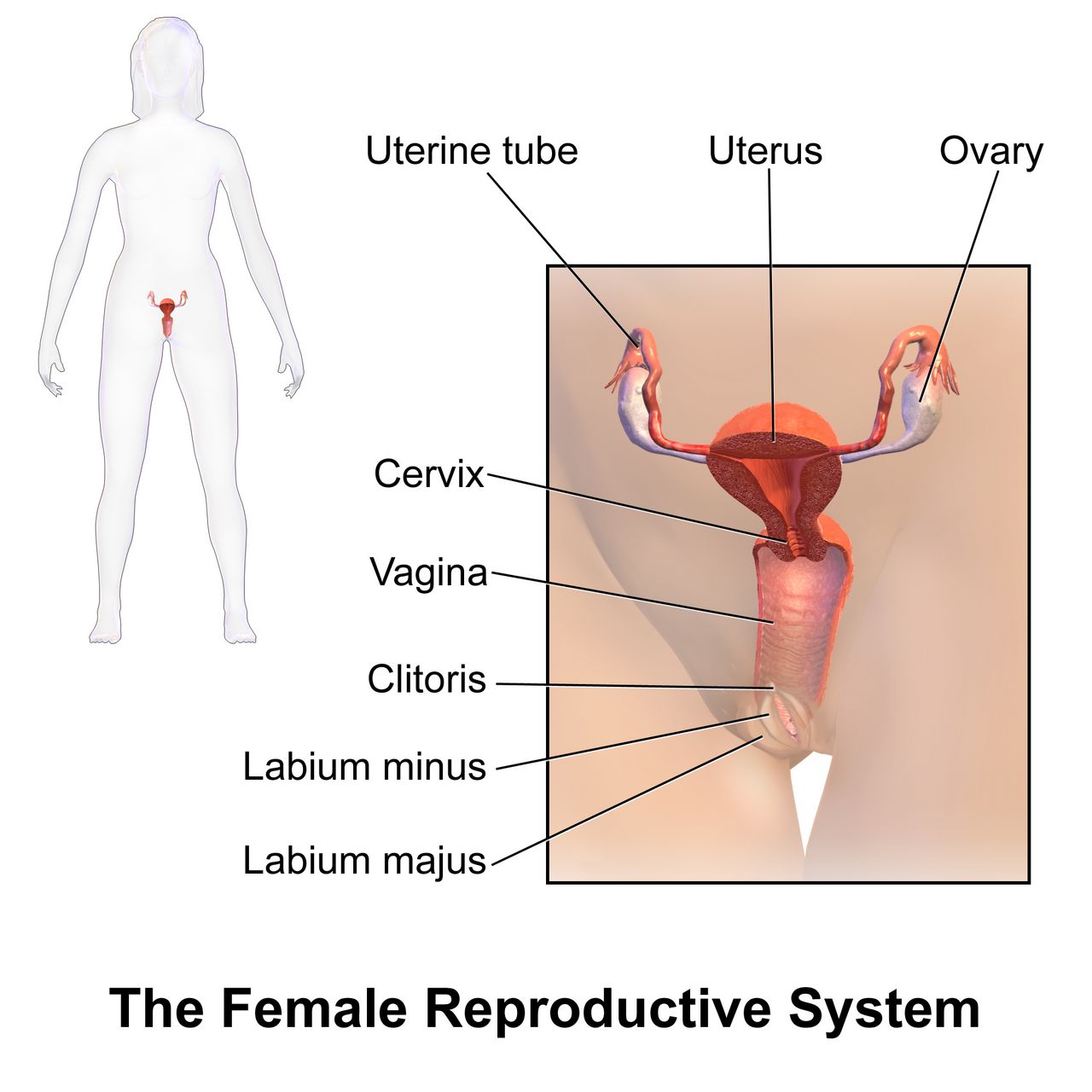
One tract, two paths, a full set of roots
The female reproductive tract does two jobs that terminology keeps somewhat separate. The ovaries produce ova and hormones; the uterine tubes, uterus, cervix and vagina form a continuous passage that carries an ovum inward, an embryo to implantation and a fetus outward. The breasts are counted as accessory reproductive organs because their function is lactation, which is why mamm/o and mast/o live in this chapter rather than with the skin. The specialty that covers the non-pregnant tract is gynecology (guy-neh-KOL-oh-jee), from gynec/o, woman, plus -logy, the study of. The specialty that covers pregnancy and birth is obstetrics (ob-STET-riks), from the Latin obstetrix, midwife — literally one who stands before. In practice the two are trained and charted together as OB/GYN.
Read the tract from the outside in and the roots arrive in a usable order. Vulv/o and episi/o both mean vulva, the external genitalia. Colp/o and vagin/o both mean vagina. Cervic/o means cervix — and also, unhelpfully, neck, because the cervix is the neck of the uterus and the same root names the neck of the body in cervical vertebrae. Hyster/o, metr/o, metri/o and uter/o all mean uterus. Salping/o means uterine tube. Oophor/o and ovari/o mean ovary. Then perine/o names the perineum, the floor of tissue between the vaginal opening and the anus, and culd/o names the cul-de-sac, the pouch of peritoneum lying behind the uterus. Two look-alikes belong here as well. Perine/o is the perineum, the pelvic floor; peritone/o is the peritoneum, the serous membrane lining the abdominal cavity — so a perineorrhaphy repairs the pelvic floor while peritonitis is an abdominal emergency. And the root metr/o, uterus, is not the suffix -metry, process of measuring: metrorrhagia is uterine bleeding, but pelvimetry measures the pelvis and has nothing to do with the uterus at all.
Notice how quickly those roots start stacking. Hyster/o + salping/o + oophor/ectomy reads uterus + tube + ovary + surgical removal: removal of the uterus, uterine tubes and ovaries in one operation. Colp/o + scop/y reads vagina + process of viewing. Perine/o + rrhaphy reads perineum + suturing. Nothing in that list has to be memorised as a whole word; each is assembled from parts on a table you can learn in an afternoon.
| Word part | Meaning | Example term | What the example means |
|---|---|---|---|
| gynec/o | woman, female | gynecologist | specialist in the female reproductive system |
| vulv/o | vulva, external genitalia | vulvitis | inflammation of the vulva |
| episi/o | vulva | episiotomy | surgical incision of the vulva and perineum |
| colp/o | vagina | colposcopy | visual examination of the vagina and cervix |
| vagin/o | vagina | vaginitis | inflammation of the vagina |
| cervic/o | cervix; neck | cervicitis | inflammation of the cervix |
| hyster/o | uterus | hysterectomy | surgical removal of the uterus |
| uter/o | uterus | uterosacral | pertaining to the uterus and sacrum |
| metr/o, metri/o | uterus, uterine tissue | endometrium | tissue lining the inside of the uterus |
| salping/o | uterine tube; also eustachian tube | salpingitis | inflammation of a uterine tube |
| oophor/o | ovary | oophorectomy | surgical removal of an ovary |
| ovari/o | ovary | ovarian | pertaining to the ovary |
| perine/o | perineum | perineorrhaphy | suturing of the perineum |
| culd/o | cul-de-sac, rectouterine pouch | culdocentesis | puncture of the cul-de-sac to withdraw fluid |
| hymen/o | hymen | hymenectomy | surgical removal of hymenal tissue |
| mamm/o | breast | mammography | process of imaging the breast |
| mast/o | breast | mastectomy | surgical removal of a breast |
Greek and Latin doublets, and why both survive
Four structures in this system carry two roots each, and the pattern is the same one you met in the digestive chapter: a Latin form and a Greek form, both correct, each with its own habitual company. The Latin form tends to appear in adjectives describing normal anatomy and in imaging words; the Greek form tends to carry disease and procedure suffixes. So the vagina is vaginal (Latin) when we describe a normal exam, but the endoscopic procedure is colposcopy (Greek) and the surgical repair is colporrhaphy (kol-POR-ah-fee). The ovary is ovarian (Latin) when we describe a cyst, but removal is oophorectomy (oh-of-oh-REK-toh-mee), from the Greek. The breast is imaged by mammography and operated on by mastectomy.
The guide is a tendency, not a law — ovariectomy exists, and hysterectomy uses the Greek root for what is a very Latin-sounding operation. But it predicts correctly often enough to be worth carrying, and more importantly it tells you that when you meet an unfamiliar reproductive term, the presence of an unexpected root usually means a doublet rather than a new organ. Metrorrhagia and uterine bleeding are describing the same organ.
The uterus is the extreme case, with three roots in circulation. Hyster/o takes the surgical and endoscopic suffixes: hysterectomy, hysteroscopy, hysteropexy. Uter/o takes the plain adjectives: uterine, intrauterine. Metr/o and metri/o name the tissue layers and the bleeding words: endometrium (inside layer), myometrium (muscle layer), perimetrium (outer covering), metrorrhagia. Decode my/o + metri/o + -um as muscle + uterine tissue + structure, and the middle wall of the uterus stops being a fact to memorise.
The vocabulary of the cycle
Menstrual terminology is built almost entirely from one root and a handful of suffixes, which makes it some of the most decodable vocabulary in medicine. Men/o means menses or menstruation, from the Greek men, month. Attach -arche, beginning, and you get menarche (meh-NAR-kee), the first menstrual period. Attach pause and you get menopause, the permanent cessation of menses, formally diagnosed after twelve consecutive months without a period. Attach the prefix peri-, around, and you get perimenopause, the transitional years on either side of that point.
Now bring in the flow suffixes. -rrhea means flow or discharge; -rrhagia means bursting forth, an excessive flow. A- + men/o + -rrhea is amenorrhea (ay-men-oh-REE-ah), absence of menstruation. Dys- + men/o + -rrhea is dysmenorrhea (dis-men-oh-REE-ah), painful menstruation. Olig/o + men/o + -rrhea is oligomenorrhea, scanty or infrequent periods. Men/o + -rrhagia is menorrhagia (men-oh-RAY-jee-ah), abnormally heavy or prolonged menstrual bleeding. Metr/o + -rrhagia is metrorrhagia (mee-troh-RAY-jee-ah), uterine bleeding at irregular times outside the expected period. Combine both and you get menometrorrhagia, heavy bleeding both during and between periods.
Two more roots complete the set. Ov/o, ovul/o and the Greek oo- all refer to the egg: ovulation is the release of an ovum, anovulation is failure to ovulate, and an oocyte (OH-oh-site) is an immature egg cell. Lact/o and galact/o both mean milk: lactation is milk production, a lactiferous duct carries milk, and galactorrhea (gah-lak-toh-REE-ah) is inappropriate milk discharge outside of nursing, often a clue to a pituitary problem rather than a breast problem.
| Word part | Meaning | Example term | What the example means |
|---|---|---|---|
| men/o | menstruation, menses | menorrhea | normal menstrual flow |
| -arche | beginning | menarche | the first menstrual period |
| -rrhea | flow, discharge | amenorrhea | absence of menstrual flow |
| -rrhagia | bursting forth, excessive flow | menorrhagia | excessively heavy menstrual bleeding |
| olig/o | scanty, few | oligomenorrhea | infrequent or scanty menstruation |
| ov/o, ovul/o | egg, ovum | anovulation | failure to release an ovum |
| oo- | egg | oocyte | an immature egg cell |
| lact/o | milk | lactiferous | carrying or producing milk |
| galact/o | milk | galactorrhea | milk discharge unrelated to nursing |
| -salpinx | uterine tube (as a suffix) | hydrosalpinx | uterine tube distended with watery fluid |
| gravid/o | pregnancy | gravid | pregnant |
| -cyesis | pregnancy | pseudocyesis | false pregnancy |
The female tract assigns a root to each structure from vulva to ovary, and several structures carry both a Greek and a Latin root, so an unfamiliar term usually names a familiar organ.
Section 2The Male Reproductive System and Its Combining Forms
Following the sperm, root by root
The male system is easier to learn than the female one for a structural reason: it is a single one-way pathway, and the roots line up along it. Sperm are made in the testes, mature and are stored in the epididymis, travel up the vas deferens (also called the ductus deferens), receive fluid from the seminal vesicles and the prostate gland, pass through the ejaculatory duct into the urethra, and exit through the penis. Learn that sentence and you have learned the order of the roots: orchi/o, epididym/o, vas/o, vesicul/o, prostat/o, urethr/o, pen/o.
Two of those names are themselves decodable. Epididymis (ep-ih-DID-ih-mis) is epi-, upon, plus didym/o, twin or testis — the structure sitting upon the testis. Vas deferens is Latin for the vessel that carries away. And note that the male system shares its final segment with the urinary system: the male urethra carries both urine and semen, which is why male reproductive complaints are often filed under genitourinary (GU) rather than under a system of their own, and why the roots you learned in Chapter 11 — ur/o urine, ureter/o ureter, urethr/o urethra — keep appearing here.
Around the pathway sit the supporting structures. Scrot/o names the scrotum, the sac that holds the testes outside the body cavity so that sperm can mature at a temperature slightly below core. Balan/o names the glans, the sensitive tip of the penis, from the Greek for acorn. The prepuce or foreskin covers the glans unless it has been removed by circumcision (Latin: to cut around). Semin/i refers to semen; spermat/o and sperm/o refer to sperm; and andr/o means male, giving androgen, a hormone that produces male characteristics, and andrology, the male counterpart of gynecology.
| Word part | Meaning | Example term | What the example means |
|---|---|---|---|
| orch/o, orchi/o, orchid/o | testis, testicle | orchitis | inflammation of a testis |
| test/o, testicul/o | testis, testicle | testicular | pertaining to the testis |
| epididym/o | epididymis | epididymitis | inflammation of the epididymis |
| vas/o | vessel, duct (here the vas deferens) | vasectomy | removal of a segment of the vas deferens |
| vesicul/o | seminal vesicle | vesiculitis | inflammation of a seminal vesicle |
| prostat/o | prostate gland | prostatectomy | surgical removal of the prostate |
| pen/o | penis | penile | pertaining to the penis |
| balan/o | glans penis | balanitis | inflammation of the glans penis |
| scrot/o | scrotum | scrotal | pertaining to the scrotum |
| spermat/o, sperm/o | sperm, seed | spermatogenesis | the formation of sperm |
| semin/i | semen | seminiferous | carrying or producing semen |
| andr/o | male | androgen | a hormone producing male characteristics |
| zo/o | animal, living | spermatozoon | a single mature motile sperm cell |
| crypt/o | hidden | cryptorchidism | condition of an undescended (hidden) testis |
| varic/o | dilated, twisted vein | varicocele | swelling of dilated veins in the scrotum |
| hydr/o | water, fluid | hydrocele | fluid-filled swelling around a testis |
| a-, an- | without, absence of | azoospermia | absence of sperm in the semen |
| -cele | hernia, swelling, protrusion | spermatocele | sperm-containing cyst of the epididymis |
Three ways to say testis, and one of them is a trap
The testis has three Greek-derived combining forms in active use: orch/o, orchi/o and orchid/o. They are interchangeable in meaning, and the only reason all three survive is that different surgeons and different textbooks settled on different ones. Orchitis is inflammation of a testis. Orchiectomy and orchidectomy are the same operation. Orchiopexy (OR-kee-oh-pek-see) is the surgical fixation of a testis in the scrotum, done in infancy or childhood for an undescended testis. Orchialgia is testicular pain.
The trap is that orchid/o looks like the flower, and students who make that association will spell and pronounce the surgical terms unpredictably. The connection is real but backwards: the flower is named for the testis, because orchid tubers were thought to resemble one. Learn the medical meaning and let the flower go.
The other place students slip is prostat/o. It is not prostrate, which means lying face down. There is no r after the t. A patient may be prostrate on the table while the surgeon works on the prostate, and the two words have no relationship at all. Transcription systems flag this pair constantly, and so should you.
The male reproductive roots follow the path of the sperm from testis to penis, and the only real ambiguities are the three testis roots and the double meaning of vas/o.
Section 3Pathology of the Reproductive Tracts
Turning anatomy into diagnosis
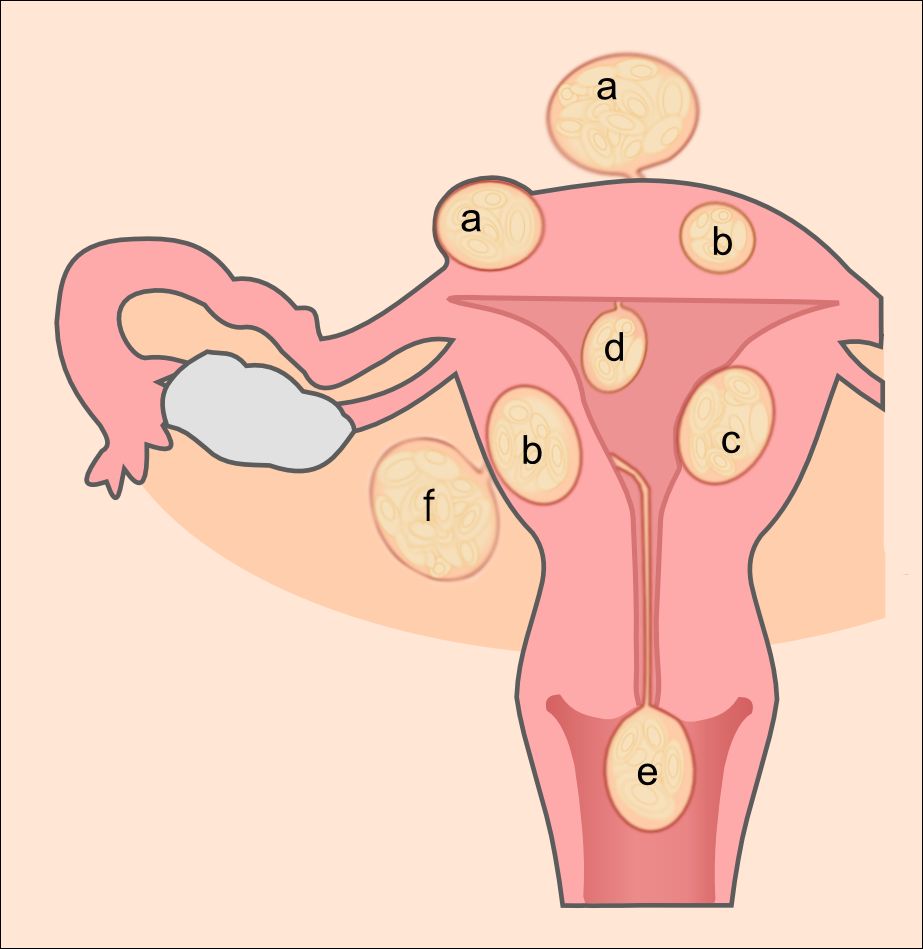
Almost every reproductive diagnosis in this chapter is an anatomy root plus a pathology suffix you already own. -itis inflammation, -osis abnormal condition, -oma tumor, -cele hernia or protrusion, -ptosis drooping, -algia and -dynia pain, -rrhagia excessive flow, -plasia formation or development, -trophy nourishment or growth. Put cervic/o in front of -itis and you have cervicitis. Put endometri/o in front of -osis and you have endometriosis (en-doh-mee-tree-OH-sis), the condition in which endometrial tissue grows outside the uterus — on the ovaries, the peritoneum, the bowel — where it still responds to the hormonal cycle and bleeds into tissue that cannot drain, producing scarring, severe dysmenorrhea and infertility.
A few compound diagnoses reward slow decoding. Leiomyoma (lye-oh-my-OH-mah) is lei/o smooth + my/o muscle + -oma tumor: a benign tumor of the smooth muscle of the myometrium, known clinically as a fibroid and the most common pelvic tumor in women. Adenomyosis is aden/o gland + my/o muscle + -osis condition: endometrial glands growing down inside the muscular wall itself, which is why it causes a boggy, tender, uniformly enlarged uterus rather than the knobby one of fibroids. Polycystic ovary syndrome is poly- many + cyst/o sac + -ic: many fluid-filled follicles, with anovulation, oligomenorrhea and androgen excess.
The suffix -cele and the suffix -ptosis together describe pelvic floor failure. A cystocele is the bladder bulging into the anterior vaginal wall; a rectocele is the rectum bulging into the posterior wall; uterine prolapse (also hysteroptosis) is descent of the uterus into the vaginal canal. All three follow damage to the supporting tissue, most often from childbirth. Cystocele and rectocele are repaired by colporrhaphy — anterior for the bladder, posterior for the rectum. Uterine prolapse is managed differently: a pessary, a hysteropexy or other apical suspension when the uterus is to be kept, or a hysterectomy, which is a routine option rather than an excluded one.
| Word part | Meaning | Example term | What the example means |
|---|---|---|---|
| -itis | inflammation | oophoritis | inflammation of an ovary |
| -osis | abnormal condition | endometriosis | endometrial tissue in abnormal locations |
| -oma | tumor, mass | leiomyoma | benign smooth-muscle tumor of the uterus |
| lei/o | smooth | leiomyosarcoma | malignant smooth-muscle tumor |
| -cele | hernia, protrusion | cystocele | bladder bulging into the vaginal wall |
| -ptosis | drooping, sagging, prolapse | hysteroptosis | downward displacement of the uterus |
| -plasia | formation, development (cell number) | hyperplasia | increase in the number of cells |
| -trophy | nourishment, growth (cell size) | hypertrophy | increase in the size of cells |
| -dynia | pain | mastodynia | breast pain |
| py/o | pus | pyosalpinx | uterine tube filled with pus |
| hemat/o | blood | hematosalpinx | uterine tube filled with blood |
| condyl/o | knuckle, knob | condyloma | wart-like growth on the genitalia |
| ec-, ecto- | out, outside | ectopic | out of the normal place |
| -cidal | killing | spermicidal | destroying sperm |
The diagnoses you will meet most often
On the female side, pelvic inflammatory disease (PID) is infection that has ascended from the cervix into the uterus, tubes and ovaries. It is charted by its consequences as much as its cause: salpingitis scars the tubes, and scarred tubes produce infertility and ectopic pregnancy. Fibrocystic breast changes describe benign lumpy, tender breast tissue that fluctuates with the cycle. Mastitis is breast inflammation, usually in a lactating patient. Gynecomastia (guy-neh-koh-MAS-tee-ah) — gynec/o woman + mast/o breast + -ia condition — is breast tissue development in a male, common in newborns and adolescents and a drug or liver clue in adults. Malignancies include cervical carcinoma, now largely preventable because it is driven by human papillomavirus, endometrial carcinoma, whose cardinal warning sign is postmenopausal bleeding, ovarian carcinoma, notorious for vague late symptoms, and breast carcinoma.
On the male side, benign prostatic hyperplasia (BPH) is the age-related enlargement of the prostate that compresses the urethra and produces hesitancy, weak stream, nocturia and retention. Prostatitis is inflammation, bacterial or not. Prostate carcinoma is the most common non-skin cancer in men. Cryptorchidism (krip-TOR-kid-izm) is a testis that never descended into the scrotum, which matters because an undescended testis is both infertile and at higher cancer risk. Testicular torsion is a testis twisting on its cord and strangling its own blood supply — a surgical emergency measured in hours. Hydrocele, varicocele (VAR-ih-koh-seel) and spermatocele are three scrotal swellings distinguished entirely by what fills them: watery fluid, dilated veins, sperm. Phimosis (fye-MOH-sis) is a foreskin too tight to retract; paraphimosis is a retracted foreskin trapped behind the glans, which is the urgent one. Erectile dysfunction (ED) and the semen findings oligospermia (ol-ih-goh-SPER-mee-ah, few sperm) and azoospermia (ay-zoh-oh-SPER-mee-ah, no sperm) complete the common list.
Sexually transmitted infections cross both tracts and are named for their organisms rather than built from roots, so they must simply be learned. Chlamydia and gonorrhea are bacterial, frequently silent, and the leading preventable causes of PID and tubal infertility. Syphilis progresses through a painless primary chancre (SHANG-ker), a secondary rash, a latent stage and a destructive tertiary stage. Trichomoniasis (trik-oh-moh-NYE-ah-sis) is caused by a protozoan. Genital herpes is viral and recurrent. Human papillomavirus (HPV) causes condylomata acuminata (kon-dih-LOH-mah-tah ah-kyoo-mih-NAY-tah), pointed genital warts, and the high-risk strains cause cervical, anal and oropharyngeal cancers. Note the preferred modern term is sexually transmitted infection (STI) rather than the older STD, because infection precedes and outnumbers overt disease.
Singular and plural, where the rules bite
Reproductive anatomy is unusually rich in Latin and Greek plurals, and several of them appear in every operative report. The core rules from Chapter 1 apply unchanged: -a becomes -ae, -us becomes -i, -um becomes -a, -is becomes -es, -ix or -ex becomes -ices, -oma becomes -omata, -nx becomes -nges, and the Greek -on becomes -a.
Two entries need a note. Adnexa (ad-NEK-sah), meaning the ovaries and tubes considered together as the appendages of the uterus, is plural only — there is no singular in clinical use, so a chart reads “the adnexa are non-tender,” never “the adnexa is.” And fetus takes the ordinary English plural fetuses rather than a Latinised form, one of the many places where usage has overruled etymology.
| Rule | Singular | Plural | Meaning |
|---|---|---|---|
| -a to -ae | fimbria (FIM-bree-ah) | fimbriae (FIM-bree-ee) | fringed ends of the uterine tube |
| -a to -ae | vulva | vulvae | external female genitalia |
| -um to -a | ovum | ova | egg cell |
| -um to -a | labium | labia | lip-like fold of the vulva |
| -us to -i | villus (chorionic) | villi | finger-like projection of the chorion |
| irregular | corpus luteum | corpora lutea | hormone-secreting remnant of the follicle |
| -is to -es | testis | testes | male gonad |
| -ix to -ices | cervix | cervices | neck of the uterus |
| -ix to -ices | varix | varices | dilated, twisted vein |
| -nx to -nges | salpinx | salpinges | uterine tube |
| -oma to -omata | condyloma | condylomata | wart-like genital growth |
| -on to -a | spermatozoon | spermatozoa | mature sperm cell |
| irregular | epididymis | epididymides | coiled duct atop the testis |
| plural only | — | adnexa | the uterine tubes and ovaries together |
Reproductive diagnoses are anatomy roots plus ordinary pathology suffixes, so a term you have never seen can almost always be decoded before it is looked up.
Section 4Diagnostic Tests and Surgical Procedures
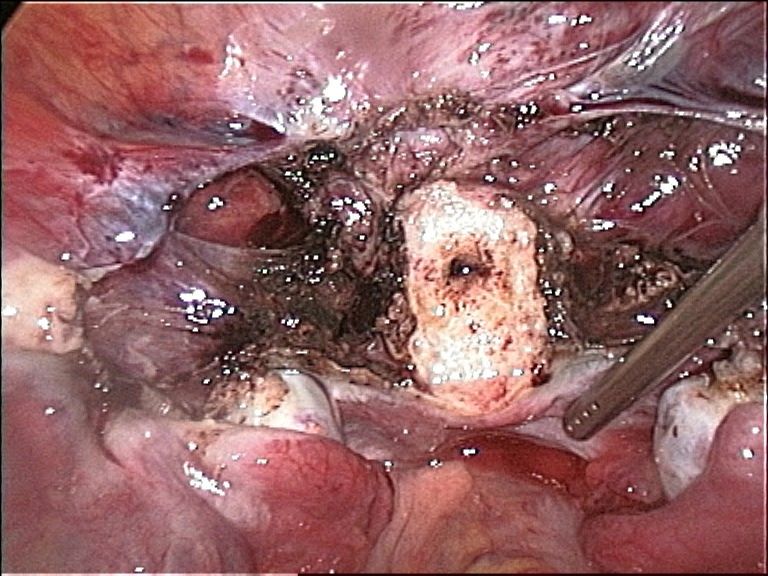
Looking, imaging and sampling
Three suffix families cover nearly all reproductive diagnostics. -scopy is the process of visual examination with an instrument; -graphy is the process of recording an image and -gram is the record itself; -centesis is surgical puncture to withdraw fluid. Attach them to the roots from Sections 1 and 2 and the tests name themselves.
Colposcopy (kol-POS-koh-pee) is magnified examination of the cervix and vagina, done when a screening test is abnormal. Hysteroscopy looks inside the uterine cavity. Laparoscopy looks inside the abdomen and pelvis through small ports. Hysterosalpingography (his-ter-oh-sal-ping-GOG-rah-fee), abbreviated HSG, is hyster/o uterus + salping/o tube + -graphy: contrast dye is instilled through the cervix and X-rays record whether it spills freely out of the tubes, which is the classic test of tubal patency in an infertility workup. Mammography records the breast. Culdocentesis (kul-doh-sen-TEE-sis) punctures the cul-de-sac to sample fluid, historically used to detect blood from a ruptured ectopic pregnancy and now largely replaced by ultrasound.
Not everything is built from Greek. The Pap test, named for George Papanicolaou, is the cytology smear that screens for cervical dysplasia and carcinoma; it is now usually paired with HPV testing. Transvaginal ultrasonography images the uterus, endometrium and adnexa with a probe placed in the vagina. On the male side, PSA (prostate-specific antigen) is a blood test used alongside the digital rectal examination (DRE) in prostate assessment, and semen analysis reports count, motility and morphology in an infertility workup.
| Term | Word parts | What it is |
|---|---|---|
| colposcopy | colp/o vagina + -scopy viewing | magnified exam of the cervix and vagina |
| hysteroscopy | hyster/o uterus + -scopy | endoscopic view of the uterine cavity |
| laparoscopy | lapar/o abdomen + -scopy | endoscopic view of the pelvis through small ports |
| hysterosalpingography | hyster/o + salping/o + -graphy | contrast X-ray of uterus and tubes for patency |
| mammography | mamm/o breast + -graphy | low-dose X-ray screening of the breast |
| sonohysterography | son/o sound + hyster/o + -graphy | saline-infused ultrasound of the uterine cavity |
| culdocentesis | culd/o cul-de-sac + -centesis puncture | needle sampling of fluid behind the uterus |
| amniocentesis | amni/o amnion + -centesis | needle sampling of amniotic fluid |
| pelvimetry | pelv/i pelvis + -metry measuring | measurement of the birth canal dimensions |
| Pap test | eponym (Papanicolaou) | cervical cytology screen for dysplasia |
| PSA | abbreviation | prostate-specific antigen blood test |
| semen analysis | — | sperm count, motility and morphology |
Cutting, removing, repairing
The surgical suffixes carry over unchanged from earlier chapters, and this system exercises all of them. -ectomy is surgical removal. -otomy is an incision, cutting in without taking out. -ostomy is the creation of a new opening, either to the surface or between two structures. -pexy is surgical fixation. -plasty is surgical repair or reshaping. -rrhaphy is suturing. -desis is binding or fusion. -lysis is loosening or breaking down, as in adhesiolysis, the freeing of scar bands that tether pelvic organs.
Watch the three that share a shape. A vasectomy removes a segment of the vas deferens for sterilisation. A vasovasostomy (vas-oh-vah-SOS-toh-mee) creates a new opening between the two cut ends to reverse it — vas/o + vas/o + -ostomy, duct to duct. A hysterotomy is an incision into the uterus, which is technically what every cesarean delivery is, while a hysterectomy removes the uterus entirely. Two letters separate them — the o of -otomy becomes an e and a c is added — and that is the whole distance between an operation that preserves fertility and one that ends it. No context clue will save you if you read it wrong.
Several common operations are written as strings of roots. Salpingo-oophorectomy removes a tube and ovary; done on both sides it is a bilateral salpingo-oophorectomy, and combined with removal of the uterus through an abdominal incision it becomes TAH-BSO, total abdominal hysterectomy with bilateral salpingo-oophorectomy. A myomectomy removes fibroids while leaving the uterus in place, which matters when future pregnancy is the goal. Tubal ligation ties or occludes the tubes for sterilisation. Dilation and curettage (D&C) opens the cervix and scrapes the endometrial lining. LEEP, loop electrosurgical excision procedure, removes abnormal cervical tissue with a heated wire loop. On the male side, TURP — transurethral resection of the prostate — shaves obstructing prostate tissue from inside the urethra, orchiopexy anchors an undescended testis, and circumcision removes the prepuce.
| Suffix | Meaning | Example term | What the example means |
|---|---|---|---|
| -ectomy | surgical removal, excision | salpingectomy | removal of a uterine tube |
| -otomy | incision, cutting into | episiotomy | incision of the perineum to widen the outlet |
| -ostomy | creation of a new opening | vasovasostomy | rejoining the cut ends of the vas deferens |
| -pexy | surgical fixation | orchiopexy | fixation of a testis within the scrotum |
| -plasty | surgical repair, reshaping | mammoplasty | reconstruction or reshaping of the breast |
| -rrhaphy | suturing | colporrhaphy | suture repair of the vaginal wall |
| -lysis | loosening, breaking down | adhesiolysis | surgical freeing of scar adhesions |
| -tripsy | crushing | lithotripsy | crushing of a stone |
| lapar/o + -scopy | abdomen + process of viewing | laparoscopy | minimally invasive pelvic surgery approach |
| trans- + urethr/o | across, through the urethra | TURP | transurethral resection of the prostate |
Reproductive procedures are ordinary procedure suffixes bolted onto the anatomy roots, so -ectomy, -otomy and -ostomy must be read letter by letter because they name three different operations.
Section 5Obstetrics, Neonatology and the Chart
Counting pregnancies: gravida, para and GTPAL
Obstetric charting opens with two numbers, and they are the most frequently confused pair in the specialty. Gravida counts pregnancies, of any outcome, including the current one. Para counts pregnancies carried to viability and delivered, roughly twenty weeks or beyond. The prefixes attach to both: nulli- none, primi- first, multi- many. So a nulligravida has never been pregnant, a primigravida (pry-mih-GRAV-ih-dah) is pregnant for the first time, and a multipara (mul-TIP-ah-rah) has delivered more than once. The suffix forms are -gravida and -para, and the Latin root par/o means to bear or bring forth.
The essential rule is that para counts pregnancies, not babies. A patient who delivered twins in her only pregnancy is gravida 1, para 1 — not para 2. Charts that get this wrong misstate obstetric history in a way that changes risk assessment. Because gravida and para alone hide too much, most units expand para into GTPAL: G for gravida, then T term births at 37 weeks or later, P preterm births between 20 and 37 weeks, A abortions or losses before 20 weeks, and L living children. A patient recorded as G4 T2 P1 A1 L3 has been pregnant four times, delivered two term and one preterm infant, had one loss before twenty weeks, and has three living children.
One vocabulary warning belongs here. In obstetric charting, abortion means any pregnancy loss before viability, and the great majority of entries in that column are miscarriages. A spontaneous abortion is a miscarriage; a missed abortion is a nonviable pregnancy retained in the uterus; a threatened abortion is bleeding with a closed cervix and an ongoing pregnancy; an induced or elective abortion is a deliberate termination. The clinical word is broader than the everyday word, and reading it narrowly will lead you to misunderstand a history. Many services now write early pregnancy loss in the narrative for exactly this reason, while the abbreviation survives in the numbers.
The word parts of pregnancy and birth
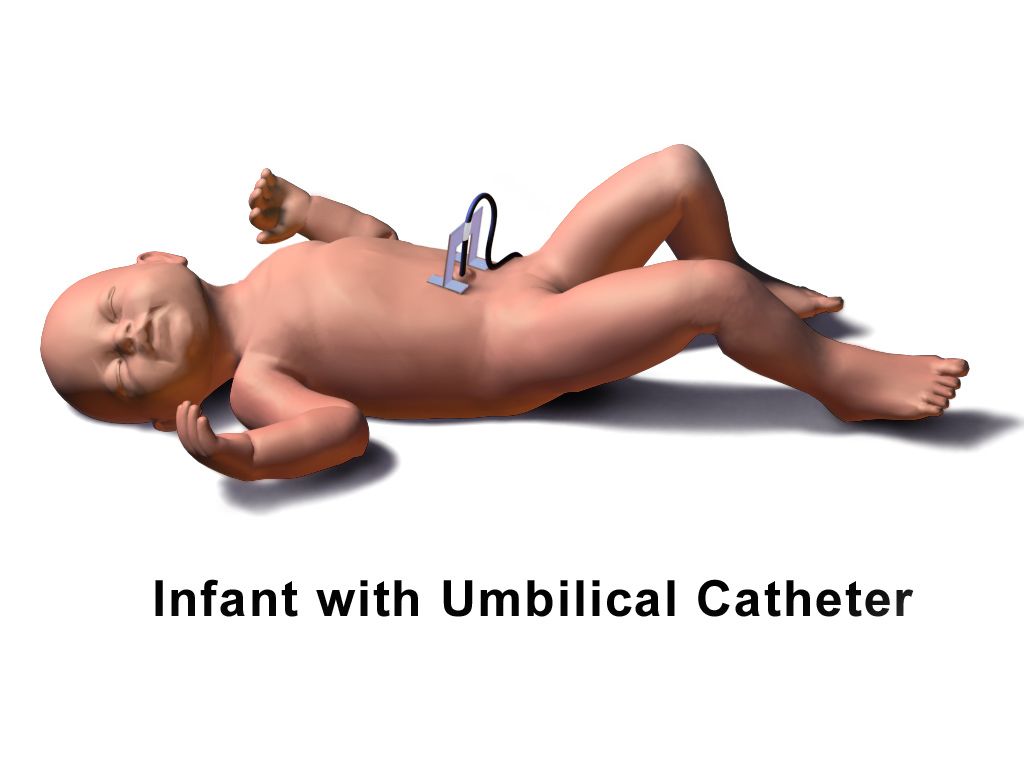
Pregnancy has its own set of roots, and they are among the most productive in the book. Amni/o is the amnion, the inner membrane holding the amniotic fluid; chori/o is the chorion, the outer membrane that becomes part of the placenta; placent/o is the placenta; embry/o is the embryo, the first eight weeks; fet/o is the fetus thereafter; omphal/o and umbilic/o both name the navel and the cord. Toc/o and the suffix -tocia mean labor or birth, giving dystocia (dis-TOH-see-ah), difficult labor, and tocolytic, a drug that stops labor. Oxytocin (ok-see-TOH-sin) decodes as oxy- swift, sharp + toc birth + -in substance: the hormone of rapid birth.
Assembled terms follow immediately. Amniocentesis (am-nee-oh-sen-TEE-sis) is puncture of the amniotic sac to sample fluid for genetic and maturity testing. Amniotomy is deliberate rupture of the membranes, charted as AROM when the clinician does it and SROM when it happens on its own. Oligohydramnios is too little amniotic fluid and polyhydramnios is too much. Chorionic villus sampling (CVS) takes placental tissue for earlier genetic testing than amniocentesis allows. Chorioamnionitis is infection of both membranes. Omphalocele (OM-fah-loh-seel) is a congenital protrusion of abdominal contents through the navel.
The complications of pregnancy are equally decodable. Hyperemesis gravidarum is hyper- excessive + -emesis vomiting: intractable vomiting of pregnancy. Placenta previa is a placenta implanted over or near the cervical opening — previa meaning in front — and abruptio placentae is premature separation of a normally placed placenta. Preeclampsia (pree-eh-KLAMP-see-ah) is new-onset hypertension after 20 weeks of gestation together with either proteinuria or, when there is no proteinuria, end-organ signs of severe disease — thrombocytopenia, renal insufficiency, impaired liver function, pulmonary edema, or new headache or visual symptoms. Proteinuria is not required for the diagnosis, and waiting for it is how severe preeclampsia gets missed. When it progresses to seizures it becomes eclampsia. Ectopic pregnancy — ec- out + top place — is implantation outside the uterine cavity, most often in a uterine tube, and it is a rupture-and-hemorrhage emergency. Gestational diabetes mellitus (GDM) is glucose intolerance first recognised in pregnancy.
Labor and the postpartum period bring a small set of descriptive words that are not built from roots and simply have to be learned. Effacement is thinning of the cervix, reported as a percentage; dilation is opening of the cervix, reported in centimetres. Lightening is the descent of the fetus into the pelvis; quickening is the mother’s first perception of fetal movement. Braxton Hicks contractions are the irregular practice contractions of late pregnancy. Lochia (LOH-kee-ah) is the postpartum uterine discharge, progressing from lochia rubra (red) through serosa (pinkish-brown) to alba (white). Involution is the shrinking of the uterus back toward its pre-pregnant size, and the puerperium (pyoo-er-PEER-ee-um) is the roughly six-week recovery period after delivery. Several of these carry eponyms — Braxton Hicks, Naegele’s rule for estimating the due date, the Apgar score — and unlike many eponyms elsewhere in medicine these remain in everyday use, while anatomical eponyms have largely given way to descriptive names: fallopian tube has become uterine tube, pouch of Douglas has become rectouterine pouch, Bartholin glands have become greater vestibular glands.
| Word part | Meaning | Example term | What the example means |
|---|---|---|---|
| nat/o | birth | neonatal | pertaining to the newborn period |
| neo- | new | neonatology | the study and care of newborns |
| part/o, -partum | labor, childbirth | postpartum | after delivery, referring to the mother |
| toc/o, -tocia | labor, birth | dystocia | difficult or obstructed labor |
| -gravida | pregnant woman | primigravida | woman pregnant for the first time |
| -para, par/o | to bear offspring | multipara | woman who has delivered more than once |
| nulli- | none | nullipara | woman who has never delivered |
| amni/o | amnion, inner fetal membrane | amniotomy | deliberate rupture of the membranes |
| chori/o | chorion, outer fetal membrane | chorioamnionitis | inflammation of both fetal membranes |
| placent/o | placenta | placentography | imaging of the placenta |
| embry/o | embryo (weeks 1 to 8) | embryonic | pertaining to the embryo |
| fet/o | fetus (week 9 to birth) | fetoscopy | direct visualisation of the fetus |
| omphal/o | navel, umbilicus | omphalitis | inflammation of the umbilical stump |
| puerper/o | childbirth | puerperium | the six weeks following delivery |
| terat/o | malformed fetus | teratogen | an agent that causes birth defects |
| icter/o | jaundice | icterus neonatorum | jaundice of the newborn |
| -emesis | vomiting | hyperemesis gravidarum | severe intractable vomiting of pregnancy |
The newborn
Neonatology (nee-oh-nay-TOL-oh-jee) is the care of the infant in the first twenty-eight days, and its vocabulary borrows from every other system. The first assessment is the Apgar score, named for the anesthesiologist Virginia Apgar and assigned at one and five minutes: heart rate, respiratory effort, muscle tone, reflex irritability and color, each scored zero to two for a maximum of ten. Size is charted against gestational age as AGA, SGA or LGA — appropriate, small or large for gestational age — and gestational age itself defines preterm (before 37 weeks), term and post-term (after 42 weeks).
The common newborn problems decode cleanly. Respiratory distress syndrome (RDS) reflects insufficient surfactant, the substance that keeps alveoli from collapsing, and is the classic disease of prematurity. Hyperbilirubinemia (hy-per-bil-ih-roo-bih-NEE-mee-ah) is excess bilirubin in the blood, producing the visible jaundice seen in most newborns; when the level is high enough to injure the brain it becomes kernicterus (ker-NIK-ter-us), and phototherapy exists to prevent exactly that. Erythroblastosis fetalis, now usually called hemolytic disease of the newborn, is maternal antibody destruction of fetal red cells, historically from Rh incompatibility and now largely prevented with Rh immune globulin. Meconium (meh-KOH-nee-um) is the first stool; meconium in the amniotic fluid is a sign of fetal stress and can be aspirated. Necrotizing enterocolitis (NEC) and retinopathy of prematurity (ROP) are complications of prematurity you will meet in any NICU. Neonatal abstinence syndrome describes withdrawal in an infant exposed to substances in utero.
Congenital anomalies round out the list. Congenital means present at birth, which is not the same as inherited — a teratogen such as alcohol or certain medications can produce a congenital defect in a genetically normal fetus. Cleft lip and cleft palate, spina bifida with myelomeningocele, patent ductus arteriosus, pyloric stenosis, gastroschisis and Down syndrome (trisomy 21) are the ones most likely to appear on a chart. Note the accepted form is Down syndrome, without the possessive, following the modern convention for eponyms in the United States.
| Abbreviation | Expansion | Abbreviation | Expansion |
|---|---|---|---|
| OB/GYN | obstetrics and gynecology | LMP | last menstrual period |
| EDD, EDC | estimated date of delivery / confinement | G/P | gravida / para |
| GTPAL | gravida, term, preterm, abortions, living | hCG | human chorionic gonadotropin |
| SROM / AROM | spontaneous / artificial rupture of membranes | PROM | premature rupture of membranes |
| NSVD | normal spontaneous vaginal delivery | C-section, CS | cesarean section |
| VBAC | vaginal birth after cesarean | CPD | cephalopelvic disproportion |
| FHR | fetal heart rate | NST | non-stress test |
| BPP | biophysical profile | GDM | gestational diabetes mellitus |
| IUGR, FGR | intrauterine / fetal growth restriction | SGA / AGA / LGA | small / appropriate / large for gestational age |
| NICU | neonatal intensive care unit | RDS | respiratory distress syndrome |
| TAH-BSO | total abdominal hysterectomy with bilateral salpingo-oophorectomy | D&C | dilation and curettage |
| HSG | hysterosalpingography | LEEP | loop electrosurgical excision procedure |
| PID | pelvic inflammatory disease | STI | sexually transmitted infection |
| HPV / HSV | human papillomavirus / herpes simplex virus | PCOS | polycystic ovary syndrome |
| BPH | benign prostatic hyperplasia | TURP | transurethral resection of the prostate |
| PSA | prostate-specific antigen | DRE | digital rectal examination |
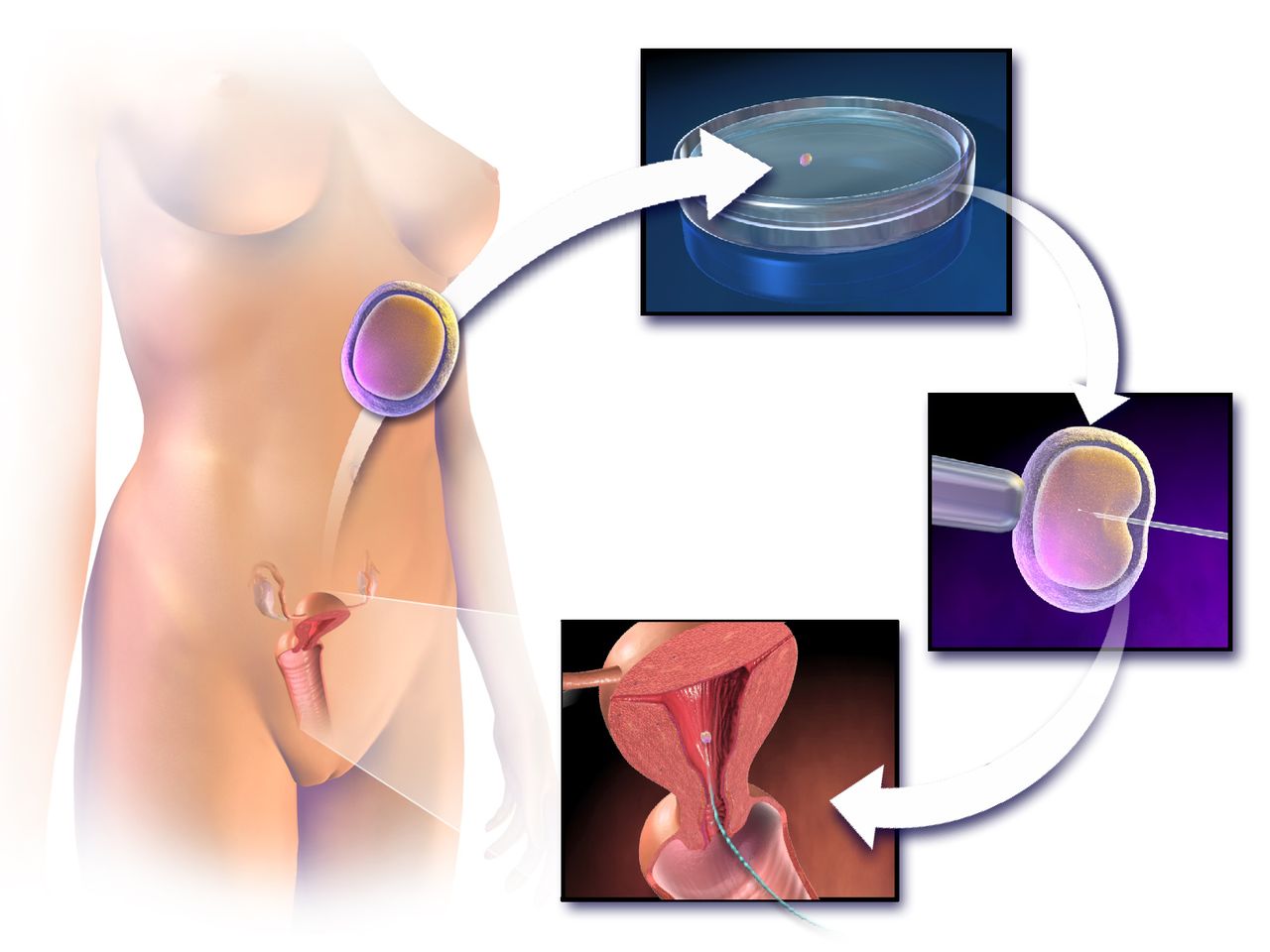
| ED | erectile dysfunction | IVF / ART | in vitro fertilization / assisted reproductive technology |
Obstetric and neonatal charting runs on a compact set of roots — nat/o, part/o, -tocia, -gravida, -para, amni/o, chori/o — plus a dense abbreviation layer that must be expanded, not guessed.
The chapter in one breath
Two reproductive systems, one specialty pair and a second patient share a single vocabulary built from ordinary parts. The female tract supplies vulv/o and episi/o, colp/o and vagin/o, cervic/o, hyster/o with metr/o and uter/o, salping/o, oophor/o with ovari/o, and the breast pair mamm/o and mast/o; the menstrual words are almost all men/o plus a suffix. The male tract follows the sperm: orchi/o, epididym/o, vas/o, prostat/o, balan/o, pen/o. Pathology is those roots plus -itis, -osis, -oma, -cele and -rrhagia, which is why endometriosis, leiomyoma, varicocele and cryptorchidism can be decoded before they are looked up. Procedures add nothing new — -scopy, -graphy, -centesis, -ectomy, -otomy, -ostomy, -pexy, -rrhaphy — applied to the same roots. Obstetrics contributes nat/o, part/o, -tocia, -gravida, -para, amni/o, chori/o and placent/o, and neonatology borrows from every other system. The traps are worth naming once more: salping/o has two tubes, vas/o has two meanings, menorrhagia is not metrorrhagia, hyperplasia is not hypertrophy, gravida is not para, and antepartum is not prenatal.
Words worth knowing
| Term | What it means |
|---|---|
| adnexa (ad-NEK-sah) | The uterine tubes and ovaries considered together as appendages of the uterus; plural only. |
| amniocentesis (am-nee-oh-sen-TEE-sis) | Needle puncture of the amniotic sac to withdraw fluid for genetic or maturity testing. |
| colposcopy (kol-POS-koh-pee) | Magnified visual examination of the cervix and vagina, usually after an abnormal Pap test. |
| cryptorchidism (krip-TOR-kid-izm) | Failure of a testis to descend into the scrotum; crypt/o hidden + orchid/o testis. |
| dystocia (dis-TOH-see-ah) | Difficult or obstructed labor; dys- difficult + -tocia labor. |
| ectopic pregnancy | Implantation outside the uterine cavity, most often in a uterine tube; a hemorrhage emergency. |
| endometriosis (en-doh-mee-tree-OH-sis) | Endometrial tissue growing outside the uterus, causing pain, scarring and infertility. |
| episiotomy (eh-piz-ee-OT-oh-mee) | Surgical incision of the perineum to enlarge the vaginal outlet during delivery. |
| gravida | A pregnant woman; as a count, the total number of pregnancies including the current one. |
| hysterosalpingography (his-ter-oh-sal-ping-GOG-rah-fee) | Contrast X-ray of the uterus and uterine tubes, used to test tubal patency. |
| leiomyoma (lye-oh-my-OH-mah) | Benign smooth-muscle tumor of the uterus; a fibroid. |
| lochia (LOH-kee-ah) | Postpartum uterine discharge progressing from rubra to serosa to alba. |
| meconium (meh-KOH-nee-um) | The dark first stool of the newborn; its presence in amniotic fluid suggests fetal stress. |
| menarche (meh-NAR-kee) | The first menstrual period; men/o menses + -arche beginning. |
| metrorrhagia (mee-troh-RAY-jee-ah) | Uterine bleeding at irregular intervals, between expected periods. |
| para | The number of pregnancies carried to viability and delivered, regardless of the number of infants. |
| puerperium (pyoo-er-PEER-ee-um) | The roughly six-week recovery period following delivery. |
| salpingo-oophorectomy | Surgical removal of a uterine tube and its ovary. |
| varicocele (VAR-ih-koh-seel) | Swelling caused by dilated veins within the scrotum; a common cause of male infertility. |
| vasovasostomy (vas-oh-vah-SOS-toh-mee) | Surgical rejoining of the cut ends of the vas deferens to reverse a vasectomy. |