Adolescence: Identity & Relationships
Somewhere between the child who asks “what are we doing today?” and the adult who asks “who am I becoming?” sits the adolescent, doing both at once. Adolescence is the decade or so when a young person stops taking the self for granted and starts building one on purpose — testing beliefs, trying on roles, arguing with parents, leaning hard into friends, and taking risks that can look reckless from the outside and feel essential from the inside. None of this happens in a vacuum: identity is forged in relationships, and the same brain that drives a teenager toward novelty is also, day by day, learning to steer. This chapter follows that work through five arenas — the search for identity, the renegotiation of family life, the pull of peers, the sharpening of values, and the balance of risk and resilience — and shows how each one feeds the others.
By the end of this chapter you can
- Explain Erikson's stage of identity vs. role confusion and the idea of a psychosocial moratorium.
- Describe Marcia's four identity statuses and the two dimensions — exploration and commitment — that define them.
- Distinguish emotional, behavioral, and value autonomy, and describe how parent–teen relationships change.
- Compare Baumrind's parenting styles and explain why authoritative parenting supports healthy autonomy.
- Contrast cliques and crowds and describe how peer pressure and friendship intimacy shift across adolescence.
- Trace moral development through Kohlberg's preconventional, conventional, and postconventional levels.
- Explain the dual-systems model of the adolescent brain and why risk-taking peaks in the teen years.
- Identify the protective factors that build resilience in teens.
Section 1The search for identity
Erikson: identity vs. role confusion
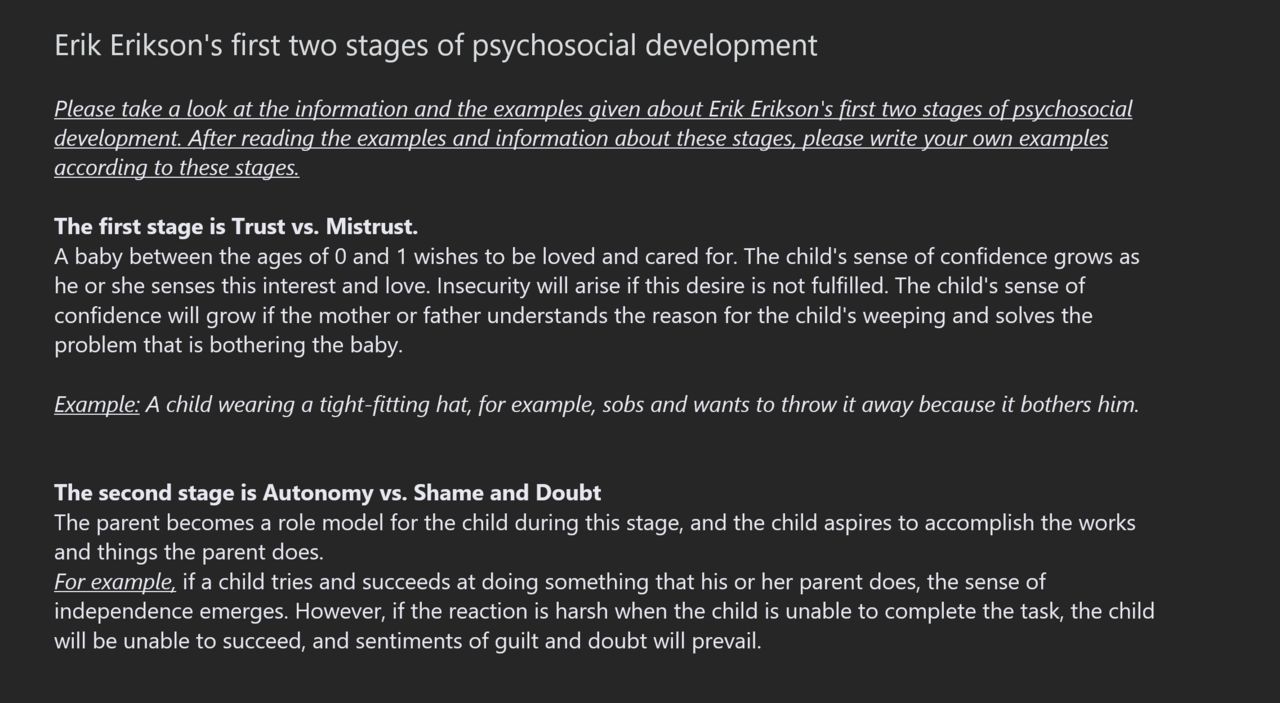
Erik Erikson mapped the whole lifespan into eight psychosocial stages, each built around a central tension the person must resolve — trust vs. mistrust in infancy, autonomy vs. shame in toddlerhood, initiative vs. guilt in the preschool years, industry vs. inferiority in the school years, and so on through intimacy, generativity, and integrity in adulthood. The fifth stage, arriving with adolescence, is identity vs. role confusion. The task is to answer, in some workable way, the question “Who am I, and where do I fit?” A teenager who succeeds emerges with a coherent sense of self — values, goals, and commitments that feel authored rather than inherited. A teenager who cannot yet answer it lives in role confusion: unsure of direction, drifting between identities, or clinging to whatever group will supply a ready-made one.
Erikson argued that society grants adolescents a psychosocial moratorium — a sanctioned time-out from adult commitments during which experimenting with roles is expected, even encouraged. School clubs, first jobs, changing friend groups, shifting musical and political allegiances: these are not distractions from the work of adolescence, they are the work. It is worth noting where this sits in the larger sequence. A firm identity, in Erikson's view, is the foundation for the next stage, intimacy vs. isolation — you cannot fully merge your life with another's until you know whose life it is.
Marcia: four identity statuses
James Marcia made Erikson's idea testable by asking two concrete questions. Has the person actively explored alternatives (a period of searching, sometimes called crisis)? And has the person made a commitment? Crossing those two dimensions yields four identity statuses. They are not a fixed ladder — a person can occupy different statuses in different domains (settled about religion, still searching about career) and can cycle back through them — but they capture the range of where an adolescent can stand.
| Status | Explored? | Committed? | What it looks like |
|---|---|---|---|
| Identity diffusion | No | No | No searching and no commitments; apathetic or avoidant about the question of self |
| Foreclosure | No | Yes | Committed without exploring — adopted a parent's or authority's identity wholesale |
| Moratorium | Yes (ongoing) | Not yet | Actively exploring and questioning; in the thick of the search, commitments still open |
| Identity achievement | Yes | Yes | Explored the options and then made personal, considered commitments |
The pairing matters. Foreclosure can look mature — the teen seems decided and calm — but the commitment was never tested, so it can shatter when challenged. Moratorium can look chaotic, yet it is often the most developmentally healthy place to be at sixteen, because genuine identity achievement usually requires passing through it. Most people do not reach stable achievement until the late teens or twenties, which is one reason many theorists now describe a distinct phase of emerging adulthood.
Two cognitive shifts make all of this possible. First, Piaget's formal operational thinking — the capacity for abstract, hypothetical reasoning that comes online in adolescence — lets a teenager imagine possible selves and possible worlds, and hold the actual self up against the ideal one. Second, that same new power turns inward, sometimes uncomfortably. David Elkind described an adolescent egocentrism with two faces: the imaginary audience (the conviction that everyone is watching and judging) and the personal fable (the belief that one's feelings are uniquely intense and that ordinary risks do not apply to oneself).
- Erikson's adolescent stage is identity vs. role confusion; society allows a psychosocial moratorium for trying on roles.
- Marcia crosses exploration and commitment to yield four statuses: diffusion, foreclosure, moratorium, identity achievement.
- Foreclosure commits without exploring; achievement commits after exploring — the route usually runs through moratorium.
- Formal operational thought enables the self-reflection behind identity work — and the imaginary audience and personal fable that come with it.
Section 2Family and autonomy

What autonomy actually means
The popular story of adolescence is one of breaking away, but developmental research tells a subtler tale: adolescents pursue autonomy — the capacity to think, feel, and act as a self-governing person — while mostly staying connected to their families. It helps to split autonomy into three strands. Emotional autonomy is the gradual de-idealizing of parents, coming to see them as ordinary people rather than all-knowing figures, and relying less on them for every emotional need. Behavioral autonomy is the growing ability to make and act on independent decisions — and, importantly, to resist a bad suggestion as well as to follow a good one. Value autonomy, which develops latest, is having thought-through beliefs about politics, religion, and ethics that the adolescent can defend on their own terms.
The healthy version of this is individuation, not detachment. The teenager who separates within a warm relationship — still close, still connected, but increasingly their own person — fares far better than the one who cuts off. Attachment does not expire at puberty: the same styles Mary Ainsworth described in infancy (secure, and the insecure patterns) echo forward, and a securely attached teen uses the parent as a secure base to explore from, returning for support and then venturing out again.
Conflict, and the parenting that weathers it
Everyday conflict does tend to rise in early adolescence, but it is easy to misread. The classic finding is that arguments become more frequent yet are mostly about mundane matters — chores, curfews, tidiness, screen time — rather than deep values, and their intensity typically cools by later adolescence as the relationship re-stabilizes on new terms. The style parents bring to that friction shapes its outcome. Diana Baumrind's framework crosses two dimensions — warmth (responsiveness) and control (demandingness) — into four styles.
| Parenting style | Warmth | Control | Typical outcome for the teen |
|---|---|---|---|
| Authoritative | High | High | Warm plus firm, with reasons and negotiation — linked to the best adjustment, self-reliance, and school success |
| Authoritarian | Low | High | Strict and obedience-focused without warmth — more anxiety, poorer self-esteem, or rebellion |
| Permissive (indulgent) | High | Low | Warm but few limits — more impulsivity and difficulty with self-regulation |
| Uninvolved (neglectful) | Low | Low | Neither warmth nor structure — the poorest outcomes across domains |
Authoritative parenting supports autonomy precisely because it grants it gradually: it explains rules, invites the adolescent's voice, and loosens control as the teen earns it. A crucial ingredient is monitoring — parents knowing where their teen is and with whom — which works best when it flows from an open relationship the teen chooses to disclose to, rather than from surveillance.
- Autonomy has three strands: emotional, behavioral, and (latest) value autonomy.
- The goal is individuation within connection — separating while staying close — not detachment; attachment persists into the teen years.
- Conflict rises in early adolescence but is mostly over mundane issues and eases later.
- Authoritative parenting (high warmth + high, reasoned control) with genuine monitoring predicts the best outcomes.
Section 3Peers: friendship, cliques, and pressure

Friendship grows deeper
Younger children are friends with whoever they play with; adolescents are friends with people they confide in. The great change in friendship across the teen years is the rise of intimacy — mutual self-disclosure, emotional support, loyalty, and trust. Harry Stack Sullivan argued that these close, same-age friendships (he called the closest one a “chumship”) are where teenagers learn the interpersonal skills — honesty, empathy, repair after conflict — that later romantic and adult relationships depend on. A good friendship in adolescence is not a luxury; it is a rehearsal space for intimacy itself.
The peer world also organizes itself into recognizable structures. A clique is a small, tight group of friends who actually spend time together — a handful of people who know each other well. A crowd is larger and more abstract: a reputation-based category (the athletes, the brains, the arts kids, the populars) that a teen may belong to by label without necessarily being close to its members. Crowds do identity work — they advertise “this is the kind of person I am” — while cliques do the intimate, day-to-day relational work. Dexter Dunphy's classic observations traced how same-sex cliques gradually link up and reorganize into mixed groups as dating begins.
Peer pressure — and what it really does
Conformity to peers — the tendency to align one's behavior with the group — tends to peak in early-to-mid adolescence (around ages 13 to 15) and then declines as behavioral and value autonomy strengthen. It is a mistake, though, to hear peer pressure as only a downward force. Peers push in every direction: toward skipping class or toward studying together, toward a first cigarette or toward a team, a cause, a band. Much peer influence is also indirect — teens adjust to perceived norms without anyone saying a word.
| Peer structure | Size | Based on | Main job |
|---|---|---|---|
| Clique | Small (roughly 3–10) | Actual friendship and shared time | Intimacy, daily companionship, self-disclosure |
| Crowd | Large | Reputation and shared image | Identity — signaling “what kind of person I am” |
Popularity itself splits in two. Sociometric popularity is being genuinely well-liked — kind, cooperative, socially skilled. Perceived popularity is having high status and visibility, which sometimes comes with dominance or even aggression rather than warmth. The two do not always travel together, which is why the “popular” teens are not necessarily the well-liked ones.
- Friendship deepens into intimacy — self-disclosure, loyalty, support (Sullivan) — a rehearsal for later intimacy.
- Cliques are small, real friendship groups; crowds are large, reputation-based identity categories.
- Peer conformity peaks in early-to-mid adolescence, then falls; peer influence pushes toward good and bad alike.
- Sociometric (well-liked) and perceived (high-status) popularity are not the same thing.
Section 4Values and morality

From rules to principles
The same abstract reasoning that lets adolescents question their own identity lets them question right and wrong. Jean Piaget first sketched the shift, noting that younger children hold a heteronomous morality — rules are fixed, handed down, and judged by consequences — while older children and adolescents move toward an autonomous morality that weighs intentions and understands rules as social agreements that people make and can change.
Lawrence Kohlberg extended this into six stages across three levels, studying how people reason about moral dilemmas rather than what they conclude. At the preconventional level (typical of children), right and wrong hinge on avoiding punishment and serving one's own interests. At the conventional level, which most adolescents reach, morality means upholding relationships and the social order — being a good person in others' eyes, and respecting law and duty. A minority move toward the postconventional level, reasoning from abstract principles — social contracts, and universal ethical principles like justice and human dignity — that can stand above any particular law.
| Level | Stage | What makes an act right |
|---|---|---|
| Preconventional | 1. Punishment & obedience | Avoiding punishment; obeying power |
| Preconventional | 2. Instrumental exchange | Serving one's own needs; fair deals (“you scratch my back”) |
| Conventional | 3. Good boy / good girl | Winning approval; being seen as nice and loyal |
| Conventional | 4. Law & order | Upholding rules, duty, and the social system |
| Postconventional | 5. Social contract | Rules serve the common good and can be changed by agreement |
| Postconventional | 6. Universal principles | Self-chosen ethical principles — justice, dignity — above any law |
Care, culture, and the gap between reasoning and acting
Kohlberg's model has been sharpened by criticism. Carol Gilligan argued that his justice-focused scoring undervalued an ethic of care — a way of reasoning organized around relationships, responsibility, and not wanting to hurt others — and that both care and justice are mature moral voices. Others note that the highest stages reflect Western, individualist assumptions and may score other cultural moralities unfairly. And a practical caution runs through all of it: how a teenager reasons about a dilemma predicts how they act only loosely. Values in adolescence are built as much through modeling, belonging, empathy, and real prosocial practice — volunteering, standing up for a friend, arguing a cause — as through abstract logic.
- Piaget: children move from heteronomous (rules fixed, judged by outcome) to autonomous (rules as agreements, judged by intention) morality.
- Kohlberg's levels are preconventional, conventional (most adolescents), and postconventional; he scored reasoning, not conclusions.
- Gilligan added an ethic of care alongside justice; the highest stages face cultural-bias critiques.
- Moral reasoning predicts moral behavior only loosely — values grow through modeling, empathy, and prosocial action too.
Section 5Risk and resilience
Why teenagers take risks
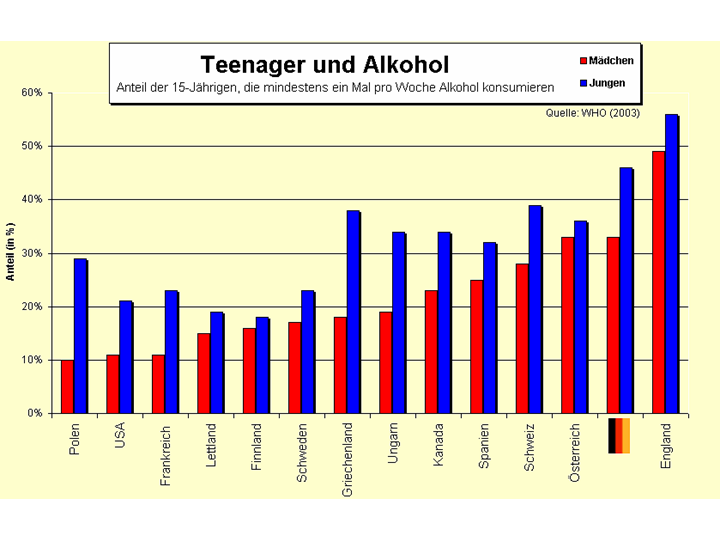
Adolescents are not simply ignorant of danger — ask them, and they will often rate a risk about as high as an adult would. The puzzle is that they take the risk anyway, and the best current explanation is developmental neuroscience's dual-systems (or imbalance) model. Two brain systems mature on different schedules. The socioemotional system — reward-sensitive circuits centered in the limbic region — becomes highly active early in adolescence, driving up sensation-seeking and the pull of immediate rewards. The cognitive control system — the prefrontal machinery for planning, impulse control, and weighing consequences — matures more slowly, not fully coming online until the mid-twenties. For a few years, in other words, a hot accelerator is paired with brakes still under construction.
This is why risk-taking peaks in adolescence and why it is so socially amplified. In a now-famous line of studies, teens took markedly more risks in a driving task when friends were merely watching — an effect that vanished in adults. The presence of peers lights up the reward system, tilting the balance toward the thrill and away from the consequence. Common expressions include experimenting with substances, unsafe driving, unprotected sex, and other novelty- and status-driven behaviors — most of which are transient, but some of which carry lasting cost.
What protects teens
Risk is only half the story. Resilience — doing well despite adversity — is not a rare gift but, in Ann Masten's phrase, “ordinary magic,” assembled from commonplace protective factors. The single most consistent one is a stable, caring relationship with at least one adult. Urie Bronfenbrenner's ecological-systems view is useful here: a teen is nested in layers — the immediate settings of family, peers, and school (microsystem), the connections among those settings (mesosystem), and the broader culture (macrosystem) — and protection can come from any layer.
| Level | Risk factors | Protective factors |
|---|---|---|
| Individual | High sensation-seeking, poor impulse control, hopelessness | Self-regulation, problem-solving skills, optimism, a sense of purpose |
| Family | Conflict, harsh or absent parenting, low monitoring | Warmth, authoritative parenting, at least one caring adult, monitoring |
| Peers & school | Deviant peers, disengagement, bullying | Prosocial friends, school connectedness, a caring mentor or coach |
| Community | Violence, poverty, easy access to harmful substances | Safe neighborhoods, activities and opportunities, supportive institutions |
Two practical points fall out of this. First, protection is additive and cross-level — a supportive coach can buffer a hard home, a strong family can buffer a rough neighborhood — so there are many places to intervene. Second, the goal is not to eliminate all risk. Some risk-taking is how adolescents explore, build competence, and find their edges; the aim is to channel a novelty-hungry brain toward challenges that build a self rather than endanger it.
- The dual-systems model: a fast-maturing reward (socioemotional) system outruns a slow-maturing cognitive control system into the mid-twenties.
- Risk-taking peaks in adolescence and rises sharply in the presence of peers, which activates reward circuits.
- Resilience is “ordinary magic” built from protective factors across Bronfenbrenner's ecological levels.
- The most consistent protective factor is a stable, caring relationship with at least one supportive adult.
The chapter in one breath
- Erikson's adolescent stage is identity vs. role confusion; society grants a moratorium to try on roles before committing.
- Marcia's four statuses — diffusion, foreclosure, moratorium, achievement — come from crossing exploration and commitment; real achievement usually runs through moratorium.
- Adolescents seek autonomy (emotional, behavioral, value) through individuation within connection, not detachment; attachment persists.
- Conflict rises over mundane issues then eases; authoritative parenting plus monitoring predicts the best adjustment.
- Friendship deepens into intimacy; cliques give closeness and crowds give identity; peer conformity peaks early-mid adolescence.
- Morality moves from Piaget's heteronomous rules toward Kohlberg's conventional and (for some) postconventional reasoning; Gilligan adds an ethic of care.
- The dual-systems brain drives peak risk-taking, magnified by peers; resilience is ordinary magic built from protective factors — above all, one caring adult.
ReferenceWords worth knowing
A quick reference for the terms in this chapter — skim it now, or circle back whenever a word trips you up.
- Authoritative parenting
- A style high in both warmth and reasoned control; linked to the best adolescent adjustment, autonomy, and achievement.
- Autonomy
- The capacity to think, feel, and act as a self-governing person; develops as emotional, behavioral, and value autonomy.
- Behavioral autonomy
- The growing ability to make and act on independent decisions, including resisting undue influence.
- Clique
- A small, tight group of friends who actually spend time together and know one another well.
- Cognitive control system
- Prefrontal circuitry for planning, impulse control, and weighing consequences; matures slowly into the mid-twenties.
- Conventional morality
- Kohlberg's middle level, reached by most adolescents: right means upholding relationships, approval, law, and social order.
- Crowd
- A large, reputation-based peer category (e.g., athletes, brains) that signals identity more than it provides closeness.
- Emotional autonomy
- De-idealizing parents and relying on them less for every emotional need while often staying close.
- Foreclosure
- Marcia's status of commitment without exploration — an identity adopted wholesale from parents or authority.
- Identity achievement
- Marcia's status of commitment following genuine exploration — a personally authored identity.
- Identity diffusion
- Marcia's status of no exploration and no commitment; apathy or avoidance about the question of self.
- Identity vs. role confusion
- Erikson's fifth psychosocial stage, the adolescent task of forming a coherent sense of self.
- Imaginary audience
- Elkind's term for the adolescent conviction that others are constantly watching and judging.
- Individuation
- Becoming a distinct, self-governing person while remaining connected to family — separation without detachment.
- Moratorium
- Marcia's status of active exploration without commitment yet; also Erikson's sanctioned time-out for role experimentation.
- Peer pressure
- Influence from peers to think or behave a certain way; can push toward prosocial or antisocial ends, often indirectly.
- Personal fable
- Elkind's term for the adolescent belief that one's experience is unique and that ordinary risks do not apply.
- Postconventional morality
- Kohlberg's highest level: reasoning from social contracts and self-chosen universal principles above particular laws.
- Preconventional morality
- Kohlberg's lowest level: right and wrong defined by punishment, obedience, and self-interest.
- Protective factor
- A condition that buffers risk and promotes resilience, such as a caring adult, monitoring, or school connectedness.
- Resilience
- Positive adaptation despite adversity; built from ordinary protective factors rather than rare traits.
- Sensation-seeking
- The drive toward novel, intense, and rewarding experiences; peaks in adolescence with the socioemotional system.