SAFETY, ASEPSIS AND INFECTION PREVENTION
Nothing you do at the bedside matters if the patient is harmed by the care itself. Roughly one in every thirty-one hospitalized patients in the United States has a healthcare-associated infection on any given day, and falls, medication errors and misidentification remain among the most common preventable injuries in hospitals. This chapter is about the two habits that prevent most of that harm: a disciplined approach to physical safety, and an equally disciplined approach to breaking the chain of infection. You will learn to identify a patient correctly, screen for fall risk, use restraints only as a last resort and within legal limits, and respond to fire and to a sharps exposure. You will learn the five moments for hand hygiene, when alcohol is not enough, the exact order for donning and doffing personal protective equipment, the three tiers of transmission-based precautions with the diseases that belong to each, and the rules of a sterile field. Every rule here has a body attached to it.
By the end of this chapter you can
- Apply the elements of a culture of safety — two patient identifiers, time-out, rapid response activation and non-punitive event reporting — to a bedside scenario.
- Screen a patient for fall risk with a validated tool, implement targeted interventions, and document a fall with objective language.
- State the legal and monitoring requirements for restraints, including order limits, face-to-face evaluation timeframes and release intervals.
- Trace the six links of the chain of infection and name the specific nursing action that breaks each link.
- Assess a patient for local and systemic infection using inspection, palpation, percussion and auscultation in correct order, including the abdominal exception, and recognize how findings differ across the lifespan and across skin tones.
- Perform hand hygiene at each of the five moments, and identify the situations that require soap and water rather than alcohol-based hand rub.
- Don and doff personal protective equipment in the correct sequence and explain why each step is ordered as it is.
- Differentiate standard, contact, droplet and airborne precautions, name representative diseases for each tier, and set up the room and transport correctly.
- Distinguish medical asepsis from surgical asepsis, maintain a sterile field, apply the CLABSI, CAUTI, VAP and SSI prevention bundles, and delegate appropriately to unlicensed assistive personnel.
Section 1A Culture of Safety and the Patient Environment
Safety is a system, not a personality trait
Careful people still make errors. The nurse who has never been distracted, never been interrupted mid-task and never worked short-staffed does not exist. Modern patient safety science accepts that human error is inevitable and builds systems that catch it before it reaches the patient: barcode scanning, independent double checks on high-alert medications, standardized handoff, forcing functions that make the wrong move physically impossible. Your job is not to be flawless. Your job is to use the system as designed, every time, and to speak up when the system is failing.
The phrase just culture describes an organization that distinguishes among human error (a slip — console and fix the system), at-risk behavior (drifting from policy because the shortcut usually works — coach), and reckless behavior (conscious disregard of a substantial risk — discipline). This distinction matters to you as a student because it explains why reporting is safe. When you scan a wristband and the system flags the wrong drug, that is a near miss and it is worth reporting. Near misses are free lessons; the alternative is learning the same lesson from an injured patient.
An event report (incident report) is an internal quality document. Complete it for any fall, medication error, near miss, equipment failure or exposure. Two rules students get wrong constantly: first, you still chart the clinical facts of the event and your assessment in the medical record; second, you never write “incident report completed” or “error made” in the medical record. The chart describes what happened to the patient and what you did about it. The event report is the parallel document that feeds quality improvement, and referencing it in the chart can strip its protected status.
The same system gives you a way to summon help before a patient arrests. A rapid response team brings critical care expertise to the bedside for a patient who is deteriorating but has not yet coded, and in most hospitals any staff member — including a student — and often the patient or family may activate it without a practitioner’s order. Typical triggers are an acute change in heart rate to below 40 or above 130, respiratory rate below 8 or above 28, systolic pressure below 90 mm Hg, oxygen saturation below 90 percent despite supplemental oxygen, a new or prolonged seizure, acute chest pain, a sudden fall in level of consciousness or urine output, or simply that a staff member is worried about the patient. That last criterion is a real, written criterion and you are allowed to use it. Call early, do not wait for a returned page, and do not talk yourself out of it because the numbers are only almost at threshold. Failure to rescue — deterioration that was visible in the chart for hours before anyone acted — is one of the most studied preventable causes of hospital death, and the fix is almost always someone calling sooner.
Identifying the right patient, every single time
Wrong-patient events almost always trace back to a shortcut in identification. The Joint Commission’s first National Patient Safety Goal requires two patient identifiers before any medication, blood product, specimen collection, treatment or procedure. Acceptable identifiers are full name, date of birth and medical record number. A room number or bed location is never an identifier — patients move. Whenever the patient is able, use an open-ended question: “Please tell me your full name and date of birth,” not “Are you Mr. Alvarez?” A confused, sedated or hard-of-hearing patient will agree to almost any name.
Compare what the patient says with the wristband and with the order, and stop if any of the three disagree. For a patient who cannot state their name, verify the band against the record and, when policy allows, confirm with a family member or a second nurse. Blood administration adds a two-person verification of the unit, the blood type and the patient identifiers at the bedside. Before an invasive procedure, the team performs a time-out: everyone stops, and the team confirms correct patient, correct procedure, correct site and side (marked by the proceduralist), correct position, availability of implants and imaging, and antibiotic prophylaxis. Anyone in the room, including a student, may halt a time-out that does not match.
Falls: predict, prevent, and if it happens, document precisely
Falls are the most common adverse event reported in hospitals, and about a quarter of inpatient falls cause injury. Screening is done with a validated tool on admission, on transfer, after a change in condition, after a fall, and at least each shift per policy. The Morse Fall Scale scores history of falling, secondary diagnosis, ambulatory aid, intravenous therapy, gait and mental status; a score of 45 or higher is high risk (25 to 44 is moderate). The Hendrich II Fall Risk Model flags confusion, depression, altered elimination, dizziness, male sex, antiepileptics, benzodiazepines, and a timed get-up-and-go; a score of 5 or greater is high risk. Whichever tool your facility uses, the score is not the intervention. The score tells you to act.
Universal fall precautions apply to every patient: bed in the lowest position with wheels locked, call light and personal items within reach, adequate lighting, nonskid footwear, clear pathways, and orientation to the room. High-risk patients add purposeful hourly rounding using the four Ps — pain, potty, position, possessions — because most falls occur when a patient tries to get to the bathroom alone. Add a bed or chair alarm, a visual identifier per policy, a low bed with a floor mat, assistive devices in reach, and a toileting schedule. Review the medication list: benzodiazepines, opioids, antipsychotics, antihypertensives, diuretics, hypoglycemics and anticholinergics all raise risk, and four or more medications of any kind raises risk further. Check orthostatic vital signs in the patient who reports dizziness on standing: a drop of 20 mm Hg or more in systolic pressure, 10 mm Hg or more in diastolic pressure, or a rise in heart rate of 20 beats per minute or more within three minutes of standing is a positive result.
Raising all four side rails is a restraint, not a fall precaution. Two or three rails up for mobility and positioning is standard; four rails up on a bed confines the patient and, if they climb over, converts a two-foot fall into a four-foot fall onto the head. If a patient does fall, do not lift them first. Assess in place: level of consciousness, airway, breathing, circulation, pain, obvious deformity, head strike, and neurologic status. Take a full set of vital signs, and if the patient is anticoagulated or struck their head, escalate immediately for imaging and neurologic checks per protocol.
Restraints: the last option, with hard legal limits
A restraint is any manual method, physical device, material or equipment that immobilizes or reduces the ability of a patient to move freely, or any drug used as a restriction to manage behavior that is not standard treatment for the patient’s condition. Mittens tied to the bed are restraints; mittens alone usually are not. Four side rails up are a restraint. A tucked-in sheet the patient cannot get out of is a restraint. Under the Centers for Medicare and Medicaid Services Conditions of Participation, restraints require a practitioner’s order that is never written as PRN, must use the least restrictive effective method, and must be discontinued at the earliest possible time.
Always try alternatives first and document that you did: reorient the patient, move them closer to the nurses’ station, provide a sitter or family presence, treat pain, address hunger and toileting needs, reduce noise and lighting at night, offer a diversional activity or an activity apron, review deliriogenic medications, and camouflage lines under clothing or a stockinette. Delirium, not defiance, drives most of the pulling at tubes; treat the delirium.
| Requirement | Violent or self-destructive behavior | Non-violent, non-self-destructive (medical or surgical) |
|---|---|---|
| Typical indication | Imminent danger to self or others | Protecting a life-sustaining device the patient is pulling at, such as an endotracheal tube or central line |
| Order | Practitioner order required; never PRN | Practitioner order required; never PRN |
| Maximum order duration before renewal | 4 hours for adults 18 and older; 2 hours for ages 9–17; 1 hour for children under 9 | Renewed per hospital policy, and at least once each calendar day after in-person evaluation |
| Face-to-face evaluation | Within 1 hour of initiation by a physician or trained licensed practitioner | Not required within 1 hour; evaluation per policy |
| Total time before in-person re-evaluation | Orders may be renewed up to 24 hours total | Daily, ongoing |
| Monitoring | Continuous or per policy, commonly every 15 minutes | Commonly every 2 hours, per policy |
| Release and care | Release every 2 hours to assess and document skin integrity, circulation, sensation, range of motion; offer toileting, fluids, nutrition and repositioning | |
Technique matters. Tie limb restraints to the movable bed frame, never to a side rail — a rail that is lowered will wrench the limb. Use a quick-release knot that unties with a single pull, never a square knot or a bow that can jam. You should be able to slide two fingers between the restraint and the patient’s skin. Never place a patient in restraints in the prone position, and never restrain the arms above the head. Document the specific behavior that necessitated the restraint, the alternatives tried and their outcomes, the type and location of the device, the time applied, every assessment and release, the patient and family education provided, and the time of discontinuation. Restraint documentation is one of the most heavily surveyed records in the hospital.
Patient safety is a set of standardized, repeatable behaviors — two identifiers, time-out, fall screening with targeted intervention, restraints only as a last resort within legal limits — not a matter of individual carefulness.
Section 2Microbes, the Chain of Infection and Assessing the Infected Patient
Six links, six chances to intervene
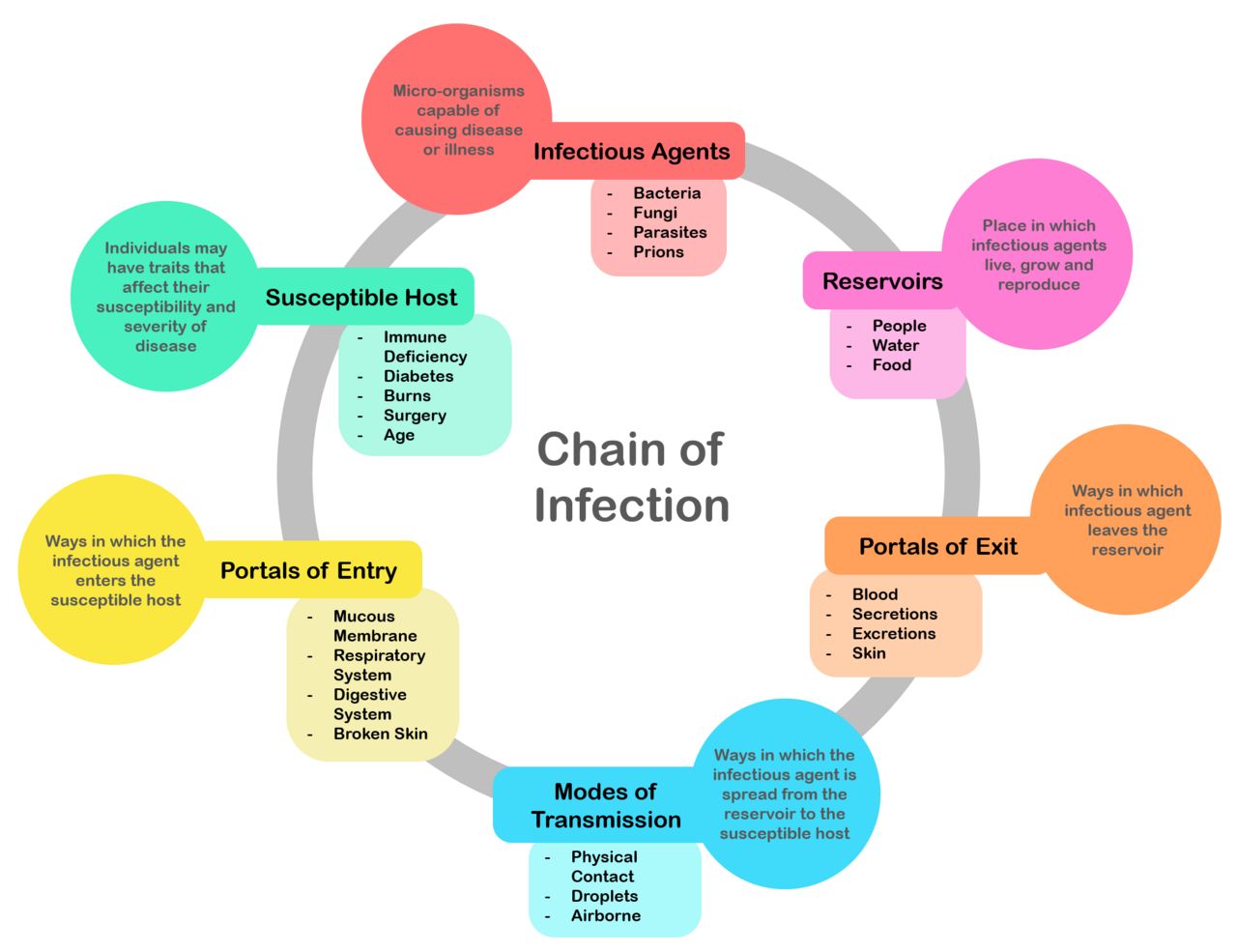
Infection requires an unbroken chain. An infectious agent (bacterium, virus, fungus, protozoan, prion) must live in a reservoir (a human, an animal, water, equipment, the environment), leave through a portal of exit (respiratory secretions, blood, stool, urine, wound drainage, skin), travel by a mode of transmission (contact — direct or indirect, droplet, airborne, vehicle such as contaminated food or fluid, or vector), enter a new host through a portal of entry (mucous membranes, broken skin, an intravenous catheter, a urinary catheter, the respiratory tract), and find a susceptible host. Remove any one link and there is no infection. Nurses spend their whole careers working links three, four and five.
| Link | Example | Nursing action that breaks it |
|---|---|---|
| Infectious agent | Clostridioides difficile, MRSA, influenza A, Candida auris | Antimicrobial stewardship, prompt culture before antibiotics, correct disinfectant selection |
| Reservoir | Infected wound, colonized nares, contaminated sink drain, standing water in a humidifier | Wound care, environmental cleaning, dating and changing tubing and solutions, no flowers or standing water in immunocompromised rooms |
| Portal of exit | Cough, diarrhea, wound drainage, blood on a sharp | Respiratory etiquette, contain drainage in an occlusive dressing, safe sharps handling, cover the source |
| Mode of transmission | Unwashed hands, a shared blood pressure cuff, aerosols | Hand hygiene, gloves and gown, dedicated or disinfected equipment, transmission-based precautions |
| Portal of entry | Central line hub, indwelling catheter, endotracheal tube, surgical incision | Aseptic technique, scrub the hub, closed drainage systems, remove devices as early as possible |
| Susceptible host | Older adult, neutropenic patient, diabetic patient, neonate | Vaccination, nutrition and glycemic control, mobility, skin integrity, early treatment of underlying disease |
Two words to keep straight: colonization means the organism is present and multiplying without tissue damage or host response — a patient may be colonized with MRSA in the nares for years. Infection means the organism is causing damage and the host is responding. A positive nasal swab in a patient with no symptoms is colonization and is not treated with antibiotics, although it may still trigger precautions because the patient can shed the organism. A healthcare-associated infection is one that was not present or incubating on admission, most commonly bloodstream, urinary, surgical site, pneumonia and C. difficile infections.
Assessing for infection at the bedside — the correct exam sequence
Physical assessment follows a fixed order: inspection, palpation, percussion, auscultation. Inspect first, because touching changes what you see (pressing on skin blanches it) and because looking costs nothing. Palpate second, using light palpation to about 1 cm before deep palpation to 4 to 5 cm, warm hands, short nails, and always palpating the tender area last so guarding does not contaminate the rest of the exam. Percuss third, listening for the resonance that tells you whether tissue underneath is air-filled, fluid-filled or solid. Auscultate fourth, with the diaphragm for high-pitched sounds and the bell for low-pitched sounds, on skin and never through a gown.
The abdomen is the exception, and it is the exception you will be asked about. For the abdomen the order is inspect, auscultate, percuss, palpate. Auscultation moves ahead of percussion and palpation because pressing on the abdomen mechanically stimulates or suppresses peristalsis and will give you falsely altered bowel sounds. Listen in all four quadrants, beginning in the right lower quadrant over the ileocecal valve, with the diaphragm, for 5 to 20 seconds per quadrant if sounds are present. Normal is 5 to 30 gurgles per minute. Before you may document absent bowel sounds you must listen for a full 5 minutes in a quadrant. This matters clinically in this chapter because the patient with suspected C. difficile colitis needs an abdominal exam, and a nurse who palpates first has destroyed the most useful piece of data they had.
For a wound or an intravenous site, inspect for the classic local signs — erythema, edema, warmth, pain, purulent drainage, loss of function — then palpate for warmth compared with the opposite limb, induration, fluctuance suggesting an abscess, and crepitus, which is an emergency. Measure the area of erythema in centimeters and mark its border with a skin pen and the time, so the next nurse can tell whether cellulitis is advancing. Note the drainage by amount, color and odor: serous (clear), sanguineous (bloody), serosanguineous (pink), or purulent (thick, opaque, yellow, green or brown).
Normal, abnormal and what the abnormal means
| Parameter | Expected adult finding | Abnormal finding | What it suggests |
|---|---|---|---|
| Temperature | 36.5–37.5 °C oral (97.7–99.5 °F); rectal about 0.5 °C higher, axillary about 0.5 °C lower | ≥ 38.0 °C (100.4 °F) = fever; < 36.0 °C (96.8 °F) = hypothermia | Fever: infection, inflammation, drug reaction. Hypothermia in an ill adult is an ominous sepsis sign, not reassurance |
| Heart rate | 60–100 beats/min, regular | > 100 (tachycardia), especially with fever or hypotension | Early compensation for sepsis, hypovolemia, pain, hypoxia |
| Respiratory rate | 12–20 breaths/min, unlabored | ≥ 22 breaths/min | The earliest and most ignored sign of deterioration; a qSOFA criterion |
| Blood pressure | Less than 120/80 mm Hg; MAP 70–100 mm Hg | Systolic ≤ 100 mm Hg, or a fall of more than 40 mm Hg from baseline; MAP < 65 mm Hg | Septic or other shock; organ perfusion is failing |
| Oxygen saturation | 95–100% on room air (target 88–92% in chronic carbon dioxide retention) | < 92%, or a new oxygen requirement | Pneumonia, atelectasis, pulmonary embolism, ARDS |
| Mentation | Alert and oriented to person, place, time and situation | New confusion, lethargy, agitation | In older adults, new delirium is often the first sign of infection, preceding fever |
| Urine output | At least 0.5 mL/kg/hour, roughly 30 mL/hour in an average adult | < 0.5 mL/kg/hour for 6 hours | Hypoperfusion, acute kidney injury from sepsis |
| White blood cell count | 4,500–11,000/mm³ | > 12,000, < 4,000, or more than 10% bands | Leukocytosis or leukopenia with a left shift indicates an active infectious process |
| Lactate | < 2 mmol/L | ≥ 2, and especially ≥ 4 mmol/L | Anaerobic metabolism from tissue hypoperfusion; drives sepsis resuscitation |
| Wound | Approximated edges, no drainage after 48–72 hours, a narrow margin of expected inflammation — pink on light skin, violaceous, deep brown or simply darker than surrounding skin on deeply pigmented skin | Purulent drainage, expanding erythema, induration, foul odor, dehiscence | Surgical site infection; crepitus or pain out of proportion suggests necrotizing infection — a surgical emergency |
Lifespan variation — the numbers actually change
Children are not small adults, and older adults are not simply slower adults. In a neonate under 28 days, a single rectal temperature of 38.0 °C (100.4 °F) or higher is a medical emergency requiring a full sepsis evaluation; do not give an antipyretic and reassess later. Neonates and young infants may present with hypothermia, poor feeding, lethargy, irritability, grunting or a bulging fontanelle rather than fever. In older adults, the febrile response is blunted: up to half of older adults with serious infection never mount a temperature above 38.0 °C. Long-term care criteria therefore define fever as a single oral temperature above 37.8 °C (100 °F), or repeated oral temperatures above 37.2 °C (99 °F), or an increase of more than 1.1 °C (2 °F) over that resident’s baseline. Suspect infection in the older adult who has become confused, stopped eating, started falling or lost function, even with a normal temperature.
| Age group | Heart rate awake (beats/min) | Respiratory rate (breaths/min) | Notes for infection assessment |
|---|---|---|---|
| Neonate (0–1 month) | 100–205 | 30–60 | Rectal 38.0 °C is an emergency; may be hypothermic instead |
| Infant (1 month–1 year) | 100–180 | 30–53 | Nasal flaring, grunting, retractions, poor feeding, fewer wet diapers |
| Toddler (1–2 years) | 98–140 | 22–37 | Febrile seizures peak between 6 months and 5 years |
| Preschool (3–5 years) | 80–120 | 20–28 | Hypotension is a very late sign; tachycardia is the warning |
| School age (6–11 years) | 75–118 | 18–25 | Compensates well, then decompensates suddenly |
| Adolescent (12–15 years) | 60–100 | 12–20 | Adult ranges; consider meningococcal disease with fever plus petechial rash |
| Pregnancy | Baseline rises 10–20 above pre-pregnancy | Rate near normal; tidal volume rises | Blood pressure falls in the second trimester, so “normal” pressure may mask shock; physiologic leukocytosis to about 15,000/mm³ is expected |
| Older adult (65+) | 60–100, may be blunted by beta blockers | 12–20; a rate above 20 is a strong red flag | Lower baseline temperature; delirium, falls and functional decline are often the presenting sign |
Escalating with SBAR
SBAR converts your worry into a clinical request the receiving provider can act on. Situation: who you are, who the patient is and what is wrong right now. Background: the relevant history in two or three sentences. Assessment: what you think is happening. Recommendation: what you want, stated out loud, with a timeframe. Nurses lose ground by stopping after Assessment. Ask for the thing.
Infection needs all six links of the chain intact; assess for it with inspection, palpation, percussion and auscultation — auscultating before percussion and palpation in the abdomen — and remember that the very young and the very old often show confusion, feeding changes or hypothermia instead of fever.
Section 3Hand Hygiene, Standard Precautions and PPE
The five moments, and the technique that makes them count
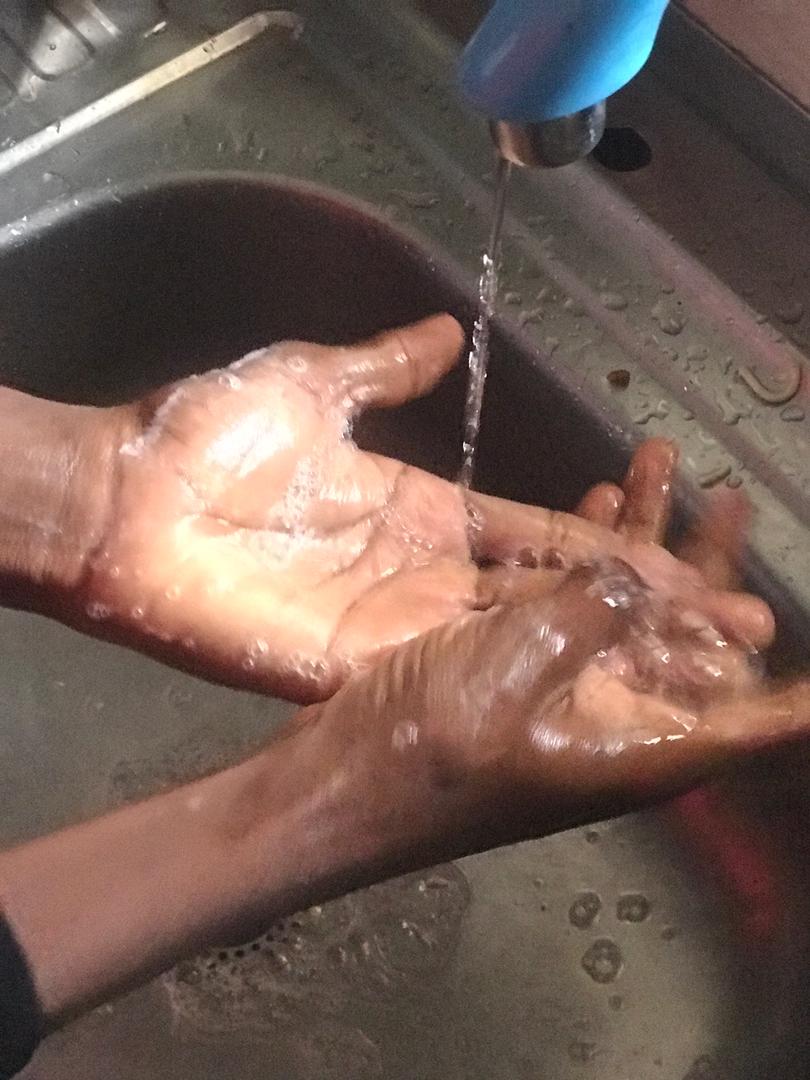
The World Health Organization’s Five Moments for Hand Hygiene are the framework you will be audited against: (1) before touching a patient, (2) before a clean or aseptic procedure, (3) after body-fluid exposure risk, (4) after touching a patient, and (5) after touching patient surroundings. Moments one and two protect the patient; moments three, four and five protect you and everyone else in the environment. Moment two is the one most often missed and the one with the shortest path to harm — the nurse who empties a drain and then adjusts an oxygen cannula without hand hygiene has just inoculated an airway. Beyond the five moments, perform hand hygiene before donning and after removing gloves (gloves leak and hands become contaminated during removal), before eating, after using the restroom, when moving from a contaminated body site to a clean body site on the same patient, and on entering and leaving any patient room.
Alcohol-based hand rub containing 60 to 95 percent alcohol is the preferred method for routine decontamination because it is faster, more effective against most organisms and less drying than soap. Apply the volume the manufacturer specifies — usually a full palmful — and rub over all surfaces for about 20 to 30 seconds until the hands are completely dry. Do not wave, blow or wipe them dry; the contact time is the mechanism. The surfaces people miss are the thumbs, the fingertips, the nail beds and the web spaces, so start there deliberately.
Soap and water is required, and alcohol is inadequate, in five situations: when hands are visibly soiled or contaminated with blood or body fluids; after caring for a patient with Clostridioides difficile; during outbreaks of norovirus; after known or suspected exposure to Bacillus anthracis; and before eating and after using the restroom. The reason is chemistry, not tradition: alcohol does not kill bacterial spores, and non-enveloped viruses such as norovirus are far less susceptible to it. Only the mechanical friction and rinsing of handwashing physically removes spores from the skin. To wash: wet hands with warm — not hot — water, apply soap, lather and rub all surfaces vigorously for at least 20 seconds, rinse with fingertips pointed downward so water runs from clean to dirty, dry thoroughly with a paper towel, and use that towel to turn off the faucet. The whole procedure takes 40 to 60 seconds.
Keep natural nail tips shorter than one-quarter inch (about 0.6 cm). Do not wear artificial nails, extenders, wraps or chipped polish when providing direct care to high-risk patients; artificial nails harbor gram-negative bacilli and yeast and have been traced to fatal neonatal intensive-care outbreaks. Rings increase the microbial load on the hands and interfere with glove fit. If your hands are cracked and dry, use the facility-approved lotion — damaged skin sheds far more organisms, and petroleum-based products degrade latex gloves.
Standard precautions apply to everyone, always
Standard precautions assume that the blood, all body fluids except sweat, non-intact skin and mucous membranes of every patient may be infectious, regardless of diagnosis or known status. You do not need a positive test to justify protecting yourself. The components are hand hygiene; personal protective equipment selected by anticipated exposure; respiratory hygiene and cough etiquette (tissues, a mask for the coughing patient, spatial separation of at least three feet in waiting areas); safe injection practices (one needle, one syringe, one time, and never re-enter a single-dose vial); safe handling of potentially contaminated equipment and linen; environmental cleaning; and sharps safety.
Sharps deserve their own discipline. Never recap a used needle; if recapping is unavoidable, use a one-handed scoop or a mechanical device. Activate the safety mechanism immediately, before your hand leaves the device. Dispose at the point of use into a puncture-resistant container and replace the container when it reaches the three-quarters full line. Never reach into a sharps container, never force an item in, and never place a used sharp on the bed, the tray or your pocket.
If you sustain a needlestick or a mucous membrane splash: wash the site immediately with soap and water, or flush eyes, nose or mouth with water or normal saline for 15 minutes. Do not squeeze the wound or apply bleach. Report to your supervisor and to employee health immediately — not at the end of the shift — so that source testing and post-exposure prophylaxis can begin. HIV post-exposure prophylaxis is most effective when started within hours and should be started no later than 72 hours after exposure. For perspective on why this urgency exists, the average risk of transmission from a percutaneous exposure to infected blood is roughly 0.3 percent for HIV, about 1.8 percent for hepatitis C, and up to 30 percent for hepatitis B in an unvaccinated worker — which is precisely why the hepatitis B vaccine series is required before clinical rotations.
PPE: the order is the safety feature
Personal protective equipment is chosen by what you expect to encounter, not by the label on the door. Gloves for contact with blood, body fluids, mucous membranes, non-intact skin or contaminated items. A fluid-resistant gown when clothing or arms may be soiled. A mask and eye protection — goggles or a full face shield, not personal eyeglasses — when splashing or spraying is possible, which includes suctioning, irrigating a wound, emptying drainage and caring for a patient with a productive cough. Gloves are single-use and single-patient: change them between tasks on the same patient when moving from a dirty site to a clean one, and never wash or re-use them.
| Step | DONNING — before entering | Why this order |
|---|---|---|
| 0 | Perform hand hygiene | Clean hands touch clean equipment |
| 1 | Gown — fully cover torso from neck to knees and arms to wrists, wrap around the back, tie at neck and waist | The largest garment goes on first so nothing must be lifted over it later |
| 2 | Mask or respirator — secure ties or elastic, fit the flexible band to the nose bridge, fit snug to face and below the chin; seal-check an N95 | Head straps must go on before eye protection so the straps are not disturbed |
| 3 | Goggles or face shield — place over face and eyes and adjust to fit | Sits over the mask, sealing the top edge |
| 4 | Gloves — extend to cover the wrist of the gown cuff | Last on, so gloves overlap the gown and nothing is exposed at the wrist |
| Step | DOFFING — at the doorway, inside the room | Why this order |
|---|---|---|
| 1 | Gloves — grasp the outside of one glove at the palm, peel it off into the gloved hand; slide the bare fingers under the second glove at the wrist and peel it off over the first. Discard. Perform hand hygiene. | Gloves are the most contaminated item; remove them first, glove-to-glove then skin-to-skin |
| 2 | Goggles or face shield — handle by the headband or earpieces only, lift away from the face, discard or place in the receptacle for reprocessing | The front is contaminated; the band behind the head is not |
| 3 | Gown — unfasten ties, pull away from neck and shoulders touching the inside only, turn it inside out, roll into a bundle and discard | Rolling contains the contaminated outer surface. Gown and gloves may be removed together in one motion if trained to do so |
| 4 | Mask or respirator — perform hand hygiene first if hands are contaminated, then grasp the bottom tie or elastic, then the top, lift away from the face without touching the front, and discard. For airborne precautions, remove the respirator only AFTER leaving the room and closing the door. | The front of the mask is contaminated; removing a respirator inside an airborne room exposes you to infectious aerosols |
| 5 | Perform hand hygiene immediately | Hands become contaminated during removal no matter how careful you are |
Two memory hooks will keep the sequences straight under pressure. Donning moves head-to-toe in size order and ends with gloves: gown, mask, goggles, gloves. Doffing removes the dirtiest item first and the mask last: gloves, goggles, gown, mask. Notice that the gown always comes off before the mask, that hand hygiene belongs between steps and at the end, and that the respirator is the only item ever removed outside the room. Some facilities teach a combined gown-and-glove removal in one motion, rolling the gown forward off the shoulders while the gloves are still on and peeling all of it inside out together; that variation is acceptable when you have been trained in it, and the order of everything else is unchanged.
Hand hygiene at the five moments — with soap and water for C. difficile, norovirus, anthrax and visibly soiled hands — plus standard precautions on every patient and PPE donned gown-mask-goggles-gloves and doffed gloves-goggles-gown-mask, prevents more infection than any other nursing action.
Section 4Transmission-Based Precautions
Three tiers, layered on top of standard precautions
Transmission-based precautions are added to — never substituted for — standard precautions when a patient is known or suspected to be infected or colonized with an organism that requires extra barriers. Start them on suspicion, before the laboratory confirms anything; waiting for a positive result is how measles gets into a waiting room. Some conditions need more than one tier: chickenpox and disseminated herpes zoster require airborne and contact precautions, and many respiratory viruses require droplet and contact.
| CONTACT | DROPLET | AIRBORNE | |
|---|---|---|---|
| How it spreads | Direct skin-to-skin, or indirect through contaminated hands, equipment and surfaces | Large respiratory particles that travel roughly 3 to 6 feet and fall; they do not remain suspended | Small particle nuclei 5 micrometers or less that remain suspended and travel on air currents |
| Representative diseases | MRSA, VRE, ESBL and CRE organisms, Candida auris, C. difficile, norovirus, RSV, rotavirus, scabies, lice, impetigo, draining abscess, hepatitis A in an incontinent patient | Influenza, pertussis, Neisseria meningitidis, Haemophilus influenzae type b, group A streptococcal pharyngitis (first 24 hours of therapy), mumps, rubella, diphtheria (pharyngeal), Mycoplasma pneumonia, adenovirus | Pulmonary or laryngeal tuberculosis, measles (rubeola), varicella (chickenpox), disseminated herpes zoster, smallpox; SARS-CoV-2 per current facility guidance |
| Room | Private room preferred; may cohort patients with the same organism | Private room preferred; if cohorting, keep beds at least 3 feet apart with the privacy curtain drawn. Door may remain open | Airborne infection isolation room: negative pressure, 6 air changes per hour in existing construction and 12 or more in new construction, exhausted outdoors or HEPA-filtered, door kept closed, pressure monitored daily |
| PPE on entry | Gown and gloves before entering, removed before exiting | Surgical mask on entry; add gown, gloves and eye protection per standard precautions and anticipated splash | Fit-tested N95 respirator or higher (PAPR), donned before entry and removed after exiting with the door closed |
| Patient transport | Limit to essential; cover infected areas with a clean dressing, use clean linen, notify the receiving department, staff wear clean PPE at the destination | Limit to essential; patient wears a surgical mask and follows respiratory etiquette; transporter does not need a mask if the patient is masked | Limit to essential; patient wears a surgical mask, never an N95, and skin lesions are covered. Schedule so the patient does not wait in common areas |
| Equipment | Dedicate stethoscope, blood pressure cuff and thermometer to the room; disinfect anything shared | Dedicate or disinfect per policy | Dedicate or disinfect per policy |
| Special notes | For C. difficile: soap and water hand hygiene, gown and gloves, and an EPA-registered sporicidal agent such as 1:10 sodium hypochlorite for the room | Nurse may need to be within 3 feet, so mask on entry regardless of intended distance | Assign immune staff to measles and varicella patients; unvaccinated staff should not enter. Measles particles remain infectious in the air for up to 2 hours after the patient leaves |
Room turnover, air clearance and the details that get missed
After an airborne-precautions patient leaves the room, the room must remain vacant until enough air exchanges have removed the suspended particles. At 12 air changes per hour, 99 percent removal takes about 23 minutes and 99.9 percent takes about 35 minutes; at 6 air changes per hour those figures are about 46 and 69 minutes. Environmental services should not enter before that interval elapses, and neither should you. Post the time the room was vacated so everyone is working from the same clock.
The opposite arrangement, a protective environment, is used for allogeneic hematopoietic stem cell transplant recipients: positive pressure relative to the corridor, 12 or more air changes per hour, HEPA filtration of incoming air, sealed room, and no dried or fresh flowers or potted plants because of Aspergillus. The confusion students carry into practice is the direction of airflow. Negative pressure keeps the organism in the room and protects everyone else. Positive pressure keeps organisms out of the room and protects the patient. A patient who is both immunocompromised and has tuberculosis requires an anteroom, and that is a facility engineering decision, not a bedside one.
A respirator only works if it seals. Fit testing is required annually and whenever facial features change, and a user seal check is required every single time you put one on: cover the respirator with both hands, inhale sharply and feel it collapse slightly toward the face, then exhale and feel for leakage around the edges and at the nose. Facial hair that crosses the seal makes an N95 ineffective, and a surgical mask is not a substitute for a respirator at any time. A patient in an airborne room wears a surgical mask during transport, never an N95, because a respirator has never been fit-tested to that patient’s face, it adds work of breathing to someone who is already ill, and if it carries an exhalation valve it vents unfiltered air and provides no source control at all. Keep the two purposes separate in your head: the patient’s surgical mask contains what they exhale, and your fit-tested respirator filters what you inhale.
Nursing care does not stop at the door. Patients in isolation receive fewer provider visits, report more depression and anxiety, and experience more non-infectious adverse events than comparable patients who are not isolated. Counter that deliberately. Explain to the patient and family, in plain language, what organism is involved, how it travels, why the gown and mask are worn, and what has to happen before precautions can end. Post visiting instructions and teach visitors the same PPE sequence you use. Enter the room for reasons other than tasks, cluster care so that you reduce the number of entries without reducing the amount of contact, and sit down when you are in there. Never let the sign on the door become a reason to stand in the hallway and talk loudly through the doorway.
Charting precautions and educating the patient
| Vague entry | Precise entry |
|---|---|
| “Isolation precautions in place. Family educated.” | “1400 — Contact plus droplet precautions initiated per order for suspected influenza A. Signage posted at door; gown, gloves, surgical mask and eye protection stocked in anteroom caddy. Stethoscope, cuff and thermometer dedicated to room 812. Patient and spouse taught rationale, hand hygiene technique with return demonstration by spouse, and the requirement for a mask during transport off the unit; both verbalized understanding and spouse correctly performed hand rub for 22 seconds. Patient placed in private room, door may remain open.” |
| “Diarrhea x several. Isolation started.” | “0930 — Five loose, watery, foul-smelling brown stools since 2300, Bristol type 7, approximately 900 mL total. Abdomen soft, mildly distended, hyperactive bowel sounds in all four quadrants on auscultation before palpation, diffuse tenderness without rebound or guarding. T 38.4 C oral, HR 104, BP 106/64. Contact precautions initiated for suspected C. difficile; stool specimen sent; soap-and-water hand hygiene posted at sink; sporicidal bleach wipes stocked. Provider notified.” |
Contact precautions require gown and gloves, droplet precautions require a surgical mask within the room, and airborne precautions require a fit-tested N95 plus a negative-pressure room with the door closed — and all three are layered on top of standard precautions and begun on suspicion, not on confirmation.
Section 5Asepsis, the Sterile Field and Device-Associated Infection
Medical asepsis versus surgical asepsis
Medical asepsis, or clean technique, reduces the number and transfer of pathogens. It includes hand hygiene, gloves, cleaning surfaces, separating clean from dirty, and not shaking linen. Surgical asepsis, or sterile technique, eliminates all microorganisms and spores from an object or area. It is required for entering a normally sterile body cavity or the bloodstream: inserting a urinary catheter, inserting or dressing a central line, performing a sterile dressing change on a fresh surgical wound, tracheostomy care in acute care, and any procedure entering the peritoneum or spinal canal. When you are unsure which applies, ask whether you are crossing into a sterile space. If yes, sterile technique.
Terminology also matters when you clean equipment. Cleaning physically removes soil and organic material and must precede everything else — disinfectants do not work through blood and feces. Disinfection destroys most pathogens on inanimate objects; high-level disinfection is used for semi-critical items that touch mucous membranes, such as endoscopes. Sterilization destroys all microorganisms including spores and is required for critical items that enter sterile tissue or the vascular system, such as surgical instruments and implants. Contact time on the label of a disinfectant wipe is not a suggestion; if the surface dries before the stated wet time, wipe again.
The rules of a sterile field
| Rule | How you apply it |
|---|---|
| Only sterile touches sterile | Any contact with a non-sterile item contaminates the field. If you are unsure whether something is sterile, it is not. |
| The outer 1 inch (2.5 cm) is not sterile | Place items toward the center. Anything that lands on the border is contaminated. |
| Keep the field in view and above waist level | Never turn your back on the field. Anything below waist or table level is contaminated, including your own hands when they drop. |
| Do not reach across the field | Add items from the side, holding the package 6 inches above and dropping the contents onto the center. Skin scales and lint fall. |
| Moisture contaminates — strikethrough | A wet drape wicks organisms from the surface underneath. Replace a soaked field. |
| Open the drape correctly | Open the flap farthest from you first, then the two sides, then the flap nearest you last, so you never reach over the sterile surface. |
| Pour without splashing | Hold the bottle with the label against your palm so a drip cannot run down and obscure it, discard the first small amount over a sink to cleanse the lip, then pour from 4 to 6 inches above the receptacle without reaching over the field. Once opened, the bottle’s rim is contaminated. |
| Control air movement and talking | Minimize movement, do not cough, sneeze or reach over the field, and keep doors closed. |
| Never leave the field unattended | An unwitnessed field is a contaminated field. Set up immediately before use. |
| Inspect the package first | Check the expiration date, the sterilization indicator, and the integrity of the seal. Torn, wet, punctured or previously opened means discard. |
To apply sterile gloves by the open method, peel the wrapper open on a clean dry surface above waist level without touching the inner surface, pick up the first glove by the folded cuff with your non-dominant hand touching only the inside, and pull it onto the dominant hand. Then slide the gloved fingers under the cuff of the second glove — touching only its outer surface — and pull it on. Adjust with both gloved hands, and keep your hands above your waist and in front of you from that moment until the procedure ends. If a glove tears, or you touch anything unsterile, stop, remove and start with a new pair. Nobody has ever been disciplined for re-gloving; patients have died from a nurse who kept going.
Device-associated infections and the bundles that prevent them
Most healthcare-associated infections in acute care attach to a device or an incision. Prevention is bundled, meaning that the elements are done together, every time, and audited; performing four of five elements does not deliver four-fifths of the benefit.
| Infection | Prevention bundle — the elements that matter | Nursing red flags |
|---|---|---|
| CLABSI central line-associated bloodstream infection | Hand hygiene; maximal sterile barrier precautions at insertion (cap, mask, sterile gown, sterile gloves, full-body drape); chlorhexidine-alcohol skin prep greater than 0.5%, scrubbed 30 seconds and allowed to dry completely; optimal site selection with subclavian preferred and femoral avoided in adults; daily review of line necessity with prompt removal; scrub the hub with alcohol for 10 to 15 seconds and let it dry before every access; transparent dressing changed every 7 days or gauze every 2 days, and immediately if damp, loose or soiled | Erythema, tenderness or drainage at the site; rigors or fever spike during or shortly after a flush; unexplained new bacteremia |
| CAUTI catheter-associated urinary tract infection | Insert only for accepted indications (acute retention or obstruction, accurate output in the critically ill, perioperative for selected surgeries, healing of open sacral or perineal wounds in incontinent patients, prolonged immobilization, comfort at end of life) — never for incontinence or staff convenience; aseptic insertion with sterile equipment; maintain a closed drainage system; keep the bag below the level of the bladder and off the floor at all times, including during transport; secure the catheter to prevent traction; keep tubing free of dependent loops; daily meatal care with soap and water only; no routine irrigation or catheter changes; daily review with removal at the earliest possible moment | New suprapubic or flank pain, fever, new delirium in an older adult, cloudy malodorous urine with symptoms. Do not culture asymptomatic patients |
| VAP / VAE ventilator-associated pneumonia or event | Head of bed elevated 30 to 45 degrees unless contraindicated; daily sedation interruption paired with a spontaneous breathing trial and daily assessment of readiness to extubate; oral care with toothbrushing at least twice daily; subglottic secretion drainage tubes for anticipated ventilation beyond 48 to 72 hours; maintain cuff pressure per policy; early mobility; venous thromboembolism prophylaxis per unit protocol | New or increased purulent secretions, new infiltrate, rising oxygen requirement or PEEP, fever |
| SSI surgical site infection | Antimicrobial prophylaxis within 60 minutes before incision (120 minutes for vancomycin or a fluoroquinolone) and discontinued appropriately; hair removed with clippers, never a razor, and only when necessary; preoperative chlorhexidine bathing; perioperative normothermia and glucose control below 180–200 mg/dL; sterile technique for the first dressing change, which the surgeon usually performs at 24 to 48 hours; hand hygiene before and after wound care | Purulent incisional drainage, expanding erythema, dehiscence, fever after postoperative day 3, pain that is increasing rather than decreasing |
Delegation and scope: who may do what
Delegation is the transfer of responsibility for performing a task to someone else while the registered nurse retains accountability for the outcome. Use the five rights of delegation: right task, right circumstance, right person, right direction and communication, and right supervision and evaluation. The permanent boundary is this — assessment, teaching, evaluation, nursing judgment and the care of an unstable patient never leave the RN. A task that seems routine on a stable patient may not be delegable on an unstable one, and the same task may be delegable at 0800 and not at 1600 because the patient changed.
| May be delegated to UAP (with direction and supervision) | Stays with the licensed nurse |
|---|---|
| Performing hand hygiene and wearing PPE correctly; stocking the isolation cart | Deciding which tier of precautions a patient requires, and when precautions may be discontinued |
| Measuring vital signs and intake and output on a stable patient and reporting the numbers | Interpreting those vital signs and deciding what they mean; taking vitals on an unstable or newly deteriorating patient |
| Bathing, oral care, perineal and meatal hygiene, repositioning, ambulating a stable patient | Skin, wound and neurologic assessment; the initial and any ongoing assessment |
| Emptying a urinary drainage bag, recording output, keeping the bag below the bladder | Inserting a urinary catheter (sterile procedure, per state and facility policy) and judging whether it can be removed |
| Applying nonskid socks, keeping the bed low and locked, keeping the call light in reach, answering call lights, sitting with a patient | Fall risk screening and scoring, and selecting the interventions; initiating restraints and performing the restraint assessments |
| Reinforcing previously taught information (“remember to use the hand rub”) | All patient and family teaching, including teaching about precautions, and evaluating whether the teaching worked |
| Routine environmental tidying and transporting specimens per policy | Any sterile dressing change, central line care, and all sterile technique |
When you delegate, be specific and close the loop: “Please take Mr. Ruiz’s vital signs now, before his 1000 medications, and tell me the number right away if the systolic is under 100 or the heart rate is over 110.” That single sentence contains the task, the timeframe, the parameters and the reporting requirement. “Go get vitals when you can” contains none of them. And a final piece of scope that students underestimate: you are permitted — obligated — to stop any team member, at any level, who is about to break sterile technique or skip hand hygiene. Say it plainly, say it kindly, say it out loud.
Surgical asepsis has non-negotiable rules — only sterile touches sterile, a one-inch contaminated border, nothing below the waist or out of sight, and doubt equals contamination — and the device bundles that prevent CLABSI, CAUTI, VAP and SSI work only when every element is performed every time by a nurse who never delegates assessment, teaching or evaluation.
The chapter in one breath
Safe care is built from repeatable behaviors rather than good intentions. Verify identity with two identifiers — never the room number — and stop the line at a time-out that does not match. Screen every patient for falls with a validated tool, apply universal precautions plus targeted interventions for high scorers, and if a fall occurs, assess in place and chart only what you saw, measured and quoted. Restraints are a last resort with hard legal limits: never PRN, four hours for a violent-behavior order in an adult, a face-to-face evaluation within one hour, release and skin assessment every two hours, quick-release knot to the bed frame. Infection needs six intact links; nurses break the chain most powerfully at transmission and portal of entry. Hand hygiene at all five moments, with soap and water for C. difficile, norovirus, anthrax and visibly soiled hands. Standard precautions on everyone. PPE on as gown, mask, goggles, gloves; off as gloves, goggles, gown, mask, with the respirator removed only after leaving the room. Contact means gown and gloves; droplet means a surgical mask; airborne means a fit-tested N95 and a closed negative-pressure room. Sterile means sterile, and doubt means contaminated. Escalate red flags immediately with SBAR, and ask for what you want.
Words worth knowing
| Term | What it means |
|---|---|
| Medical asepsis | Clean technique — practices that reduce the number and spread of pathogens, such as hand hygiene, gloves and surface disinfection. |
| Surgical asepsis | Sterile technique — practices that eliminate all microorganisms and spores, required whenever a sterile body cavity or the bloodstream is entered. |
| Chain of infection | The six sequential links — agent, reservoir, portal of exit, mode of transmission, portal of entry, susceptible host — all of which must be intact for infection to occur. |
| Colonization | The presence and multiplication of an organism without tissue damage or host response; not treated with antibiotics but may still require precautions. |
| Healthcare-associated infection (HAI) | An infection that was not present or incubating at the time of admission, acquired during the delivery of care. |
| Standard precautions | The baseline tier applied to every patient, treating blood, all body fluids except sweat, non-intact skin and mucous membranes as potentially infectious. |
| Transmission-based precautions | Contact, droplet and airborne measures added on top of standard precautions for known or suspected transmissible organisms. |
| Airborne infection isolation room (AIIR) | A negative-pressure room with 6 to 12 or more air changes per hour, air exhausted outdoors or HEPA-filtered, and the door kept closed. |
| Protective environment | A positive-pressure, HEPA-filtered room used for allogeneic stem cell transplant recipients; no fresh or dried flowers or plants. |
| Alcohol-based hand rub | A 60 to 95 percent alcohol preparation rubbed over all hand surfaces for 20 to 30 seconds until dry; ineffective against spores. |
| Five Moments for Hand Hygiene | Before patient contact, before a clean or aseptic procedure, after body-fluid exposure risk, after patient contact, after contact with patient surroundings. |
| Personal protective equipment (PPE) | Gown, mask or respirator, eye protection and gloves; donned gown-mask-goggles-gloves and doffed gloves-goggles-gown-mask. |
| N95 respirator | A filtering facepiece requiring annual fit testing and a user seal check with every use; required for airborne precautions and never worn by the patient. |
| Sterile field | A microorganism-free work area whose outer one inch is contaminated, which must remain in sight and above waist level and never be left unattended. |
| Strikethrough | Contamination of a sterile field by moisture wicking organisms upward from the non-sterile surface beneath it. |
| Restraint | Any device, method or drug used to restrict movement or behavior that is not standard treatment; requires a non-PRN order, monitoring and time-limited renewal. |
| Morse Fall Scale | A validated fall-risk instrument on which a score of 45 or higher indicates high risk. |
| qSOFA | A rapid bedside sepsis screen: respiratory rate 22/min or higher, altered mentation, systolic blood pressure 100 mm Hg or lower; two of three is a red flag. |
| Neutropenic fever | A single oral temperature of 38.3 °C (101 °F) or a sustained 38.0 °C with an absolute neutrophil count below 500/mm³; antibiotics are due within one hour. |
| SBAR | Situation, Background, Assessment, Recommendation — the structured format for escalating a concern and requesting specific action. |