Citation and Academic Integrity
Citation gets taught as a rulebook and experienced as a trap—commas in the wrong place, a missing italic, a grade lost to a technicality. That framing is backwards. A citation is a piece of writing that does work: it tells a reader exactly where an idea came from, how far it can be trusted, and where the writer’s own thinking starts. Get that right and the punctuation is a twenty-minute problem you can solve with a template. Get it wrong and no amount of formatting saves the paragraph. This chapter treats citation as a skill with moving parts you can practice: reading a reference entry like a form, matching in-text markers to end-of-paper entries, handling the sources that do not fit the templates, and recognizing the four or five specific ways honest students accidentally plagiarize. Every rule here comes attached to a sentence you can copy, break, and repair.
By the end of this chapter you can
- Explain the four jobs a citation performs for a reader, and decide when material is common knowledge for a specific audience.
- Match every in-text citation to a complete entry in a reference list or works cited page, and detect orphans in both directions.
- Write correct APA 7 in-text citations for one, two, three-or-more, group, and undated authors, and convert them to MLA 9.
- Build reference entries for books, chapters, journal articles with a DOI, web pages, organizational reports, and course materials from a template.
- Handle hard cases: no author, no date, a secondary citation, a paywalled database source, and a generative AI tool.
- Distinguish verbatim copying, patchwriting, mosaic plagiarism, self-plagiarism, contract cheating, and fabricated sources—and repair each one.
- Revise a cited-but-still-plagiarized sentence into a legitimate paraphrase or quotation.
- Run a five-point pre-submission integrity audit and interpret a similarity report without misreading the percentage.
- Write a short, honest AI disclosure statement that satisfies most course policies.
Section 1What a Citation Is Actually For
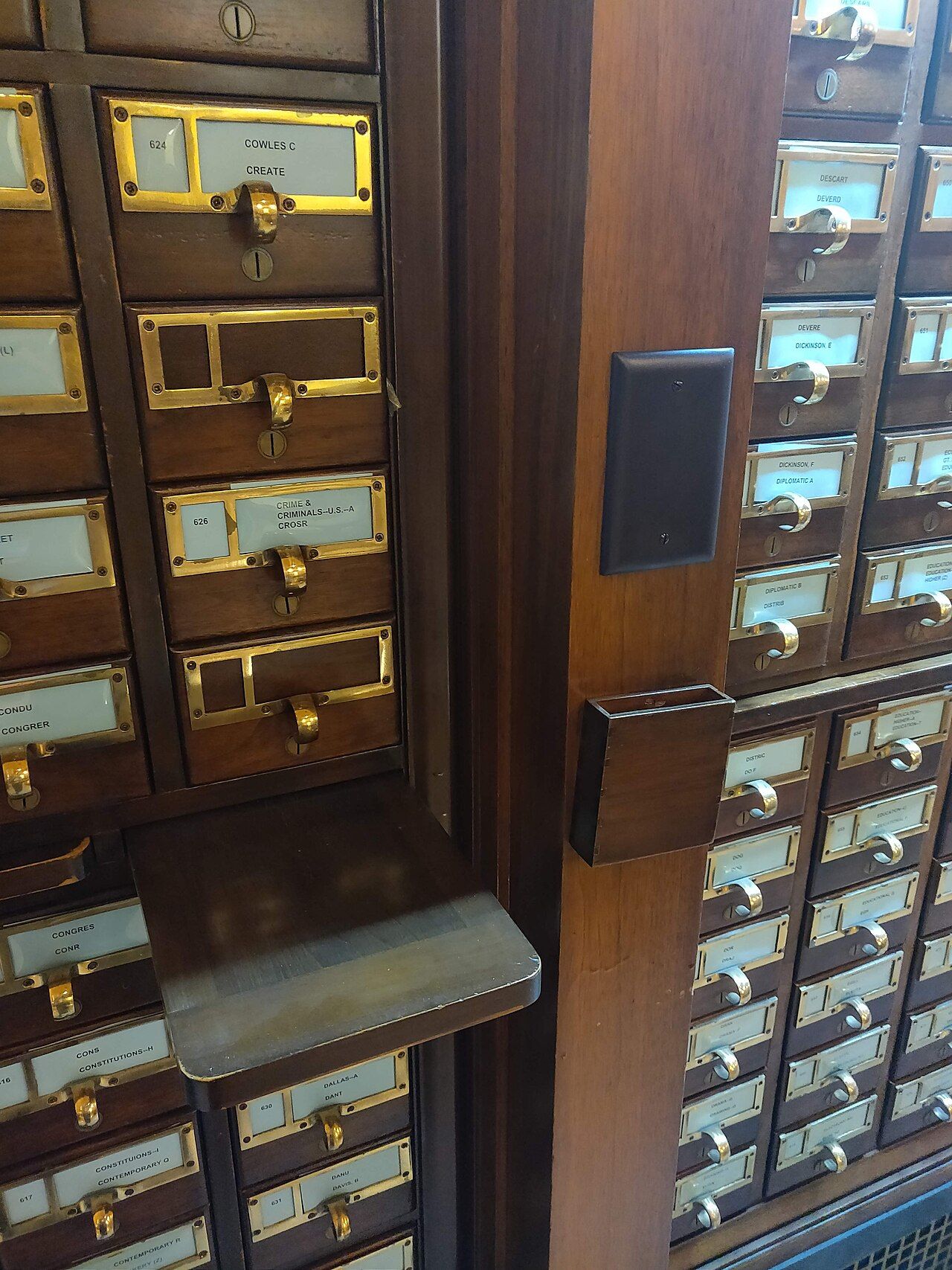
Four jobs, none of them decorative
Ask most students why they cite and you get some version of “so I don’t get in trouble.” That is one consequence of citing, but it is not a job. A citation does four things at once, and each one fails in a way a reader can feel.
It credits: it says this sentence contains someone else’s labor. It locates: it gives a reader enough information to find the source in under a minute, which is the real test of a reference entry. It calibrates: a reader who sees a 1987 textbook behind your claim about sepsis management weighs it differently than a 2023 systematic review, and the citation is what lets them do that weighing. And it separates: everything not marked as borrowed is claimed as yours, so citation is the boundary line that makes your original contribution visible at all.
That last job is the one nobody mentions and the one that matters most for your grade. A paper with no citations does not read as brilliantly original. It reads as unsourced, which in college is a synonym for unsupported. Instructors do not count citations to catch cheaters; they read citations to find out what you did with your reading.
| The job | What it looks like on the page | What breaks without it |
|---|---|---|
| Credit | An author name attached to the borrowed idea | The writer is presenting borrowed work as original—plagiarism, regardless of intent |
| Locate | A full entry with year, title, container, and DOI or URL | A reader who wants to check you cannot; the claim becomes unverifiable |
| Calibrate | Date, journal name, and publisher visible to the reader | A blog post and a peer-reviewed trial look identical; the reader cannot judge weight |
| Separate | Cited sentences marked, uncited sentences implicitly yours | Your analysis disappears into the summary; the paper reads as a book report |
Common knowledge is a line drawn by audience, not by fact
The usual advice—“you do not need to cite common knowledge”—is true and nearly useless, because students hear it as a claim about facts. It is a claim about readers. Common knowledge is what your specific audience already accepts without a source. That line moves.
Write for a general first-year audience and “the human heart has four chambers” needs no citation. Write for that same audience and “roughly one in three adults in the United States has high blood pressure” does need one, because the number is contestable, dated, and definition-dependent—roughly a third of adults meet the older 140/90 threshold, while the 130/80 cutoff adopted in the 2017 guideline pushes the share to nearly half. Now write for a cardiology journal, and the four-chambered heart is still uncited but so is a great deal of physiology your composition instructor would flag.
Two practical tests. First, the three-source test: if you can find the fact stated without attribution in three independent general sources, it is probably common knowledge for a general audience. Second, and better: could a skeptical reader ask “says who?” If yes, cite. Numbers, dates, causal claims, anything with a study behind it, and anything you did not know last week almost always fail that test.
Integrity is a professional habit, not a school rule
If you are headed into nursing, respiratory therapy, radiography, or any clinical field, you are about to enter a documentation culture with the same logic and much higher stakes. A chart note attributes: who assessed, who administered, who was notified, at what time. Copying a previous shift’s assessment forward because it “probably has not changed” is the clinical version of patchwriting, and it has killed people. Fabricating a vital sign you did not take is the clinical version of a fabricated source.
This is not a moralizing detour. It is the argument for why the habit is worth building now, while the penalty is a grade rather than a license. The mechanics you practice in a composition course—tracking where information came from, keeping your words separate from someone else’s, refusing to assert what you did not verify—are the same mechanics that make a clinician trustworthy.
A citation credits, locates, calibrates, and separates—and the “common knowledge” exemption depends entirely on who is reading, not on how true the fact is.
Section 2The Anatomy of a Citation
Two halves that must match
Every mainstream style has exactly two moving parts. A short marker interrupts your sentence as briefly as possible: (Okonkwo, 2021). A full entry at the end of the paper gives the reader everything needed to find the thing. The marker is deliberately stingy because a reader in the middle of your argument does not want a publisher’s name; the entry is deliberately complete because a reader hunting the source does.
The rule that follows from this is the single most-violated rule in student writing, and it is mechanical enough to check in ninety seconds: every in-text citation must have a matching entry, and every entry must be cited at least once in the text. An in-text marker with no entry is an orphan; the reader hits a dead end. An entry with no in-text marker is padding, and instructors read it as exactly that—a source added to the list without being used.
One housekeeping note before the examples. The sources named throughout this chapter—Okonkwo, Bell, Vega, the Journal of Nursing Practice—are invented so the patterns stay clean. They are practice fixtures. Do not cite them in a real paper.
Reading a reference entry like a form
A reference entry looks like a wall of punctuation until you notice it is a form with four fields, always in the same order: who, when, what, where. Once you see the fields, you can build an entry for a source type you have never cited before.
Here is an APA 7 journal entry with the fields labeled:
Okonkwo, R. (who) (2021). (when) Schedule volatility and medication error on inpatient units. (what) Journal of Nursing Practice, 12(3), 40–49. https://doi.org/10.0000/jnp.2021.1203 (where)
The field labels are set in bold here purely so you can see the seams; only the journal name and volume number are actually italic in APA.
Notice what APA is doing with capitalization, because it encodes information. The article title is in sentence case—only the first word of the title, the first word of any subtitle after a colon or dash, and proper nouns capitalized—while the journal name is in title case and italicized. That contrast tells a reader at a glance which part is the piece and which part is the container holding it. The volume number is italic; the issue number in parentheses is not. The DOI, a permanent digital identifier, is formatted as a full link. MLA makes the same distinctions with different tools: quotation marks around the article title, italics around the container.
The hanging indent—first line flush left, all following lines indented half an inch—is not decoration either. It pushes every author’s surname into a clean left column so a reader can scan alphabetically. Set it in your word processor’s paragraph dialog, under Special. Do not build it with the tab key; it will collapse the moment anything reflows.
In-text citations, APA and MLA side by side
Both styles lead with the author’s name, then disagree about what a reader needs next to it. APA carries the date, because in the sciences currency is a quality signal. MLA carries a page number, because in literary study the reader is expected to go look at the passage. Neither is arbitrary, and knowing why makes the formatting easier to remember.
| Situation | APA 7 | MLA 9 |
|---|---|---|
| One author, paraphrase, parenthetical | (Okonkwo, 2021) | (Okonkwo 44) |
| One author, named in your sentence | Okonkwo (2021) found that… | Okonkwo argues that… (44) |
| Direct quotation | (Okonkwo, 2021, p. 44) | (Okonkwo 44) |
| Two authors | (Okonkwo & Bell, 2021) / Okonkwo and Bell (2021) | (Okonkwo and Bell 44) |
| Three or more authors | (Okonkwo et al., 2021) from the first citation on | (Okonkwo et al. 44) |
| Group author, first mention | (American Nurses Association [ANA], 2015) | (American Nurses Association 12) |
| Group author, later mentions | (ANA, 2015) | (American Nurses Association 14) |
| No date given | (Okonkwo, n.d.) | (Okonkwo) |
| Web page with no page numbers | (Okonkwo, 2021, para. 6) for quotations | (Okonkwo) |
| Source quoted inside another source | (Vega, 2009, as cited in Okonkwo, 2021) | (qtd. in Okonkwo 44) |
Two differences worth internalizing. APA requires a page or paragraph number only for direct quotations, though it encourages one for paraphrase; MLA expects a location for both whenever the source has one. And APA uses an ampersand inside parentheses but the word “and” in running text—(Okonkwo & Bell, 2021) versus Okonkwo and Bell (2021)—a tiny rule that graders notice because it is so easy to get right.
Signal phrases: where the citation meets the sentence
A parenthetical citation dropped at the end of a sentence is legal and often flat. A signal phrase puts the source into the grammar of your sentence, which lets you characterize it while you cite it. Compare:
| Weak | Stronger | What improved |
|---|---|---|
| Rotating shifts cause more errors (Okonkwo, 2021). | Okonkwo (2021) found more reported errors among rotating-shift nurses, though the study could not rule out reporting bias. | Verb choice (“found,” not “proved”) matches what a single study can support |
| One source says nurses make mistakes on nights (Okonkwo, 2021). | In a survey of 412 medical-surgical nurses, Okonkwo (2021) reported… | “One source says” tells the reader nothing; the design and sample do |
| According to a study, sleep matters a lot (Okonkwo, 2021). | Okonkwo (2021) frames the problem as schedule volatility rather than night work itself—a distinction that changes what a manager should fix. | The sentence now carries an idea, not just a source |
Notice the verbs. Found, reported, argues, frames, concedes, speculates—each one tells the reader how much weight the source is carrying. “Proves” is almost always wrong. “Says” is almost always weak.
Every citation system is a short in-text marker plus a matching full entry built from who, when, what, and where—and the two halves must line up in both directions.
Section 3Building References for Real Sources
Work from templates, not from memory
Nobody memorizes reference formats. Competent writers keep a template file and fill it in. Here are the patterns that cover perhaps ninety percent of undergraduate sources in APA 7, each with a worked example. Build your own version of this table in a document you keep, and add a row every time you hit a new source type.
| Source type | APA 7 template | Worked example |
|---|---|---|
| Whole book | Author, A. A. (Year). Title in sentence case. Publisher. | Bell, T. (2019). Handoff: Communication failure in acute care. Ridgeline Press. |
| Chapter in an edited book | Author, A. A. (Year). Chapter title. In E. Editor (Ed.), Book title (pp. xx–xx). Publisher. | Vega, M. (2018). Fatigue and clinical judgment. In R. Okonkwo (Ed.), Nights: Essays on shift work (pp. 88–104). Ridgeline Press. |
| Journal article with DOI | Author, A. A. (Year). Article title. Journal Name, vol(issue), pages. https://doi.org/xxxx | Okonkwo, R. (2021). Schedule volatility and medication error on inpatient units. Journal of Nursing Practice, 12(3), 40–49. https://doi.org/10.0000/jnp.2021.1203 |
| Journal article, no DOI, from a database | Same, ending at page range—no database name, no URL | Bell, T. (2016). Reporting culture on night units. Clinical Practice Review, 8(1), 12–20. |
| Web page, individual author | Author, A. A. (Year, Month Day). Page title. Site Name. URL | Vega, M. (2022, March 4). Why handoff scripts fail. Bedside Notes. https://example.org/handoff-scripts |
| Report by an organization | Organization. (Year). Report title (Report No. xxx). URL | American Nurses Association. (2015). Code of ethics for nurses with interpretive statements. https://example.org/code |
| Newspaper or magazine article online | Author, A. A. (Year, Month Day). Article title. Publication Name. URL | Okonkwo, R. (2023, July 11). The twelve-hour shift is not going away. The Regional Ledger. https://example.org/twelve-hour |
| Course material in your LMS | Instructor, A. (Year). Title [Description of form]. Course Site. URL | Garg, A. (2026). Integrating sources [Lecture slides]. Canvas. https://example.edu/eng101 |
Three details that trip people constantly. APA 7 dropped publisher location, so no more “New York, NY.” If an article has a DOI, include it whether you read the article in print or online. And if you found an article through a library database but it has no DOI, APA treats it as if you read it in the journal—you do not name the database, because the database is how you got there, not what you read.
The hard cases, and what to do about each
Templates cover the easy ninety percent. The remaining ten percent is where students freeze and then guess, and guessing is what produces the entries that look obviously wrong.
No author. Move the title into the author slot and alphabetize by it, ignoring an initial A, An, or The. In text, shorten the title and match how the entry formats it: quotation marks for a piece inside a larger work, italics for a standalone work. If the journal article and the web page above carried no byline, they would appear as (“Reporting Culture on Night Units,” 2016) and (Why Handoff Scripts Fail, 2022). Note that APA shifts titles into title case in the text even though the reference entry uses sentence case. Do not write “Anonymous” unless the work is genuinely credited to Anonymous.
No date. Use n.d. in both places. But treat an undated web source as a warning: a page that will not say when it was written is a page that does not want to be evaluated.
A source you found inside another source. This is the secondary citation, and it is the most common quiet failure in student research. You read Okonkwo, who quotes a 2009 study by Vega, and Vega’s finding is exactly what you need. The honest move is to go find Vega and read it. If you truly cannot—out of print, untranslated, behind a wall your library cannot open—then cite it as secondary: in text, (Vega, 2009, as cited in Okonkwo, 2021), and put only Okonkwo in your reference list, because Okonkwo is what you actually read.
Generative AI tools. Guidance here is genuinely unsettled and differs by style, institution, and instructor, so the first rule is to read your syllabus. As of APA’s published guidance, a large language model is cited like software, with the company as author: OpenAI. (2024). ChatGPT (Nov 20 version) [Large language model]. https://chat.openai.com, and in text (OpenAI, 2024). MLA takes a different view and declines to treat the tool as an author, recommending instead that you cite the prompt as the title of the source and name the tool as container. Both agree on the substance: describe in your text what you asked and what you did with the output, and keep the transcript. Many instructors additionally require a disclosure statement, which we build in Section 5.
Personal communication. An interview you conducted, an email, a private conversation with a preceptor—APA cites these in text only, because a reader cannot retrieve them: (T. Bell, personal communication, March 2, 2026). Nothing goes in the reference list. MLA does list interviews on the works cited page.
Formatting the page itself
The mechanical layer takes ten minutes once and then never again. APA calls the page References and sets that heading centered and bold; MLA calls it Works Cited, centered and not bold. Either way it starts on a new page. Double-spaced throughout, including within entries. Hanging indent of half an inch. Alphabetical by the first element of each entry, which is usually the surname—and note that alphabetizing is by the entry, so a title-first entry files under its first significant word, ignoring an initial “The.”
Two same-author entries from the same year get lowercase letters: Okonkwo, R. (2021a) and Okonkwo, R. (2021b), assigned by alphabetical order of title, and the letters must appear in the in-text citations too. Do not manually number entries in APA or MLA; numbering belongs to styles like AMA and Vancouver, which many nursing and allied-health journals use and which some of your clinical courses will require. If a course asks for AMA, the logic transfers directly—same four fields, different packaging.
Build references from a stored template rather than memory, and for the hard cases—no author, no date, secondary sources, AI tools—follow the rule that you cite what you actually read.
Section 4Plagiarism: The Varieties and the Repairs
The taxonomy, honestly described
Plagiarism is presenting someone else’s words, ideas, structure, or data as your own. Intent does not appear in that definition, which is why “I did not mean to” is a mitigating circumstance in a conduct hearing but not a defense. What follows is the actual range, from deliberate fraud to the honest mistakes that account for most cases instructors see.
| Type | What it looks like | Usual cause | The fix |
|---|---|---|---|
| Verbatim copying | Source sentences pasted in with no marks and no citation | Panic, or a note file where quotes were never tagged | Quote properly or paraphrase fully; tag quotes the second you capture them |
| Patchwriting | The source’s sentence with synonyms swapped in and the syntax intact—often with a citation attached | Reading past your comprehension level; drafting with the source open | Close the source, write from memory and notes, then reopen to check accuracy |
| Mosaic plagiarism | Borrowed phrases stitched into your own sentences without quotation marks | Copy-paste note-taking | Mark every captured phrase as a quote at capture time |
| Uncited paraphrase | A genuinely reworded idea with no attribution | Believing that rewording removes the debt | Cite the idea; rewording changes the words, not the ownership |
| Self-plagiarism | Submitting a paper you already turned in for another course | Time pressure; not knowing it counts | Ask permission and disclose; substantially rebuild for the new assignment |
| Contract cheating | Paying a service, a friend, or a bot to produce the work | Desperation, usually late | There is no fix after the fact; ask for the extension instead |
| Fabricated sources | Reference entries for work that does not exist or was never read | Padding a list; trusting AI output | Open and verify every source before it enters the list |
Two of these deserve a note about genuine disagreement among scholars. The composition researcher Rebecca Moore Howard named patchwriting and argued it is frequently a developmental stage rather than fraud—the visible trace of a reader working with material slightly beyond her current grasp, clinging to the source’s syntax because she cannot yet restate the idea in her own. Research from the Citation Project supports the picture: student citations cluster in the opening pages of sources, suggesting shallow reading more often than deliberate theft. Many writing programs have responded by treating patchwriting as a teachable skill problem. Many conduct codes still treat it as an offense. Both can be true of the same paragraph, and you should assume your instructor’s policy is the one that governs.
Similarly, some scholars object to the term self-plagiarism on the grounds that you cannot steal from yourself. The objection is fair and the practical rule is unchanged: submitting one piece of work for credit twice misrepresents how much work you did, which is why almost every academic integrity policy names it.
The repairs, worked
Here is a source passage. Everything below is a real revision exercise; cover the right column and try each one before you read the fix.
Source — Okonkwo (2021), p. 44: “Nurses on rotating schedules reported more medication errors than nurses on fixed schedules, but the difference narrowed sharply on units that guaranteed two consecutive days off after a night block.”
| Version | Verdict | Why |
|---|---|---|
| Nurses on rotating schedules reported more medication errors than nurses on fixed schedules. | Plagiarism | Verbatim, no marks, no citation. The words are borrowed and unmarked. |
| Nurses on rotating schedules reported more medication errors than nurses on fixed schedules (Okonkwo, 2021). | Still plagiarism | The citation credits the idea but not the language. Borrowed wording needs quotation marks. |
| Nurses working rotating schedules described a greater number of medication mistakes than nurses on set schedules, although the gap shrank considerably on units that promised two straight days off following a night block (Okonkwo, 2021). | Patchwriting | Every clause maps one-to-one onto the original. Synonyms are not a paraphrase. |
| Okonkwo (2021) found that the problem may be schedule instability rather than night work as such: rotating-shift nurses reported more errors than their fixed-schedule colleagues, but that gap largely closed wherever the unit built in a two-day recovery window after nights (p. 44). | Legitimate paraphrase | Reorganized around what the finding means rather than the order the source stated it in—and a citation with a page number. |
| The effect was conditional, not absolute: the error gap “narrowed sharply on units that guaranteed two consecutive days off after a night block” (Okonkwo, 2021, p. 44). | Legitimate quotation | Marks around the borrowed language, a page number, and the quote is doing work the paraphrase could not. |
The fourth version is the one worth studying. It is not longer or fancier than the patchwriting; it is differently organized, because the writer decided what the finding means before writing the sentence. That is the actual difference between paraphrase and patchwriting, and it happens before you type, not after.
Where honest students get caught
The pattern is boringly consistent. A student takes notes by pasting passages into a document, intending to reword them later. Three days pass. In the draft, some of those pasted lines are now surrounded by the student’s own sentences and no longer look borrowed. Nothing dishonest happened at any single step, and the result is a paragraph that a similarity checker lights up like a runway.
The second pattern is deadline compression. A paper begun at midnight is a paper written with the sources open, and drafting with the source open is how patchwriting happens—your eyes are on their sentence while your fingers produce yours. The mechanical countermeasure appears in the next section, and it is genuinely just: close the tab.
Most plagiarism in college is not theft but process failure—untagged notes and drafting with the source open—and the repair is a differently organized sentence, not a thicker layer of synonyms.
Section 5Systems That Keep You Honest
Capture at the point of reading
The single highest-return habit in academic writing costs about four seconds per note. When you copy anything from a source, do three things immediately: wrap it in quotation marks, add the page or paragraph number, and put the author and year at the end. Every time. Even for a three-word phrase you are “definitely going to reword.”
Better still, use a three-column note format that makes the boundary structural rather than a matter of memory:
| Exact words (always in quotes) | My restatement | Why it matters to my paper |
|---|---|---|
| “the difference narrowed sharply on units that guaranteed two consecutive days off” (Okonkwo, 2021, p. 44) | Recovery time between rotations seems to cancel most of the rotating-shift penalty. | Supports my claim that the fix is scheduling policy, not individual nurse vigilance. Use in body paragraph 2. |
| “self-reported errors are a floor, not a count” (Bell, 2016, p. 15) | Reported numbers understate real error rates. | Limitation I need to concede in my counterargument section. |
Column one can be pasted; columns two and three cannot. That is the point. If you can fill column two without looking at column one, you understood the source. If you cannot, you have found a gap in your reading before it becomes a gap in your paper.
A citation manager—Zotero and Mendeley are free, and your library almost certainly supports one—automates the reference list and, more usefully, holds the PDF next to the entry so you can reopen what you actually read. It will still produce errors: bad metadata in, bad entry out, especially with capitalization and organizational authors. Treat its output as a first draft you proofread against a template, not as finished.
Draft with the source closed
When it is time to write the paragraph, close the article. Write from your notes and your memory. Say what the source showed and why it matters to your argument, in whatever clumsy words arrive. Then—and only then—reopen the source and check two things: is my restatement accurate, and did I accidentally reproduce their phrasing? Fix accuracy problems by revising; fix phrasing collisions by either quoting properly or rewriting the sentence around a different subject.
This one procedural change eliminates most patchwriting, because patchwriting is physically difficult when the original is not on screen. It also improves the prose, since sentences written from understanding are shorter and more direct than sentences written by translation.
The pre-submission audit
Twenty minutes, done once, before every paper that uses sources. Work down the list in order.
| Check | How to run it fast | What failure looks like |
|---|---|---|
| 1. Two-way match | Read the reference list; find each entry’s in-text citation. Then scan the draft for in-text markers and find each one’s entry. | An entry never cited, or a marker with no entry |
| 2. Quotation sweep | Search the draft for opening quotation marks. Confirm each has a closing mark, a page number, and a matching in-text citation. | A quote with no page number, or an unclosed quotation |
| 3. Paraphrase spot-check | Pick three paraphrases at random. Open the original. Read both aloud. | Your sentence tracks theirs clause by clause—patchwriting |
| 4. Source verification | Click every DOI and URL. Confirm the article exists and the authors and year match your entry. | A dead link, a mismatched year, or a source that does not exist |
| 5. Ownership pass | Highlight every sentence that is your own analysis. Look at how much color is left. | A paper that is ninety percent summary—honest, but not an argument |
Check four has become non-negotiable. Large language models produce reference entries that are formatted flawlessly and describe articles that were never written—plausible authors, plausible journal, plausible DOI, no such paper. One click on the DOI catches it, and a fabricated citation is treated far more seriously than a formatting error, because it is a false claim about what you read.
Disclosing AI use in a way that satisfies a policy
Course policies range from prohibition to encouragement, and they are still moving. Read yours; if it is ambiguous, ask in writing and keep the reply. Where AI use is permitted, a short disclosure note at the end of the paper is usually what is wanted, and specificity is what makes it credible.
| Vague and unhelpful | Specific and defensible |
|---|---|
| “I used AI for this paper.” | “I used ChatGPT to generate a list of possible counterarguments in the planning stage. I selected two, found sources for them myself, and wrote the counterargument section without further AI input.” |
| “AI helped with grammar.” | “I ran my final draft through Grammarly for punctuation and accepted twelve of its suggestions. No sentences were generated by the tool.” |
| “Some research assistance was AI-generated.” | “I asked Claude to explain the difference between relative and absolute risk. That explanation shaped my understanding but is not quoted; the statistics in paragraph four come from Okonkwo (2021), which I read in full.” |
Notice what the strong versions have in common: they name the tool, the stage, the specific task, and the boundary—where the tool stopped and you started. That is the same boundary a citation draws around a source.
Integrity is a workflow—tag quotations at capture, draft with the source closed, verify every link, and disclose tool use specifically—not a virtue you summon at the deadline.
The chapter in one breath
Citation is a piece of functional writing, not a tax on it. Each one credits a person, locates a document, calibrates how much weight the claim can bear, and—most usefully for your grade—separates borrowed material from your own thinking so a reader can see what you contributed. Whether the marker uses a date (APA) or a page (MLA), the architecture never changes: a stingy in-text marker plus a complete entry built from who, when, what, and where, with every marker matched to an entry and every entry cited in the text. Build entries from templates you keep rather than memory, and for the hard cases follow one rule—cite what you actually opened. Most plagiarism in college is not theft; it is a process failure that begins with pasted, untagged notes and ends with a midnight draft written beside an open source. The countermeasures are dull and effective: quote and tag at the moment of capture, restate in a three-column note, close the source before drafting, then audit in two directions, click every link, and describe any AI use precisely enough that someone could check it.
Words worth knowing
| Term | What it means |
|---|---|
| Academic integrity | The practice of representing honestly what work is yours, what is borrowed, and what you actually consulted. |
| In-text citation | The brief marker inside a sentence—author and date in APA, author and page in MLA—pointing to a full entry. |
| Reference list / Works Cited | The alphabetized page of complete entries; APA calls it References, MLA calls it Works Cited. |
| Signal phrase | Wording that introduces a source inside your grammar (“Okonkwo found that…”), letting you characterize it as you cite it. |
| Sentence case | Capitalizing only the first word of a title, the first word of any subtitle following a colon or dash, and proper nouns; APA uses it for article and book titles. |
| Hanging indent | Reference formatting where the first line is flush left and subsequent lines indent half an inch, creating a scannable column of surnames. |
| DOI | Digital Object Identifier—a permanent address for a scholarly work, written as a full https://doi.org/ link. |
| Common knowledge | Information a specific audience accepts without a source; the boundary shifts with the audience, not the fact. |
| Paraphrase | A source’s idea restated in your own structure and wording, still requiring a citation. |
| Patchwriting | Reproducing a source’s sentence structure with substituted synonyms; often cited, still plagiarism under most policies. |
| Mosaic plagiarism | Borrowed phrases woven into your own sentences without quotation marks. |
| Self-plagiarism | Submitting the same work for credit more than once without disclosure and permission. |
| Contract cheating | Obtaining work from another person, service, or tool and submitting it as your own. |
| Secondary citation | Citing a source you encountered only inside another source, signaled by “as cited in” (APA) or “qtd. in” (MLA). |
| Personal communication | An unrecoverable source such as an email or interview; APA cites it in text only, with no reference entry. |
| Citation manager | Software such as Zotero or Mendeley that stores sources and generates entries—accurately only if you proofread its metadata. |
| Similarity report | A text-matching tool’s output showing overlap with other documents; a diagnostic to read, not a plagiarism verdict. |
| AI disclosure | A short statement naming the tool, the stage of work, the specific task, and where the tool’s contribution stopped. |