Building an Ethical Practice
Thirteen chapters of theory will not save you at 3 a.m. on a short-staffed unit, or in a meeting where the number everyone needs is the number nobody can honestly produce. What saves people in those moments is not a fresh burst of insight but something duller and far more reliable: a method they had already rehearsed, a sentence they had already practiced, a colleague who had already agreed to be called, and an institution that made speaking up survivable. This chapter converts ethics from a subject into a practice: the documented gap between what people believe and what they do, the structured methods that have been used on real cases for forty years, the linguistics of escalation inside a steep hierarchy, the machinery institutions build and the ways that machinery becomes theater, and the moral cost of the work — distress, residue, injury — together with what is actually known about carrying it.
By the end of this chapter you can
- Explain bounded ethicality and ethical fading, and identify at least four situational forces that reliably degrade ethical behavior in competent, well-intentioned people.
- Evaluate the situationist challenge to virtue ethics and state, fairly, what its critics say in reply.
- Apply the four topics method of Jonsen, Siegler and Winslade and the Veterans Health Administration’s CASES approach to a real case, and say what each method is good and bad at.
- Use James Rest’s four component model to diagnose where an ethical failure actually occurred — sensitivity, judgment, motivation or implementation.
- Build a graded escalation script using Giving Voice to Values, the two-challenge rule and CUS language, and explain the role of psychological safety.
- Describe how ethics committees, ethics consultation and preventive ethics arose and what evidence supports them.
- Apply a just culture analysis — human error, at-risk behavior, reckless behavior — and explain why blame-based responses reduce reporting.
- Distinguish burnout, moral distress, moral residue and moral injury, and match each to an appropriate individual and organizational response.
- Design a concrete personal practice — red lines, a decision journal, a named ally, a review rhythm — that you could still be running in ten years.
Section 1The Distance Between Knowing and Doing
Why good reasoning is not enough
Almost nobody arrives at a serious ethical failure by concluding that wrongdoing is fine. They arrive by not noticing, by reframing, by deferring, by being in a hurry. Max Bazerman and Ann Tenbrunsel gave this cluster a name: bounded ethicality, the systematic and predictable ways in which our ethical behavior falls short of our own standards without our being aware of it. The companion idea is ethical fading, described by Tenbrunsel and David Messick in 2004: the way a decision’s moral dimension quietly drains out of the language used to describe it. A layoff becomes a headcount action. A patient becomes the bed. An inflated charge becomes revenue optimization. Nobody lies; the moral content simply stops being visible, and once it is invisible it cannot be weighed.
The classic demonstration is still the most uncomfortable. In 1973 John Darley and Daniel Batson recruited students at Princeton Theological Seminary, told them to walk to another building to give a talk — for half of them, a talk on the parable of the Good Samaritan — and varied only how rushed they were. On the way, each passed a man slumped in a doorway, coughing and groaning. Of the students told they had time to spare, 63 percent stopped. Of those told they were already late, 10 percent did. Some in the high-hurry condition literally stepped over him on their way to preach about stopping for a stranger. The topic of the talk made almost no difference. Time pressure made all of it.
Stanley Milgram had shown something adjacent a decade earlier at Yale: in his first published condition, 26 of 40 participants — 65 percent — continued delivering what they believed were escalating shocks all the way to the 450-volt switch, because a man in a lab coat said the experiment required them to continue. They did not enjoy it. They sweated, protested, laughed nervously, and continued. Solomon Asch had shown in 1951 that roughly three quarters of participants would, at least once, give an obviously wrong answer about the length of a line rather than stand alone against a unanimous group. None of this proves people are bad. It proves that situations carry moral force, and that a person who has not planned for the situation will meet it with nothing but improvisation.
A correction worth carrying. The behavioral ethics literature contains a famous finding you may have been taught: that signing an honesty declaration at the top of a form rather than the bottom reduces cheating. It did not replicate (Kristal and colleagues, 2020), and the original 2012 paper by Shu, Mazar, Gino, Ariely and Bazerman was retracted in September 2021 after evidence that one dataset had been fabricated. The broader point — that context and salience shape honesty — still stands on other evidence. But a field that studies dishonesty producing a fraudulent result about dishonesty is exactly the kind of thing an ethically serious student should know and repeat. Cite the retraction, not the headline.
The situationist challenge, and the honest reply
Philosophers took these results seriously enough to mount an argument against a whole tradition. Gilbert Harman in 1999 and John Doris in Lack of Character (2002) argued that if behavior is driven this heavily by situational variables, then the robust, cross-situational character traits assumed by virtue ethics may simply not exist. There is no stable trait of honesty; there is honesty-in-the-presence-of-observers, honesty-when-unhurried, honesty-when-the-form-is-clear.
This is genuinely contested, and you should not be told otherwise. Rachana Kamtekar (2004) and Julia Annas have argued that the situationists attack a cartoon of virtue: Aristotle never claimed traits were automatic reflexes immune to circumstance, and phronesis — practical wisdom — is precisely the skill of reading a situation correctly. Others note that the experiments measure one-shot behavior among strangers, which is not where character mainly shows. The most defensible position, and the one this chapter builds on, is a hybrid: character is real but weak, situations are strong, and the practical upshot is identical either way. If you want to behave well under pressure, do not rely on being a good person. Arrange the situation in advance.
How institutions manufacture drift
Organizations do not usually corrupt people by asking them to do something wrong. They corrupt by measurement. Uri Gneezy and Aldo Rustichini ran a twenty-week experiment across ten private daycare centers in Haifa, introducing a small fine for late pickup in six of them. Late pickups went up, and did not come back down when the fine was withdrawn, because the fine had converted a social obligation into a purchasable service. Their 2000 paper is titled “A Fine is a Price.” The lesson generalizes brutally: when you attach a number to a behavior, you tell people the number is what matters, and you tell them the price of noncompliance. A productivity target of thirty patients a day is not a neutral fact about scheduling. It is a statement about how much of your attention each person is entitled to.
Three other mechanisms do most of the remaining damage. Motivated blindness is the failure to see misconduct when seeing it would cost us — the reason auditors, sponsors and supervisors are structurally poor detectors of the wrongdoing of people who pay them. The slippery slope effect means gradual erosion escapes the notice an abrupt change would trigger — though hold the evidence here loosely, because the most-cited laboratory demonstration, Gino and Bazerman’s 2009 study, has since failed to replicate and Bazerman has publicly said he no longer stands by its claims. What carries the point is the case record: accident investigations, audit failures and corporate collapses repeatedly show erosion by increments that nobody flagged. And diffusion of responsibility means that in a group of twelve, the person who should say something is always someone else. Add a hidden curriculum — Philip Jackson’s term from the sociology of education, which Frederic Hafferty brought into medicine in 1994 to name what learners absorb from what is tolerated rather than what is taught — and you have a complete machine for turning idealistic new graduates into people who shrug.
| Situational force | How it actually shows up at work | Countermeasure that works |
|---|---|---|
| Time pressure | The consent conversation compressed to ninety seconds because the room is needed | Protected, scheduled slots for high-stakes conversations; treat the clock as a safety variable, not an excuse |
| Obedience to authority | “The attending wrote for it, so I gave it” | A named, legitimate challenge script and an escalation path that does not run only through the person you are challenging |
| Conformity | Nobody objects to the chart note everyone knows is wrong | Solicit dissent first from the most junior person present; one ally destroys the unanimity effect |
| Ethical fading (euphemism) | “Right-sizing,” “the gallbladder in bay 4,” “revenue integrity” | Insist the decision be restated in plain language naming the human being affected |
| Incentive displacement | Targets, RVUs, quotas, bonus thresholds near period end | Audit what the metric is displacing; never let a single metric carry a bonus cliff |
| Incremental drift | This shortcut, then that one, none large | Written red lines set in advance, plus periodic comparison against practice from three years ago |
| Diffusion of responsibility | Twelve people in the room, no one calls it | Assign the role explicitly — a named devil’s advocate, a designated safety observer |
Notice what every effective countermeasure has in common. None of them asks anyone to be braver or more insightful in the moment. Each one moves the decision earlier, into a calmer time, and makes the right action the default rather than an act of will. That is the whole engineering philosophy of an ethical practice, and everything that follows is an application of it.
Ethical failure is usually a situational and organizational phenomenon rather than a character defect, so the reliable fix is to design the situation in advance rather than to rely on resolve in the moment.
Section 2A Method You Can Actually Use
Four topics, and why the order matters
The most widely used clinical ethics method in the English-speaking world is deliberately unglamorous. Albert Jonsen, Mark Siegler and William Winslade published Clinical Ethics in 1982 with a four-box grid that has survived nine editions because it fits on a whiteboard. The four topics method asks you to fill in, in order: medical indications (what is the diagnosis, what are the realistic options, what will each achieve); patient preferences (what does this person want, are they capable of deciding, is there a valid surrogate or advance directive); quality of life (what will life be like on each path, and by whose judgment); and contextual features (family, money, law, institutional policy, staffing, religion, conflicts of interest).
The sequence is the argument. Beginning with indications forces you to establish what is medically possible before anyone starts debating what is right, which dissolves a surprising number of “ethical” disputes that were actually factual confusion — a family fighting for an intervention that was never on the table, a team assuming a prognosis nobody had confirmed. Putting preferences second embeds respect for autonomy structurally rather than rhetorically. Quality of life comes third precisely because it is the box most vulnerable to the bias of the person holding the pen; healthcare workers and family proxies systematically rate patients’ quality of life lower than the patients rate it themselves, which is the observer half of the disability paradox — Albrecht and Devlieger’s finding that most people with serious persistent disability report a good or excellent quality of life that outside observers assume they cannot have. Contextual features come last so that resources and convenience cannot masquerade as clinical reasoning — but they come, because pretending money and staffing are not in the room is its own dishonesty.
The method’s weakness is real. Four boxes tell you what to gather, not what to conclude. Two competent clinicians can complete the grid identically and disagree about the answer. That is not a fatal flaw — it converts an argument about values into a shared, inspectable record of where exactly the disagreement lives — but anyone who sells the grid as a decision procedure is overselling it.
CASES: a process, not a grid
The Veterans Health Administration built the largest ethics program in the United States and, in 2007, standardized it under the name IntegratedEthics. Its consultation method is the CASES approach: Clarify the consultation request — turn “the family is being difficult” into an answerable ethics question; Assemble the relevant information, including talking to people rather than only reading the chart; Synthesize the information into a recommendation with reasoning; Explain the synthesis to everyone involved; and Support the consultation process afterward, which means documenting it, following up, and feeding patterns back into the system.
Two features distinguish CASES from a philosophical framework. First, the initial step assumes the question as asked is usually the wrong question. A request phrased as “can we make her accept the placement” often turns out to be a capacity question, or a question about who has authority, or a question about whether the discharge options were honestly presented. Second, the last step treats a single case as data. IntegratedEthics pairs consultation with preventive ethics, whose six-step ISSUES cycle (identify an issue, study it, select a strategy, undertake a plan, evaluate and adjust, sustain and spread) rests on the premise that if you consult on the same problem eleven times, the problem is the system, not the case.
The single most useful habit in this chapter. Before analyzing, write the ethics question as one sentence in the form: Given [these facts], is it ethically permissible / obligatory for [this agent] to [this action], and if not, what should be done instead? If you cannot write that sentence, you do not yet have an ethics problem — you have a communication problem, a legal question, a clinical uncertainty, or a personality conflict wearing an ethics costume. A large share of what gets referred to ethics services turns out to be one of those four, which is exactly why clarification is step one of every serious consultation method.
Rest’s four components: locating the failure
James Rest, working at the University of Minnesota, argued in the 1980s that moral behavior requires four psychologically distinct processes, and that failure in any one of them produces the same visible outcome. Moral sensitivity is noticing that a situation has an ethical dimension at all. Moral judgment is working out which action is right. Moral motivation is prioritizing the moral value over competing values — career, comfort, loyalty, sleep. Moral character, or implementation, is having the persistence and skill to actually carry it out.
This is not academic taxonomy. It is a diagnostic tool, and it changes what you do about a failure. A nurse who never registered that a sedation order was a restraint has a sensitivity problem, and the fix is exposure and case discussion. A manager who genuinely could not work out whether the disclosure was required has a judgment problem, and the fix is a framework and a consultant to call. Someone who knew exactly what was right and stayed quiet has a motivation problem, and no amount of further teaching will help — the fix is protection, incentives and culture. And someone who spoke up in a way that got them dismissed as hysterical has an implementation problem, which is a skill deficit and therefore trainable. Training programs overwhelmingly target judgment, which is very often the component that was not broken.
| Method | Origin | Core moves | Best for | Known weakness |
|---|---|---|---|---|
| Four topics | Jonsen, Siegler & Winslade, 1982 | Indications → preferences → quality of life → context | Bedside clinical cases; fast, teachable, chartable | Organizes facts; does not adjudicate value conflict |
| Four principles | Beauchamp & Childress, 1979 | Autonomy, beneficence, nonmaleficence, justice; specify and balance | Naming what is at stake and why parties disagree | No built-in ranking; principles can be cited for either side |
| CASES | VHA IntegratedEthics, 2007 | Clarify, assemble, synthesize, explain, support | Formal consultation with documentation and follow-up | Requires trained consultants and institutional support |
| ISSUES (preventive ethics) | VHA IntegratedEthics, 2007 | Identify, study, select, undertake, evaluate, sustain | Recurring system problems, not one-off cases | Slow; needs data and leadership sponsorship |
| Four component model | James Rest, 1983–1986 | Sensitivity, judgment, motivation, implementation | Diagnosing why a person or team failed | Descriptive psychology, not a normative answer |
| Giving Voice to Values | Mary Gentile, 2010 | Assume the answer; script, rehearse, and pre-answer objections | Acting once you already know what is right | Deliberately skips the “what is right” question |
Writing it down, and disagreeing well
An ethical judgment that exists only in your head cannot be checked, taught, defended or improved. Documentation is therefore not bureaucracy; it is the mechanism by which reasoning becomes reviewable. A usable ethics note has five parts and fits in a paragraph: the question in one sentence, who participated, the ethically relevant facts, the options considered with the reasoning for and against each, and the recommendation with a plan for what happens if it is not followed. Notice that this format makes it visible when a recommendation was made and ignored — which is precisely why weak institutions dislike it.
Two disciplines make group deliberation work. The first is the steel man: before you refute a position, state it in a form its holder would endorse, and get their agreement that you have it right. The second is separating the layers of a disagreement. Almost every stuck ethics argument is really a dispute about facts (what is the prognosis), values (whose judgment of quality of life counts), authority (who decides), or process (was this decided the right way) — and people argue past each other because they are working on different layers. Ask out loud which layer is in dispute. It is astonishing how often that single question ends a forty-minute impasse.
Finally, a method is only useful if it is used before the decision rather than after. Retrospective ethics is called justification, and human beings are extraordinarily good at it. Jonathan Haidt’s social intuitionist work suggests much moral reasoning is post-hoc advocacy for a conclusion intuition already reached; his critics respond that reasoning genuinely changes minds over time, especially in groups with mixed views. Both can be true. The practical implication is the same: run the method early, in company, and in writing.
A written, sequenced method — question first, facts before values, reasoning recorded — outperforms unaided expert judgment, not because it produces certainty but because it makes disagreement visible and reasoning reviewable.
Section 3Moral Courage: Saying It Out Loud, in a Hierarchy

The silence problem is not a courage problem
Chapter 10 dealt with whistleblowing — the last resort, external, career-altering act. This section is about the ninety-nine percent of cases that never get there: the sentence you should say in the next four seconds, to a person more senior than you, in front of others. That act has its own name, moral courage, and its own literature, and the literature says something uncomfortable. In the 2005 Silence Kills study, more than half of the nurses, physicians and clinical staff surveyed said they had witnessed colleagues take dangerous shortcuts, make mistakes or show serious incompetence — and fewer than one in ten had spoken directly to the person involved. These were not cowards. They were people with no script, no protection and a realistic forecast of the cost.
The aviation parallel is exact and instructive. On 6 August 1997, Korean Air Flight 801 struck high ground on Nimitz Hill while approaching Guam; 228 of the 254 people aboard died. The National Transportation Safety Board found the captain had failed to properly brief and execute a non-precision approach, and that the crew failed to monitor and cross-check him. Contributing were the captain’s fatigue, inadequate airline training, and the Federal Aviation Administration’s deliberate inhibition of the minimum safe altitude warning system covering Guam, switched off since 1995 because controllers were getting nuisance alerts. The flight engineer and first officer had misgivings and voiced them faintly and late. Popular accounts read this as a story about deference in Korean culture; that reading is contested, and it is worth resisting, because the underlying pattern is not culturally specific. Ute Fischer and Judith Orasanu, working with US airline crews at NASA, found that captains overwhelmingly framed requests as commands while first officers framed them as hints — a pattern called mitigated speech. Rank produces hedging. Hedging produces ambiguity. Ambiguity kills.
Healthcare’s equivalent case is Elaine Bromiley, a 37-year-old mother of two who went in for elective sinus surgery on 29 March 2005. Her airway could not be secured; three consultants worked on it for more than twenty minutes while her oxygen saturation stayed critically low. A nurse fetched the tracheostomy set. Another told the team an intensive care bed was available. Neither was acknowledged; neither nurse pressed. Elaine never regained consciousness and died on 11 April. Her husband Martin, an airline pilot, responded not by suing but by asking for an independent review and then founding the Clinical Human Factors Group in 2007. His observation has become the field’s founding text: the nurses knew. They just had no permitted way to say it loudly enough.
Giving Voice to Values: assume you already know
Mary Gentile’s Giving Voice to Values, developed at the Aspen Institute and Yale School of Management and published in 2010, makes one radical move. It refuses to spend time on what is right. It assumes you have already worked that out — which, in most workplace cases, you have — and asks the only remaining question: how would you get it done? The curriculum is built on rehearsal, on the finding that people perform under pressure roughly as well as they have practiced, and that the difference between the person who speaks and the person who does not is very often that one of them has said the words before.
Its most transferable tool is the catalogue of reasons and rationalizations. Objections to speaking up are not infinite; there are about four, and they are so predictable you can write the answers in advance. Standard practice: “everyone does it this way.” Materiality: “it is too small to matter.” Locus of responsibility: “it is not your call.” Locus of loyalty: “you would be hurting the team.” Gentile’s point is that if you meet these cold you will lose, and if you have drafted a reply you will not. To “everyone does it” you can answer, calmly and without accusation, that frequency is a description, not a justification, and ask whether we would be comfortable if it appeared in the deposition. To “too small” you can answer that small is exactly how large problems present at this stage, which is the only stage where fixing it is cheap.
The most underrated skill in ethics is grammar. “Did you want to reconsider the dose?” is a question and can be answered no. “I’m concerned about this dose — can we check the weight-based calculation together?” is a statement plus a specific, small, face-saving action, and is far harder to brush off. Speaking up fails on syntax more often than on nerve. Own the concern with “I,” name the specific observation rather than the person’s judgment, and end with a concrete next step that takes under sixty seconds.
The escalation ladder
Aviation solved this by making the challenge mandatory rather than brave. Crew resource management grew out of a NASA workshop held in June 1979, convened after research and a run of accidents — the 1977 Tenerife runway collision, the 1978 Portland fuel-exhaustion crash — pointed at communication and leadership on the flight deck rather than at stick-and-rudder skill. Among its products is the two-challenge rule: if you raise a safety concern twice and receive no adequate response, you are required to escalate or to take control. That single design move relocates the risk. The junior person is no longer choosing to be difficult; they are complying with policy, and the person who ignored two challenges is the one out of compliance.
Healthcare imported this through TeamSTEPPS, built jointly by the Agency for Healthcare Research and Quality and the Department of Defense and released in 2006. Its CUS script is three graded sentences — “I am Concerned,” “I am Uncomfortable,” “This is a Safety issue” — deliberately worded so that everyone in the room recognizes which rung has been reached. Virginia Mason Medical Center in Seattle went further in 2002, adapting Toyota’s andon cord into the Patient Safety Alert system: any employee can stop the process, and a manager must respond immediately. The point of all of these is identical. They convert an act of individual heroism into a routine procedural step with a name.
| Rung | What it sounds like | Use when | What it costs you |
|---|---|---|---|
| 1. Curious question | “Help me understand the plan for the potassium — I want to make sure I chart it right.” | You may simply be missing information; low stakes, time available | Nothing; preserves everyone’s standing |
| 2. Named observation | “The weight in the chart is in pounds and the order looks calculated on kilograms.” | You have a specific, checkable fact | Very little, if you name the fact and not the person |
| 3. CUS language | “I’m concerned. I’m uncomfortable. This is a safety issue and I need us to stop.” | Rung 2 was heard and not acted on; harm is plausible | Real social friction; protected by policy where TeamSTEPPS is adopted |
| 4. Two-challenge escalation | “I’ve raised this twice. Per policy I’m calling the charge nurse and the on-call attending.” | Two clear challenges have produced no adequate response | You will be resented by someone; you will also be correct |
| 5. Stop the line | “I am stopping this until we resolve it.” / Filing a formal safety alert | Imminent, serious, irreversible harm | High; requires an institution that has genuinely committed to it |
| 6. External report | Regulator, licensing board, accreditor, protected disclosure | Internal channels are exhausted or compromised (see Chapter 10) | Potentially your job; requires documentation and legal advice |
Psychological safety is the enabling condition
Amy Edmondson, studying hospital nursing units in the mid-1990s, found something she initially took to be an error in her data: units with better leadership and stronger teamwork reported more medication errors, not fewer. The units were not making more mistakes. They were counting them. That observation grew into the construct of psychological safety — a shared belief that the team is safe for interpersonal risk-taking — which her 1999 paper established as a predictor of team learning, and which Google’s internal Project Aristotle later identified as the strongest differentiator among its own teams.
This matters enormously for how you read your own workplace. A unit with no incident reports and no ethics consultations is not a virtuous unit; it is very probably a silent one. If you supervise anyone, the diagnostic question is not “do people speak up here” but “when did someone last tell me I was wrong, and what visibly happened to them afterward?” Everyone junior to you knows the answer to that question, and it is the only ethics policy they actually believe.
Speaking up is a trainable skill built on rehearsed scripts, graded escalation and an institution that makes challenge mandatory rather than brave — and a workplace with no complaints is far more likely to be frightened than good.
Section 4The Machinery: Committees, Consults and Just Culture
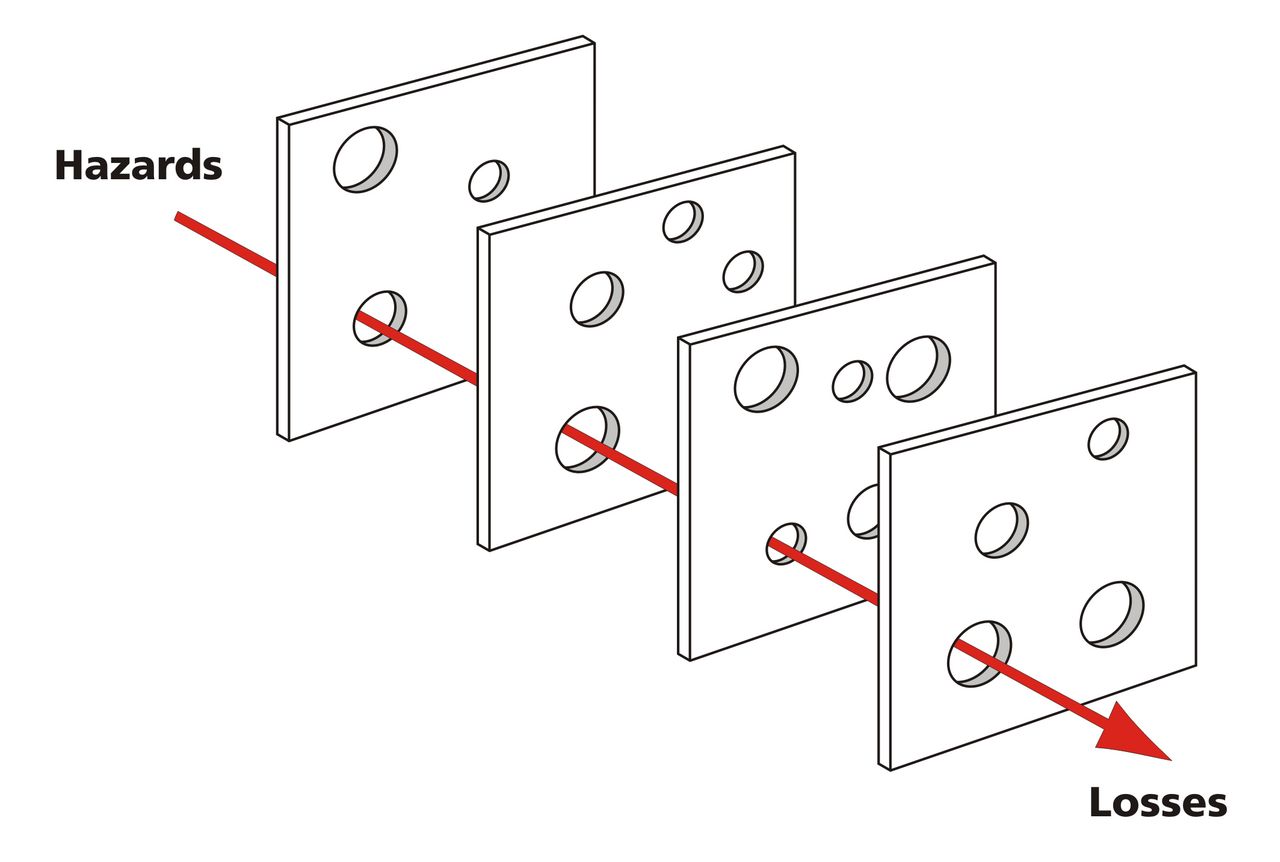
Where ethics committees came from
The American hospital ethics committee has an unusually precise origin. When the New Jersey Supreme Court decided In re Quinlan on 31 March 1976 — permitting Joseph Quinlan to authorize withdrawal of his daughter Karen Ann’s ventilator — the court cited a 1975 law review article by the pediatrician Karen Teel, who had suggested that hospitals convene ethics committees to share the burden of such decisions. The court effectively recommended the mechanism, and hospitals started building it.
The second push was uglier. On 9 April 1982 an infant known publicly as Baby Doe was born in Bloomington, Indiana with Down syndrome and esophageal atresia with a tracheoesophageal fistula, which surgery could have repaired. His parents declined surgery and feeding; the Indiana courts declined to intervene; he died six days later, on 15 April. The federal response produced the “Baby Doe rules” and the Child Abuse Amendments of 1984, which encouraged hospitals to establish Infant Care Review Committees. By 1992 the Joint Commission required accredited hospitals to have a mechanism for addressing ethical issues in patient care — and the committee became near-universal, for the ordinary reason that accreditation required it.
What do these bodies do? Three things, and it is worth keeping them separate: case consultation, policy development (do-not-resuscitate rules, surrogate hierarchies, conscientious objection procedures, allocation protocols) and education. The largest national survey, by Ellen Fox, Sarah Myers and Robert Pearlman in 2007, found ethics consultation services in 81 percent of US general hospitals and in every hospital with more than 400 beds — but a median of only three consultations per year, and only 41 percent of the people performing them had any formal supervised training. That combination, near-universal presence and thin capability, is the honest picture. It is why the American Society for Bioethics and Humanities published Core Competencies for Healthcare Ethics Consultation in 1998 and revised it in 2011, and why it created the Healthcare Ethics Consultant-Certified credential in 2018.
Common misconception: that an ethics consult is a tribunal that decides. In almost every American hospital it is advisory. It clarifies the question, gathers the parties, identifies the ethically defensible options and documents the reasoning; the decision stays with the patient, the surrogate and the responsible clinician. That is not weakness — a committee with authority to overrule would concentrate exactly the power that ethics exists to check. It does mean that if you request a consult expecting someone to make the problem go away, you will be disappointed, and if you request one expecting an inspectable record of how a hard call was reached, you will not.
Does any of it work?
There is more evidence than skeptics assume and less than enthusiasts claim. The strongest single study remains Lawrence Schneiderman’s randomized trial published in JAMA in 2003: 551 patients in the intensive care units of seven US hospitals, randomized to offered ethics consultation or usual care when value-laden conflict arose. Mortality was unchanged — consultation is not a treatment — but among patients who ultimately died in hospital, consultation was associated with about three fewer hospital days, one and a half fewer ICU days and nearly two fewer days on a ventilator, and at least eighty percent of the physicians, nurses and family members interviewed said it had been helpful. Read carefully, that is a result about reducing non-beneficial treatment in cases where everyone was stuck, which is precisely what the service claims to do.
The more transformative idea is that individual consults are the wrong unit of analysis. The Veterans Health Administration’s IntegratedEthics program built preventive ethics alongside consultation on exactly this premise: if the same conflict recurs, you have a system defect. When a hospital consults eleven times in a year about surrogate decision-makers who cannot be located, the answer is not eleven excellent consultations. It is a change to the admission process that asks every patient who should speak for them, and a place in the record where that answer lives. This is the ethics equivalent of moving from treating cases to changing the water supply.
Just culture: what to do after something goes wrong
The most consequential institutional idea in this chapter is just culture, articulated for healthcare by David Marx in 2001 and grounded in James Reason’s work on human error. It begins from a hard empirical fact: punishing error suppresses reporting, and suppressed reporting blinds the organization, so blame-based responses make the next patient less safe. But its opposite — a blanket no-blame culture — is equally indefensible, because some conduct genuinely warrants sanction and staff know it. Just culture threads between them by asking not how bad was the outcome but what was the behavior.
| Behavior | What it means | Example | Correct response |
|---|---|---|---|
| Human error | An inadvertent slip, lapse or mistake — doing other than intended | Grabbing a look-alike vial from an adjacent bin during a busy handover | Console. Support the person; redesign the process, labeling or storage |
| At-risk behavior | A drift into a shortcut whose risk is not recognized or is mistakenly believed justified | Skipping the second-nurse check because it “always slows things down and never catches anything” | Coach. Make the hazard visible, remove the incentive to drift, restore the barrier |
| Reckless behavior | Conscious disregard of a substantial and unjustifiable risk | Diverting controlled substances; operating while intoxicated; falsifying a record | Discipline. Sanction, report to the board, and still examine the system that enabled it |
Two tests keep this honest. Reason’s substitution test asks whether another similarly trained, similarly experienced person in the same circumstances, with the same information and the same staffing, would plausibly have done the same thing; if the answer is yes, you have a system problem wearing an individual’s name. And outcome bias must be actively resisted: the identical shortcut is judged trivial when the patient is fine and criminal when the patient dies. Judging the behavior rather than the outcome is unnatural, and it is the entire discipline.
The case that taught this to a generation of British clinicians is that of Hadiza Bawa-Garba. Six-year-old Jack Adcock died of sepsis at Leicester Royal Infirmary on 18 February 2011. The trainee paediatrician caring for him had returned from maternity leave that day, was covering the emergency department, the children’s assessment unit and the wards across six floors without a consultant on site, and the hospital’s electronic results system had failed for hours. She was convicted of gross negligence manslaughter in November 2015; in January 2018 the High Court, on the General Medical Council’s appeal, ordered her erased from the register; in August 2018 the Court of Appeal overturned that and restored a suspension. It was also widely believed that her own written reflections had been used against her — the trial judge and the GMC dispute this — but the belief alone measurably chilled candid reflective writing among trainees across the United Kingdom. That is the deepest lesson in the case: in a system that runs on voluntary honesty, the perception that honesty will be weaponized is nearly as destructive as the reality.
When the machinery becomes theater
Structures can be built to look ethical rather than to be ethical, and the tell is always the same: the structure exists but has no teeth, no data and no consequences. Enron had a sixty-four-page code of ethics. Its board twice suspended that code’s conflict-of-interest provisions in 1999 so that chief financial officer Andrew Fastow could run the off-balance-sheet partnerships that later destroyed the company. The code was not violated in secret; it was formally waived, in minutes, by the people who wrote it.
The research points the same way. Linda Treviño, Gary Weaver and colleagues, surveying employees across six large US companies in 1999, found that whether a company had a code mattered far less than whether employees believed leaders were personally committed and consistent — and that the single most damaging thing they measured was a program employees read as existing mainly to protect senior management from blame. Meanwhile the Ethics & Compliance Initiative’s survey work has tracked self-reported retaliation against US employees who reported misconduct climbing from about 22 percent of reporters in 2013 to 44 percent in 2017 and to roughly 79 percent by 2020. Definitions and samples shift between waves, so treat the exact numbers with care; the direction is the warning: hotlines without protection are data-collection systems for identifying people to punish. Judge an ethics program by four things — who it reports to, whether anyone senior has ever been sanctioned by it, what happened to the last person who used it, and whether it publishes anything.
Ethics infrastructure earns its keep only when it converts single cases into system change and responds to failure by judging behavior rather than outcome — and a program with no teeth, no data and no visible consequences for the powerful is worse than none.
Section 5Carrying It: Distress, Repair and a Practice That Lasts

Four different injuries that get called one thing
Working adults in health and human services are routinely told they are “burned out” and offered resilience training. Often the label is wrong, and a wrong label sends help to the wrong address. Burnout, as Christina Maslach defined and measured it from 1981, is an occupational syndrome with three dimensions — emotional exhaustion, depersonalization or cynicism, and reduced sense of personal accomplishment — caused chiefly by chronic workload and control mismatch. The World Health Organization classified it in ICD-11 in 2019 as an occupational phenomenon, explicitly not a medical condition.
Moral distress is something else. Andrew Jameton named it in 1984 in a nursing ethics textbook: it arises when one knows the ethically right course of action but institutional constraints make it nearly impossible to pursue. The pain is not exhaustion; it is the specific misery of complicity. Elizabeth Epstein and Ann Hamric added the crucial temporal insight in 2009. Distress does not fully resolve when the episode ends; it leaves what George Webster and Françoise Baylis had called moral residue, and successive episodes stack on that residue in what Epstein and Hamric named the crescendo effect — each new case starting from a higher baseline than the last. This is why the eighth futile resuscitation hurts more than the first, and why a person can leave a job that has not changed in any measurable way.
Moral injury is more severe again. Jonathan Shay coined it in Achilles in Vietnam (1994) to describe the wound produced when a legitimate authority betrays what is right in a high-stakes situation; Brett Litz and colleagues broadened it in 2009 to include perpetrating, failing to prevent, or bearing witness to acts that violate deeply held moral beliefs. In July 2018 the physicians Wendy Dean and Simon Talbot argued in STAT that clinicians were being misdiagnosed with burnout when they were morally injured — unable to deliver the care they knew patients needed because of forces beyond their control. The reframing caught on because it moves the pathology from the worker to the conditions, and the treatment from yoga to structural change. Not everyone accepts it; some researchers argue the term is being stretched past usefulness, and that debate is unresolved.
| Condition | Core experience | Root cause | What actually helps | What insults people |
|---|---|---|---|---|
| Burnout | “I have nothing left.” | Chronic overload, low control, insufficient reward or community | Staffing, schedule control, reduced administrative burden, real recovery time | A resilience module added to an already full workload |
| Compassion fatigue | “I cannot feel for one more person.” | Repeated empathic engagement with suffering; secondary traumatic stress | Caseload variation, peer processing, trauma-informed supervision | Being told to care more |
| Moral distress | “I know what is right and I am prevented from doing it.” | Institutional constraints: policy, hierarchy, resources, fear | Removing the constraint; ethics consultation; escalation paths that work | Being coached to accept what should be changed |
| Moral injury | “I took part in something that violated who I am.” | Betrayal by legitimate authority; participation in or witness to serious wrong | Acknowledgment, moral repair, meaning-making, specialist mental health care | Any framing that locates the defect in the injured person |
What is known to help, and what is theater
The American Association of Critical-Care Nurses published the Four A’s in 2004 as a structured response to moral distress: Ask whether what you are feeling is moral distress rather than fatigue; Affirm your distress and your professional obligation to act on it; Assess the source, severity and your own readiness to act; and Act, with a plan that anticipates resistance and preserves you. Its virtue is that it ends in action. Naming distress without changing anything simply teaches people to tolerate it, which is how organizations quietly convert an ethics problem into a wellness problem.
At the group level, the most durable intervention is Schwartz Rounds. Kenneth Schwartz was a Boston healthcare attorney who wrote “A Patient’s Story” for the Boston Globe Magazine on 16 July 1995 about his own lung cancer treatment, arguing that small acts of kindness from staff had made the unbearable bearable. He died that September, having founded the center that bears his name. Schwartz Rounds are a monthly, hour-long, multidisciplinary meeting where staff discuss the emotional and ethical dimensions of a case — explicitly not the clinical management, and explicitly with cleaners, porters and clerks in the room alongside surgeons. They now run in hundreds of organizations across North America and, through the Point of Care Foundation, the United Kingdom. An English evaluation led by Jill Maben in 2018 found that the proportion of regular attenders screening positive for poor psychological wellbeing halved over eight months, from 25 to 12 percent, while non-attenders barely moved, from 37 to 34 percent. Attendance is self-selected and the evidence base remains modest, so treat that as encouraging rather than settled.
Cynda Rushton at Johns Hopkins has developed moral resilience — the capacity to sustain or restore integrity in response to moral adversity — as the individual-level counterpart. The idea is sound and the caution is essential: resilience language is easily conscripted as a way of asking staff to absorb institutional failure indefinitely. Rushton herself insists it is not a substitute for changing the conditions. At the policy level, the National Academy of Medicine’s 2019 consensus report Taking Action Against Clinician Burnout put the burden squarely on system design, and the Dr. Lorna Breen Health Care Provider Protection Act — signed on 18 March 2022 and named for a New York emergency physician who died by suicide on 26 April 2020 — funded programs to reduce the licensing and credentialing questions that had long punished clinicians for seeking mental health care.
Test any wellness offering with one question: does it change the conditions, or does it change my tolerance for the conditions? Both have a place — sleep, therapy and peer support are genuinely protective — but an employer that offers only the second is asking you to subsidize its staffing model with your nervous system. The tell is where the intervention sits on the calendar: if resilience training is mandatory and the ethics consult service is optional, you have your answer.
Moral repair when you are the one who was wrong
You will get something wrong. Not may — will. The philosopher Margaret Urban Walker, in Moral Repair (2006), argues that what wrongdoing damages is not primarily a rule but a relationship and a set of expectations, and that repair therefore requires acknowledgment, accountability and the restoration of trust rather than merely a penalty. Practically, that means four moves: tell the person what happened in plain language and promptly; take responsibility without hedging into the passive voice; make it right materially where that is possible; and change something so it does not recur, then tell them what you changed.
This is not naive. The University of Michigan Health System adopted a communication-and-resolution approach in 2001 under Richard Boothman: full disclosure, proactive investigation, apology and compensation where care was unreasonable, and firm defense where it was not. Allen Kachalia and colleagues reported in Annals of Internal Medicine in 2010 that the monthly rate of new claims fell from 7.03 to 4.52 per 100,000 patient encounters, lawsuits from 2.13 to 0.75, and median time from claim to resolution from about sixteen to about eleven months. It was a before-and-after study at a single academic center during years when claims were falling nationally, so the size of the effect is arguable; the direction has held up in later communication-and-resolution programs. Most US states now have apology-protection statutes of some kind, and the Agency for Healthcare Research and Quality published its CANDOR toolkit in 2016 to spread the model. Honesty after harm is not only right; on the best available evidence it is also cheaper than concealment.
A practice you could still be running in ten years
Everything in this chapter reduces to a small number of habits that survive contact with a real career. Donald Schön distinguished in 1983 between reflection-in-action — thinking while doing, the expert’s adjustment mid-procedure — and reflection-on-action, the deliberate review afterward. Professionals get the first through experience. The second only happens if it is scheduled.
| Habit | What it is concretely | Rhythm | Why it works |
|---|---|---|---|
| Written red lines | Three to five things you will not do, written before anyone asks — falsify a record, chart an assessment you did not perform, stay silent about a colleague impaired at work | Written once; reread annually | Pre-commitment beats in-the-moment resolve; removes the item from negotiation |
| Decision journal | Four lines on any hard call: the question, the options, why you chose, what you expected to happen | At the time, not after | Defeats hindsight bias and gives you real data on your own judgment |
| A named ally | One person, ideally outside your reporting line, who has agreed in advance to be called and to tell you the truth | Standing agreement | Asch showed a single dissenting ally collapses the conformity effect |
| Rehearsed scripts | Three sentences you have said aloud: the CUS escalation, the refusal, the disclosure opener | Practiced, not just read | Under pressure you perform at the level you rehearsed, not the level you understand |
| Scheduled reflection | Twenty minutes monthly reviewing the journal; one case discussed with a colleague | Monthly | Reflection-on-action does not happen spontaneously in a busy life |
| Drift check | Compare your current practice against your practice three years ago on one specific behavior | Annually | Incremental erosion is invisible at the daily scale and obvious at the multi-year scale |
| An exit number | The condition under which you would leave, defined before you are trapped by salary, seniority or fear | Reviewed with any major change | An unstated exit condition is never met; a stated one preserves your capacity to refuse |
None of this is heroic and that is the point. The people who hold up over decades are rarely the most philosophically sophisticated. They are the ones who wrote things down, kept one honest friend, practiced the difficult sentence before they needed it, and treated their own integrity as something to be maintained rather than assumed. Ethics, done properly, looks less like a moment of moral clarity and more like a maintenance schedule.
Moral distress, residue and injury are injuries of conditions rather than character, so the durable practice pairs honest self-maintenance — red lines, a journal, an ally, scheduled reflection — with an insistence that the conditions themselves be changed.
The chapter in one breath
Ethical failure in working life is rarely a failure of belief. It is a failure of noticing, of language, of nerve and of design — which is why hurried seminarians walked past a groaning man and why competent nurses watched a woman’s oxygen saturation collapse for twenty minutes without pressing the point. That diagnosis dictates the cure. Because situations are strong and resolve is weak, you move the decision earlier: a written method that puts the question first and the facts before the values, a rehearsed sentence, a named ally, a red line set before anyone asks. Because rank produces hedging, institutions make challenge mandatory rather than brave, through graded escalation language and the two-challenge rule. Because a single case is almost never a single case, ethics consultation has to feed preventive work that changes the system. Because blame suppresses reporting, just culture judges behavior instead of outcome and applies the substitution test before it applies a sanction. And because the work leaves a mark — distress, residue, injury — a serious practice pairs honest self-maintenance with a refusal to accept resilience as a substitute for changing conditions. Ethics, sustained over a career, looks less like clarity and more like maintenance.
Words worth knowing
| Term | What it means |
|---|---|
| Bounded ethicality | The predictable, unconscious ways our behavior falls short of our own ethical standards, described by Bazerman and Tenbrunsel. |
| Ethical fading | The disappearance of a decision’s moral dimension from the language used to describe it, so it is never weighed. |
| Motivated blindness | Failure to see misconduct when noticing it would be costly to us — the structural weakness of auditors, sponsors and supervisors. |
| Situationism | The claim, urged by Harman and Doris, that behavior is driven so heavily by circumstance that stable character traits may not exist; contested by Kamtekar and Annas. |
| Four topics method | Jonsen, Siegler and Winslade’s 1982 grid: medical indications, patient preferences, quality of life, contextual features, worked in that order. |
| CASES approach | The Veterans Health Administration’s consultation process — clarify, assemble, synthesize, explain, support. |
| Preventive ethics | Treating recurring ethics conflicts as system defects and fixing the process rather than repeating the consult. |
| Four component model | James Rest’s account of moral behavior as sensitivity, judgment, motivation and implementation, any one of which can fail. |
| Giving Voice to Values | Mary Gentile’s method: assume you know what is right, then script, rehearse and pre-answer the predictable rationalizations. |
| Mitigated speech | Hedged, indirect language used by subordinates toward superiors; a documented contributor to aviation and clinical disasters. |
| Two-challenge rule | A requirement that if a safety concern is raised twice without adequate response, the person must escalate or take control. |
| CUS | The TeamSTEPPS escalation script: “I am Concerned, I am Uncomfortable, this is a Safety issue.” |
| Psychological safety | Amy Edmondson’s construct: a shared belief that the team is safe for interpersonal risk-taking; predicts reporting and learning. |
| Just culture | A response framework distinguishing human error (console), at-risk behavior (coach) and reckless behavior (discipline). |
| Substitution test | Asking whether a similarly trained person in the same circumstances would plausibly have acted the same way; if yes, the problem is the system. |
| Outcome bias | Judging the severity of a behavior by how badly it happened to turn out rather than by the behavior itself. |
| Moral distress | Jameton’s term for knowing the right action but being prevented from taking it by institutional constraint. |
| Moral residue and crescendo effect | Webster and Baylis’s term for the distress that does not fully resolve, and Epstein and Hamric’s account of later episodes building on an ever-higher baseline. |
| Moral injury | The wound from betrayal by legitimate authority, or from committing, failing to prevent or witnessing acts that violate one’s deep moral beliefs. |
| Moral repair | Margaret Urban Walker’s account of restoring damaged relationships and expectations through acknowledgment, accountability and change — not merely penalty. |