Professional and Business Ethics
A night-shift nurse notices that a trusted colleague’s waste counts never quite add up. An engineer believes a rubber seal will stiffen below fifty degrees and says so on a conference call the evening before a launch. A branch manager watches her team open accounts for customers who never asked for them, because the quarterly target says eight products per household. None of these people lack a conscience. What they lack is a clear answer to a harder question: what does my role require of me, and when does the role stop excusing what I do inside it? This chapter takes ethics out of the seminar room and into workplaces where authority is unequal, information is asymmetric, incentives are loud, and the cost of speaking is real. The questions ahead are practical ones: what makes an occupation a profession, how codes and licensure actually bite, why conflicts of interest corrupt judgment without anyone intending it, what happens to whistleblowers, and whether a corporation owes anything to anyone but its owners.
By the end of this chapter you can
- Define a profession using the standard criteria — specialized knowledge, self-regulation, a public-service mandate and a social contract — and explain what society gives in exchange.
- Explain role morality and evaluate when a professional role does and does not justify conduct that would be wrong for a private person.
- Distinguish a fiduciary relationship from an arm’s-length commercial one, and apply that distinction to clinical, legal and financial settings.
- Compare the structure and enforcement of at least three professional codes, including the ANA Code of Ethics for Nurses, and describe how licensure boards discipline members.
- Apply the standard definition of a conflict of interest to real cases, and assess whether disclosure, recusal, divestment or prohibition is the appropriate remedy.
- Use Richard De George’s conditions to judge when whistleblowing is morally permitted and when it becomes morally required.
- Explain moral distress and moral residue, and identify the institutional conditions that produce them.
- Contrast shareholder primacy with stakeholder theory and the benefit corporation, and state the strongest objection to each.
- Diagnose an organizational failure structurally — incentives, pressure, silence — rather than blaming “bad apples.”
Section 1What a Profession Is, and What It Asks of You

The bargain behind the word
“Profession” comes from the Latin professio, a public declaration. Medieval guilds made such declarations under oath, and the modern professions inherited the form: you announce, in front of witnesses, that you will hold yourself to a standard. That is not decoration. It is the visible half of a bargain. Society grants a professional group something extraordinary — a legal monopoly over a body of work, the right to define what counts as competence in it, and the authority to police its own members — and in return the group promises to put the client’s interest and the public interest ahead of its own convenience and income.
In 1915 the American educator Abraham Flexner, fresh from the 1910 report that reorganized North American medical education, asked at a social-work conference whether social work was a profession. His criteria have been argued about ever since, but the core list has proved durable: intellectual work involving individual responsibility, a foundation in science and learning, a practical and definite end, a self-organized professional culture, techniques that can be taught, and an altruistic motivation. The sociologist Eliot Freidson sharpened the point in Professionalism: The Third Logic (2001). There are three ways to organize skilled work, he argued: the market decides through consumer choice, the bureaucracy decides through managerial command, and professionalism decides through the judgment of trained practitioners who control their own standards. Every profession lives in tension with the other two logics, and most of the ethical friction a working nurse or engineer feels is that tension made personal.
Andrew Abbott’s The System of Professions (1988) added a warning that students should keep. Professions are not only moral communities; they are also competitors fighting over jurisdiction — who is allowed to do which tasks. Debates about nurse practitioner scope of practice, about whether pharmacists may prescribe, about who may read an imaging study, are simultaneously arguments about patient safety and arguments about turf. Both things can be true at once. An honest professional notices when the safety argument happens to coincide with the income argument, and takes extra care with the evidence.
| Mark of a profession | What it actually means | Concrete example | How it fails |
|---|---|---|---|
| Specialized knowledge | A body of theory that cannot be picked up casually and must be applied to particular cases | Titrating a vasoactive drip; reading a soil report before pouring a foundation | Credential without competence — the diploma mill, the lapsed skill |
| Restricted entry | Licensure, examination and defined educational pathways | NCLEX-RN; the Fundamentals and Principles of Engineering exams; the bar exam | Barriers that protect income rather than the public |
| Self-regulation | The group writes the standards and disciplines its own | State boards of nursing acting under a Nurse Practice Act | Capture — boards that shield members instead of patients |
| Fiduciary orientation | The client’s interest outranks the practitioner’s | Declining a lucrative referral that is not indicated | Selling rather than advising |
| Public-service mandate | Obligations to people who are not paying you | Duty to report unsafe conditions; disaster response | Treating the job as a pure private contract |
| A code plus enforcement | Written norms with real consequences attached | License suspension after diversion of controlled substances | A code that is framed on the wall and never cited |
Role morality: the executioner problem
Role morality is the claim that occupying a role changes what you may and must do. A defense lawyer may work to acquit a client she privately believes is guilty. A nurse may hold a confidence she would report if she heard it at a party. A journalist may publish something that will humiliate a person who has done nothing illegal. In each case the role licenses conduct that ordinary morality would question, and also imposes duties — competence, diligence, confidentiality — that a stranger would not owe.
The philosopher Arthur Applbaum pressed on this in Ethics for Adversaries (1999) with an uncomfortable example. Charles-Henri Sanson was the state executioner of Paris. He served the Bourbon monarchy, beheaded Louis XVI on 21 January 1793, went on working through the Terror, and retired in 1795 with the office passing to his son. Sanson insisted he was not a murderer but a functionary faithfully discharging a lawful office — that the role, not the man, did the killing. Applbaum’s question is simple and devastating: if a role can transform killing into “administering justice,” what cannot it transform? His answer is that roles get their moral force from the value of the institution they belong to, and no amount of internal consistency can manufacture that value from nothing. A role can redistribute moral labor. It cannot dissolve it.
This matters in ordinary clinical life more than the melodrama suggests. “I was following the protocol,” “that is a physician decision,” “my job is to document, not to judge” — each is sometimes a legitimate appeal to role and sometimes a way of laundering responsibility. The test is whether you could defend the role itself, out loud, to the person it affects. If the answer to “why did you do that?” is only “because the role told me to,” and the role cannot in turn be justified by the good it serves, then the chain of justification has no anchor.
Common misconception: that a professional role creates a moral holiday. It does the opposite. A role narrows your discretion in some directions and expands your obligations in others, but every role-based permission has to be cashed out eventually in ordinary moral terms — the good the institution does for real people. “It is my job” is the beginning of a justification, never the whole of one.
Fiduciary duty and the asymmetry problem
The deepest structural feature of professional ethics is inequality of knowledge. A patient in respiratory distress cannot evaluate whether the nurse is titrating correctly. A homeowner cannot inspect the rebar after the slab is poured. A retiree cannot price the fee structure buried in a variable annuity. When one party must rely on another’s judgment and cannot verify it, the relationship is fiduciary — from fides, faith — and the law and ethics of fiduciaries respond by imposing duties that ordinary sellers do not bear: loyalty, care, candor, confidentiality, and the obligation to avoid situations where the fiduciary’s interests pull against the beneficiary’s.
Contrast this with an arm’s-length sale. Buying a used car is governed by caveat emptor tempered by fraud law: the seller may not lie, but is not obliged to volunteer that a competitor has a better vehicle for less. A fiduciary is obliged to volunteer exactly that. The physician-ethicist Edmund Pellegrino argued that the fiduciary character of clinical work is not a policy choice but a fact about illness itself: sickness strips people of the very capacities — energy, clarity, freedom from fear — that a market assumes buyers possess. The greater the vulnerability, the stronger the duty.
This distinction has real teeth. In United States financial services, an investment adviser registered under the Investment Advisers Act of 1940 owes a fiduciary duty, while a broker-dealer historically owed only a suitability standard — recommend something suitable, not necessarily the best available. The Securities and Exchange Commission’s Regulation Best Interest, adopted in 2019 with a compliance date of 30 June 2020, raised the broker standard without fully merging the two, and the difference still costs ordinary savers money. When you hear a professional described as a “consultant,” “representative” or “specialist,” the useful question is not what the title sounds like but which standard the person is legally held to.
A profession is a bargain — monopoly and self-regulation in exchange for putting the vulnerable party’s interest first — and the role you occupy shapes your duties without ever exempting you from justifying them.
Section 2Codes, Licensure and the Machinery of Accountability
Where codes came from
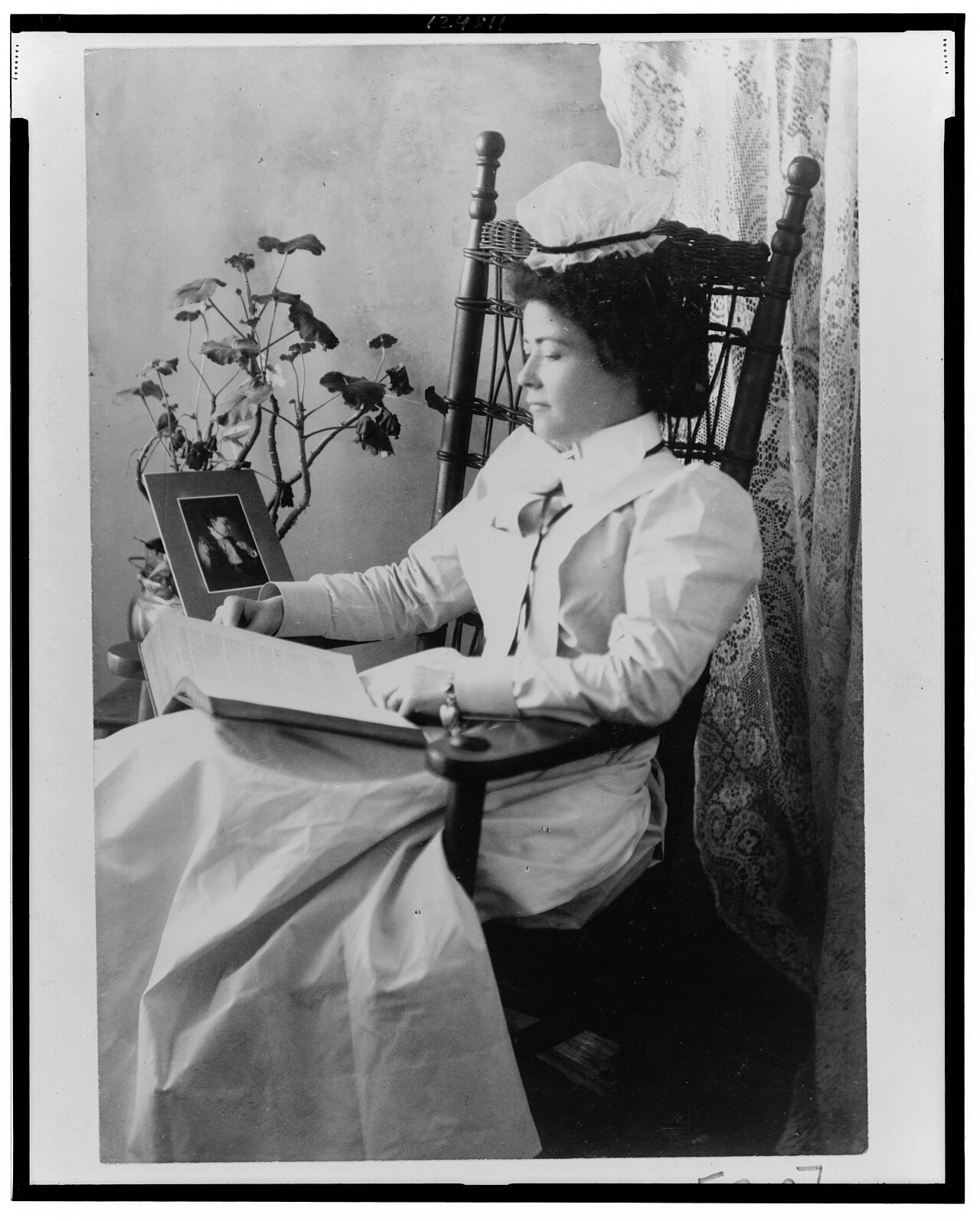
Professional codes are not as ancient as the ceremonies suggest. The Hippocratic Oath, composed somewhere in the fifth or fourth century BCE, was the oath of one Greek medical school among several and was not widely sworn for most of Western history. The direct ancestor of modern medical codes is Thomas Percival’s Medical Ethics, published in Manchester in 1803. Percival wrote it to settle a bitter turf war among physicians, surgeons and apothecaries at the Manchester Infirmary during a fever epidemic — which tells you something about what codes are really for. When the American Medical Association adopted its code at its founding meeting in 1847 — generally regarded as the first national code of ethics adopted by any professional association — it borrowed heavily from Percival.
Nursing’s written ethics followed a similar path. The Nightingale Pledge was drafted in 1893 by a committee chaired by Lystra Gretter at the Farrand Training School for Nurses in Detroit. The American Nurses Association debated a code for decades and formally adopted one in 1950; the Code of Ethics for Nurses with Interpretive Statements has been revised repeatedly since, with the 2015 edition organizing the material into nine provisions and a further revision issued in 2025. The International Council of Nurses adopted its own code in 1953 and revised it most recently in 2021, adding explicit language on climate, disasters and health technology.
Read the ANA provisions and you can see the architecture of any serious code. The first three concern the patient: respect for every person, primary commitment to the patient, and advocacy for the patient’s rights, health and safety. Provision 4 addresses authority and accountability for one’s own practice. Provision 5 is the one students routinely underline — the nurse owes duties to self as well as to others, including preservation of integrity and continued growth. Provisions 6 through 9 widen outward: the ethical environment of the workplace, the advancement of the profession through scholarship, collaboration to meet health needs, and the profession’s collective obligation to social justice. A good code moves from the bedside to the world without ever losing the bedside.
Correction worth carrying: Florence Nightingale did not write the Nightingale Pledge. She died in 1910; the pledge was composed in Detroit in 1893 by Lystra Gretter’s committee and named in her honor. Nor is it an oath of the profession — it is a school ceremony that spread. This matters because people invoke “Nightingale said” to settle arguments she never entered.
What codes can and cannot do
Codes do four things well. They socialize newcomers, telling them what the group considers unthinkable. They give a practitioner language and cover for refusal — it is easier to say “my code forbids this” than “I would rather not.” They provide a public standard against which outsiders can hold the group. And they supply the substantive norm in disciplinary and malpractice proceedings, where breach of a professional standard is evidence of falling below the standard of care.
Codes also have three chronic weaknesses. They are frequently indeterminate: “advocate for the patient” does not tell a nurse whether to escalate over a physician’s objection at two in the morning. They can be self-serving, since the group writes them — the AMA’s historical bans on advertising and on consulting with “irregular practitioners” suppressed competition at least as much as quackery, and the Federal Trade Commission challenged those restrictions in a case it brought in 1975 and won on appeal. And they are only as strong as their enforcement. A code with no disciplinary machinery is an aspiration, which is a fine thing to have and a different thing from a rule.
Notice how differently codes resolve the same dilemma. The American Bar Association’s Model Rules of Professional Conduct, adopted in 1983 and amended many times since, make client confidentiality nearly absolute under Rule 1.6, with narrow exceptions that are mostly permissive — a lawyer may, but generally need not, reveal information to prevent reasonably certain death or substantial bodily harm. Engineering codes invert the priority: the first fundamental canon of the National Society of Professional Engineers is to hold paramount the safety, health and welfare of the public. Public first, client second. Nursing sits between them, with a primary commitment to the patient plus an explicit duty to protect patients from unsafe, illegal or impaired practice by anyone, including colleagues. These are not stylistic differences. They encode genuinely different judgments about whose harm counts most.
| Code | First adopted | Central commitment | Distinctive feature |
|---|---|---|---|
| ANA Code of Ethics for Nurses | 1950; revised repeatedly (2015, 2025) | Primary commitment to the patient, whether individual or group | Explicit duties to self — integrity, health, growth — alongside duties to others |
| ICN Code of Ethics for Nurses | 1953; revised 2021 | Four elements: nurses and patients, practice, profession, global health | Names climate change, disasters and health technology directly |
| AMA Code of Medical Ethics | 1847, drawing on Percival (1803) | Patient welfare and professional integrity | Longest continuous case-based interpretive tradition |
| NSPE Code for Engineers | First NSPE code 1946; current canon structure from 1964 | Hold paramount the safety, health and welfare of the public | Public interest explicitly outranks client and employer |
| ABA Model Rules (law) | Canons 1908; Model Rules 1983 | Competent, diligent representation of the client | Confidentiality is near-absolute; most harm exceptions are permissive |
Licensure, boards and the discipline that follows
In the United States, nursing is regulated state by state under a Nurse Practice Act, administered by a board of nursing whose members are typically appointed by the governor. The board defines scope of practice, approves education programs, issues and renews licenses, and disciplines licensees. Discipline runs a ladder: a letter of concern, a fine, a reprimand, a stipulated agreement with practice restrictions, probation with monitoring, suspension, and finally revocation or surrender. The Nurse Licensure Compact, which now covers most states, lets a nurse hold one multistate license — convenient for travel nursing and telehealth, and a genuine complication when a nurse is disciplined in a remote state.
Two national databases sit behind all this. The National Practitioner Data Bank, created by the Health Care Quality Improvement Act of 1986 and operational from 1990, collects malpractice payments and adverse licensure, privileging and professional society actions; hospitals must query it when granting privileges. Nursys, operated by the National Council of State Boards of Nursing, verifies licensure and discipline across jurisdictions. Both exist because of one specific historical failure: practitioners who lost a license in one state simply moved and started over.
The most common grounds for nursing discipline are practice errors and documentation failures, criminal convictions, boundary violations, fraud, and substance use. Substance use deserves separate comment. Estimates of substance use disorder among nurses have varied widely across studies and eras, and the older claim that one nurse in ten is affected is not well supported; the defensible statement is that rates appear broadly comparable to the general adult population while workplace access to controlled substances changes the risk profile. Most states now run alternative-to-discipline or peer assistance programs that allow a nurse to enter confidential monitored treatment instead of public revocation, on the reasoning that punishment drives the problem underground while structured monitoring protects patients and salvages a career. These programs are not leniency. They typically involve years of random testing, practice restrictions and reporting, and relapse ends the arrangement.
One duty falls on colleagues rather than boards. Nearly every practice act and code obliges a nurse to report impaired, incompetent or unethical practice. Students find this the hardest single duty in the code, because it means reporting someone you like, someone who covered your shift, someone whose children you know. The reframing that helps: you are not reporting a person in order to end a career, you are reporting a condition so the system can act before a patient is harmed and before the colleague does something unrecoverable. Silence is not kindness. It is deferred harm, and the colleague is usually the last person it protects.
Codes supply shared language and a public standard, licensure boards supply the consequences, and neither works unless individual practitioners are willing to invoke them about people they know.
Section 3Conflicts of Interest: How Good People Drift
A definition that does real work
The most useful definition comes from the political theorist Dennis Thompson, writing in the New England Journal of Medicine in 1993: a conflict of interest is a set of conditions in which professional judgment concerning a primary interest tends to be unduly influenced by a secondary interest. Unpack the three moving parts. The primary interest is what the role exists to serve — patient welfare, the validity of research, the client’s legal position. The secondary interest is not evil; income, reputation, career advancement and family loyalty are all legitimate. The problem is ranking: when the secondary interest gets to sit in the chair reserved for the primary one.
The critical word is conditions. A conflict of interest is a situation, not an act and not an accusation. Saying that a nurse educator who consults for a wound-care company has a conflict of interest is not saying she is dishonest. It is saying she is in a position where the rest of us cannot easily tell — and where the psychological literature says she cannot easily tell either — whether her recommendation tracks the evidence or the relationship. That is why the standard remedies are structural: disclose, recuse, divest, or prohibit. You cannot fix a conflict of interest by trying harder to be objective, any more than you can fix a leaning building by concentrating.
Conflicts also come in flavors students often miss. Non-financial conflicts are real: the researcher whose reputation rests on a theory the new data undercut, the clinician who trained under a technique’s inventor. Institutional conflicts are larger and harder: a medical center that owns equity in a device company whose trials it hosts, a university foundation funded by an industry it also studies. Anticipatory conflicts — hoping for a future job with a vendor you are currently evaluating — leave no paper trail at all, which is precisely why revolving-door rules exist in government procurement.
| Type | Concrete example | Why it corrupts judgment | Usual remedy |
|---|---|---|---|
| Direct financial | Speaker fees or royalties from a manufacturer whose product you prescribe or recommend | Reciprocity and self-interest bias interpretation of ambiguous evidence | Disclosure plus recusal from purchasing and guideline decisions |
| Gifts and hospitality | A sponsored lunch, a branded pen, a conference registration | Reciprocity operates below awareness and is not proportional to value | Prohibition or strict value limits; most academic centers now ban them |
| Ownership or equity | A physician-owned imaging center receiving her own referrals | Every borderline order becomes revenue | Divestment, or statutory bans such as the Stark self-referral law |
| Institutional | A hospital holding equity in a device firm running trials on its wards | Pressure flows downward and is felt as culture, not as instruction | Independent oversight, firewalls, external data monitoring |
| Non-financial | An investigator whose career rests on the hypothesis under test | Motivated reasoning about which results are “clean” | Preregistration, blinded analysis, adversarial collaboration |
| Relational | Supervising, treating or grading a friend or family member | Judgment bends toward the relationship in both directions | Transfer of care or reassignment of supervision |
The evidence: small gifts, measurable effects
People assume influence scales with money. It does not. Anthropologists have described gift exchange as a universal engine of obligation, and experimental psychology has repeatedly found that small gifts create reciprocity that recipients neither notice nor believe applies to them. Ashley Wazana’s 2000 systematic review in JAMA found that essentially every measured form of contact with pharmaceutical representatives was associated with changes in prescribing, and that physicians consistently denied being influenced while believing their colleagues were. That asymmetry — the bias blind spot — is the single most important fact in this section.
The most striking evidence is more recent. Using the federal Open Payments database, Colette DeJong and colleagues reported in JAMA Internal Medicine in 2016 that receiving even a single industry-sponsored meal — most were worth under twenty dollars — was associated with higher rates of prescribing the promoted brand-name drug within the relevant class, with a dose-response relationship as meals accumulated. These are observational data and cannot by themselves establish causation; physicians who accept meals may already favor the drug. But the finding is consistent across drug classes and consistent with decades of experimental work on reciprocity, and no one has produced a plausible mechanism by which the influence runs only the other way.
Open Payments itself is worth knowing. The Physician Payments Sunshine Act, enacted in 2010 as part of the Affordable Care Act, requires drug and device manufacturers to report payments and transfers of value to physicians and teaching hospitals; the public database launched in 2014, and reporting was extended in 2021 to physician assistants, nurse practitioners, certified nurse-midwives, clinical nurse specialists and certified registered nurse anesthetists. Annual reported value now runs to well over ten billion dollars. If you hold one of those licenses, your name may be searchable in it, which is a useful thing to check before a patient does.
Disclosure is not a cure, and it can backfire. Daylian Cain, George Loewenstein and Don Moore showed experimentally in 2005 that advisers who disclosed a conflict gave more biased advice — feeling morally licensed by the warning — while advisees failed to discount enough, partly because discounting feels like calling someone a liar. Disclosure is a floor, not a ceiling. When the stakes are high, recusal or prohibition is the honest remedy.
OxyContin: a conflict of interest at industrial scale
Purdue Pharma launched OxyContin in 1996 with a marketing campaign built on the claim that its slow-release formulation made addiction rare in pain patients. The claim rested on thin evidence — most notoriously a five-sentence 1980 letter to the editor in the New England Journal of Medicine by Jane Porter and Hershel Jick, describing hospitalized inpatients, which was subsequently cited hundreds of times as though it were a study of outpatient chronic pain. Purdue funded continuing education, paid speakers, distributed branded merchandise, sponsored pain-management guidelines and underwrote advocacy groups promoting pain as the fifth vital sign. Sales representatives were paid bonuses that could exceed their salaries.
The mechanism here is not that thousands of clinicians took bribes. It is that an entire evidentiary environment — the conferences, the guidelines, the speakers, the review articles — had been quietly purchased, so that a conscientious physician reading the literature in 1999 was reading a curated version of it. In 2007 Purdue’s affiliate pleaded guilty to felony misbranding and the company paid roughly six hundred million dollars; in 2020 Purdue pleaded guilty to federal conspiracy and kickback charges. The Sackler family agreed to multibillion-dollar settlements, and in Harrington v. Purdue Pharma the Supreme Court held in June 2024 that the Bankruptcy Code does not authorize releasing the claims of non-consenting creditors against non-bankrupt third parties, forcing the plan to be renegotiated. Meanwhile more than half a million Americans died of opioid overdose across the period.
Two lessons follow. First, conflicts of interest do their damage upstream, in what counts as knowledge, long before they reach the individual prescription. Second, the remedy is unglamorous: independent guideline panels, transparency databases, restrictions on industry-funded education, and skepticism toward any claim whose evidence base traces back to a source with a stake in the answer. Ask of any strong clinical claim: who paid for the study, who chose the comparator, who wrote the first draft, and where were the negative trials published?
A conflict of interest is a condition rather than an accusation, small gifts influence judgment far more than their price suggests, and the reliable remedies are structural — recusal, divestment, independence — not sincerity.
Section 4Loyalty, Dissent and Whistleblowing

The night before Challenger
On the evening of 27 January 1986, engineers at Morton Thiokol in Utah joined a teleconference with NASA managers at Marshall Space Flight Center and Kennedy Space Center. Roger Boisjoly and his colleague Arnie Thompson argued that the O-ring seals in the solid rocket booster joints lost resiliency in cold weather and that the forecast overnight low — in the twenties Fahrenheit — was far below the 53 degrees of the coldest previous shuttle launch, which had itself shown serious blow-by past the seals. Thiokol initially recommended against launch. NASA managers pushed back hard, one of them asking when Thiokol wanted him to launch, next April. Thiokol went off-line for a private caucus. Senior vice-president Jerald Mason told vice-president of engineering Robert Lund to take off his engineering hat and put on his management hat. Thiokol reversed itself and signed the launch recommendation. Boisjoly, who was not among the four managers who voted, went home and recorded in his notebook that he did not agree the booster was safe to fly.
Challenger broke apart seventy-three seconds after liftoff on the morning of 28 January, killing all seven crew members, among them the teacher Christa McAuliffe. The Rogers Commission, with the physicist Richard Feynman dropping a piece of O-ring material into a glass of ice water at a televised hearing to show that it lost resilience, concluded that the joint design was flawed and that the decision process was worse. Boisjoly testified honestly, was moved away from his work, was ostracized, and eventually left the company. He spent the rest of his life speaking to engineering students about that phone call.
The story is usually told as a parable about courage, and it is one. But notice the structure. The engineers had said the right thing. They said it in writing, in advance, to the right people. What defeated them was a reversed burden of proof: instead of requiring proof that flight was safe, management required proof that it was unsafe, and the data were ambiguous because no one had ever flown that cold. This is the most common shape of organizational failure. Not a villain overruling a hero, but an institution that quietly moved the burden and then congratulated itself on being data-driven.
Loyalty, voice and exit
Employees genuinely owe their employers something — competent work, honest accounting of time, confidentiality about proprietary information, a fair hearing before going outside. The economist Albert Hirschman gave the classic map in Exit, Voice, and Loyalty (1970): when an organization deteriorates, members can leave, speak up, or stay quiet, and loyalty is what makes voice worth attempting rather than exiting immediately. Whistleblowing is voice raised to its loudest register — going outside the chain of command, and often outside the organization, to prevent harm.
The standard framework belongs to Richard De George, refined across editions of Business Ethics from 1982 onward. He distinguishes when going public is morally permitted from when it becomes morally required — a distinction students frequently collapse. His conditions are demanding on purpose, because whistleblowing bypasses ordinary authority and, if done carelessly, destroys reputations on incomplete information.
| De George’s conditions | What it asks of you | Practical test |
|---|---|---|
| 1. Serious and considerable harm | The product, practice or policy will do serious harm to the public or to patients | Would a reasonable outsider call this dangerous, not merely wasteful or annoying? |
| 2. Report to your immediate superior | Tell your supervisor and make your moral concern explicit | Is there a dated note showing you raised it as a safety issue, not a complaint? |
| 3. Exhaust internal channels | Escalate through every available internal route | Compliance hotline, risk management, ethics committee, chief nursing officer, board |
| 4. Documented evidence | Evidence a disinterested observer would find convincing | Records, dates, incident reports — obtained lawfully and without violating patient privacy |
| 5. Reasonable belief it will work | Good reason to think going public will actually prevent the harm | Is there an authority that can act, and will the disclosure reach it? |
On De George’s account the first three conditions make whistleblowing morally permissible; adding the fourth and fifth makes it morally obligatory. Critics have pushed back from both directions. Michael Davis argued in 1996 that the standard view sets the bar so high that almost no actual whistleblower qualifies, and proposed instead a complicity theory: you must speak because otherwise you are a participant in the wrongdoing, not because you are a rescuer calculating success odds. Others object that condition 5 lets institutions off the hook precisely where they are most entrenched — if the system is captured, no disclosure will “work,” and yet silence still seems wrong. The honest position is that De George gives you a checklist for deliberation, not an algorithm for absolution.
Whistleblowing is a failure state, not a virtue to aspire to. Every case in this section represents an organization that had already broken — that had made internal reporting useless. The ethical work that prevents the need for it is unglamorous: functioning incident reporting, non-punitive error review, a genuine chain of command for safety concerns, and leaders who reward the first person to say “stop.” If your unit needs heroes, it has a design problem.
What actually happens to whistleblowers
The record is sobering. Jeffrey Wigand, a research vice-president at Brown & Williamson, disclosed in 1995 and 1996 that tobacco executives knew nicotine was addictive and that the company had manipulated it; he faced litigation, harassment and the collapse of his marriage, and CBS initially withheld his 60 Minutes interview under legal pressure. Sherron Watkins warned Enron chairman Kenneth Lay in an August 2001 memo that the company might implode in a wave of accounting scandals; Enron filed for bankruptcy that December, its auditor Arthur Andersen was destroyed, and Congress passed the Sarbanes-Oxley Act in 2002. Cynthia Cooper’s internal audit team at WorldCom uncovered billions in improperly capitalized line costs in 2002. Watkins and Cooper were named Time Persons of the Year for 2002, alongside the FBI’s Coleen Rowley, whose memo exposed the Bureau’s pre-September-11 failures; Wigand’s disclosures had come seven years earlier and were not part of that trio. All of them paid for it professionally.
Health care has its own emblematic case, and nursing students should know it. In 2009, in Winkler County, Texas, two veteran nurses at a small county hospital — Anne Mitchell and Vickilyn Galle — filed an anonymous complaint with the Texas Medical Board about a physician they believed was practicing unsafely and selling supplements to patients from the emergency department. The physician complained to the county sheriff, a personal friend, who obtained a search warrant, seized the nurses’ computer, identified them, and had them indicted for misuse of official information — a third-degree felony. Both were fired. Mitchell was tried in February 2010 and acquitted by a jury after brief deliberation; charges against Galle were dropped. The nurses later settled a civil suit for seven hundred fifty thousand dollars, and the sheriff, the county attorney and the physician were themselves criminally prosecuted. Texas subsequently strengthened statutory protections for nurses who report in good faith.
Legal protection exists but is patchy. The federal False Claims Act, dating to 1863 and substantially strengthened in 1986, lets a private citizen file a qui tam suit on the government’s behalf and collect a share of the recovery — the mechanism behind most large health-care fraud settlements. Sarbanes-Oxley and the 2010 Dodd-Frank Act protect and reward securities whistleblowers. The Whistleblower Protection Act of 1989 covers federal employees, and most state nurse practice acts prohibit retaliation for good-faith reporting. But protection is retrospective: it may win you damages years later, after the job, the references and the sleep are gone. In England, the public inquiry into Mid Staffordshire NHS Foundation Trust, chaired by Robert Francis and reporting in February 2013, found a culture in which staff concerns about appalling care were routinely discouraged; it led to a statutory duty of candour on providers from 2014 and, through Francis’s follow-up Freedom to Speak Up review in 2015, to the appointment of Freedom to Speak Up Guardians in NHS trusts.
Moral distress: the everyday version
Most professionals never face a Challenger. They face something quieter that the philosopher Andrew Jameton, writing for nurses in 1984, named: moral distress, the state of knowing the ethically correct action and being prevented from taking it by institutional constraints — staffing, hierarchy, policy, cost, fear. It is not the same as a moral dilemma, where the right course is genuinely unclear. Moral distress is the pain of clarity without power: continuing aggressive treatment you believe is harming a dying patient, discharging someone you know has nowhere to go, carrying an assignment you cannot safely complete.
George Webster and Françoise Baylis added the crucial second concept in 2000, moral residue — what remains after the episode, the sediment that builds up over years. Repeated exposure produces what researchers call the crescendo effect, and the empirical literature links moral distress to burnout, disengagement and intent to leave the profession. The response cannot be individual resilience training alone, because the cause is not individual. It is structural: safe staffing standards, ethics consultation that a bedside nurse can trigger without permission, debriefing after difficult deaths, and a chain of command for clinical concerns that does not end at the person causing the concern.
Speaking up is a duty with real conditions and real costs, and the ethical achievement is building institutions where internal voice works — so that whistleblowing, and the moral distress that precedes it, become rare.
Section 5Business Ethics: Purpose, Incentives and the Myth of the Bad Apple

Who is a company for?
On 13 September 1970 the New York Times Magazine published Milton Friedman’s essay arguing that the social responsibility of business is to increase its profits. Executives, he said, are agents of the shareholders who hired them; spending corporate money on social causes the owners did not authorize is spending other people’s money, and it substitutes unelected managers for democratic decision-making about public goods. This is shareholder primacy, and it is a serious argument about accountability, not simply a defense of greed.
Friedman is also routinely misquoted, and the omitted clause is the whole argument. He wrote that business should increase profits while staying within the rules of the game — engaging in open and free competition without deception or fraud, and conforming to the basic rules of society, both those embodied in law and those embodied in ethical custom. Read whole, the essay says the rules constrain the pursuit; read as a slogan, it says the pursuit dissolves the rules. Almost every case in this section is a company that kept the slogan and dropped the clause.
The main rival is stakeholder theory, given its influential form by R. Edward Freeman in Strategic Management: A Stakeholder Approach (1984). A firm is a nexus of relationships with everyone who can affect it or be affected by it — employees, customers, suppliers, communities, creditors and shareholders — and management’s job is to create value across those relationships rather than to extract it from some for others. The standard objection is accountability: if managers answer to everyone, they answer effectively to no one, and “stakeholder value” can become a shield against measurement. Freeman’s reply is that the trade-off is largely imagined; firms that treat employees and customers badly do not usually outperform over time.
The law is less settled than either camp claims. Dodge v. Ford Motor Co. (Michigan, 1919), where the court ordered Ford to pay a dividend rather than divert profits to lower car prices and higher wages, is cited endlessly for shareholder primacy. The legal scholar Lynn Stout argued in The Shareholder Value Myth (2012) that this is a misreading of a century-old minority-oppression case, and that modern Delaware law gives directors wide latitude under the business judgment rule. Others point to eBay v. Newmark (Delaware Chancery, 2010), where the court did insist that a for-profit corporation’s directors may not subordinate stockholder wealth to a non-monetary mission. Scholarly opinion genuinely differs here, and you should be suspicious of anyone who tells you the question is closed.
| Model | Core claim | Strongest support | Strongest objection |
|---|---|---|---|
| Shareholder primacy | Managers are agents of owners; maximize returns within law and ethical custom | Clear accountability and a measurable objective | Externalities are legal until regulated; short horizons crowd out safety |
| Stakeholder theory | Create value across all groups who affect or are affected by the firm | Matches how durable firms actually operate | Vague trade-off rules; can excuse managerial discretion |
| Benefit corporation | Statutory legal form binding directors to a stated public benefit | Puts mission in the charter, surviving a change of CEO | Reporting is often self-certified; enforcement is thin |
| Regulated market view | Ethics belongs mainly in the rules, not in managerial conscience | Rules bind competitors equally, so ethics is not a competitive penalty | Regulation lags innovation and is subject to capture |
Institutions have moved on all this. Maryland created the first benefit corporation statute in 2010; Delaware authorized public benefit corporations in 2013, and Patagonia, Kickstarter and Danone North America are among the better-known adopters. On 19 August 2019 the Business Roundtable issued a Statement on the Purpose of a Corporation, signed by 181 chief executives, replacing shareholder primacy with a commitment to all stakeholders. Skepticism followed quickly: Lucian Bebchuk and Roberto Tallarita found that most signatories’ boards had never approved the statement, and subsequent research found little change in corporate governance documents. Whether the statement marked a shift or a public-relations exercise is still contested.
The Ford Pinto story you were told is mostly wrong. The famous memo valuing a life at about two hundred thousand dollars was a 1973 submission to a federal rulemaking on rollover fuel leakage, using the government’s own figures — it was not an internal decision to let the Pinto burn for eleven dollars a car. Gary Schwartz’s 1991 review in the Rutgers Law Review showed the death toll and the timeline had both been inflated, and Ford was acquitted in the 1980 Indiana criminal trial. The real lesson survives: cost-benefit analysis is unavoidable in engineering, and the wrong is not doing the arithmetic but doing it secretly, with self-serving numbers, and never telling the people who bear the risk.
Structure beats character
When a company does something terrible, the first official explanation is almost always a few bad apples. Look closely and you usually find ordinary people responding rationally to the incentives, targets and fears they were given.
Volkswagen. On 18 September 2015 the Environmental Protection Agency issued a notice of violation: VW diesels contained a defeat device, software that recognized the steering, throttle and duration signature of a laboratory emissions test and switched the engine into a compliant mode, then relaxed it on the road, where nitrogen oxide output could reach many times the legal limit. Roughly eleven million vehicles worldwide were affected. VW agreed to a settlement valued near fifteen billion dollars in 2016, pleaded guilty to federal charges in 2017, and paid billions more in Germany; chief executive Martin Winterkorn resigned, and both an engineer and a compliance executive were sentenced to prison in the United States. Investigations described a culture of fear and impossible targets — engineers ordered to hit American emissions standards with a diesel design that could not, and no safe way to say so.
Wells Fargo. To meet a cross-selling target of eight products per household, branch employees opened accounts and credit cards customers had never requested, moving funds between them to avoid detection. Regulators announced a one hundred eighty-five million dollar settlement in September 2016; the bank eventually acknowledged as many as roughly three and a half million potentially unauthorized accounts and fired about fifty-three hundred employees. Chief executive John Stumpf resigned in October 2016, was later barred from banking and personally fined by the Office of the Comptroller of the Currency, and the bank paid three billion dollars to resolve federal criminal and civil investigations in 2020. The fired employees were low-level. The target was not.
Theranos. Elizabeth Holmes founded the company in 2003 on the promise of running hundreds of diagnostic tests from a fingerstick of blood. Its board carried extraordinary prestige; its laboratory quietly ran most patient samples on modified commercial analyzers. Employees who objected were isolated and threatened with litigation, including Tyler Shultz, whose grandfather sat on the board. Wall Street Journal reporting by John Carreyrou beginning in October 2015 unravelled it. Holmes was convicted on four counts of fraud in January 2022 and sentenced to more than eleven years; her deputy Ramesh Balwani received a longer term. Real patients received wrong results.
Boeing. The 737 MAX carried new software, MCAS, that could push the nose down using input from a single angle-of-attack sensor; it was minimized in training documentation partly so that airlines would not need expensive simulator retraining. Lion Air flight 610 crashed on 29 October 2018, killing 189 people; Ethiopian Airlines flight 302 crashed on 10 March 2019, killing 157. The fleet was grounded worldwide. Boeing entered a deferred prosecution agreement in January 2021 valued at about two and a half billion dollars, and after the January 2024 door-plug blowout on Alaska Airlines flight 1282 the Department of Justice found the company had breached that agreement. Internal messages showed engineers who had seen the problem and a schedule that made saying so expensive.
The common structure is easy to state and hard to fix: an aggressive target, a technical impossibility or a safety concern, a hierarchy in which raising it is career-limiting, and a metric that rewards the appearance of success. Ethical organizational design attacks each element — targets that can be met honestly, an anonymous and effective escalation route, decision rights for the people who hold the technical knowledge, and leaders who ask for bad news early and visibly reward the person who brings it.
For clinicians, business ethics is not somebody else’s subject. Productivity quotas, length-of-stay targets, denial rates, staffing ratios set by budget rather than acuity, and bonus structures tied to volume all reach the bedside. When you feel pressure to chart something you did not verify, discharge someone who is not ready, or take an assignment you cannot safely carry, you are standing where the Wells Fargo branch employee stood. The right response is the same: document, escalate in writing, and refuse the specific unsafe act rather than quietly absorbing the risk.
Corporate wrongdoing is usually a design failure rather than a character failure, so the serious question is never only “who did this?” but “what were people rewarded and punished for?”
The chapter in one breath
Professions exist because some kinds of expertise cannot be checked by the people who need them, so society trades monopoly and self-regulation for a promise that the vulnerable party’s interest comes first. That promise shows up as role morality, which shapes your duties without ever excusing you from justifying them, and as fiduciary obligation, which grows in proportion to the other person’s dependence. Codes translate the promise into language and licensure boards attach consequences, but neither functions unless practitioners are willing to invoke them about colleagues they like. Conflicts of interest corrupt without anyone consenting to be corrupted: they are conditions, not accusations, small gifts move judgment far more than their price suggests, and disclosure alone can make advice worse rather than better. When institutions fail, the burden of proof quietly reverses and speaking up becomes career-limiting — which is why whistleblowing, though sometimes obligatory, is best understood as evidence that internal voice already broke. The same analysis scales to business. Friedman’s rules of the game and Freeman’s stakeholders are arguing about accountability, not about whether fraud is permitted, and Volkswagen, Wells Fargo, Theranos and Boeing all failed the same way: an impossible target, a hierarchy that punished honesty, and a metric that rewarded appearances. Design beats exhortation.
Words worth knowing
| Term | What it means |
|---|---|
| Profession | An occupation with specialized knowledge, restricted entry, self-regulation and a public-service mandate, held to a fiduciary standard. |
| Social contract (of a profession) | The implicit bargain in which society grants monopoly and self-governance in exchange for competence, integrity and service. |
| Role morality | The view that occupying a role changes what one may and must do; it redistributes moral responsibility but cannot eliminate the need to justify the role itself. |
| Fiduciary duty | The heightened obligation of loyalty, care and candor owed when one party must rely on another’s judgment and cannot verify it. |
| Jurisdiction (Abbott) | The claim a profession makes over a domain of tasks; scope-of-practice disputes are simultaneously safety arguments and territorial ones. |
| Nurse Practice Act | The state statute defining nursing scope of practice and empowering a board of nursing to license and discipline. |
| National Practitioner Data Bank | Federal repository, authorized in 1986, of malpractice payments and adverse licensure and privileging actions, queried when granting clinical privileges. |
| Alternative-to-discipline program | Confidential monitored treatment for impaired practitioners offered in place of public disciplinary action, with testing and practice restrictions. |
| Conflict of interest | Conditions in which judgment about a primary interest tends to be unduly influenced by a secondary interest; a situation, not an accusation. |
| Bias blind spot | The robust finding that people recognize influence and bias in others while denying it in themselves. |
| Sunshine Act / Open Payments | The 2010 law and its public database requiring manufacturers to report payments to clinicians and teaching hospitals; extended to advanced practice nurses in 2021. |
| Whistleblowing | Disclosing serious organizational wrongdoing outside the normal chain of command in order to prevent harm. |
| Qui tam | A False Claims Act provision letting a private citizen sue on the government’s behalf for fraud and share in any recovery. |
| Duty of candour | The statutory obligation, adopted in England after the Mid Staffordshire inquiry, to tell patients openly when something has gone wrong. |
| Moral distress | Knowing the ethically right action but being blocked from taking it by institutional constraints; distinct from a genuine dilemma. |
| Moral residue | The accumulated weight left by repeated moral distress, linked to burnout and attrition. |
| Shareholder primacy | The view that managers are agents of owners and should maximize returns within law and ethical custom. |
| Stakeholder theory | Freeman’s view that firms should create value across all groups who affect or are affected by them. |
| Benefit corporation | A statutory corporate form obliging directors to pursue a stated public benefit alongside profit. |
| Defeat device | Equipment or software designed to detect a compliance test and alter behavior during it — the mechanism of the Volkswagen diesel fraud. |