Bioethics: The Four Principles
A family tells the nurse that their mother must never hear the word “cancer.” A transplant coordinator has one liver and three candidates who will each die without it. A researcher in Malawi must decide whether a placebo arm is defensible when an effective drug exists but costs more per patient than the country spends on health per person per year. None of these is settled by picking a moral theory. Since 1979, the working language of medicine and research has been four principles — respect for autonomy, nonmaleficence, beneficence and justice — whose ancestor is not a seminar argument but a federal commission convened after a run of real atrocities. This chapter takes that framework seriously enough to test it: where each principle came from, what it actually requires, how the four collide, and what the framework genuinely cannot do. You will finish able to reason a bioethics case out loud, in order, with your work shown.
By the end of this chapter you can
- Trace the four principles to the research scandals and legal responses — the Nuremberg Code, Beecher’s 1966 exposure, Tuskegee, and the Belmont Report — that produced them.
- Distinguish Belmont’s three principles from Beauchamp and Childress’s four, and explain why respect for persons is broader than autonomy.
- State the three conditions of an autonomous choice and apply them to a real refusal or consent.
- Separate nonmaleficence from beneficence, and use the doctrine of double effect correctly — including its limits.
- Distinguish soft from hard paternalism and judge when an override of a patient’s choice is defensible.
- Apply the formal principle of justice and at least four material principles to a real allocation problem, such as kidney allocation or crisis standards of care.
- Explain clinical equipoise and the therapeutic misconception, and why both matter for research beneficence.
- Use specification and balancing to move from an abstract principle to an action, and state the conditions under which infringing a principle is justified.
- Summarise the strongest objections to principlism — from Clouser and Gert, from casuistry, from care ethics, and from cross-cultural bioethics — and say what survives them.
Section 1Where the Four Principles Came From
Bioethics was built out of wreckage
Most fields of ethics grow out of argument. Bioethics grew out of harm. In August 1947, the American military tribunal that tried twenty-three German physicians and administrators at Nuremberg — United States v. Karl Brandt — delivered its verdict together with ten points on permissible human experimentation. The first sentence of what became the Nuremberg Code is unhedged: “The voluntary consent of the human subject is absolutely essential.” The defendants had frozen prisoners, infected them with typhus, and operated without anaesthesia. Seven were hanged. And for roughly two decades, the profession outside Germany treated the Code as a document about Nazis rather than about medicine.
That comfort ended on 16 June 1966, when Henry K. Beecher, an anaesthesiologist at Massachusetts General Hospital, published “Ethics and Clinical Research” in the New England Journal of Medicine. Beecher described twenty-two studies — all from mainstream journals, most federally or industry funded — in which patients had been placed at risk without meaningful consent. He named no investigators, which was tactically shrewd; the point was that this was ordinary practice, not deviance. Two of his examples became notorious. At the Willowbrook State School on Staten Island, from 1956 into the early 1970s, Saul Krugman’s team deliberately infected children with intellectual disabilities with hepatitis virus, in an institution where infection was near-universal anyway and where admission for parents was easier through the research unit. At the Jewish Chronic Disease Hospital in Brooklyn in 1963, Chester Southam injected live cancer cells into twenty-two debilitated patients without telling them what the injections contained, reasoning that the word “cancer” would frighten them unnecessarily.
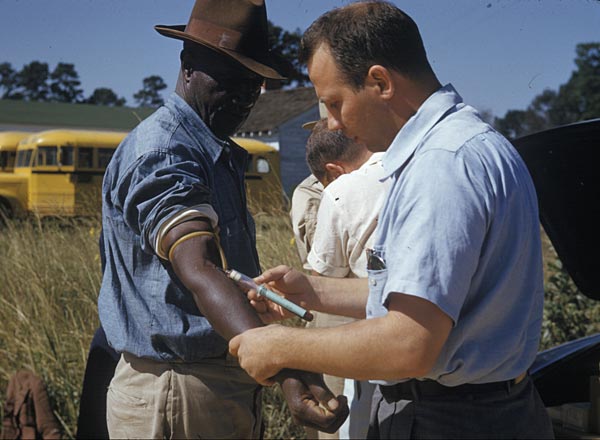
Then came the study that changed the law. From 1932 to 1972 the U.S. Public Health Service ran the Tuskegee Study of Untreated Syphilis in the Negro Male in Macon County, Alabama: 399 Black men with latent syphilis and 201 uninfected controls, told they were being treated for “bad blood,” enrolled with the promise of meals, transport and burial insurance. Penicillin became the standard cure by 1947. It was withheld, and researchers actively worked to keep participants from being treated elsewhere. Peter Buxtun, a PHS venereal-disease investigator, raised objections internally for years and eventually gave the story to the press; Jean Heller’s Associated Press report ran on 25 July 1972, and the study was shut down that November. What Tuskegee added to the record was not simply deception. It was the demonstration that a research burden can be laid, decade after decade, on the people with the least power to refuse it — a justice failure, not only a consent failure.
Belmont, and the birth of a common language
Congress responded with the National Research Act, signed on 12 July 1974, which created the National Commission for the Protection of Human Subjects of Biomedical and Behavioral Research and required institutional review boards for federally funded research. The Commission had eleven members — clinicians, lawyers, a theologian, psychologists — with the philosophers Stephen Toulmin and Tom Beauchamp working for it as staff. It met for four days in February 1976 at the Smithsonian’s Belmont Conference Center in Elkridge, Maryland, and that retreat produced the outline which, after two further years of drafting, became the Belmont Report. The Commission issued it in 1978; it was printed in the Federal Register in April 1979. It is about eight pages long. It is, by a wide margin, the most consequential eight pages in American bioethics.
Belmont names three basic principles and pairs each with an application. Respect for persons yields informed consent; it has two parts, treating autonomous people as capable of self-determination and protecting those whose autonomy is diminished. Beneficence yields systematic assessment of risks and benefits. Justice yields fair subject selection — the direct answer to Macon County and Willowbrook. The genius of the report is structural: it does not adjudicate between utilitarianism and Kantian ethics, because a federal commission containing a Jesuit, a civil-rights lawyer and a laboratory scientist was never going to agree on a foundational theory. It identifies principles that all of them already accepted and were prepared to be held to.
In 1979, the same year Belmont reached the Federal Register, Oxford University Press published Principles of Biomedical Ethics by Tom L. Beauchamp, a philosopher at Georgetown’s Kennedy Institute who had helped draft Belmont, and James F. Childress, a scholar of religious ethics who taught at Georgetown before making his career at the University of Virginia. Their book made two moves. It extended the framework from research to all of clinical medicine, and it split beneficence into two: the duty not to inflict harm (nonmaleficence) and the duty to act for others’ benefit (beneficence). Four principles, not three. Revised across successive editions over four decades, the book became the most-cited text in the field, and the approach acquired a name — principlism — and a nickname, the “Georgetown mantra.” The British physician Raanan Gillon popularised it in the United Kingdom, adding a further question he thought Americans skated over: scope. To whom, exactly, do we owe each of these duties?
What kind of thing a principle is
A principle in this sense is not a rule and not a theory. Beauchamp and Childress borrow W. D. Ross’s term: the four principles are prima facie binding, meaning each holds unless it conflicts with an equal or stronger obligation in the circumstances. When you break a promise to drive a friend to the airport because you are performing CPR on a stranger, the duty of promise-keeping did not evaporate; it was outweighed, and it leaves residue — you owe your friend an explanation and probably a taxi fare. Bioethical conflicts work the same way. The principle you overrode still has claims on you afterwards.
Where do the principles get their authority? Beauchamp and Childress ground them in what they call common morality: the set of norms that all morally serious people, in all cultures, already share — do not kill, do not steal, keep promises, prevent harm, tell the truth. This is a contested claim, and it is worth knowing that it is contested. Critics point out that a norm shared everywhere at a high level of abstraction may be applied so differently in different places that the shared part does no work. Beauchamp and Childress accept some of this and add two operations, specification and balancing, which Section 5 develops.
| Principle | What it demands | The question it puts on the table | Classic failure |
|---|---|---|---|
| Respect for autonomy | Do not control a competent person’s self-regarding choices; enable them | Does this person understand, and is the choice really theirs? | Southam’s cancer-cell injections, 1963 |
| Nonmaleficence | Do not inflict harm; do not impose unreasonable risk of harm | What is the harm, how likely, how severe, how reversible? | Withholding penicillin at Tuskegee |
| Beneficence | Act to prevent and remove harm and to promote good | What is the net benefit to this person, on their values? | Futile aggressive treatment nobody wanted |
| Justice | Distribute benefits, risks and costs fairly | Why this person and not that one? Who bears the burden? | Subject selection at Willowbrook |
The four principles are a post-atrocity settlement — a shared vocabulary built so that people who disagree about moral theory can still hold each other accountable to the same questions.
Section 2Respect for Autonomy
What autonomy actually is
The word is Greek — autos, self, and nomos, law — and originally described a city-state that made its own laws rather than taking them from a conqueror. Kant transplanted it to persons: a rational will that legislates the moral law for itself is the ground of human dignity. Mill gave it a different justification in On Liberty (1859), the harm principle, which holds that the only warrant for coercing an adult against their will is to prevent harm to others — a person’s own good, physical or moral, is not sufficient warrant. These are very different arguments. Kant is protecting rational agency; Mill is protecting individuality and social experiment. Modern bioethics cites whichever suits the case, which is untidy but usually harmless.
Beauchamp and Childress cut through the metaphysics by defining an autonomous choice rather than an autonomous person. A choice is autonomous when it meets three conditions: it is intentional (it is the act you meant to perform, not an accident); it is made with understanding (you grasp the nature and foreseeable consequences); and it is voluntary (free of controlling influences). Only the first is all-or-nothing. Understanding and voluntariness come in degrees, so autonomy comes in degrees — which is why the clinical question is never “is this patient autonomous?” but “is this choice, about this decision, autonomous enough?”
American law arrived at similar ground from a different direction. In Schloendorff v. Society of New York Hospital (1914), Mary Schloendorff consented to an examination under ether and expressly refused an operation; the surgeons removed a fibroid tumour anyway. Judge Benjamin Cardozo wrote that every human being of adult years and sound mind has a right to determine what shall be done with his own body, and that a surgeon who operates without consent commits an assault. Schloendorff herself lost: the hospital escaped liability under the charitable-immunity doctrine of the day, so the most quoted sentence in American medical law is dictum. The phrase informed consent is younger — it surfaces in Salgo v. Leland Stanford Jr. University Board of Trustees (1957), where a patient was left paralysed after an aortography nobody had described to him. Canterbury v. Spence (1972) then shifted the disclosure standard from what a reasonable physician would tell to what a reasonable patient would want to know. The machinery of consent, capacity and surrogates is Chapter 9’s business; what matters here is the principle underneath it.
Threats to voluntariness, and the honest limits of the principle
Voluntariness is where most real cases go wrong, and the vocabulary repays precision. Coercion is a credible threat of harm used to control — consent to this or I discharge you. Manipulation is influence by non-persuasive means: presenting a 10 per cent mortality as a 90 per cent survival and never the reverse, quietly omitting the option you would rather they not pick, recruiting a son to lean on his mother. Persuasion — offering reasons and evidence — is legitimate, and clinicians are often too timid about it. Someone who says “it’s entirely up to you” and recites options like a waiter reading specials is not respecting autonomy; they are abandoning a frightened person to a technical decision they were never trained to make. Building understanding is a duty, not an optional courtesy.
The principle also has a shape that is easy to get backwards. Autonomy in clinical ethics is first of all a negative right — a right against unwanted bodily intrusion. It is not a general entitlement to receive whatever one asks for. A competent adult may refuse a transfusion, dialysis, a ventilator or antibiotics, and that refusal binds even when it will kill them. That same adult cannot compel a clinician to prescribe antibiotics for a viral illness, supply an unindicated opioid, or perform an operation that cannot help. Exactly where the boundary sits for marginally beneficial treatment is genuinely disputed — the American Thoracic Society and its partner societies now prefer “potentially inappropriate” to “futile” precisely because value judgements hide inside the older word — but the asymmetry between refusal and demand is not.
Relational autonomy, culture, and the nudge
The strongest philosophical challenge to the standard picture comes from feminist bioethics. Susan Sherwin argued through the 1990s that the atomistic chooser of the textbooks does not exist, and Catriona Mackenzie and Natalie Stoljar’s 2000 collection Relational Autonomy fixed the name on the position. Selves are formed in relationships, and oppressive relationships can shape a person’s preferences themselves. A woman who “chooses” a procedure because refusing would cost her a place to live has satisfied the formal conditions and is not free. Relational autonomy does not abandon the principle; it argues that respecting autonomy sometimes means changing conditions rather than merely recording stated preferences. Ask, at least once, what would actually happen to this person if they said no.
Culture complicates it further. In a widely cited 1995 JAMA study, Leslie Blackhall and colleagues surveyed 800 older residents of Los Angeles across four ethnic groups and found sharply different views about disclosing a terminal diagnosis: European-American and African-American respondents largely favoured telling the patient directly, while Korean-American and Mexican-American respondents were substantially more likely to hold that the family should receive the news and make the decisions. The response that has largely prevailed in bioethics is not to abandon autonomy but to make it recursive — ask the patient how they want information handled and whom they want decisions made with. A woman who autonomously delegates to her son has exercised autonomy. A woman whose son delegated on her behalf, without ever asking her, has not.
Finally, autonomy meets choice architecture. Richard Thaler and Cass Sunstein’s Nudge (2008) argued for “libertarian paternalism”: arrange defaults so that people tend to do well, while leaving the exit open. The evidence that defaults matter is dramatic. Eric Johnson and Daniel Goldstein reported in Science in 2003 that European countries with presumed-consent (opt-out) organ donation showed effective consent rates ranging from about 86 per cent to almost 100, while culturally and economically similar opt-in neighbours sat far below — Austria at 99.98 per cent against Germany at 12. Defenders say some default is unavoidable, so it may as well be the beneficial one. Critics answer that a nudge which works precisely because nobody notices it looks more like manipulation than persuasion. Both can be true at once, which is why transparency about the default does most of the ethical work.
| Condition | Satisfied when | Common failure at the bedside | What to do about it |
|---|---|---|---|
| Intentionality | The act is willed, not accidental or reflexive | Signature taken during sedation or acute delirium | Re-consent when the patient is lucid; document the window |
| Understanding | Nature, purpose, risks, alternatives and the option of doing nothing are grasped | Jargon, reading level, no interpreter, no teach-back | Teach-back; professional interpreter; plain numbers in both framings |
| Voluntariness | No controlling coercion or manipulation | Family pressure, immigration or housing fear, one-sided framing | Speak with the patient alone once; name the pressure; change conditions where you can |
| Capacity (prerequisite) | Can communicate a choice, understand, appreciate, and reason | Assumed absent because the patient disagrees with you | Assess against the four abilities, decision by decision |
Respect for autonomy protects choices that are intentional, understood and voluntary, which makes it a duty to build understanding and remove pressure — not merely a duty to accept the first thing said.
Section 3Nonmaleficence and Beneficence

Do no harm, and what that cannot mean
Nonmaleficence is the duty not to inflict harm and not to impose unreasonable risk of harm. It is stated first in almost every clinical code, and it is almost always stated wrongly. Taken literally, “do no harm” would forbid surgery, chemotherapy, vaccination, childbirth analgesia and every intravenous line ever placed. Medicine harms constantly. The real principle is that harm must be proportionate to expected benefit, minimised in magnitude, and accepted by the person who bears it. What nonmaleficence rules out absolutely is a much narrower class: harm inflicted for no benefit to the patient, harm concealed, harm imposed on someone who did not agree to it, and harm caused by failing to meet the standard of due care — the legal and moral floor whose breach is negligence.
The scale of unintended harm is a live empirical dispute, and it is worth seeing how the argument runs. The Institute of Medicine’s 1999 report To Err Is Human extrapolated from studies in New York, Colorado and Utah to estimate that 44,000 to 98,000 Americans die each year from preventable errors in hospitals — a claim that reorganised patient safety in the United States. In 2016, Martin Makary and Michael Daniel argued in the BMJ for a figure above 250,000, making medical error the third leading cause of death. That estimate has been sharply criticised for extrapolating from small, non-representative chart reviews and for treating “error contributed” as “error caused” in patients who were often already dying. The honest summary is that iatrogenic death is common enough to be a major ethical problem and that no one knows the number well. The principle does not depend on the number.
Double effect, and withdrawing what you started
Some acts produce a good result and a bad one together. The doctrine of double effect, developed in the Catholic natural-law tradition and traceable to Aquinas’s discussion of self-defence, sets out when the bad effect may be tolerated. Four conditions must hold: the act itself must not be intrinsically wrong; the bad effect must not be the means to the good one; the agent must intend only the good effect, foreseeing but not aiming at the bad; and there must be proportionate reason. The classic clinical application is opioid titration for pain or breathlessness in a dying patient, where respiratory depression is foreseen but not intended. The United States Supreme Court leaned on the same reasoning in Vacco v. Quill (1997), distinguishing pain relief that may shorten life from assisted suicide.
Two cautions. First, the doctrine is philosophically contested; consequentialists reject the intention/foresight distinction as morally weightless, and even sympathetic critics note how easily intention is redescribed after the fact. Second, the empirical premise is usually false. Studies of proportionate opioid titration in palliative care have not shown shortened survival, and some suggest the opposite, because untreated pain and dyspnoea are themselves physiologically costly. So double effect is mostly reassurance clinicians do not need — and invoking it can do harm if it becomes an excuse for under-treating symptoms out of vague dread.
A related question is whether stopping a treatment differs morally from never starting it. The dominant position in bioethics and in Anglo-American law — stated plainly by the President’s Commission in its 1983 report Deciding to Forego Life-Sustaining Treatment — is that withholding and withdrawing are morally equivalent, since both are decisions not to provide a treatment on the same grounds. Survey after survey shows clinicians nonetheless feel withdrawal is worse, and that intuition has a cost: teams start reluctant to begin trials of therapy, because they fear they will not be able to stop. Explaining the equivalence to a family is often the single most useful thing an ethics consultant does. It is fair to acknowledge that a minority of scholars dispute the equivalence, particularly where withdrawal is the proximate cause of death and where a physician’s agency feels different in kind.
| Condition of double effect | Question to ask | Passes: morphine for terminal dyspnoea | Fails: a lethal bolus at family request |
|---|---|---|---|
| The act is not wrong in itself | Is the action, described honestly, a legitimate one? | Symptom relief is a core clinical act | Administering a drug at a dose whose only purpose is death |
| Bad effect is not the means | Does the good result through the harm? | Comfort comes from analgesia, not from apnoea | Relief is achieved precisely by causing death |
| Intention is the good effect | Would you be content if the bad effect did not occur? | Yes — a comfortable, still-living patient is the aim | No — death is the aim |
| Proportionate reason | Is the good grave enough to accept the risk? | Intractable suffering in the last hours | Not assessed by proportionality at all |
Beneficence: doing good, and how far the duty runs
Beneficence is the positive duty to prevent harm, remove harm and promote good. Beauchamp and Childress split it into general beneficence, owed to people at large, and specific beneficence, owed to those with whom we stand in a special relationship — patients, students, our own children. Professional roles convert what would otherwise be optional into obligatory: a passer-by may walk past a stranger’s distress; the nurse assigned to that patient may not. Beyond the obligatory sits the supererogatory — the live kidney donation to a stranger, the volunteer month in a cholera outbreak — praiseworthy, but not something you can be blamed for declining. Confusing supererogation with duty is a fast route to moral injury in health care, because it makes ordinary limits feel like failures.
Beneficence collides with autonomy in the form of paternalism: overriding a person’s choices for their own good. The distinction that does the work is between soft paternalism, which intervenes where the choice is substantially non-autonomous — the delirious patient pulling out a central line, the adolescent in an acute overdose, the driver refusing transport with a head injury and a fluctuating conscious level — and hard paternalism, which overrides a fully informed, competent, voluntary choice. Soft paternalism is widely accepted and arguably is not paternalism at all, since there is no autonomous choice to override. Hard paternalism is very difficult to justify in modern bioethics, and the burden of proof sits on the person proposing it.
Two cases mark the territory. In 1973, Donald “Dax” Cowart survived a propane explosion in Texas that killed his father, burned roughly two-thirds of his body, blinded him and cost him his fingers, and he asked repeatedly to be allowed to die during months of daily debridement he described as torture. He was treated anyway, recovered, qualified as a lawyer, and spent the rest of his life saying that although he was glad to be alive, forcing the treatment on him had been wrong and his refusal should have been honoured. His case is taught precisely because a good outcome does not settle it. In 1983, Elizabeth Bouvia, a woman in her twenties with severe cerebral palsy, sought to refuse force-feeding in a California hospital; in 1986 a California appellate court held that she had the right to refuse the nasogastric tube. Both cases turn on the same question: whose judgement of a life’s worth counts?
Research adds its own beneficence problems. Clinical equipoise, named by Benjamin Freedman in the New England Journal of Medicine in 1987, holds that a randomised trial is ethical when there is genuine uncertainty within the expert medical community about which arm is superior — not that the individual investigator must be personally undecided. It is the reason a trial can be started and, just as importantly, the reason a data safety monitoring board must stop one when equipoise is lost. Running against it is the therapeutic misconception, described by Paul Appelbaum and colleagues in 1982: participants routinely believe that the study protocol is individualised treatment chosen for them, even after being told about randomisation. Consent forms do not cure it. Asking a participant to explain, in their own words, how their treatment will be chosen usually does.
Nonmaleficence sets a floor of due care and proportionate risk, beneficence sets a positive duty measured on the patient’s own values, and the space between them is where paternalism must be argued for rather than assumed.
Section 4Justice: Who Gets What, and Why

Formal and material justice
Aristotle supplies the starting point, and it is nearly empty on purpose: equals should be treated equally, and unequals unequally in proportion to the relevant differences. This is the formal principle of justice. It tells you that treating two similar cases differently requires a justification; it does not tell you which differences count. All the argument lives in that gap. If two patients with identical kidney failure receive different priority, the formal principle demands that you name the difference — and then defend it as morally relevant. Age? Time on the list? Ability to pay? Likely years of graft function? Each answer is a material principle of justice, a substantive claim about what makes a distribution fair.
Four broad theories compete. Egalitarian accounts, following John Rawls, treat health as a precondition for fair equality of opportunity; Norman Daniels made this the standard defence of universal coverage in Just Health Care (1985), arguing that health care matters morally because disease restricts the range of life plans open to a person. Libertarian accounts, following Robert Nozick and, in bioethics, H. Tristram Engelhardt, hold that justice concerns free exchange and property rights, so there is no enforceable right to health care, only a right not to be interfered with. Utilitarian accounts maximise aggregate health benefit, which is the logic underneath cost-per-quality-adjusted-life-year thresholds. Capabilities accounts, from Amartya Sen and Martha Nussbaum, ask whether people are actually able to do and be the things a human life requires — a framing that captures why a wheelchair user in a building with no ramp has not received equal treatment merely by being handed the same insurance card.
| Material principle | The claim | Where you already see it | Where it breaks |
|---|---|---|---|
| To each an equal share | Everyone gets the same | Vaccine allocation by population; one vote | Ignores that a healthy 20-year-old and a dialysis patient do not need the same |
| To each according to need | Greater need, greater claim | Emergency triage; Medicaid eligibility | Sickest-first can waste scarce resources on those least likely to benefit |
| To each according to benefit | Give to those who gain most | Lung Allocation Score; QALY thresholds | Systematically disadvantages people with disabilities and comorbidity |
| To each according to contribution or merit | Desert earns priority | Priority for health workers in a pandemic | Slides quickly into blaming the sick for their illness |
| To each according to free exchange | Whatever the market allocates is just | Cosmetic surgery; concierge medicine | Cannot explain why anyone should be treated who cannot pay |
| To each by fair chance | Equal claims, so randomise | Lotteries for scarce trial slots or drugs | Wastes benefit when claims are not in fact equal |
Rationing in public: from the Seattle committee to crisis standards
In 1962 the Seattle Artificial Kidney Center had the first long-term dialysis programme in the world and space for a handful of patients. Belding Scribner’s shunt had made chronic dialysis possible; nothing had made it plentiful. The centre convened an anonymous seven-member Admissions and Policy Committee — a lawyer, a minister, a banker, a housewife, a labour leader, a state official and a surgeon — to choose who would receive it. Shana Alexander’s November 1962 article in Life, “They Decide Who Lives, Who Dies,” made the committee famous and then infamous: its criteria drifted into church attendance, marital status, scout leadership, net worth. Critics observed that the panel was, in effect, rewarding middle-class respectability. That scandal is a founding moment of American bioethics, and it produced a very American solution — in 1972 Congress extended Medicare to cover dialysis and transplantation for almost everyone with end-stage renal disease, effective July 1973, buying its way out of the rationing question for one disease and one disease only.
Organ transplantation could not be solved by an appropriation, because the scarce good is not money. The Organ Procurement and Transplantation Network, created by the National Organ Transplant Act of 1984 and run under federal contract by UNOS for almost all of its life, has spent four decades revising allocation rules, and each revision is a public argument about material principles. The Lung Allocation Score, introduced in 2005, replaced waiting time with a composite of urgency and expected post-transplant survival, deliberately blending need and benefit. The 2014 kidney allocation system added longevity matching, sending the kidneys expected to last longest to the candidates expected to live longest — a benefit-maximising move that critics argued disadvantaged older patients. From 2020 onward, fixed donation-service-area boundaries gave way first to distance-based circles and then, for lung in 2023, to continuous distribution — after litigation over why a patient’s address should determine survival.
The clearest recent example of the formal principle biting is race and kidney function. For decades, estimated glomerular filtration rate equations applied a correction factor that raised the reported eGFR for patients identified as Black, on the basis of average differences in creatinine generation. The effect was to make Black patients’ kidneys look healthier than they were, delaying referral, transplant listing and drug adjustment. A joint National Kidney Foundation and American Society of Nephrology task force recommended a race-free equation in September 2021, and the CKD-EPI 2021 equation was adopted widely. In 2023 the OPTN went further and required transplant programmes to recalculate waiting time for Black kidney candidates who had been disadvantaged by the old equation, restoring time to thousands of people. Nothing about that story required a new theory of justice. It required someone to ask whether the difference being used was actually relevant.
The COVID-19 pandemic ran the same argument in fast-forward. In March 2020 the Italian anaesthesia society SIAARTI published guidance contemplating an age limit on intensive care admission if resources collapsed, and Ezekiel Emanuel and colleagues published a widely used framework in the New England Journal of Medicine recommending that scarce resources be directed to maximise benefits, prioritise health workers, and use random selection among similar cases rather than first-come-first-served. Disability rights advocates immediately objected that scoring systems built on organ-failure scales and expected life-years would penalise people whose baseline function was already lower for reasons unrelated to the acute illness. Complaints filed with the Office for Civil Rights at the U.S. Department of Health and Human Services led several states, including Alabama, to withdraw or rewrite crisis standards in 2020. The disagreement was not about whether to ration; it was about which material principle to ration by.
Justice beyond the bedside: research, access and the global gap
Belmont’s justice principle was mainly protective: do not recruit the vulnerable because they are convenient. That remains necessary, but the emphasis has since flipped, because exclusion is also an injustice. If trials enrol mostly white men, the resulting evidence base fits mostly white men. The NIH Revitalization Act of 1993 required the inclusion of women and members of minority groups in NIH-funded clinical research and mandated analysis by subgroup. Progress has been real and incomplete: FDA drug trial snapshots have repeatedly shown Black participants in single-digit percentages in pivotal trials for conditions that disproportionately affect Black Americans. Both failures — over-recruitment as subjects, under-recruitment as beneficiaries — are the same principle violated in opposite directions.
Global research raised the sharpest version. In 1997 Peter Lurie and Sidney Wolfe argued in the New England Journal of Medicine that placebo-controlled trials of short-course zidovudine for perinatal HIV transmission in Africa and Asia were unethical because an effective regimen already existed; Marcia Angell’s accompanying editorial invoked Tuskegee directly. Defenders replied that the long regimen was unavailable in those countries at any price, so the placebo arm reflected the actual local standard of care and the trials answered the question those countries needed answered. The dispute drove revisions of the Declaration of Helsinki — first adopted by the World Medical Association in 1964 and revised repeatedly since, most recently in 2024 — toward requirements for post-trial access and for research to be responsive to the health needs of the host community. Scholarly opinion here has not converged, and you should be suspicious of any textbook that says it has.
Two further touchstones. The cells taken from Henrietta Lacks at Johns Hopkins in 1951 without her knowledge became HeLa, the most widely used human cell line in history, generating enormous scientific and commercial value while her descendants went without health insurance; the NIH reached a data-access agreement with the family in 2013, and a settlement with a biotechnology company followed in August 2023. And in the pandemic, the distributional facts were stark: by the end of 2021, when many high-income countries were administering third doses, the WHO target of vaccinating 40 per cent of every country’s population had been missed by most low-income countries, some of which remained in single-digit coverage. Whatever else justice requires, it requires an account of why those numbers looked like that.
Justice starts as an empty formal demand — name the difference and defend it — and becomes substantive only when you choose material principles, which is why allocation fights are really fights about which differences count.
Section 5Using the Framework — and Its Critics

Specification and balancing: how a principle becomes an action
“Respect autonomy” will not tell you what to do about a seventy-eight-year-old with early dementia who wants to go home alone. Principles are too abstract to guide action directly, and Beauchamp and Childress are explicit that two operations are needed to close the gap. The first is specification, a notion borrowed from Henry Richardson’s 1990 paper in Philosophy & Public Affairs: you narrow the scope of a norm by adding content about where, when, why, how, by what means, to whom and by whom. “Respect autonomy” becomes “respect a patient’s refusal of treatment when they have capacity for that decision, understand the consequences, and are not being coerced” — and can be specified further for adolescents, for fluctuating capacity, for advance refusals. A well-specified norm is a rule you can actually apply, and specification can itself be challenged, which is exactly the point: the argument becomes visible.
The second operation is balancing, which handles cases where two well-specified norms still collide. Balancing is where the framework is weakest, because “on balance, autonomy outweighs beneficence here” can be asserted without argument. Beauchamp and Childress try to discipline it by setting conditions on justified infringement of a prima facie principle. You should be able to state a realistic prospect that the overriding objective will be achieved, show that no morally preferable alternative exists, choose the least infringement compatible with the objective, seek to minimise the negative effects of the infringement, and act impartially. There is also moral residue: having overridden a principle, you still owe something — an apology, an explanation, a change to the system that forced the choice.
| Condition for justified infringement | What it asks | Worked example: holding a delirious patient to prevent self-extubation |
|---|---|---|
| Better reasons for the overriding norm | Is the competing obligation genuinely weightier here? | Preventing imminent airway loss outweighs momentary liberty in a non-autonomous state |
| Realistic prospect of achieving the aim | Will this actually work? | Restraint plus treating the delirium’s cause prevents the harm; restraint alone often does not |
| No morally preferable alternative | Have you exhausted the less restrictive options? | Family at bedside, lighting, sedation review, sitter tried first |
| Least infringement possible | Is this the smallest override that works? | Mitts rather than four-point restraint; hours, not days |
| Minimise the negative effects | What repairs the harm you are causing? | Explain afterwards; document; debrief the patient and family |
| Act impartially | Would you do this to any patient in this state? | Check that restraint is not tracking the patient’s language, race or perceived social status |
The serious objections
The most cited attack is K. Danner Clouser and Bernard Gert’s “A Critique of Principlism” (Journal of Medicine and Philosophy, 1990). Their charge is that the four principles are not principles at all but chapter headings — names for concerns, lacking any theory to rank them. Because nothing tells you what to do when they conflict, principlism gives the appearance of moral reasoning while leaving the real work to the intuitions of whoever is speaking. Worse, they argued, students learn to invoke a principle as though naming it were an argument. Anyone who has watched a case conference where each participant recites a different principle and the loudest wins knows the criticism has teeth.
A second challenge came from casuistry. Albert Jonsen and Stephen Toulmin — both veterans of the National Commission — argued in The Abuse of Casuistry (1988) that the Commission’s members agreed on particular cases far more readily than on the principles supposedly generating them, which suggests that moral knowledge lives in cases and analogies rather than in top-down rules. Their alternative reasons from settled paradigm cases outward, as case law does. The practical descendant of this view is the four-topics chart of Jonsen, Siegler and Winslade’s Clinical Ethics, which asks about medical indications, patient preferences, quality of life and contextual features — a structure many ethics consultants prefer to the four principles because it forces you to gather facts before naming values.
Care ethics, discussed in Chapter 6, objects that a framework of impartial principles misdescribes what actually happens in a hospital room, where morality runs through particular relationships, attentiveness and responsiveness rather than through the adjudication of competing claims. And cross-cultural bioethics objects that the four are not culturally neutral. Critics from East Asian, African and Islamic traditions have argued that the framework, as taught, ranks autonomy above the others in a way that reflects post-war American individualism rather than any global common morality; the family-centred disclosure norms long standard in Japan, and the relational personhood of Ubuntu-influenced African bioethics, do not map cleanly onto it. The 2005 UNESCO Universal Declaration on Bioethics and Human Rights, negotiated internationally, lists fifteen principles — including solidarity, social responsibility and protection of future generations — which is itself a comment on what four leaves out.
What survives, and how to actually use it
The defence of principlism is modest and, on the whole, persuasive. Nobody claims the four principles decide cases. They do three things well. They guarantee that four distinct kinds of moral consideration get raised even when the room is dominated by one profession’s habits. They give people with incompatible worldviews — a devout chaplain, a utilitarian intensivist, a family from another country — enough shared vocabulary to argue productively. And they force the disagreement into the open, so that a decision can be criticised, appealed and revised. That is not a theory of the good. It is a functioning public procedure, and public procedures are what institutions need.
Use them in this order. Get the facts first, because most apparent ethical dilemmas are factual confusion in costume: what is the diagnosis, prognosis and range of realistic options, and what has actually been said to whom? Then identify who the decision-maker is and on what basis. Then run each principle deliberately, writing one concrete sentence for each — not “autonomy is important” but “Mrs. Okafor has capacity for this decision and has consistently refused dialysis for eleven months.” Then name the conflict precisely, and specify: can either norm be narrowed so the collision disappears? If not, balance explicitly, say which principle you are overriding and why, and state what you owe as residue. Finally, ask the impartiality question — would this decision be the same for a patient with a different accent, address or insurer?
One last practical note. Clinical ethics consultation is now a recognised competency rather than an act of seniority. The American Society for Bioethics and Humanities published core competencies for health care ethics consultation in 1998 and has revised them since, and a formal individual certification, the HEC-C, launched in 2018. If you work in a hospital, you almost certainly have access to an ethics consultation service, and calling it early — while options remain open — is worth more than calling it once positions have hardened. The four principles are most useful before anyone has said something they cannot take back.
The four principles are an agenda and a public procedure, not a decision algorithm — their value lies in forcing every relevant consideration into the open where it can be specified, balanced and challenged.
The chapter in one breath
Bioethics acquired its working vocabulary the hard way. Nuremberg, Beecher’s 1966 catalogue, Willowbrook, Brooklyn and forty years in Macon County produced a federal commission, and that commission produced the Belmont Report’s three principles in 1978. Beauchamp and Childress extended them to clinical medicine and split beneficence in two, giving the four that everyone now argues with: respect for autonomy, nonmaleficence, beneficence and justice, each prima facie binding, none automatically first. Autonomy protects choices that are intentional, understood and voluntary — a negative right against intrusion, not a menu of entitlements — and it is shaped by relationships and culture more than the textbook picture admits. Nonmaleficence sets a floor of due care and proportionate risk; beneficence sets a positive duty that must be measured on the patient’s values, which is what makes hard paternalism so hard to justify. Justice starts empty — name the difference, defend it — and only becomes substantive when material principles are chosen, as the eGFR race coefficient and every organ allocation revision demonstrate. The framework does not decide cases. Specification, explicit balancing and honest residue are how it gets used, and its critics are right that naming a principle is not yet an argument.
Words worth knowing
| Term | What it means |
|---|---|
| Autonomy (respect for) | The duty not to control a competent person’s self-regarding choices, and to enable those choices through disclosure and support. |
| Nonmaleficence | The duty not to inflict harm or impose unreasonable risk of harm; its legal floor is the standard of due care. |
| Beneficence | The positive duty to prevent harm, remove harm and promote good, measured on the patient’s own values. |
| Justice | Fair distribution of benefits, risks and costs; formally, treat like cases alike unless a relevant difference is defended. |
| Principlism | The approach that reasons from four prima facie principles rather than from a single foundational theory. |
| Belmont Report | The 1978 U.S. commission report naming respect for persons, beneficence and justice, with consent, risk assessment and fair subject selection as their applications. |
| Nuremberg Code | The ten points on human experimentation issued with the 1947 Doctors’ Trial verdict, opening with the necessity of voluntary consent. |
| Common morality | Beauchamp and Childress’s claim that certain norms are shared by all morally serious persons and ground the four principles. |
| Prima facie | Binding unless outweighed by a stronger competing obligation in the circumstances; the duty persists even when overridden. |
| Specification | Narrowing an abstract norm by adding content about scope, means, circumstances and persons, until it can guide action. |
| Balancing | Weighing conflicting well-specified norms in a particular case, ideally against stated conditions for justified infringement. |
| Moral residue | What remains owed after a principle has been justifiably overridden — explanation, repair, or systemic change. |
| Soft paternalism | Intervening where a person’s choice is substantially non-autonomous, as in delirium or acute intoxication. |
| Hard paternalism | Overriding a fully informed, competent, voluntary choice for the person’s own good; rarely justifiable. |
| Doctrine of double effect | Conditions under which a foreseen but unintended harm may accompany a legitimate act aimed at a proportionate good. |
| Clinical equipoise | Genuine uncertainty in the expert community about which trial arm is superior — the ethical licence for randomisation. |
| Therapeutic misconception | A research participant’s belief that study procedures are individualised treatment chosen for their benefit. |
| Relational autonomy | The view that selves and preferences are formed in relationships, so respecting autonomy may require changing conditions. |
| Material principle of justice | A substantive criterion for distribution — need, benefit, effort, contribution, equal share, market exchange or lottery. |
| Casuistry | Case-based moral reasoning that argues from settled paradigm cases by analogy rather than from top-down principles. |